
I’m going to have to start putting the date into the titles on these posts. What used to be a “once or twice a year” and then became “once every couple of months” is now a “once a week or so” cadence and that’s expected to nearly double again in 2025.
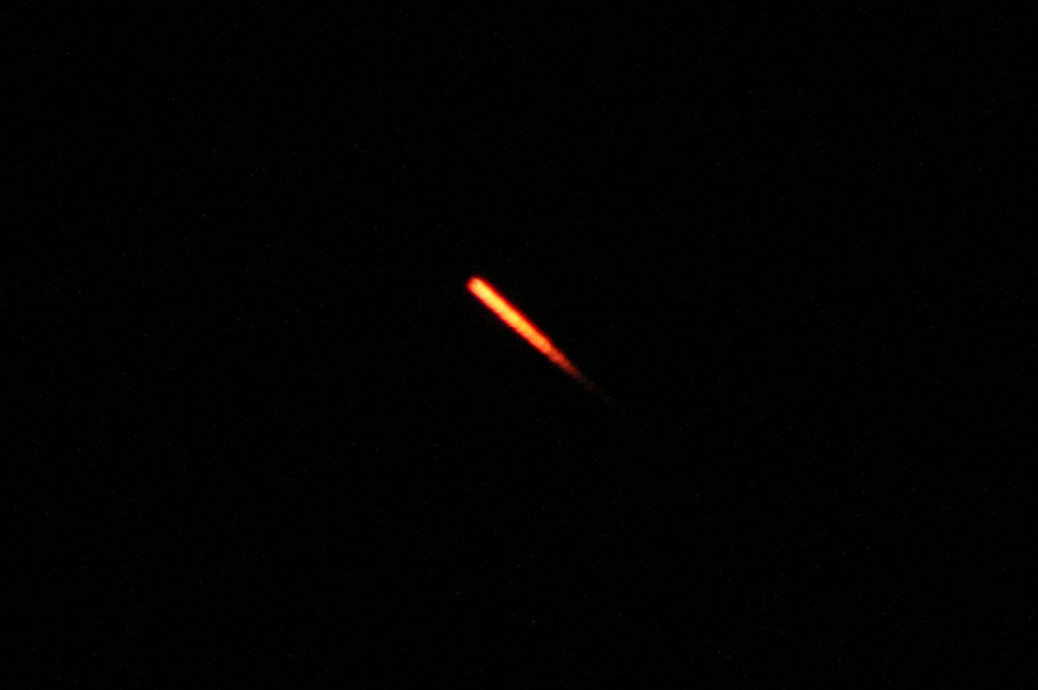
The Falcon9 has just gone supersonic and through MaxQ (the point of maximum aerodynamic pressure) when it climbs over the hill from my viewpoint, 115 miles to the southeast of the launch site.
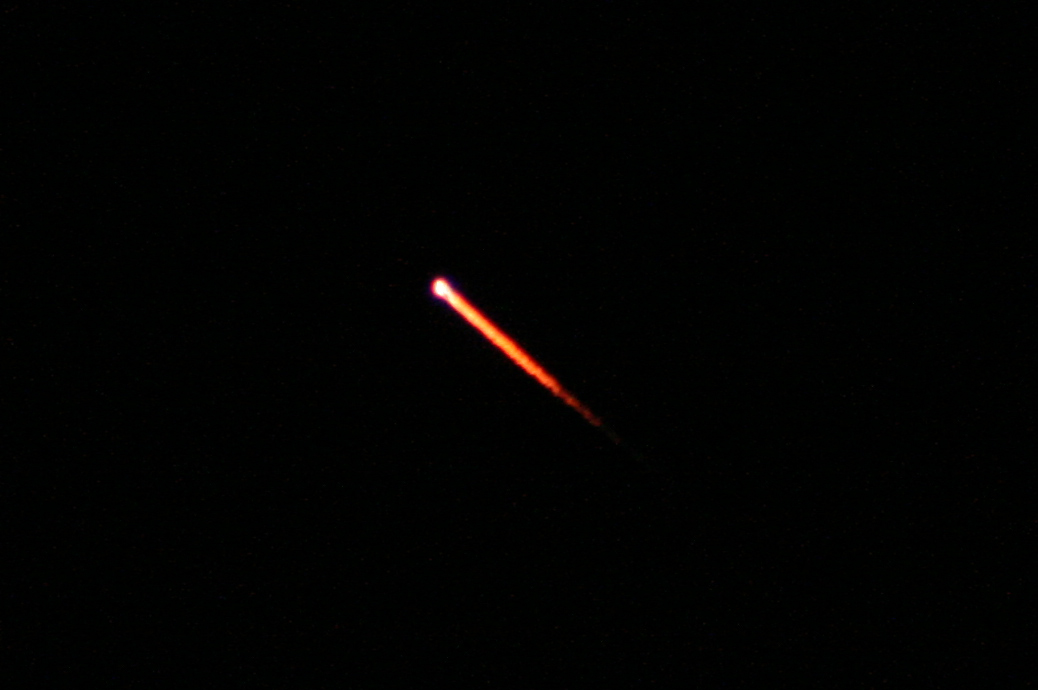
As it climbs and the air pressure drops off, the exhaust trail lengthens.
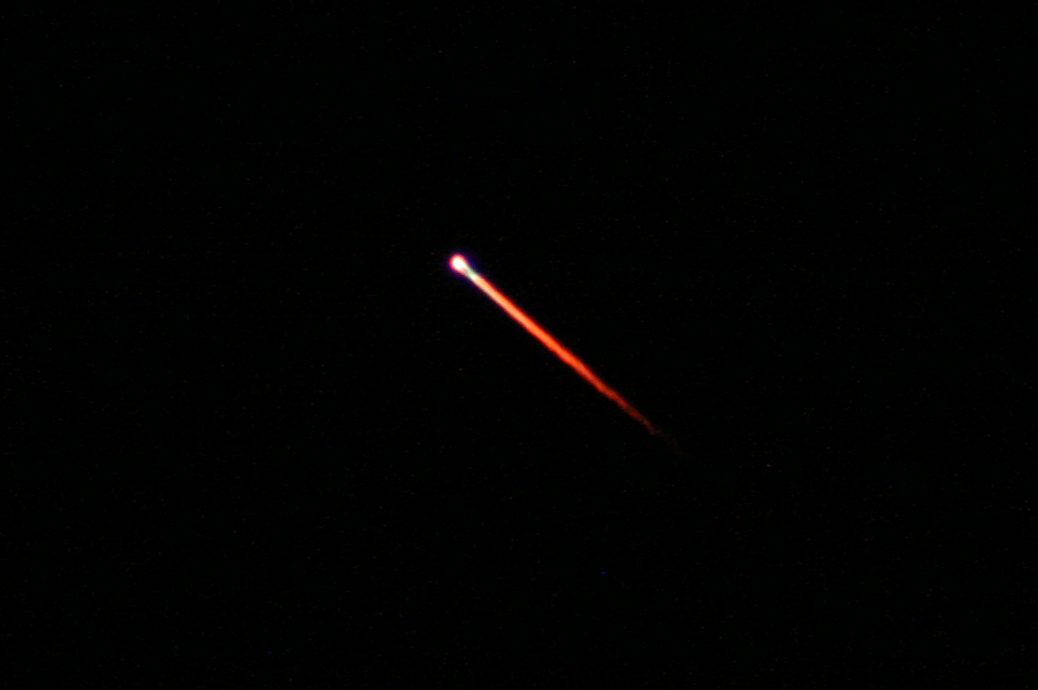
As the atmosphere gets even more thin and the plume gets longer and cooler through expansion, the colors start to change.
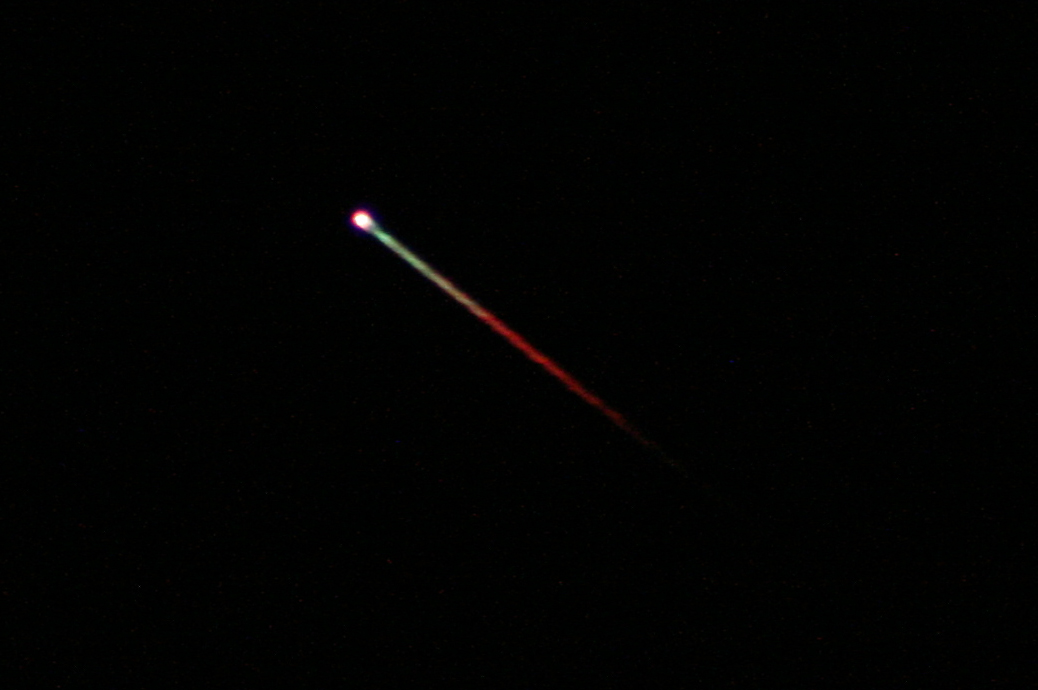
Just before the nine first stage main engines cut off and the first stage drops away (to land on a ship off of Baja California) the plume is a rainbow of color.
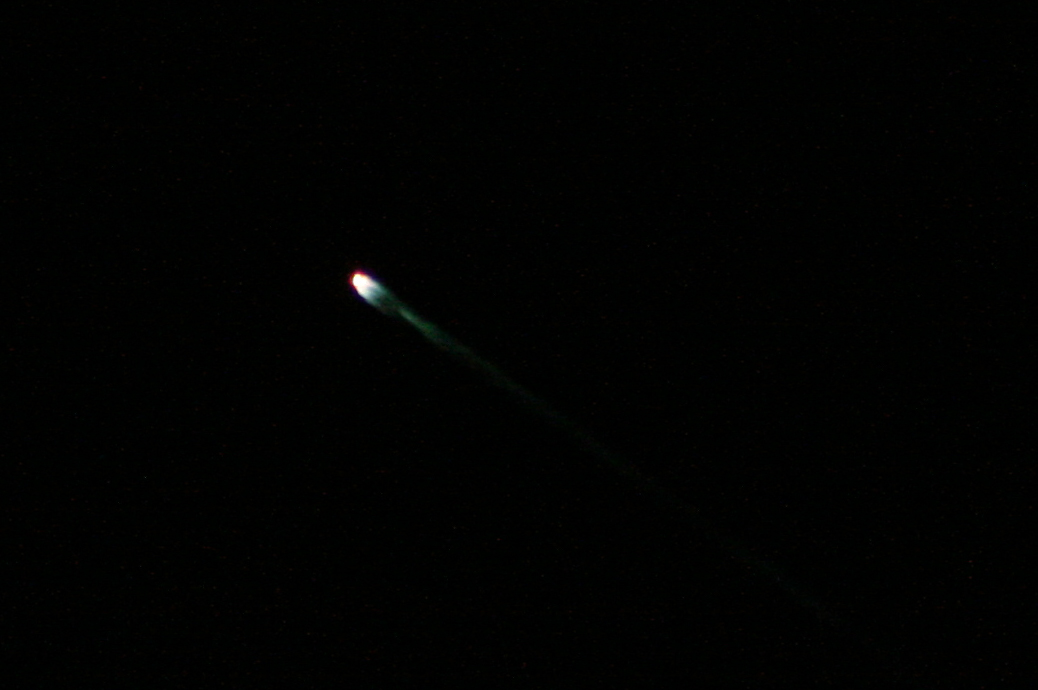
MECO! Main Engine Cut Off.
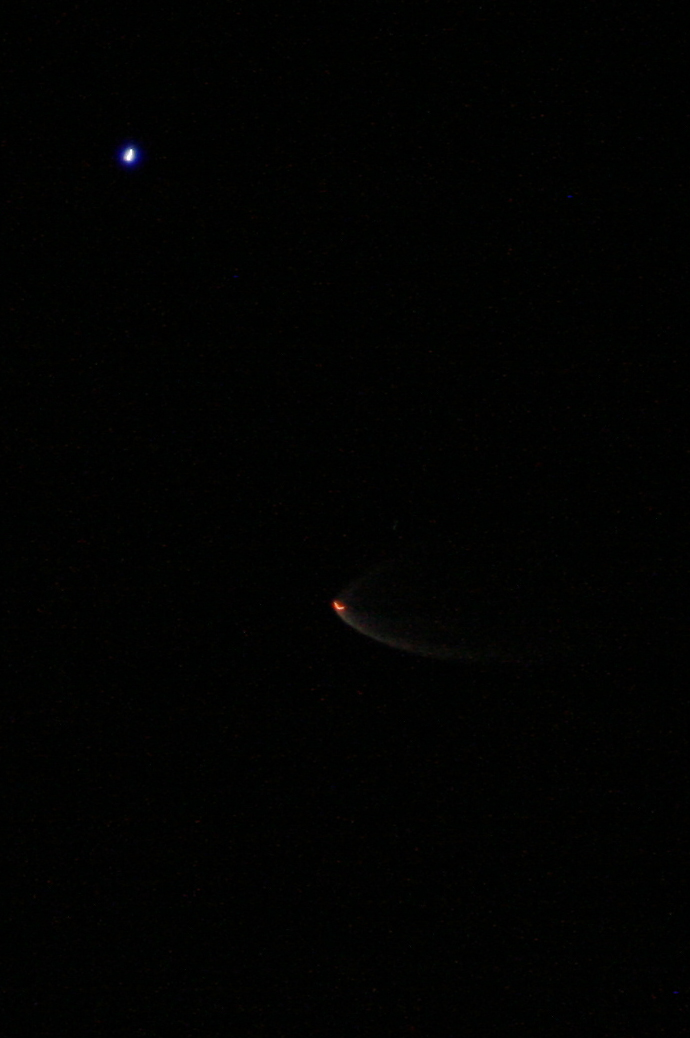
The second stage engine lights and the top part of the rocket starts accelerating toward 17,000 mph. From this far away for a night launch, the naked eye can see an orange dot moving along quickly. Binoculars or a telephoto lens will clearly show the second stage exhaust plume, a V-shaped cone stretching out behind the vehicle. Here you can see it (click on the image to see it full sized!) traveling just below the bright star Sirius.
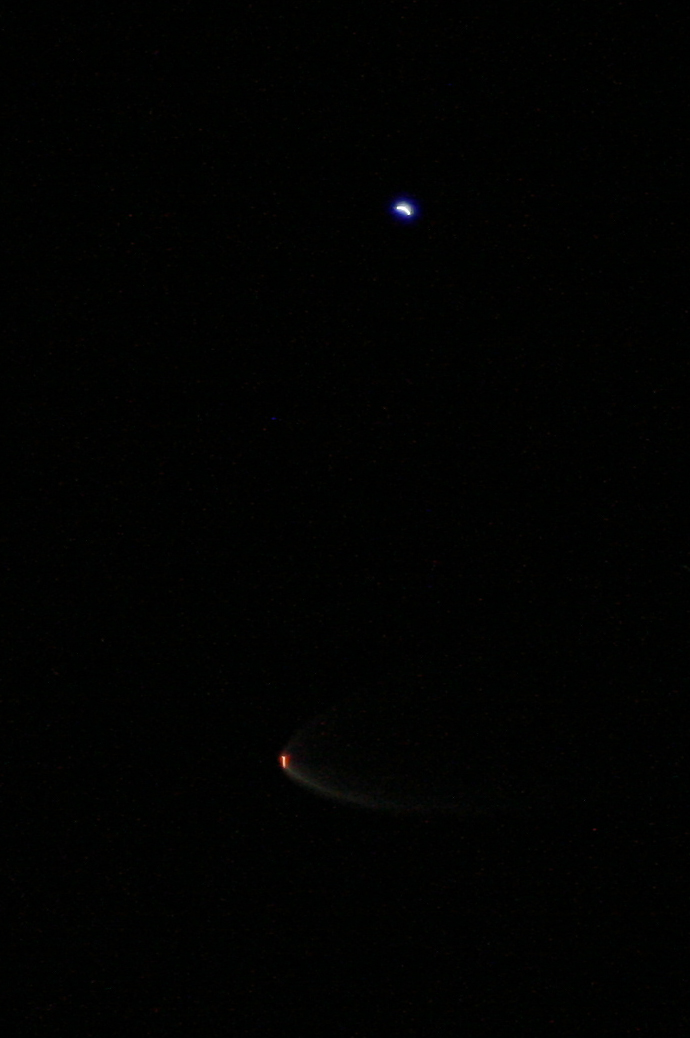
Again, click on the image to see it full sized – the second state is passing Sirius.
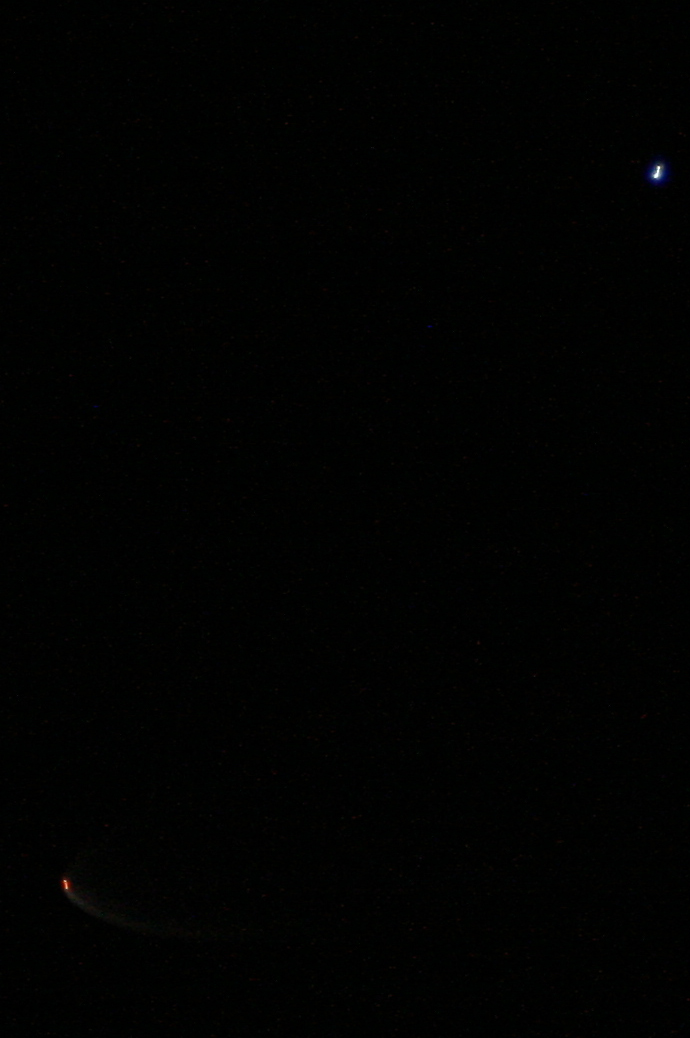
And leaving Sirius behind, headed down toward the southern horizon where I lose it behind the Santa Monica Mountains.
I really need a somewhat bigger lens (this is a 70-300mm zoom, I would love to have a 600mm telephoto) and a better tripod. The good news is that with weekly launches and the cadence speeding up even more, there should be lots of opportunities for practice!


 We Love The Stars Too Fondly