
Yesterday we talked about the first efforts to take astrophotos with the camera attached to a small telescope, essentially using the telescope as a honkin’ big telephoto lens. Last night I tried again using the same setup with the moon a day further along in its monthly cycle.
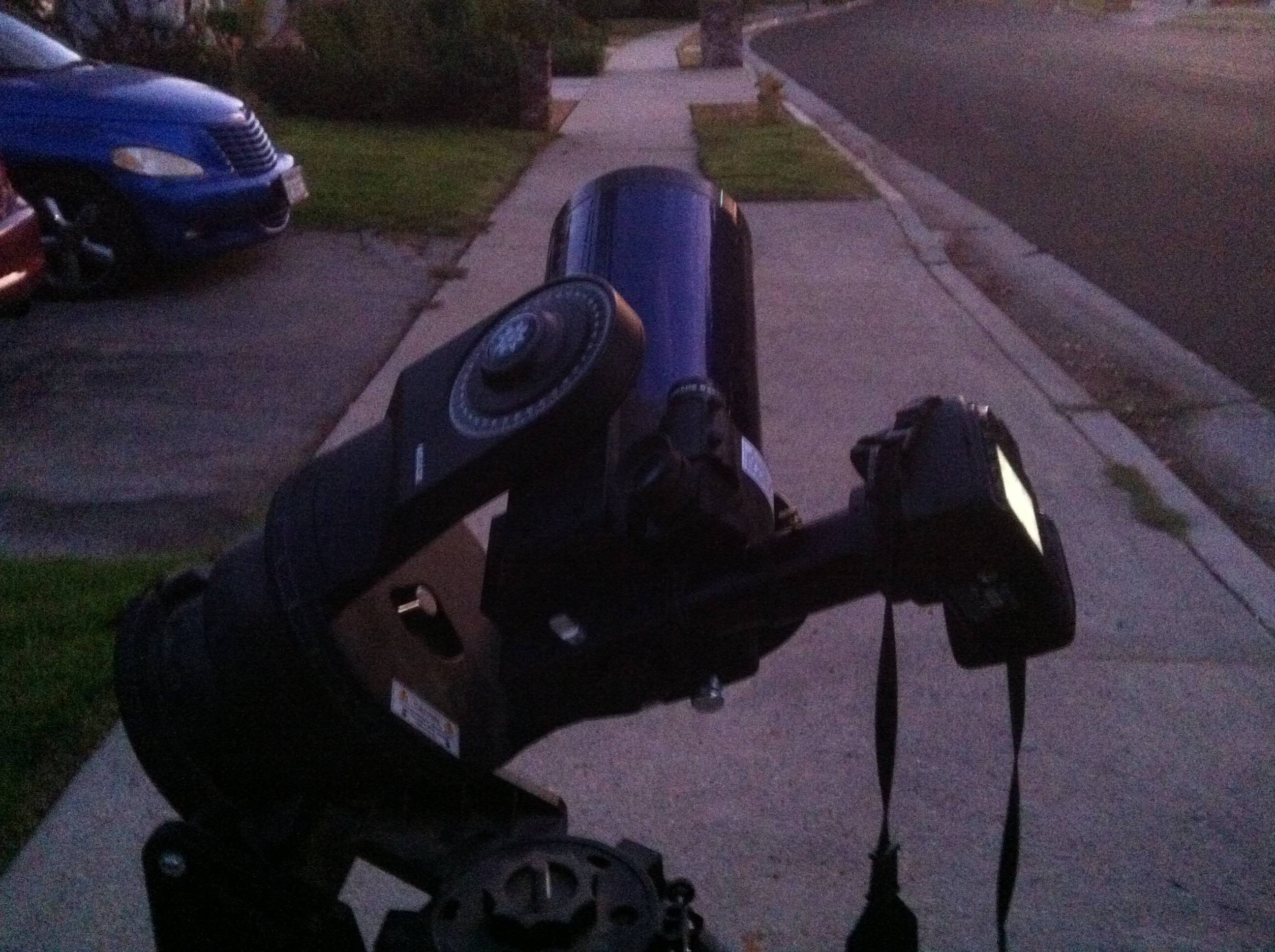 Here you can see the camera attached to the telescope, with the small finder scope just to the left of the camera.
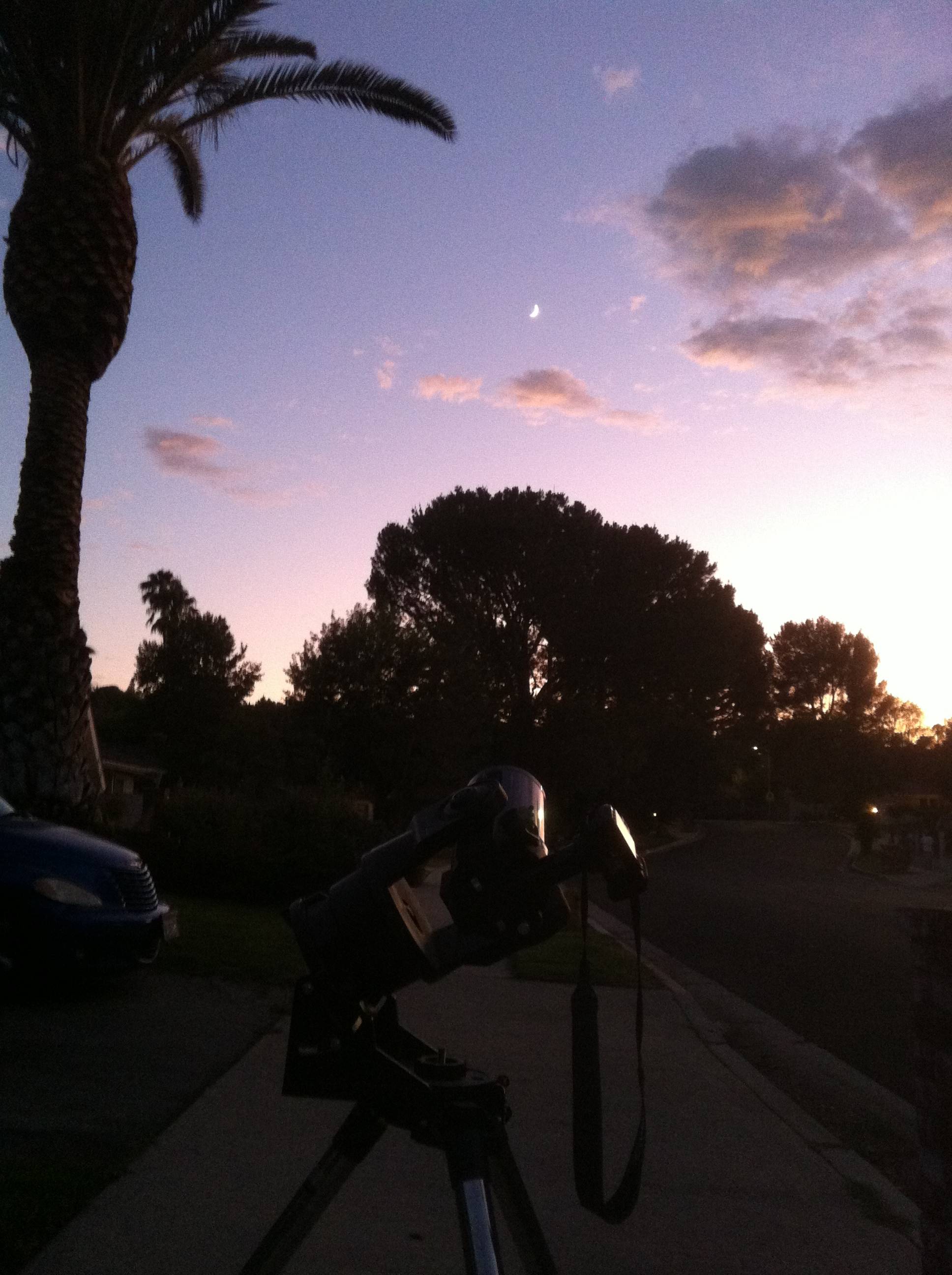 There were still clouds in the area, very pretty and pink and cotton candy like, but a pain for this kind of work.
 (Click on the images to view or download the full sized versions.)
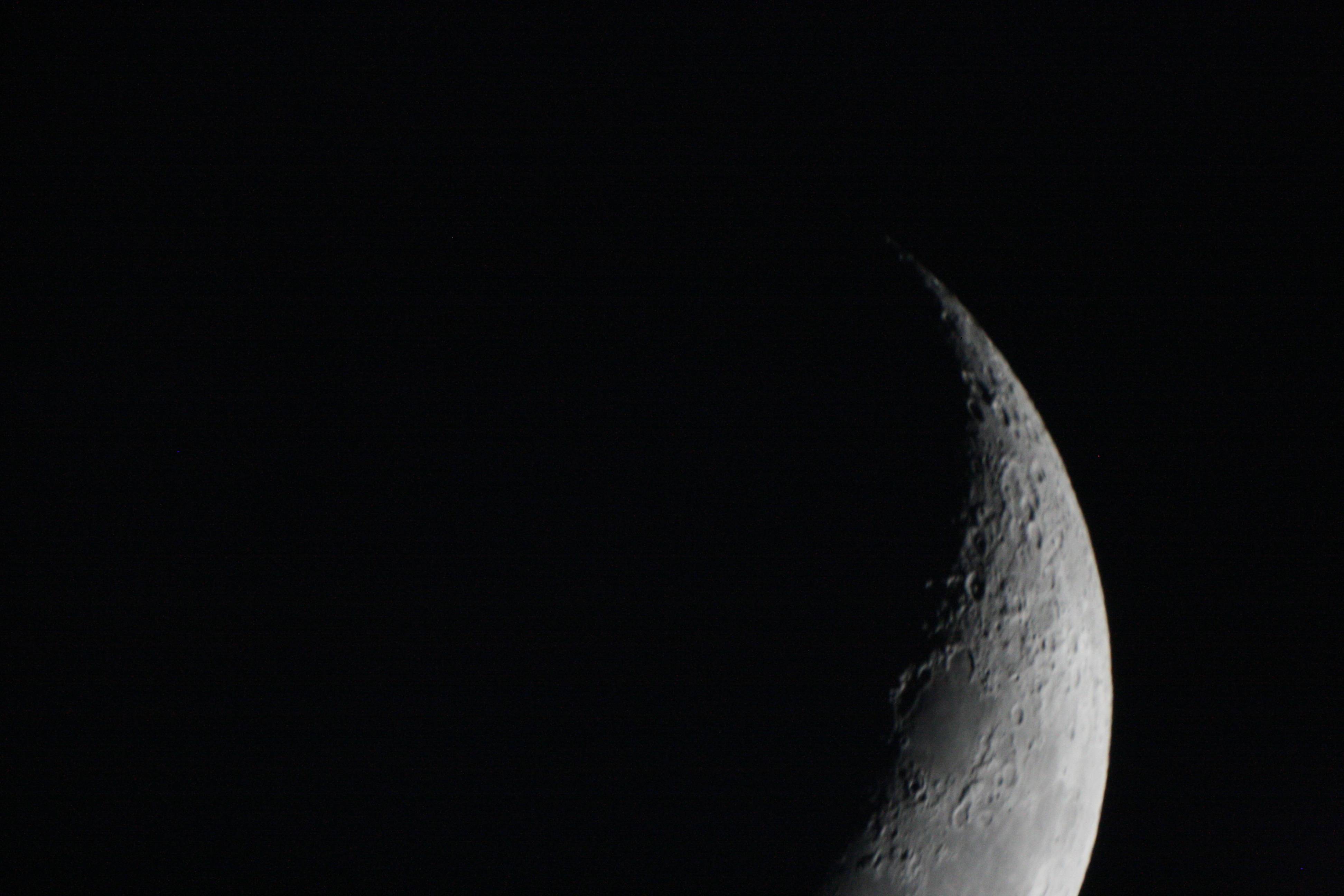
The southern limb of the moon. On all of the pictures here (as with almost all astrophotography) south is up, so the pictures appear to be flipped compared to maps. There are all kinds of good lunar maps online if you would like to play along.
When these pictures were taken, the moon was 21% illuminated, four days and twenty hours past new. This picture was a 1/60 second exposure and slightly blurry due to vibration.
The large, round, flat area just to the right of the terminator and just above the bottom of the picture is Mare Nectaris. The large crater sticking up (to the south) out of it, half open, is Fracastorius, approximately 124km wide. The crater just above (south) of that with the really nice central peak just being illuminated is Piccolomini (88km).
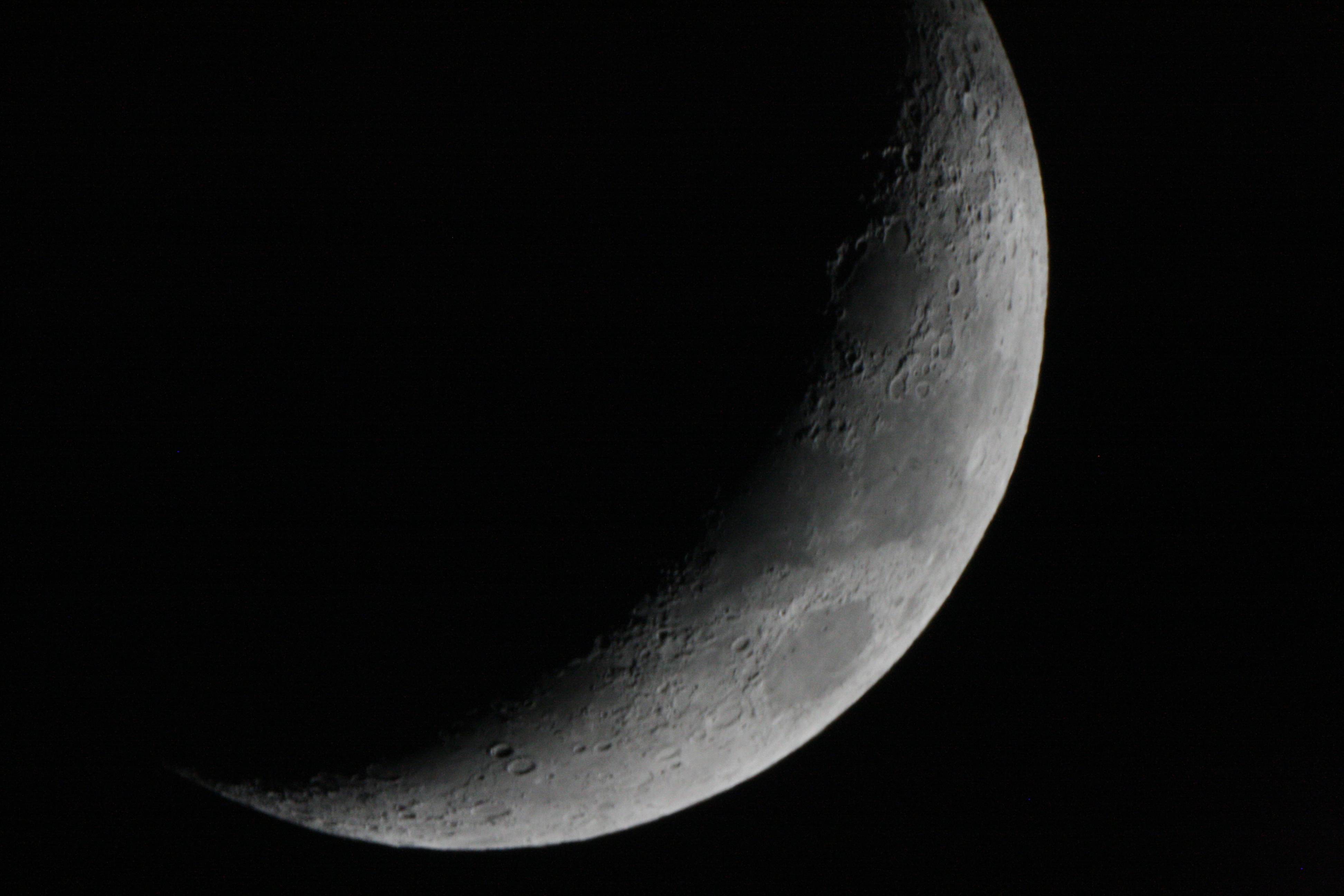 A 1/100 second exposure. In the center, below (north of) Mare Nectaris we see Mare Tranquillitatis, the Sea of Tranquility, where Apollo 11 landed in 1969. The large, circular area near the limb below (north) of that is Mare Crisium. The two prominent craters near the terminator at the very bottom (north) are Aristoteles (87 km, nearly fully illuminated) and Eudoxus (67 km, rim illuminated but floor deep in shadow).
Not fantastic, not spectacular, but not bad for two nights’ work. Still plenty of room for improvement, but to a good first approximation it’s working!
What’s next? Well, not too far above the horizon, about twenty or thirty degrees to the north of the moon there’s this really, really bright object. What is it?
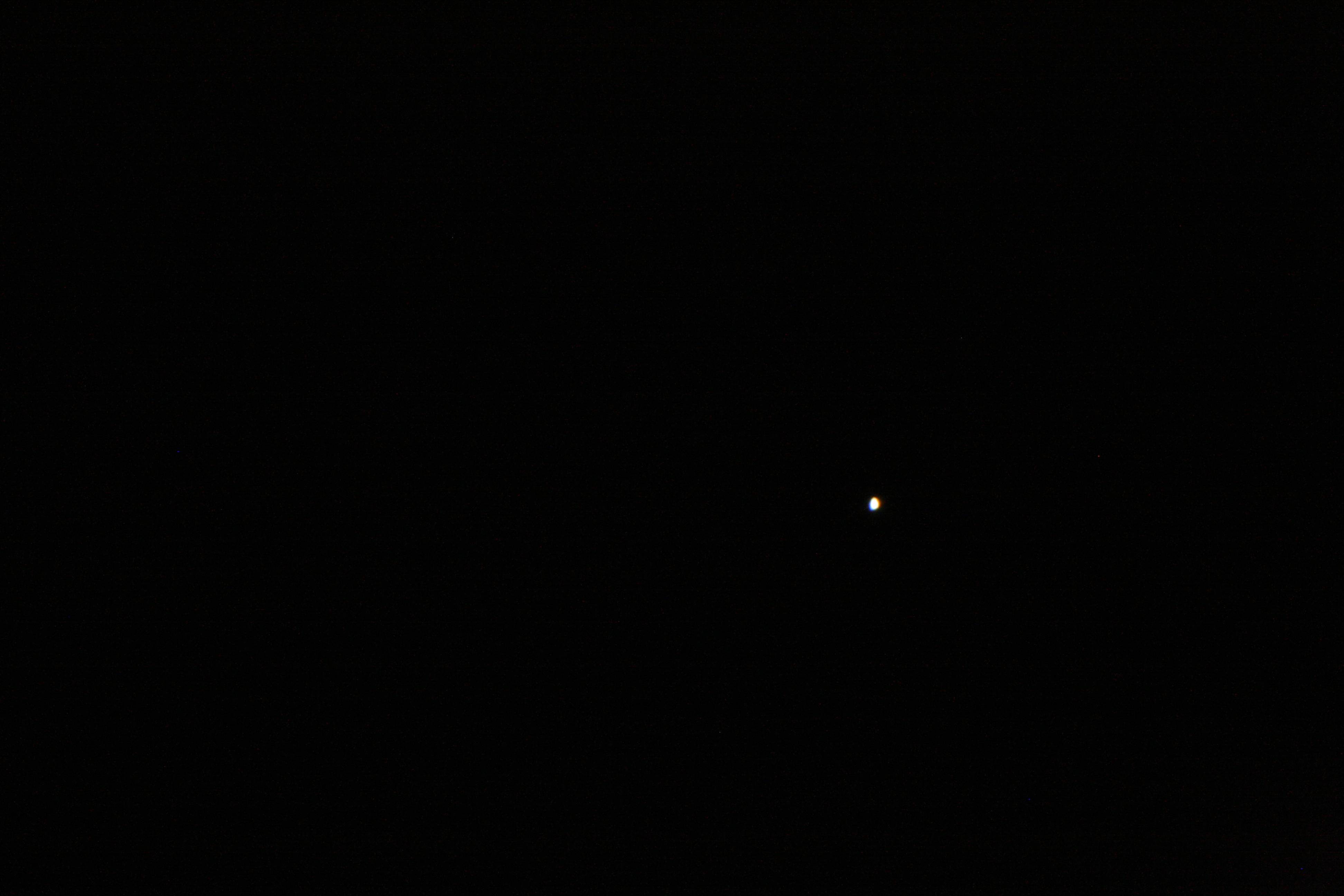 This is a 1/100 second exposure, so even with all of that dark night sky there this is a bright object, but much smaller than the moon. Yet it’s not quite a pinpoint, seems to have an actual discernible structure or form.
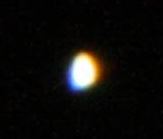 If we isolate the central image we can see that it appears to be showing phases, much like the moon does. But no other detail, no surface features.
Of course we know what it is (Venus), but did we actually photograph it correctly, seeing the phase and not just some random jiggle in the telescope rig, smearing a stellar pinpoint into something bigger? For confirmation, let’s go to a really neat website run by the US Naval Observatory:
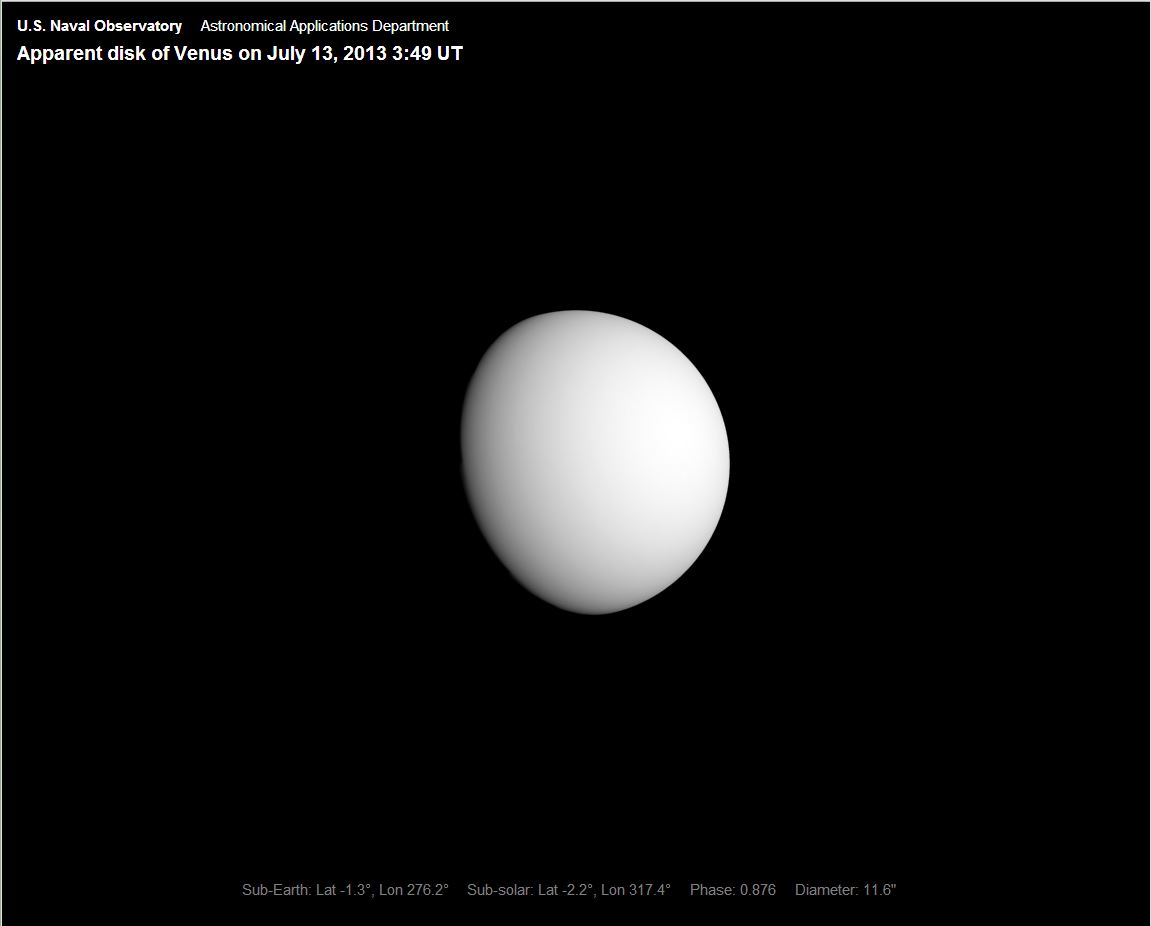 This is a computer-generated image of what Venus should look like at the time that my picture was taken. It most certainly appears that for the first time I’ve gotten a good photography of Venus!
Clouds permitting, we’ll continue to watch the moon as it heads toward full moon on July 22nd. It’s amazing how features can vary so widely on how they look as the lighting and shadows change. A couple hundred years ago, using telescopes less powerful than the one I’ve got and with no photography, these kinds of observations and measurements gave astronomers the first accurate idea of how big the craters and mountains of the moon were.
As far as Venus is concerned, Galileo’s observation of the phases of Venus (and Mercury) were a key point in the evidence that the sun was at the center of the solar system. (Planets inside our orbit show phases while planets outside our orbit do not. Simple geometry from there.) While the Catholic Church forced him to recant in order to avoid being burned at the stake as a heretic, the facts and the evidence remain.


 We Love The Stars Too Fondly