
In May, 2012 I went to Asia on the “Three-Countries-Three-Weeks-Three-Kids” tour. The first stop on this once-in-a-lifetime trip was Shanghai, followed by Seoul. On our first day in Seoul, we’ve made our way to the Gyeongokgung Palace museum, the restored Imperial Palace.
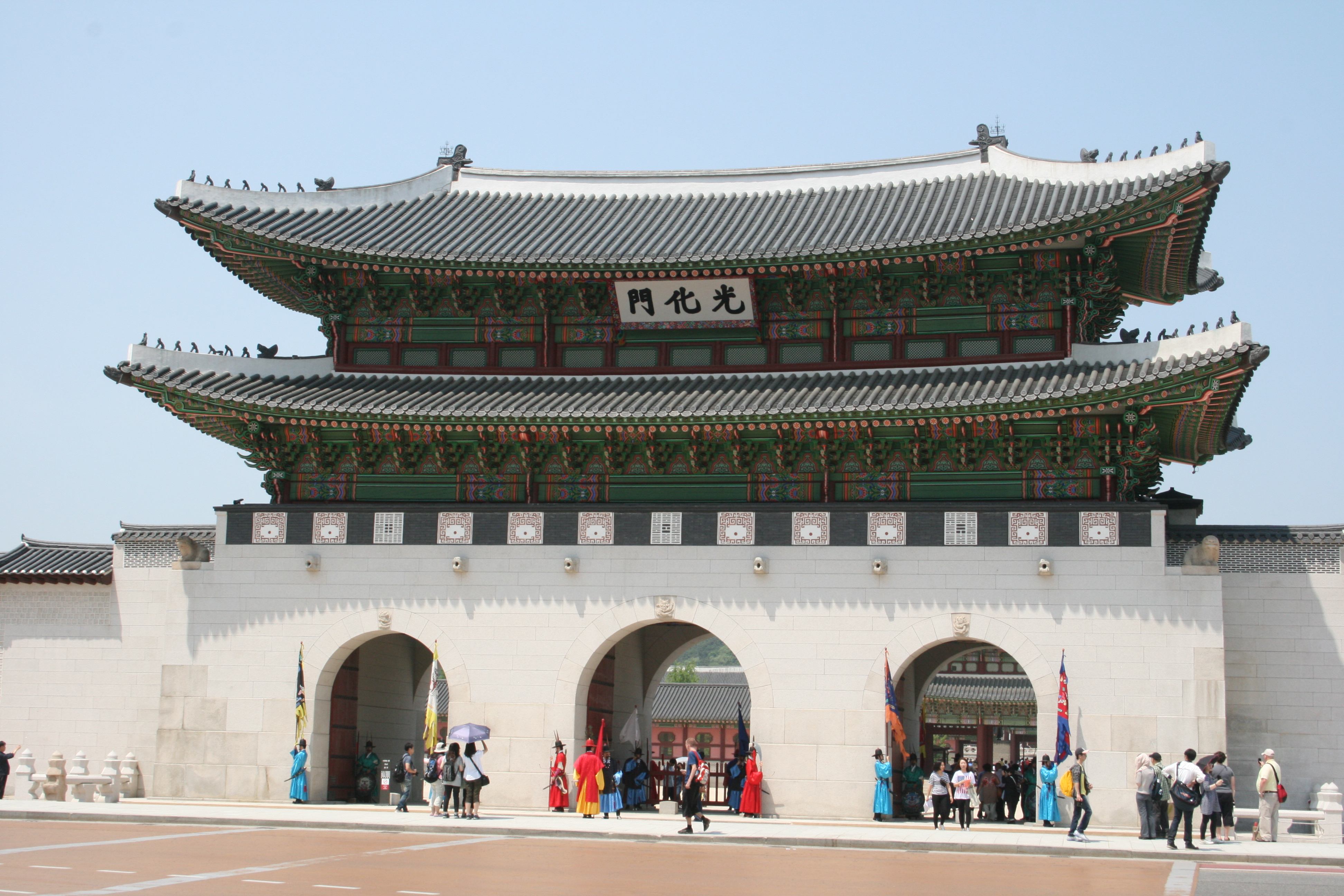 The Gwanghwamun Gate of the Gyeongbokgung Palace grounds. The grounds contain five separate palaces from different eras, all of which have been rebuilt after being burned to the ground multiple times during various wars and invasions. The grounds began restoration in 1860’s before being destroyed again during World War Two. They’ve now been restored again in all their glory.
Hourly at this main gate you can see the changing of the guard, a very colorful ceremony. The ceremony can be seen in progress here, with guards in bright blue, orange, and red robes on each side of the three arches.
 Inside the Gwanghwamun Gate you’ll find “Zone One” of Gyeongbokgung Palace (look for the directional and informational signs in Korean and English), which served as the primary Imperial Palace until it was destroyed in the 1590’s.
 This is the Heungnyemun Gate, the second one you go through. The detail work on the architecture is just stunning.
 Inside the Gyeongbokgung Palace gates you’ll find the Imperial Throne Hall (referred to as “Zone Two”). This picture looks back from the steps of the Throne Hall toward the first two gates, with the modern city (where we walked in Part Two) beyond.
This was the area where business was conducted — proclamations read, ambassadors received, reports delivered by officials, and so on. The markers out in the plaza were there for keeping order, with an arrangement for who sat where based on seniority and importance. (They talked about it a lot, but I’ve forgotten some of the details.)
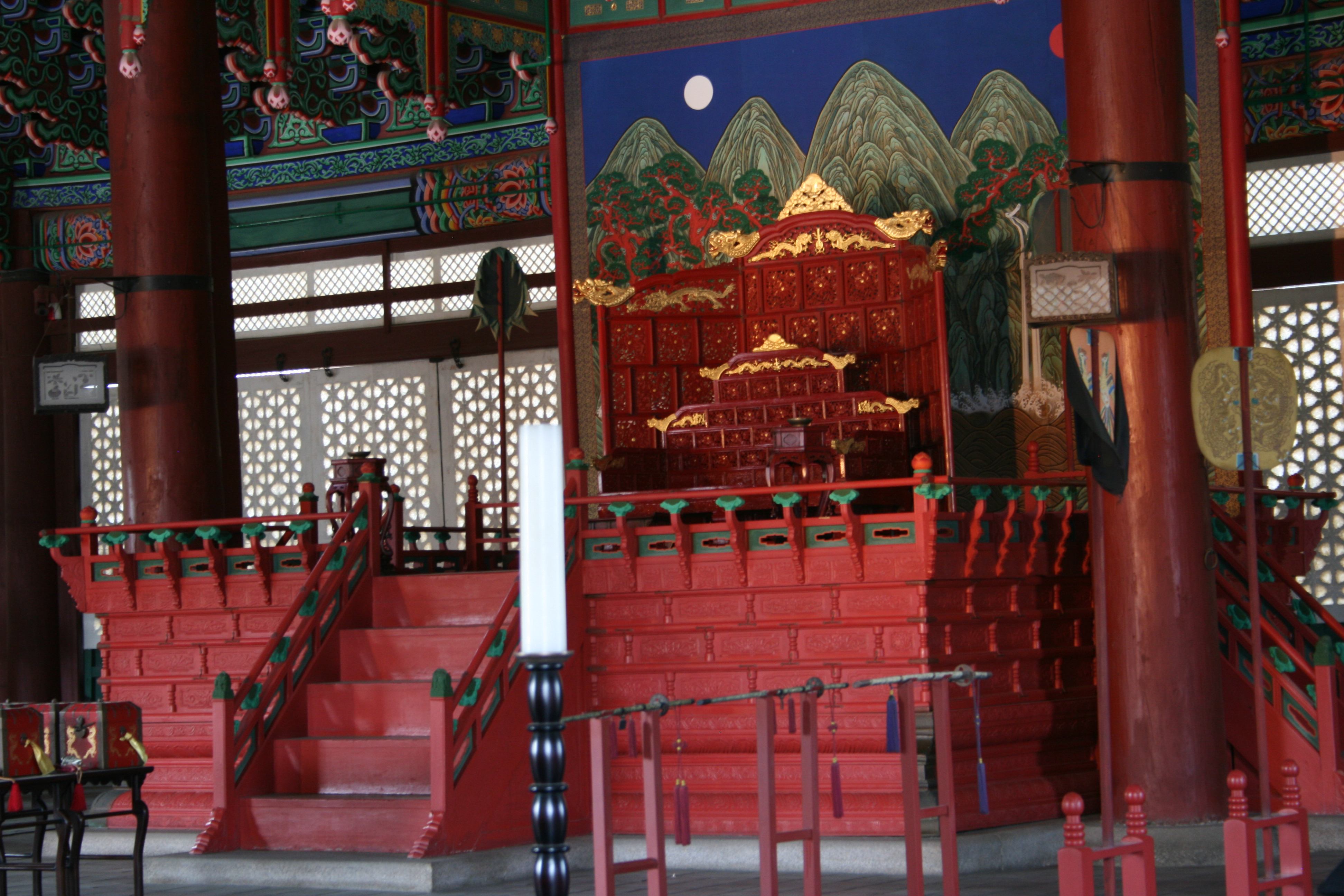 The restored Imperial Throne Room.
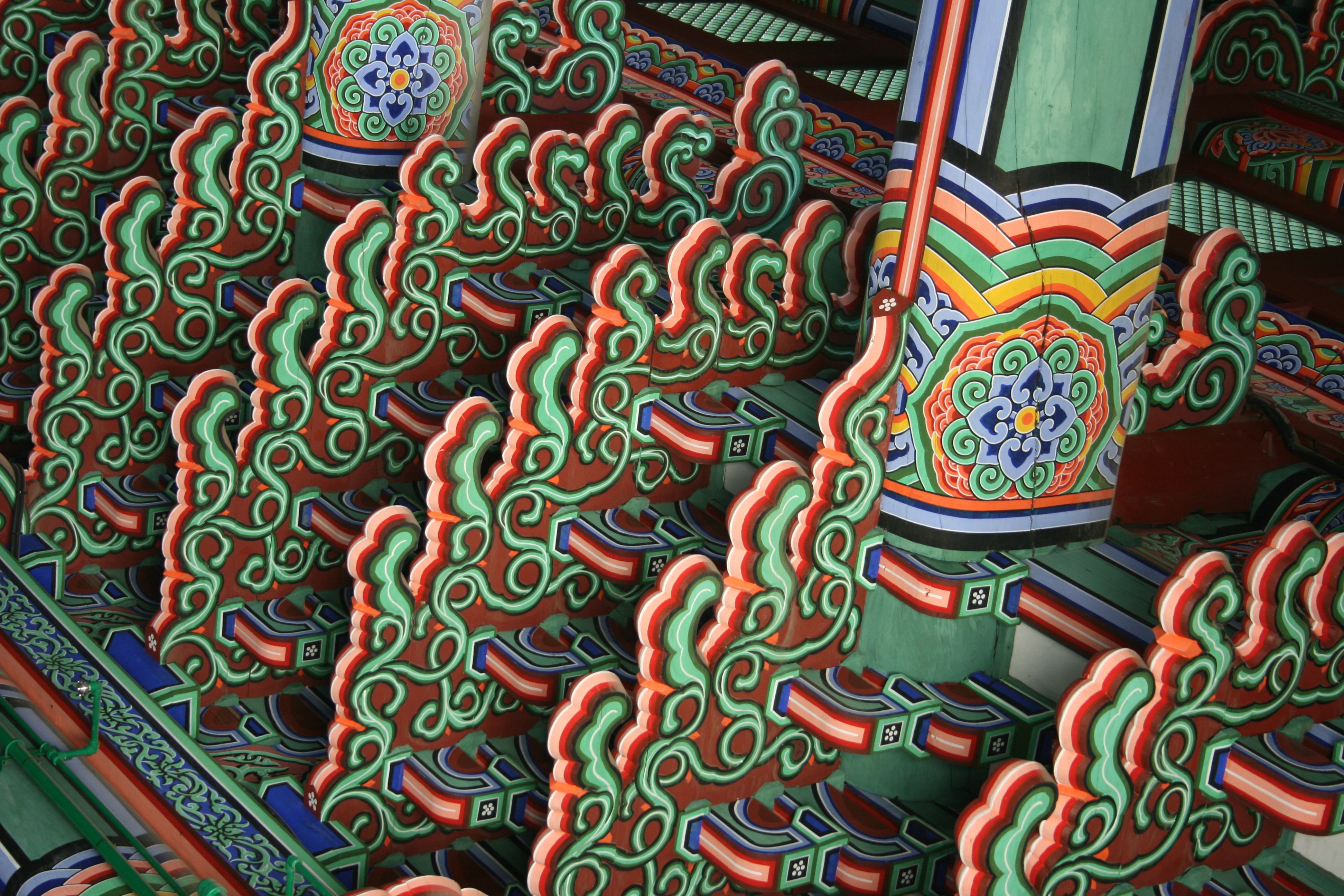 Inside the Throne Room, up under the eaves of the ceiling and roof, everything is covered in bright colors and intricate patterns. I just loved seeing this work!
 A wide view of the ceilings and walls of the Imperial Throne room.
 “Zone Three” is the location of Sajeongjeon, which is actually a collection of several buildings and walled off interior sections. The center Sajeongjeon building was used by the Emperor’s Cabinet and senior government officials, with two large side buildings (Cheonchujeon and Manchunjeon) as well. This entire complex was built by the Joseon Dynasty from the 1390’s to the 1890’s.
One of their innovations was a system of interior heating. The buildings were built above ground, with passages under the floors connected to these outdoor furnaces, allowing the hot air to circulate under the building.
 A wider view of the Sajeongjeon, Cheonchujeon, and Manchunjeon buildings, as well as some of the surrounding walls and other buildings.
Next time, we’ll continue on to the other zones and palaces. It’s really a great place, if you go, plan on walking and plan on spending a few hours. It’s well worth it.


 We Love The Stars Too Fondly