
In May, 2012 I went to Asia on the “Three-Countries-Three-Weeks-Three-Kids” tour. The first stop on this once-in-a-lifetime trip was Shanghai, followed by Seoul. Day One in Seoul, we made our way to the Gyeongokgung Palace museum with all of its attendant palace buildings from various eras. On Day Two, following a somber morning looking at a lot of the history of war in Korea, it was time for a major change of pace in the afternoon and evening.
We took the subway to the other side of the Han River and got off at the site of the 1988 Olympic Games.
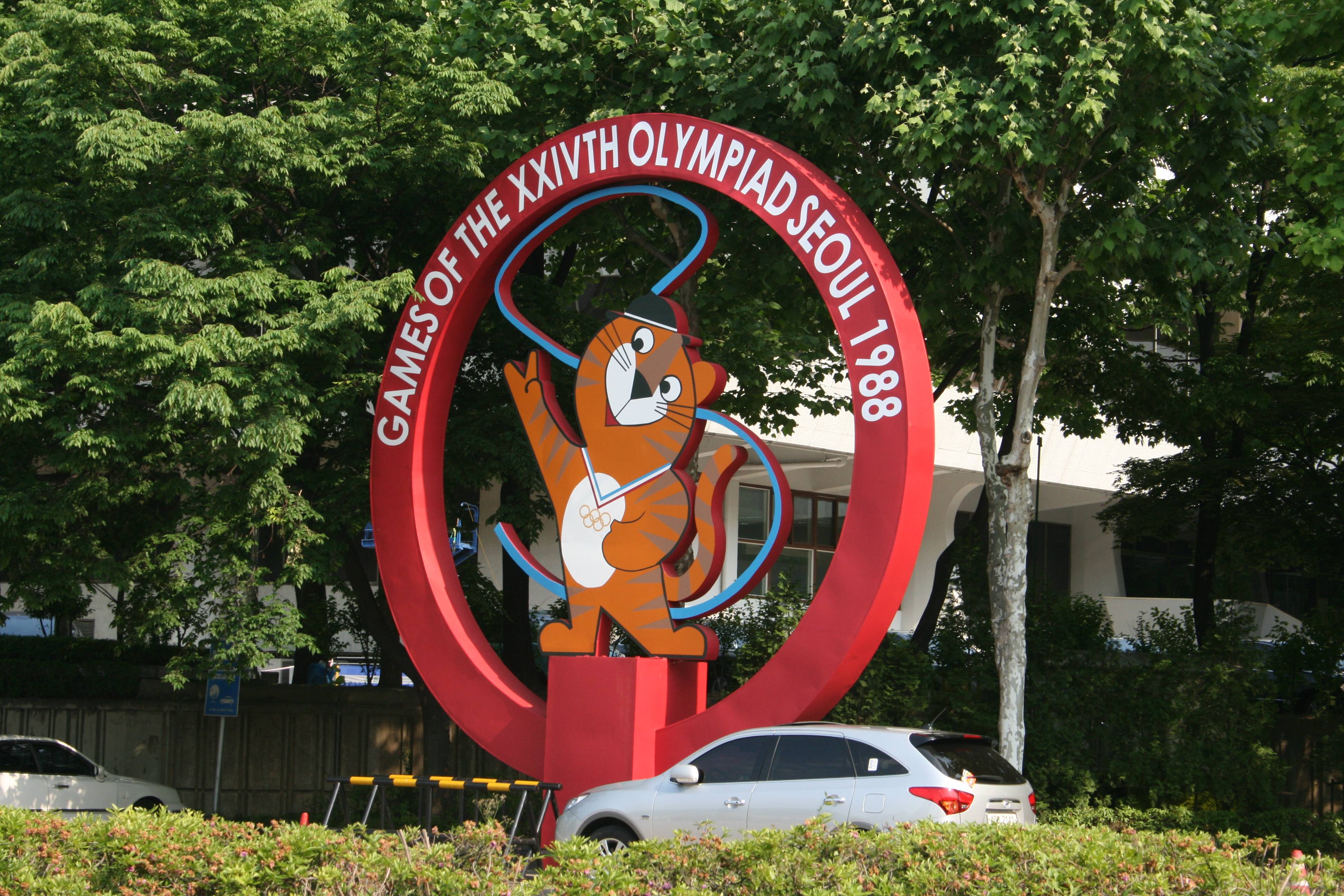 The main stadium and several of the other venues built next to it are still used and looked well maintained. The Olympic Village area is along the river and now features many parks and open areas (at a premium in a jam-packed urban area like this) as well as large displays of artwork and photographs from the 1988 games.
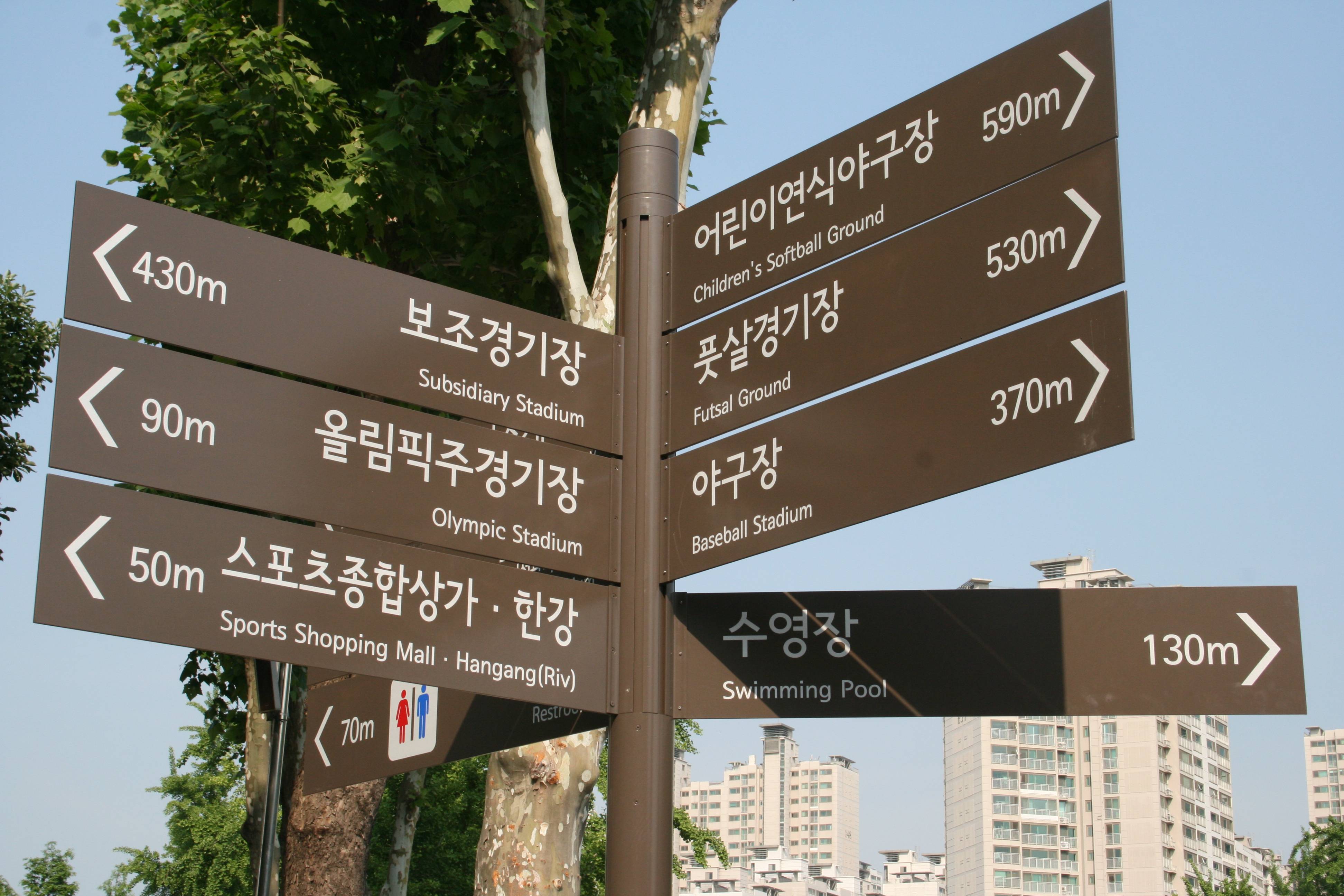 Much of what was built in 1988 is still in use and as you can see, it’s easy to get around even if you don’t read Korean. (As Americans, we were almost crippled by the use of the metric system, but we managed to survive.) As with many recent Olympics, the athlete’s living quarters have been converted to normal housing. Everywhere you go in Seoul you see high-density housing skyscrapers like in the background here.
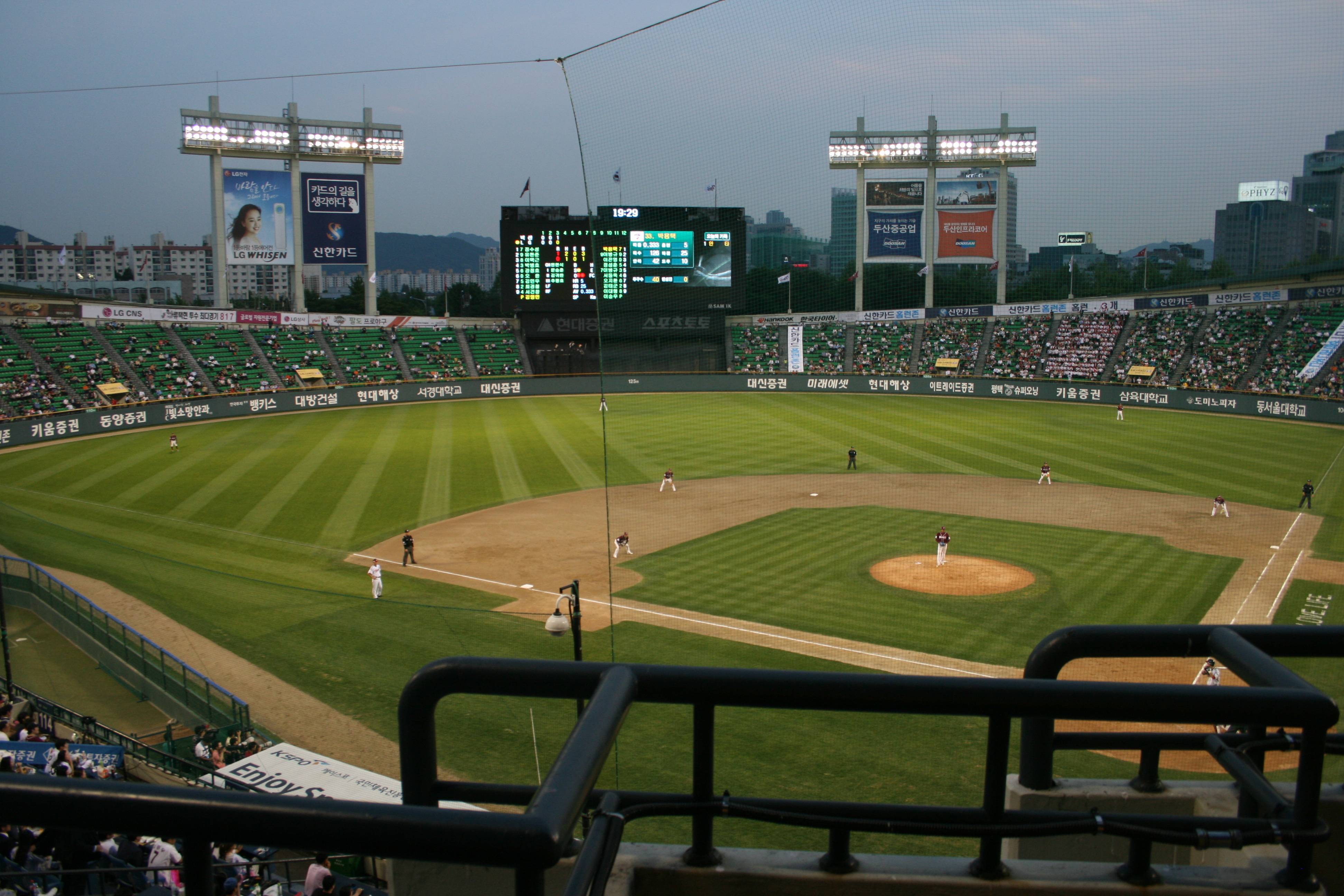 Our destination was the Jamsil baseball stadium next to the Olympic stadium. Unlike the United States, the limited space and large population make it much more sensible for the stadiums to be used by at least two “home” teams. This stadium was in use by both the LG Twins (who were the home team) and the Doosan Bears. Behind all of the banners and large, fiberglass, cartoon animal sculptures for the LG Twins, off in dark corners, we could see similar banners and paraphernalia for the Doosan Bears. (As we’ll see, this is by far the least of the unusual differences between US and Korean baseball.)
The LG Twins typically finish 7th or 8th in an eight-team league. (The league expanded to nine teams in 2013, and will expand to ten teams in 2015.) The visiting Nexen Heroes aren’t any better. We didn’t know any of this at the time, which was perfectly fine, we just wanted to see a baseball game.
Additionally, all of the teams are owned and sponsored by major Korean companies or conglomerates, including LG Electronics, Samsung, and Kia. (Visions of “Rollerball“! And of course I mean the 1975 “classic” with James Caan and John Housman, not the pale and pathetic 2002 remake.)
But all that aside, really, how much different could professional baseball in Korea be from professional baseball in the United States?
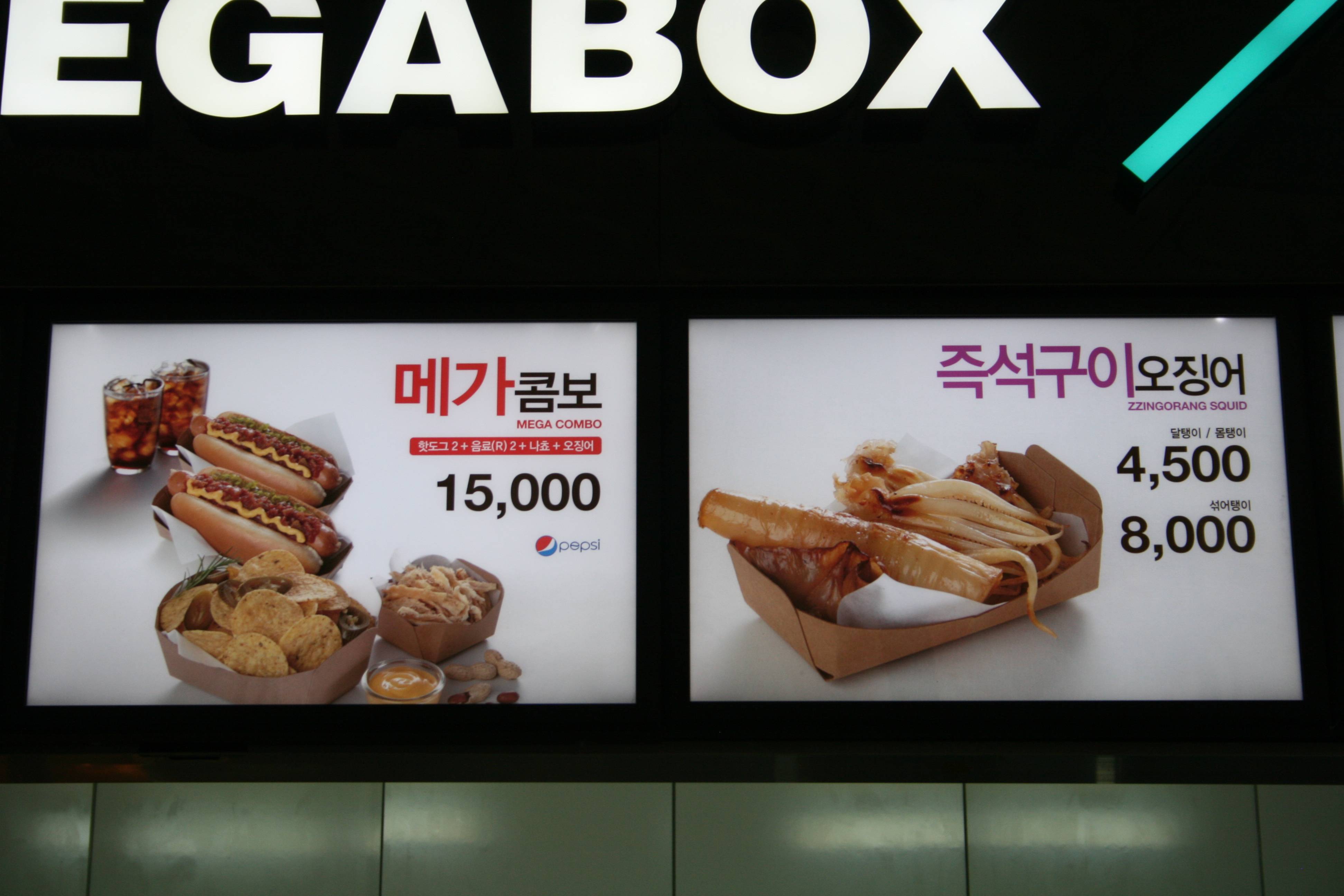 The squid at the concession stands was the first real clue that we weren’t in Kansas any more. We both passed on that. I’m an adventurous eater abroad — but I have my limits. Besides we’re at a baseball game! We’ve got to get hot dogs & sodas, right? Like right there in the picture!
Nope. Hot dogs there were sure not “Dodger Dogs” or what we’re used to. It was more like a bratwurst or sausage, a bit cold and boiled (have they been talking to the British?), and we couldn’t find the condiments to save our lives. I had dogs, but also went back for some chicken strip-like thing, and a rice bowl of some sort. But no squid.
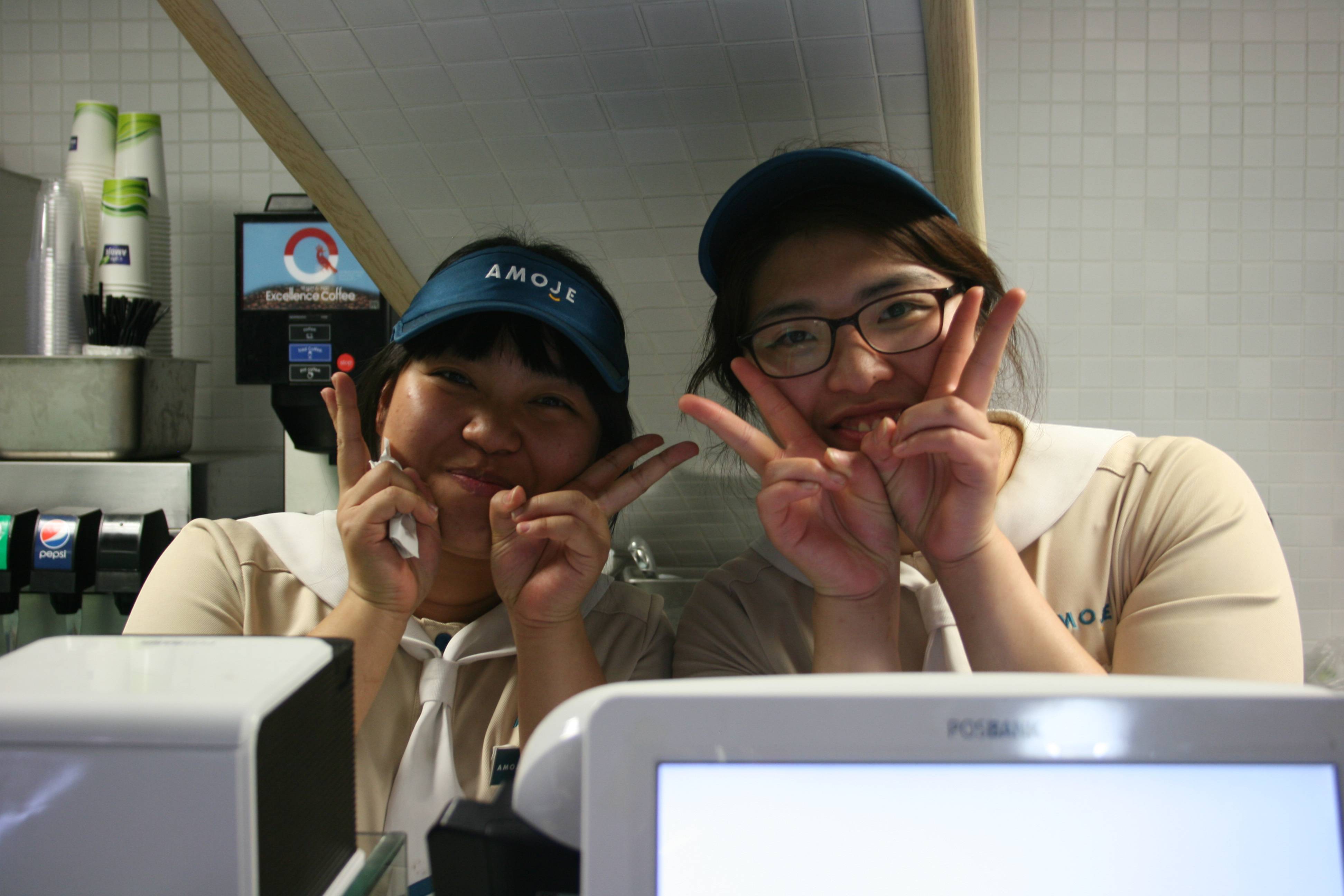 These two young ladies were a gem when we were trying to get food. We were there plenty early so there wasn’t a line and they wanted SO BADLY to be helpful! They however didn’t speak a word of English, we didn’t speak a word of Korean. After much pointing on our part, giggling on their part, and some mutual pantomime, we finally got something to eat (except for condiments — I’m not sure how to get that across in English/Korean charades) and I had to take their picture.
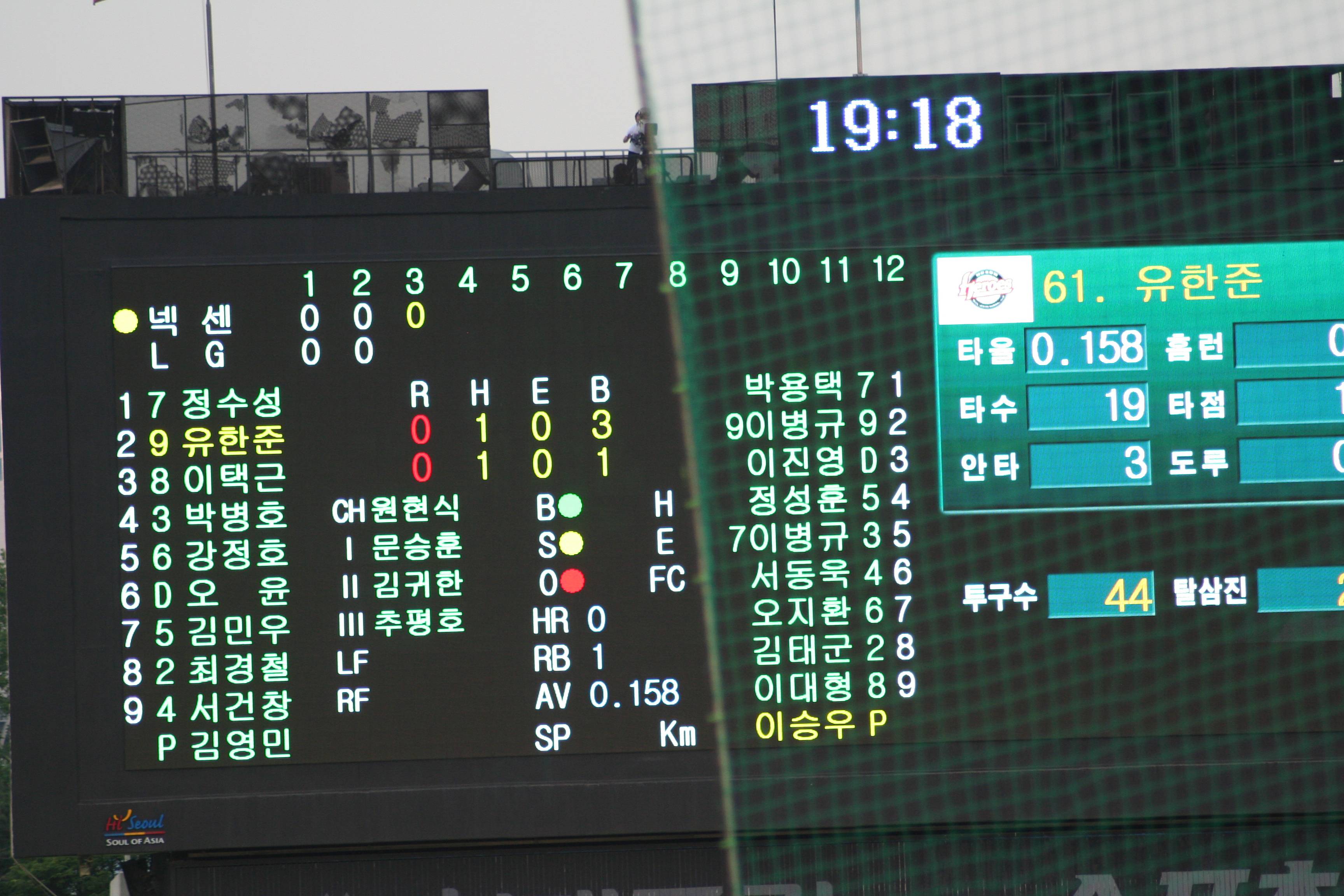 Despite the rather obvious language barrier, in the end, baseball is baseball. The rhythm of the game is still the same — three strikes, four balls, nine innings. And it’s still a game largely driven by statistics, so batting averages still are derived the same way, which lets you derive what must be the number of hits, at bats, home runs, and so on. A batting order is a batting order, even though we had no clue who was coming up. But once through the lineup and you could see who was a big hitter and who wasn’t, the fast guy still led off, the big hitter was in the clean-up spot, and the lightweight hitters were at the bottom of the order.
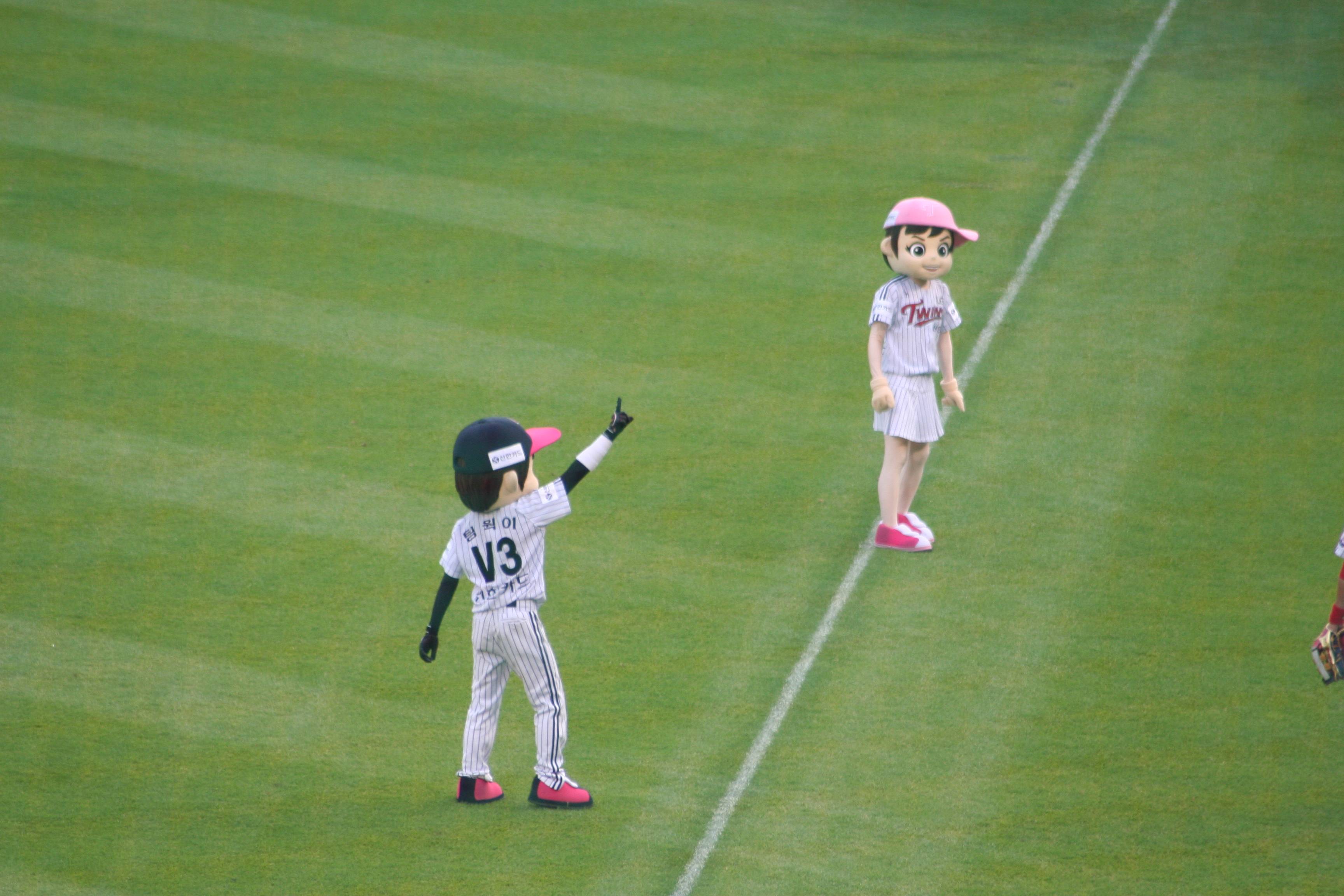 The mascots are very anime-like. No Philly Phanatic , Dinger, or Rally Monkey here. More like anime refugees from a Pokemon Adventure.
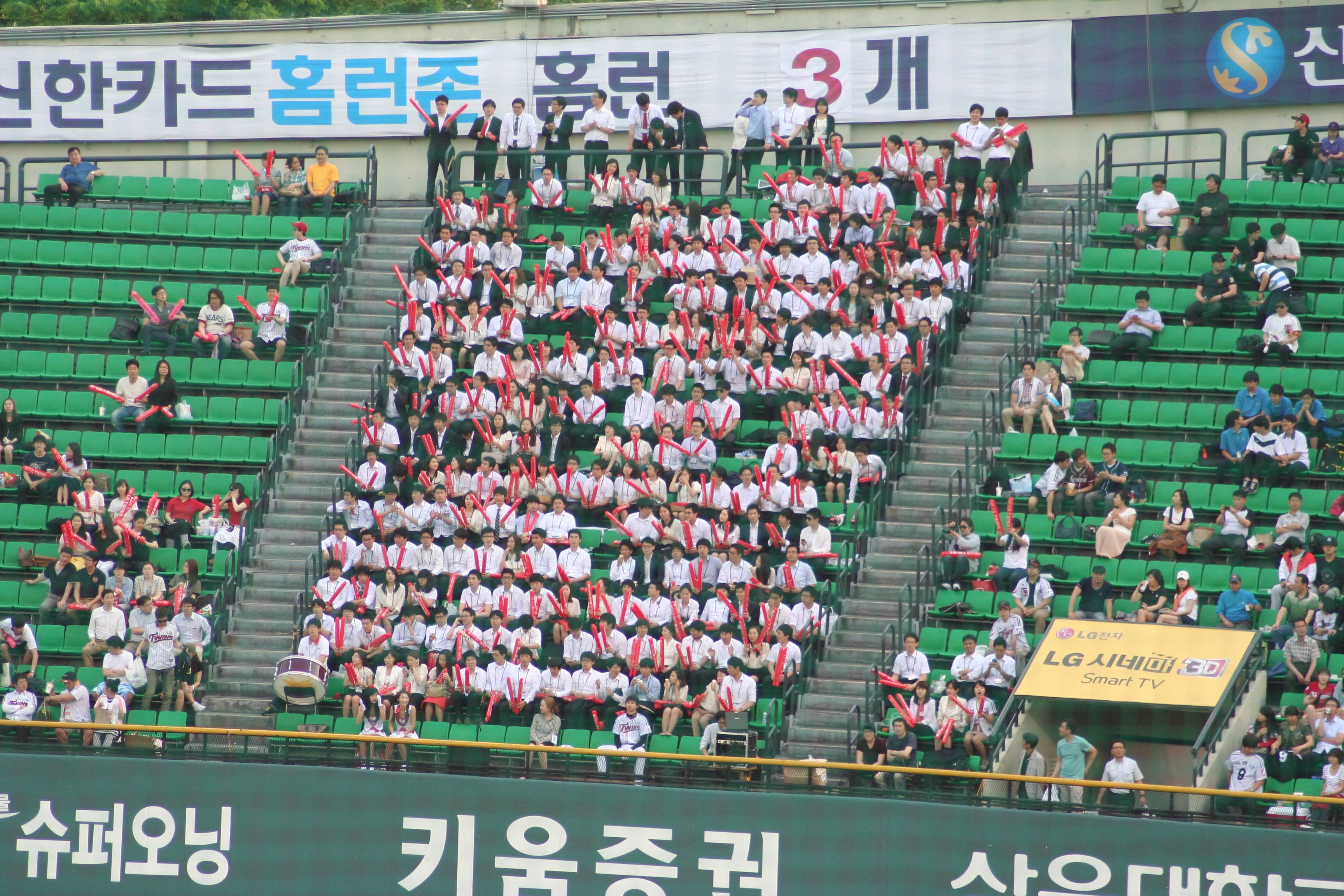 The fans are organized as all get-out. Every one had thunder sticks (which the Angels have now started handing out and I dearly love) and there were groups that crammed together into one section or the other, ignoring a lot of empty seats nearby.
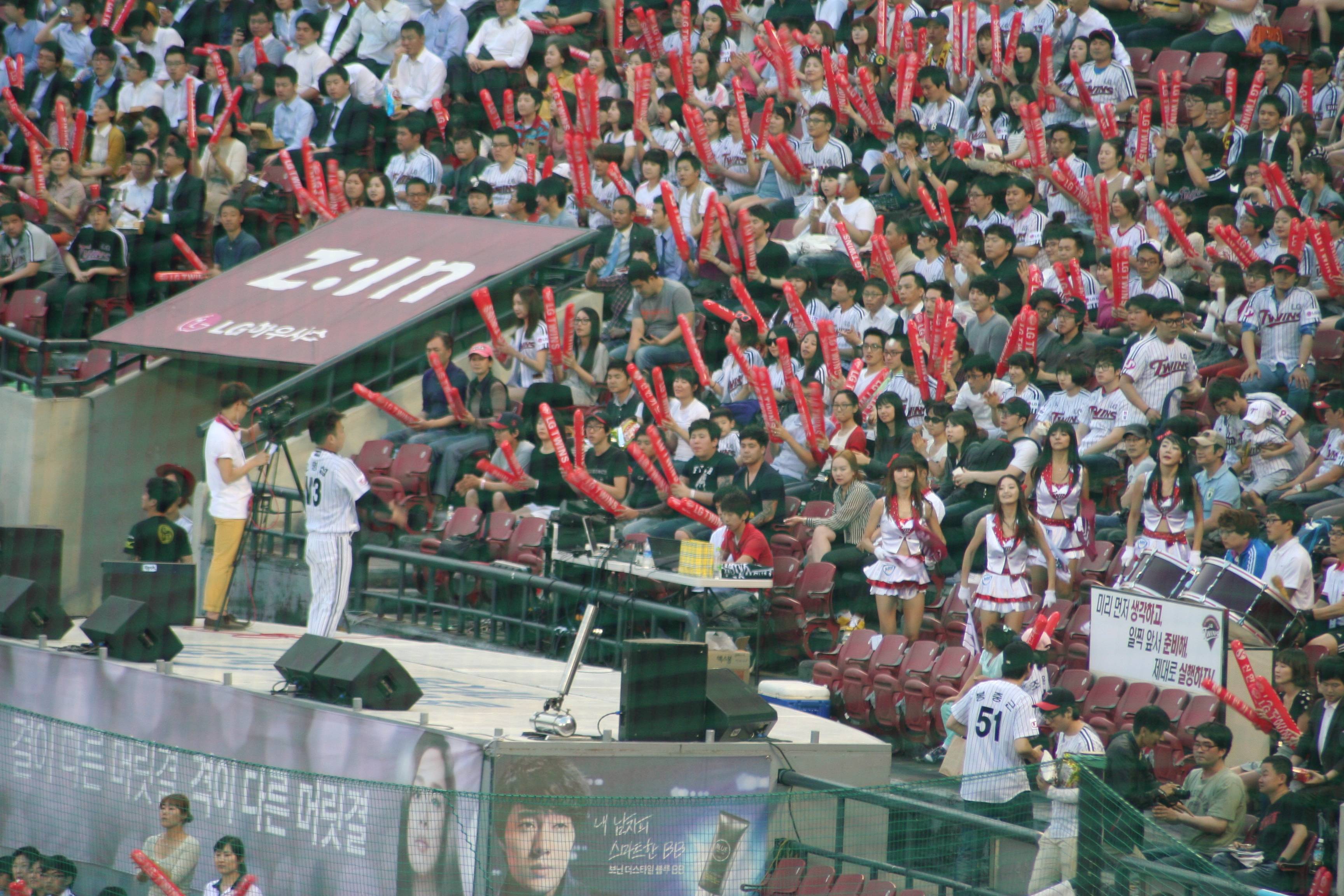 Both sides have cheerleaders (lower right) in addition to their mascots. And drums. And chants and songs. Most US crowds don’t have the organized singing and chanting (except for everyone going “Beat LA!” or “Oakland Sucks!”) like they do here or in the European football leagues.
At the Korean baseball games, they’re very polite about taking turns. There was a bit of a “battle of the bands” competition going on, but it was raucous without being chaotic. The LG Twins (shown) had red thunder sticks and trim to all of their uniforms, and they filled the stands on the first base side. The Nexen Heroes had pink thunder sticks and filled the third base side.
We were right behind home plate in the upper deck and we were both wearing Los Angeles Angels hats (yeah, we reeked of “foreigner”, sue us!) so we got to chant and sing along and use our thunder sticks for both teams.
It wasn’t Fenway or Wrigley, or even Camden Yards or Busch Stadium III, but it sure was fun. It was a great experience to see something at once very familiar and at the same time very different.
If you get to Korea go see a game! (But bring your own condiments in those little foil packets.)


 We Love The Stars Too Fondly