
In May, 2012 I went to Asia on the “Three-Countries-Three-Weeks-Three-Kids” tour. The first stop on this once-in-a-lifetime trip was Shanghai, followed by Seoul. Day One in Seoul, we made our way to the Gyeongokgung Palace museum with all of its attendant palace buildings from various eras. On Day Two, following a somber morning looking at the War History Museum, we went to a baseball game.
Day Three in South Korea was an all-day trip out of Seoul to what is apparently the biggest tourist attraction in the country, the De-Militarized Zone (DMZ) meeting rooms at Panmunjeom.
Seoul is a busy, crowded, bustling, modern city of eleven million people. Thirty-five miles away is a very large North Korean army that is poised every day to attack, held back only by the very large armies of South Korea and the United States. It’s easy to forget that as a tourist, but the South Koreans have it in the backs of their minds constantly. Remember, the Korean War did not end in 1953, only a truce was signed. It’s a truce that’s held (more or less) for 61 years, but it’s still only a truce.
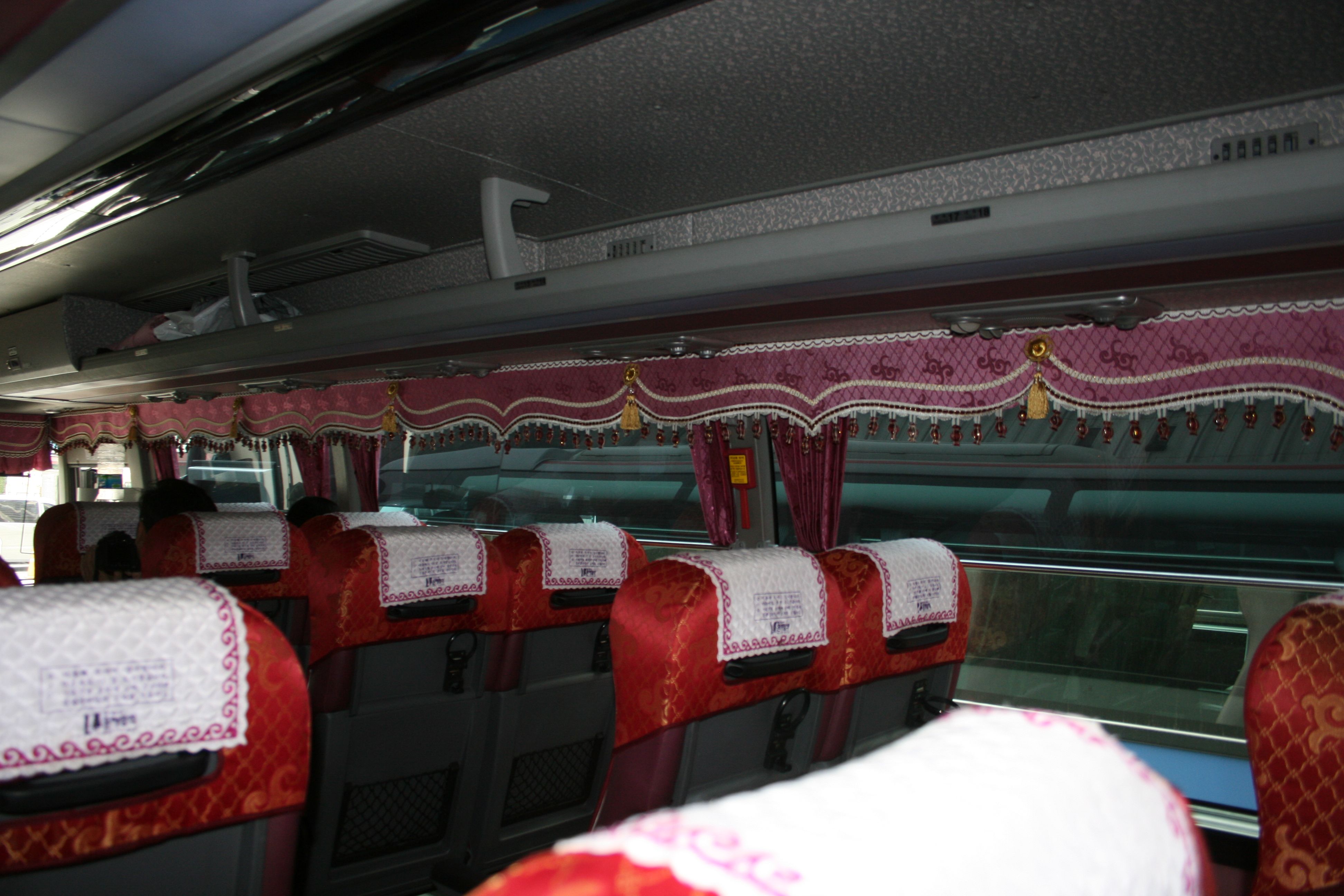 As a tourist, you can’t just rent a car and go up to the DMZ. Access is severely restricted and while there are several tour companies that can take you there, reserve a spot well in advance. You’ll meet up early (we were there at 7AM-ish, I think) and get bused to the DMZ. I got a kick out of the frills and beads decorating the bus’ interior. This wasn’t Greyhound or Trailways!
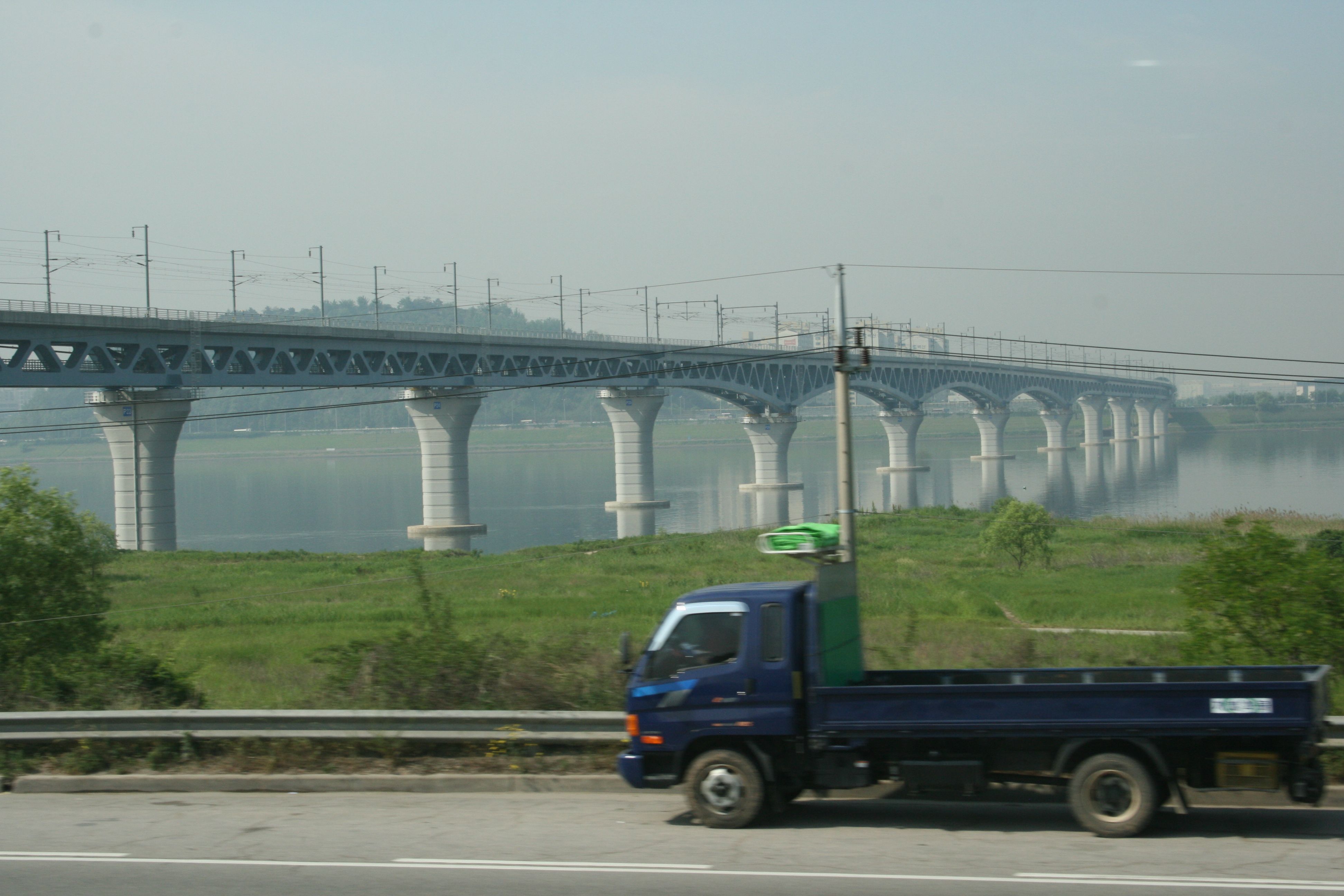 Following the Han River as it flows toward the Yellow Sea to the northwest, there are bridges every mile or so.
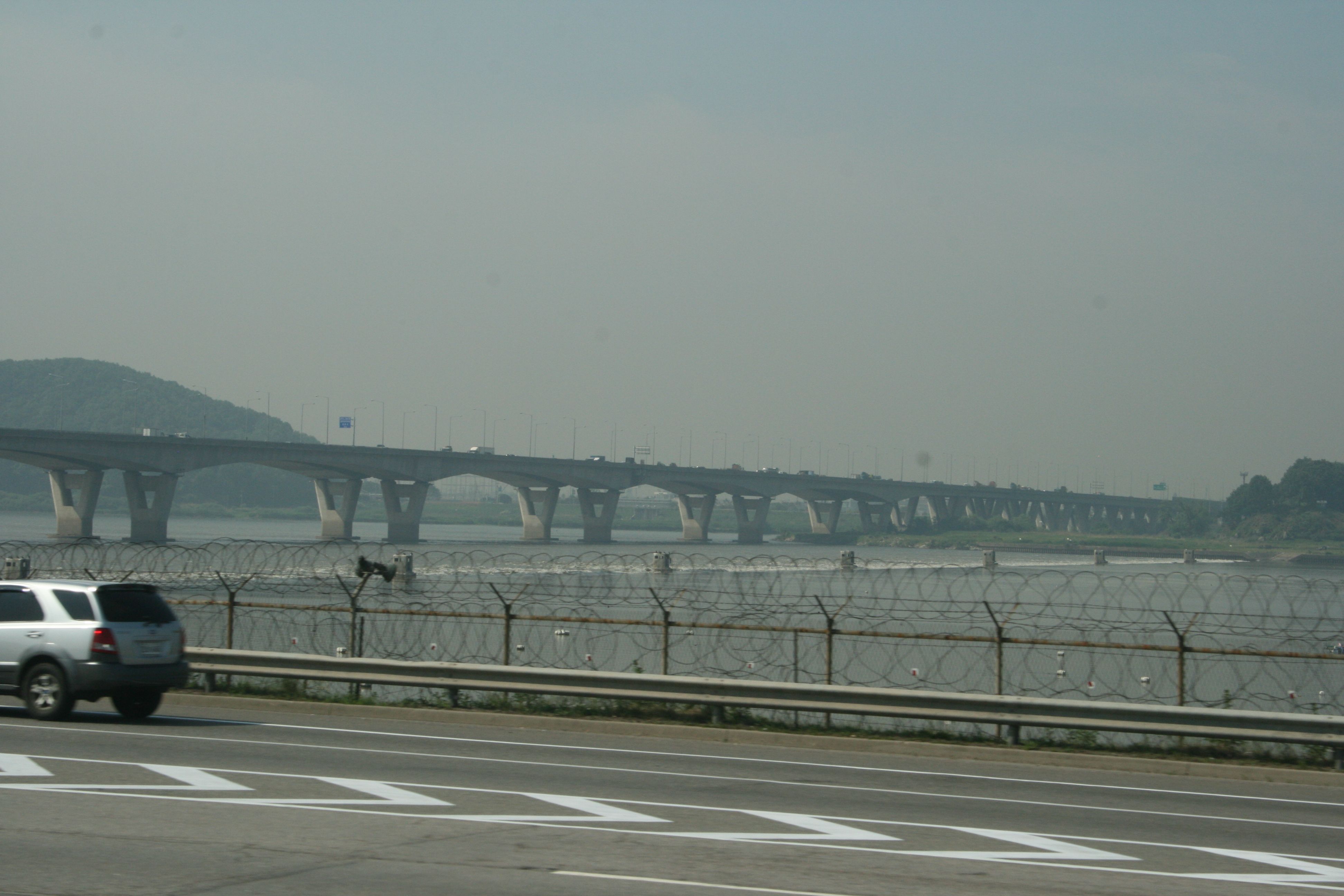 But just a few miles outside of the city, the banks are now lined with razor wire and there are barriers set up across the river to catch anything coming upstream. In the past there have been instances where small groups of North Korean soldiers have tried to come up the river to make trouble. It’s very much an armed border.
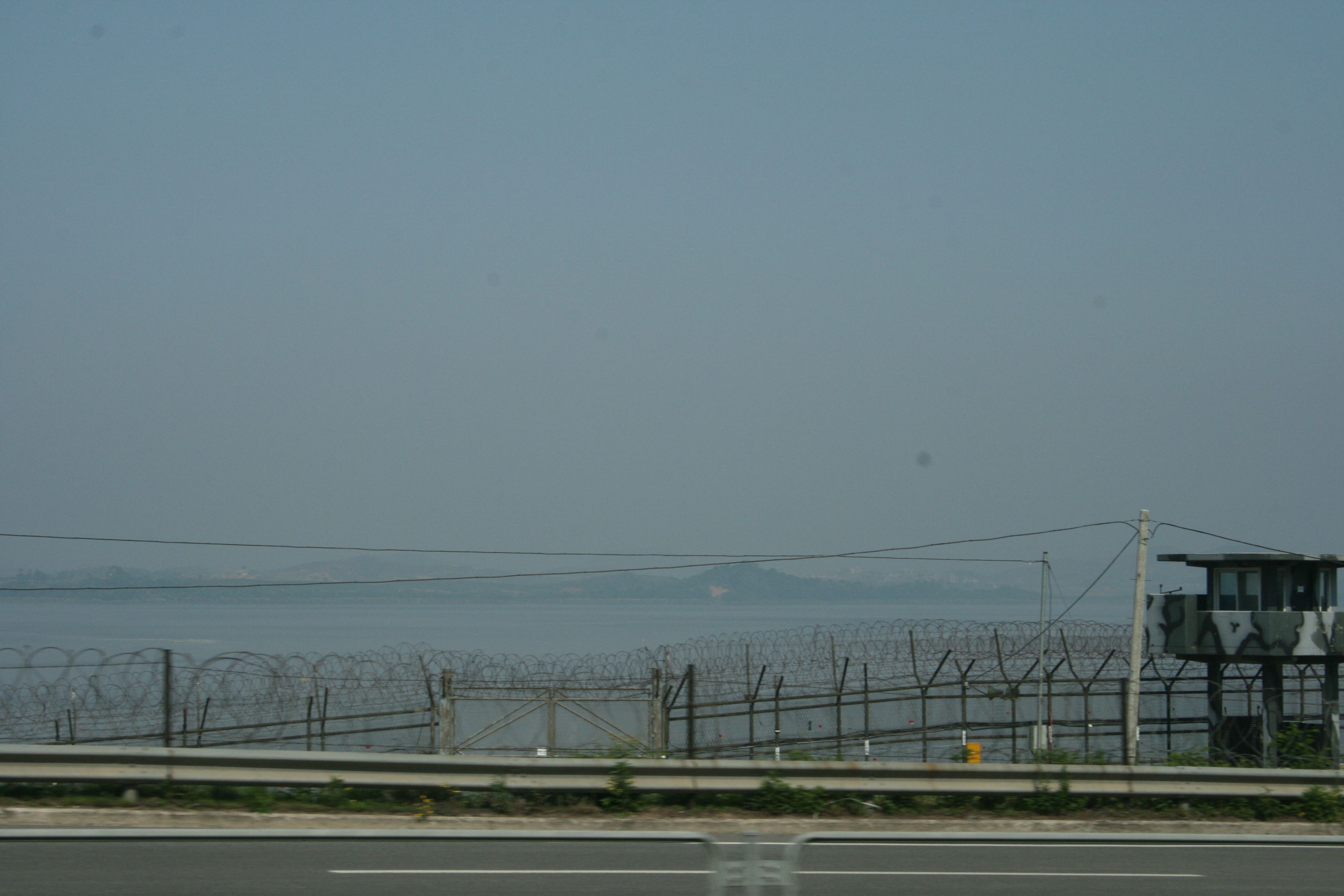 The road finally takes you to where the other side of the river is no longer South Korea, but North Korea. (There are guard towers all along the river as well.) This was our first glimpse across the border.
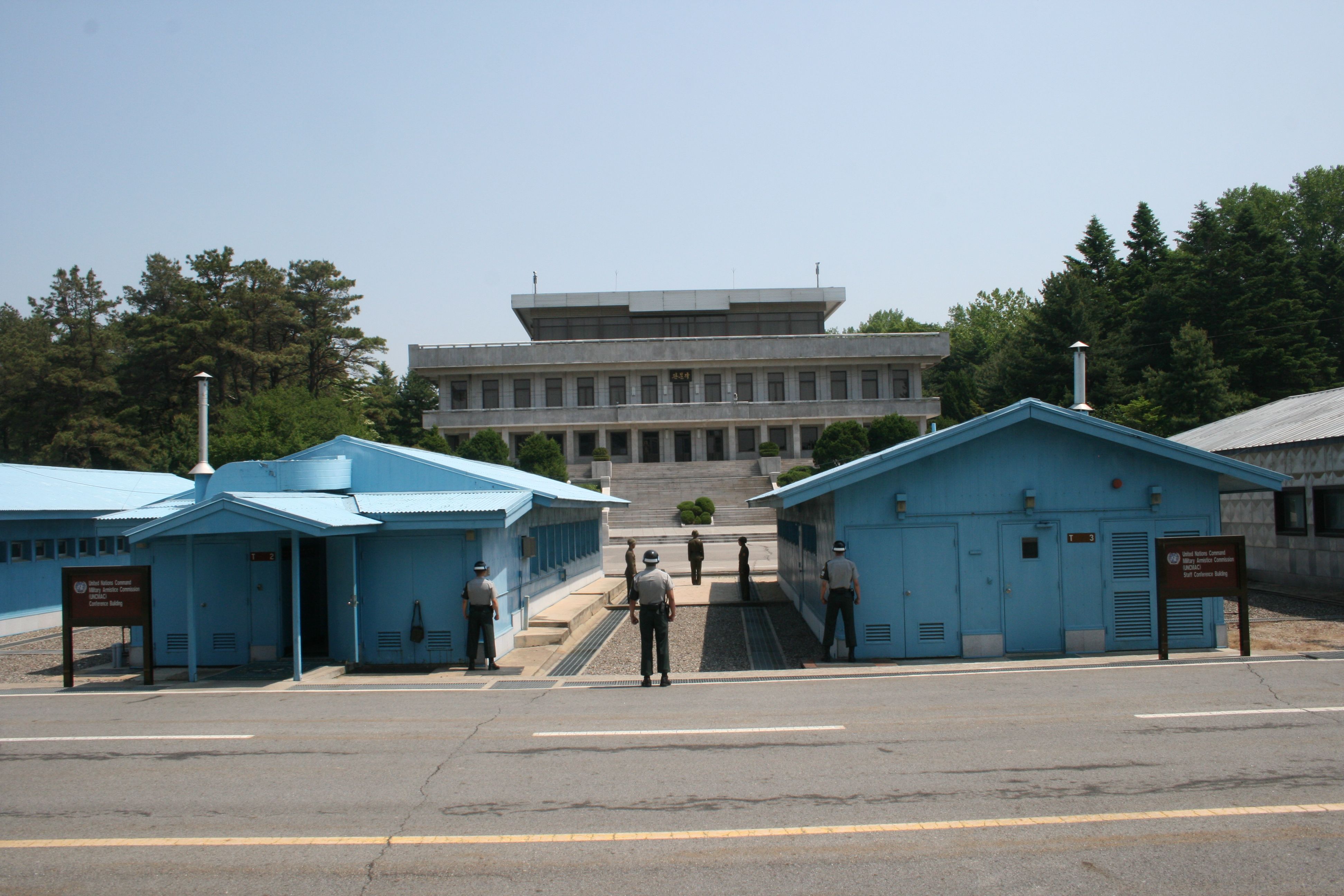 Once you reach the site where the negotiations were held in 1953, you see the blue huts that were built then and still stand today. There are a lot of restrictions on what you can wear and warnings about how you can act. Once you get to this point you are probably being filmed by the North Koreans on the other side. If you’ve got a provocative slogan on your T-shirt, or you’re wearing something skimpy, or if you generally act like an idiot, you may be the star of the next North Korean propaganda documentary, proving to the North Korean people how decadent the Western world is.
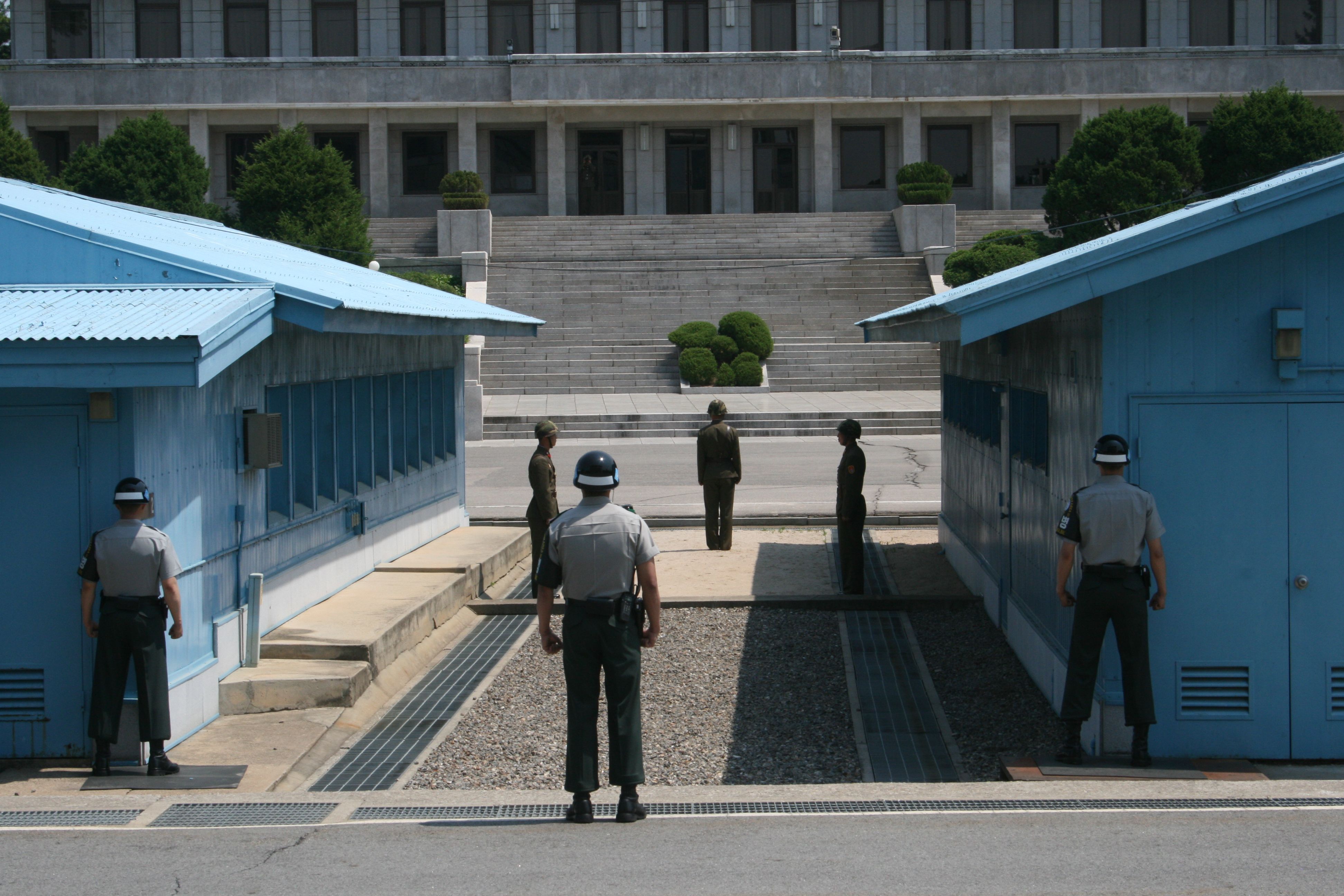 You can see a concrete curb running between buildings, halfway down from each end. That’s the border. There are always three North Korean soldiers on guard here and three US/South Korean Joint Forces troops watching them. You may safely assume that everyone involved has instantaneous access to a lot of firepower and all of those guns are loaded and locked.
There are places to be a goofy tourist, places to be respectful as a tourist, and then there’s this place, the ultimate “No Bullshit” zone. Step over that line and you create an international incident and it will be months or years before you get out of that North Korean jail cell, if you get out. There are no jokes here, no fooling around, no “yeah, right, they don’t really mean that.” Yeah, they do. People get killed here.
Many of those who have gotten killed have been North Korean soldiers, trying to defect to the South. We were told that’s why the two in the middle, just barely on their side of the border, face each other, and the third one faces the building behind them. Their primary purpose isn’t to prevent an attack by our soldiers. They’re there with shoot-to-kill orders if the other guy or any North Korean tourists try to defect. It happens, and yes, they do shoot them dead right there. (It’s something that happens every few years, not every few days — but you never know if today’s the day for the next one.)
 This is the really huge tourist center on the North Korean side with all of the security cameras and soldiers with binoculars and cameras on the top. It also has groups of North Korean tourists, visiting pretty much the same way we were. We can only assume that these were very carefully selected, highly trusted citizens and Party members who were judged to be low risks for defection.
I’m betting their screening process is stricter than ours was.
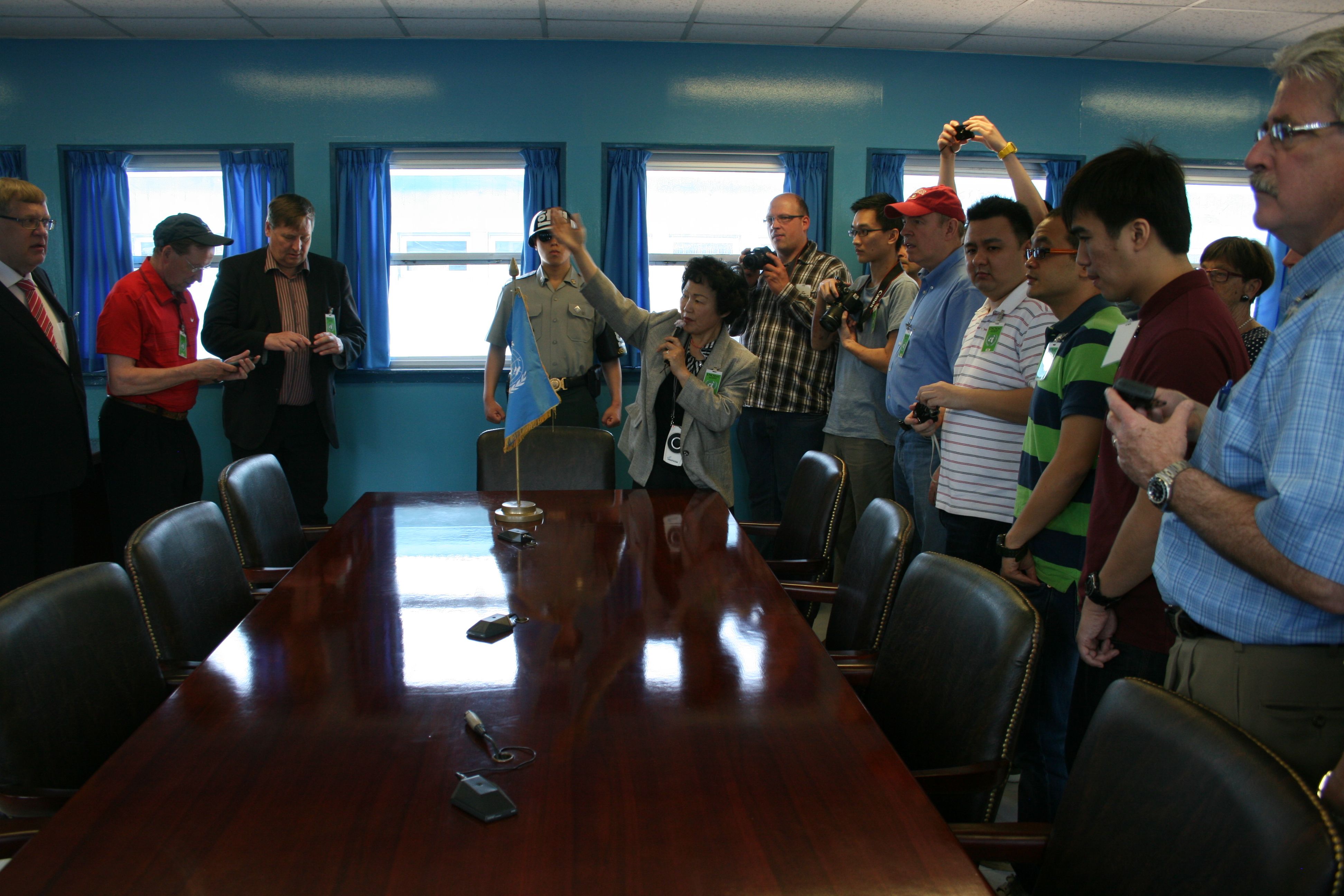 Sometimes, not all of the time, but sometimes you’re allowed to go into the main negotiations room, the center of the three blue buildings. On the right of this picture is South Korea, on the left is North Korea. In this room and only in this room you are allowed to step foot into North Korean territory. The border runs right down the middle of the table.
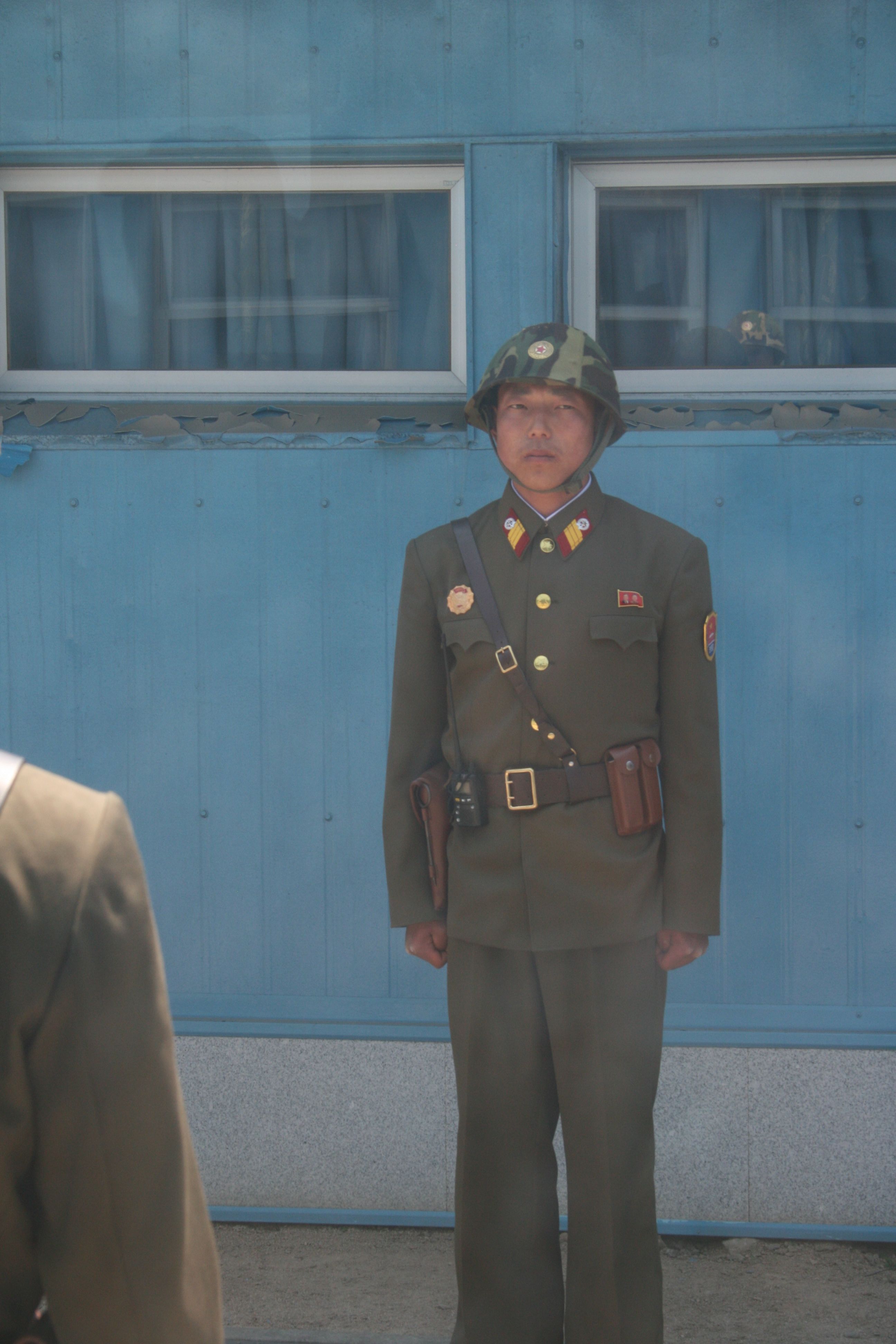 Once you step across into the North Korean side inside the negotiating room, you can look out the window and see the North Korean soldiers.
This was a creepy, tense place. The odds of anything disastrous (like the start of World War III, or even an attempted defector being gunned down before your eyes) is pretty low — but they’re most certainly non-zero by a lot more than you’re used to on a daily basis. Our side or their side, these are people you do NOT want to screw with.
It was sort of like being at the zoo or a wild animal park, with deadly snakes and large predators (lions and tigers and bears, oh my!) wandering around loose, all with no glass or cages between you and them. You’re told that they’re quiet and well-fed, but you’re also given a long list of things to avoid doing so that they don’t get pissed off and start striking and killing.
It wasn’t hard to stay focused here. You might not have been in a location or circumstance where you could die in the next minute — but you could see it from here.


 We Love The Stars Too Fondly
Pingback: Seoul (Part Seven)