
To Recap: In May, 2012 I went to Asia on the “Three-Countries-Three-Weeks-Three-Kids” tour. The first stop on this once-in-a-lifetime trip was Shanghai, followed by several days in Seoul. Now I was footloose and fancy-free (i.e., lost a lot) in Kyoto, Japan. I found one of the most beautiful and interesting places I’ve ever seen and I’m going to bombard you with share dozens of pictures with you for the next few weeks.
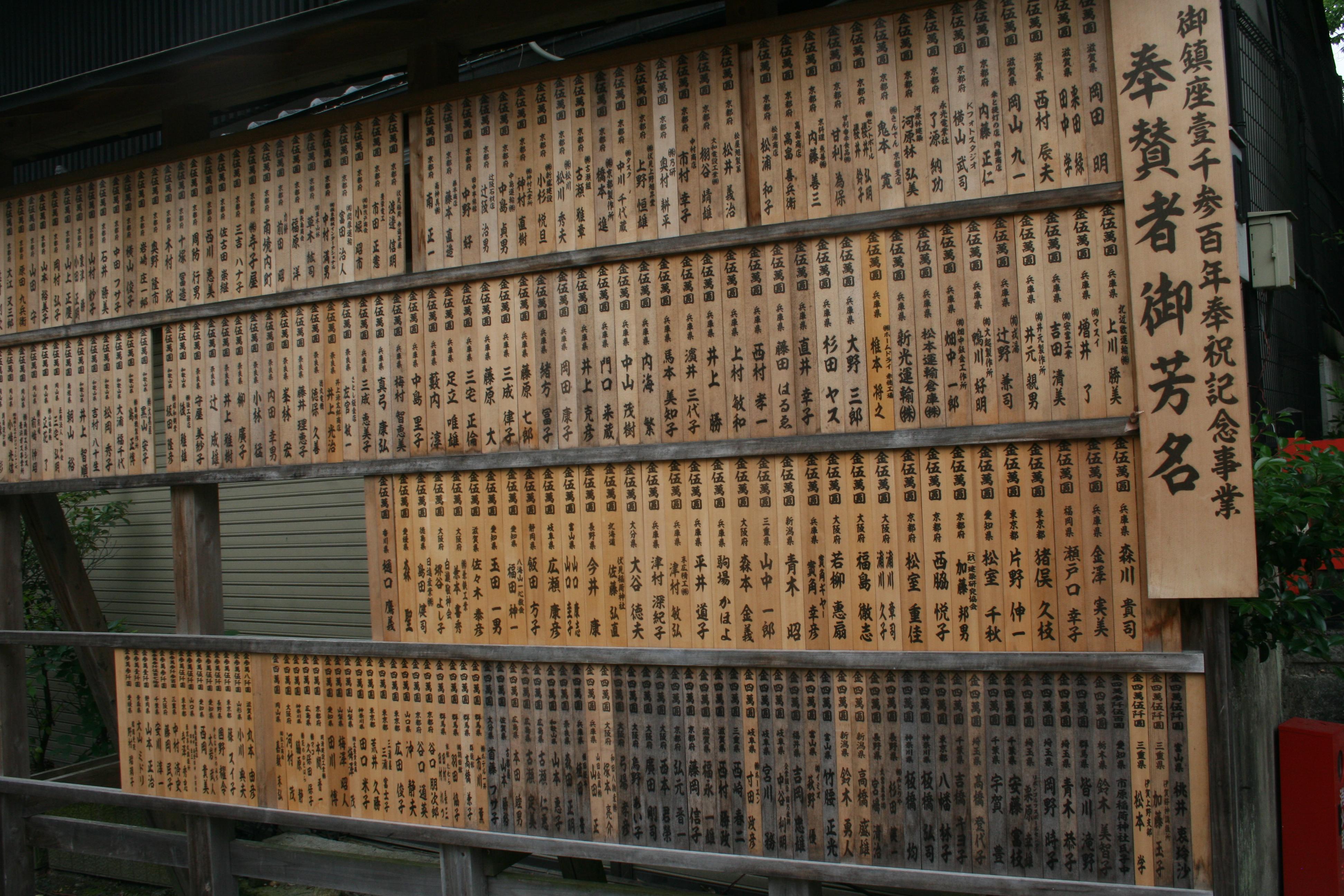 Just outside of the side entrance of Fushimi Inari-taisha where I came in was this board, which appears to be a way for posting prayers of some kind.
 Inside the gate, I found this, a fountain with bamboo ladles. I also saw them at other places throughout Fushimi Inari, but this was the largest, and the only one with instructions.
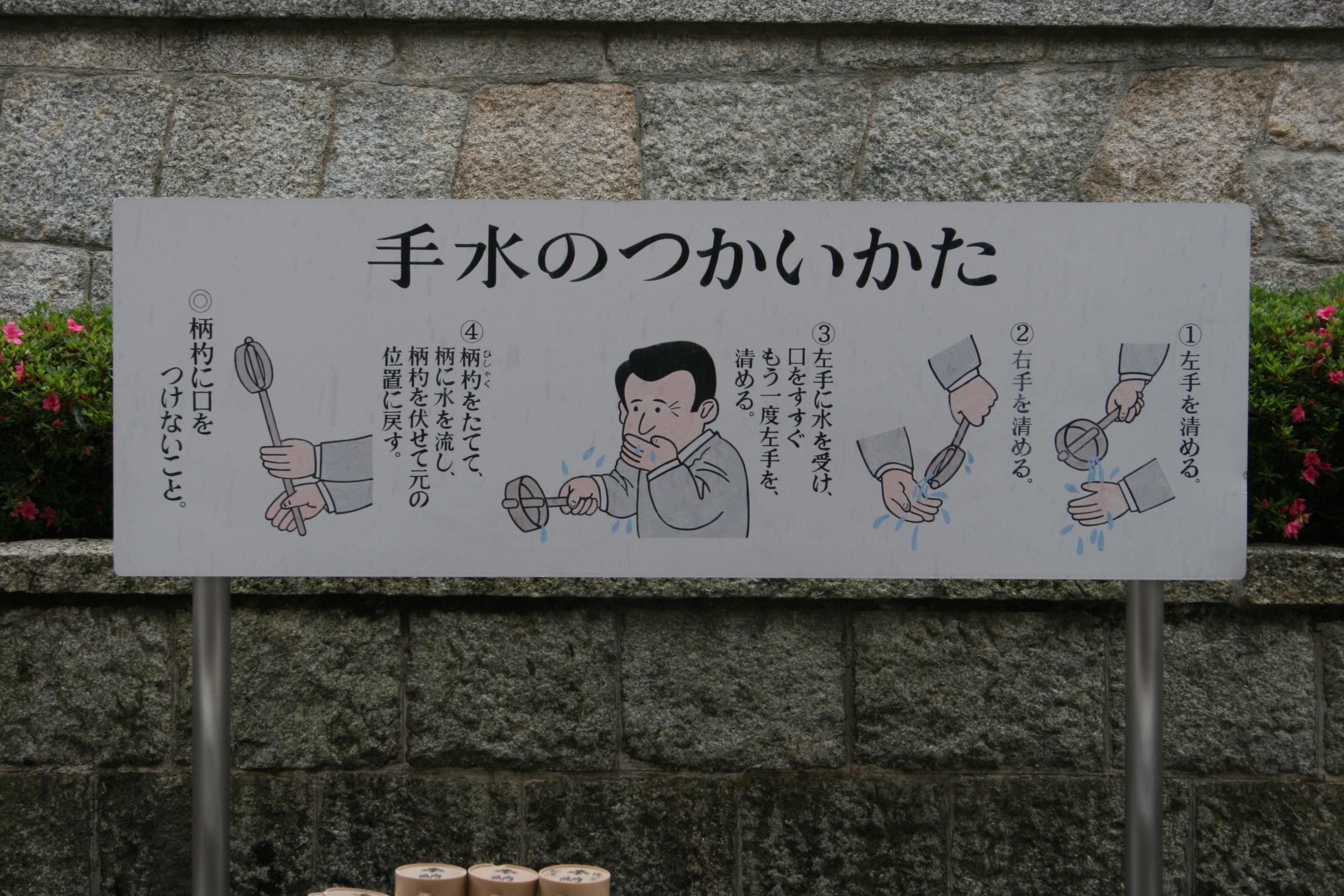 The instructions, however, didn’t do me much good. Even if you’re going by the pictures, which I was, knowing 0.000% of Japanese kanji, the pictures weren’t obvious. Were they supposed to be read left to right (as most Western cultures do) or right to left (as Japanese does). If I had to guess I would have said the steps were to pick up a ladle; either wash your face, drink some water, or whatever you do, don’t do either of those things; wash your right hand; and wash your left hand. The second image is the one that I had considerable ambiguity about.
While not a religious person myself, I am quite aware of the importance of religion in the lives of many others. I wouldn’t ever knowingly mock or belittle someone else’s religion or their beliefs. (Well, okay, there is Scientology, but I really don’t consider it to be a religion. Sorry.) I also try to be aware when travelling, there may be religious practices or rituals that are open to causing a misunderstanding or a problem, either because I’m not supposed to participate or because I am. It’s a conundrum.
In this case, I couldn’t tell if this was like crossing yourself with holy water before entering a Catholic church (and I should do it) or if it was the equivalent of a Catholic sacrament and therefore something for only the devout to do. Since the instructions were ambiguous, I passed. Perhaps someone who knows can clarify in the comments so I’m better informed for the next visit.
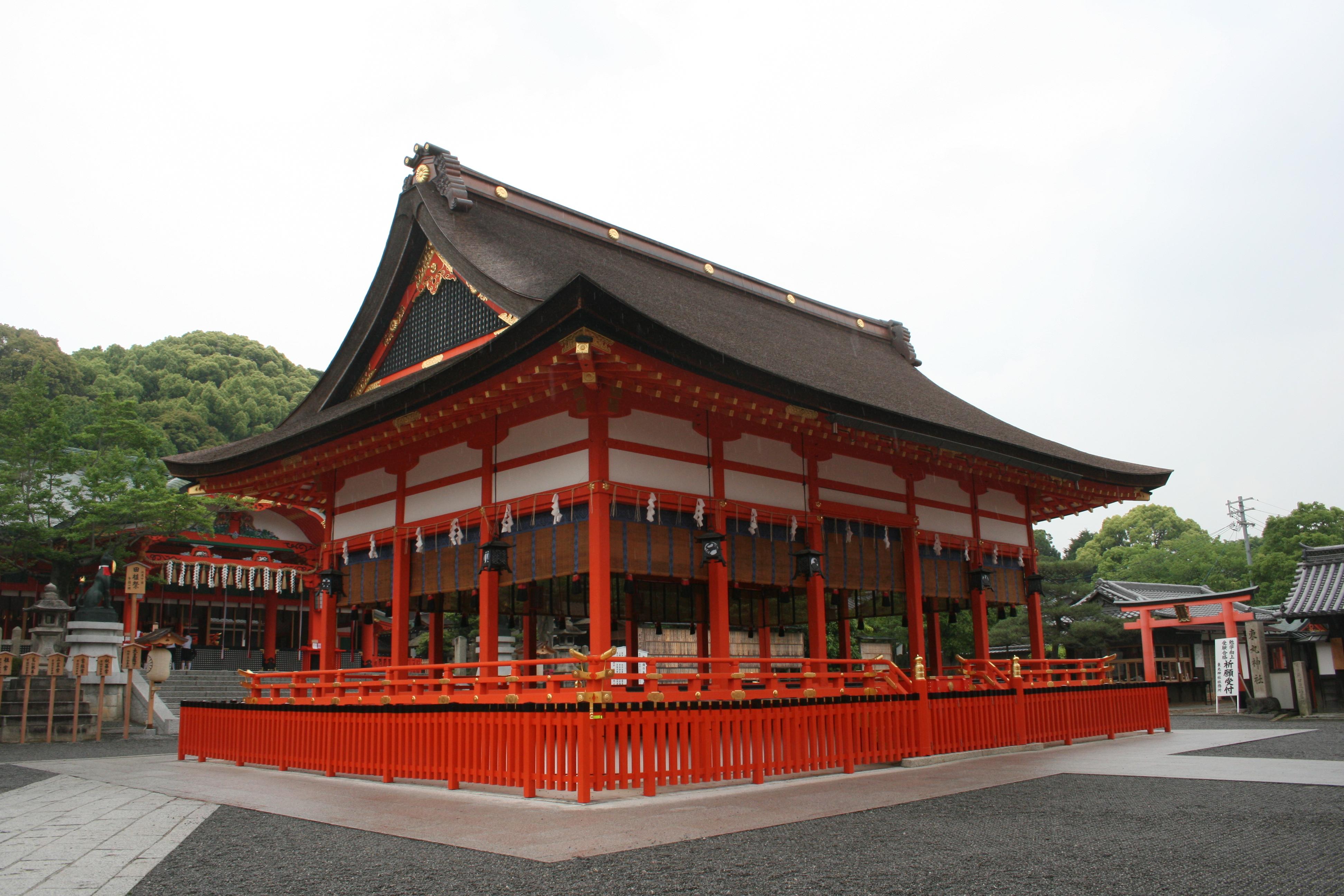 At the base of the mountain there are a couple of large temples and several smaller temples. Unlike the buildings in Seoul at the Imperial Palace that I toured, which were living quarters and government buildings, all of the buildings here are temples. There are similarities in the designs, but also significant differences.
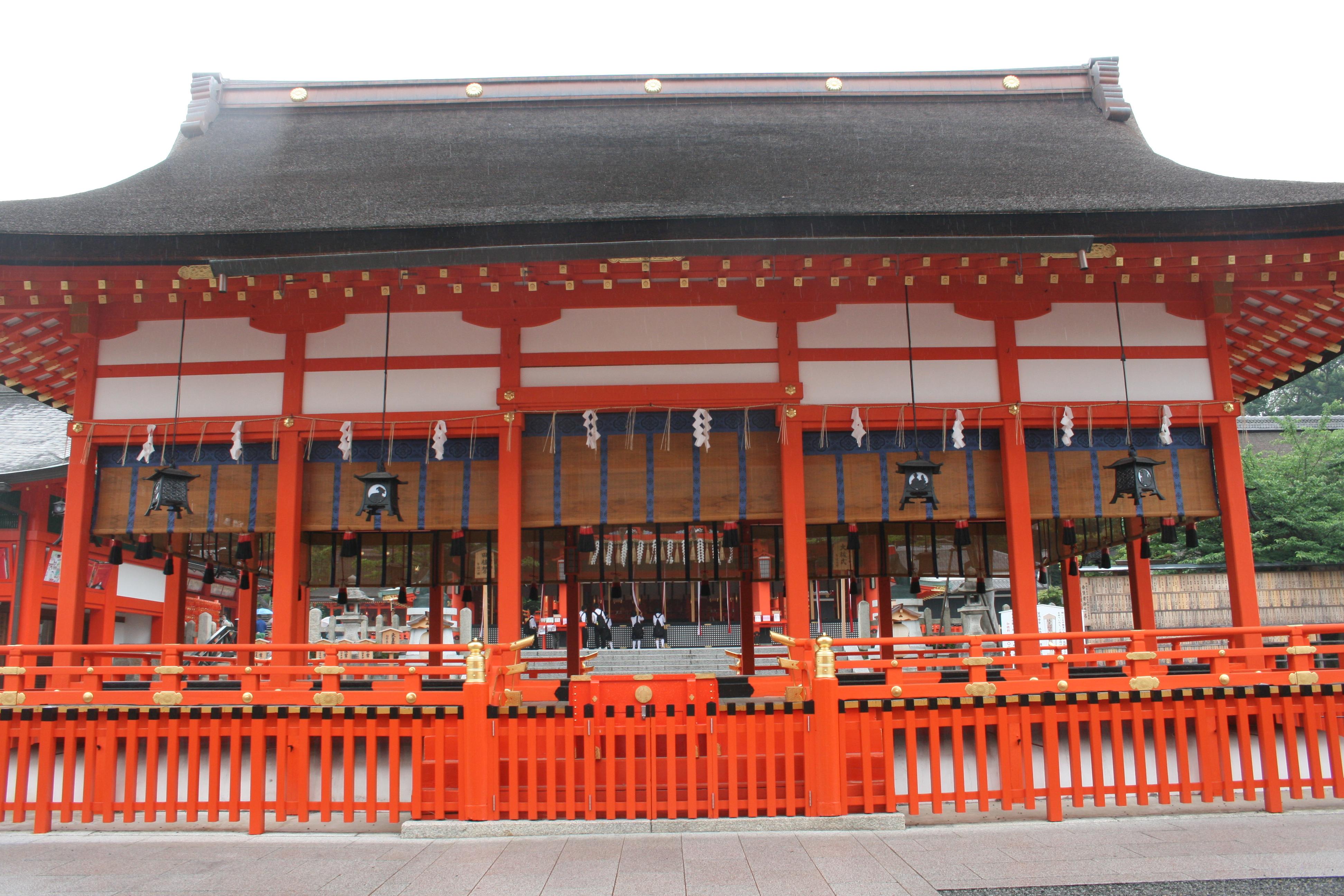 One very noticeable difference to me was the paint schemes used. The ceilings and areas underneath the awnings in Korea were intricately carved with a whole rainbow of bright colors and shades. Here the carvings and decorations typically were simpler and more symmetrical, all painted in patterns using the same bright orange-red color as much of the rest of the temple buildings.
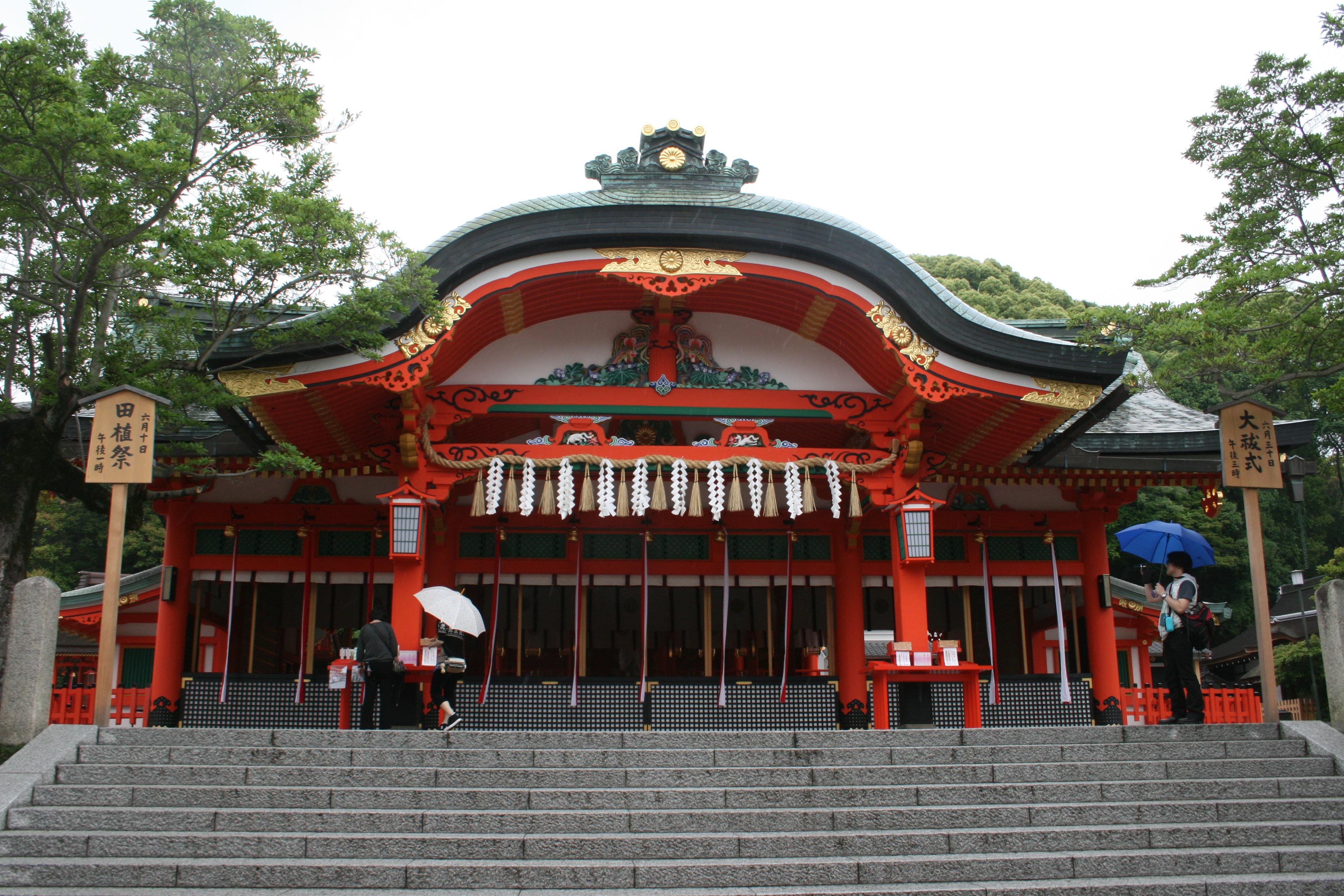 This is the shrine’s haiden, a Shinto oratory. In the Shinto religious architecture, the haiden is where the kami (sacred Shinto spirits) are worshiped and ceremonies are held.
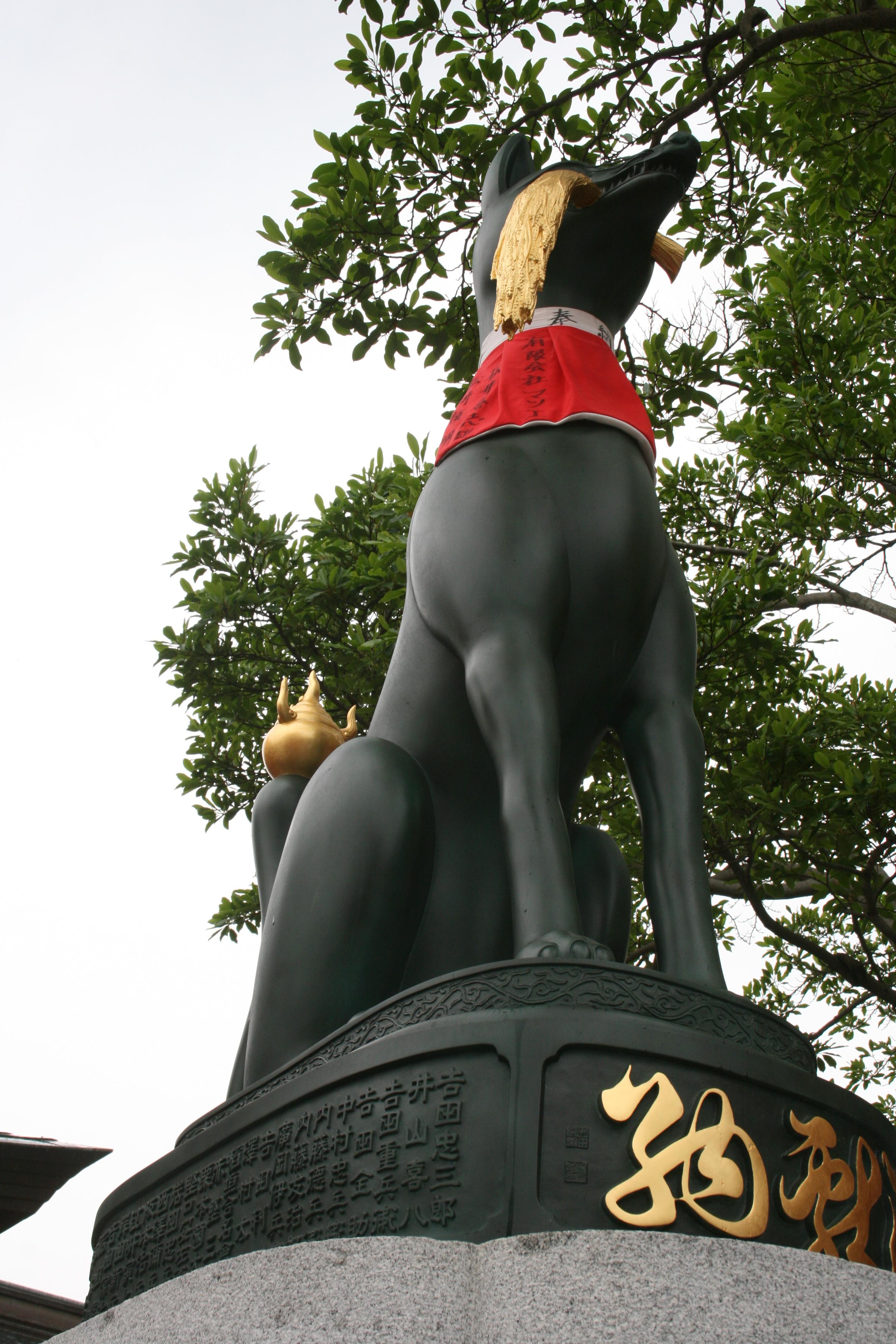 This is one of thousands of fox statues to be found throughout the site. The fox is a common depiction of the kami Inari Okami, with Fushimi Inari being the primary temple dedicated to Inari. The fox statues usually come in pairs to represent the both/either male and/or female nature of Inari. Since Inari is the symbol of fertility, agriculture, rice, and saki, the foxes are often shown holding wheat in their mouth. The foxes are also generally shown wearing red yodarekake (votive bibs or neck scarves), although I never learned the symbolism or meaning to them.
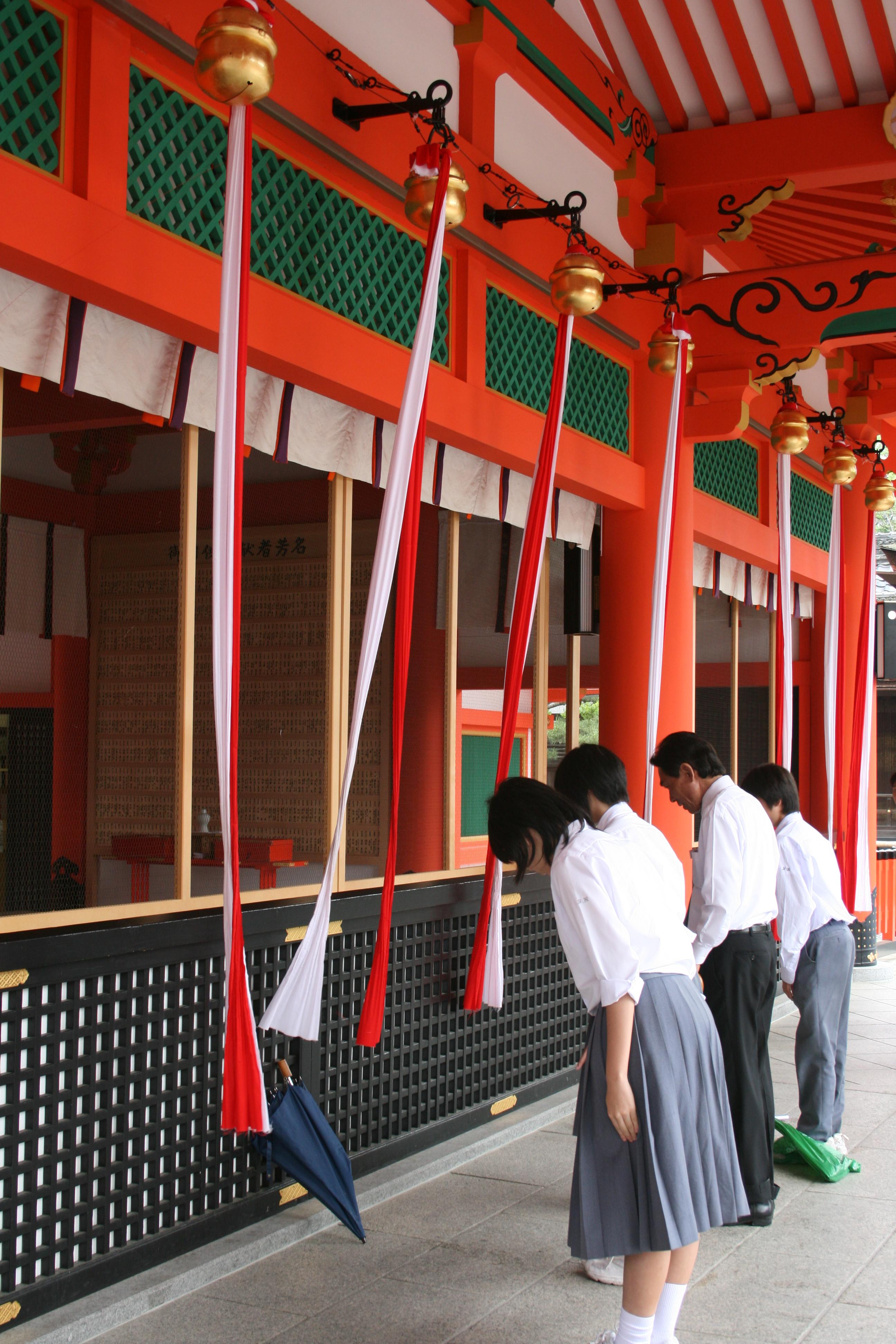 Inside the haiden there were candles and lanterns, as well as what appeared to me to be tables or altars of various kinds holding things I didn’t recognize. A priest or priestess (facing away from me, so I couldn’t tell which) was kneeling at one of the largest altars, dressed all in white robes, and reading (prayers, I assume) from a scroll or parchment. As the prayers were read, worshipers would come and go, standing outside, and occasionally pulling on these red and white ribbons to ring the bells above them.
Again, while not a participant, I’m still intrigued by the various ceremonies, rituals, and most of all, by the beautiful architecture. Cathedrals in Europe or haiden in Asia, it’s all interesting.
Now that we’ve seen the temples at the main shrine at the base of the mountain, it’s time to start climbing.


 We Love The Stars Too Fondly