
To Recap: In May, 2012 I went to Asia on the “Three-Countries-Three-Weeks-Three-Kids” tour. The first stop on this once-in-a-lifetime trip was Shanghai, followed by several days in Seoul. Now I was footloose and fancy-free (i.e., lost a lot) in Kyoto, Japan. I found one of the most beautiful and interesting places I’ve ever seen and I’m going to continue to bombard you with share dozens of pictures from there with you for the next few weeks.
After seeing the Fushimi Inari temples at the bottom of the mountain, I was captivated by the thousands of vermilion torii gates lining the maze-like paths. I found a shrine on a side path which was slightly different, before walking further up the mountain and be warned about wild monkeys.
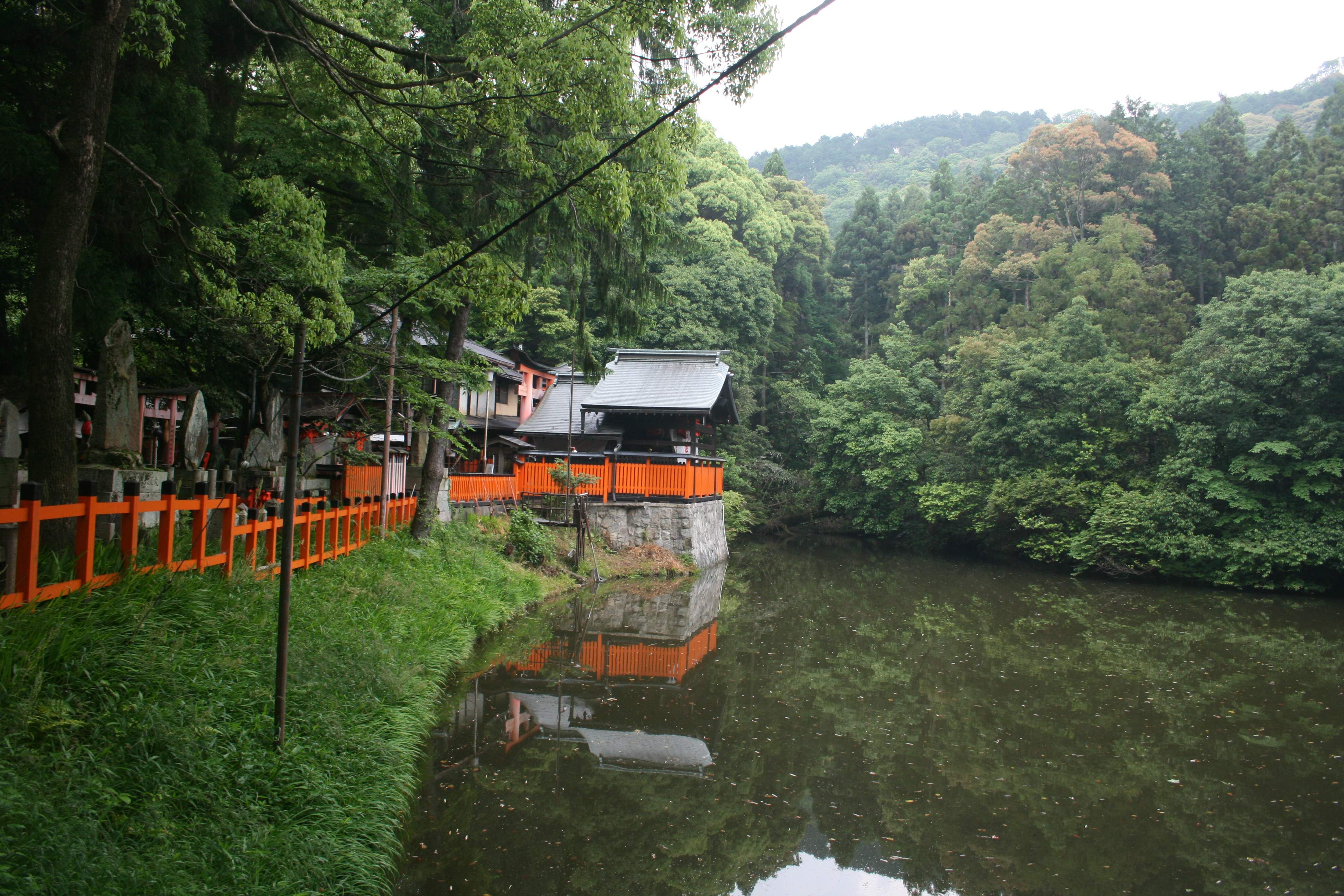
Even high up the hill, there were some isolated ponds or lakes that were incredibly picturesque.

Sometimes the hill got steep, but you’re on stairs and there are rest stops regularly. It’s not that much more strenuous than many common attractions at US National Parks.
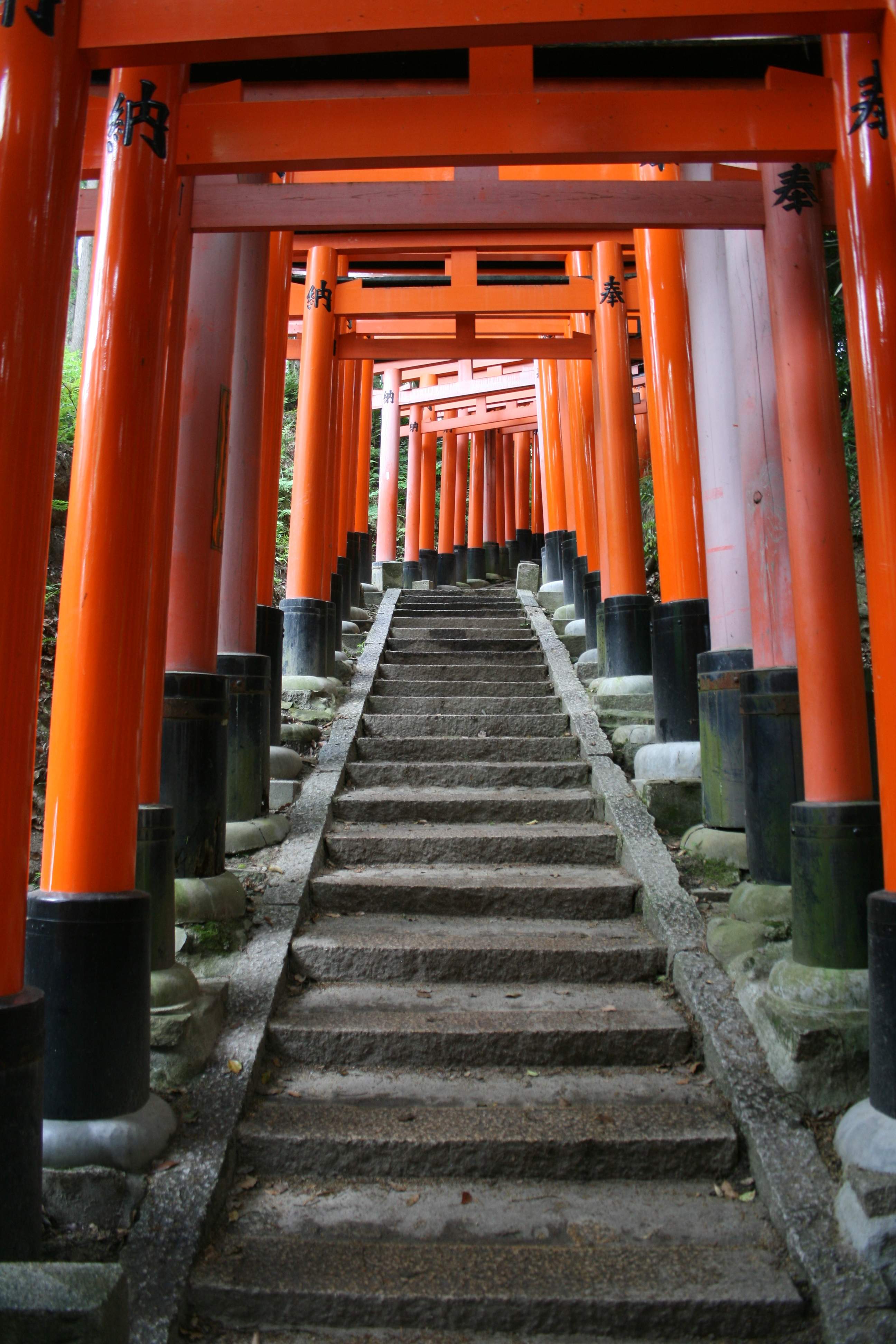
It just looks a little intimidating. “Stairway To Heaven” with torii gates!

When you stop to rest and get off to the side of the stairs, you get an incredible view of the greens of this semi-tropical rainforest contrasted with the vermilion of the torii gates and shrines.
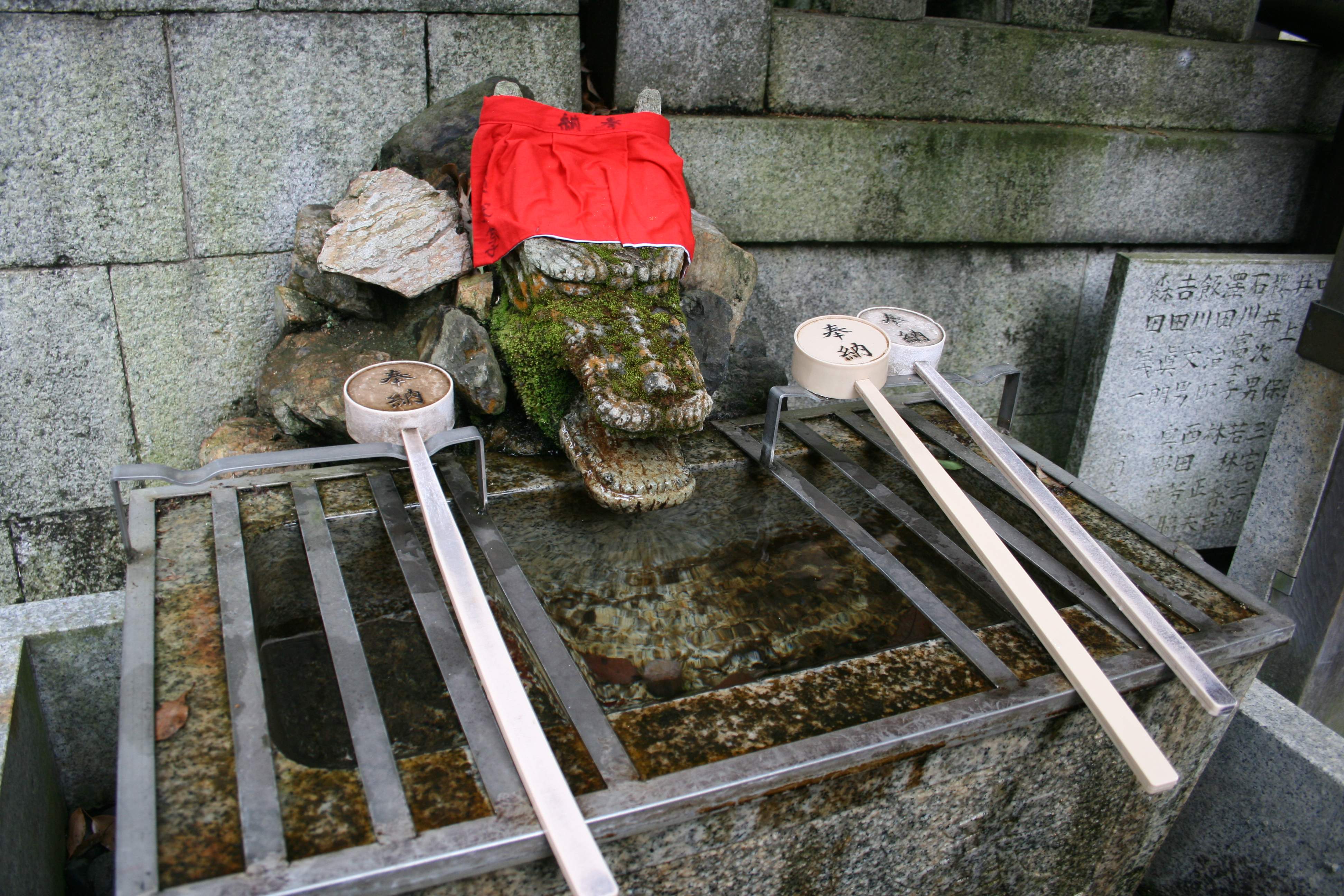
Near the top I found another fountain with ladles, this time guarded by an alligator statue. But it’s still wearing a vermilion yodarekake.

There were shrines like this every couple hundred yards as you climbed and wandered through the paths. Many had flowers and all that I saw were fresh – no fake flowers here. Someone (or members of some group) for each of these family shrines made a regular trek up the mountain.
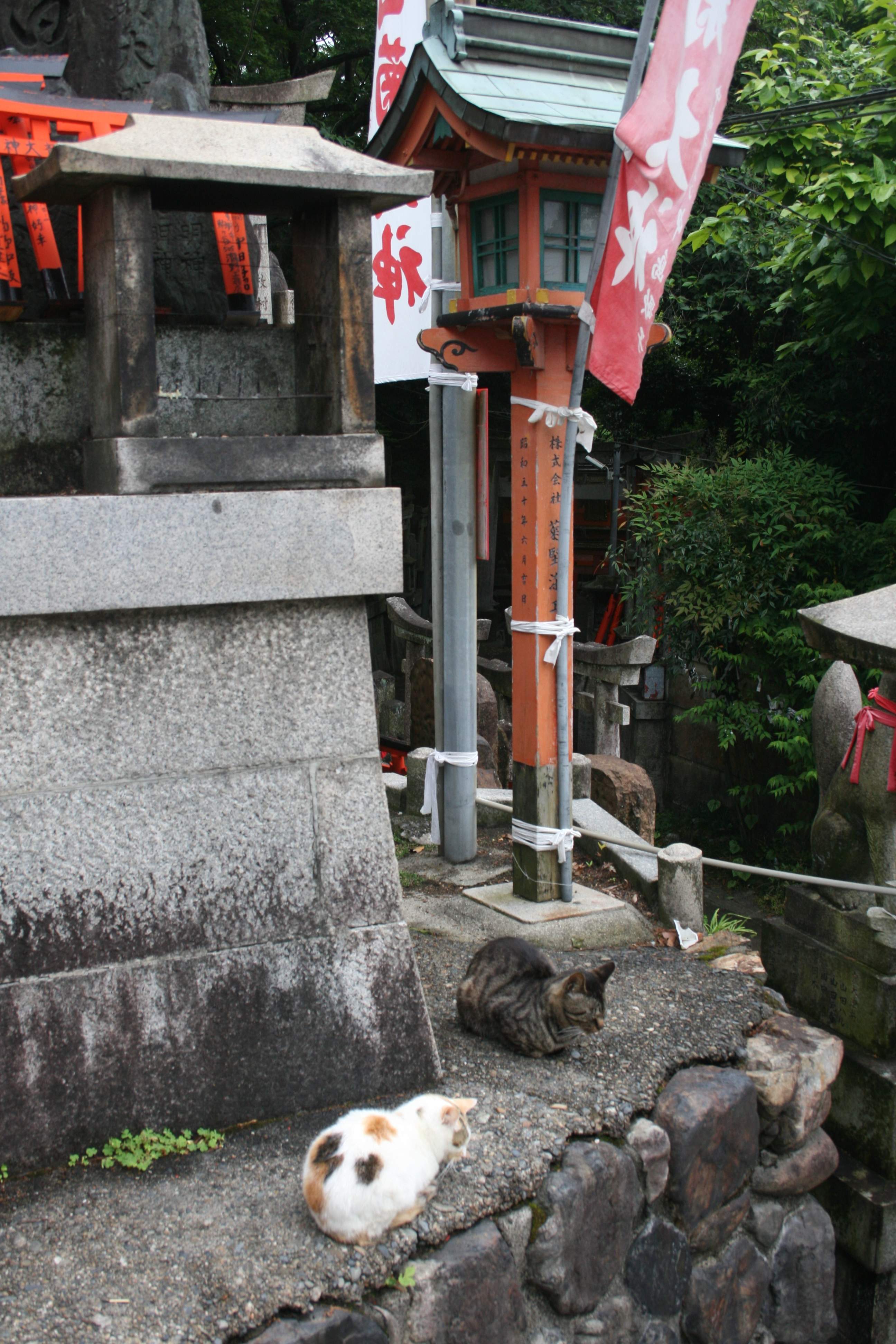
There were feral cats lounging around many shrines. From me all they wanted was either food or to be left alone. I wondered about their safety with the aforementioned threat from aggressive wild monkeys, but they didn’t seem too worried about it.
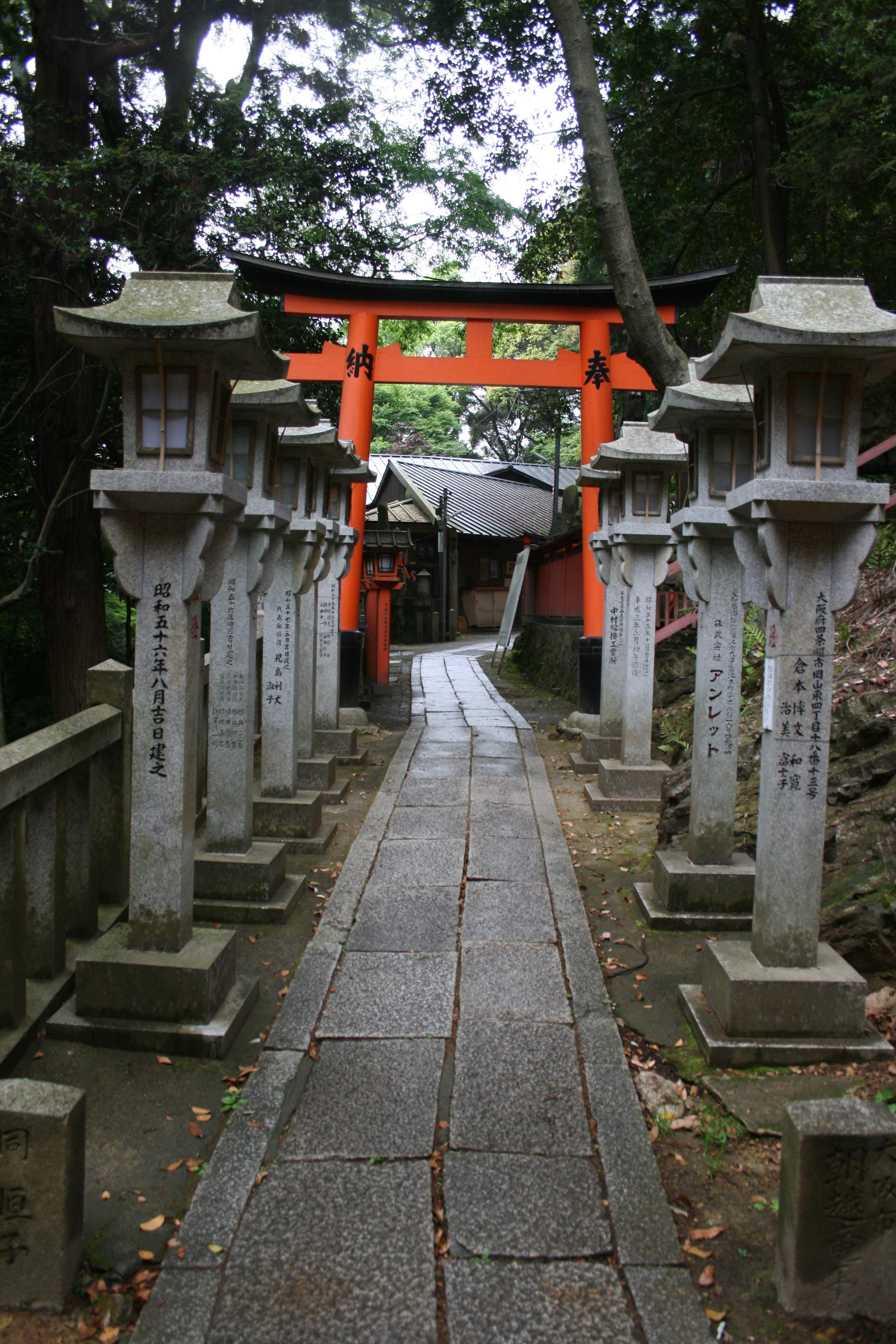
Each shrine off on a side path seemed to have slightly different architecture or style, yet all had the unifying themes seen everywhere. (Torii gates, vermilion colors, statues of foxes wearing vermilion scarves, and so on.)

As with most everything else in Japan, space is at a premium and no usable scrap of land is wasted. Many shrines were built into the sides of the mountain on many terraced levels.
Many shrines had lanterns built into the design and layout. (Plus, of course, there were modern, electric lights to be seen.) This made me wonder if the site was open at night, and what it might be to be there on a crystal clear night.
Maybe next trip.


 We Love The Stars Too Fondly