
When talking about the lichen that I’ve discovered growing on “the big tree in the back yard,” the question again came up – what kind of a tree is it, exactly?

I’ve tried a couple of these free phone apps that will try to identify plants, but they’ve never gotten beyond “tree” before, except for one that got as far as “olive.” Since I don’t see any olives on it (and there are olive trees all over SoCal – this ain’t one of them!) I thought that was useless information.
Actually…
I downloaded the PlantNet app. It looks at various things like the bark…

…and leaves…
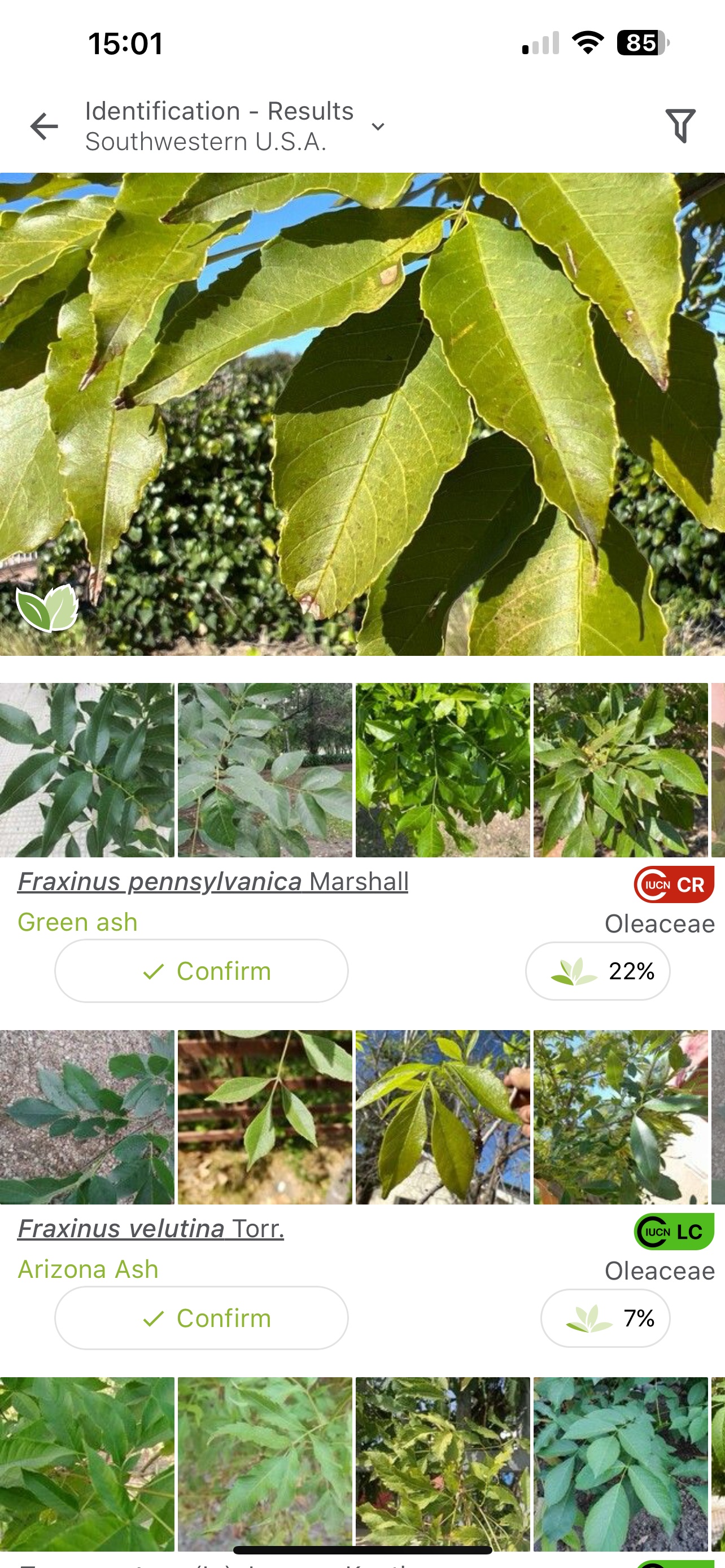
…and thought that it might be a green ash tree. But it’s not feeling super confident about that analysis, maybe one in four odds that it’s correct.
Then I tried the Seek app. It takes a look at the whole plant and as you move the camera around it starts trying to tie the pieces together (bark, size, leaves, flowers, etc) to come up with an estimate based on plant taxonomy. Remember that from sixth grade biology? Domain, Kingdom, Phylum, Class, Order, Family, Genus, Species? (Neither did I, had to google it. I mean, I knew the concept, but the order and so on? Pffft!)
It pretty quickly established that our subject was part of the Olive Family. WHO KNEW??!!
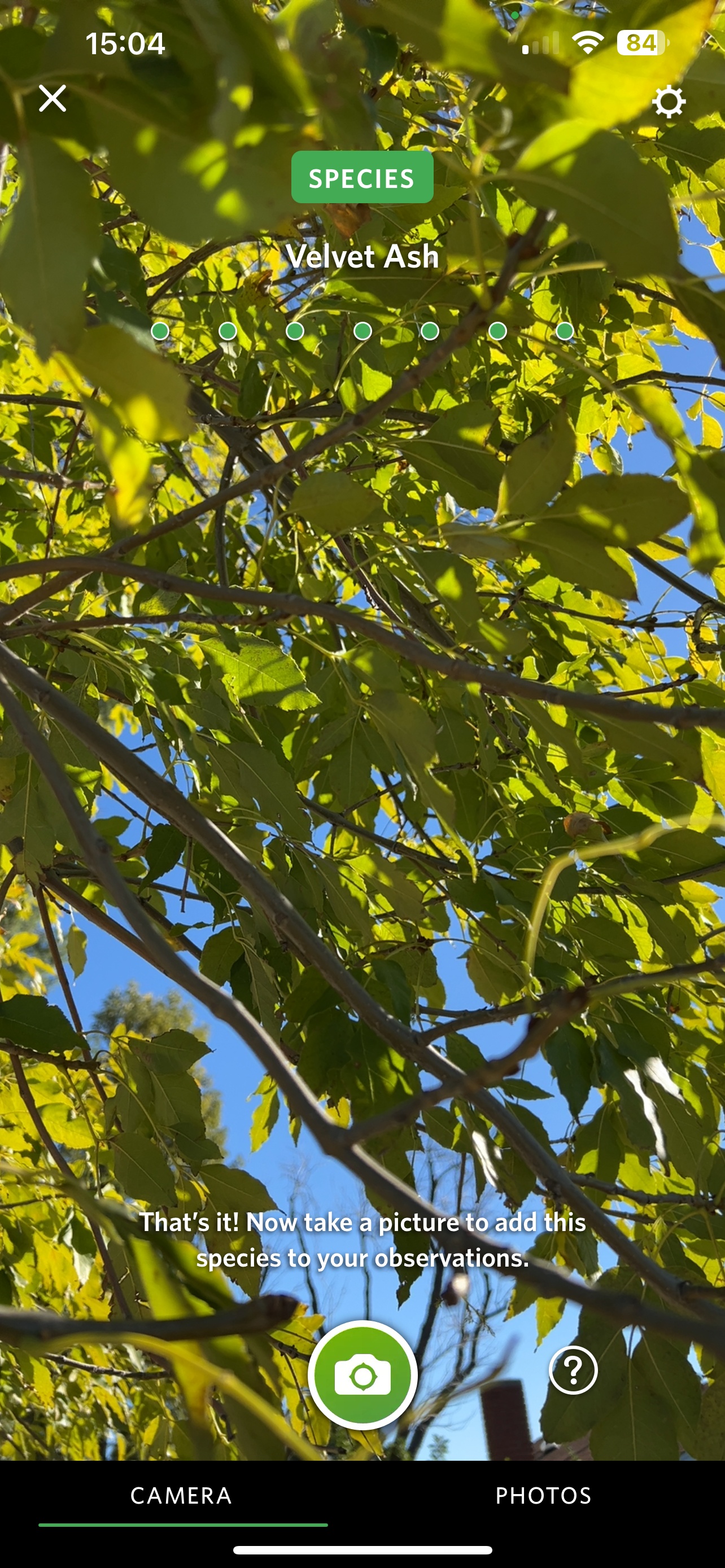
Then things clicked!
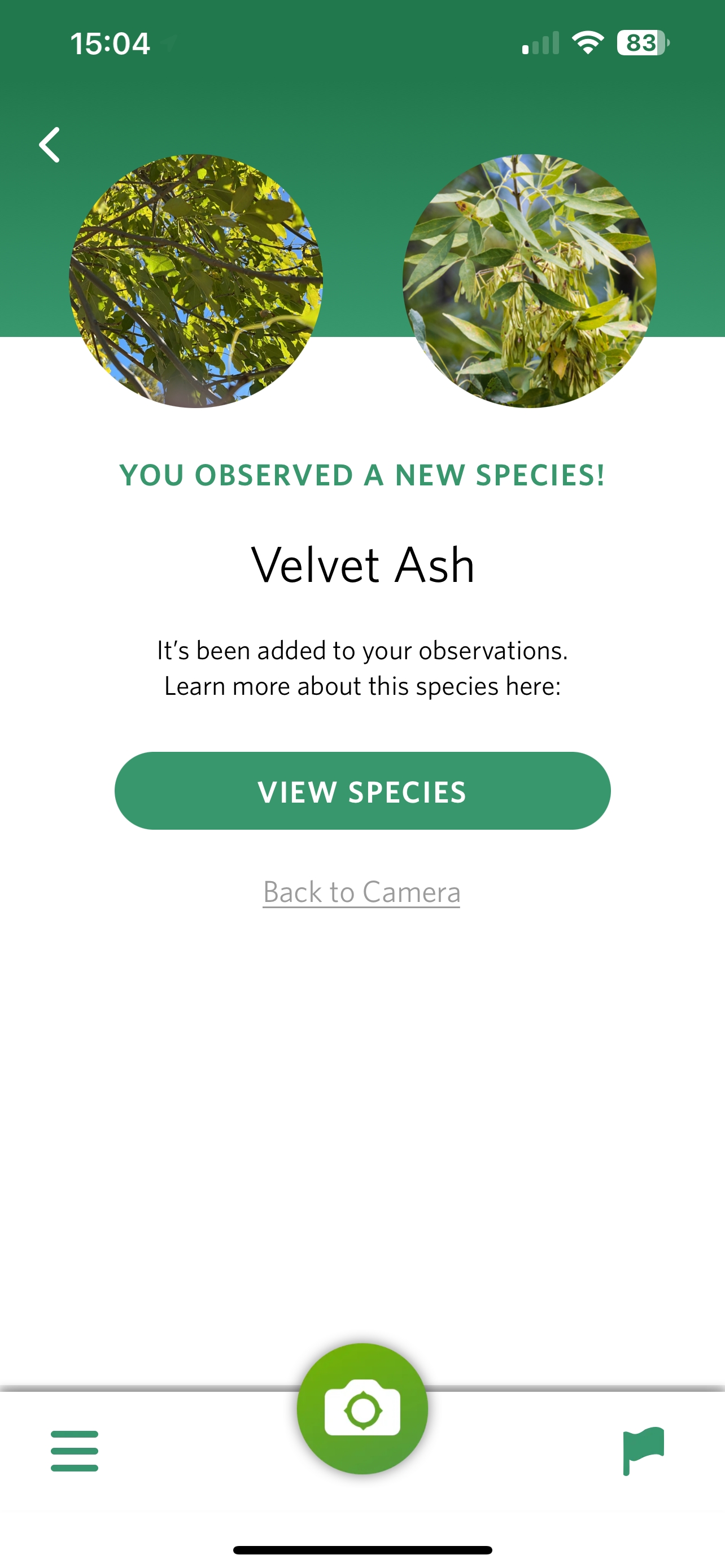
I’m not 100.000% sure this app is right, but I think we can conclusively say that it’s some sort of ash tree! So where does that clue take us on the Interwebs? Here!
Looking through the various types of ash trees, I’m not 100% sure either the green ash or the velvet ash description is perfect. In particular, my tree gets some odd new growth every spring, and I don’t see anything that looks like that. And most of the descriptions in the article show seed pods that are unlike anything I’ve seen on this tree.

So, an ash tree of some sort, 99.99% sure. PROBABLY a Velvet Ash, about 90%+ sure, possibly a green ash.


 We Love The Stars Too Fondly
Well, it’s nothing like a European ash, either bark or leaf, but time will tell….
The settlers often named plants after the ones they knew, so it might be a completely different family, yet still called Ash. In fact its called Fraxinus in Latin, which suggests it is related to your findings 🙂
What are its seeds like?
LikeLike