
Almost there, everyone!
So far on the 2011 Northern Arizona trek we have seen Paul and the Long Suffering Wife take a bus tour (about three miles) out to the west of the Grand Canyon Village with stops at Hopi Point, Mohave Point, and Trail View Point, a walk along the rim in the Grand Canyon Village, saw a fantastic sunset with a critter kicker, then another bus tour (almost twenty-five miles) heading east along the rim, stopping at Yaki Point, Moran Point, Lipan Point, and finally, at the Desert View Watchtower. This is the end of the line for the bus tour to the east.
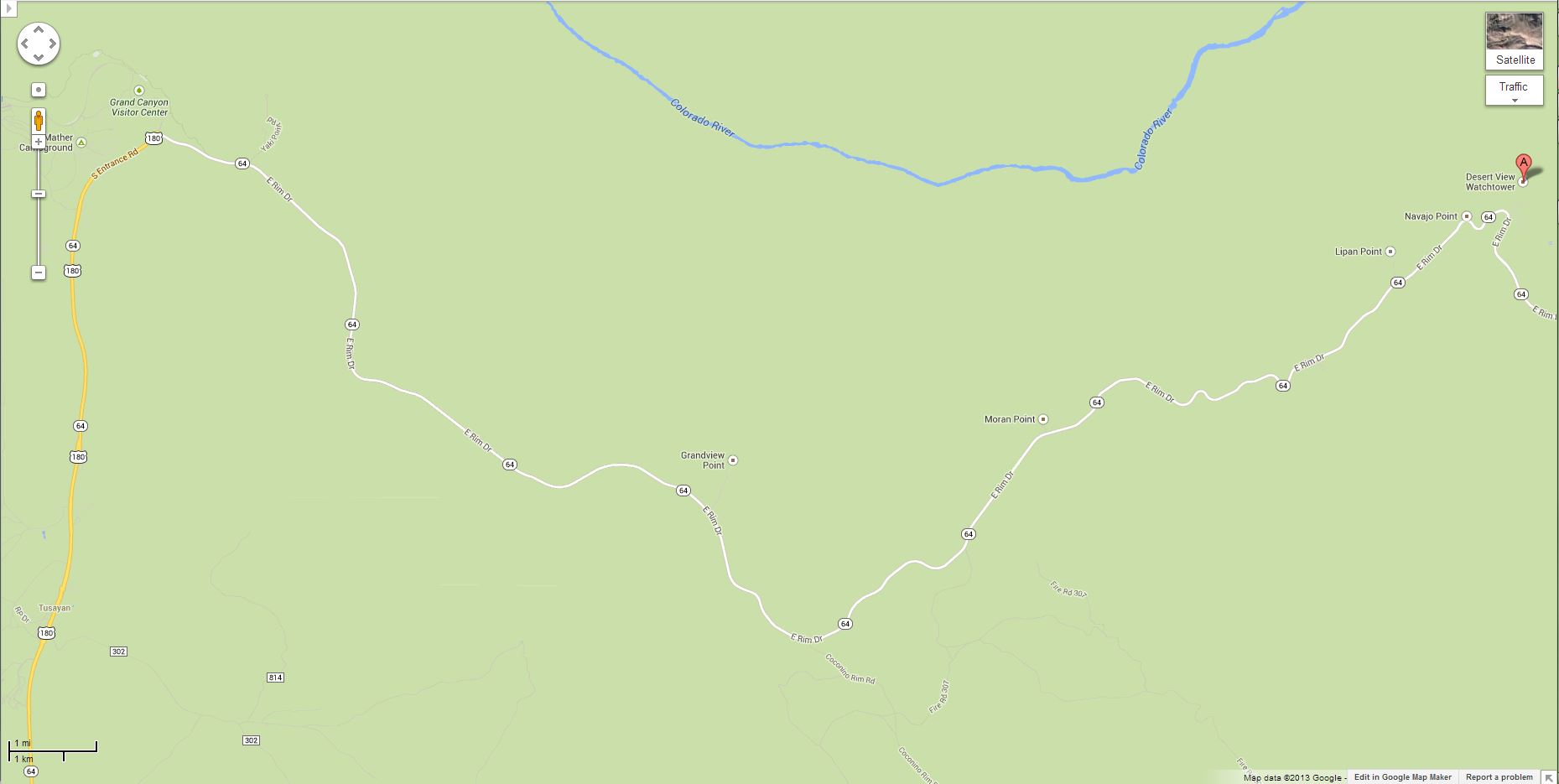 (Google Maps)
While the canyon continues upstream to the northeast for more than a hundred miles before reaching Lake Powell, the Desert View Watchtower is near the eastern edge of the Grand Canyon National Park.
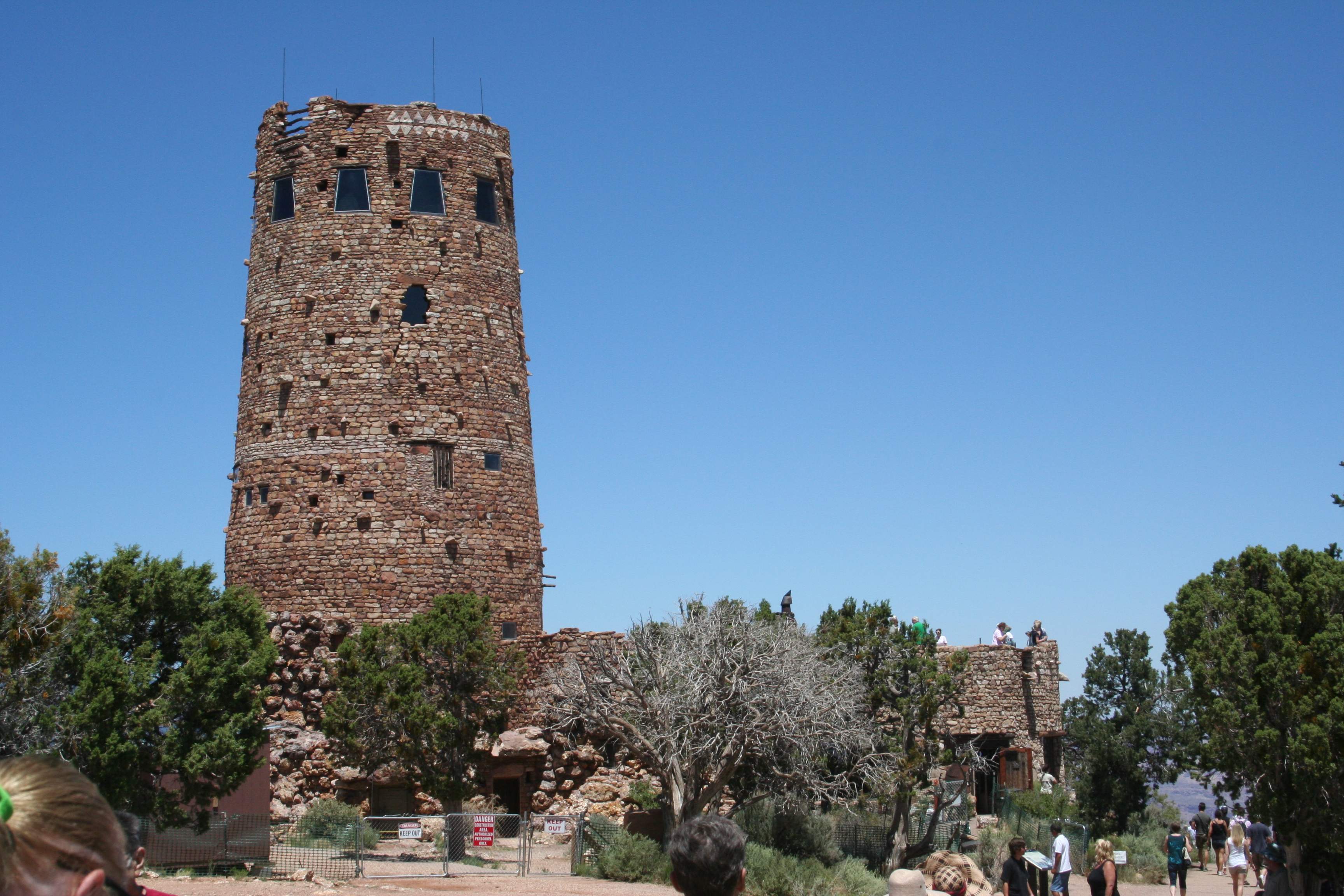 The Watchtower sits on the edge of the canyon and gives one of the best views anywhere, unless you’re in a helicopter. (You can’t get a helicopter ride into the park itself, they were banned years ago because the noise and pollution were making all of the tourists crazy. But you can get a helicopter ride to the canyon just outside the park boundaries, which is still pretty spectacular.)
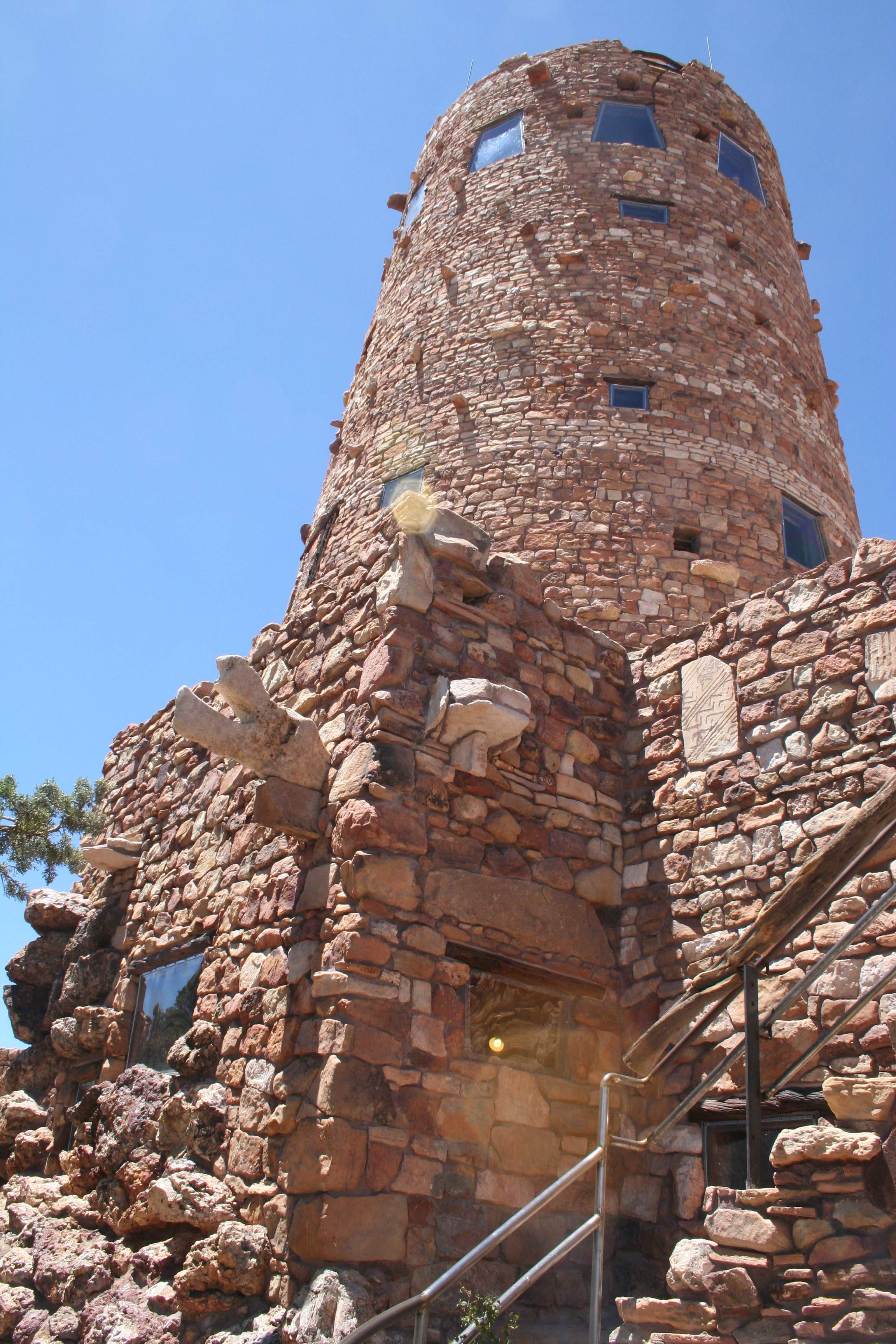 The watchtower was built in 1932 and is based on a Native American design.
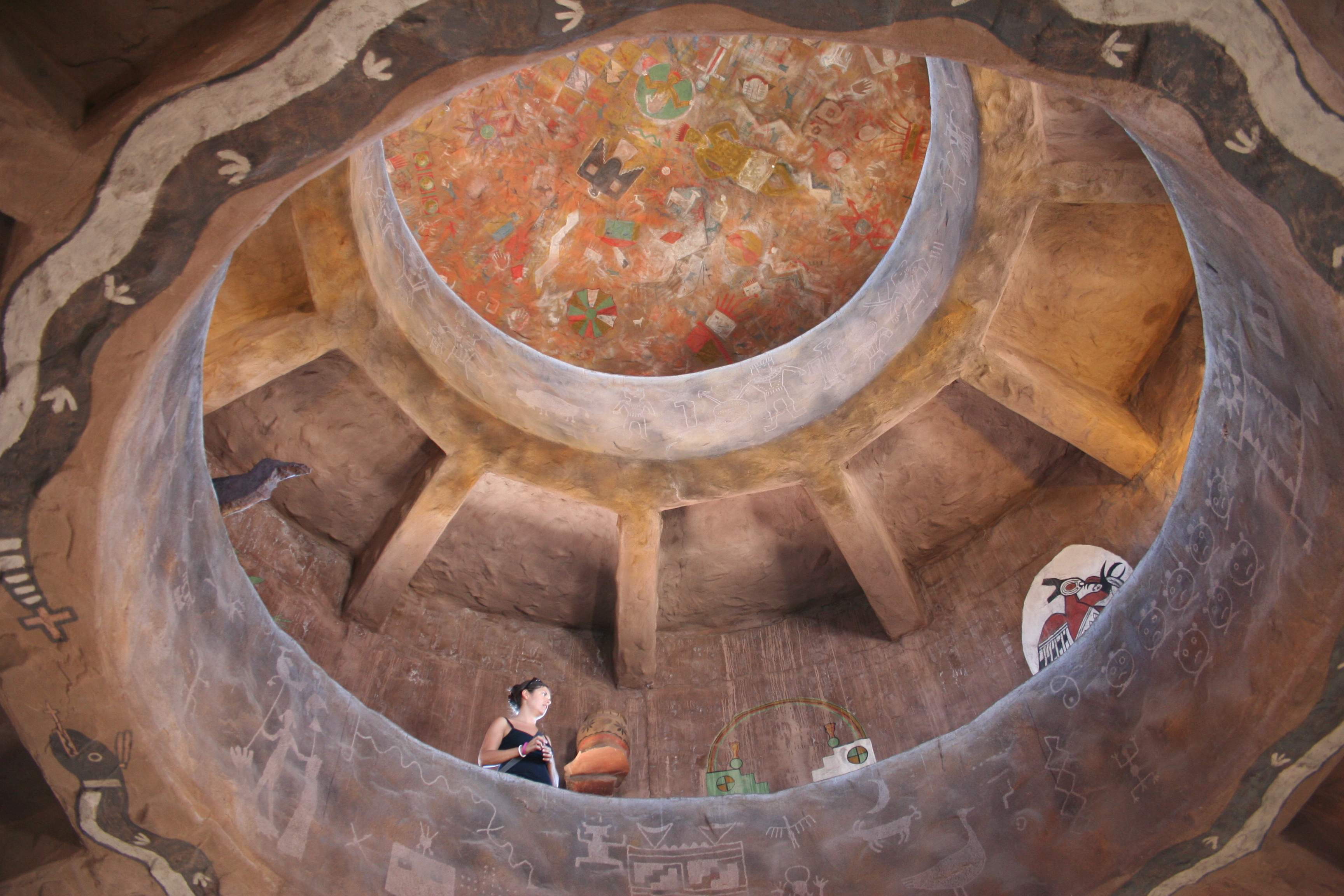 Inside the watchtower, you can walk up the circular ramp to the top floors, where the view of the canyon outside is spectacular. (Sorry, you can’t help but overuse that word at the Grand Canyon.)
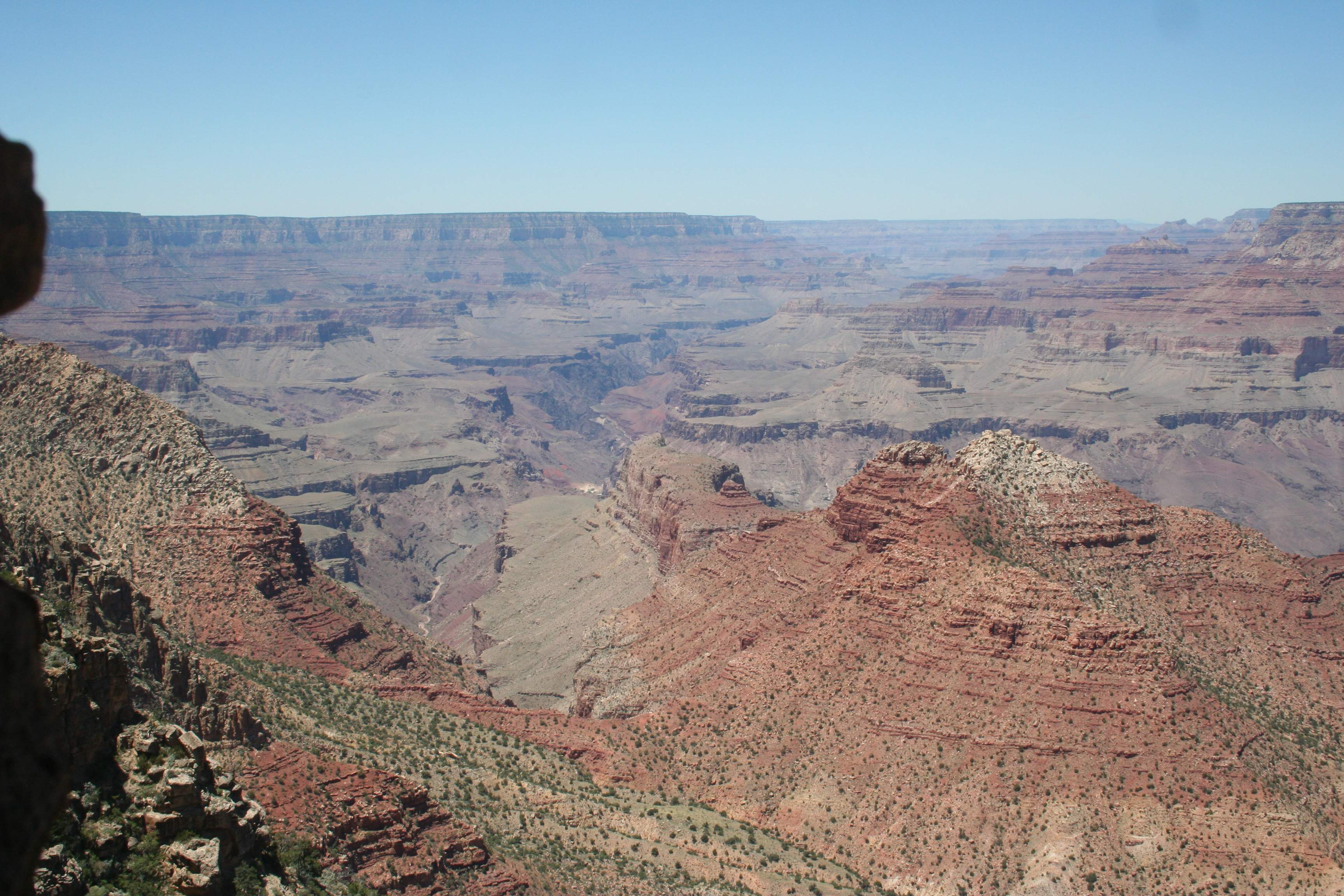 View to the west, back toward the village.
 View from the tower, to the northeast, where the national park ends and the canyon opens up a bit. Down on the observation deck in light blue, looking up at me taking pictures, is The Long Suffering Wife!
 View to the east, where the plateau that the canyon cuts through starts to descend and break into hills.
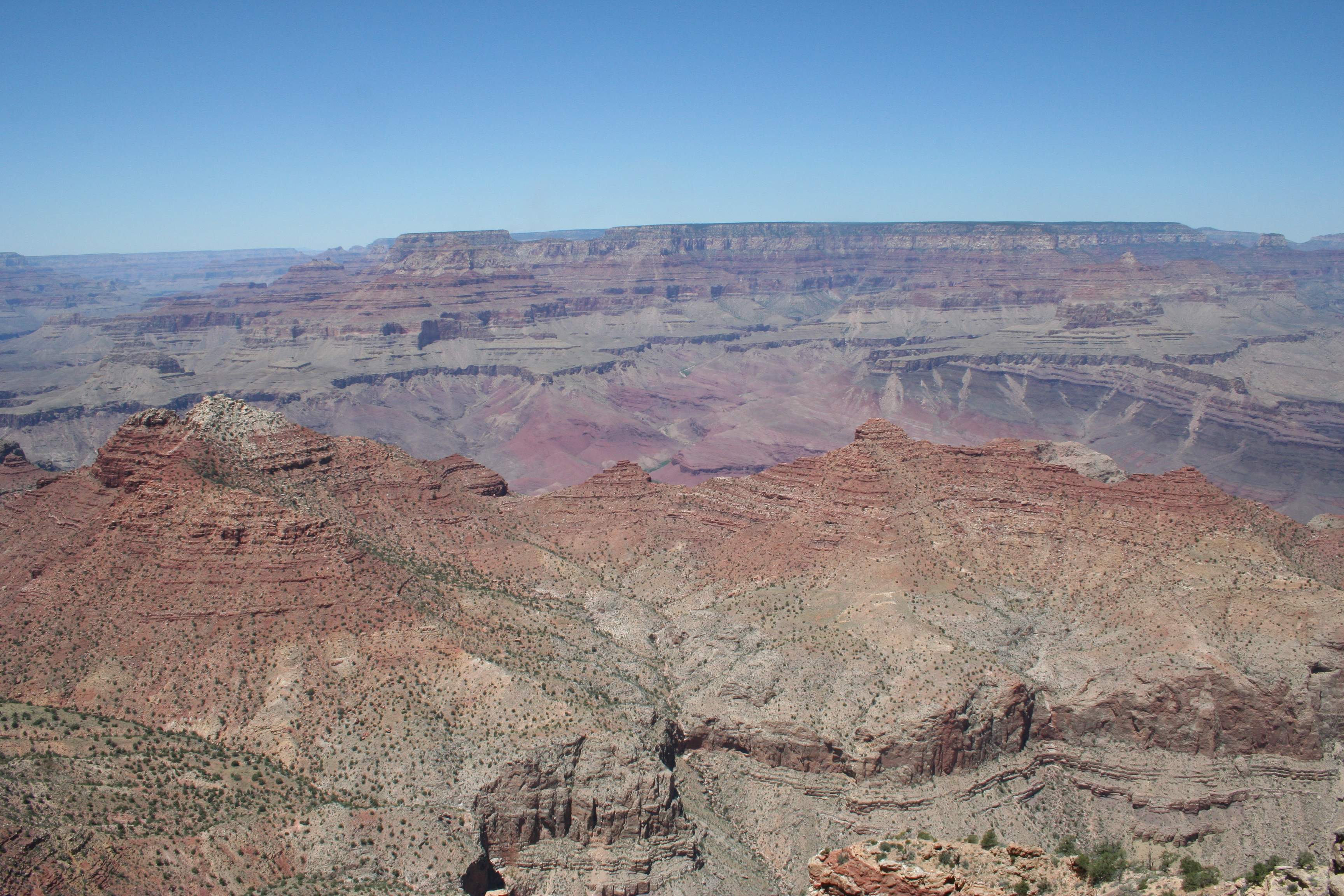 View to the northwest, straight across the canyon toward the North Rim.
 View to the north.
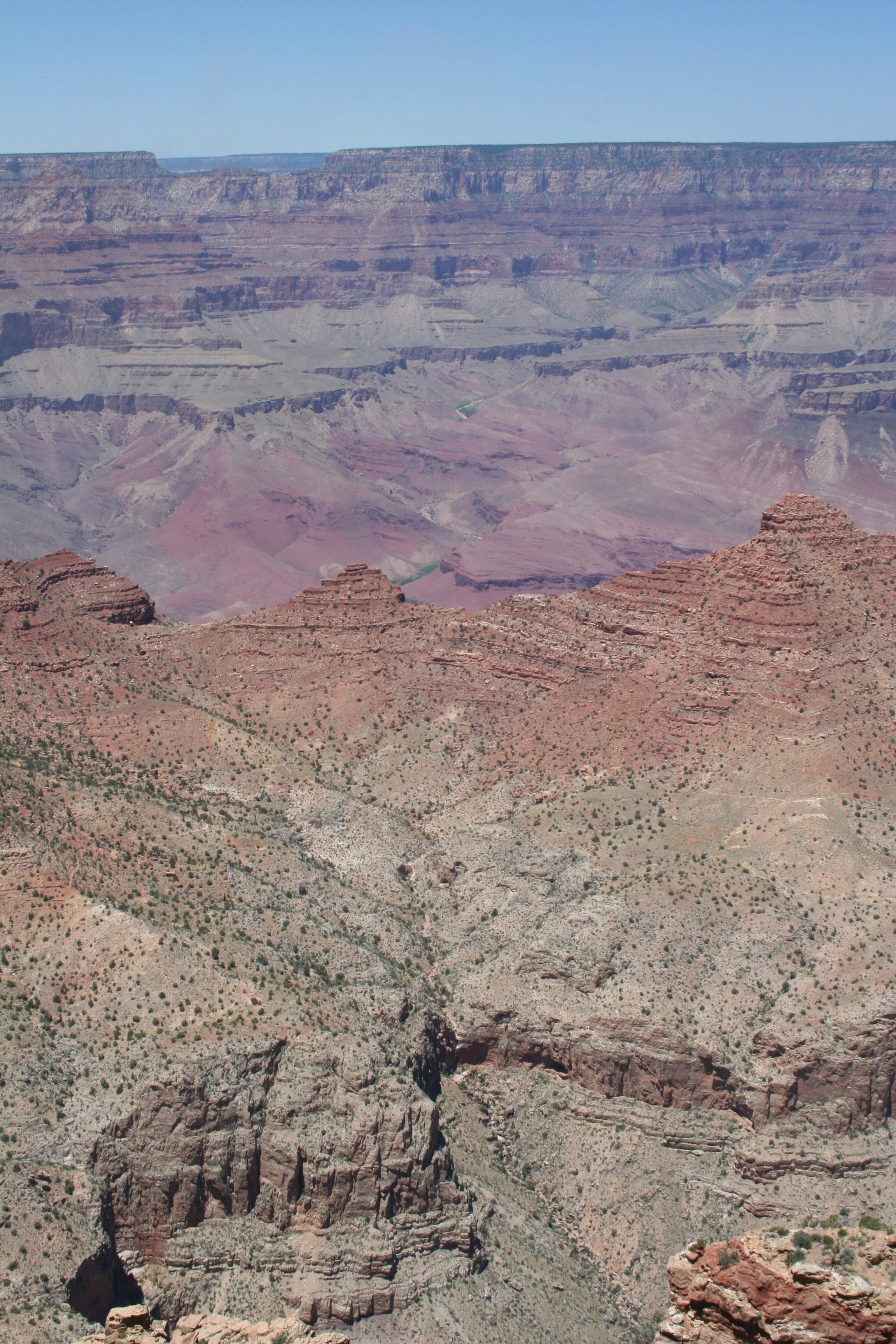 Vertical view back to the northwest, toward the North Rim.
I should mention that, while the South Rim is by far the most visited, the North Rim is equally spectacular. In many ways it’s even better, because it’s much smaller, more intimate, and quieter.
The South Rim Village is a small city in the summer. Traffic on the two-lane road along the rim can get congested and parking can get tight. Make sure you have reservations for a lodge or campsite well in advance of an overnight stay. Ditto for dinner reservations at any of the nice restaurants. Almost five million people a year visit the South Rim. It’s easy to get to off of the Interstate, and you can make a day trip of it from Flagstaff (80 miles) or Williams (60 miles).
The North Rim is a long, long drive out into the middle of nowhere. While it may be only ten miles as the condor flies across the canyon, it’s about 225 miles on the road to get from the South Rim to the North Rim. You have to swing way around into southern Utah and then down. There is only one route across the Colorado River between Lake Mead in the south and Lake Powell in the north, at Navajo Bridge near Lee’s Ferry. In addition, the North Rim is a thousand feet higher in elevation (8500′) and the roads to it are closed by snow from late October to mid May every year. The facilities at the North Rim are much, MUCH smaller than at the South Rim, so make dinner and lodging reservations at least six months in advance. There are no bus tours at the North Rim, but there are plenty of easy hiking trails. (I love to hike.)
Having said all of that, while I’ve been to the North Rim only once and the South Rim three times, the North Rim is still my favorite. The views are just as spectacular if not more so, the trails are wonderful, the wildlife is abundant, and having it with less than 1% of the crowds compared to the South Rim makes it much more personal.
I recommend you visit both the North Rim and the South Rim so that you can make the comparison yourself.


 We Love The Stars Too Fondly