
I’ve always been interested in some of the more abstract and artistic things you can do with light, dark, and motion in photography. I think part of this comes from my first astronomy photographs as a teenager being star trails. (We haven’t done those yet, too much light pollution in the city, but it might be worth a field trip.) Photographs of fireworks also are related to this. It also goes to how ultra slow-motion photography and time-lapse photography can make you notice things that would otherwise go unseen.
In low light, trying to take pictures of pinpoint lights is a problem. To do it properly you need a tripod and a long exposure. Generally for this sort of thing you think of cityscapes or catching the moon rising or setting. For the most part, the subject of the photograph is static, motionless. As long as the camera’s also motionless (no wind jiggling the tripod, etc) then you can take a 30-second or longer photo and keep it in nice, sharp focus.
If you can’t keep the camera motionless, you’ve got problems. I’ve tried many times to take pictures of cities at night from 33,000 feet. There might be one or two that are at least kinda-sorta recognizable as the subject (Las Vegas is pretty good for that) but most of them are a blurred mess. A one or two second long photo of bright lights in the dark turns into a soup of blurred dots.
But what if you take that “problem” and take it to an extreme. Sometimes I’ve stumbled on things accidentally and later deliberately to try to reproduce and experiment with the technique. I find that it can give some beautiful and amazing results.
Here are a few pictures from a flight where I was landing at LAX at about 10:45 PM. All of the pictures in the series where I tried to actually capture the city lights as they looked, using 1/2 second and 1/4 second exposures? They’re garbage. But a few of them that accidentally got exposed for two or three seconds, combined with the motion and vibration of the plane, made something quite different.
(Remember, you can get full-sized images by clicking on these.)

I really like the way this one shows an obvious effect when you’re moving as quickly as you are in a jet on final approach. The lights nearest you (lower right) move a long way during that 2.5 seconds, while the lights in the distance move much less. And the full moon in the far upper right doesn’t move much at all. Regardless of the reason, it’s a great effect.
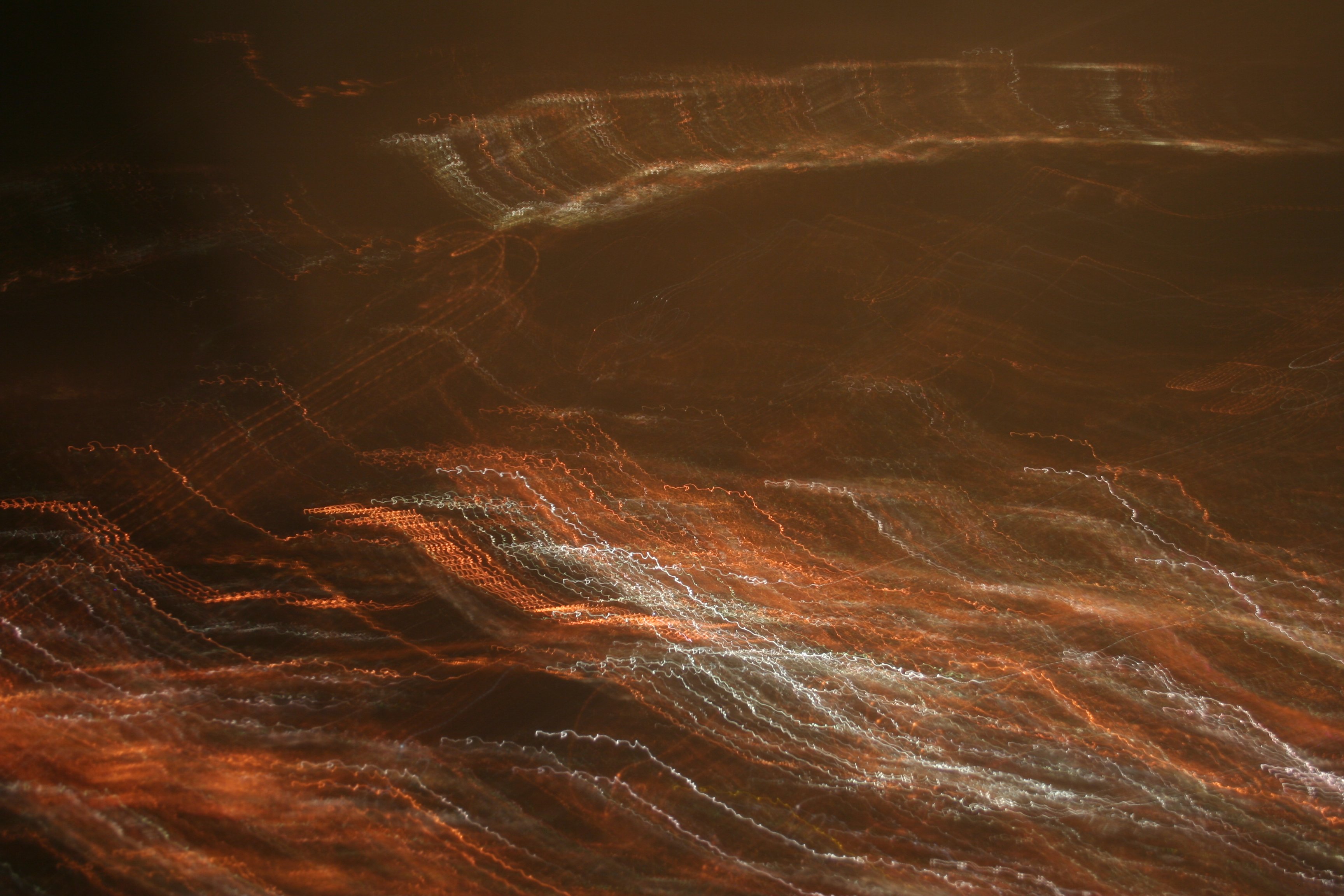
The most interesting thing about this one is how there are elements that are not moving in step with the others. Normally, all of the squiggly lines that are made by the motion are in lockstep (the lights are all still, you are moving and jiggling, the lights all take the same path) but there is the appearance here of some lights moving in radically different directions than the others. I think I know what caused it, but it’s still very odd.
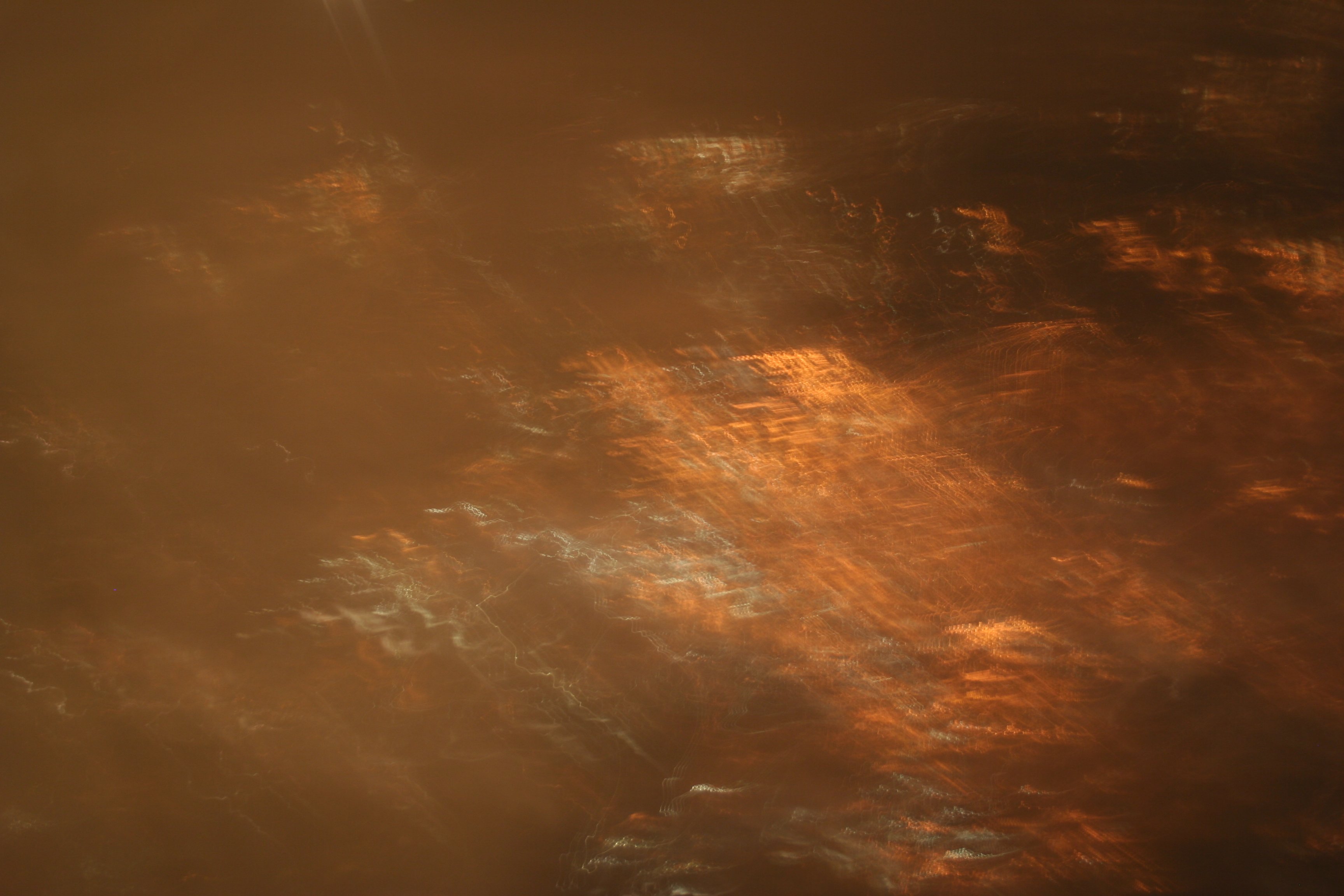
Possibly Inglewood under a layer of thin clouds. It makes me think of the portrayal of Los Angeles in Richard Kadrey’s wonderful “Sandman Slim” books.
Each of them could all be used as the background of a John Harris or Richard Powers painting. But that could just be me.


 We Love The Stars Too Fondly