
To Recap: In May, 2012 I went to Asia on the “Three-Countries-Three-Weeks-Three-Kids” tour. The first stop on this once-in-a-lifetime trip was Shanghai, followed by several days in Seoul. Now I was footloose and fancy-free (i.e., lost a lot) in Kyoto, Japan. I found one of the most beautiful and interesting places I’ve ever seen and I’m going to give you the final sets of pictures from that particular location in Kyoto.
After seeing the Fushimi Inari temples, the thousands of vermilion torii gates, the occasional shrine on a side path, warning about wild monkeys, finding every inch of space used, I finally found the top of the mountain.

Approaching the bottom of the mountain off to one side from the main temples and the point where I had started up the mountain, there was one final long stretch of vermilion torii gates.

One last set of shrines, along with the fox icons wearing vermilion yodarekake. However, the end was near, at least as far as Fushimi Inari goes, since I could see houses just a few yards ahead. There’s no extra space wasted on anything, remember?

Then, as the path led out to the street next to what seemed to be nothing other than normal houses on either side, there were these very non-Inari Okami-like statues and shrines. To my semi-educated eye (at least as far as Eastern religions go) these seem to have elements of Buddhism and Hinduism in them.
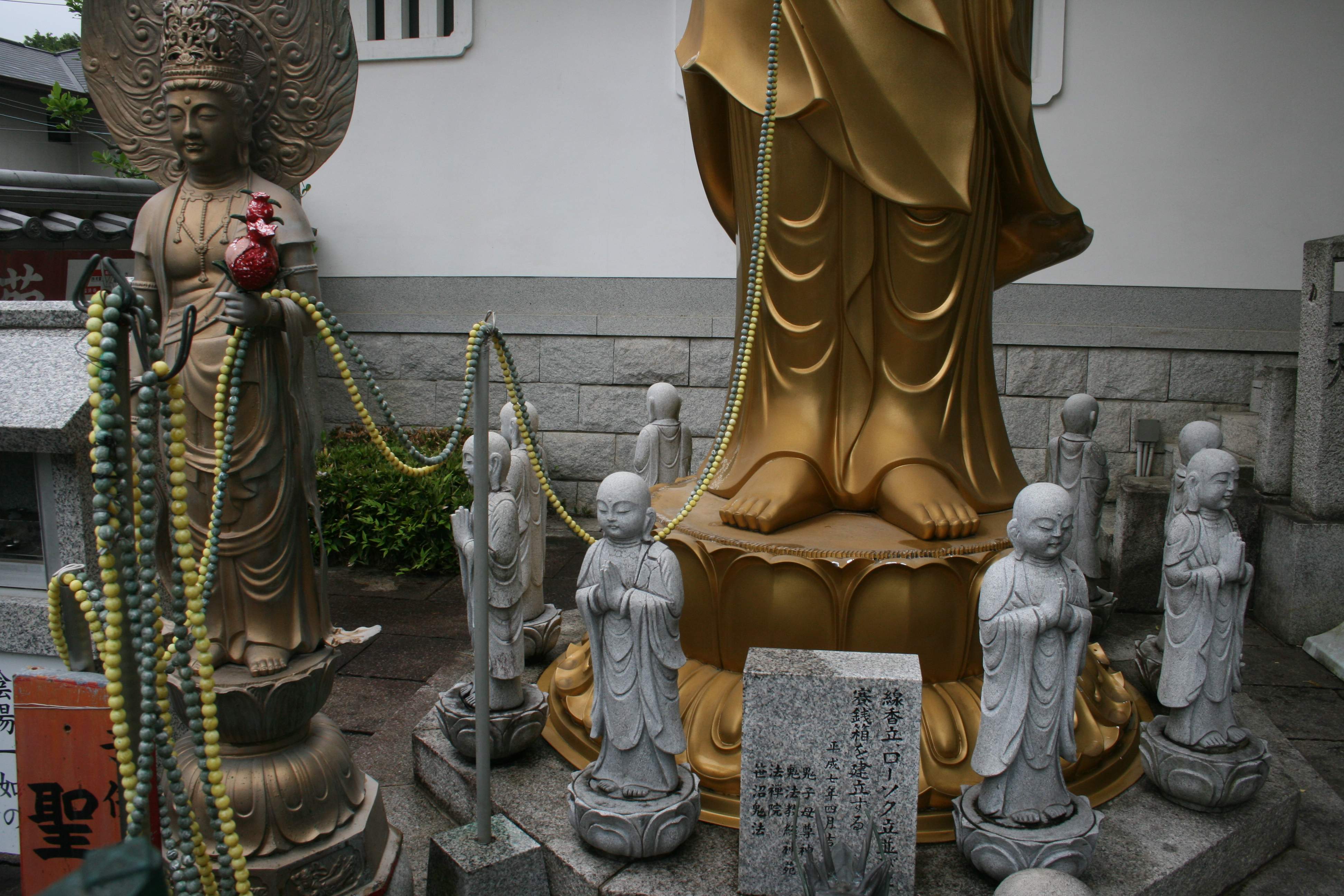
At the same time, the pose of the large statue and the baby being held all gave it an odd “Virgin Mary” look that I didn’t understand. To see it at the exit to the Inari temple site was even more odd, like it had been put there deliberately to expose visitors to an alternative theology.
That’s just my ignorant American’s gut-feeling view — if anyone actually knows what it is and why it happens to be here, just feet from the exit of the Inari shrine, I would love to be educated.
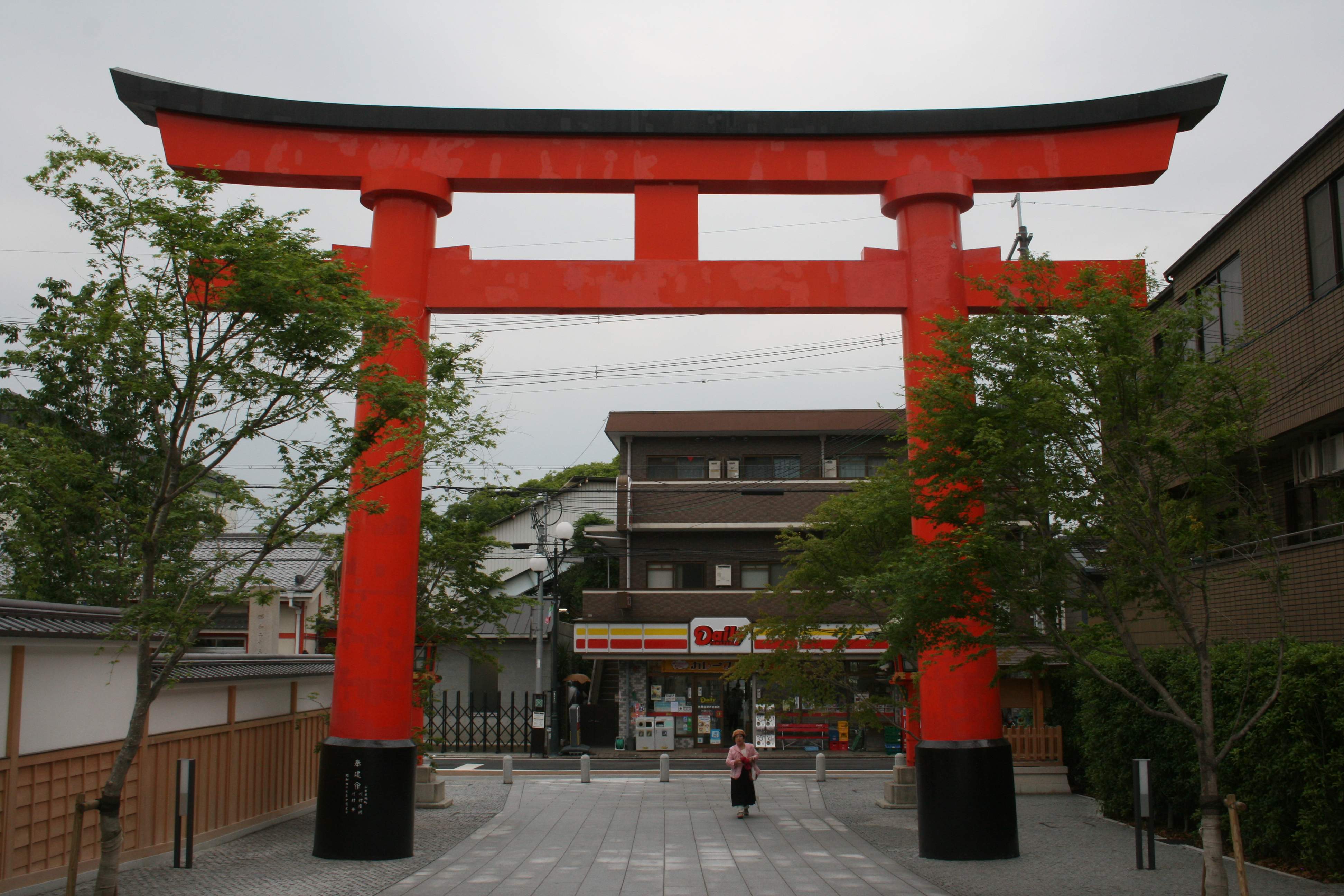
I worked my way back along a residential street to the main entrance to Fushimi Inari. I left through the main gate that I had missed coming in. (I had been just a bit lost, if you recall.) One last giant vermilion torii gate, then there were houses, mini-markets, and the (correct) train station to get me back to Kyoto Station.

Kyoto Station is huge, a hub of local, regional, and national rail lines. Just outside of the main doors is this beautiful and monstrous lattice roof and unique architecture.

Directly across the street is the Kyoto Tower, which I had only seen at night when I came in the previous evening. The area around the station and tower is a very colorful, vibrant, busy section of the city, which I found quite enjoyable. I prowled around at all hours for the couple of days I was there, shopping, eating, and exploring.

Going out to dinner with my daughter that evening, we went past the Kyoto City Hall, which is where the Kyoto Protocol was negotiated and signed in 1997.
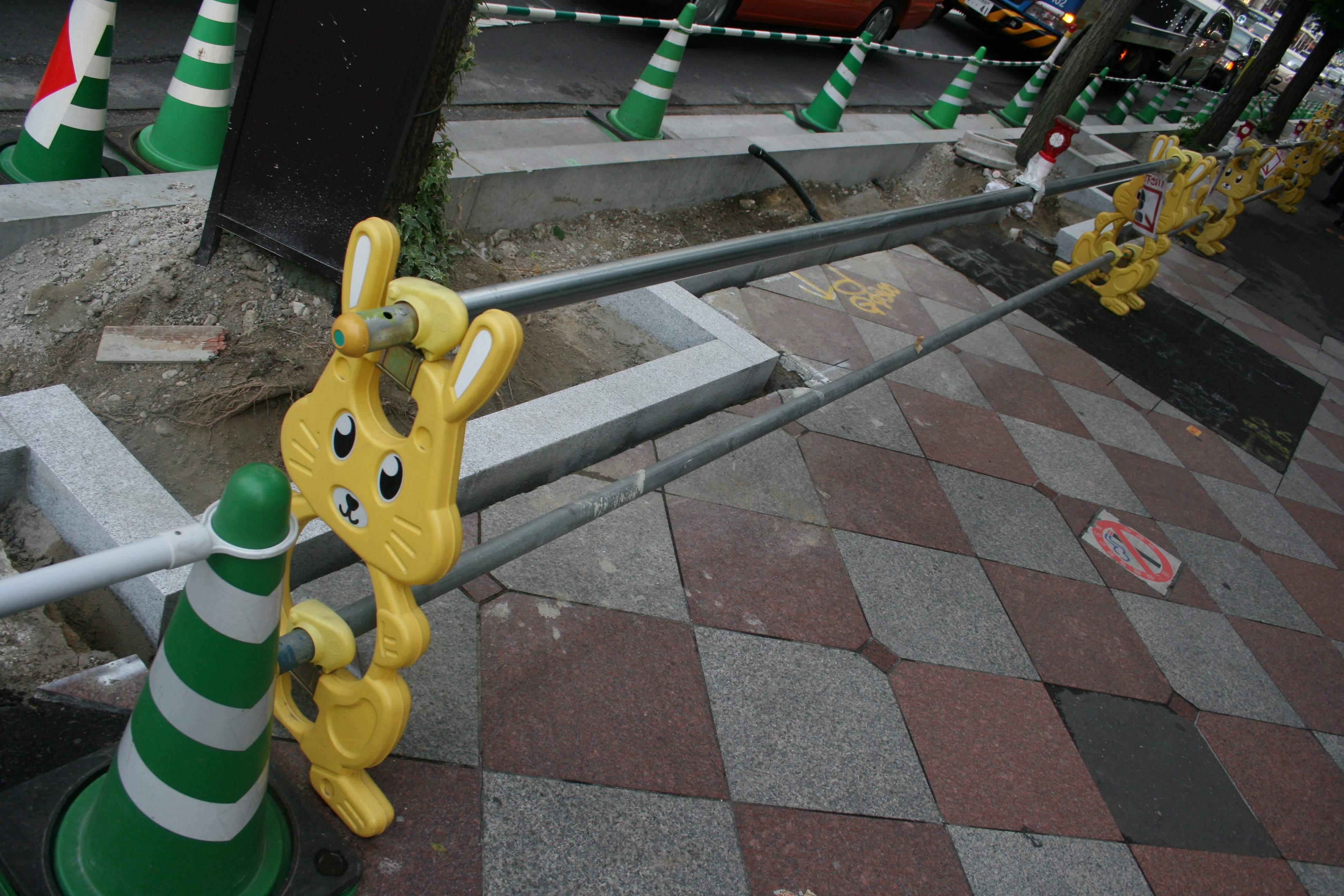
Heading toward our restaurant, just down the block we found a construction site. I found these barriers so much more interesting, whimsical, and entertaining than the ugly and routine sawhorses, orange plastic fencing, and yellow hazard tape that seem to be the norm in the US.


 We Love The Stars Too Fondly