
Nine days ago the moon was just over two days old and a sliver in the still light sky at dusk. I commented on how it was a bit difficult to focus due to the low contrast. The moon also looks a bit “off” against a blue background.
Three nights ago I posted a picture from the early 1970s where I didn’t have the kind of equipment I have today. I was trying to see if I could take a picture (B&W film) using my dad’s old camera (an Argus C3 I think) with the lens just held up against a pair of binoculars mounted on a tripod.
Below are some pictures I took an hour ago with my current DSLR and a small Celestron telescope.
The other note I would bring to your attention is that there’s another lunar eclipse coming up in just a couple of days. This eclipse is part of the same cycle as the lunar eclipse from April 15th earlier this year. My pictures from that eclipse are here, and a wrote an article about lunar eclipses and how to observe them here.
You should be able to see at least some of the total phase of the eclipse if you live anywhere other than Europe or Africa. If you’re on the west coast of North America (west of the Rockies, more or less) or in Japan or eastern Australia, you should be to see the entire total phase.
The eclipse will be in the early hours of Wednesday morning, October 8th. (Or very late on Tuesday night, your position on the planet may vary.) On the US east coast, totality starts at 6:25 am EDT. You’ll lose the eclipse into the brightening sky as the sun rises. On the US west coast, totality goes from 3:25 am PDT to 4:24 am PDT. That means either a really late night or a really early morning.
Assuming that the sky’s clear of course. If it’s going to be cloudy, enjoy a good night’s sleep and look here on Wednesday for my pictures. (Which assumes that my sky will be clear. Right now that looks like a good bet.)
Tonight it was very clear, the moon is 11 days & 20 hours old, and this is what I saw:
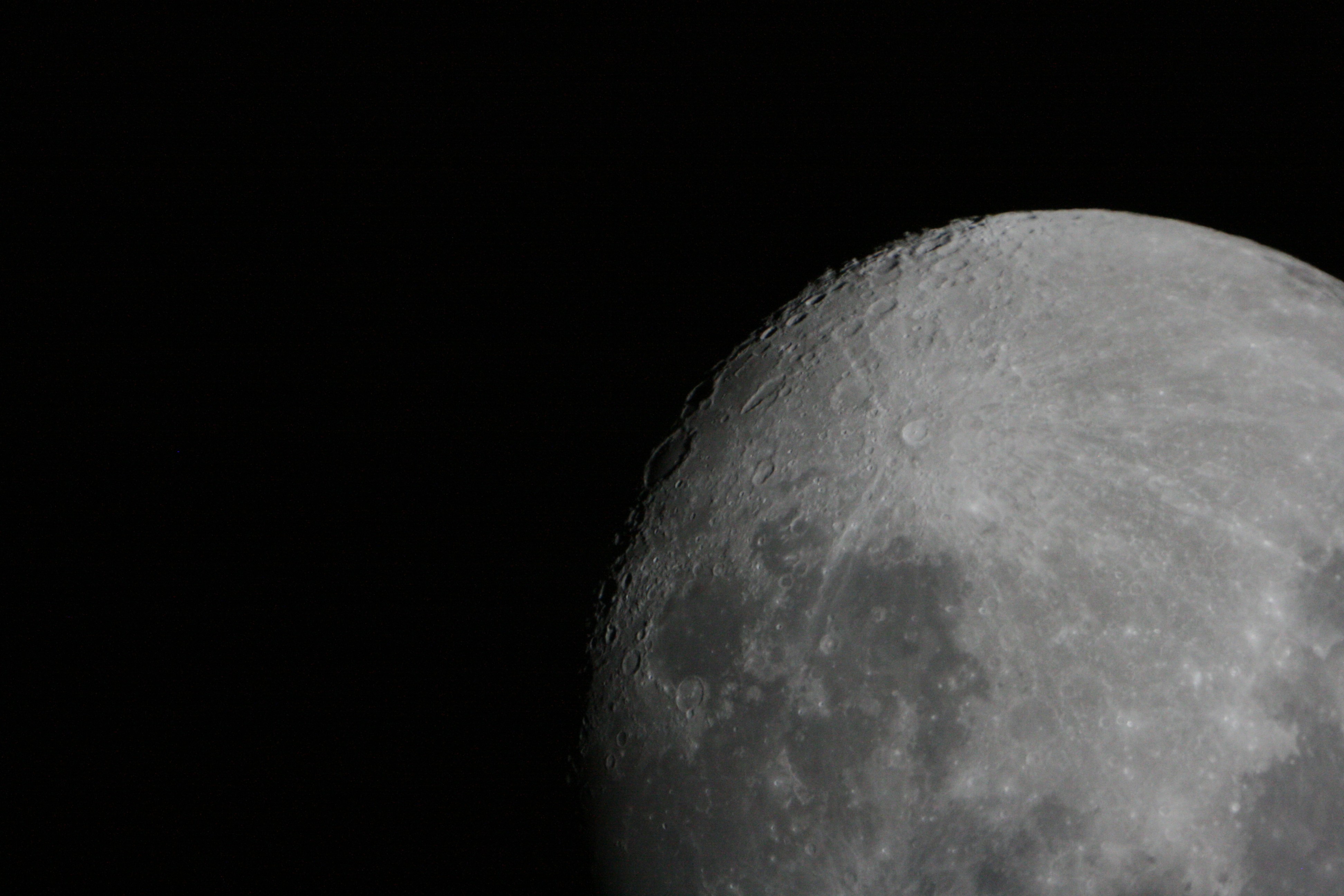
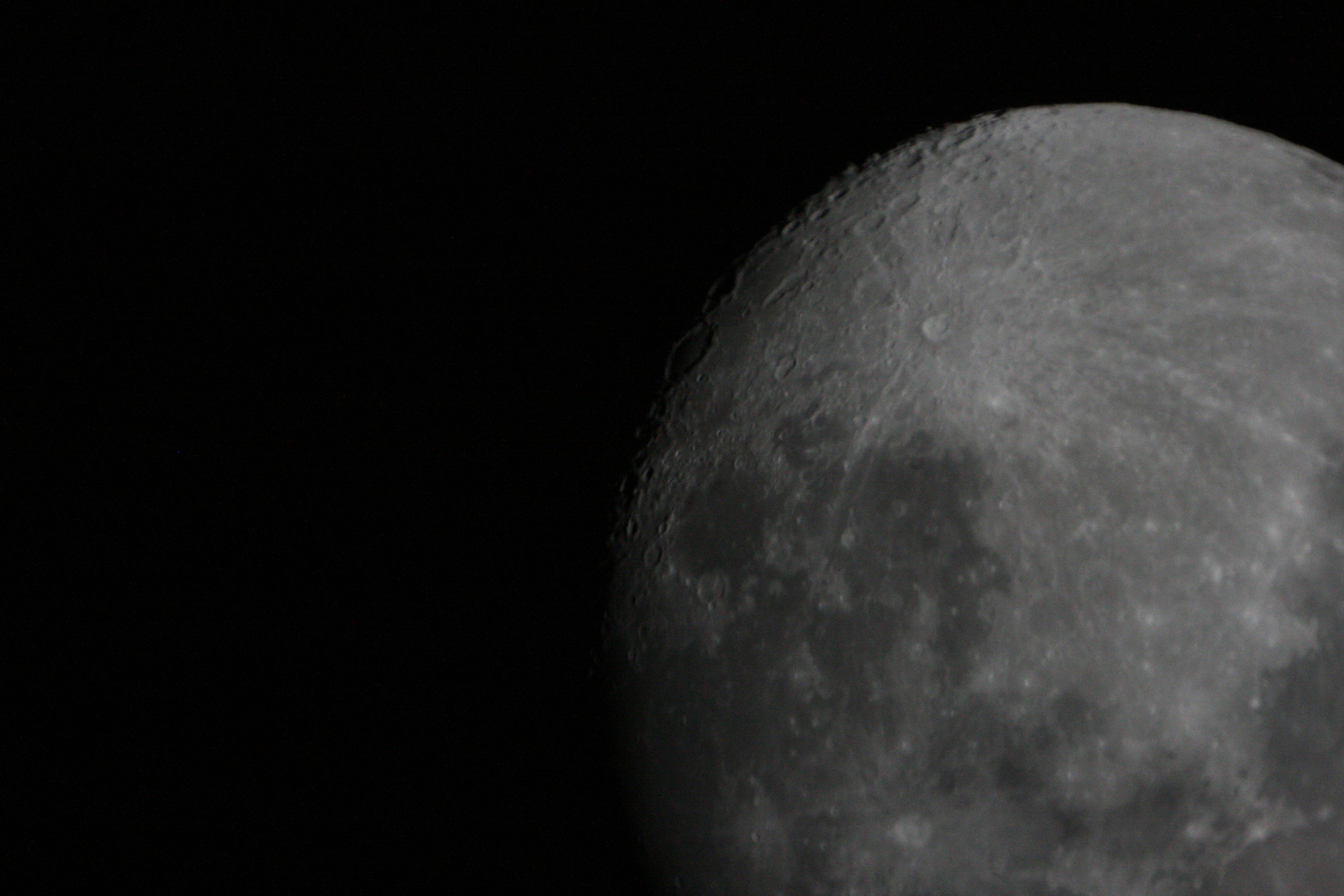
With the camera attached to the Meade ETX-125 telescope, it acts as if it were a 1900 mm telephoto lens. (For reference, my “big” zoom lens is a 75 to 300 mm.) The full moon is just a tad too big to fit into the full frame of the camera at that magnification. So I shot a bunch of frames at the left, right, top, bottom, middle, and so on.

The terminator is at the upper right here and you can see some good definition of the mountains and craters along that edge of the moon. The huge crater at the upper left, with rays shooting halfway across the globe is Tycho.
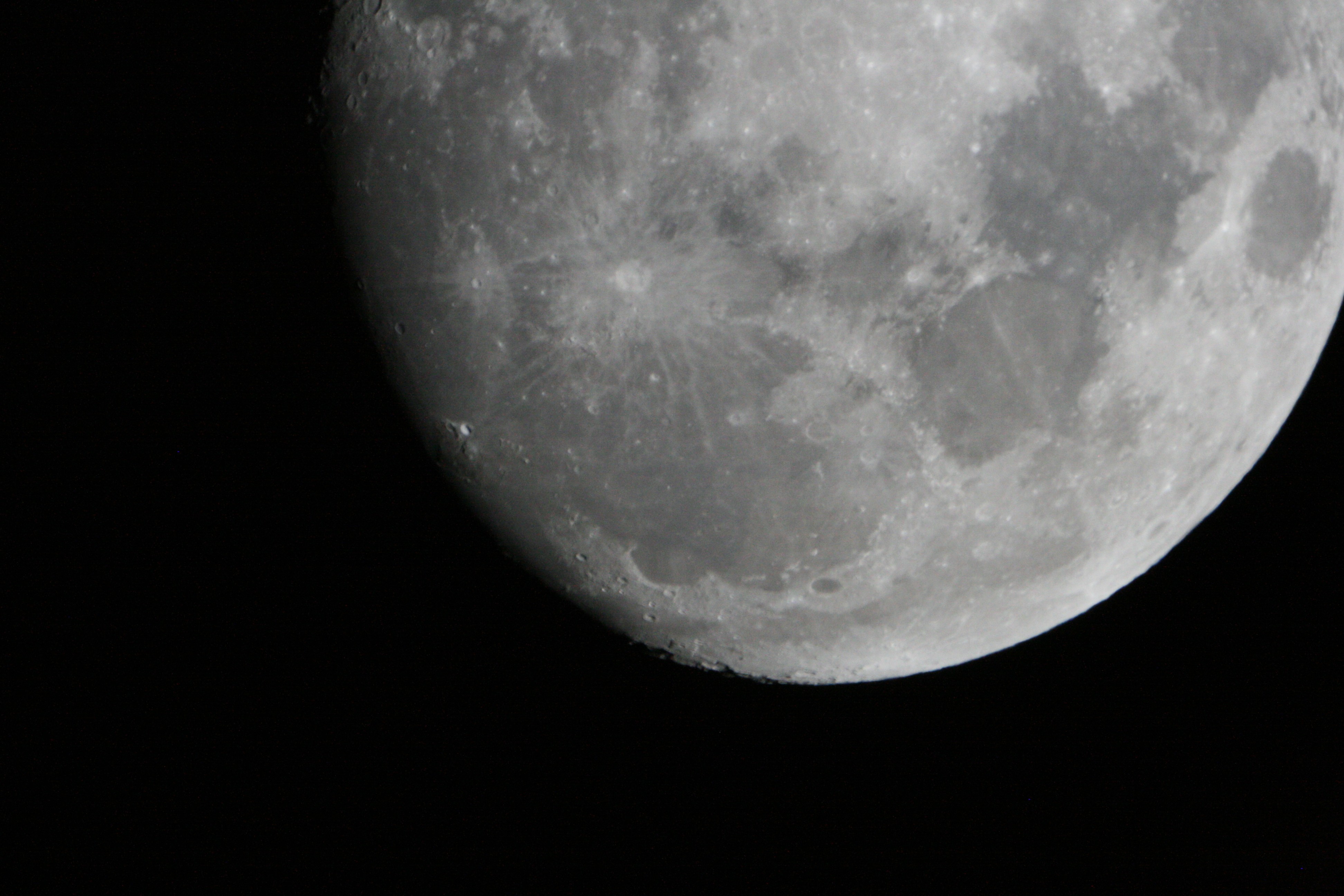
Here we see what appears to be the “bottom” edge of the terminator as you look at it with the naked eye.
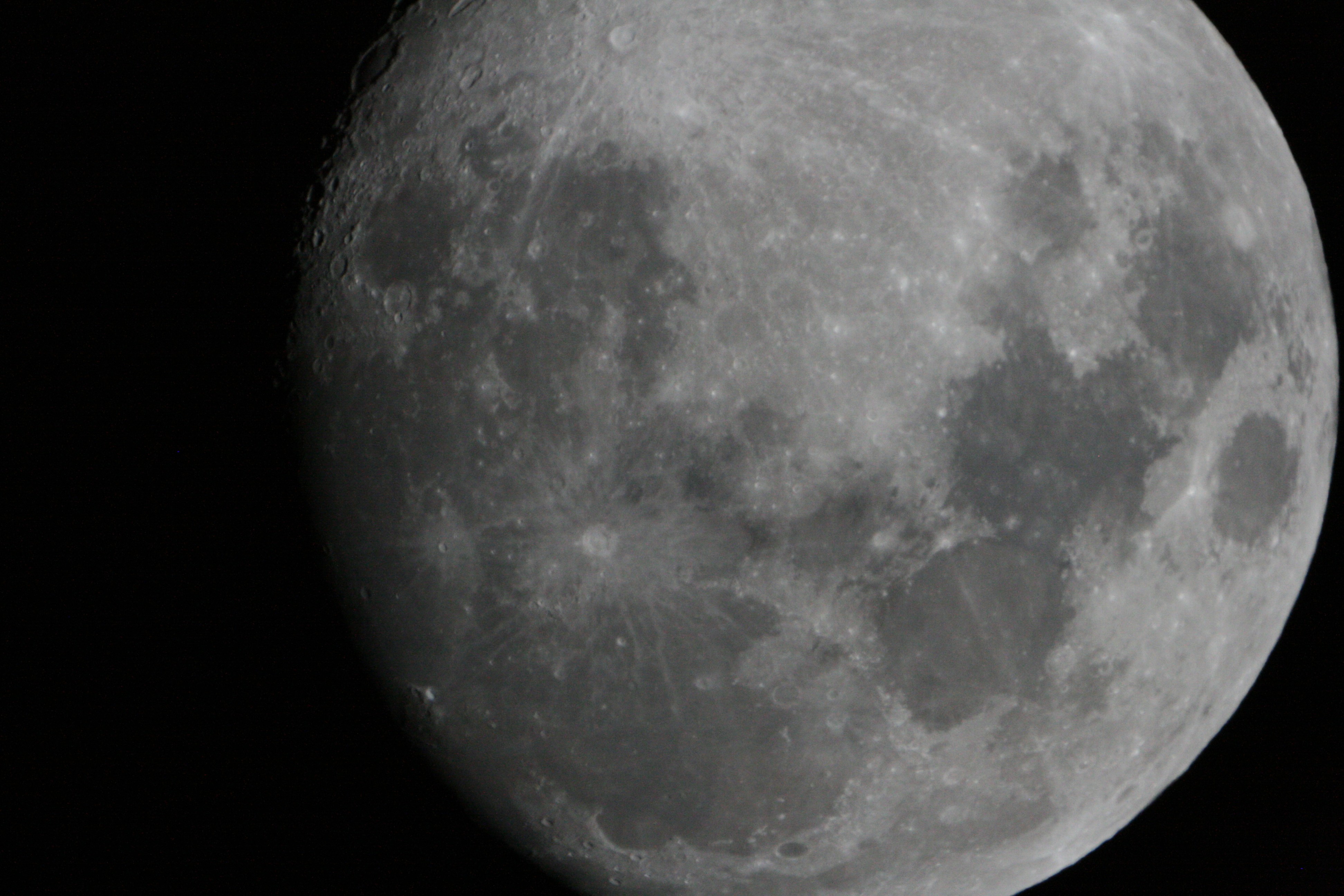
A “center” shot.
The new remote control I have for tripping the shutter on the camera works great and eliminates a lot of the vibrations that have been a problem in the past, particularly on the portable telescope mount. Some day it would be great to have a heavy-duty, permanent mount, but that day isn’t today. We do the best we can with what we’ve got.
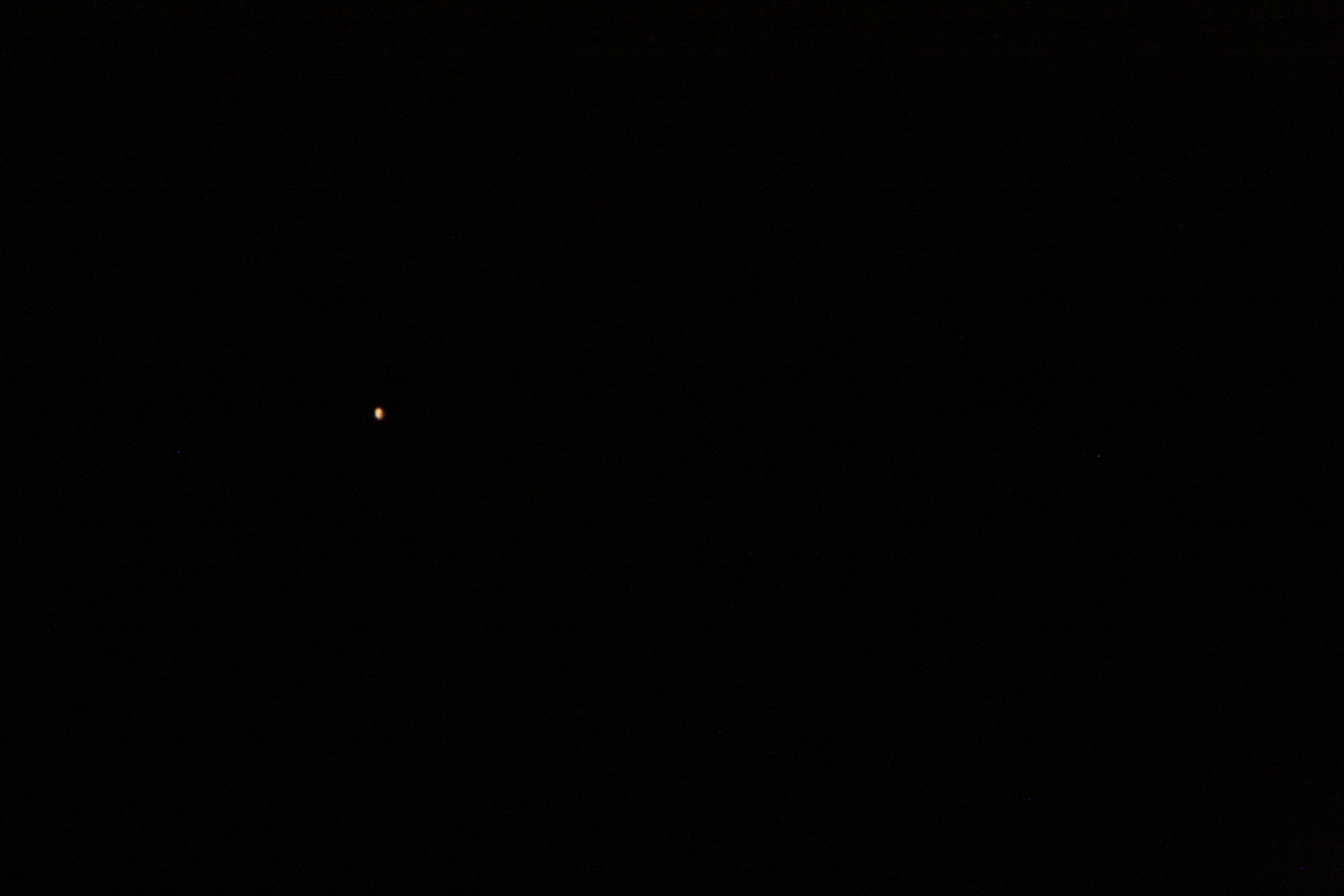
Then, as long as it was hanging there in the west near the horizon, I took a shot at Mars.
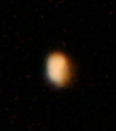
It’s red, it’s tiny, but it’s a disc.
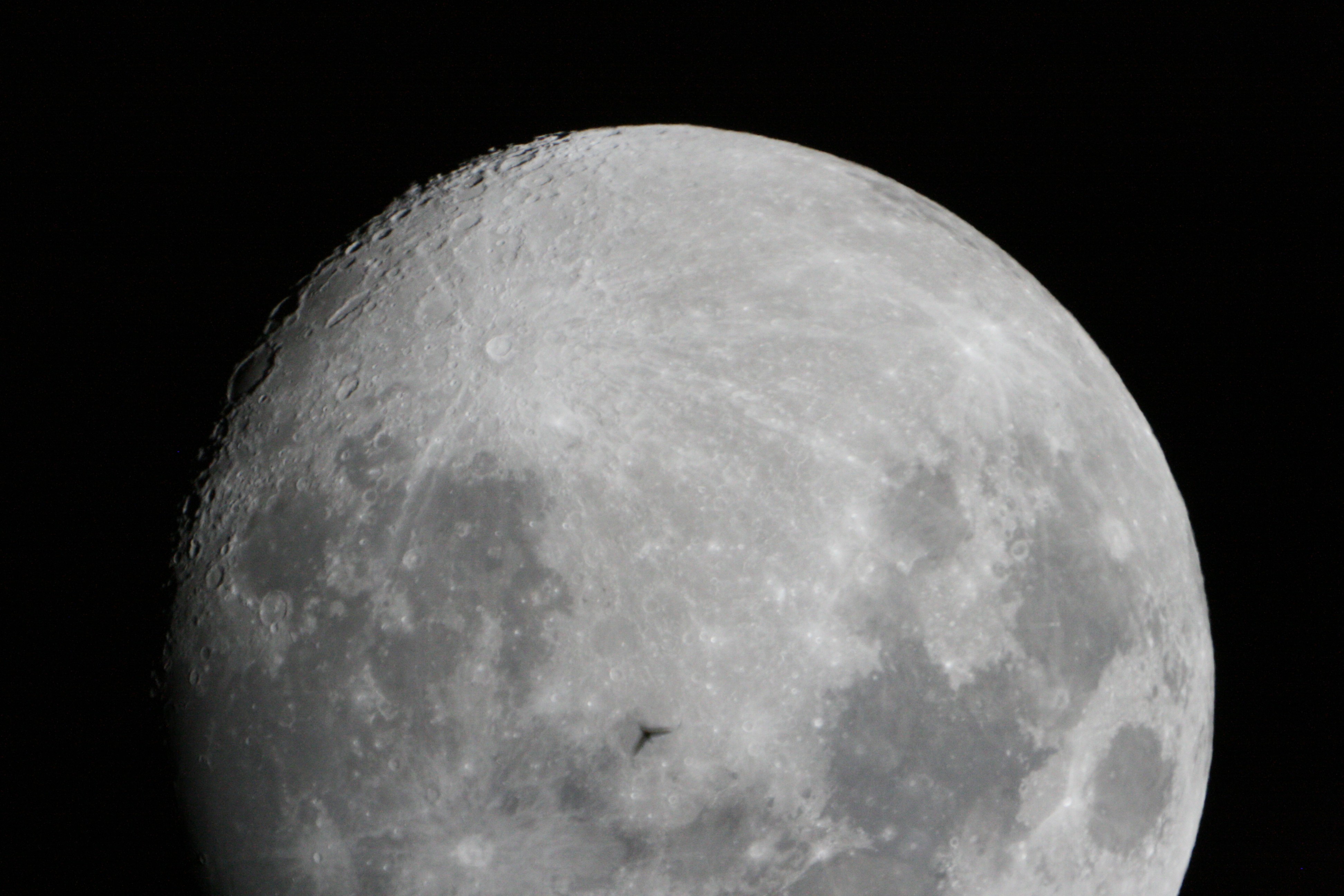
Finally, this picture was taken just four seconds after the second picture above, and I wasn’t going to use it since it’s a bit overexposed. Then I noticed the thing in the middle.
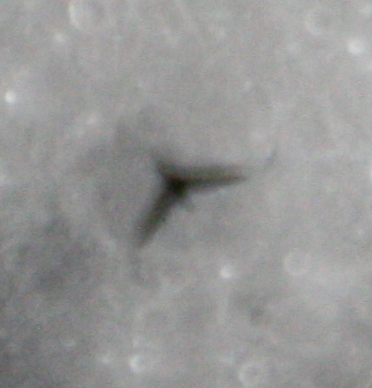
It’s way out of focus since I was focused on the moon, 362,544 kilometers away. At first I figured it must be a plane up at 35,000 feet, since we are right under the departure track from LAX to parts north and Asia-ward. But if it were a plane, wouldn’t we see the anti-collision lights? So maybe it is a bird at 350 feet? But those are really long wings for any bird normally seen around here.
A super-secret DOD spy plane, or even an old-fashioned U2? A Klingon bird of prey starship?
It’s a mystery! Maybe we’ll see it again during the eclipse in forty-eight hours!


 We Love The Stars Too Fondly
That, my friend, is a pterodactyl. Trust me. They’re everywhere, they only come out of night and they are deadly silent.
Case in point – I was talking to someone the other night for over an hour about the stars. I turned to show him something for a few seconds and when I turned back again, he was gone.
It was like he never existed.
Pterodactyls.
LikeLiked by 1 person
…and you know what’s really scary?
No screams.
No blood.
Nothing.
LikeLiked by 1 person
That’s too funny, but it’s so obvious! You’re 100% right, the evidence was right there in front of me!
LikeLiked by 1 person
Wow thats really cool! Love the shots of the moon but what IS that thing?
LikeLike