
Summary:
- I’m going to my third NASA Social, tomorrow, February 2nd (I’m really looking forward to it, it’s a big deal for me).
- Last November I spent two days at NASA Armstrong (here and here) for my first NASA Social.
- In December at JPL, I had the privilege of attend my second NASA Social.
- The posts accompanying those events had lots of my Tweets and cell phone pictures, but the better quality pictures were promised for “later.” Now it’s later!
- Friday I posted the DSLR hi-res pictures from November 18th, the first day at NASA Armstrong, and yesterday I posted the November 19th pictures from NASA Armstrong.
- Tonight, the hi-res pictures from the December 3rd NASA Social at JPL for the first Orion launch (which actually didn’t get off until December 5th). As I did yesterday, I’ll try not to repeat too much of the material already in the original post.
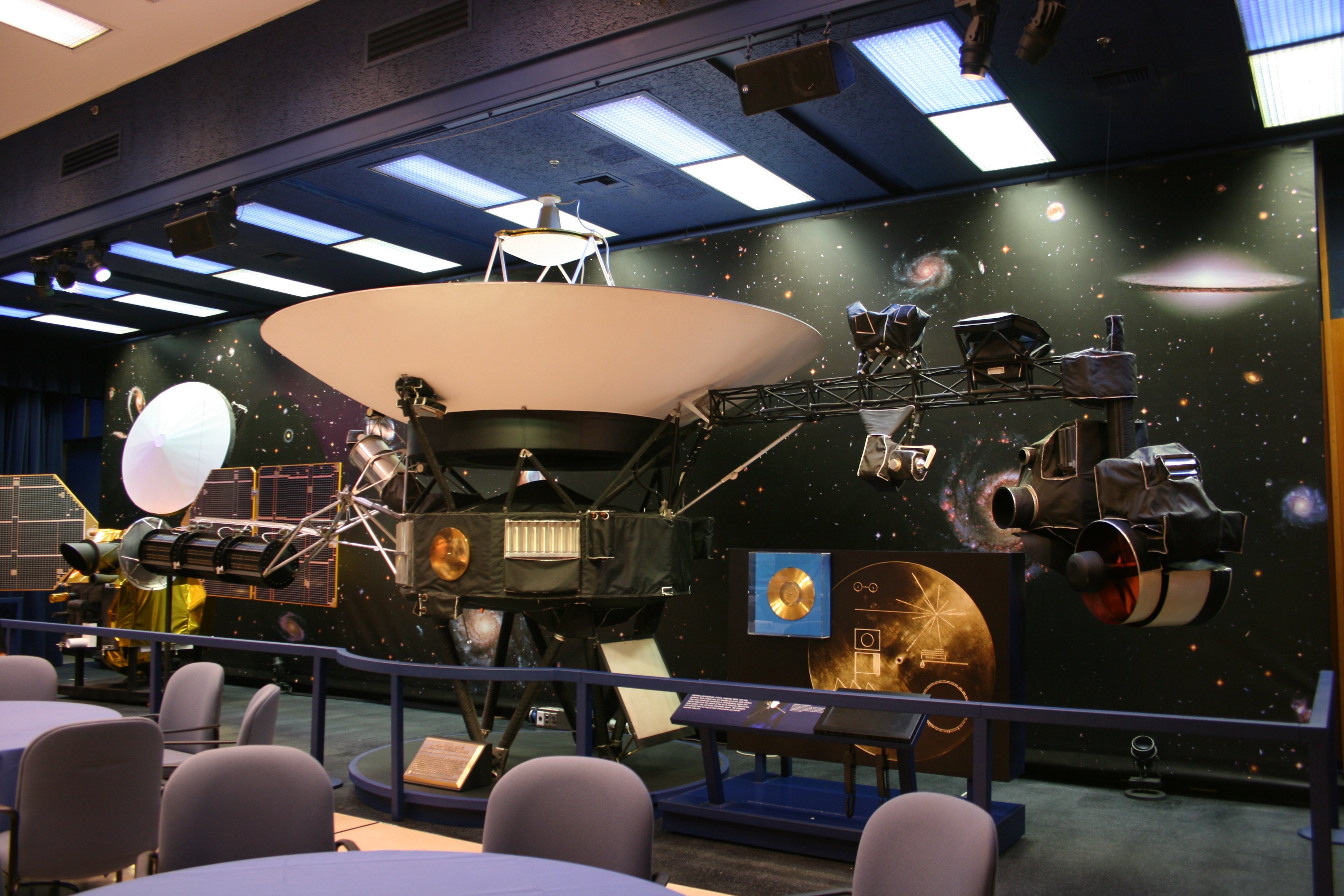
The talks we saw were held in Von Karman Auditorium. This is a neat place to be, in that there have been many, many historic press conferences held here as JPL sent spacecraft past Jupiter, Saturn, Uranus, Neptune, Venus, Mercury, landed on Mars, landed on Titan, landed on Mars again and again and again and again…
This is a full-sized model of the Voyager spacecraft, both of which have now left the solar system and are the first artifacts created by humans to enter interstellar space.
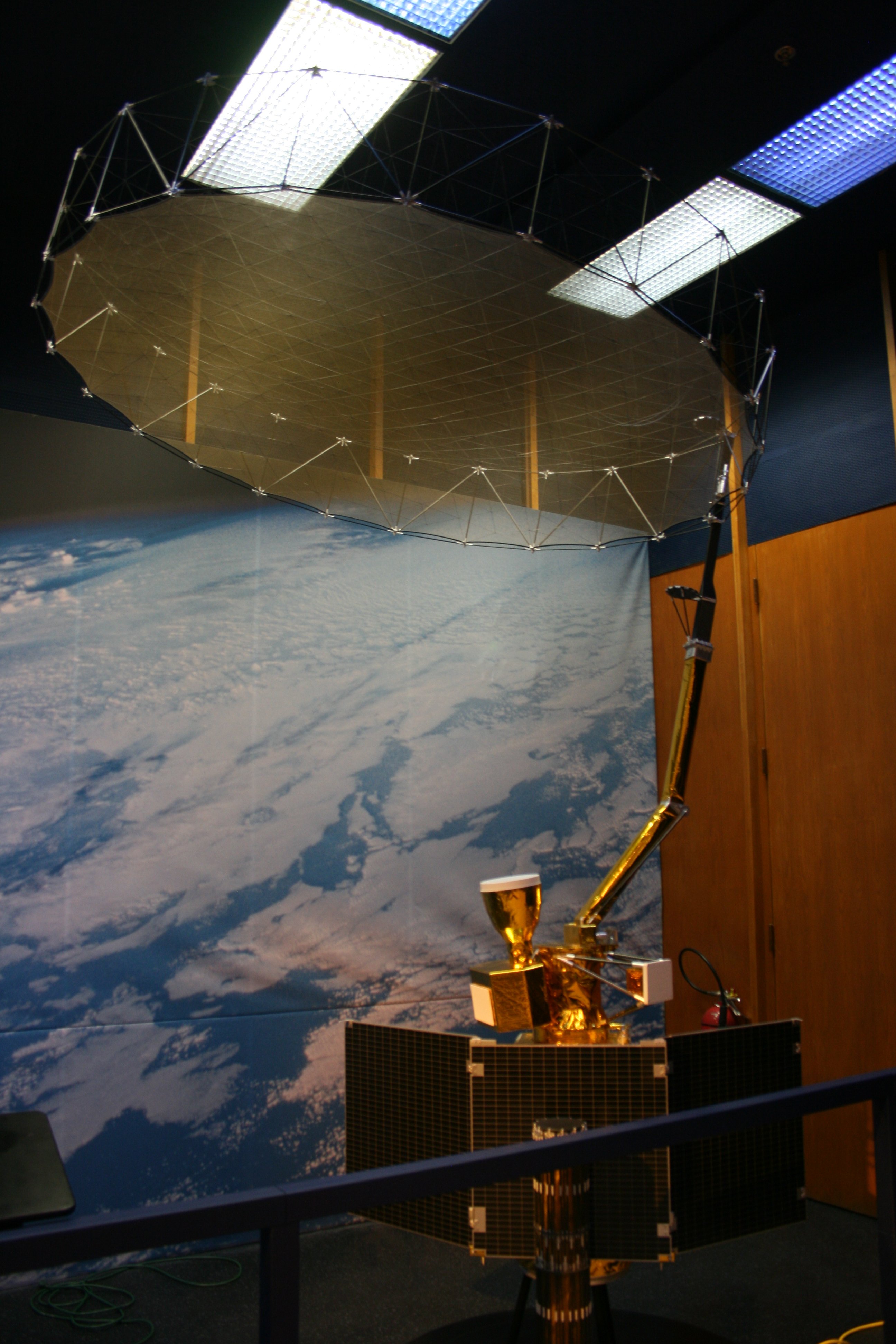
This is a (half?) scale model of the SMAP (Soil Moisture Active/Passive) spacecraft that launched earlier this week from Vandenburg Air Force Base in central California. The antenna on top launches in a folded up configuration (the model of the folded antenna is the tube on the floor in front of the middle solar panel) and then opens up after reaching orbit. SMAP will be used to get global readings on whether the soil is frozen or thawed (critical data relating to methane release from the Arctic regions as the area warms) and to measure how much moisture is in the soil (critical to improving long-term weather forecasts).
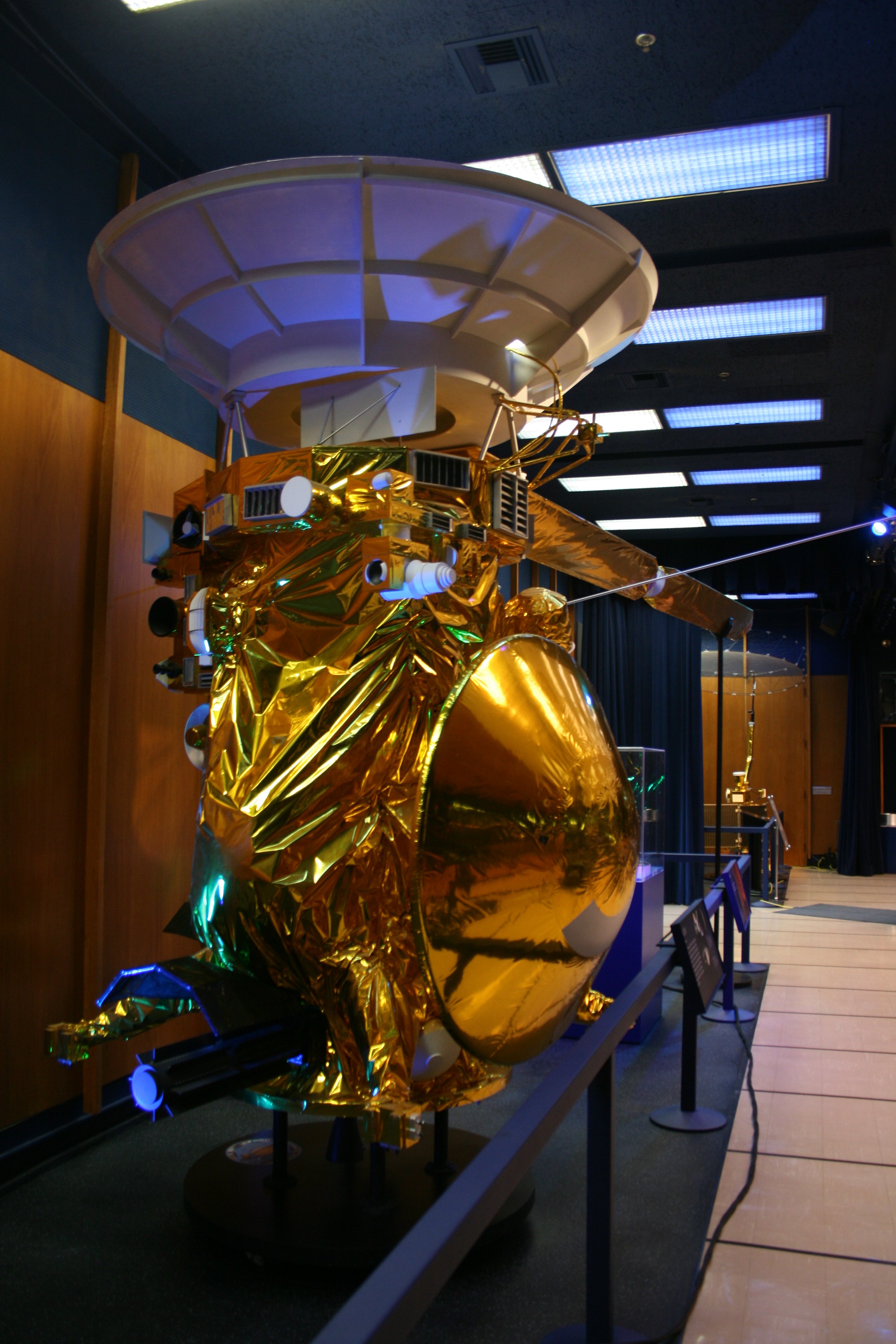
On the other side of Von Karman Auditorium is a half-scale model of the Cassini spacecraft, with the shield-like Huygens probe attached. Cassini has been orbiting Saturn and returning a massive number of pictures for over ten years, while Huygens was dropped into the atmosphere of Titan, Saturn’s largest moon, where it parachuted down and landed, sending pictures and data from the surface. (That landing video, as well as this one, are spectacular!)
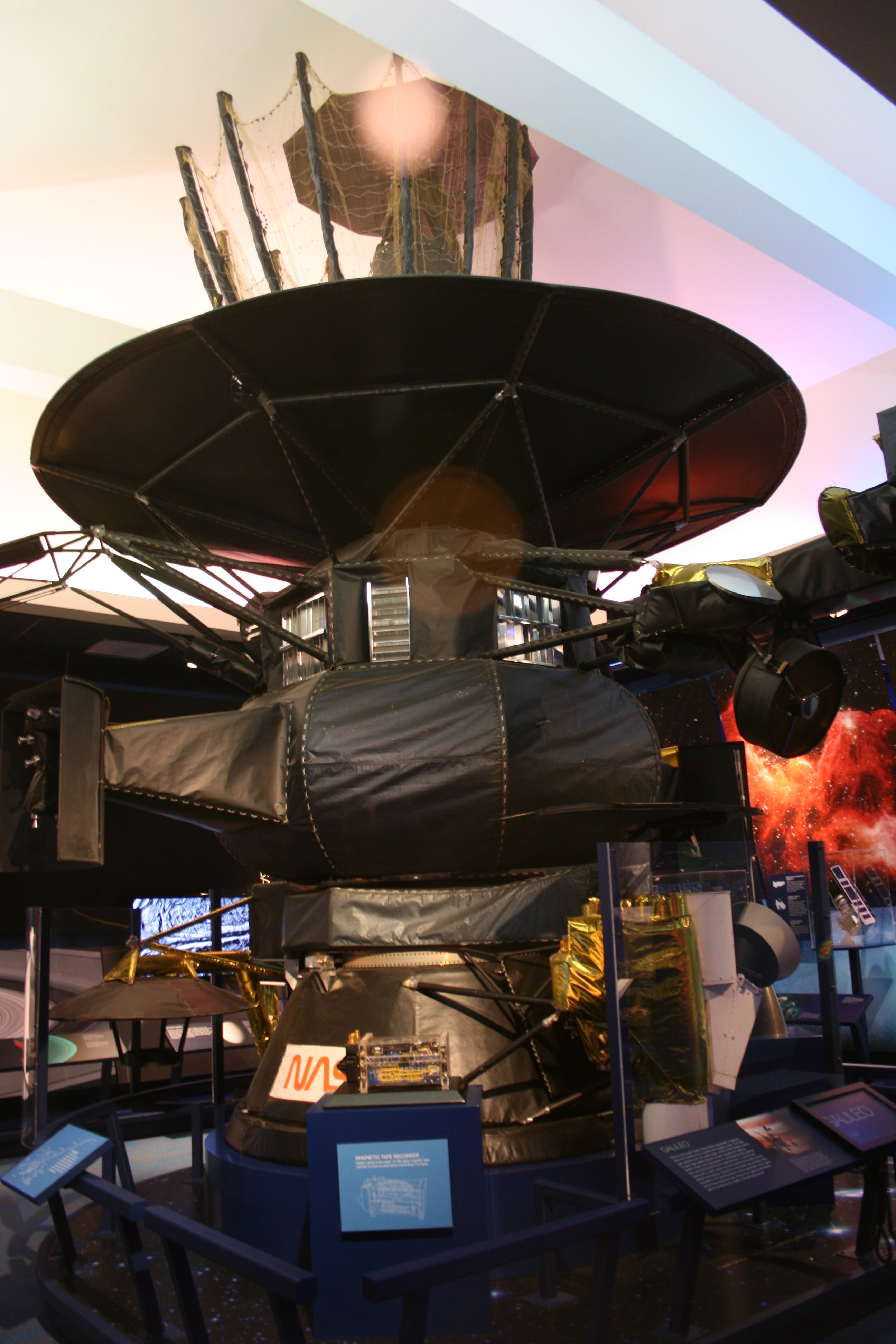
In the JPL visitor’s center next to Von Karman Auditorium are many other spacecraft models, pictures, and information on JPL planetary exploration missions over the past fifty years. This is a full-sized model of the Galileo spacecraft that was launched from the Space Shuttle toward Jupiter. The model is accurate to the point where it shows the primary antenna on top in the partially deployed condition that it got stuck in, seriously decreasing the rate at which data and pictures could be sent back to Earth. Despite that, all of our best knowledge to date about Jupiter and its moons come from Galileo and the work that the JPL engineers did to work around that antenna problem as best they could, performing minor miracles in the process.
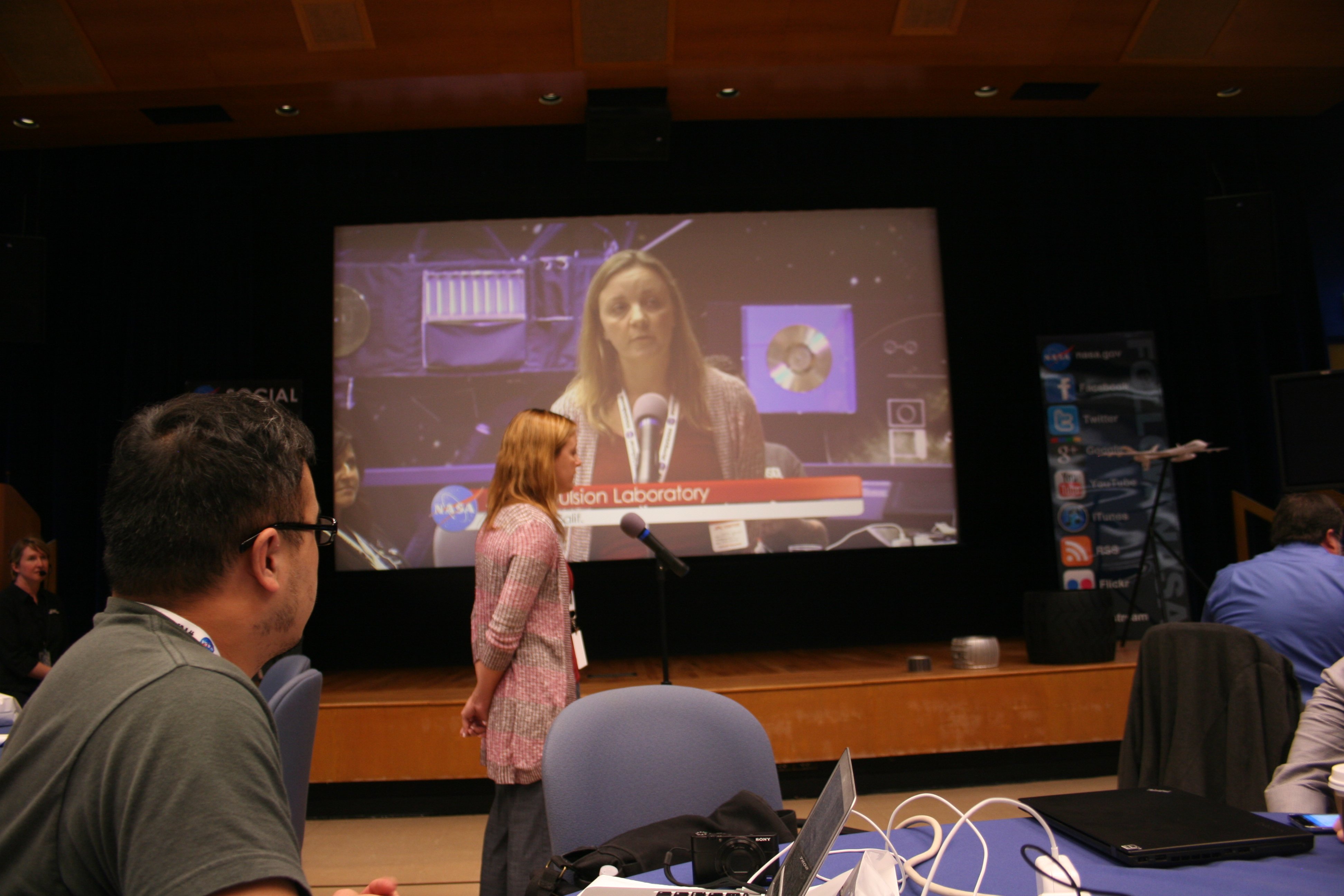
During the event there was a long session televised on NASA-TV, originating from Kennedy Space Center in Florida, but also taking questions from the other centers which were having simultaneous NASA Social events, such as JPL.
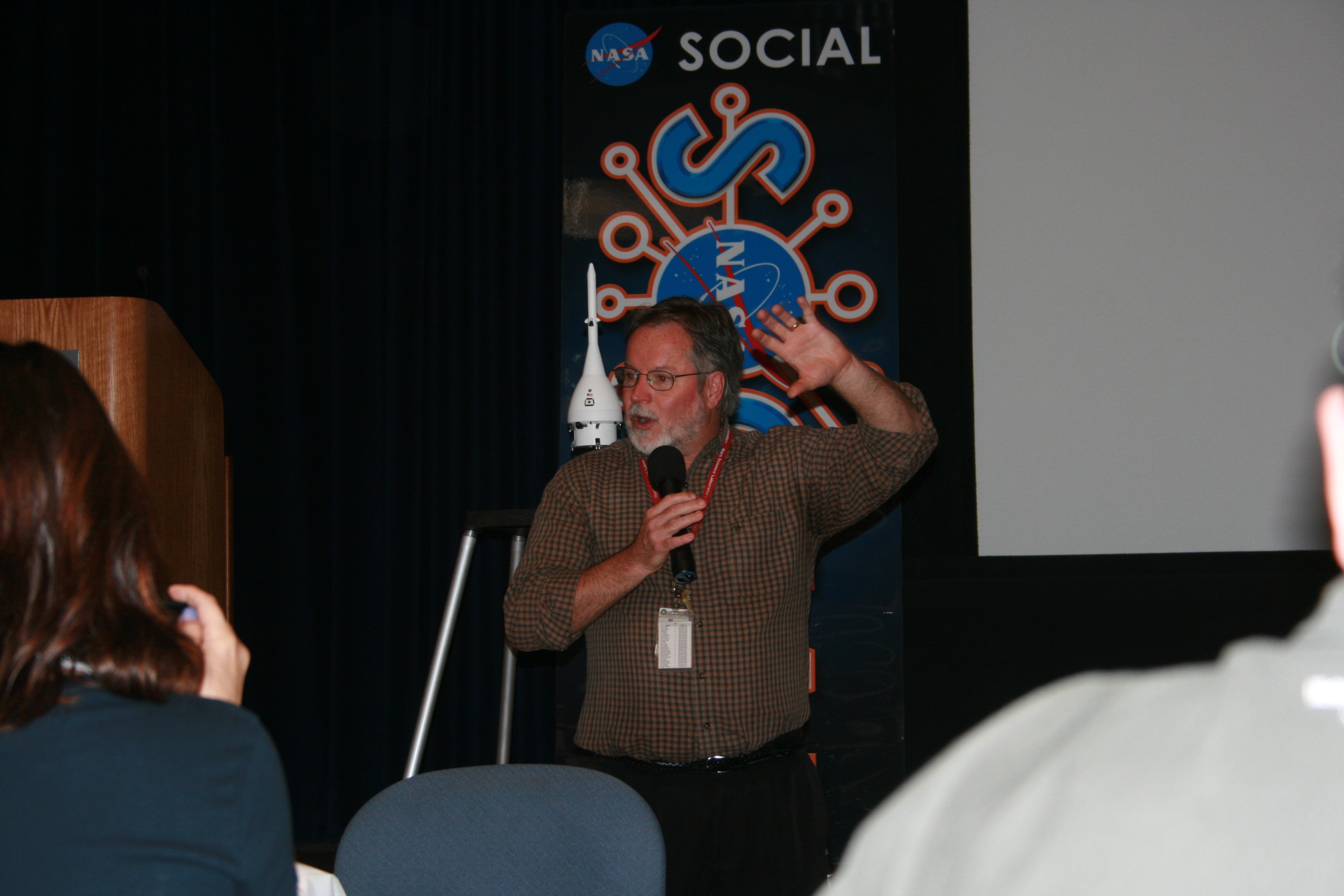
An unexpected surprise was an impromptu talk by Rob Manning who is currently the Chief Engineer of the LDSD project at JPL (see below) and was formerly the Chief Engineer on the Mars Science Laboratory (aka, “Curiosity”) which successfully landed on Mars and has now been climbing Mt. Sharp there for over two years.
When it comes to putting spacecraft on other planets and successfully doing what was previously thought to be impossible, the engineers and scientists at JPL are truly giants in the field, and “rock stars” to us space geeks and nerds. Rob Manning is one of those rock stars and it was a real treat to get to talk to him.
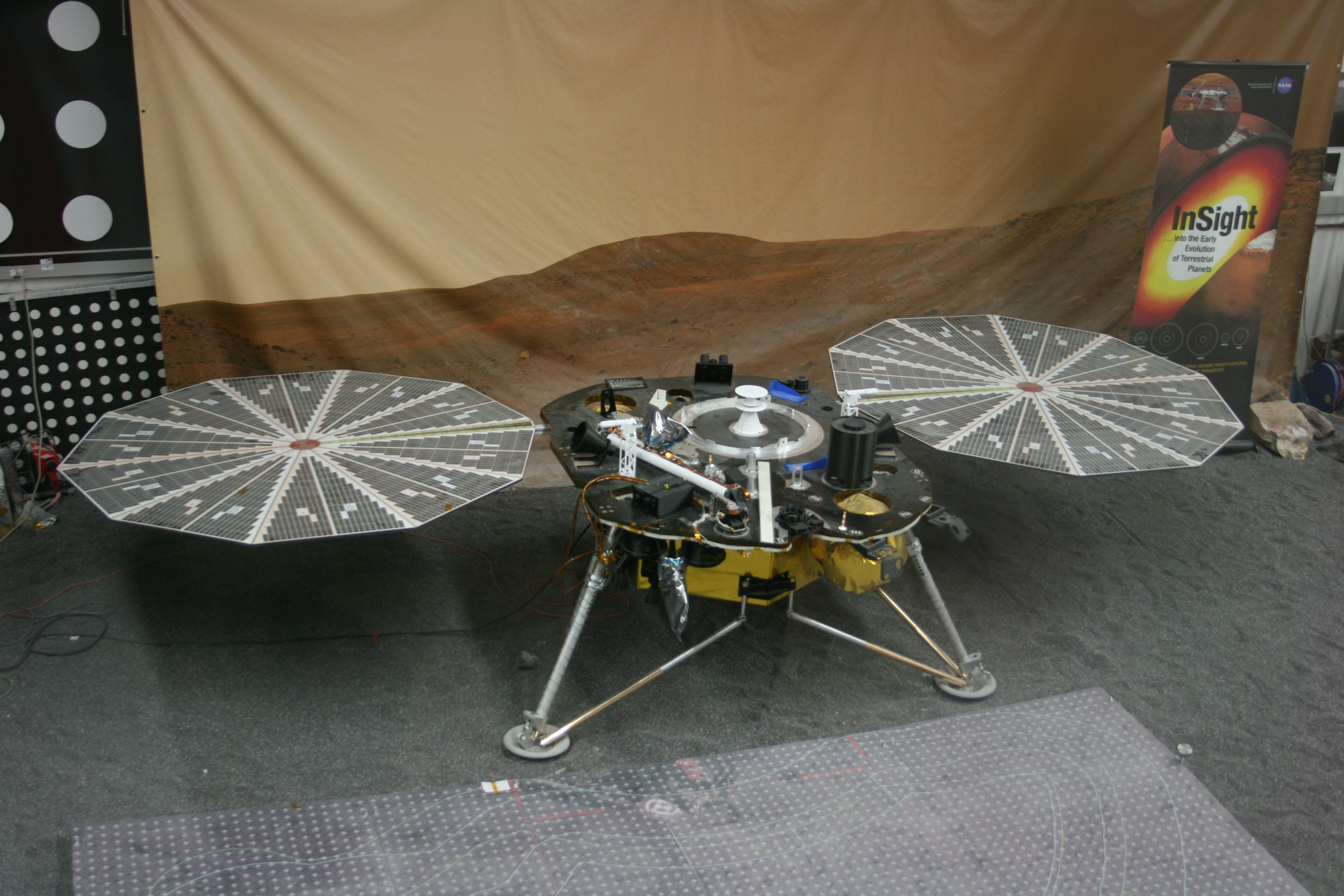
Once we got out of Von Karman (and into the rain) we saw several projects that are in the process of being built and tested. We got a talk by Deputy Project Manager Jennifer Trosper, another Mars rover exploration “rock star,” about both the current Mars Exploration Rovers (Spirit and Opportunity) and the Mars Science Laboratory (Curiosity). We also saw an engineering model of the InSight lander which will be launched in March 2016 to land on Mars and study the deep interior of Mars. A lander, not a rover, here you can see the grid laid out in front of the spacecraft as they test the arm to see where it can reach and to calibrate the mechanics of that motion.
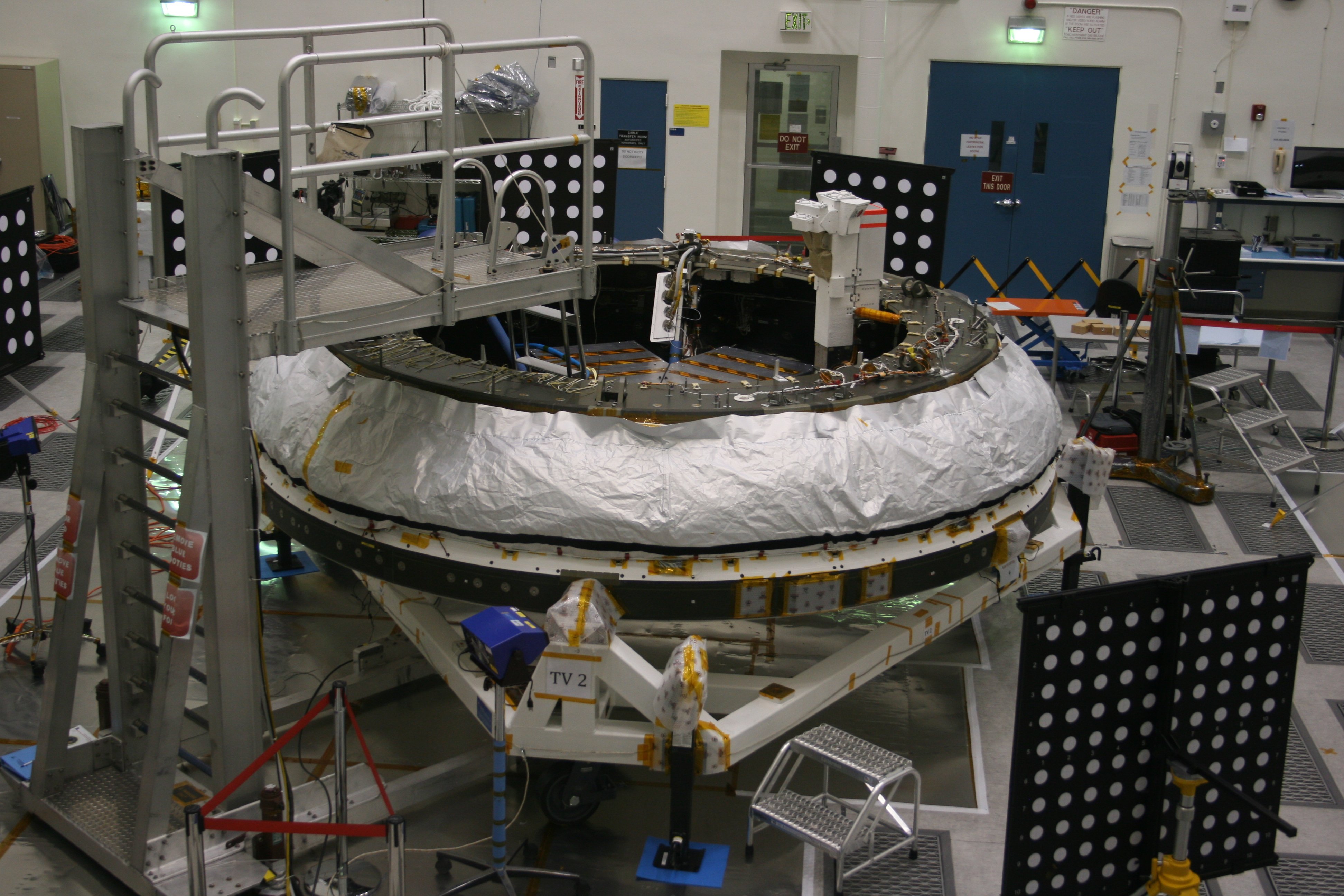
This is the next Low Density Supersonic Decelerator (LDSD) test vehicle which is being prepared for a launch and test later this year. Last year’s first LDSD test off the coast of Hawaii validated the concept and gathered vital data, but it also shredded the parachute immediately, which was highly unexpected. That’s okay, that’s how you learn in this business. If you’re not breaking things, you’re not trying hard enough.
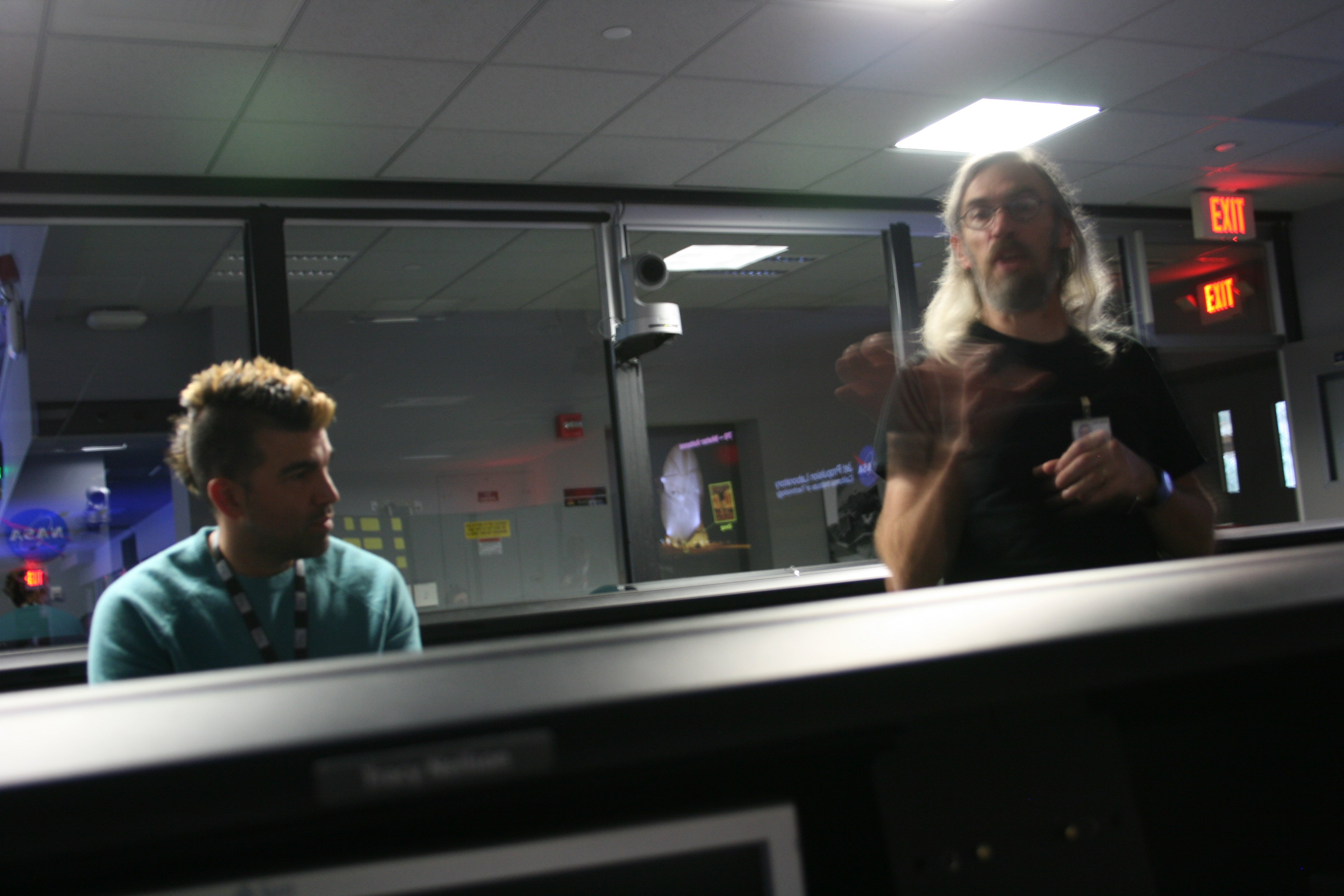
Finally, a completely unexpected surprise and more über-squeeing moments for me. First of all, the room we’re sitting in is the primary control room, the room you see in the videos of the JPL engineers and scientists celebrating wildly when a spacecraft lands on Mars or otherwise succeeds. (Like this one from when Curiosity landed, that whole “seven minutes of terror” experience.) THAT room.
Better yet, our escorts and speakers were Bobak Ferdowsi (on the left, aka “Mohawk Guy”) and Steve Collins (aka “Long Haired NASA Guy”). Space geek “rock stars” with a BIG “R”! And both of them two of the nicest guys you could ever meet, they answered all of our questions, posed for pictures and selfies, and put up with all of us geeking out.
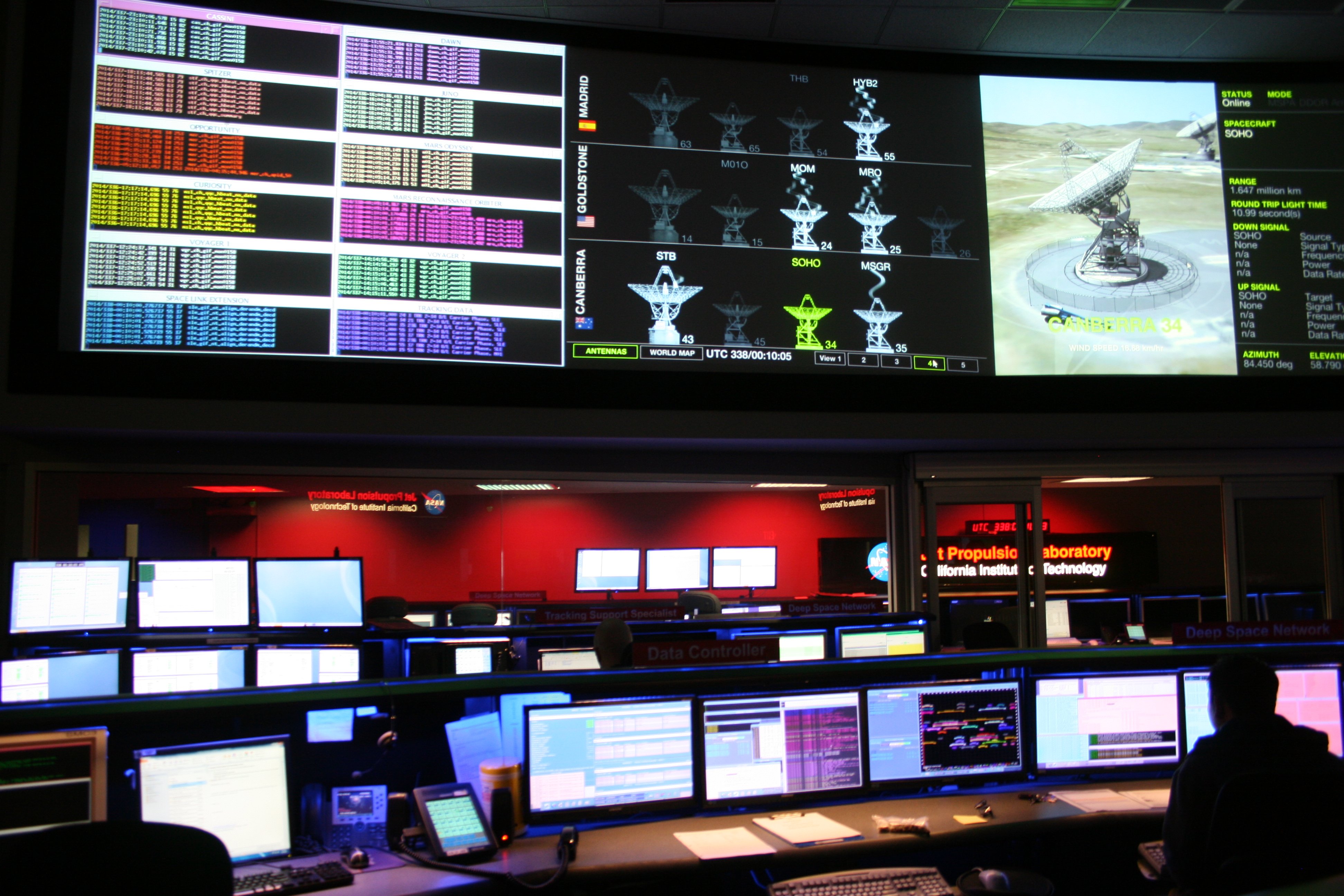
But wait, there’s more! Not only did we get to go into the primary control room, but then we got to go out onto the floor of the JPL Mission Control Room. Being here was way, way up on the bucket list! Places where they launch rockets and places where they run them are as close to “sacred ground” as I get, and the JPL Mission Control Room is close to the top of the list.
by the way, in the middle of the big screens at the top you can see the status of the Deep Space Network antennas, showing which ones are active at the three DSN sites (Goldstone, Canberra, and Madrid) and which spacecraft they’re talking to. Even better, that information, in fact, that exact up-to-the-minute DSN status display is available here on the NASA-DSN web page. It makes a great screen saver!
So there you have it! Now to bed and off to NASA Armstrong in the morning for my third NASA Social! Tweets and pictures galore to follow, I promise!


 We Love The Stars Too Fondly