
I had the honor and the privilege of attending my fifth NASA Social last Tuesday. The presentations we saw regarding the LEAPTech project were done at the NASA Armstrong Flight Research Center. Friday I wrote about what LEAPTech (“Leading Edge Asynchronous Propeller Technology”) is and what the project is trying to discover and develop. Yesterday I wrote about our trip out onto the Rogers Dry Lake to see the HEIST experimental rig and two trips to collect LEAPTech data.
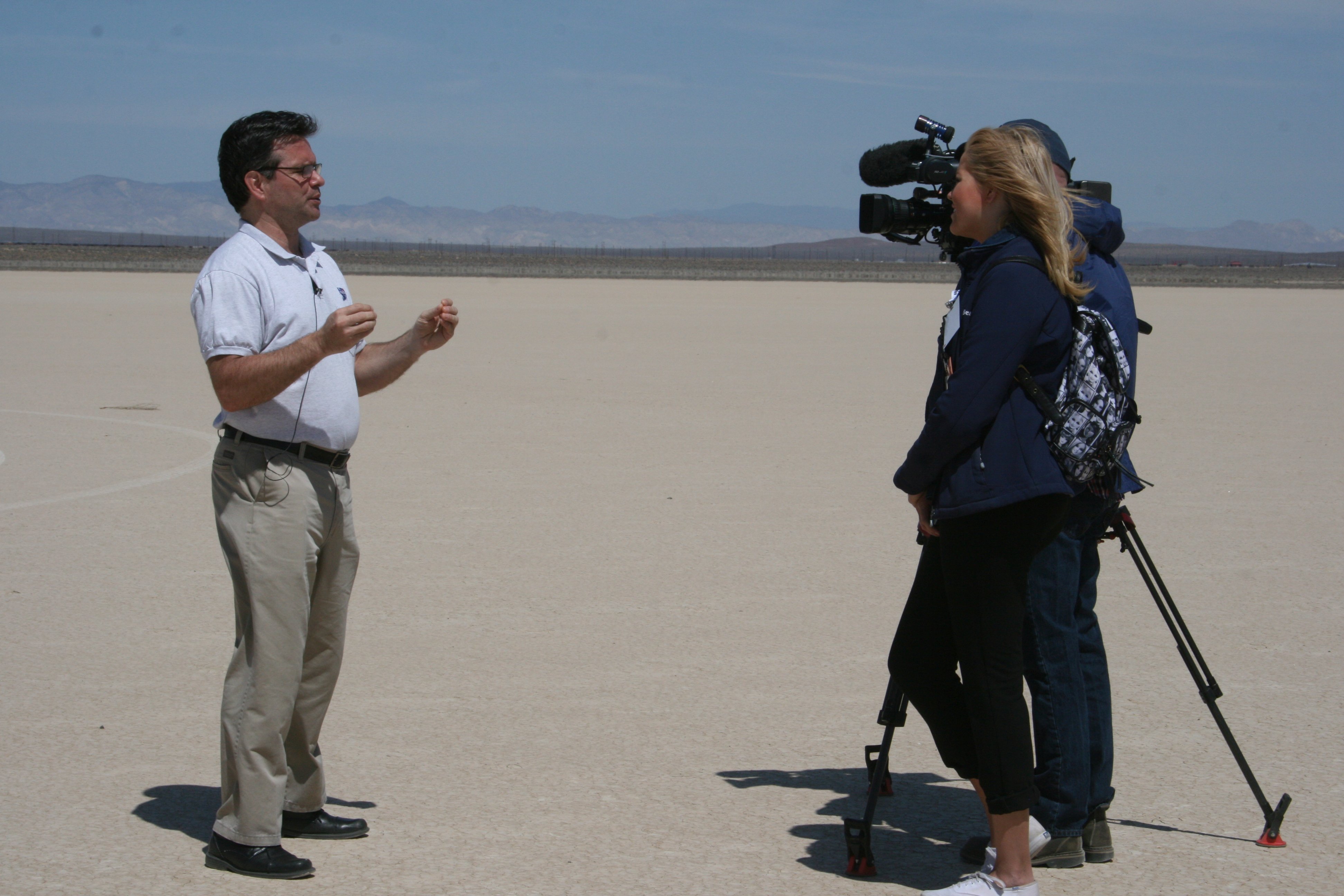
In addition to the social media attendees at the Social, there were members of the more conventional media there. Here we see Mark Moore, the Principal Investigator for the LEAPTech project, being interviewed out on the lake bed by a reporter and cameraman from one of the local television stations.

Photo by NASA Armstrong Flight Research Center
Before we went back to the conference center and main NASA Armstrong Center, all of the NASA Social attendees, the LEAPTech engineers and scientists, the NASA Armstrong staff, and everyone else got together in front of the HEIST for a group photo. (I’m standing, three or four folks to the right of center, in a light tan shirt, blue jeans, and my goofy “adventure” hat.)

The surface of Rogers Dry Lake is bentonite, a rock-hard clay layer thousands of feet thick, left after these lakes dried up around 10,000 years ago. The surface is incredibly flat, varying less than eighteen inches over a distance of 30,000 feet. There are 44 acres of it on Rogers Dry Lake, and another 22 acres at the nearby Rosamond Dry Lake.
The Antelope Valley is a desert (as is Los Angeles, but that’s a different rant) so it’s almost always dry here. “Almost” is the key word. When it does rain for a couple of days, the water coming from much of the Antelope Valley pools on the lake bed, closing the “drawn” runways (the ones on the clay surface) temporarily, while the main concrete runway is always open.
If a significant portion of the lake stays under water for more than seven days, a local species of brine shrimp starts to hatch. That in turn brings huge flocks of birds in, including seagulls from the Pacific Ocean about seventy miles away. Those birds are in turn can be a major hazard to flight operations, since bird strikes on high speed aircraft are extremely fatal to the bird and dangerous to the plane and pilot. Next, the birds can cover everything in the area with droppings, another mess for planes and facilities. Finally, when the lake starts to dry up again, the shrimp lay their eggs to become dormant for the next rainy season — then the shrimp die, start to rot in the heat, and we’re told that the stench can be most powerful.
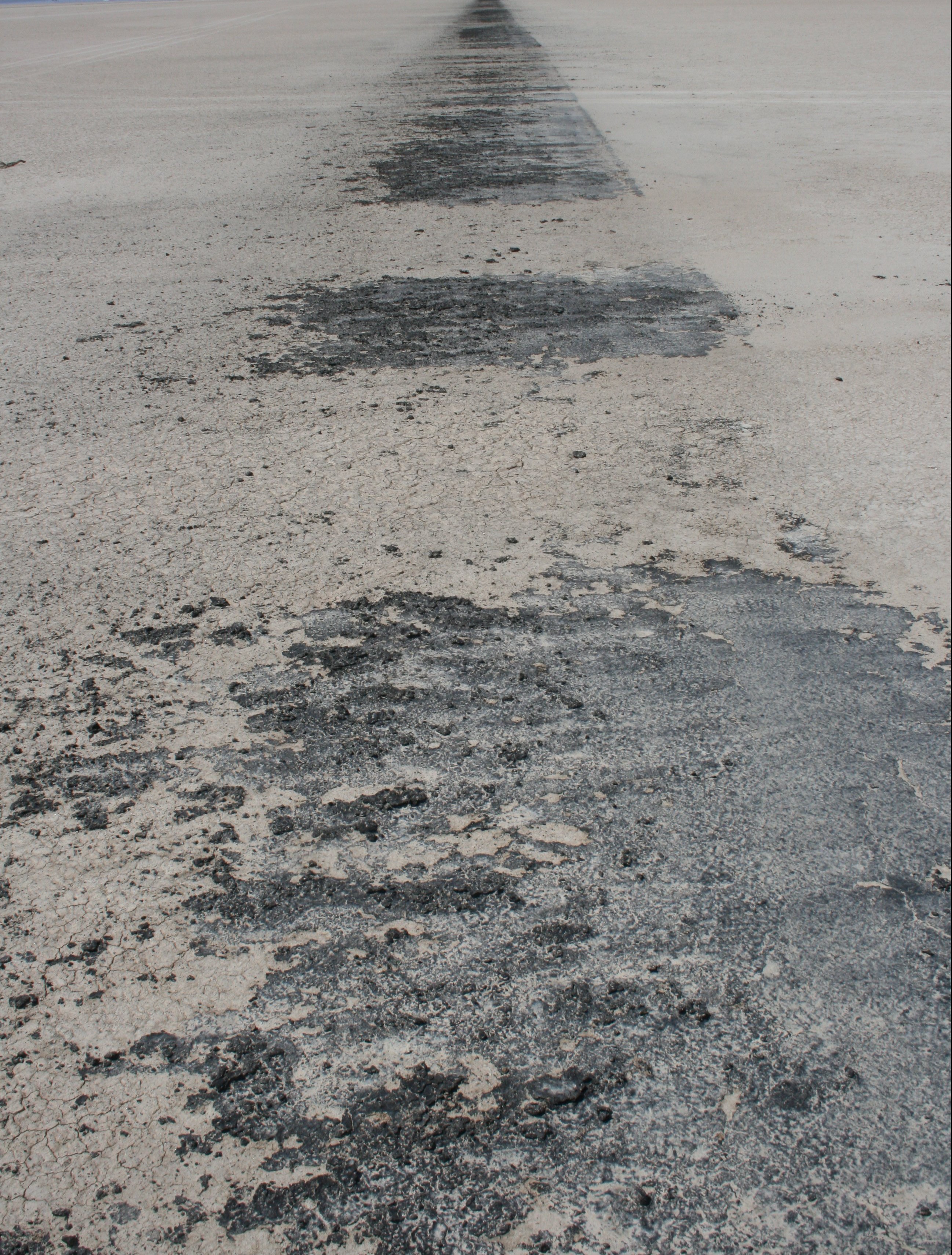
Here you can see how the runways and other markings are “drawn” on the clay surface. It looks like some kind of tar or rubbery compound, and the lines are several feet wide. Not only are the runway lines drawn this way, but Edwards contains the world’s largest compass rose, which has been declared to be a National Historic Landmark.

After lunch and some more Q&A with the LEAPTech scientists and engineers, we headed out to see some of the other activities at the NASA Armstrong Flight Research Center.
This is the entrance to the main building, and it might look vaguely familiar to anyone who grew up on 1960’s television. This building entrance was used by the “I Dream Of Jeanie” show as NASA Headquarters whenever they needed an establishing shot.
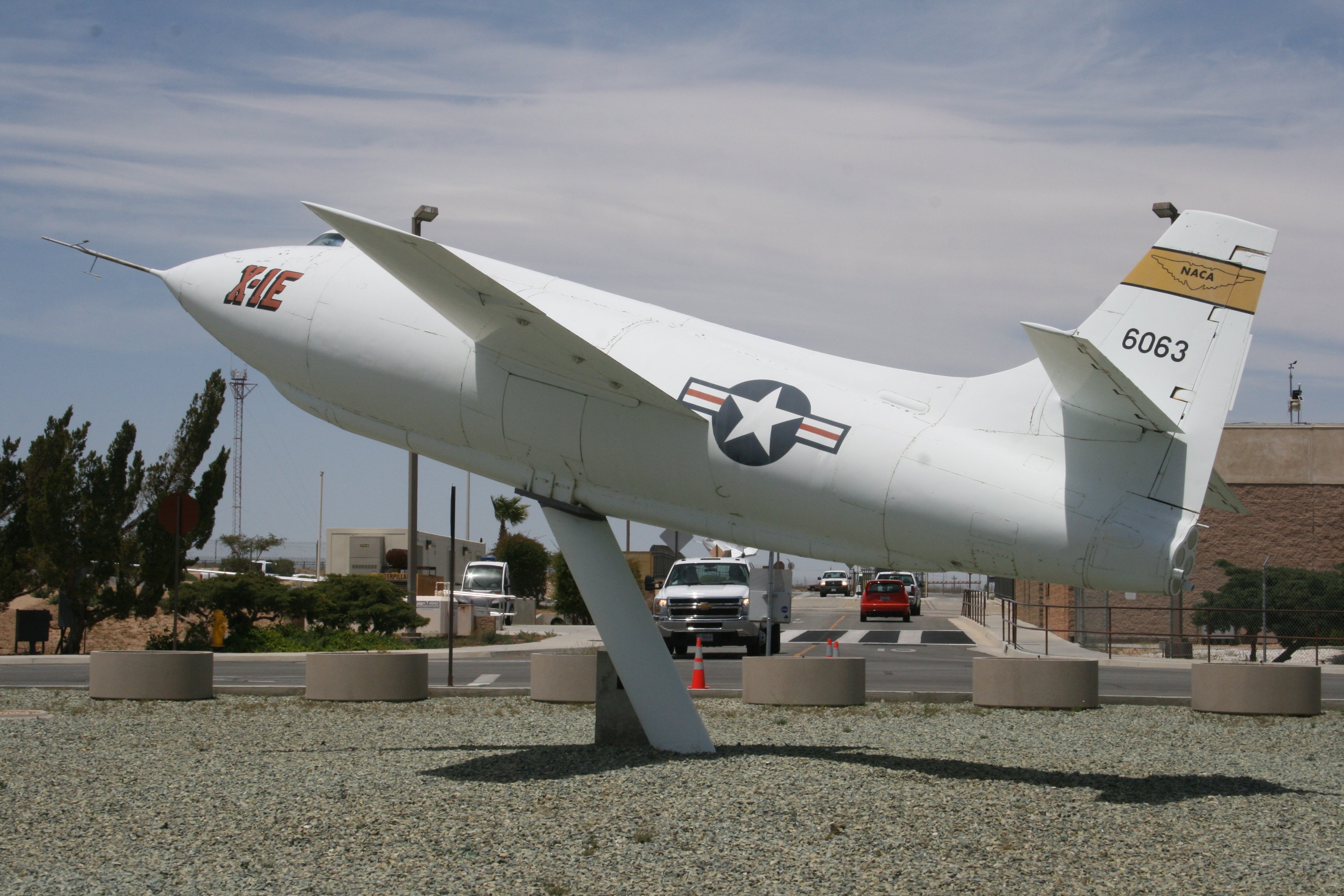
There are legendary research aircraft all over the site, many of them in or near the parking lot, up on sticks. This is the Bell X-1E, the big brother of the Bell X-1 which Chuck Yeager used to break the sound barrier in 1947. The X-1 is on display in the main hall of the Smithsonian Air & Space Museum in Washington, along with Lindbergh’s “Spirit Of St Louis,” Spaceship One from Scaled Composites and Virgin Galactic, John Glenn’s Freedom 7 Mercury spacecraft, the Gemini IV spacecraft used for the first US spacewalk, and the Apollo 11 Command Module.
The X-1E flew from 1955 to 1958, piloted first by legendary USAF test pilot Joe Walker and later by NACA test pilot John McKay. Its maximum known speed was Mach 2.24, but it was chasing Mach 3 near the end of 1958. Its maximum known altitude reached was 73,000 feet, but again, it was chasing 90,000 feet.

First stop on the Center Tour was the F-15 hangar. This is one of the newer aircraft, an F-15D. It will be flying for many years to come in support of NASA missions since there are hundreds of this model F-15 still flying. Most of them fly for other countries, but they’re still supported with spare parts and the information needed by the mechanics to keep them running safely.

On the other hand, this F-15B model is older and has many fewer flying today, so parts are getting harder and more expensive to find. This is the oldest F-15 in NASA’s fleet, handed down from the Air Force when they stopped flying the F-15Bs. This is how NASA gets most of its aircraft of this nature – hand-me-downs from the military. On the other hand, it saves the taxpayers millions and avoids throwing away millions on a perfectly good plane that the military doesn’t want.
Because of the age and increasing difficulty in finding parts, this plane will likely be retired from NASA soon. I offered to see if the CAF could take it off their hands as a donation when the time comes – I got a blank stare. Seriously, guys, when the time comes, give me a call, let my people talk to your people. This would look GREAT flying out of Camarillo with our P-51, Spitfire, Zero, Bearcat, PBJ, and Hellcat! (Seriously!) It would be so much a better fate than putting it up on a stick in a parking lot!
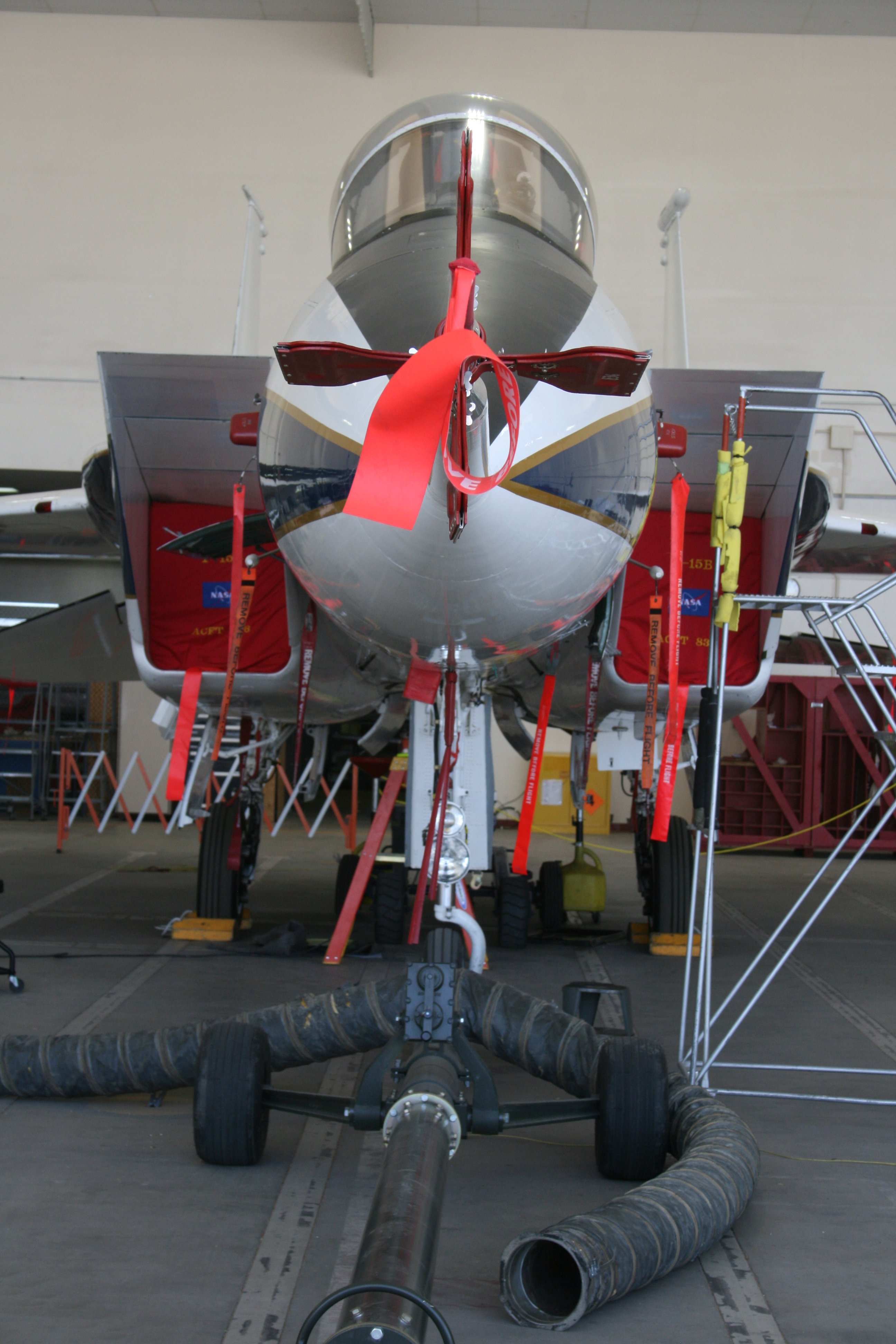
The business end of the F-15B. This probe sticks out about ten feet in front of the aircraft to get air data in still air, prior to the air being roiled up by this honkin’ huge plane flying through it at Mach something-or-the-other. All of those fluorescent orange and red pennants are connected to safety locks and plugs in or covering openings. Those locks, plugs, and covers keep the aircraft safe when it’s on the ground an not being used for long periods — but they MUST be removed before the plane can go fly again. That’s why all of the pennants say “Remove Before Flight!” (Even little planes use them.)
These F-15s are used for collecting data for instruments designed by others as well as flying NASA missions as chase planes for other experimental aircraft. For example, when the early Space Shuttle “free flight” drop tests were performed at Edwards, as well as the first Shuttle landings from orbit, planes such as these would fly alongside to watch for problems and radio information to the pilots. Today these planes (along with others in the NASA fleet) are used to monitor other test flights and experimental aircraft.
As far as collecting data goes, other groups working with NASA (such as universities or corporate partners) design instruments to collect their data, with their experiments sized to fit into the F-15 or under the wings. NASA pilots will fly the pre-arranged mission to wherever the data needs to be collected, depending on the needs of the researchers.
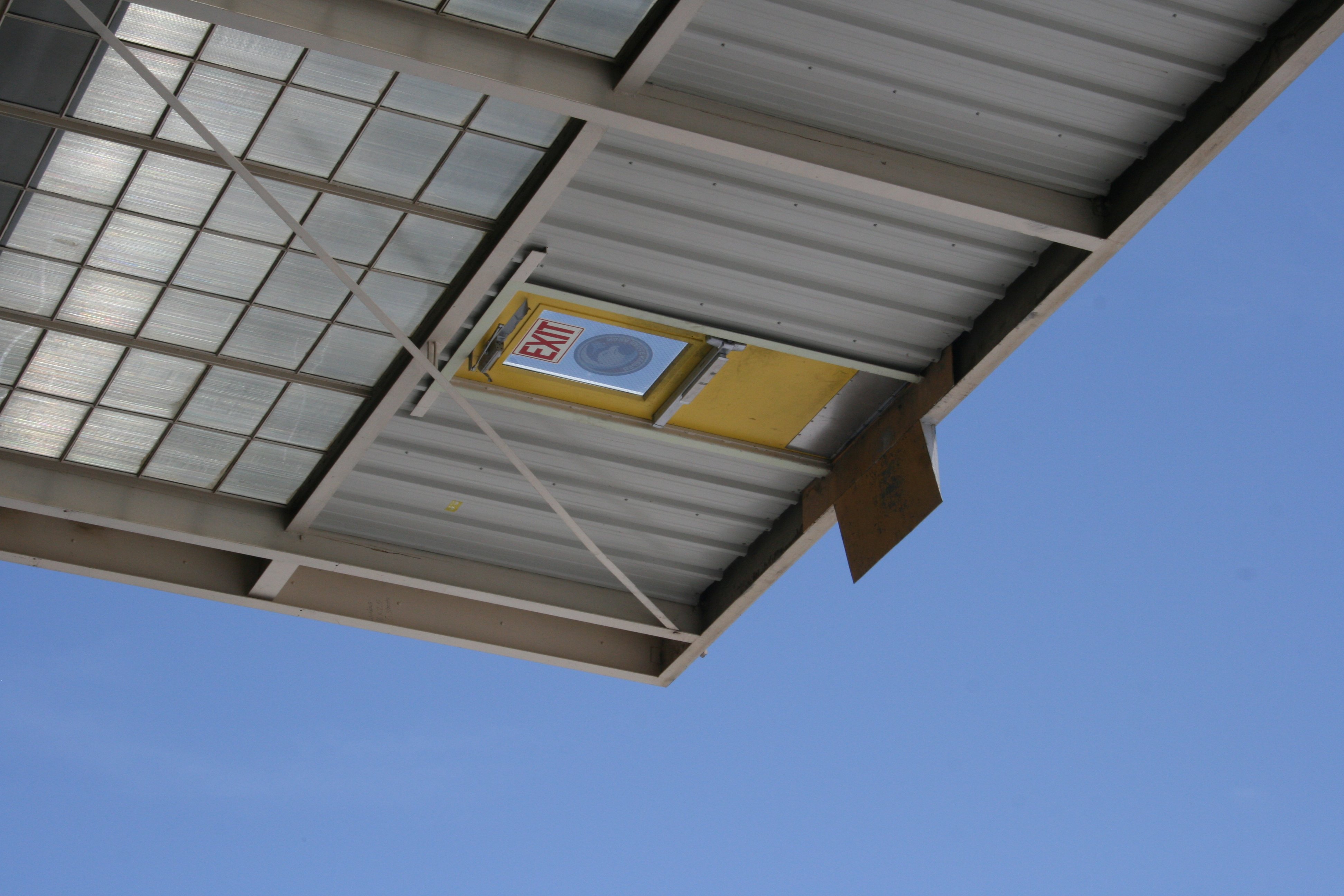
Finally, this was a point of considerable interest and fascination to several Social attendees. Yes, this picture is oriented correctly, that is an exit door forty or fifty feet up in the air.
This hangar has a single, huge door that swings up out of the way to let planes in or out, or to let roaming packs of NASA Social attendees peer in at the planes. When the huge hangar doors are closed, there are exit doors built into what is now a huge fourth wall of the hangar. When the doors open up, the exit door just dangles up there like a low-tech predecessor to a “Portal” door. (Even at NASA, the cake is still a lie. But we did have doughnuts and cookies.)
Tomorrow, more stops on the tour of the NASA Armstrong Flight Research Center.


 We Love The Stars Too Fondly