
Again there were some clouds, but having learned a couple of lessons yesterday…
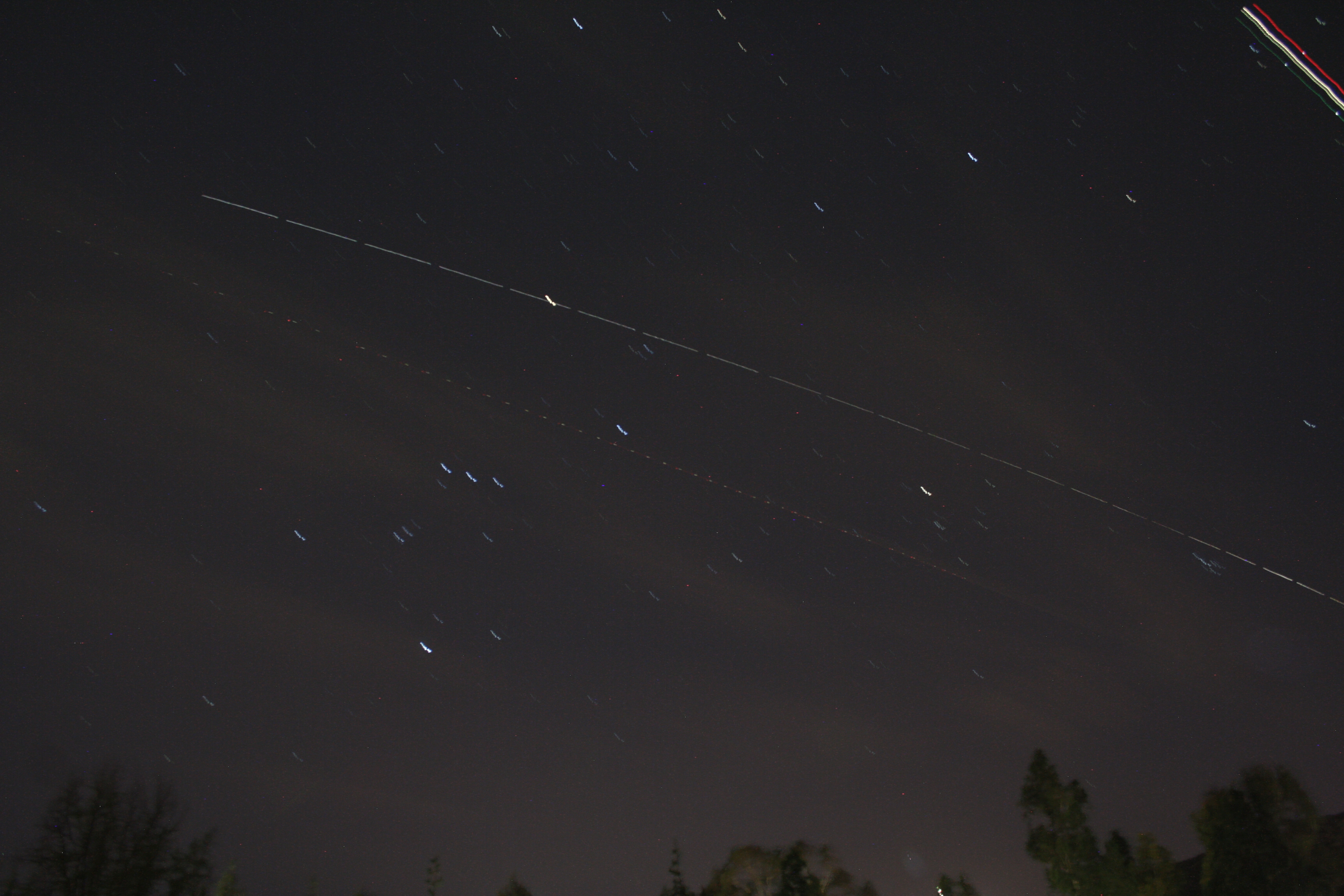
Being later and darker, I went back to longer exposures. These are all five second shots, again combined with StarStaX 0.70. Part of the allure to tonight’s pass was the way it was going to be going right past Orion, which is clearly visible just to the left of center.
FYI, the stars aren’t misaligned or smeared because the tripod moved – they’re trailing because the planet moves! Over the course of these twenty-two exposures in 2:02 the tripod was reasonably still, the ISS rose in the lower right and headed toward the upper left, one of those 737s headed into Burbank crossed the upper right corner, and the planet I was standing on was rotating so that it appears that the western horizon in front of me is rising up to meet Orion. (Conversely we could think that we’re standing still and Orion is “setting” in the west, sinking down toward that horizon, but why be conventional?) If you blow the image way up, you’ll see that each of the bright start trails is also really 22 little lots in a line.
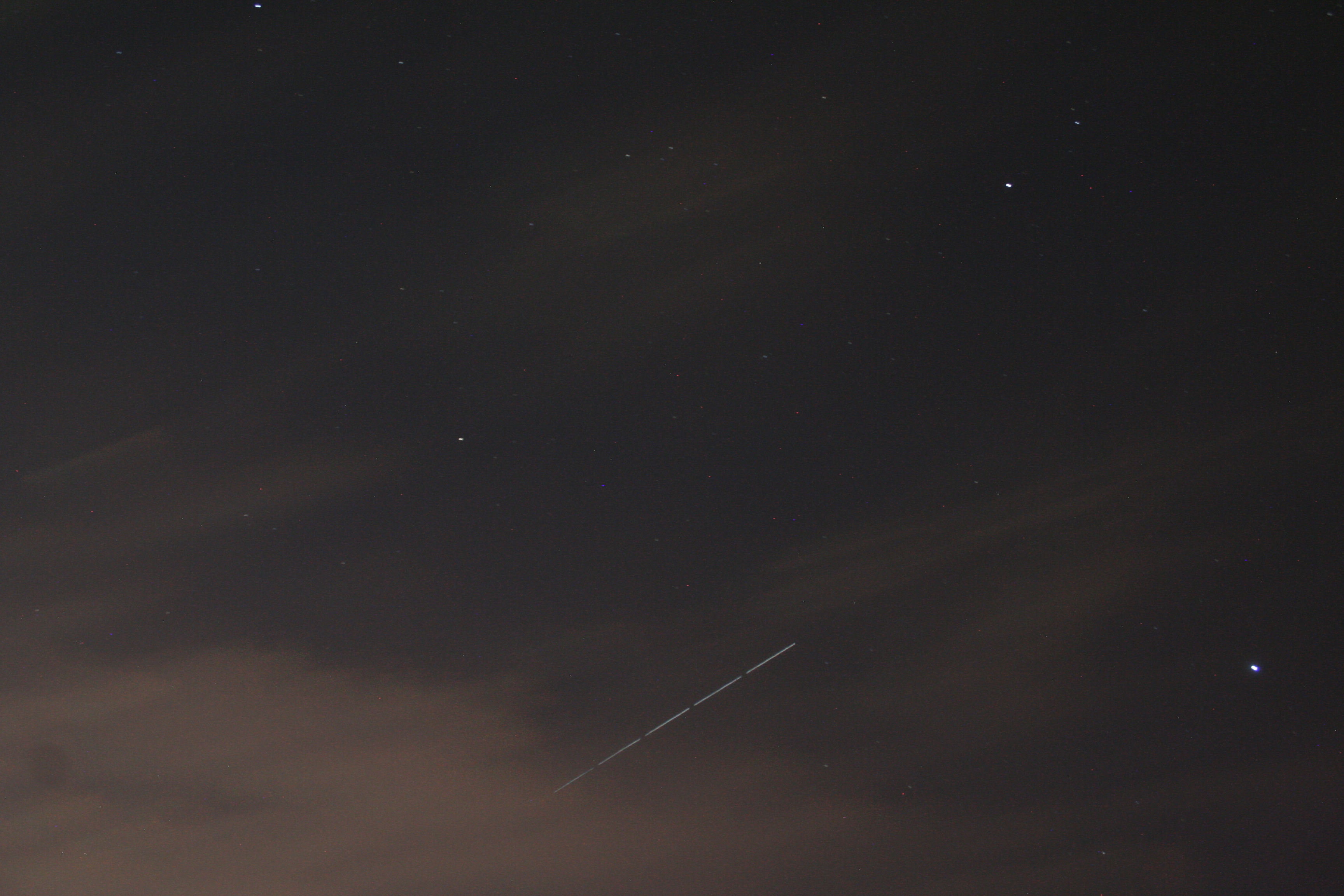
Having gone overhead up past Orion (and I notice that I once again bailed about three exposures too soon before moving the camera) I swung the camera off to the south and got in five more pictures before the ISS disappeared behind the coastal clouds.
Practice makes perfect. Now, if I just had some really dark skies I could try some really interesting stuff. I might have to leave Los Angeles behind to find those dark skies, though.


 We Love The Stars Too Fondly
Nice.
LikeLiked by 1 person