Some days it’s better to be lucky than good. All week I was asking for a little luck, a break. When the time came and the celestial mechanics lined up while the crowd counted down, we were lucky.
As I said last Monday (see the other pictures from that day here), it was an emotional roller coaster ride all day long. It was completely overcast when I woke up, but clearing a bit by breakfast.
My son drove up from San Antonio (about 90 minutes southeast of Kerrville) and we stated the walk over to Louise Hays Park. It’s two miles, but most of it’s along a lovely nature trail along the Guadalupe River. We even spotted a herd of a dozen or so deer off in the bushes next to the trail. Lots of interesting birds and flowers. (Many pictures to use later…)
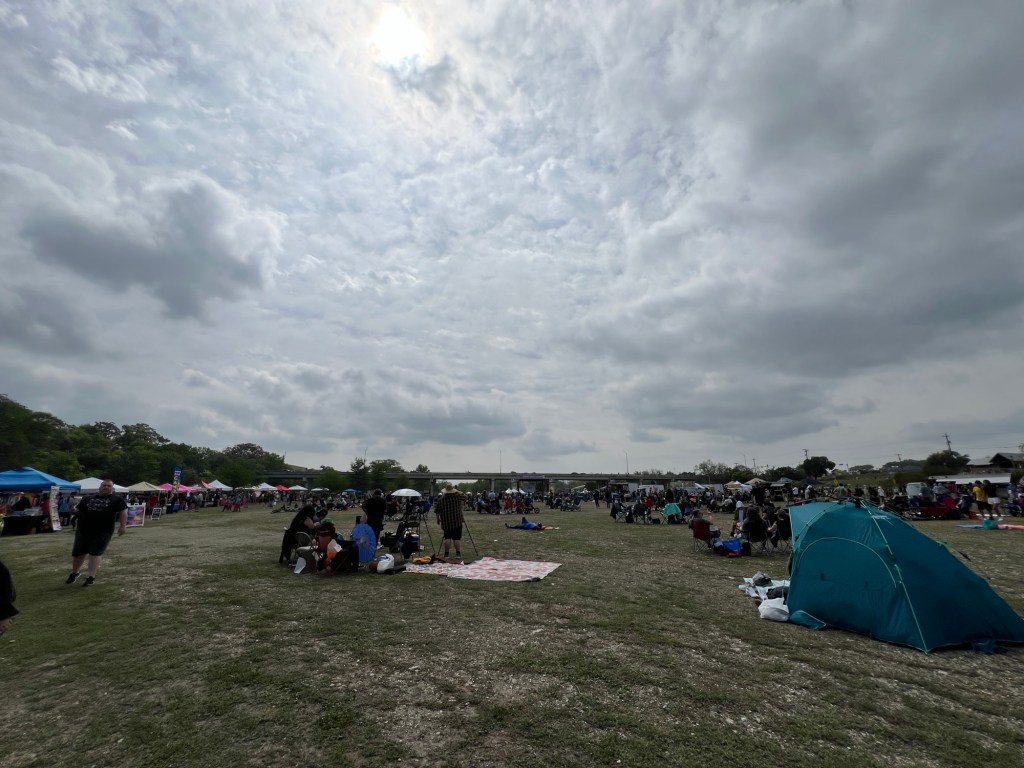
Louise Hays Park is an island in the Guadalupe River that’s been turned into a humongous community park. In the center of the park was a large stage and video screen and two NASA pavilions. All around the edge of the park were vendors and food trucks. It was a nice setup. I have nothing but nice things to say about the City of Kerrville’s program and preparations for this event. It’s a town of about 25,000 folks, but there were early estimates that they could easily get 250,000 people coming to town for the eclipse, if not even more. They were ready and it all went smoothly. The predicted clouds probably kept the crowds down by a significant factor. I would estimate that there were something like 50,000 to 60,000 folks at the park, but it certainly wasn’t 200,000+.
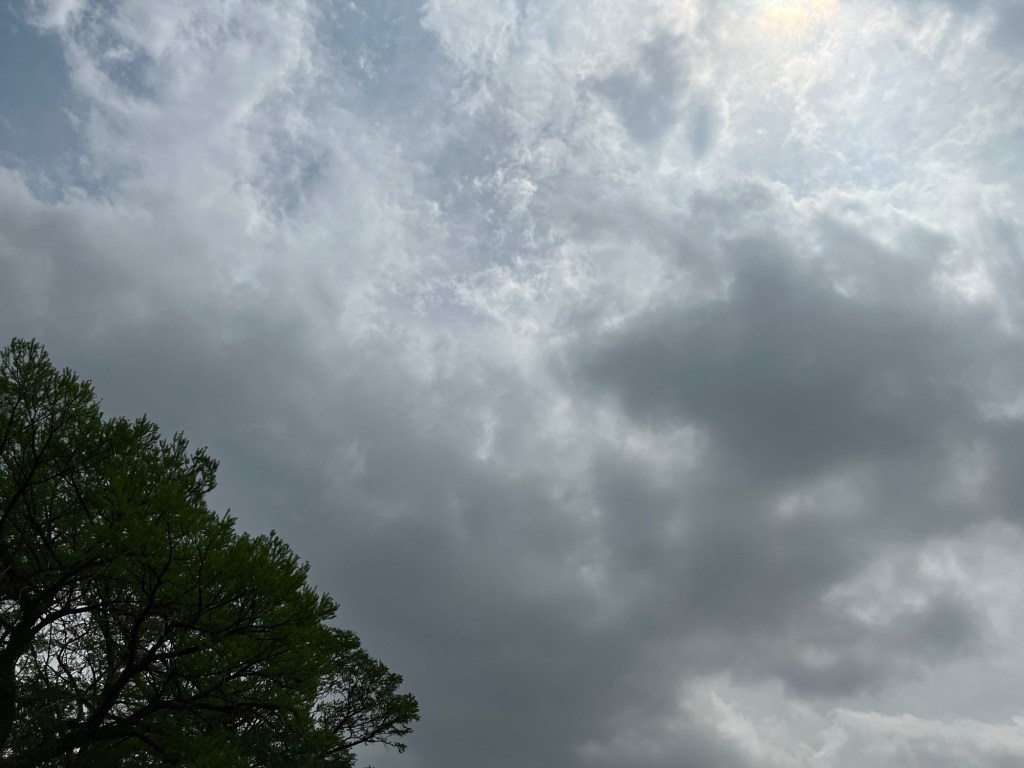
Soon after we got to the park and set up our cameras and tripods, we started cloud watching. Kerrville had 4:24 of totality, starting at 13:32. By noon things were looking sort of nice, maybe 50% cloud cover overhead, high clouds that were thin enough to see through, but with lots of low, thick clouds on the horizon all around.
At 12:14, the first partial stages of the eclipse started and everyone started using their eclipse glasses to watch as the moon started to cover the sun. There was a notable buzz in the crowd. People with big lenses and solar filters on their cameras started snapping pictures constantly. (I, unfortunately, did not have a solar filter for my camera. Next time…) We watched the partial phases through about halfway to totality. Most were watching the sky. I kept glancing at those thick, low clouds getting closer.
At about T-0:30, a band of low level, thick clouds moved in. We couldn’t see squat. Excitement had turned into despair.
Folks were not thrilled with this turn of events. We would occasionally get a second or two of enough clearing of the clouds to see how the partial phase was progressing, but they never lasted long. And the clock was ticking.
Less than thirty seconds before totality, a brilliant sliver of sunlight appeared almost directly overhead, a crescent 🌙 of light that announced the end of the partial phase.

The crescent shrank over the next 30 seconds,
Noted now – it was closer to five minutes, not thirty seconds, going from the timestamps on the photos. Time is an interesting thing in these circumstances. I would have swore it was much less time, but the data doesn’t lie.

then vanished

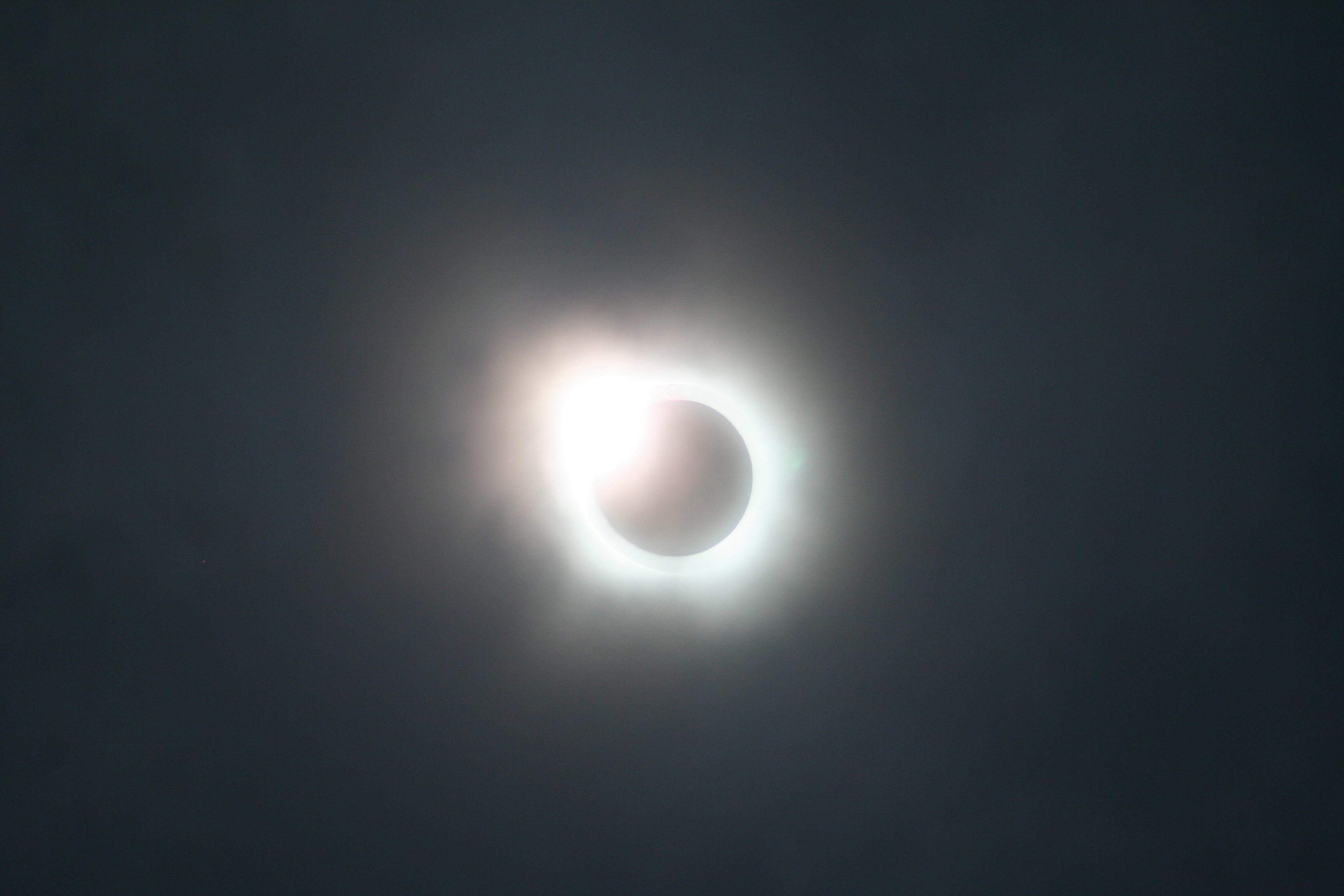
as the “diamond ring” effect was visible.

(Blow this up to full screen size and look at the detail I caught in the clouds and the sharp edge of the moon’s lower edge. Blind luck, no skill, but considering that a half hour earlier we were sure that we would miss totality completely, a little bit of leftover luck was welcome.)

Another one to blow up to view on a full size screen. These two pictures may be on the short list for the most favorite pictures I’ve ever taken.
The full “Diamond Ring” effect – a little blurry since A) I had the camera in “auto” mode instead of “manual” so as it got dark it went with longer and longer exposures, and B) I was holding the camera instead of having it on a tripod. In retrospect – OOPS!
Looking at the file timestamps, from the first “diamond ring” photo where you can start to distinguish the moon’s disk in the glare of 99.99% partial phase until it’s 100% totality is twelve seconds. Fourteen pictures.
Our surroundings became completely dark, the temperature had dropped 10°F or more,

Unless you’ve seen one of these eclipses in person, you truly won’t believe just how fast it gets dark and how much the temperature drops in that last minute or two.
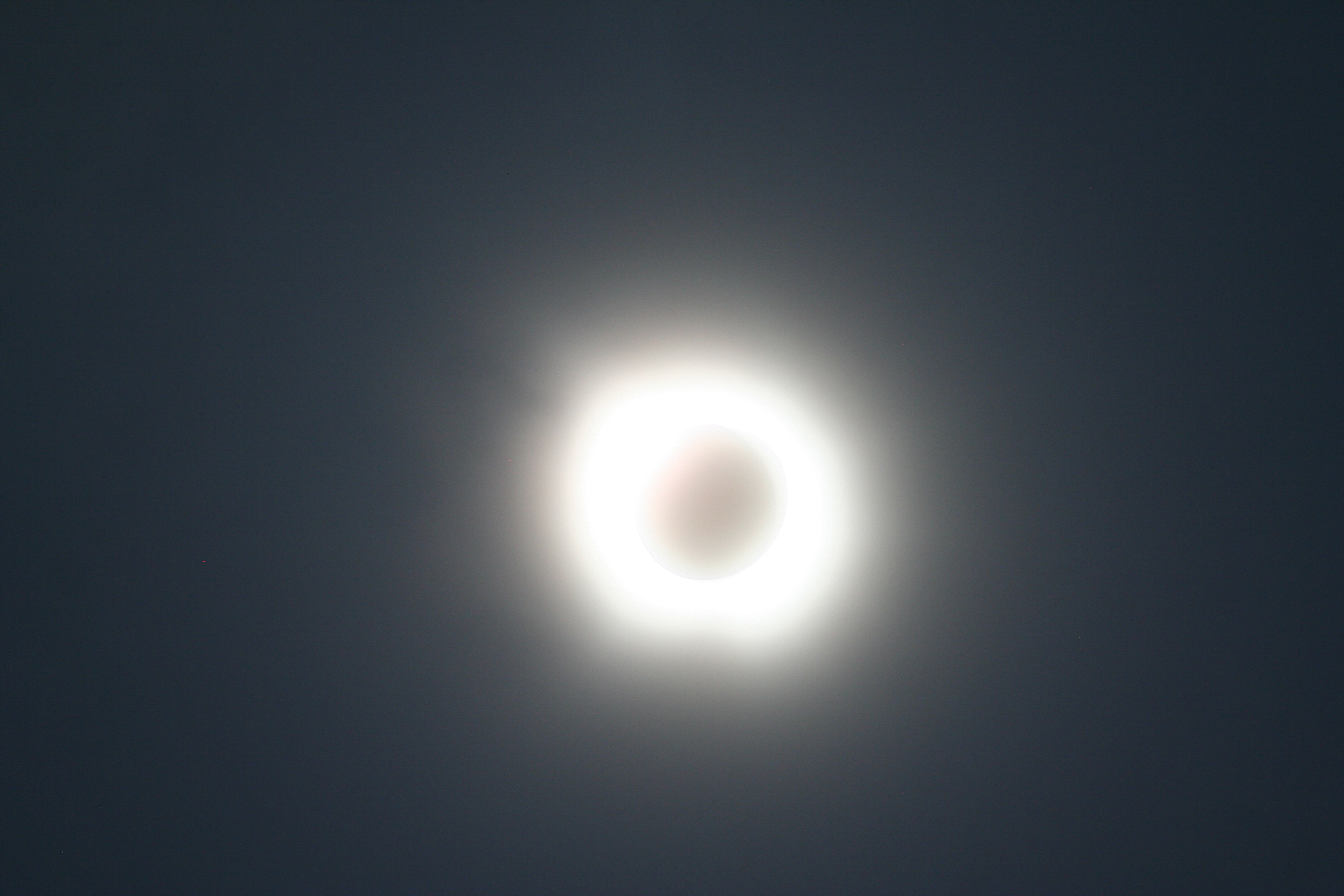
The corona appeared in all of its glory. The crowd went berserk.

Still a handheld photo, still with the camera seeing a dark sky and waaaaay overexposing the corona. If we had gotten the entire 4:24 of totality I’m sure that I would have had the time to check the pictures I was getting, realize what was wrong, and fix it. As it was, we all knew that the clouds would move back in any time. I was just taking pictures as fast as I could because I was quite sure that I didn’t have much time. I was, unfortunately, correct.
As I said all week leading up to this second – “It was what it was.”

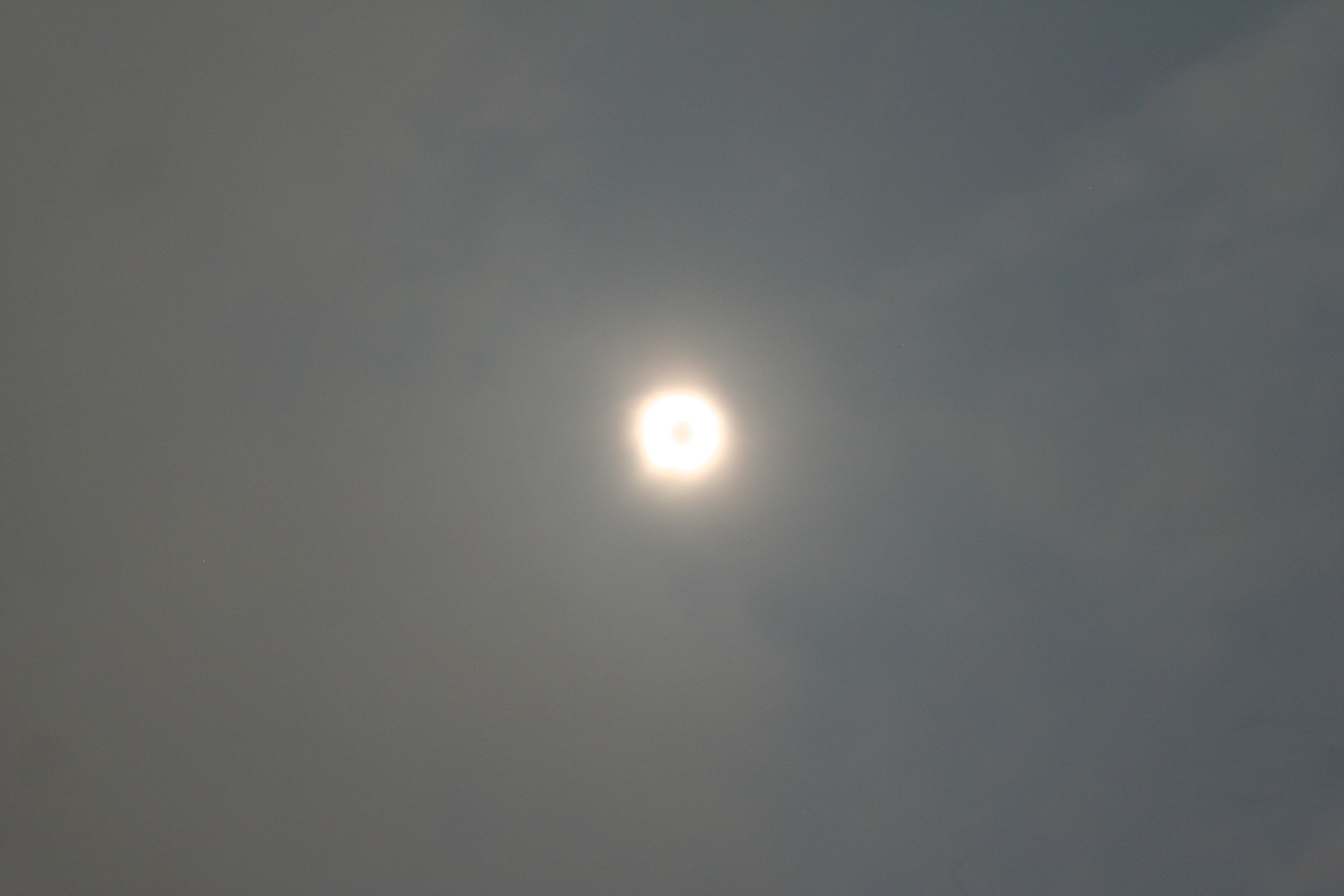
I had several video cameras running on their own, so with the big lens in my hands I was banging off images as fast as it would store them. I had enough time to shoot 24 pictures in 26 seconds before the clouds completely covered the fully eclipsed Sun. The one adjustment I had time to make for the last three pictures was to pull back on the zoom lens, from 300mm to 75mm. Still overexposed in auto mode, with the clouds getting thick fast.
It was freakin’ glorious. While the photos may not have turned out as well as I had hoped, looking at the fully eclipsed Sun through the telephoto lens was spectacular. There wasn’t a ton of detail visible like you’ll see in any of the truly amazing pictures where folks had a clear sky. The clouds blurred out a lot of that detail. But the corona to my sight through the telephoto lens was a bright circle, razor sharp on the inside where the Moon’s surface was and spreading out over a “Moon diameter” distance in all direction with a fuzzy outer edge. I could not see any prominences or flares, but I could clearly see that the inner edge had a pink and red tint to it.
Twenty-six seconds of totality. Then the clouds came back over for good. Our window of opportunity closed.
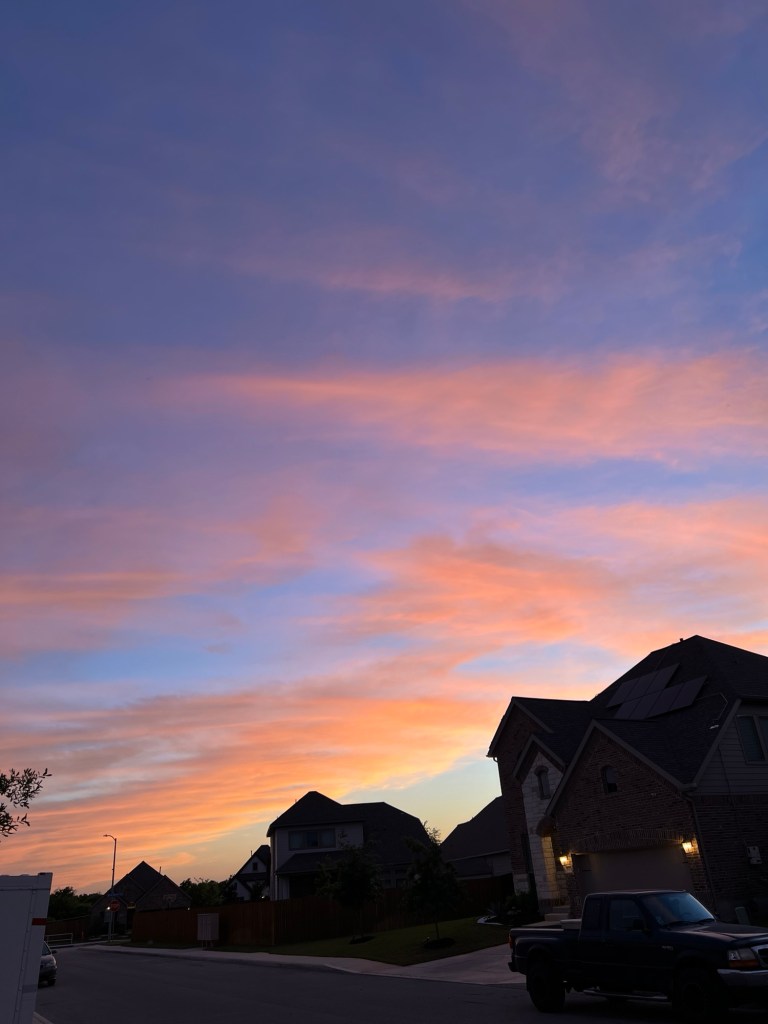
During the rest of totality everyone continue to party. There was screaming, hooting, hollering, singing, crying – and that was just me. Well, me and fifty thousand or so of my new best friends. In all 360º there was the “sunset/sunrise” effect, the sky an orange or golden color as it would be when the Sun was still below the horizon. Behind us the “sunrise” was coming as the Moon’s shadow raced across the Earth at about Mach 2. And “sunrise” was coming from the south. In 2017 in Nebraska we saw this effect much more prominently, mainly because there we had almost all high clouds and could clearly see the horizon all around. In Texas, the villain clouds were much lower, so the view all the way to the horizon was also blocked in several directions.
If it had been clear and we got the entire 4:24 of totality there were a number of other things I had wanted to look for. Jupiter and Venus would have been bright and easily visible, with Mars, Mercury, and Saturn also naked eye objects if you knew where to look. There’s also a comet that might have been visible to the naked eye, and definitely would have been visible in binoculars. (Which I had ready.) No joy on any of that due to the clouds.
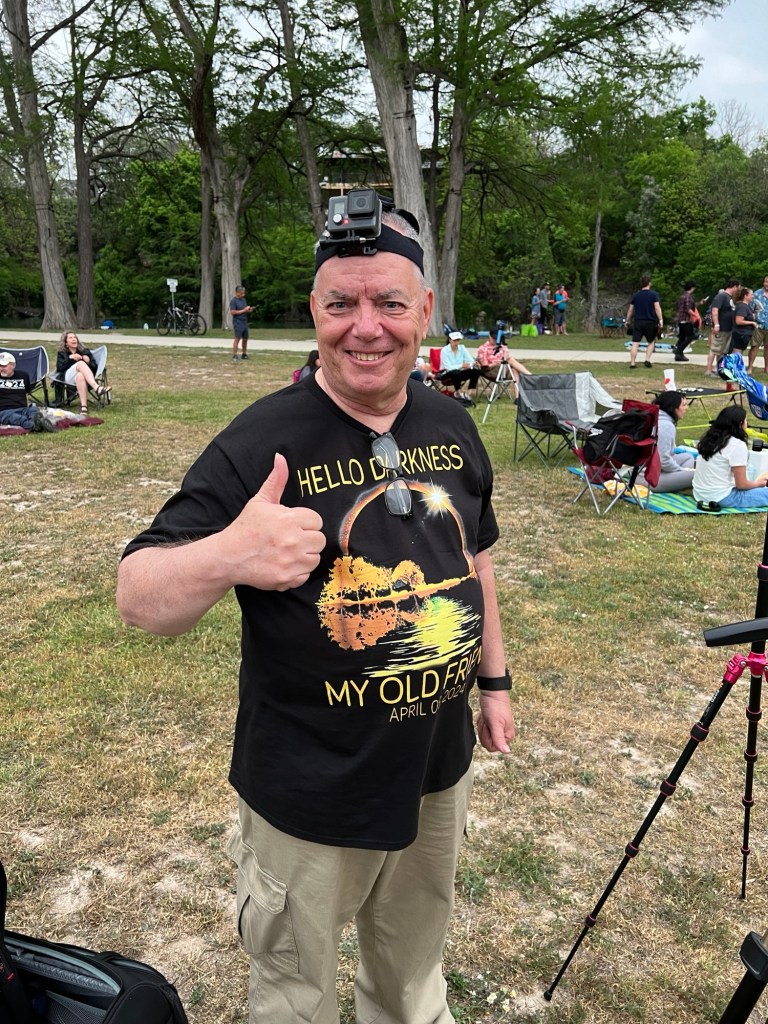
As I said, I had multiple video cameras going, including the incredibly fashionable forehead-mounted GoPro. We’ll see what that caught. It should be fun.
We couldn’t see when totality finished, but the clocks told us it had to have happened and it started to get brighter. The total eclipse was over. We were still clouded out.

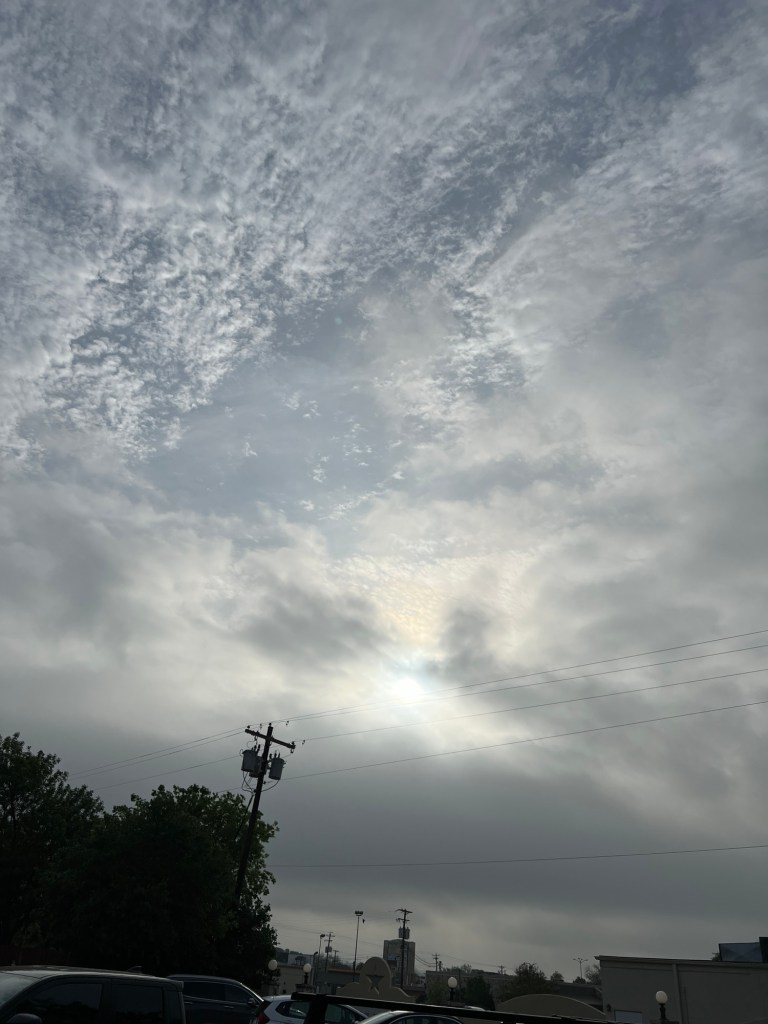
About six minutes after totality ended, the clouds thinned enough for a few seconds to catch the post-totality partial phases. We saw much less of the partial phases after totality than we had before totality, the clouds being much thicker and lower.
We hung around the festival for a couple of hours to let the crowd disperse. There was music, birds in the river (ducks, geese, a couple of different types of herons – more pictures later, of course!), vendors, and food. Finally it was time to pack up, hike the two miles back to the hotel (I really need to be in better shape, or ten years younger, before the next eclipse), and go out to dinner. I had expected total gridlock and the restaurants to be packed beyond capacity with over 200,000 extra folks in town, but they weren’t there, so traffic and dinner were fine.
What’s next? I’m thinking there might be some opportunities for travel.
August 12, 2026, Greenland, Iceland, Spain/Portugal
August 2, 2027, North Africa, Egypt, Middle East
July 22, 2028, Australia
November 25, 2030, Southern Africa, Australia
March 20, 2034, Central Africa, Middle East, China
September 1, 2035, China
July 13, 2037, Australia
December 25, 2038, Australia
April 30, 2041, Central Africa
April 19, 2042, Indonesia
August 22, 2044, Canada, Minnesota/North Dakota
August 12, 2045, The GREATEST American Eclipse, Northern California to Florida. From NorCal to Utah all has over 4:20 of totality along the center line. From Utah to Mississippi has 5:00+ of totality, and from Mississipi to Florida you’ll see 6:00+. Holy Guacamole, Batman! I’ll only be 88 years old then, that’s TOTALLY doable! Then the path of totality continues on over the Bahamas, Haiti & the Dominican Republic, Guyana, Suriname, and the east coast of Brazil.
Keep your passport current and keep hoping for clear skies!










 We Love The Stars Too Fondly