Category Archives: Astronomy

Aurora Hunting

Some of you may have heard that there’s a large electromagetic storm going on above Earth’s poles tonight. This is caused by a very large Coronal Mass Ejection (CME) that exploded off of the Sun two days ago and hit the Earth straight on tonight. It’s not large enough to cause a catastrophic event (google “Carrington Event,” the results of which would be many orders of magnitude worse if it were to happen in today’s computer-driven, satellite based, electronic world) but it is expected to cause the most extensive display of aurora in more than twenty years.

As we approach midnight on the US west coast, we’re getting pictures online from aurora seen as far south as Kansas, Kentucky, and Virginia. Out here there are sitings as far south as Grass Valley, CA (just north of Sacremento) and just south of Lake Tahoe, NV.

Even with that, it’s still highly unlikely that we would see aurora here in Los Angeles, three hundred or miles south of there. With light pollution to boot. Possible! But highly unlikely.

I went out with the camera using the “light bucket” lens – wide angled, very high speed, sharp focus – to see if I might just get lucky and see something the naked eye can’t pick out.
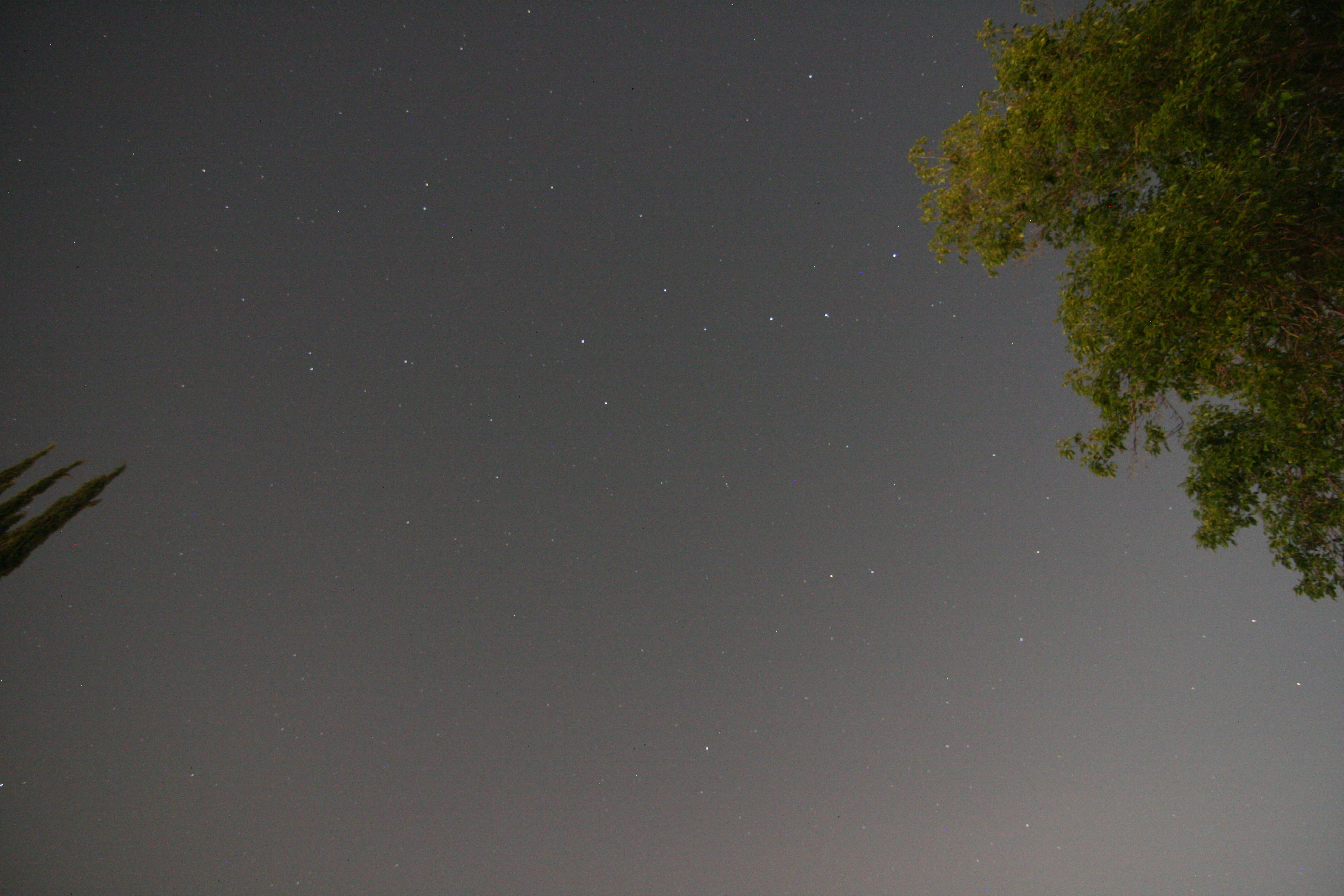
(Click on the image to see it full sized – it’s nice! I’m giving you the big file, not compressed to save disk space!)

The glow at the bottom right is just the usual light pollution from the San Fernando Valley. Above is the Big Dipper with the two end “pointer” stars aimed at Polaris, the North Star. Some other interesting stuff possibly visible – but no sign of any red or green aurora.

I hope you got more lucky!

Leave a comment

Filed under Astronomy, Photography, Space

Young Moon Sunset

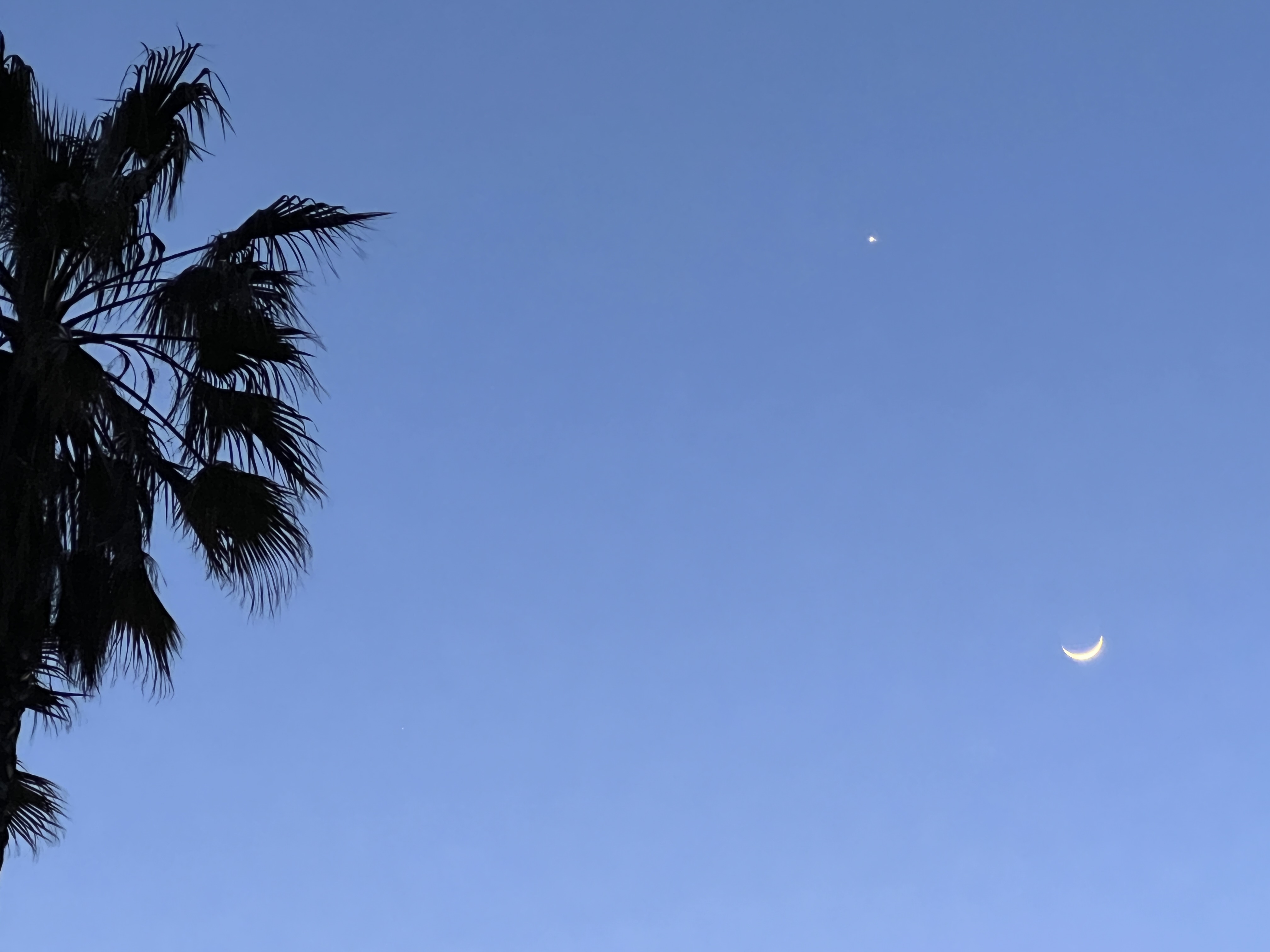
Saturn and Jupiter are off in the morning sky now, but it’s that time of month and the three-day old Moon is a thin, spectacular crescent in the sunset sky. And Venus is still around, the third brightest object in the sky.

With a telescope or even a good binocular setup (mounted on a tripod for stability mainly), using much better optics than an iPhone has, you would see that Venus also displays a crescent, the same shape and oriented in the same direction as the Moon. It’s geometry.

Mercury’s out there too, lower down in the sunset sky, more difficult to see. Maybe I’ll give it a try in the next couple of days. (Guess what shape and orientation it displays through a telescope right now?)

Leave a comment

Filed under Astronomy, Photography

Venus & Party Lights

Tonight I was at a very pleasant event for one of our business partners in Pasadena. It was held outdoors and I don’t know if anyone else noticed Venus bright as all getout in the western sunset sky, but I though it looked lovely up above the party lights strung overhead.

The tiny lens flares from all of the party lights in the lower 1/3 of the picture were a surprise!

Do you prefer it with or without all of the tiny lens flares?

Leave a comment

Filed under Astronomy, Photography, Sunsets

One Cloudy Planet

Hope springs eternal in the (not so) young amateur astronomer’s heart as he searches for five planets in the sky at once. Even if I can’t get a good photo, maybe I can at least see them?

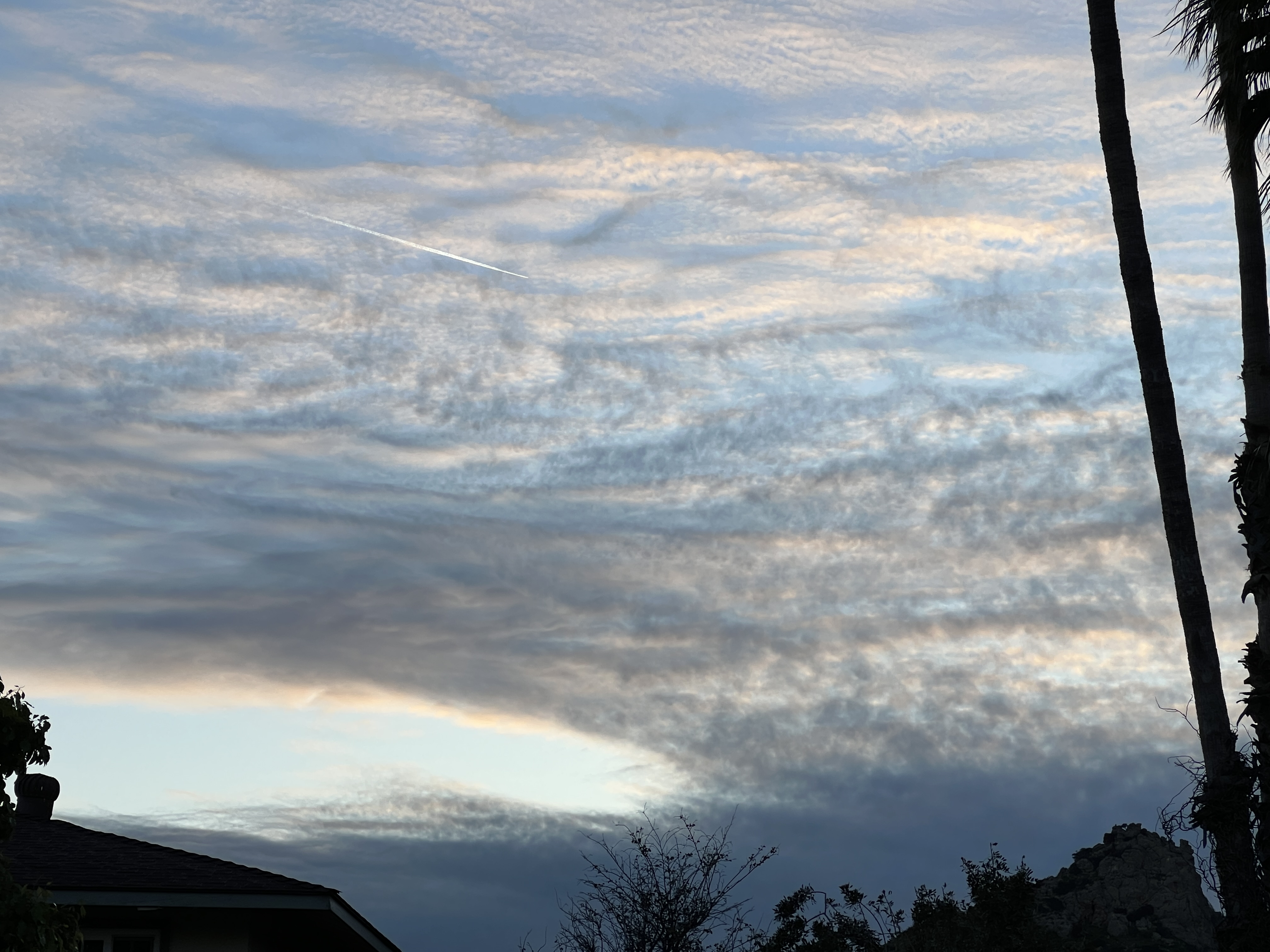
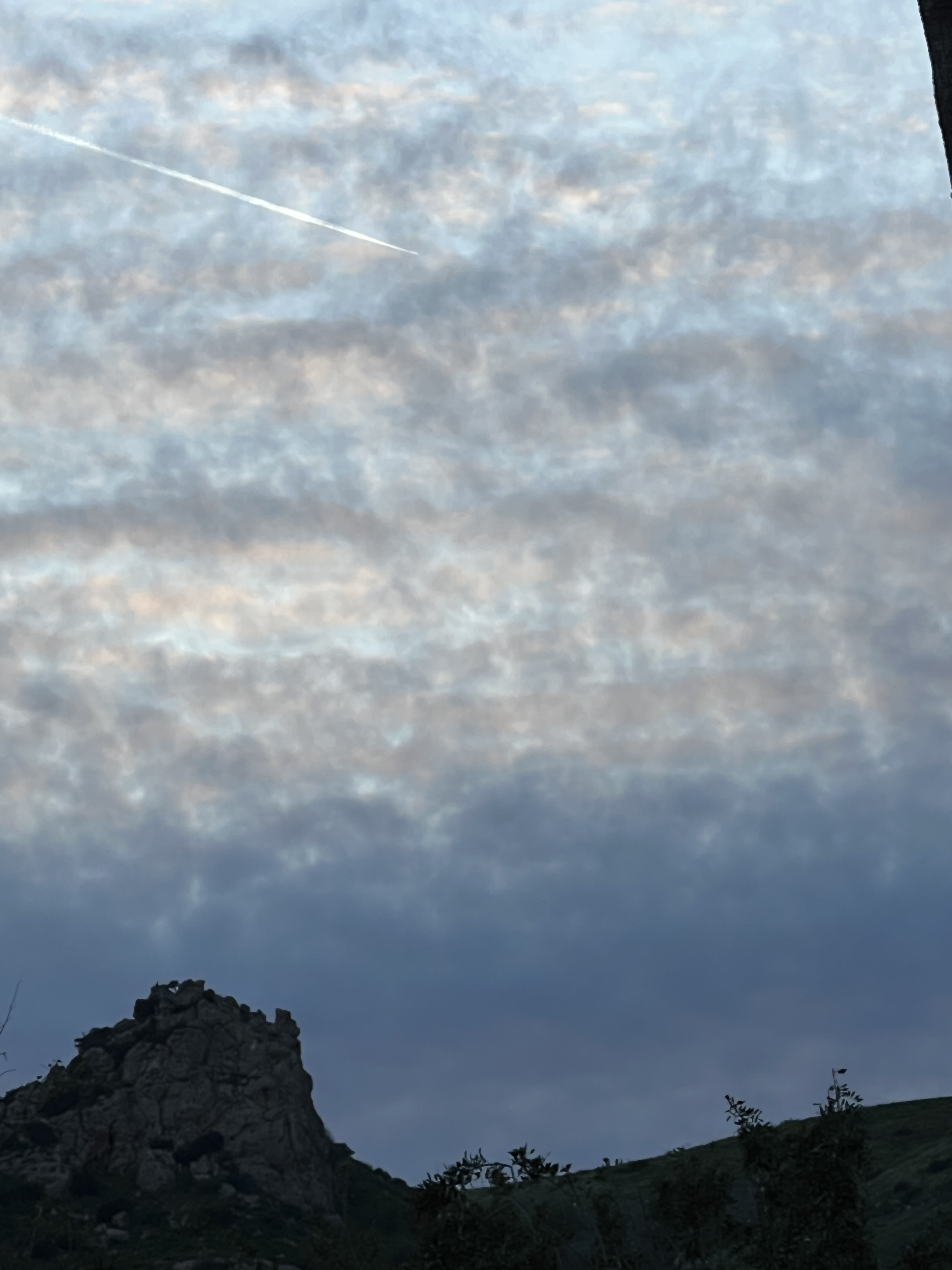
Maybe Jupiter and Mercury can be seen through that hole in the oncoming storm front? Nope, they’re actually over to the far right, just to the right of the top of Castle Peak that you can just see in the bottom right corner. But at this point it was too bright, too close to sunset to see. Plus, you know, CLOUDS!

The clouds did have a little bit of iridescence, and it was clear overhead so I could see the quarter Moon, but the clouds were not only hiding dim Jupiter and Mercury but also obscuring my view of  bright Venus and super dim Uranus up somewhere where that jet was passing by in the upper left.

I hope you had better hunting and clearer skies than I did!

All I saw was one cloudy planet, the one that I’m stuck to.

Leave a comment

Filed under Astronomy, Photography, Sunsets

Not Five Planets

You’ll see things online and in the press about another astronomical thing that’s happening in the next couple of days. If you’re lucky, and you have a flat horizon and very clear conditions, you might see it. Binoculars will help.

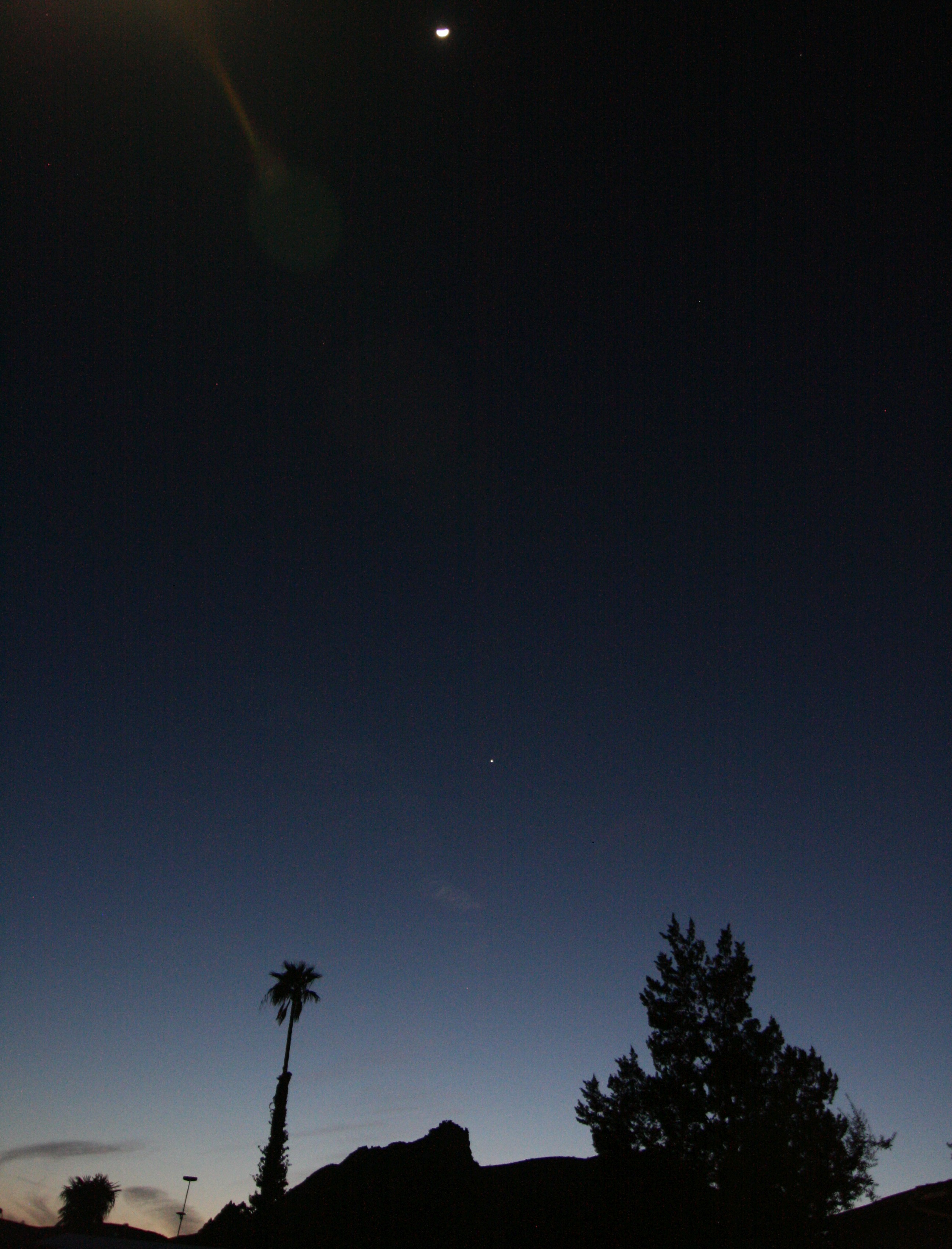
At the top you can see the Moon. Real bright directly below it is Venus. Easy peasy.

As it gets a bit darker than this, up overhead, near Taurus and Orion, you can see Mars. Again, easy. It’s red and fairly bright.

Now for the harder parts.

Very near Venus, visible only when it gets fully dark you might spot Uranus. It will be much dimmer than Venus and slightly bluish in color. A small telescope will be a big help, but binoculars will do if you have a good finder map. (See here.) If you have good eyesight and a good dark sky location far away from city lights, you might see it with the naked eye.

Remember how a month or so ago Jupiter was RIGHT next to Venus? And then Jupiter kept moving down toward the Sun and Venus kept moving up away from the Sun? (From our viewpoint, obviously.) Well, now Jupiter is almost there, just a couple of days away from disappearing into the evening twilight. You’ll need to have a flat horizon, without any mountains right in front of you. It’s faint, but visible, near the horizon, directly under Venus, immediately after sunset.

And right next to Jupiter is Mercury. Jupiter is brighter, but if you can find it in the twilight, look for Mercury very close nearby.

From the horizon up, there’s Mercury, Jupiter, Venus, Uranus, and Mars. Plus, of course, that whole Earth thing in the foreground.

Tonight we had a pretty sunset (with clouds and rain expected for the next three days) but we have light pollution (hiding dim Uranus) and Castle Peak hiding Jupiter and Mercury. (See where the peak is and then that dip on the right hand side? That’s where they are while it’s too bright to see them. By the time it gets dark enough, they’re down behind the mountain.) So we have three planets visible, two in this picture. Venus and Earth. Mars is back behind us.

Good hunting the next night or two if you have clear skies and flat horizons!

Leave a comment

Filed under Astronomy, Photography

Venus & Jupiter Conjunction (Plus Five Days)

A few clouds moving in from the next storm make a great, colorful sunset.

But if you get enough light for the wonderful colors and spectacular gradient from pink to black, then you can only see Venus, not Jupiter. It’s fading. (I know how it feels…)

But if you let it get dark enough to see Jupiter, the clouds have started to roll in and all of the color is shot. There’s a life lesson in there somewhere.

Take what you can get, enjoy the moment, and watch the pretty planets.

2 Comments

Filed under Astronomy, Photography, Space, Sunsets

Venus & Jupiter & Satellites

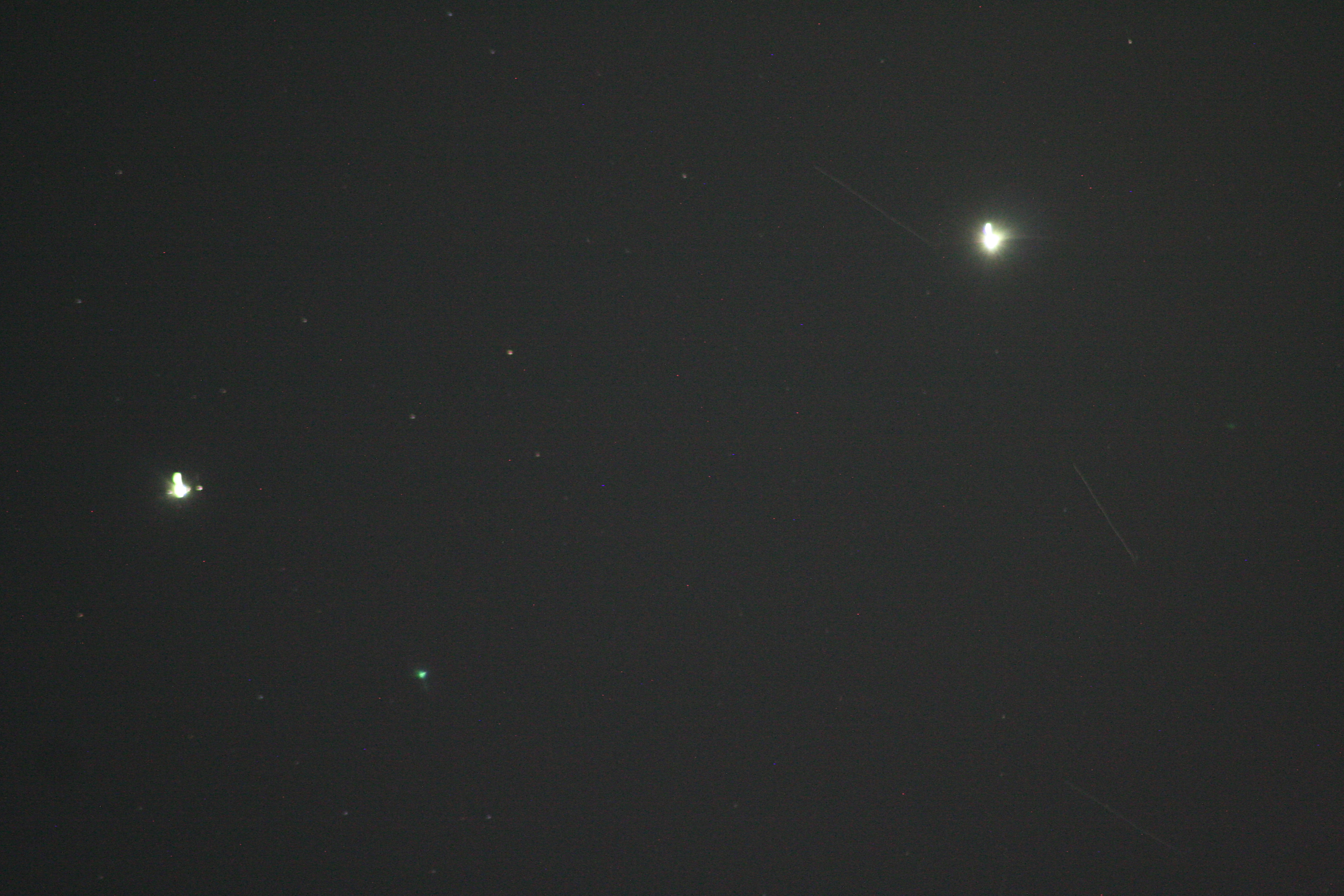
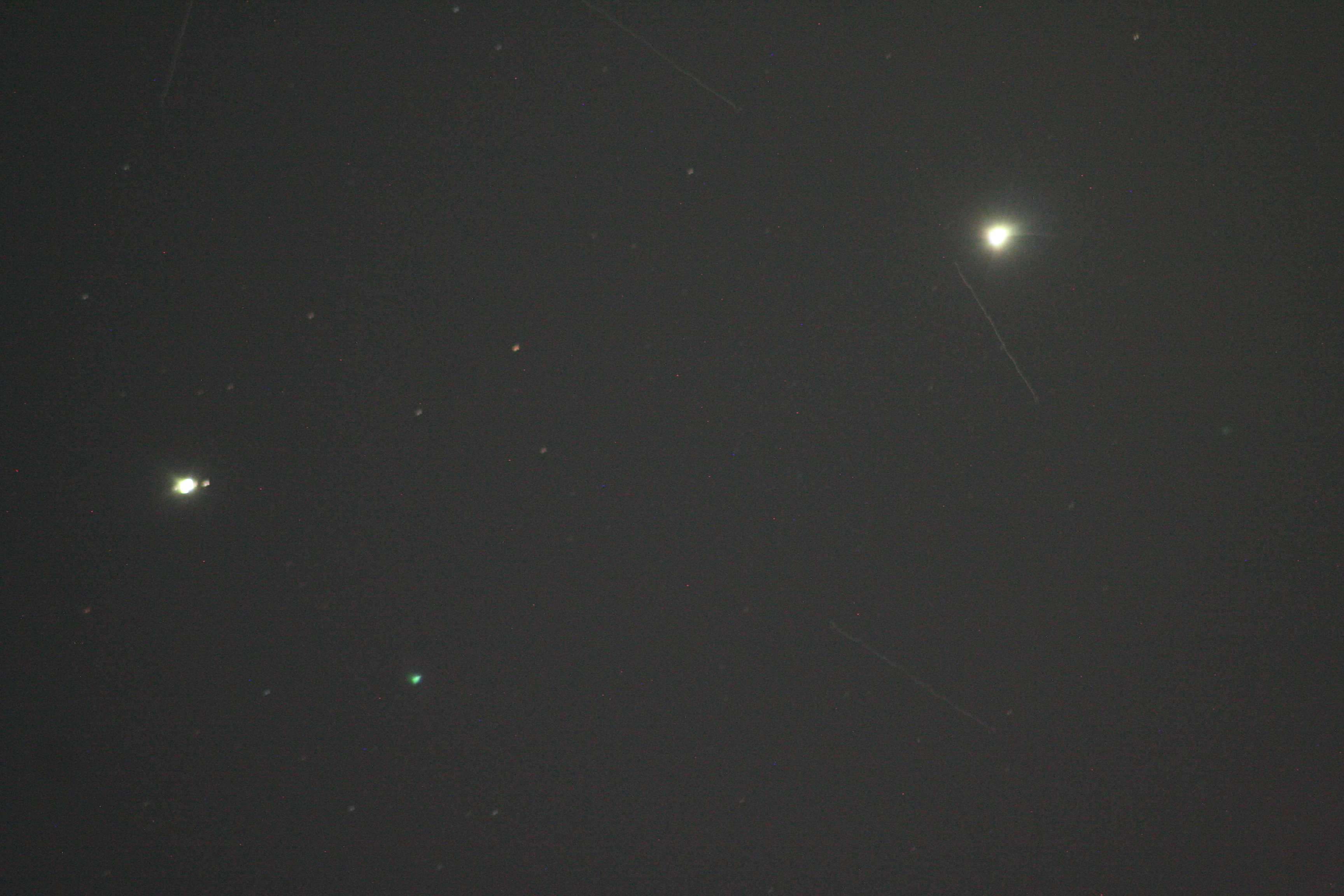
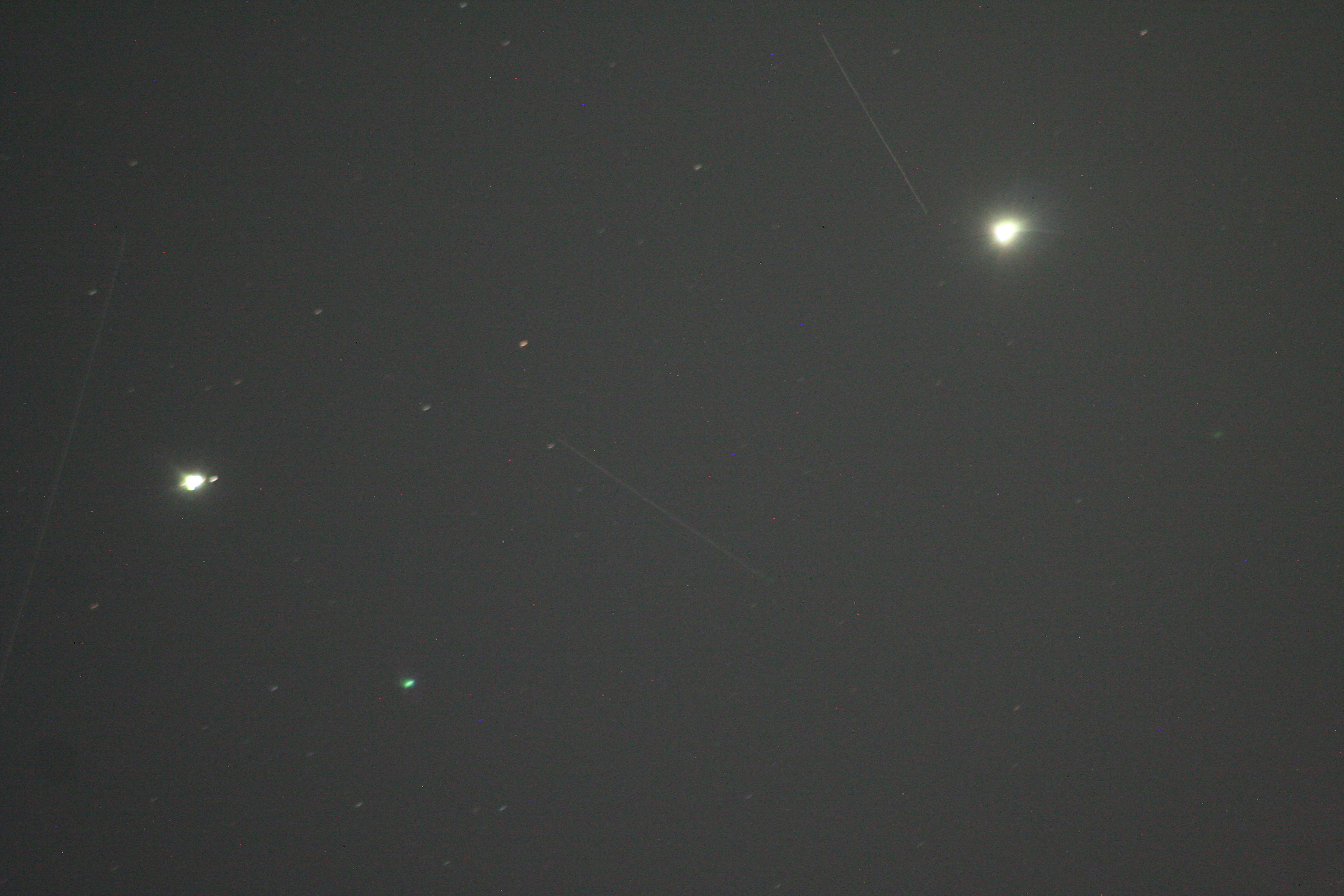
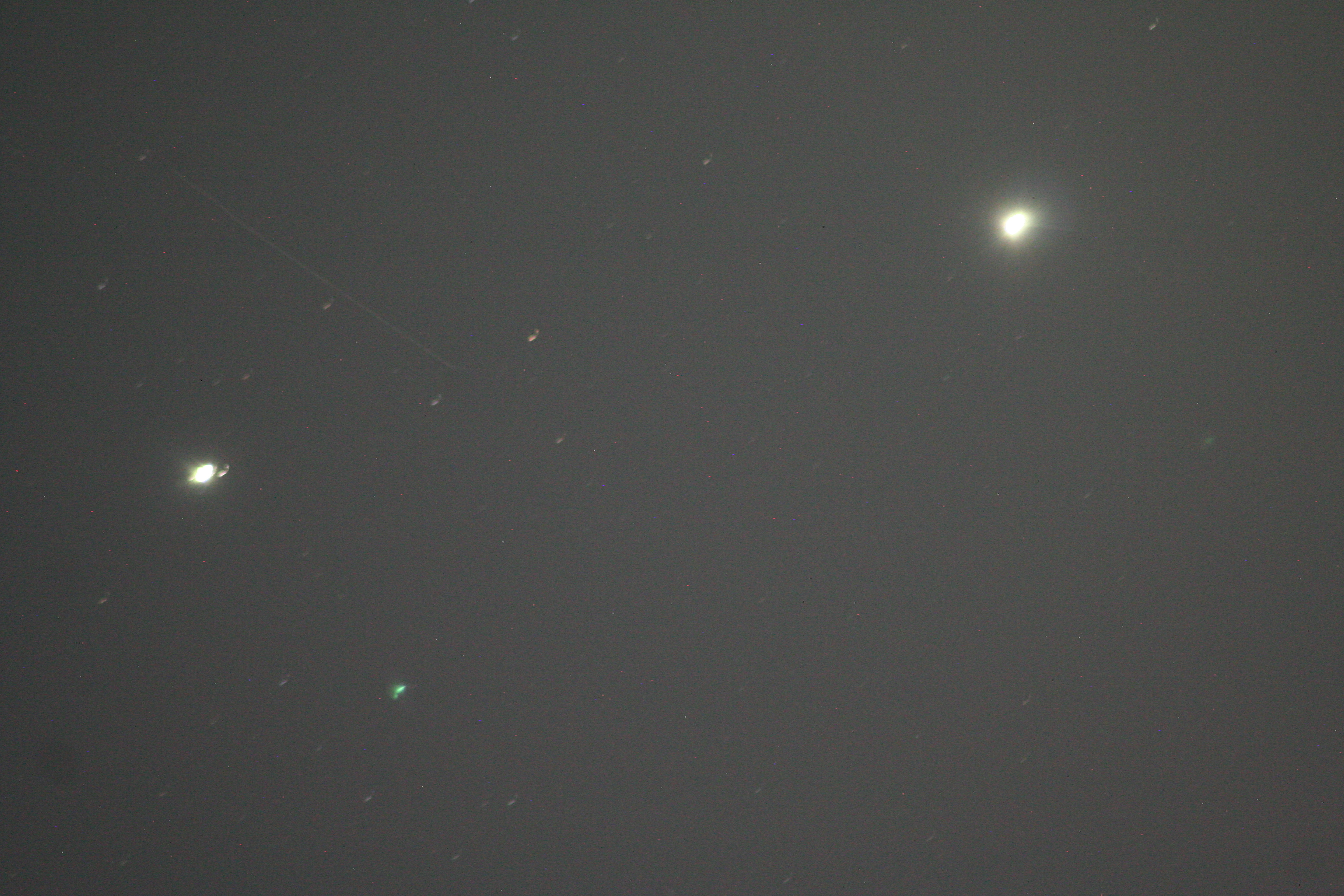
I thought these pictures were interesting, if far from perfect. They’re from the February 26th batch of pictures, three days before the Jupter & Venus conjunction.

They run from three seconds to eight seconds and they were shot with a 300mm zoom lens and the wind was blowing like a demon, so you can see that they’re a bit jittery and smeared as the camera bounced around.

That’s not why I want to share them with you.

Blow each of them up to full sized (click on the image) and you’ll see a number of very faint but visible criss-crossed lines. Better yet, save them or load all five photos in and the flip through them to animate them a bit.

You’ll see at least five items crossing the field, the faint lines getting longer as the exposures get longer.

These are satelittes, and given their close proximity to each I suspect they might be part of a Starlink swarm.

The only orbiting objects I normally capture is the ISS, which is brighter than Venus or Jupiter here. Yet at random, here I’ve spotted at least five background objects over the course of a thirty-seven second series of pictures.

When you see news articles about the Hubble Space Telescope or ground-based telescopes having trouble with all of the satellites up there ruining their observations, believe them!

Leave a comment

Filed under Astronomy, Photography, Space

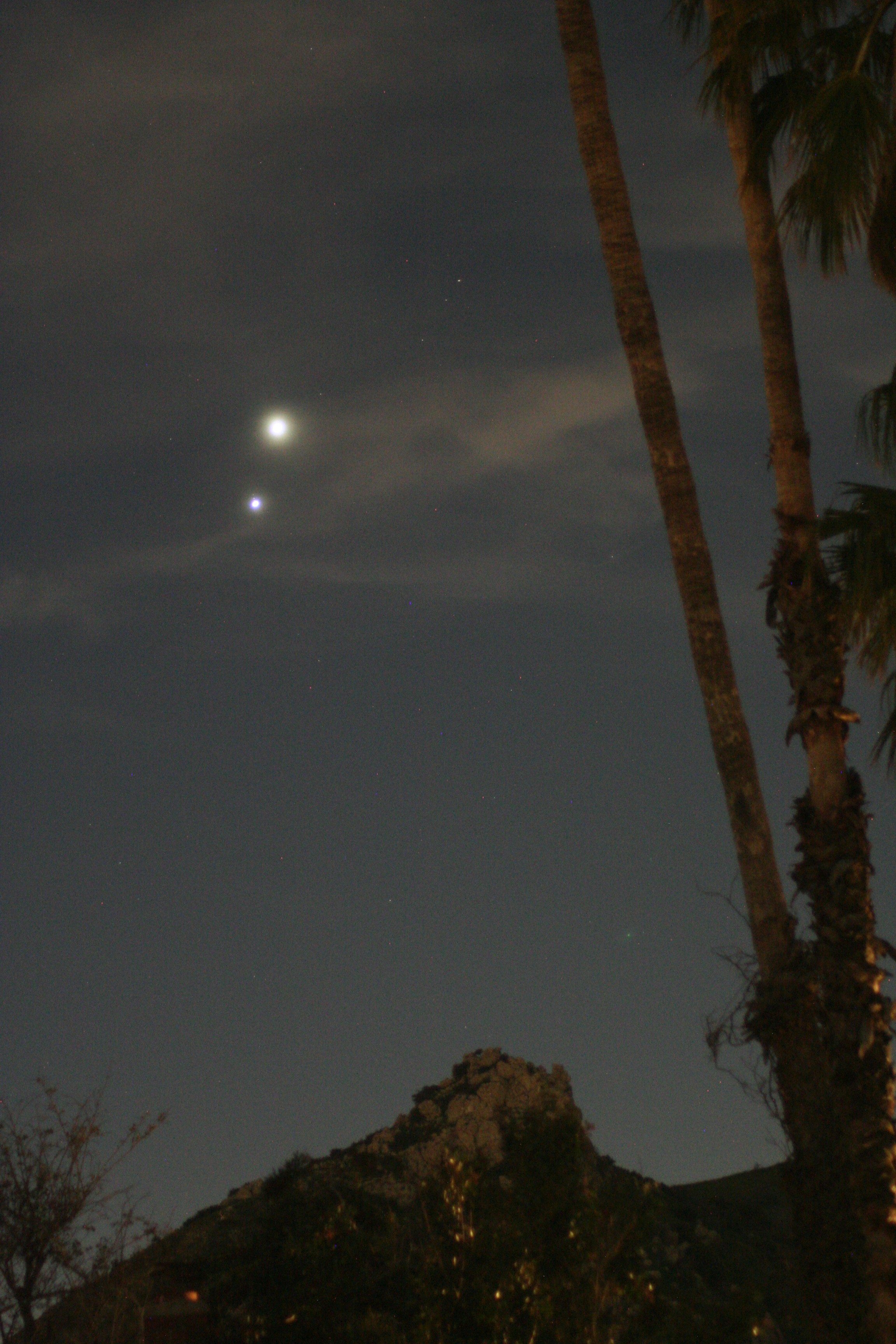
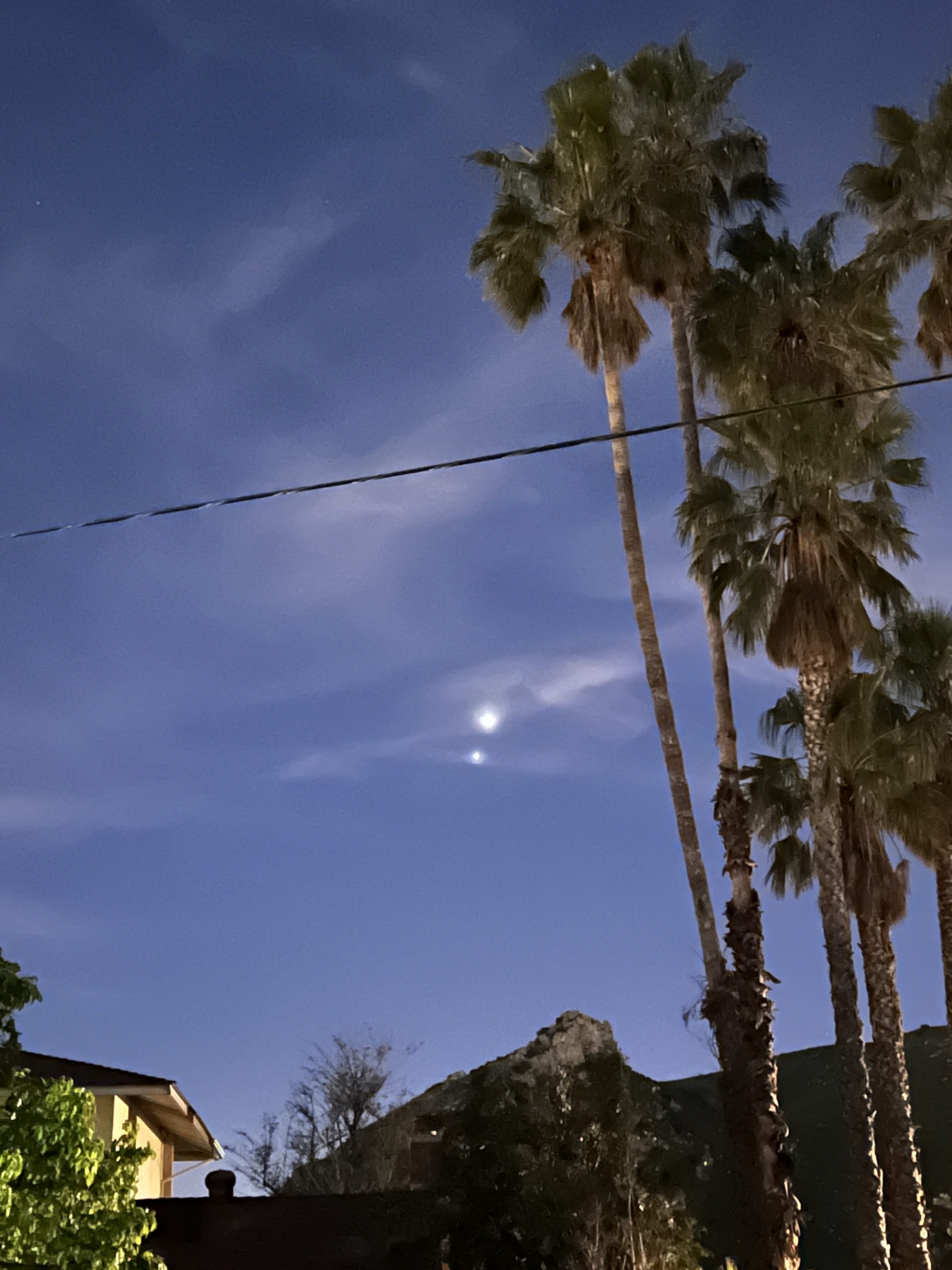
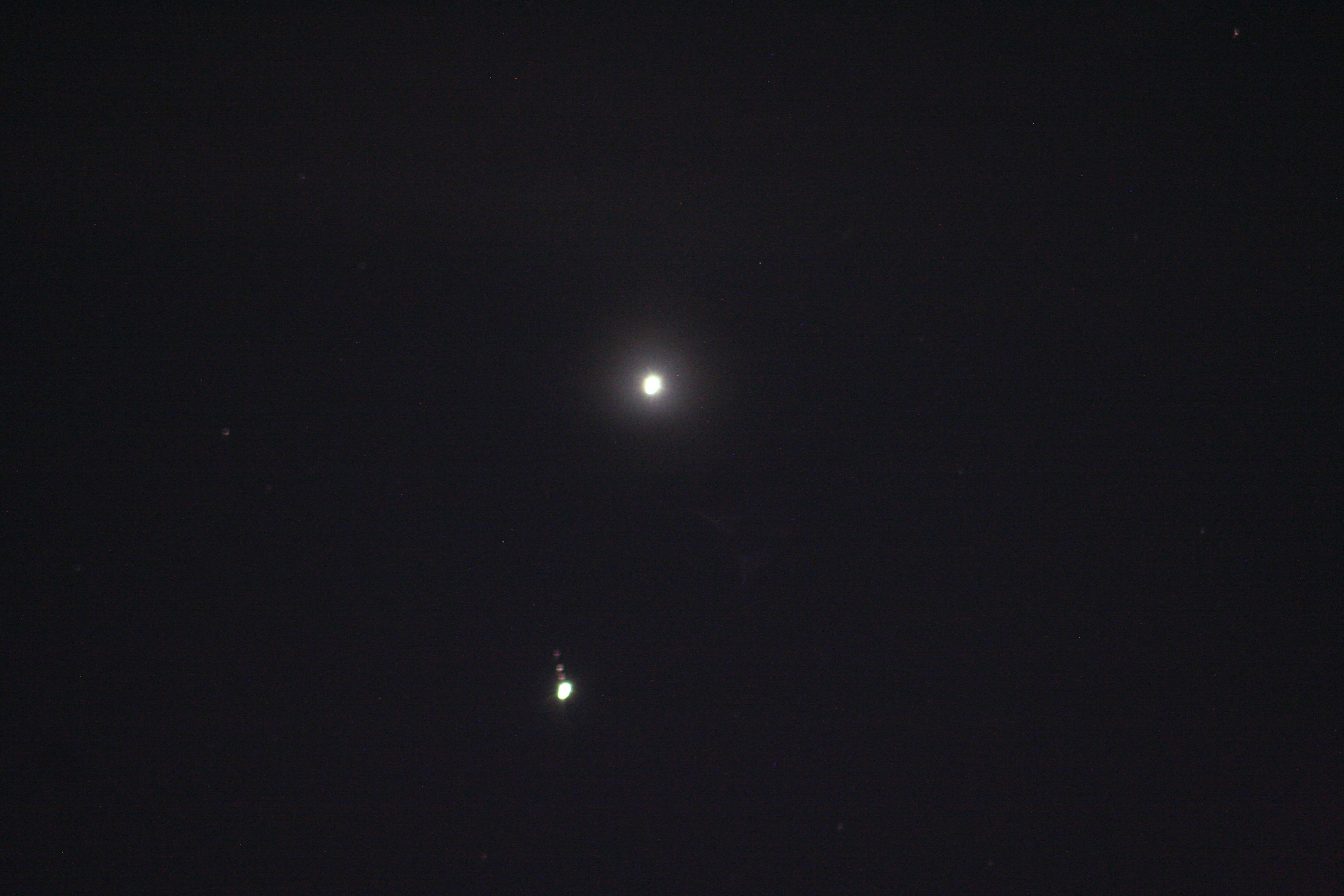
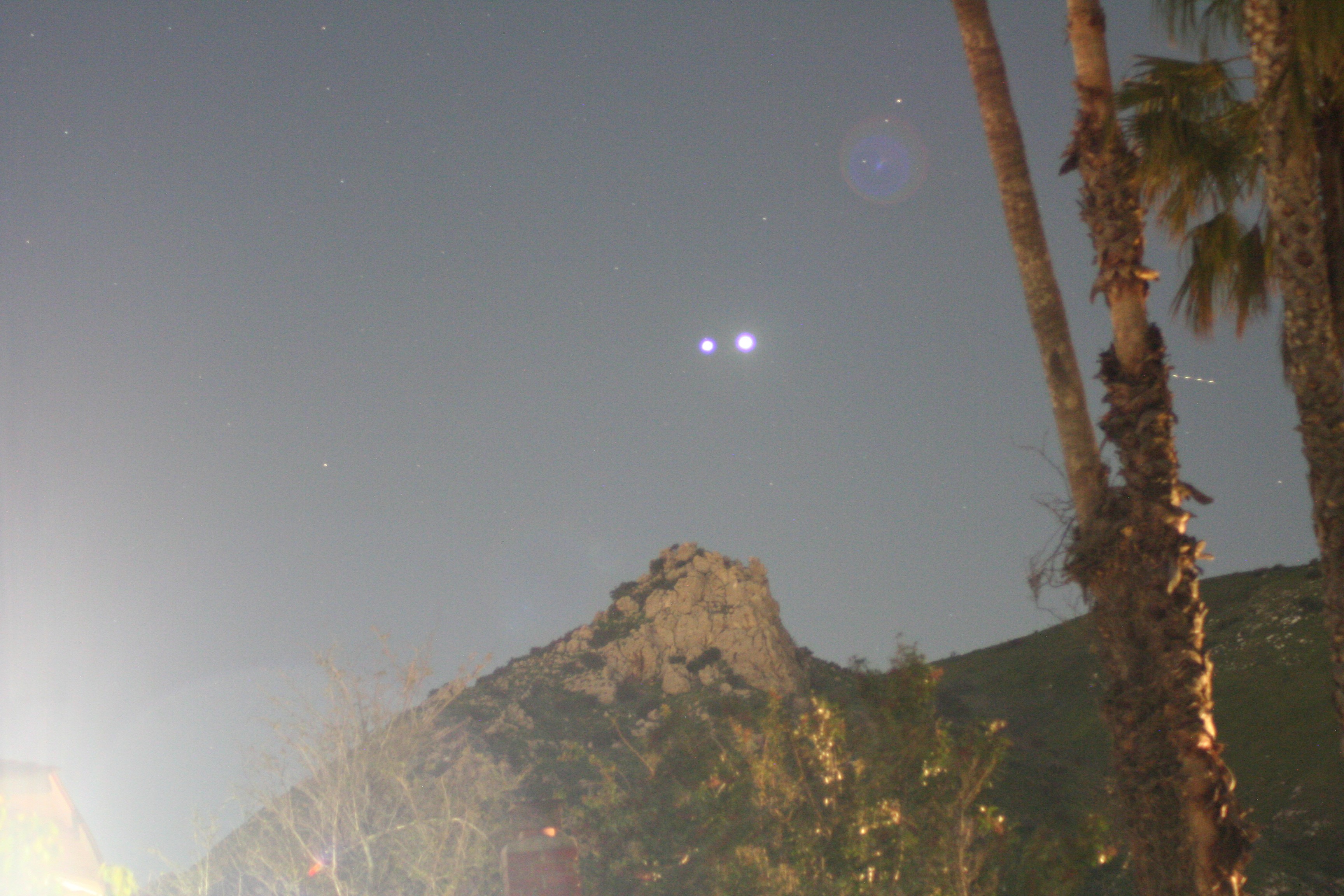
Venus & Jupiter Conjunction Plus Two

The official conjunction, the closest approach that these two planets came to, was March 1st. It’s now March 3rd, two days later.

It was a nice day, the first day in several weeks that it got up near 70º.

As promised, the planets continue to separate.

As promised, they’ll do this for a couple of weeks.

I hope everyone has a wonderful weekend! Go look at some stars and planets!


Leave a comment

Filed under Astronomy, Photography

Venus & Jupiter Conjunction Plus One

Yesterday they were side by side and close – today, Jupiter has moved a little below Venus.

It’s been a busy, busy day and I’m late, so I’m not bothering to clean up all of the dead pixels using PhotoShop tonight.

Nor am I going to blather on about how you can see something sort of like this for the next week or two.

Just go out and see it for yourself when you get a chance!

With the iPhone you get a much wider, brighter picture.

There were a few clouds, but not bad. Enough to add “character.”

But the iPhone doesn’t zoom in for beans compared to the DSLR with the big lens.

Finally, and this isn’t a great picture because there was some wind and vibration, but if you look at Jupiter, tonight you can see three of the Galilean moons!

3 Comments

Filed under Astronomy, Photography

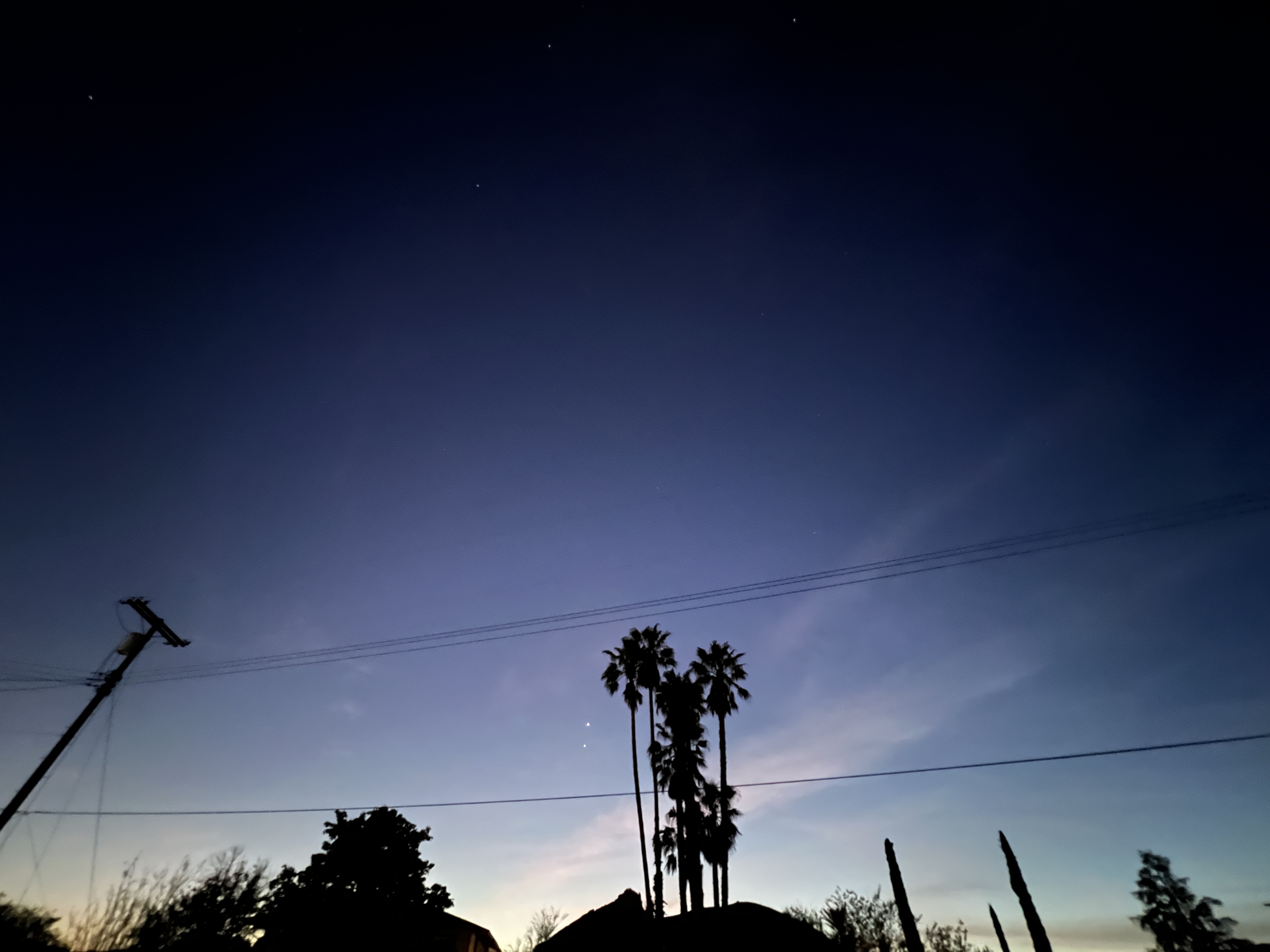
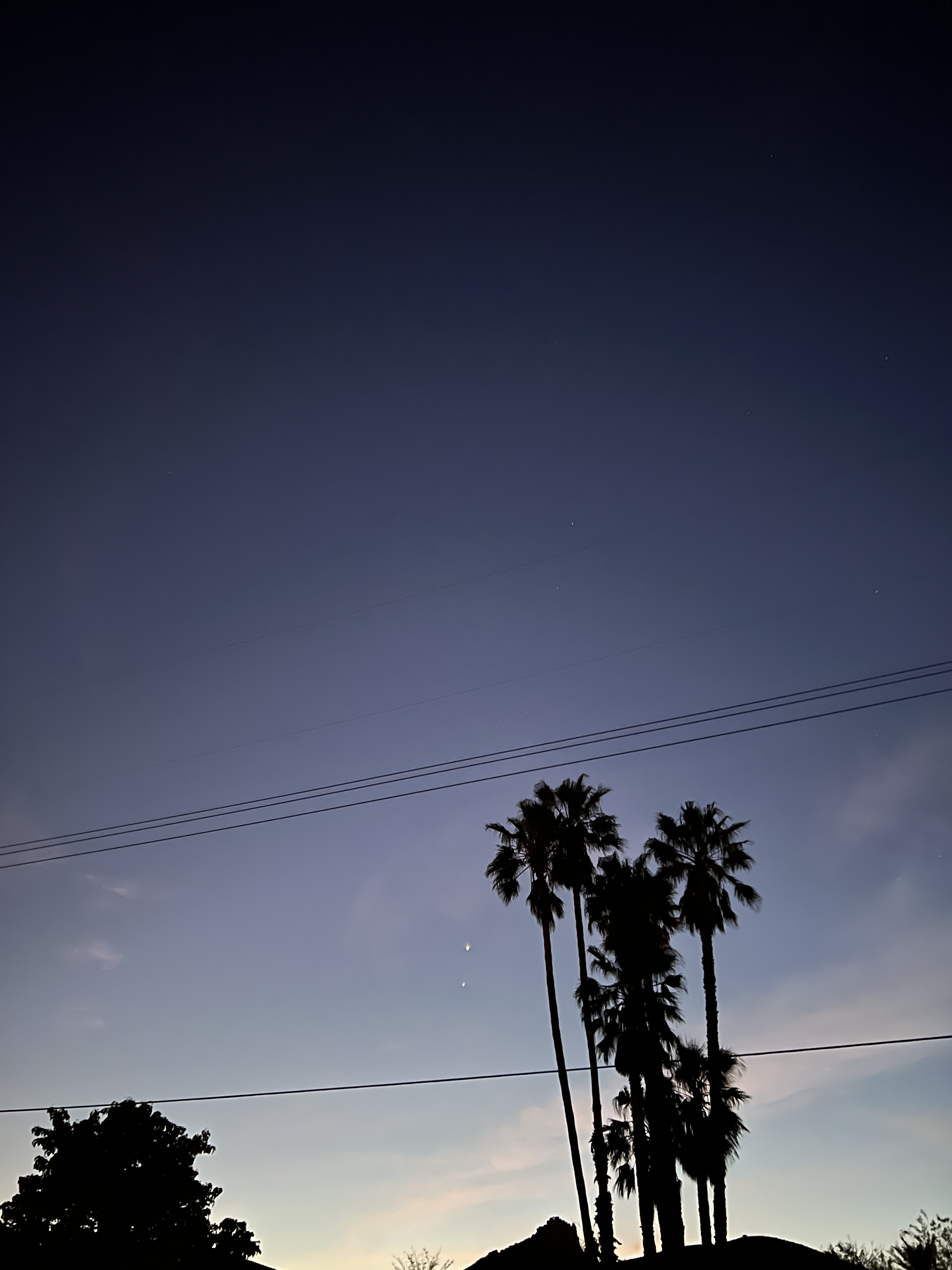
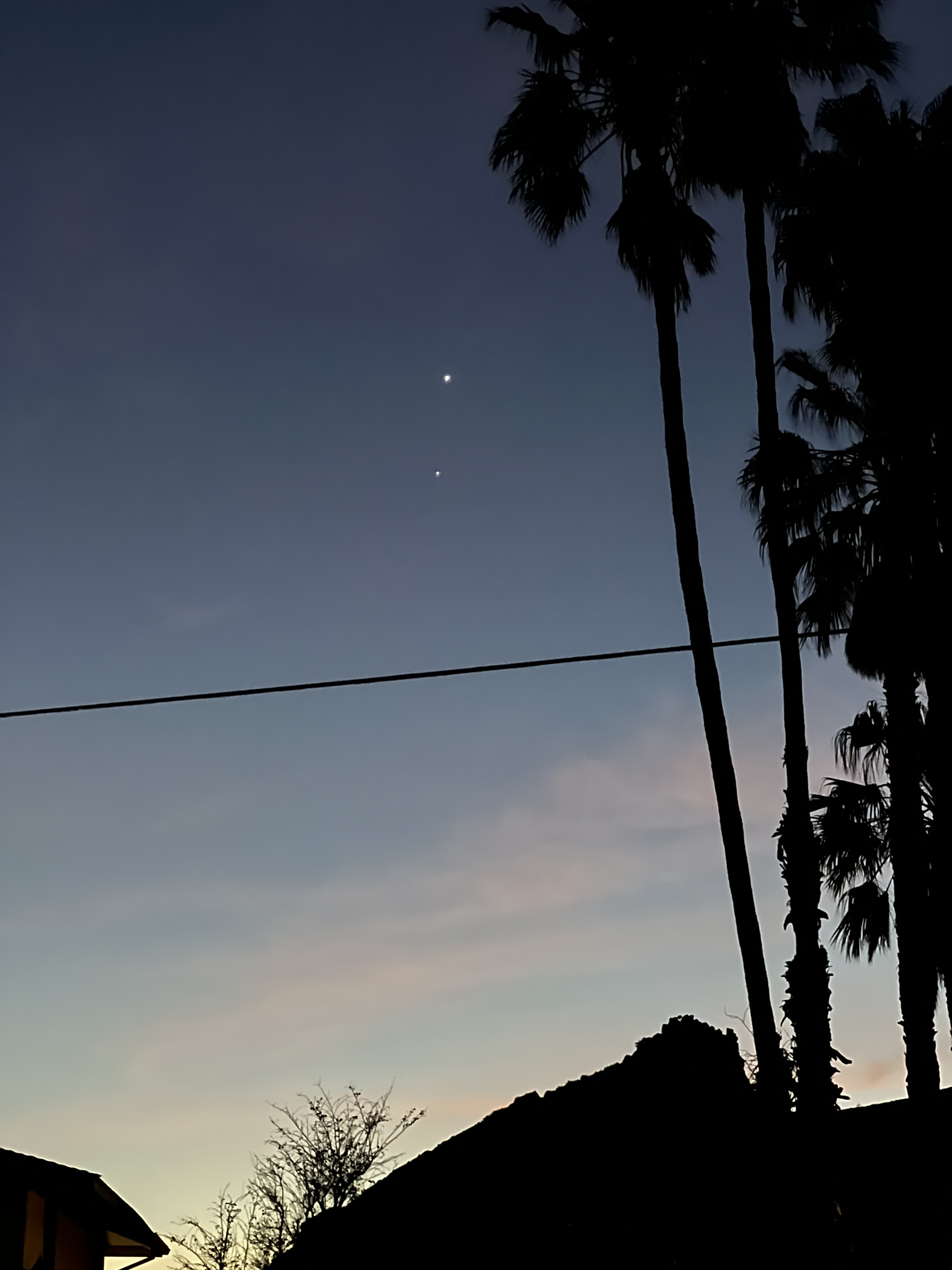
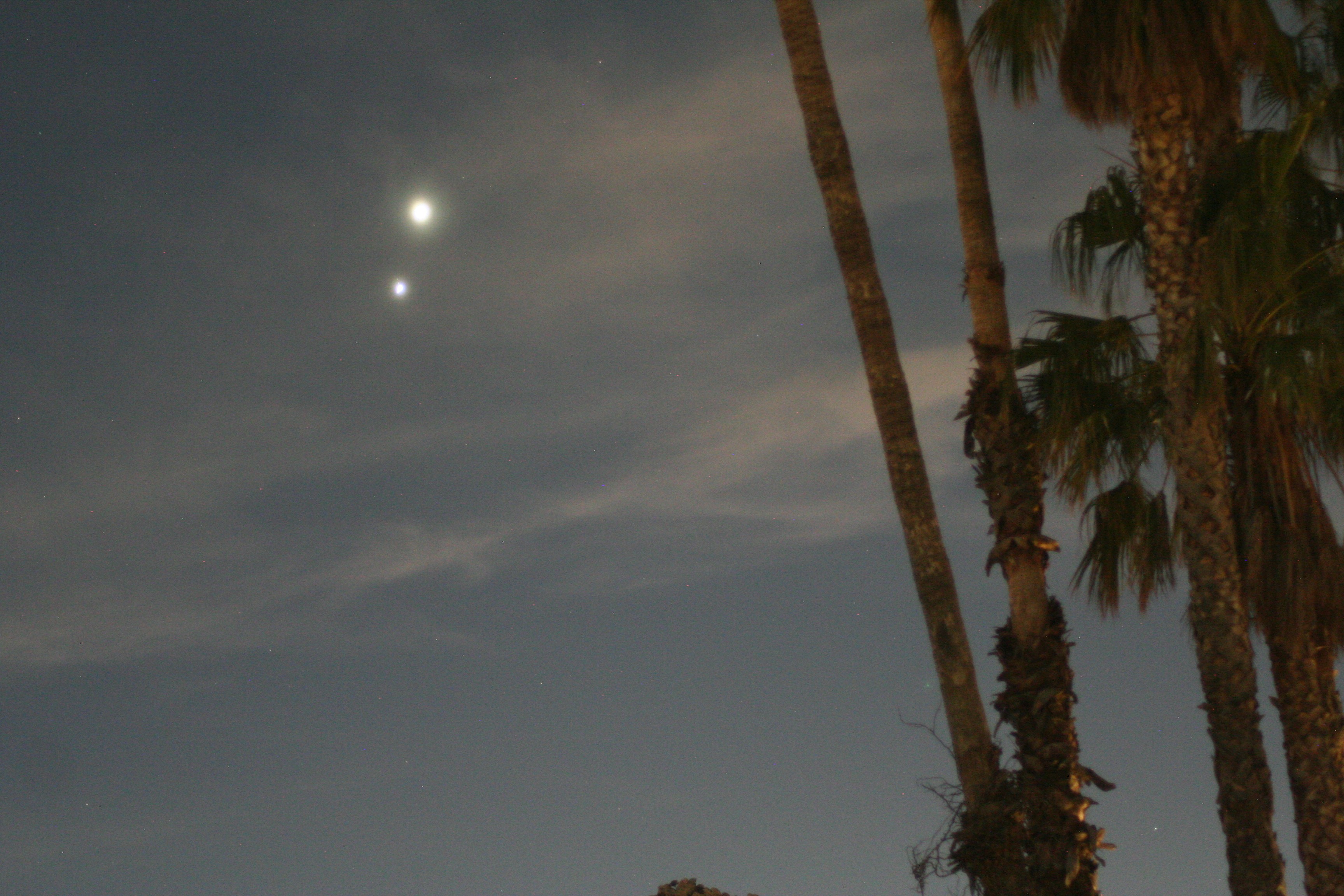
Venus & Jupiter Conjunction

The clouds cleared!

When it was still dusk the two planets (Jupiter on the left, Venus on the right) the sky was still bright enough to require short exposures, which still showed the two BRIGHT planets like jewels in the sunset.

Throughout all of these pictures, especially the more close-up views like this one, “above” Jupiter you’ll easily see two other dots. These would be Callisto on top and Ganymede closer to Jupiter. (If you’re ever looking at Jupiter using binoculars or a small telescope and want to know which moon is which, try this free app on the Sky & Telescope website.)

Again, if you didn’t or couldn’t see this tonight, look tomorrow, or Saturday, or any day for the next couple of weeks. Jupiter will be going “down,” getting closer to the Sun from our viewpoint, and Venus will be going “up,” away from the Sun. They’ll be a little further from each other every day, but they’ll still be visible for several weeks.

After I filled the memory card on my camera at the good viewing site, I came back home to reload and then just went out into the front yard for more pictures.

A lot more lights interfering here, but even my iPhone 13 takes some really decent pictures of the event.

Even the wide-angle view looks impressive.

When I mention “Castle Peak” (which remains stubbornly non-snow-capped!), that’s it right there below the planets. It’s about a half-mile away as the raven flies.

I saw so many folks driving by on their way home from work and I wonder how many of them saw this amazing sight or paid any attention to it.

Finally, I dragged out the “light bucket” wide angle lens. Double click on this picture to see it full-sized. It’s spectacular!

There’s a lot of lens flares from all of the porch lights and the street lights just out of view to both the left and right. But this lens also gives me razor sharp focus, and there’s a LOT to see besides the two bright planets just above Castle Peak.

Look up at the top, just to the left of center. See that “V” shape of stars, with the top end star of the left arm being brighter and red? That star is Aldebaran and the constellation is Taurus.

Just to the lower right of that, about dead center, is a cluster of stars. Those are the Pleiades, M45.

I can’t wait to get this camera out to a dark sky location to see what it can do without all of those lights and lens flares!


2 Comments

Filed under Astronomy, Photography