Category Archives: Religion

Flash Fiction: Bocas Del Toro

This week’s Flash Fiction Challenge once again builds on last week’s Challenge. Then, we all wrote one sentence. That’s it. One. Sentence. It was hoped that they would be really fantastic sentences. This week, we’re all supposed to take someone else’s sentence and write a story around it. Don’t start with it, don’t end with it, just include it.

I used a sentence by Leigh Schulman, which was, “I have never wished the death of another living being like I did the rooster who lived next door to us in Bocas del Toro.” For whatever reason, that sentence tickled my Muse’s fancy, so she gave me a scene, which fit into a story, which came out relatively easily. Even the punch line. (It’s great when it works like that, it really is.)

BOCAS DEL TORO

What freakin’ pinhead, cloistered in the hallowed, ivy-covered halls of academia, thought it would be a good idea to put a multi-billion dollar telescope complex on the top of a freakin’ active volcano?

Now it’s all finger-pointing, blaming, and shaming because nobody knew anything and everyone wants to know when they didn’t know it, but really, how hard could it have been to just google the place? Hell, even the Wikipedia page says it’s active with warning tremors going on for years.

Ask any astronomer where they want to put a really big telescope, and they’ll tell you they want it in orbit at the L4 point. Smack ‘em once and tell them you’re talking for reals, not about some sort of “maybe they’ll give us 10% of the GDP” fantasy, and they’ll tell you to find a tall, solitary mountain near a western coast.

It all has to do with the air and turbulence, which affect how well you can see with your big, expensive toy. If the prevailing winds come off of thousands of miles of flat water in a nice, laminar, non-turbulent way, the stars are prettier and steadier. Not as pretty or steady as they would be at L4, but you can give a second smack to the smartass who points that out.

Thus the huge complex built on Volcán Barú. There were many discussions about the potential instabilities in the Central American political regimes, but apparently none about the potential instabilities of the region’s geology. Really, no one figured out what “Volcán” meant?

That’s how I found myself in Panama. No astronomy for me, I don’t know my black holes from my Uranus. But give me a huge construction project that’s going into the toilet and I’m your guy. Civil engineer, trouble shooter, and trouble maker — have massive earth-moving machinery, will travel.

We were doing week-on, week-off shifts on the mountain. The constant earthquakes and potential for toxic gases were making us earn our hazard pay. Having half the team off on the beach made it bearable to only be getting obscene salaries instead of ludicrously obscene salaries.

It also meant we had half the team to start over with if the whole thing blew and we lost everyone up there.

After six months of this BS I was getting to the point where I preferred to be at the summit. At least there it wasn’t boiling every day and simmering every night, with 99% humidity on every day that ended in “Y.” The beach was okay, the women liked to spend my money, and the local beer was good. Still, the benefits didn’t make up for the mosquitos the size of hummingbirds, the snakes and critters, and the need to chew your air before swallowing.

Worst of all was the noise in the morning, when decent beings are asleep and/or hungover. I have never wished the death of another living being like I did the rooster who lived next door to us in Bocas del Toro. An hour before sunrise, every freakin’ day, he would start sounding off. That in turn would set off every other rooster within a mile. In minutes, only the dead could still be unconscious.

I was down in Bocas when the pencil pushers started figuring out they had bitten off more than they could chew. The volcano was getting feistier, all of that high-priced glass was getting closer and closer to being useless, and someone finally noticed the clause in our contract that said we only got paid in full if we succeeded in full.

I knew they were desperate when they brought in the local shaman. He had gotten a lot of press when the project was first proposed, selling his story about how the site was sacred to his people. It hadn’t take long for a substantial amount of funds to be allocated for “public relations,” and for the shaman to end up with a big house on the beach a long way from any sacred ground.

How did this yokel end up on the payroll now? It wasn’t hard to find out the decision had been made way above my pay grade. I have no idea how someone who buys into the whole “mystical, angry, and offended ancient gods” theory gets to be a Senior VP at an international engineering megacorp, but no one asked for my opinion.

All I got was the call to pick up supplies and bust my butt hauling it all back up to the summit. Candles, incense, alcohol, fruits, vegetables, an iguana, miscellaneous crap – and “the biggest, baddest chicken you can find.”

I do love a mystical, angry, ancient god with a sense of humor.

When I get a chance to kill two birds with one stone, I take it, especially if one of the birds is Cucuy, my feathered arch nemesis. The idiot bird cost me more than its owner makes in a year, but it wasn’t my money.

The wrinkled dude who sold him also insisted I know the chicken’s name and use it when addressing him. Is that weird, or what? Who names their chickens, anyway? I mean, other than “McNugget” or “Foghorn Leghorn.”

Cucuy was making quite a ruckus all the way up the dirt road toward the observatory. It must have had some effect, because I saw more wildlife along the road than I had ever seen before. Deer popped up in the road in front of me, parrots filled the trees overhead, and there were snakes all over the road.

Maybe the jungle critters on the mountain hadn’t ever heard a rooster before. Or maybe they actually had heard this rooster, even from fifty miles away, and were coming out to pay their last respects. I didn’t think the shaman wanted Cucuy for a new biological alarm clock.

I was right about that, but wrong about the shaman.

There weren’t a lot of us who got off of the volcano alive. In retrospect, they should have been clear about what the shaman meant when he said the he could solve the problem. The hoodoo VP thought he was paying to quiet down the mountain god, while the shaman was, of course, working to set him free.

Say what you want about superstition, gods, rituals, and all of that mumbo jumbo. When that rooster’s throat got slit and the ground started hopping, the last thing I saw as I high-tailed it out of there was a half-mile high fountain of magma that looked exactly like Cucuy.

As for the fate of the multi-billion dollar observatory? Last time anyone saw it, it was headed toward L4, tossed there in pieces by a mystical, angry, ancient god with a sense of humor.
1 Comment

Filed under Religion, Science Fiction, Writing

Kyoto (Part Ten)

To Recap: In May, 2012 I went to Asia on the “Three-Countries-Three-Weeks-Three-Kids” tour. The first stop on this once-in-a-lifetime trip was Shanghai, followed by several days in Seoul. Now I was footloose and fancy-free (i.e., lost a lot) in Kyoto, Japan. I found one of the most beautiful and interesting places I’ve ever seen — just search for “Kyoto (Part Two)” through “Kyoto (Part Nine)“. (Yeah, that’s a lot of pictures of one place.)  Now it was time to start seeing the other sights of Kyoto.
IMG_4017 small

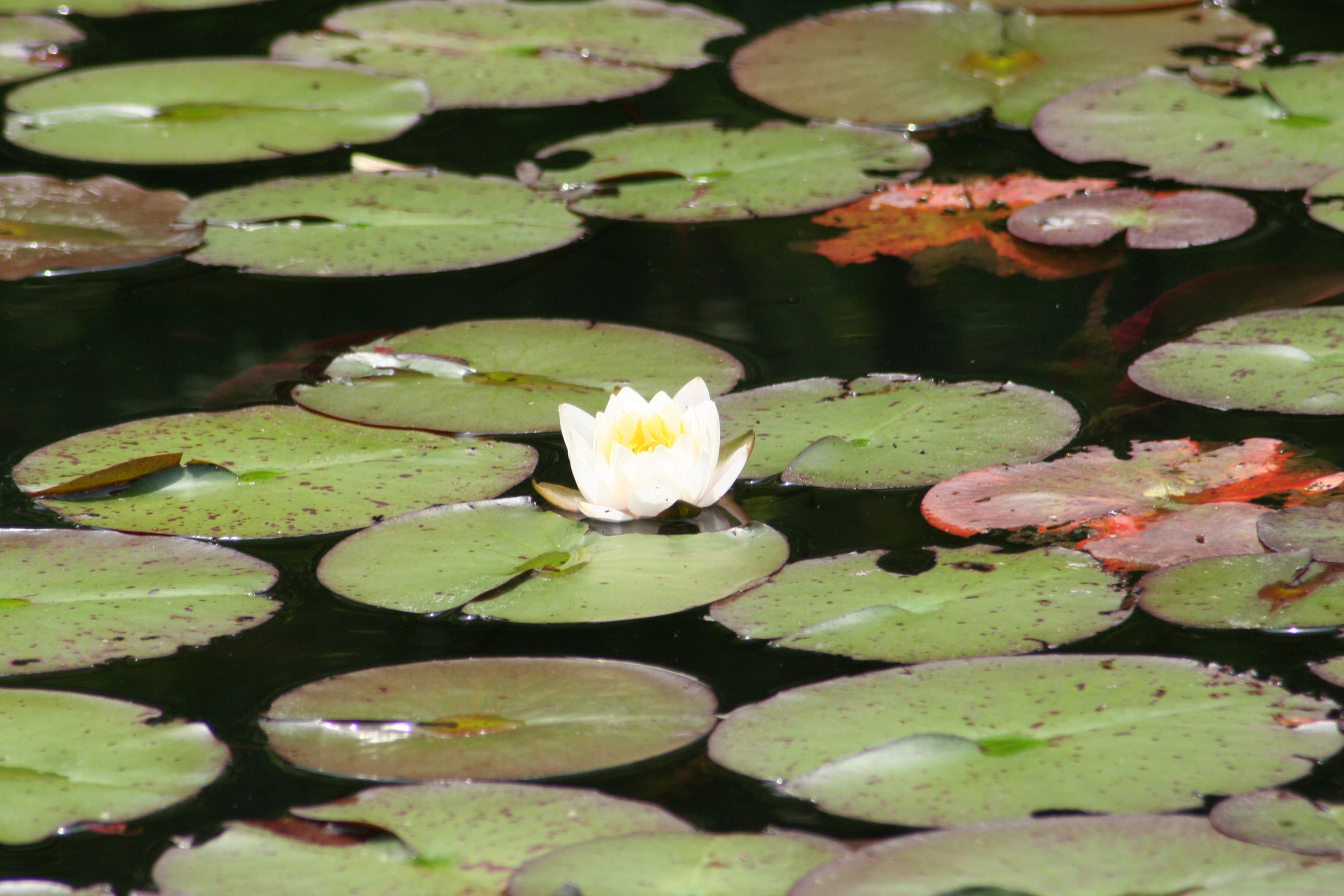
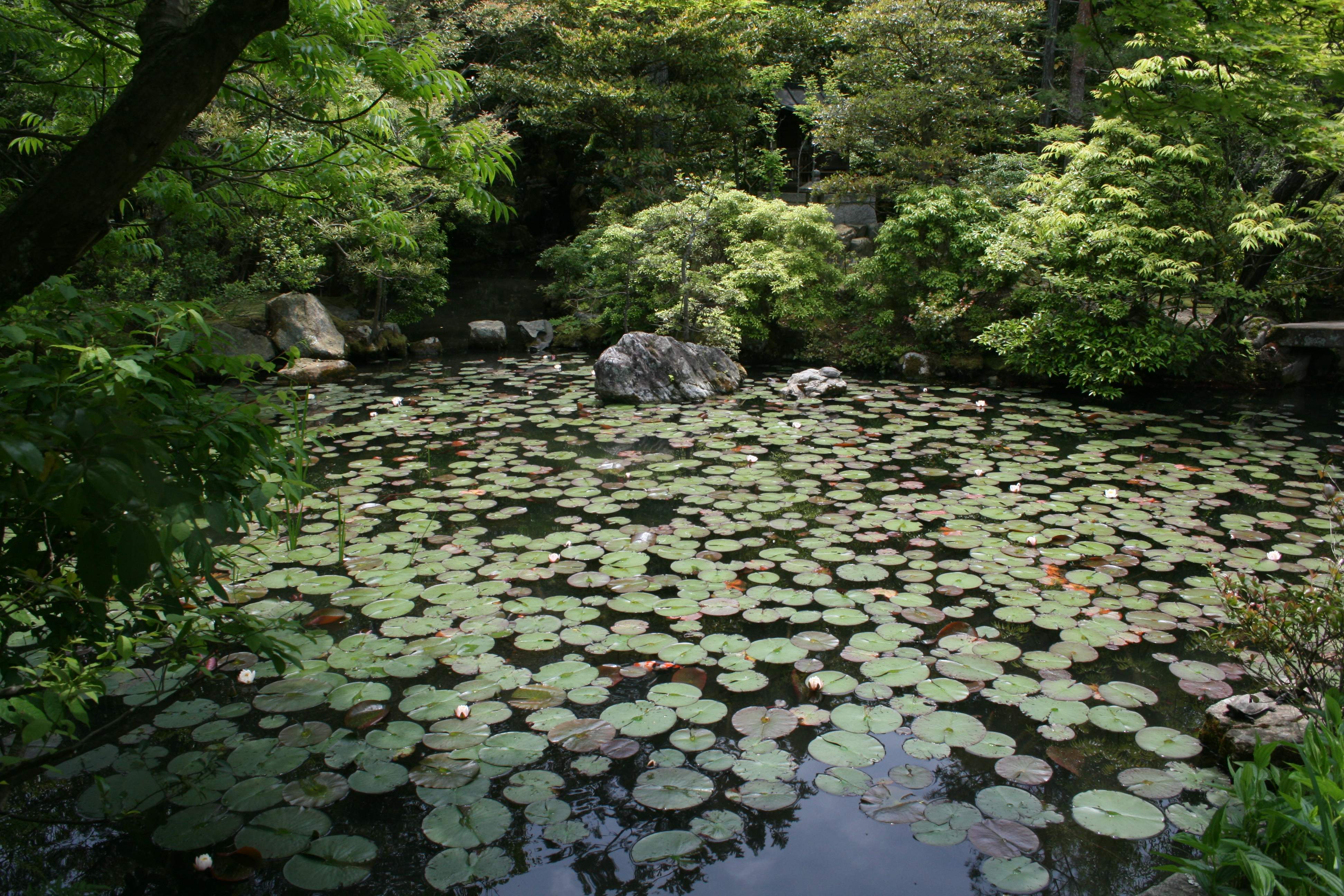
Throughout many of the shrines and temples in Kyoto were ponds such as this one. They’re not there by accident, but designed for their beauty and peace. This is where one could spend hours meditating.

IMG_4001 small

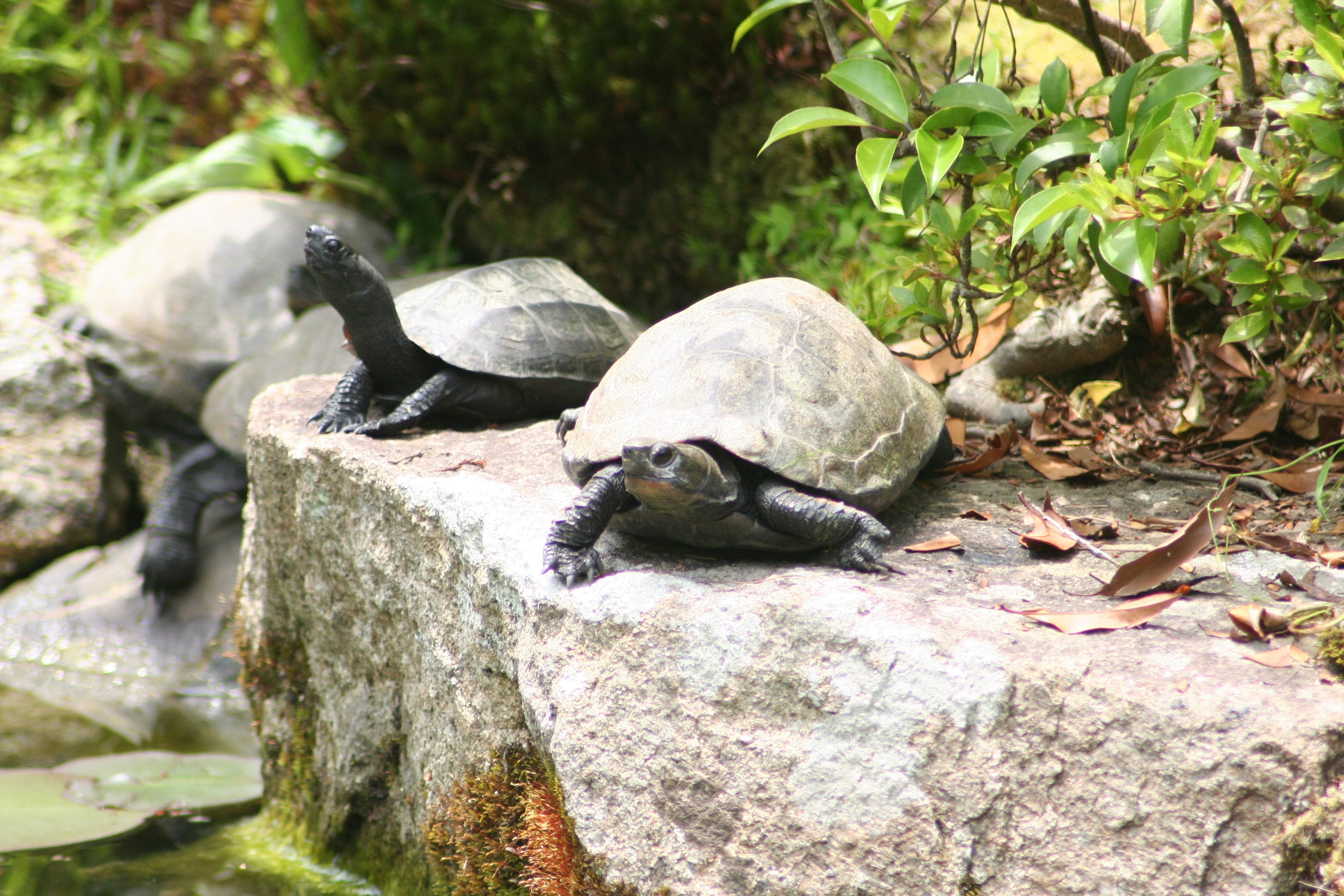
The turtles had the whole zen thing down pat. As did the lotus blossoms.

The phrase I’ve seen recently is something like, “One should always meditate for one hour a day, unless one doesn’t have the time, in which case one should meditate for two hours a day.” I get it. I really do. I’m just having trouble executing that plan.

IMG_4003 small

For the record, I was on a “mission from God” to get through as many new sites and experiences as I could cram into each country and city visited, so I was OBVIOUSLY doing the “calm” and “peaceful” thing incorrectly. (Also for the record, I was not the “ugly American,” I was just trying to maximize what might turn out to truly be a once-in-a-lifetime experience.) It would be wonderful to come back when I had hours to spend just sitting. Even someone like me might actually be able to unwind!

IMG_4023 small

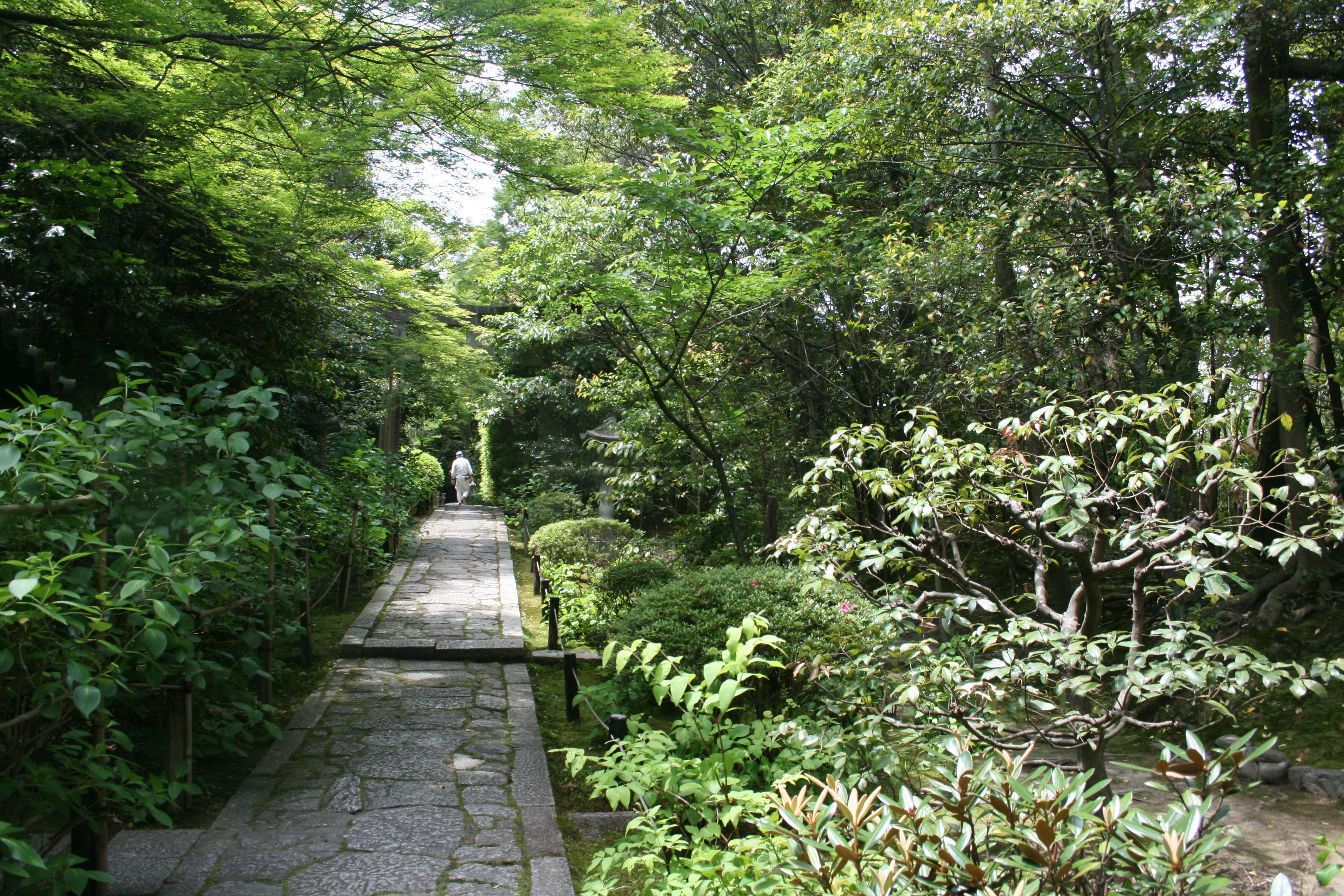
The Konchi-in Temple is a Zen Buddhist shrine. After the shrine was established in 1400 at Takagamine, it was moved to the current site in Kyoto in 1627.

IMG_4028 small

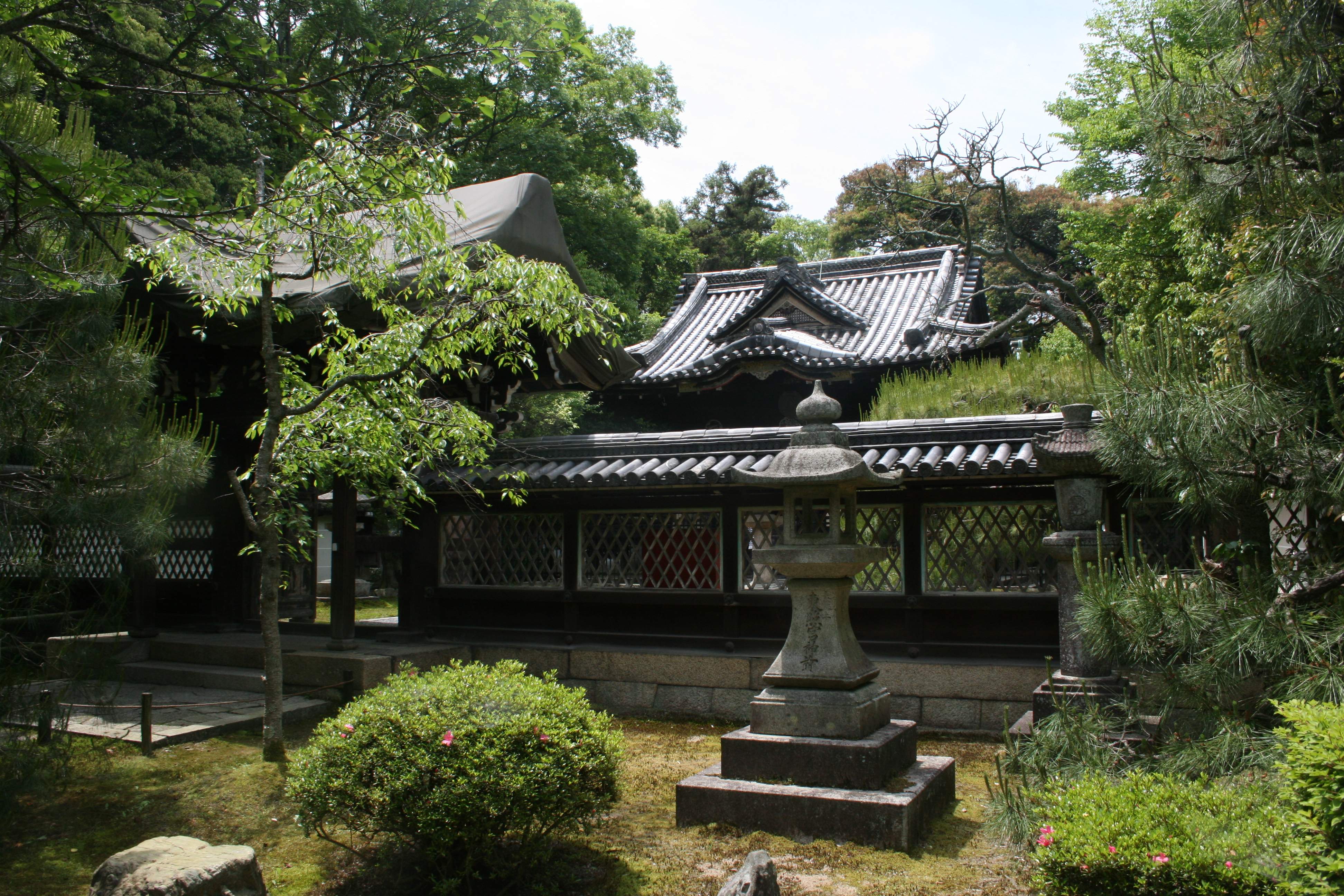
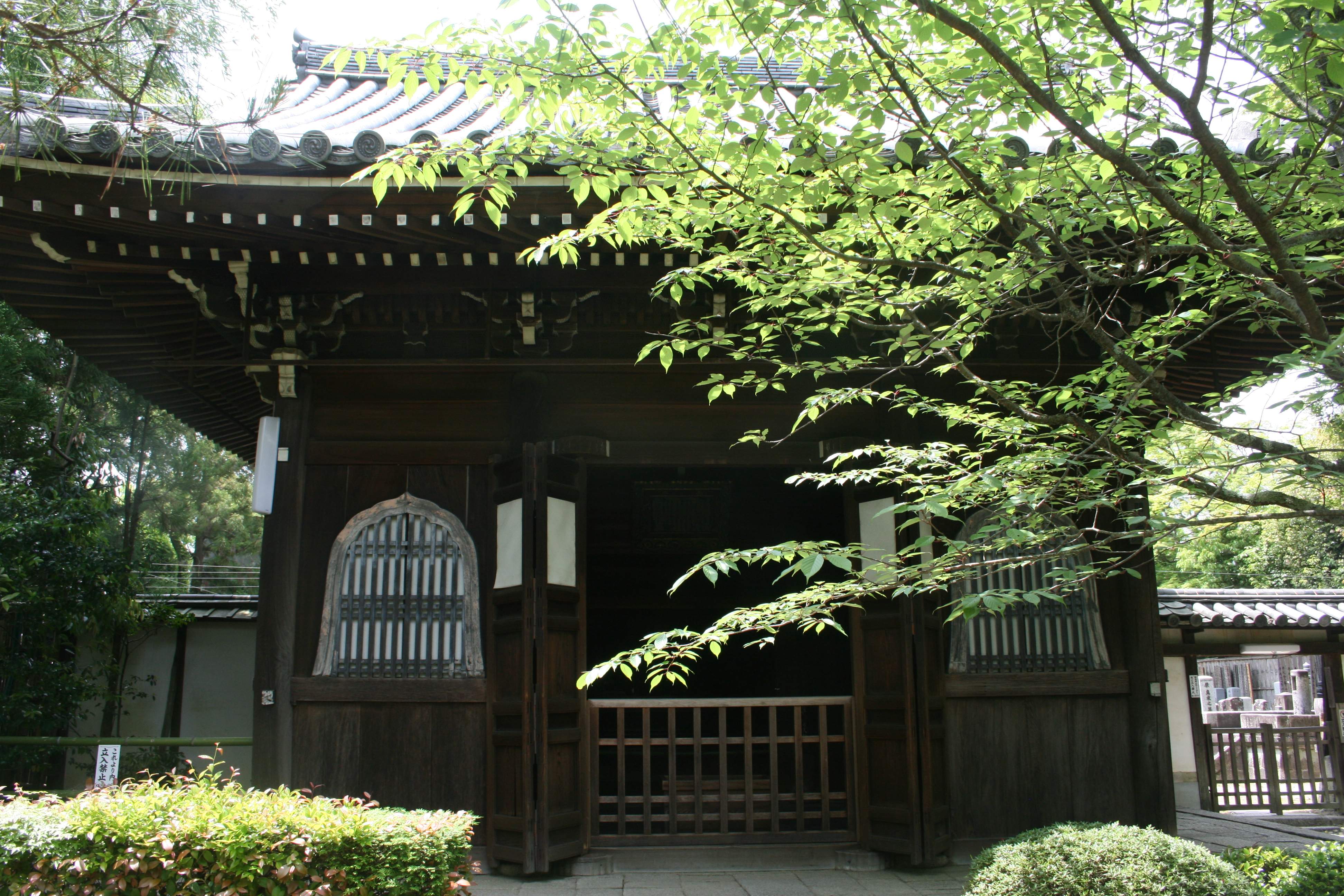
The temple was built in the typical “shoinzukuri” style, with hip-and-gable roof designs. The doors slide open instead of using hinges, and were painted by Kano School painters.

IMG_4063 small

While they’ve been maintained for centuries, it’s not to say that they’re absolutely the exact same way they were five hundred years ago. For example, I’m guessing that the neon light fixture at the top of the corner pillar on the left is not an original 15th century design.

IMG_4065 small

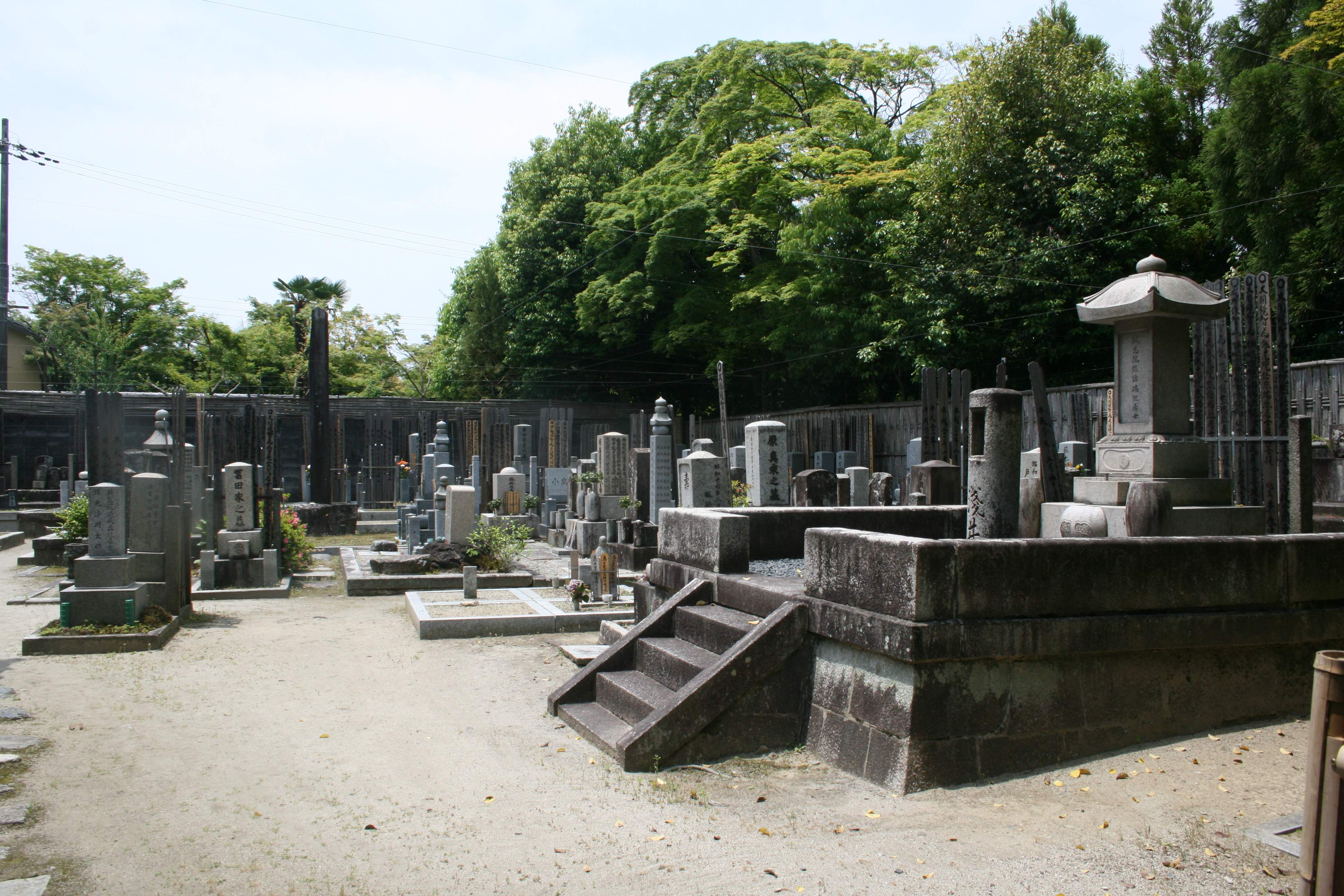
Next to one of the temple buildings are more shrines in what I would guess to be a graveyard.

IMG_4083 small

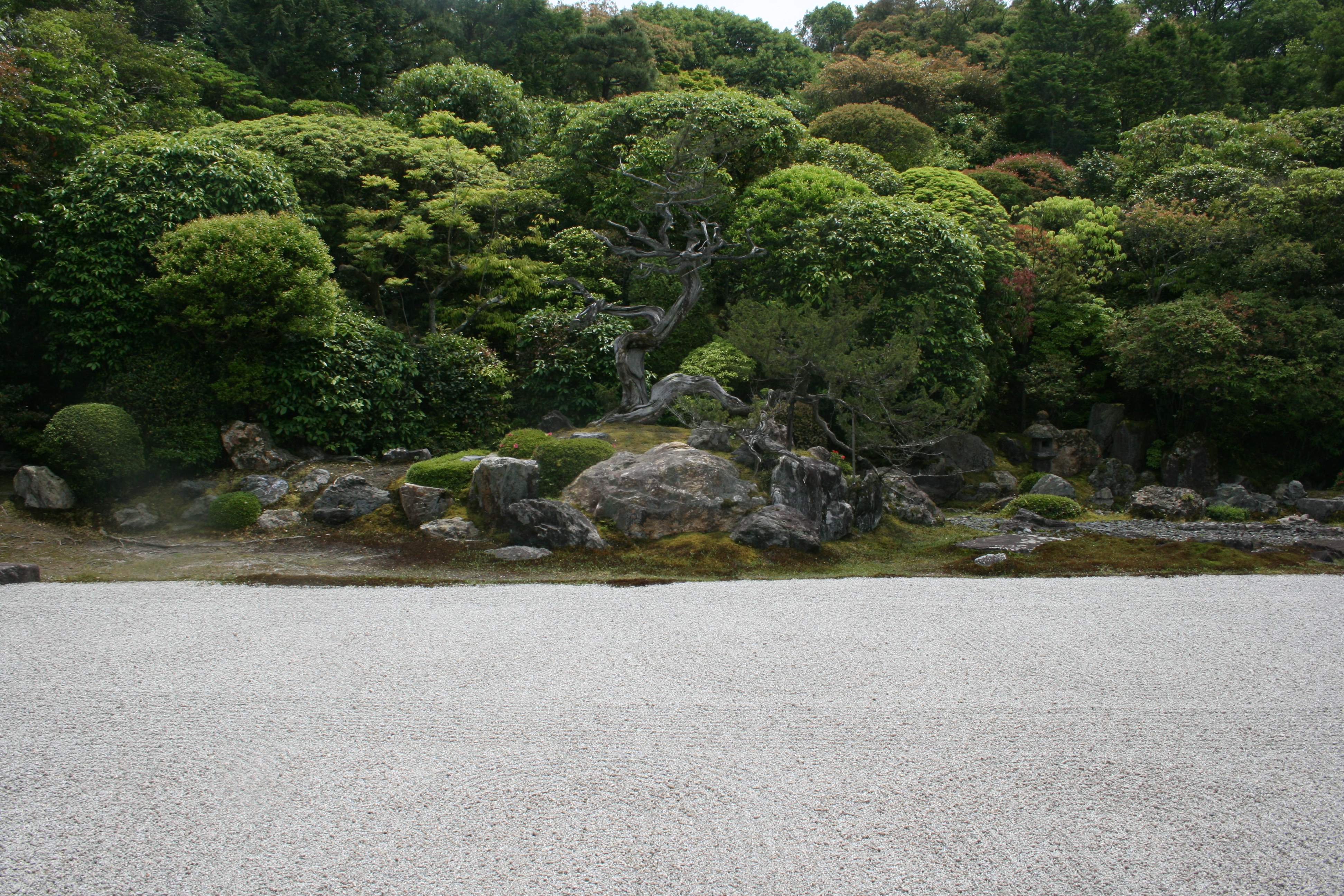
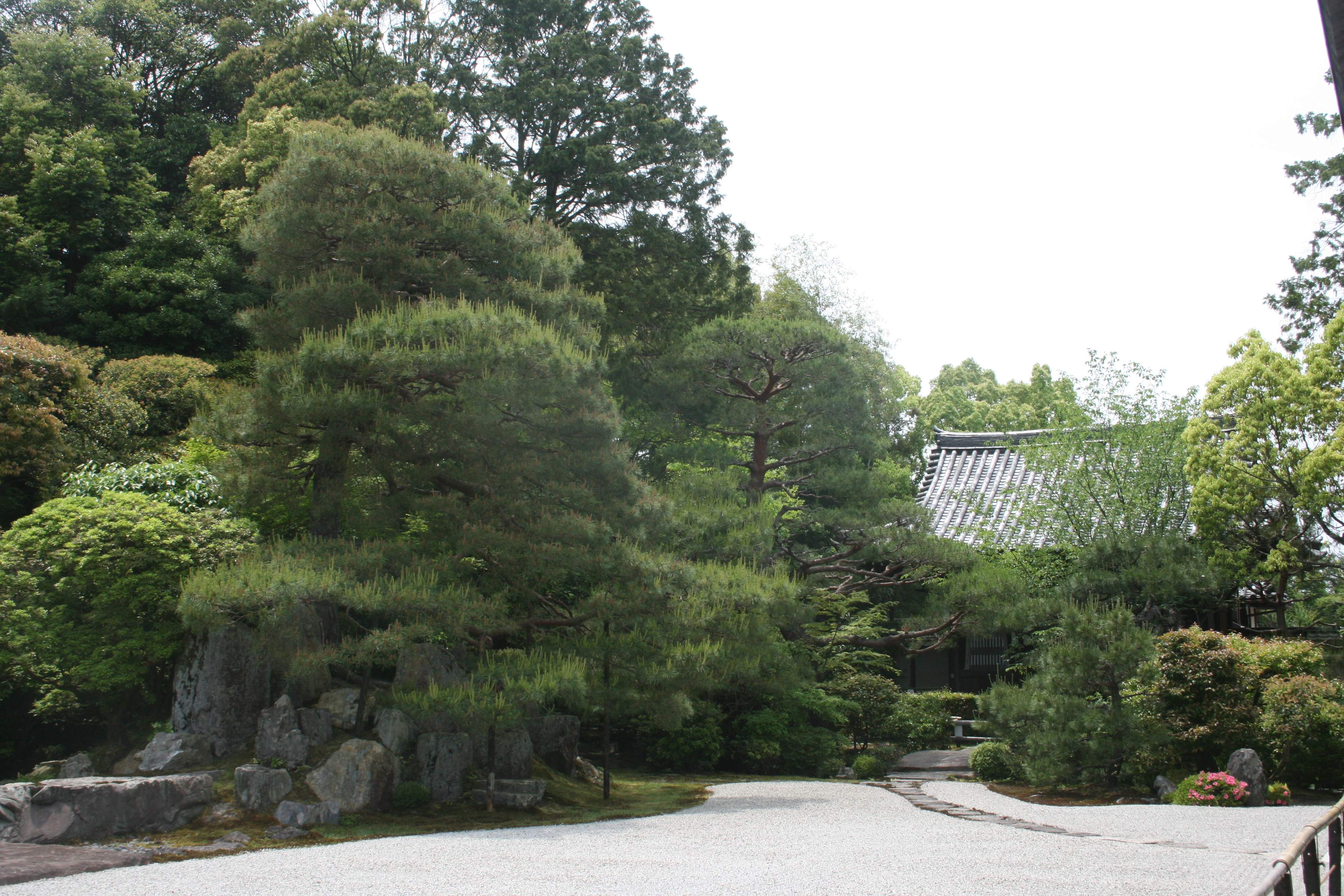
These rock gardens are exquisite. The pure, white gravel is groomed into all sorts of intricate patterns. On the far side you can see trees that have been meticulously groomed and cared for for almost five hundred years.

Here we stopped and sat for a while.

IMG_4085 small

This (and the picture above) are the Hojo Garden, completed in 1632, and designed in part by Kobori Enshu,who also designed some of the other buildings on the site. These gardens have been officially designated as a “spot of scenic beauty.” It may have lost a bit in the translation, but we got the idea.

Leave a comment

Filed under Photography, Religion, Travel

Kyoto (Part Nine)

To Recap: In May, 2012 I went to Asia on the “Three-Countries-Three-Weeks-Three-Kids” tour. The first stop on this once-in-a-lifetime trip was Shanghai, followed by several days in Seoul. Now I was footloose and fancy-free (i.e., lost a lot) in Kyoto, Japan. I found one of the most beautiful and interesting places I’ve ever seen and I’m going to give you the final sets of pictures from that particular location in Kyoto.

After seeing the Fushimi Inari temples, the thousands of vermilion torii gates, the occasional shrine on a side path, warning about wild monkeys, finding every inch of space used, I finally found the top of the mountain.

OLYMPUS DIGITAL CAMERA

Approaching the bottom of the mountain off to one side from the main temples and the point where I had started up the mountain, there was one final long stretch of vermilion torii gates.

IMG_1252 small

One last set of shrines, along with the fox icons wearing vermilion yodarekake. However, the end was near, at least as far as Fushimi Inari goes, since I could see houses just a few yards ahead. There’s no extra space wasted on anything, remember?

IMG_1268 small

Then, as the path led out to the street next to what seemed to be nothing other than normal houses on either side, there were these very non-Inari Okami-like statues and shrines. To my semi-educated eye (at least as far as Eastern religions go) these seem to have elements of Buddhism and Hinduism in them.

IMG_1271 small

At the same time, the pose of the large statue and the baby being held all gave it an odd “Virgin Mary” look that I didn’t understand. To see it at the exit to the Inari temple site was even more odd, like it had been put there deliberately to expose visitors to an alternative theology.

That’s just my ignorant American’s gut-feeling view — if anyone actually knows what it is and why it happens to be here, just feet from the exit of the Inari shrine, I would love to be educated.

IMG_1288 small

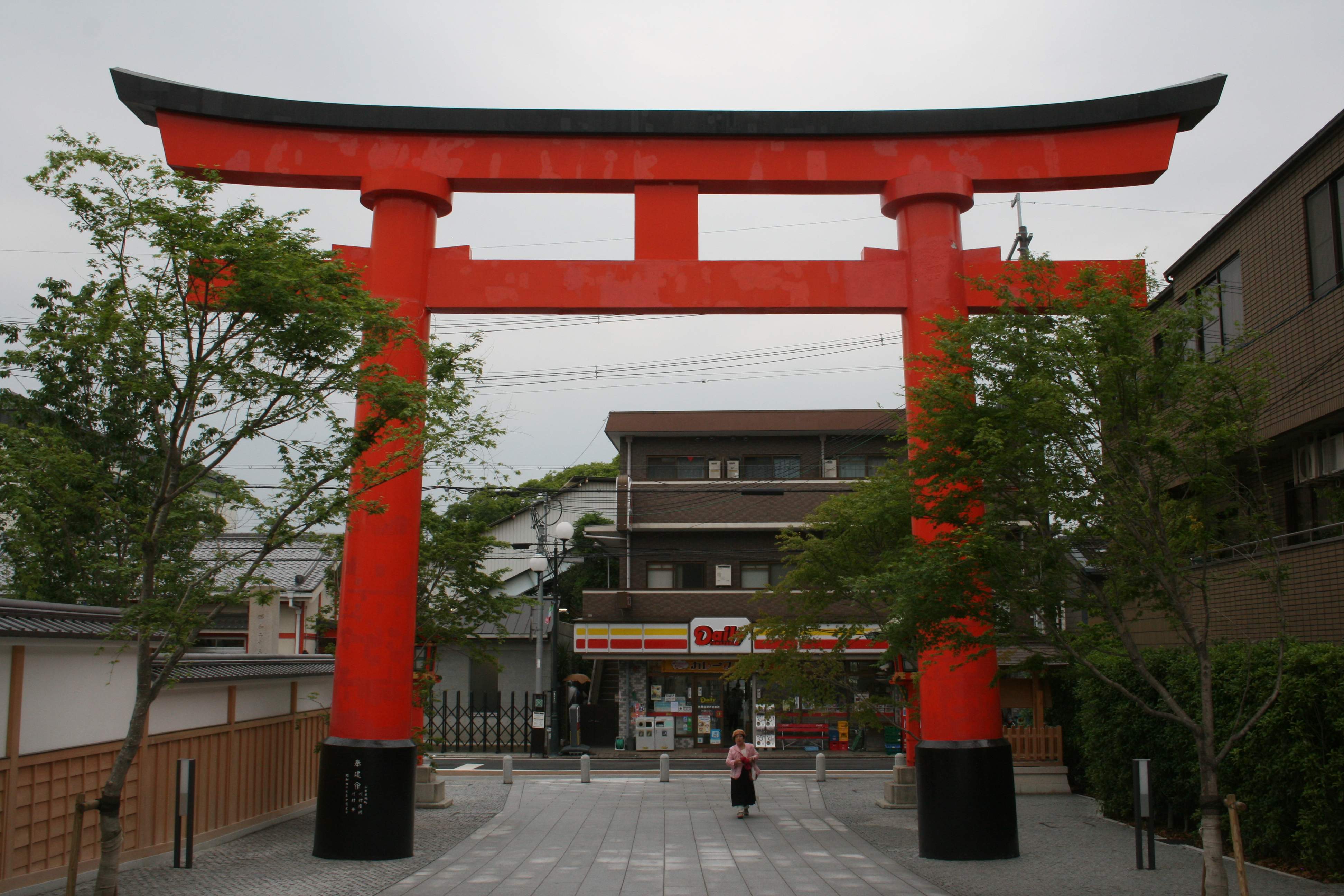
I worked my way back along a residential street to the main entrance to Fushimi Inari. I left through the main gate that I had missed coming in. (I had been just a bit lost, if you recall.) One last giant vermilion torii gate, then there were houses, mini-markets, and the (correct) train station to get me back to Kyoto Station.

IMG_1303 small

Kyoto Station is huge, a hub of local, regional, and national rail lines. Just outside of the main doors is this beautiful and monstrous lattice roof and unique architecture.

IMG_1309 small

Directly across the street is the Kyoto Tower, which I had only seen at night when I came in the previous evening. The area around the station and tower is a very colorful, vibrant, busy section of the city, which I found quite enjoyable. I prowled around at all hours for the couple of days I was there, shopping, eating, and exploring.

IMG_1310 small

Going out to dinner with my daughter that evening, we went past the Kyoto City Hall, which is where the Kyoto Protocol was negotiated and signed in 1997.

IMG_1329 small

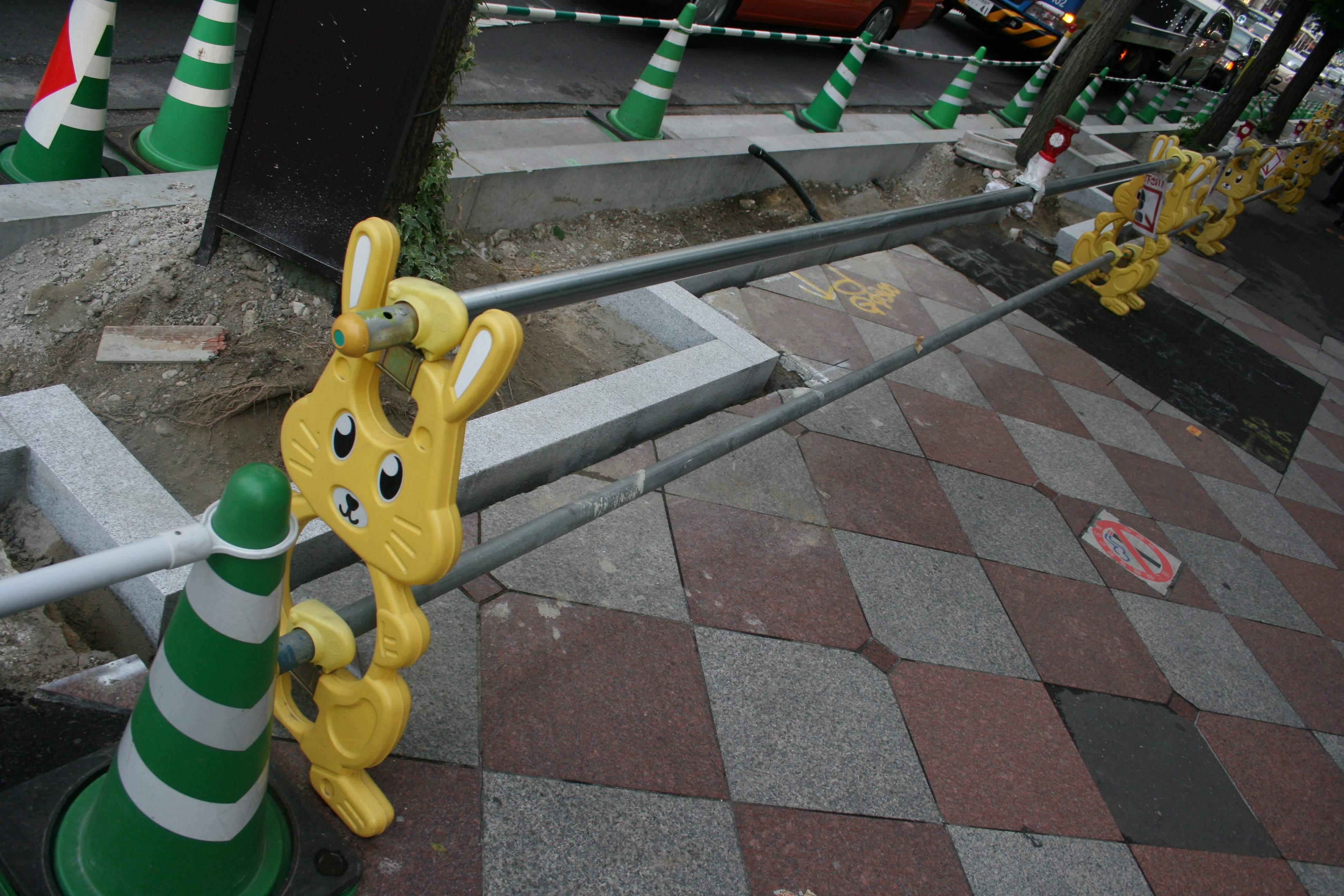
Heading toward our restaurant, just down the block we found a construction site. I found these barriers so much more interesting, whimsical, and entertaining than the ugly and routine sawhorses, orange plastic fencing, and yellow hazard tape that seem to be the norm in the US.

Leave a comment

Filed under Photography, Religion, Travel

Kyoto (Part Eight)

To Recap: In May, 2012 I went to Asia on the “Three-Countries-Three-Weeks-Three-Kids” tour. The first stop on this once-in-a-lifetime trip was Shanghai, followed by several days in Seoul. Now I was footloose and fancy-free (i.e., lost a lot) in Kyoto, Japan. I found one of the most beautiful and interesting places I’ve ever seen and I’m going to give you the first of two final sets of pictures from there.

After seeing the Fushimi Inari temples, the thousands of vermilion torii gates, the occasional shrine on a side path, warning about wild monkeys, and finding every inch of space used, I finally found the top of the mountain.

IMG_1131 small

As someone who lives in a desert with attitude (i.e., Los Angeles) I was fascinated by the sub-tropical rain forest ecosystem. The contrast was stiking between the vermilion torii gates and the foliage in a million shades of green.

IMG_1149 small

As you get near the top of the mountain you can get a new perspective, looking down on bits and pieces of the paths below you, as well as the forest canopy.

IMG_1186 small

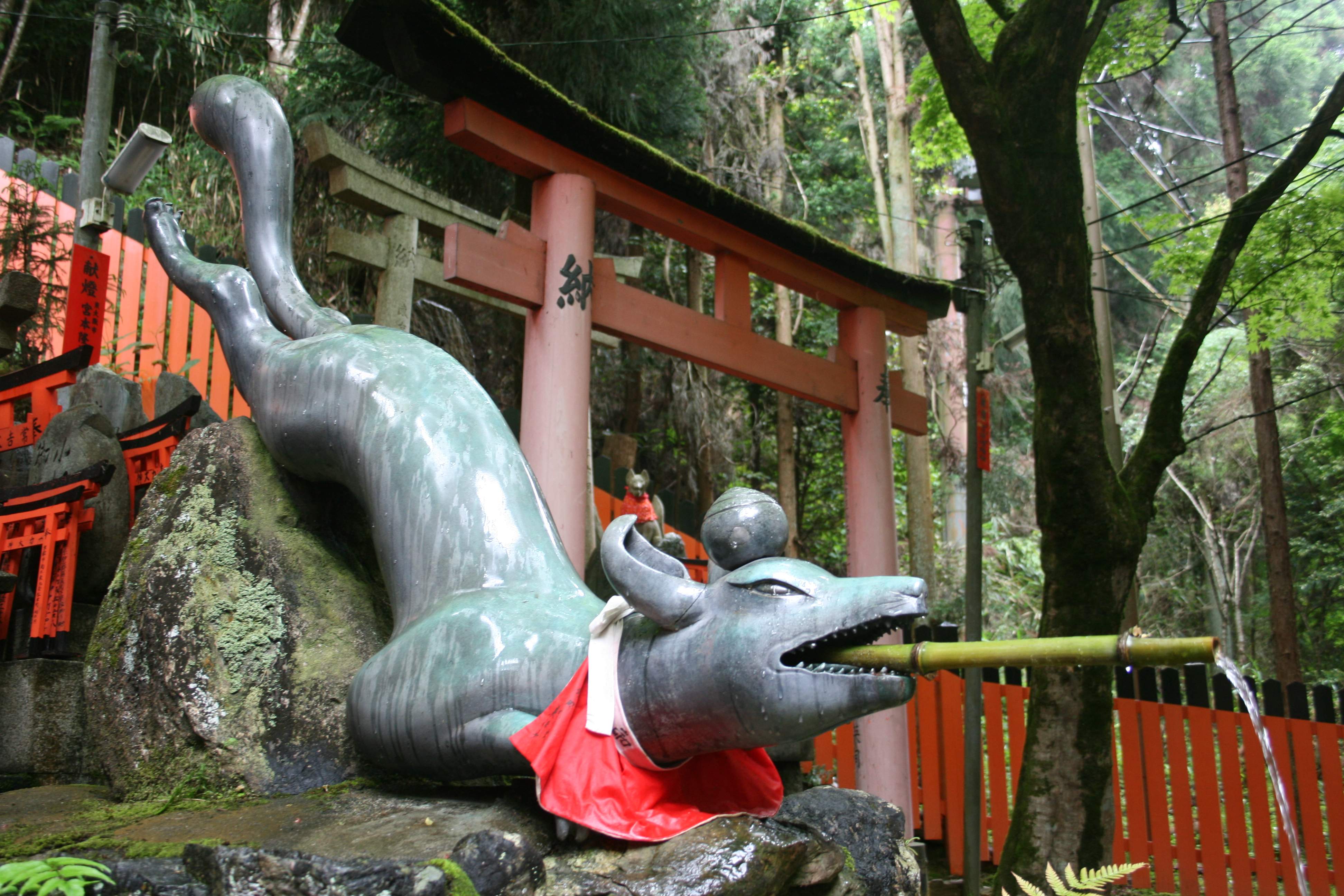
Another fountain with some sort of beast depicted, wearing the traditional vermilion yodarekake. Given that the fox is the animal most commonly associated with the kami Inari Okami, I’m thinking it’s a fox, but it looks much more like a seal or an otter.

IMG_1189 small

I just never got tired of these views.

IMG_1195 small

At the mountain’s highest point I found another collection of dozens and dozens of shrines. There were only the narrowest of paths between them. Many of the interior paths between shrines had a significant amount of spider webs across them. Since it’s my understanding that the families associated with these shrines come to visit them regularly, I can only conclude that they’ve got some very active and healthy spiders up here.

IMG_1214 small

Just beyond these shrines there’s a point where you can look down on the city, in this case through the drizzle and clouds. I don’t know the official height of the mountain, although I found some references to it being 233 meters (764 feet).

IMG_1224 small

Several routes come together at the top of the mountain, so of course I had to take a different one down than the one I had come up!

IMG_1240 small

Here I found a shrine built to allow candles and incense to be burnt, as well as the two built-in stone vases. For the record, all of the flowers I saw on all of the shrines were fresh, not decorative, which is one of the reasons I believe that the shrines are visited and tended to frequently.

IMG_1256 small

The flags and banners were something I saw while going down this path that I hadn’t seen going up one of the other paths. There seemed to be a handful of shrine sites all near each other that all had these on display. It made me wonder if there were different factions or sects around the site, all having a connection to Fushimi Inari-taisha as sacred ground, but each with their own slightly different customs. Mind you, I don’t know if that’s true, but I did wonder about it.

Leave a comment

Filed under Photography, Religion, Travel

Kyoto (Part Seven)

To Recap: In May, 2012 I went to Asia on the “Three-Countries-Three-Weeks-Three-Kids” tour. The first stop on this once-in-a-lifetime trip was Shanghai, followed by several days in Seoul. Now I was footloose and fancy-free (i.e., lost a lot) in Kyoto, Japan. I found one of the most beautiful and interesting places I’ve ever seen and I’m going to continue to bombard you with share dozens of pictures from there with you for the next few weeks.

After seeing the Fushimi Inari temples at the bottom of the mountain, I was captivated by the thousands of vermilion torii gates lining the maze-like paths. I found a shrine on a side path which was slightly different, before walking further up the mountain and be warned about wild monkeys.

IMG_1012 small

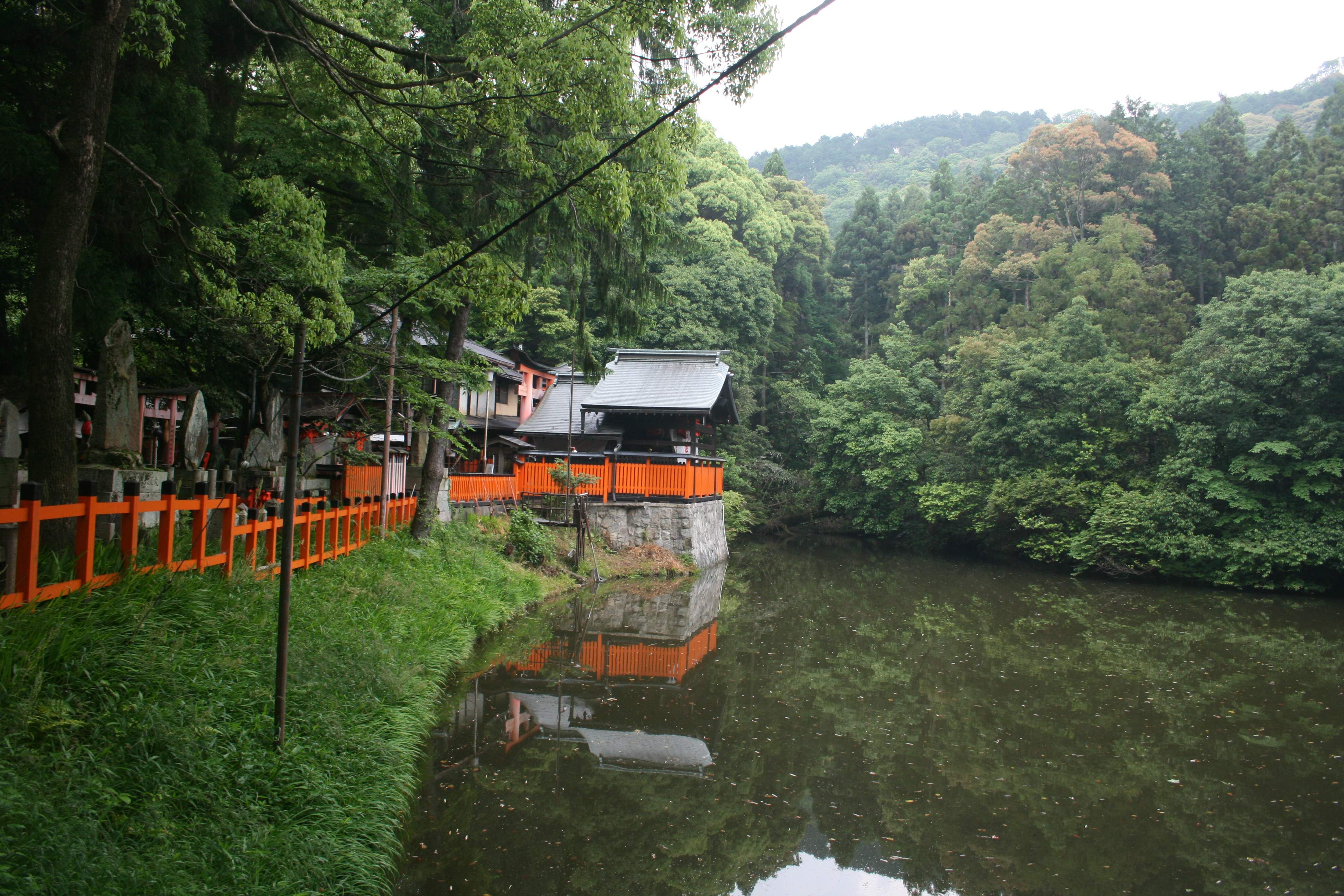
Even high up the hill, there were some isolated ponds or lakes that were incredibly picturesque.

IMG_1017 small

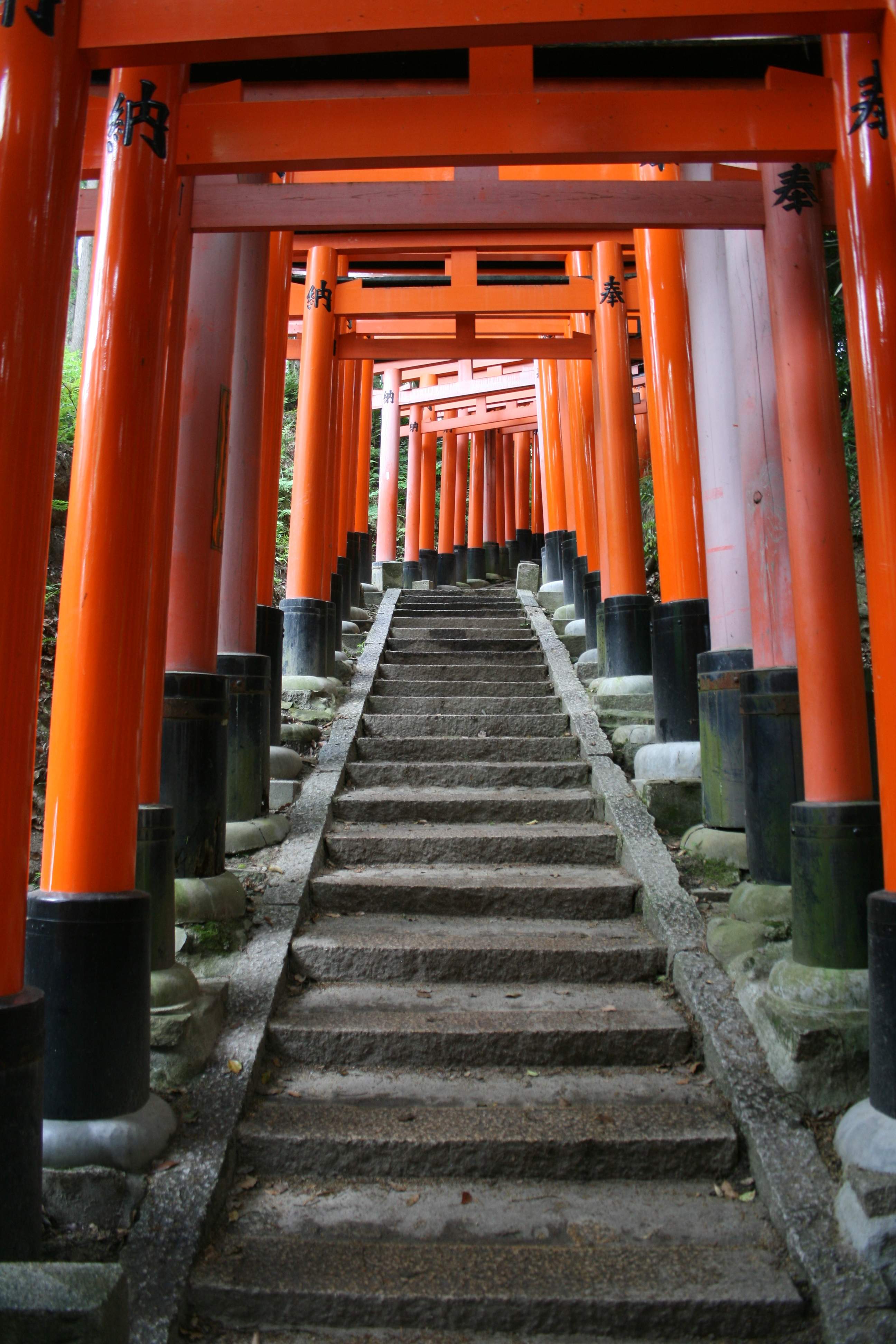
Sometimes the hill got steep, but you’re on stairs and there are rest stops regularly. It’s not that much more strenuous than many common attractions at US National Parks.

IMG_1019 small

It just looks a little intimidating. “Stairway To Heaven” with torii gates!

IMG_1021 small

When you stop to rest and get off to the side of the stairs, you get an incredible view of the greens of this semi-tropical rainforest contrasted with the vermilion of the torii gates and shrines.

IMG_1036 small

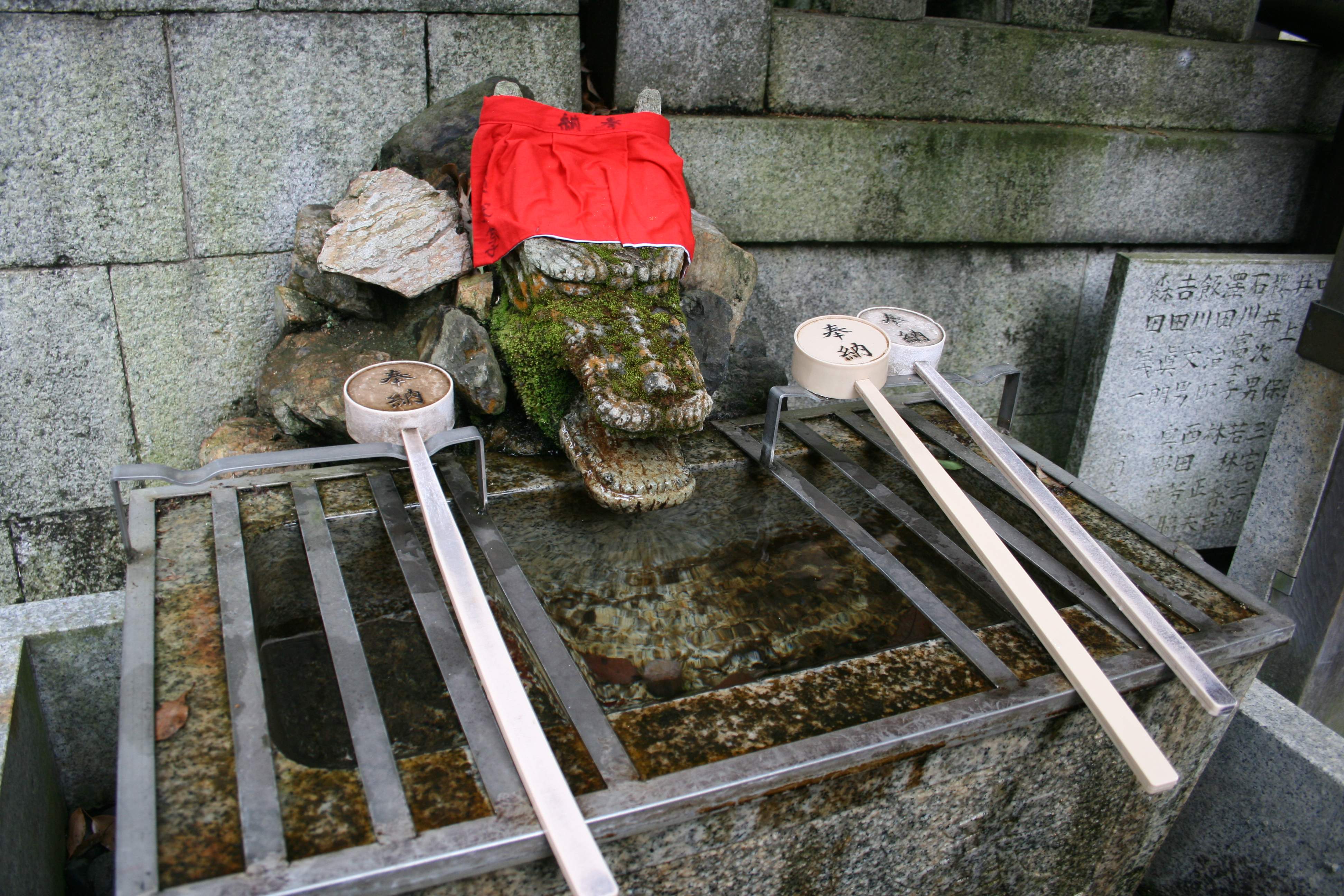
Near the top I found another fountain with ladles, this time guarded by an alligator statue. But it’s still wearing a vermilion yodarekake.

IMG_1058 small

There were shrines like this every couple hundred yards as you climbed and wandered through the paths. Many had flowers and all that I saw were fresh – no fake flowers here. Someone (or members of some group) for each of these family shrines made a regular trek up the mountain.

IMG_1066 small

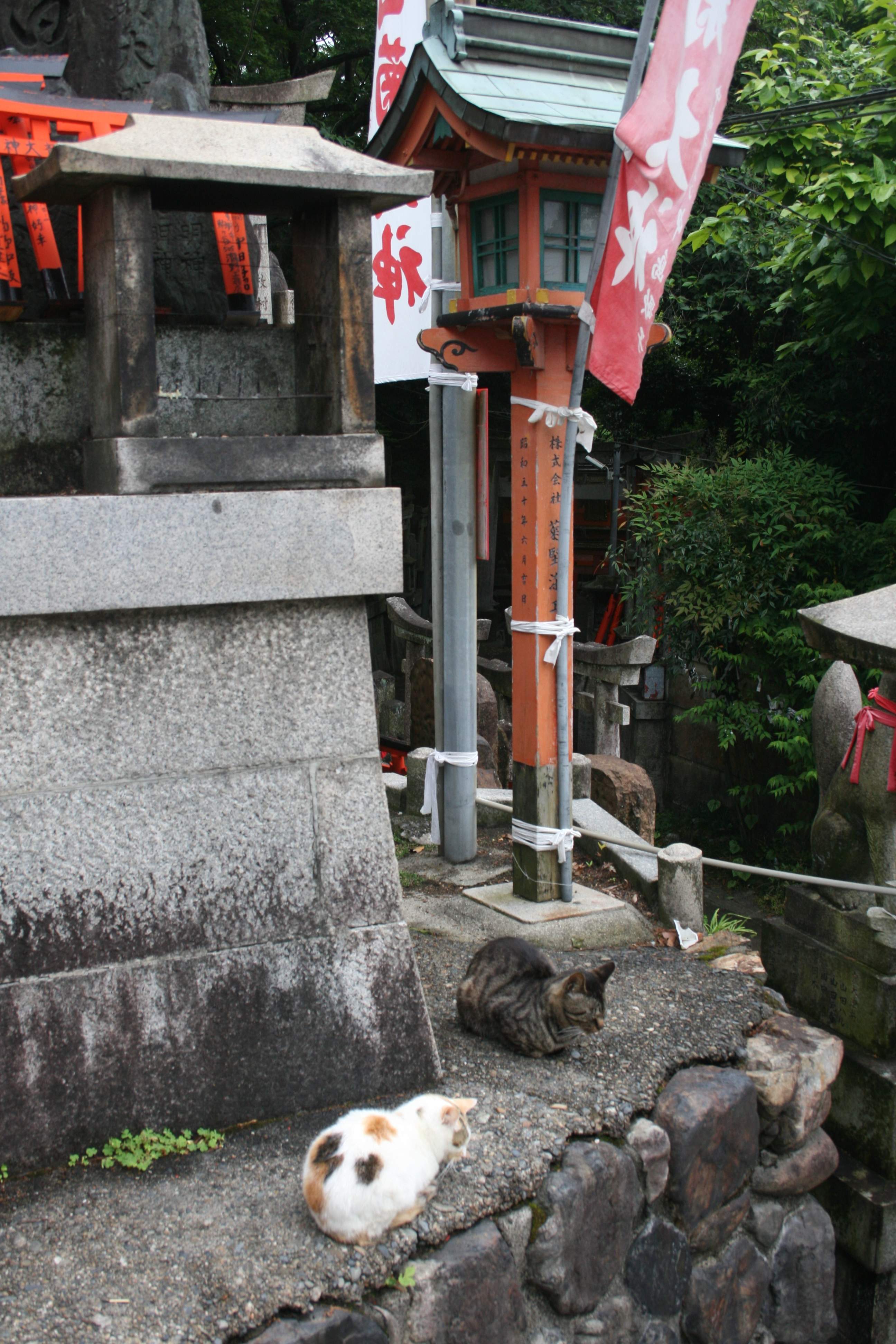
There were feral cats lounging around many shrines. From me all they wanted was either food or to be left alone. I wondered about their safety with the aforementioned threat from aggressive wild monkeys, but they didn’t seem too worried about it.

IMG_1114 small

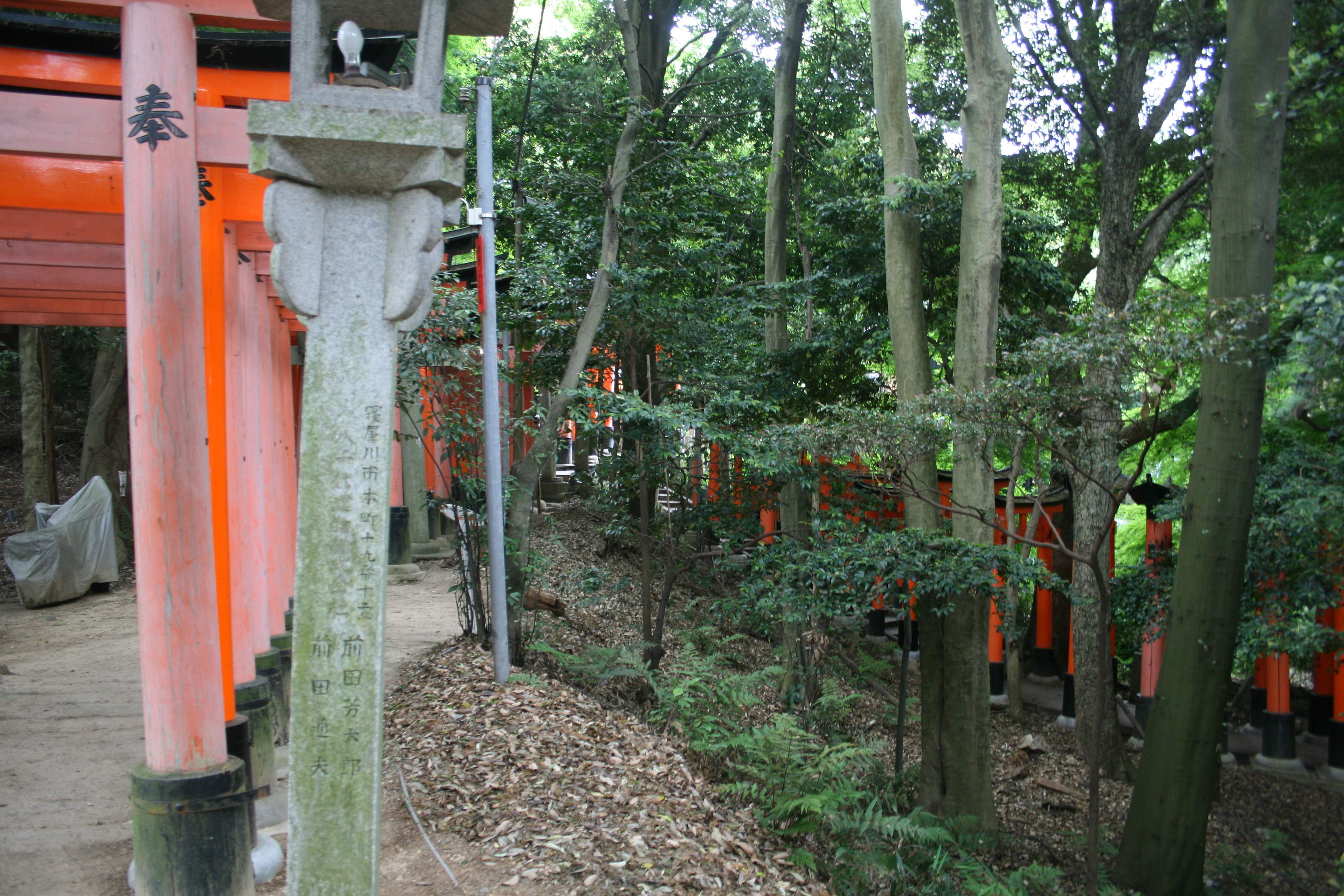
Each shrine off on a side path seemed to have slightly different architecture or style, yet all had the unifying themes seen everywhere. (Torii gates, vermilion colors, statues of foxes wearing vermilion scarves, and so on.)

IMG_1128 small

As with most everything else in Japan, space is at a premium and no usable scrap of land is wasted. Many shrines were built into the sides of the mountain on many terraced levels.

Many shrines had lanterns built into the design and layout. (Plus, of course, there were modern, electric lights to be seen.) This made me wonder if the site was open at night, and what it might be to be there on a crystal clear night.

Maybe next trip.

Leave a comment

Filed under Critters, Photography, Religion, Travel

Kyoto (Part Six)

To Recap: In May, 2012 I went to Asia on the “Three-Countries-Three-Weeks-Three-Kids” tour. The first stop on this once-in-a-lifetime trip was Shanghai, followed by several days in Seoul. Now I was footloose and fancy-free (i.e., lost a lot) in Kyoto, Japan. I found one of the most beautiful and interesting places I’ve ever seen and I’m going to continue to bombard you with share dozens of pictures from there with you for the next few weeks.

Climbing up from the Fushimi Inari temples, I was enraptured by the vermilion torii gates lining the maze-like paths. I explored a shrine on a side path, then started walking up the mountain again.

IMG_0936 smallSo, “hill” might be a better term than “mountain.” It will get your heart rate elevated a tad, but you needn’t be ready to run a sub-4:00 marathon in order to enjoy the experience.

IMG_0937 smallI do wish that I read Japanese so I knew what some of the messages on the torii gates are. I wonder if there’s an app for that yet?

IMG_0941 smallThere were a few other people visiting on the day when I was there, but the gloomy conditions, light rain, and fact that it was a weekday might have kept the crowds down. I think it’s safe to assume it might be a bit more crowded on a sunny, weekend day.

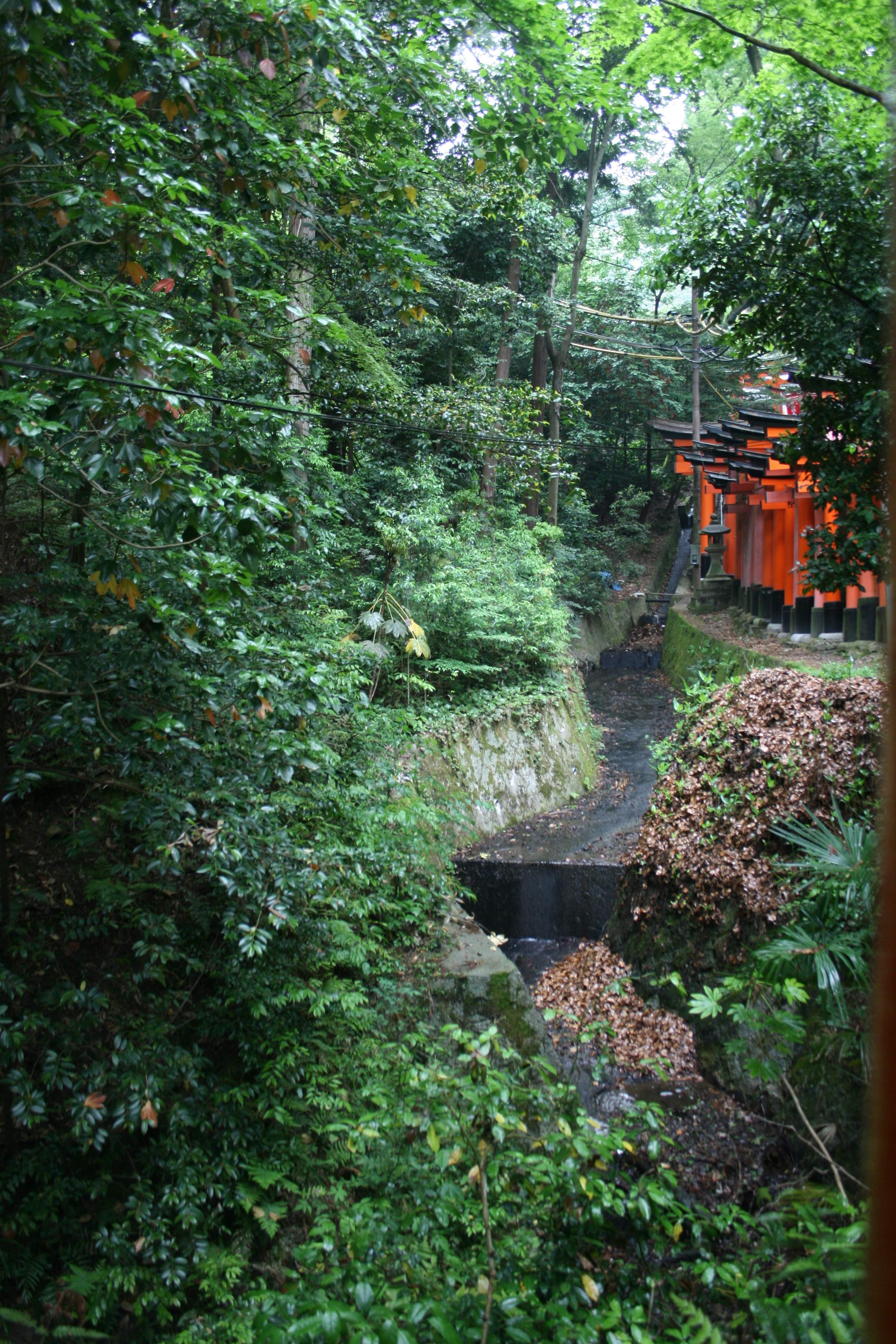
IMG_0958 smallAt a steeper part of the climb, a stream and a series of small waterfalls run next to the trail.

IMG_0965 smallAt the top of this rise I saw the first of many, many shine areas next to the path. Unlike the first one I had seen, this one was not all grey stone, but had many parts decorated with the same vermilion colors, torii gates, and fox statues wearing red yodarekake scarves.

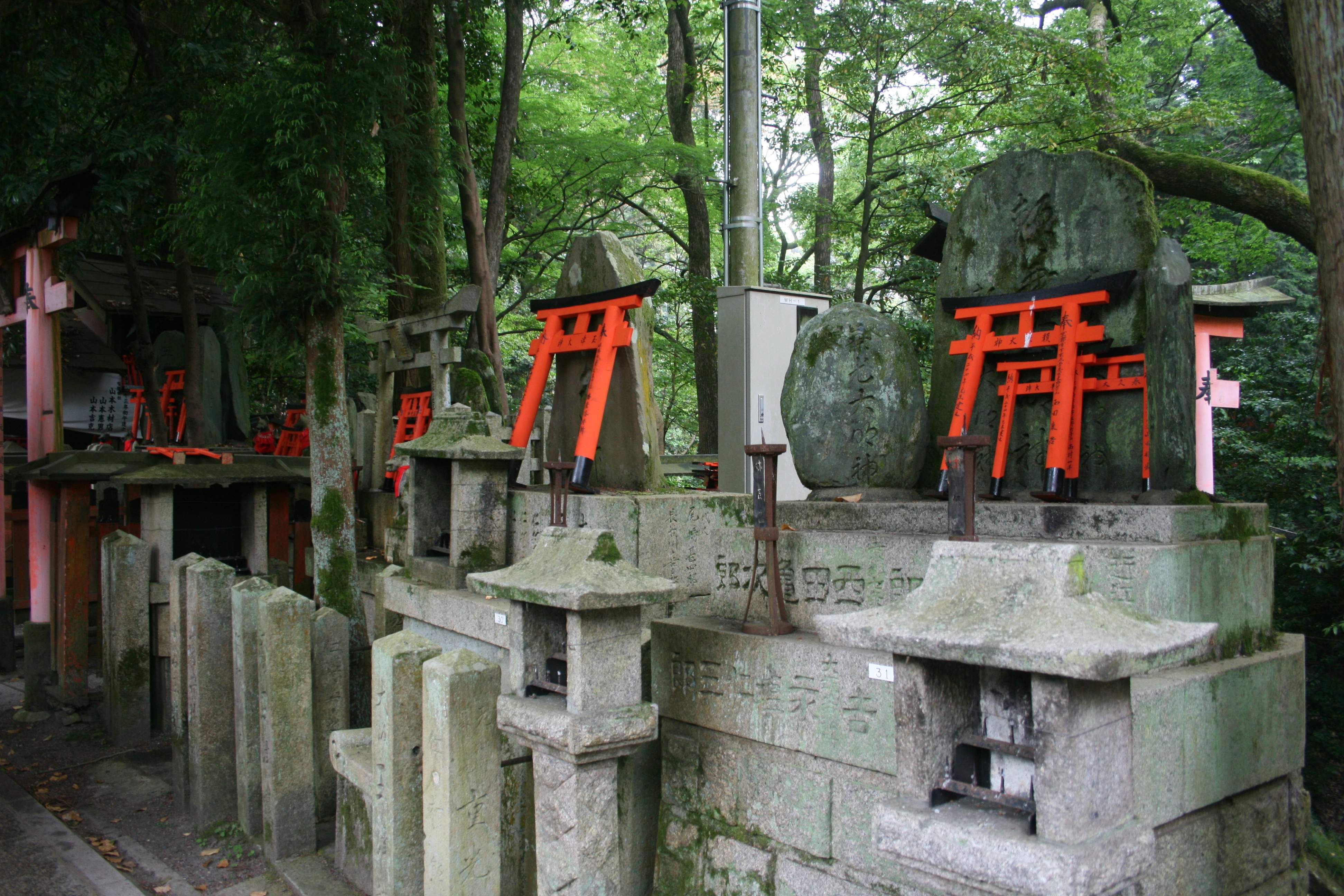
IMG_0980 smallMany small shrines are decorated with small, wooden, vermilion torii gates. They seemed to come in a whole range of sizes and you could buy them at all sorts of little shops around the area. I had figured they were souvenir items (and I was tempted to get one) but their presence all over the place on the small family shrines would seem to indicate that they’re not souvenirs but play some role in how the families keep their shrines decorated and up to date.

IMG_0983 smallDitto for the fox statues, and one might guess that having a separate torii gate right in front of your family shrine is one of the biggest status symbols around.


IMG_0966 smallOf course, having taken a picture looking up the hill at the stream, I had to take a picture looking back down the hill.

IMG_0978 smallOkay, a few things about this sign.

First, I didn’t see any monkeys, wild or not, but I did know that they lived in the area, sort of like how we have coyotes and racoons living in Los Angeles. My daughter, who had been living in Kyoto for several months on her college semester abroad, had seen them regularly. She had also warned me that they could be aggressive.

Secondly, it’s in English only, which pretty much guarantees to me that it’s intended solely for American (and some European) tourists.

Thirdly, making “Do Not Take Pictures” the first warning? Get real! The average American tourist (and I’m at the head of the line, here) when confronted with a wild monkey, will instantaneously whip out a camera and start taking pictures. Especially if you’ve warned them not to!

I get the rest of it, they’re aggressive, they can be mean and dangerous, so feeding them is a good way to get bitten. And by “bitten” I mean hauled off to the emergency room to see if they can save those fingers and let you off with just a few dozen stitches. It’s like the warning you get with bears or cougars in Los Angeles. They’re much more rare than the coyotes and raccoons, but who’s not going to take pictures first and ask later about whether or not an expert would think it was your smartest move?

And “pretend to throw” rocks at them if they approach? If I’m picking up rocks to begin with because I’ve been stupid enough to be flaunting an open Snickers bar and a Diet Coke and now it’s looking like a trailer for “Planet Of The Apes” around me, I’m not “pretending” to throw anything. I’m throwing the damn rocks!

What I remember being the biggest disappointment however was that this sign was at a food & drink concession stand up on the mountain that was closed, presumably because of the small crowds that day. Meanwhile, it was warm, muggy, and moist and I had been getting in a good workout. I really could have used a cold Diet Coke and a big Snickers bar!

2 Comments

Filed under Critters, Photography, Religion, Travel

Juicy Chunks O’ Wisdom For Friday, August 15th

‘Cause there’s family in town for a wedding this weekend, that’s why.

  • The “Panoramic Photography #1” post was the 500th for “We Love The Stars Too Fondly.”  Wow. Really, seriously. Wow.
  • Remember as a kid when you would see a VW Beetle and smack your sibling in the shoulder and yell, “Slugbug!” Now that we’re seeing Tesla’s all over the place, can we start a new tradition of shocking our travelling companions with a taser and yelling, “Taser Laser?”
  • The “Flash Fiction: Amusement” post earned the 1000th “Like” for WLTSTF. More wow.
  • Having house guests (last month it was kids, this month the Long Suffering Wife’s sister) means that you have to wear pants and close the door when you go to the bathroom. Ah, how easy it is to slip into that relaxed, living without restrictions lifestyle, and how soon we miss it when it’s gone.
  • Following the “SHAZBATT!!” post, two new followers of WLTSTF became #200 and #201.
  • In one of the more odd displays of household animal behavior seen here recently, Joey Chan today attacked, molested, and sexually assaulted the purse belonging to The Long Suffering Wife’s niece. Mind you, this is a cat who has not once that I remember in her entire life come out of hiding when there were non-household humans present. Today, with both The Long Suffering Wife’s sister and niece here, not only did Joey make an appearance, but when ape on that purse for absolutely no reason that we can determine. This may be one of the signs of the Apolocalypse.
  • Finally, over on the Twitter side (@momdude56), my list of followers is creeping up as well, now up to 56. It’s progress.
  • If the Westboro Baptist Church really wanted to make some money, they should put some points system or test on their website which lets you see your progress toward getting them to picket your funeral. Maybe some pointers on what you can do to expedite your way to the top of the list — like being a decent, loving, caring, tolerant human being instead of a flaming asshole. But I digress…
  • I’m very grateful for everyone’s support here. Your comments, “likes,” and participation are the gooey raspberry-flavored runner’s gelpacks that keep my writing fingers flying. Upward and onward!

Remember, “There are old pilots, and there are bold pilots, but there are no old, bold pilots.”

1 Comment

Filed under Cats, Family, Juicy Chunks, Religion, Sports, Writing

Kyoto (Part Five)

To Recap: In May, 2012 I went to Asia on the “Three-Countries-Three-Weeks-Three-Kids” tour. The first stop on this once-in-a-lifetime trip was Shanghai, followed by several days in Seoul. Now I was footloose and fancy-free (i.e., lost a lot) in Kyoto, Japan. I found one of the most beautiful and interesting places I’ve ever seen and I’m going to continue to bombard you with share dozens of pictures from there with you for the next few weeks.

Climbing up from the Fushimi Inari temples, I was enraptured by the vermilion torii gates lining the maze-like paths. Coming over a rise I came to the first place that I had found (there might have been others lower down the mountain on other routes) where there was a break in the vermilion gates and a side path to a small area of shrines.

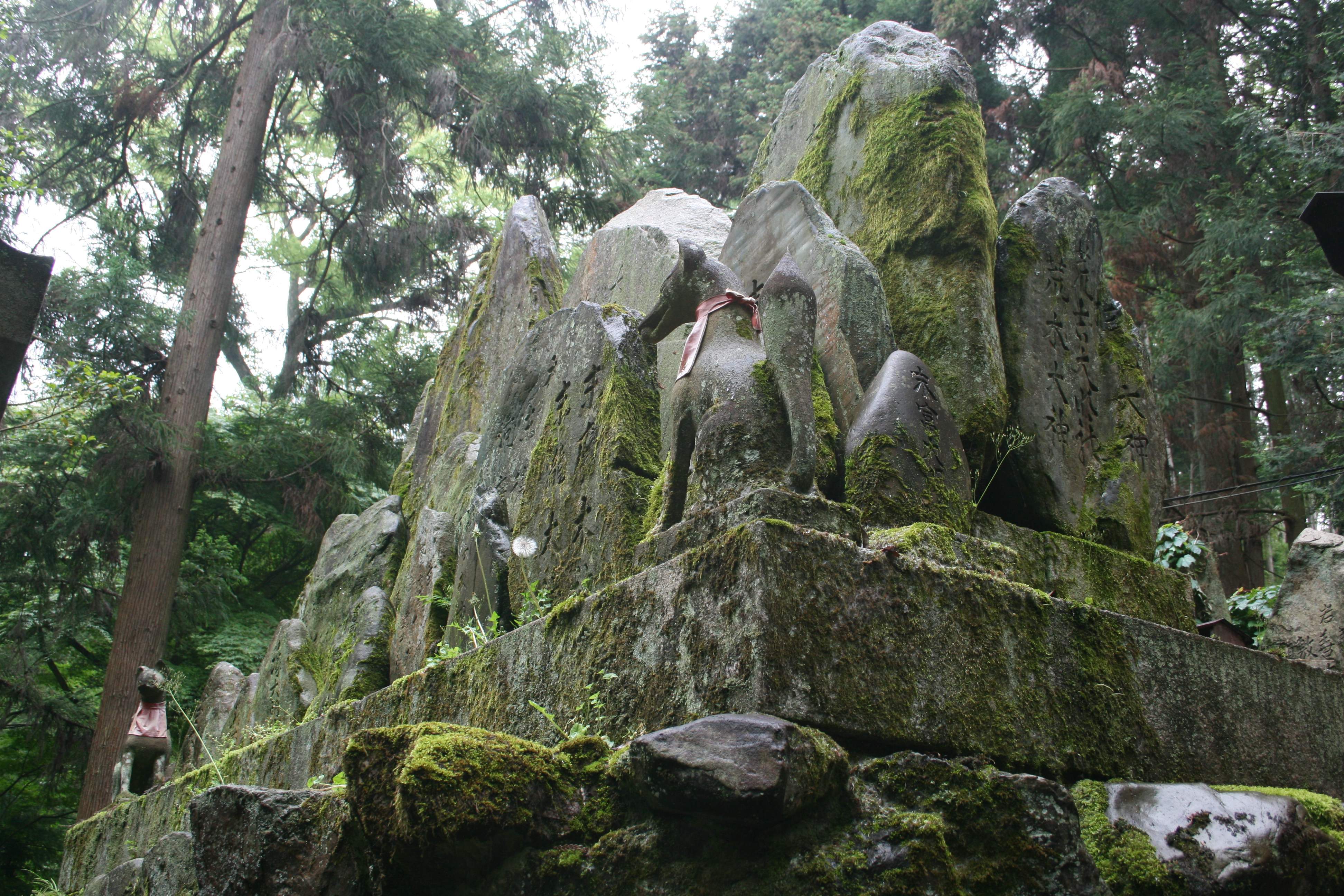
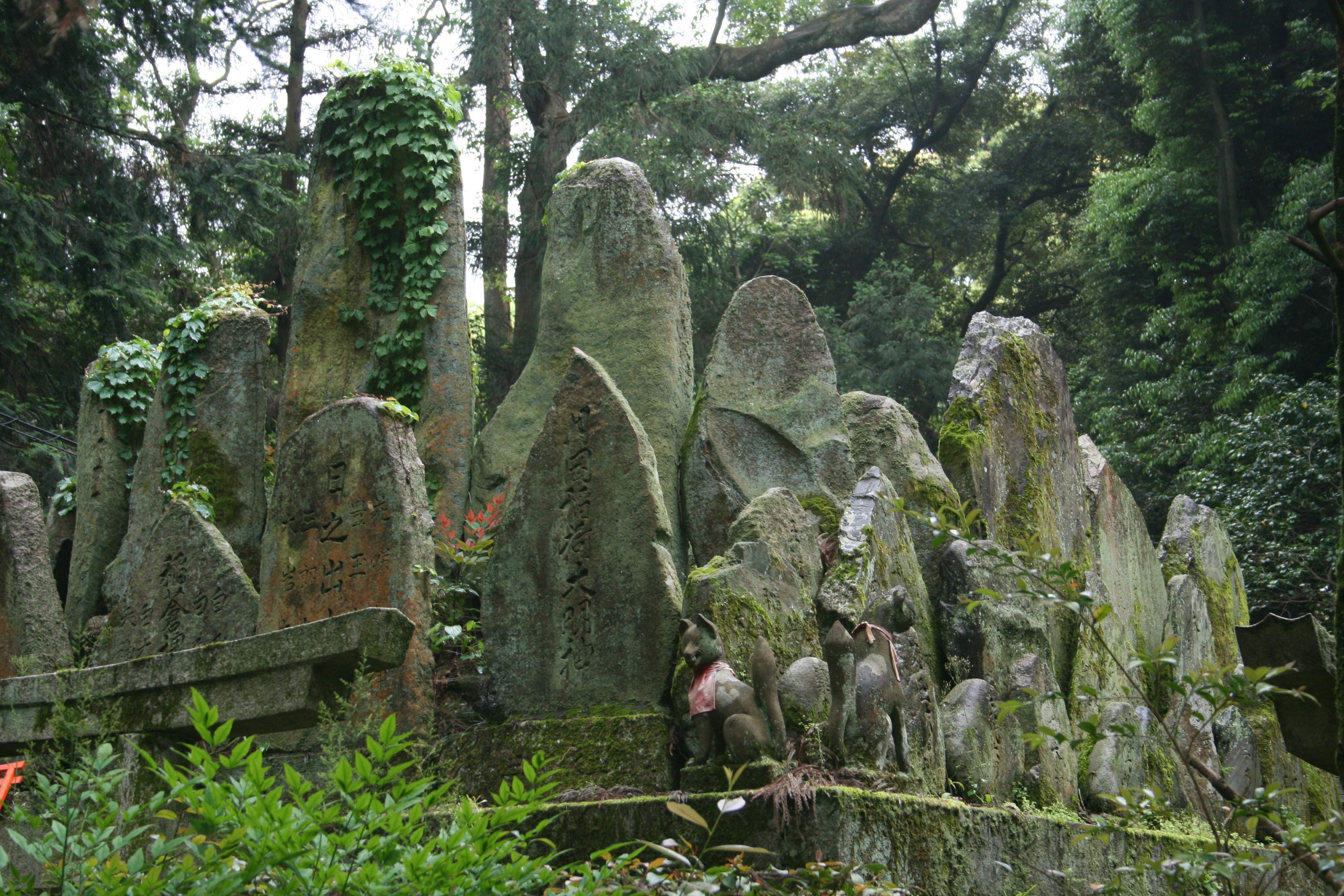
IMG_0897 smallHere the torii gates were still in evidence everwhere, but they were carved stone, not vermilion-painted wood.

IMG_0898 smallIt’s very lush and moist here, so everything’s covered in moss. Here you can also see two more fox statues wearing their (faded) vermilion yodarekake (votive bibs).

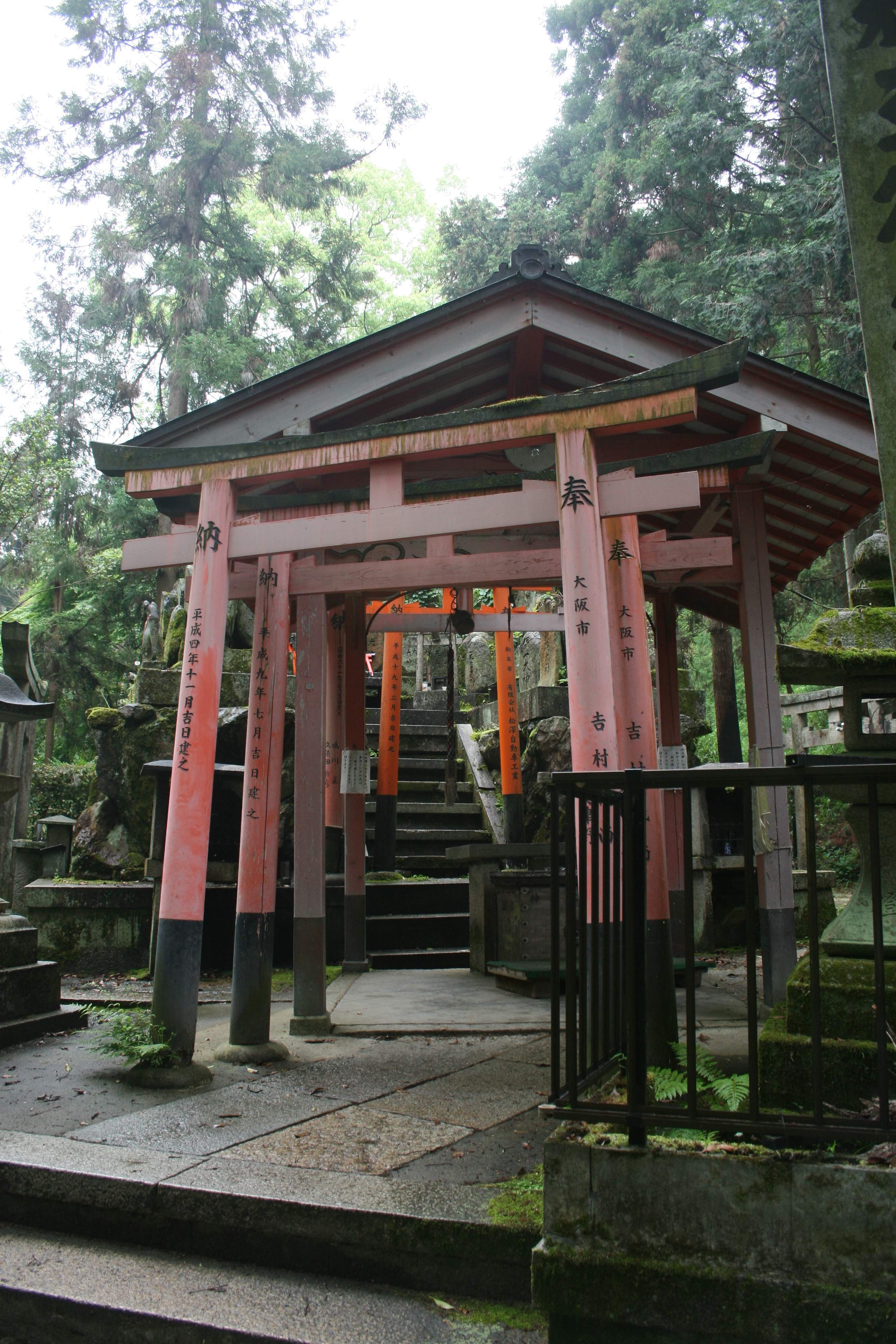
IMG_0900 smallThe path of vermilion torii gates is behind us here. You can also see new symbols in use, the white cloth or paper “lightning bolt” shapes hanging from the gate.

IMG_0901 smallThe “lightning bolt” symbols are clearly seen here. (I don’t know what they are or what they represent. If anyone knows, please let me know in the comments.) Also, it was interesting to see how these very weathered and ancient stones (headstones?) had been reset on very new marble bases.

My understanding is that these shrines are owned and maintained by families in the community, to honor their ancestors and families. They’re really in it for the long haul. I would love to know how old some of these shrines are. Conceivably some could be twice as old (or more!) as the gravestones I found at Rockingham Meeting House in Vermont.

IMG_0902 smallAltars. Offerings. Small braziers. (Is incense burned here?) The braided, red and white striped rope hanging down at the center of the altar. As someone raised Catholic, it’s all fascinating, both different and familiar simultaneously.

IMG_0905 smallLook at how old and weathered some of these stones are. They must be hundreds and hundreds of years old — and still maintained. It was humbling to be here.

IMG_0907 smallLooking back, through the lush forest, the path of vermilion torii gates that I came down really stands out.

IMG_0930 smallStretching back up the knoll the way I had come down…

IMG_0931 small…and the path leading onward out of this glade and further up the mountain.

We climb again.

Leave a comment

Filed under Photography, Religion, Travel

Kyoto (Part Four)

To Recap: In May, 2012 I went to Asia on the “Three-Countries-Three-Weeks-Three-Kids” tour. The first stop on this once-in-a-lifetime trip was Shanghai, followed by several days in Seoul. Now I was footloose and fancy-free (i.e., lost a lot) in Kyoto, Japan. I found one of the most beautiful and interesting places I’ve ever seen and I’m going to continue to bombard you with share dozens of pictures from there with you for the next few weeks.

Now we’re getting to the really good stuff. Remember, you can click on any photos to get larger versions.

IMG_0855 small

Leaving behind the Fushimi Inari temples at the base of the mountain, we start to climb the mountain. I didn’t ever find it to be a particularly strenuous or steep climb, nor is it miles and miles to the top. But there will be places where you’re huffing and puffing a bit, especially if you’re toting a backpack full of cameras. (Ahem…)

IMG_0859 small

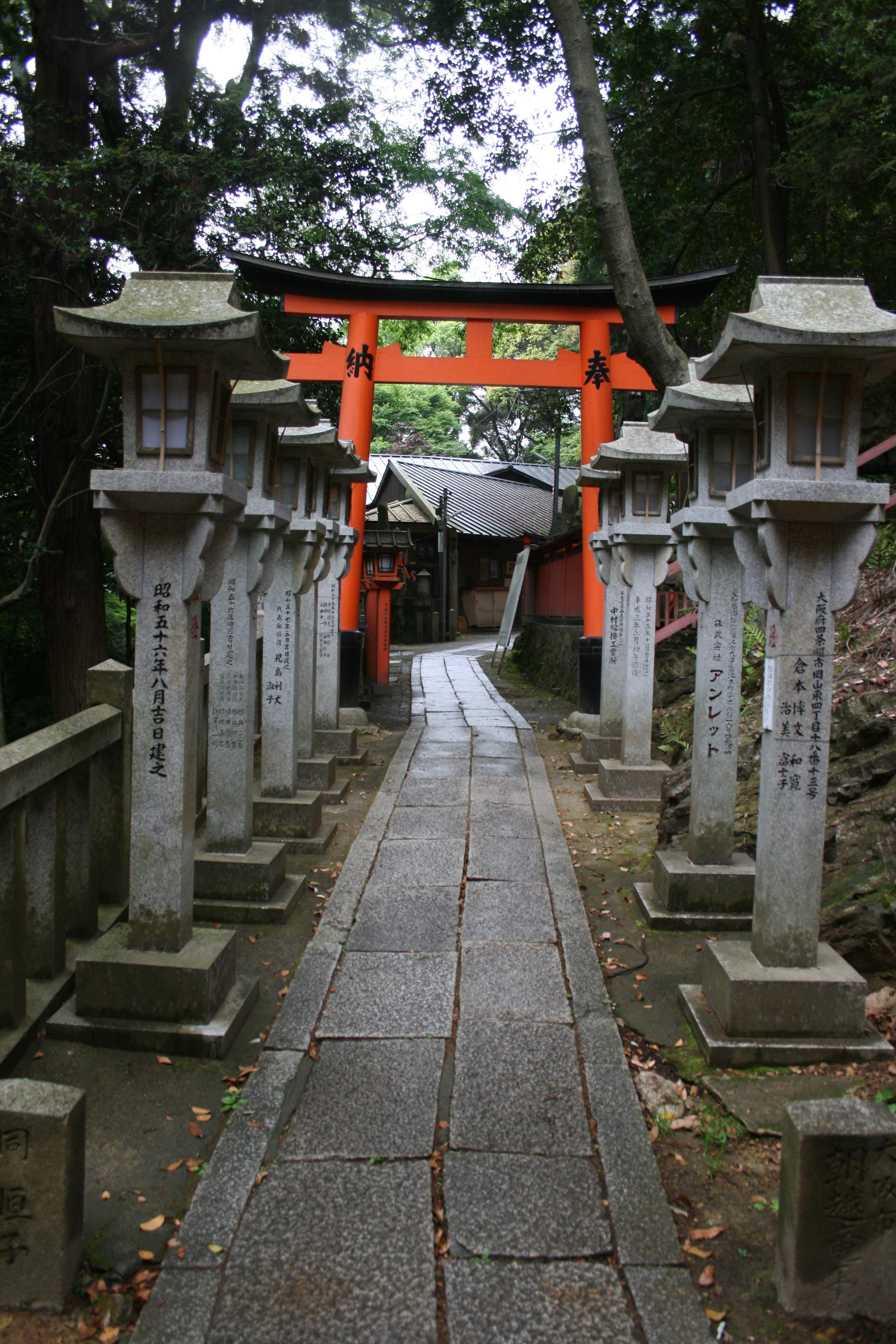
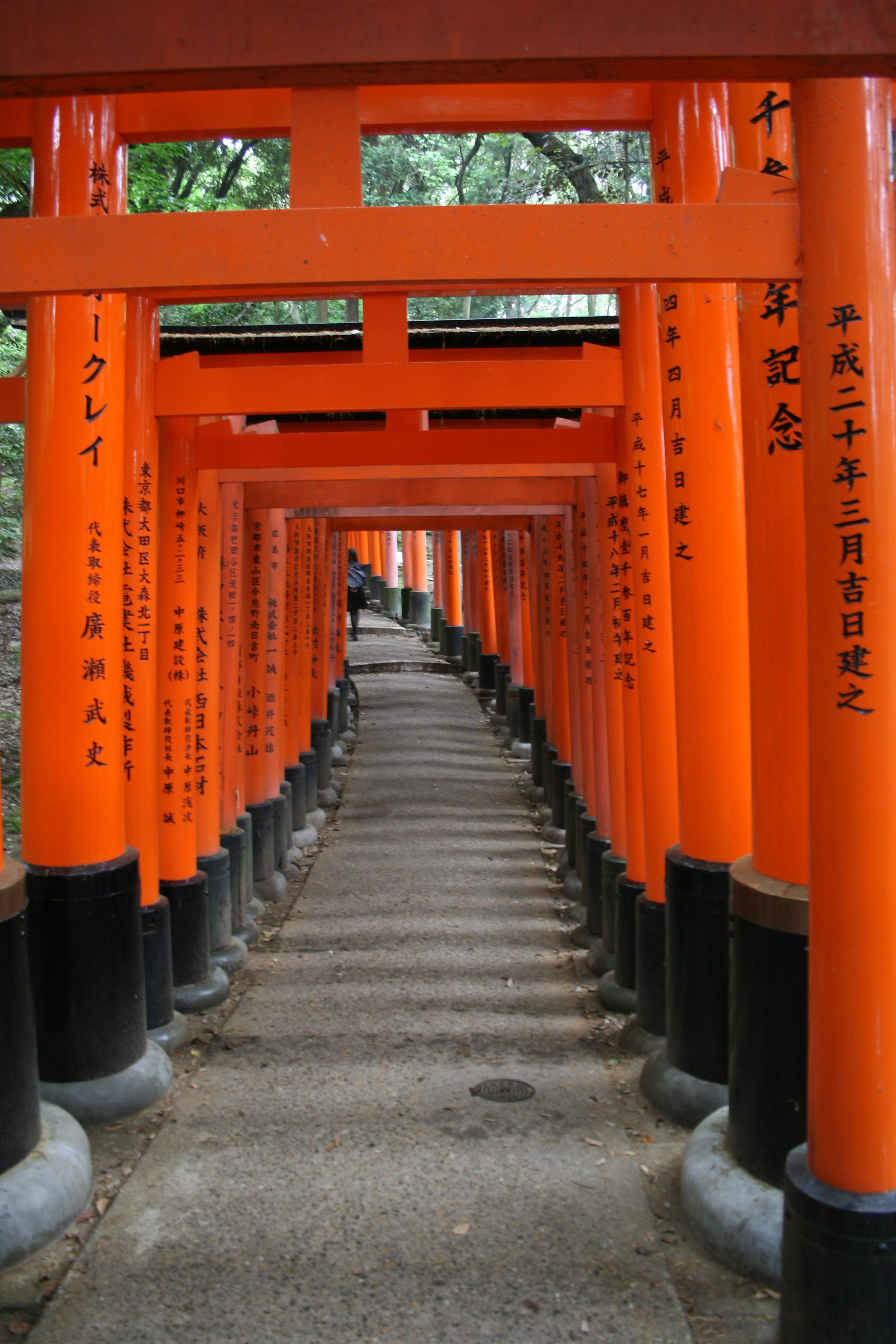
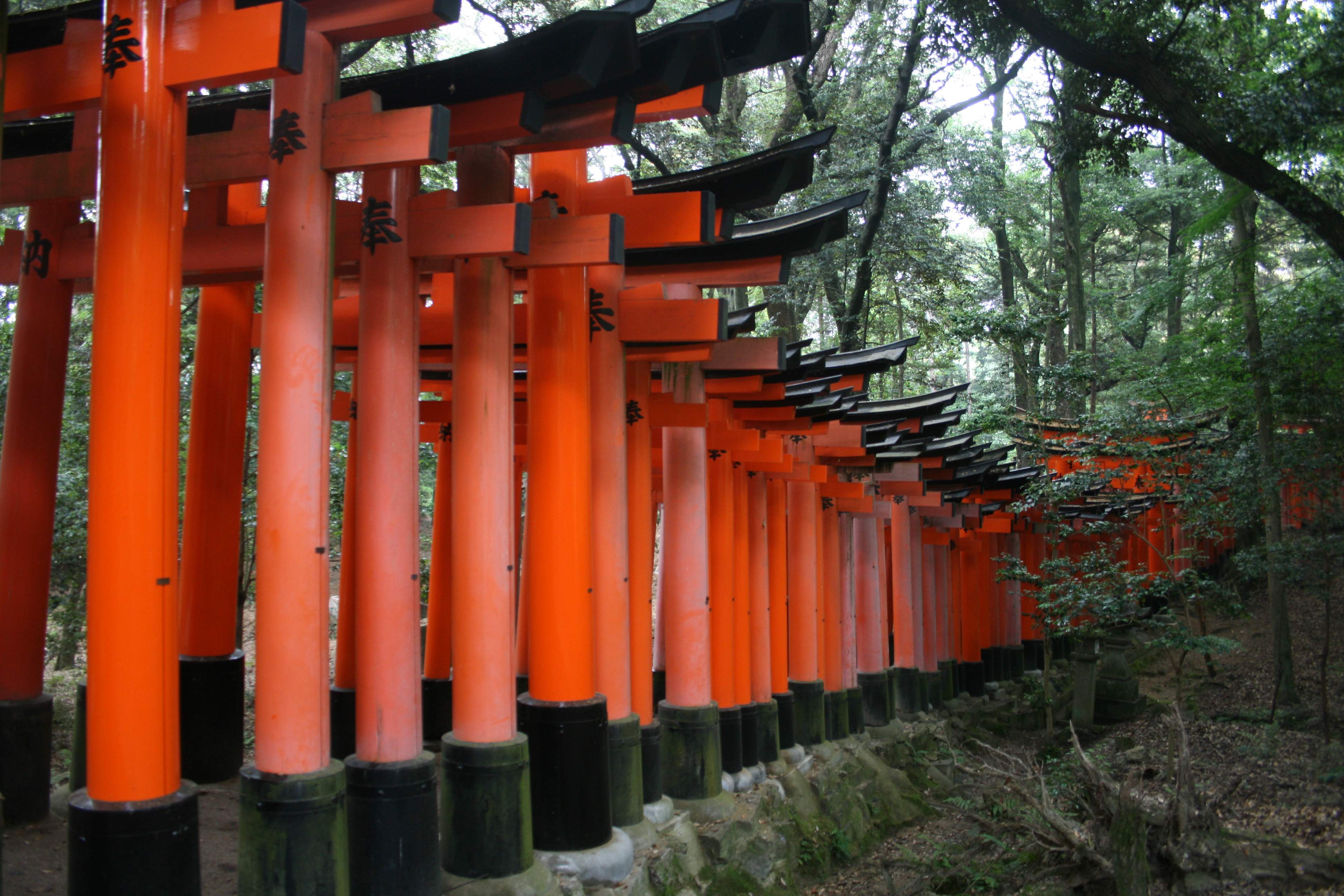
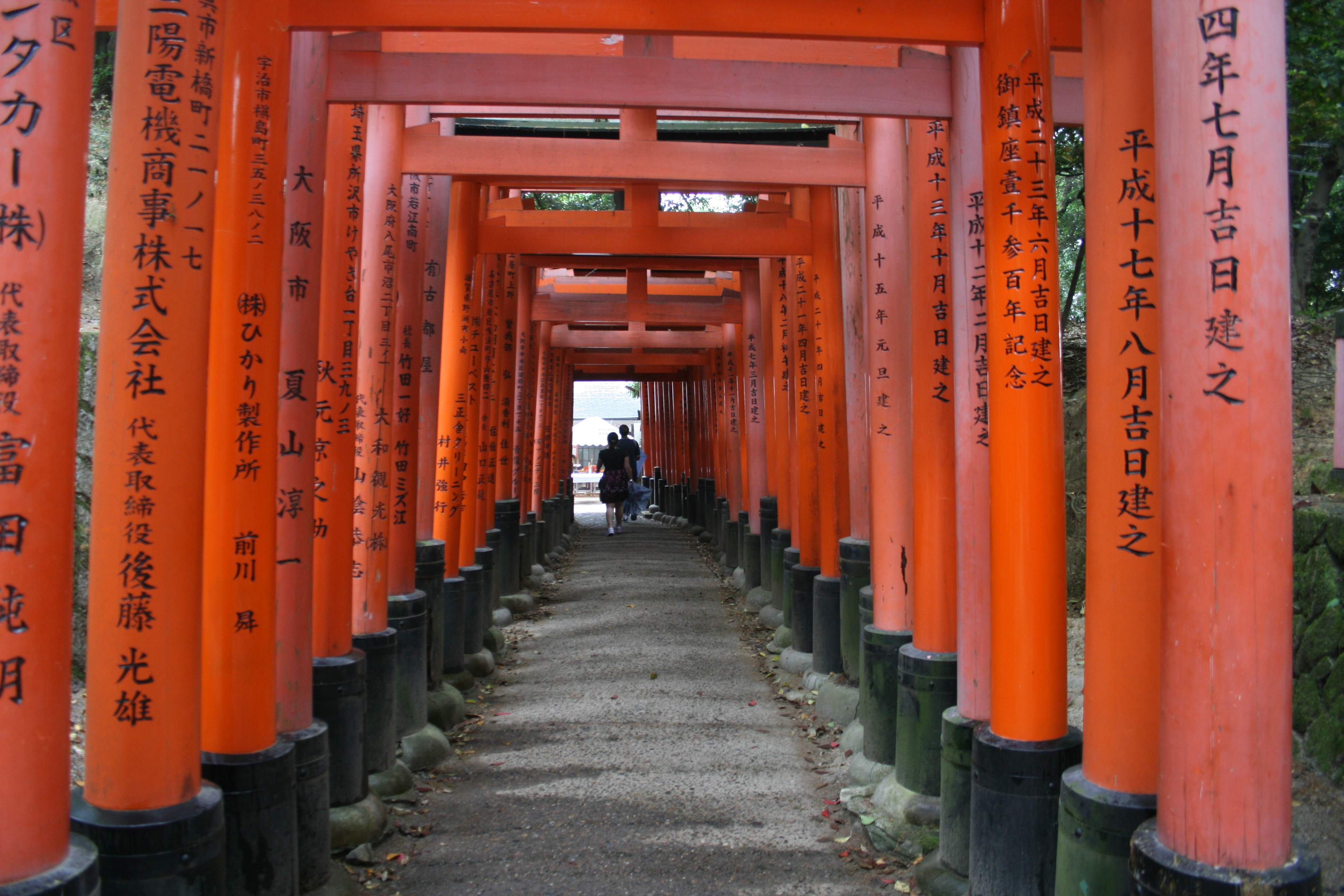
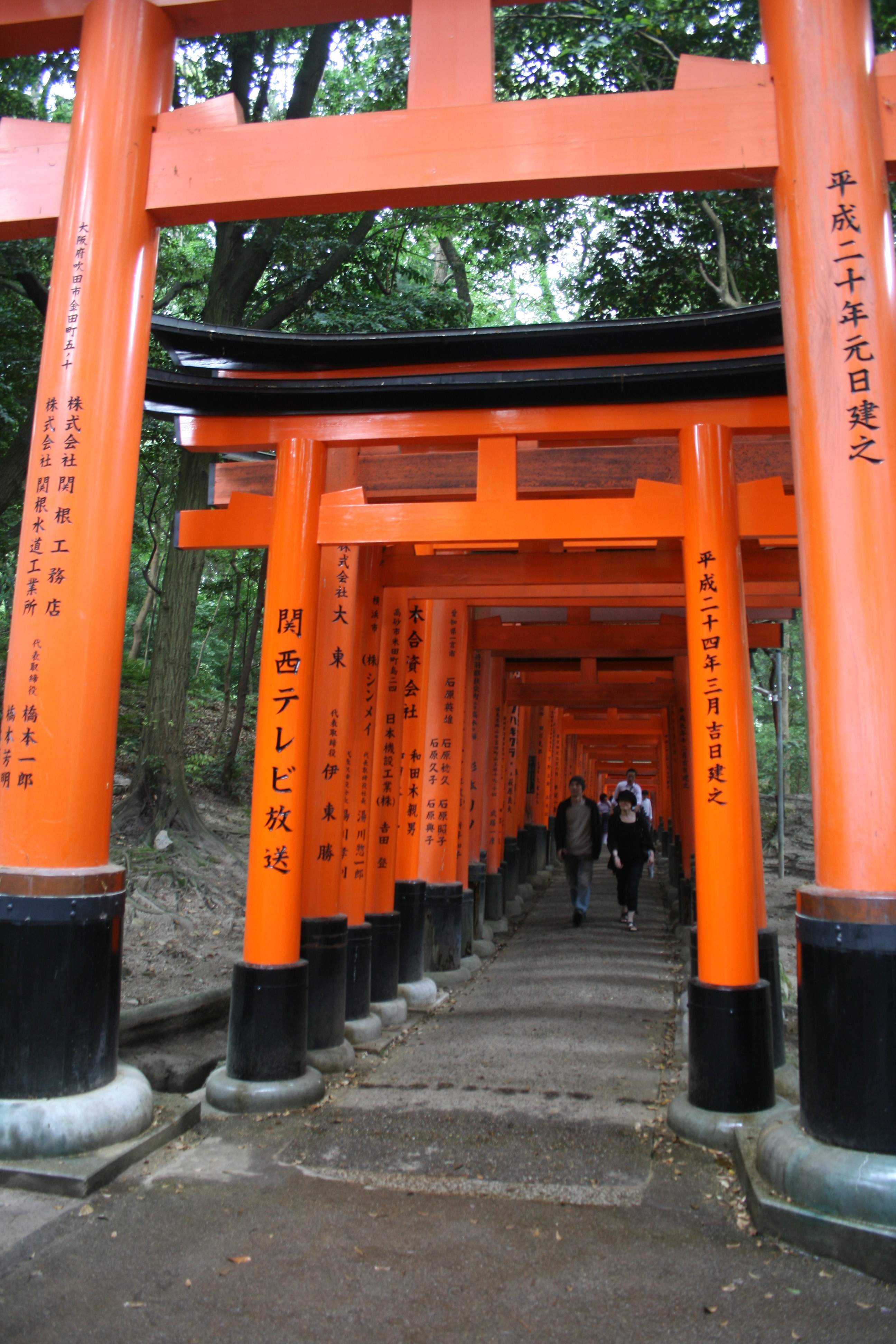
Here for the first time you can see the rows upon rows of vermilion torii gates that line the paths up the mountain.

IMG_0860 small

While they’re all initially painted the bright vermilion color that’s associated with Inari Okami, they fade in the weather and are repainted at different times, leaving an endless variety of colors from near-white, to pink, to red, to bright orange.

IMG_0864 small

The paths split and wind around the hill, only to re-split, re-connect, and split yet again. It’s not so much a maze as it is a chance to tour the mountain using dozens, if not hundreds, of different routes.

IMG_0865 small

Yet another junction, a chance for you to choose your path forward. (Very zen! Probably the wrong religion.) I didn’t see any signs or markers indicating which path was which, at least not in English, so if you’re going to be obsessive about going on every route or something, you may have a problem.

IMG_0887 small

There are many, many interesting perspectives. As you can see, many of the posts on the torii gates have Japanese inscriptions on them. I believe they’re prayers or the names of ancestors or sponsors, but I could be wrong.

IMG_0889 small

Looking back at the same torii gates, I noticed there aren’t any inscriptions on the other side. I’m sure there’s a reason or significance, but I don’t know what it is.

IMG_0890 small

Then I found a side path that looked quite different, heading off into a glade. The torii gate here is not painted (but is still beautiful) and at least at first there’s just the one large on at the entrance.

IMG_0893 small

Inside the shrine in the glade, there are a few vermilion gates. For the first time I saw small family shrines. I was told that the shrines are built and maintained by families for their ancestors, but it’s not clear if they actually contain ashes as a Western graveyard would, or if the shrines are just ceremonial memorial sites.

Next time we’ll look more at the small family shrines here (they seem to be different in many ways from the shrines higher up the mountain) and get some fantastic views of the torii gates from outside.

Leave a comment

Filed under Photography, Religion, Travel

Kyoto (Part Three)

To Recap: In May, 2012 I went to Asia on the “Three-Countries-Three-Weeks-Three-Kids” tour. The first stop on this once-in-a-lifetime trip was Shanghai, followed by several days in Seoul. Now I was footloose and fancy-free (i.e., lost a lot) in Kyoto, Japan. I found one of the most beautiful and interesting places I’ve ever seen and I’m going to bombard you with share dozens of pictures with you for the next few weeks.

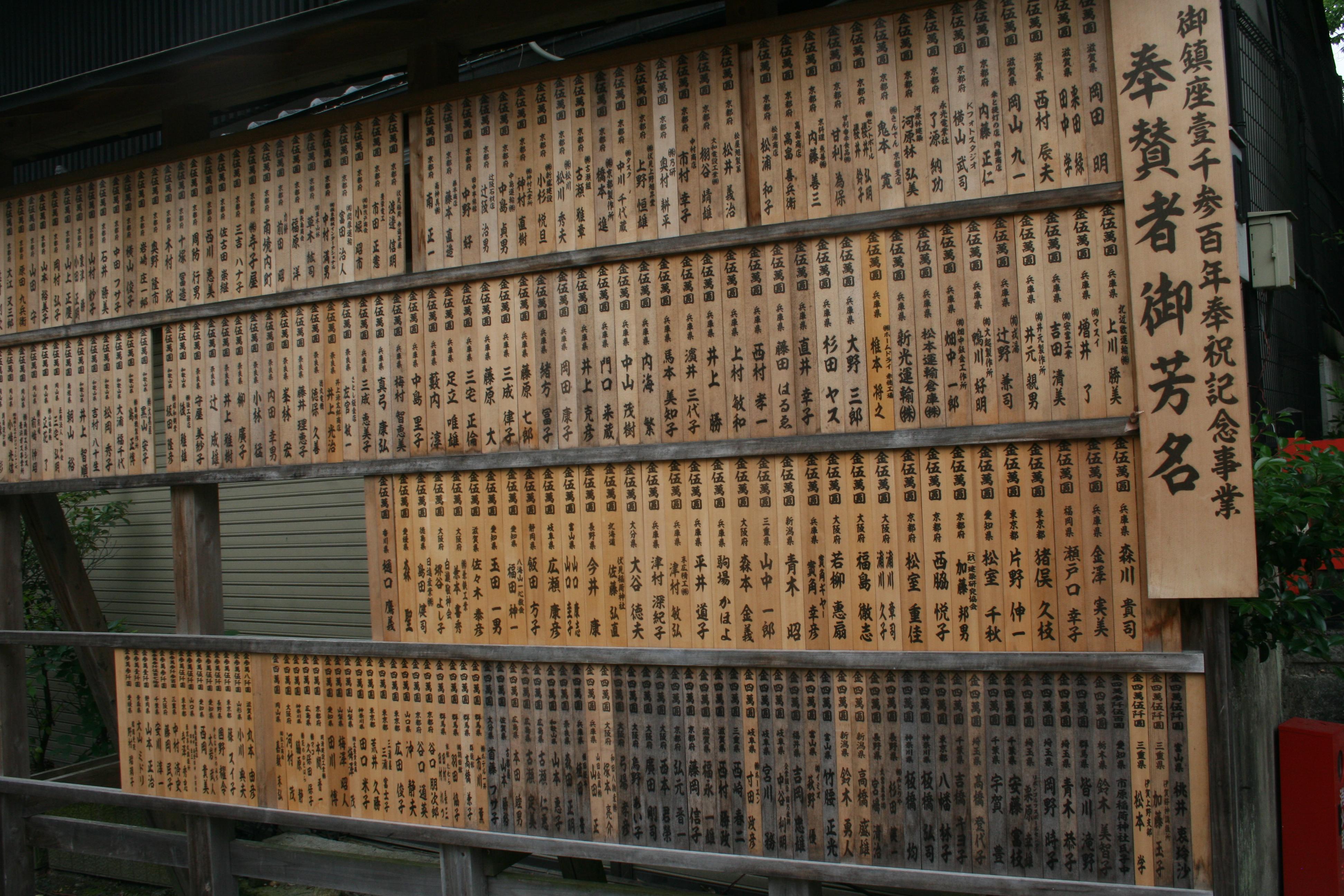
IMG_0815 smallJust outside of the side entrance of Fushimi Inari-taisha where I came in was this board, which appears to be a way for posting prayers of some kind.

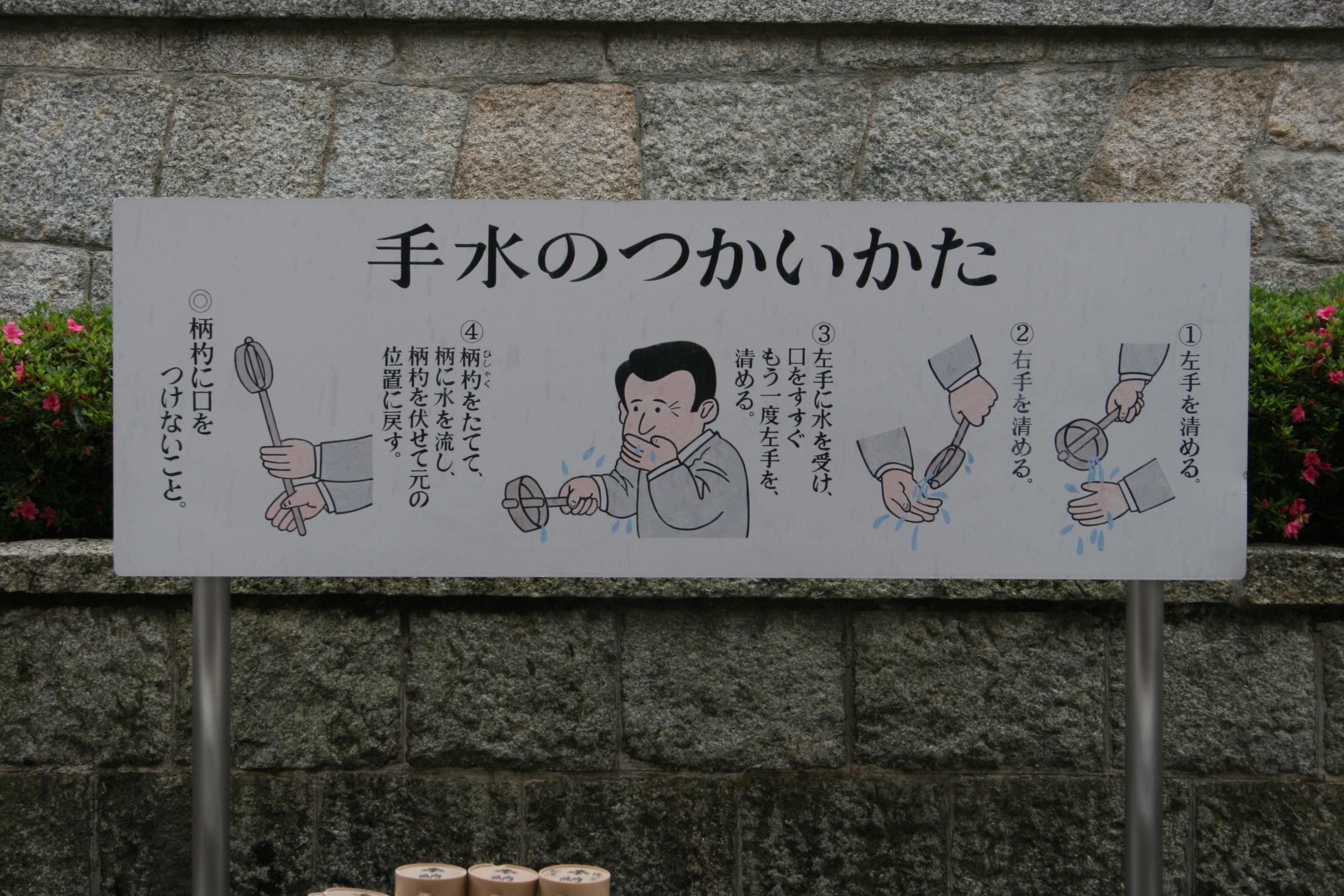
IMG_0832 smallInside the gate, I found this, a fountain with bamboo ladles. I also saw them at other places throughout Fushimi Inari, but this was the largest, and the only one with instructions.

IMG_0833 smallThe instructions, however, didn’t do me much good. Even if you’re going by the pictures, which I was, knowing 0.000% of Japanese kanji, the pictures weren’t obvious. Were they supposed to be read left to right (as most Western cultures do) or right to left (as Japanese does). If I had to guess I would have said the steps were to pick up a ladle; either wash your face, drink some water, or whatever you do, don’t do either of those things; wash your right hand; and wash your left hand. The second image is the one that I had considerable ambiguity about.

While not a religious person myself, I am quite aware of the importance of religion in the lives of many others. I wouldn’t ever knowingly mock or belittle someone else’s religion or their beliefs. (Well, okay, there is Scientology, but I really don’t consider it to be a religion. Sorry.) I also try to be aware when travelling, there may be religious practices or rituals that are open to causing a misunderstanding or a problem, either because I’m not supposed to participate or because I am. It’s a conundrum.

In this case, I couldn’t tell if this was like crossing yourself with holy water before entering a Catholic church (and I should do it) or if it was the equivalent of a Catholic sacrament and therefore something for only the devout to do. Since the instructions were ambiguous, I passed. Perhaps someone who knows can clarify in the comments so I’m better informed for the next visit.

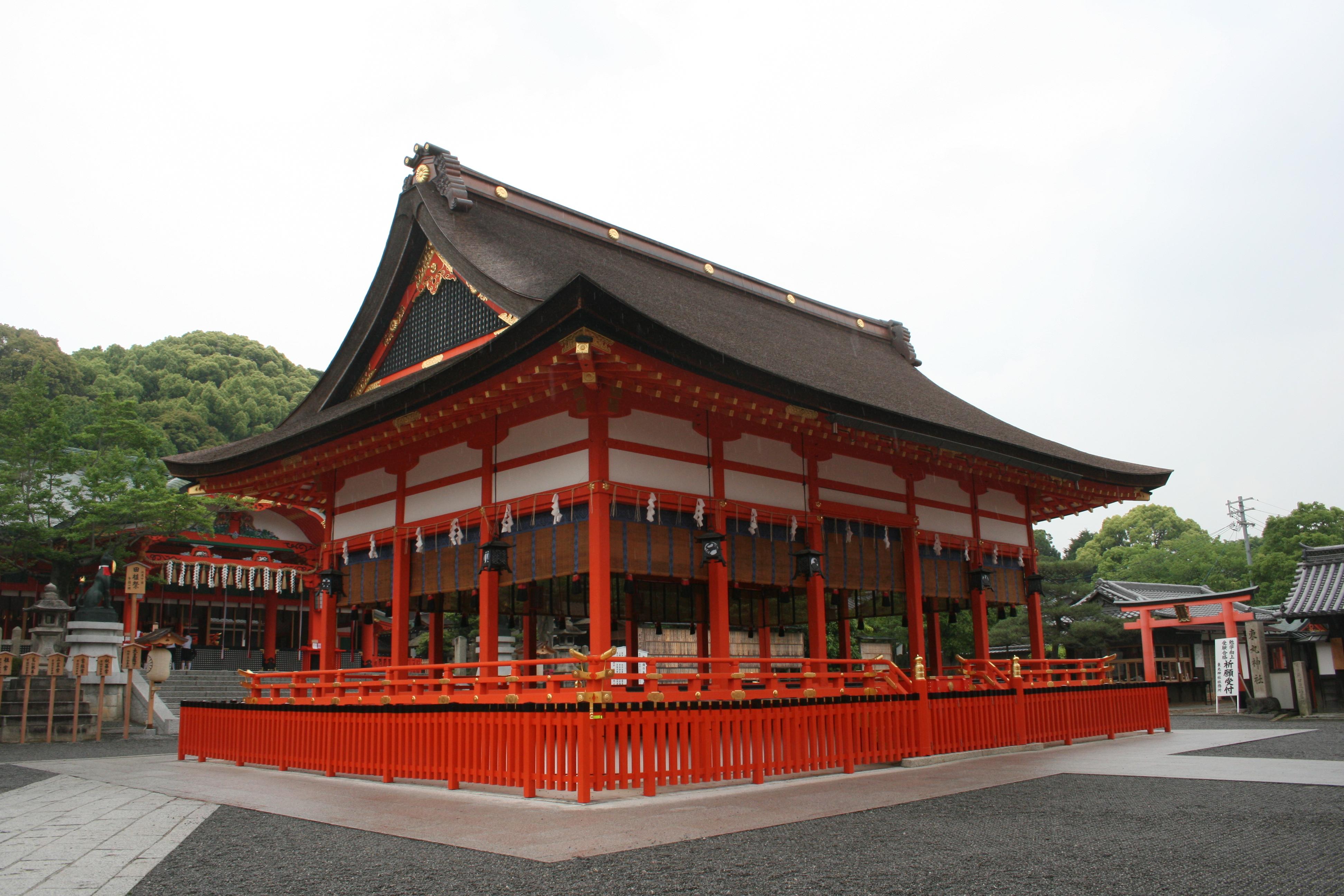
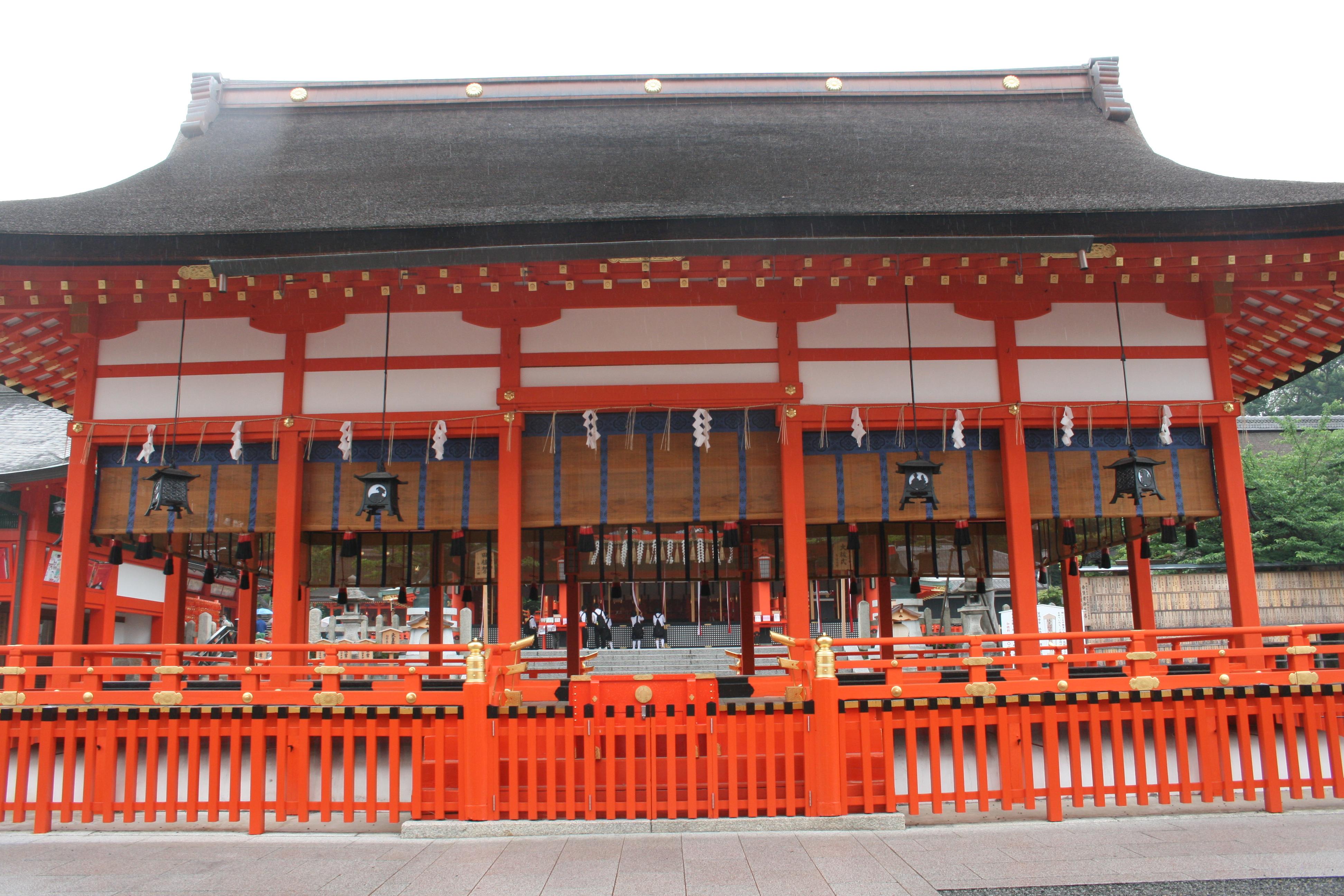
IMG_0834 smallAt the base of the mountain there are a couple of large temples and several smaller temples. Unlike the buildings in Seoul at the Imperial Palace that I toured, which were living quarters and government buildings, all of the buildings here are temples. There are similarities in the designs, but also significant differences.

IMG_0836 smallOne very noticeable difference to me was the paint schemes used. The ceilings and areas underneath the awnings in Korea were intricately carved with a whole rainbow of bright colors and shades. Here the carvings and decorations typically were simpler and more symmetrical, all painted in patterns using the same bright orange-red color as much of the rest of the temple buildings.

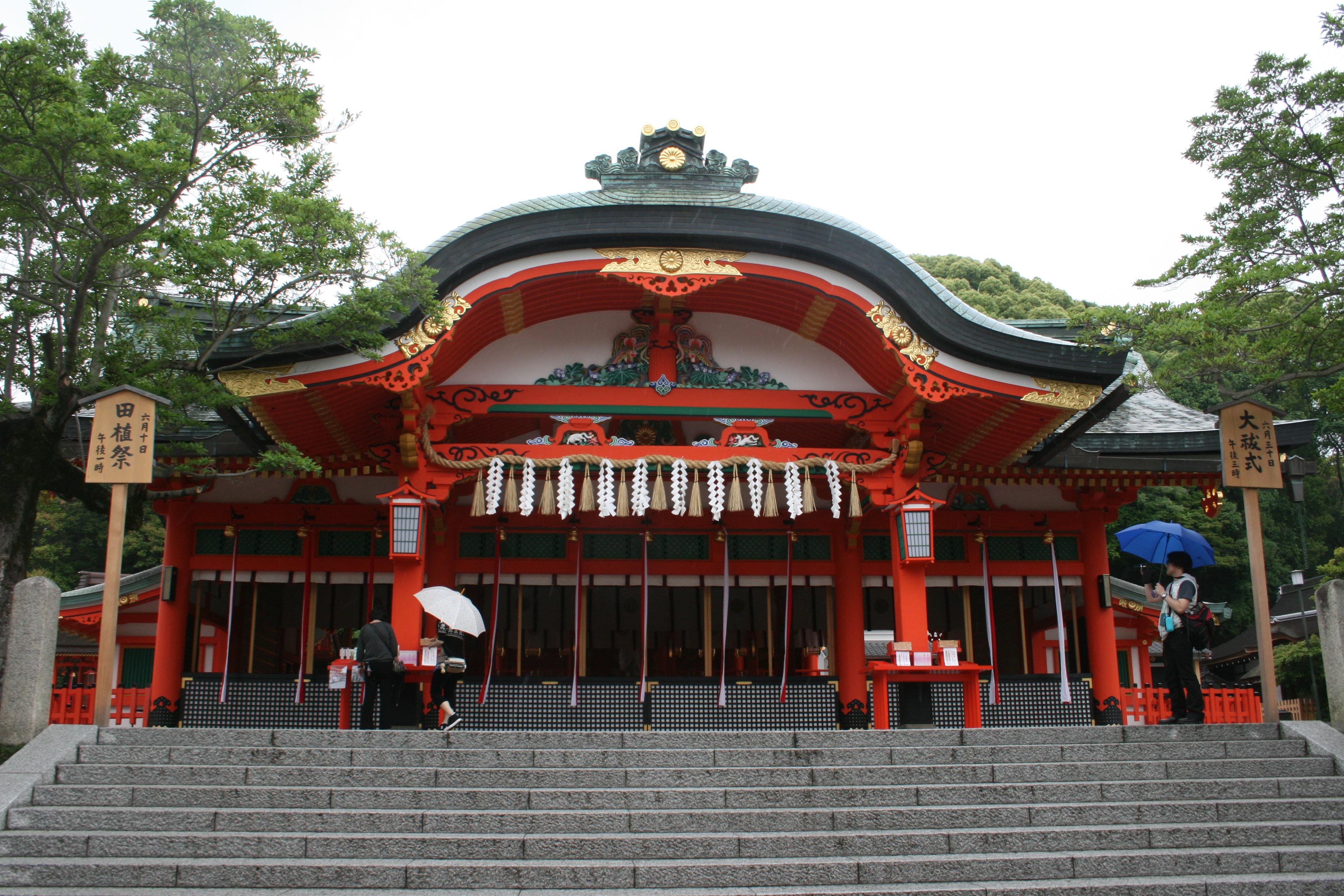
IMG_0838 smallThis is the shrine’s haiden, a Shinto oratory. In the Shinto religious architecture, the haiden is where the kami (sacred Shinto spirits) are worshiped and ceremonies are held.

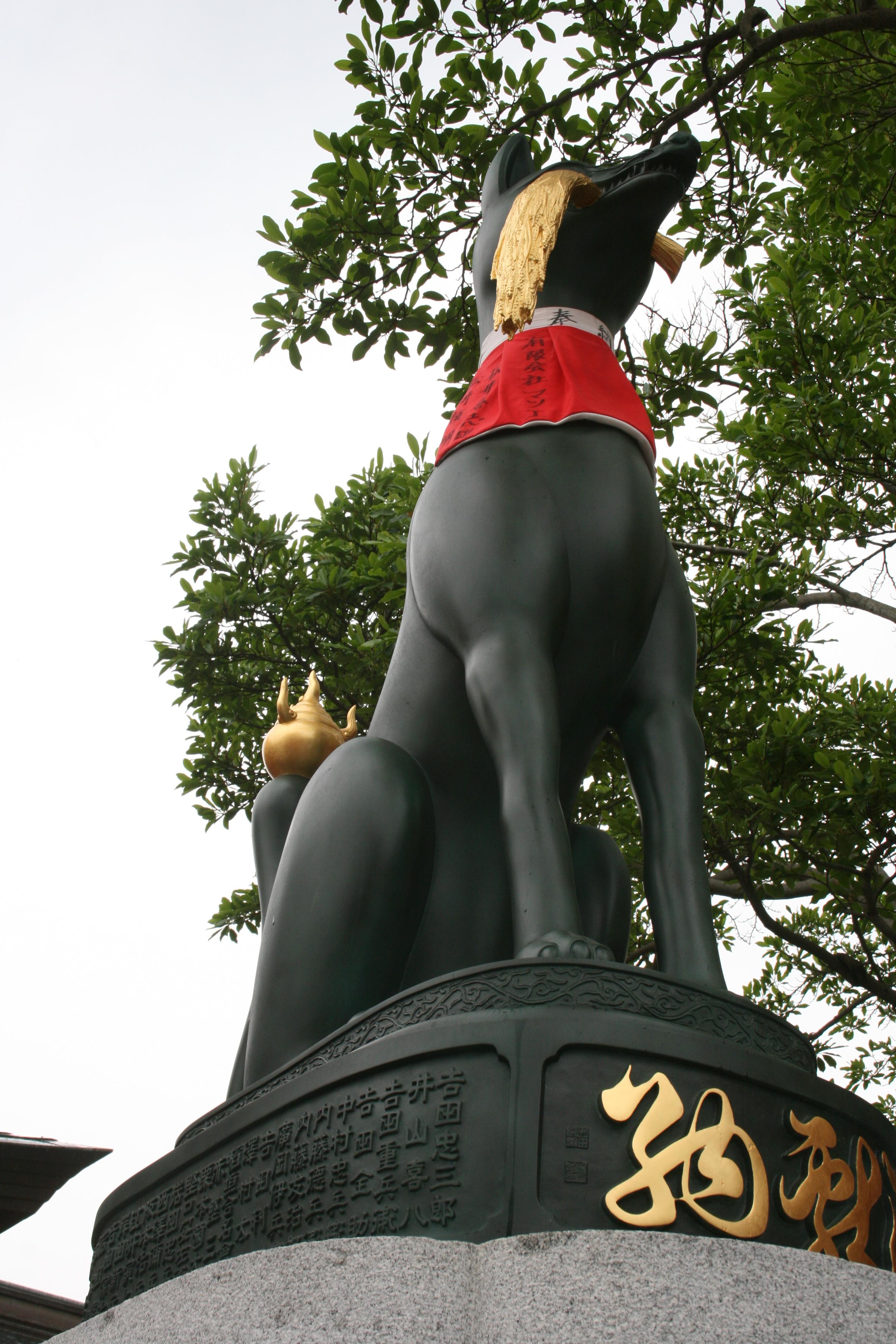
IMG_0840 smallThis is one of thousands of fox statues to be found throughout the site. The fox is a common depiction of the kami Inari Okami, with Fushimi Inari being the primary temple dedicated to Inari. The fox statues usually come in pairs to represent the both/either male and/or female nature of Inari. Since Inari is the symbol of fertility, agriculture, rice, and saki, the foxes are often shown holding wheat in their mouth. The foxes are also generally shown wearing red yodarekake (votive bibs or neck scarves), although I never learned the symbolism or meaning to them.

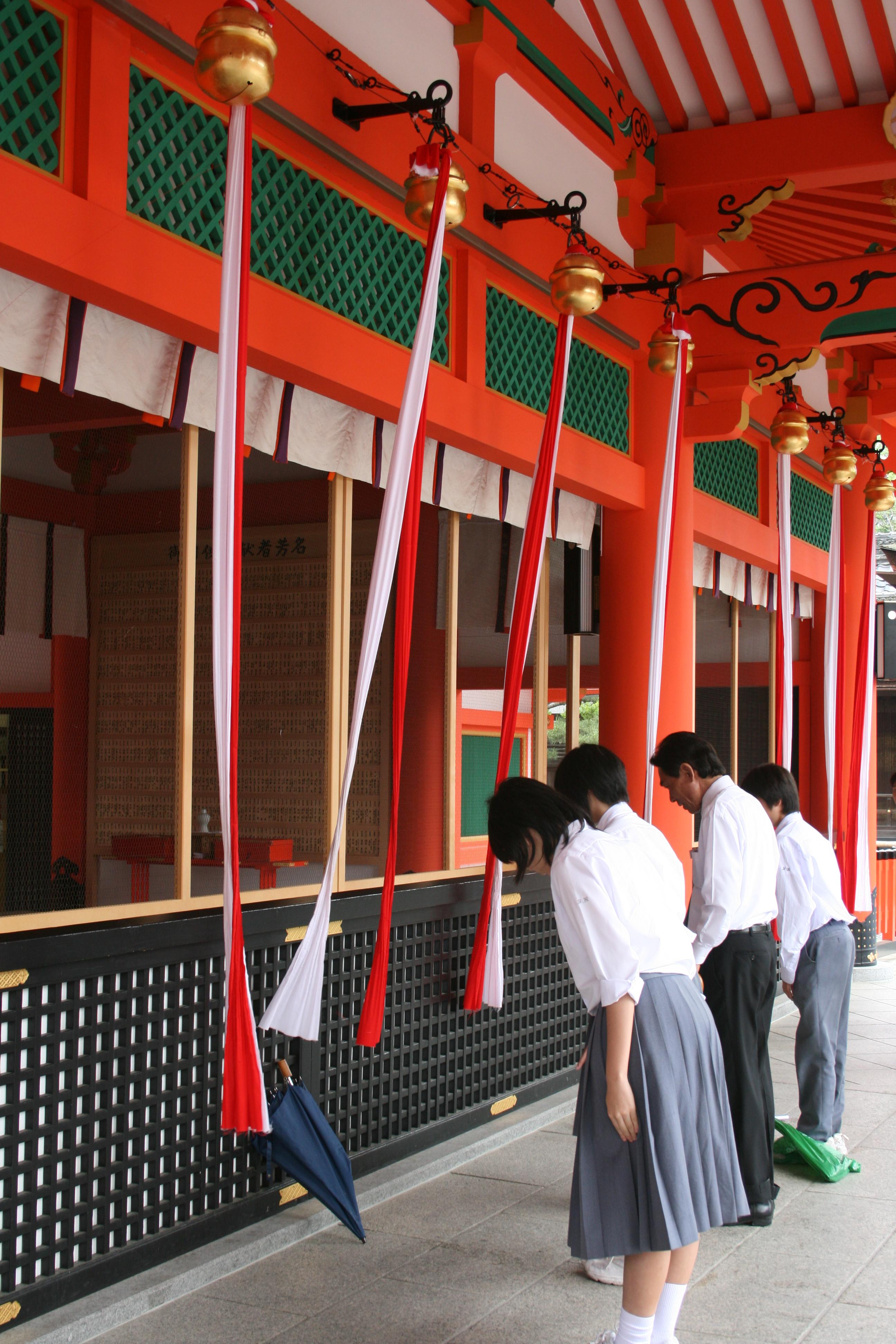
IMG_0845 smallInside the haiden there were candles and lanterns, as well as what appeared to me to be tables or altars of various kinds holding things I didn’t recognize. A priest or priestess (facing away from me, so I couldn’t tell which) was kneeling at one of the largest altars, dressed all in white robes, and reading (prayers, I assume) from a scroll or parchment. As the prayers were read, worshipers would come and go, standing outside, and occasionally pulling on these red and white ribbons to ring the bells above them.

Again, while not a participant, I’m still intrigued by the various ceremonies, rituals, and most of all, by the beautiful architecture. Cathedrals in Europe or haiden in Asia, it’s all interesting.

Now that we’ve seen the temples at the main shrine at the base of the mountain, it’s time to start climbing.

Leave a comment

Filed under Photography, Religion, Travel