Category Archives: Writing

Well Played, Tricksters, Well Played

I’m not talking about Loki from the “Thor” movies, I’m talking about Loki, the Trickster archetype in Norse mythology, with an assist from the Coyote from Native American culture. Tonight they might have been getting an assist from Murphy.

I’ve said before that the day I go without posting here, it won’t be because I didn’t have anything to say, or even that I was on a cruise or a flight to Australia or something. It would be because “something came up” and I just forgot.

After being up until 1:00 AM last night writing (a good thing!), little sleep, a busy day at the hanger, an interminable drive home (three of four lanes blocked with no viable alternate routes), and a busy evening filling out job applications (including one in particular which sounds really interesting and I would love to have a shot at), I finished my chores and was this close to hitting the sack. Of course I had posted something, I had been on WordPress for the last hour!

Wait…

I was on WordPress looking up articles and putting links to a few choice posts into my cover letter for that really interesting job. They want to see some examples of my writing, and while many days (like today) I sort of blather on and attempt to be sporadically witty, some of the stuff I’ve written (such as the simple astrophotography series, in this case) I think aren’t half bad. So there was lots of digging and linking and searching, and now I’m about-to-drop tired and I’m done with everything for the day. Right?

Misdirection. Camouflage. Hiding the obvious in plain sight. The old three shell monty performed with the to-do list. With this, the demigods of chaos and made their play.

Not tonight, guys. Tonight I can bitch about your mythical presence for 314 words and I win.

At least for tonight.

Leave a comment

Filed under Astronomy, Job Hunt, Writing

Word Herding, Number Wrangling, And Opening Day

Today has been a good day, with many fears faced and hurdles attacked. As expected, the fears and hurdles are ahead on points, but the day isn’t done yet and I’m still swinging.

Many numbers both small and large have been herded into order so that my income taxes can be prepared. Given the last year’s employment (or lack thereof) situation, I’m not looking forward to getting any good news when all is said and done in the next two weeks. At this point, if the news is bad, at least that will mean that the news won’t be really, really bad.

But it’s necessary at times to realize that there aren’t any good alternatives, or at least none that you’re going to like. Even then it’s possible and generally necessary to distinguish between the bad and the catastrophic, choosing, and working to live with the bad and move on.

In better news, I’ve also herded many words today, something that’s also been put off for far too many days and weeks. There are always plenty of excuses to not get it done, when what is needed is a single reason to get it done anyway.

Today, I’m at 2,308 words on my way to 3,000, so it has been a good day.

More importantly, I was reading over the Chapter Six I wrote weeks ago, in order to get my head back into the story for Chapter Seven. And I really liked what I had written. It was making me laugh reading it and I was almost having trouble believing that it had come from my brain. I really like the characters, I really like the wacky, madcap, slapstick story I’ve got going.

I’m still a very green novice, groping my way through this process, but that feels like it’s a good sign.

Through it all today, it’s “Baseball New Year’s Day,” opening day for most teams. (We won’t count those two games last week in Australia or last night’s gala opening game in San Diego.) Even if your team didn’t win today, there are still 161 games left. If your team won today — don’t get cocky, kid.

As Crash Davis said in “Bull Durham” (truly one of the finest movies ever made):

“Some days you win. Some days you lose. Some days…it rains.”

That’s still some really deep stuff there.

Leave a comment

Filed under Job Hunt, LA Angels, Paul, Writing

Flash Fiction: Ten Hands

A new and interesting assignment in this week’s Flash Fiction Challenge! The usual 1,000 words, any genre — but break it up into ten chapters. Ooooh, a challenge, sounds fun!

As always, comments and constructive criticisms are appreciated.

TEN HANDS

ONE

It had grown strong and straight on the northern slope of Burke Mountain since before the town in the valley below had been built. The arborist caressed the rough bark of the trunk, trying to touch the heart of the ancient sugar maple.

This was the one. It felt perfect. He marked the trunk with spray paint before turning to hike back down the mountain.

TWO

As the billets came out of the mill, all a uniform square cross section and length, they were inspected carefully by the foreman. He watched intently as they trundled past on the conveyor belt, examining the grain, searching for the perfectly cut piece from the center of the tree’s heart.

A dozen he pulled out for closer inspection. One at a time he tested their balance, the rough wood cool to the touch. While looking for knots or imperfections, one of the billets stung him with a sharp sliver into his palm. That was good. He liked the feisty ones. This one would do well.

THREE

The kiln operator had carefully stacked the prime billets on the drying racks, leaving just enough space between them to allow air to circulate. He ran his hands over them quickly to remove any sawdust or debris that might ignite.

When he was ready, he pulled open the kiln door. The air inside carried out the slightest scent of wood smoke. With help from two assistants, he rolled out the finished rack of dry billets from the previous firing. Once the kiln was empty, they wrestled the new rack of billets into place and securely dogged the door closed. A few keystrokes started the slow, computer controlled cycle of heating and drying.

FOUR

The lathe operator used a laser jig to mark the precise center of the grain at each end of the billet before mounting it gently between the live center and the dead center. As she leaned in to double check the alignment, she could smell the so familiar, dry, wooden scent of the piece.

The flip of a switch spun the lathe up to speed. She picked up a one-inch gouge and slowly started to push it into the whirling wooden dervish. The room filled with a loud clatter of the rough edges being reduced to sawdust.

FIVE

The master craftsman mounted the rough-cut wooden blank into his lathe, guided by the existing markings and holes in the still-square end pieces. After consulting a specification sheet for this order, he meticulously measured the rounded sections of the blank with a pair of calipers, making marks on the wood as needed.

When he started the piece to spinning, it was at a far higher speed than had been used in the rough shaping. The craftsman used a series of smaller and finer scaled chisels to take off the tiniest wisps of material, constantly checking the shape and size. At each step he took a moment while the blank had stopped in order to run his hands down the length, searching for imperfections his calipers might miss.

Finally he used sandpaper to smooth the wood to a perfect surface, before using a band saw to cut off the end blocks.

It was perfect.

SIX

The almost completed bat was brought into the finishing room along with dozens of others. The painter repeatedly dipped the fat end of the bat into a vat of dark stain, before letting it dry, sanding it down slightly, and repeating. Once that was done, she applied several layers of clear shellac in the same way, sealing the surface and leaving it shiny. Finally she used red hot branding iron tools to engrave the player’s name and the bat’s specifications onto the barrel.

SEVEN

Many hours before the game, the equipment manager got to work as the shipment of new bats arrived. He carried them into the locker room, placing them in each player’s locker. He double checked each, looking for any imperfections,  verifying the dimensions and weights.

EIGHT

When Hamilton went up to the plate, the bat boy pulled one of the spare bats from the bat rack. Only after verifying that it was the correct bat did he take it out next to the on-deck circle and go to one knee, waiting. It was no time to mess up.

While he watched and waited, he absent-mindedly rolled the bat in his hands, the nerves getting to him just a bit. He needed to be invisible, not a part of this game itself, but a minor bit player hovering ever so close to it.

NINE

Hamilton was looking for the curve ball low and away. It was a surprise when he got the pitch up and in, just where he liked it. He flailed at it, off balance. He was lucky to get a piece of it, fouling the ball back up and over the backstop. But his bat cracked as he hit the ball off of his hands.

Hamilton took a couple of steps out of the batter’s box and took the replacement bat from the bat boy. He put a bit of pine tar on the handle, tested it, took a practice swing, and then stepped back into the box to face another pitch.

As the pitcher went into his windup, Hamilton took a calm breath and let his reflexes and decades of practice take over. Bottom of the ninth, game seven, a 3-2 count with two outs – it might as well had been set up that way by Hollywood.

The pitcher made a mistake and threw a sinker that didn’t sink. The 32-ounce bat was perfectly balanced and ideally fitted to his hands as he sent the ball over the fence and into history.

TEN

The Hall of Fame curator knew he was only supposed to handle the exhibit pieces with gloves on, but when a new piece such as this came in, he indulged himself, allowing one slow swipe down the length of the bat, letting the touch of history vibrate through his palm and fingers.

Leave a comment

Filed under Writing

Flash Fiction: Clockpunker

We’ve done this week’s Flash Fiction Challenge once before, and I remember my contribution as not being my favorite. And it’s already 22:45. And there’s been a whole bunch of suck going down, so I’m more in the mood to go skeet shooting or kick boxing just to vent. Which, of course, is why I have to slap something together in less than an hour while I’m about 90% asleep.

So, it’s time for another “something-punk” story. What the hell, as long as it’s right there in front of me and I’m watching it anyway, how about “clock punk,” whatever that might conceivably be. As always, comments and constructive criticisms are appreciated.

CLOCKPUNKER

(22:56) He had no idea what he was doing here at this hour, but she had said it was critical and it would end up being the most exciting night of his life. He had been infatuated since he first saw her at a monovidual party a month before. He had gone as a dexterphile, inspired by a roll of ancient plastic wrap he had found at a dilapidated thrift store near the river. She had been into the chron thing but was still transitioning from her previous nudepunk phase. With her body partially covered with strategically placed watches and stick-on clocks, both digital and analog, he and every straight male there had been circling her all night like sharks around a school of groupers. But she had been the shark.

(23:04) I had called him, knowing that he would come. He had drooled so much over her he had almost gone home dehydrated from that party where they first met. Long after all of the other boyfools had run off to lick their wound or feign disinterest, he had kept coming back. He no doubt thought it was a sign of devotion, or at least lust. She thought it more likely that he was a closet undiagnosed maso, but that didn’t matter for what she needed him for.

(23:08) He saw her right where she had said they would meet, slouching in a dark doorway of a closed Thai restaurant with a “C” rating sign in the window. It was chilly enough that she was dressed in her long coatcloak, which had dim vidart oozing over its surface, as well as a few small hardreal digital displays tacked on. As he walked up to her, she stood and the front of the coat fell open, revealing just how little she was wearing underneath. His pulse started to race as she reached out to him and pulled him close.

(23:18) I hadn’t asked how old he was. I already knew. It had taken some hunting to find a soul with the perfect chronstats. But once I knew he was out there, he wasn’t difficult to meet and manipulate. Now it was his time, and mine.

(23:21) The welcome she gave him went well beyond warm. After a moment of surprise, he enthusiastically responded. As she pulled him into the doorway and invited him to play with what she was offering, she began to wrap the oversized coatcloak around him, letting the external vidart fade to black. He briefly noticed what was going on as the garment enveloped him and its internal surface began to display the spinning and dancing psychographic timepieces, but he was really much too busy to pay much attention.

(23:27) I let him taste what he had hoped to find, allowing myself to only distantly feel the contact of his lips and hands. From a small pocket I pulled out the stinger and lit it up, allowing it to synch with the cloak. The timing would be critical if this were to work.

(23:30) He was lost in the rush of hormones and lust, his eyes closed and his senses of touch, taste, and smell heightened, when some small part of his brain wondered absently what the flashing was. He paused in his sexual exploration as the vidart chronographs caught his attention. All of them had flashing time displays, some showing the time, some counting down, all beating in time with his heart, the displays pulsing in a silent synchronized display, the accompanying drumbeat being the blood rushing in his ears. He had thought that this sort of thing was a myth.

(23:33) I felt him stop and tense up, but it was too late. I had reached inside and placed the stinger on the back of his shirt while he was distracted.

(23:38:55) He felt the needle go deep into his spine and the hot gush of the DNA and nanobot cocktail as it was injected. His consciousness simultaneously contracted to a microscopic point and opened up to encompass the entire cosmos. He saw pulsars spitting off spinning pulses with the regularity of an atomic clock. He saw his heart continue to beat with the regularity of a metronome, while the invading mixture coursed through his system and rebuilt him. He saw the entire universe collapse and coalesce into another being, a someone who in a heartbeat swooped down to hover before him. As the other materialized from the void, he felt himself expand in an instant to dissipate and drift off into a timeless nonexistence.

(23:38:56) I felt him transform. Where a second ago there had been the pawing and slobbering of a stranger, now there were the tender caresses of my no longer lost lover. I pulled him to his feet and held him as he looked around, groggy and confused. He recognized me and the realization of what I had done hit him. His eyes grew wide, he smiled, and he took me in his arms.

(23:49) “I knew that you would be able to do it,” he said. “But what took you so long?”

(23:50) “The timing had to be right, and I had to find your doppleganger for it to work,” I replied, taking his hand and leading him toward our home.

(23:51) “Tell me what it’s like to be dead.”

6 Comments

Filed under Writing

Flash Fiction: Resting Place

We’re back to a more “traditional” Flash Fiction Challenge this week, picking two random items, one each from two lists. My random numbers were six and eight, so my story elements are “an ancient tree” and “a plane or train ride.” My story might be a bit derivative, but not

As always, comments and constructive criticisms are appreciated.

RESTING PLACE

The ancient Beaver’s rotary engine growled as the pilot descended toward the choppy surface. Lines of whitecaps marched toward the horizon, kicking spray into the air. Levelling off at a hundred feet, the plane started a lazy left-handed three-sixty of the small island, staying about a half-mile offshore.

The coast was rocky, consisting of steep cliffs rising vertically from the deep blue waters, gigantic shards of sharp, black stone at the cliff’s base breaking up the surf as it struck. On top of the cliffs a dense tropical forest covered every available inch of ground, the jungle spilling over the edges with orphaned plants clinging to niches and cracks high above the sea. Sea birds circled everywhere, their rookeries disturbed by the noise of the plane. A few hunting gulls, far out from the shore, rode the trade winds before diving after prey.

The island was crowned by a tall spire of rock. Rearing up from the jungle’s canopy for hundreds of feet, its sheer sides gave little purchase for any kind of vegetation. A handful of grass clumps had managed to grab onto their own spots, many also offering shelter to nests. Above everything at the summit, a sole gnarled and lightning-blasted tree hovered, spreading its remaining branches over the precipice.

As the pilot had nearly completed his circumnavigation of the island, his passenger pointed to the small cove and beach, a half-moon of shelter from the elements. An offshore reef also protected the cove, huge breakers dying on its arc, leaving the interior waters of the cove calm. The pilot did one more loop over the cove to judge the winds, before lining up to land just inside the reef.

Once down, the plane taxied across the cove toward the beach. Moving slowly into shallow water, the pilot squared up perpendicular to the sand and nudged the pontoons forward until they stuck. The engine roared to full power one last time before fading to silence, leaving only the sounds of the distant surf and screeching gulls.

As the propeller stopped, the pilot jumped down onto the pontoon and made his way onto the beach. He hooked a rope onto the fronts of the pontoons and anchored them to a hook which he drove deep into the sand ten feet above the high tide line.

The passenger got down more gingerly, balancing gingerly on the bobbing platform while carrying a backpack over one shoulder and a machete in his right hand. When he carelessly put his left hand on the hot engine cowling for balance, his arm jerked back and he splashed into knee-deep water before finally making it back onto dry land.

The pilot looked at him from behind his mirrored aviator glasses, then looked up at the wall of jungle starting twenty feet up the sand. “You’re really going to do this, huh?” he asked.

The passenger squinted up at the stone monolith rising nearly a thousand feet above, crowned by the lone scraggly tree. “I have to,” he said.

A light helmet was pulled from the backpack, fitted with a small video camera on top, and buckled on. He reclosed the pack and shrugged it onto his back.

“We have about eight hours until dark. It’s over two hours back to the base, so we need to be out of here in five hours. Can you do that? Otherwise we’re stuck here until tomorrow morning.”

“I’ll be back down in four hours.” He patted the radio on his belt. “I’ll keep in touch.”

“Okay. Don’t kill yourself. There are probably a lot of ugly ways to die doing this.”

The passenger nodded and set off into the trees. The pilot retrieved a tarp and beach chair from the plane and found a shady spot to wait in what comfort he could find.

The undergrowth in the jungle got thick quickly. The passenger’s arm was tired of swinging the machete before he had gotten a quarter mile. Despite that, he soldiered on, looking for his landmarks, occasionally consulting a small GPS unit.

Soon he was at a small waterfall where the base of the island’s central summit started to rise. Confident that he was where he was supposed to be, he called the pilot to give him a progress report before resuming his trek up the slope.

It wasn’t long before the slope became almost vertical. The volcanic rocks were broken and sharp, but he had trained hard for this. Donning gloves and a helmet, he started free climbing the slope, breaking clear above the jungle canopy after less than a hundred feet.

He climbed steadily, occasionally taking small breaks for rest. The sun was hot as the day progressed and the climbing was hard, but there were plenty of handholds and ledges for his feet. The slope wasn’t quite vertical and there were no overhangs to be maneuvered around, making it mainly an exercise in endurance and not doing anything stupid.

After over two hours of climbing, he pulled himself over the edge onto the narrow summit. He gingerly sat near the base of the ancient tree, moving slowly as he unbuckled and removed his backpack.

He took a few minutes to soak in the view. From one side of the horizon to the other, there was no sign of any other land. No contrails bisected the sky. No ships plowed along toward distant destinations.

He finally took a small box from his pack and put it on the ground near the base of the tree. The side of the rosewood container had a few simple carvings surrounding the word “Noland.” He lifted the lid and let the breeze at the top of the hill take away the first few grains of the dark powder within.

Standing, he unzipped the main compartment of the pack, partially exposing its carefully stuffed contents. He secured the pack’s harnesses tightly around his chest and crotch before standing, holding onto the tree. He looked down at the rosewood box one last time.

“Goodbye, Dad. You’re back, just as you wished.”

He jumped, spreading his arms wide as he embraced the rush of gravity.

He fell for several seconds before pulling the ripcord so that he would be clear of the tree’s branches and away from the cliff face. As the parasail inflated above him and jerked him back upward in his harness, he took one last look upward at the tree, before starting to circle back down to the beach and his ride back to the real world.

1 Comment

Filed under Writing

Flash Fiction: Ten Views Of A Pencil

This week’s Flash Fiction Challenge is short and simple. It is “not a flash fiction challenge so much so much as an experimental writing exercise.” Take a thing (an object, a person, an emotion) and describe it in ten different ways, one sentence each. Okay, I can do this. Remind me to tell you some time about my art classes at UC Irvine in the late 1970’s…

As always, comments and constructive criticisms are appreciated.

TEN VIEWS OF A PENCIL 

  1. It was painted yellow, not quite sharp but not quite dull, Dixon-Ticonderoga #2, about five inches long, and had been found embedded in the eye of the victim all the way up to the green, metal cap on the end.
  2. I found it in a drawer along with a handful of pens, but when all of the ink came up dry and the pens useless, the pencil still worked just fine for scrawling a warning on the wall.
  3. Eventually the cat and I settled on an old stub of a pencil as a crude but effective cat toy, something I could mindlessly flick across the room to be pursued and briefly batted around by her before she resumed her aloof disdain of everything except for her bathing.
  4. Clarity came when she realized that her life was like an old pencil with a rock-hard eraser, unable to correct errors without making an even bigger mess, but if she got a new outlook on life it would be like putting a new eraser cap on that pencil, bringing about a resurrection of purposefulness through a single, simple change.
  5. Six sided around the longitudinal axis, pointed at one end with a protrusion of graphite at the core, a metal cap and pink rubber tip at the opposite end.
  6. Bored to tears in the class, she had used a red pen to color the pale white wood at the pointed end of the pencil, the part on that frustum between the lead and the yellow paint — only to see all of that effort ground away the next time she sharpened it.
  7. Urban legend says that the Russians used a simple, reliable, perfected technology pencil on their early spacecraft when the United States spent millions inventing a “space pen”, but no matter how good of a story that was, it simply wasn’t true.
  8. Given identical boxes of ten thousand new, sharpened pencils, the researchers found that many of the fine arts majors gave them away to local grade schools, while almost all of the engineering majors used them in contests to see how many could get embedded in acoustic ceiling tiles.
  9. Inanimate, non-sentient, nothing but a simple tool with ancient roots, alone by itself it’s a glorified stick — but when picked up by a poet or artist, from the pencil’s tip spills out a sonnet, a sketch, an invention, a love letter, a landscape, an insight, a portrait, a novel, or a symphony.
  10. Forced to stay inside, the children were becoming restless until we found a large box of long forgotten pencils, of all colors and lengths and types, which worked wonderfully well for an improvised game of “pick up sticks.”


2 Comments

Filed under Writing

Flash Fiction: Down In Mississippi

It’s Thursday, the day I normally post my entry for Wonderful Chuck Wendig’s Flash Fiction Challenge — but I’m on the road, in Texas, thinking very non-fiction-writing thoughts and doing very non-fiction-writing-like things. So there’s no way I can write anything at the last minute, let alone post it, right? I’m way, way out of my normal routine and comfort zone, so I can just skate and bail this week, right? Y’all (I am in Texas) just want to see pictures of some weird Texas birds I saw today, right? Thanks!

Wait! What’s that? If I’ve got thousands of songs on my iPad I can easily get a random title to use in this week’s Challenge? If I can listen to the Kings game over the internet and harass friends on Facebook with my laptop, then I can write and post?

Stupid technology. Stupid, stupid, dumb technology! If you want me, I’ll be over here in the corner, sulking and writing. My random song is Sugarland’s “Down In Mississippi.” The resulting story is a little long, but it’s a lot shorter than it was before the first two editing passes. At 23:45, there won’t be a third editing pass.

As always, comments and constructive criticisms are appreciated. I hope you enjoy it.

DOWN IN MISSISSIPPI 

There was a great roaring noise filling the universe as consciousness returned. There was pain and no doubt a whole boatload of it, but for whatever reason, it was off over there in his brain, waiting its turn to command his immediate attention. He was grateful, since the noise was really making it hard to focus right now.

The noise was like a spike driven right between his eyes, but after what could have been half a second or half a year, it modulated into some individual components. Over the top of everything was a whine, a howling, a high-pitched ringing. It was gradually diminishing and underneath it he could now hear a lower pitched body of sound that ebbed and flowed, swinging in magnitude between peaks and inaudibility. During one of the quieter moments, he started to make out sharp, staccato grunts and heavy breathing.

It was hard to care about what was causing it all although he knew he really should. Even though his thinking was fogged and fuzzy, he was sure bad shit was happening. All of that pain didn’t just come out of nowhere. It would be really easy to just leave the noise and the pain behind, slipping quietly back into the dark, quiet place he had come from.

Something hit him hard. The pain claimed its place on the top of the attention span manifest. It threatened to push him rudely right back over the edge, but he was stubborn and didn’t want to go there if it wasn’t his choice. He fought it. The pain got pushed back just far enough to get some focus.

Clues dropped into place. He realized there were people around him, fighting. He must be on the ground. Someone had just tripped over him, or been knocked down on top of him. There was little satisfaction in knowing that the “bad shit” assessment had been correct. The ground was a bad place to be.

He tried opening his eyes, but only one of them responded. The left eye was swollen shut, although he could see light coming in blurry flashes. But the right eye opened and the magnitude of the bad shit became clearer.

He pushed himself up onto an elbow. All the pain rushed to the back of his head. He reached back and felt blood. Despite that, it was a relief to be moving.

Through the ringing he recognized his name being shouted. “Tommy! Tommy, can you get up? We need a little help here! Tommy, you gotta get up!”

He was trying. The shouting came from behind him, where fighting sounds continued. What the hell was going on here?

It was dark, a handful of streetlights shedding some illumination. They were in a garbage filled alley with dark buildings all around. Another voice was shouting his name now. Above it all, the roar from the crowd of onlookers swelled as he got to his knees. He could just make out a few figures in the shadows, but there had to be more that he couldn’t see.

As he finally got to his feet, someone came rushing at him like a linebacker going after the quarterback. His body reacted before his addled brain could interfere. In one smooth motion Tommy stepped aside, grabbed the attacker’s head, and pulled it down to meet Tommy’s upcoming knee. The resulting thud and scream as the attacker’s nose broke was worth the explosion of pain the action created in Tommy’s head.

Bending over to steady himself, his hands on his knees, he heard someone yell, “Tommy! Get down!” Dropping to a knee, he felt the whoosh of something swinging through the space his head had just occupied. He stood back up and spun, coming face to face with the guy holding the baseball bat.

Tommy was inside the arc of the second swing as the attacker swatted agin. The backhand stroke had much less force. Tommy grabbed the bat and wrenched it away as he kneed the attacker in the groin. Now armed with the bat, Tommy left the second man howling on the ground with a broken arm.

Looking around with his one functioning eye, Tommy saw three of his friends fighting five strangers. There were six other guys on the ground, the two that Tommy had just put there and four others. The attackers looked like gang members, street thugs.

The bat he was holding was slippery. Tommy could see blood running down the handle, blood that might have come from the back of his head. That would explain a lot.

Adrenaline helped to push the pain away as Tommy moved toward his friends. Through the ringing in his ears he was finally hearing sirens approaching.

Coming up behind a clueless teenager who was trying to punch his friend, Tommy used the bat to smash the side of the kid’s knee. The kid went down screaming. It was now a four-on-four fight.

The alley lit up with flashing blue and red lights. Two police cars skidded to a stop behind him. The four thugs and the crowd rooting for them all started running the other way, only to be cut off with a pair of cars pulling up there as well.

“Everybody freeze! Biloxi police! Drop your weapons and put your hands in the air! Now!” The sound from the loudspeakers echoed off the alley walls. Spotlights from the four cars quickly lit up the alley.

Tommy dropped the bat and raised his hands. He saw that his friends had done the same.

More cars pulled up at both ends of the alley, along with a couple of ambulances. Tommy hoped someone would hurry so he could pass out again.

Out of the bright lights and confusion behind his friends, Tommy saw four very large MPs approaching, accompanied by a group of paramedics. Tommy recognized the MP who came over to him with his handcuffs out. The MP stopped when he saw all of the blood on Tommy’s head, neck, and back.

“If you promise to get me an aspirin out of one of those ambulances,” Tommy said, smiling, “I promise not to run away. Deal?”

“What the hell happened here, Gunny?” asked the surprised MP.

“Hell if I know. I must have slept through the opening act. It doesn’t matter to me if you take us back to Keesler or those guys take us to Biloxi, but I could really use that aspirin.”

With that, Tommy’s knees buckled and he went back to the dark, quiet place with no ringing ears and no blinding pain.


Leave a comment

Filed under LA Kings, Travel, Writing

Flash Fiction: Bunker Hill

It’s after 21:30, it’s been a long day, it’s been a long week, I’m just a bit stressed and drained, it’s going to be a long week to ten days coming up — and I just realized, as I was trying to figure out if I could take the easy way out on today’s blog entry and just post a picture and some whining, that today’s Thursday, which means that it’s the day that I normally post my entry for the Flash Fiction Challenge from Chuck Wendig. I haven’t even looked to see what it is yet. (*looks*) “Twisted love?” (“Danger! Danger! Danger, Will Robinson!”)

When in doubt — give the muse the reins, close your eyes, hang on, and GO FOR IT! (This should be…interesting.) As always, comments and constructive criticisms are appreciated.

BUNKER HILL 

Wandering through the residential neighborhood she was quite sure that she was lost. After visiting Old Ironsides Tanya had been sure that she could find her way to Bunker Hill on her own, despite the years it had been since she had visited the area. But she must have taken a wrong turn by going through that park instead of following the sidewalk markers around it. She didn’t know if he was walking away from her goal, towards it, or around it. All she knew is that if she got to the ocean she was going the wrong way.

If she could find someplace to ask directions she would, but there were nothing but row homes and townhouses as far as the eye could see. No gas stations, no convenience stores, not even a Dunkin’ Donuts. There were supposed to be Dunkin’ Donuts stores on every other block, with Starbucks on the alternating ones. If she ever got back to her hotel she intended to file a complaint with the zoning board.

Rounding the next corner and peeking to her right where it should be, she saw nothing but more townhouses and tightly parked cars (or “paaakd caaaas” in the vernacular) for blocks. She started into the crosswalk to go on another block when some noise made her look to her left. There it was, tall and phallic on the grassy green knob of a hill. She had no idea how she had gotten so turned around, but at least she had finally found it.

Trudging up the knoll toward the base of the tower, she was painfully aware of how sore her feet were. It was depressing to see how out of shape and moribund she had become. As a kid in grade school and high school she had walked the Freedom Trail at least once or twice a year and never thought twice about it. Forty years later the trail was still only two and a half miles long, but she was going to need to get a cab to make it back to her hotel.

Once inside the monument, Tanya got the spiel from the park ranger about how tall the tower was and how many steps there were and how she should make sure she was up for the climb so she didn’t have a heart attack and die blah blah blah. She didn’t remember that speech from when she was a kid, but she couldn’t tell if they only gave it middle aged and older folks or if there had just been fewer lawyers back in the 60’s and 70’s. Sounding more confident than she felt, she assured the ranger that she would be fine and started climbing.

The touch of Obsessive Compulsive Disorder in her genes had started her counting at the bottom. Spiraling around and around, twisting constantly upward through the granite monument, she counted, climbed, and began to have serious doubts about the wisdom of her course.

By step eighty, Tanya’s legs were really starting to ache. By step one hundred twenty, she absolutely had to stop for a rest, despite the fact she pretty much blocked half of the very narrow, winding stairway. When she started again, by step one hundred twenty-five she knew that stopping had been a very bad idea. Starting up again was even worse after the rest. No more stops — she was going all the way to the top or she was going to wake up in an ambulance.

By step two hundred twenty-five she had developed a true hatred for the rotten teenagers and grade school kids that went scampering by her like mountain goats. She really wished she had made a note of how many steps there were to the top. If she was 90% of the way up, she could soldier on. If she was a third of the way up, that ambulance was sounding pretty good. The only things keeping her going were the letter in her pocket and the smug look that that snot-nosed ranger would give her if she had to be carried out.

At step two hundred seventy-five, close to the absolute end of her endurance, Tanya was stopped by a young woman who was on her way down. From the look on the stranger’s face, Tanya realized just how bad she must appear. Ignoring the questions asking if she was okay, it was all she could do to stay upright and pull together enough breath to pant, “How much further to the top?” The concerned stranger told her it was twenty steps or so, not far, but wasn’t convinced that she shouldn’t just turn around and go down with her. Tanya thanked the stranger and started staggering upward again.

Finally reaching the summit, she was disappointed to find that there was nowhere to sit down in the small observation room. There were only a few other tourists there, so she was able to take her time going from window to window, ostensibly taking in the views of Charleston and Boston, but in fact just leaning on the walls until her heart stopped pounding.

When her breath stopped laboring and her eyes stopped watering, she was finally able to take out the letter. She once again read the message printed on the outside, “Read this only at the top of the Bunker Hill Monument, please. For me. Love, Peter.” She slit open the envelope and pulled out the single sheet of paper and photograph it held.

The picture was one that she hadn’t seen in decades. It showed a gawky, awkward, very young teenage Peter with his arms around a very young, much more physically fit version of herself. She had her head tilted onto his shoulder, her right arm behind his back, and her left hand raised to the camera in a single-digit salute. They were standing in this very spot, at the top of the Bunker Hill tower, dressed in clothes that had gone out of style eight presidents ago. On the back of the card was written the date, “May, 1974.”

Opening the letter, she began to read.

“Dear Tanya, do you remember this photo and when it was taken? It was the spring field trip in our American Studies class, senior year. I was the shy and scared outsider, the Navy brat who got dumped into Thoreau High at Thanksgiving and was just expected to excel. You were a cheerleader, one of the most beautiful girls I had ever seen. You were also one of the only kids in class who didn’t torment me, who gave me any chance to fit in or be a friend. I’ll never forget this place or that day and I hope you haven’t either. I’m sure that it wasn’t your first kiss, but it was mine.

“We never had time to figure out what might have been, even for a brief time before college. A week later I was off to a base in Italy, my parents as always being deaf, dumb, and blind to what I wanted and needed. You were sweet enough to send me a handful of letters over the next few months, but we never saw each other again. Within a year we had totally lost touch. But I never forgot that kiss, or that day, or you.

“After I got my physics and math degrees from Berkeley, I went to Cal Tech for my masters and doctorate. I often wished that it could have been BU and MIT so that I could have come back to be near you, but that wasn’t in the cards.

“In the last forty years I’ve gotten into some pretty bizarre research. Quantum mechanics, spooky action at a distance, multi-dimensional brane theories, stuff out there on the cutting edge of describing reality. Then we got to the point where we were threatening to go beyond that. Defense department stuff, projects that would be too unbelievable to be an ‘Outer Limits’ episode. Dangerous stuff.

“I knew that my last project might take me someplace difficult to get back from. You wouldn’t believe the details if I told you, but I set up an emergency return mechanism just in case. A one-in-a-billion-trillion shot in the dark, but it was all that I had.

“The fact that you got this letter means that I haven’t come back and need your help to try. If you’re reading this someplace other than the top of Bunker Hill, well, remember me fondly,thank you, and good bye.

“But if you’re there, that tower and that location will act as an antenna. I need you to be my anchor, the pinprick of light in the eternal dark that can guide me home. That place, your arms around me, that day, that kiss. Picture them all in your mind, envision them, hold them tight, let yourself be filled again with the too-brief but passionate love that we shared.

“When you have yourself centered and engulfed in that memory, call me to you. Wish with all your heart for me to return, pray for me to be there with you again. Picture us together again, walking down the steps hand in hand, insanely happy for that brief moment.

“Then start to walk slowly down the stairs, holding all of those feelings and memories and desires in your soul. When you get to the bottom, look for me. I don’t know that I’ll able to be there, I don’t know if there’s any way for this to work. But it’s my only hope.

“Thank you for being my personal Tinkerbell and believing. Maybe with a little help from the powers that be, I’ll be able to beat the odds and come back to you. If not, thank you, and always remember that the few days we had together as kids stayed with me for the rest of my life.

“Love always, Peter.”

Tanya re-read the letter, but there was no doubt in her mind what she needed to do. Examining the photo, willing herself into the image, remembering how she had met Peter and found him to be unlike anyone she had met before, remembering his shy and awkward attempts to get her attention, remembering holding his hand that first time they climbed these steps together, remembering that first kiss. She had never forgotten, nor had she ever stopped wishing that it could have ended differently. The requests in Peter’s letter were bizarre, but not difficult.

When she was ready, Tanya started slowly and methodically down the two hundred ninety-four steps, straining her ears for the sounds of ghostly footsteps growing beside her.

3 Comments

Filed under Travel, Writing

A Color That Didn’t Come From God

First of all, there is no real writing assignment on this week’s Flash Fiction Challenge from Chuck Wendig. That’s normally the Thursday post here, but this week’s challenge calls for a very brief audio contribution.

Meanwhile, there’s a certain aspect to everything this week that makes me think I might be better off beating my head against a wall. I don’t want to inflict that mood on anyone else, so I looked for wisdom at the font of all great thought — “Animal House.”

In the infamous words of Eric Stratton, Class of ’63, “I think this situation absolutely requires a really futile and stupid gesture be done on somebody’s part!”

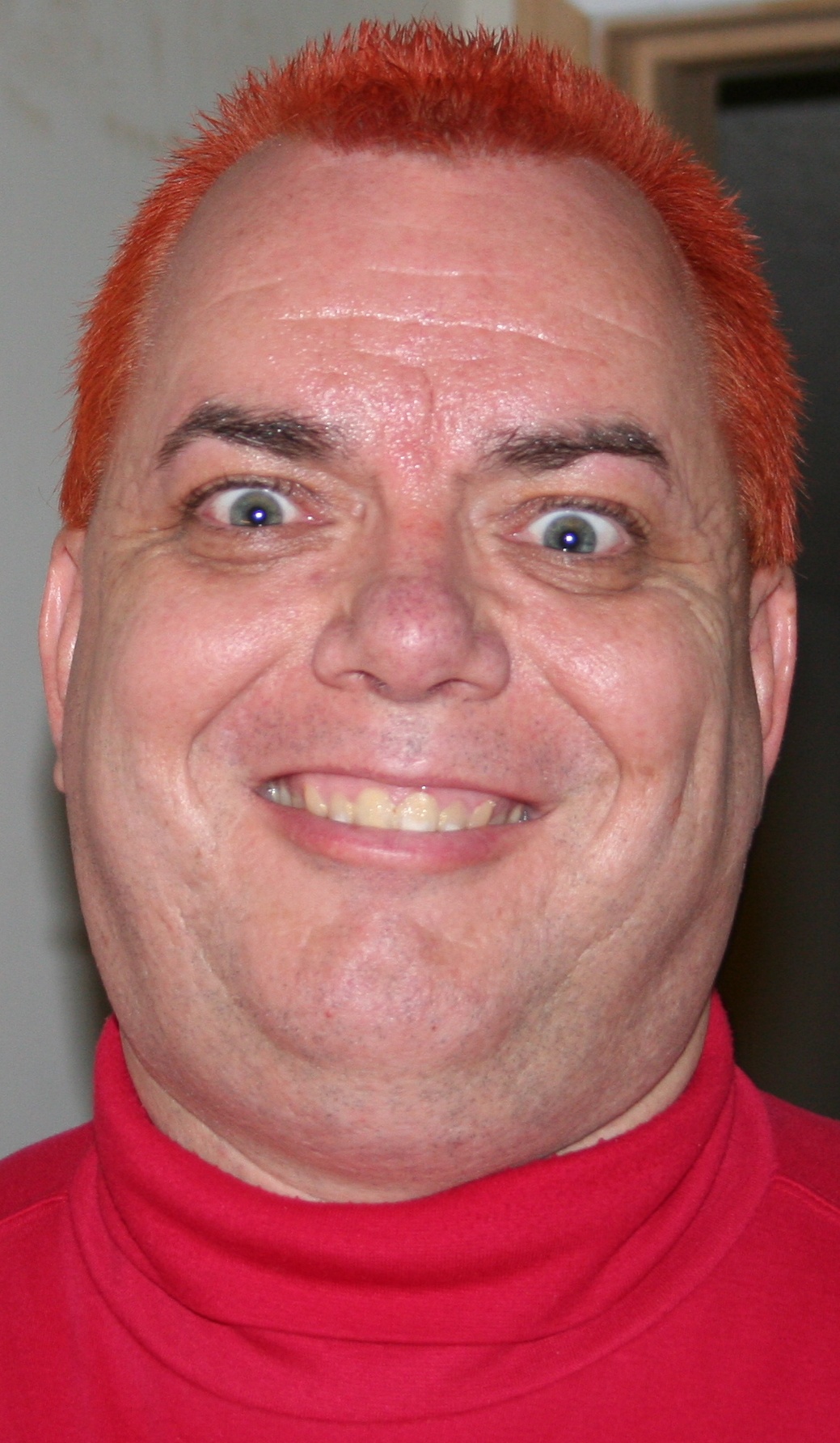
IMG_0527 coppedUm, yeah. Not exactly a “signature look” (I hope!), and it’s an old picture. I didn’t do this today.

Between the idiotic grin (no, I hadn’t been drinking) and the hair (no, I hadn’t been drinking), I think this is why they tell you to be careful with what you post online, especially if you’re looking for a new job.

On the other hand, any potential employer who has scrubbed the internet (or simply read this blog) as a character reference regarding me and still thinks I’m the perfect candidate for the job won’t have their mind changed by this. I hope.

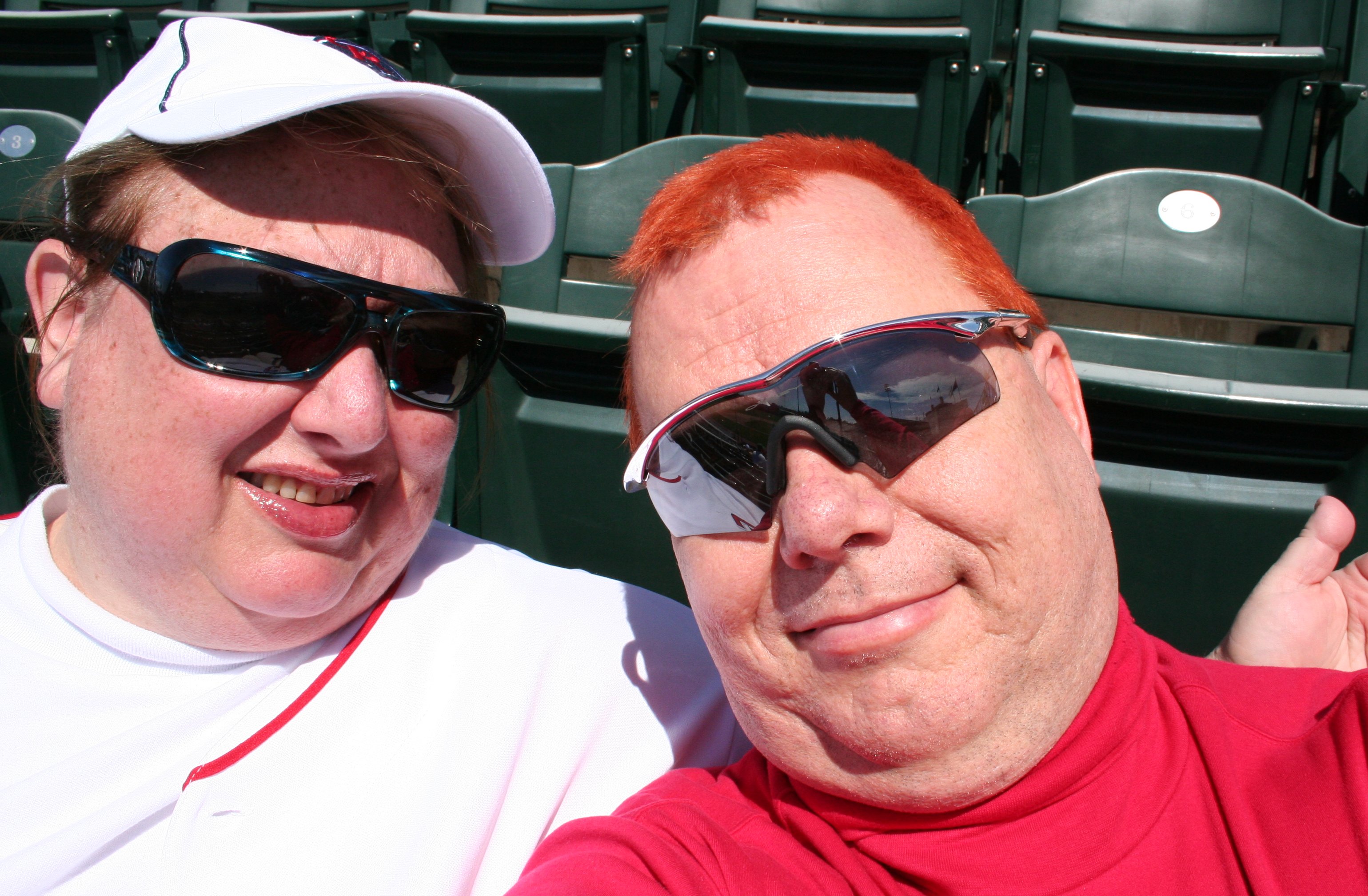
IMG_0558 croppedYou only turn the Big Five-Oh once, right? We already had plans for the family to go to Arizona for Angels’ spring training (camp opens TOMORROW for the 2014 season!!) and my birthday. I surprised everyone by coming home the night before with what I had hoped would be “Angels red” hair. It was probably closer to “Orioles orange”, but it was the thought that counts, right?

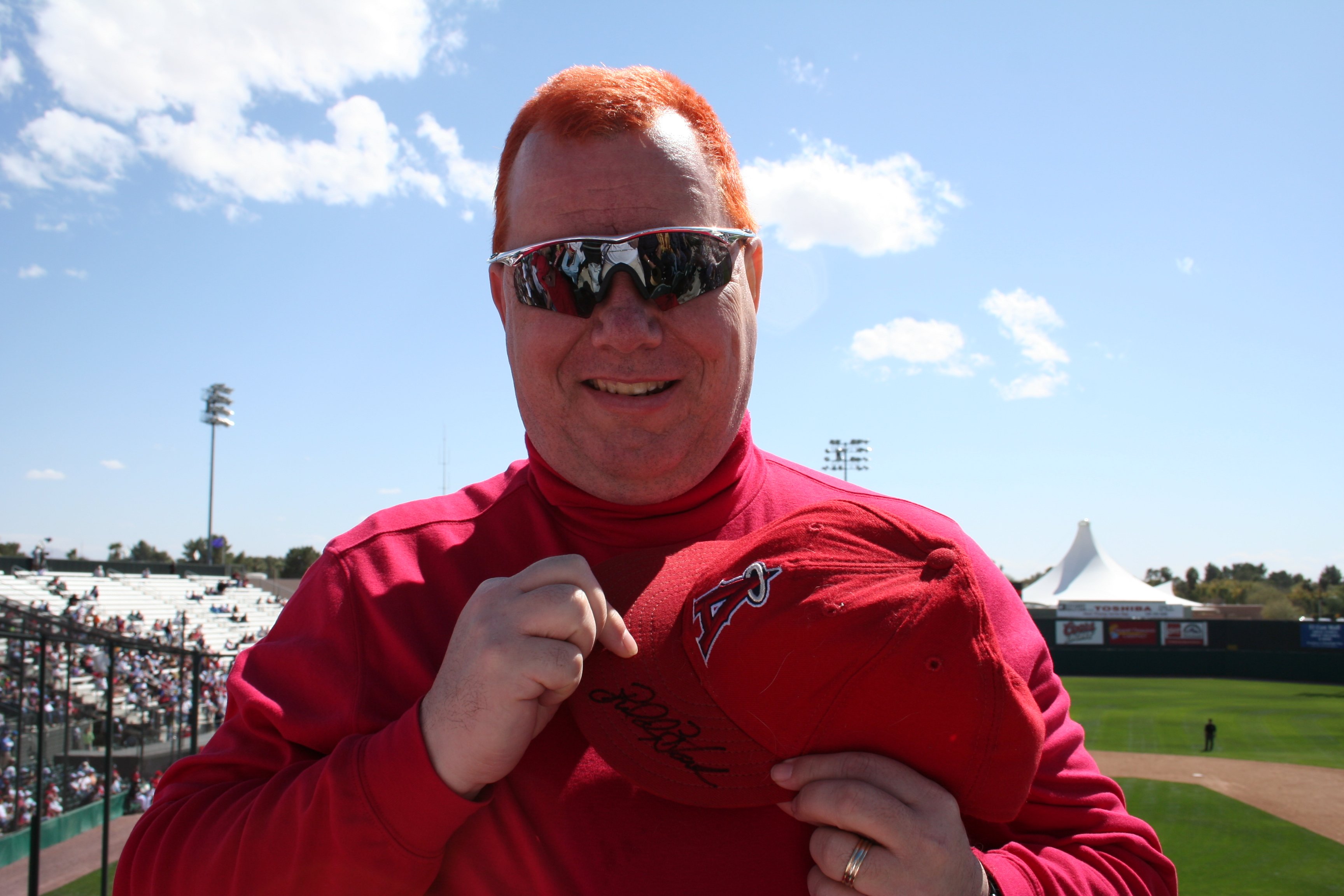
IMG_0583 smallThe wonderful Long-Suffering Wife had made arrangements through a friend of a friend of a friend to get me a meet-and-greet with (then) Angels pitching coach (now San Diego Padres manager) Buddy Black. It was great meeting him, and despite my obviously crazed and possibly dangerous visage, I got my hat signed.

There! Is that futile and stupid enough for you, Brother Otter?


Leave a comment

Filed under LA Angels, Paul, Photography, Sports, Writing

Flash Fiction: The Olympus Dismount

This week’s Flash Fiction Challenge from Chuck Wendig is more bizarre than usual. It’s also just a bit more outside of my strike zone than other challenges have been. We have to invent a new drink or cocktail, real or fictional, then use that cocktail as the title and a part of the story. While I am not a teetotaler, I am a long way from being a big drinker or knowledgeable about cocktails of any sort.

What the hell? That’s what Google is for, right? Going for it anyway, what have I got to lose? As always, comments and constructive criticisms are appreciated.

THE OLYMPUS DISMOUNT

  • Blender
  • 2 double Old Fashioned tumblers
  • 2 shot glasses
  • Gymnastic equipment
  • Olive branch sprig with olives attached
  • Ice cubes made of water from Lake Placid
  • 30 cc water from the Beijing National Aquatics Center
  • 30 cc gin made with juniper berries harvested near Sarajevo
  • 30 cc silver tequila made with blue agave grown near Mexico City
  • 30 cc dark rum made with sugar cane grown near Rio de Janeiro
  • 30 cc vodka made with potatoes grown near Lillehammer
  • 200 cc orange juice from fruit grown near Rome
  • 200 cc cranberry juice from fruit grown near Vancouver
  • 100 cc Guinness Red (Foster’s Lager may be substituted in a pinch)

Chill all fluids to 1°C except for Guinness Red, which should be kept warm. Fill blender with ice cubes. Slowly mix in gin, tequila, rum, orange juice, and cranberry juice. Blend to a slushly consistency.

Pour mixture into two double Old Fashioned tumblers, leaving room for additional ingredients. Fill shot glasses with warm Guinness Red. Garnish with olive branch and olive. Drop shot glasses full of beer into the mix in the Old Fashioned tumblers, shouting “Belly Flop!” as you do.

Clamber up onto a piece of gymnastics equipment, such as the stationary rings, parallel bars, balance beam, or pommel horse. Drink quickly in an effort to induce blinding brain freeze. Once in agony, attempt at least two competitive gymnastic moves, followed by a dismount, sticking the landing. Extra credit if you can do so while holding the olive branch in your teeth.


I had gotten into Sochi about two days before the official start of the games. My event wasn’t scheduled to start until the tenth day, so I had plenty of time to spend enjoying the festivities.

At the opening ceremonies you could tell which athletes had events scheduled early – most of them didn’t even show up. The ones who did were out of there like a shot as soon as they could get free. It was time for that last little bit of practice, planning, strategizing, or Zazen to help with their focus and visualization. Whatever.

The rest of us were looking to promote international relations, preferably in a one-on-one discussion of the Kama Sutra. There’s a reason they hand out over 100,000 condoms during those two weeks.

Most of us had been busting our butts about nine days a week for at least three years to get ready for this. Everyone else had started the day after we left Vancouver. I had long ago lost track of how many thousands of times I had gone down the courses in Utah, Colorado, and New York.

With all of that training and all of the pressure to win (or at least not do anything stupid that might break every bone in our body), the worst thing that they could have done was confine us. We needed to be out on the town, blowing off steam, cavorting, carousing, and capering. We needed to be footloose and fancy-free.

Instead, due to “security concerns”, we might as well have been in a gulag. It was a reasonably well appointed gulag, granted, but a gulag nonetheless. We had over 10,000 athletes, most in their early 20’s or younger, all in incredible physical shape, all under a ton of pressure, all nervous as hell, locked up, nothing much to do for entertainment.

You do the math.

I ended up in the room of Emma, a member of the Norwegian women’s hockey team. She was tall, blonde, and everything you might have fantasized about in that situation. Keep fantasizing. Yes, it is that great.

Afterwards, we got to talking about how we got to Sochi. She told me about a lot of running, weight training, and endless skating practices. I mentioned some of the routines we had for learning and perfecting our flips, spins, and tumbles. You don’t just go out onto the slope and do a jump with three twists and two spins in a spread-eagle.

That seemed to pique her interest. “You do gymnastics to train for skiing tricks? So you have done an Olympus Dismount, yes?”

She had me stumped with that one. I knew that her English wasn’t perfect, but it beat the hell out of my Norwegian. Still, I figured that there must be something lost in translation.

“No, that is what it is called, The Olympus Dismount. You have not heard of this? It is a drink with a ritual that goes along. All of us have tried it. You are sure you don’t know it? A great amount of alcohol like an icy sludge, a beer, and gymnastics equipment? No?”

I had to assure her that I had no idea what she was talking about. In a flash she was up, getting dressed, throwing my clothes at me, and calling someone on her phone. After a great deal of discussion in rapid-fire Norwegian, she grabbed a bag from her closet, grabbed my hand, and started dragging me down to the gym.

“You must try this!” Emma said. “We have brought all of the ingredients and we have extra, so you will get the honor!”

We ended up at the door to the training gym. It was supposed to be locked this late at night, but the door was propped ajar. We slipped inside and I found myself with about a dozen of Emma’s teammates. All were tall, all were blonde, and all were goddesses. If I had been harboring any doubts about this ritual, they disappeared in a flash of burning testosterone. I would die happily before I chickened out on any challenge this group could throw at me.

Two of the ladies had a large blender with Russian markings on it. Emma asked them a couple of questions about it. I couldn’t understand a word, but I was pretty sure that they hadn’t brought it in their carry-on luggage. Other women had their own bags of potion fixings to match Emma’s.

Emma ushered everyone over to a corner where there were several pieces of gymnastic apparatus. A balance beam, parallel bars, rings, and uneven bars were all covered with thick padding, which also covered the floor everywhere. The women started pulling out bottles and flasks, lining them up along the balance beam. From her bag Emma pulled several glasses, both large and small.

“You said you trained on rings, yes?” she asked me. “Like these here, yes? You can do at least simple moves? Show us, please.”

Here I was in a foreign country, trespassing in a room that was supposed to be locked, with what was certainly stolen equipment, surrounded by over a dozen stunningly gorgeous women hockey players, and they wanted me to do an impromptu still rings routine for them. What could possibly go wrong?

I grabbed onto the rings, got myself going into a swing, did an inlocate, pulled into a front uprise, fell out of it to a dislocate, and did a dismount with one somersault. It wouldn’t have gotten me on an NCAA junior varsity gymnastics team, but for strength training and flying skills, it was pretty good.

The women were all very impressed. Emma led me back to the balance beam.

“These are all the ingredients for The Olympus Dismount. They are all from very special places. We will blend them together and then pour the beer. You must drop the beer into the drink and shout ‘Belly Flop!’ Then drink it as fast as you can, to get an ice headache. When you finish it, do your rings routine again. Yes?”

What non-dead, red-blooded American would pass on that challenge in that audience? Besides, I figured that doing the routine ten or fifteen minutes after drinking would be far more dangerous than doing it immediately, when the alcohol hadn’t yet hit my system.

It took just a minute for everything to be mixed and blended. It looked a bit like a dark orange margarita and reeked of booze, but it was too late to think about backing out. I dropped the depth charge, shouted the challenge, and started drinking.

I was about half way through it when the brain freeze hit. I stopped drinking for a moment, grimacing with agony, but all I could hear was the ladies urging me on. Pushing onward, I managed to finish it quickly.

The pain in my head was truly blinding. I couldn’t see a thing with my eyes screwed shut. I tried to get one eye open and started groping around, finally finding Emma.

Rather than comforting me, she led me over to the rings. There weren’t a lot of brain cells working at that point, most of them being occupied trying to figure out how to remove the invisible ice daggers from my eyeballs, but my secondary head reminded me that my machismo was on trial before a dozen potential supermodels. I grabbed the rings and pulled.

Surprisingly, the swing didn’t make me start to puke, nor did my head explode and scatter brain shards all over the room. I guess all of that training paid off. My brain might not have been worth a nickel a pound, but my muscles remembered what to do.

Swing into an inlocate. Check! Pull into a front uprise. Done! Fall out of it into a dislocate. Piece of cake! Another full swing and let go into a somersault for the landing.

That was when the police burst in.

Shouting. Whistles. The Norwegian witches grabbing their magic potion ingredients and running like rabbits for the exits. All while I was spinning. And spinning. Finally, I miscalculated the landing so badly that I over rotated and landed flat as a board on my back.

Only the fact that I had all of the wind knocked out of me kept me from screaming in agony. My brain was saying, “AAAAAAHHHHHH!!!!” while my lungs and mouth were making soft, pathetic sounds, sort of like an alligator coughing up a hairball.

The pads on the floor had kept me from needing an ICU unit, but the not-breathing thing was annoying. Someone finally got me to sit up, bend over, relax just a bit, and allow my lungs to remember what they were there for.

The only things that Emma and her friends had left behind were the blender and me. Well, that and the four security guys and two cops.

Who knew that the athlete’s village had a jail?

My coach and some undersecretary from the US Consulate finally convinced the Russian authorities that it was just some harmless fun. I managed to get off with a stern lecture, a warning to be really careful if I wanted to not be deported in disgrace, and a workout schedule from my coaches that didn’t leave me any time for thoughts of further shenanigans.

The next ten days were a total blur, but at the end of it I was the proud owner of a bronze medal. Since I hadn’t figured to even finish in the top five, the medal finally got my coaches off my case. They also warned me that the Russian security dudes carried a grudge for a long time.

I had a couple of days of fun following that. It’s amazing what a conversation starter one of those medals is, even a bronze. If I was making this many new friends with a third-place finish, I definitely wanted to win gold next time.

The next afternoon I watched Emma’s team win the bronze medal game for women’s hockey. I was happy for her and wondered if I might bump into her again. As I was leaving the arena after their medal ceremony, my phone buzzed with an incoming picture. It was Emma, holding her medal, along with the olive branch garnish from my Olympus Dismount.

The message was immediately followed by her tackling me and knocking me into a snow drift, laughing maniacally.

It was going to be a fun three final days.

Leave a comment

Filed under Sports, Writing