Monthly Archives: November 2014

Proof Of Tugginess

First of all, is “tugginess” even close to being a word? (As The Long-Suffering Wife would say, “Yeah, THAT’S what’s wrong with all of this!”)

I mentioned the other day that I had been taking a break from my normal gig at the SoCal CAF hangers to learn how to drive a tug or forklift so that I could help out on a few more tasks when needed. I didn’t have a picture of me getting driving lessons on the tug from my young (17 years old? 18?) instructor, Nicole, one of our outstanding Cadets. But there were plenty of other people who had cameras and thought it was hilarious to see her teaching me (note, it didn’t bother me in the slightest, and Nicole was a great teacher) and now I’ve snagged one.

Thanks to Dan Newcomb, here’s a picture of me driving the “lowboy” backwards through the obstacle course.

Paul Learning To Drive Lowboy Tug

Leave a comment

Filed under CAF, Flying, Paul, Photography

NaNoWriMo 2014, Day Fifteen

Well, that took much longer than I expected. On the other hand, I think it’s going to be one of my favorite articles for a while to come, so it was worth it, even if my NaNoWriMo 2014 is going to take yet another hit because of it.

While I normally put in a lot of  internal links to previous, related posts here, I won’t be doing that for what I hope will be this year’s thirty NaNoWriMo posts. If you have jumped into or stumbled onto this story in mid-adventure, there are plenty of other ways to navigate around the site to find previous installments. Actually doing so is left as an exercise to the student.
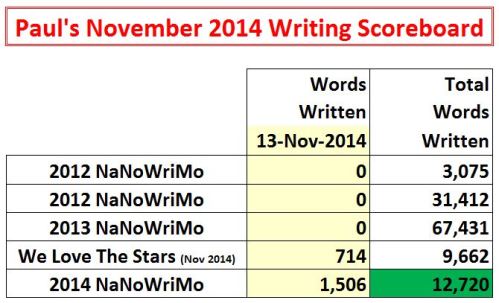
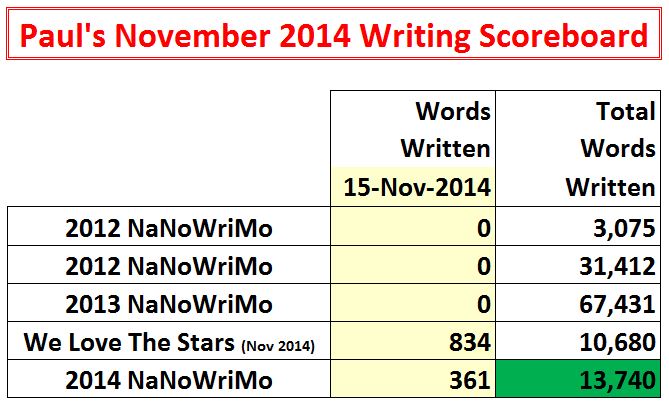
2014-11-15 Word Count Graphic

CHAPTER SEVEN (continued)

Pawley didn’t try to fool himself into thinking that he was doing it for purely philosophical reasons, taking the high road into Hell if necessary rather than treat his fellow humans as slaves and pawns. The differences were minute and no one else needed to know, but Pawley was doing it because he was convinced that it was the best way to pull off the impossible.

So he spent all day every day talking, urging, cajoling, badgering, threatening, convincing, and negotiating. He was grateful for DEBBIE and the amount of scheduling, arranging, and prioritizing she could do.

They wouldn’t have had a prayer without the various AIs around the system. From the small, semi-sentient systems running life support and other systems in small stations to the massive, fully conscious, primary systems that helped to run the colonies and stations, the AIs took the routine detail work, system monitoring, and information processing to a level that would have required hundreds of thousands of humans to duplicate.

Tonight though, DEBBIE’s task was to keep him company as he tried to find the sleep that he knew that he needed. He didn’t want to start taking any pills to sleep. He feared that down that road there could be worse consequences than being exhausted tomorrow. So tonight he tried to relax by talking to his station AI.

“DEBBIE, private conversation, please.”

“Yes, Commander Pawley. What would you like to talk about?”

“This situation we’re in. Are we going to make it, or are we just delaying our inevitable deaths?”

“Death is always inevitable.”

“True, but you know that we have two different basic scenarios. In the first scenario, all of the humans in the stations and colonies die individually at random times from random events over the next hundred years or more, being replaced by new humans to continue onward into the far future. In the second scenario, our systems collapse and all of the humans die in huge groups simultaneously in the next year to ten years, leaving no humans alive off of Earth. Given those definitions, are we going to be successful in preventing the second scenario and bringing about the first?”

Leave a comment

Filed under Science Fiction, Writing

Robots & Tears

Yesterday and today, reading about the final minutes of Philae’s adventures on Comet 67P, I got to wondering again about the way we anthropomorphize these machines we make.

I want to be cold, logical, and cynical enough to realize that they’re just machines! Yes, people involved with these projects spend years and years designing, testing, building and launching these machines. I can see how they would form an attachment to the project, with the actual robot / probe / spacecraft / machine being the obvious symbol that represents all of that. I get it. But you and I aren’t part of that team, we’re just bystanders watching on television or Twitter. (If any of you ARE on one of those teams, can we talk?)

Yet we do it anyway, form emotional attachments, thinking of the robots as brave little soldiers, sent out into the cold and dangerous depths of space on a one-way suicide mission. They do their best to struggle on against all the odds, getting those last little bits of data for us before they expire.

If we pull ourselves out of our mourning and grief, we know that they “struggle on” because they were built solidly and the engineers who designed and built them were thorough and did an excellent job of anticipating different conditions and problems and building in ways of coping. Even when the spacecraft 300,000,000 miles from Earth runs into something unexpected, the engineers down here at ESA or NASA or Roscosmos or JAXA or ISRO or JPL are very clever at coming up with ways to work around it. The robot, the machine, the spacecraft is just doing what it was built for and what it’s programmed and commanded to do.

Yesterday the end came for Philae, which isn’t really “dead.” It’s more like “sleeping” or “hibernating,” since it can reactivate itself should something change on the comet which would allow sunlight to reach its solar panels. (For those who haven’t been following, it bounced on landing, ending up someplace against a cliff or in a canyon of some sort, where it gets very little sunlight.) The mission was designed to last 56 hours or so on batteries, and despite some problems in landing, Philae still carried out 100% of its science mission, getting data from every experiment, taking all of the pictures it was programmed to take, and sending all of that data back to Earth before the batteries died. It’s an overwhelming, spectacular, amazing success!

Yet we get teary-eyed when the end comes.

There are many examples of similar things in movies, but I wonder if the movies are training us to act this way in the real world or if the movies are simply reflecting the zeitgeist of our age. I remember being embarrassed on a date in high school by being so emotionally involved with Huey, Dewey, and Louie, the three small robots in “Silent Running.” We all consider R2-D2 and C3PO to be primary characters in the Star Wars films. (All three Star Wars films!) We worry about Wall-E. We know Johnny-5 is alive. When the Iron Giant sacrifices himself to save everyone else, I’m a puddle. I can watch “Blade Runner” all day long and root for Roy Batty & Pris. The list goes on.

But that’s entertainment, and we know the difference between it and real life. (Don’t say it — just don’t!)

Last night, this was real life, and it left me feeling like I had just shot Old Yeller:

https://twitter.com/CaseyDreier/status/533403994904092672

https://twitter.com/CaseyDreier/status/533404263742181376

https://twitter.com/PlanetDr/status/533404679225356289

https://twitter.com/PlanetDr/status/533405058512076801

https://twitter.com/PlanetDr/status/533405218352795650

https://twitter.com/PlanetDr/status/533405568900161537

https://twitter.com/PlanetDr/status/533406048669798400

https://twitter.com/PlanetDr/status/533407958797791232

https://twitter.com/PlanetDr/status/533408590006992896

https://twitter.com/PlanetDr/status/533418978996391936

I got it. I understand. It’s just a machine, doing an extraordinary job of doing what we designed it for. I know that the “@Philae2014” is a Twitter account being created by some human being at ESA.

But I dare you to read that and not put it on a par with our best human tales of triumph mixed with tragedy.

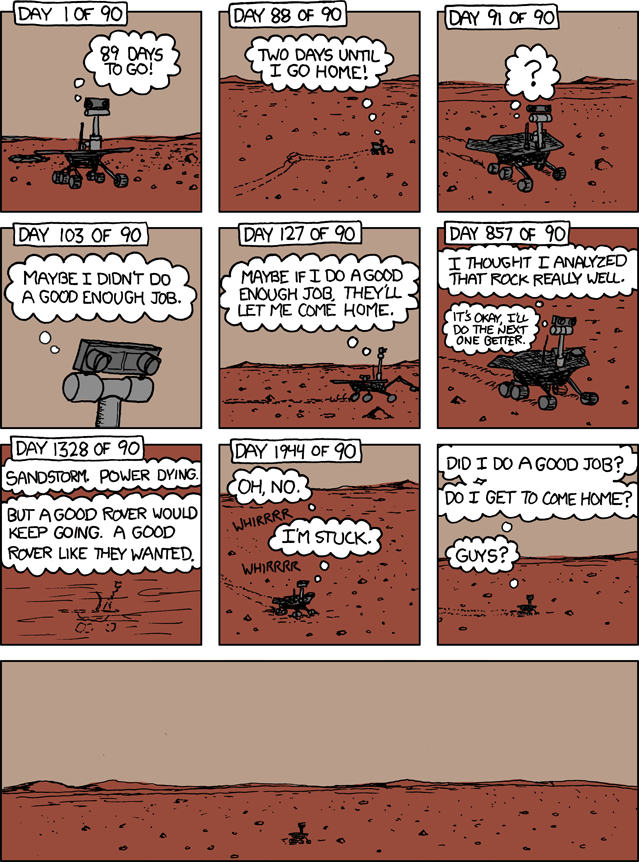
Finally, on a related note, even two years after I first saw it, this (damn you, Randall!) will tear me up every time:

© Randall Munroe at xkcd.com

(Go buy his new book, now a #1 New York Times Best Seller!)


Leave a comment

Filed under Astronomy, Computers, Space

NaNoWriMo 2014, Day Fourteen

It’s not much, not much at all, but I just couldn’t face putting up another goose egg in the word count today.

While I normally put in a lot of  internal links to previous, related posts here, I won’t be doing that for what I hope will be this year’s thirty NaNoWriMo posts. If you have jumped into or stumbled onto this story in mid-adventure, there are plenty of other ways to navigate around the site to find previous installments. Actually doing so is left as an exercise to the student.

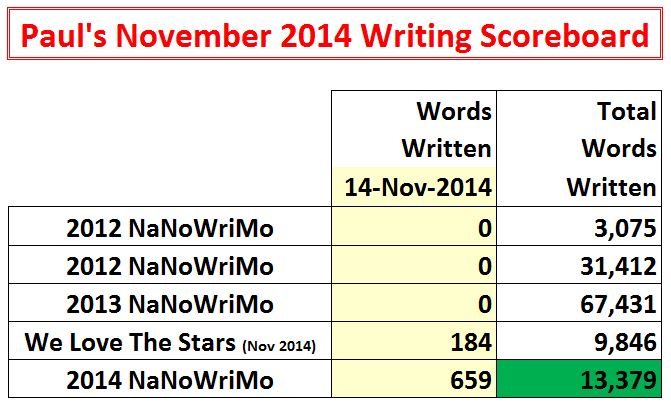
2014-11-14 Word Count Graphic

CHAPTER SEVEN

Pawley knew that he had to get some sleep, but knowing was not doing. It was everyone’s first reaction to the crisis to put in twenty-two hour days and be moving like a banshee throughout all of them. Yet, while that might make people feel more accomplished and involved in the short run, in the long run it wouldn’t solve a thing if people started making serious mistakes due to sleep deprivation. Out here, with hard vacuum and radiation around nearly every corner, mistakes killed people; bad mistakes killed hundreds of people.

With resources as limited as they were, and a trained and experienced work force being a key resource of which they had massive shortages, those were events that had to be avoided at all costs.

It was amazing how much had been done from the ground, at least in LEO and GEO. The orbital infrastructure which met so many needs of those down on Earth was in many ways just an extension of the industrial machine below. Now that the wheels had fallen off that machine and the orbital assets were trying to survive on their own, that major fault in the system was obvious.

Pawley was meeting constantly with the leaders of the larger stations and representatives of the smaller ones. His message from the top down was very clear. As a group, everyone on orbit and off planet needed to pull off a herculean task. But if it was a war against the universe, a race against time, then the race was a marathon, not a sprint.

Several leaders of other stations had urged Draconian restrictions immediately on anything deemed unnecessary for survival. Pawley and the rest of the Council had made sure that didn’t happen. There would be restrictions, but they would be balanced against the need for people to have a reason to live instead of just a command to live.

The biggest immediate point of contention had been the video and information systems. All of the hard-liners had recommended that it be shut down completely. Their reasoning was two-fold.

First, workers getting home after an eighteen or twenty hour day didn’t need to watch some fluffy piece of entertainment. It was felt if anyone had time to spend on simply being entertained, something better could be found for them to utilize that time.

Secondly, with subsistence level conditions for the foreseeable future, it was thought that most people just needed to focus on what they had to be doing and not “wasting” their time getting news and updates from all over the system. There was a movement in the leadership to make all information available only on a need to know basis.

Pawley, Gonzalez, and Squires, who were being called the “Unholy Trio” behind their backs, got together with their respective station AIs and went through the predicted consequences of that policy. It didn’t sit well with any of them and they were relieved to find that the projections from the AIs gave weight to those gut feelings.

Realizing that they would only get one chance to get it right, policies were put into place to make information available to everyone about issues at both a local, in-station level and a global, system-wide level. Nothing would be hidden or swept under the rug. If the system was going to collapse and kill everyone, at least everyone would have the option of knowing as much about what was happening as they chose.

The reality was that someone working double shifts with no days off, whether they were processing regolith at a station on the moon, tending crops at an aerofarm on O’Neill, working basic maintenance at Goddard, or piloting a cargo shuttle between LEO and GEO, no one had much time to do much more than glance at the headlines. But it was enormously comforting to most to know the information was there if they needed more and that nothing was being withheld.

Leave a comment

Filed under Science Fiction, Writing

Two Hawks

Jessie needed to go out this morning and while waiting for her in the front yard I could hear the screech of a hawk, very clearly. Then I heard another from a different direction. And crows, I could hear a lot of crows.

In a flash, the two hawks and the murder of crows appeared from in back of the house, engaged in a mid-air dogfight. The crows broke it off, the hawks started looking for a thermal, and I grabbed my fancy new phone to see how well it takes video.

Leave a comment

Filed under Critters, Flying, Photography

NaNoWriMo 2014, Day Thirteen

Day Thirteen — as in, the day after Day Twelve, which should have been the day after Day Eleven, but you wouldn’t know it from here.

A stupid error, a typo, not the end of the world, but it is a good indication of how NaNoWriMo can push you to the edge if you’re already busy and stressed for time and then have to somehow find time to write every day. Sleep is often a casualty. While it’s macho and cool and attitudinal to say things like, “Plenty of time to sleep when I’m dead!” or “Sleep is for the weak and sickly!” the fact is, if you’re not a twenty-four-year-old Navy SEAL, going from seven or eight hours of sleep a night to five or six hours a night, every night for a month, is grueling.

Earlier this evening, the eyes were really heavy, the chair was comfortable, and that lying little voice was saying, “Just a little nap, you’ll feel so much better. Just until 9, right?” But as you’re nodding off and your head is bobbing like one of those glass ducks that keeps dipping into the water, you realize that “just until 9” probably means either 9 AM tomorrow morning or 9PM tomorrow night.

That’s not going to get it done. It’s a marathon. This might not be “THE wall” that you hit, but it’s definitely “A wall.”

A very important time to remember what it’s like running that last 2+ kilometers of the marathon, the finish line ahead of you, and the clock ticking…

Then you get your butt out of the comfy chair (“They NEVER expect the Spanish Inquisition!”) and in front of the computer and you write some more. Maybe not 3,000 words, 1,700 words, or even 1,000 words. But you write.

While I normally put in a lot of  internal links to previous, related posts here, I won’t be doing that for what I hope will be this year’s thirty NaNoWriMo posts. If you have jumped into or stumbled onto this story in mid-adventure, there are plenty of other ways to navigate around the site to find previous installments. Actually doing so is left as an exercise to the student.

2014-11-13 Word Count Graphic

CHAPTER SIX (continued)

On the way toward Saturn six months earlier, the observation area had been the most popular area on the ship. When they left Ceres it had faded to just another pinpoint in just a few days. Heading uphill away from the sun it was dark and lovely, a dark sky that no one on Earth had ever dreamed of. Not even the night sky of Farside Station on the moon could compare to this.

But ultimately, it was just stars. Billions of crystal clear pinpoints right down to the limits of resolution for the human eye, some showing a touch of color, some smoky smudges trying to resolve themselves into ghostly nebulae – but stars.

Then one of them began to get brighter, a little bit more each day, before resolving into a lopsided blob accompanied by a few other bright points of light that moved near the bright blob. As Saturn grew, and grew, and grew, the view from the blister on the rocky outer skin of Cronus was breathtaking.

But like its bigger brother Jupiter, Saturn held onto some incredible forces in her magnetic fields and radiation belts. An order of magnitude less than the killing power of Jupiter, Saturn had plenty of areas that dictated the building of Cronus out of a small asteroid, the thick, rocky shell and stores of water acting as a shield to protect the crew inside.

Once Cronus had started orbiting Saturn deep inside the system of moons, all access to the observation area had ended. On the original flight plan it would have stayed that way until Cronus left to return to Ceres. But the original flight plan had been scrapped.

With the swing out past Titan and near Enceladus, Cronus was away from the worst of Saturn’s radiation belts. There were occasional outbursts as plasma streams from coronal mass ejections interacted with Saturn’s magnetic field at the magnetopause. However, with care, the observation areas could be used safely.

Alsby, Tanaka, and Doctor Anderson worked out a system which allowed small groups to go out for an hour at a time. As if they were going swimming in dangerous waters, a buddy system was set up. Radiation exposures were closely monitored.

The view of Saturn was worth the small risk. Appearing over ten times as large as the Moon seen from the Earth, the banded yellow disk of Saturn surrounded by her broad, glittering rings was indescribable to anyone who hadn’t seen it with their own eyes.

Cronus had launched the Titan probes from a point over half a million kilometers from the cold, smoggy planet, but that was still close enough for the enigmatic moon to be clearly seen as the ship looped outward toward Iapetus. The other larger moons could be clearly seen as small disks or crescents near the rings, while some of the dozens of tiny moons could be spotted as moving pinpoints.

Drifting in the bubble of windows, one foot loosely hooked through an anchor loop, Alsby soaked up the view. It was often hard for her to express why she wanted to be out here doing this and why she had fought so hard to get command of Cronus and the Saturn Exploration Mission. She was not a poet or an artist, but this view, this unparalleled splendor – it was a major factor in what drove her. She liked being out on the edge of the known.

Her “bubble buddy”, Doctor Anderson, floated next to her, intently scanning the rings with a large pair of binoculars. Alsby didn’t know what she was looking for. Finally Anderson pulled them away from her eyes and attached them to a sticky patch on the back wall.

“You had something you wanted to talk about, Doctor?” Alsby asked quietly, breaking the silence.

“Couldn’t we just be here to enjoy our allotted R&R time? Does there have to be an ulterior motive?”

“There doesn’t have to be. But I’ll bet there is, right?”

Anderson signed. “Fine, yes, there is. Am I really that transparent?”

“Subtlety is not your strong suit, but it serves you well in your position, so don’t worry about it, Cheryl. What did you need?”

“I just wanted to put a bug in your ear about some minor rumblings in the crew. Not everyone’s thrilled to be looking at six or more years out here instead of three.”

“I don’t blame them,” Alsby said, “but they all knew that it was a contingency, and it was possible long before we ever had any of these problems on Earth. The cause of our need to stay blindsided us, but not the existence of a Plan B.”

“No, and what I’m seeing and hearing is minor, nothing to get too worried about, but I thought you should know.”

“I know there are confidentiality issues, but can you give me any hints? Better yet, do you have any suggestions on how to make the situation better?”

“I think the biggest thing you could do would be to take a look on the regulations regarding advanced personal relationships.”

Alsby snorted. “All of this is about Ben and Betty? They found twin cabins down by engineering a month after we headed out and everyone this side of the asteroid belt knows what’s going on down there.”

“It’s more than that. You’re right, Ben and Betty are a cute couple and their discreet disregard for those particular regulations is the worst kept secret on the ship. But you also have more and more people who are bending the rules a little bit more every day. The situation has changed; perhaps the regs should be changed as well.”

“Changed how? You know there’s a reason that those regs are there. We’re forty-nine people trapped in a can stuck inside a rock for three years. The last thing we need is a couple breaking up in an ugly way, or some third wheel deciding they’re not happy being the one who’s not happy.”

“But you just said it yourself, Susan. We’re not stuck here for three years, we’re stuck here for at least six. Maybe nine. Maybe find that to keep things running a few people have to stay here until the next ship comes. It was one thing for everyone to figure they could cope for three years by using dedication to the mission and some masturbation on the side. Now some people are thinking a little differently.

“We can’t just chuck those rules out, Cheryl, you know that. We don’t get to pick and choose the regulations we like.”

“So said the woman who has Todd and SaSEM plotting trajectories and laying out building plans, plans which Ceres isn’t supposed to know about just yet.”

“Guilty!” laughed Alsby. “So rules may be adjusted as deemed necessary, especially on a ship two billion kilometers from the nearest human settlement. It sounds like you’ve given this some thought, so spill it. What’s your suggestion?”

“Trust your crew. They’re the best of the best, all highly motivated, all focused on the mission goals. They’re also all human and under enough pressure to make diamonds. Work with them to figure out what can work and what still has to be out of bounds. Set up definite expectations of what is expected and what is forbidden when inevitably someone breaks up and they still have to work together.”

“What you’re suggesting really has us heading off into uncharted territory, Cheryl. I don’t know that any crew has ever done this. It might be for a good reason.”

“I don’t know that any crew has ever faced these kinds of circumstances, at least, not a crew this big. You’ve said that we have to take risks to change our exploration schedule, go to places we weren’t expected to go, and now build a station from scratch somewhere out here? If the situation is drastic and warrants those technological and engineering risks, then it might also warrant the social risks.”

“I’ll take that under serious consideration, Doctor. I think you may be right, but we’ll need to take these changes as carefully as we have the schedule and planning changes.”

“Thanks, Susan. I’ll be ready to work with you on this, to do whatever you need. The crew’s health is my job and I think this is now going to be critical to keeping them sane. We’re not just crew any more, we’re more like pioneers or settlers, like it or not.”

A chime sounded. “Our time here’s up,” said Alsby. “By the way, who is it that you’re bending the regulations with, Cheryl?”

Anderson looked at Alsby, surprised, but not bothering to deny the accusation. “I guess I really am that transparent. It’s Mark, from Life Support. Sorry, I guess I’m only human as well.”

“Not to worry, we’ll see what can be done to make some adjustments before everyone starts talking about you and Mark the way they talk about Ben and Betty. Plus, you’re not nearly so alliterative as a couple as they are.”

Leave a comment

Filed under Science Fiction, Writing

Kyoto (Part Thirteen)

To Recap: In May, 2012 I went to Asia on the “Three-Countries-Three-Weeks-Three-Kids” tour. The first stop on this once-in-a-lifetime trip was Shanghai, followed by several days in Seoul. Now I was footloose and fancy-free (i.e., lost a lot) in Kyoto, Japan. I found one of the most beautiful and interesting places I’ve ever seen — just search for “Kyoto (Part Two)” through “Kyoto (Part Nine)“. (Yeah, that’s a lot of pictures of one place.)  The next day my daughter didn’t have classes so she started showing me the other sights of Kyoto, including beautiful and ancient temples along the Philosopher’s Path.

As you might have noticed, I thought thought that the Fushimi Inari shrine was incredibly wonderful. If you only get two days to go sightseeing in Kyoto, spend one day there, then split the other day between this site and the next one I’ll show you.

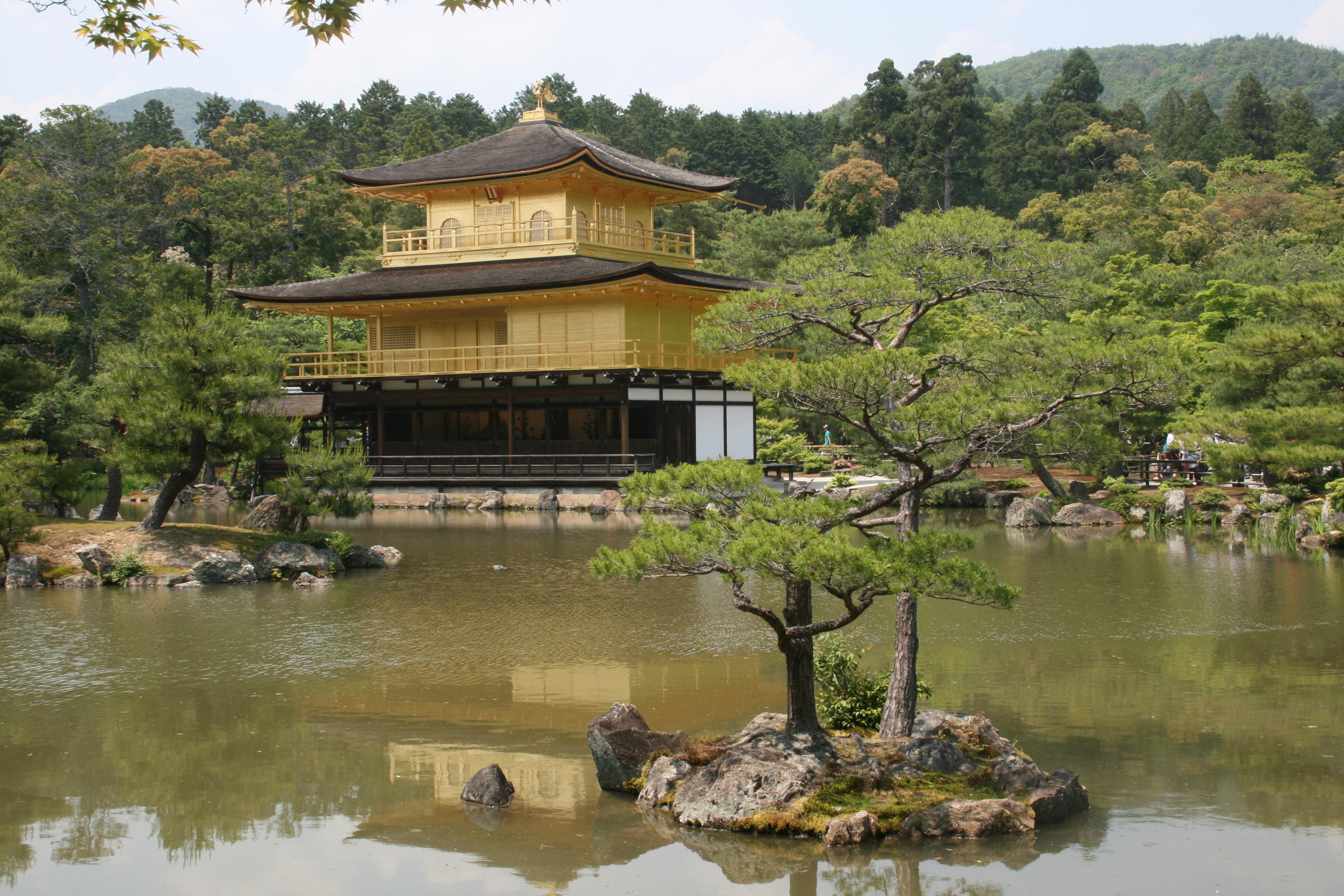
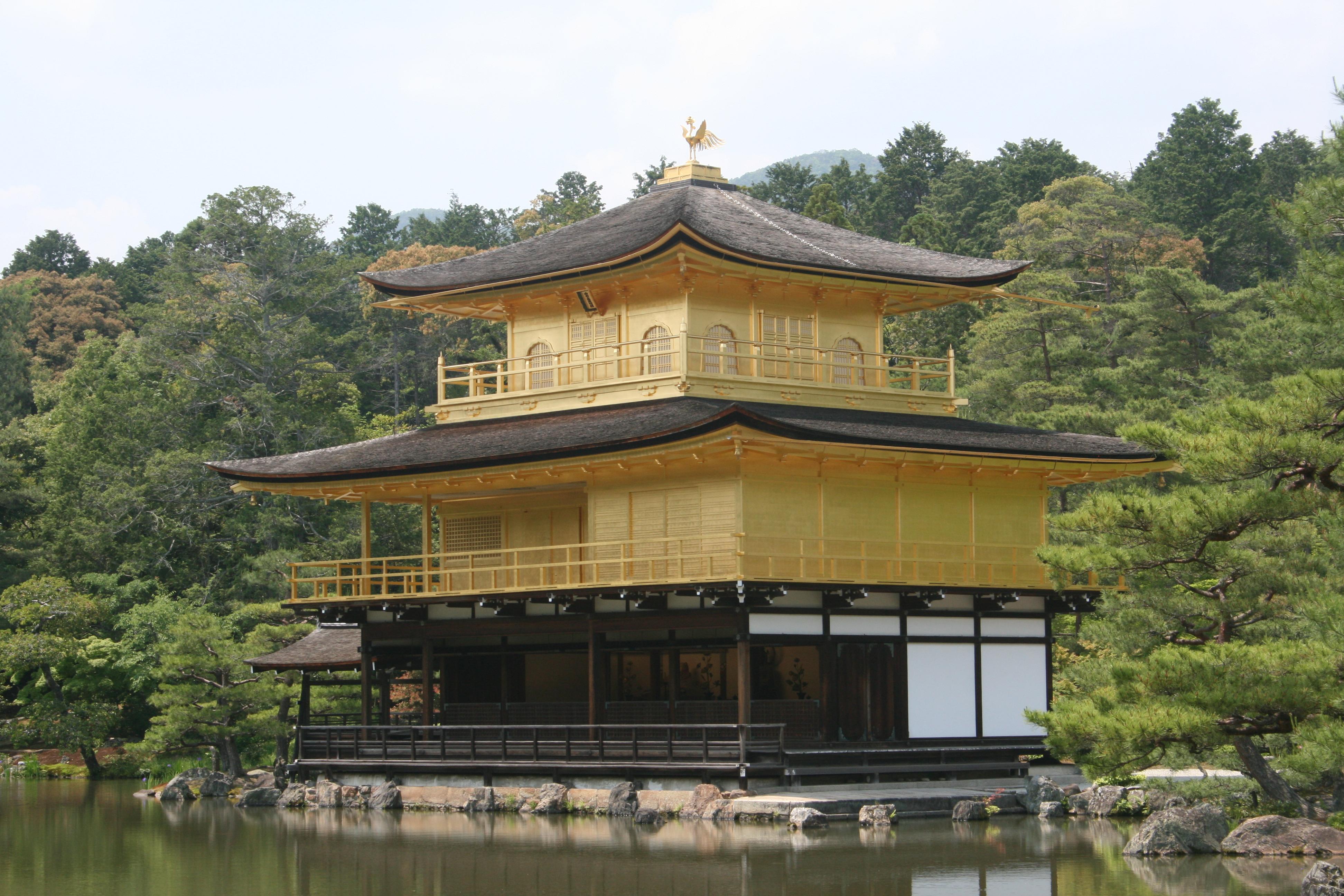
Kinkaku-Ji Temple is yet another World Cultural Heritage Site in Kyoto. It was built around 1200 and turned into a Zen temple in 1422. After a period of decline, it was restored in the 17th, 18th, and 19th Centuries.

IMG_4759 small

To say that it’s visually stunning is a major understatement.

IMG_4775 small

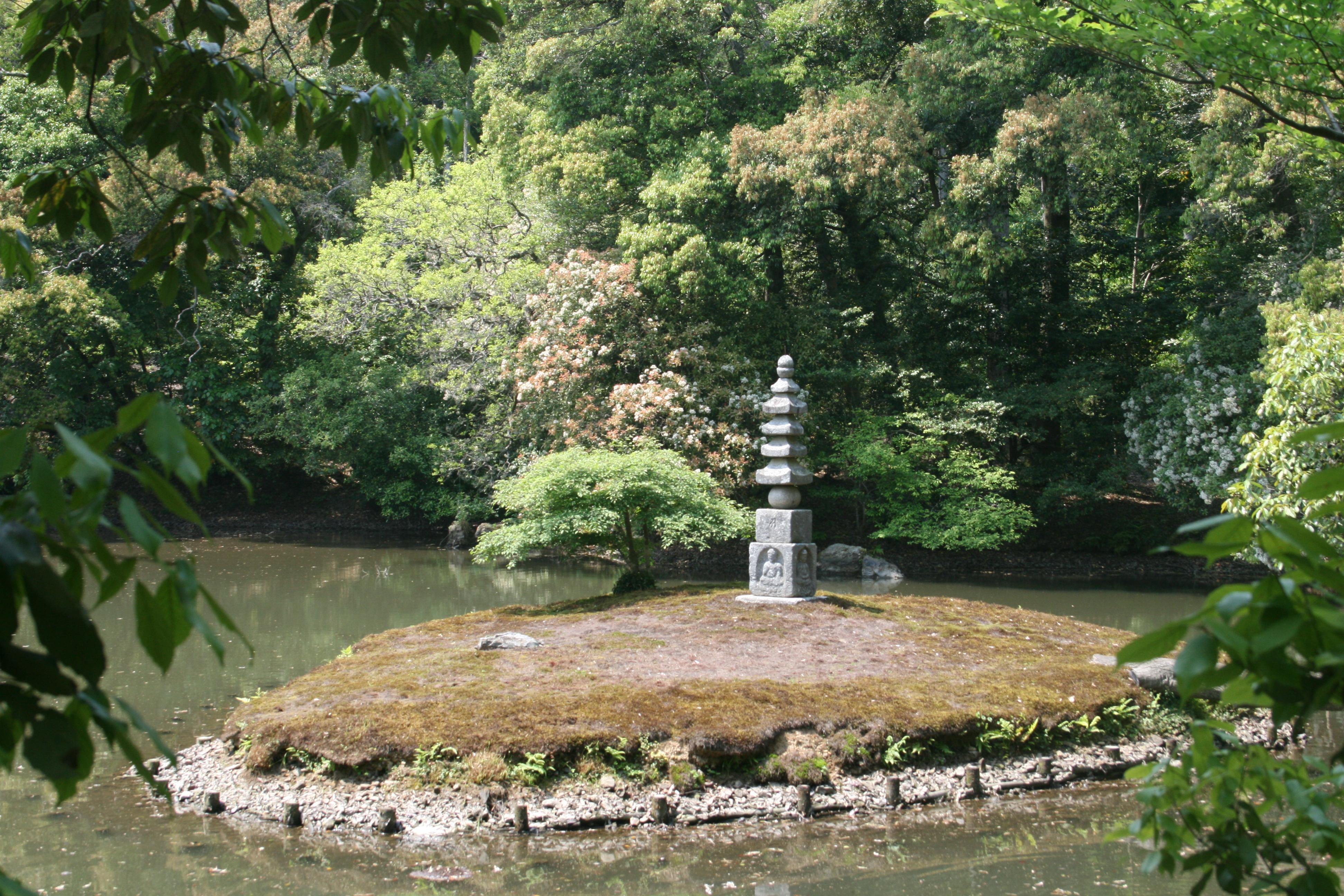
With or without the artistic lake and immaculately tended trees and islands framing it.

IMG_4793 small

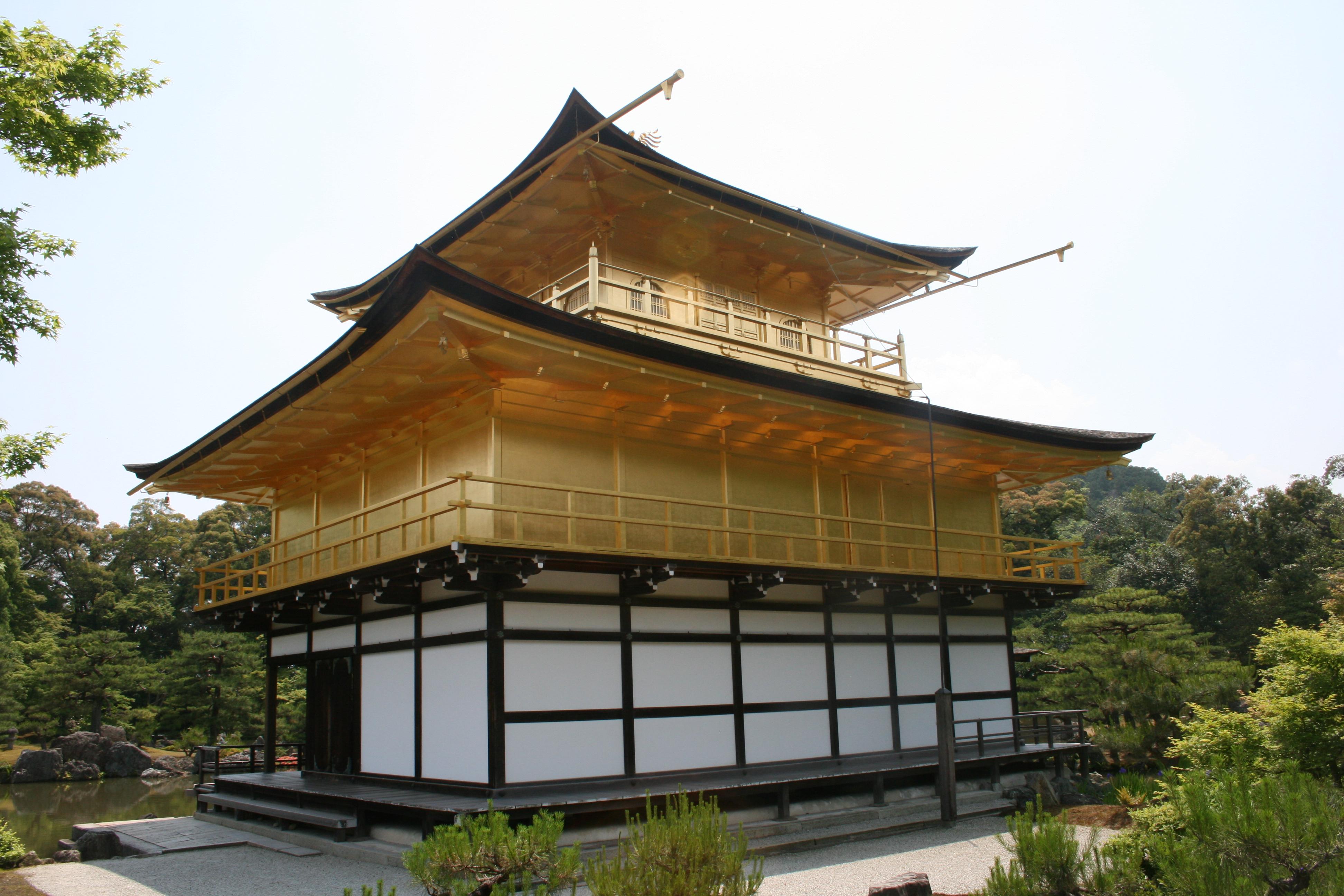
As you walk around the lake, on the back side you get a closer look.

IMG_4813 small

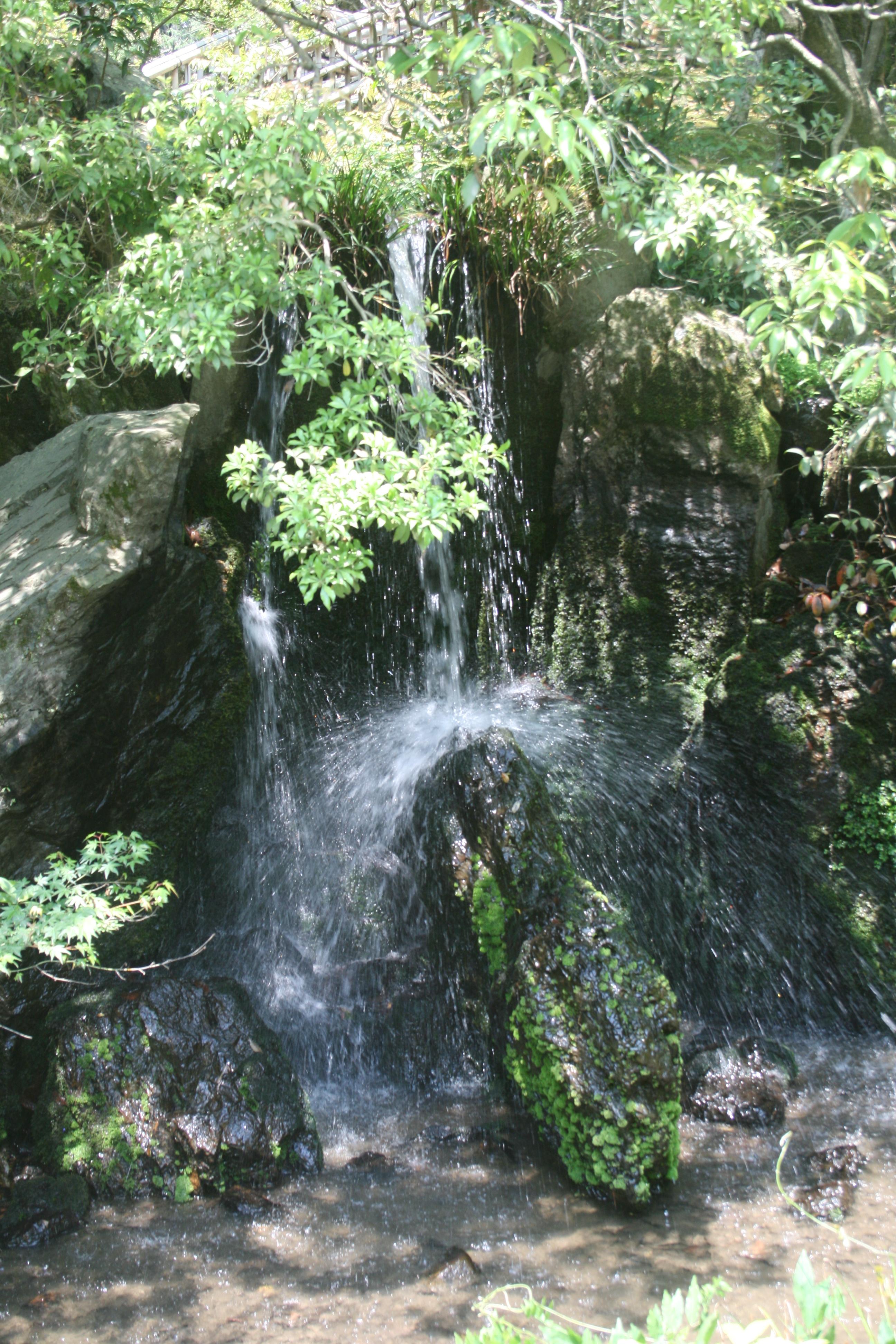
There are waterfalls coming down the hill next to the path. (It was a warm day, but there was no swimming allowed – obviously.)

IMG_4820 small

The Golden Temple is not the only attraction on the site. There are multiple gardens, shrines, and temples.

IMG_4112 small

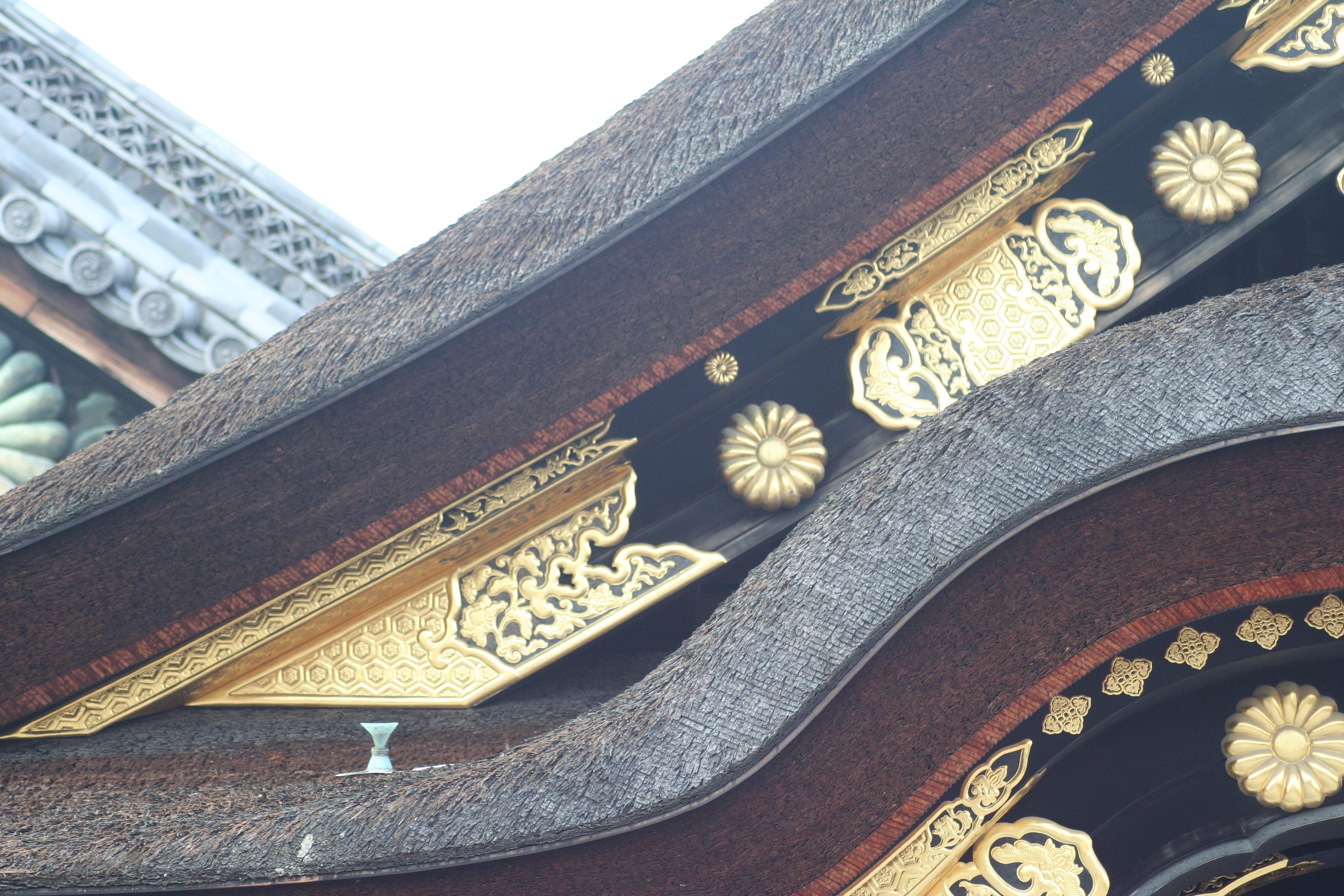
The advantage to having a second camera with a big lens is that you can clearly see some of the intricate and elegant gilt work way over your head.

IMG_4108 small

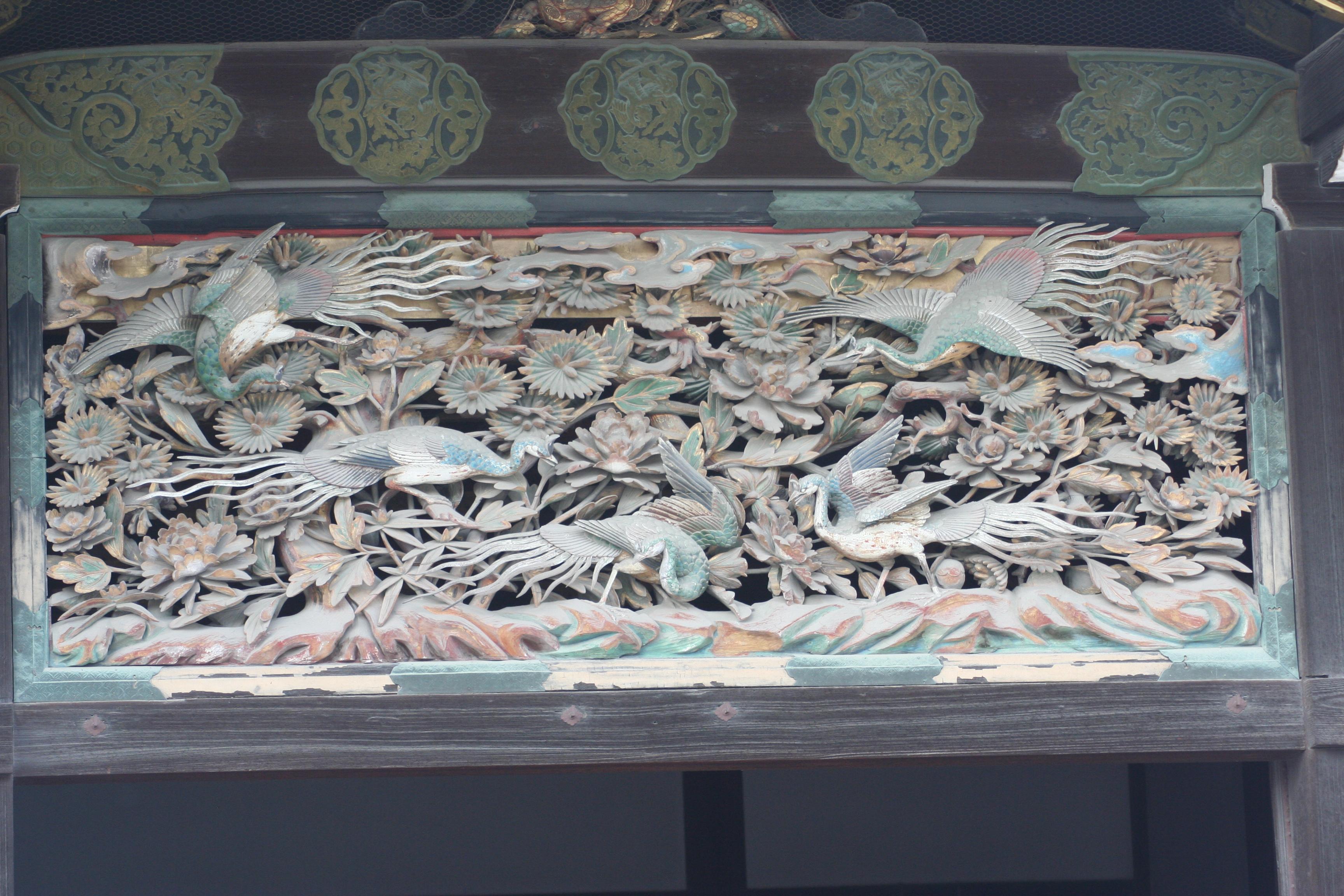
These wood carvings of birds were incredible.

IMG_4105 small

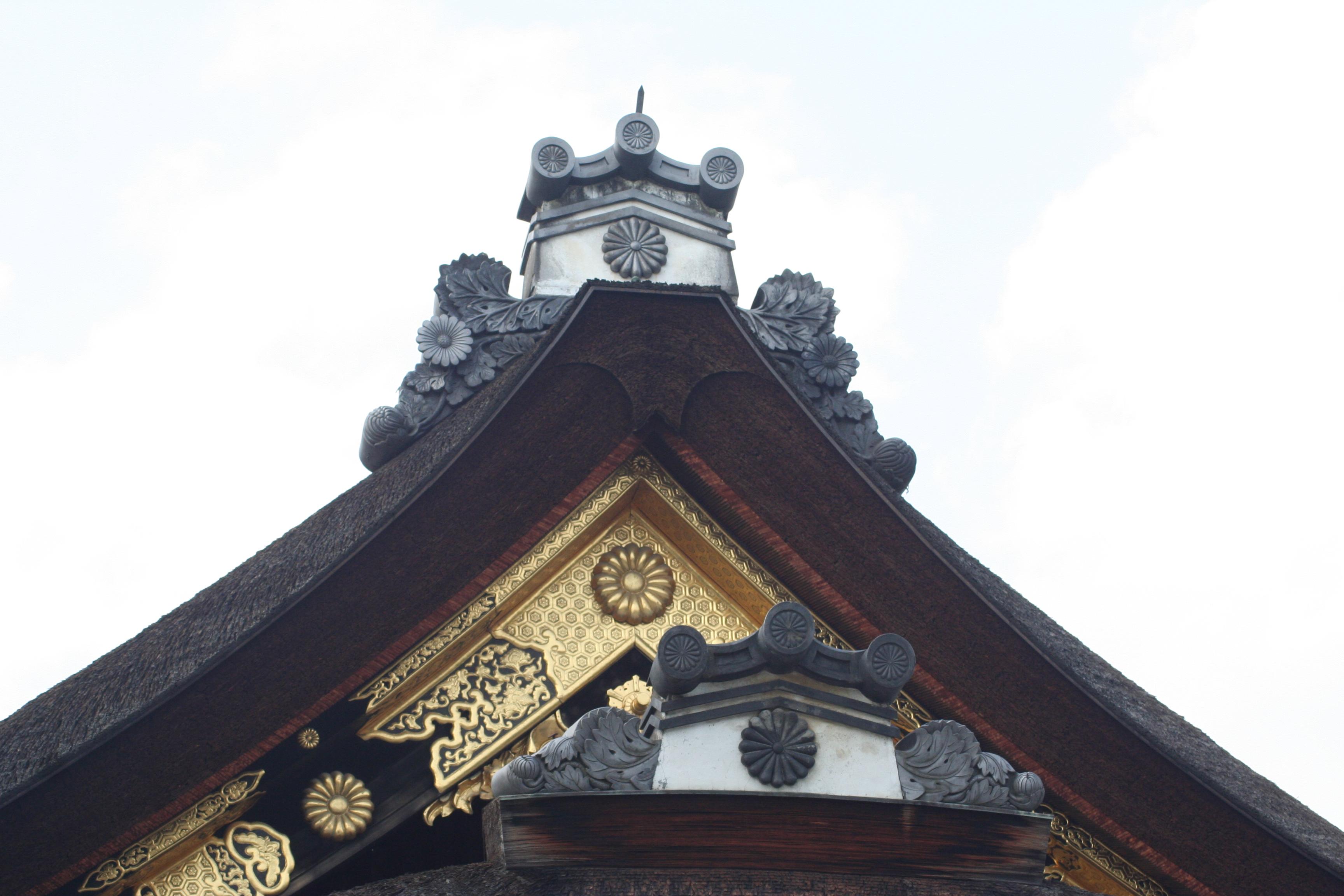
Various buildings are in various stages of upkeep and refurbishing – with a site like this, it’s got to be a never ending task. Here you can see all of the detail on a roof peak that’s a bit faded and worn…

IMG_4111 small

…and here you can see a very similar roof peak that’s been more recently restored.


Leave a comment

Filed under Photography, Travel

NaNoWriMo 2014, Day Eleven

This really is not going to get ‘er done! Obviously.

It’s a marathon, not a sprint, but I feel like it’s one where I’m having serious leg cramps or some other problem and we’re not even at the equivalent of the five-mile marker. In any marathon there is a maximum time allowed (usually seven or eight hours, maybe less) and if you can’t finish by then, you don’t get a time and they open up the roads and go home, leaving you out on the course. (It’s not quite that harsh, but in a big race like LA, SF, NYC, or Boston, they will scoop you up as a straggler and put you on a bus to the finish line.)

Here there’s also a deadline and a time, and while there are still eighteen days to go, at this point I’ll barely make the halfway point. But I’m not giving up, I just have to find a way somehow to juggle some priorities and free up some time. There have been a few “curve balls” this year, some really good, some not so good, and they of necessity have booted NaNoWriMo off of the top of the priority list.

Like that runner with cramps falling way off the target time and watching the buses creeping up from behind, I need to suck it up and make it happen. It won’t be the end of the world if I don’t make it, but it will be disappointing to not hit that personal goal.

We’ll see.

While I normally put in a lot of  internal links to previous, related posts here, I won’t be doing that for what I hope will be this year’s thirty NaNoWriMo posts. If you have jumped into or stumbled onto this story in mid-adventure, there are plenty of other ways to navigate around the site to find previous installments. Actually doing so is left as an exercise to the student.

2014-11-12 Word Count Graphic

CHAPTER SIX (continued)


Leave a comment

Filed under Science Fiction, Writing

On A Freakin’ Comet! (And Another NASA Social!)

If you were watching any of my tweets today, or if you follow any of the usual space & astronomy news channels, you know that the ESA’s Philae lander successfully detached from the Rosetta spacecraft and soft landed on Comet 67P.

In case you have any doubt — This. Was. Huge.

These spacecraft were launched over ten years ago, which means they were designed something like fifteen or sixteen years ago. Regardless of that, the feat of getting them to rendezvous with the comet was monumental. To now have the lander successfully get down to the surface just takes the awesome up a notch or two. There aren’t enough congratulations in the world right now for the ESA team that has designed and executed this mission.

We’re not out of the woods yet. The lander was supposed to anchor itself to the comet surface in order to keep flying off into space. The gravity on the surface of the comet is so small that the lander, which weighs over 200 pounds on earth, weighs less than a gram on Comet 67P. When it starts to drill or even move the camera around, it could fling itself back into space.

The problem was that they were designing blind, having no clue what the comet surface would be like. Is it soft, fluffy, and possibly deep? Is it hard and icy? A mixture? Like sand? Like gravel? Like rock? In order to cover as many bases as possible, there are multiple systems on Philae to try to anchor it. It’s not clear that those have worked.

Two harpoons were supposed to shoot out into the (assumed) ice, with the lines then reeled in to hold Philae down snug. There are also ice screws on all three legs, which can anchor the spacecraft if they can get a grip on the surface. Finally, on contact there’s a small thruster on top of the spacecraft that fires to hold it down while the harpoons and ice screws are trying to attach.

At the time that the signal was lost from Philae today (which was expected, the Rosetta orbiter is acting as a relay and it flew off in its orbit over the horizon) it appeared that the harpoons had not fired and the thruster had not lit off. There are concerns that the spacecraft could be the first “slider” or “scooter” on a comet instead of the first “lander.”

However, at last contact with Rosetta today Philae was working, was getting power from its solar cells, and had started to collect data. That’s all good.

Since then there hasn’t been much new data to work with. One possible issue is that a couple of things seem to indicate that in fact the lander bounced upon landing. Further analysis of some of the magnetic data and the data received on the solar panel power output seemed to show that the spacecraft was shifting and moving.

It’s very guesswork-y, but I saw at least one back-of-the-envelope calculation (with a LOT of assumptions) that showed that there were actually two bounces, the first one being a biggie, followed by a much smaller one. The figures I saw (which I really hope are way off base) showed that the first, big bounce could have been as high as 500 meters and as long as 120 minutes or so off of the surface. With the comet rotating and tumbling underneath it, and with us not knowing at all which direction it might have gone in, that bounce could have carried it waaaaay away from the original landing site, as in, almost anywhere. That could be a big problem in so many ways, which is why I’m hoping that it turns out to be incorrect. We’ll see in a few hours.

With luck, tomorrow will bring us some amazing pictures from the surface of the comet, as well as some data that will show us what the surface is made of. Ice? Water ice? Dry ice? Sand? Carbon?”

What I wouldn’t give to be there myself with a bucket and a mass spectrometer. But for now, let’s think good thoughts about Philae. It’s already done the impossible, now we just need to hope that it can push the boundaries of the impossible out a little bit further.


One other “spacy” note that I’m thrilled to report – I got an invite to yet another NASA Social!

You may remember that I’ll be up at Edwards Air Force Base next Tuesday and Wednesday, November 18th and 19th, for the NASA Social at the Armstrong Flight Research Center. That’s going to be fantastic and I’m really looking forward to it. (Although the long-term weather forecast for those two days looks…”interesting.” But we need the rain, don’t we?)

Now I’ve gotten the invite to a NASA Social at the Jet Propulsion Laboratory on December 3rd and 4th for the Orion launch and test flight. NASA is actually running eight concurrent NASA Socials on December 3rd at sites all across the country, previewing the Orion launch. On December 4th we’ll be able to watch the launch, flight, and splashdown of Orion together at JPL.

For both events, needless to say (but I’ll say it anyway, obviously), watch here for tons of information, pictures, and articles. Watch my Twitter account (@momdude56) for a lot of live stuff all day long, as well as on my Facebook page.

This is really going to be great! It’s going to be better if y’all are along for the ride!

5 Comments

Filed under Astronomy, Paul, Space

NaNoWriMo 2014, Day Eleven

Of course, it can be a bit exhausting to spend a full day at the hanger with deadline stuff up the ying-yang and a couple hours of “fun” training on the tugs and forklift thrown in to boot. Especially when I was up until well past midnight last night, writing, so I’m short a couple hours of sleep. And the night before. And the night before that. And… So by the time it comes time to write, staying awake might be the top priority.

You know that I’m tired when it takes me three days to figure out “which day” of NaNoWriMo should be listed in the post title, as if the first day of NaNoWriMo hadn’t been on the first day of November… (I believe that today the correct value is “eleven,” but someone might want to double check my work.

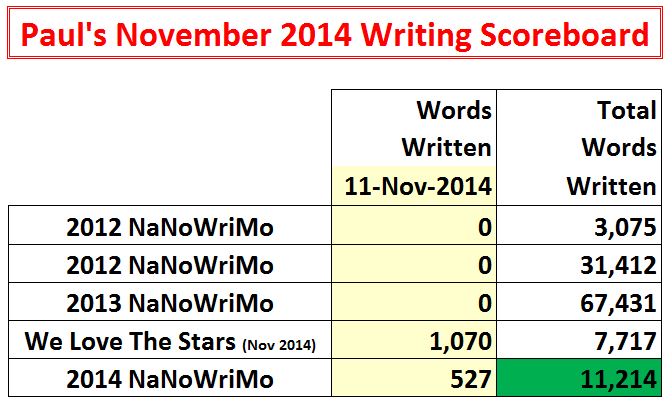
After the first dozen times I find myself nodding off at the keyboard and not knowing if I’ve been out for two seconds or twenty minutes, it’s time to wrap. 527 words today is better than zero words today.

While I normally put in a lot of  internal links to previous, related posts here, I won’t be doing that for what I hope will be this year’s thirty NaNoWriMo posts. If you have jumped into or stumbled onto this story in mid-adventure, there are plenty of other ways to navigate around the site to find previous installments. Actually doing so is left as an exercise to the student.

2014-11-11 Word Count Graphic

CHAPTER SIX (continued)

As the data started to flow back from the orbiter, filling many of the ship’s video screens with close-ups and vistas of an entirely new world, the mood onboard the Cronus was good. It had been a busy two weeks getting the Titan probes modified, checked out, and launched. Everyone was riding an emotional high as all three Titan probes were operating successfully.

Most of the science crew was going into overdrive now that they were being flooded with raw data. It was one thing to be getting remote readings from varying distances across the Saturn system, it was another to be drowning in a tidal wave of chemical analyses, weather data, pictures, and videos.

The crewmembers who were the primary communications specialists were also losing sleep, making sure that as much of the data as possible was being sent down to the big AIs and researchers at Goddard and O’Neill. Bradbury also got a subset of the data since they were dealing with their own practical issues associated with very cold planetary surfaces with very toxic atmospheres.

Engineering crews were hard at work, both at finishing the Iapetus orbiter and lander and at figuring out how to bootstrap the job of making modified van Neumann machines to explore, mine, and build once they had reached the volatile-rich inner moons. Maintenance was stuck with the utterly boring and routine tasks of making sure that the air was breathable, the water potable, the hydroponics growing, and the toilets functional.

No one on Cronus was less than one of the tops in their field, and by the very nature of life within a small crew in a hostile environment, all were enough of a jack-of-all-trades to help out wherever they could. Back in LEO there could be average ironworkers or chemical engineers holding down a job for a paycheck. Out on the edge of human exploration, being “average” meant being dead, and probably taking a load of crewmates along with you.

Alsby was mindful of the stress that she and their new mission were putting on everyone. When the Titan probes were down, the data handling routine set, and the Iapetus probe preparations well ahead of schedule, she declared a general holiday for three days. A holiday schedule was set up which put everyone on duty for just an hour or two each day, in order to deal with any problems, The rest of the time was to be spent relaxing.

With Cronus still orbiting fairly far out from Saturn, Miller and Doctor Anderson looked at the radiation and cosmic ray background measurements before agreeing to allow brief excursions by everyone out to the exterior observation area.

Most of Cronus’ crew had come from the Earth-Moon area. They knew from their experiences there how truly stunning the Earth could be from a low orbit, a blue and white water planet with occasional stretches of forest and desert.

But no one had ever seen Saturn like this with their own eyes. Video images were fine, and anyone could pull the current view up at any time, but everything paled compared to the real thing right in front of your face.

Leave a comment

Filed under Astronomy, Science Fiction, Space, Writing