Category Archives: Astronomy

Venus

Timing is everything, or so they say.

img_6777

It was a long day at the hangar and I thought that it was dark outside when I was walking through the very dark hangar from the office to the front door.

img_6784

Not quite dark – and Venus was reminding me why the ancients were so enamored with her as the Evening Star.

2 Comments

Filed under Astronomy, CAF, Photography

One Day Past Full

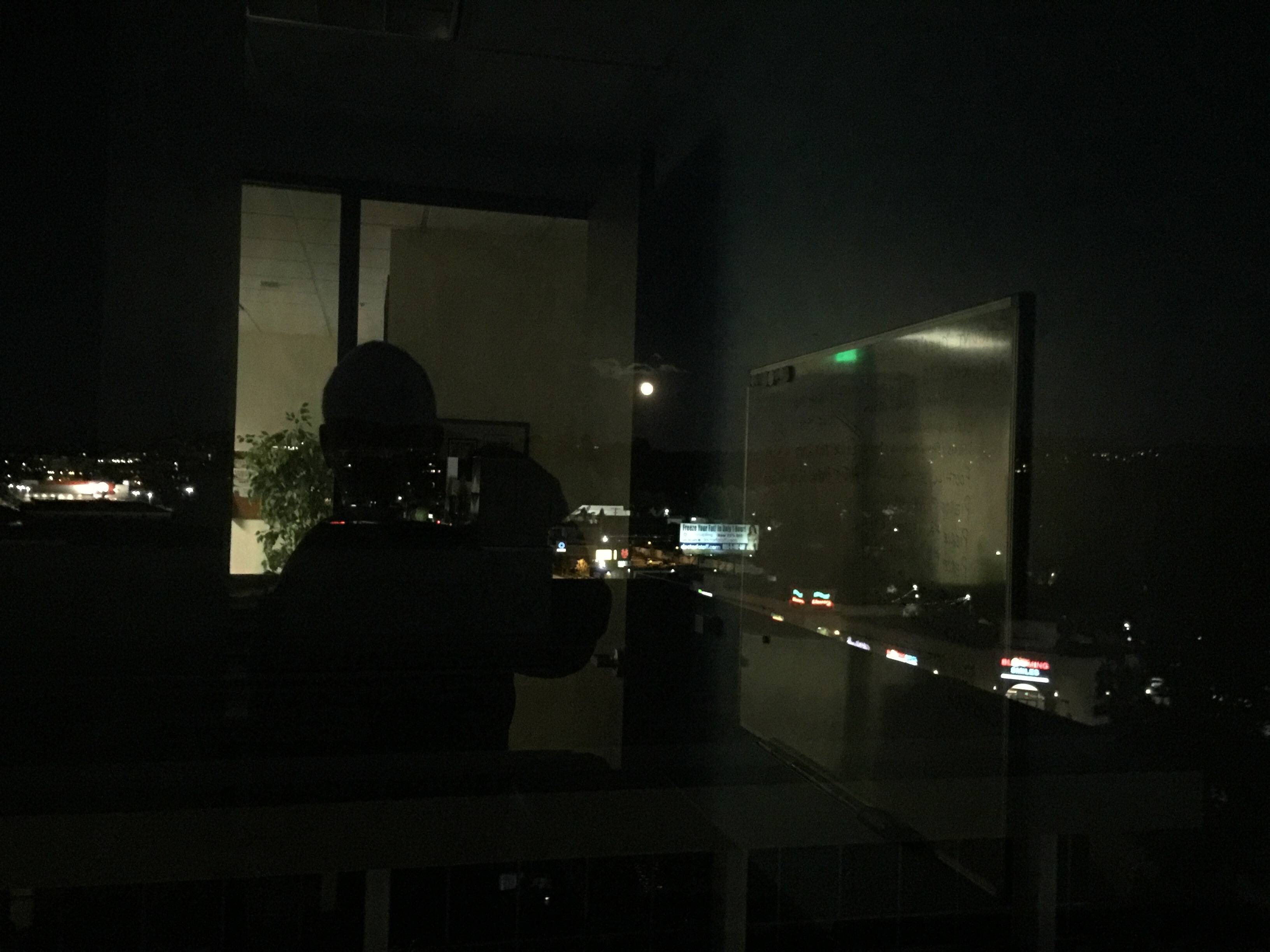
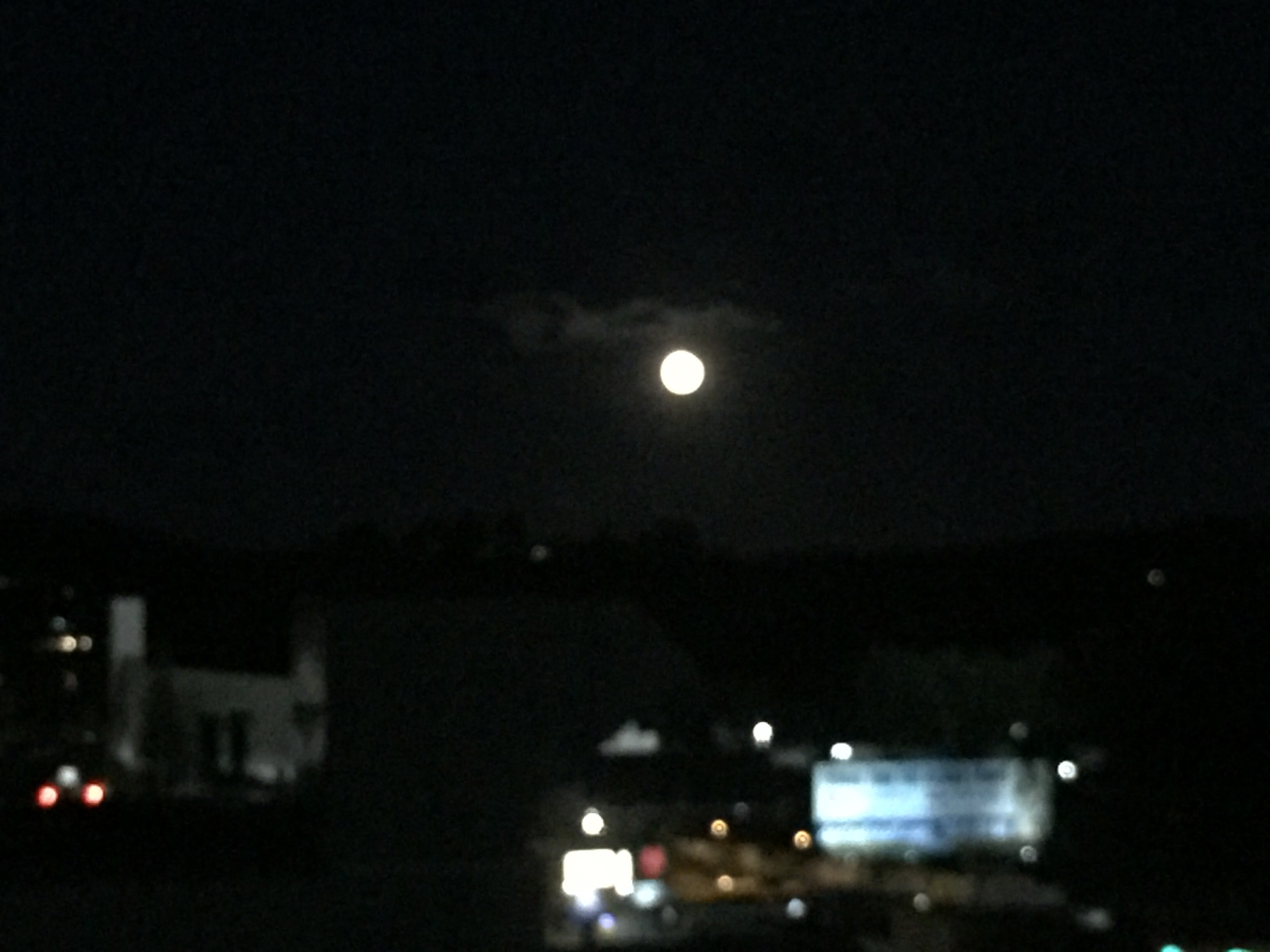
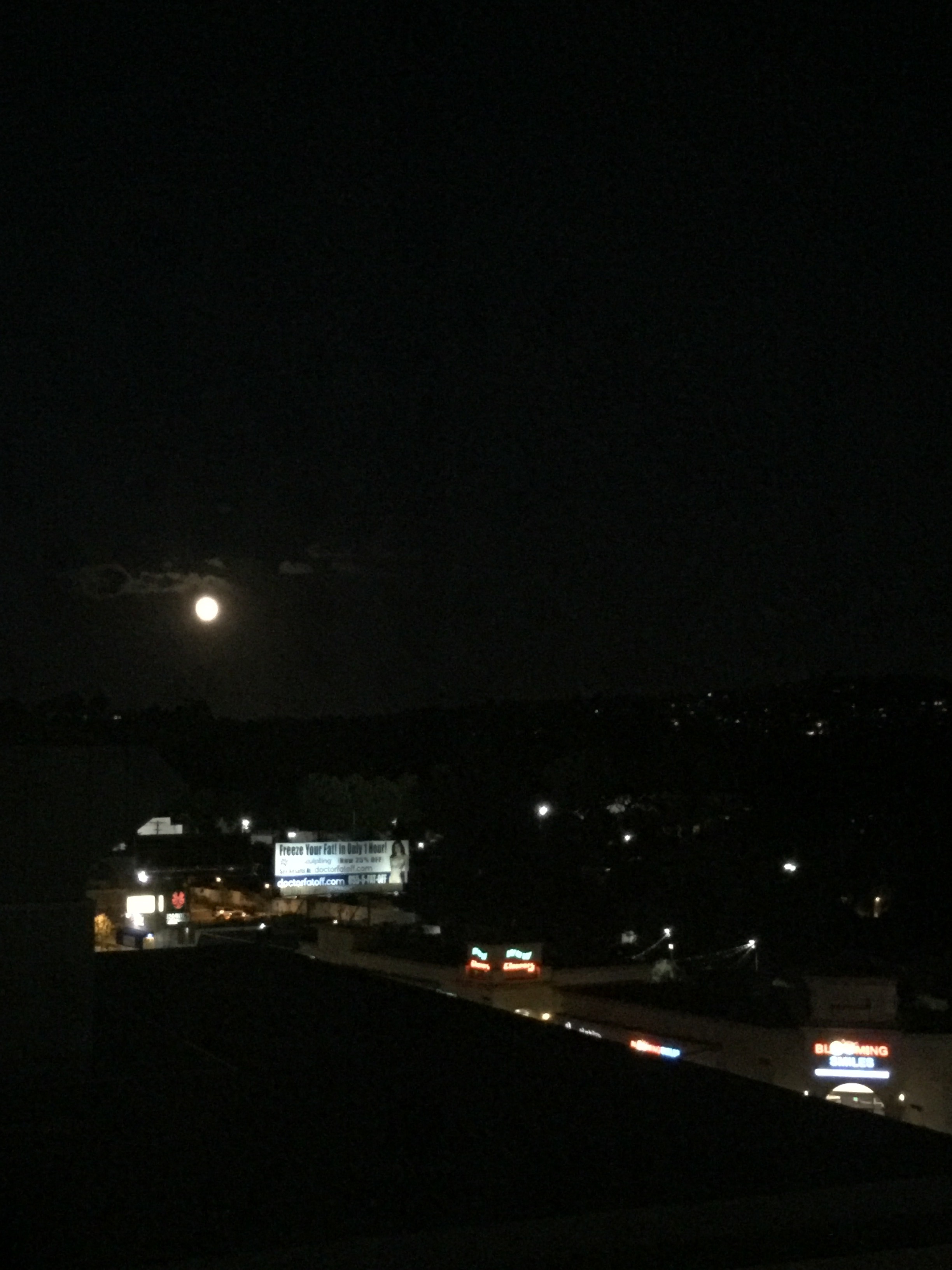
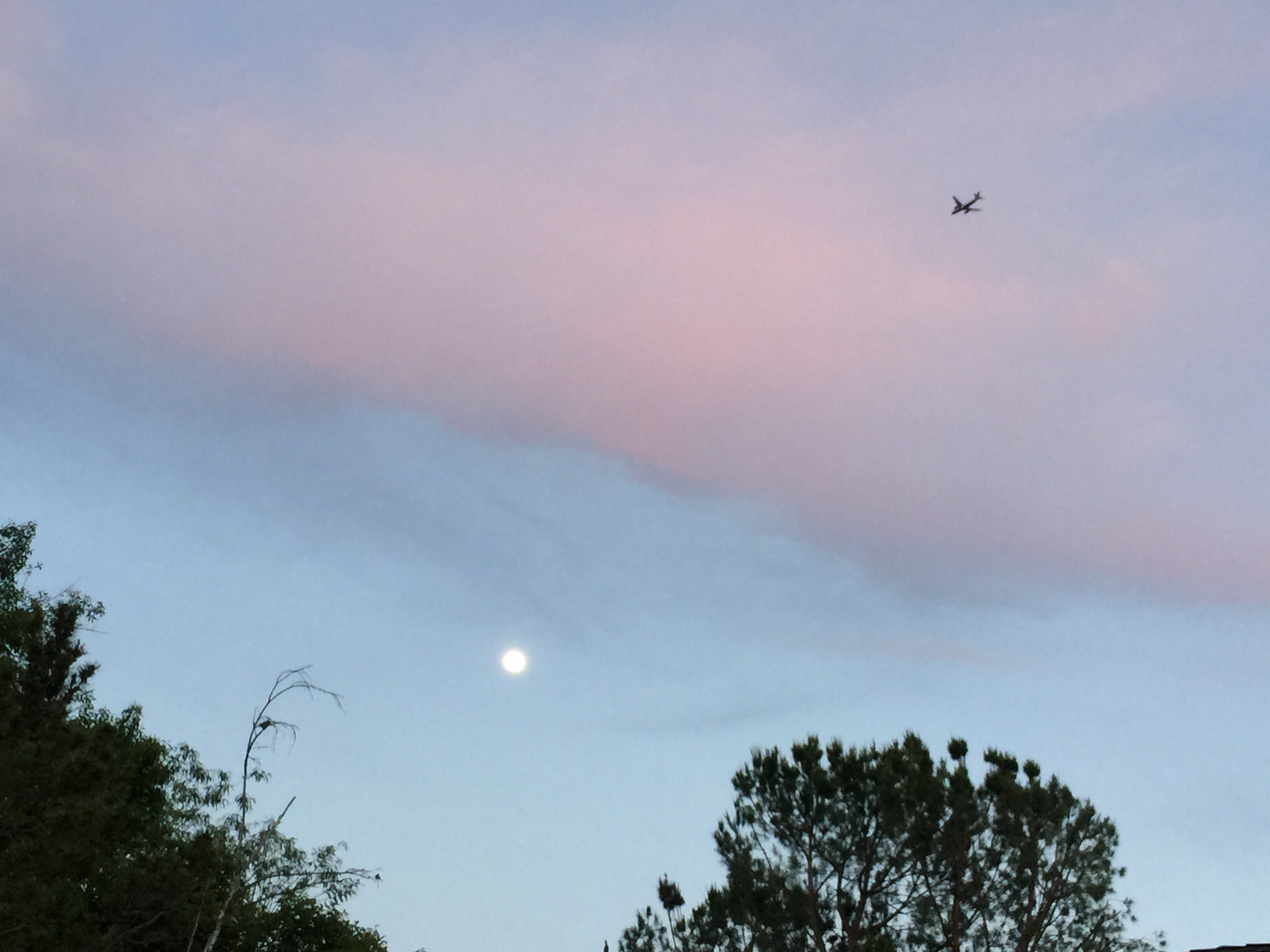
The moon was one day past full this evening, but still looked honkin’ big rising up out of the trees.

img_3842-smallIt’s an interesting problem with this lens, trying to get the Christmas lights bright enough to be seen with a long exposure while, not whiting out the whole picture with a tremendously overexposed moon.img_3856-smallMuch easier with the regular lens. This is just a tiny bit of the yard in order to catch the moon rising. If I go back to pick up the whole yard, the trees (which are holding up all of the lights!) block out the rising moon.img_3858-smallThis in turn was an interesting view, with the slightly overexposed and out of focus moon in the far distance, the bright and out of focus lights just a foot or so away, and the silhouetted trees in the middle being in sharp focus.

Leave a comment

Filed under Astronomy, Photography

They Crossed A Line

The Long-Suffering Wife is addicted to Hallmark Channel Christmas movies. She watches the Valentine’s Day love stories (which start about January 2nd) and the June wedding love stories (which start about February 15th) and the Halloween love stories (which start July 1st)… You get the picture. But while she watches those, she’s addicted to the Christmas movies.

This is no doubt better than being addicted to crack cocaine or heroin (I guess it’s sort of being addicted to heroine?) but some of these movies can make me question just how much better.

I end up watching bits and pieces of many (most?) of them because, while they certainly wouldn’t be my first choice for viewing, I like spending some time every night with my wife (go figure!) and I can get some work done on my phone, tablet, or laptop while relegating the movie to background noise where possible.

My issue is usually that they’re just so predictable and formulaic. I can come in during the middle of one I’ve never seen and in 30 seconds or less say, “That’s the heroine who’s engaged to the successful but stuck up rich boy toy who doesn’t stand a chance against the flannel-wearing goofy funny good ol’ boy in the small town where she’s going to amazingly find a way to find the true meaning and save Christmas while also ending up under the mistletoe with flannel boy.”

There are occasionally mitigating factors that make the viewing less stressful for me. Alicia Witt. Lacey Chabert. Danica McKellar.

On the other hand, the other night there was “Journey Back To Christmas.”

I can ignore the really lame time travel story. I’ve been reading science fiction for well over fifty years. Sometimes time travel is done really well, sometimes it’s an excuse to take a really boring story and try to make it different, and everything in between. No matter, time travel? Meh.

No, it’s the incredibly bad depiction of a comet, a key plot point, that had me ready to throw things at the screen.

Folks, you don’t have to be an astronomer to know that comets don’t streak across the sky like fireworks for two minutes and then vanish. People don’t stand out in the village square at just the right moment and “there it is!” so cue the oohs, the aahs, the awe, the magic and there it goes!

Comets are typically seen months, if not years before they’re at their brightest. Look back and see how many months I tried to get decent pictures of Comet Lovejoy. They start out dim, way out in the far reaches of the solar system, gradually brighten as they get closer to the sun and start to boil off gasses, then dim again as they move back out into the depths of the solar system or interstellar space, frozen snowballs.

If they happen to get close enough to Earth at just the right time, which can happen a couple of times a century, a comet can be big, bright, and close to Earth. It will be news. It will be front page news for about two months beforehand and for months and months afterward.

These guys stumbled across a reference to it in an old diary or newspaper…

So, to recap:

  • Huge
  • Bright
  • Flashes across sky in a handful of minutes
  • Has a tail that stretches from horizon to horizon
  • They’re the only ones who know about it
  • They only know about it because they got lucky
  • One minute it’s not there, the next it is, then it’s gone again

What utter bullshit!

Friends, if a comet comes by that catches us that off-guard, it’s only doing so because it’s doing 0.9c, traveling just in front of its light wave. Let me tell you, if something that big is coming that close to Earth at 0.9c, it had better have Bruce Willis sitting on it with a nuke (or Robert Duvall – a better movie by far) or our ass is grass.

But if it’s passing by at 0.9c, it’s going from horizon to horizon in well under a second. There’s no way it has a tail – it never lingered near the sun close enough to start melting. And there’s most certainly no way that it’s periodic and coming back in 71 years. That sucker’s going to be fifty light-years past Alpha Centauri and outbound in 71 years.

Sappy story? No worries.

Stupid plot? Okay.

Half-drawn caricatures for characters? As expected.

Actors we recognize who really, really should be getting better roles? Hey, it’s a paycheck.

Time travel? It’s different for a Hallmark Christmas movie, but hey, isn’t “A Christmas Carol” sort of a time travel Christmas story as well?

But have a huge, key, major plot point revolve around getting 3rd grade astronomy so very, very wrong that there are ten-year olds watching and yelling, “What the hell is wrong with these freakin’ idiots??!!”

That’s when they crossed a line.

13 Comments

Filed under Astronomy, Death Of Common Sense, Entertainment, Movies

Cloudy Halloween

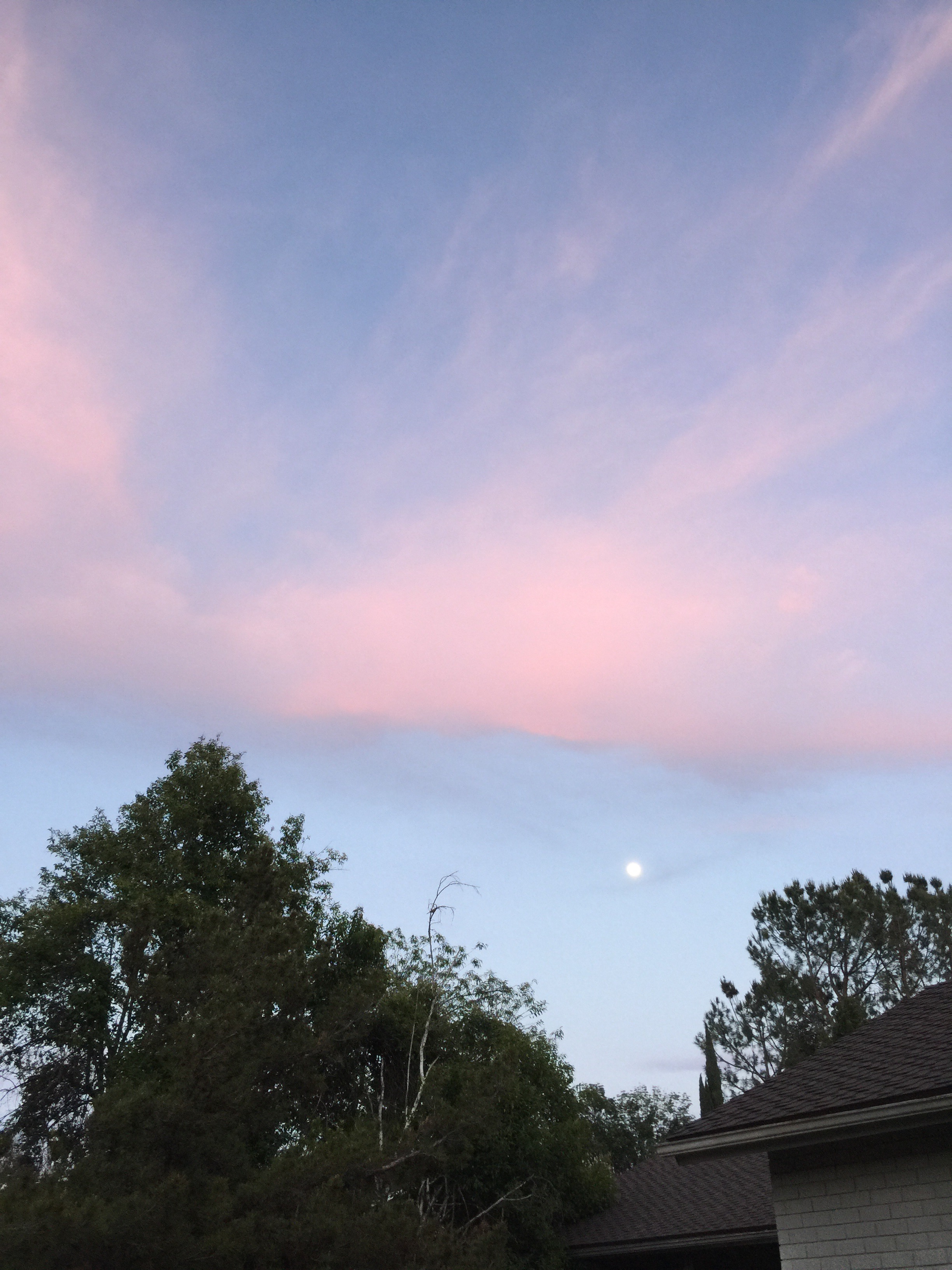
It was a nice enough sunset, the high wispy clouds turning pink, at least where you could see them through the low marine layer moving in.

img_3688

Which is lovely, except that we like to bring out all of the telescopes on Halloween and let the trick-or-treaters look through them. To the east, where the leading edge seen above was coming from, it wasn’t promising.

img_3691

I waited as long as I could, but it wasn’t looking any better. You could see a star her or there poking through the clouds, and I could see Venus setting in the west, but I decided to knock it off.

Of course, ninety minutes or so later it was clear as a bell and folks were wondering why the telescopes weren’t out. (Yes, they really do remember and they really do ask. This is a good thing.) Too late by then.

Next year…

Leave a comment

Filed under Astronomy, Photography, Weather

None So Blind

img_2508

Photo from NASA’s DSCOVR spacecraft, courtesy of the NASA EPIC Team.

Go to their website and watch the Earth spin in front of you, 898,000 miles away. This particular photo is from October 6, 2016 when Hurricane Matthew was forming in the Caribbean and heading toward the US Atlantic coast.

We have multiple spacecraft which can give us views like this. DSCOVR sends down one of these about every two hours. There’s a hi-def video here which shows a time lapse of the Earth spinning for an entire year.

We’ve had nine crews of Apollo astronauts (not quite 27 men – some went twice) who have seen this type of view with their own eyes.

Yet there are people out there who sincerely believe that the Earth is flat.

I can see being a flat Earth supporter if it’s done as a joke and they have great BBQ’s and parties. I’m a Pastafarian myself, singing the praises of the Flying Spaghetti Monster. But to be absolutely dead serious about it?

Think about that sort of mindset when you’re watching the US news for the next couple of weeks. Think about how tens of millions of people can be so blind in the face of overwhelming evidence, because the mountain of facts is inconvenient to their worldview. Think about the possible consequences of that blind fanaticism at the ballot box.

I try to have faith in the human race – we can send people out to see things like this! We’ve sent our machines to every planet in the solar system, we’ve landed and roamed around on Mars repeatedly, and some of our spacecraft are already well on their way to interstellar space.

Then I watch the current news…

I need to spend more time watching videos of the Earth spinning and less time watching the news.


4 Comments

Filed under Astronomy, Politics, Space

Harvest Moon From The 6th Floor

I’m really looking forward to the day I can be seeing this scene from the opposite direction, the new Earth looming darkly above, near the sun, four times the apparent size of the full moon.

img_2768

img_2777

Maybe next month.

I’ve said it before, I’ll say it again: “When I grow up, I want to be an astronaut!”


2 Comments

Filed under Astronomy, Photography, Space

Looking Forward To Halloween

October always ends with Halloween, which might not be my favorite holiday strictly as holidays go. It isn’t special to me for all of the usual reasons (pumpkins, costumes, trick-or-treating, candy, etc), but is still one that I look forward to every year – especially if we have clear skies and bright objects to look at!

If the conditions are favorable, we always bring out the telescopes and binoculars to the sidewalk and let people look through them as we hand out candy. This year the astronomical forecast is pretty good for the early evening of October 31st.

We might be able to spot a very, very thin crescent moon for a short while after sunset. As of 18:30 that evening the moon will be only one day, eight hours past the new moon, but that might be possible.

Even if we can’t seen the moon due to the hills and trees to the west, Saturn and Venus should be up for an hour or so after sunset. Venus will be an easy target and will show a crescent – always good for a bit of quick astronomy to prove to the little ghosts and goblins that there are things they can see with their own eyes to prove that we are on a planet, one of many, going around a star, and so on. It really helps to make the universe, astronomy, and physics real to them.

Saturn is also always popular with the rings and all. The tough part on Halloween is keeping it on the planet with a decent magnification eyepiece in there. 99% of the people looking through the telescope haven’t ever done it before and have no idea how it works, so they tend to grab on and yank it toward themselves, not realizing that it’s pointing very, very accurately and they just ruined that accuracy. That’s one of the reasons we like to find big, bright objects like the moon – they’re really easy to re-find and re-align the telescope on.

Even after Venus and Saturn set we’ll have Mars up in the west for a couple of hours. It’s not quite as spectacular as Venus, Jupiter, or Saturn, but kids are a lot more familiar with it since they can see pictures from Opportunity or Curiosity any time they want online.

Almost directly overhead there are a couple of nice globular clusters in Cygnus and Lyra. The Ring Nebula is also in Lyra, nearly at the zenith, but in the light-polluted skies of LA it’s a bit of a stretch.

What should be a piece of cake, even in binoculars, is the Andromeda Nebula. In a dark sky it’s a naked eye object and it’s up nice and high in the sky at the end of October, so I’m hoping we can get one of the scopes on it all night long. We should also be able to see the Beehive Cluster in Cancer.

Later in the evening, closer to 22:00, we’ll be getting the Pleiades rising in the east. Orion has a lot of good targets but it won’t rise until after 23:00, by which time the little folk should all be in bed.

One last thing to watch for as we get closer to the night will be any ISS passes overhead. Even if we don’t get ISS, the Hubble Space Telescope is fairly bright, as are several other satellites. We’ll see what we can see.

Now we just need some clear skies!

1 Comment

Filed under Astronomy, Castle Willett, Space

Fade To Indigo

img_1279

So many billions of shades of color. Not to mention the infrared, ultraviolet, radio, and gamma rays.

Is someone on Proxima Centauri B looking up a their sky with the same sense of wonder and awe at the beauty of it?

Not to be a buzzkill, but probably not. There’s an excellent Twitter thread by Dr. Kathryn J Mack (@AstroKatie) which you can read here even if you don’t have a Twitter account. The short version is that because there are so many hundreds and thousands of variables that we have no data on, the odds are massively stacked against Proxima B actually being inhabited or actually “habitable” by anything resembling us.

Proxima Centauri is a dim, red star. Proxima B is orbiting in its “habitable zone,” which is defined as the region around the star where it would be warm enough to have water on the surface not freeze solid, and cool enough so that it doesn’t boil away. For obvious reasons, this is also commonly referred to as “The Goldilocks Zone.”

Being in the “habitable zone” doesn’t make a planet actually be “habitable.” To hold life similar to ours, it would still need an atmosphere, water that is busy being neither frozen nor boiled, and probably a magnetic field to protect the planet from solar flares. We can’t tell if Proxima B has any of those things.

But the odds are against it. Because Proxima Centauri is such a dim, cool, red star, its habitable zone is much closer in than the Sun’s is. This has a couple of likely scenarios, mostly bad for life as we know it.

First, the planet is likely to be in tidal lock with one side always facing the sun and one side always in darkness. (This is very similar to the way Earth’s moon is tidally locked, with one face always turned toward the Earth.) With a sun and a planet, you’ll get one hemisphere boiling and the other freezing. You might have a strip along that terminator that would be tolerable, but that combination of heat on one side and cold on the other would drive hellacious straight-line winds, quite possibly hundreds of miles an hour.

Assuming you have an atmosphere. The atmosphere on Mars, for example, is thin and getting thinner by the millennium due to the planet’s lack of a magnetic field. The magnetic field blocks all or most of the worst effects of the solar winds. Left unabated, the solar wind over time will carry away the atmosphere and leave a planet looking like the moon or Mercury.

Can we tell if Proxima B has an atmosphere or a magnetic field? Not at the moment – but we’re close. The James Webb Space Telescope (which I saw being assembled here last year) could directly image the atmosphere, and radio telescopes or other instruments in the next decade could determine if there’s a magnetic field. Also, if there is an atmosphere and a magnetic field there should be aurora, which the JWST could look for.

Should we say it’s too hard and give up? Of course not, don’t be ridiculous.

Should we have newspaper and website headlines screaming about “Earth’s twin” being “right next door” and “habitable?” Of course not, don’t be ridiculous.

How about if we stay cool, breathe a bit, get excited about the prospect, work to get some actual data – and in the meantime rest assured that even if there isn’t someone on Proxima B looking at their sunset (probably through a 200 mph wind!), it’s an unbelievable huge universe and even with the long odds that life faces, there are almost certainly some things some where (and probably billions of some things on billions of some where planets) staring in awe at their sunsets.

They just might not be 4.25 light years away.

Or they might!

Let’s find out.

Leave a comment

Filed under Astronomy, Photography, Space

Better, Not Great

Having learned some sort of lesson yesterday, tonight when I went out to walk I took the “big” camera with me, the Canon DSLR with the 75-300mm zoom lens.

The moon, as expected, had moved higher in the sky, away from Mercury, and was now near bright Jupiter.

img_3110 small

img_3101 small

img_3082 small

img_3086 small

Tonight’s lesson – a much better camera is much better, especially with a nice zoom lens.

What would be even better yet would be that nice camera with a real zoom lens and a tripod.

On the other hand, a two-mile stroll with a three-pound camera is more work than one without, so I don’t know if I would actually want to walk while carrying the tripod as well. It could be awkward.

2 Comments

Filed under Astronomy, Photography, Space

Jewels In The Evening Sky

I apologize for not giving you more warning or ranting in advance enough about the astronomical display going on in the evening sky. I mentioned it once, but that’s not enough.

In short, just after sundown, you can see all five naked eye planets (see, I know I mentioned it, because of that dumb joke about also seeing the sixth naked eye planet).

Tonight was an excellent night to spot Mercury, which is always the toughest of them. It’s never too far from the Sun (orbital dynamics being what they are) which means it’s never visible in a dark sky, only in the twilight after sunset or before sunrise. But some appearances are better than others due to the tilt of the Earth’s axis. This causes the plane of the ecliptic (where the planets all travel, the solar system being like a humongous, flat disk to a good first approximation) to sometimes be at a steep angle to the horizon, leaving Mercury exposed.

To make it better tonight, a two-day old thin crescent moon was very close to Mercury, making it easy to know where to look. Online I noticed a number of people taking pictures and saying it was the first time they’ve ever actually been able to spot Mercury.

Tomorrow’s not quite as good, since the Moon will have moved on up into the sky nearer to Venus, but Mercury will still be there. It’s an excellent target to easily spot with the naked eye if you have a clear, flat western horizon. It’s even easier to spot if you have a pair of binoculars.

I was out on my evening walk and didn’t have my good cameras with me. The iPhone has a decent camera for about 99.99% of what I need it for on a moment’s notice (“The best camera you own is the one in your hand when you need it”) but it’s only marginal for this sort of thing.

img_9991

Click on the picture to enlargenate it. Can you see that faint sliver of the crescent moon, about halfway between the basketball hoop and the tree above the car?

img_9992

There it is! No sign of Mercury in this view since the iPhone doesn’t have an optical zoom, leaving us with a grainy digitally zoomed image.

A good SLR with about a 300mm zoom lens (just like the one I left at home, about 3/4 mile away at this point) would have grabbed it easily, just a smidgen above and to the right of the crescent. (Yes, “smidgen” is an official astronomical term. Because it’s my stinkin’ website, that’s why!)

If you go out and look tomorrow, the moon will have moved up and to the left from Mercury. It will be near Venus, which will be the brightest thing in the sky other than the Sun, Moon, or ISS if it should be passing overhead. (Check heavens-above.com to see if it is, of course.) You’ll be able to see Venus shining nice and bright for at least an hour after twilight ends.

Above and to the left (south) from Venus you’ll see a nice, bright Jupiter. Got binoculars? If so you should be able to see the four Galilean moons. Check them out about once an hour and pay attention to where they are each time. See, Galileo was correct when, unrepentant, he (supposedly) said, “And yet it moves!”

Further up, about due south, you’ll see a triangle of bright objects, two of them with a distinct reddish tint. The brightest one, on the right, is Mars, about six light-minutes away as the photon travels. The one with a more whitish or yellowish tinge on the top left is Saturn, about seventy-five light-minutes away. The reddish one in the lower left is the red giant star Antares, 553.8 light-years away.

Tomorrow night, if you’ve got no other plans and the weather is cooperating (pro tip – don’t go out in a thunderstorm to look for planets), put on lots of DEET-based mosquito repellant (no Zika for my friends!), find a comfy spot outside, and kick back with a beverage to watch the universe come out for your entertainment. Even if you don’t see the ISS, keep an eye out for meteors or other satellites.

It’s your universe. You don’t even have to pay taxes to enjoy it.

Yet.

Leave a comment

Filed under Astronomy, Photography