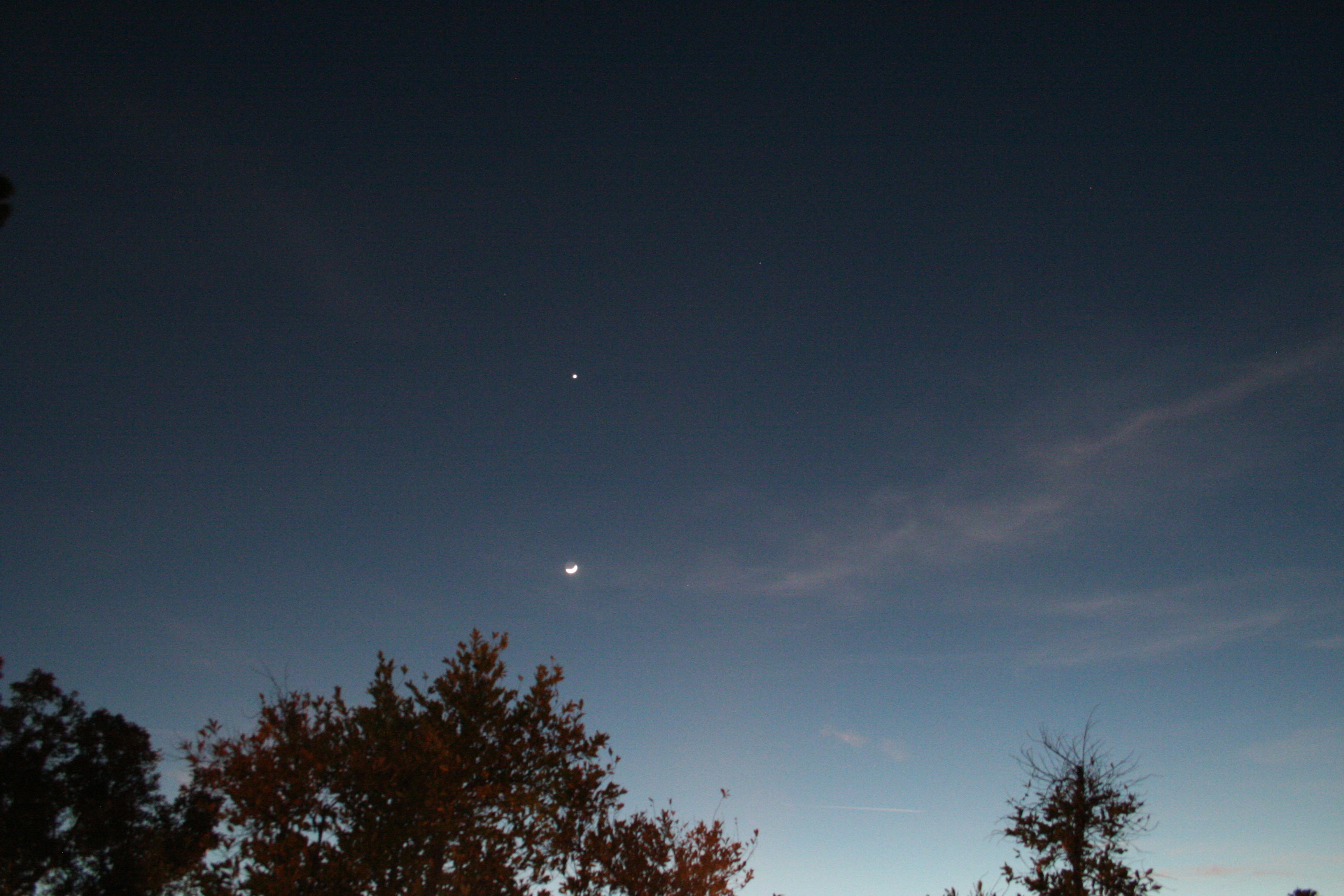
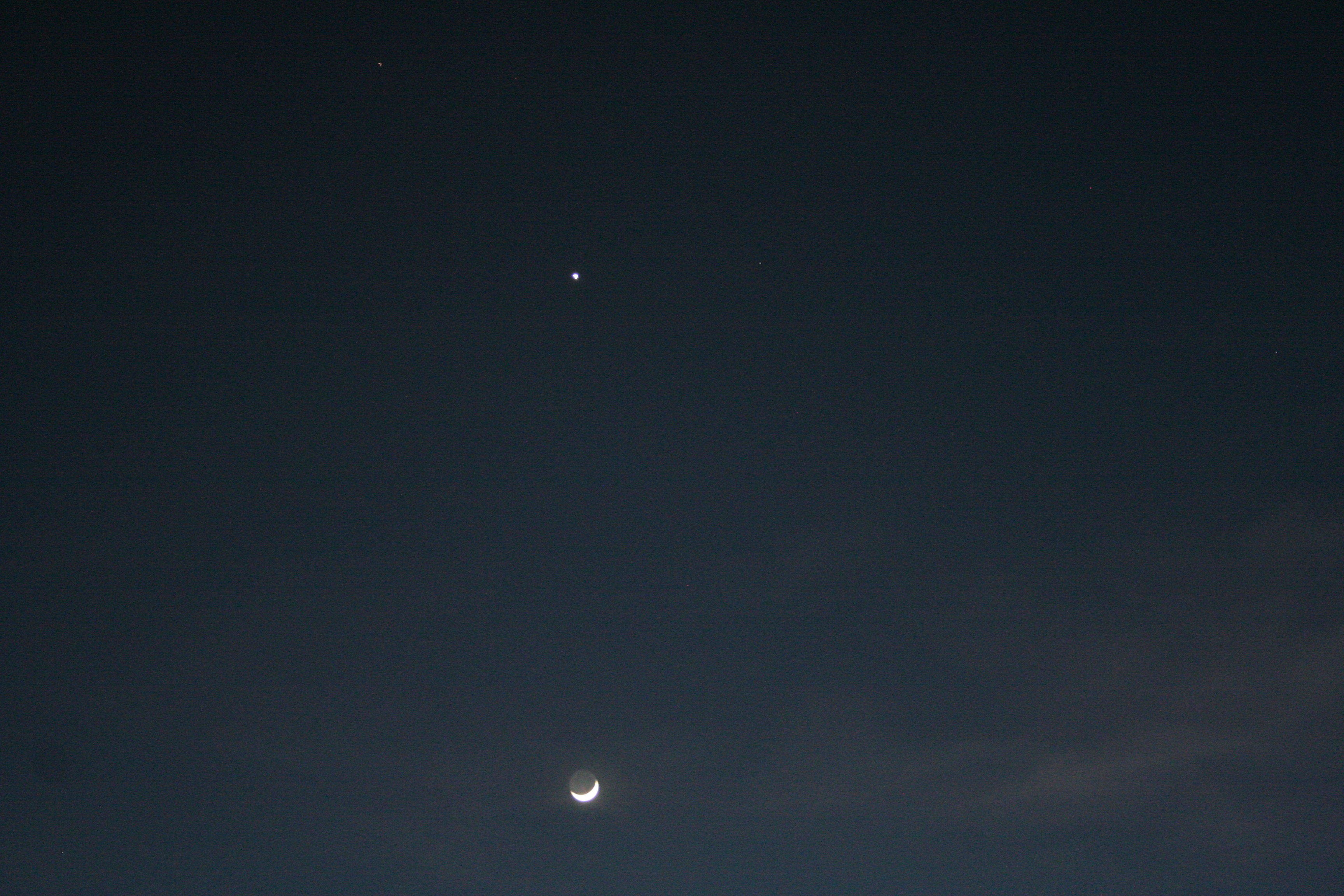
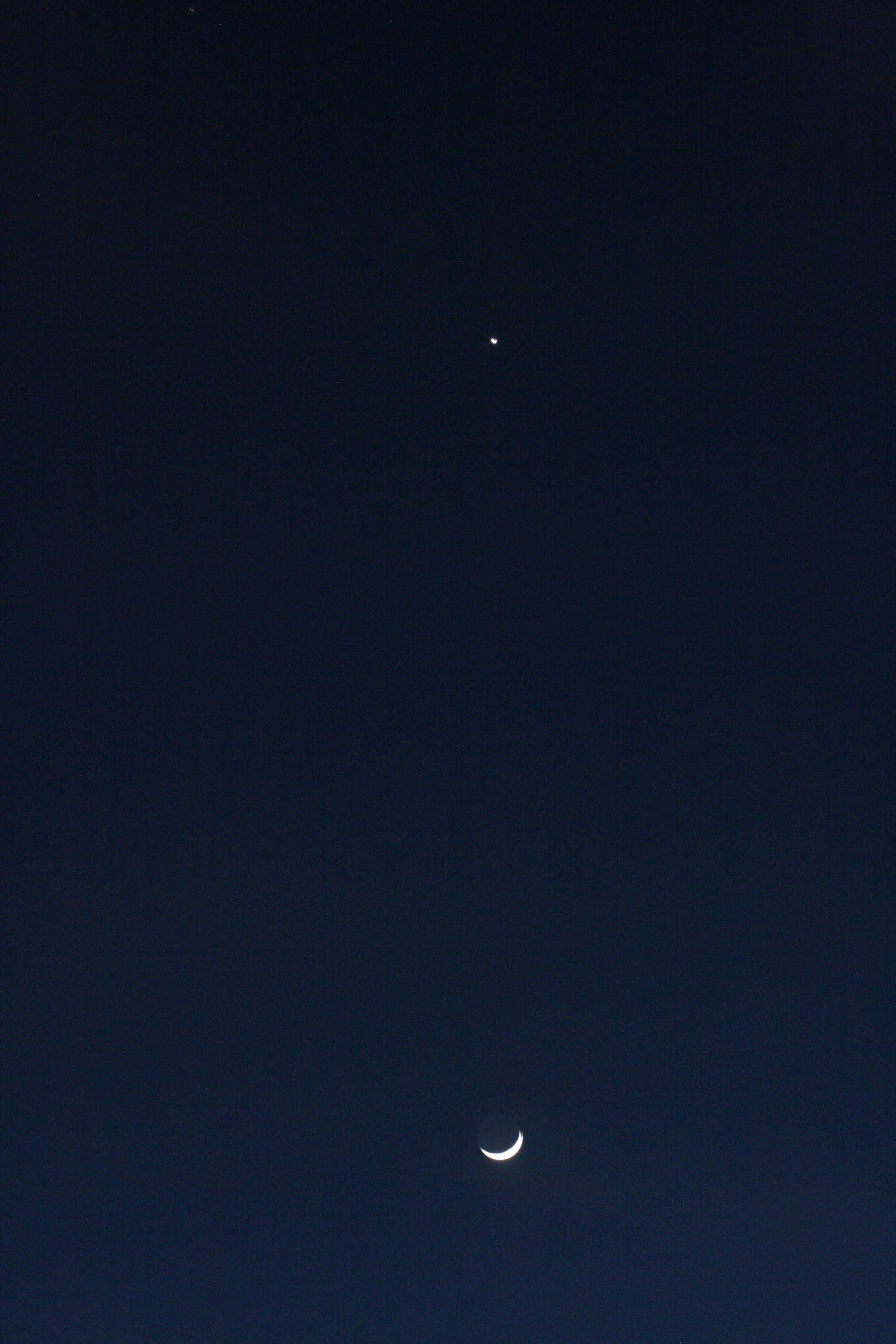
Category Archives: Astronomy

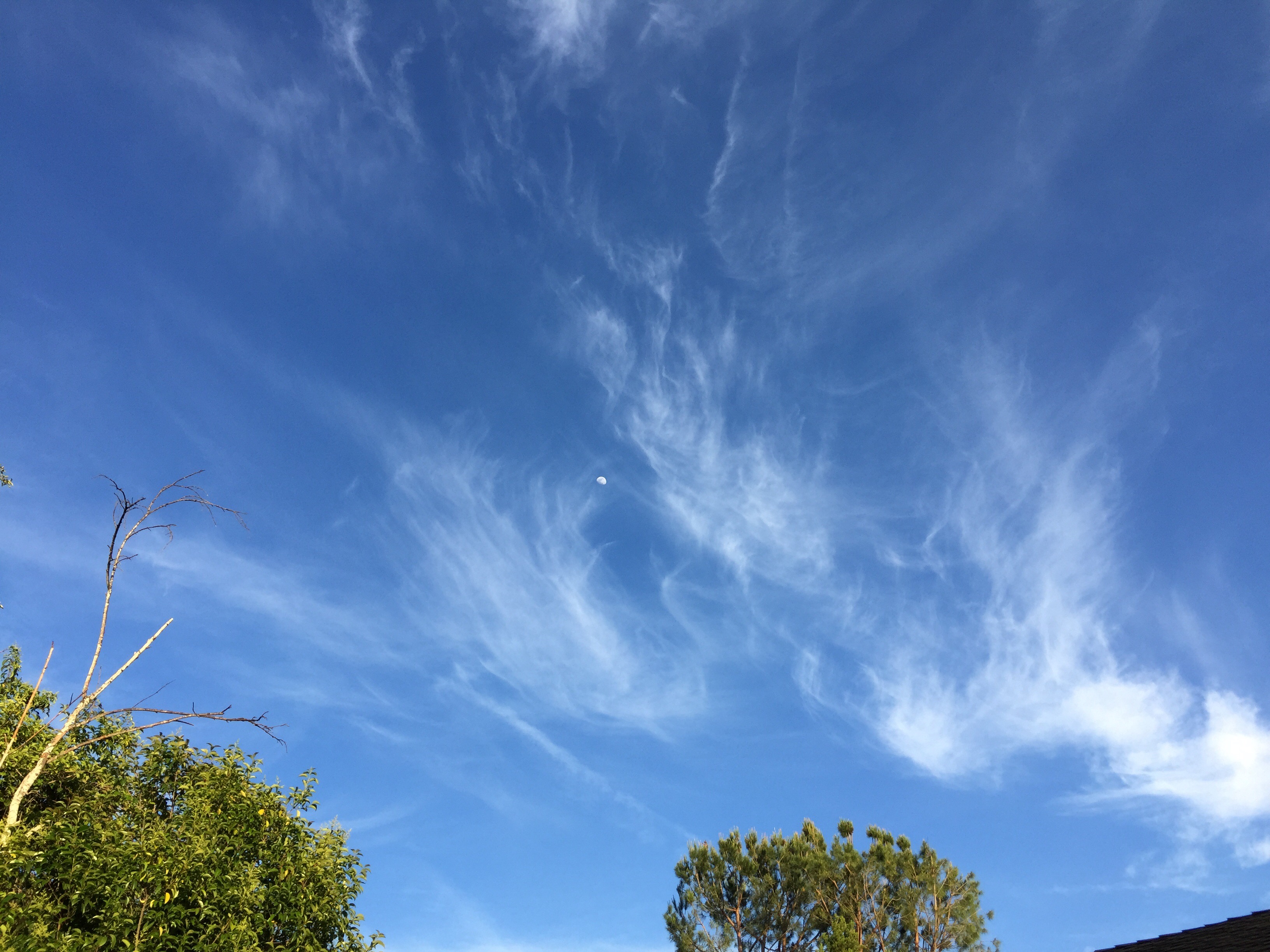
No Context For You – July 30th

As a side note, if you’re out in the early evening these days with a clear sky, you can see six of the naked eye planets.

In the twilight to the west, Venus is super bright. Jupiter is almost as bright, about two hands high above the horizon in the west. Mercury is more dim, in between them, a little closer to Venus at the moment.

To the south, Mars is still bright red and Saturn is almost as bright just a bit off to the left (east). They’re both near the head of Scorpius, which can be a wonderful area to look at with any pair of binoculars, even from the light polluted city.

The sixth naked eye planet?

First, pretend I’m a smart-ass second grader.

A) You won’t have to pretend very hard, but…

B) The answer will be obvious.

Leave a comment

Filed under Astronomy, Photography, Space

Walking The Crazy Off

The sky was wonderfully clear tonight after the smoky haze of the last few days (the big Sand Canyon fire is still less than half contained, but they’re getting the upper hand and it’s burning away from civilization and up into the mountain forests) and it was lovely going out for a 22:30 stroll around the block.

Up high in the southwest you can see Mars and Saturn in the head of Scorpius. Jupiter had set earlier (I’ll have to walk off the crazy earlier in the evening tomorrow to see it) but I could clearly see stars down to about magnitude 4, which is pretty good for Los Angeles. No sign of the Milky Way to the naked eye, but I know it’s there.

The skunks and raccoons left me alone and my fellow residents of the neighborhood actually stopped at the stop signs and didn’t run me over. A cat got freaked out because I walked by her wall and a couple of dogs expressed their displeasure with my existence, but that’s acceptable as long as they’re not lose and trying to gnaw on my leg.

The things that had me so frustrated and pissed off were still here when I got back, but I was able to separate them into the things I couldn’t do anything about tonight (they’ll still be here tomorrow) and those I could. I then did the ones I could.

Some days, that’s all you can hope for.

I’ll count it as a win.

Leave a comment

Filed under Astronomy, Los Angeles

East vs West

Simple. It’s been a long couple of days with a growing plumbing disaster, which might actually be seeing the light at the end of the tunnel. Which will be great if it’s not actually an oncoming train.

To make up work & try to hit deadlines (or at least not miss them by that much) I was at the office late. When I came out, to my right, due east, was:

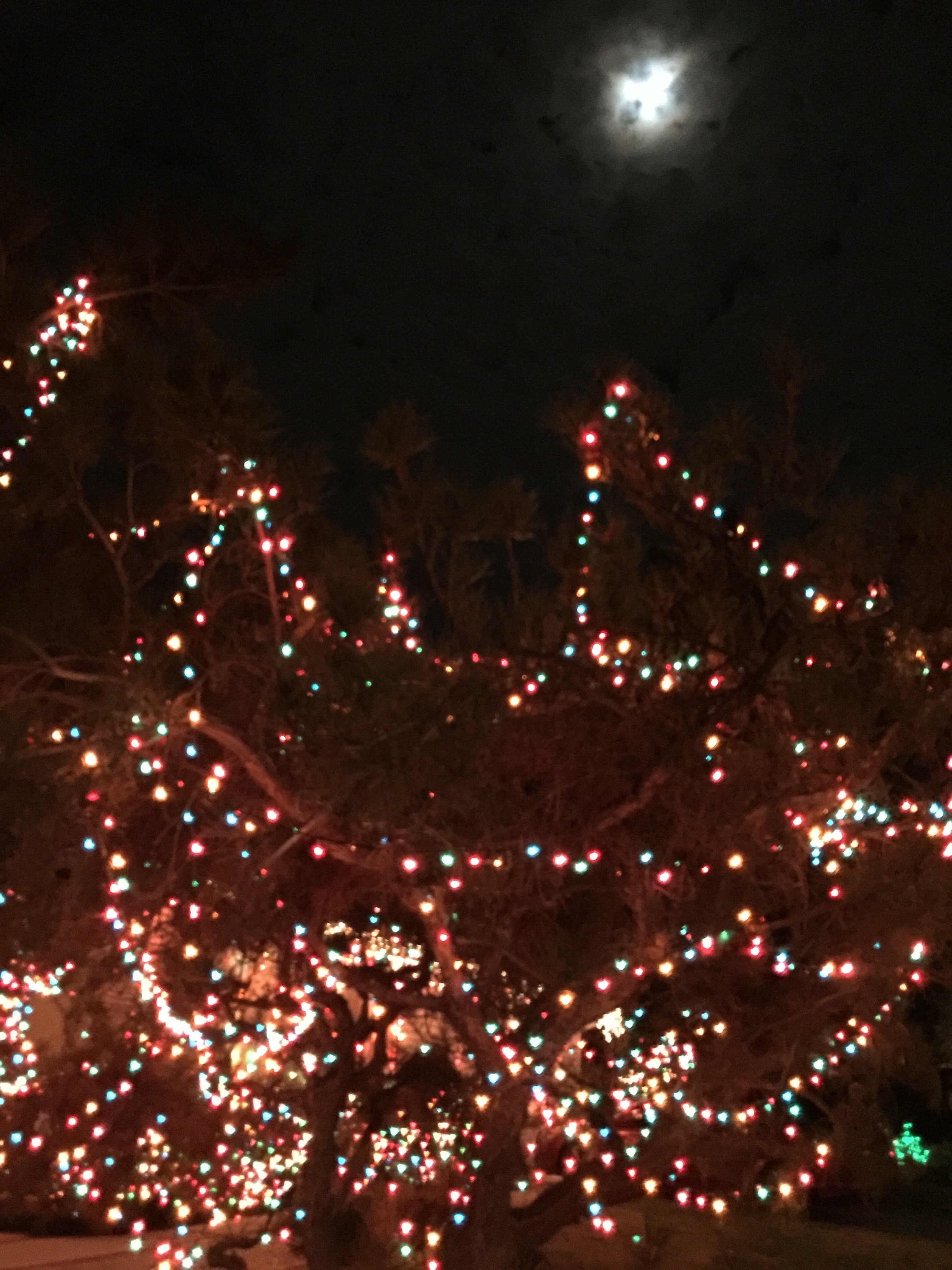
A honkin’ big full moon tonight, rising over the hills that protect Woodland Hills from Winnetka. (A little humor there, Winnetka – ha, ha! Repeat after me – ha – ha! Very good, Winnetka!

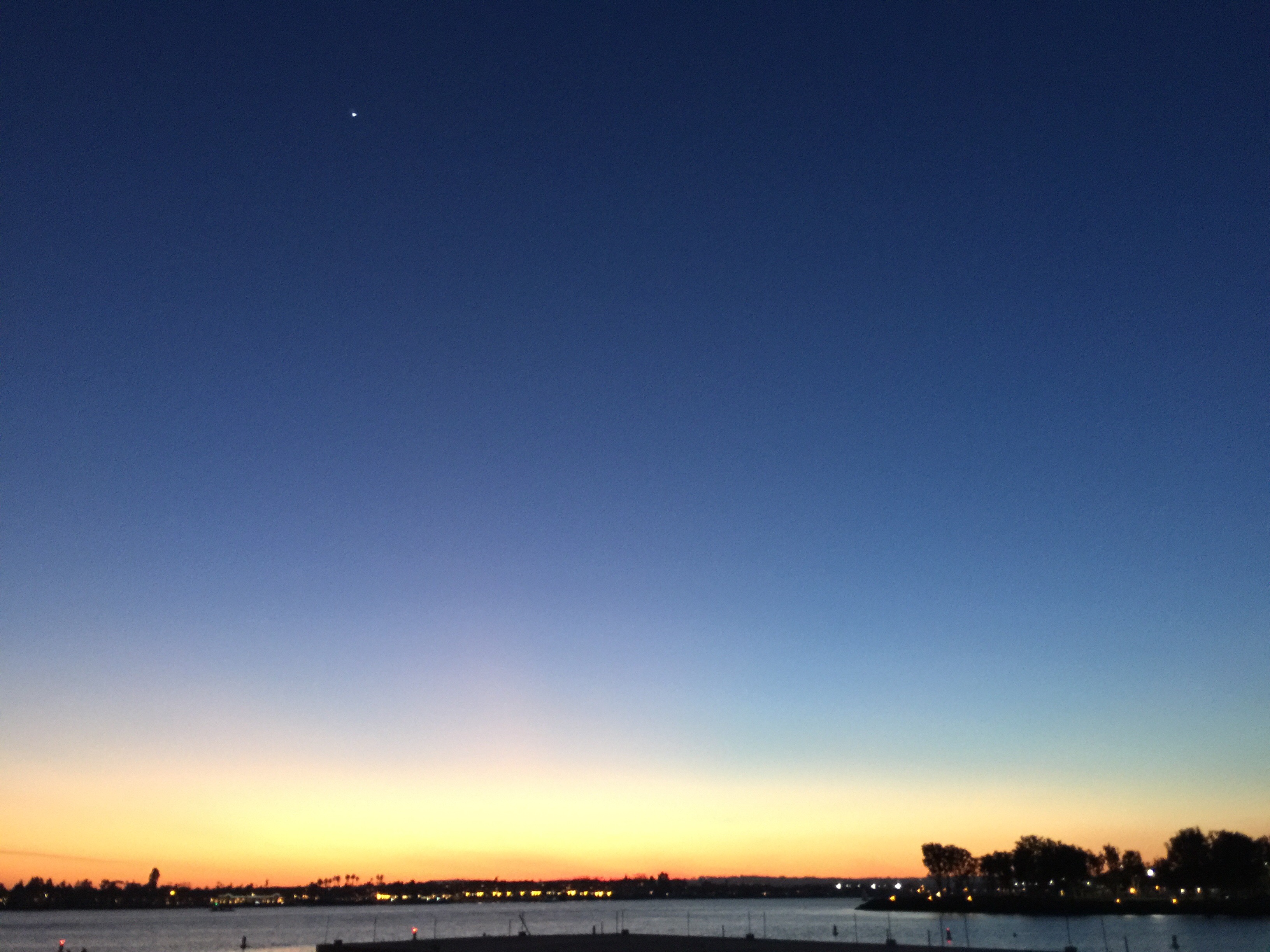
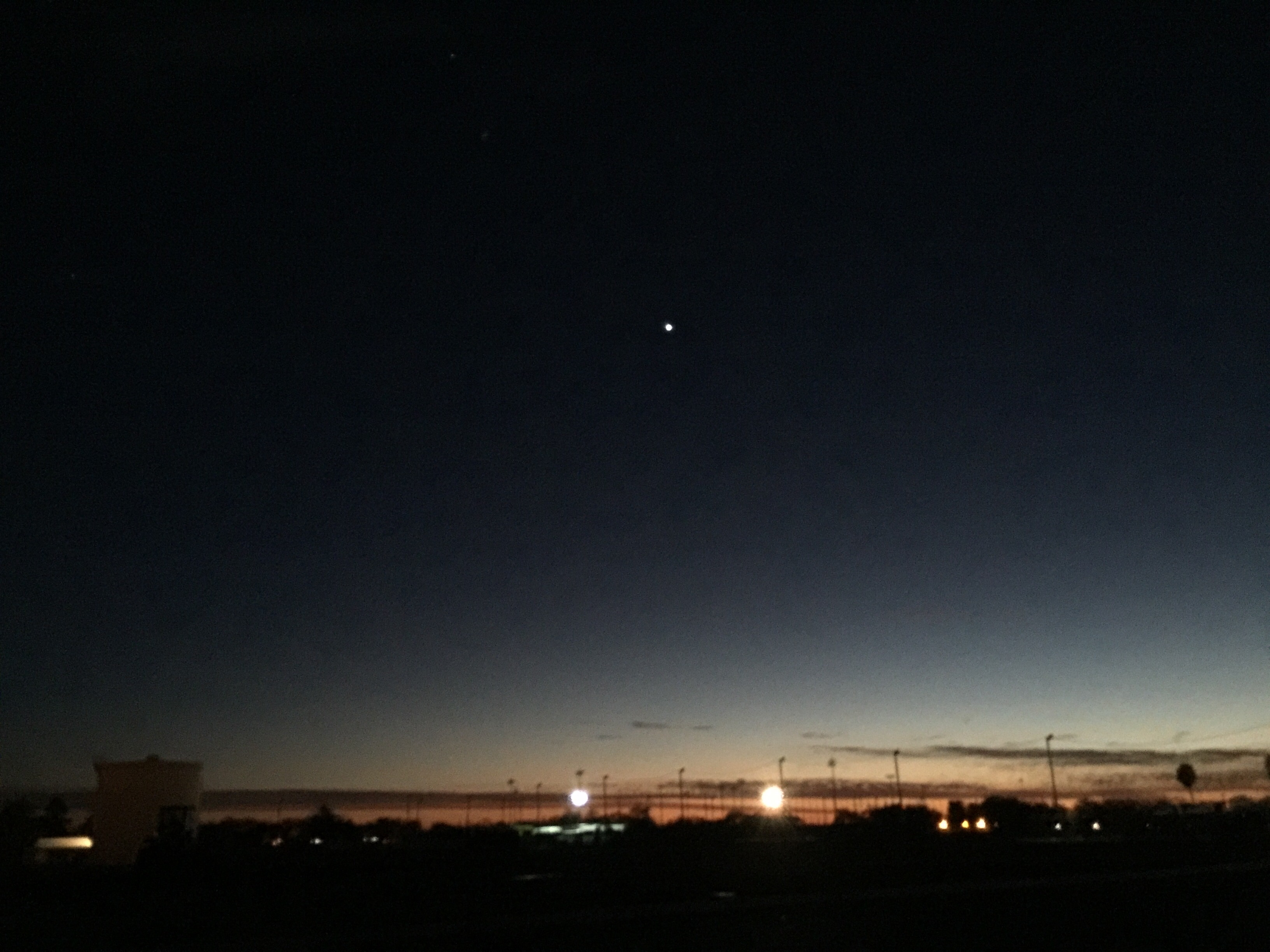
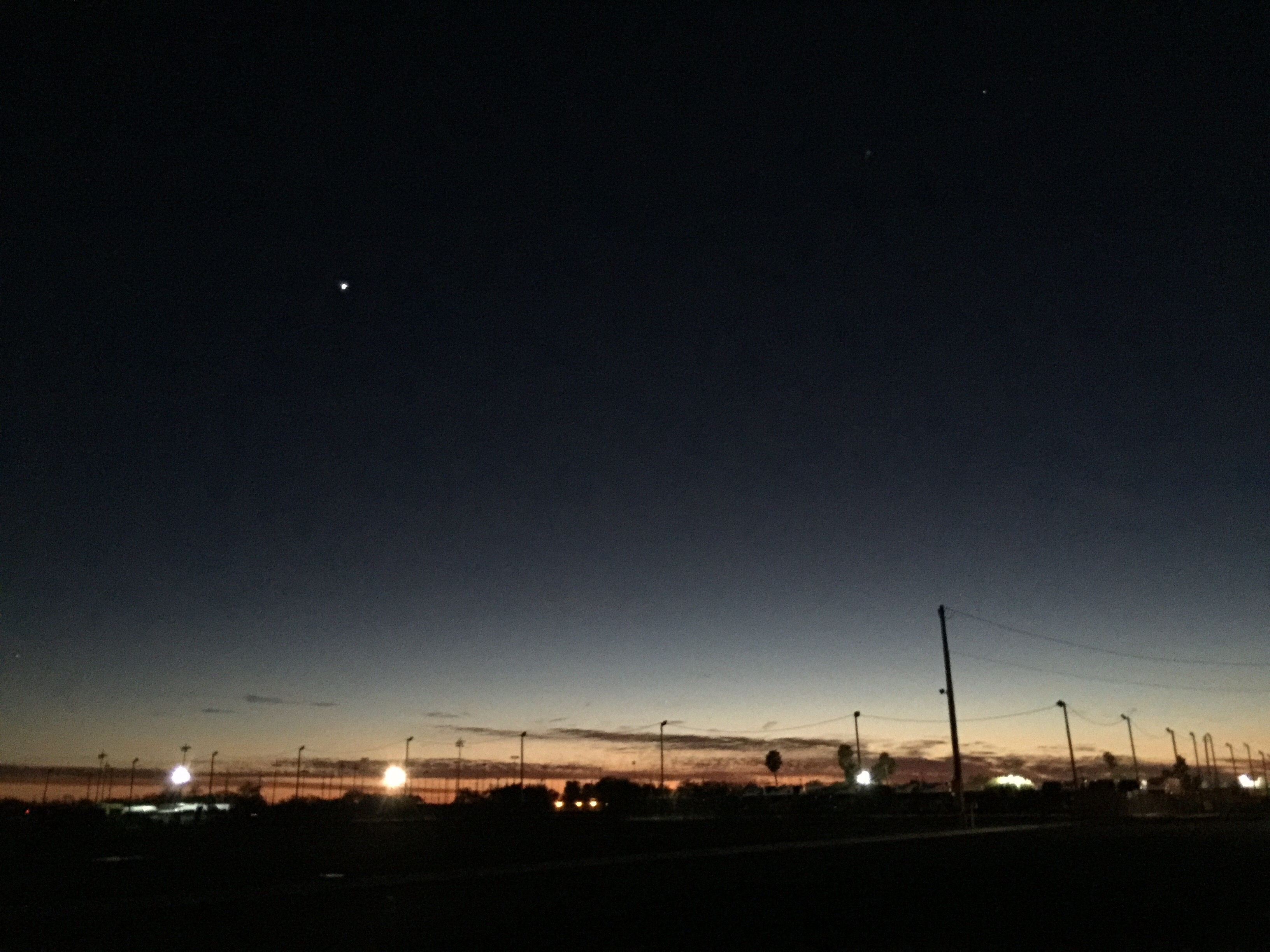
But if I spun around 180°, changing my orientation and my perspective, I saw this:

Clear and a million, accompanied by an almost perfect gradient effect from zenith to horizon and back again..

Leave a comment

Filed under Astronomy, Los Angeles, Space, Weather

Expand Your Mind, They Said

Well, it got expanded all right!

Last night, while my meat puppet shell was in a seat in Section 149, Row L at Dodger Stadium, my consciousness was pretty solidly in the Von Kármán Auditorium at JPL, roughly twelve miles to the northeast as the (three-eyed) raven flies.

The Long-Suffering Wife was insightful enough to point out that I had become one of those people I detest – someone who’s at a ballgame with friends or family but on their cell phone constantly, oblivious to the game, the score, or any possible incoming foul balls. As for the latter, I was fine since there were a couple of young ladies sitting in front of us, probably something like eight and ten years old, and both had their gloves and meant business. Nothing was getting by those two!

I’m glad to report that the Dodger Stadium wi-fi is indeed much improved. It does however, as Murphy would predict, get flaky and start dropping out about five minutes before the Juno engine burn started. I was watching NASA-TV off and on up until then, tweeting and re-tweeting comments from the NASA Social attendees who were at JPL. (None of them took me up on my offer, obviously.) Then the wi-fi started to lock up and lag.

It’s for situations like this that I’ve kept that grandfathered unlimited data plan on my iPhone come hell or high water.

As we all know, Juno performed like a champ, hitting her mark just one second off schedule after travelling more than three billion miles through space in five years.

As people have pointed out, the next time a politician tries to tell you that they’re going to “make America great again,” point out Juno, Cassini, the Hubble Space Telescope, Curiosity, and all of the other NASA and JPL spacecraft currently up there. We’re already pretty freakin’ great!

After Juno was safely in orbit and had successfully spun down and turned back to face the sun, I looked up and found that the Dodgers were winning. The fireworks were pretty good too.

How was your Fourth of the July?

1 Comment

Filed under Astronomy, Space, Sports

Multitasking On The Fourth

Okay, everybody remember that Juno arrives at Jupiter tonight! If your fireworks got rained out, or were yesterday (what’s up with that?), or are already over, or you’re not in the US and you’re just thinking that we’re especially wacked out today (BTW, you’re correct!), then hunker down in front of NASA TV and watch the show!

If you don’t have NASA TV on your cable or satellite system, or your fireworks are going on simultaneously and you don’t want to miss them, or you’re going to be at a ballgame (like we are), then watch it on your phone or computer or tablet or your freakin’ Apple Watch! C’mon folks, we’re in the 23rd Century here! (Actually, I don’t know if you can watch it on your Apple Watch. You should be able to on general principles alone – just sayin’.)

My thoughts will be will all of the thousands of folks across the globe that have worked for decades on this mission. Tonight’s one of the true do-or-die moments, with very, very little room for error.

To all of my fellow NASA Social tweeps at JPL, a few short miles from Dodger Stadium, where I’ll be – I’ll be watching, keep up the great work! And just on the off chance that any of you were thinking, “Damn, I really wanted to see that game tonight and the fireworks, but now I’m stuck being at JPL!” I have some nice seats on the third base side I could trade…

Head at JPL and Jupiter, body at Dodger Stadium watching some of this (these are from July 4th 2006 at Dodger Stadium):

IMG_2791 smallIMG_2807 smallIMG_2815 smallIMG_2829 smallIMG_2843 smallIMG_2850 smallIMG_2860 smallIMG_2875 smallIMG_2884 small

1 Comment

Filed under Astronomy, Fireworks, Photography, Space, Sports

Juno At Jupiter Tomorrow

Anyone who also follows me on Twitter (or, if you’re reading this on the site in the next few hours, you can look at the sidebar on the right of the page) will know that there’s a big planetary exploration event tomorrow, and a NASA Social to go along with it.

For the rest of you, note that tomorrow evening the Juno spacecraft, launched five years ago, will arrive at Jupiter. It will be firing its main engine for about 35 minutes to slow down enough to be captured by Jupiter. If the engine fires for less than 20 minutes, Juno will sail off into interplanetary space. If the engine fires for much longer than expected, it will crash into the planet and be crushed.

Emily Lackdawalla at the Planetary Society has an excellent guide to what’s scheduled to happen.

As is my wont these days when I can’t make it to a NASA Social (in this case, because I wasn’t picked when I applied) I spent a good chunk of the day spreading the word about those who were there, and re-tweeting many of their excellent comments, pictures, and videos. All of those folks will be there again tomorrow during the orbital insertion, so you can follow them to get a view from inside the campus.

Over on NASA-TV there will be a pre-insertion press conference at 09:00 PDT (12:00 EDT, adjust as needed from there). The NASA-TV coverage of the actual insertion maneuver will start at 19:30 PDT, with the maneuver itself to start at 20:18 and be over at 20:53. There will be a post-insertion news conference at 22:00 PDT. All of the NASA-TV events will also be available on a number of platforms on your phone or computer as well.

Since I didn’t get picked for this NASA Social, we’ll be at the Dodgers game for the fireworks. But I hear they have excellent wi-fi these days – and I have a DVR.

Follow along! Our family has watched every planetary flyby, arrival, and landing we could since the kids were born. Pathfinder, Spirit and Opportunity, Curiosity, New Horizons, Galileo, Messenger, Cassini… It’s exciting to watch something created by tens of thousands of scientists and engineers from all over the country and all over the world actually arrive at another planet, close to a billion miles away.

We really should do it more often!

Leave a comment

Filed under Astronomy, Space

Jupiter & The Palm

Playing around some more with the NightCap Pro app on the iPhone 6+.

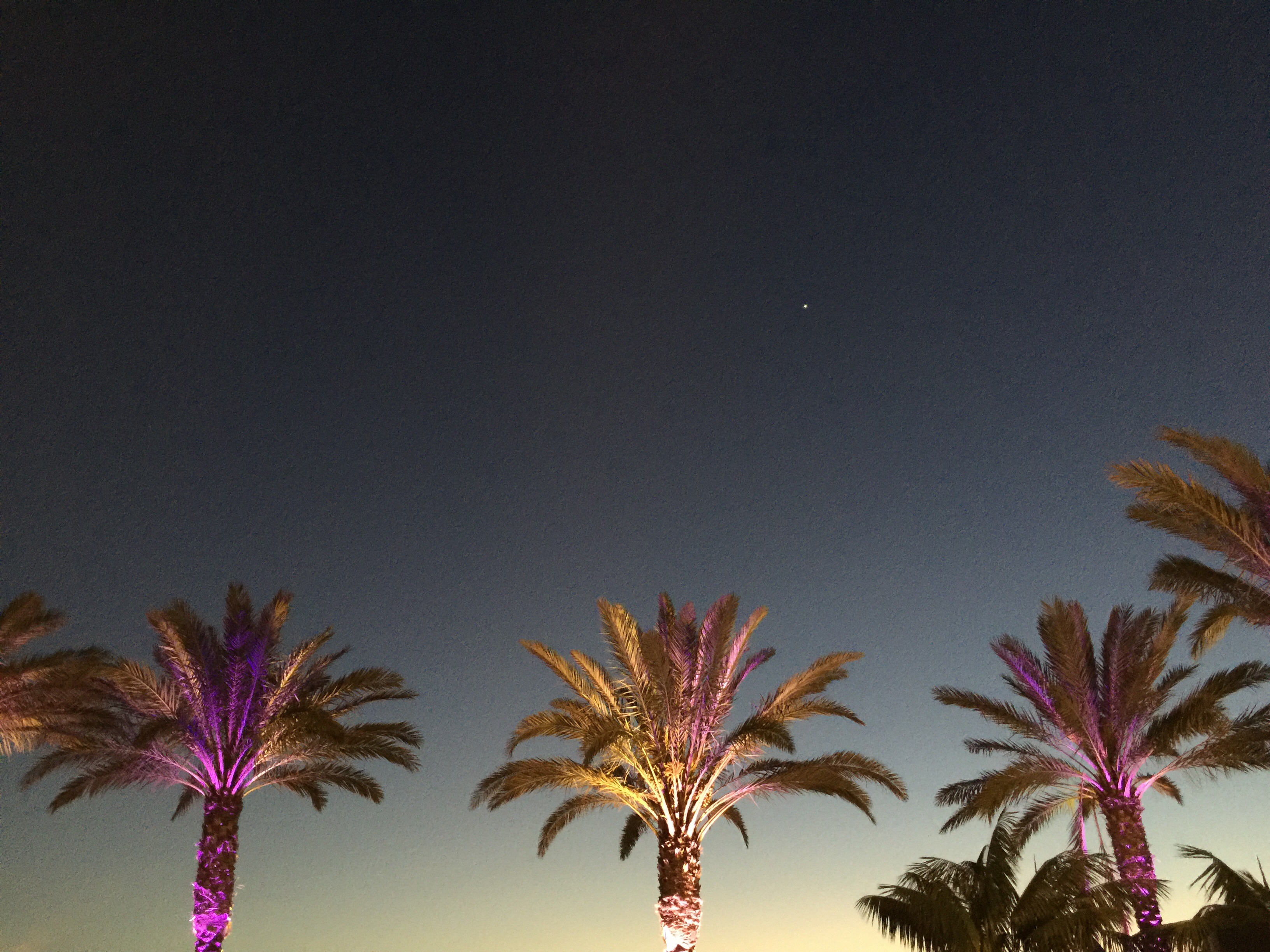
Jupiter stands out in the not-quite-dark-yet sky. It looks like the star on top of a Christmas tree – if your Christmas tree is a thirty-five foot tall date palm.

There are way too many street lights out here.

I was hoping that the smoke from the Calabasas fire (which is under control now and mostly out) might make a nice red and orange sunset, but no such luck.

1 Comment

Filed under Astronomy, Photography

Two Planets

Well, three, actually, but let’s go with the non-literal interpretation of the usage.

I was out on my evening constitutional, it was clear as a bell, and Mars was really bright above the Eastern horizon. (See, I told you that it would still be there!) All I had with me was my cell phone, but this time I remembered that I had a couple of camera apps above and beyond the generic one that comes with Apple’s iOS. I pulled up NightCap Pro and fiddled with a couple of simple settings to get this:

It’s a touch grainy since the software is pushing the effective ISO way, way up, but all things considered, for something that I just pulled out of my pocket and was listening to the ballgame on and tracking my exercise stroll, it’s pretty amazing.

The bright object (click on the image to see it full sized) is Mars, and while you don’t get an idea from this how bright reddish-orange it truly is, you can get an idea of how brightly it stands out in the sky. (It will still be there tomorrow, and the next day, and next week if you can’t see it tonight, although it will be dimming slightly every night from here out.) But on closer examination, that’s not all that you can see.

Just clearing the horizon to the left of that little foreground tree is Saturn, and to the right of it is Antares. The fact that you can see them at all through the thick atmosphere near the horizon and all of the light pollution of Los Angeles is a good indicator of just how bright they are.

Between them and Mars you can see two of the bright stars in the “head” of the constellation Scorpius. This would be spectacular in a dark, dark sky with a good camera setup, because rising straight up out of this field of stars and planets would be the Milky Way in all its splendor. In an hour or so, Capricorn will be rising, and in this region of the sky, looking straight into the core of the Milky Way, even a small telescope can pick out dozens and dozens of bright nebula.

In the city – not so much.

Above and behind me, still very high in the sky and the brightest thing up there if the Moon or ISS isn’t up, you can find Jupiter. If you have even a pair of binoculars you can pick out the four Galilean moons. If you watch over just a few hours you can watch those moons move back and forth as they orbit Jupiter.

Just don’t tell anyone in the Vatican. They tried to burn Galileo at the stake for heresy for watching.

1 Comment

Filed under Astronomy, Photography, Space

ISS Pass, May 29th

After a couple of gorgeous ISS passes (remember, it’s “high beta angle time” again, which is explained here and here) earlier this week where I just watched (and answered questions for the neighbors, who really ought to be used to me standing out in the front yard staring at the sky), tonight I had plenty of warning, so I decided to try to photograph it again. Again, as I did about a year ago (here and here, and again, it’s no surprise that it’s almost exactly a year ago) I wanted to try using the StarStaX program to merge together a lot of short exposures into one single picture.

The short reason that you need to do this is because the ISS takes several minutes to cross the sky and at the time of night that it passed tonight it was still dusk. If it where pitch black and in a dark-sky location away from city lights, then I could just take a single picture with an exposure of two to eight minutes long. The ISS passage would be a bright white arc across the picture.

With the sky still fairly bright, any exposures longer than a second or so will leave nothing but a white frame, totally overexposed. A minutes-long exposure is obviously out. But if I can take a series of exposures that are a second or so long, then “stack” them, I can show that arc across the sky as a series of segments.

I was trying to shoot one-second exposures and shooting them off as fast as I could. So how did it turn out?

More importantly, what did I learn for tomorrow and the next opportunity?

First of all, focus the damn camera.

StarStaX_IMG_5616-IMG_5630_lighten small

I had the camera (Canon Rebel xTi) set on manual focus, of course, because otherwise it would try to autofocus on every picture. It would try and fail, taking several seconds, because it was looking at an “empty” sky with nothing to focus on. So I had the autofocus off, manually set the focus on infinity – and then forgot to double check it after I moved the camera around on the tripod. That was careless and stupid.

Facing south-southwest, with the sky still pretty light, the ISS was fairly high in the sky before we saw it. Here you can see the one-second exposures with a little less than a second between exposures for the camera to reset and take the next image. Near the horizon the relative motion each second is small, growing larger as it gets closer to the zenith, directly overhead.

Fuzzy and out of focus as it is, in the upper left you can see another bright spot, which is Jupiter. It would have looked really cool if it had been in focus.

StarStaX_IMG_5631-IMG_5641_lighten small

As the ISS moved out of the field of view that I had first set up on the tripod, I moved it to point almost directly overhead. The bright, non-ISS spots you can see are the Big Dipper. The “handle” goes from the center of the picture in an arc up toward the upper right corner, while the ISS goes right between the two stars at the end of the “ladle.”

Why is that gap there? No, the ISS didn’t teleport. I just was suddenly unable to get the camera to fire for a few seconds. What’s up with that?

StarStaX_IMG_5642-IMG_5652_lighten small

As the ISS moved past the zenith I moved the camera again, watching until it went behind that tree. Again, you can still make out the Big Dipper in the top half of the picture.

StarStaX_IMG_5653-IMG_5689_lighten small

Now sprint back across the street (watch out for the trash panda!) and watch the ISS head off to the northeast. There’s that stupid street light on the left (I wonder if a laser pointer could trip the light sensor on that thing and turn it off for a few minutes?) and another big gap when I couldn’t get the camera to fire for several seconds.

When I came in to process these pictures and stack them, it was obvious why I had the two gaps where the camera became unresponsive. When I put the camera into full manual mode, it started saving two files for each picture. One is a JPG file, the other a CR2 (or “RAW”) file. The CR2 files are wonderful for keeping all of the image data (really good if you’re doing some fancy image processing later), while the JPG files are compressed to save space and lose some of that data fidelity. A typical JPG file is about 3.7 Mbytes, while the CRS2 files are about 11 Mbytes.

With the camera trying to write files to the memory card, it can keep up if I’m shooting just JPG files. When I’m doing both and I’ve just shot 17 photos in about 25 seconds, the data transfer gets backed up and the camera stops responding.

Lesson #2 then is to turn off the RAW file storage in manual mode if I’m doing this sort of a shoot. It’s wonderful if I’m doing astrophotography of a lunar eclipse, a solar eclipse, or some other event that doesn’t require a rapid-fire series of photos.

Finally, given that I now know where to get really good, detailed information on the ISS passes (or a gajillion others) over on Heavens Above (really, it’s such a cool site – get a free account, use it, and maybe make a donation every now and then), I need to do a little bit more planning so I have a better idea of where things will be happening, so I can plan better to have a clear (or at least clearer) view of the horizon and sky without trees or street lights in the way.

Focus. Be fast. Plan ahead.

That sounds like pretty good advice for an awful lot of things, actually.

There are decent passes tomorrow and Tuesday nights. Let’s see if it’s clear.

How do you get to Carnegie Hall?

1 Comment

Filed under Astronomy, Photography, Space

High Beta Angle Time Again!

Look to the skies, peeps! It’s one of the two times of the year when the International Space Station is orbiting at a high beta angle!

*crickets*

Look to the skies, peeps! It’s one of the two times of the year when you can see the ISS almost every night and it will be amazing and bright and spectacular!

Better?

There was a spectacular pass of the ISS over Los Angeles tonight just after 20:30. It went right overhead, through the zenith, which means it was a long, long pass. I watched it for over eight minutes. It went right next to Jupiter, which is pretty stinkin’ bright itself, but the ISS was even brighter and moving along at a good clip. Not to mention that we built it and put it up there and have been living in it constantly for over fifteen years and right this second it’s got six astronauts and cosmonauts living onboard.

Not to mention.

While thinking about writing this, I sort of remembered that it had come up before. A quick search and I found this article from May 27, 2015, where I wrote almost the exact same thing I was going to write tonight. (Go read it, I’ll just hit the high points here.)

Is it a coincidence that the article I wrote last year is almost exactly a year ago? As you might expect from the tone of the question, there’s nothing coincidental about it at all. It’s a product of celestial mechanics and orbital dynamics.

I will recommend to you yet again a good article about what “high beta angle” is, but the tl;dr version is that the station’s orbit is tilted with respect to the Earth’s equator, the terminator that separates night from day is tilted with respect to the Earth’s equator, and twice a year they get close to being tilted the same amount and lining up. When that happens, the ISS is in sunlight constantly for several days. When it happens to be over you and it happens to be after dark where you are and the ISS happens to be brightly lit above you, you get a spectacular show.

My thanks to Ron Baalke who put the word out on Twitter that I first saw.

https://twitter.com/RonBaalke/status/736047500218355713

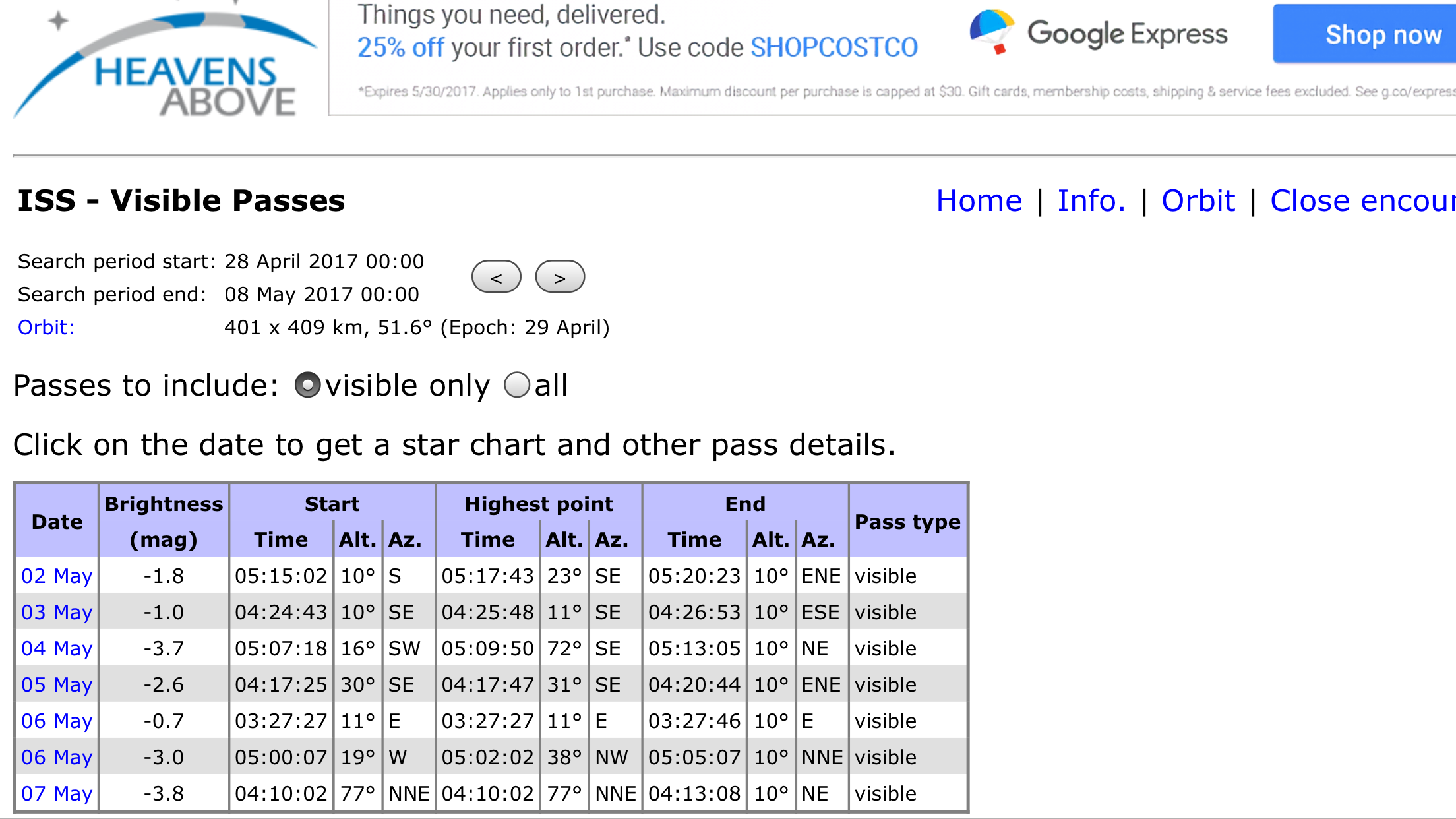
The diagram he attached is from Heavens-Above.com, which is a site you MUST be familiar with if you love seeing spacecraft passing overhead. As you can see, rising in the southwest, four minutes later it went right by Jupiter, through the zenith, through the “handle” of the Big Dipper at 21:38, then off to the northeast.

I spotted it coming up from behind the hill and houses to our southwest. I think it might have been the lowest and earliest I’ve ever seen it rising. It was extremely bright and its movement is distinctive.

When it went by Jupiter it was a sight to behold. I wish that I could have been able to know enough in advance to set up my telescope. It would have been possible to catch both Jupiter and the ISS in the same frame even through the ‘scope. You don’t get chances like that very often.

Just after it passed the zenith, at about 21:38:30, with the ISS still clearly in sight, I spotted very near to it (from my viewpoint, they were in fact separated by hundreds if not thousands of miles) a polar satellite, heading from due north to due south.

How often do you see two bright satellites passing overhead at once? It might be more common out away from the city lights. In fact, there’s getting to be so much up there that in a dark sky just after sunset, it might be something to see several times an evening. But here in the bright lights of the big city where only the brightest can be seen?

That was special.

I wasn’t the only one who was on alert. My Twitter feed lit up with videos and pictures, from both the space savvy:

and from the more mundane (but no less revered in this household):

It was amazing that you could see it so clearly, not just from the San Fernando Valley with all of its street lights and shopping malls, but even from LA Live (where Bailey was) which as you can see is lit up like a Christmas tree on steroids (I hope this embeds correctly, it’s the first time I’ve tried this):

https://www.facebook.com/plugins/video.php?href=https%3A%2F%2Fwww.facebook.com%2FBaileyLAKings%2Fvideos%2F1095016503896241%2F&show_text=1&width=560

Even astronauts were impressed:

So celebrate high beta angle season and go look for the ISS tonight!

1 Comment

Filed under Astronomy, Space