Category Archives: Astronomy

A Successful Halloween Evening

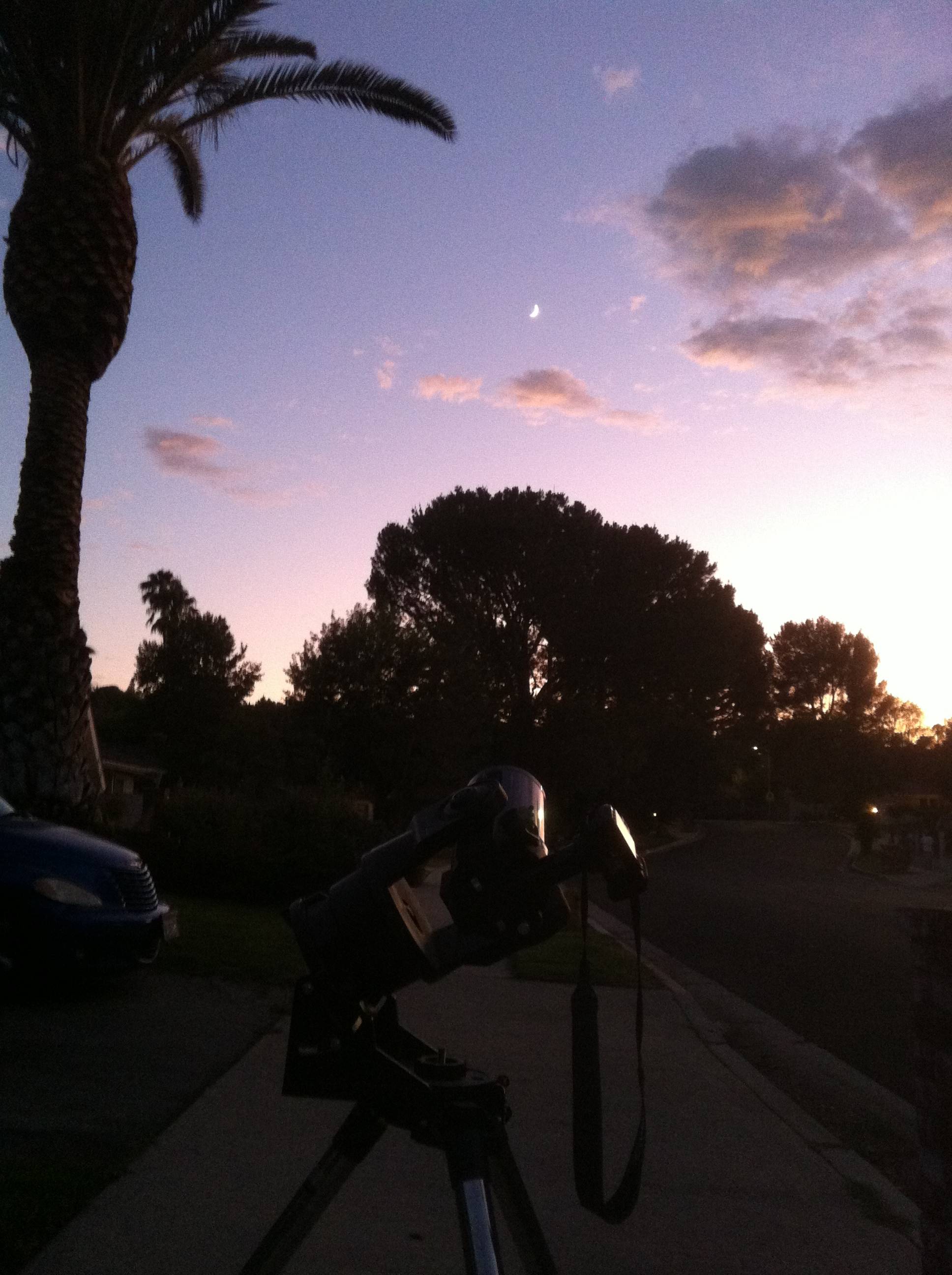
As mentioned elsewhere, when the weather on Halloween allows it, we take a couple of telescopes out by the sidewalk and let people take a look while we’re handing out the candy. Last year, when it was cloudy, we had a decent percentage of folks asking why we didn’t have them out. Apparently we’ve become a minor “thing” in the neighborhood. Last night, the weather was perfect.
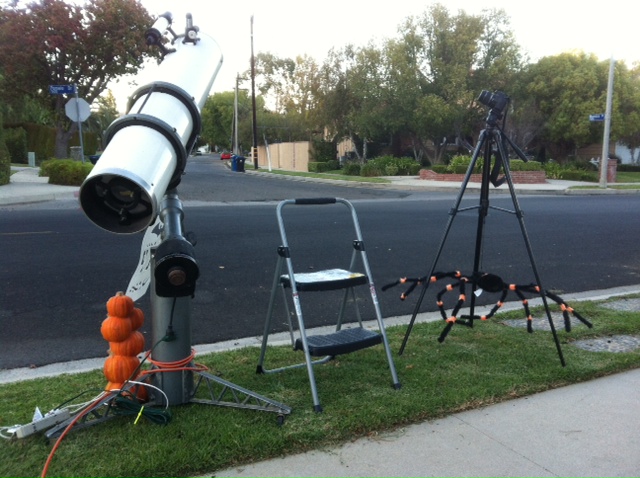
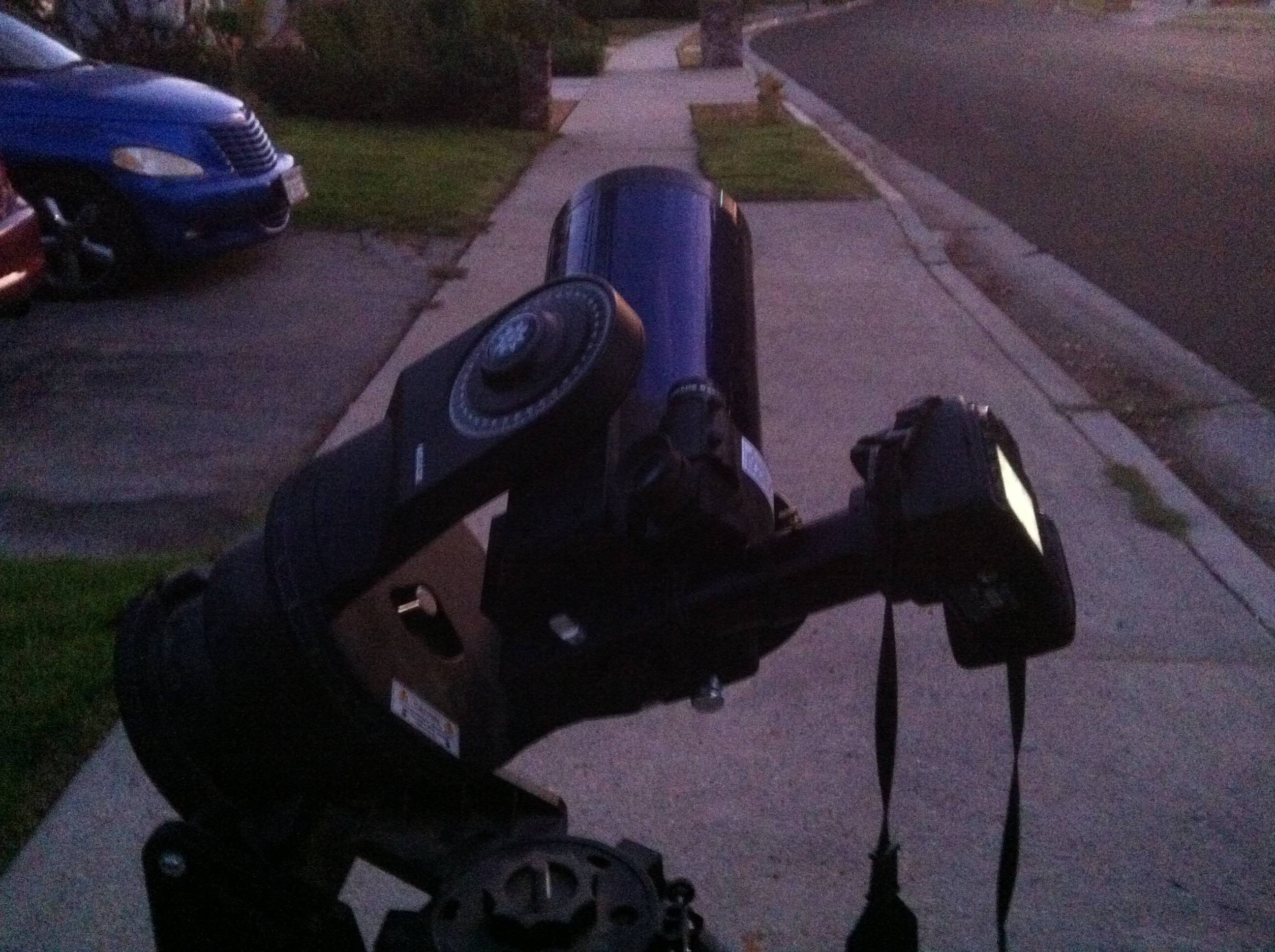
photo 3We’ll hang a few ornaments off of the mounts just to “holiday it up”. Since these aren’t permanent mount positions and the scopes are going to get jostled all night long, I don’t worry much about the polar alignments. I just eyeball it and it’s close enough. Last night I got really lucky and the alignment on the 8″ Cave reflector (seen at left above) was spot on and had almost no drift.
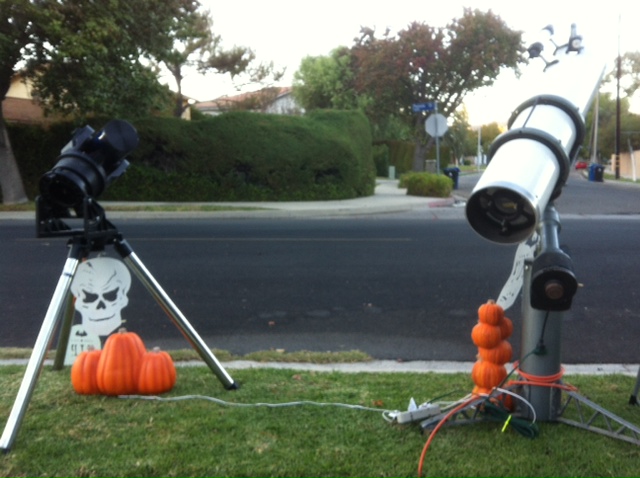
photo 2The little Meade is great for showing off big, bright objects (the moon, Jupiter, Saturn) but none of those objects were up last night until well after midnight. I tried to use it to show Venus, but with the fork mount and Venus way down into the southwest, that wasn’t going to happen.

Fortunately, with the big scope on the equatorial mount, it was great for showing off Venus while also keeping the eyepiece down low where the kids could get at it easily. We had about two hours before Venus set, so probably 200 folks or more got to take a look.

It’s always great letting people get their first view through a telescope, especially if you’ve got something like the Moon or Saturn to show off. With Venus, it was about half illuminated, so I quickly figured out with each group to wander through to ask the little kids if they saw it as “round” or as a “half moon”. With that clue, most of them had that “ah-ha!” moment and saw that it really was a half-moon shape. Then, while helping the next kid see, I would explain how and why Mercury and Venus show phases like the moon, while the outer planets don’t.

It’s also great to see how many of the parents want to get a look as well. The flip side of that are the parents who are clueless about “star party etiquette”. In particular, the folks with flash cameras are a trial. An awful lot of them have pictures of me with my eyes closed or holding my hand in front of my eyes to block the flash. I understand why they don’t know why what they’re doing is such a pain, and I understand that this is a surprise and they want to have a picture of Sean or Ashley looking through a telescope. I just wish that I wasn’t blind for the next ten minutes after they whip out that camera. And the folks who park on the street and turn their car lights on bright so that they can see what’s going on? They live — proof that I am a gracious and forgiving host.

Even better sometimes are the teenagers, many of whom are obsessed with being “cool”, of course. But then you catch some of them coming back for a second a third look… And a couple of them actually had really bright questions. Maybe there’s hope for that generation yet (said the snarky old dude with the telescopes on his lawn).

We’ll have to keep an eye on the weather and the celestial calendar over the next few months. While many of our visitors were from out of the area, many were also neighborhood families. The locals were talking to us about having kids at the elementary school at the west end of the block, or the high school at the east end of the block. If we see a Saturday night coming up in a couple of months when some of the big, bright planets are up in the evening along with an early moon, we want to put up some yard signs for a few days in advance and invite folks over to see some more. Even with the city lights, we might take a shot at the Orion Nebula.
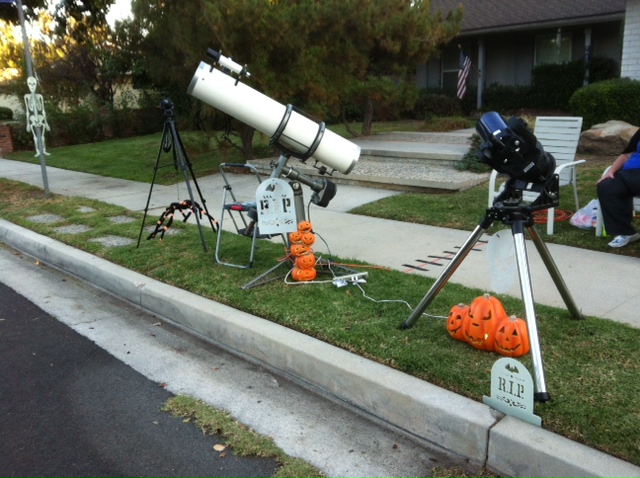
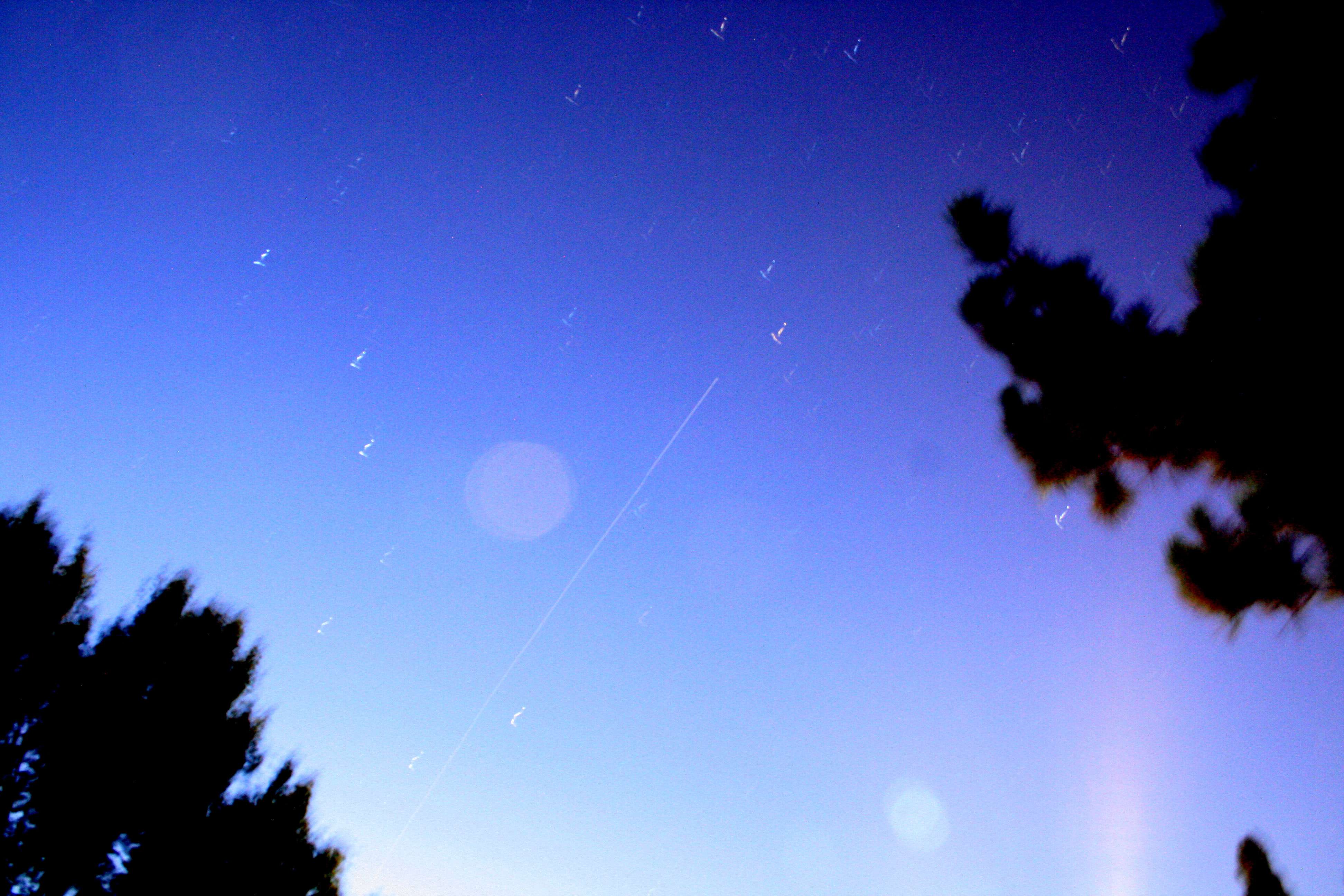
photo 1The big disappointment for the night was the super-bright ISS pass that was supposed to occur. We were ready and a couple of different software packages confirmed the event, but we saw nothing, even in a crystal clear sky. That one baffled me.

All in all, a successful Halloween evening!
Leave a comment

Filed under Astronomy

Odds & Sods For Tuesday, October 29th

Item The First: Heads up! (Literally.) I’ve seen several folks on Twitter talking about how they’re seeing bright ISS passes listed for their cities in the US this week. Check it out, especially for Halloween night. If you’re already out and about with the kiddies, setting your phone to go off a minute or so early will give you the “heads up” you need to see a pass.

Here in Los Angeles, there was a pass  last night that I didn’t think I would see because of the heavy clouds. But I happened to be taking Jessie out at the right time and found some holes in the clouds to see the VERY bright ISS blinking in and out through the gaps. Spectacular!

For the rest of the week, at least for Los Angeles, there are passes this week tonight (Tuesday, the 29th) at 18:22 and 20:01 (the first pass is higher and brigher), Wednesday the 30th at 19:14, and Thursday night (Halloween!) at 18:23. The Thursday night pass is supposed to be especially bright, rising in the WNW with a maximum elevation of 47.2 degrees, a magnitude of -3.2 (which is much brighter than Venus), and setting in the SSE. You can’t miss it!

Item The Second:  Yes, the central scientific idea in my October 24th Flash Fiction story is similar the idea in Larry Niven’s “Inconstant Moon”. Yes, while mulling over the random title I got (“Fire On The Sea”), I did think of Niven’s story as a source of the fire, since I wanted to do something other than just telling a story about a guy in a burning boat or oil rig or something. That’s how my thought processes go. I don’t want to do the “usual”. What else could be on fire on the sea? An oil spill? A large explosion of some sort? Maybe an asteroid impact over the horizon. What about the sun? What was that Niven story? Maybe the guy in my story is dealing with something similar. He’s looking east, waiting for the sunrise, so where does that put him. Jersey? Virginia? Florida? I don’t want to do the “usual”, so let’s make it Africa. OK, that works, so what’s this guy doing and thinking in that situation. (By the way, if you haven’t read “Inconstant Moon”, go do so immediately. It’s a classic and most excellent.)

Item The Third: So far, neither Rocky, Raquel, or “the kids” has managed to pry the screen off of their hidey-hole. Sorry, Pat! But I’ll keep an eye on it. They’re up there on the roof every couple of nights, there are plenty of half-eaten oranges left around, and the dog’s water bowl is occasionally quite muddy from where they’re using it to wash their food – but they haven’t reclaimed their hidey-hole. Yet…

Item The Fourth: Two thoughts on the media’s changing reaction to a certain couple of pieces of music. First, I thought that it was interesting to see Filter’s “Hey Man, Nice Shot” being used as the background music in an episode of NBC’s “The Blacklist” a couple weeks ago. A few years ago, when the song came out, I remember quite a bit of protest about it and folks trying to get it banned. Ditto for “I Don’t Like Mondays” by the Boomtown Rats, which I heard on a middle of the road, “classic rock” FM station the other day. Back in the day, I remember folks hollering for KROQ’s license because they dared to play it.

The second, equally upsetting thought, was the realization that “Hey Man, Nice Shot” came out in 1995 (eighteen years ago) and “I Don’t Like Mondays” came out in 1981 (thirty-two freakin’ years ago!!), so when I casually think to myself that it was “a few years ago”, the only one I’m fooling is myself, I guess. It’s not just a river in Egypt any more…

Item The Fifth: Which NFL team is undefeated at 8-0? Hmmmmm? Face it, coming off of a terrible year in 2012 at 2-14, this year we sincerely hoped that we would be better. Most folks were praying for an 8-8 year, and a few brave souls thought we might get to 9-7 and squeak into a wildcard playoff spot. To say that we need to reassess those goals and expectations is the understatement of the year. I don’t think we need to be reserving hotels and airfares to New York just yet. But it’s much, much better to be 8-0 at this point in the season than it was being 1-7 last year!

Item The Sixth: I swear, someone in the neighborhood has a kookaburra. I hear it almost every night, right around an hour before sunset. It’ll sound off repeatedly, sometimes a dozen times. I have no idea if it’s caged in someone’s house or if it’s on the loose (like Lester), but I would love to track it down and see it, take a few pictures, maybe some video. If nothing else, just to prove that I’m not hearing things and hallucinating.

Leave a comment

Filed under Astronomy, Critters, KC Chiefs, Music, Odds & Sods, Science Fiction, Space, Sports, Writing

Comet ISON Is Coming!

You may have heard that we’re going to get “THE COMET OF THE CENTURY!” (again) this year. I’m not saying that it’s not going to happen — believe me, there’s nothing I would like to see more than a spectacular comet that’s visible to the naked eye for a month, even in the city, with a tail stretching all the way across the sky. But as someone who’s been an amateur astronomer for over forty years, I have a healthy appreciation for just how unpredictable and variable comets can be. ISON may be huge and spectacular, but the odds are that it will be great for amateur astronomers, but only so-so for anyone without at least binoculars.

We get this hype about every ten years, it seems. Kohoutek was supposed to be a spectacular “Christmas Comet” in 1973, but was barely a naked eye object. Does anyone remember Comet Hale-Bopp except as the excuse used by a San Diego suicide cult? (We actually saw Hale-Bopp pretty well, taking a trip out of LA into the mountains to get to a dark sky site.) A lot of the hype seems to be more from the press than from the astronomy community, but that really doesn’t mean anything to the public that just interprets it as “the scientists are crying wolf again”.

ISON started getting hype over a year ago when it was discovered in late September, 2012. At that time it was still a long, long way out from the sun and two factors increased the probability that it might be a bright comet. First, it was likely to be a big chunk of ice instead of a little one since the bigger they are, the further out they are when they get discovered. (The little ones reflect less sunlight, are harder to see, and don’t get spotted until they’re closer.) Secondly, calculations of its orbit indicated that it would get close to the sun and its orbit would make it favorable for viewing from Earth while it was close to the sun.

But there are a ton of variables. It might be more rock than ice underneath an icy shell, and it wouldn’t get bright at all. It might be almost all ice, light and fluffy, and when it got close to the sun it would simply fall apart and evaporate completely. It might just not behave the way we would hope for any one of a hundred different variables that we can’t even determine. Our experience is actually touching and sampling comets is a little bit thin. (Wouldn’t it be great to fix that?)

But we can hope. And we can be prepared. If we get lucky, Comet ISON could be good, great, or stunning.

First, there are a ton of spots on the web that will give you sky charts and information on where to look. My favorite right now is the ISON Atlas website. It has multiple charts and diagrams for every month. (Desktop software for this sort of thing is getting pretty amazing.) But you can also find charts and tracking information at the web sites for Sky & Telescope magazine, Astronomy magazine, or Space.com. Right now, ISON is in the morning sky just before dawn, very near to the planet Mars, in the constellation Leo.

Now that you know where to look, do what you can to get a dark sky. If you can get out away from the lights of the city, fantastic, the further the better. Also, try to pick a night where there’s little or no illumination from the moon. A full moon’s light will wash out all but the brightest stars, so your view of the comet will suffer significantly. You can check a calendar of moon phases here. You can also find sites on the web that have lots of notes on notable observing events, such as when ISON will be very near the M95-M96-M105 trio of galaxies in Leo this Saturday, October 26th.

Looking at the timeline, ISON may be brightening to naked eye visibility in the first week or so of November. (Dark skies!) Getting closer and closer to the sun (and we hope getting brighter and brighter), ISON will be at perihelion (closest approach to the sun) on November 28th at approximately 6PM on the US east coast, 3PM here in Los Angeles. We, of course, won’t be able to see that (since the sun is stupid freakin’ bright) but we have several sun-observing spacecraft that will track it all the way in. And then look for it to come around the other side.

ISON wouldn’t be the first comet to just vanish and never come out on the other side. Nor would it be the first to come out as a dimly visible and rapidly fading cloud of much smaller comet fragments. However, recent observations by the Hubble Space Telescope and other observatories indicate that so far ISON is holding together well and is well within the expected range for size and brightness, even if it is so far a little bit toward the lower end of the expected range in brightness.

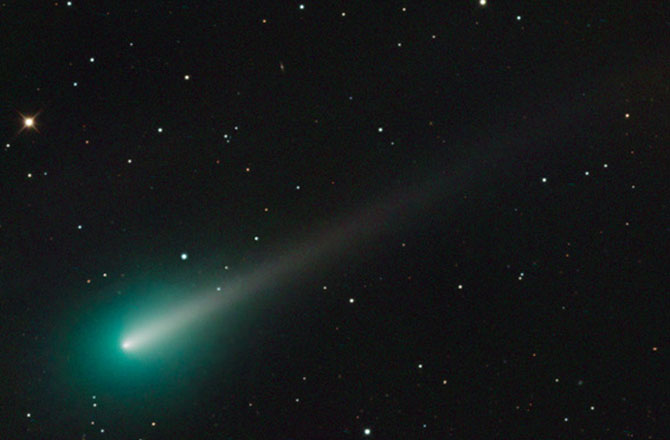
comet-ison-photo-670This October 8th picture by Adam Block of the University of Arizona was taken using a 32-inch telescope on Mount Lemmon. (This is not how it looks to the naked eye right now — it’s a long exposure with a big telescope and some really good CCD equipment to suck in a lot of photons. Your eyes are a bit less capable.)

If ISON comes around the sun intact and if it brightens as we hope it will, it should be an excellent object to observe in the evening skies of the Northern Hemisphere in December. (Catch all of those bold and italicized “ifs”?) The comet will be up near the north celestial pole so it should be visible almost all night, in both the evening and morning skies.

Will it be “brighter than the full moon”? Nope, no way. That’s uninformed media hype only.

Will it have colors, even the kind of colors seen above? Nope, not to the naked eye. You may see pictures of it that show some color, but again, they’ll be long exposures with fancy cameras that catch a lot more photons than your eyes. Many photons + long exposures = dim colors (maybe). Few photons + eyeballs only = black and white and faint and dim. Blame the way your eyes were designed. Great for having a wide dynamic range so that you can see the lions in full daylight and also motion in the dim moonlight, lousy for naked eye astronomy.

Will it have a tail visible to the naked eye that stretches halfway across the sky? A qualified “maybe” — if ISON develops well, if you’re at a dark sky site, and if you understand that to the naked eye it’s not going to be a bright and glowing tail, but more like a wispy smoke trail. The tail also won’t be moving or “waving” like a flag fluttering in the breeze, no matter how much it looks like that in the Michael Bay movies. (Hey, he did “Pearl Harbor“??!! Now it all makes sense!!) A time-lapse series of photos over days and weeks might show some of that kind of activity, but you’ll see something that will look like a faint, wide jet contrail illuminated by dim moonlight.

Can you take pictures of it? Sure, even with a simple setup (see here, here, here, here, here, here, and here) of just a DSLR on a decent tripod you should be able to get nice pictures. Just remember to use manual focus set at infinity, open the lens up as much as possible, and manually bracket a whole series of exposures from about 1/100 second up to 30 seconds (or as much as your camera will allow). Take multiple bracketed sets like that. TAKE LOTS OF PICTURES – digital is cheap! The brighter ISON gets, the less you’ll need any kind of telephoto lens and the more you’ll need a wide angle lens. If the tail is stretching halfway across the sky, you’ll want to catch all of it.

Keep an eye on the news, check the sources mentioned above, and maybe pencil in some free nights that first week in December (when the moon is almost new and the comet is at its brightest) just in case. If you take an advance look at how to get to some dark sky spot out away from the city, so much the better. And keep an eye here, I’m sure I’ll be trying to get some pictures and observations soon, if the late night coastal fog stays away.

Comet ISON is coming! (We hope.)

1 Comment

Filed under Astronomy, Photography, Space

Quick, Go Look!

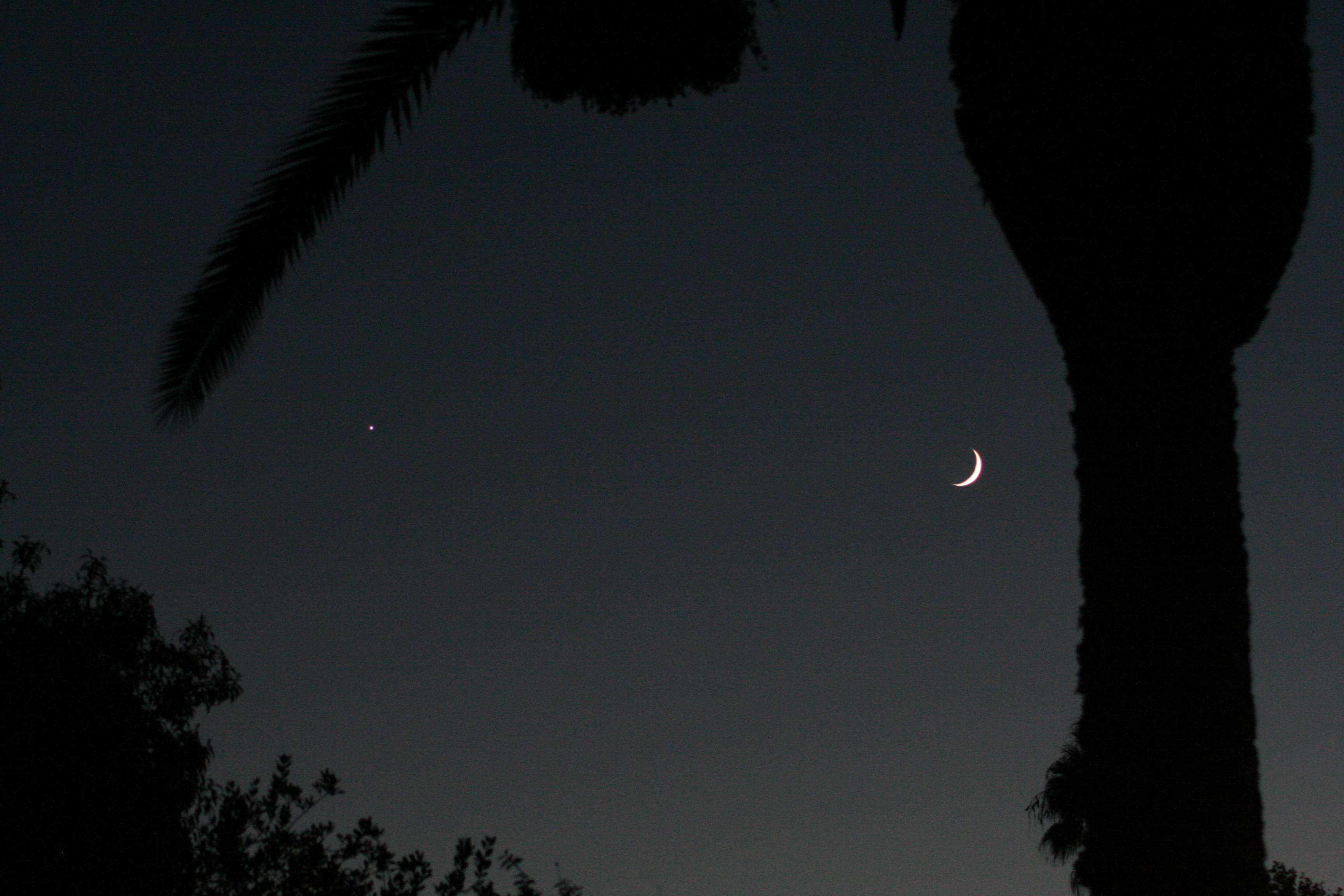
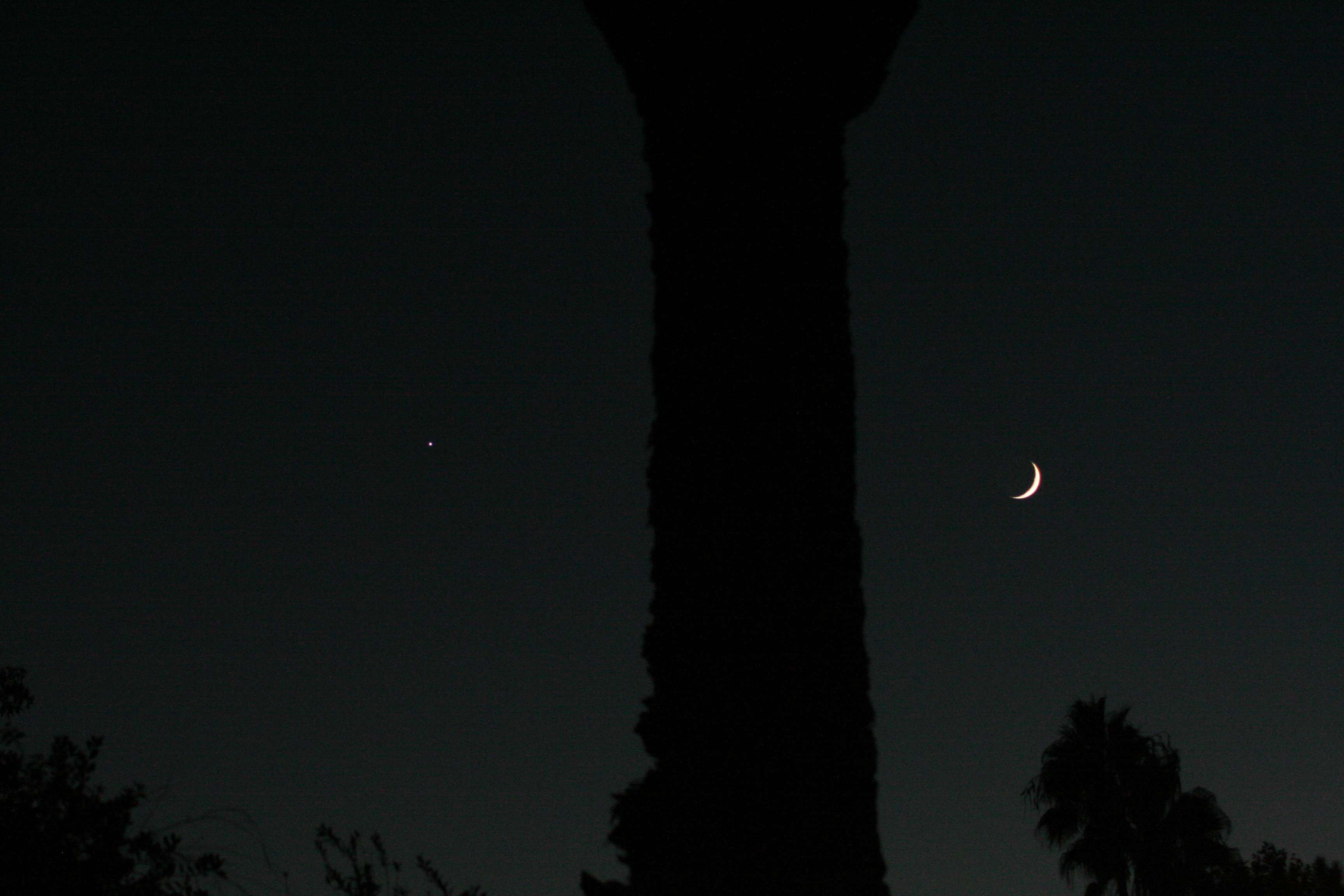
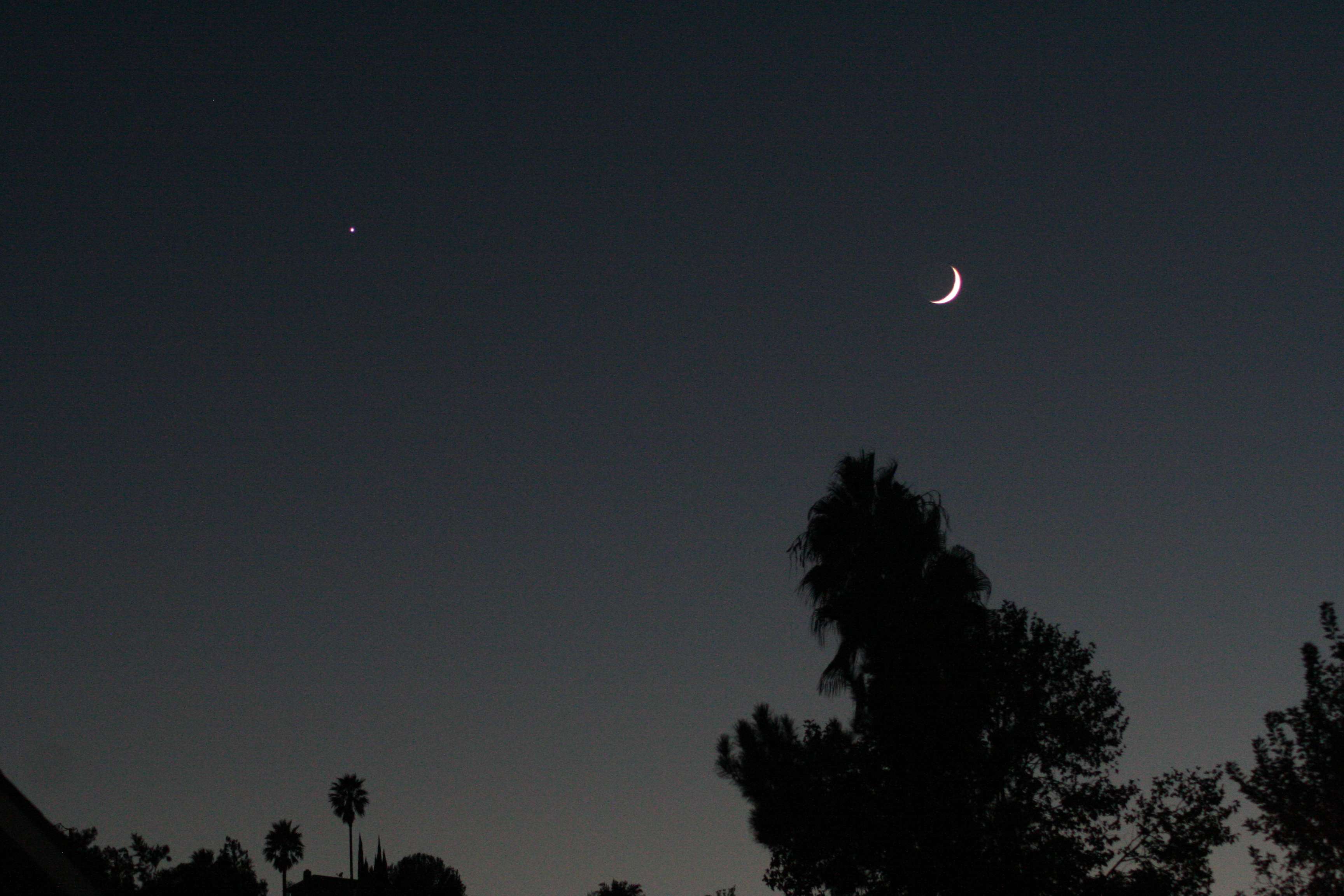
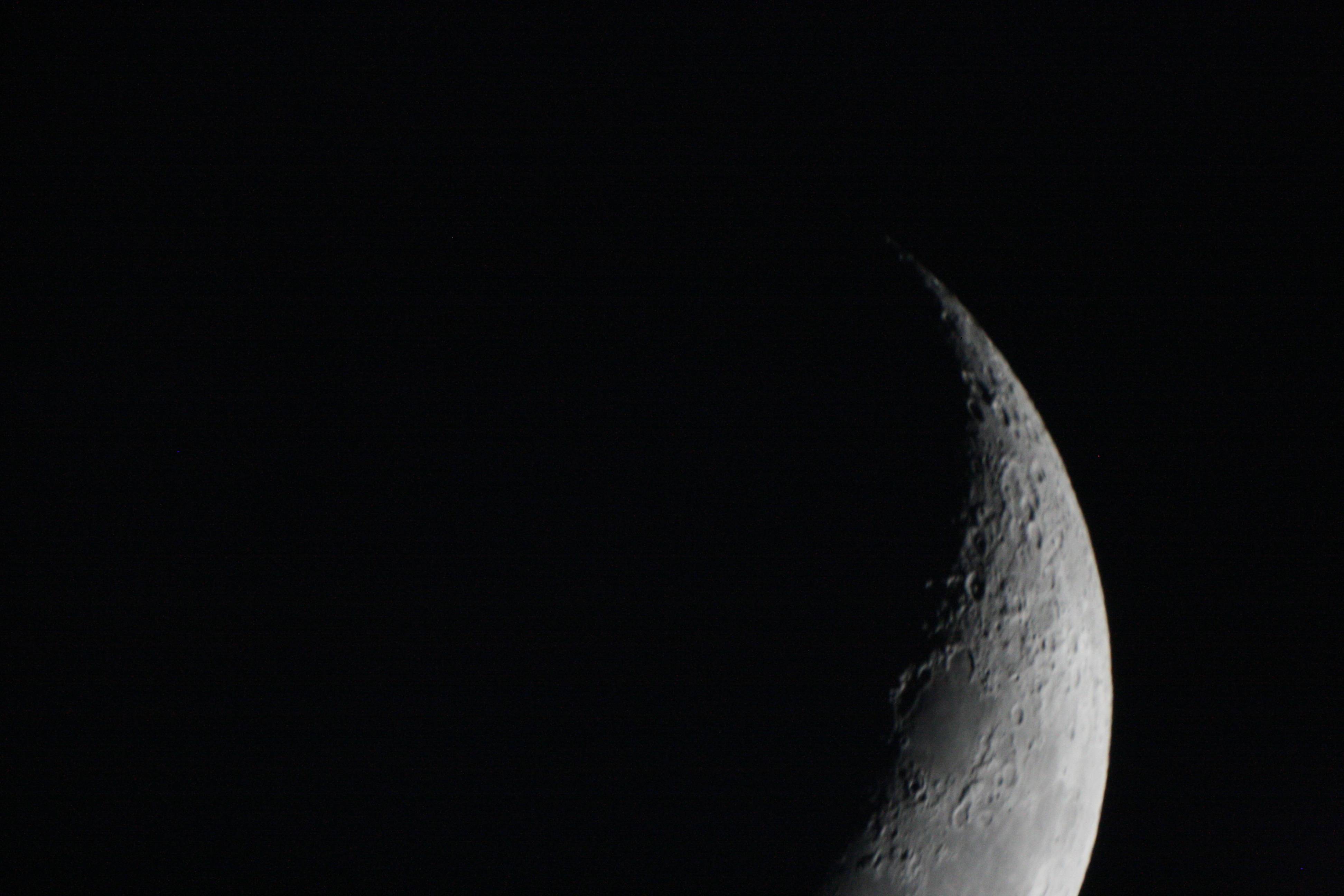
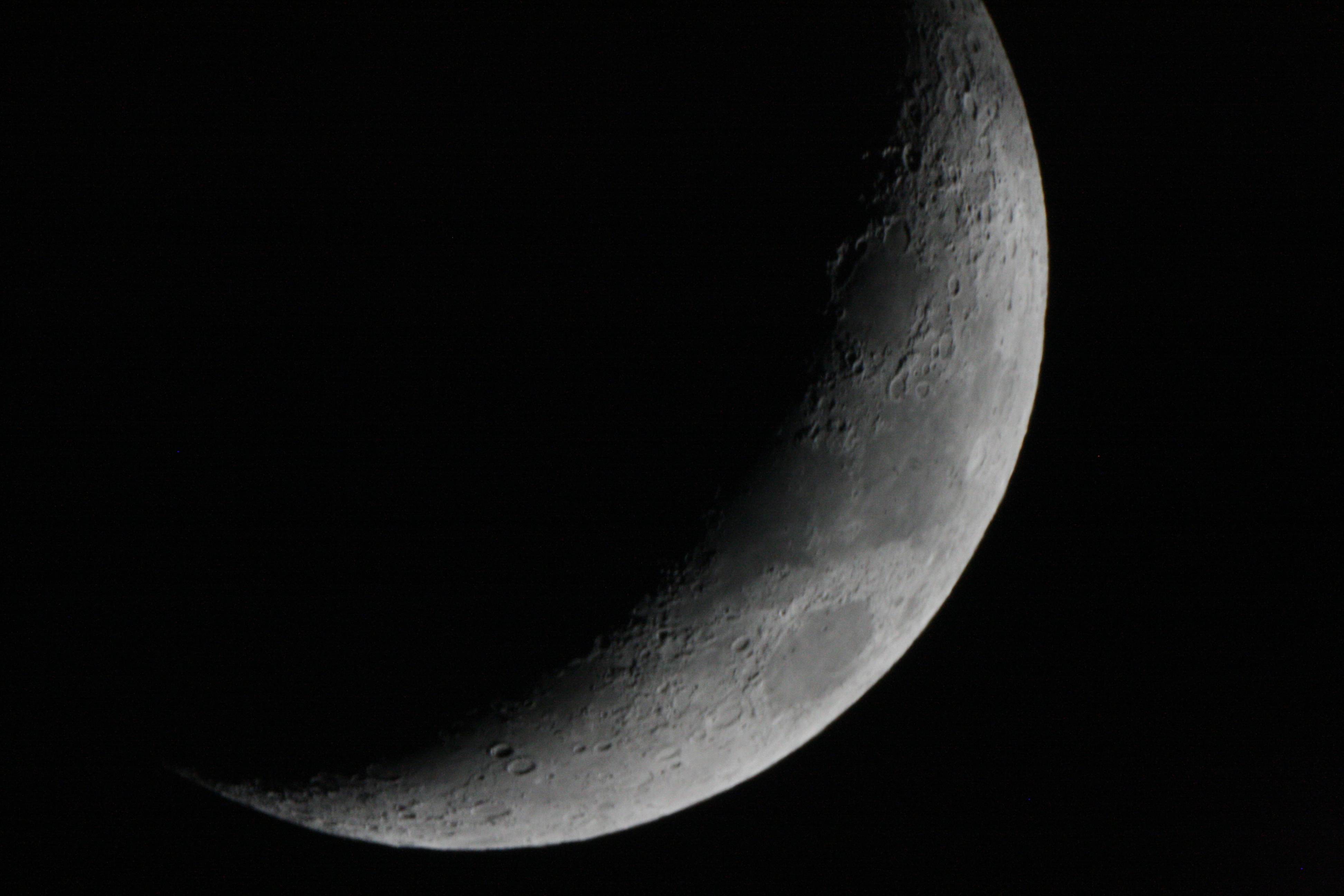
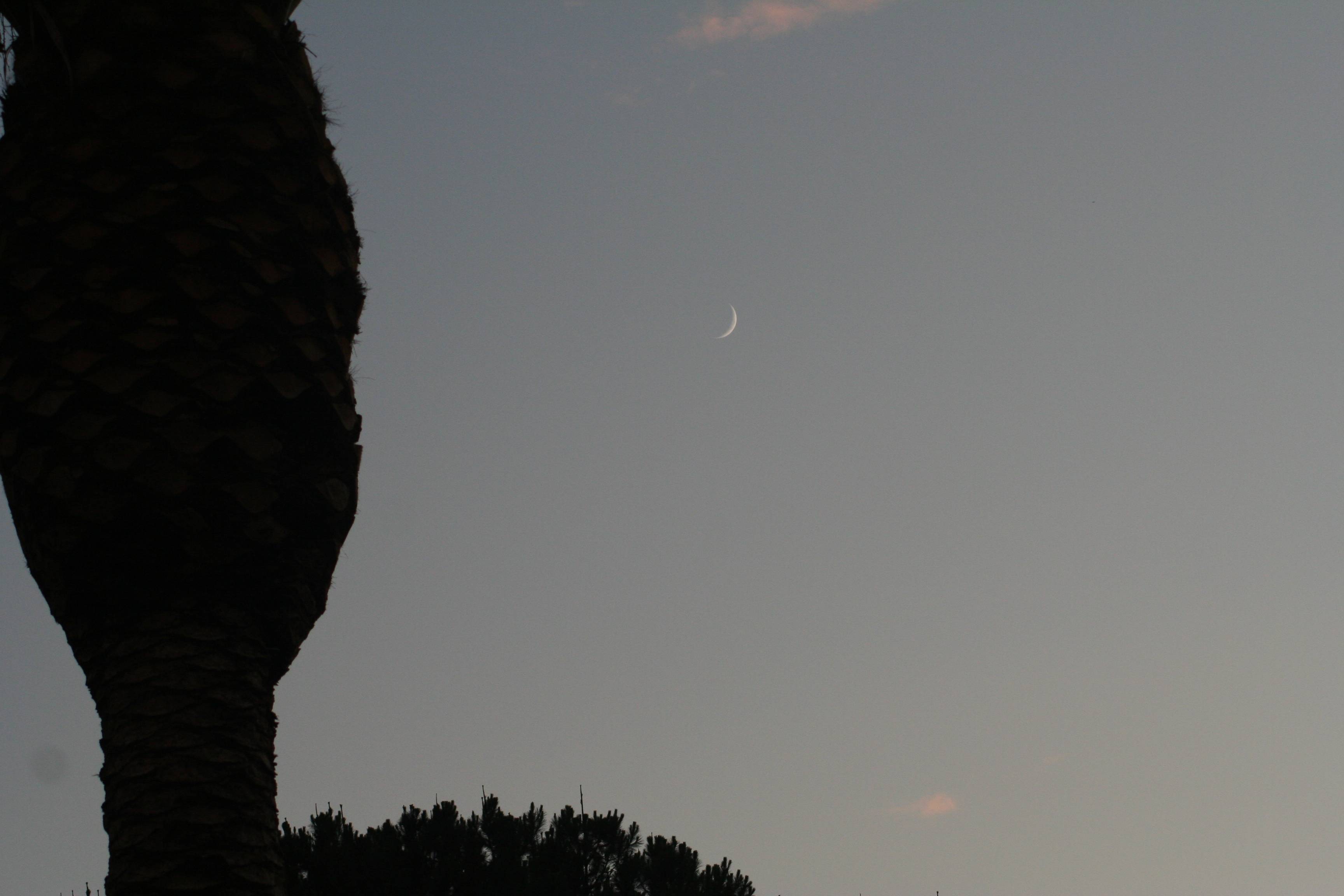
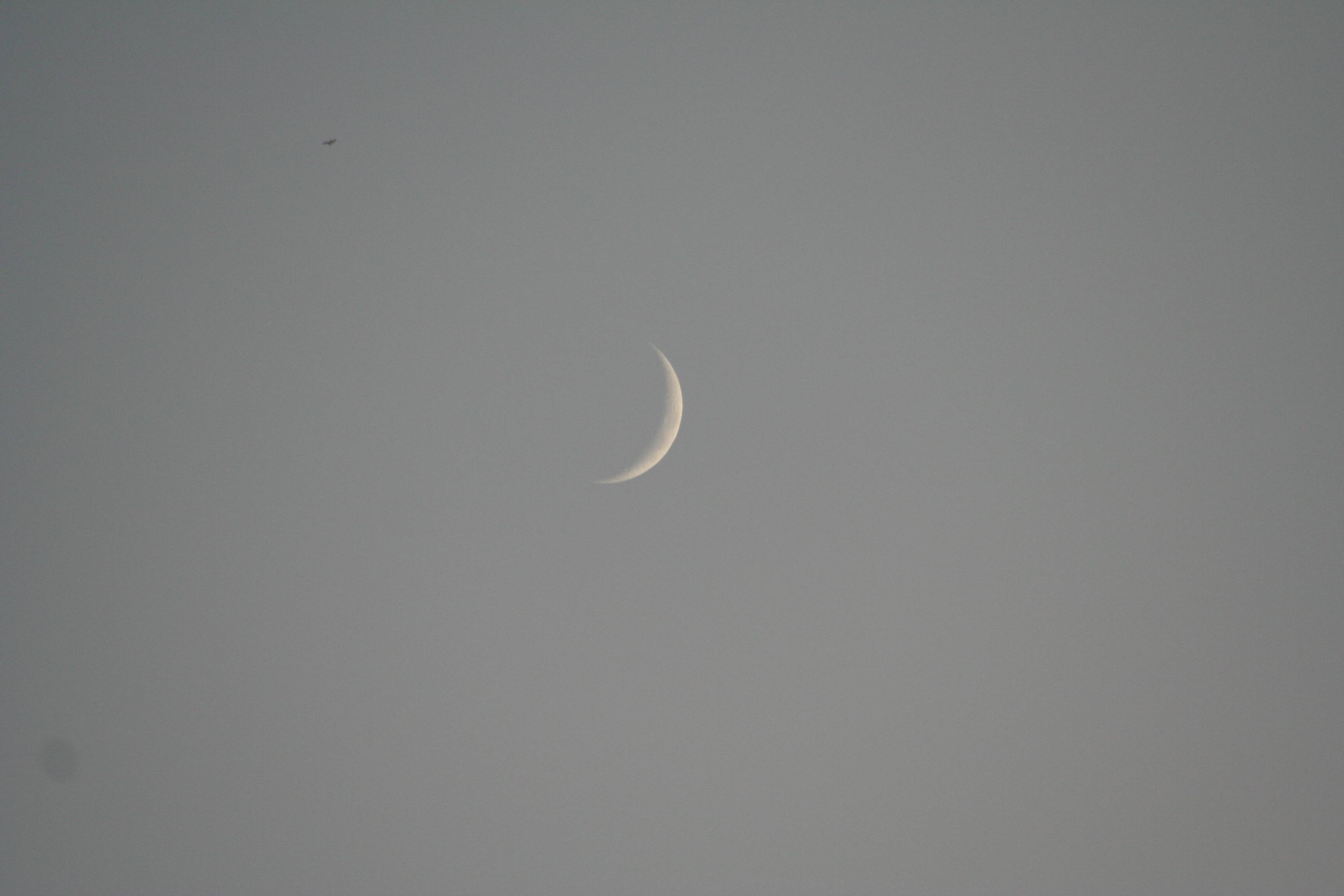
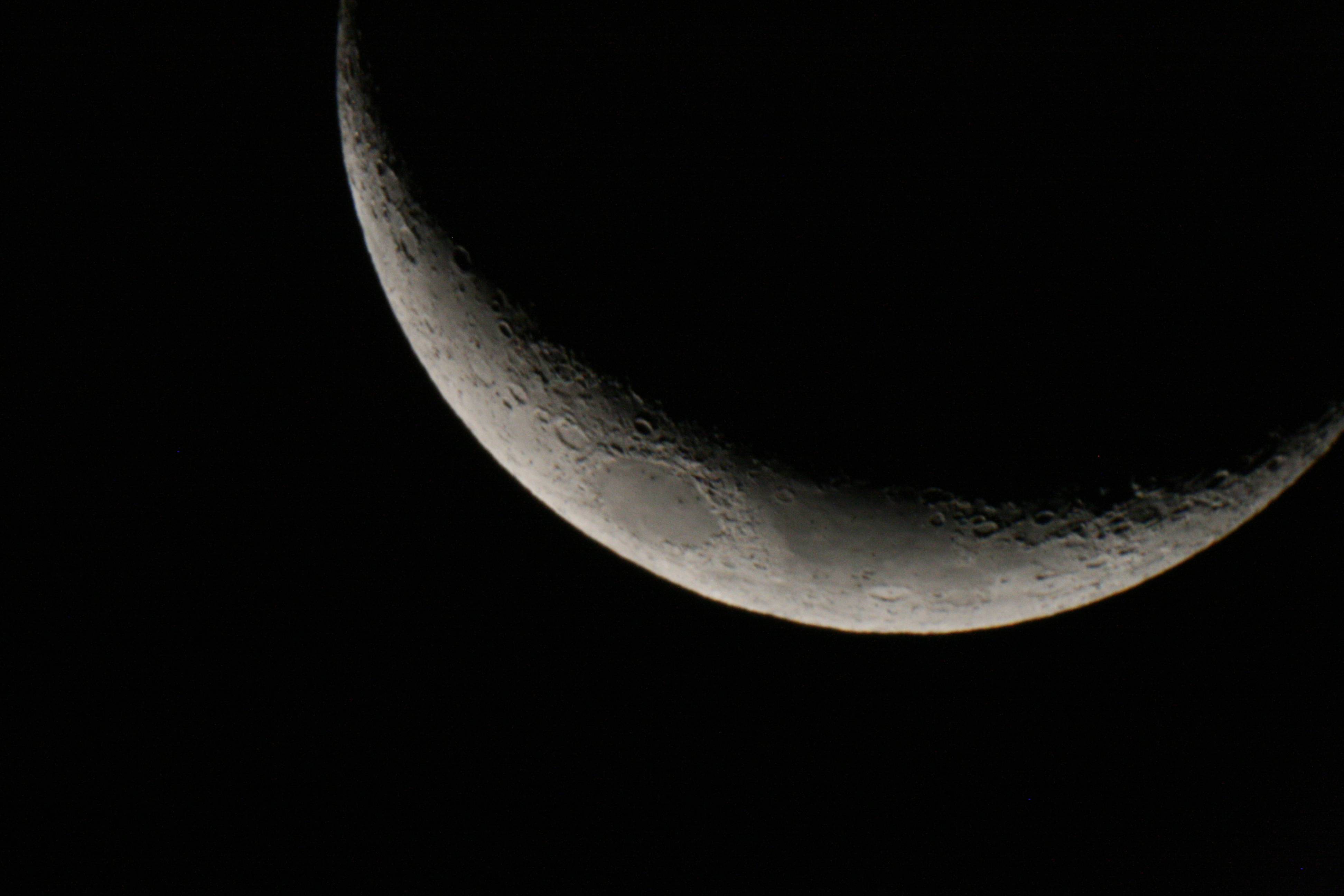
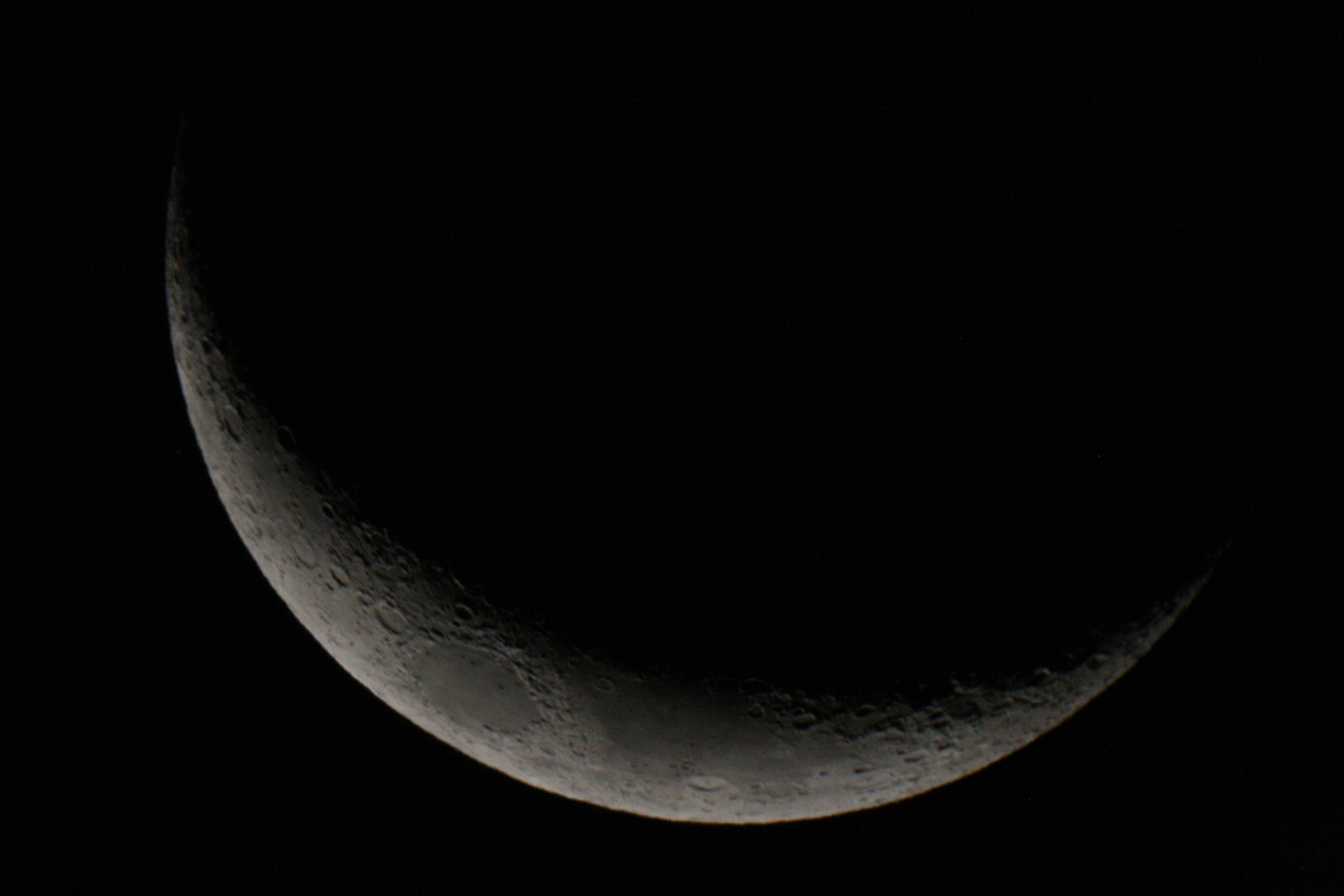
I just took these pictures of the setting crescent moon and Venus eight to ten minutes ago. If you’re on the US West Coast and it’s not cloudy, for the next half hour or so you can go see the same thing in your western sky!

Also, a quick note, the LA area has great ISS flybys on Wednesday and Thursday nights, the 9th and 11th, at 19:48 and 19:00 respectively. Check your location for details, but it’ll be great (except for the rain predicted in LA on those two nights).

IMG_6510_small

IMG_6525_small

IMG_6537_small

Leave a comment

Filed under Astronomy, Photography, Space

Simple Astrophotography (Part Six)

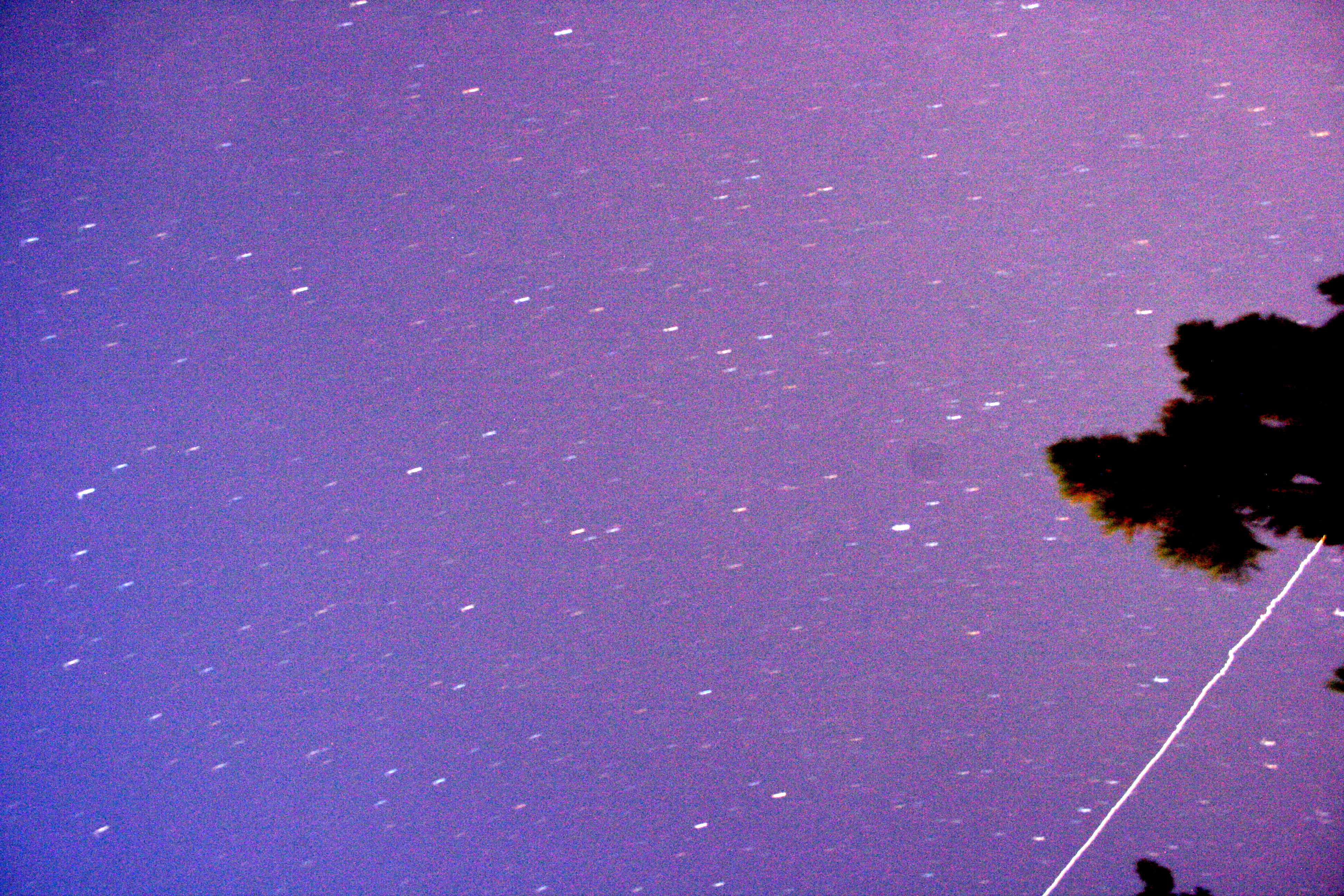
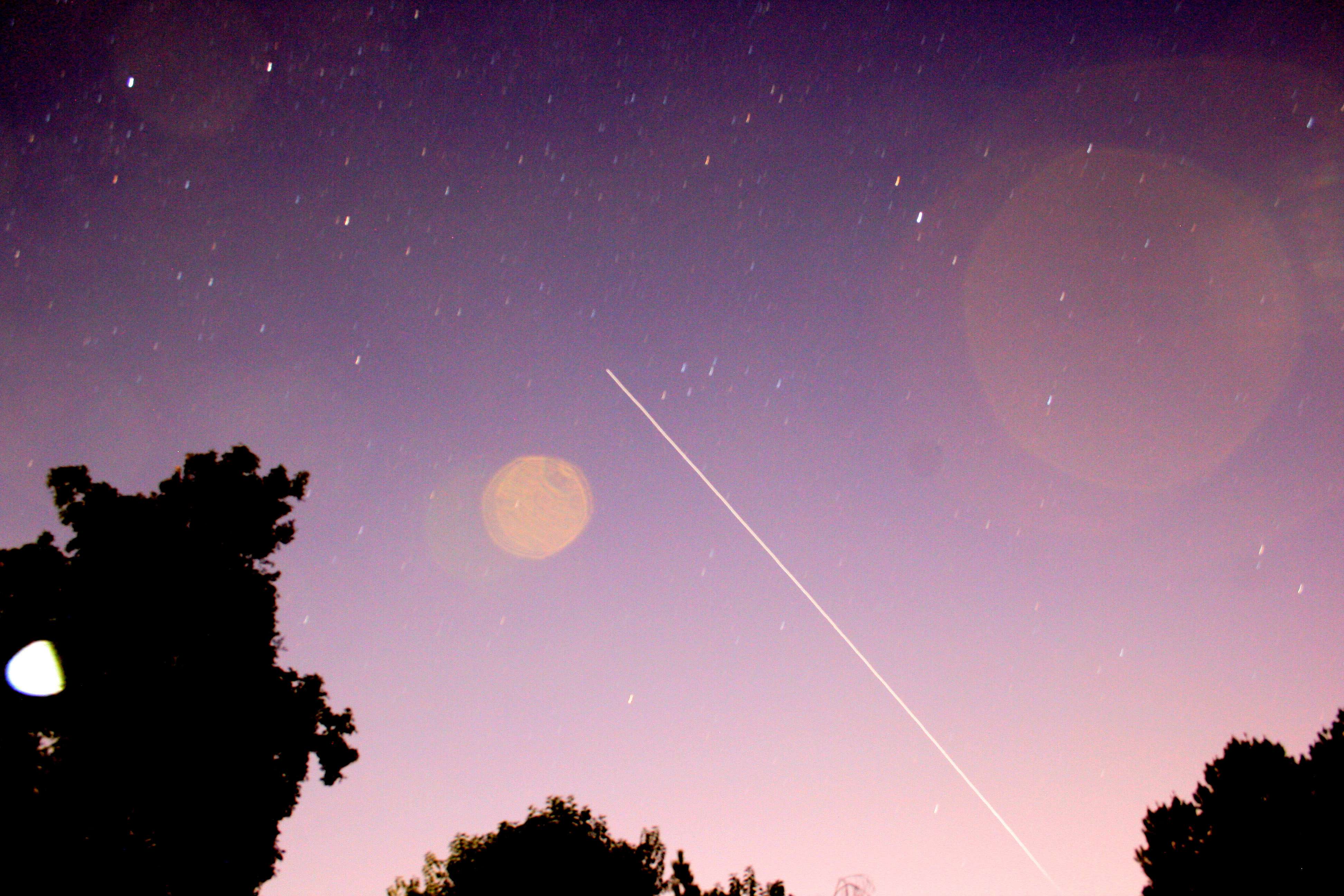
Last night (Sunday, August 25th) there was a spectacular pass of the International Space Station over the US West Coast. This might have been one of the best I’ve ever seen.

2013-08-05-2047_ISS_Position_Detail

This graphic was grabbed from ISStracker.com, a great site for finding out where the ISS is at any point and where it’s going to be in the next four and a half hours (three orbits). The track for this pass was the yellow line on the right. (The yellow line on the left is the next orbit, ninety minutes later, where the Earth has rotated beneath it.) As you can see, the ISS was coming right down the US west coast. The Flyby app (from SpaceWeather.com, highly recommended!) was predicting that ISS would rise in the NNW over Northern California at 20:17 PDT and over Southern California at 20:18 PDT, going right through the zenith, a very bright NNW to ESE pass.

Needless to say, I grabbed a camera. I did not have time to grab a tripod however, so I had to improvise.

I knew that I was going to be making long, “bulb” exposures with my Canon Digital Rebel XTi camera, exposures long enough to be showing the stars as trails instead of points due to the Earth’s rotation. Any other movement during the exposure would show up as wiggles in both the star trails and the ISS’s track.

IMG_8747_cleaned_small

As predicted, the ISS rose up in the NNW. The long exposure into the twilight washed out the picture quite a bit, but a little processing in Photoshop corrected for that. There was less that I could do about the three street lights just below the camera’s field of view and the lens flares they produced. I had set the camera on the ground with my iPhone and car keys under the lens to prop it up toward the sky a bit. I was in an awkward position to hold the camera’s trigger button down for the long exposure, and that introduced some vibration into the camera and wiggles into the star trails.

Nevertheless, you can clearly see the Big Dipper on the left above the tree there, with the two “pointer” stars aimed at Polaris, the North Star, which is just under the branches of the tree on the right. The ISS came up through the bowl of the Big Dipper and toward the zenith. This was a 95-second exposure.

IMG_8748_cleaned_small

At this point I put the camera flat on its back and pointed it straight up at the zenith for the second shot, a 62-second exposure. The ISS was only in the frame a part of that time. If you look closely at the star trails you’ll see that they look much smoother and cleaner than the first picture, and the trail of the ISS (which in reality is straight as the proverbial arrow) has fewer jitters. But there’s still some jiggling going on.

Just to the left of the tree branch overhead you can see the bright star Vega and constellation Lyra. Just to the left of center you can see the “Keystone” asterism in the constellation Hercules. On the left edge in the center you can see the curve of stars that make up the constellation of Corona Borealis.

IMG_8749_cleaned_small

This picture made the quick experiment worth it! I had jumped up off of the ground and moved over to the mailbox, again with the camera lens tilted up and held by my iPhone and car keys. But this time I was standing and not trying some odd contortionist trick, so there is very little jitter or jiggle anywhere in the picture. This is a 102-second exposure which has been processed in Photoshop to clean up the dynamic range. I love the way the ISS trail is straight and true toward the ESE horizon, although I could have lived with a couple fewer lens flares from street lights.

Just to the right of where the ISS trail starts in this picture you can see a cluster of moderately bright stars that make up the constellation Delphinus. To the upper right of that you can see two bright stars (at about the 10:00 position on the big lens flare in the upper right corner), one of which is bright white (Altair) and the other of which shows a distinct orange tint (Tarazed), both in the constellation Aquila.

Do you like these? Try it yourself whenever there’s an ISS pass at sunset over your position. They won’t always be this bright or this long or this spectacular, but it’s easy to try. (Plan ahead, use a tripod!) And if you’re on the US west coast, there’s another pass almost identical to this one on Tuesday, August 27th. Estimated rise time in Northern California is 20:15:15 in the WNW with a maximum height of 28.6 degrees. For Southern California, it’s 20:16:22 in the WNW with a maximum height of 35.2 degrees. Check the Flyby app or online at the NASA ISS “Spot The Station” website.

2 Comments

Filed under Astronomy, Photography, Space

Juicy Chunks O’ Wisdom For Monday, August 12th

‘Cause I’m really PO’d and trying not to be, that’s why.

  • Some days you’re the windshield, some days you’re the bug.
  • Some days you’re both.
  • The glory of being the windshield for a few minutes only makes it that much tougher when you realize the reality and magnitude of your self-inflicted bugginess.
  • Even when you blow the Final Jeopardy question that’s right in your wheelhouse, life goes on.
  • It’s not the Zombie Apocalypse – it just feels like it for a while.
  • It’s important to maintain perspective, even especially when all you want to do is drop back ten yards and punt.
  • If you’re losing your sense of balance, hold on to our sense of humor.
  • I would if I could, but I can’t, so I won’t.
  • Nine days and $300 more is too much when I can get two day delivery from someone else.
  • We need clean underwear, stat!
  • When all else fails, call Michelle at Sears.

Remember that tonight’s the last good night for the Perseid meteor shower. Look to the northeast after dark, after midnight is better if you can stay up. Last night in LA, only the really bright ones crossing a third of the sky could be seen, but they were glorious.

Leave a comment

Filed under Astronomy, Juicy Chunks

Odds & Sods For Saturday, August 10th

Item The First: If you’re looking for another “Simple Astronomy” idea, try taking pictures of the Perseid meteor shower over the next couple of nights, August 10th through August 13th or so. (Even if you can’t do the photography, if it’s not cloudy you should go out and try to see some meteors. It’s fun!)

Simply put your DSLR camera on a tripod, turn the autofocus off, manually set the focus to infinity, pull the zoom on the lens back to get the widest field of view you can, set the exposure time to the longest you can get (or “Bulb”), and point it toward the northeast in a spot as dark and clear as you can find. Keep shooting (digital photos are cheap!) and see if you get lucky. And don’t forget to watch the skies as well as run the camera!

Item The Second: Earlier in August I wrote about favorite movies. Since then, of course, every now and then my brain kicks me in the ass and says, “How could you possibly have left this one out?!” OK, so add these to that list for me:

  • Blazing Saddles
  • RED
  • Hunt For Red October
  • Airplane!
  • When Harry Met Sally
  • Patton
  • Hudson Hawk
  • All That Jazz
  • Who Framed Roger Rabbit?
  • My Big Fat Greek Wedding
  • Bill Cosby, Himself
  • Chicago (Hey, Chris, here’s my musical!)
  • 1776 (And another one!)
  • October Sky
  • Father Goose
  • Little Big Man
  • Contact
  • Tootsie
  • Deep Impact
  • Phantom Of The Paradise
  • Crimson Tide
  • Time Bandits
  • Defending Your Life
  • The Hallelujah Trail

Item The Third: After making my impassioned plea for someone to make an updated, new, and improved version of Outpost, my favorite old strategy computer game, it occurred to me that there’s another perfectly good thing that someone could raise money through Kickstarter for.

There are many crowdfunding campaigns to get small, independent films going. We’re also starting to see some bigger projects campaigning. Spike Lee is trying to use a Kickstarter campaign to raise $1.25M for his next movie (the campaign may or may not make it, closing August 21st), and the fans of the Veronica Mars television show raised over $5.7M earlier this year to bring the show back.

So why can’t the creators of “The Adventures Of Buckaroo Banzai Across The 8th Dimension“ ask the devoted and passionate fans of that movie to raise the starting funds for a sequel? Sequels were obviously planned. After the final credits rolled there was a card telling us to look out for “Buckaroo Banzai Against The World Crime League”. So let’s get it made!

Who’s in charge around here?

Item The Fourth: In the last “Odds & Sods” (item #1) I mentioned a great video by Ken Murphy. Now Phil Plait has mentioned it in his Bad Astronomy blog on Slate. He has a lot more information on some of the really subtle stuff that can be seen in the video and some other ideas for similar projects that can be done.

Item The Fifth: If you would be so kind as to bear with me while I vent (although you will be forgiven if you bail and ignore this section), the gremlin body count continues to rise like a smothering tide. With every two steps forward (item #5) there seems to be one back. I’m trying to consider it to be a cha-cha:

Cha-Cha

  • As previously reported, about two weeks ago we bit the bullet, dealt with Time Warner Cable’s “customer service”, and got our cable television problems solved. It was good for about four days, then went right back having the same problem, showing up as a really low-power signal with most channels blacked out because the digital cable boxes just weren’t seeing enough signal to decode. The earliest they could get us back on the schedule for another look was six days later — but mysteriously the problem went away “on its own” after three days. I’m guessing that this time it wasn’t just us having a problem, but something broken that was affecting a much wider area. If TWC got multiple complaints, they expedited the repair for the whole neighborhood.
  • Our washer & dryer are about a dozen years old. I’m not sure how long the “durable” in “durable goods” is supposed to be, but the washer went belly up mid-load last weekend with a strong smell of rubber burning. Probably a belt broken or slipped, which is something I’ve repaired in the past on older machines. But I’ll be damned if I can figure out how to get to the innards of the thing to do anything on my own. Meanwhile, the dryer works, but has something wrong with it that makes it very, very noisy when running. We’ll get both of them checked out on Monday to see if it’s a $200 repair or $2,000 for new ones.
  • My “MomDude-mobile” minivan had been getting more and more reluctant to start over the last couple of weeks and it was finally time to let the dealer tell me if it was the battery, the starter, or an electrical problem. I could have changed the battery myself if that’s all it was, but the symptoms made me suspect that it was something more complex. The good news is that they said it was just the battery, and that was relatively cheap to fix. The bad news is that now, a week later, it’s running really rough at high speeds. At 165K+ miles, I’m feeling that it’s on thin ice, but I don’t really need or want monthly payments on a new car right now.
  • In the last month I’ve had the DVD burner in not one, but two DVRs go belly up on me. The old Panasonic DMR-EH55’s were great for recording things on a big hard disk and then burning them off to DVD, but when the DVD drive dies you can’t just drop in a replacement, it’s all a proprietary unit. And they stopped making the proprietary replacement units years ago. So now I have hundreds of hours of stuff that I want to burn off to DVD, but can’t. Time to get creative and see if “my smart can be better than their stupid”.

Did I piss off someone who had some extra curses to sling about? Did I cut off a warlock on the freeway? Take the last bag of chips off the shelf just before a wizard could grab them? Let the dog poop in a witch’s front yard without cleaning it up? If so, how do I figure out who it is and apologize? (If it’s God being pissed about that whole “not been to church in forty years” thing, I might be screwed.)

FYI, I found that “cha-cha” picture on Facebook and traced it back as far as an Instagram account for “violetflame7”. If anyone has more accurate credit information, let me know and I’ll post an update.

Leave a comment

Filed under Astronomy, Movies, Odds & Sods, Photography

Simple Astrophotography (Part Five)

I know that we’ve started on some more advanced (intermediate) astrophotography, but I ran across some photos from last year and realized that there’s another simple astronomical object that can be easily photographed.

The sun!

Unlike the moon, constellations, aurora (which I’ve never seen in person but would kill to get to see and photograph!), and satellites, photographing the sun has the potential to be dangerous. It goes without saying, but I’ll say it anyway: DO NOT LOOK AT THE SUN THROUGH YOUR CAMERA! ESPECIALLY DO NOT LOOK AT THE SUN THROUGH A TELEPHOTO LENS!! EVER!! NOT EVEN ONCE!!! YOU’LL SERIOUSLY DAMAGE YOUR EYES AND POSSIBLY GO BLIND!! (Not that other kind of “you’ll go blind” either, this is the real thing, physics and science and all of that, not moral guilt and BS and bullying.)

That doesn’t mean that you can’t take photos. You just need to be clever.

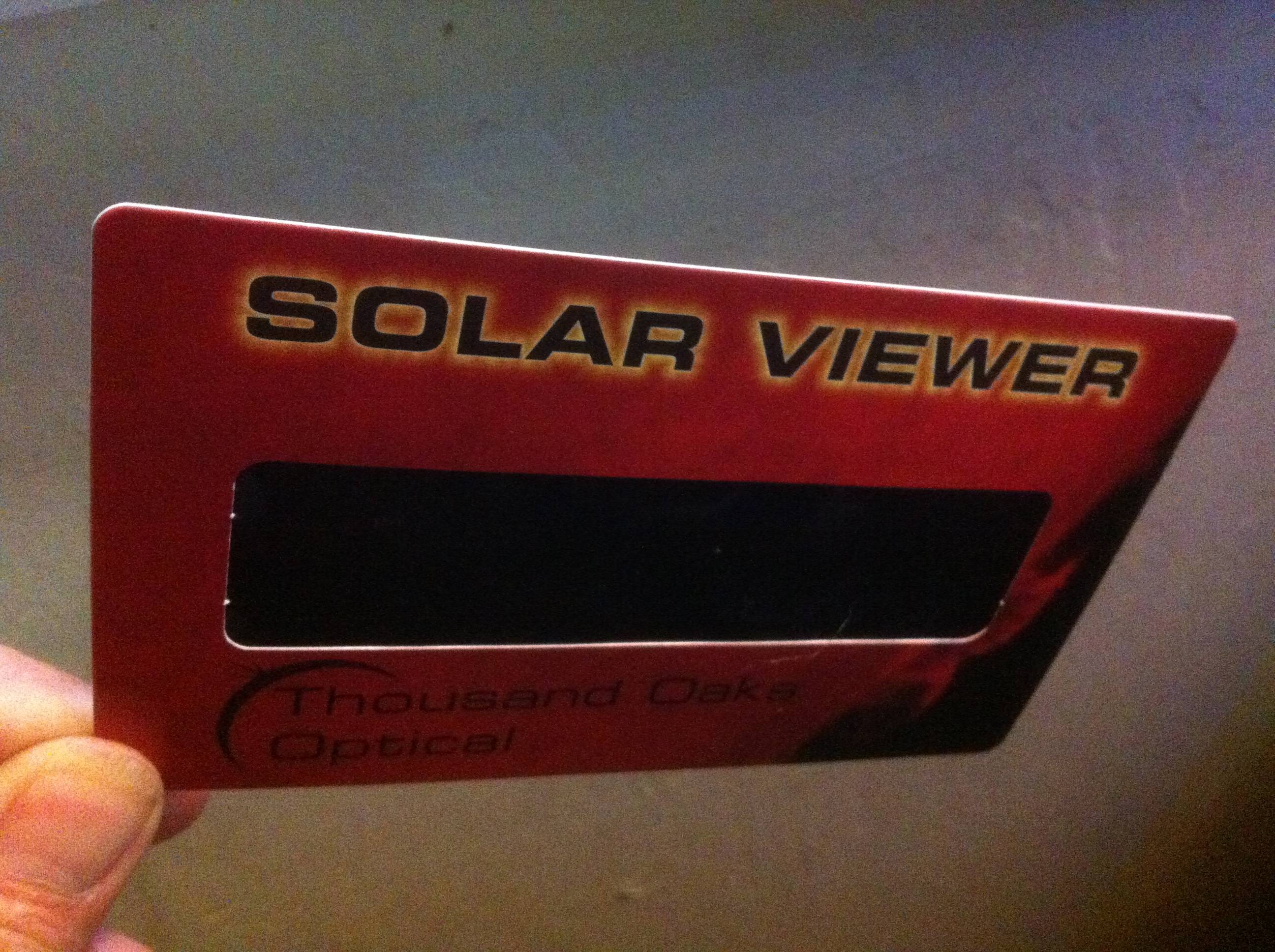
First, you need to block out about 99% of the light from the sun. It’s possible to do this with a fancy solar filter and in fact you can get such filters for telescopes like my 5″ Meade ETX-125EC, but they’re expensive. I’m still talking “simple” here.

photo

You can get one of these from any astronomy or telescope store for about $1. (If you wait until the day before an eclipse or the day of an eclipse, it might be $10 – if you know what I mean.) Coincidentally, it’s just about the perfect size to cover the front end on my 70mm-300mm Tamron zoom lens. I simply taped it on with a couple tiny tabs of duct tape.

Make sure that it completely covers the lens – even the tiniest bit of stray full-intensity sunlight will ruin your day and possibly your camera.

To aim at the sun, put your camera on a tripod. Point the lens (covered with your cardboard and mylar “Solar Viewer”) at the sun.

I’ll repeat one more time: DO NOT LOOK THROUGH YOUR CAMERA AT THE SUN, EVEN IF YOU HAVE YOUR $1 SHIELD COVERING THE LENS! EVEN IF YOU THINK IT’S OK, IT’S NOT. YOU’RE STILL GETTING MAGNIFIED AND FOCUSED UV LIGHT SHOT STRAIGHT INTO YOUR EYEBALL. OH, AND DID I MENTION — YOU’LL GO BLIND!!

If you have one of the newer DSLR’s that actually shows an image on the back like an iPhone or camcorder does, this is a piece of cake. While you shouldn’t ever look through the lens at the sun, looking at an LCD display on the back of the camera is completely safe. Just “eyeball” your pointing, then refine it by looking at the LCD display.

If you have an older DSLR (like I do) where it only uses the LCD display on the back to show you the picture after you take it, aiming is a bit trickier, but still pretty easy. “Eyeball” your pointing, then look behind you at your shadow. If you can see the shadow of the lens, you’re still not pointing in the right direction. Move the tripod until you minimize the size of the camera’s shadow, meaning that you have it “square” to the sun. Shoot a picture and then look at the result on your LCD display – adjust accordingly. Easy peasy!

The mylar solar filter will make the sun’s image look very orange. No worries. As for the size of the sun’s image in the frame, it will be EXACTLY as big as the moon’s image is from when we were playing around with taking pictures of it with the same lens and camera.

This makes perfect sense if you think about it – what happens during a full solar eclipse? The moon passes directly in front of the sun and we see the solar corona because the angular size of the moon and sun are exactly the same. Right? (Yeah, yeah, annular eclipses, blah, blah, blah. Close enough for government work!)

So does it work?

IMG_4300_small

IMG_4322_small

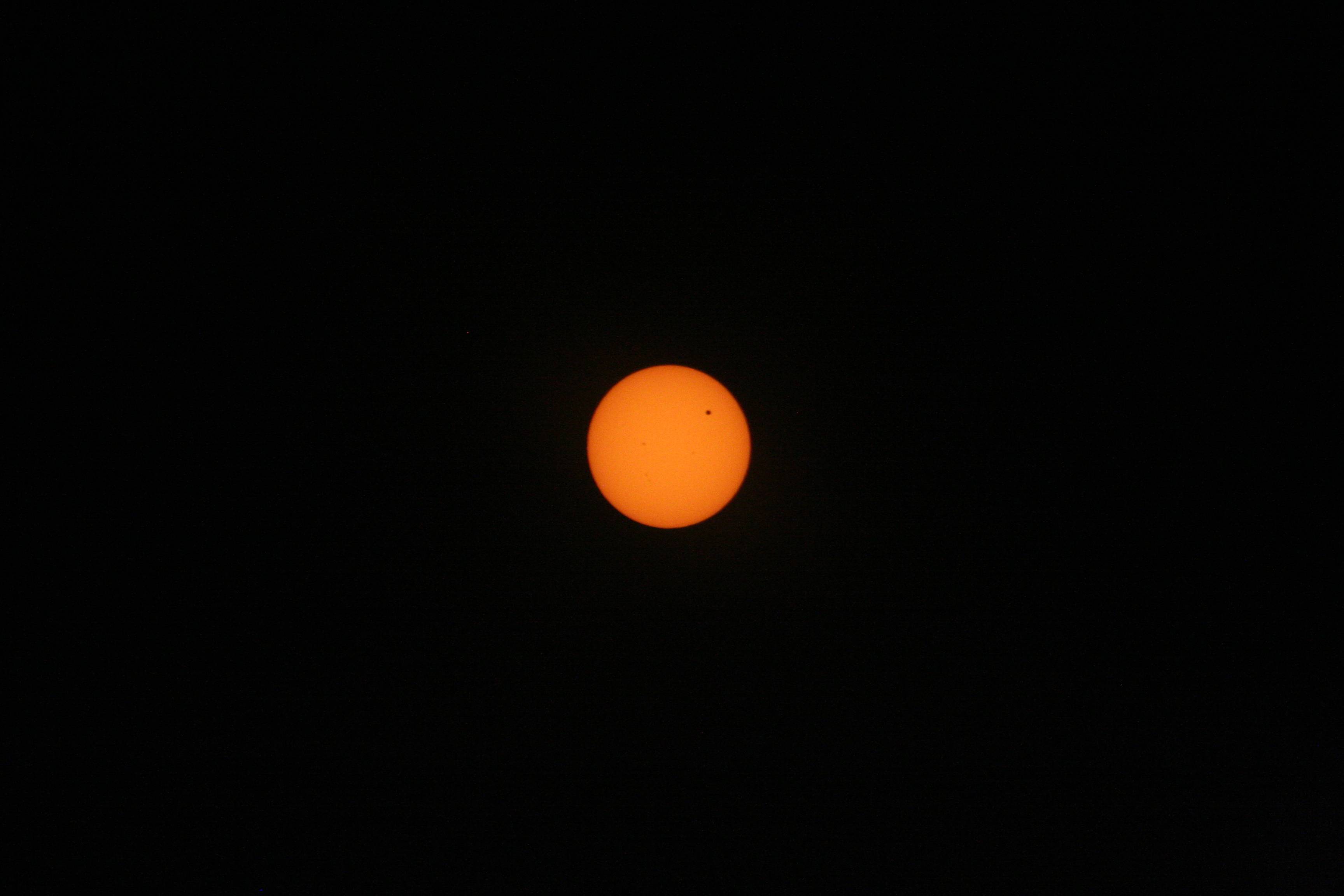
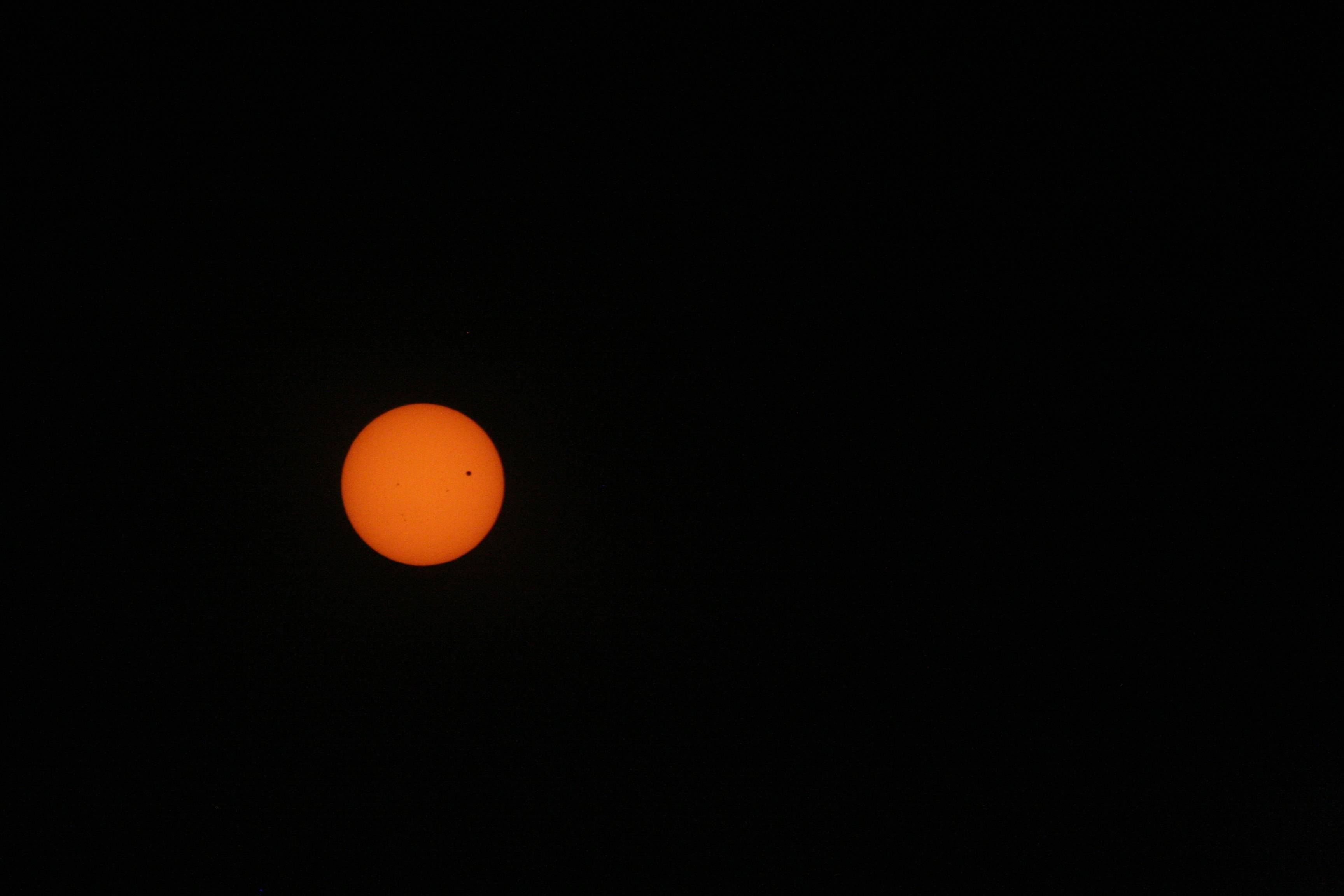
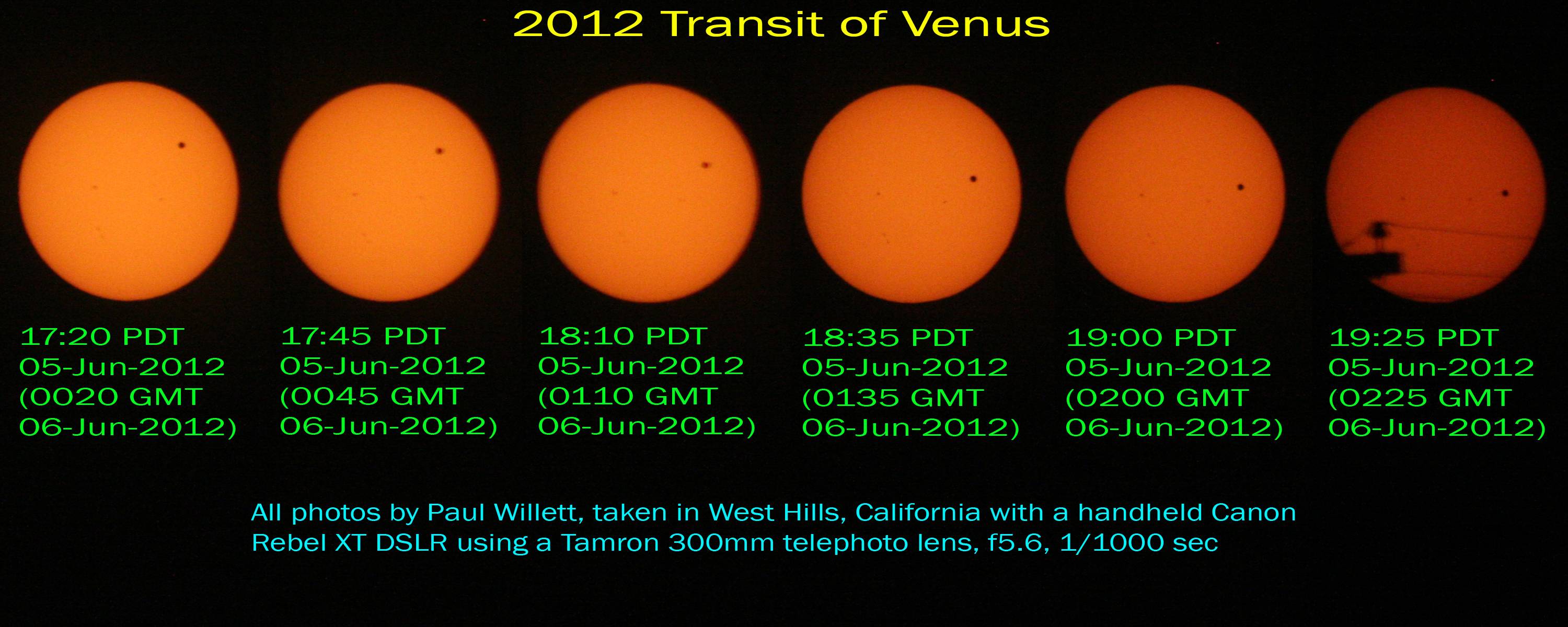
Yes! Yes it does. These pictures were taken on June 5, 2012 when a very rare event, a transit of Venus, occurred. How rare? Transits of Venus occur in pairs eight years apart, and this was the second one of the pair that occurred in 2004 and 2012. The previous pair were in 1874 and 1882, while the next pair will be in 2117 and 2125.

That rare.

So, that black dot that you see at about the two o’clock position? That’s the planet Venus silhouetted against the face of the sun.

Of course, it’s moving. It can take hours to cross the face of the sun. From Los Angeles I took pictures from about 17:20 to 19:25, at which point the sun was setting. Then, to prove that it really was moving (I don’t think NASA really needed my proof, but it’s a nice little exercise to do anyway.) I took five frames covering that 2:05 period and put them together using Photoshop.

05-Jun-2012 Transit Of Venus


All with my off-the-shelf camera, tripod, telephoto lens, a $1 mylar card (OK, it was $5 ’cause I waited until that morning) and a little bit of caution and cleverness.

POP QUIZ: What should you never, EVER do because it really, REALLY will make you go blind?

Very good. You get ice cream.

I need to go find some aurora some day.


1 Comment

Filed under Astronomy, Photography

Intermediate Astrophotography (Part One – July 13th Update)

Yesterday we talked about the first efforts to take astrophotos with the camera attached to a small telescope, essentially using the telescope as a honkin’ big telephoto lens. Last night I tried again using the same setup with the moon a day further along in its monthly cycle.

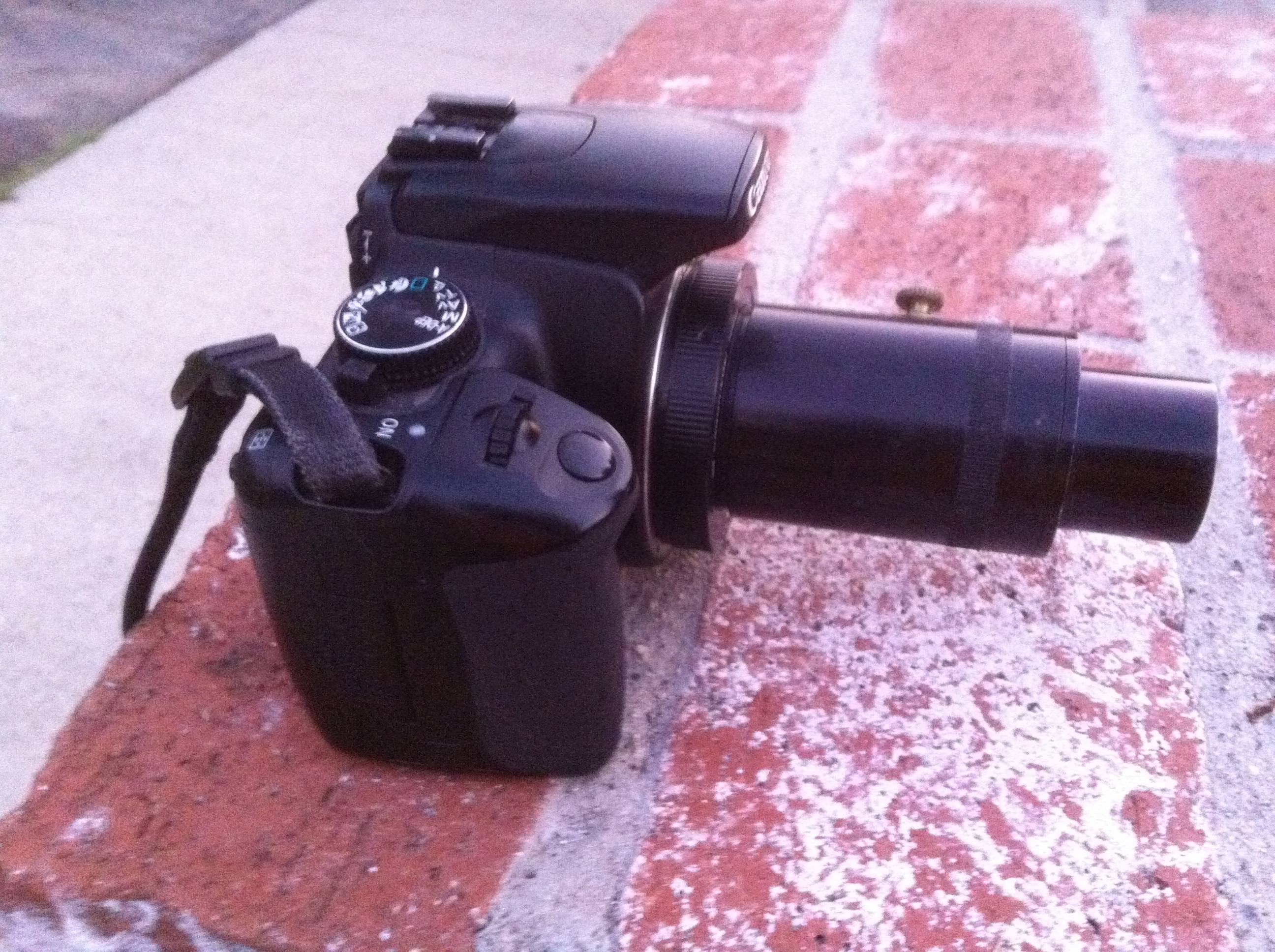
photo1_smallHere you can see the camera attached to the telescope, with the small finder scope just to the left of the camera.

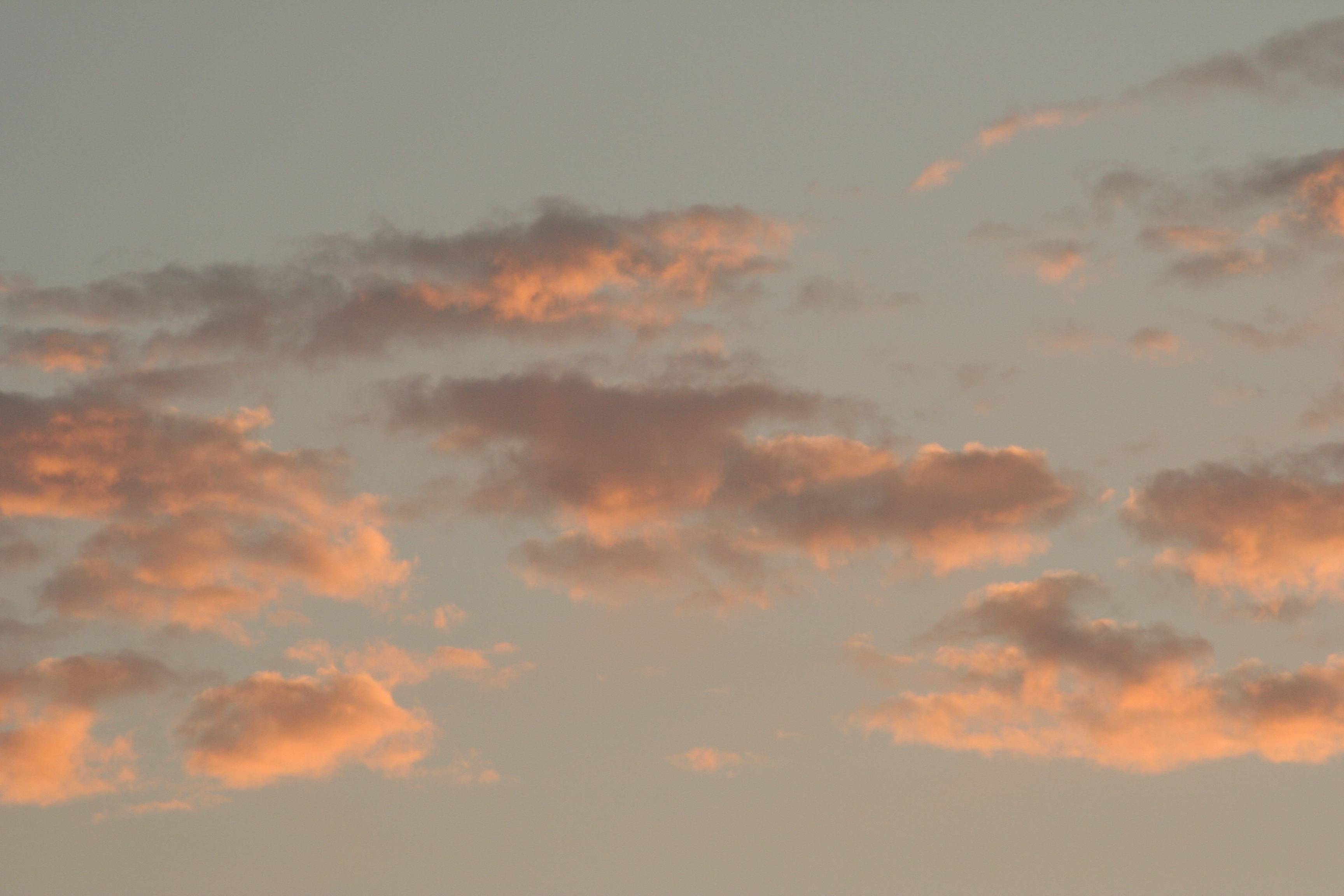
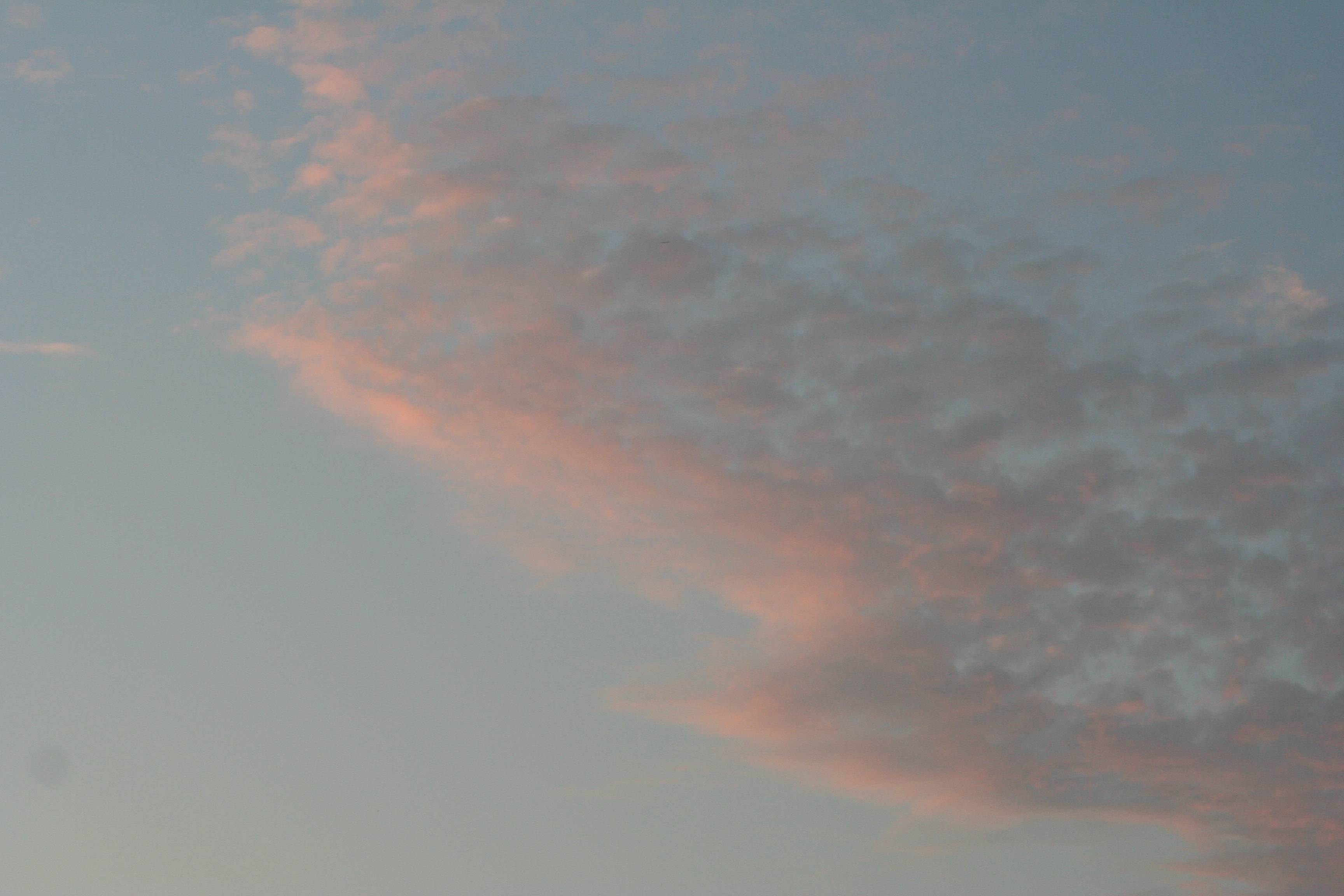
photo2_smallThere were still clouds in the area, very pretty and pink and cotton candy like, but a pain for this kind of work.

IMG_8385_small(Click on the images to view or download the full sized versions.)

The southern limb of the moon. On all of the pictures here (as with almost all astrophotography) south is up, so the pictures appear to be flipped compared to maps. There are all kinds of good lunar maps online if you would like to play along.

When these pictures were taken, the moon was 21% illuminated, four days and twenty hours past new. This picture was a 1/60 second exposure and slightly blurry due to vibration.

The large, round, flat area just to the right of the terminator and just above the bottom of the picture is Mare Nectaris. The large crater sticking up (to the south) out of it, half open, is Fracastorius, approximately 124km wide. The crater just above (south) of that with the really nice central peak just being illuminated is Piccolomini (88km).

IMG_8399_smallA 1/100 second exposure. In the center, below (north of) Mare Nectaris we see Mare Tranquillitatis, the Sea of Tranquility, where Apollo 11 landed in 1969. The large, circular area near the limb below (north) of that is Mare Crisium. The two prominent craters near the terminator at the very bottom (north) are Aristoteles (87 km, nearly fully illuminated) and Eudoxus (67 km, rim illuminated but floor deep in shadow).

Not fantastic, not spectacular, but not bad for two nights’ work. Still plenty of room for improvement, but to a good first approximation it’s working!

What’s next? Well, not too far above the horizon, about twenty or thirty degrees to the north of the moon there’s this really, really bright object. What is it?

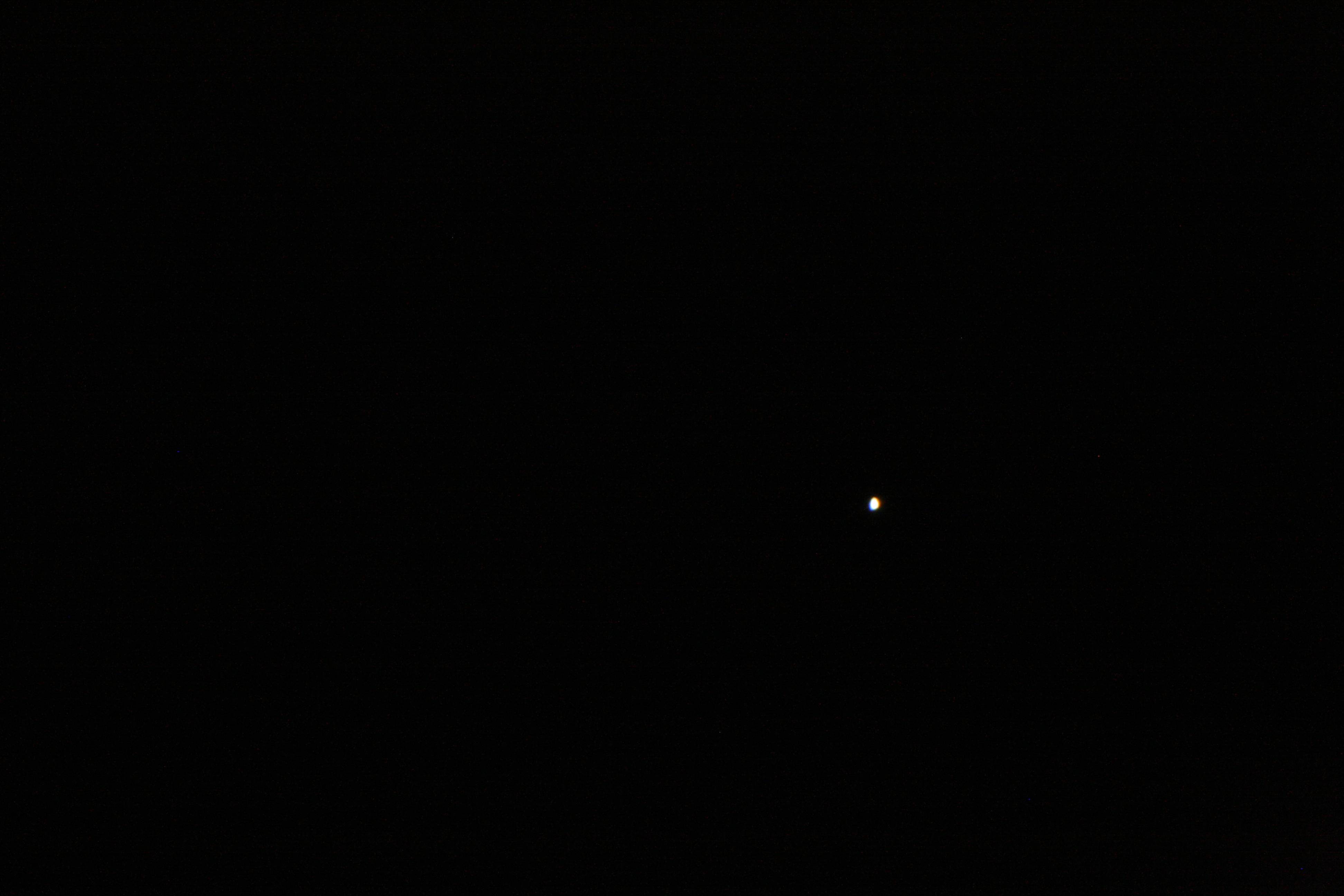
IMG_8448_smallThis is a 1/100 second exposure, so even with all of that dark night sky there this is a bright object, but much smaller than the moon. Yet it’s not quite a pinpoint, seems to have an actual discernible structure or form.

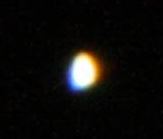
Cropped_Venus_Actual_ImageIf we isolate the central image we can see that it appears to be showing phases, much like the moon does. But no other detail, no surface features.

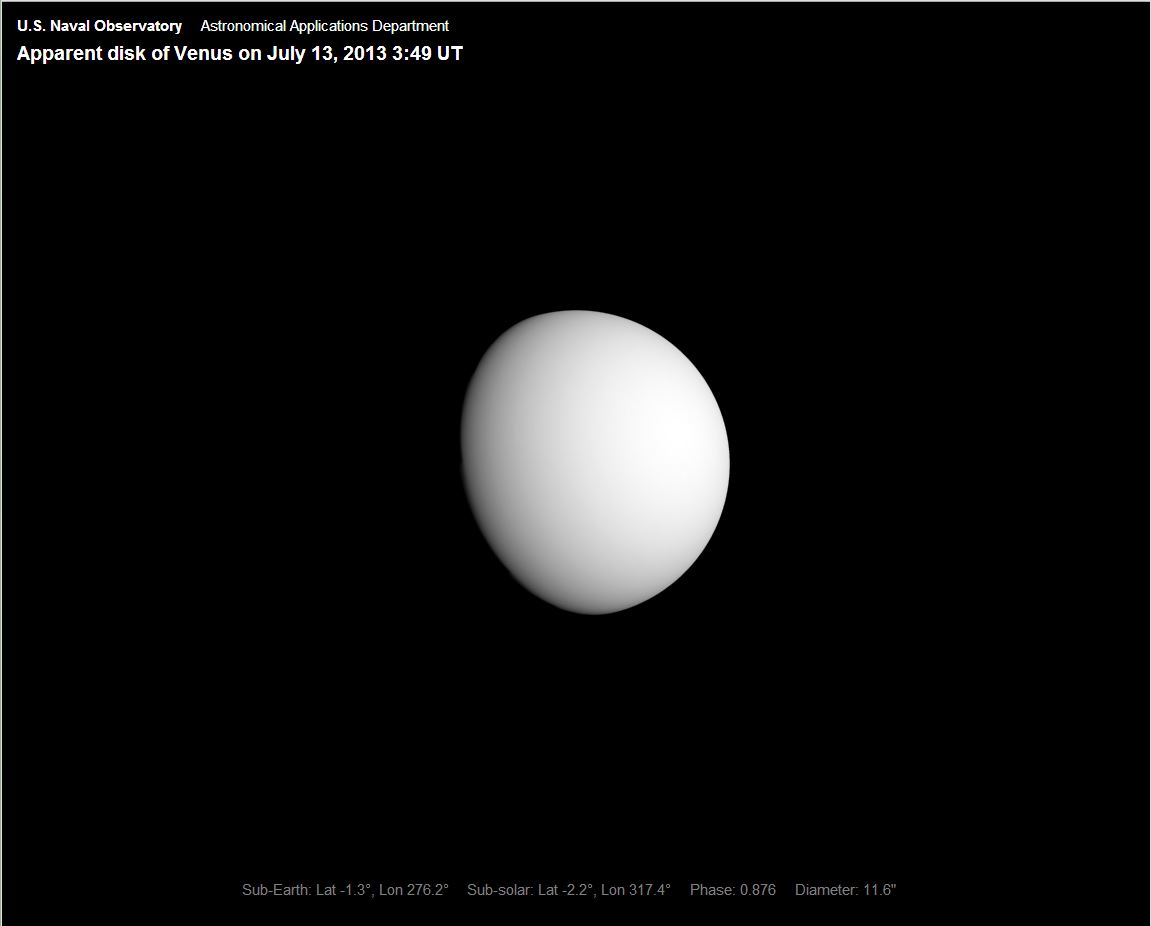
Of course we know what it is (Venus), but did we actually photograph it correctly, seeing the phase and not just some random jiggle in the telescope rig, smearing a stellar pinpoint into something bigger? For confirmation, let’s go to a really neat website run by the US Naval Observatory:

USNO_Venus_Predicted_ImageThis is a computer-generated image of what Venus should look like at the time that my picture was taken. It most certainly appears that for the first time I’ve gotten a good photography of Venus!

Clouds permitting, we’ll continue to watch the moon as it heads toward full moon on July 22nd. It’s amazing how features can vary so widely on how they look as the lighting and shadows change. A couple hundred years ago, using telescopes less powerful than the one I’ve got and with no photography, these kinds of observations and measurements gave astronomers the first accurate idea of how big the craters and mountains of the moon were.

As far as Venus is concerned, Galileo’s observation of the phases of Venus (and Mercury) were a key point in the evidence that the sun was at the center of the solar system. (Planets inside our orbit show phases while planets outside our orbit do not. Simple geometry from there.) While the Catholic Church forced him to recant in order to avoid being burned at the stake as a heretic, the facts and the evidence remain.

Leave a comment

Filed under Astronomy, Photography

Intermediate Astrophotography (Part One)

I’ve written four posts now on Simple Astrophotography (here, here, here, and here) which use only basic camera equipment that an advanced amateur photographer might have already in hand. The equipment list so far hasn’t included anything other than a modern DSLR (I use a Canon, you could use a Nikon, Sony, whatever), a tripod, a telephoto lens, and a little bit of knowledge about what to look for and how to shoot it.

Now let’s up the game a little bit and start Intermediate Astrophotography using a small telescope. Here’s last night’s setup:

photo1

photo2This is my current “little” telescope, a 5″ Meade ETX-125EC, a Muskatov design telescope.

As you can see in the top picture, it’s portable (more or less) with a heavy-duty mount. The whole thing weighs about forty pound or so. “Luggable” might be a better term than “portable”, but it’s easy enough to take out on short notice to set up on the sidewalk out front. For accurate use and more advanced stargazing and astrophotography a precise alignment is necessary with the yoke (seen going from about the 8 o’clock position to the 2 o’clock position in the bottom picture) pointed straight at Polaris, the North Star. If that alignment is accurate and you power the motor in the telescope mount’s base, the telescope will stay aligned with the stars as the Earth turns. For last night’s work, just “eyeballing it” was fast and “close enough for government work”.

This particular telescope is about a dozen years old. The current models in this size with the heavy-duty mount run a bit less than $2,000. That’s why I don’t expect everyone to have one sitting around in the garage – but if you want to get into this sort of thing, it’s not an outrageous amount either.

photo3My Canon DSLR will be attached to the telescope using an adapter ring that you can get for about $20 or $30 from any good camera or telescope store. (If you don’t know one, I would recommend Woodland Hills Cameras & Telescope – and every type of DSLR has a different adapter ring, so make sure you get the right one for your camera.) The adapter ring screws into a connecting tube, where the thick portion of the tube can hold an eyepiece for more magnification (that’s advanced astrophotography, not intermediate) and the narrow portion fits into the telescope where the eyepiece normally goes.

For last night’s beginning work, I first wanted to shoot something big, bright, and easy to focus on, i.e., the moon. (I knew how to do all of this twenty-five years ago, but it’s been a while, so we’re revisiting the learning curve just a tad here.)

But first…

IMG_6465_small

IMG_6467_small

Very pretty, but not good for photographing the moon. On the other hand, considering how bad it looked in the east, north, & south, these clouds in the west weren’t bad. Even with the clouds skipping over the moon and hiding it from time to time, I was able to get the telescope lined up and make sure that the finder scope (seen with its eyepiece sticking off at a 90-degree angle to the left side, above) was properly aligned.

Then it was time to take a couple of quick pictures the “simple” way, using just the telephoto lens, for reference:

IMG_6470_smallUsing the telephoto lens at 70mm, you can see the crescent moon, three days old and 13% illuminated.

IMG_6472_smallUsing the telephoto lens at 300mm you can start to see a bit of detail, maybe a few craters or maria on the terminator. However, the moon only fills a small fraction of the frame of the picture.

As it got darker and I started to try to use the telescope, of course, the clouds got thicker. At first I was getting nowhere with the DSLR attached to the camera, so I took the camera off and put in a 25mm (low power) eyepiece. Even with the clouds drifting in and out, this will give you a gorgeous view of the moon, the moon’s disk just about filling the low-power field of view through the telescope.

It occurred to me that there was an intermediate intermediate step before I got the DSLR camera working correctly on the telescope. And you can try this (with the telescope owner’s permission in advance, of course!) if you’re at a star party or someplace where someone has set up a telescope, or even a pair of binoculars.

With the telescope focused and aligned, I tried simply holding my iPhone camera up to the lens and seeing if the iPhone would see what my eye saw and photograph it:

photo4To my surprise and amazement, it sort of did!

You’ll notice that the image shows some serious vignetting, where the full frame of the iPhone photograph only picks up a central, circular image from the telescope eyepiece. (You’ll also notice that there was a wisp of cloud across the top third of the moon, from center left to upper right.)

But you can also see a lot of detail, especially along the terminator. I was surprised, but pleased that I at least had something to show for my efforts!

Then the clouds cleared a bit, I put the camera back on the telescope, figured out what I had been doing wrong, and finally:

IMG_8353_small1/30 second exposure

IMG_8339_small1/60 second exposure

IMG_8323_small1/25 second exposure

The focus was pretty good, although it might get better with more practice. You can see how these three shots with slightly different exposures have different tradeoffs between overexposing the bright limb and underexposing the dark terminator line. When shooting pictures of the moon, you’ll have a huge dynamic range to deal with. (Again, DIGITAL PICTURES ARE CHEAP! These were the best three of dozens and dozens of pictures taken, bracketing the exposures both darker and lighter.)

And finally, not the most in focus or well exposed picture of the night, but possibly the luckiest:

IMG_8336_small1/30 second exposure, but what’s that little red line on the left? (You will probably have to click on the image to view or download the full-sized picture.) Odds are that it’s a 747 headed from Dallas to Honolulu, about 250,00 miles closer than the big planetary body in the background.

That was great! Will it be clear tonight? I’ll let you know tomorrow.

Leave a comment

Filed under Astronomy, Photography