Category Archives: Travel

September

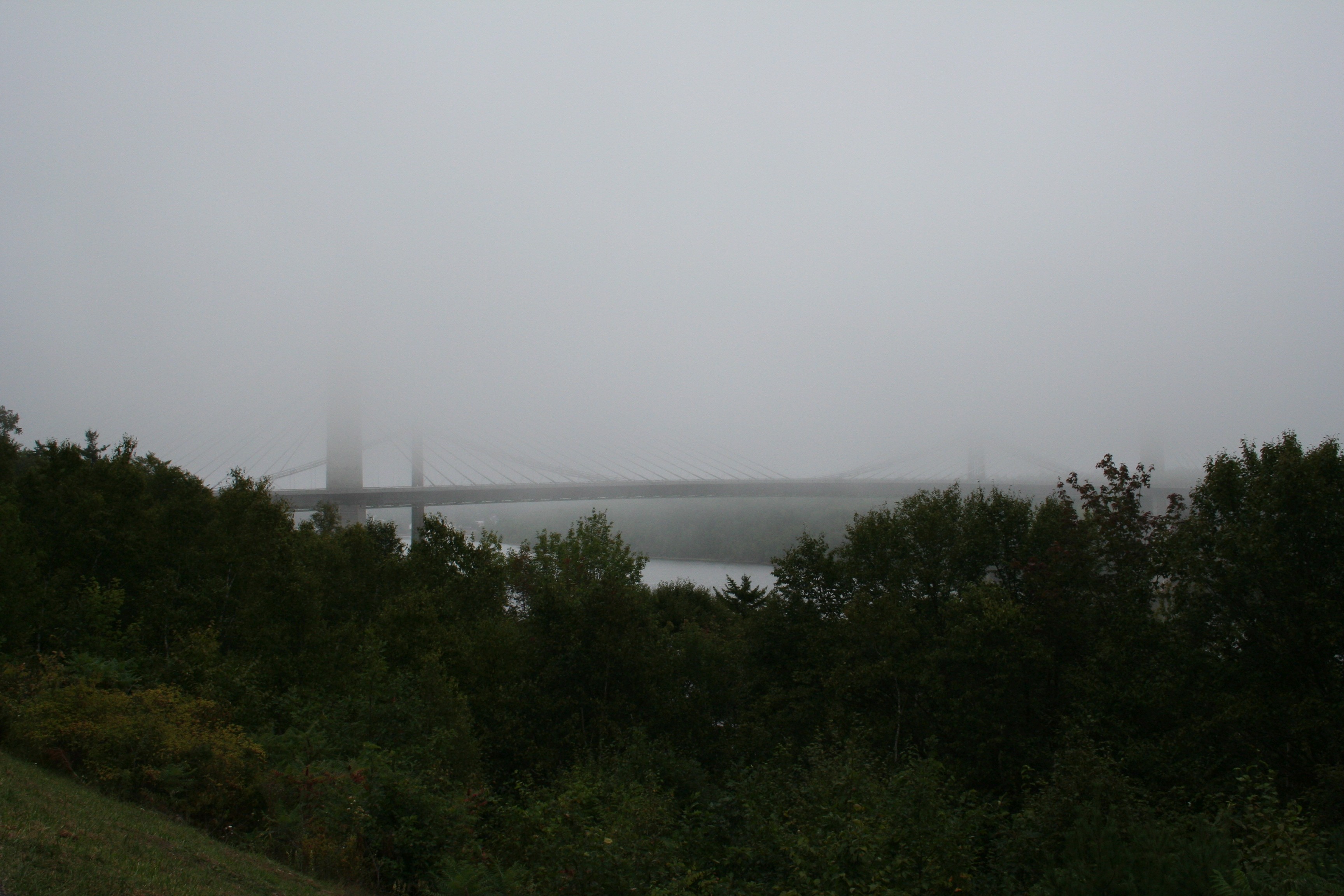
Already starting to be a fickle & fey little minx, eh? How about a pretty picture as a combination incentive and peace offering?

IMG_7620 small

How about some symbolism?

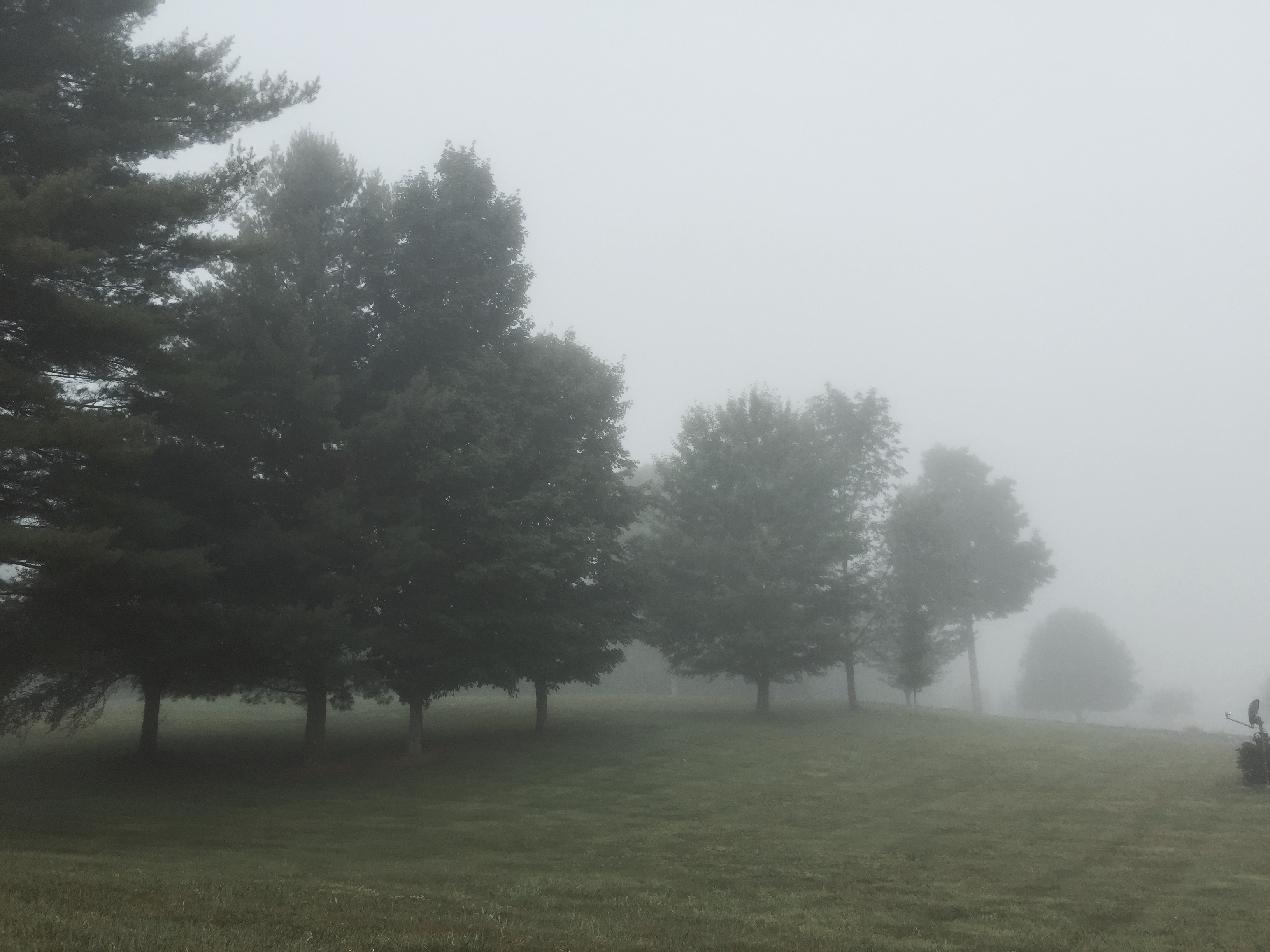
The fog, that’s life. Life in general has those moments of brilliant clarity, but often we can’t or don’t see far in them because we’re focused on the ground at our feet or the things in arm’s reach. In times of turbulence and troubles, that’s when it’s like the fog has rolled in and we’re feeling even more blind than usual.

But out there in the fog of life, we’ve got a glimpse of something solid, grand, beautiful, and spectacular. We know that bridge is there, even if it’s not clear how to get there from here. (No GPS, no Google Maps.)

When we find it, we know that it will take us past some of the huge barriers in life (the river) and to great adventures and what we hope will be wonderful things on the other side. But we have to get there and get across.

It would be great if the fog would lift and allow us to get a clear view of our path – but don’t bet on it. Keep going as best you can and try not to lose sight of the bridge, and the Promised Land on the other side.

(And no, I’m not stoned. Thanks for asking!)

Leave a comment

Filed under Job Hunt, Photography, Travel

ORD To LAX – The Clouds

Since I recently flew from Chicago to Los Angeles with a window seat, a clear day, my trusty Canon Rebel xTi, a full battery, and an empty memory card, I’ve been sharing the things that I saw. First there were the small and sometimes not-so-small airports and towns, then some obvious landmarks and way points.

Today, it’s proof that it wasn’t all “clear and a million” along the way. There were clouds.

IMG_0267 save

Over southwestern Kansas, it’s real obvious where the frontal boundary is. Lots of clouds north and east of the line, very few south and west of it.

IMG_0276 small

Way off in the distance (probably at least 30-40 miles away at this altitude) there was some convective activity, the humid, unstable air heating and rising, building up thunderstorms.

IMG_0313 small

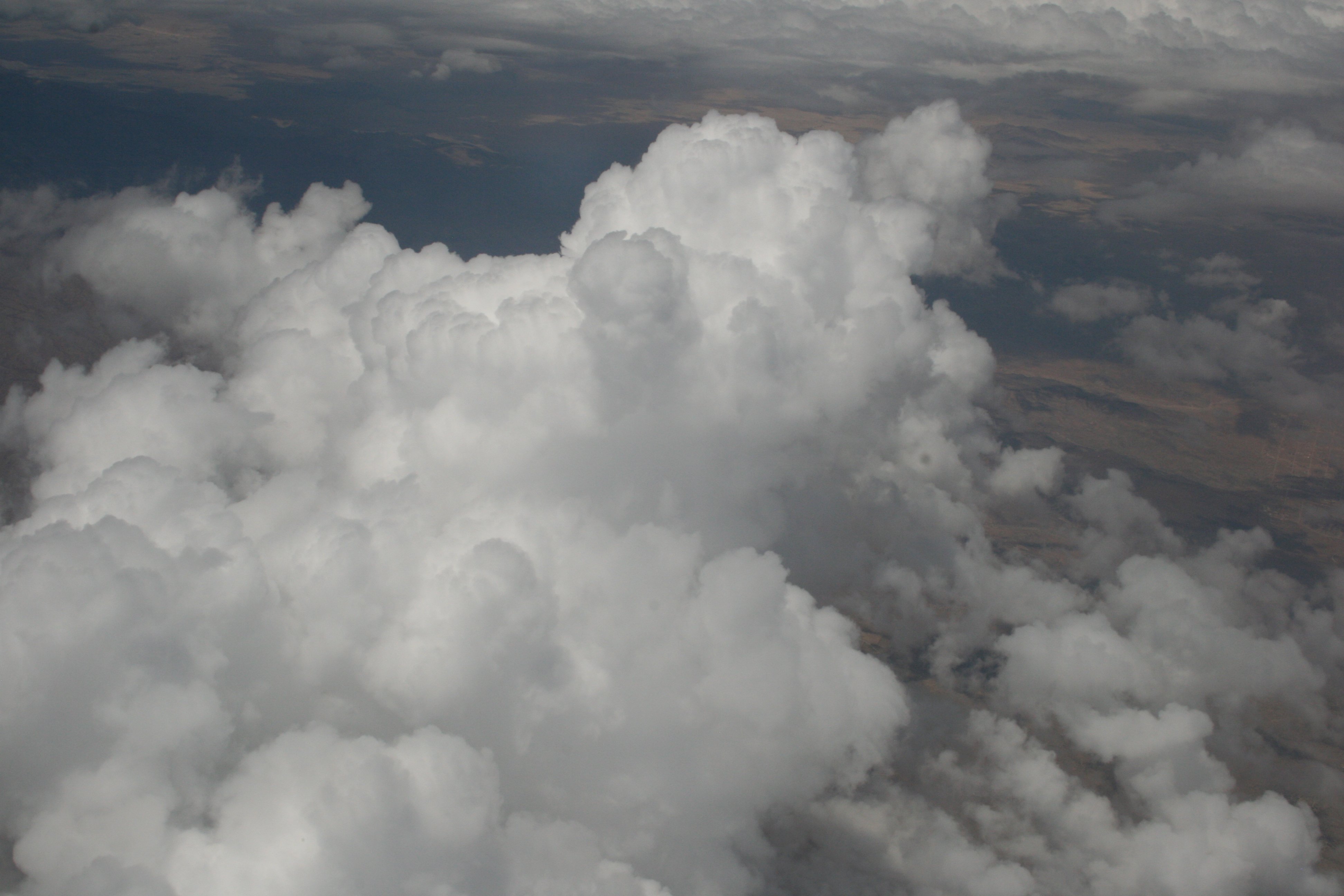
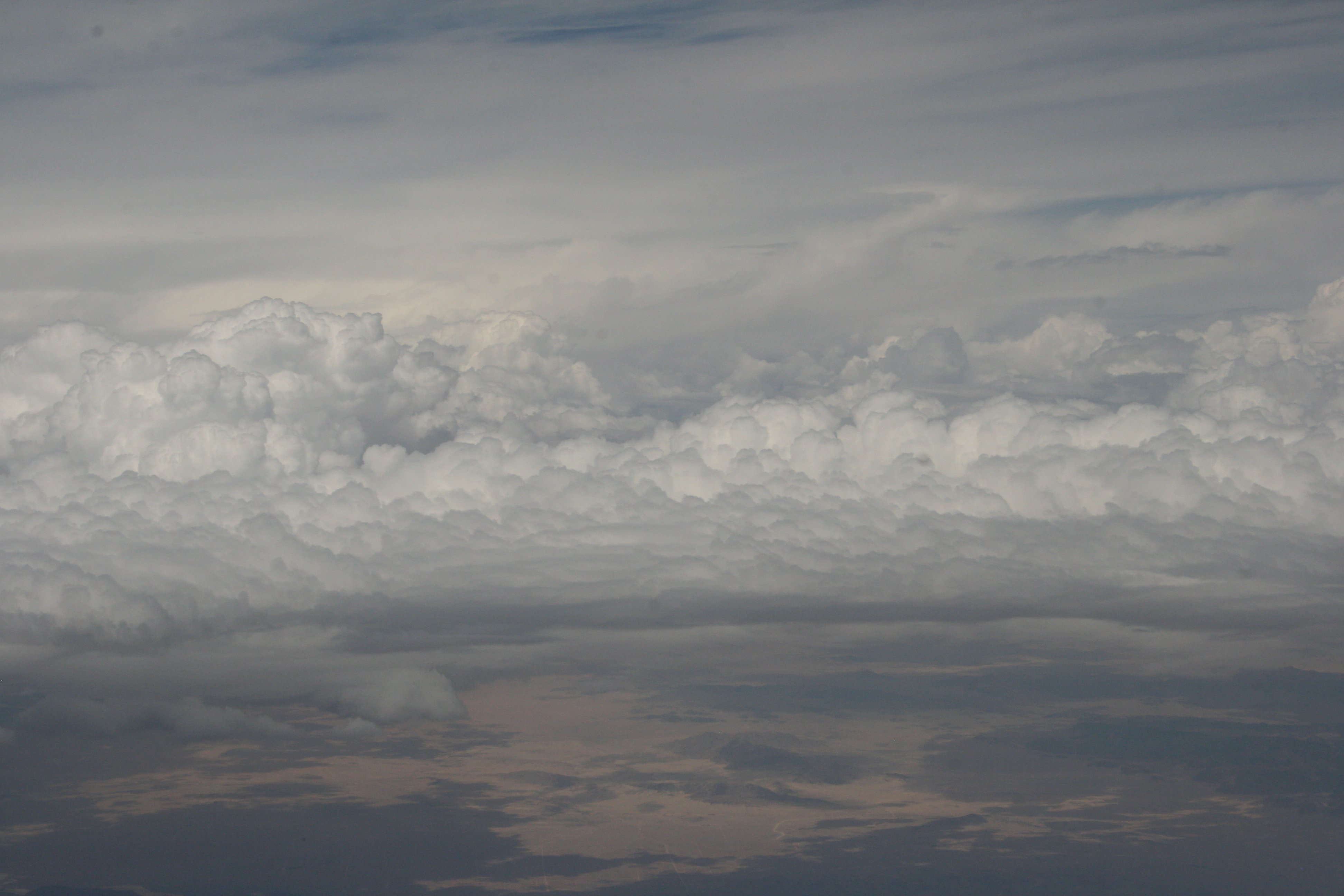
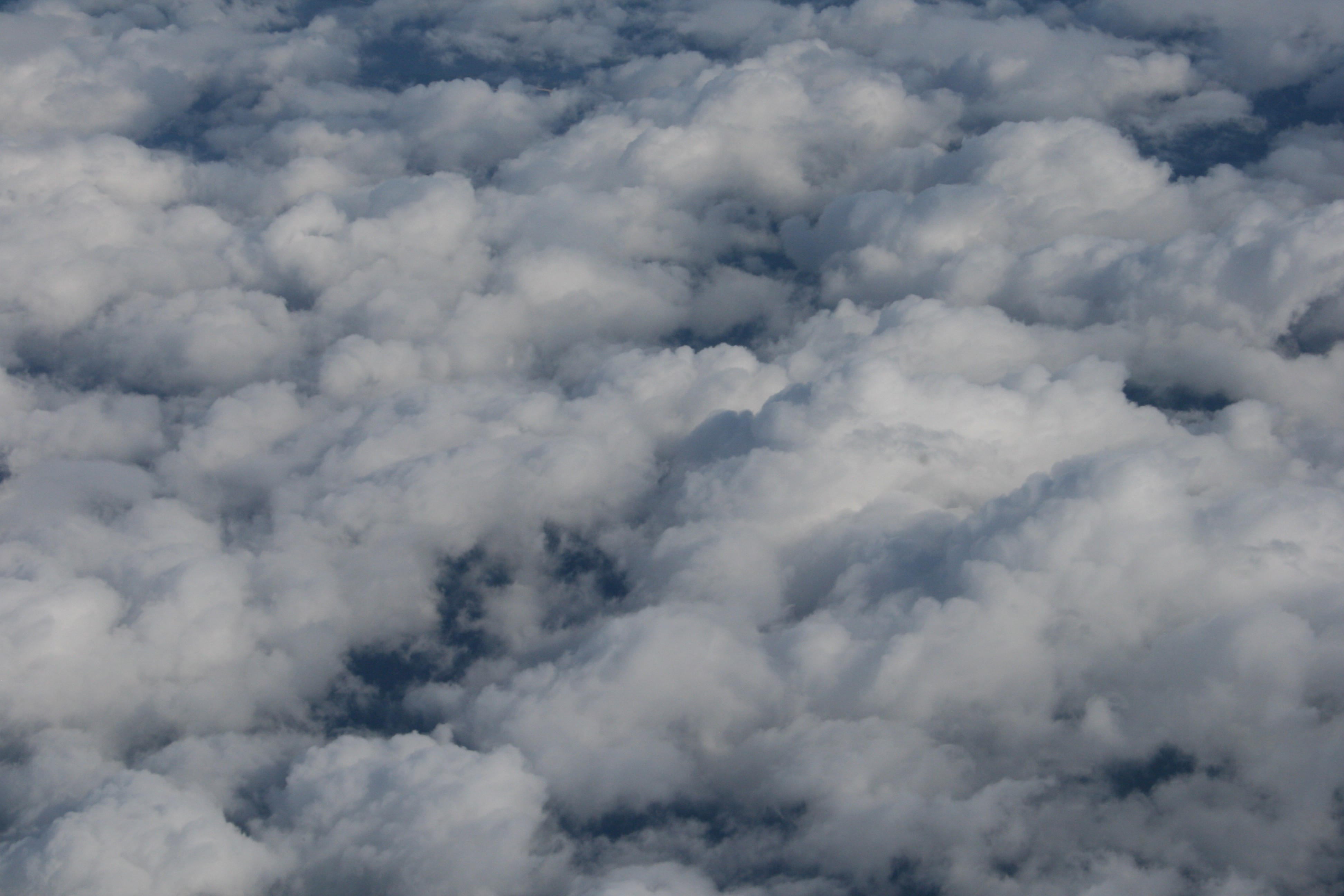
Over New Mexico we were seeing very thin layers of clouds near us, looking almost grey or black in contrast to the white cumulus clouds building in the background.

IMG_0334 small

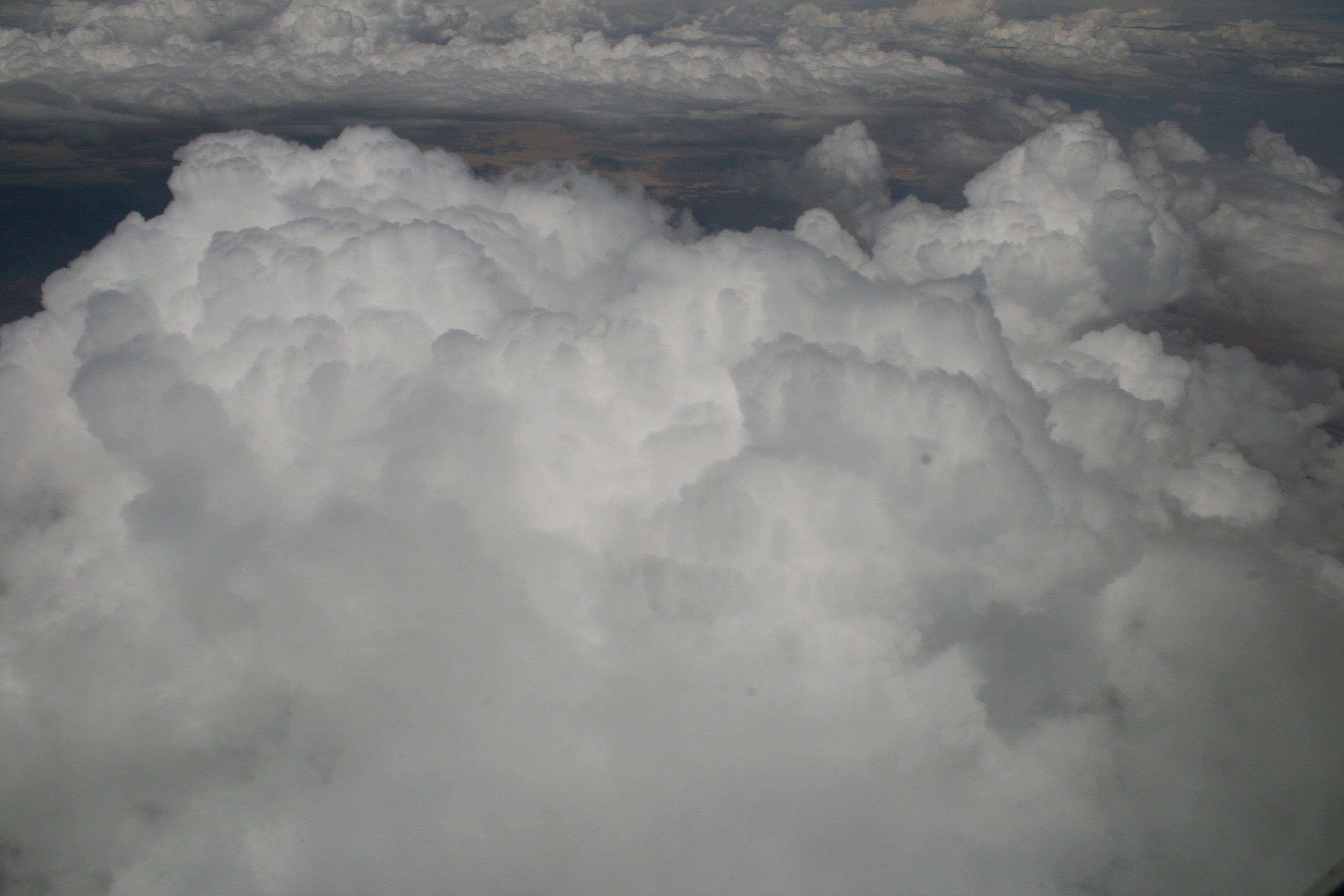
The cumulus clouds kept building, the thin layers above them got more broken. Despite all of the clouds and convective activity, I didn’t see any sign of any actual rain, so badly needed out here.

IMG_0335 small

Crossing into California, there were some pretty good sized cumulus starting to build over the Mohave Desert. Normally dry as a bone this time of year, and at the tail end of a historically severe four-year drought to boot, this day brought some moisture up from the Gulf of California, another remnant from a tropical storm or hurricane off of Baja.

IMG_0339 small

This has happened very, very rarely in the forty-plus years I’ve lived here. Normally the tropical storms start well south of Cabo san Lucas and head northwest toward Hawaii. This year we’ve already had three or four times where instead the storms steer almost due north up the coast. Normally this would kill the storms, since the waters there are cold and the storms get no energy from the water to feed on. This year the water is significantly warmer (building up to a record-breaking El Niño year?) and the storms survive long enough to batter Cabo and Baja and then get sucked up into the US Southwest.

IMG_0342 small

When all those things happen it can lead to some incredible flash floods in the desert. Remember the picture from yesterday of Big Sandy Wash in Arizona? Notice how wide the wash is, despite the fact that there may rarely be a significant amount of water in there? Something makes it that wide, and that something is an extremely violent flash flood. Even if it only happens every few decades, the scars it leaves on the landscape can last for hundreds or thousands of years.

IMG_0349 small

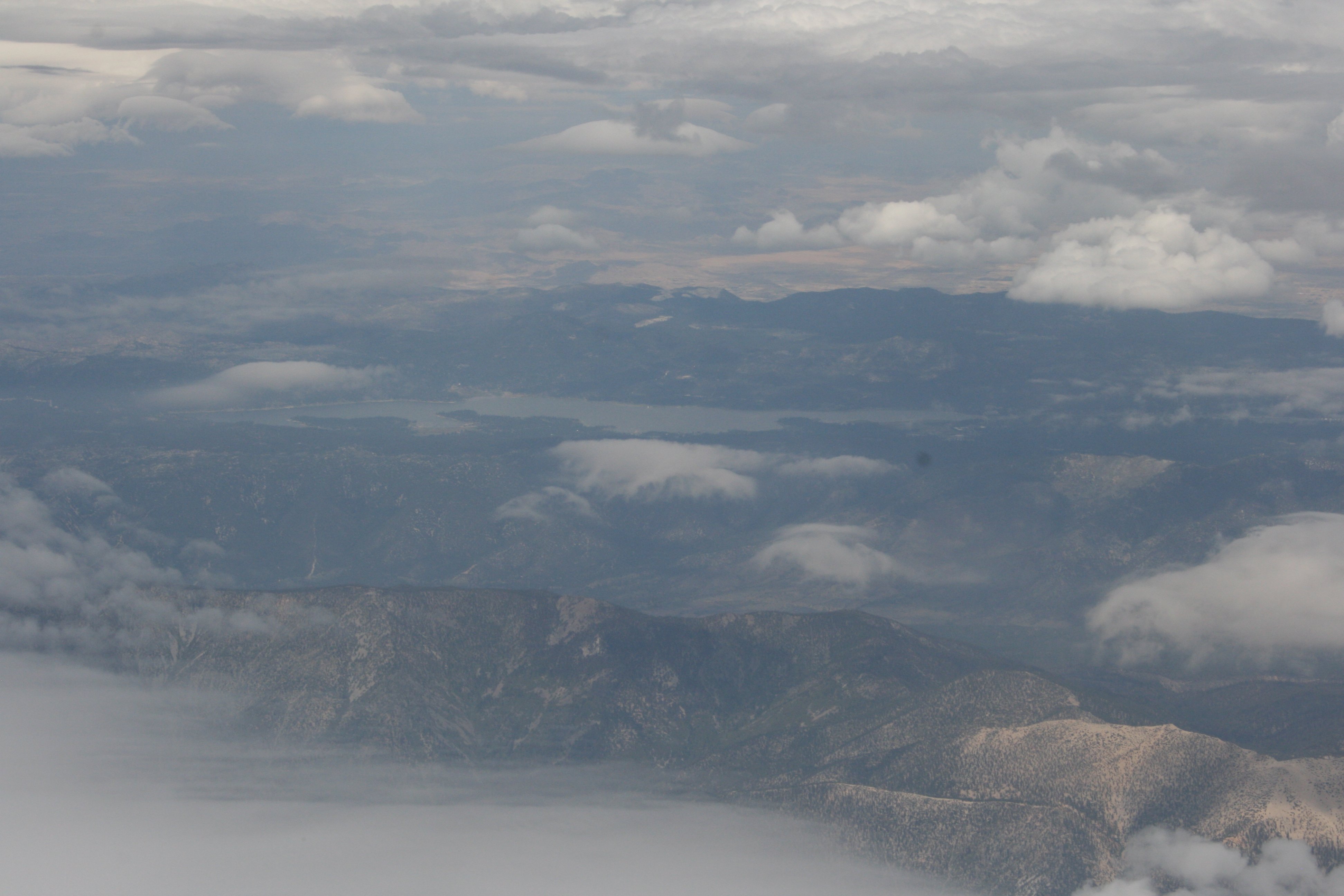
Approaching Los Angeles, the San Bernardino mountains to our north, Lake Arrowhead at 5,174 feet managed to peek through a hole in the clouds.

IMG_0359 small

On final approach into LAX we could see rain falling, but probably not finding the ground. (It was dry everywhere we went that afternoon and there was no sign of any rain earlier in the day.) Rain that falls but evaporates before it hits the ground is called “virga.”

That’s “v-i-r-g-a,” not “v-i-a-g-r-a-®.”

Completely different phenomenon.

Leave a comment

Filed under Flying, Photography, Travel

ORD To LAX – The Scenery

Yesterday I showed pictures of airports (and their associated towns and cities) as seen from my recent flight from Chicago O’Hare Airport (ORD) to Los Angeles International (LAX). Today, let’s look at other stuff you can see on the ground, not necessarily all aviation related.

IMG_0222 small

OK, so O’Hare is another airport, but this view of only a portion of it shows just how freakin’ huge it is. We had just taken off on one of those runways before turning left and left again to head southwest toward Los Angeles.

IMG_0253 small

The Mississippi River is an easy landmark to spot. We passed over it just north of St. Louis.

IMG_0269 small

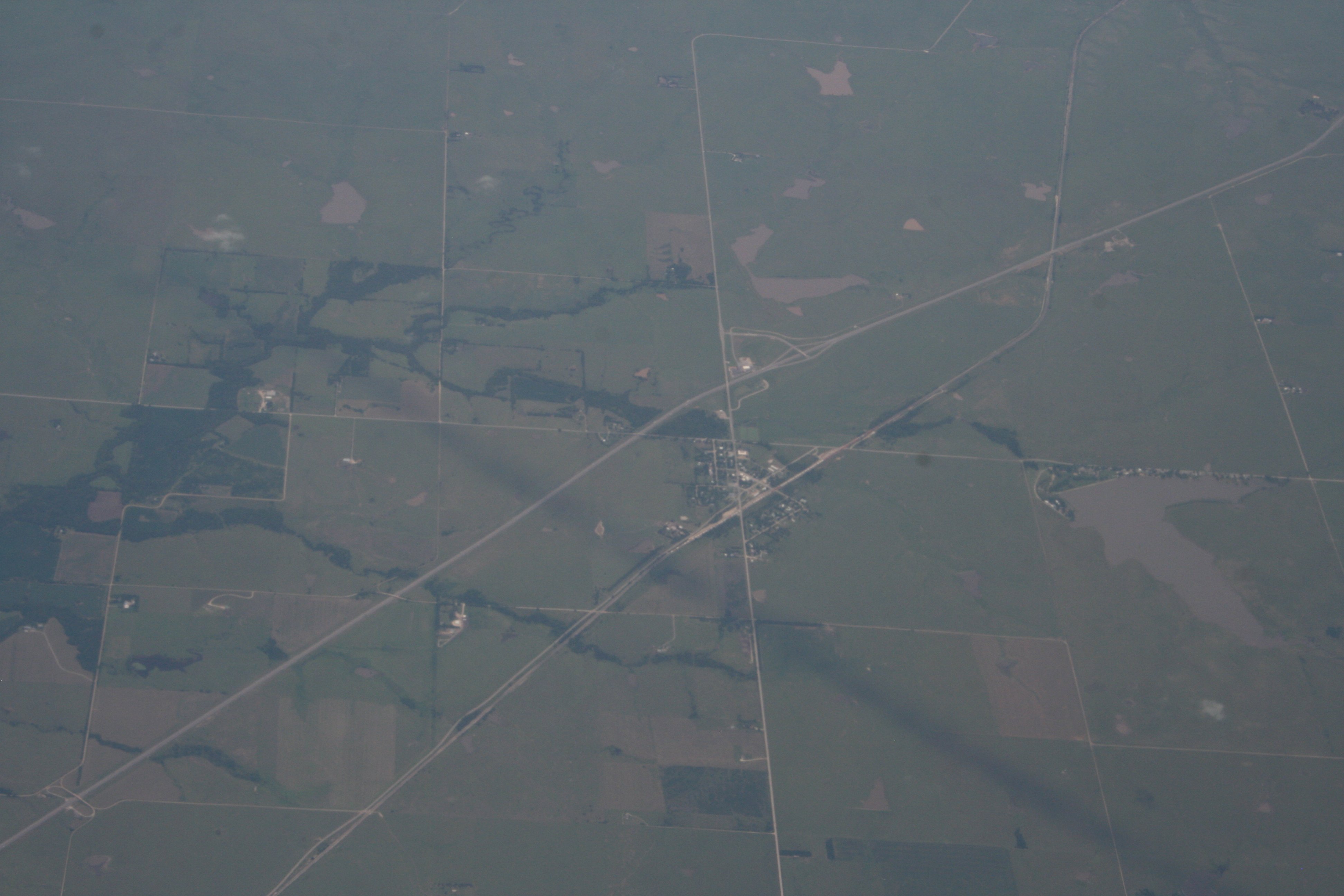
When it’s clear below you, you can just follow the interstate highway system to keep track of where you are. I know, the folks up front in the big commercial jets all use GPS and an autopilot with backup systems to the backup systems’ backup systems. But for a little guy like me, if I’m flying at 8,000 feet instead of being up with the jets at 38,000 feet (probably a good thing, because I could get sucked into an engine and then we’d both have a bad day) with minimal backup systems and high tech, all of these nice, straight, divided highways are very useful.

The big highway here is I-35, the town is Cassoday, Kansas (population 128), and the smaller road running parallel to it and then crossing it is Kansas Highway 177. The small V-shaped lake at the right is Fox Lake.

IMG_0288 small

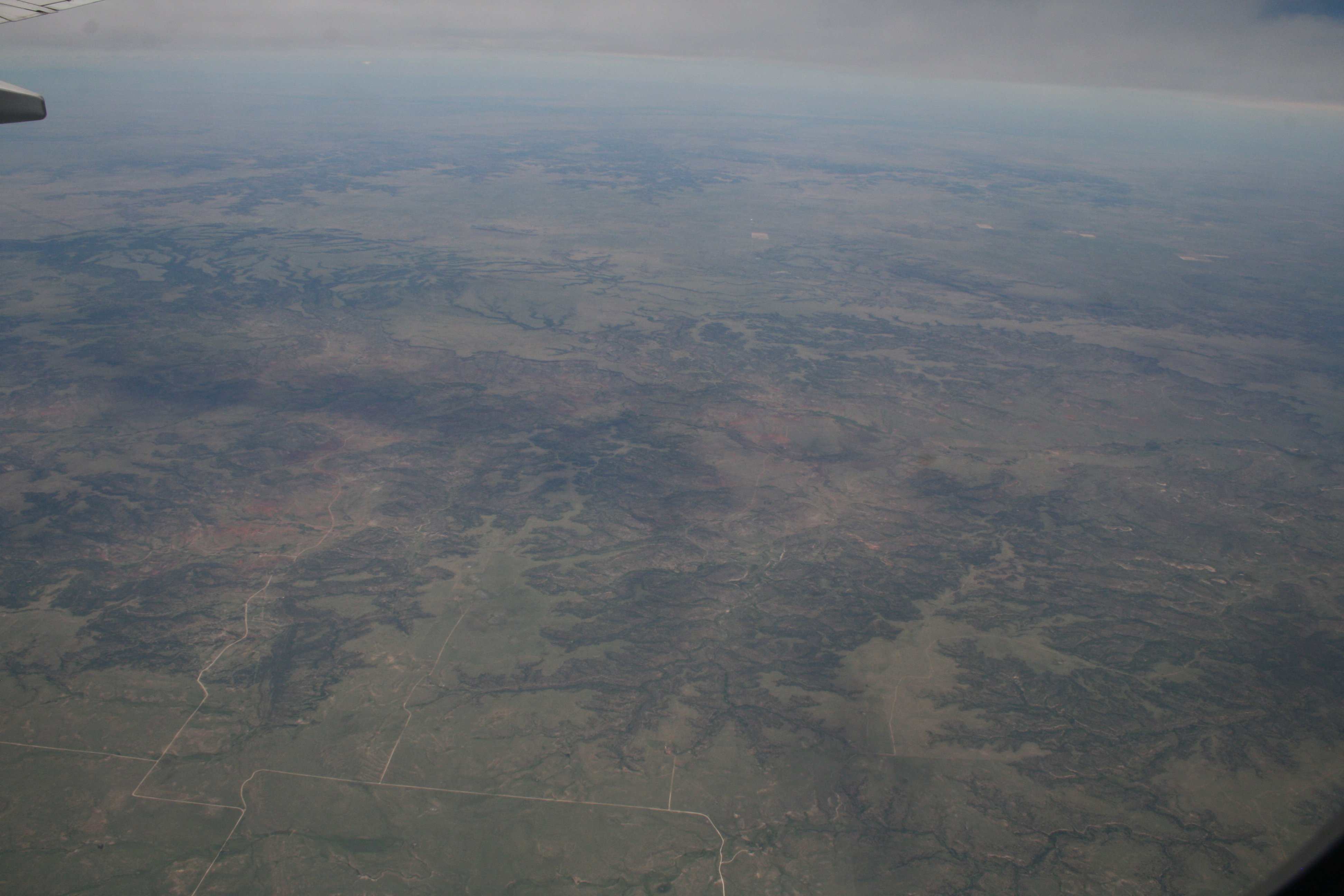
Once you get into far western Oklahoma the plains start to vanish and the landscape gets carved up. These canyons are near Kenton Oklahoma, where the New Mexico, Kansas, and Oklahoma borders all meet.

IMG_0292 small

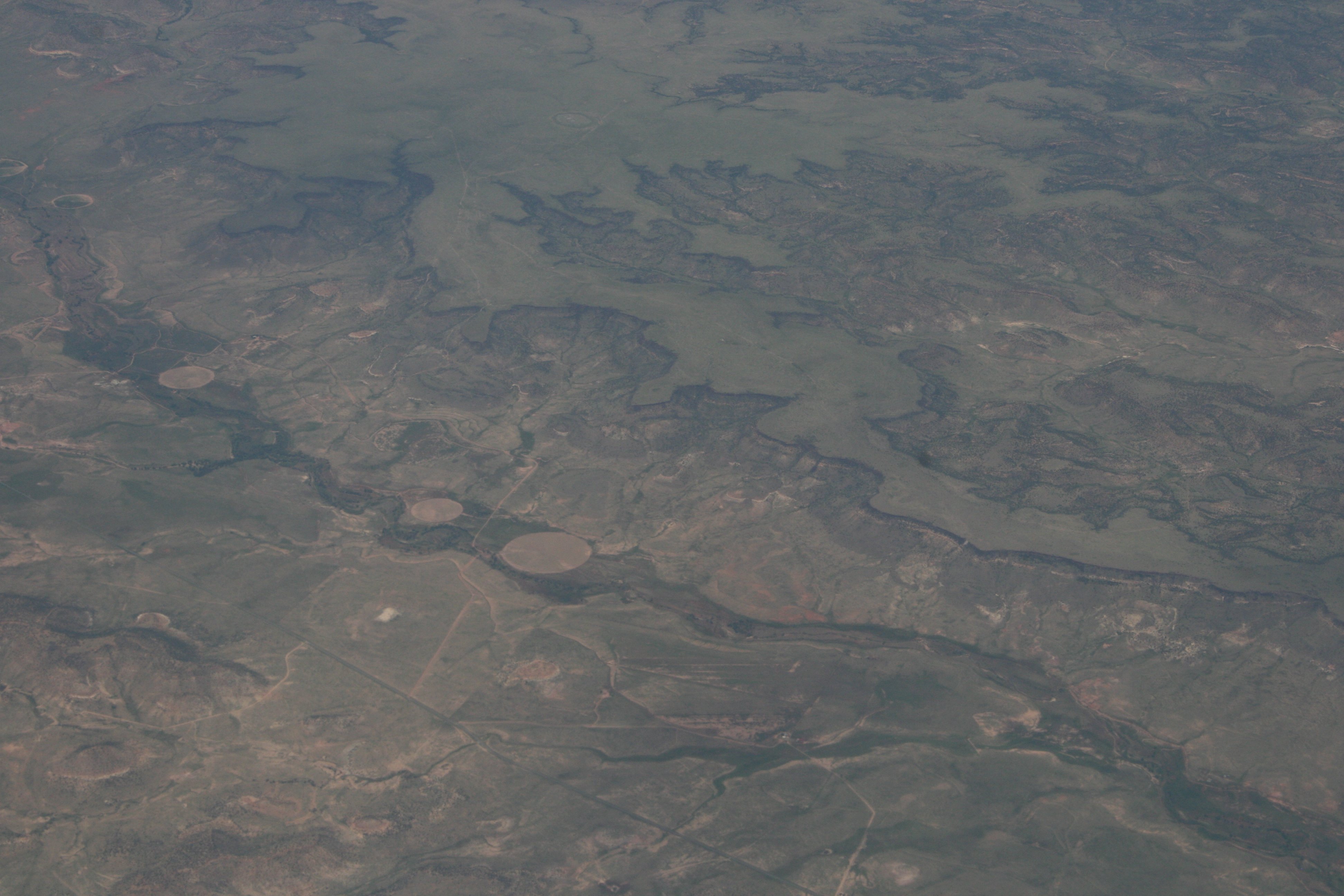
Once you cross into New Mexico, it’s still relatively flat (for the moment) but it’s a chaotic landscape.

Easy to fly over at 38,000 feet, 425 knots, and air-conditioned comfort – must have been a real pain to travel in a wagon behind a pair of mules. Keep that in mind the next time you want to bitch about the TSA or not getting as much leg room as you used to.

IMG_0301 small

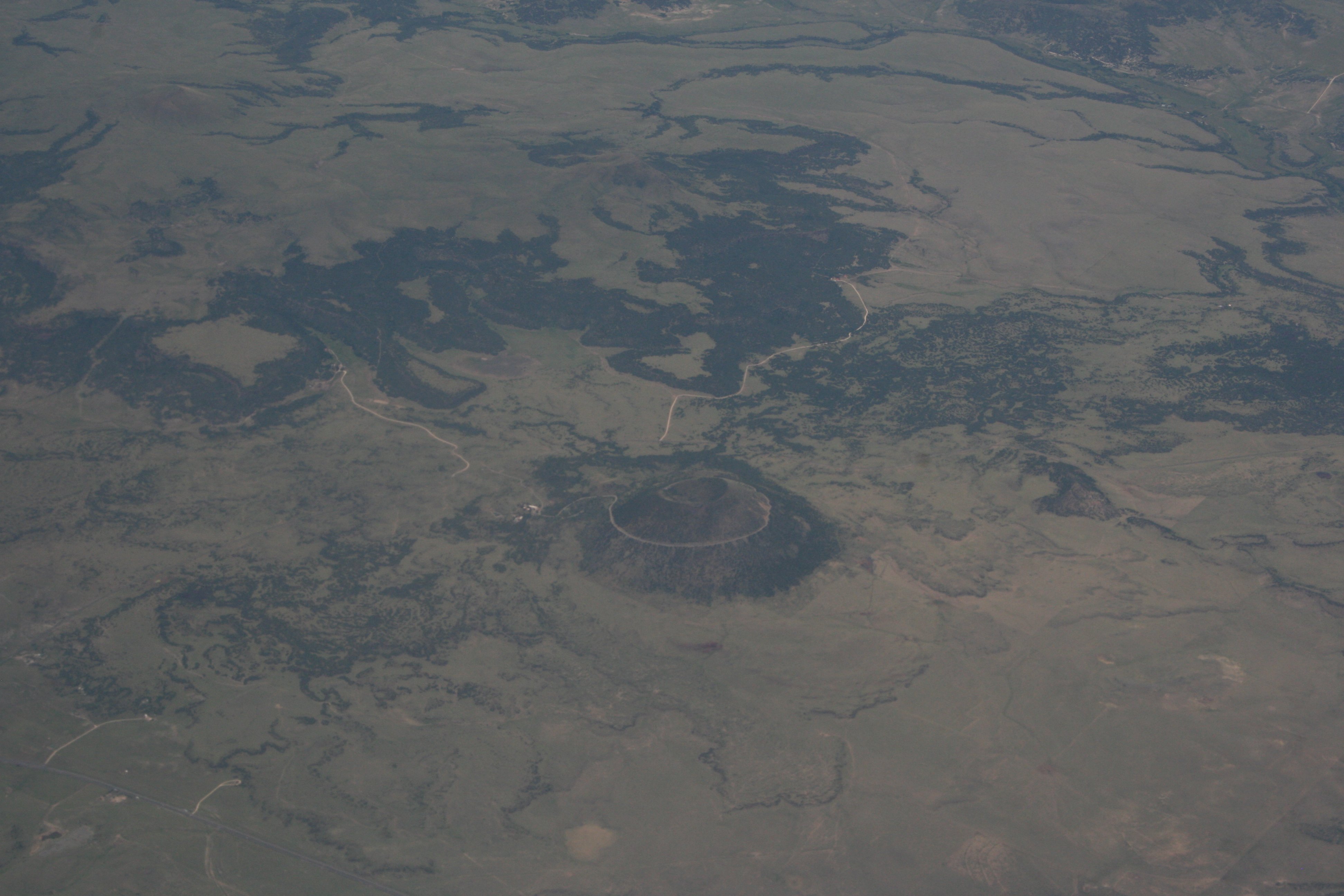
This feature stuck out like a sore thumb, but even though I knew more or less where we were when I took it, it still took some hunting on Google Earth to find it. It’s the Capulin Volcano National Monument, sixty miles northwest of Clayton, New Mexico, just south of the Colorado border.

IMG_0307 small

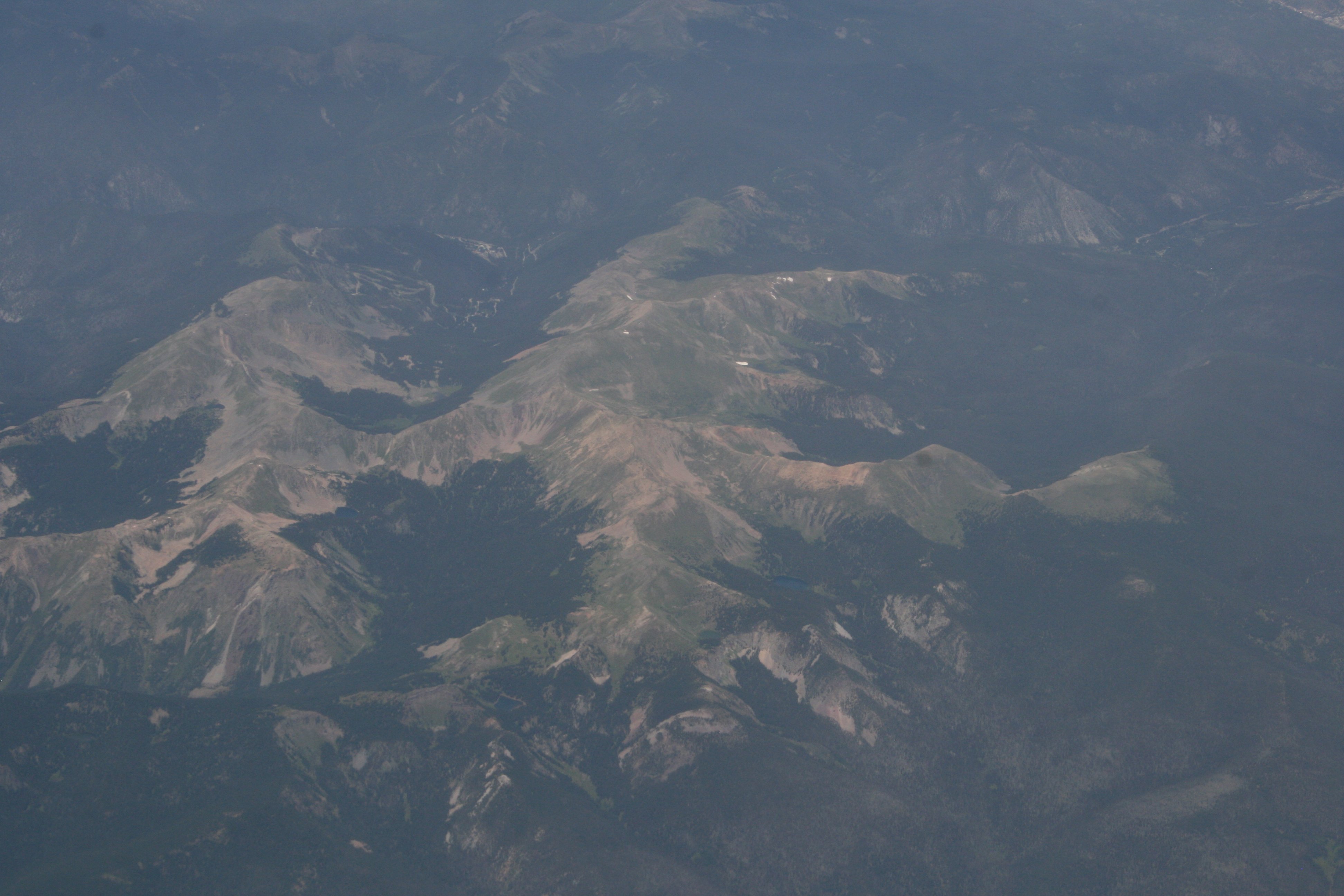
Just to the east of Taos, New Mexico, the Sangre de Cristo Mountains push up to well above 10,000 feet, with several peaks above 12,000 feet. Wheeler Peak is the highest point in New Mexico at 13,161 feet.

At first I thought there were patches of snow up there, but I doubt it now, even given that altitude. I guess it’s possible (anyone in the Taos region able to correct me?) but I suspect these are buildings of some sort, masquerading as patches of snow.

IMG_0317 small

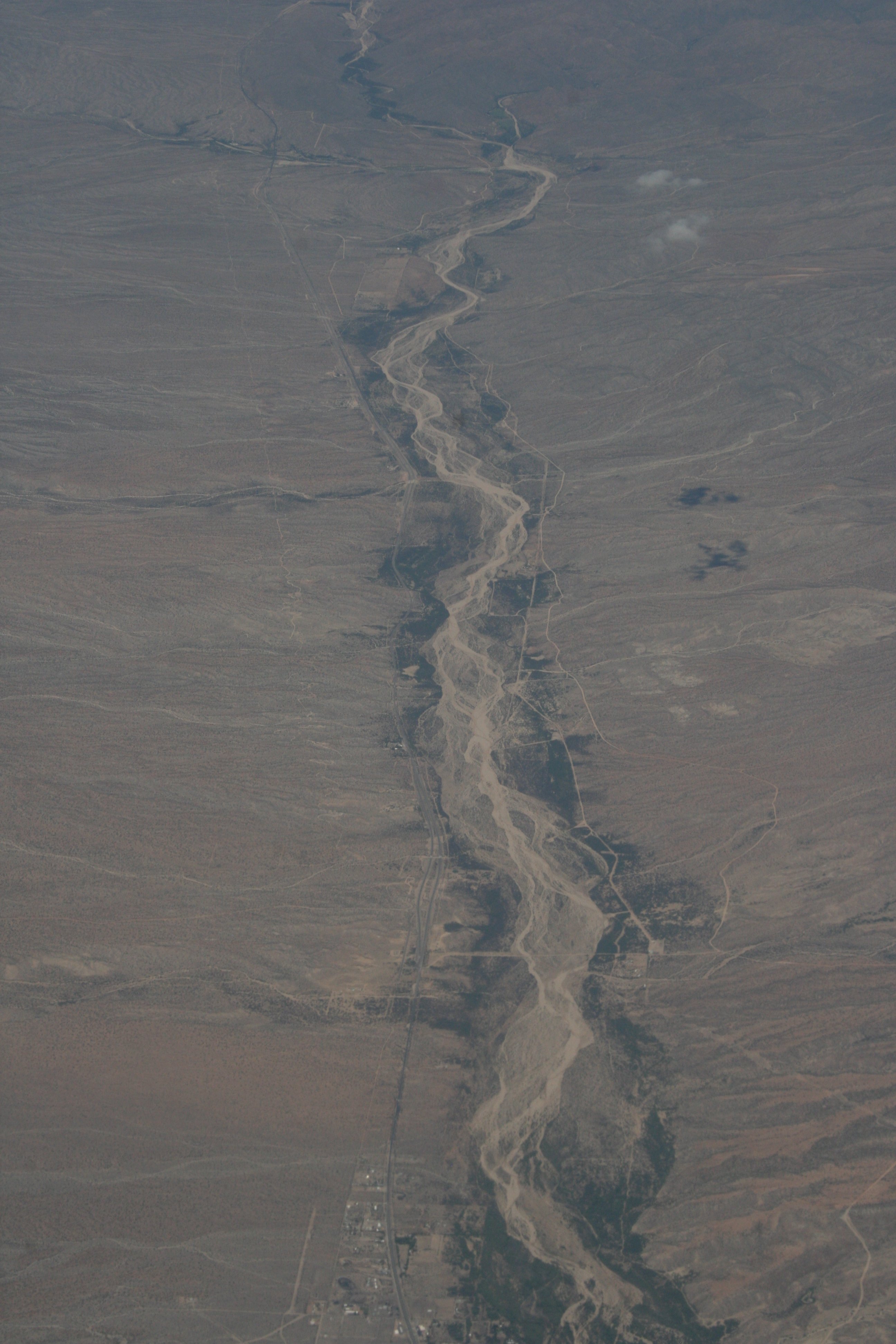
Once you get into Arizona it’s lots of land suitable only for lizards and snakes. (In my humble opinion.) Out here, water is more precious than gold, even before you get into a four-year drought. The dried up river beds still have some moisture, so that’s where you see the tiny swaths of green, often alongside a distinct flood plain.

This one is the Big Sandy Wash, notable enough to be a landmark listed on VFR flight charts. The small town at the bottom is Wikieup, Arizona (population 305) and the highway running alongside the left (west) side of the Wash is US Highway 93.

IMG_0331 small

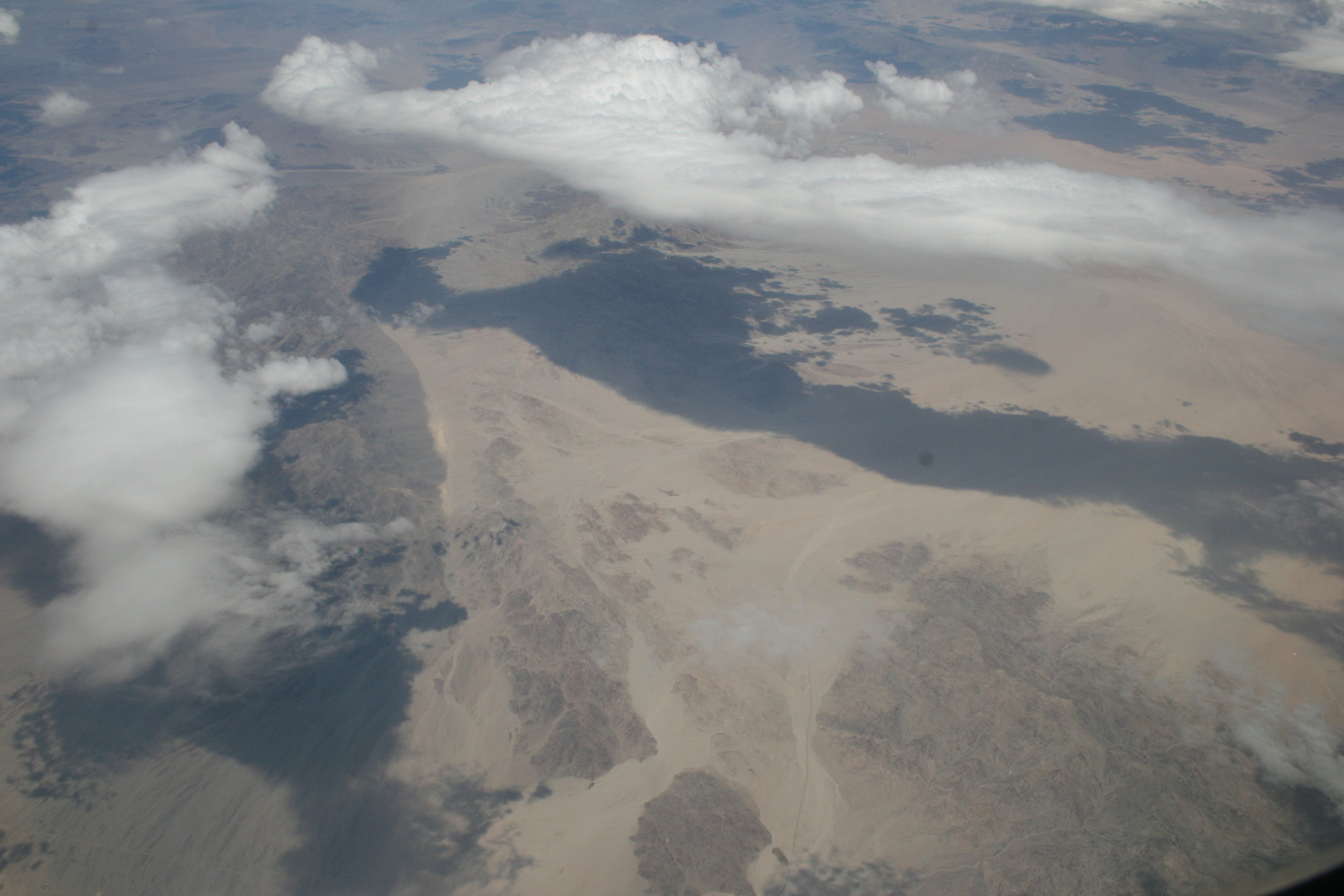
Finally back over California, the Mojave Desert stretches from the Colorado River to the metropolitan areas of Los Angeles and San Diego along the coast. The only reason the Mojave is “shrinking” is because people keep building cities in places like Palm Springs and irrigating the crap out of them in order to build golf courses.

Here we were north of Twenty-Nine Palms, above the Cleghorn Lakes Wilderness Area. (Cleghorn LAKES? I can only assume this is someone’s idea of a joke. Perhaps they have a yacht club as well?) In the upper right corner, just above that long cloud, you can see the Twenty-Nine Palms Salt Evaporation facility. Just beyond is the historic Route 66 and the ghost town of Amboy.

I’ll give credit to all of those who traveled this course on foot, on horse, and in covered wagons. They were tougher men (and women, and children) than I am. A comfy window seat at 35,000 feet works just fine for me, thanks.

2 Comments

Filed under Flying, Photography, Travel

ORD To LAX – The Airports

Give me a window seat on a four-hour flight in decent weather during daylight and there might be just a few pictures taken. Some of those might not suck.

There’s a lot to see if you pay attention out of the plane window. Let’s start with the airports and their towns.
IMG_0242 small

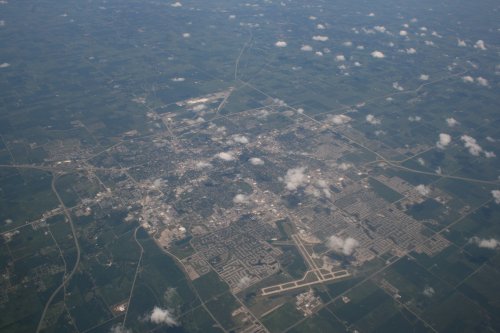
Bloomington, Illinois. I actually lived here for six months when I was four years old. I’m assuming you can see our house from here.

The airport to the bottom right of center is the Central Illinois Regional Airport At Bloomington-Normal (KBMI). The big runway (running left to right) is 8,000 feet, the slightly smaller one (top to bottom) is 6,525 feet. No sweat!

For reference, a Cessna 172 or the like can land easily in 4,000 feet. Something like a small business jet needs 5,000 feet or so (they fly out of Camarillo at 6,013 feet all the time) and a Boeing 737 needs about 5,700 feet. Note that all of these types of planes can, and often do, land routinely on shorter runways. The figures I’ve given are ballpark figures for what is “easy,” but given preparation, acceptable weather and location, and pilot preparation, they can all land in something like 75% to 80% of that distance.

IMG_0247 small

Springfield, Illinois. I lived in one of the other Springfields (the one in Vermont) but have been here to see the state capital.

Abraham Lincoln Capital Airport (KSPI) has three big runways, 8,001 feet, 7,400 feet, and 5,300 feet. Being pointed off in different directions it’s easy to pick one that close to being in the same direction of the wind, with minimal crosswinds.

IMG_0257 small

Columbia Regional Airport (KCOU) in Columbia, Missouri. The two runways are 6,501 feet and 4,401 feet.

IMG_0274 small

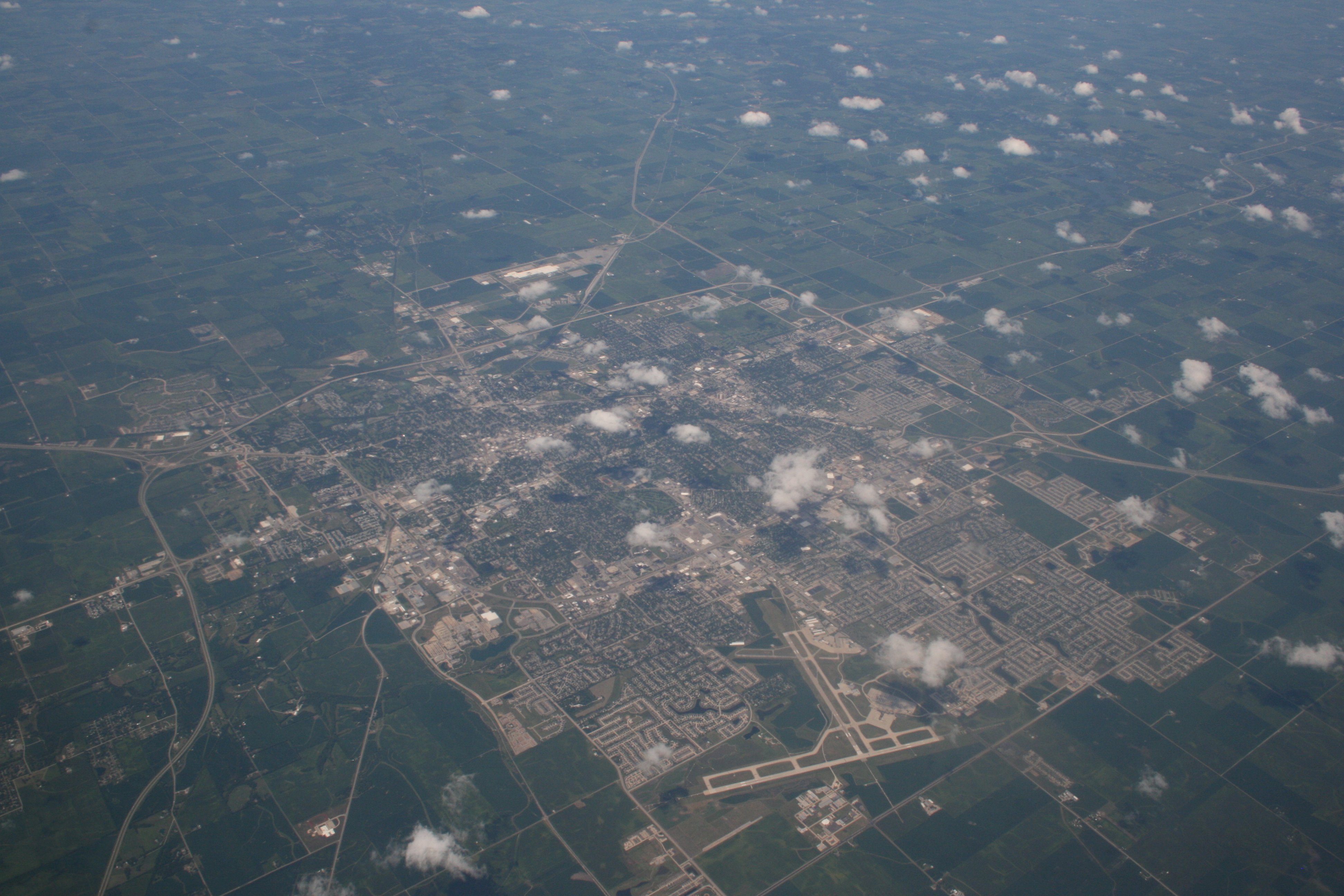
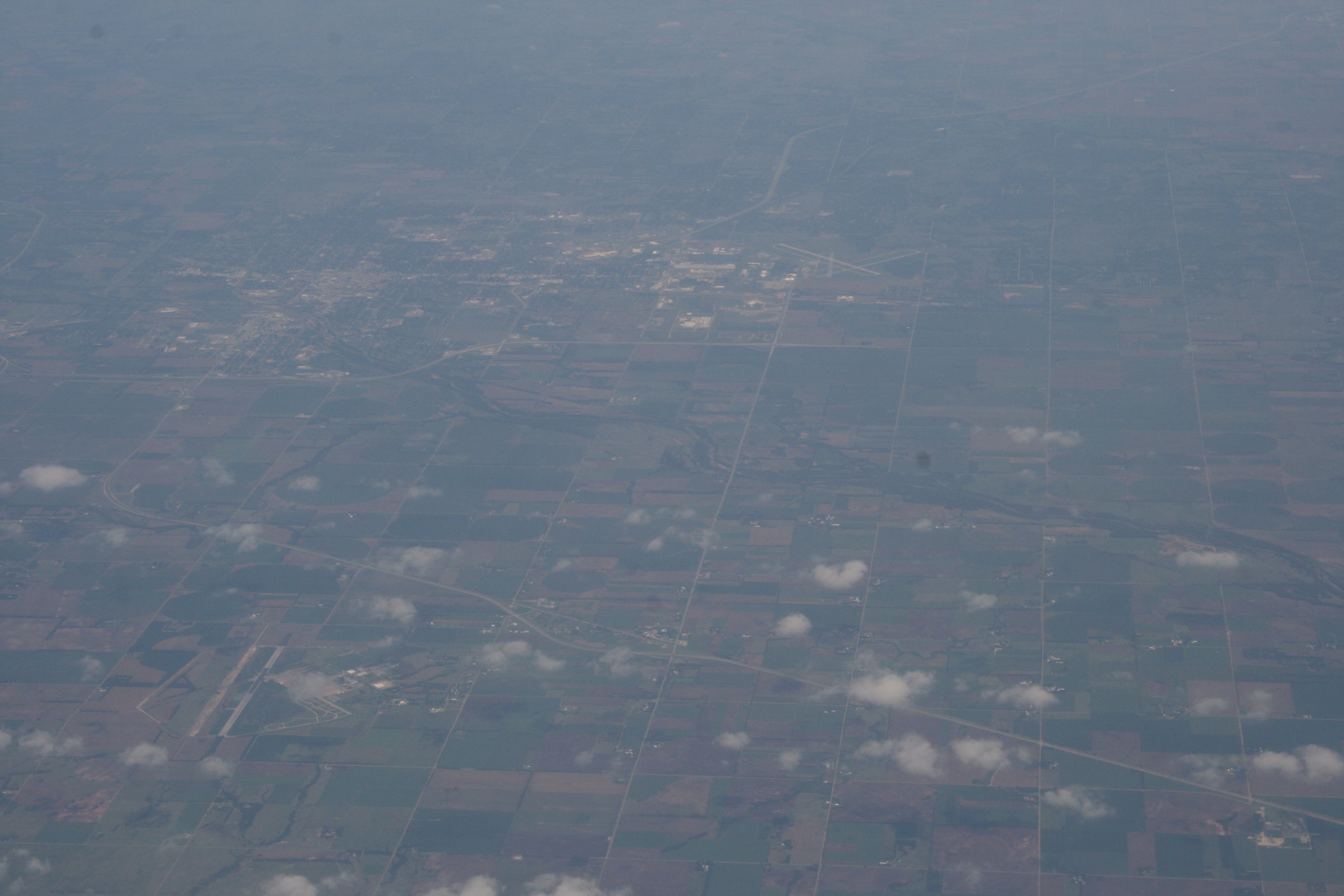
Central Kansas has a lot of big airports. Near Hutchison, Kansas you can see the Sunflower Aerodrome (SN76) in the lower left and the Hutchison Airport (KHUT) just to the right above center.

Sunflower is a private airport operating as a glider port with three runways, the longest being 7,000 feet. Originally built as a Naval Air Station during World War II, it is now apparently a great place to go gliding, something I have yet to try. “Yet,” I said.

Hutchison has major runways of 7,004 feet and 6,000 feet, with a small third runway of 4,252. (Little guys like me usually get the smaller runway if it’s busy, but if the weather or the situation demands it we can ask for, and get, any of the runways. Even at a place like LAX or ORD.)
IMG_0282 small

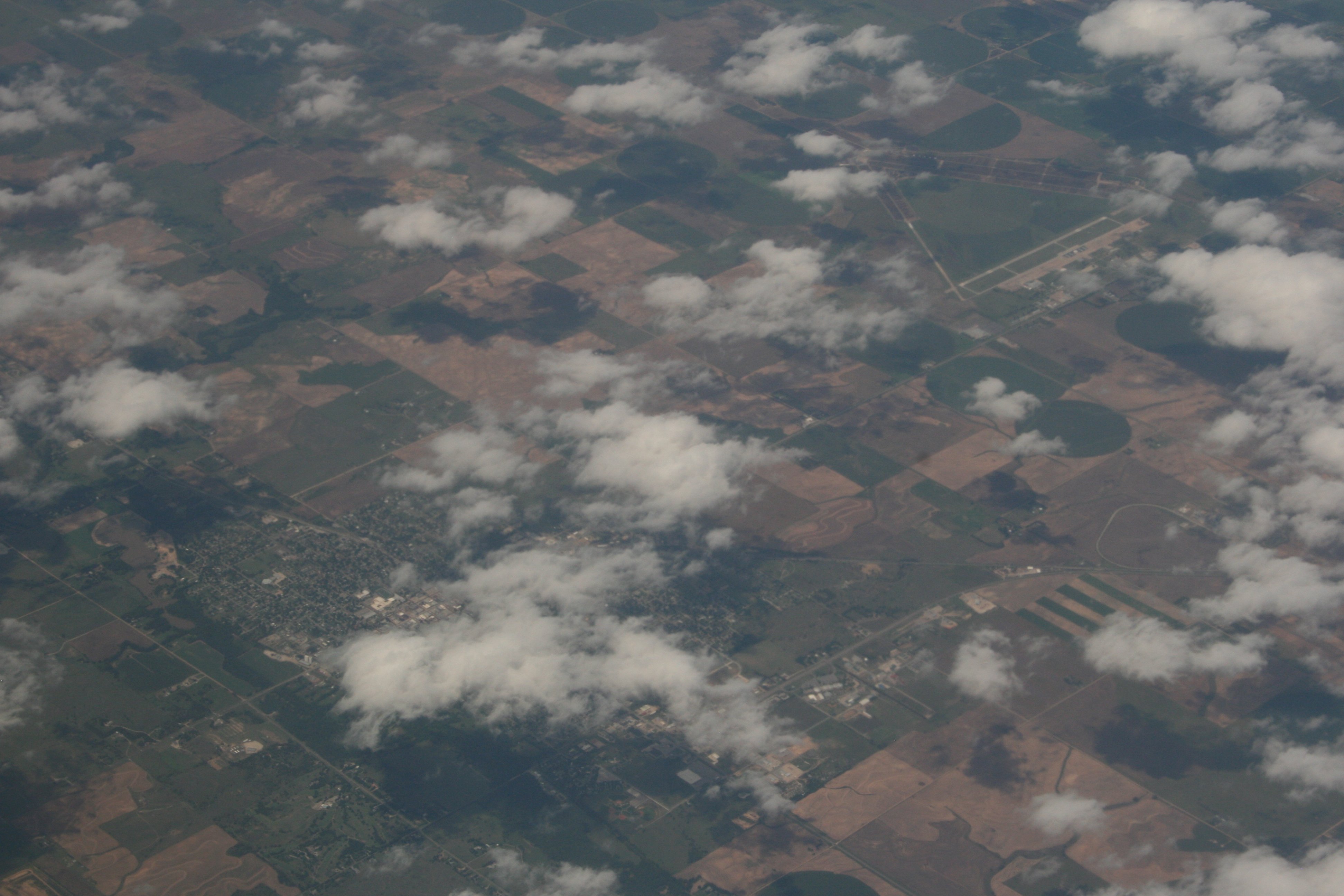
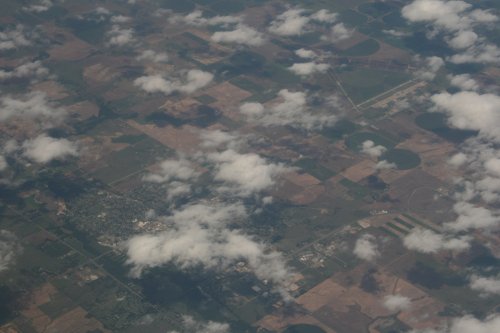
Pratt Regional Airport (KPTT) in the upper right, the town of Pratt, Kansas in the lower left. The only active runway is the big 5,500 foot one. The smaller runway that goes off at an angle is closed and out of service. My favorite comment in the official FAA listing of the airport is, “Do not mistake lighted cattle pens for lighted runway.” Good advice, that.

The triangular layout (even though only one of the runways is still in use and one is gone completely) makes me think that this is another WWII training base. A little research shows that indeed, this was the site of the Pratt Army Air Field where B-29 crews trained. Given that, it’s not surprising that there is an All Veterans Museum Complex being built, dedicated to the “Bombers On The Prairie.”

That’s the kind of thing that I just love digging up and discovering.

IMG_0285 small

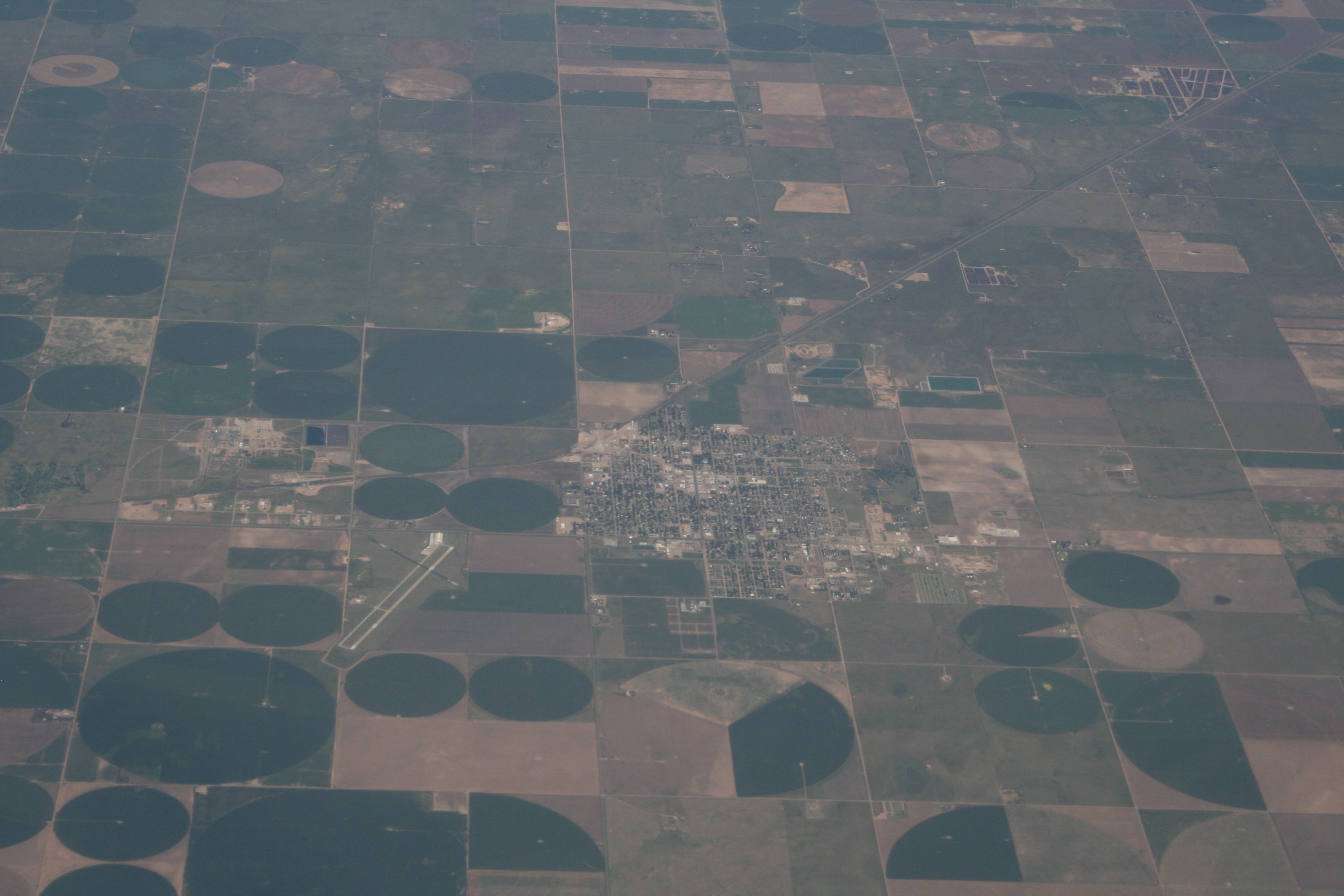
Hugoton Airport (KHQG), just north of the Oklahoma border, has a big 5,000 foot runway and a smaller 2,626 foot one.

In 1952 a Braniff DC-4 en route from Denver to Dallas made an emergency landing here with an engine fire. When the plane burned to the ground after landing there were some injuries, but no fatalities. Favorite comments from the incident report are, “…one of the hostesses advised the crew that the right wing was on fire,” and, “the nr. 3 engine fell from the aircraft and a pronounced buffeting was experienced.” Sounds like the captain did a hell of a job that day!

IMG_0320 small

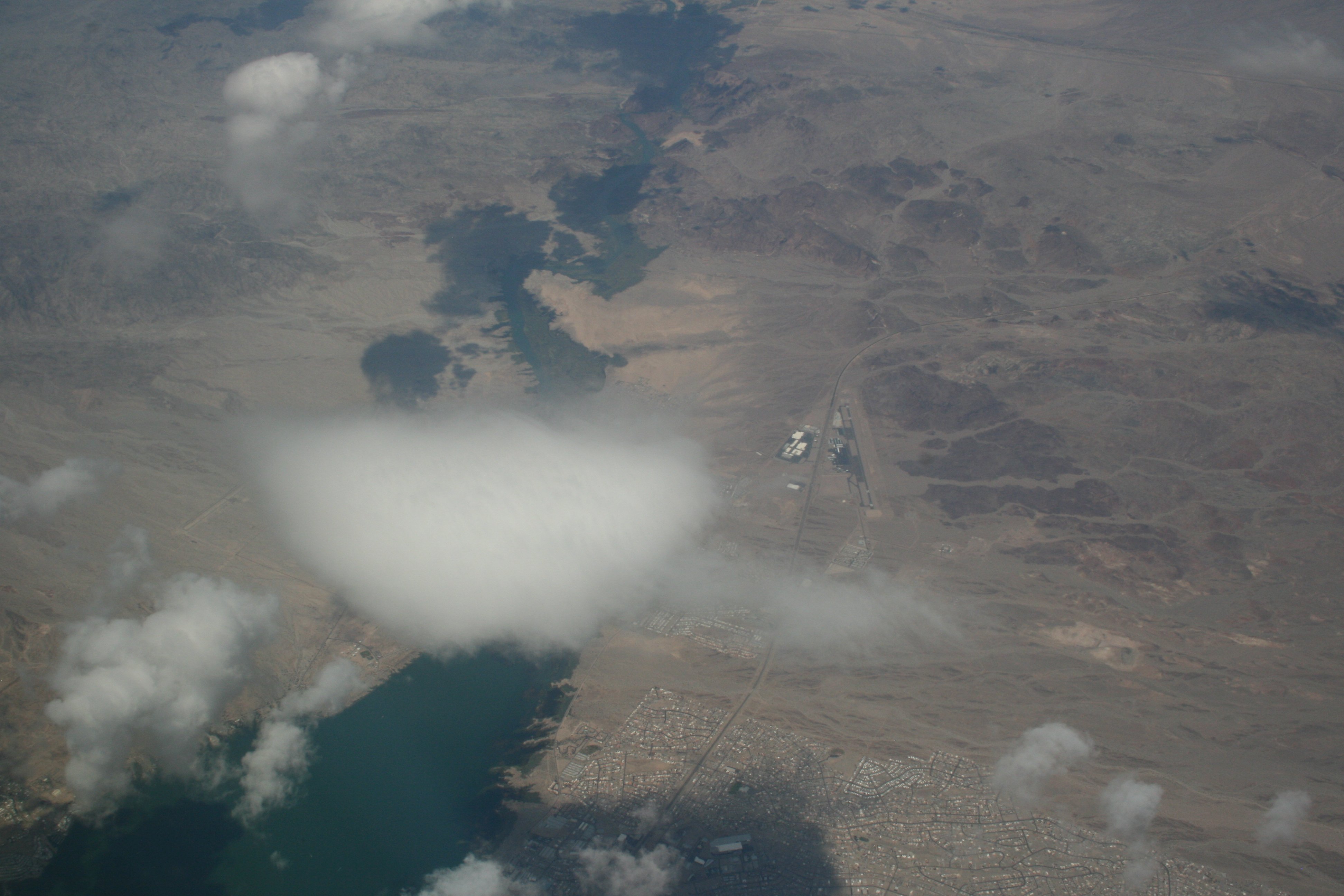
The airport in Lake Havasu City, Arizona (KHII) can be seen just to the right of center. While I’ve never flown in there (one of these days, it’s going to happen) I’ve driven by a couple dozen times, having been a regular visitor to Lake Havasu in the past. The Colorado River runs from top to bottom in this view, with California on the left, Arizona on the right, and Lake Havasu in the middle, formed by the backup in the Colorado River caused by the Parker Dam (just out of view to the lower left).
IMG_0357 small

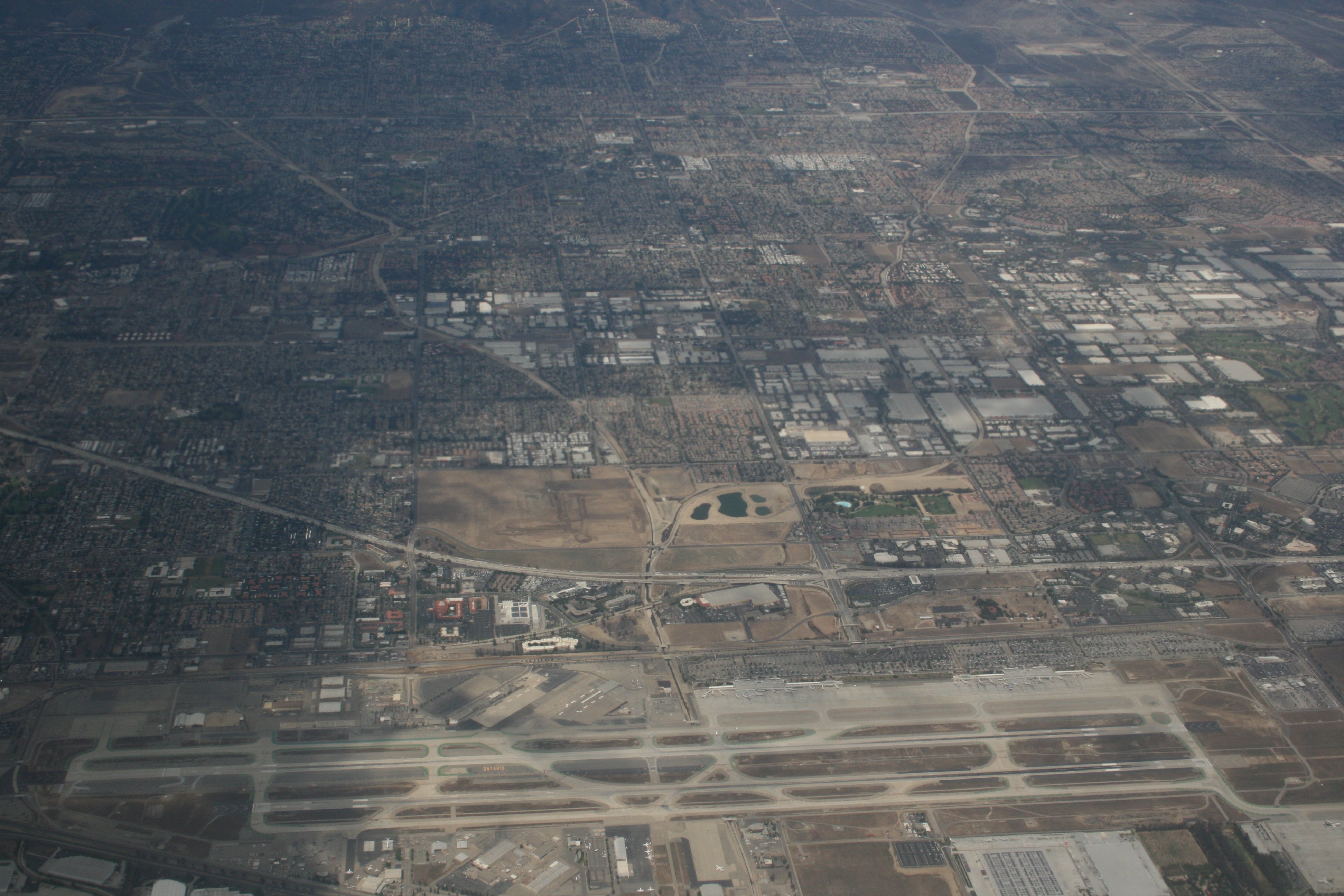
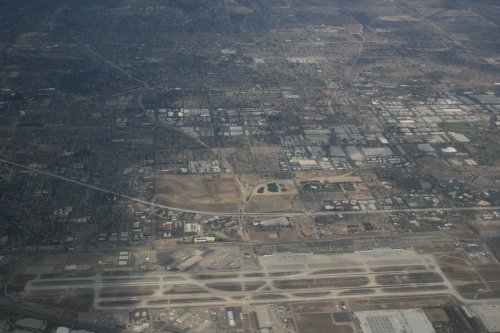
Ontario International (KONT), on final approach into Los Angeles International (LAX) but still about fifty miles out, in San Bernardino County. Ontario is a commercial airport, capable of handling all of the big jets. It’s fun to land a Cessna there, you could almost land sideways on the runway they’re so wide. It’s also fun to be out taxiing around with jumbo jets – as long as they don’t roll right over you or suck you into an engine. (Unlikely, but…)
IMG_0361 small

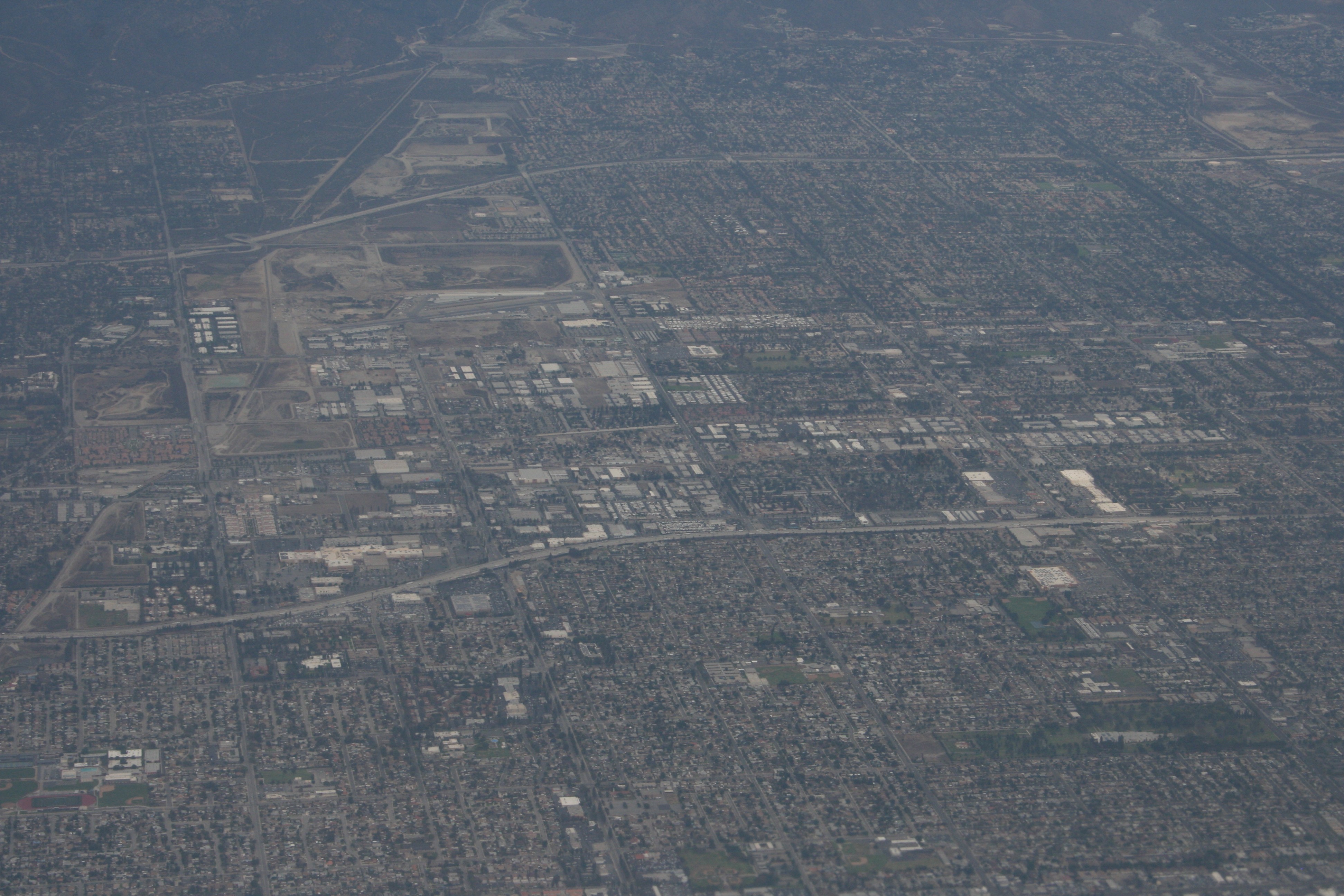
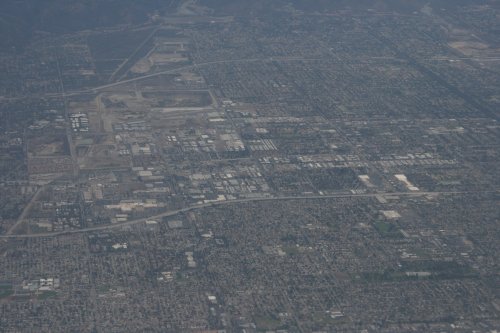
Over the Los Angeles megalopolis, you can see a handful of small general aviation airports where once there were dozens and dozens. Just to the upper left of center here you can see Cable Airport (KCBB) in Upland. It’s a charming place to fly into, even if it’s only to have a “$100 hamburger” at Maniac Mike’s Cafe.

To clarify for the non-pilots, the food doesn’t cost $100. Pilots have to fly regularly to stay current, and flying around in a circle at your home airport doing touch-and-goes, while it will qualify, is sort of boring. Instead, pick a place and go for lunch. Lots of small airports have restaurants or cafes and it’s much more fun (and better practice) to fly somewhere different. It helps to keep you sharp on your navigation, radio skills, landing and taking off in different conditions and circumstances, and so on. But, by the time you fly off for a half-hour to an hour (Cable is about twenty minutes from my usual “home” airport, Whiteman) and then fly back, it can cost about $100 for fuel, plane rental, insurance… Thus, the “$100 hamburger.”

All of this makes me wonder – how can people NOT be looking out of the windows on a cross-country commercial flight? I know I’m in a very, very small minority on this one, but I’ll stick with my belief that I’m the sane one and that vast majority is the group that has forgotten how übercool it is to see the world from 38,000 feet.

Leave a comment

Filed under Flying, Photography, Travel

BTV To ORD

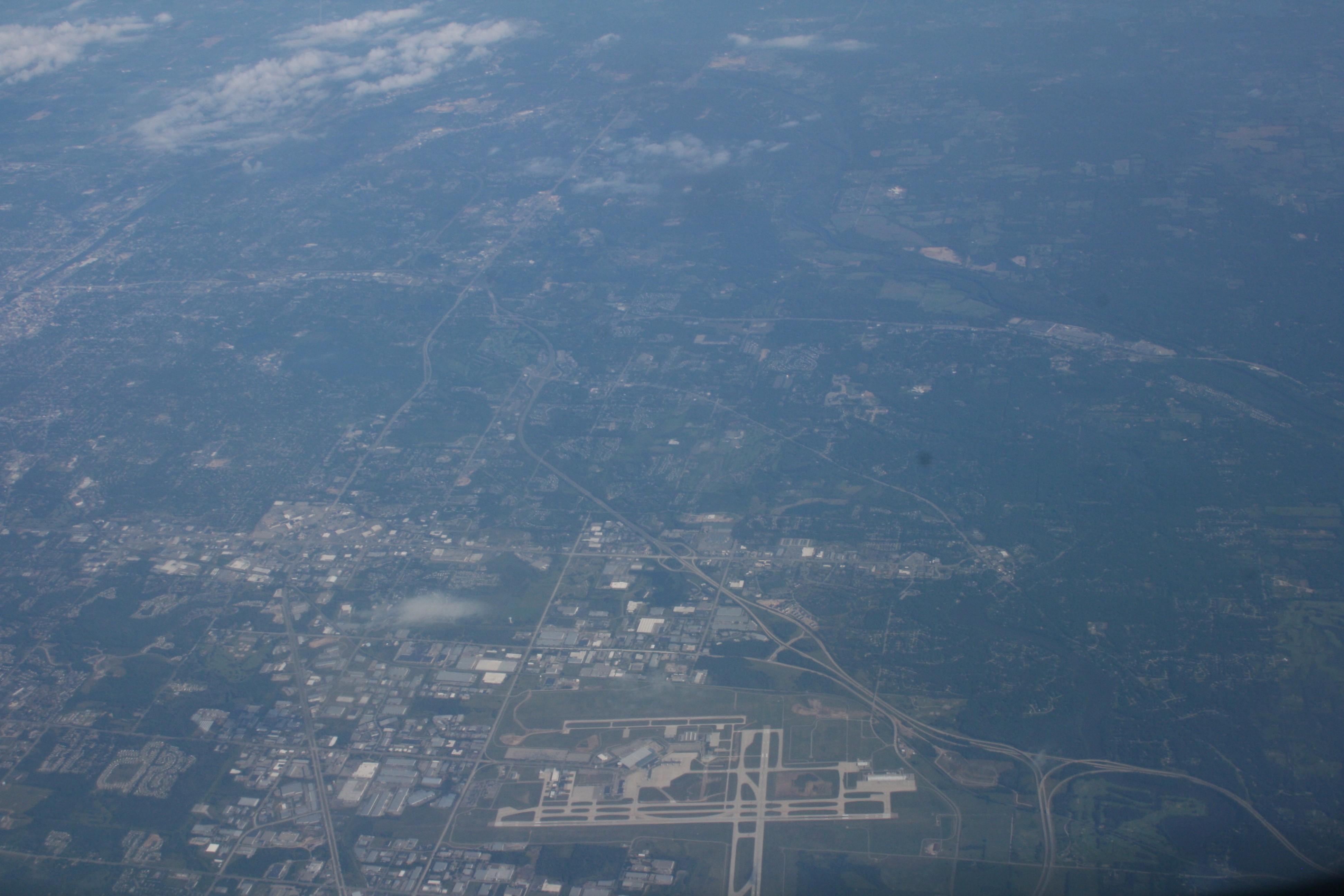
Last Thursday morning, returning home from Vermont, flying out of Burlington into Chicago. What do I see from the air? Not surprisingly, I see a lot of airports.

IMG_0142 small

It was fairly early when we left Burlington, so the low sunlight made the contours in the broken cloud layer stand out.
IMG_0146 small

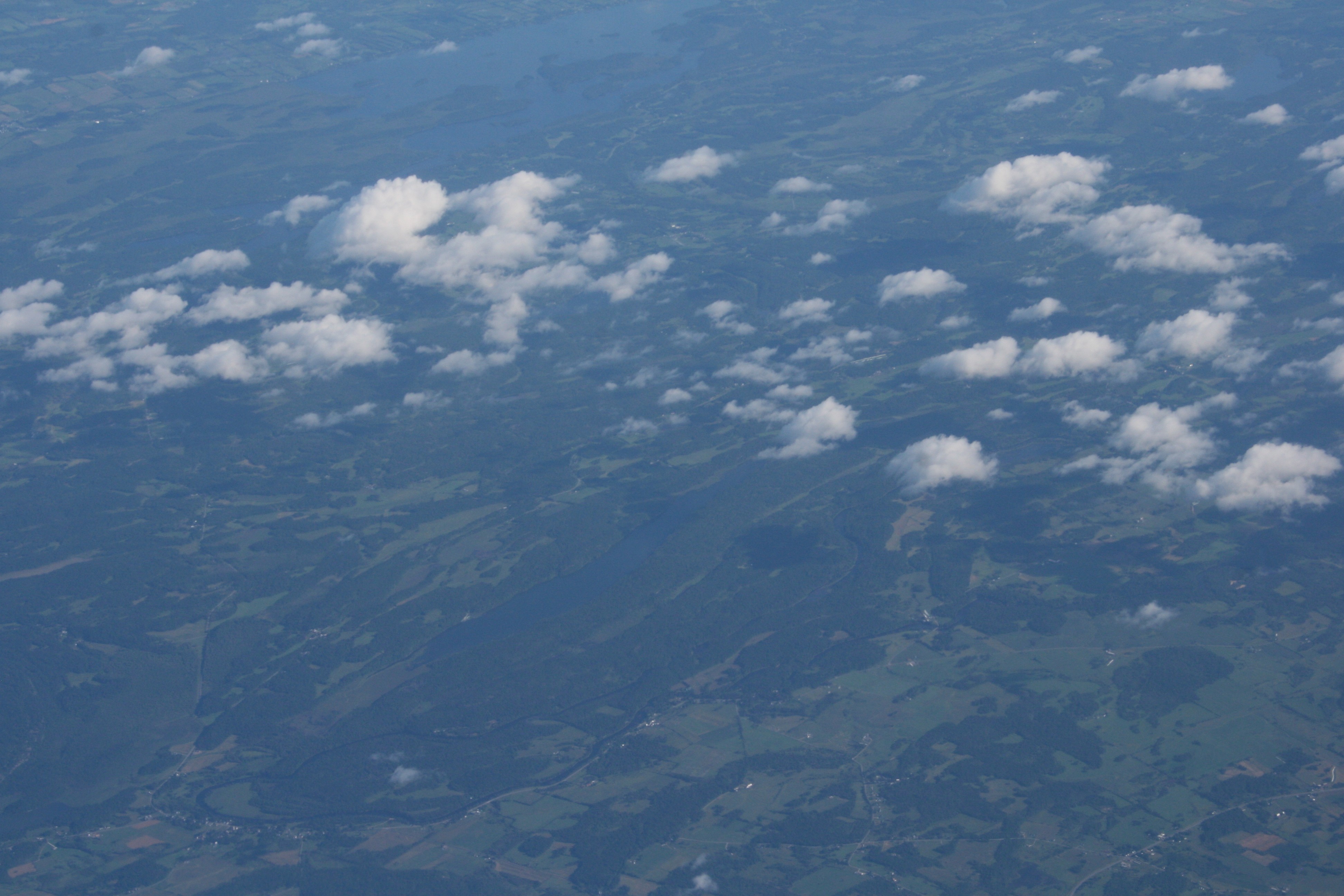
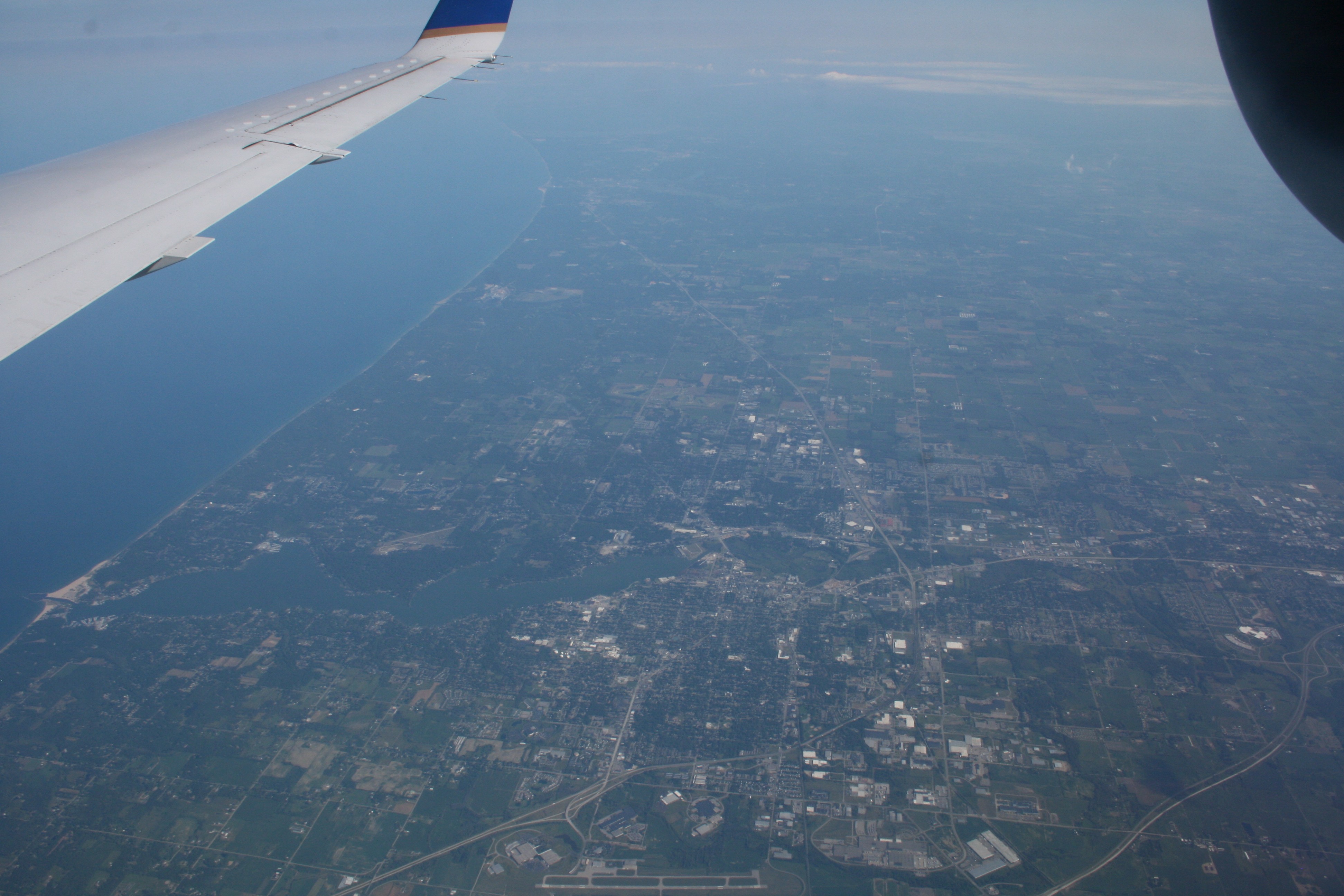
The Finger Lakes of New York, just north of Lake Placid.
IMG_0152 small

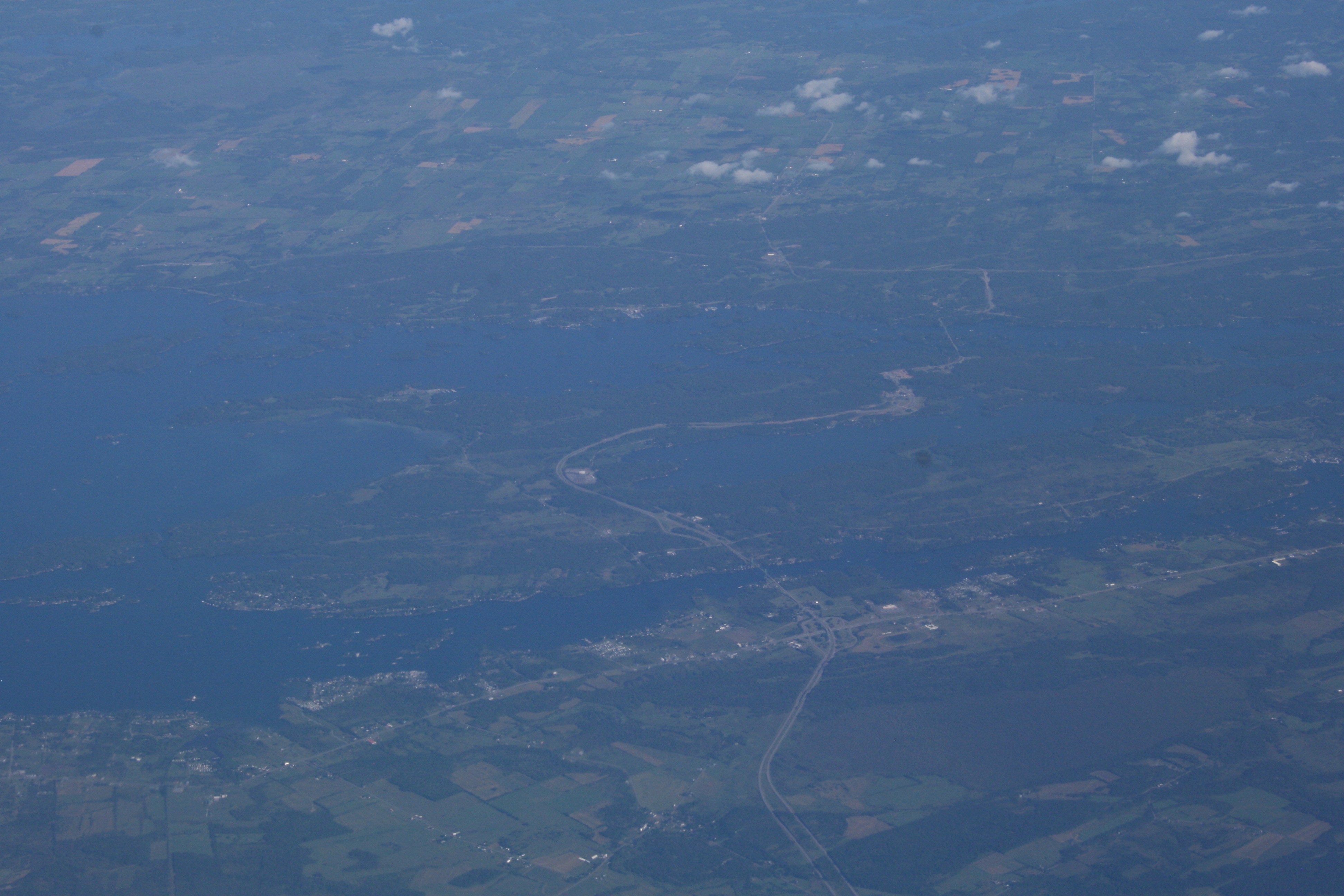
Approaching the St. Lawrence River, separating the United States from Canada. Just to the lower right of center is Fishers Landing, New York. The major roadway there is US I-81 turning into Canadian Highway 137 as it crosses Wellesley Island.

IMG_0162 small

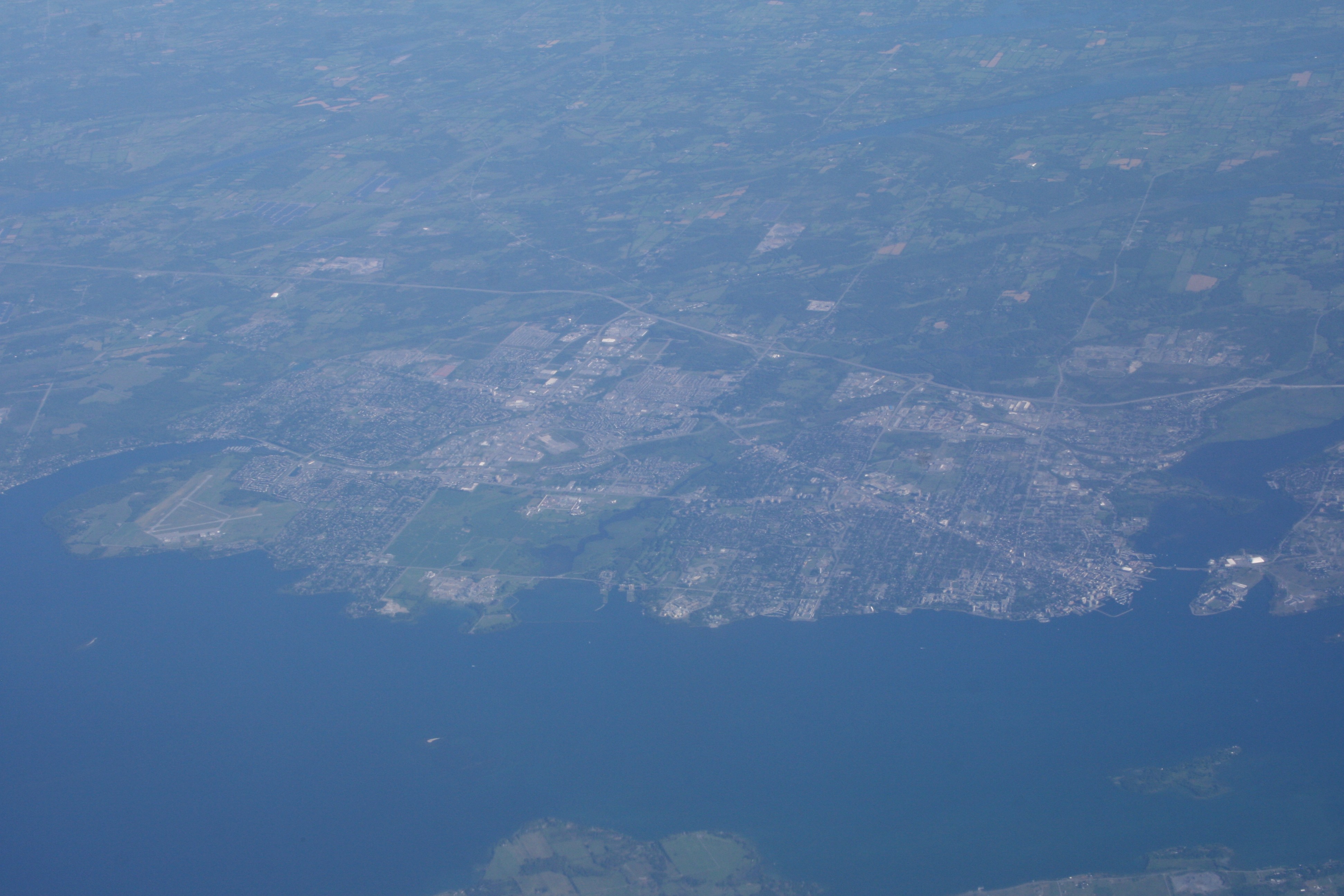
Kingston, Ontario. The harbor on the right and the Kingston Airport on the left make it easy to identify. At the bottom is Simcoe Island in New York.

IMG_0171 small

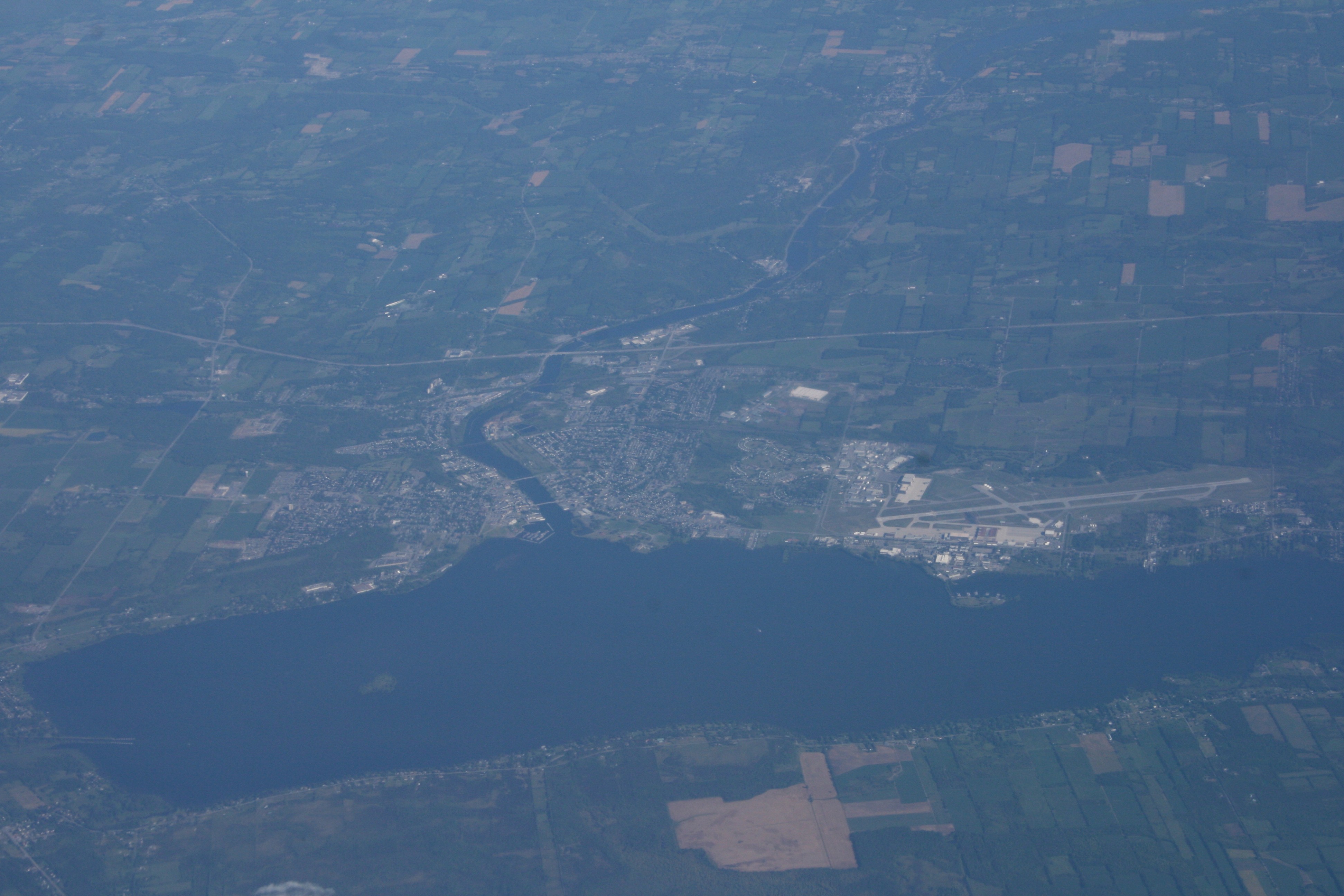
This is the Bay of Quinte, an offshoot of the St. Lawrence River. The community at the top is Trenton (along with Trenton Airport) and at the far left of the Bay you can see the entry/exit point of the Murray Canal, which connects the Bay of Quinte with Presqu’ile Bay on Lake Ontario.

IMG_0184 small

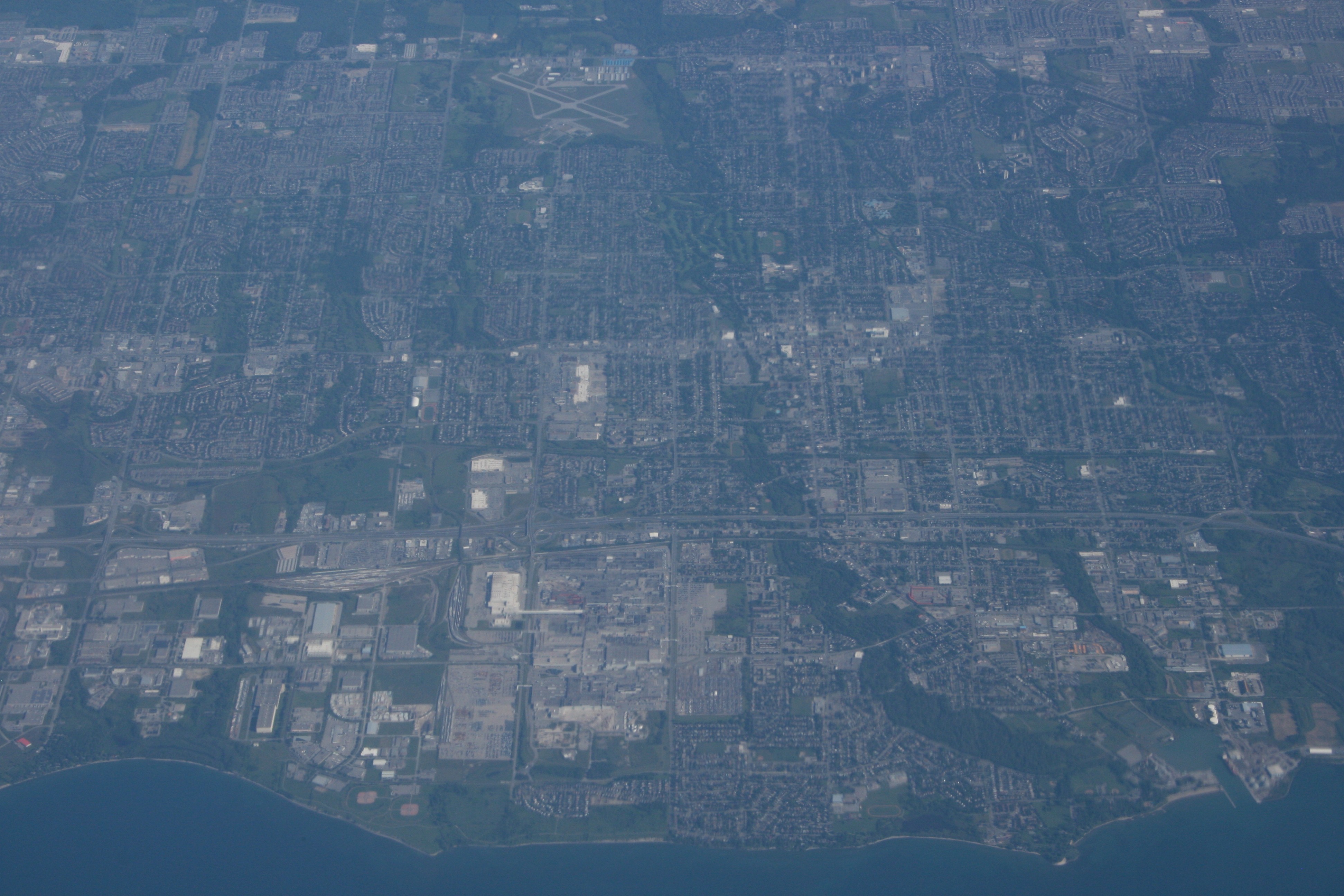
Whitby, Ontario on the left, Oshawa, Ontario on the right, with Oshawa Airport at the top center. As you can see, we were flying the length of Lake Ontario. I was sitting on the right side of the plane so I was looking at the southern border of Canada. The Long-Suffering Wife was on the left side of the plane and could have been looking at the northern border of New York (Rochester, Buffalo, Niagara Falls) if she hadn’t had the good sense to close her window and get some sleep.

IMG_0191 small

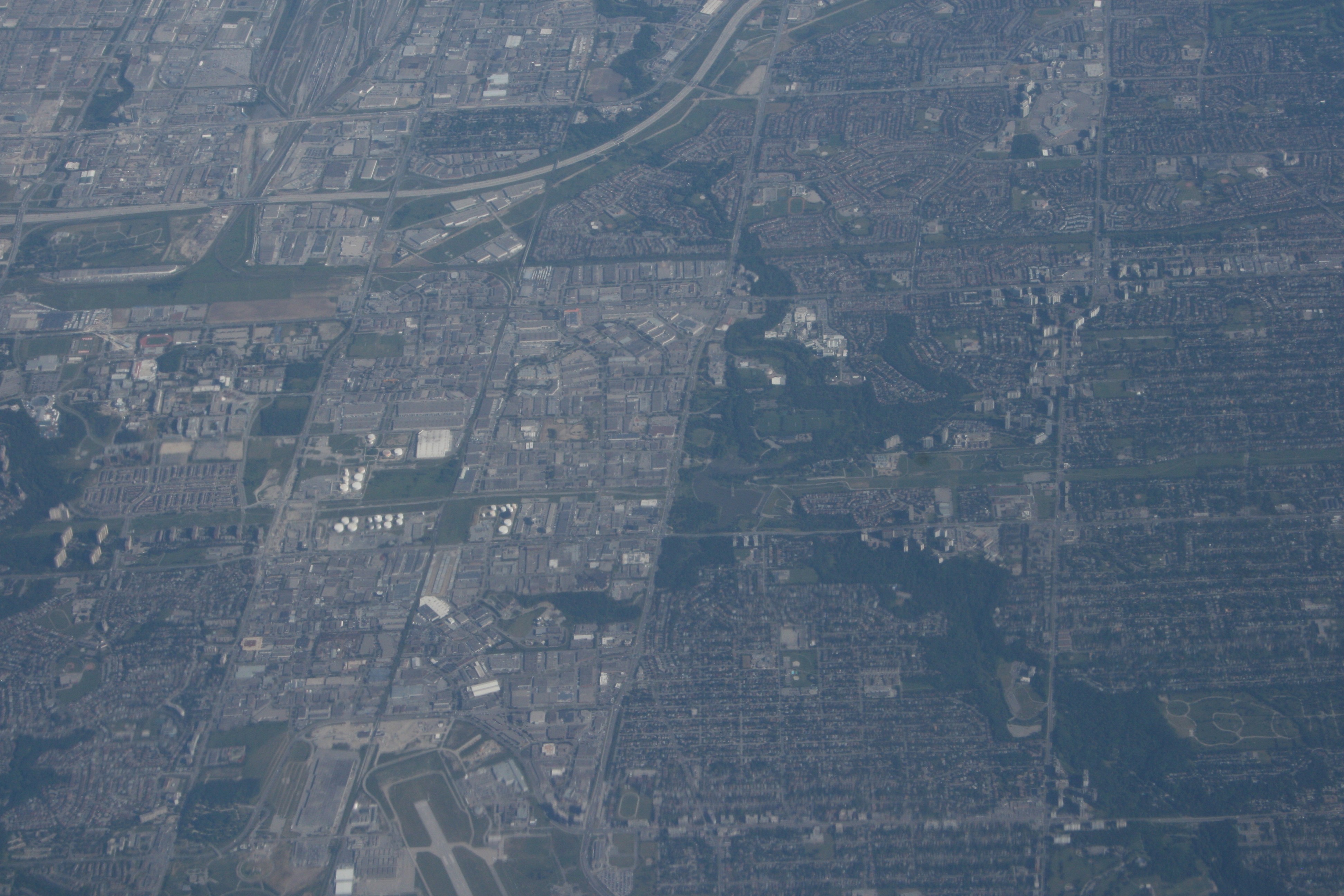
We flew right over the northern part of the Toronto area. The south end of the rail yards at Vaughan can be seen at the top left, while the north end of the runway at Toronto Downsview Airport can be seen at the bottom center.

IMG_0197 small

After crossing the southern tip of Lake Huron, we’re back over the United States. Heading west across Michigan, we passed just south of the Grand Rapids area, where the Kent County International Airport makes a great landmark.

IMG_0202 small

Approaching the eastern shore of Lake Michigan, we passed over Holland, Michigan. At the very bottom center you can see the Tulip City Airport, while there’s a much smaller airport (Park Township) on the northern shore of Lake Macatawa.

Lake Michigan is freakishly huge when you fly across it. I can see why it’s often recommended that small, single-engine planes take the long route around the southern tip rather than risk having an emergency over Lake Michigan.

Leave a comment

Filed under Flying, Photography, Travel

Modern Day Static Compasses

While traipsing around Vermont and New York for the past couple of weeks (and I was “traipsing,” not “wandering,” “meandering,” “sashaying,” “ambling,” “strolling,” “strutting,” “prancing,” or “galavanting”) I was often getting all turned about and uncertain exactly which way I was headed. That part of the world has lots of twisty, turny roads.

If the sun is setting or rising it’s pretty easy to find east or west and go from there, but if it was cloudy (as it often was) or mid-day with the sun overhead, it could be more difficult to figure out directions from first principles.

As a Boy Scout in these very mountains, I was taught things like looking for moss growing on the north side of trees and other subtle tricks of nature to help in staying oriented. Not always that useful when driving, but hey, if I absolutely run out of other options, there are plenty of trees and plenty of moss – we’ll take a vote over a few hundred trees and see if we can come to a consensus on which way North lies.

However, there’s a much easier and more reliable piece of today’s landscape that will always tell you which way you’re facing.

IMG_2991 small

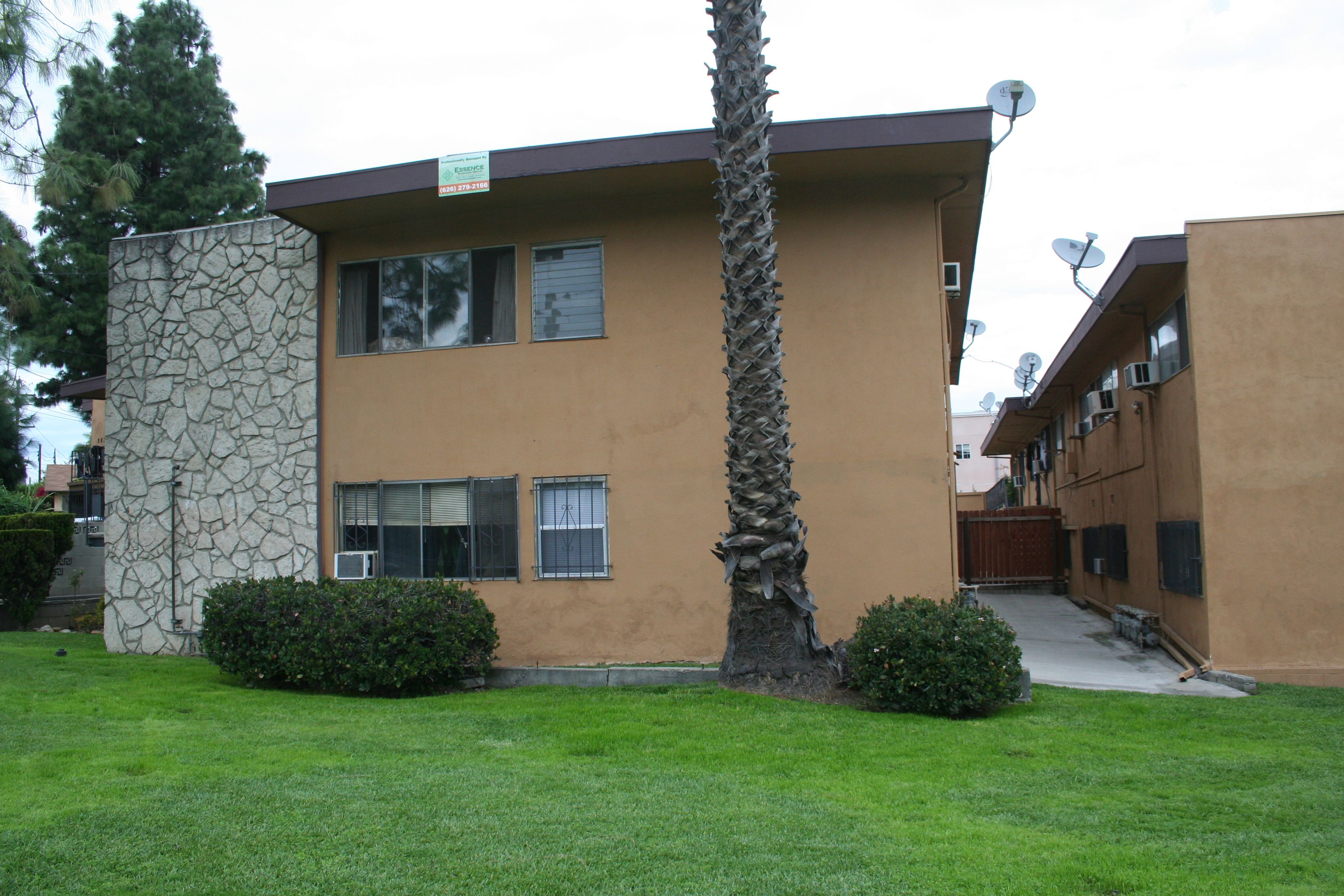
This is in Los Angeles and not Vermont (obviously) but the principle is the same. See those satellite dishes on top of the building? If you’re in the Northern Hemisphere, those dishes are always pointed south. If you’re in the Southern Hemisphere, they’re always pointed north.

That’s because they’re all pointed at geosynchronous satellites which are out in space directly above the Equator. Since the Equator is to the south of you if you’re in the Northern Hemisphere, the dishes point south. Once you know where south is, everything else falls into place.

In this picture I was obviously facing north. (The antennas are facing toward me.) In the fourth picture here (looking between the apartment buildings), I was obviously facing east. (The antennas are facing from right to left.)

In that second picture, the shadows from the sun setting behind me would confirm that I was facing east. But on the picture above where it’s cloudy and there are no shadows, the antennas will still give your orientation away.

There you go! If you’re out in the boonies in the woods, look for mossy trees. If you’re anywhere civilization, and that means just about anywhere you can find even a single building, look for the satellite dish.

With one caveat – if you’re at the Equator and all of the dishes are pointed straight up, you’re screwed.

Leave a comment

Filed under Travel

Insanity Plea

This is what I left behind this morning:

IMG_9077 small

File Aug 06, 19 21 06

File Aug 06, 19 54 52

File Aug 06, 19 21 41 small
File Aug 06, 19 41 36

File Aug 06, 19 54 00 small

File Aug 06, 19 50 35

File Aug 06, 19 51 39

File Aug 06, 19 53 33

This is what I returned “home” to this afternoon:

IMG_0361 SMALL

File Aug 06, 19 16 37

As always – why? Why? WHY? WHY? WHY? WHY??

Good thing that the dog is here. And the bed. The bed in that hotel kinda sucked a little. So the bed is good.

1 Comment

Filed under Photography, Travel

Timelapse Vermont Clouds

It’s almost time to leave Vermont again. Of course I’ll be back – perhaps very soon, perhaps on a regular basis a couple times a year for an indeterminate amount of time. That’s out of my control.

The clouds were rolling by and as we packed and prepared to leave, I set up my iPad in the window running the “Timelapse” app. I’ve used it once or twice and this seemed like a good chance to play with it a bit.

I’m quite pleased with the results for a very early effort. The original HD version is gorgeous, but a ginormous, huge file. This version has been compressed by QuickTime Pro and still looks pretty good, even in full-screen mode.

Enjoy.

We’ll see you back in Los Angeles.

Leave a comment

Filed under Travel, Video, Weather

Quechee Gorge

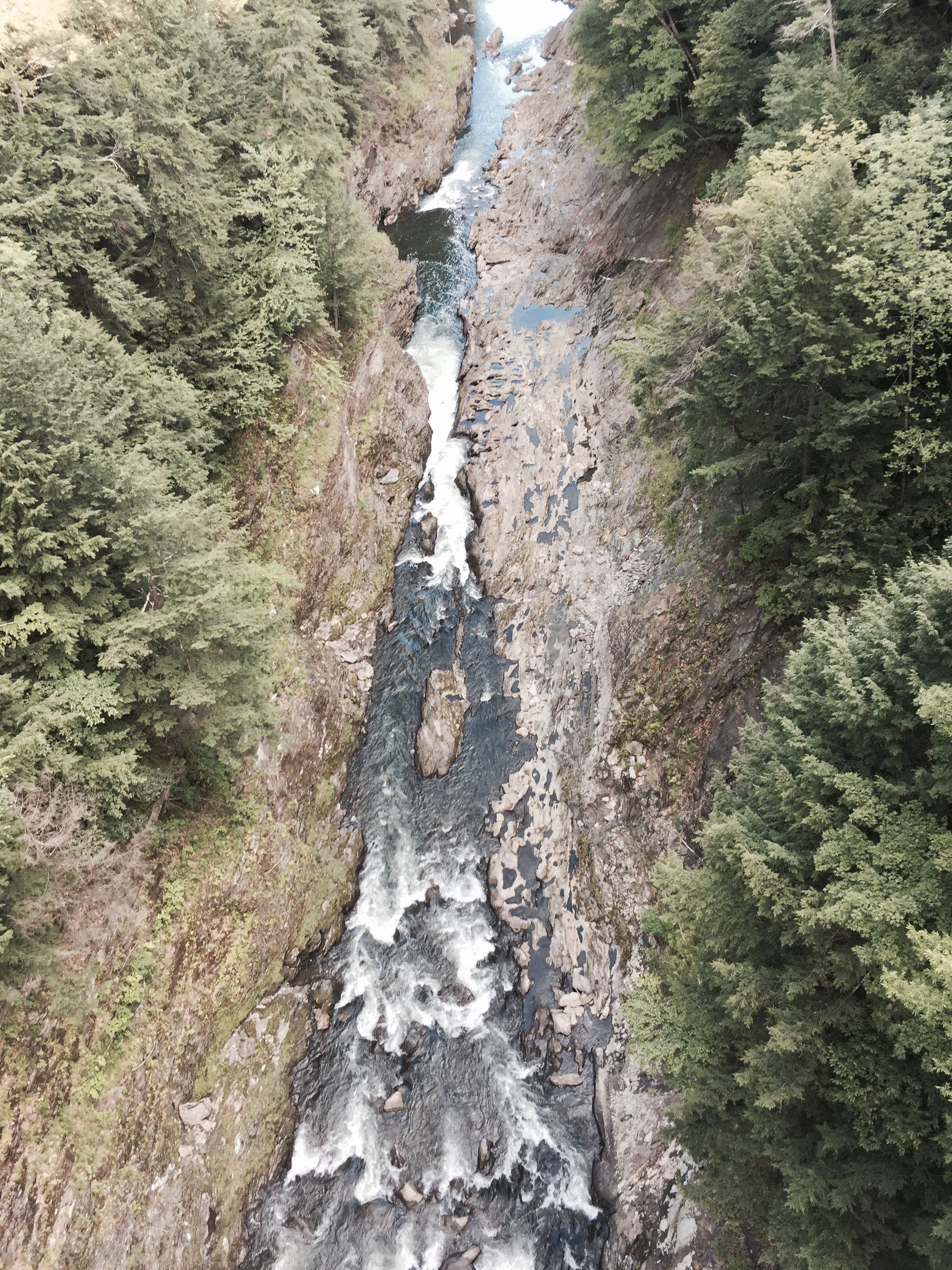
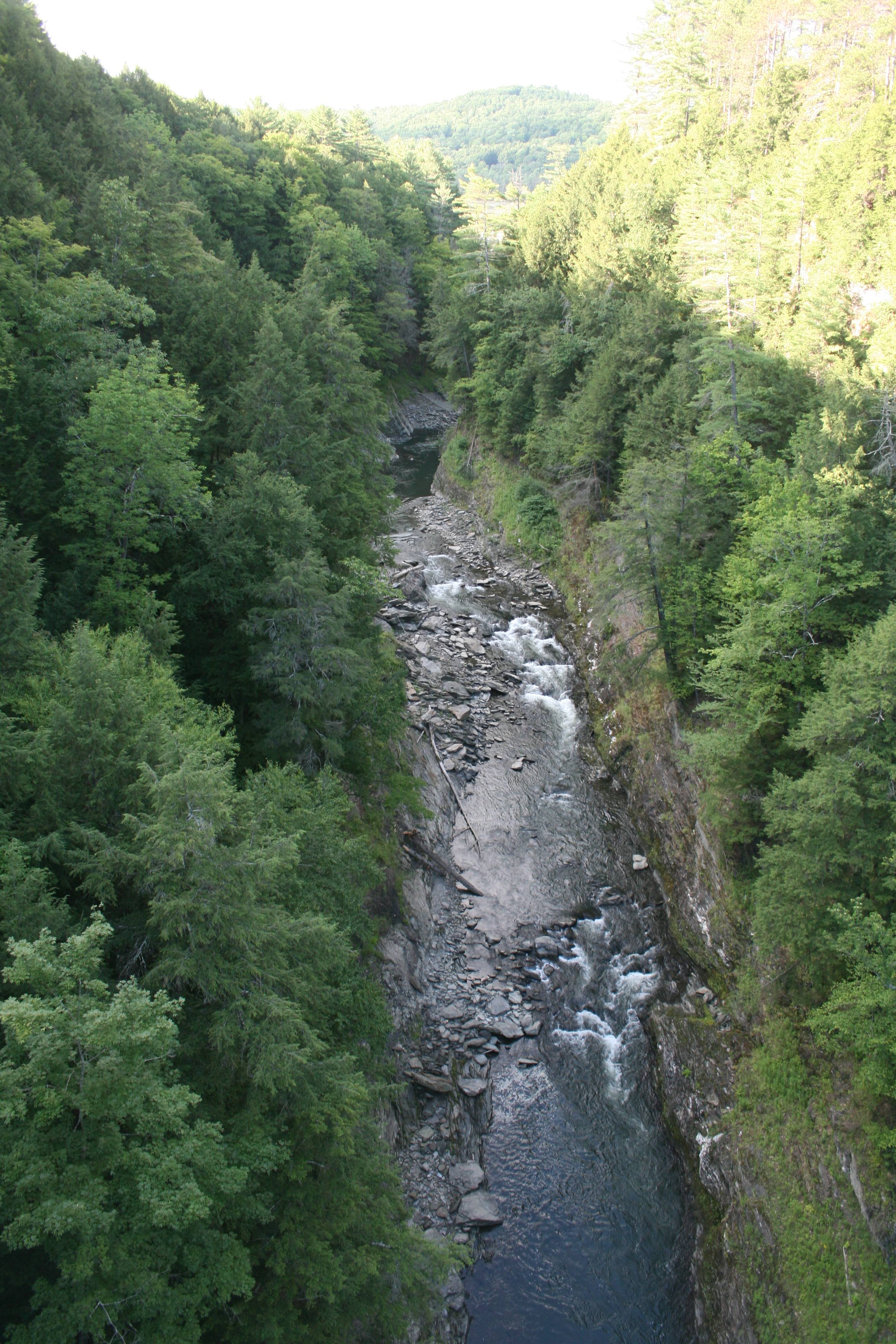
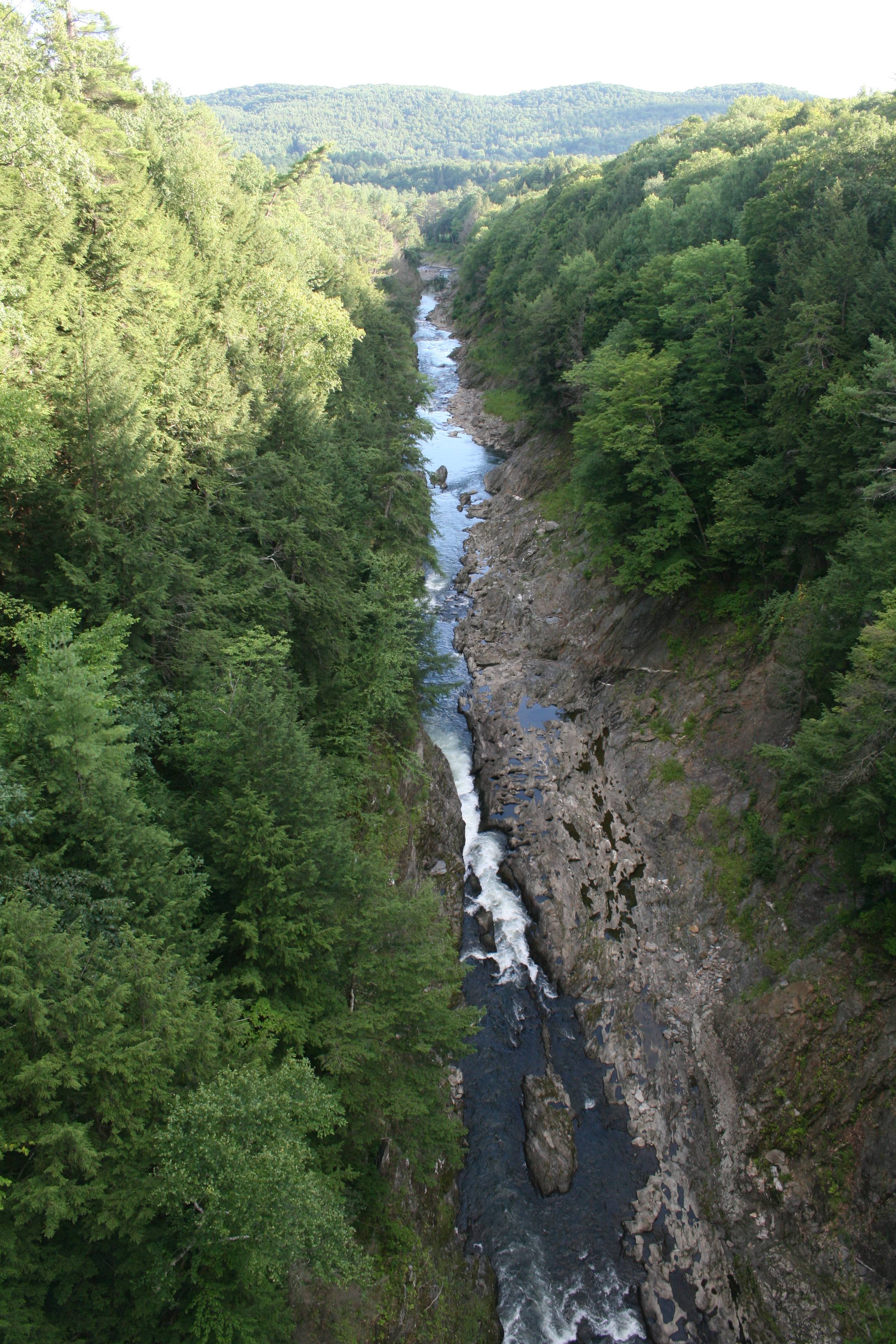
Quechee Gorge (pronounced “Kwee-chee”) is a wonderful place to visit in east-central Vermont. Located on the Ottauquechee River just west of White River Junction, Vermont, it’s easily accessible on US Route 4, just a few miles off of either I-89 or I-91. There are parking lots on either side with pedestrian walkways which allow you to look down several hundred feet into the Gorge. If you have the time, you can follow an easy hiking trail down into the Gorge. We’ll have to do that next time.

IMG_9982 small

Looking north.

IMG_9995 small

Looking south.

Leave a comment

Filed under Photography, Travel

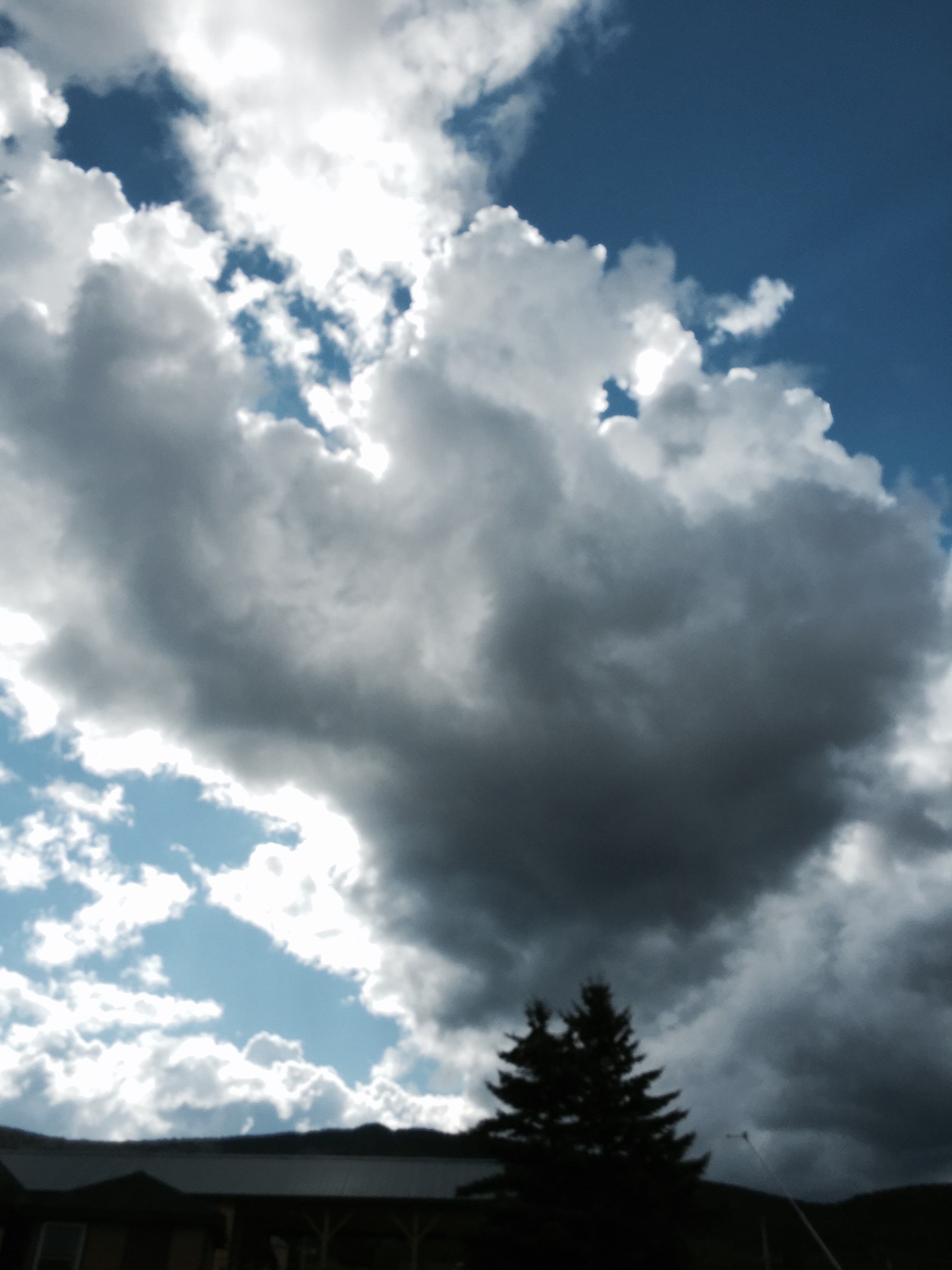
Clouds, August 3rd

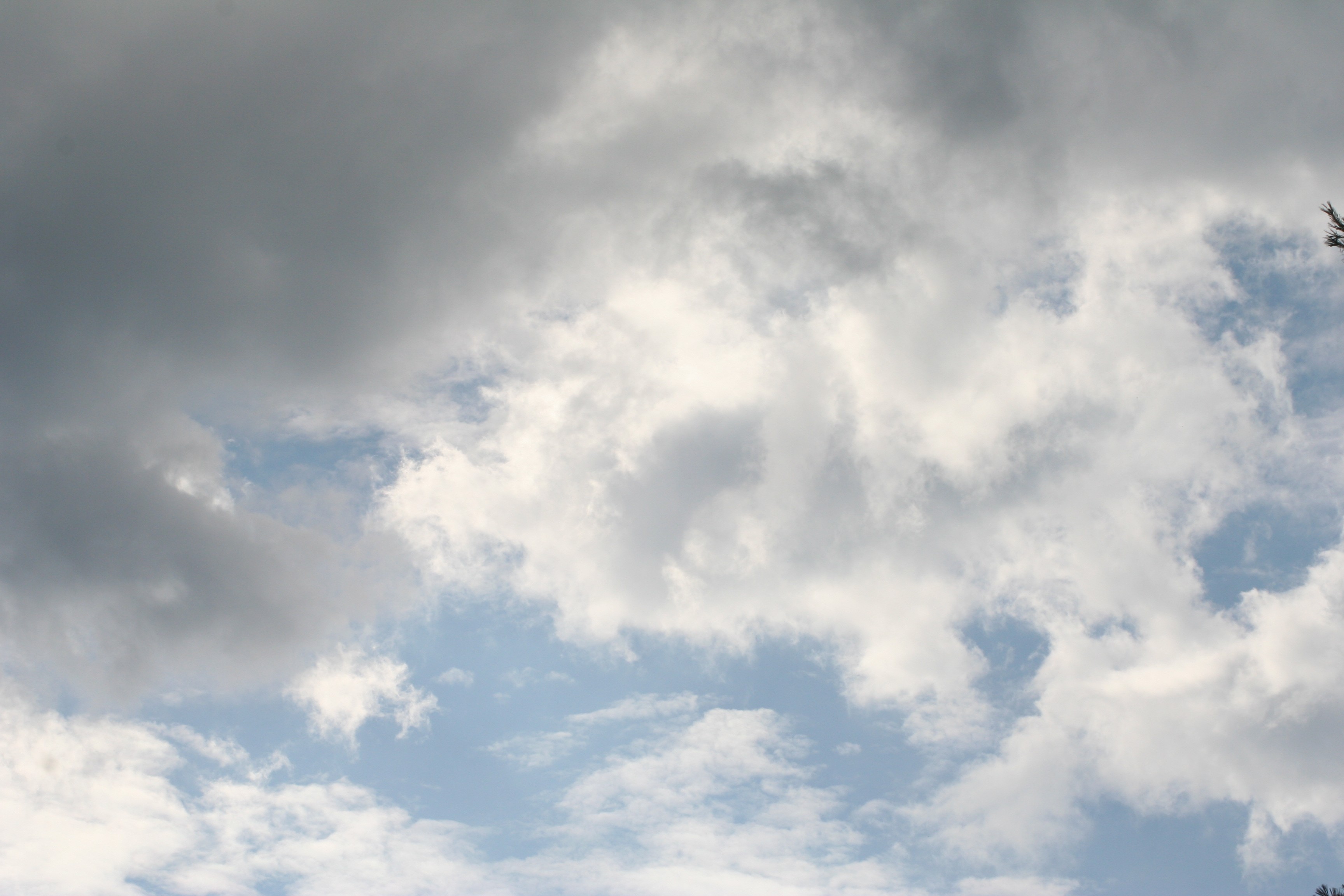
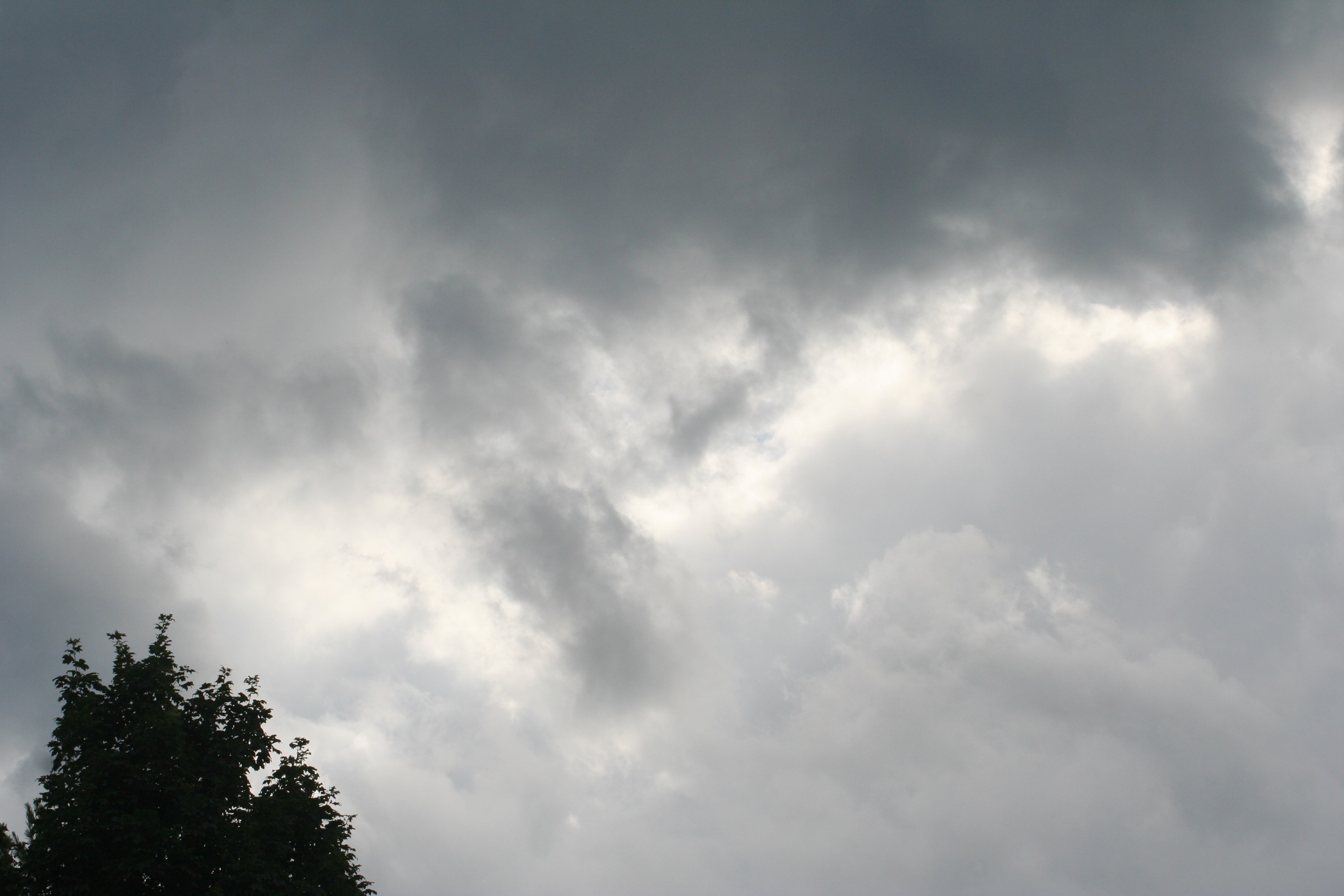
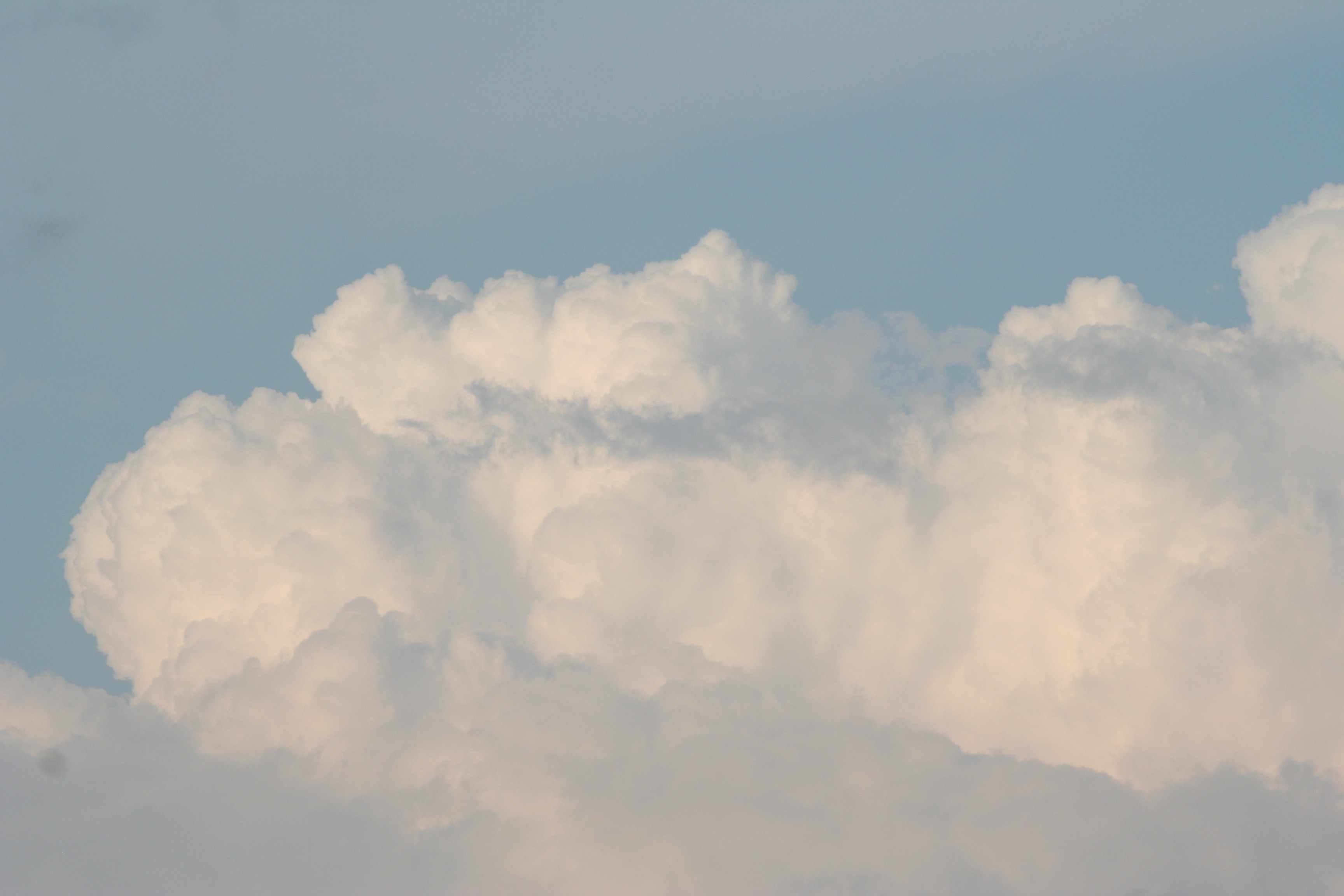
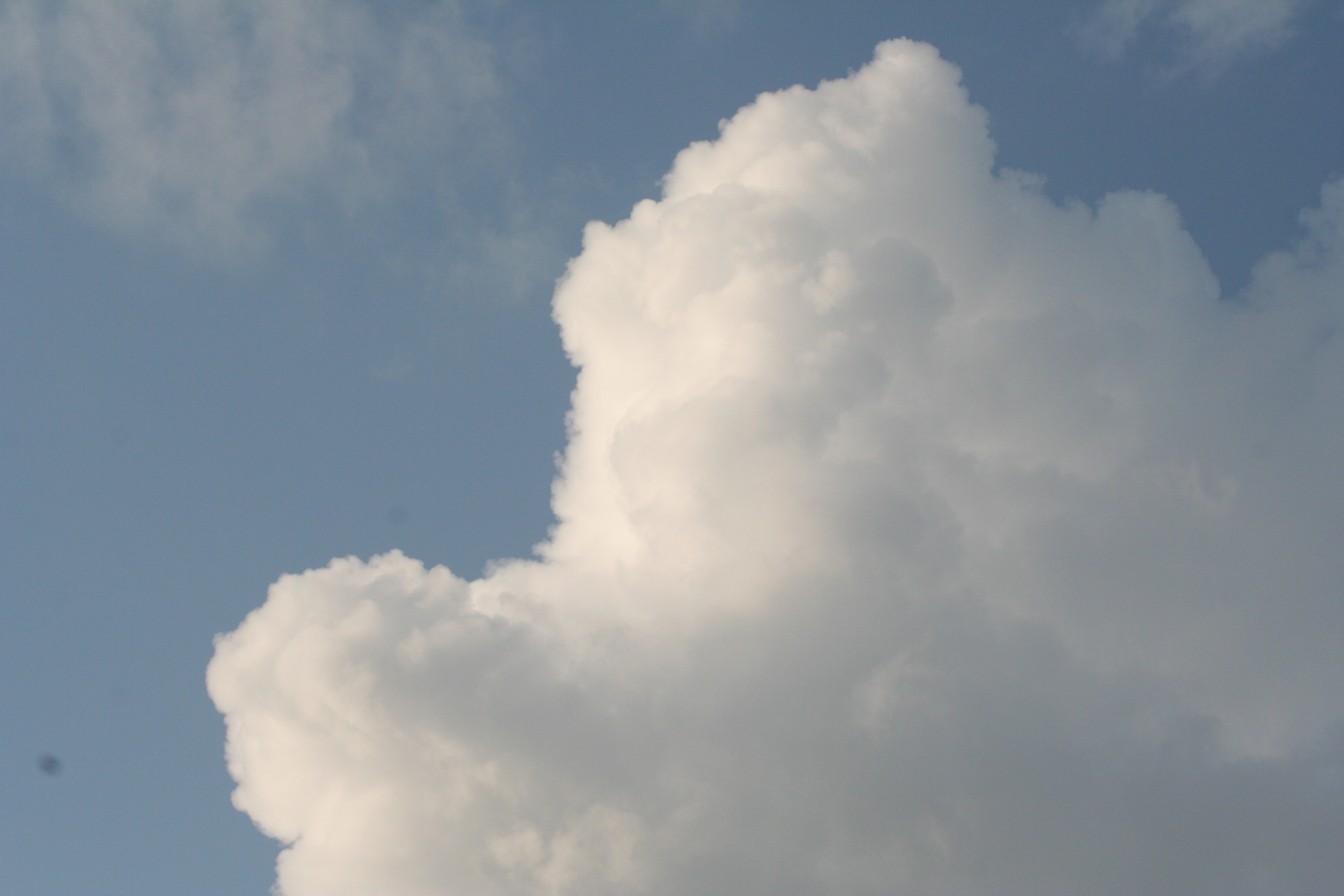
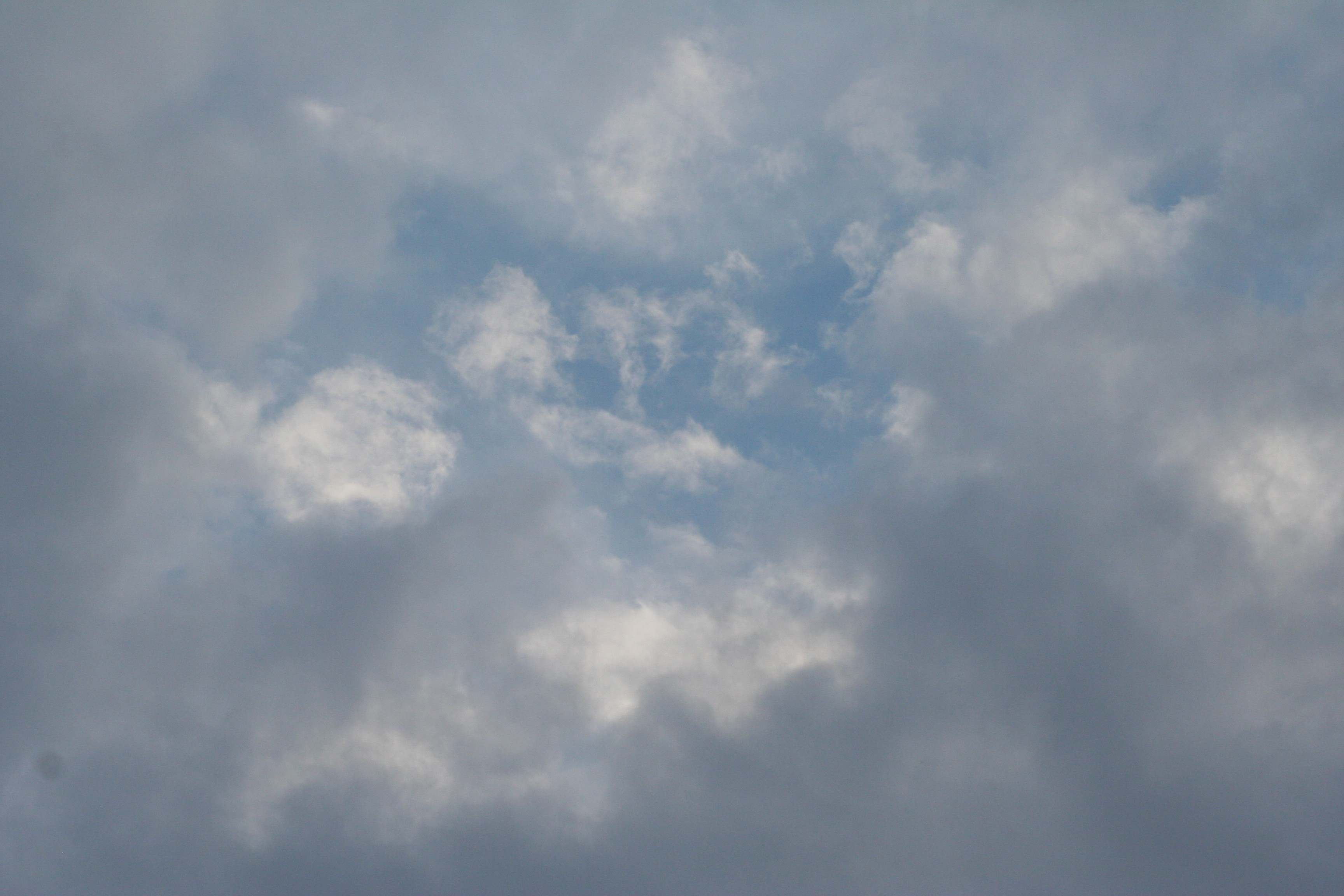
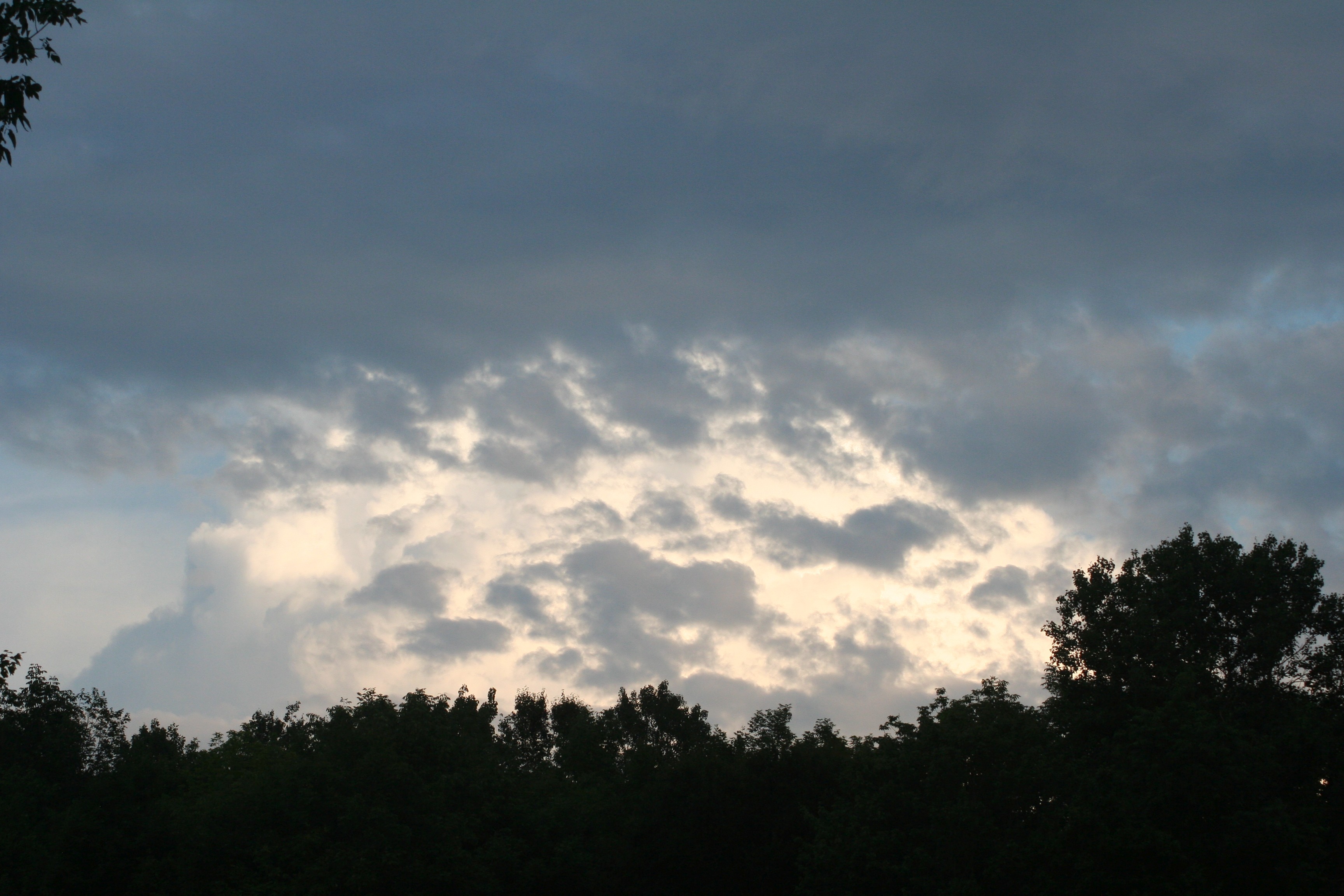
Scattered thunderstorms almost every day right now in northern Vermont – lots of great clouds, some spectacular, but little if any actual rain right where we happen to be. But when it does rain, it really pours.

Our attitudes toward the weather have similarities to our attitudes toward life – it’s changing constantly, sometimes calm, often threatening, occasionally stormy. Anticipating and preparing for the really bad parts takes up so much of our time, but the actual really bad parts are rare and short-lived. There’s a rainbow after the storm passes.

In my case, I prefer the stormy weather to the calm. Okay, I’m not 100% sure the analogy holds that far, but I’m intrigued by the possibility.

IMG_3856 small

IMG_3858 small

IMG_3864 small

IMG_3869 small

IMG_3872 small

IMG_3876 small

IMG_3879 small

IMG_3884 small

IMG_3885 small

2 Comments

Filed under Photography, Travel, Weather