Category Archives: Flying

How Do You Install A New Engine In A P-51 Mustang?

Very, very, very carefully!

Since the plane is worth multiple millions of dollars, the engine is worth several hundreds of thousands of dollars, and the engine weighs many hundreds of pounds and is an incredibly tight fit into an airframe that’s tilted up into the sky and six or seven feet above you, this is not a trivial endeavour.

IMG_3438 small

You start with a sort of engine-shaped hole in the front of your P-51, maybe some new cables and wiring.

IMG_3434 small

You need a brand new, ready-to-go Rolls-Royce engine. Zillions of horses are carefully contained within.

IMG_3415 small

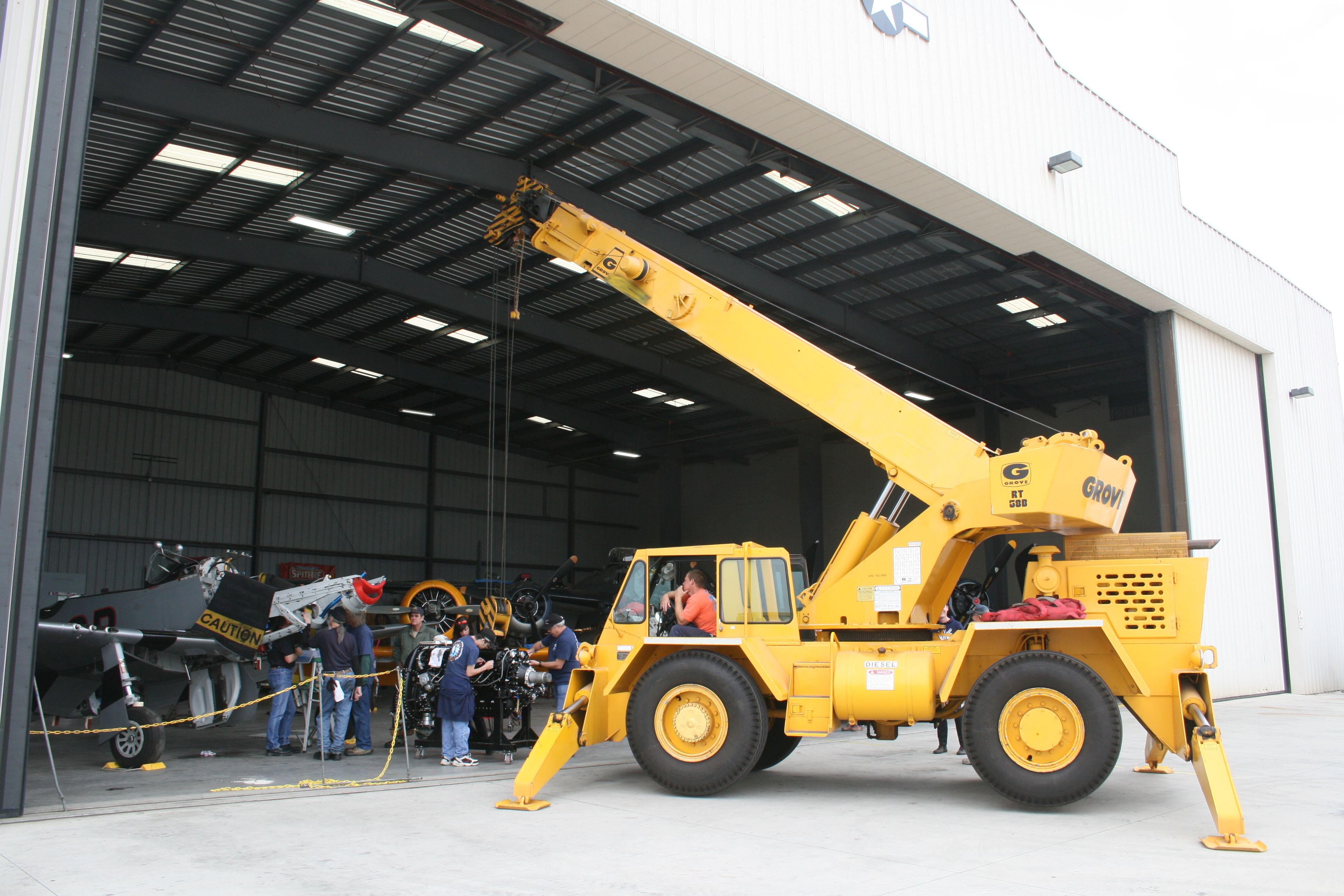
You get a big crane. You can try it with a fork-lift or a winch, but given the monetary sums and risks involved, let’s not and say we did, okay? Go with the big crane.

IMG_3440 small

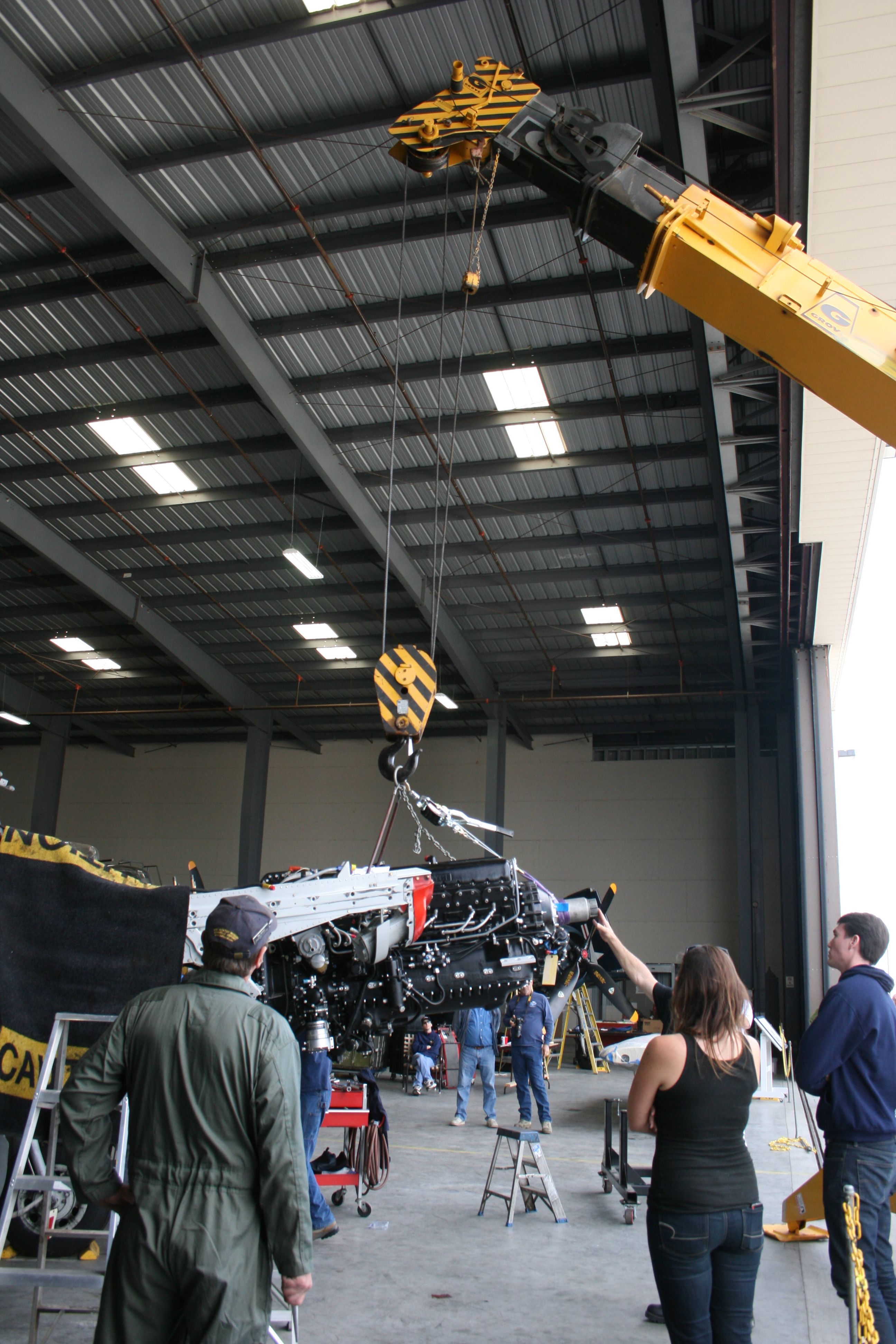
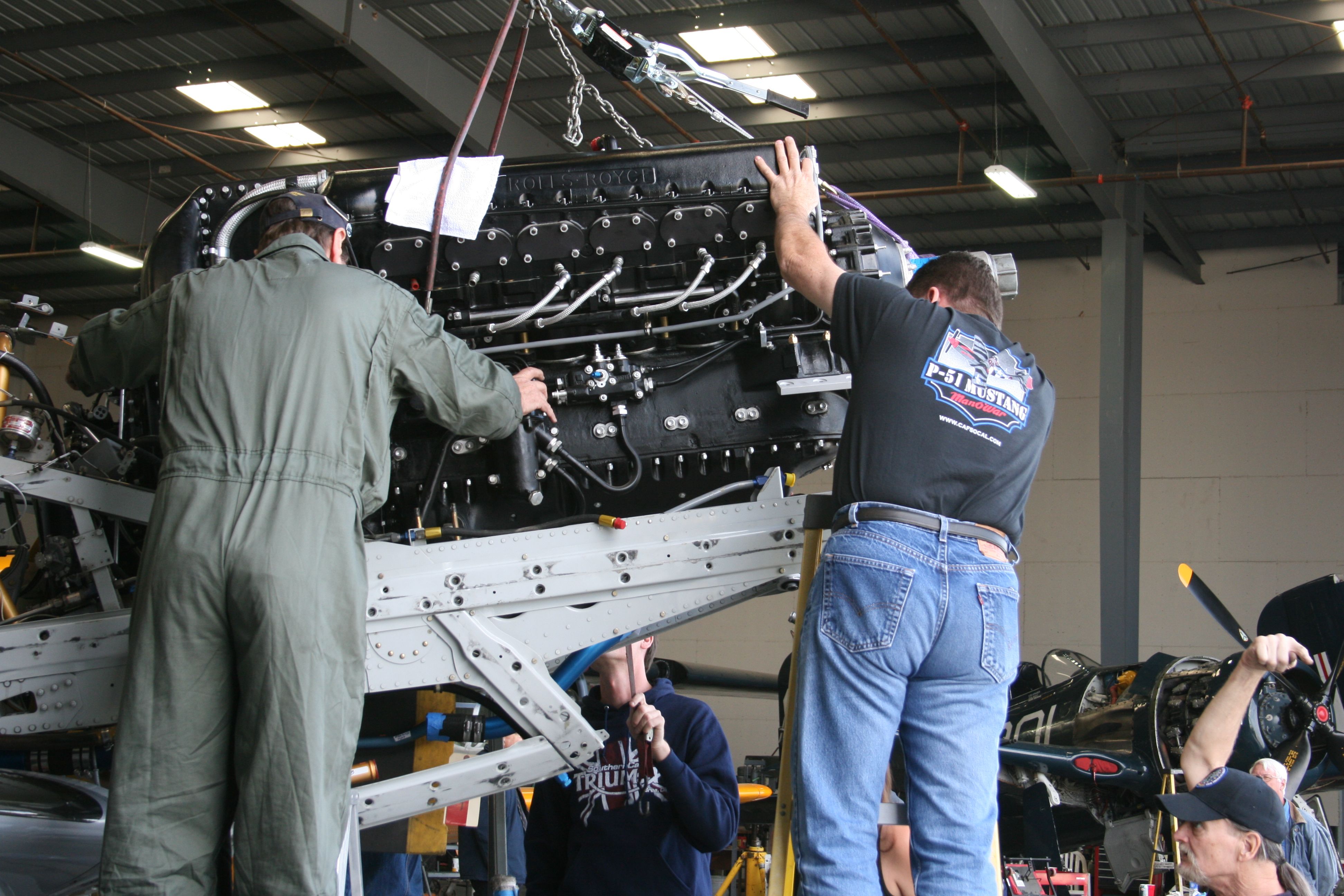
After hours of preparation, you get the engine airborne.

IMG_3445 small

You move it very slowly and gently over the nose of the aircraft.

IMG_3452 small

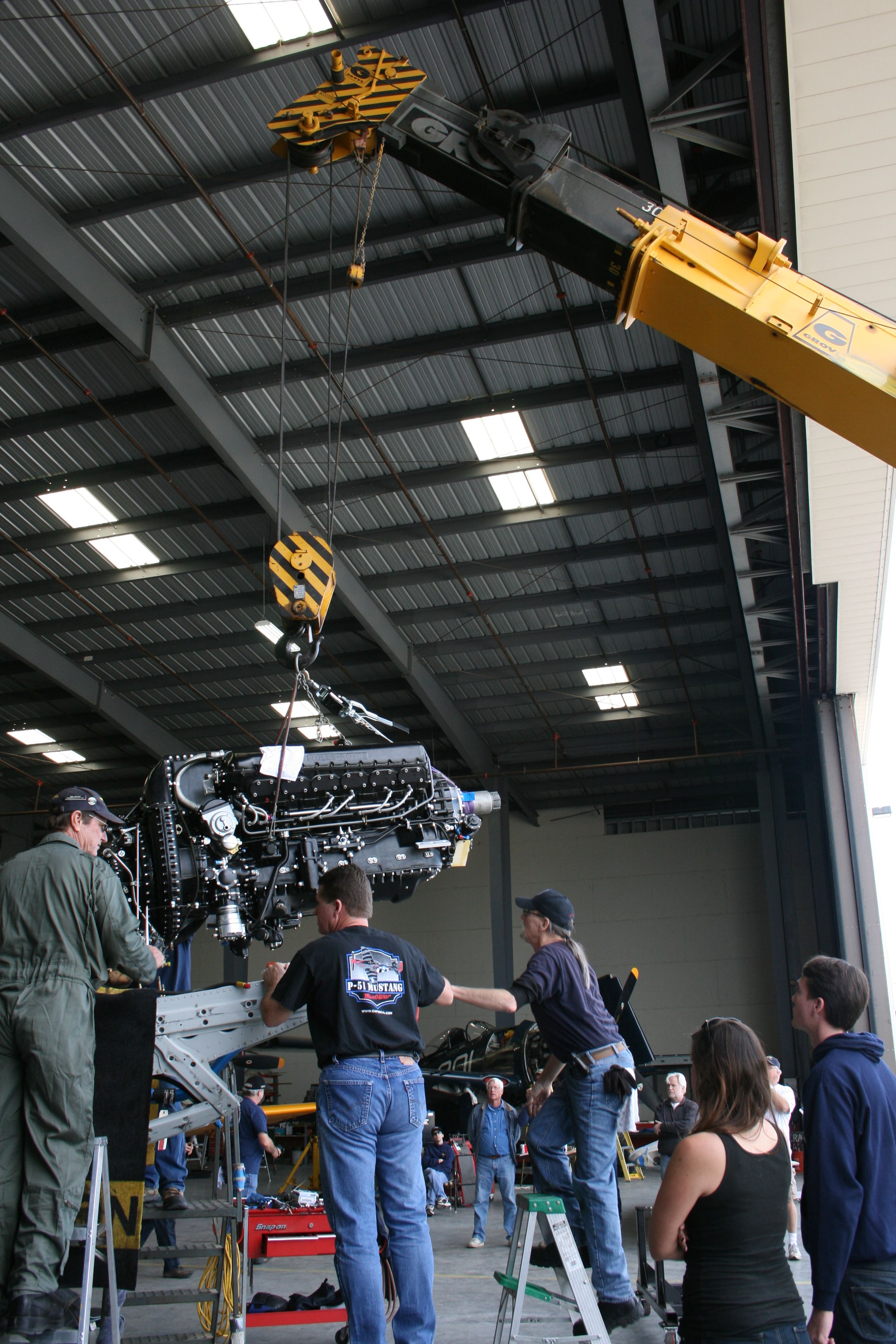
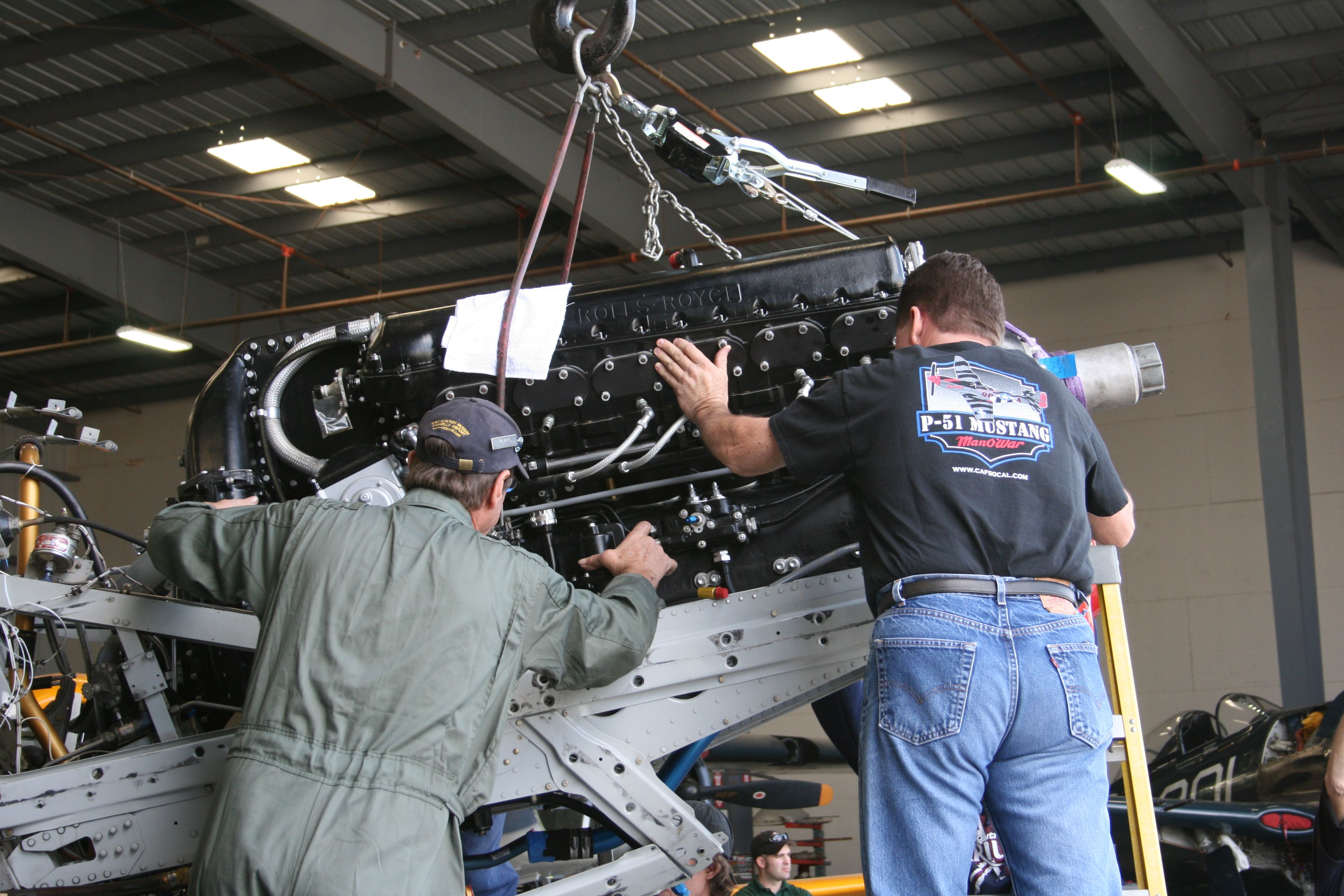
Line it up.

IMG_3456 small

Start to lower it.

IMG_3459 small

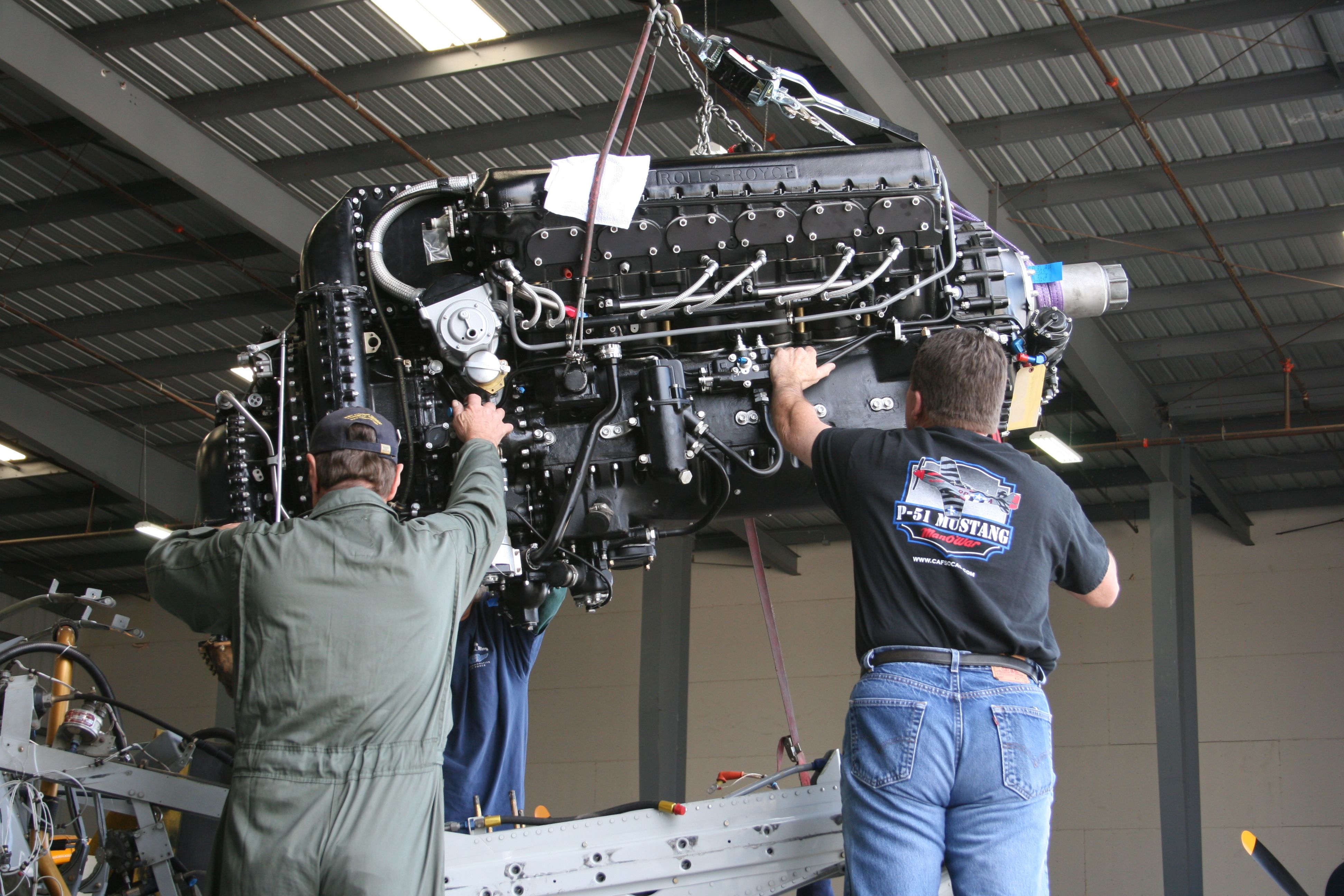
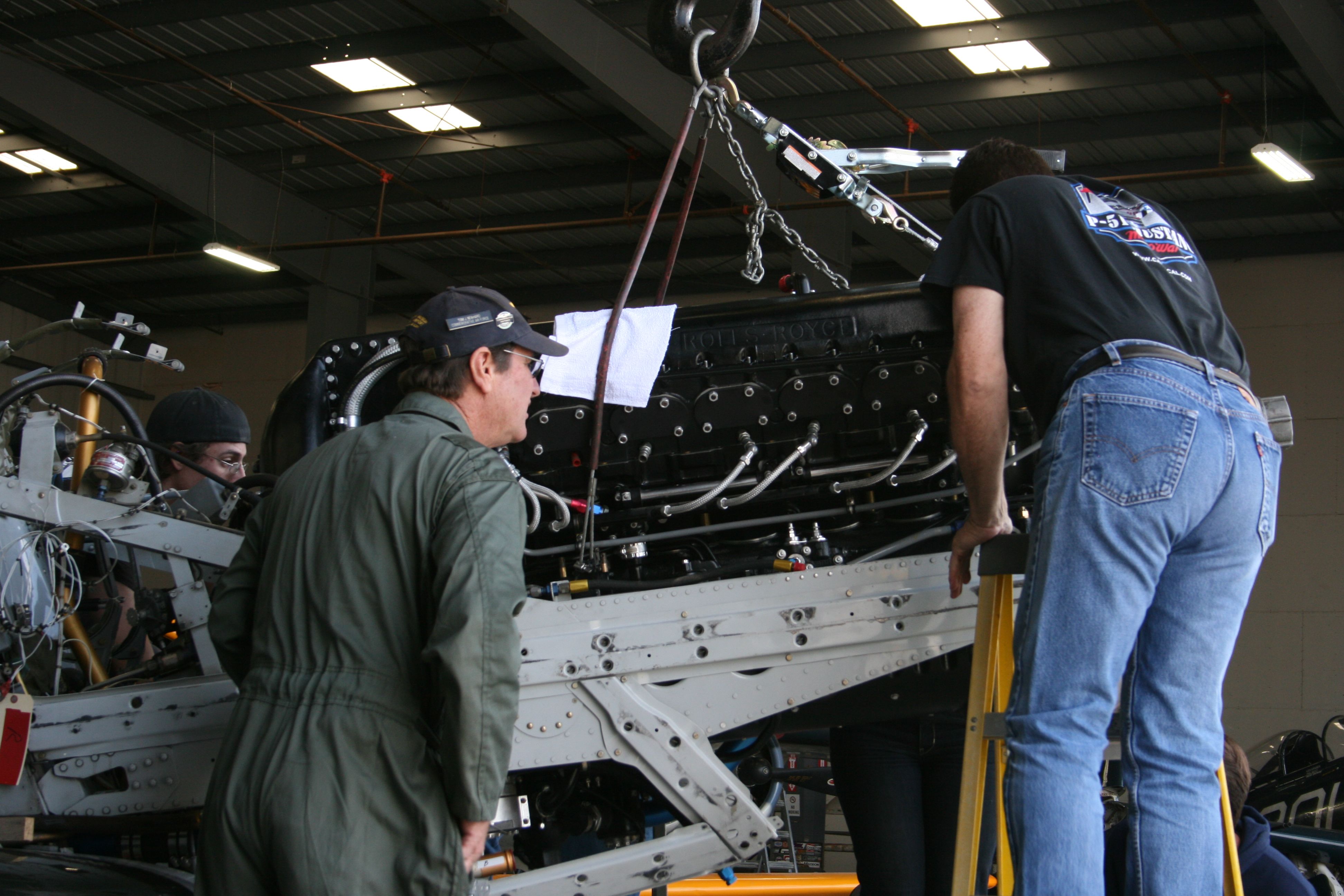
Move it and lower it very, very, very, very, very, very slowly, constantly checking to make sure that all of those hoses and wires are still where they’re supposed to be when they get hooked up next week. Everything on the engine has to line up correctly on the engine mount pins.

IMG_3468 small

One last check as tension starts to come off the hoist.

IMG_3470 small

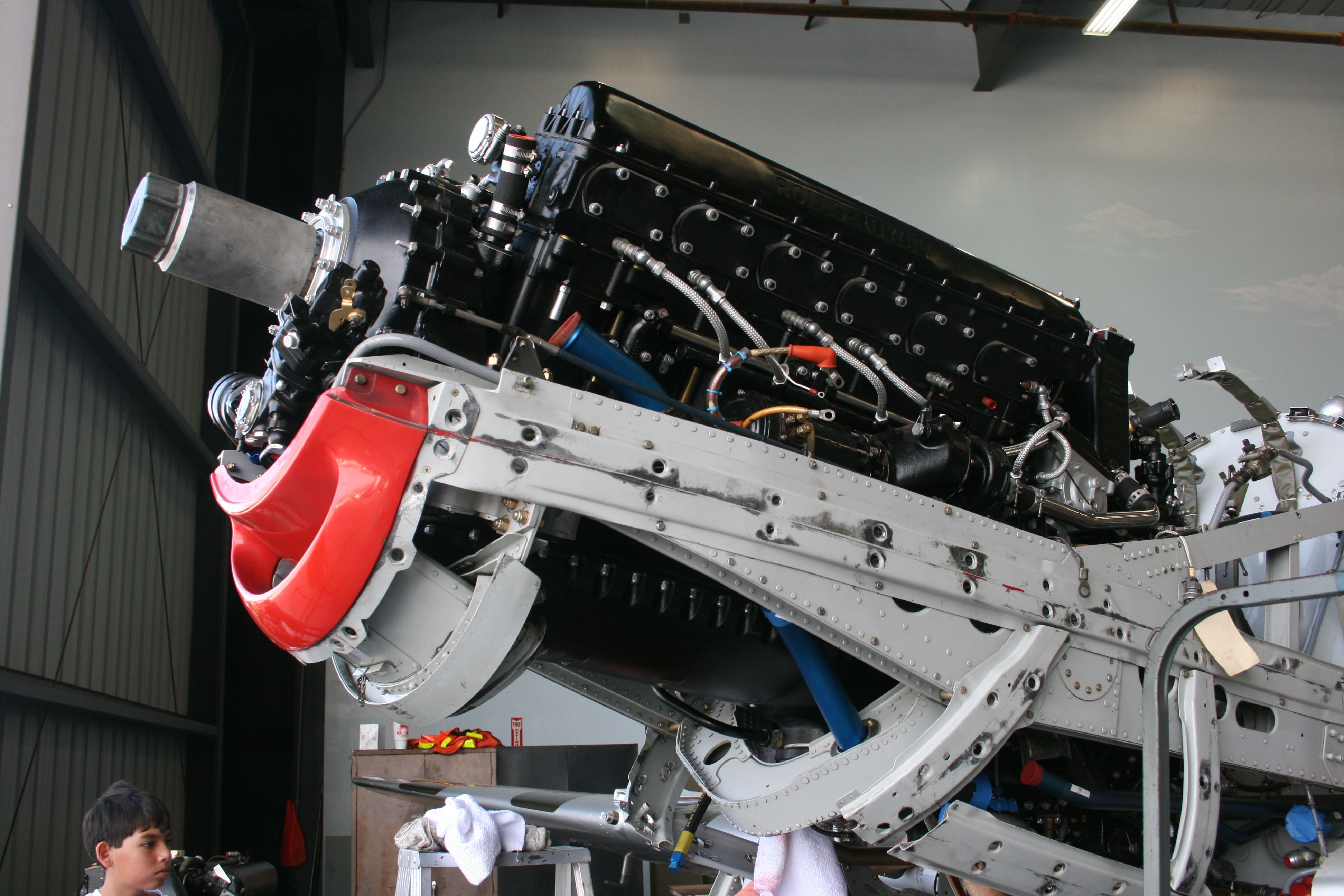
Two months or more of preparation pays off with a perfect job. Now to hook everything up and get her flying again! We’re not there yet, but today we passed a major milestone.

IMG_3471 small

Kudos to Trace Eubanks, our P-51 crew chief, his crew, and all of the other mechanics at the Southern California Wing of the Commemorative Air Force who put so much time, effort, sweat, and care into taking care of these precious and wonderful machines!!

Leave a comment

Filed under CAF, Flying

Drones

The FAA has issued some preliminary outlines for regulations it wants to put on remote-control drones. Folks are starting to have all kinds of concerns over their use, whether or not they’re safe, what privacy concerns they may pose, and so on.

The short version is:

  • Daylight only
  • Must remain in sight of the operator
  • Max speed: 100 mph
  • Max altitude: 500 ft
  • Max weight: 55 pounds
  • Operators must be certified, at least 17 years old, pass periodic reviews to stay certified, and be vetted by the TSA

I’m sure there’s more to it, but let me share a few thoughts (in no particular order) given that initial information.

  1. There’s got to be a distinction between “hobby-class” drones and “military-class” drones. (I made up those labels, but I think you get the drift.) The rules for a 50 pound, $1,000 machine, bought through Amazon or at a R/C hobby shop, with 15-minutes of fuel don’t make sense to apply to a 5,000 pound, $17M+ machine, built for the military, with a 24-hour fuel load. (See my pictures of Ikahna from the NASA Social at Armstrong.)
  2. Having seen what NASA is working on at Armstrong in order to bring Unmanned Aerial Vehicles (UAV’s = drones) into the National Airspace System (NAS), there’s every expectation that large UAV’s will be integrated into the system within the next few years. It’s going to happen, it’s just a matter of when, not if.
  3. But it sounds like NASA’s getting ready for some version of  the “military-class” UAVs (possibly both military and civilian, i.e., commercial), not “hobby-class” drones. (I’m no expert by any means, but phrasing that way might be closer to the facts than what I’m seeing in the press about this.) If these new proposed regulations apply to the latter group, fine.
  4. These proposals are a start.
  5. Enforcement’s going to be a real bitch. These things can be small, zippy, and if you’re on the ground being bothered by one, there won’t be any good way to ID it. If you see a plane or helicopter going overhead, you can get the “N-number” to ID it, or at least describe it. A small drone at a couple hundred feet is going to be a dot. If you see it at all, you probably won’t even be able to tell if it’s got four or eight or sixteen rotors, if it’s got a camera, or what kind of other equipment. Unless you see someone launching and/or retrieving it, you’ll never know who it was.
  6. They need to put a 100% no-fly zone around any and all airports. Let’s say, two miles, or better yet, three. As a private pilot, I’ve landed at night in early July and had fireworks bursting all around me like I was on a bombing run deep in enemy territory. Not fun. I’ve also come way to close to sea gulls and other birds, which can leave you really dead in a small plane, or even in a large one. (Ask Captain Sullenberger.) Smacking into a 5-pound drone at 100 knots isn’t going to be any different from smacking into a pigeon or seagull. I doubt too many of the hobby-class drones will go up to 1,000 feet or more, but when you’re landing and at 500 feet on short final, a collision would be a disaster.
  7. While you’re at it, put no-fly zones around large sporting events and places like amusement parks. Get a couple dozen (or more) drones buzzing around over the Rose Bowl during the UCLA-USC game and then have a couple of them collide and come down in the crowd…
  8. What happens the first time that someone actually uses one to kill someone or cause a huge problem? For example, what if someone starts buzzing trucks on the freeway until they get one to swerve and crash, causing a multi-vehicle, multi-fatality accident that ties up the interstate for hours? What happens when someone (certified or not) flies up over a hostage situation or a major fire and gets tangled up with a police or news helicopter?
  9. There are already people loading good-sized hobby-class drones with drugs and flying them across the border from Mexico into the US. If the cops knew about it they couldn’t or didn’t stop it – it only hit the news when one crashed. Do they really think that the people doing that will pay attention to any new regulations?
  10. On the other hand, while everyone’s all up in arms about the possible problems with hobby-class drones, there are also some pretty neat things that can be done. From real-estate sales videos (something that they’re used for a lot here in LA already), photography for getting a new viewpoint or photographing an event such as a wedding, monitoring a disaster (I’m sure fire fighters on a large forest blaze would love to have fast, accurate aerial views), news reporting — there will be a million other good, legitimate, honest, incredibly useful applications.
  11. They’re a tool, just like any other. Used correctly and intelligently, they can do amazing things. Use stupidly and irresponsibly, they can be the cause of a disaster.

Pandora’s Box is open on this one. It’s going to be interesting, to say the least.

Leave a comment

Filed under Disasters, Flying, Politics

Air Traffic Control As Entertainment

My favorite airline to fly is United, in large part because often (not always) they put the ground-to-air radio traffic from the cockpit on one of the audio channels. It’s at the pilot’s discretion, but they have it more often than not.

I just loved listening to this when I was flying long, long before I started my flight training. At that time I didn’t know much about what was going on, since it really is something of a different language. Despite that, or possibly because of that, I felt like I was getting a peek into a world that I always wanted to be a part of.

Pre-internet, pre-having-my-own-radio, this was the only time I could hear the Air Traffic Control (ATC) chatter. These days, even if you don’t have your own radio, you can listen in at any time online.

Check out http://www.liveatc.net to hear it for free any time. Pick an airport near to you, or pick one far away. If you really want to follow what’s going on, load up http://www.flightaware.com and pick the same airport, you’ll be able to follow the radar tracks of the all of the incoming and outbound flights and match them up visually with what you’re hearing on the radio feed.

If you pick a large airport (O’Hare, Boston, JFK, Dulles, LAX, and so on) you’ll get a list of possible frequencies for different services. Approach. Departure. Clearance. Ramp. Tower. Ground. Just pick the Tower frequency, this will be the one giving planes their final landing clearance and telling departing flights when to take the runway. If you pick a smaller airport (say, CMA, which is Camarillo, CA where I hang out) there will only be one frequency handling all of those different tasks.

If you’re a pilot or if you just learn to follow what’s going on (it’s not THAT hard, I learned it after all), it can be a wonderful “background noise” source. For me in the spring and summer, baseball games do that, a familiar pattern, cadence, flow that’s soothing and comforting. When they’re not playing baseball, ATC will do the trick.

It’s like comfort food for the ears and nerves.

Tonight, out of curiosity at first, I’ve been listening to the tower at Boston’s Logan International. Of course, Boston’s gotten slammed with one blizzard after another and Logan was shut down for many hours, leaving quite the mess with cancelled flights, stranded travelers, and delays across the country.

I checked at first just to see if they were open again. They are, sort of. It sounds like they’ve only got one runway open (33L), only a few taxiways open, many gates still blocked by snow, and they’re still getting lots of ice and blowing snow which makes braking somewhat dicey at times.

With just one runway open, they’re using it for both takeoffs and landings, slowing things down a lot. They normally would use one runway for landing and another for takeoffs so the two activities don’t interfere with each other.

With all of that, the guy on the mike tonight should get a freakin’ medal! I don’t know who he is, but I’ve been listening for a couple of hours. He’s had to deal with one mess after the other, and it’s great to hear a patient professional doing his job and doing it well. The pilots also do their part, but this guy just gets one after another after another.

Also fun are some of the “non-standard” exchanges. For example, an incoming flight being told that the gate they’re assigned to is already occupied and there are multiple planes waiting for an open gate said, “And the hits just keep coming!”

I also appreciate the pilots that just drop in a quick “thank you” or “appreciate your help” as they’re departing the area. When flying I’ve always tried to do that (time permitting), I feel that it helps to keep things human.

As a pilot who hasn’t flown in a while, listening to ATC gets my head back into the game, reminds me of what I’m missing, and lets me practice anticipating the responses from the tower and the corresponding transmissions the pilot needs to make. That’s useful, and fun.

Check it out! If you have questions about terms being used or what’s going on, ask away! I’ll be glad to help.

2 Comments

Filed under Computers, Flying

I Hope I Don’t Die For A Stupid Reason

There was an event today, probably minor in the big scheme of things, but it was a problem at the time. In the course of dealing with that, the thought crossed my mind that, somewhere, somehow, I had heard that people had been known to die while dealing with such a problem. It was rare, it might be apocryphal, but it wouldn’t surprise me if it were true.

That got me to thinking not-so-deep thoughts about my (presumably) inevitable demise. I say “presumably” because I still like Kurzweil’s ideas about The Singularity. He might be a full of crap and just as batshit crazy as Hubbard was with Scientology, but we’ll see. Maybe I did make it in time to have medical miracles, DNA-rebuilding nanobots in my blood, anti-aging regimens, and a lifespan into the hundreds of years.

But probably not.

So, back to my (probably) inevitable demise. Of course, if we’ve gotta go (and we do), it would be great if we could all go saving a building full of orphans from a fire, throwing ourselves on the grenade to save our whole platoon, or anything generally noble, sacrificial, and leaving the world a better place despite our passing.

That would be great.

More realistically (I’m getting there, slowly but surely) most of us are going to die from some useless disease that has us wasting away for our last few months or years, or else some moron on the freeway is going to be texting and drunk when that light turns red and we’re going to be a somewhat squishy hood ornament.

I could live with any of those – well, maybe “live” isn’t the right term. But at least my final thoughts wouldn’t be something along the lines of, “How am I ever going to explain THIS to St. Peter with a straight face?”

Given the choice (and I won’t be), I would prefer to not die of something STUPID.

Because those methods of passing also exist all around us. The odds may be in favor of disease (eight of the top ten causes of death are medical conditions) or accidents (cars seem to be first, guns second) but there are all of those weird and low-odds accidental causes of death that just linger for us, out there in the long tail of the bell curve.

Some of those are just “sucks to be you” accidental deaths. You’re in the wrong place, wrong time, and all the planning and precautions in the world aren’t going to mean a thing. There’s a gas explosion, an earthquake, your cruise ship sinks, a tidal wave hits the beach, the plane crashes…

Actually, in my case, being in a plane crash is probably higher on the list than for most folks, simply because I have my pilot’s license and I occasionally (i.e., every chance I get) fly in old WWII planes and go fly aerobatics. I also want to go skydiving, and scuba diving, and hike the Appalachian Trail, and learn to fly a glider, and…

You get the idea. I don’t want to go out in an easy chair watching “Star Trek” reruns unless I’m at least 110. But at least none of those flying- or adventure-related deaths would qualify as “stupid” in my book.

Being hit by lightning? If it’s a “shit happens” event, fine. If you’re standing out on a golf course holding a metal club and ogling that odd-shaped cloud with your mouth open — stupid.

Watching fireworks which you dearly love and a freak accident detonates thirty tons of skyrockets all at once and you catch a piece of shrapnel while sitting a half-mile away? Not your day, sorry! Dying while making a “Jackass” video and lighting off M-80’s while drunk — stupid.

Pretty much anything that involves being a victim in a major natural disaster or catastrophe gives you a good story to tell while you’re in line at The Pearly Gates. If the National Guard, NTSB, and CNN are out there picking through rubble or debris looking for you, it’s probably not your fault. Tornado, earthquake, thermonuclear weapons, all are acceptable, at least so far as this particular idiotic rant goes.

Anything that involves the paramedics coming in and taking pictures to pass around at the station along while playing “Can You Top This?” — stupid.

“Yep, you think that’s good? We found this guy, wearing just a thong and his wife’s wig, covered in whip cream, spread-eagle, with this weird opera music playing full blast, and a goat in the room…”

No paramedics laughing so hard that they can’t even check to see if you’re still breathing. Please.

4 Comments

Filed under Disasters, Farce, Flying, Health, Religion, Tornadoes

NASA Social At NASA Armstrong (Palmdale – Part Two)

Summary:

  1. My third NASA Social, the “State Of NASA” event
  2. I went back to NASA Armstrong, this time at their Palmdale facility
  3. Posts for previous NASA Armstrong events here, here, here, here, here,and here
  4. The first part of this post, focusing on SOFIA, is here (with an extra bit here)

2015-02-03 iPhone6 1857 (small)

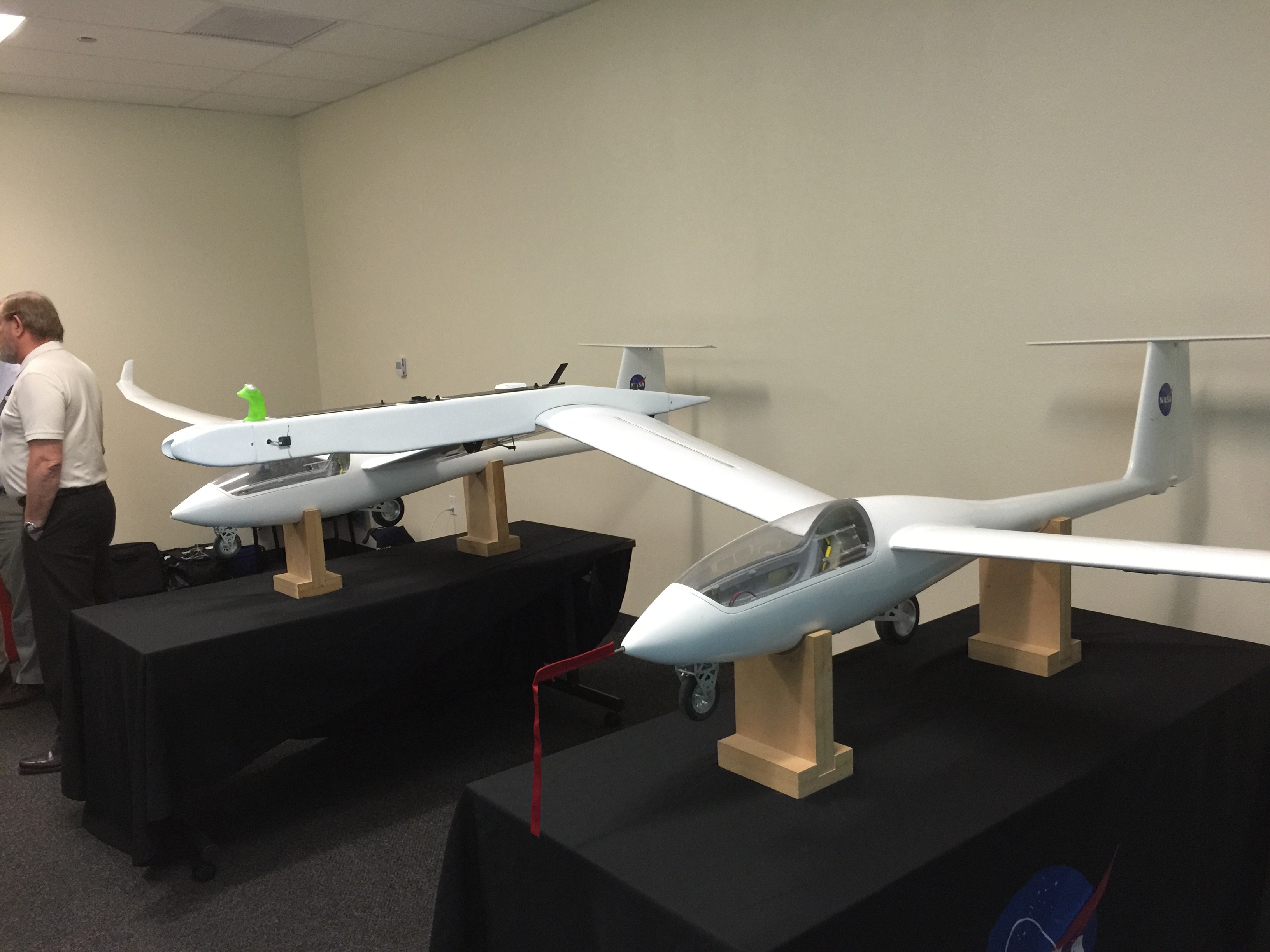
This is the remote-controlled model for the Towed Glider Air-Launch System being developed at NASA Armstrong. The concept is similar to Virgin Galactic’s “White Knight” aircraft, except that it’s a remotely piloted glider instead of a jet with a pilot and co-pilot.

Doing it this way introduces (they believe) some serious economies into the system. By increasing the “carry efficiency” (ratio of cargo weight to carrier vehicle weight) they can take bigger payloads (rockets). By being a glider, they can reduce the development and operational costs — all the expensive stuff (engines, life support, heavy airframe, fuel tanks) is on the standard jet (such as a military cargo jet or even a commercial business jet) used for towing.

This model has flown already, being towed by a small drone. Next they’ll fly it up to 10,000 feet, then fly it with a small rocket, then test the releasing of the rocket, then test taking it up to 10,000 feet with the rocket attached, and finally taking it up to 10,000 feet with a rocket attached and dropping the rocket (which may or may not fire).

Right now there’s no launch capability that allows someone to put 100 pounds into LEO (Low Earth Orbit). About the smallest rocket available will put 1,000 pounds into orbit for about $50M. This could allow a 100 pound payload to get into orbit for $1M or even less. Once that capability is available, there are a lot of businesses and universities that would like to use it.

Furthermore, the idea should scale up. In theory, if you build a glider the size of a 747, you could tow a rocket big enough to carry a crewed vehicle to LEO, for small fraction of the $75M+ that the Russians are currently charging for a Soyuz seat.

IMG_3275 (small)

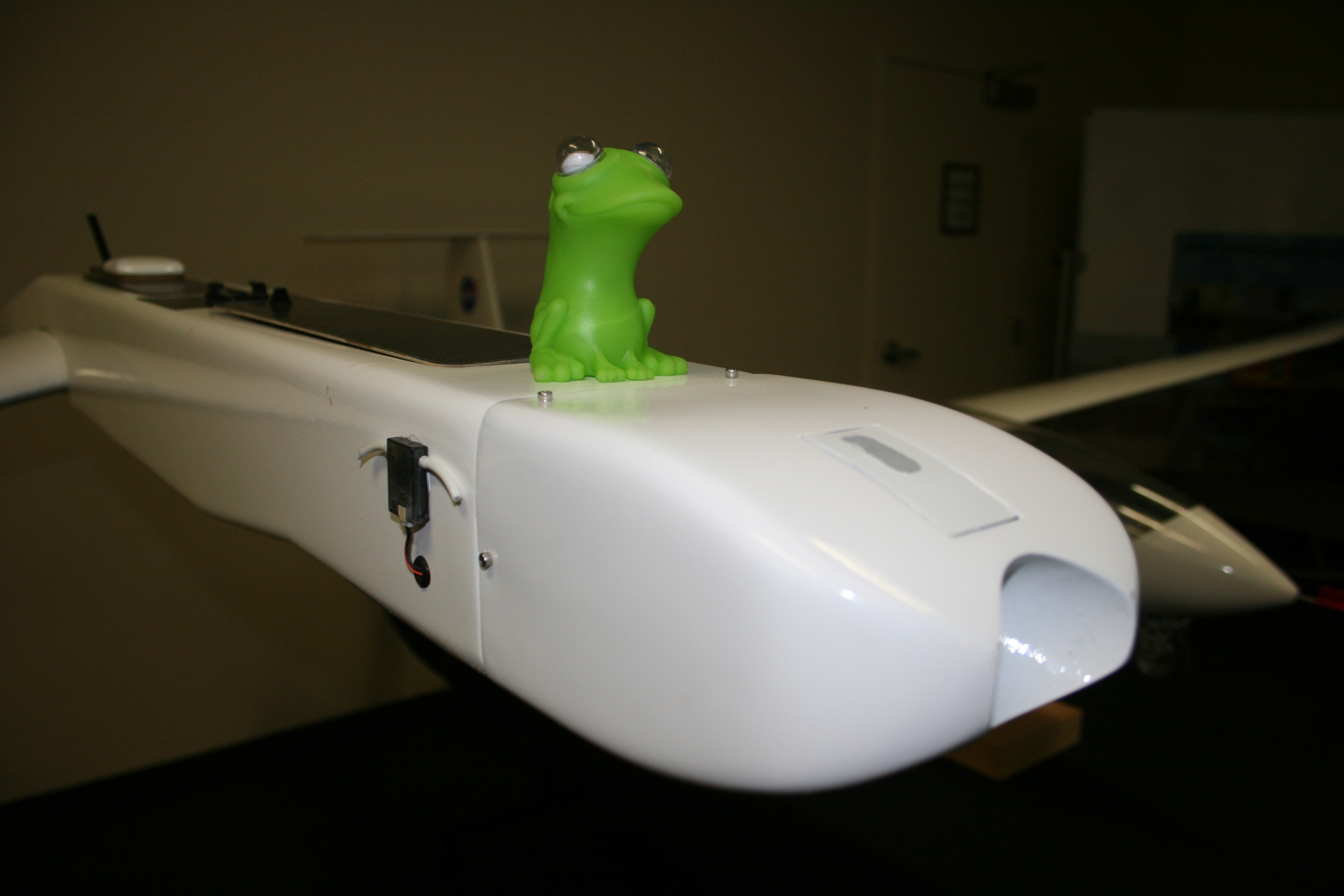
On the other hand, some folks are still confused about the difference between a “towed glider” and a “toad glider.”

2015-02-03 iPhone6 1936 (small)

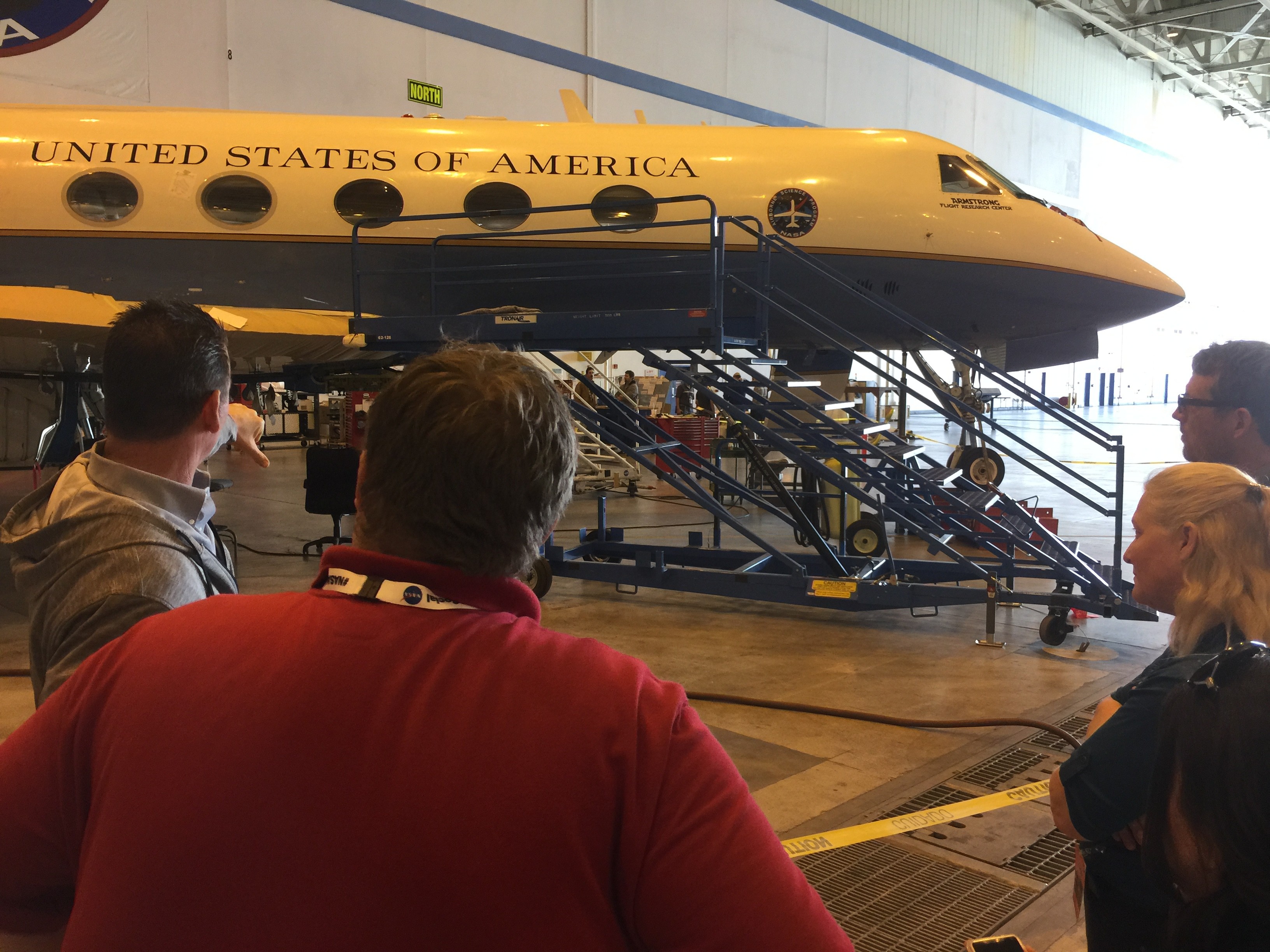
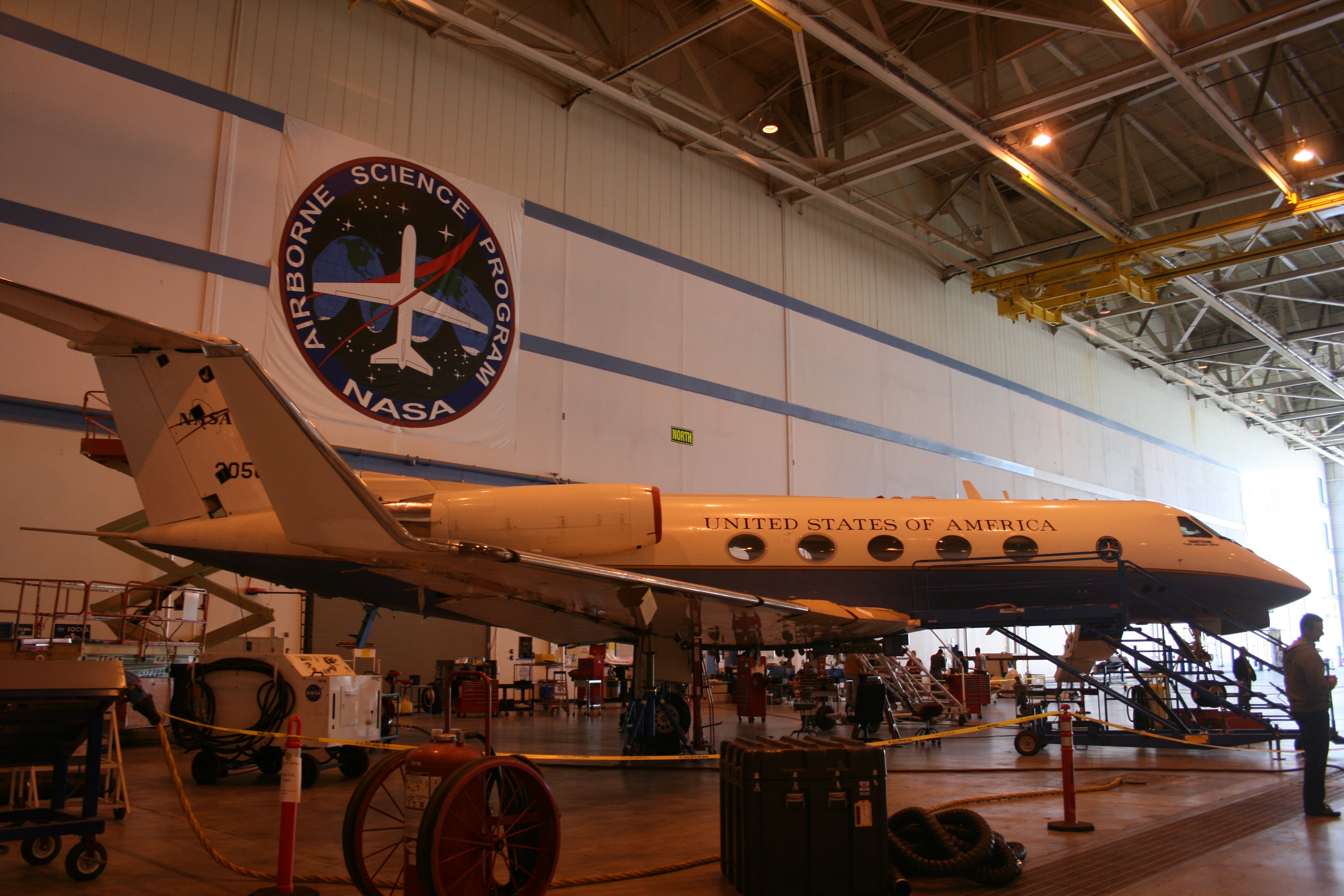
Back down in the hanger after lunch, John McGrath showed us the two C-20 UAVSAR aircraft, known to us civilians as Gulfstream III business jets, albeit heavily modified.

IMG_3347 (small)

The Airborne Science Program at NASA Edwards covers all of the aircraft-based scientific research being conducted. Out at the NASA Armstrong facilities on Edwards Air Force Base, the primary focus is on aeronautical research. (See my posts regarding the November NASA Social there.) In Palmdale, the aircraft are operated in order to provide a platform for researchers to gather the data they need.

IMG_3355 (small)

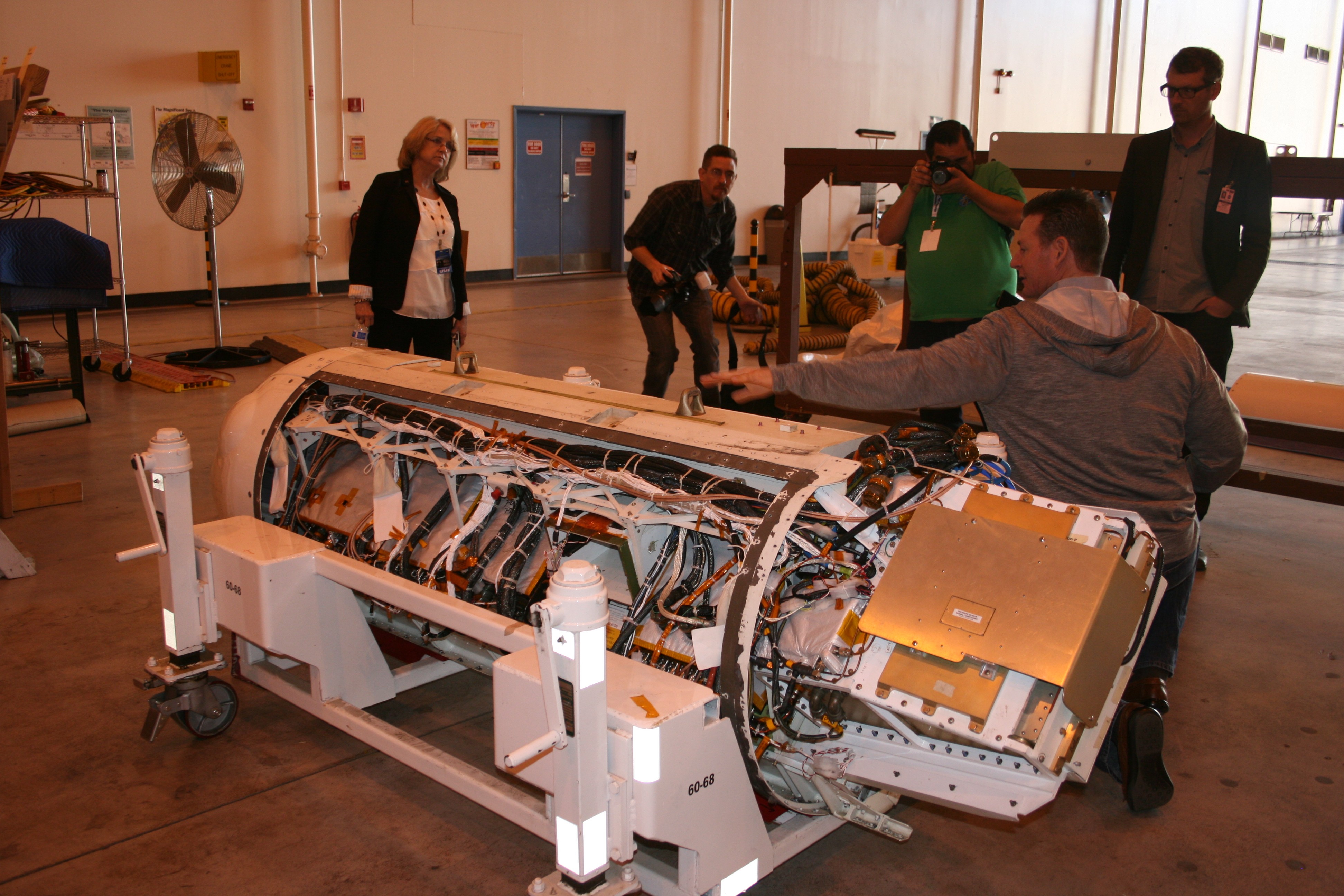
Here Mr. McGrath shows us one of the pods that gets mounted under the belly of the C-20. These pods are more or less “plug and play,” so researchers and outside institutions can fill one with their instruments and equipment, then “simply” get it attached to the C-20. I suspect that it’s a bit more complex than that, but the system has been substantially streamlined to make it much faster and easier than it would be if everyone did their own designs and each one started from scratch. In this case, the pod’s instruments had just undergone a major upgrade since the newer instruments were far more sensitive than the previous instruments.

IMG_3362 (small)

Here you can see how this C-20 is up off its gear and surrounded by equipment. Underneath the aircraft, in the center near where the short, orange ladder is, you can see where the pods get attached, with a couple dozen connecting wires dangling down.

IMG_3351 (small)

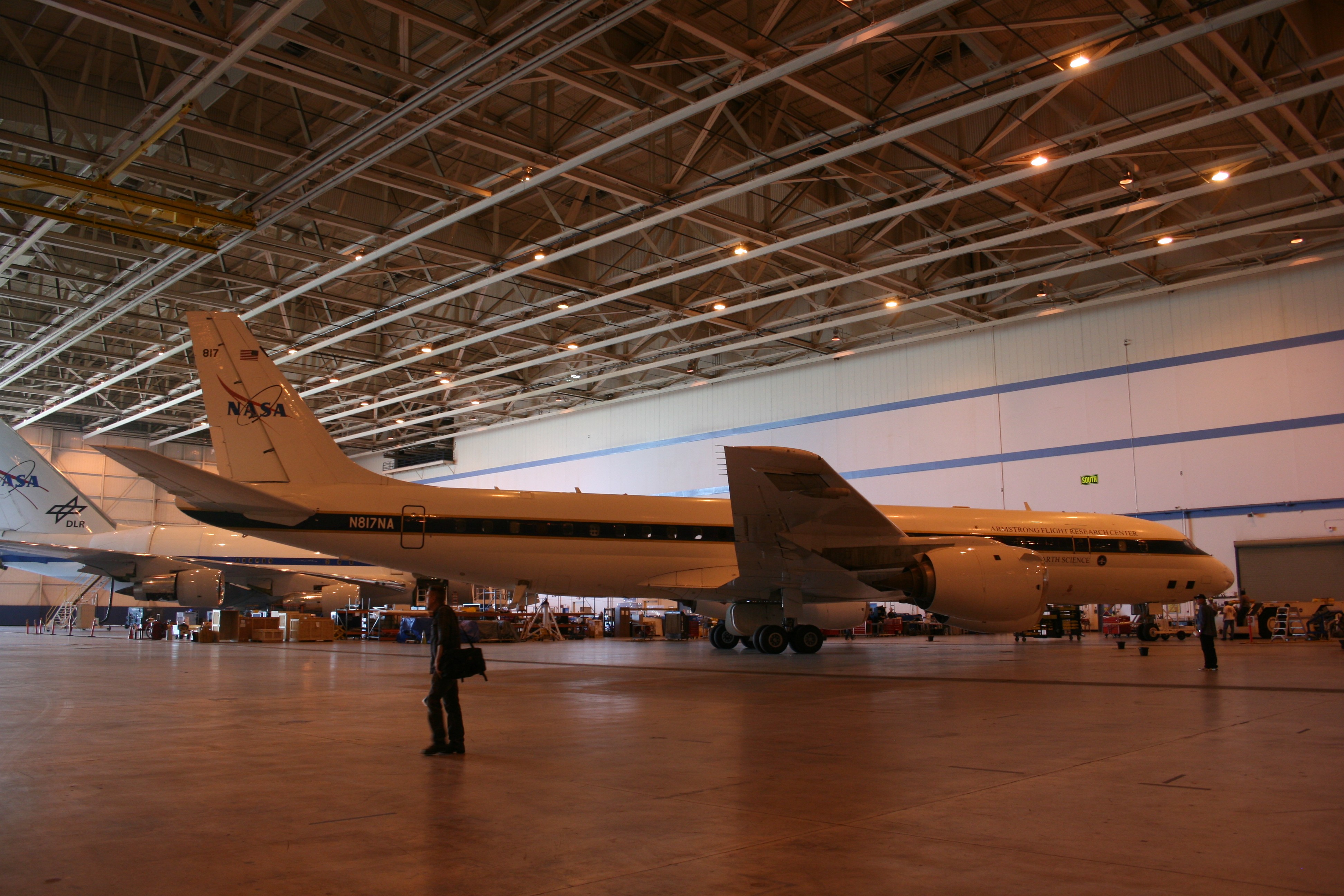
This is the NASA Edwards DC-8, known to us civilians as a DC-8. It also has many modifications, including ports that allow instruments, sensors, and cameras to stick outside the airframe. In addition, many of the stock windows have been replaced with perfectly clear, optically flat windows so that cameras can be used through them without distortion.

The DC-8 allows instruments and the scientists running them to get wherever they need to be. For example, in a couple of weeks the European Space Agency’s ATV-5 cargo spacecraft will be leaving the International Space Station and re-entering to burn up and be destroyed over the South Pacific Ocean. But rather than do a “normal” destructive re-entry, the ATV-5 is heavily instrumented and will re-enter at a shallow angle to the atmosphere. This simulates how satellites enter the atmosphere when they’re making unplanned re-entries, as well as how they ultimately intend to de-orbit the International Space Station.

The instrumentation on the ATV-5 will give the engineers data on how spacecraft break up and are destroyed. The DC-8 will be based out of Tahiti for a few days, and with the ATV-5 re-enters, all of the instruments and cameras onboard will be gathering outside data to complement the data being transmitted from inside the ATV-5 as it is destroyed. (Tahiti for a few days – tough gig!)

IMG_3370 (small)

Brian Hobbs showed us the ER-2 aircraft, which is a civilian version of the U-2 spy plane. It can get all the way up to 70,000 feet, flying in an environment that’s very similar to actual conditions in outer space. That allows instruments being designed for use on satellites to be tested before launch and modified as necessary. In addition, the ER-2 can fly over a ground location at the same time that an orbiting satellite is flying over, allowing the instruments on the ER-2 to get the data needed to calibrate the instruments on the satellite above.

Another application the ER-2 is excellent at is meteorological research, such as the study of hurricanes. If you have instruments at the surface, instruments at several elevations up in the hurricane on aircraft or drones (see the Global Hawk or Ikahana remotely-piloted vehicles in my November posts), the ER-2 lets you get an even higher set of data by flying over the top of the storm. Having this vertical set of data can tell researchers far more than a single set of data from one altitude.

2015-02-03 iPhone6 1965 (small)

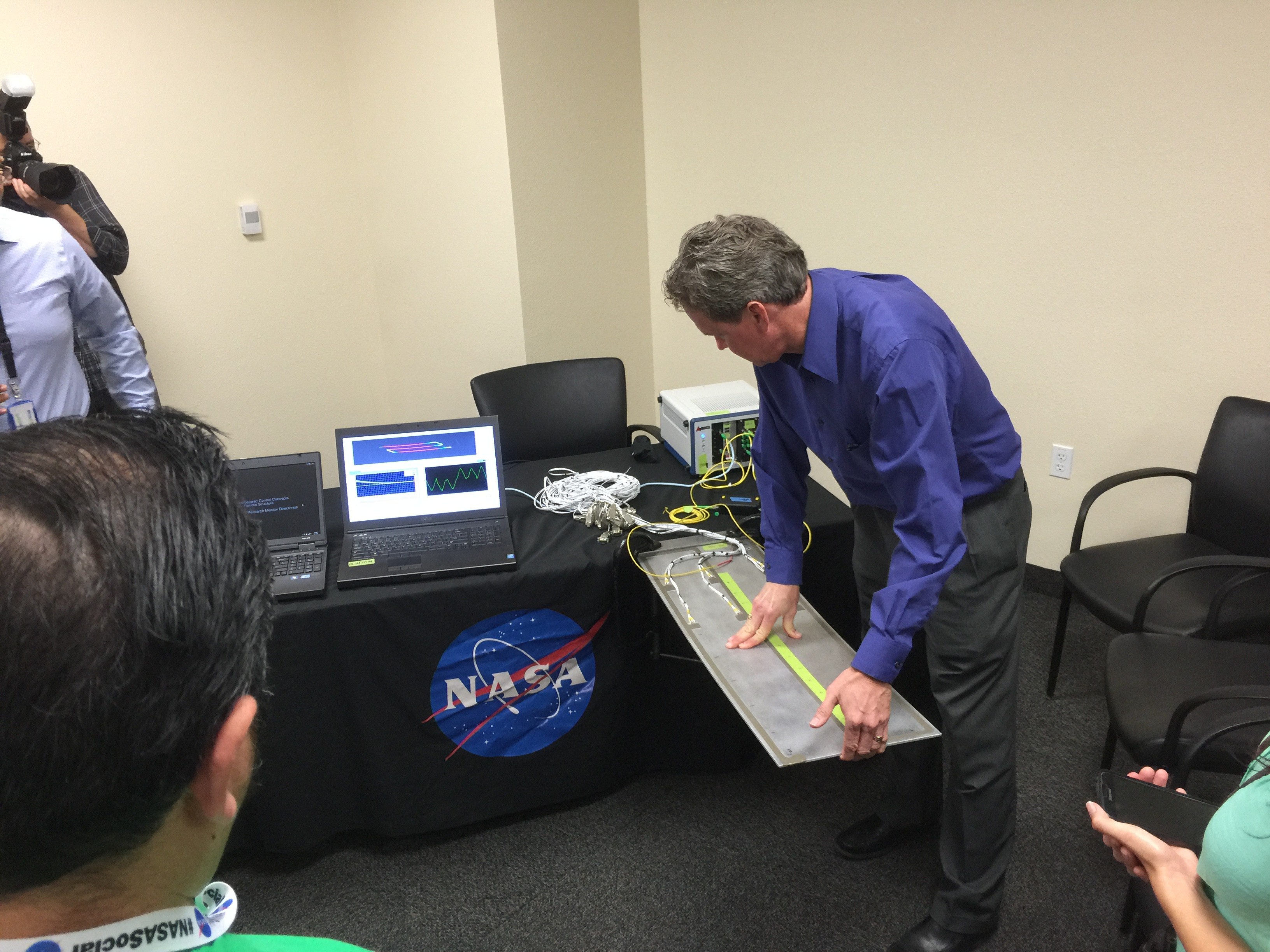
Back in the conference room we got a demonstration of a new technology in strain gauges. On this metal plate, you can see the yellow strip down the middle – it contains sixteen sensors, which connect to that huge bundle of white cables on the desk. This is the way things are done now. On the other hand, the plate also has a “W”-shaped string of fiber optic cable coming down the right side, going back up to the right of the yellow strip of sensors, then back down and back up on the left side. That hair-thin cable has 500 sensors in it, and it connects to the one, thin, yellow cable on the desk.

Obviously if you are building a new plane, ship, car, rocket, bridge, building, or whatever and you need data on the stresses being put on the structure, it’s a lot easier and lighter to have thousands and thousands of sensors on fiber optic cables instead of dozens of sensors using conventional equipment. In addition, where now the conventional sensors are used on the first few test aircraft of a new design and then stripped out due to their weight, the fiber optic sensors can be left in place forever, giving you continuous data over the life of the aircraft.

Other potential uses of this technology would be to embed it into new buildings or add it to existing structures such as bridges. Given the way our national highway infrastructure is starting to crumble, it would be really useful to have a relatively cheap, easy, and highly accurate way to know if the girders on a bridge are cracking and failing.


IMG_3379 (small)

This is John Kelly, the Principal Engineer on the Towed Glider Air-Launch System (discussed above). Some of the figures he gave us were impressive.

For example, the real world carry efficiency of Virgin Galactic’s WhiteKnightTwo is 0.71, which is pretty good – it carries 29,000 pounds with a 70,000 pound aircraft. The L-1011 Stargazer system from  Orbital only has a carry efficiency of 0.14, and the B-52 used by NASA to launch the X-43 test vehicle only has a carry efficiency of 0.17. But the models being tested have a carry efficiency of over 1.00 and they believe that the system eventually could have a carry efficiency as high as 2.00.

IMG_3384 (small)

Finally, Ron Young told us about the Flight Opportunities program that NASA Armstrong runs. In short, by using drones, balloons, and parabolic-flight aircraft (also known as a “Vomit Comet”), NASA Armstrong tried to assist businesses in getting their experiments and instruments into a “space-relevant environment.” They may not quite get you into LEO, but they can get you close or in a simulated environment. This allows you to test and refine your equipment before taking the big (and expensive) step of going to LEO.

For example, the Zero-G 3-D Printer that’s currently running experiments on the International Space Station was first tested on a parabolic-flight aircraft. Operating in twenty-second intervals of microgravity, the major bugs were worked out of the system before it went up to ISS, where it’s now working. In fact, you may have seen a picture of a small ratchet wrench that was printed on ISS just before Christmas. Mr. Young had an identical wrench that was printed on the ground for us to examine and play with – amazingly light, and it’s astonishing that it was printed in one piece, not several pieces and then assembled. This could really be the next big thing in allowing crewed spaceflight into deep space.

And there you have it! A full day of information and some incredible hands-on experiences with the people and the equipment that are doing science and pushing the boundaries of aeronautics and space flight. The NASA Armstrong staff did a wonderful job of taking care of us and I can’t wait for another chance to go back for another NASA Social in the future.

Leave a comment

Filed under Astronomy, Flying, Photography, Space

NASA Social At NASA Armstrong (Palmdale – Part One)

For my third NASA Social, I was part of the national “all hands on deck” event for the “State Of NASA” speech by NASA Administrator Charlie Bolden. There were simultaneous events at ten NASA centers around the country. I went back to NASA Armstrong (posts for previous NASA Armstrong events here, here, here, here, here, here, and here), but this time instead of being at Edwards Air Force Base we were at their satellite facility at Palmdale Airport.

All of the NASA centers were connected for Administrator Bolden’s speech, while each of the ten NASA centers then had presentations which highlighted some of their specialties. For example, at NASA Stennis in Mississippi, they showed off their facilities for testing rocket engines. At NASA Johnson in Houston, they highlighted the International Space Station mock-ups and training facilities. Locally here, at NASA JPL the attendees learned about the various “icy bodies” spacecraft, including Dawn which is approaching Ceres, and New Horizons which will fly by Pluto later this year.
2015-02-03 iPhone6 1855 (small)

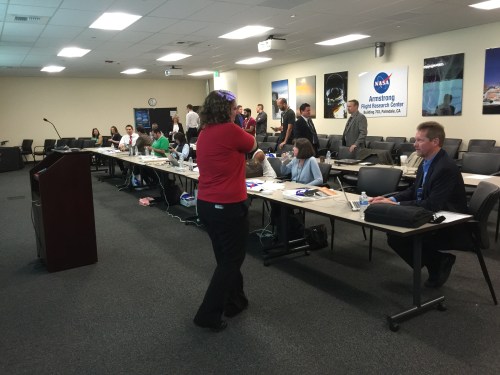
At NASA Armstrong, first of all it was great to see friends that I’ve made at previous NASA Socials. Running the NASA Socials at NASA Armstrong are Kate Squires (in red) and Kevin Rohrer (on right, talking to Kate). They did a fantastic job!

Being on the west coast, we were three hours behind all of the east coast Socials. We had a few introductory comments, all got attached to the wi-fi and started charging our mobile devices (there is no such thing as too many charging opportunities at a NASA Social), introduced ourselves, then watched Administrator Bolden’s speech from Florida.

IMG_3272 (small)

Following the national speech, NASA Armstrong Director David McBride gave us a review of the budget data specific to what’s happening at NASA Armstrong. If you’re interested, you can download a PDF of his slides here.

The rest of the day was full of a whole slew of presentations and tours to see flying hardware up close and personal. In picking and preparing pictures for this article I see that there are too many for one post, so I’ll post the second part on Friday. (Tomorrow and Thursday are already committed to other posts.)

In addition, I’ll remind everyone again that I was Tweeting like crazy (my thumbs were on fire!) with even more pictures, wisdom, and insight delivered in 140 characters or less. You can either see that over in the sidebar on the right (if you’re on a desktop browser) or you can find me on Twitter as “@momdude56”.

Today, I’ll talk about the unquestioned star of the show — SOFIA, the Stratospheric Observatory For Infrared Astronomy.
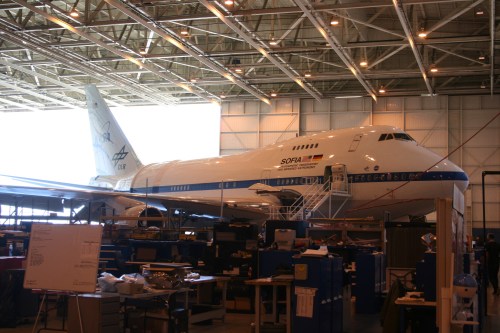
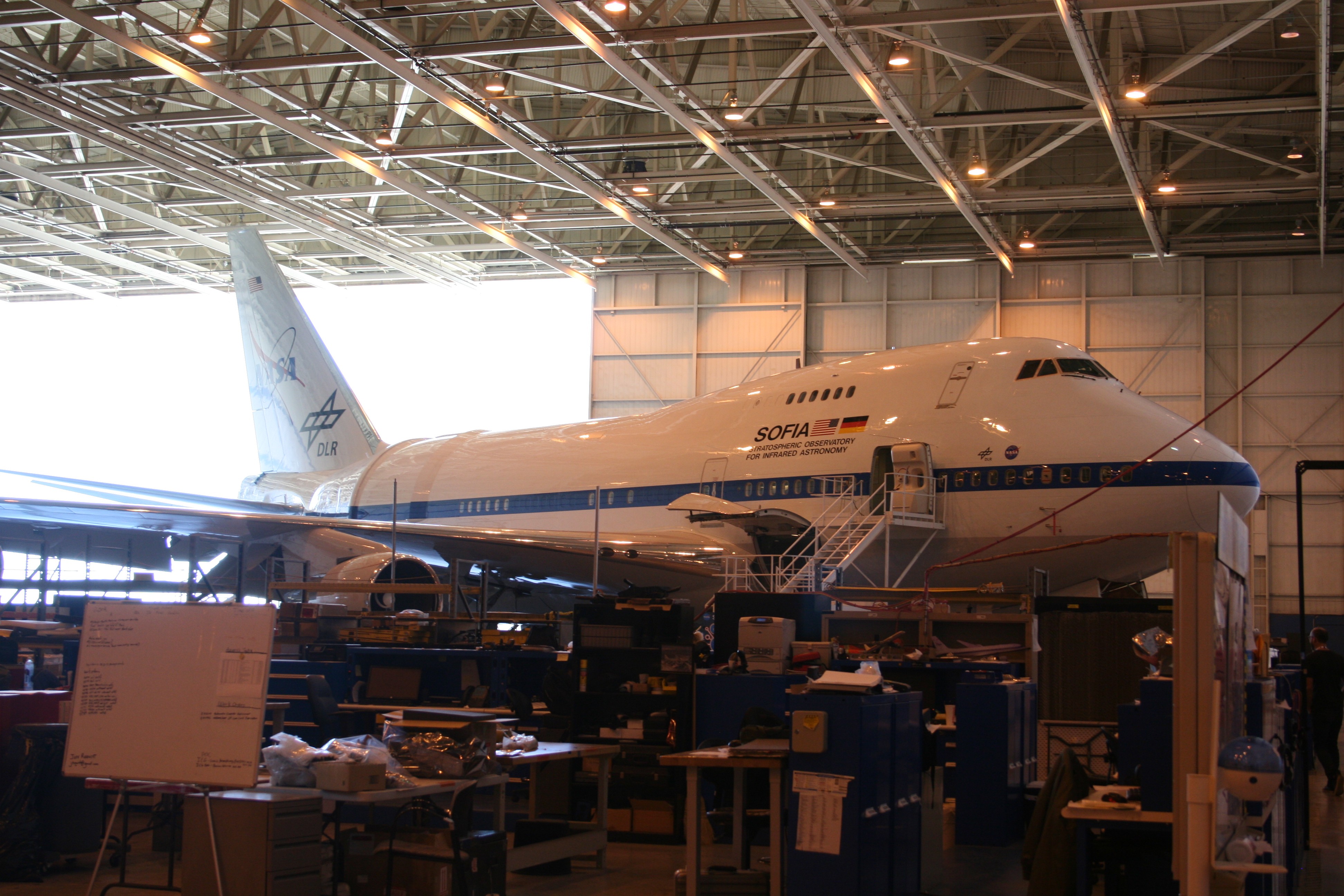
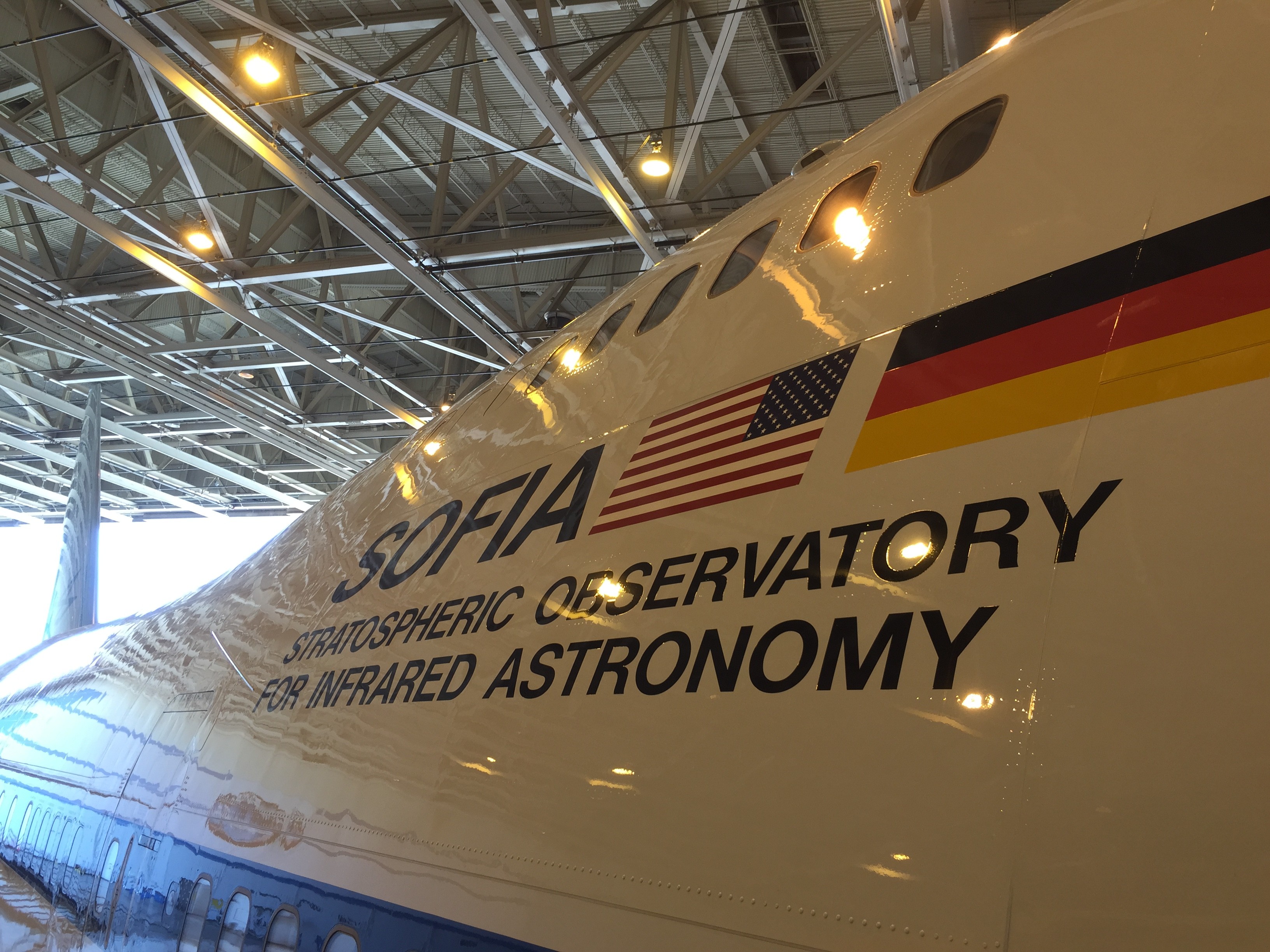
IMG_3283 (small)There she is! A heavily modified 747-SP, operated in cooperation with the German Aerospace Center (DLR – Deutsches Zentrum für Luft- und Raumfahrt). In fact, she just got back to the US and resumed astronomical observations in the last month or so after an extensive period of maintenance and upgrades performed in Germany.

The concept is simple on paper. You can see many different things in astronomy by looking at the sky in different wavelengths than visible light. Radio telescopes, X-ray telescopes, gamma ray telescopes, infrared telescopes — they all see a different sky by looking in different parts of the electromagnetic spectrum. Combining all of those different views lets us know far more about the universe than by simply looking in the visible spectrum, which is a tiny portion of the entire spectrum.

The problem with infrared astronomy (and others listed) is that some types of light are absorbed by our atmosphere. The light we’re looking for simply doesn’t make it to the ground. In the case of infrared radiation, it’s absorbed by the water vapor in the atmosphere.

If you could get above that water vapor, you could see the infrared radiation. Outer space is ideal since it’s above 100% of the water vapor, but it’s hard to get there, expensive, and once you’re there you can’t fix or upgrade things. But what if you could get above 99% of the water vapor? Say, by flying at 40,000 feet or so. Then you could also upgrade and change and repair things as needed every time the plane lands.
IMG_3300 (small)

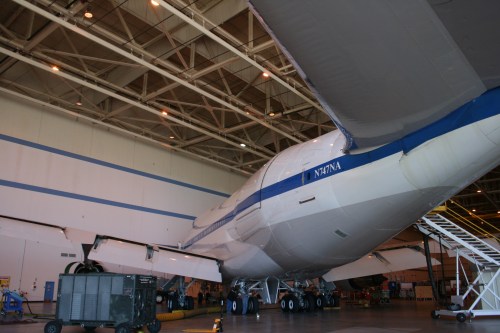
Thus was SOFIA born. See that bulge in the body just ahead of the aircraft tail? That bulge contains a huge roll-up door that can open when the plane’s flying at altitude. Why would any sane person want to open a huge door in the side of a 747 at 40,000 feet? In order to expose the 2.5 meter, 19-ton high-precision infrared telescope that’s sitting in there, of course!

2015-02-03 iPhone6 1889 (small)

Here we’re getting a rundown on how SOFIA was modified. (I’m sorry, I didn’t catch the name of our presenter – perhaps Kate Squires will read this and drop the information into the comments? Hi, Kate!)

One of the critical side effects of opening a gaping hole in the side of an airplane at 40,000 feet is that anyone inside would be sucked out to a horrible, terrifying fall to their death. Scientists and engineers (as well as OSHA and NASA) frown upon such situations, so just forward of the telescope is a pressure bulkhead, allowing everyone on board to comfortably (and safely) run the telescope and collect their data.
2015-02-03 iPhone6 1915 (small)

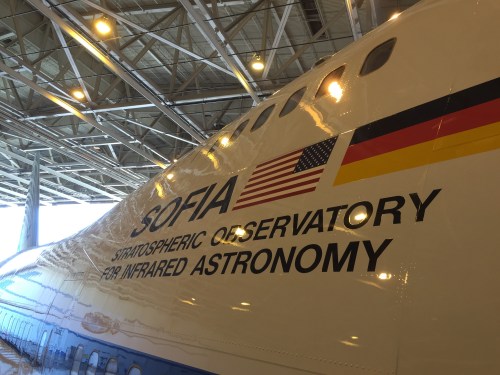
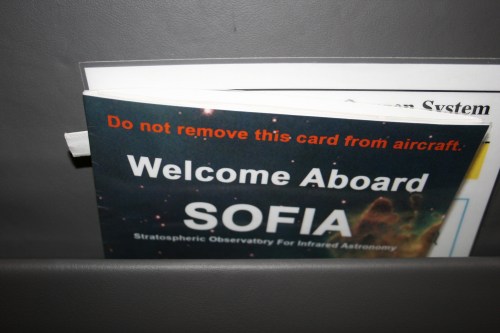
Then we got to not just ogle SOFIA from the outside, but to go inside and see how she works in detail.
IMG_3326 (small)

While the seats are comfy, first-class sized seats (the typical size of the crew for a flight is only forty or so), there’s no in-flight entertainment other than what you bring yourself. Despite my enthusiasm for the idea of flying in SOFIA, I’m told that the technicians, engineers, and scientists are busy gathering data, it’s night, it’s a long flight (typically most of the night), and if you’re not doing something, it can be pretty boring. (I would love to have the chance to judge that for myself!)

IMG_3327 (small)

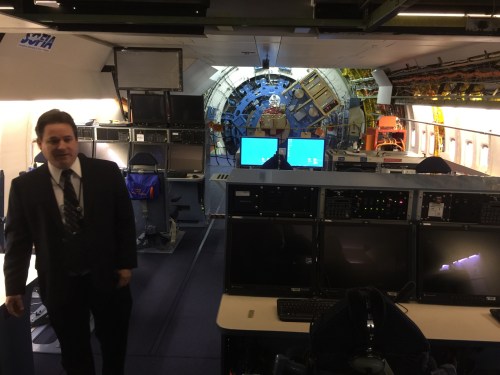
Up front, the passengers share space with banks of computers and data collection hardware. A good night of observing can generate many terabytes of data.
2015-02-03 iPhone6 1896 (small)

In back, you get all of the consoles that control the telescope once SOFIA’s on station and at altitude.

You might ask yourself (correctly) how you can keep a telescope pointed accurately at a star while in a plane. We’ve all been in planes, and even on a calm flight there’s a bit of rocking and rolling, minor turbulence, bumps and jiggles. Yet SOFIA is accurate to one-half of an arc-second. (That’s the size of a nickle seen at a distance of five miles.) How can that be?

Well, the telescope optics, despite weighing 19 tons, float freely, independent of the plane. They float on a bed of oil and then there are servos and motors that detect the motion of the plane and instantly move the telescope in the opposite direction. The plane bounces around as it flies, but the telescope stays locked on its target like a laser.

The result of this (I’m told) is that the telescope is a wonder to watch when you’re flying. To you, bouncing along with the plane, it looks like the telescope is twitching and shaking constantly. But that’s relative. In reality, you’re twitching and shaking, the telescope is rock solid in staring at its target.
2015-02-03 iPhone6 1907 (small)

So what does this wonder look like? Like a dream!

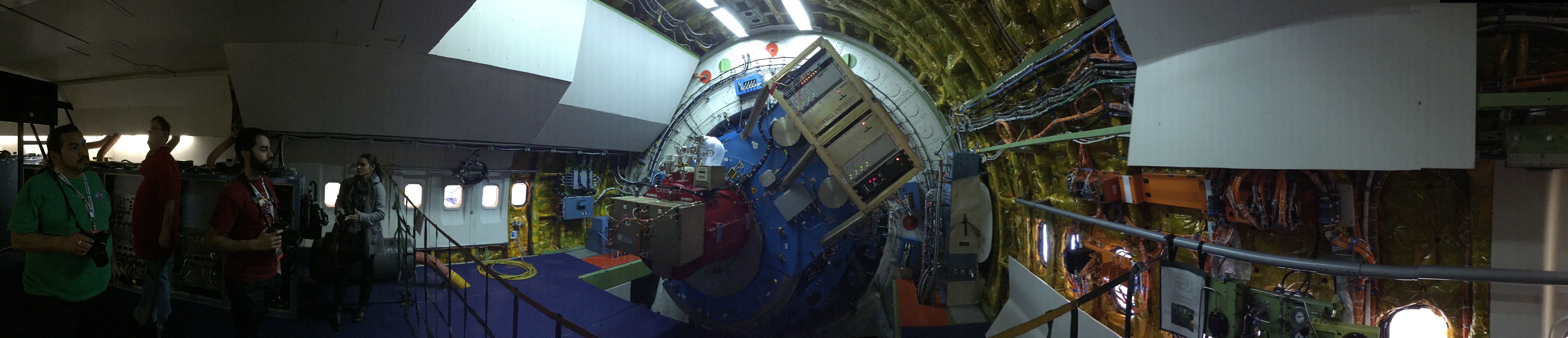
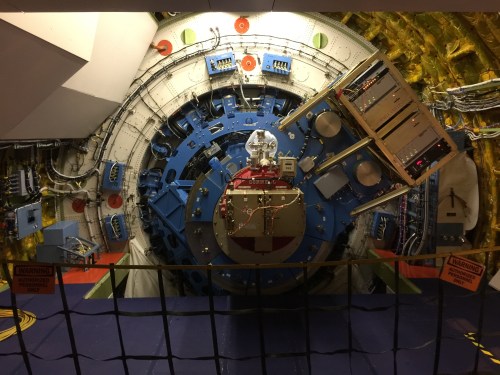
Here you can see the pressure bulkhead, with the back end of the telescope (the blue part) sticking out into the cabin. On the other side, the one-hundred inch diameter mirror (okay, 2.5 meters) is in its framework, with a series of mirrors that take the light gathered and send it into the centerline of back end here.

2015-02-03 iPhone6 1902 (small)

Up close, you can see several instruments being run by Cornell University attached. There are six different instruments that can be attached, with dozens of combinations.

In addition, around the rim you can see blue plates that are bolted on. These balance the telescope and are changed as instruments are changed. When balanced, despite weighing 19 tons, the telescope can easily be moved by hand.


So, yeah, you may have noticed that I thought that seeing SOFIA was pretty great. (That would be completely accurate.)

But wait, there’s more! On Friday I’ll have more pictures and information on seven other programs we heard about, some of which have the potential to be even more spectacular than SOFIA in ten to twenty years. Remember, “aeronautics” is “The First A In NASA,” and that’s what NASA Armstrong does.

Leave a comment

Filed under Astronomy, Flying, Photography, Space, Writing

Panorama: SOFIA

What a great day at my third NASA Social!

What a long day that leaves me wanting to flop face-down into my keyboard!

Tomorrow you will no doubt be inundated with me sharing what I learned at NASA Armstrong today. If you want a preview, there’s a list of my tweets & pictures from the day in the sidebar on the right-hand side of the screen. (If you’re reading this on the website using a desktop computer and not in an email or on a mobile device. It’s complicated.)

In the meantime, I have I mentioned how much I like the “panorama” function on the iPhone 6 and how it’s fast and easy and the pictures can be shared and emailed immediately, a fair trad off for the fact that they’re slightly less robust than panoramas stitched together from a series of megapixel DSLR photos? (Why, yes! Yes, I have!)

This is the interior of SOFIA, the Stratospheric Observatory For Infrared Astronomy. So, so, so, so über cool!

IMG_7133

Tomorrow, much, much more!

1 Comment

Filed under Astronomy, Flying, Panorama, Photography, Space

NASA Social Follow-Up (For Dec 03 2014)

Summary:

  1. I’m going to my third NASA Social, tomorrow, February 2nd (I’m really looking forward to it, it’s a big deal for me).
  2. Last November I spent two days at NASA Armstrong (here and here) for my first NASA Social.
  3. In December at JPL, I had the privilege of attend my second NASA Social.
  4. The posts accompanying those events had lots of my Tweets and cell phone pictures, but the better quality pictures were promised for “later.” Now it’s later!
  5. Friday I posted the DSLR hi-res pictures from November 18th, the first day at NASA Armstrong, and yesterday I posted the November 19th pictures from NASA Armstrong.
  6. Tonight, the hi-res pictures from the December 3rd NASA Social at JPL for the first Orion launch (which actually didn’t get off until December 5th). As I did yesterday, I’ll try not to repeat too much of the material already in the original post.

IMG_2695 (small)

The talks we saw were held in Von Karman Auditorium. This is a neat place to be, in that there have been many, many historic press conferences held here as JPL sent spacecraft past Jupiter, Saturn, Uranus, Neptune, Venus, Mercury, landed on Mars, landed on Titan, landed on Mars again and again and again and again…

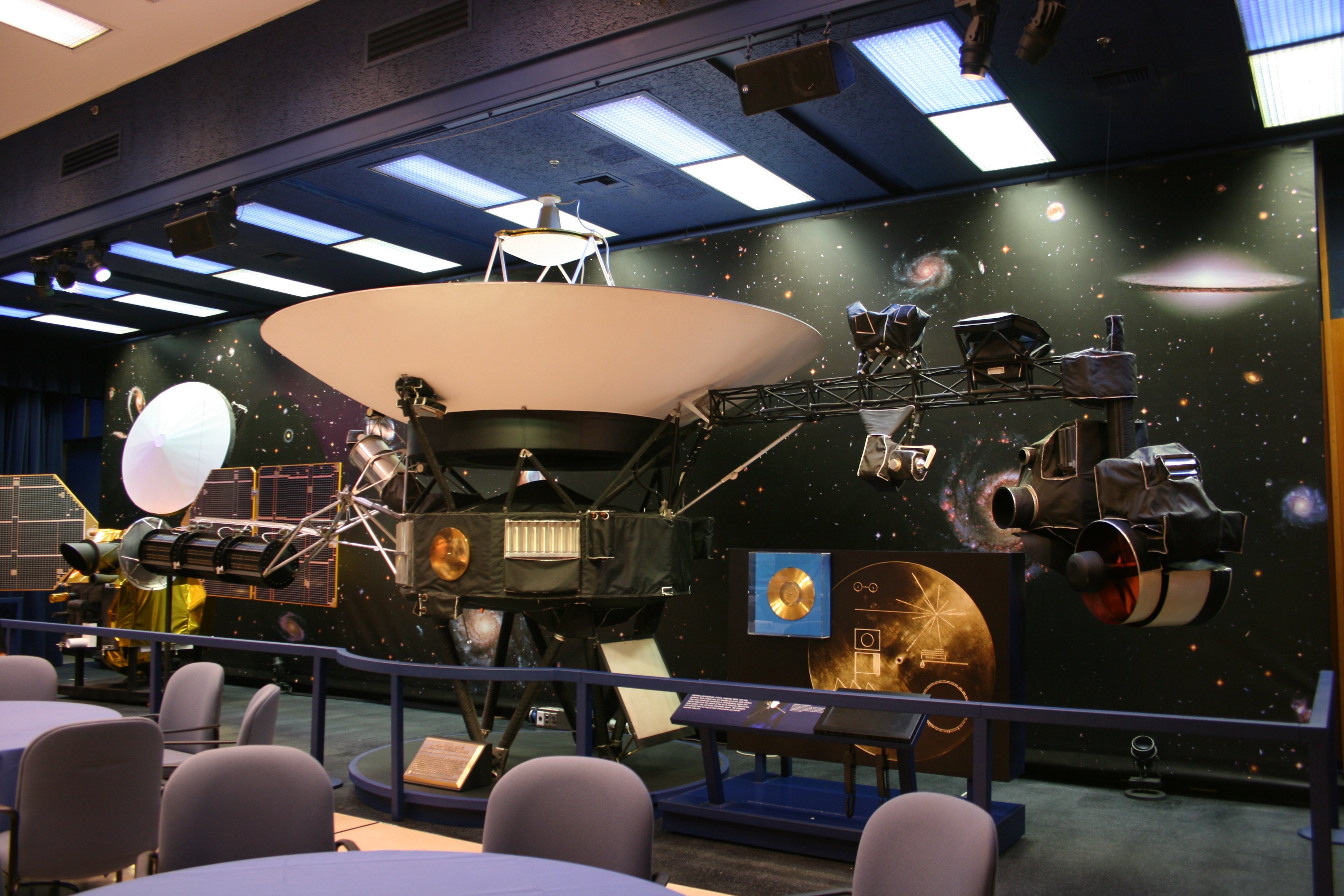
This is a full-sized model of the Voyager spacecraft, both of which have now left the solar system and are the first artifacts created by humans to enter interstellar space.

IMG_2699 (small)

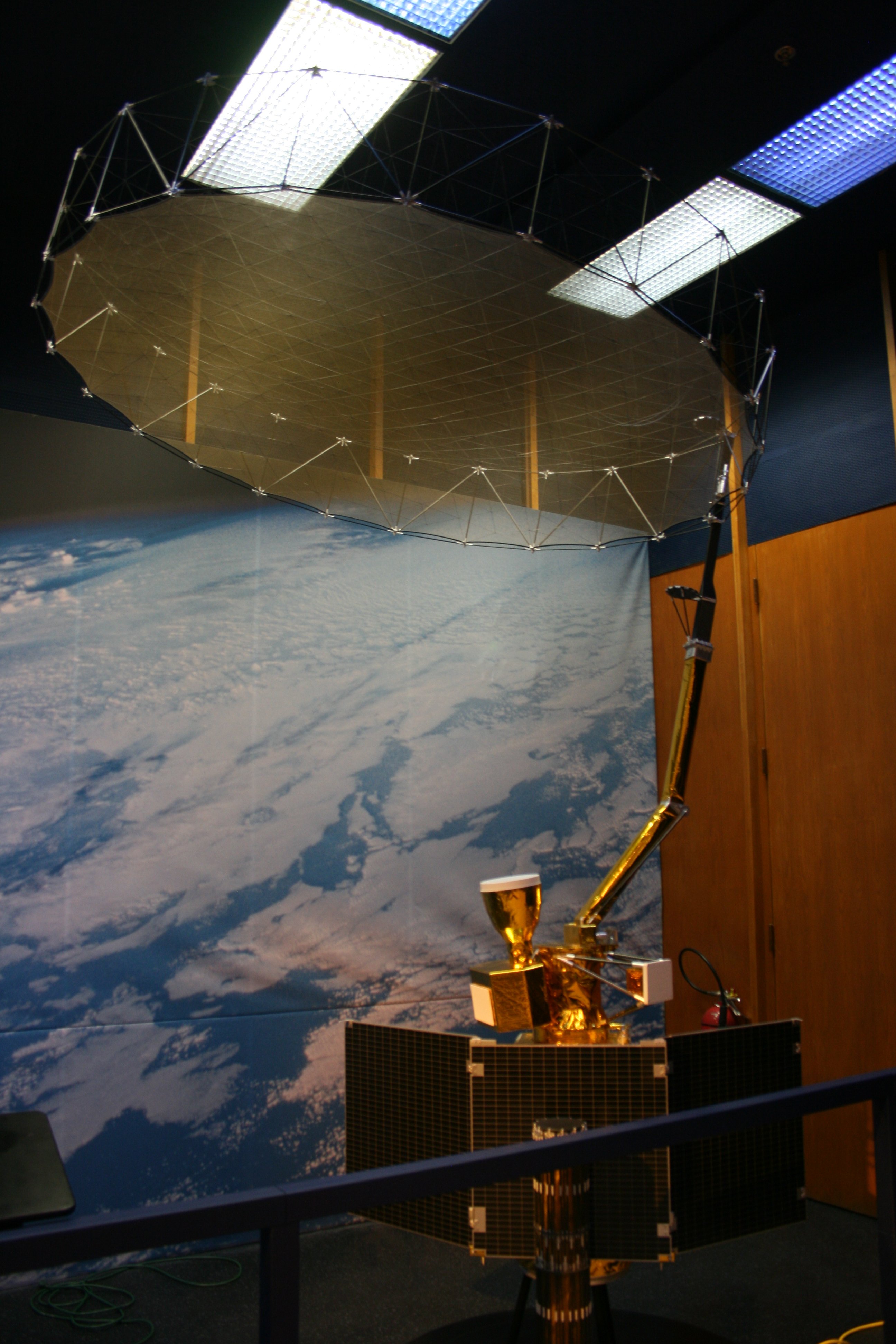
This is a (half?) scale model of the SMAP (Soil Moisture Active/Passive) spacecraft that launched earlier this week from Vandenburg Air Force Base in central California. The antenna on top launches in a folded up configuration (the model of the folded antenna is the tube on the floor in front of the middle solar panel) and then opens up after reaching orbit. SMAP will be used to get global readings on whether the soil is frozen or thawed (critical data relating to methane release from the Arctic regions as the area warms) and to measure how much moisture is in the soil (critical to improving long-term weather forecasts).

IMG_2705 (small)

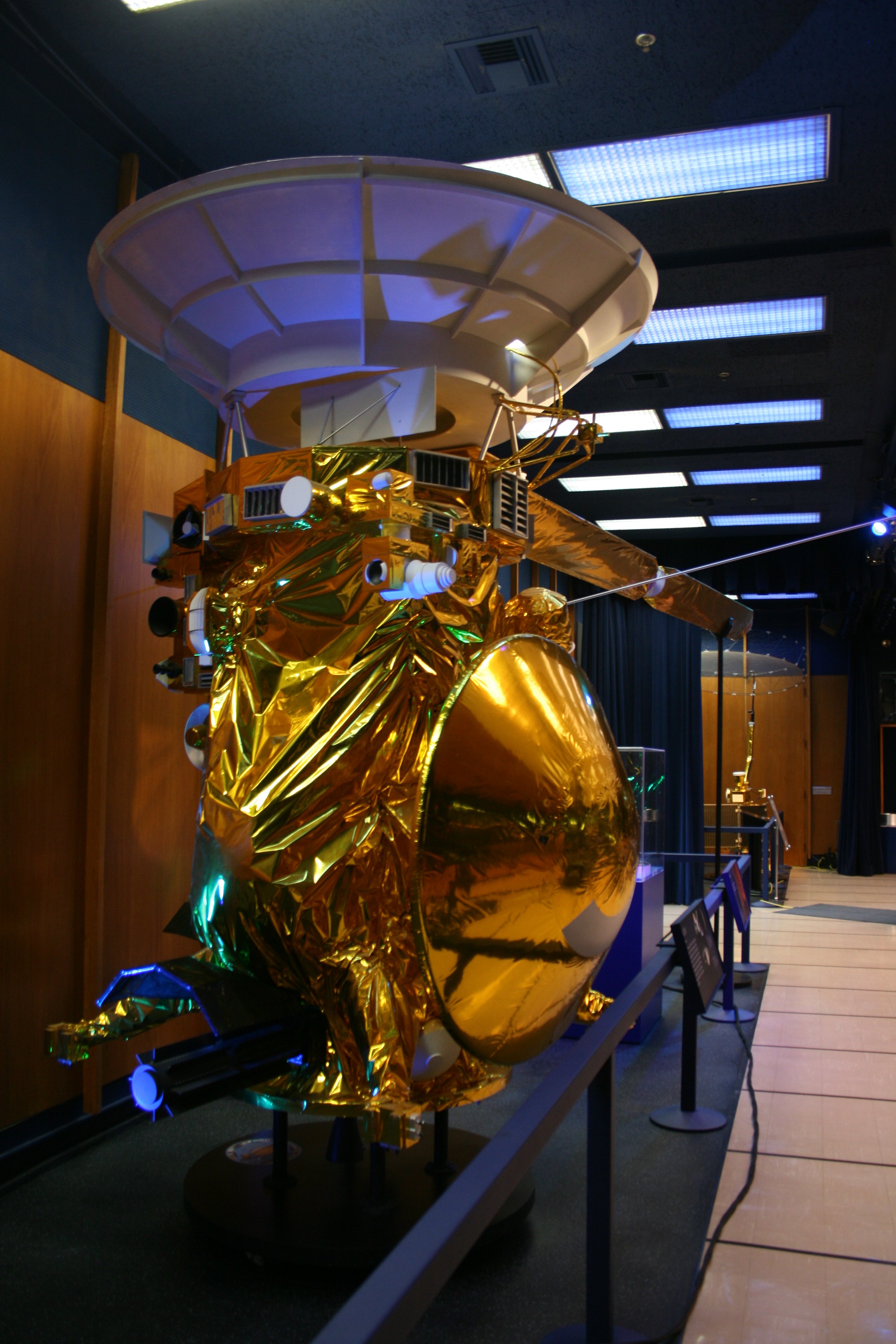
On the other side of Von Karman Auditorium is a half-scale model of the Cassini spacecraft, with the shield-like Huygens probe attached. Cassini has been orbiting Saturn and returning a massive number of pictures for over ten years, while Huygens was dropped into the atmosphere of Titan, Saturn’s largest moon, where it parachuted down and landed, sending pictures and data from the surface. (That landing video, as well as this one, are spectacular!)

IMG_2711 (small)

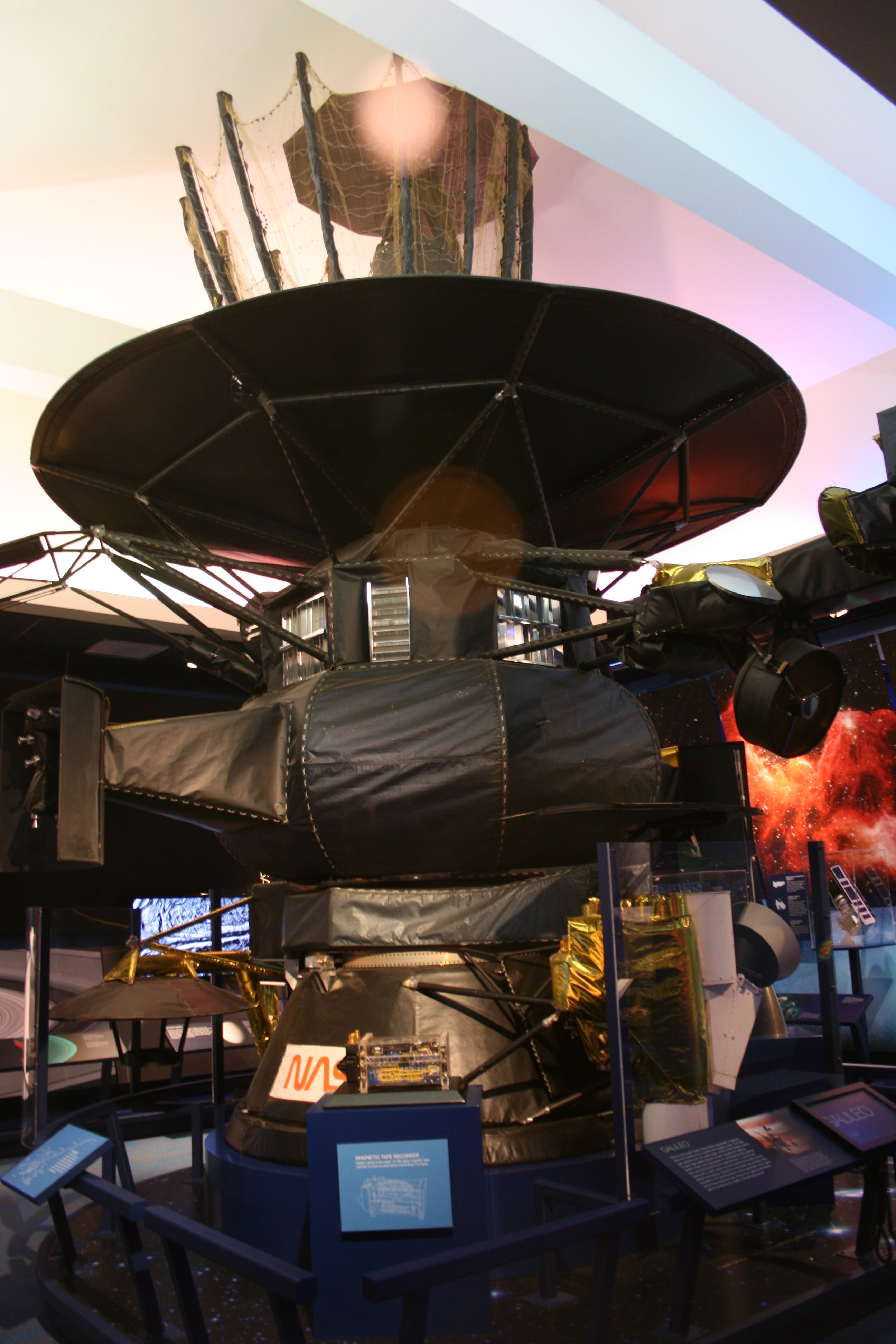
In the JPL visitor’s center next to Von Karman Auditorium are many other spacecraft models, pictures, and information on JPL planetary exploration missions over the past fifty years. This is a full-sized model of the Galileo spacecraft that was launched from the Space Shuttle toward Jupiter. The model is accurate to the point where it shows the primary antenna on top in the partially deployed condition that it got stuck in, seriously decreasing the rate at which data and pictures could be sent back to Earth. Despite that, all of our best knowledge to date about Jupiter and its moons come from Galileo and the work that the JPL engineers did to work around that antenna problem as best they could, performing minor miracles in the process.
IMG_2720 (small)

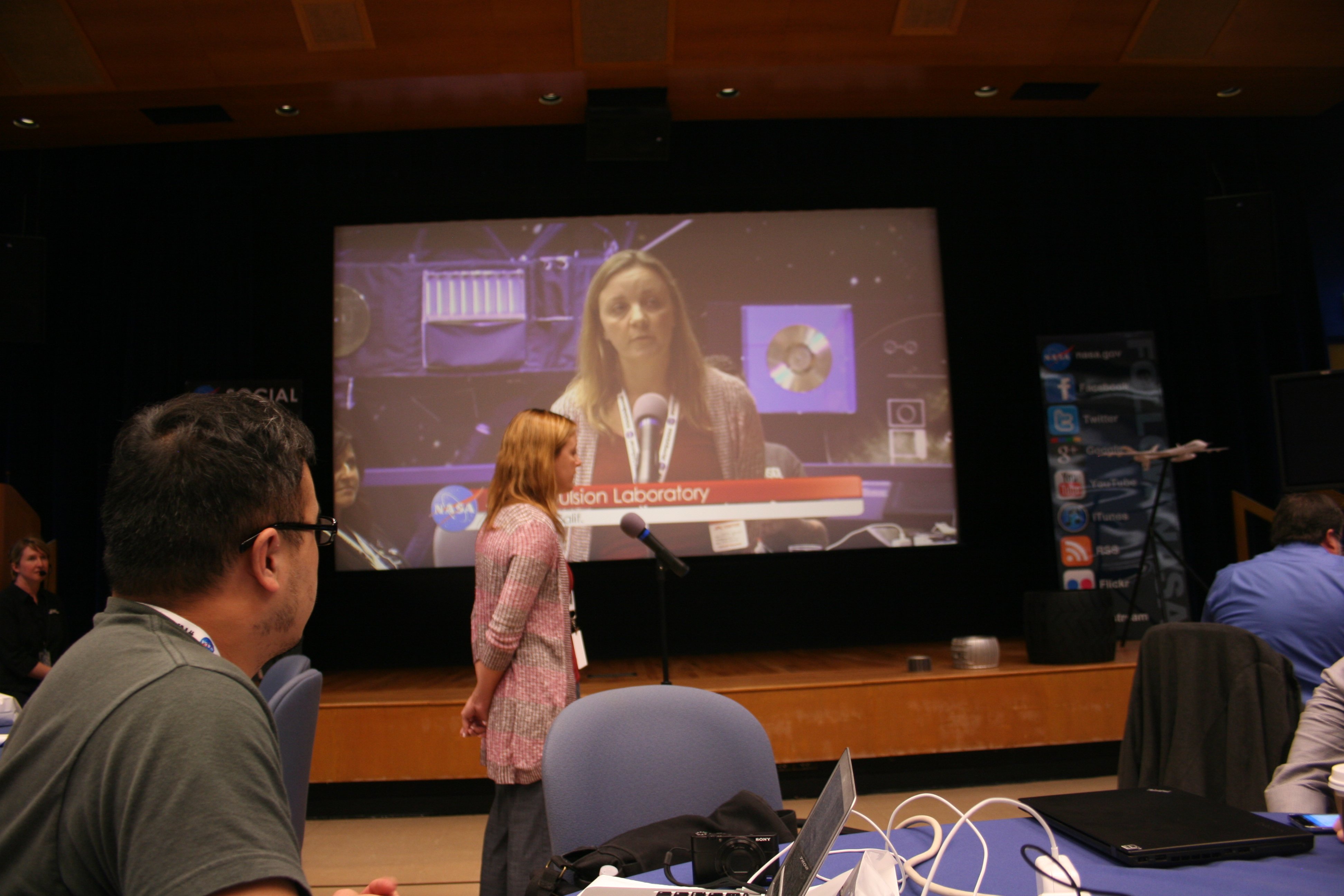
During the event there was a long session televised on NASA-TV, originating from Kennedy Space Center in Florida, but also taking questions from the other centers which were having simultaneous NASA Social events, such as JPL.

IMG_2723 (small)

An unexpected surprise was an impromptu talk by Rob Manning who is currently the Chief Engineer of the LDSD project at JPL (see below) and was formerly the Chief Engineer on the Mars Science Laboratory (aka, “Curiosity”) which successfully landed on Mars and has now been climbing Mt. Sharp there for over two years.

When it comes to putting spacecraft on other planets and successfully doing what was previously thought to be impossible, the engineers and scientists at JPL are truly giants in the field, and “rock stars” to us space geeks and nerds. Rob Manning is one of those rock stars and it was a real treat to get to talk to him.

IMG_2743 (small)

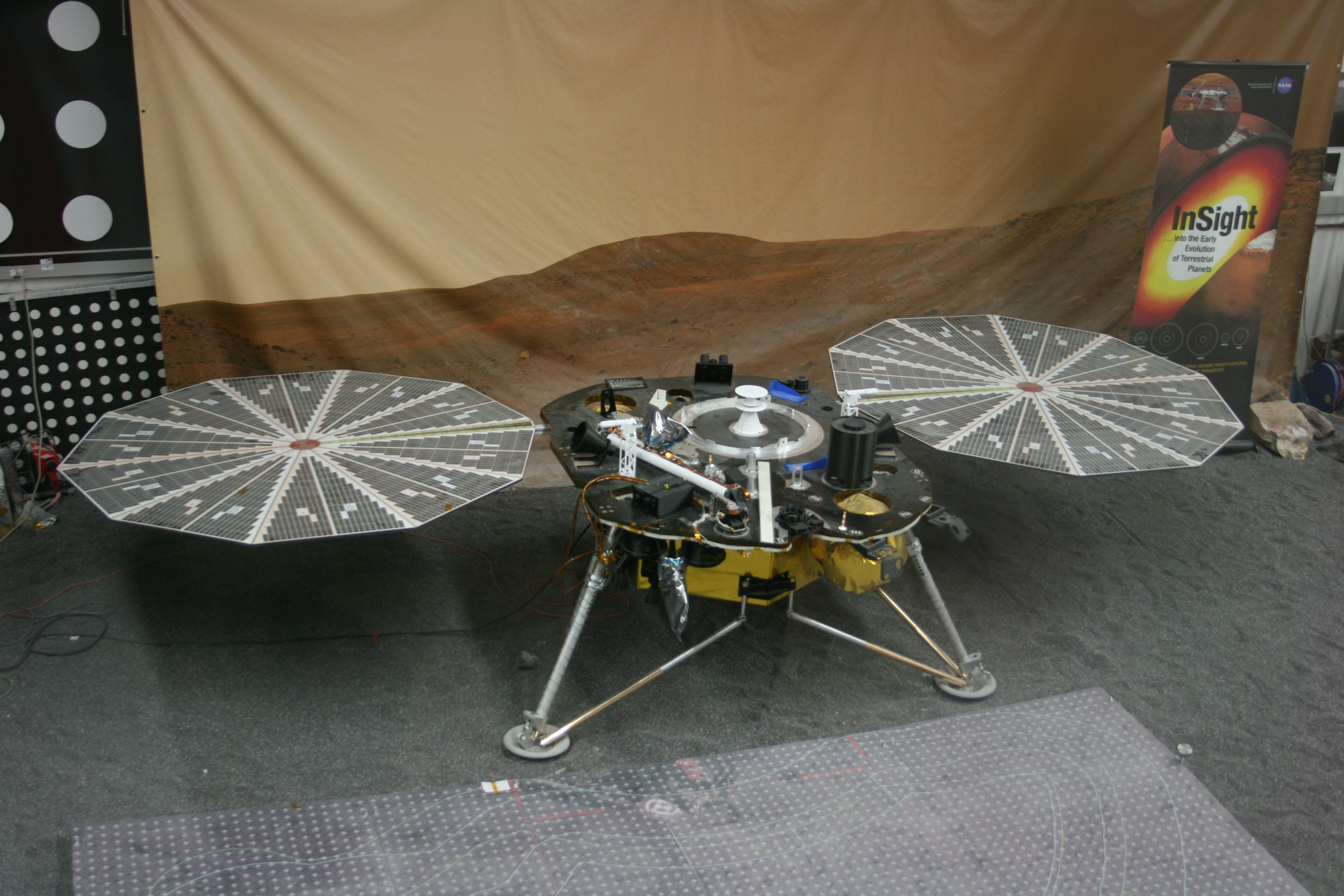
Once we got out of Von Karman (and into the rain) we saw several projects that are in the process of being built and tested. We got a talk by Deputy Project Manager Jennifer Trosper, another Mars rover exploration “rock star,” about both the current Mars Exploration Rovers (Spirit and Opportunity) and the Mars Science Laboratory (Curiosity). We also saw an engineering model of the InSight lander which will be launched in March 2016 to land on Mars and study the deep interior of Mars. A lander, not a rover, here you can see the grid laid out in front of the spacecraft as they test the arm to see where it can reach and to calibrate the mechanics of that motion.

IMG_2747 (small)

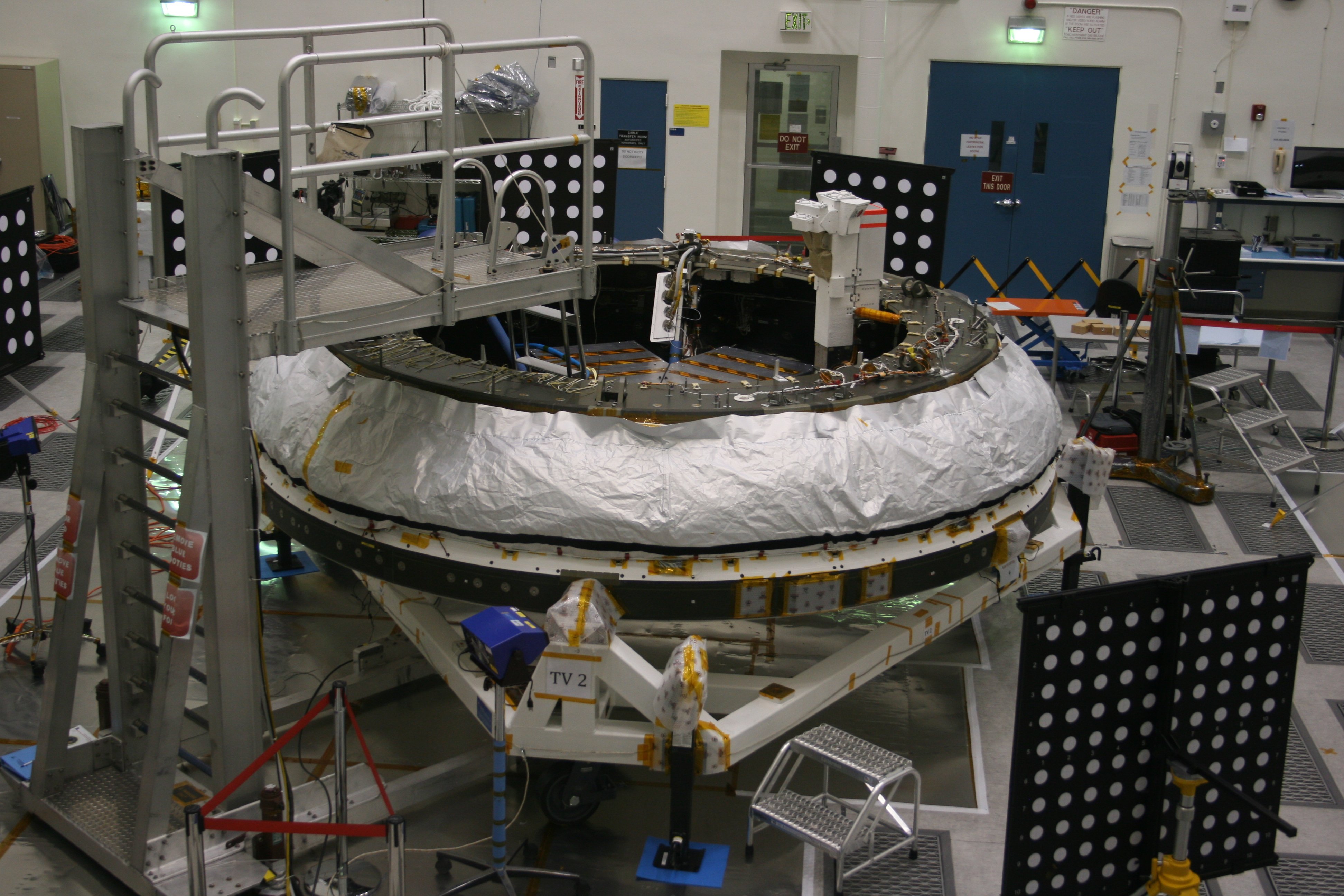
This is the next Low Density Supersonic Decelerator (LDSD) test vehicle which is being prepared for a launch and test later this year. Last year’s first LDSD test off the coast of Hawaii validated the concept and gathered vital data, but it also shredded the parachute immediately, which was highly unexpected. That’s okay, that’s how you learn in this business. If you’re not breaking things, you’re not trying hard enough.

IMG_2752 (small)

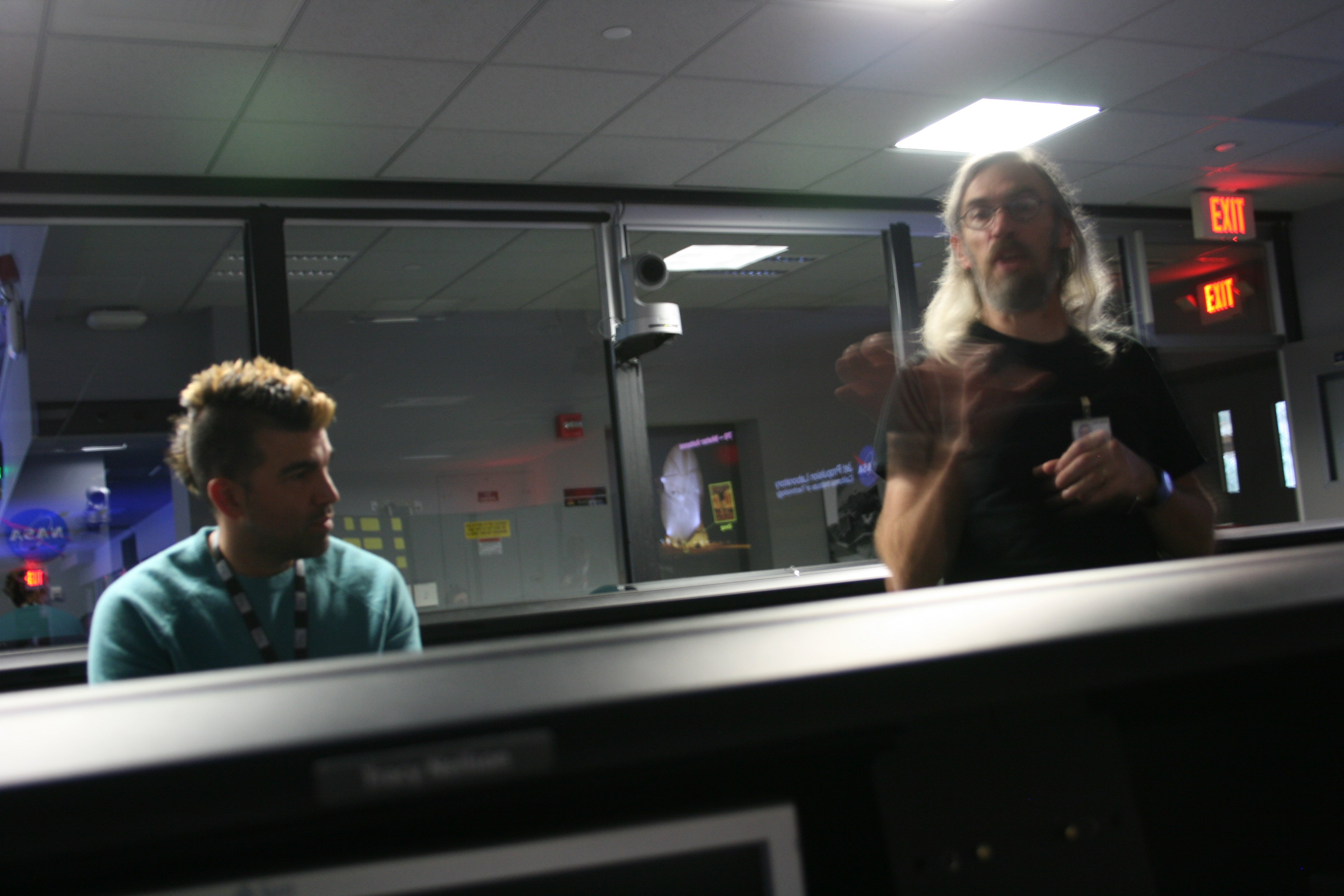
Finally, a completely unexpected surprise and more über-squeeing moments for me. First of all, the room we’re sitting in is the primary control room, the room you see in the videos of the JPL engineers and scientists celebrating wildly when a spacecraft lands on Mars or otherwise succeeds. (Like this one from when Curiosity landed, that whole “seven minutes of terror” experience.) THAT room.

Better yet, our escorts and speakers were Bobak Ferdowsi (on the left, aka “Mohawk Guy”) and Steve Collins (aka “Long Haired NASA Guy”). Space geek “rock stars” with a BIG “R”! And both of them two of the nicest guys you could ever meet, they answered all of our questions, posed for pictures and selfies, and put up with all of us geeking out.

IMG_2755 (small)

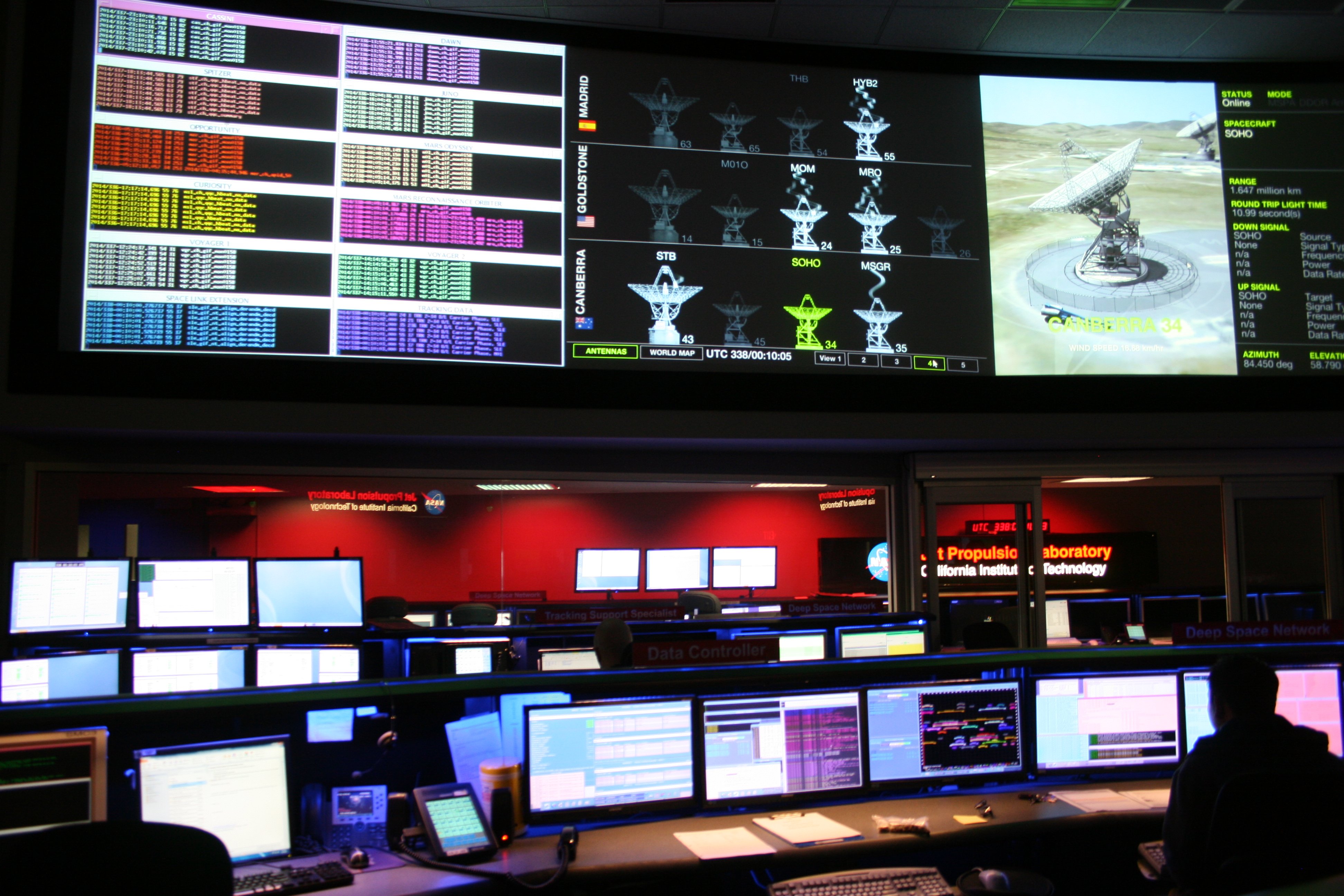
But wait, there’s more! Not only did we get to go into the primary control room, but then we got to go out onto the floor of the JPL Mission Control Room. Being here was way, way up on the bucket list! Places where they launch rockets and places where they run them are as close to “sacred ground” as I get, and the JPL Mission Control Room is close to the top of the list.

by the way, in the middle of the big screens at the top you can see the status of the Deep Space Network antennas, showing which ones are active at the three DSN sites (Goldstone, Canberra, and Madrid) and which spacecraft they’re talking to. Even better, that information, in fact, that exact up-to-the-minute DSN status display is available here on the NASA-DSN web page. It makes a great screen saver!

So there you have it! Now to bed and off to NASA Armstrong in the morning for my third NASA Social! Tweets and pictures galore to follow, I promise!

Leave a comment

Filed under Astronomy, Flying, Photography, Space

NASA Social Follow-Up (For Nov 19 2014)

Summary:

  1. I’m going to my third NASA Social, next Monday, February 2nd (it’s a big deal, I’m really excited).
  2. Last November I spent two days at NASA Armstrong (here and here) for my first NASA Social.
  3. In December at JPL, I had the privilege of attend my second NASA Social.
  4. The posts accompanying those events had lots of my Tweets and cell phone pictures, but the better quality pictures were promised for “later.” Now it’s later!
  5. Yesterday (using a completely bland, unoriginal, and non-clever title) I posted the DSLR hi-res pictures from November 18th, the first day at NASA Armstrong.
  6. Tonight, the hi-res pictures from Day Two at NASA Armstrong on November 19th. As I did yesterday, I’ll try not to repeat too much of the material already in the original post.

IMG_2549 (small)

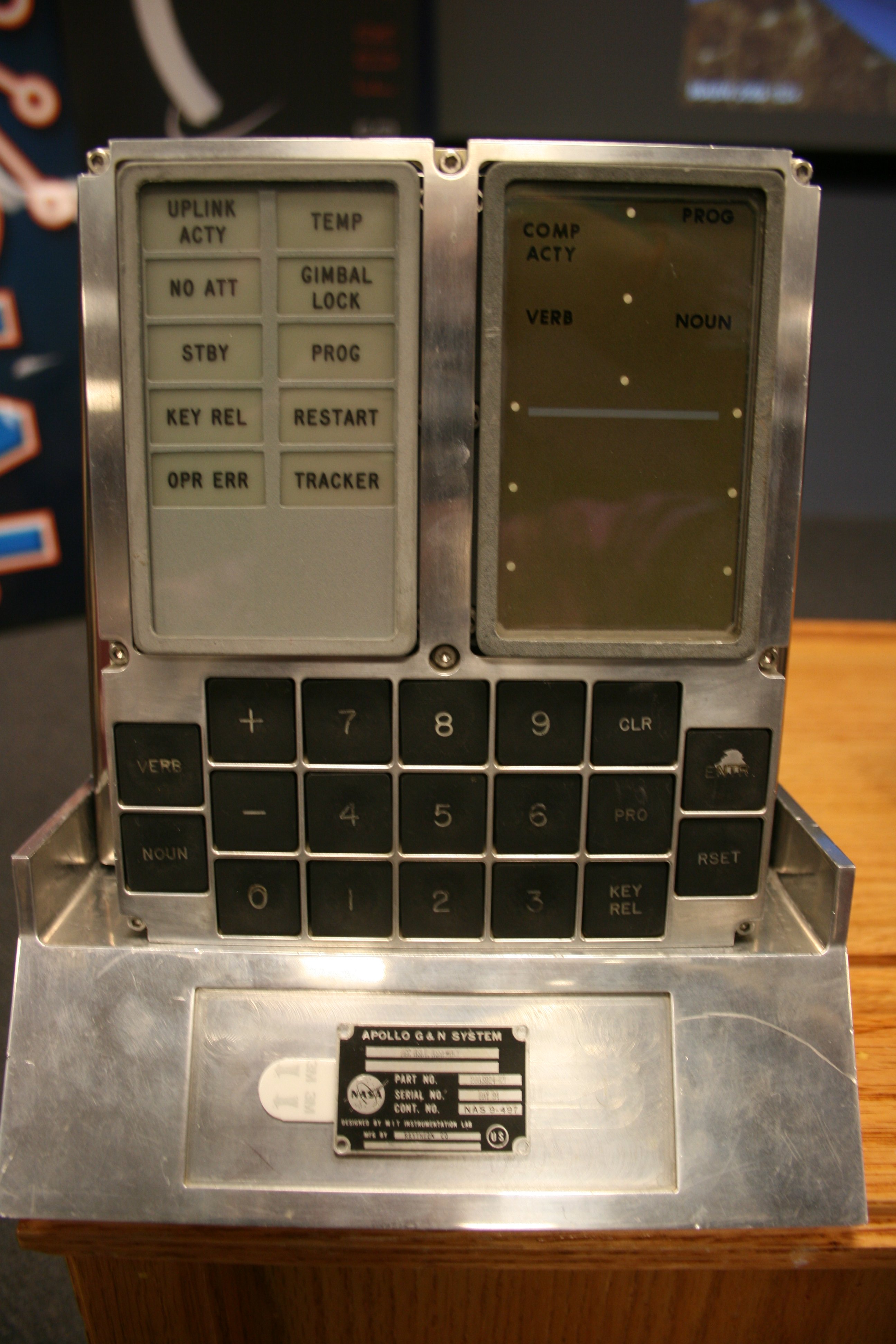
To a “space cadet” such as myself, this is a sacred relic. This is the DSKY (Display & Keyboard) from the Apollo 15 mission in 1972. It’s not a replica or a backup — this is the honest-to-god, flew to the moon and back piece of hardware from the Apollo 15 command module. And not only did we get to see it and get close, we got to touch it and push the buttons.

Yeah, I was pretty impressed. It was a highlight.

IMG_9693 (small)

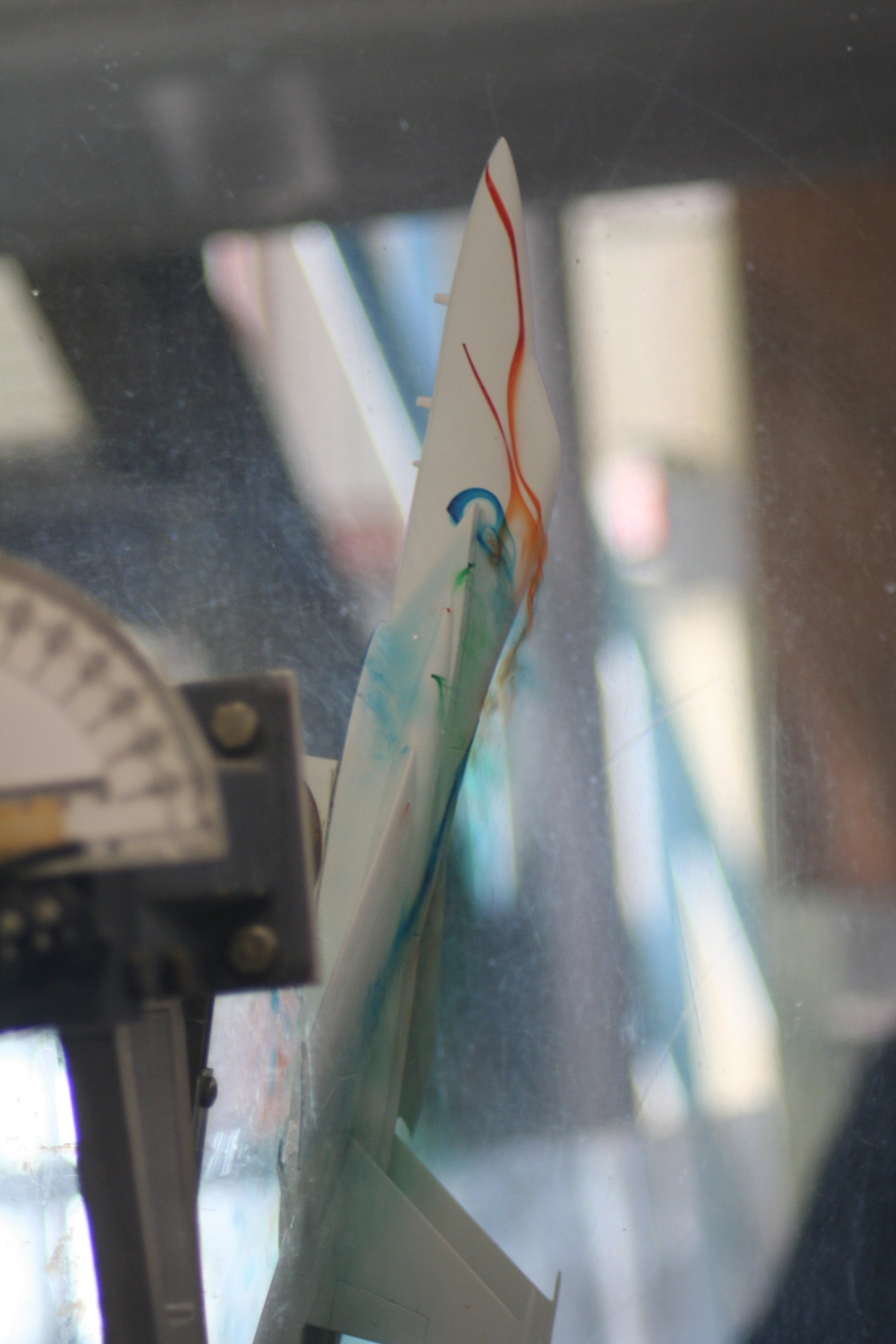
In the Flow Dynamics Lab we saw how models are tested in a stream of water. In this case the model has different colored dyes coming out of pinholes at certain places, with a steady, laminar flow of water being pumped past it from the top of this clear column. As the model is tilted (there’s a gauge in the background to show the angle) you can see how the flows are disrupted, forming eddies and swirls in the wake. Critical to know before you go testing something at Mach 2 or so with a pilot aboard.

IMG_2567 (small)

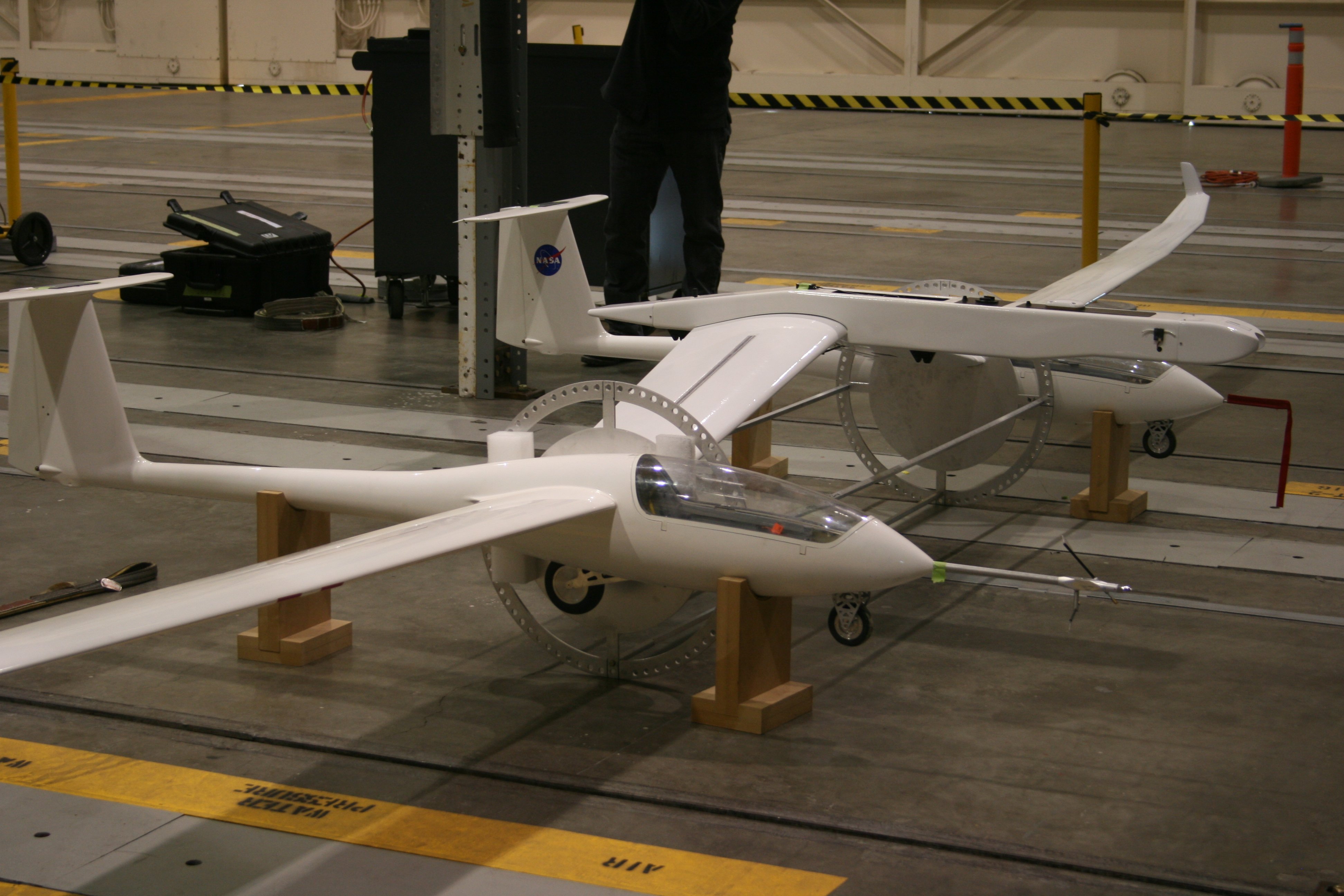
In the Flight Load Lab, this model was being tested for balance, weight distribution, and center of gravity. I think we’ll see more about this program on Monday, but it’s similar to Virgin Galactic’s “White Knight Two” carrier, except it will be towed by a conventional cargo plane or commercial jet such as a 747. Much cheaper, easier, and able to scale up (they think) to even bigger gliders and rockets, possibly large enough to carry a rocket designed to send a crewed spacecraft into orbit.

IMG_2570 (small)

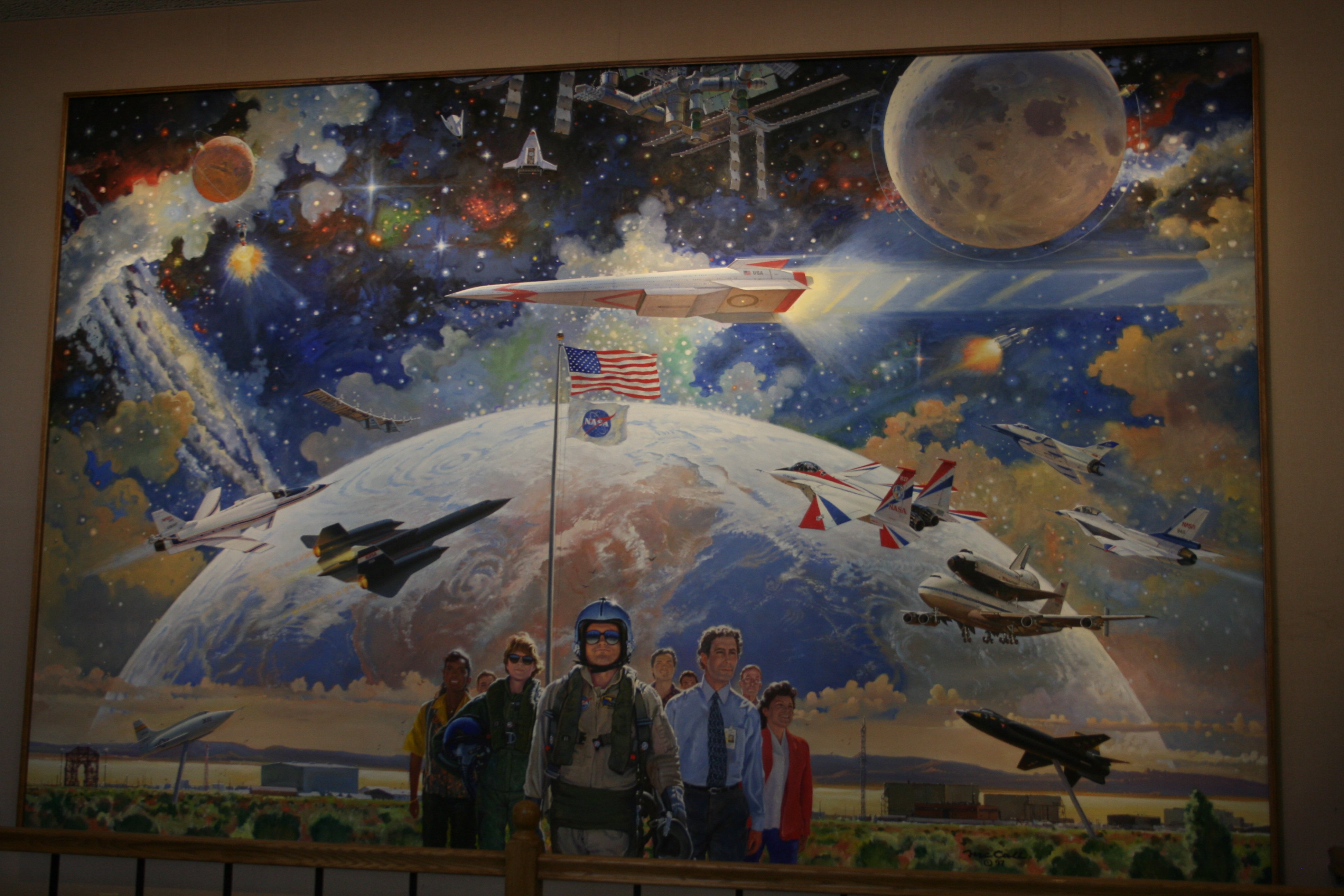
A huge Robert McCall painting. I LOVE McCall’s work.

IMG_2577 (small)

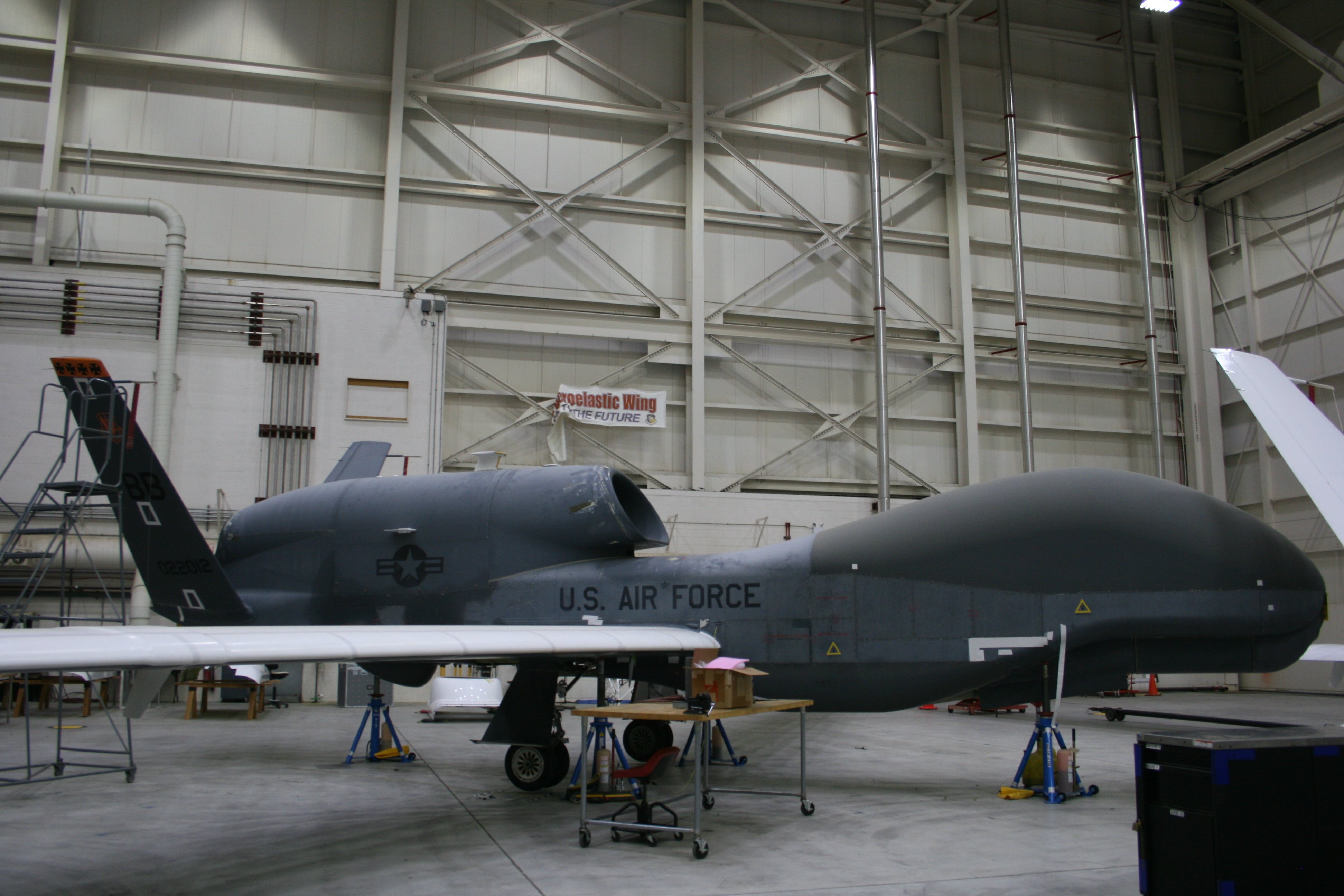
This modified Global Hawk drone can carry atmospheric or meteorological testing packages to anywhere in the world by remote control and stay up for over twenty-four hours.

IMG_2584 (small)

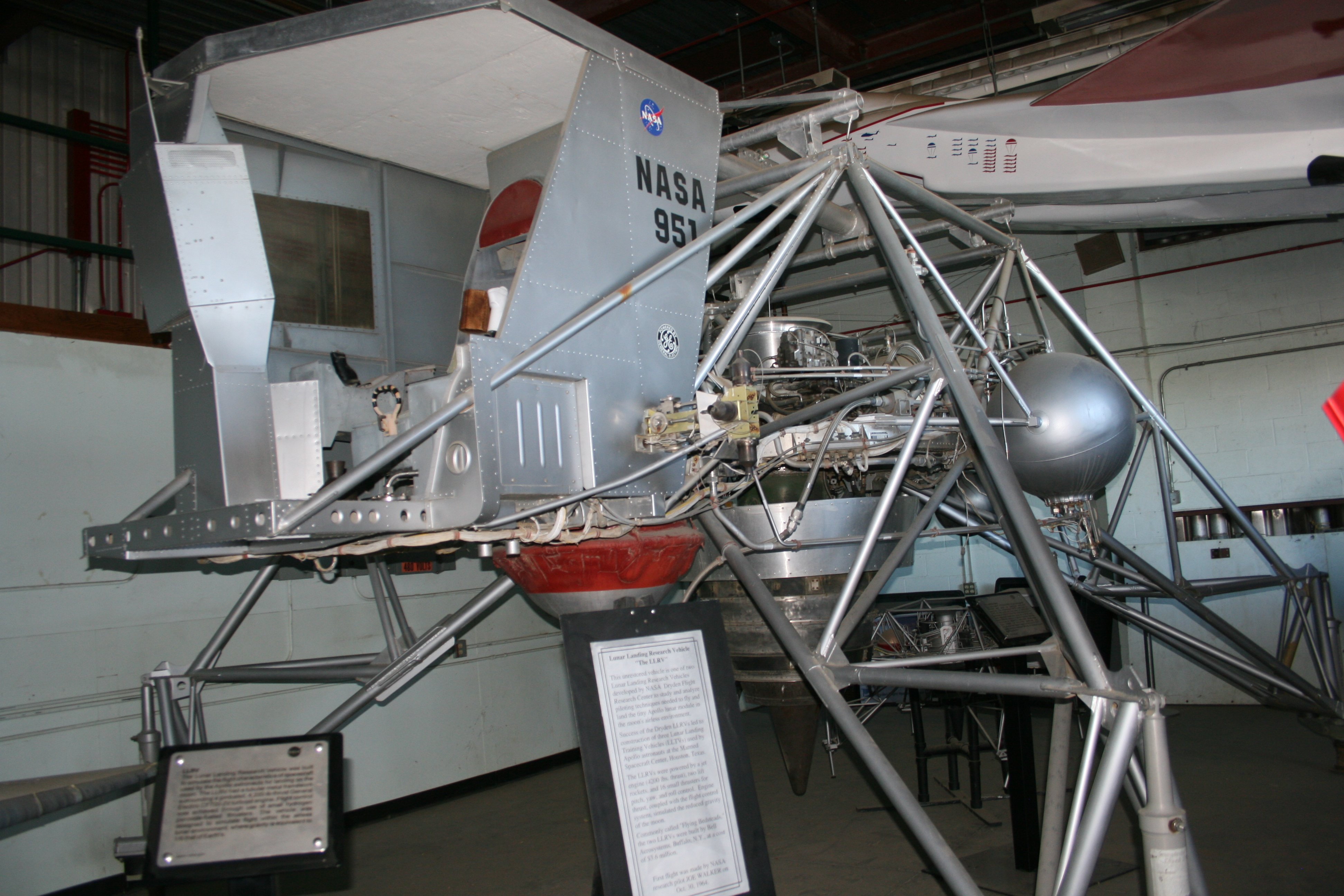
Another amazing piece of original hardware, this is the last remaining Lunar Landing Research Vehicle (LLRV). You can see the pilot’s compartment on the left. Every one of the Apollo astronauts who landed on the moon trained in one of these, and an accident with one going out of control almost killed Neil Armstrong while he was training for Apollo 11.

IMG_2592 (small)

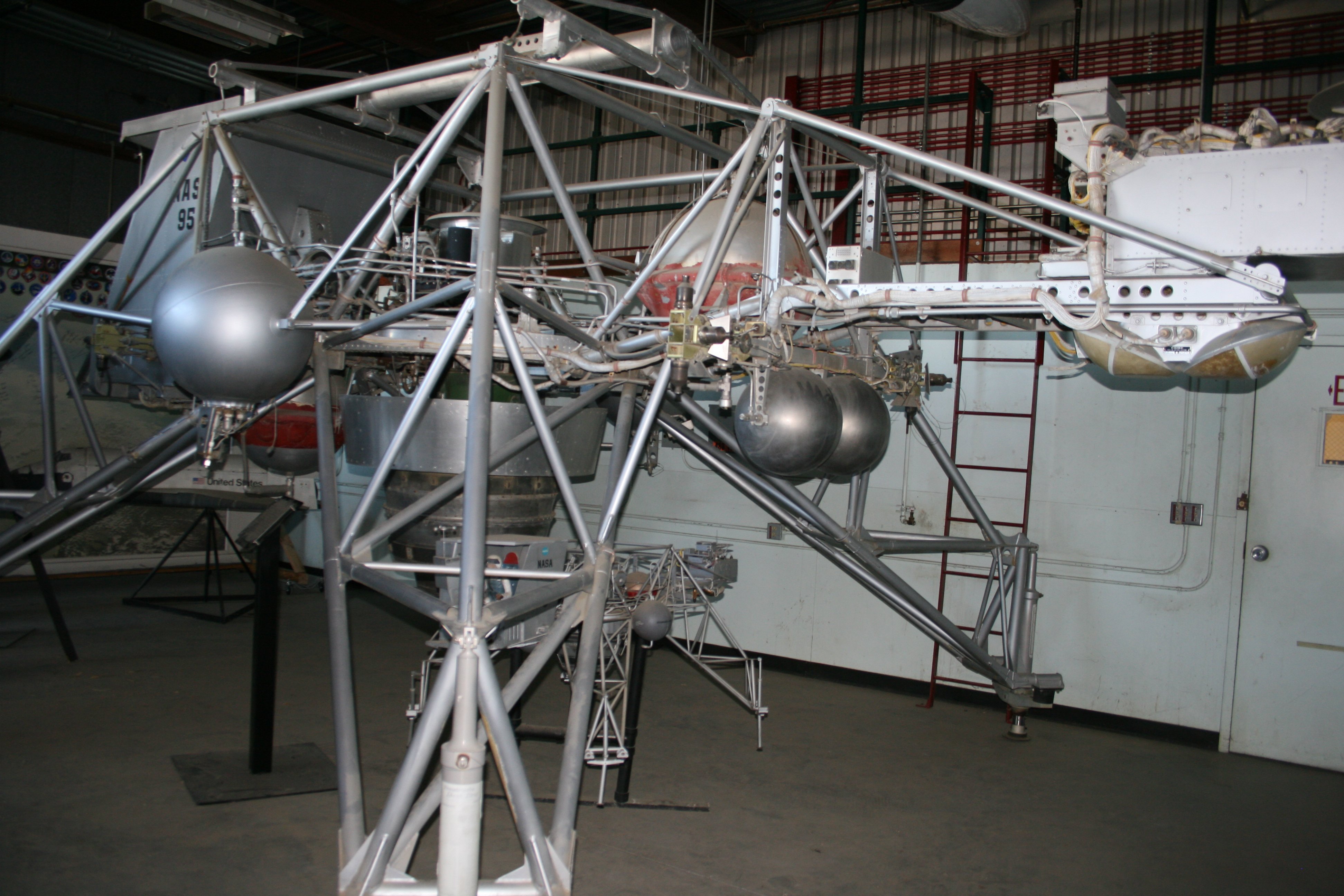
Seen from the other side, the LLRV was just a framework wrapped around a huge jet engine pointed downward. Not very stable, but a great training vehicle. The white box on top of the beam on the right is an analog (not digital!) computer, state of the art for the day – and about a billionth as powerful as your average smartphone of today.

IMG_2604 (small)

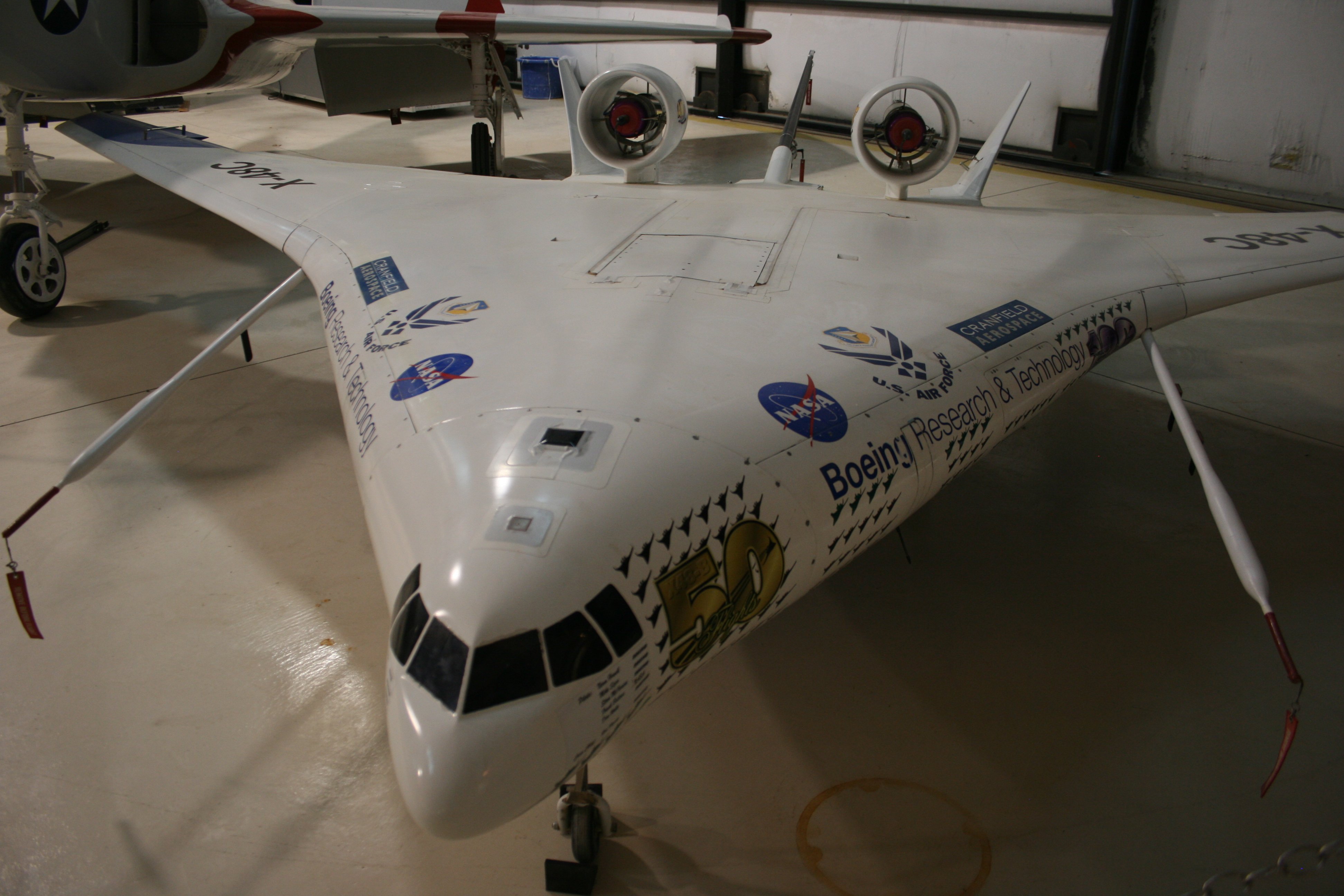
This is the X-48C small-scale test vehicle, which is being used to test “blended wing” designs. In thirty years, not only might fighters and bombers be shaped this way, but your average commercial jet might be as well.

IMG_2606 (small)

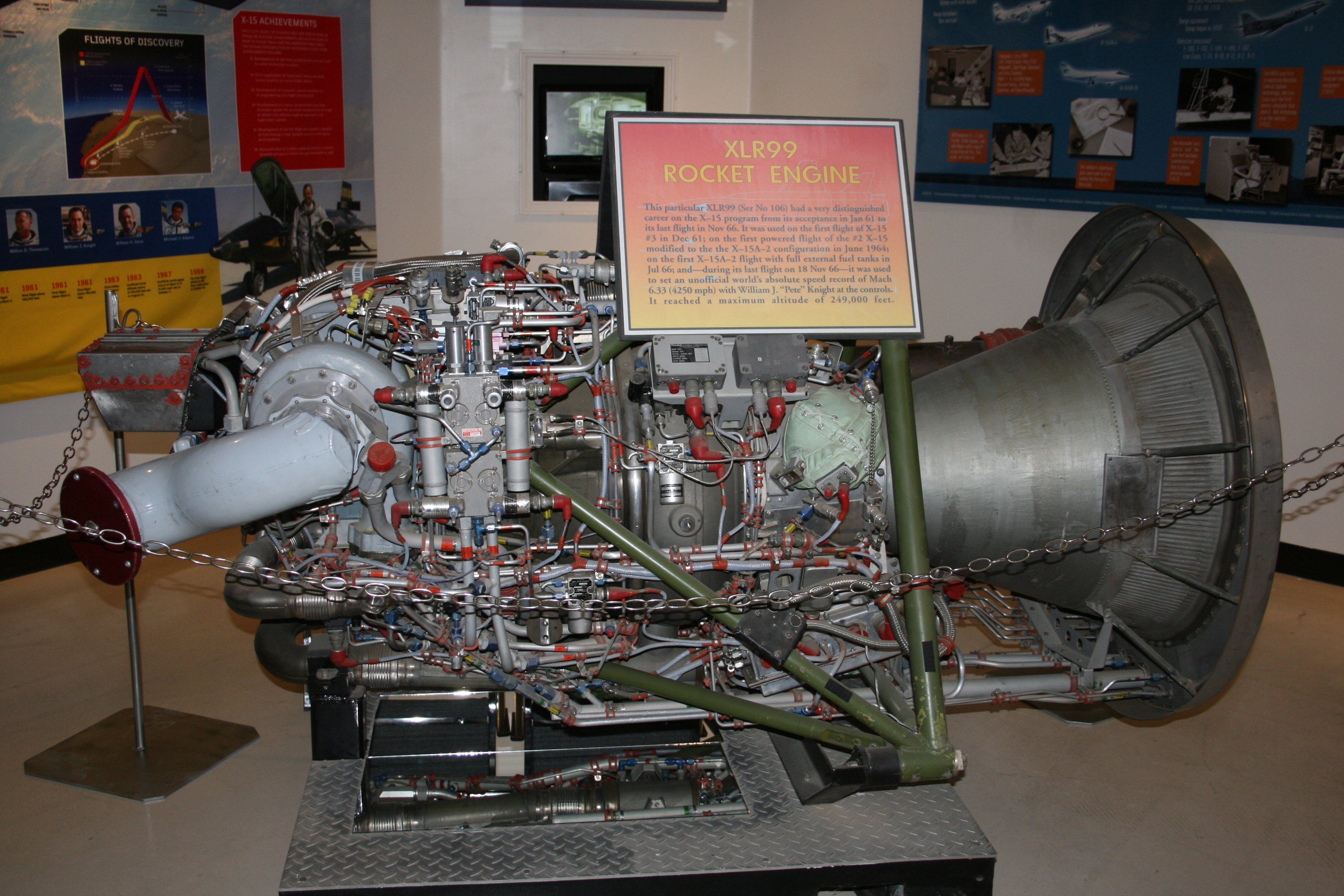
In the Edwards Air Force Base Flight Test Museum is this XLR99 rocket engine, used in the X-15 aircraft which took test pilots to the edge of space. In fact, many earned their astronaut wings in the X-15.

Tomorrow, a follow-up with the hi-res pictures from the December 3rd NASA JPL/Armstrong event for the first Orion launch.

For the record, I really, really hate it when after forty minutes of work after 23:00 at night, my browser and WordPress decide to lock up, delete all of my saved revisions, and die. How well can I remember what I’ve just typed? And can I do it in less than thirteen minutes?

Leave a comment

Filed under Astronomy, Flying, Photography, Space

NASA Social Follow-Up (For Nov 18 2014)

Late last night I got some great news – I’m going to another NASA Social! Next Monday, February 2nd, I’ll be up in Palmdale for the “State Of NASA” event being hosted there by the NASA Armstrong Flight Research Center. There will actually be ten simultaneous NASA Socials going on next Monday at NASA Centers all over the country, including Kennedy in Florida, Johnson in Houston, Goddard in Maryland, Langley in Virginia, Marshall in Alabama, Stennis in Mississippi, Glenn in Ohio, JPL in Pasadena, and Ames in San Jose.

Each center will have their own unique activities and presentations, and all centers will join together for a 1:30 PM ET (10:30 AM PT) news conference with NASA Administrator Charlie Bolden. The news conference will be shown live on NASA-TV.

The NASA Armstrong presentation will center around how NASA performs astronomical research from aircraft, as well as other aircraft-based experiments. The highlight of the day will be a presentation and viewing (dare we hope for an actual tour inside?) of the Stratospheric Observatory For Infrared Astronomy (SOFIA). Rest assured, you’ll get plenty of information about SOFIA from me over the next few days, but the short version for those unfamiliar with the program is that it’s a honkin’ huge infrared optical telescope mounted into the open side of a 747. It’s an incredible vehicle, telescope, and program – I’m really looking forward to seeing it!

The schedule currently says that we’ll also see the DC8 ATV-5 Reentry Mission, briefings on the ER-2 (civilian version of the U-2 spy plane) and C-20A (modified Gulfstream III business jet) research platforms, electric propulsion systems (for aircraft or for spacecraft, I wonder), FOSS (Fiber Optic Sensing System) technology, the Towed Glider Air Launch System, and more.

I’ll be reporting on activities in Palmdale all day Monday. My primary methods of communication during the day will be Twitter and FaceBook. If you’re on Twitter, you can see my tweets at @momdude56. If you’re not on Twitter, you can see my tweets and photos showing up in the sidebar on the right. And, of course, there will be many pictures and much blatheration about it all here on Monday night and beyond. If you’re on Twitter, you can also see what’s being tweeted by other event attendees at all ten sites by following the hashtags #NASASocial and #StateOfNASA.

You’ll remember that I spent two days (here and here) at NASA Armstrong last November at my first NASA Social. It. Was. Freakin’. AWSOME! I also was at a NASA Social in December at JPL, which was also amazing almost beyond description. So, yeah, I’m looking forward to another one.

In reviewing those articles, I realized that I those posts had only used pictures from my cell phone, not the higher quality pictures from my DSLRs. No time like the present to fix that!

Tonight, the hi-res pictures from Day One at NASA Armstrong on November 18th. I’ll try not to repeat too much of the material already in the original post.

IMG_2450 (small)

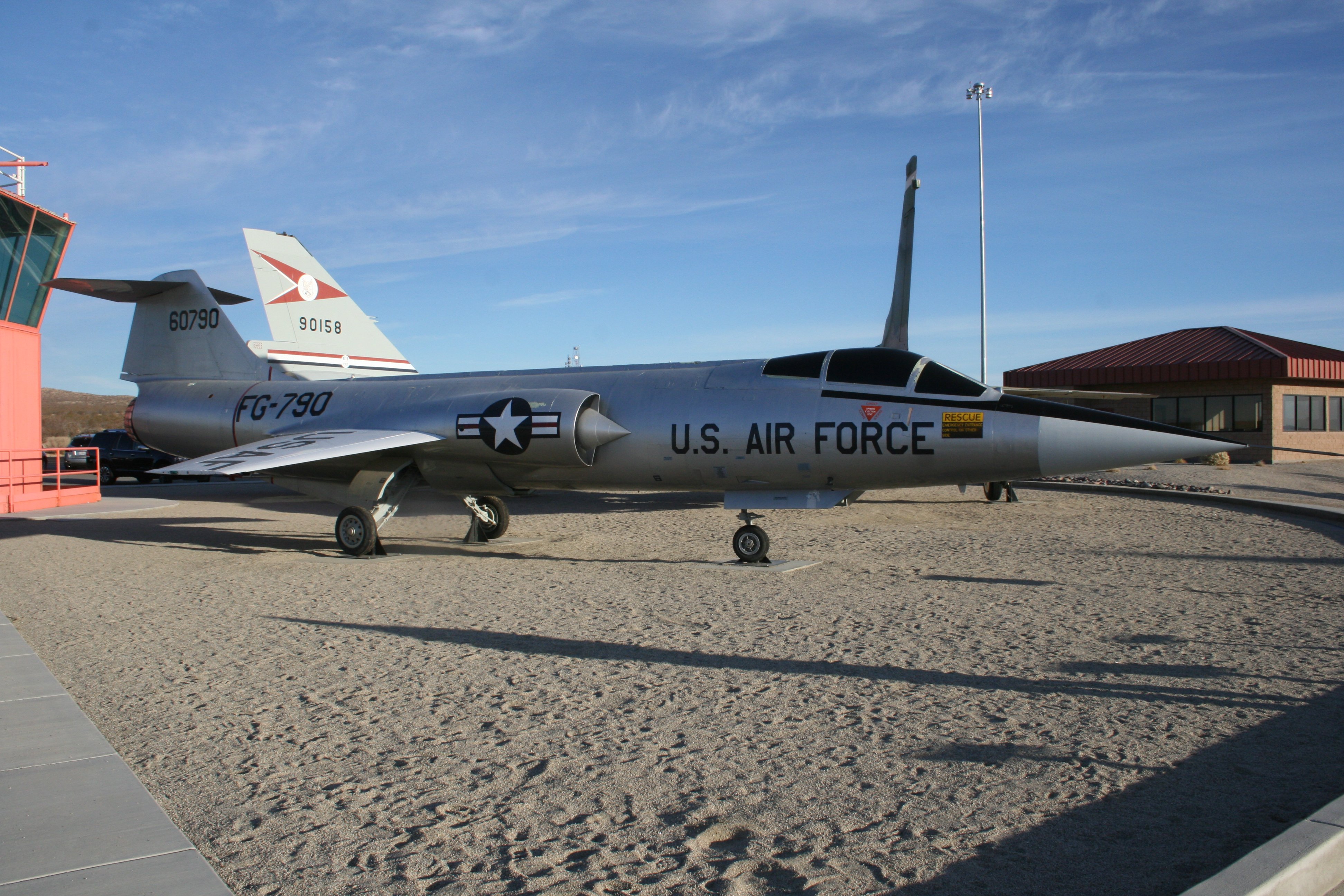
At the gates of Edwards Air Force Base there are a dozen or more retired planes parked, many of them “century” fighters (F-101 “Voodoo”, F-104 “Starfighter”, F-105, F-106, F-108, and so on), as well as other fighters and cargo aircraft. Shown is the F-104 “Starfighter”.

IMG_2457 (small)

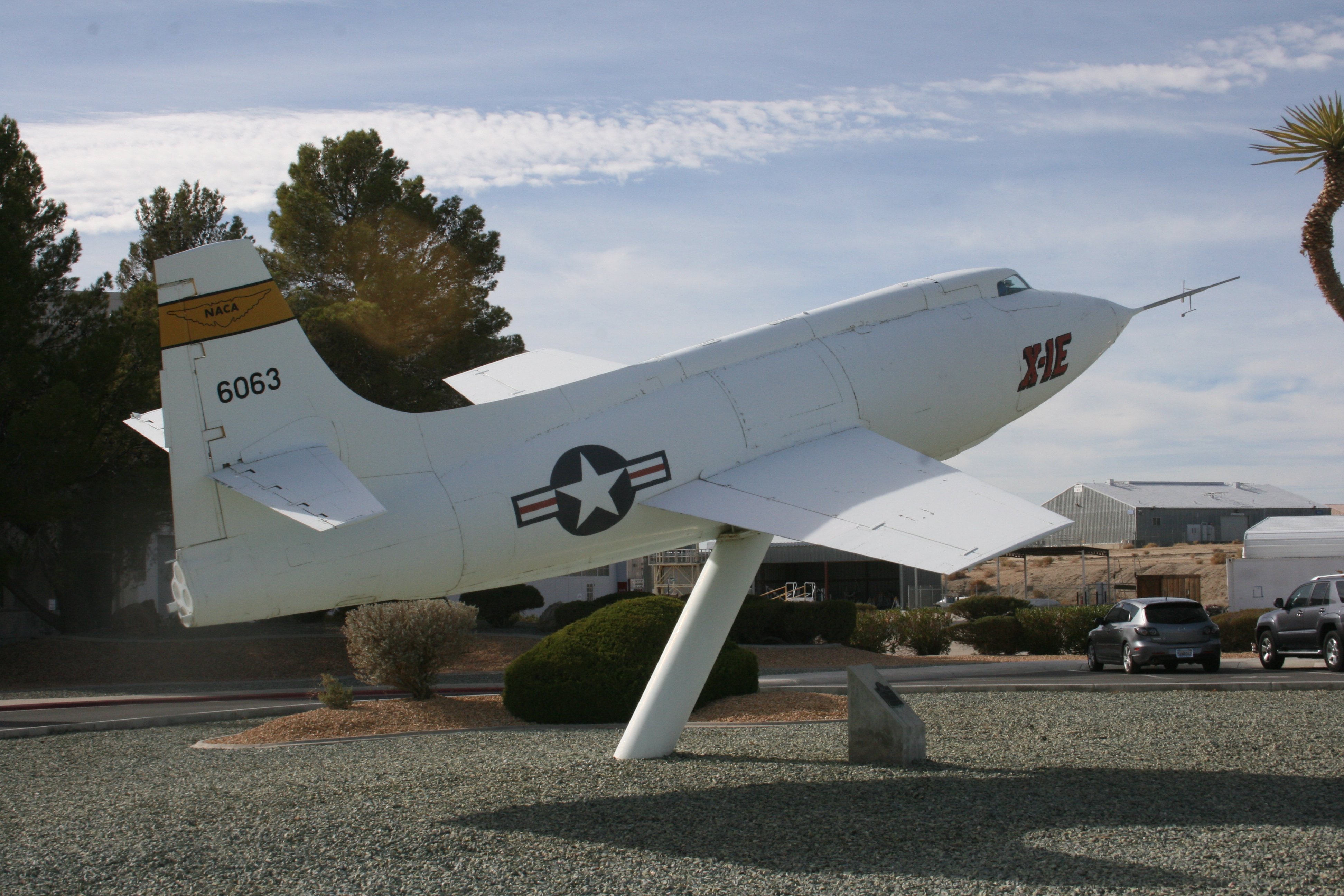
On base, outside of the NASA Edwards facilities, is the Bell X-1E. A sister aircraft to the Bell X-1 which Chuck Yeager used to break the sound barrier in 1947, the X-1E flew twenty-six test flights from 1955 through 1958, reaching a top speed of Mach 2.24.

IMG_2462 (small)

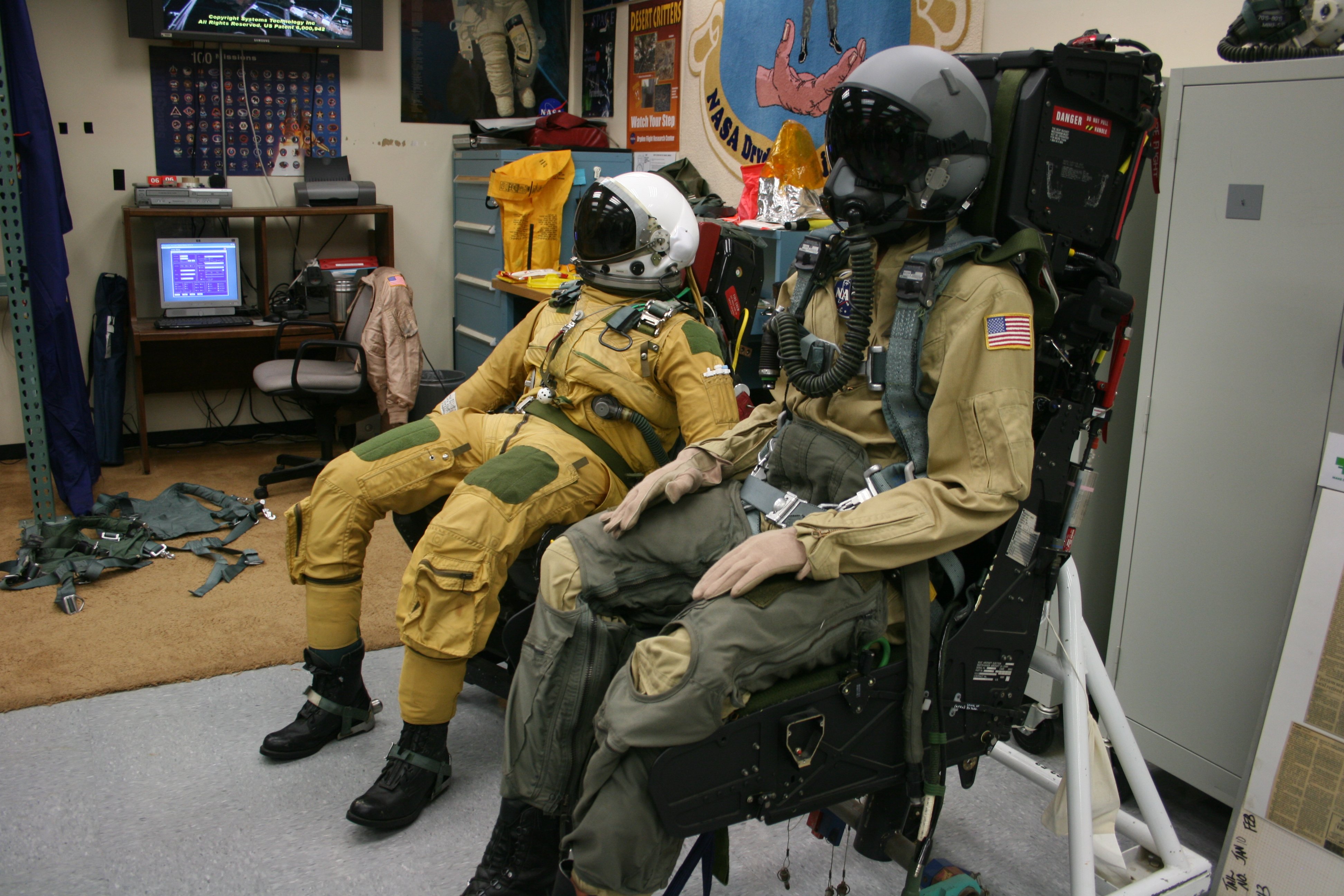
Protecting the test pilots is a key activity at NASA Armstrong and Edwards AFB. Here we see demonstrations of flight suits and ejection seats.

IMG_2483 (small)

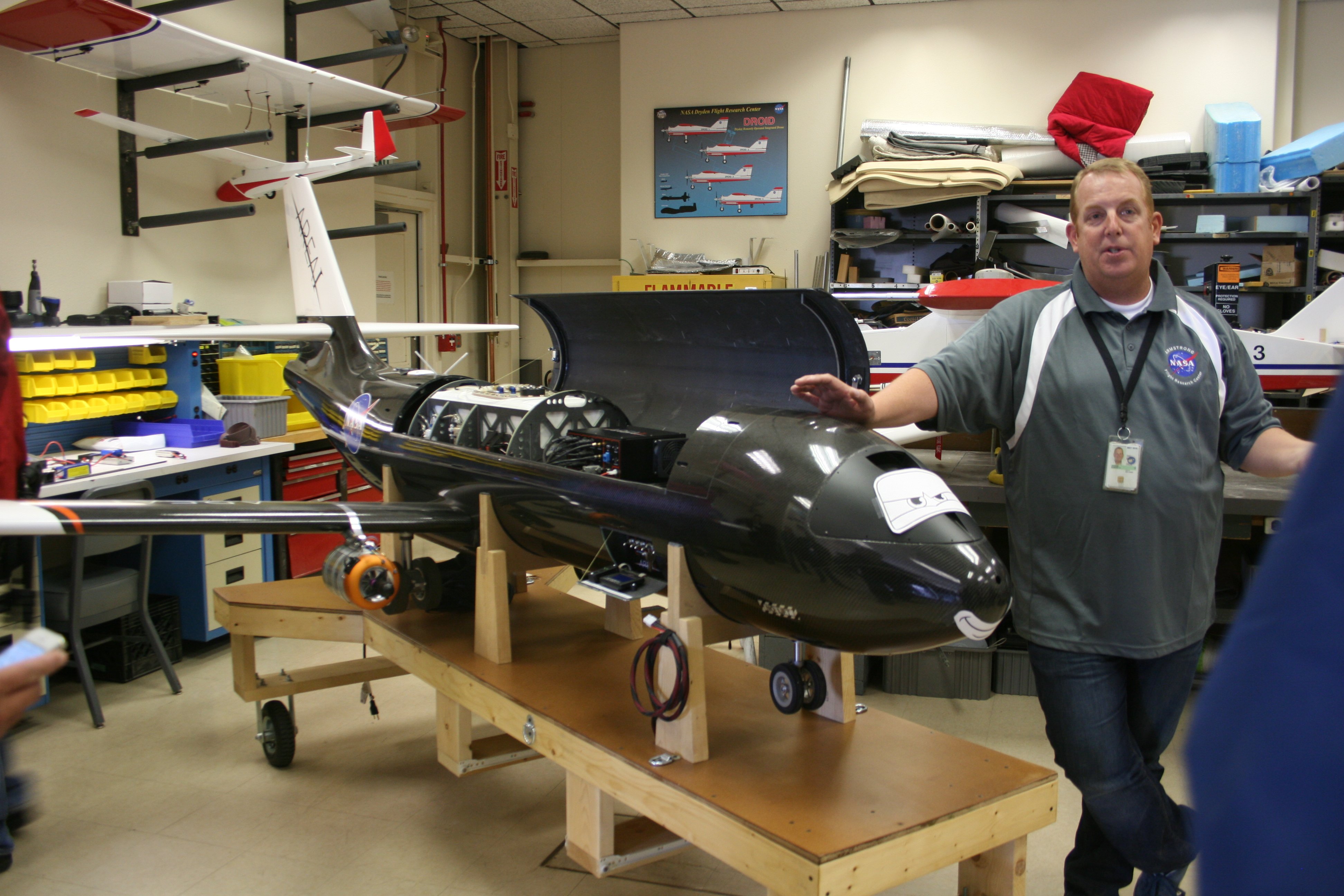
We toured the model shop, where scale test vehicles are built to be flown by remote control to test new systems. This is a newer large-scale model, while other smaller models can be seen around on the walls and in the background. If you want to see what these kinds of drones are used for, there’s a great video here of a recent breakthrough program, showing how the models were used, and featuring interviews with several of the people we talked to during our visit.

IMG_2493 (small)

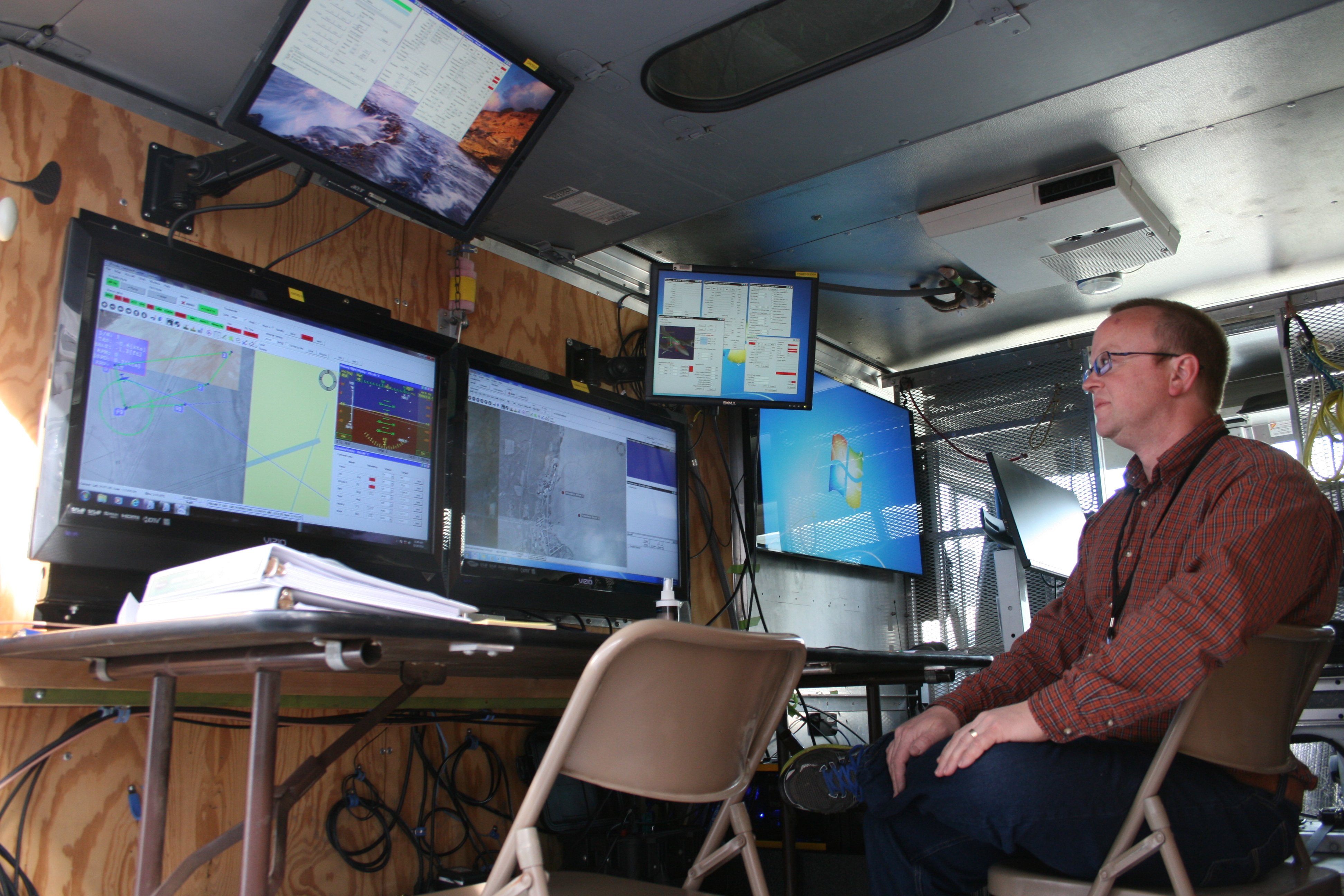
The scale models are often flown out in remote locations, where they need to be controlled using line-of-sight radio and data connections. In order to do that, this truck is outfitted as a mobile command base for remote operations. Given how hot it can get out in the Mojave Desert in the summer, I suspect that most important piece of equipment in the whole place is that air-conditioning unit on the ceiling.

IMG_2503 (small)

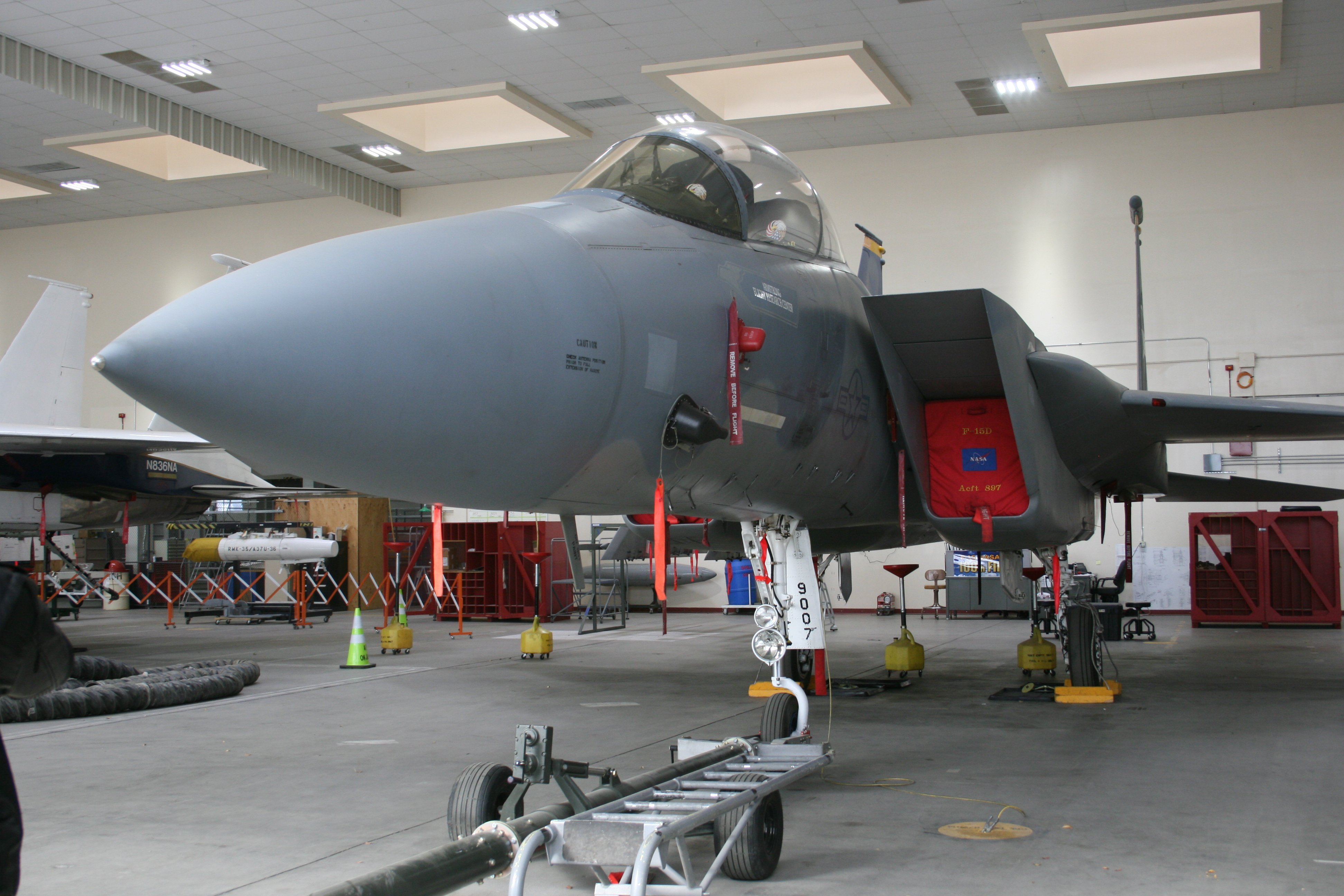
NASA Armstrong uses a number of high performance aircraft, often modified military fighters. This is one of their newest, an F-15D.

IMG_2522 (small)

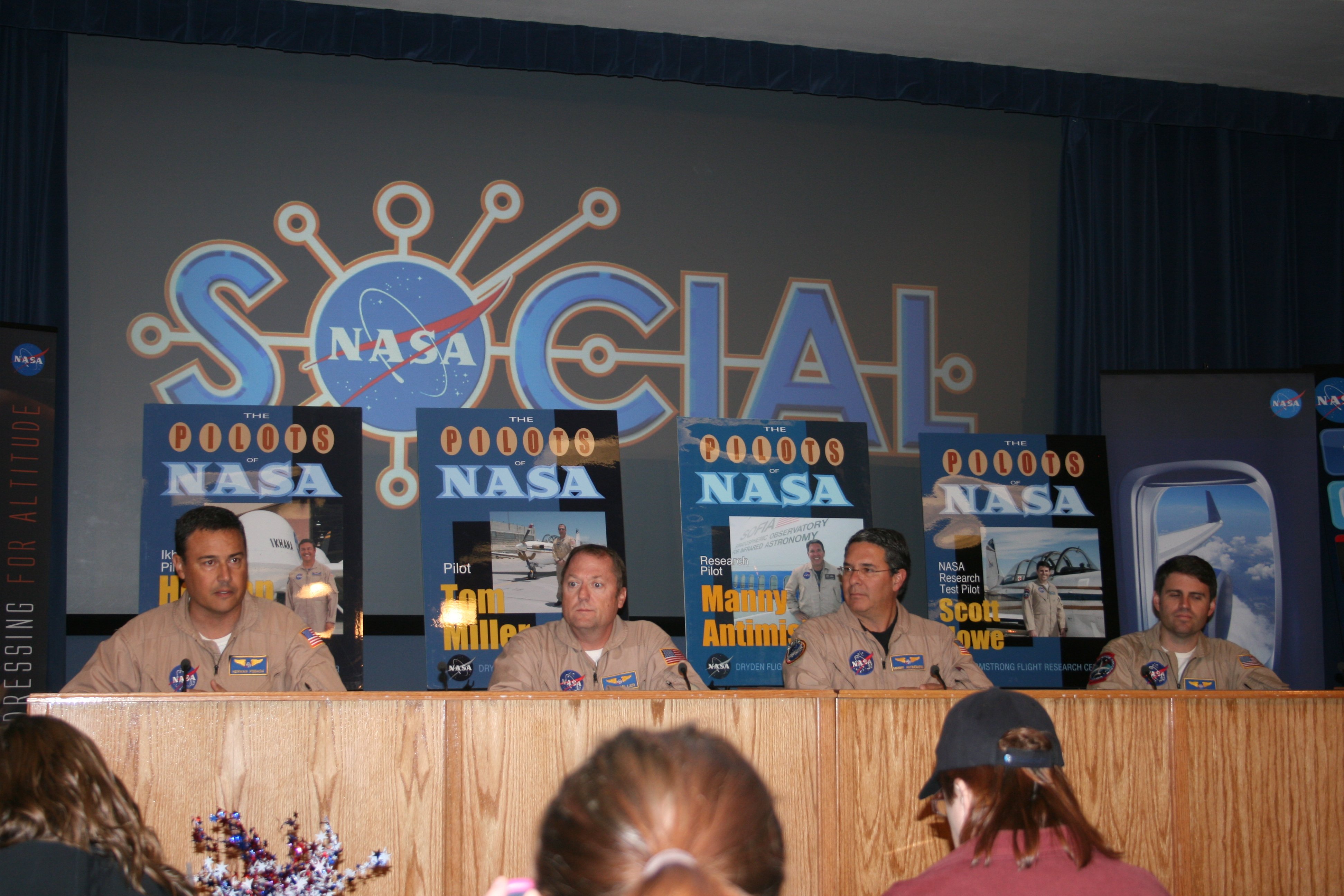
We had a great talk with four of the NASA Armstrong test pilots who fly the whole range of test aircraft, from the slow and small propeller-driven planes (used for noise studies) to the F-15s and the P3-B used for the Operation Icebridge. They also fly the remotely controlled drones which conduct atmospheric research all over the world.

IMG_2527 (small)

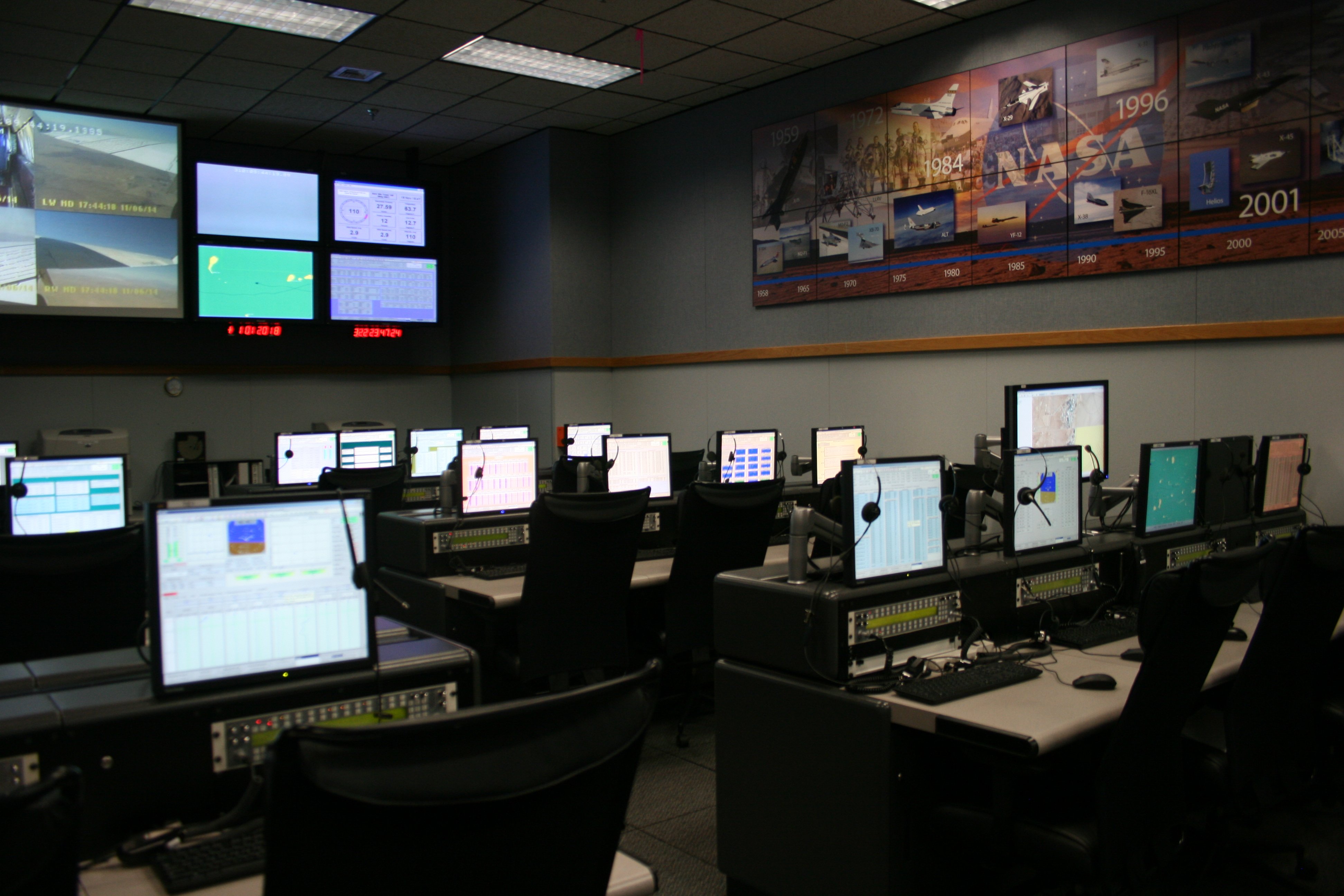
This is one of the two mission control rooms which run the test flights.

IMG_2531 (small)

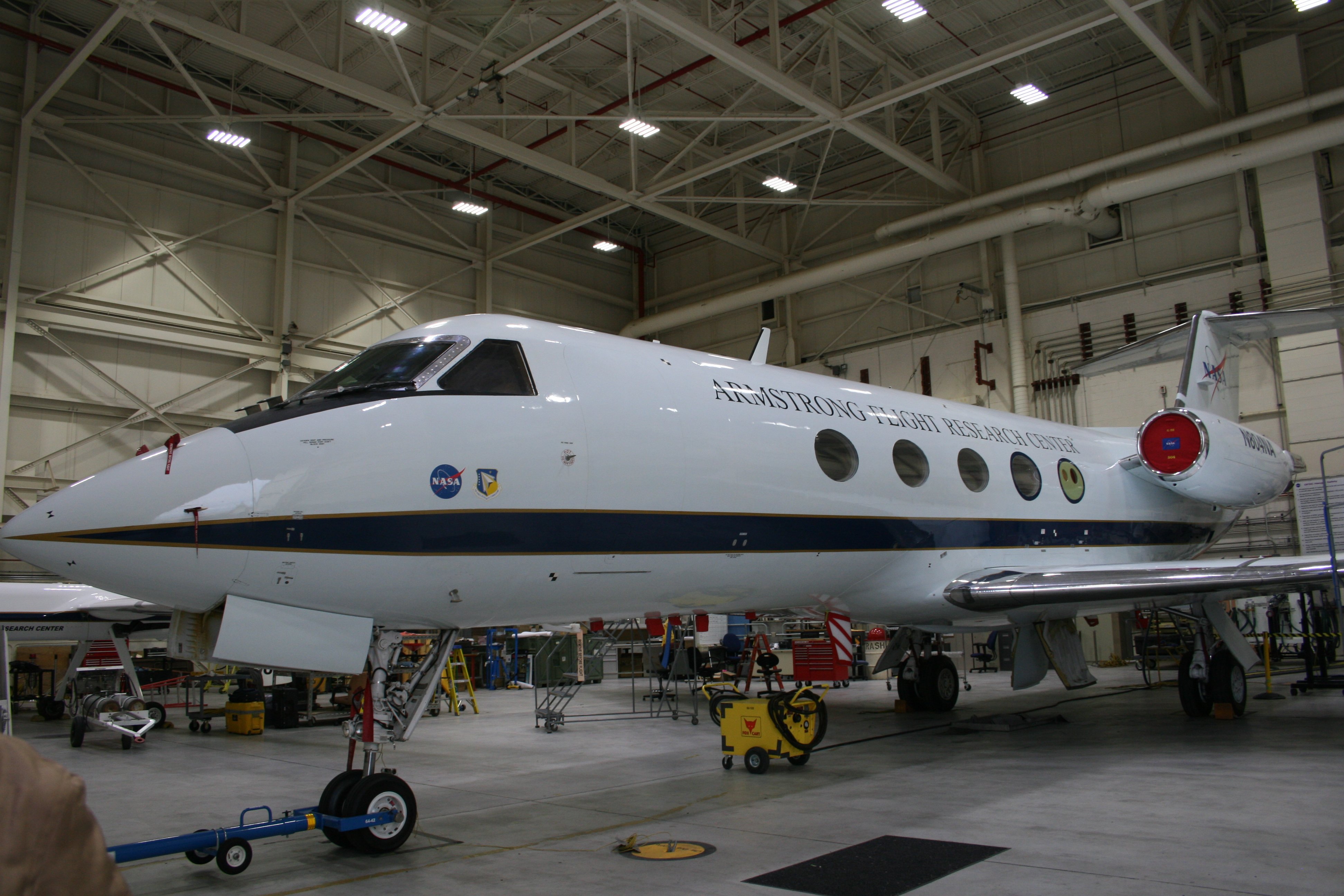
This is the modified Gulfstream III with the experimental shape changing wing that could someday reduce aircraft weight, noise, and fuel costs.

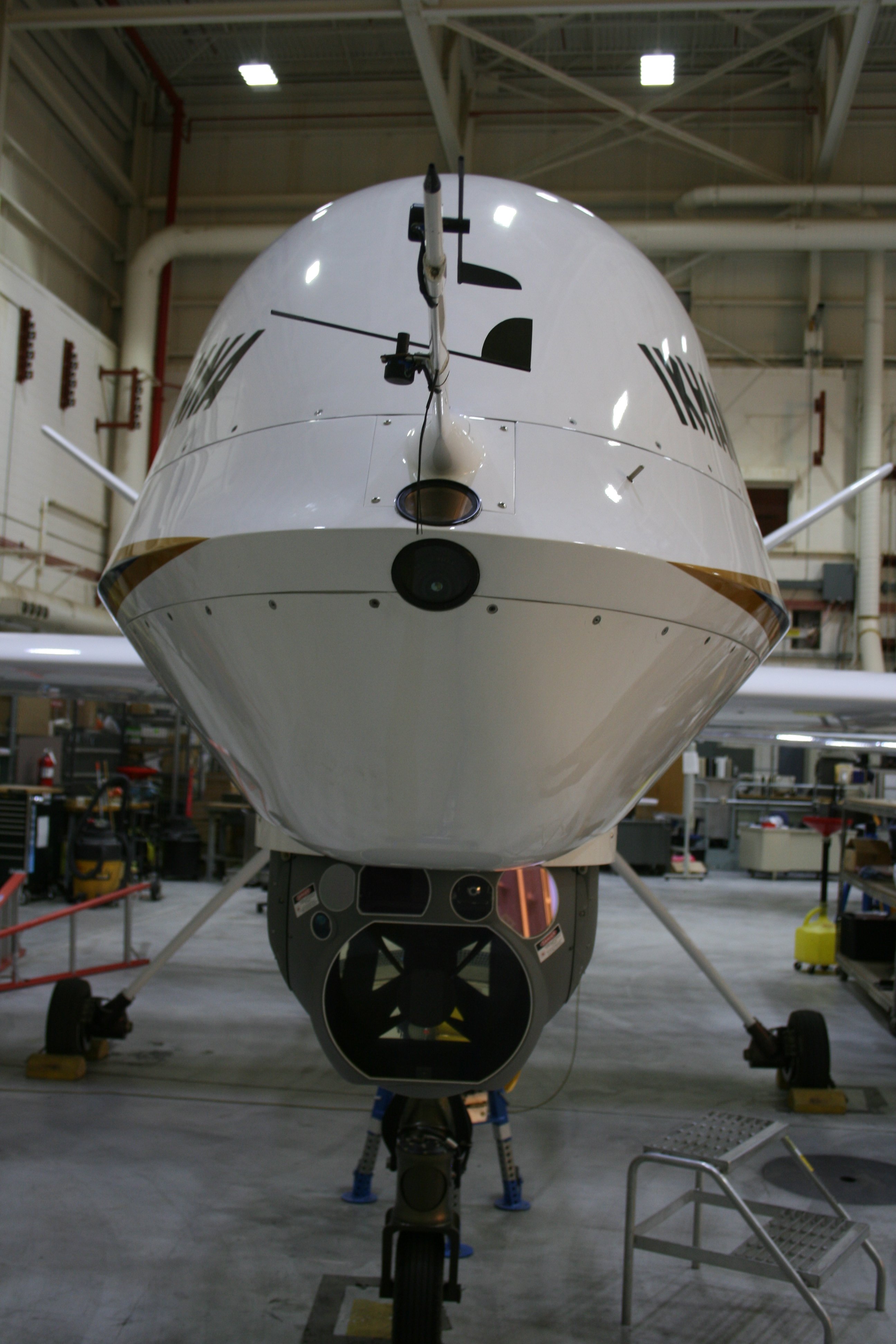
IMG_2539 (small)Finally, this is the Ikhana Unmanned Aerial Vehicle, a modified Predator B drone equipped with advanced optical systems and capable of carrying instrument packages all over the world. A couple of weeks after we were there in mid-November, Ikhana was used off the coast of Baja California to record and show us the re-entry and splashdown of the first Orion spacecraft.

Yeah, it was a pretty fantastic day for a space cadet like me. Next Monday’s going to be another one!

Leave a comment

Filed under Astronomy, Flying, Photography, Space