Category Archives: Travel

NASA Social For Hubble25 (Part Two)

Yesterday, having found decent wi-fi at the Reagan National Airport (DCA) terminal, I began telling you about the main event in my week-long trip to Washington for the Hubble 25th Anniversary NASA Social. Part One brought you the events of the NASA press conference at the Newseum on April 23rd.
01_IMG_6243 small

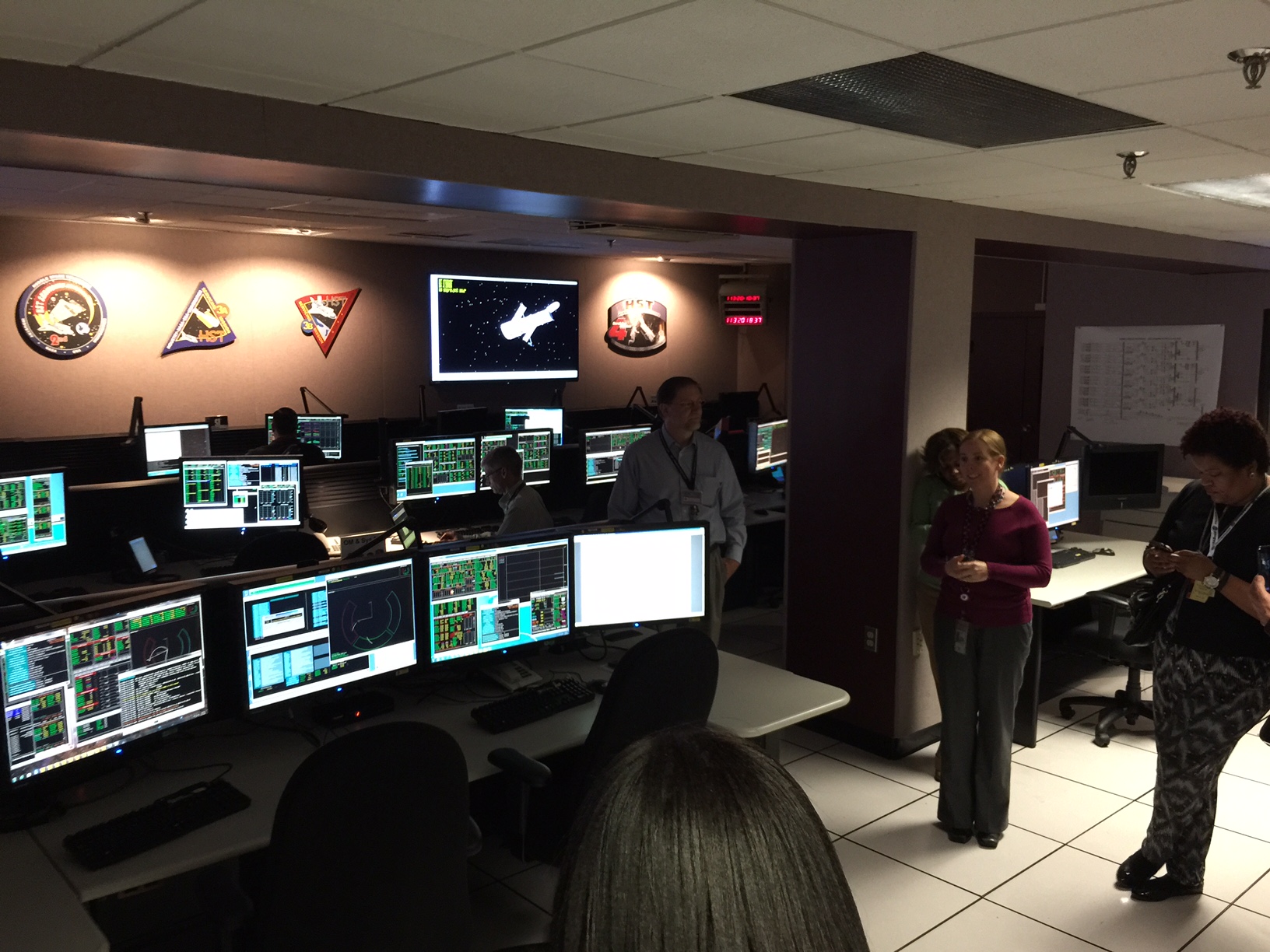
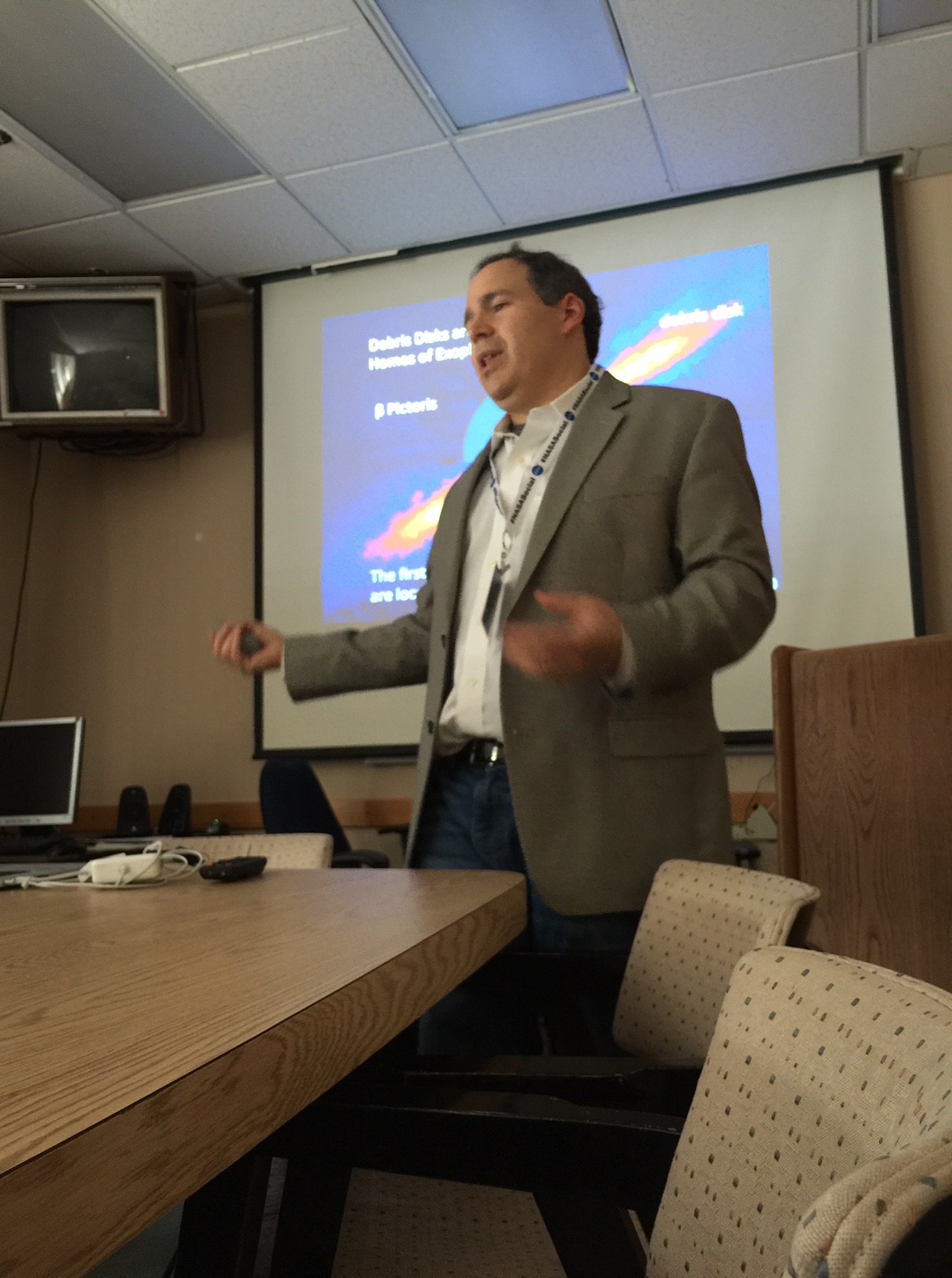
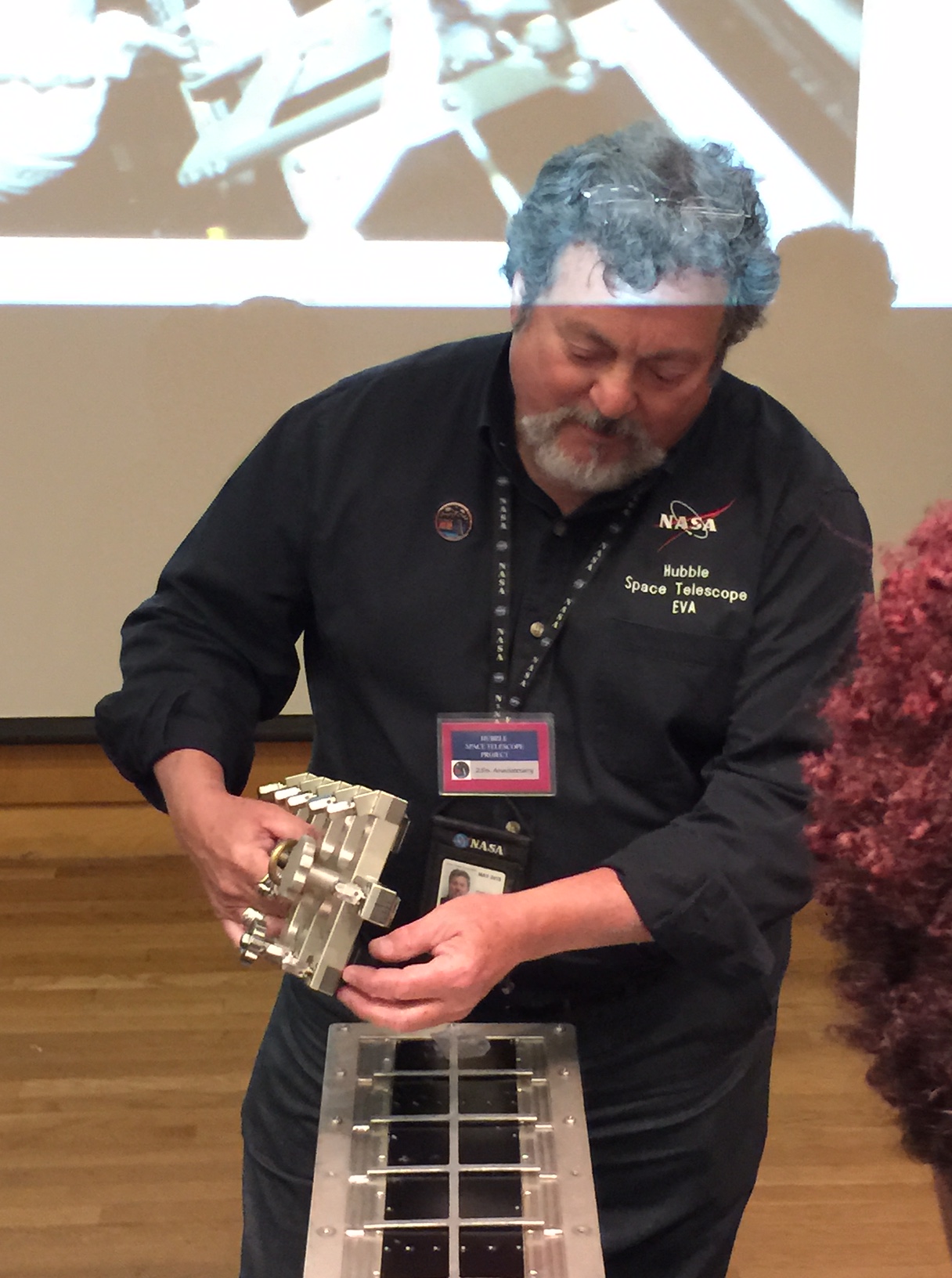
After the news conference was over and we were done schmoozing with astronauts and astrophysicists, we were free to wander around the Newseum for an hour or so, then we were loaded on a bus and driven out to Greenbelt, MD, the home of NASA’s Goddard Space Flight Center.
02_IMG_8286 small

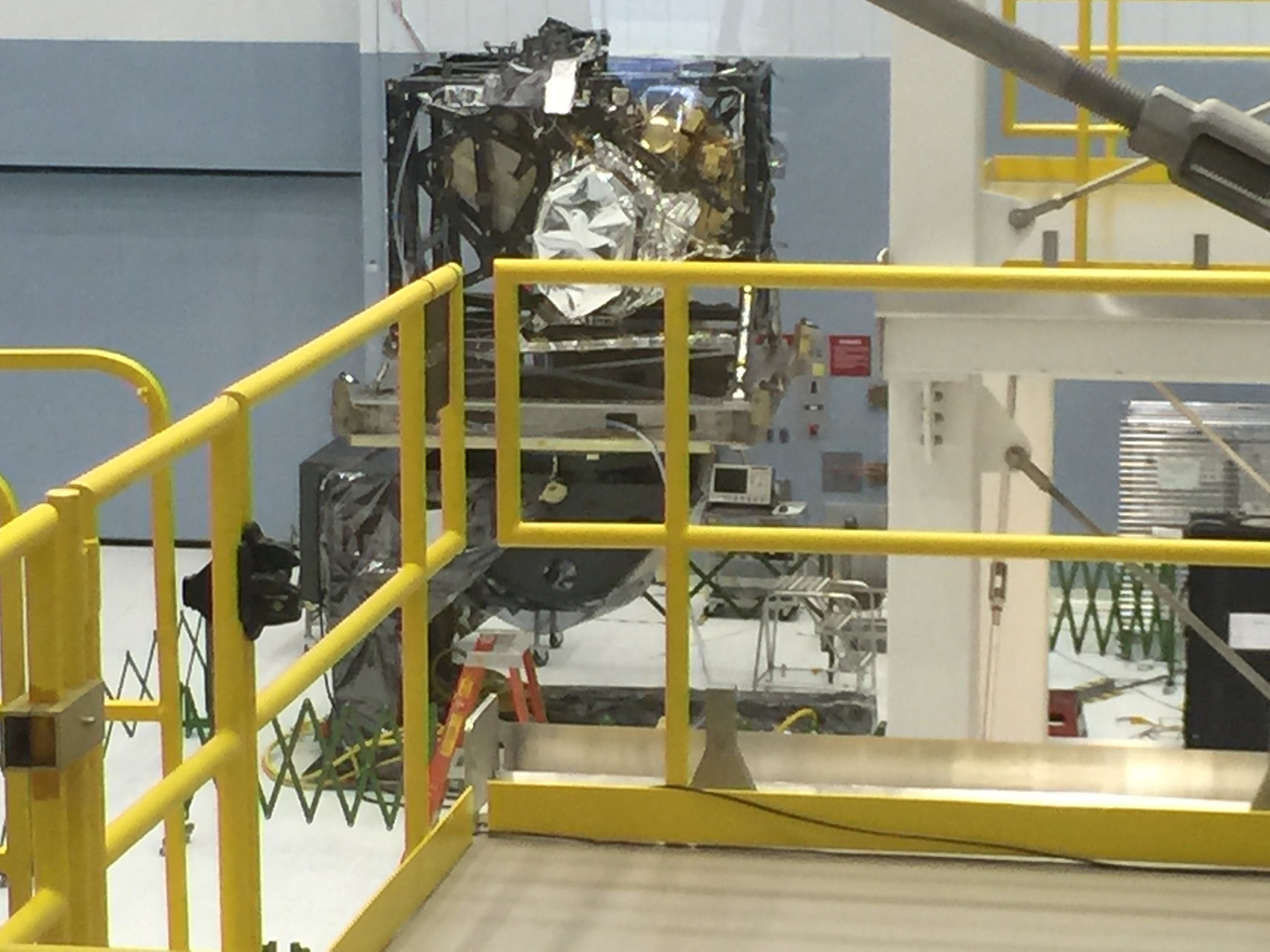
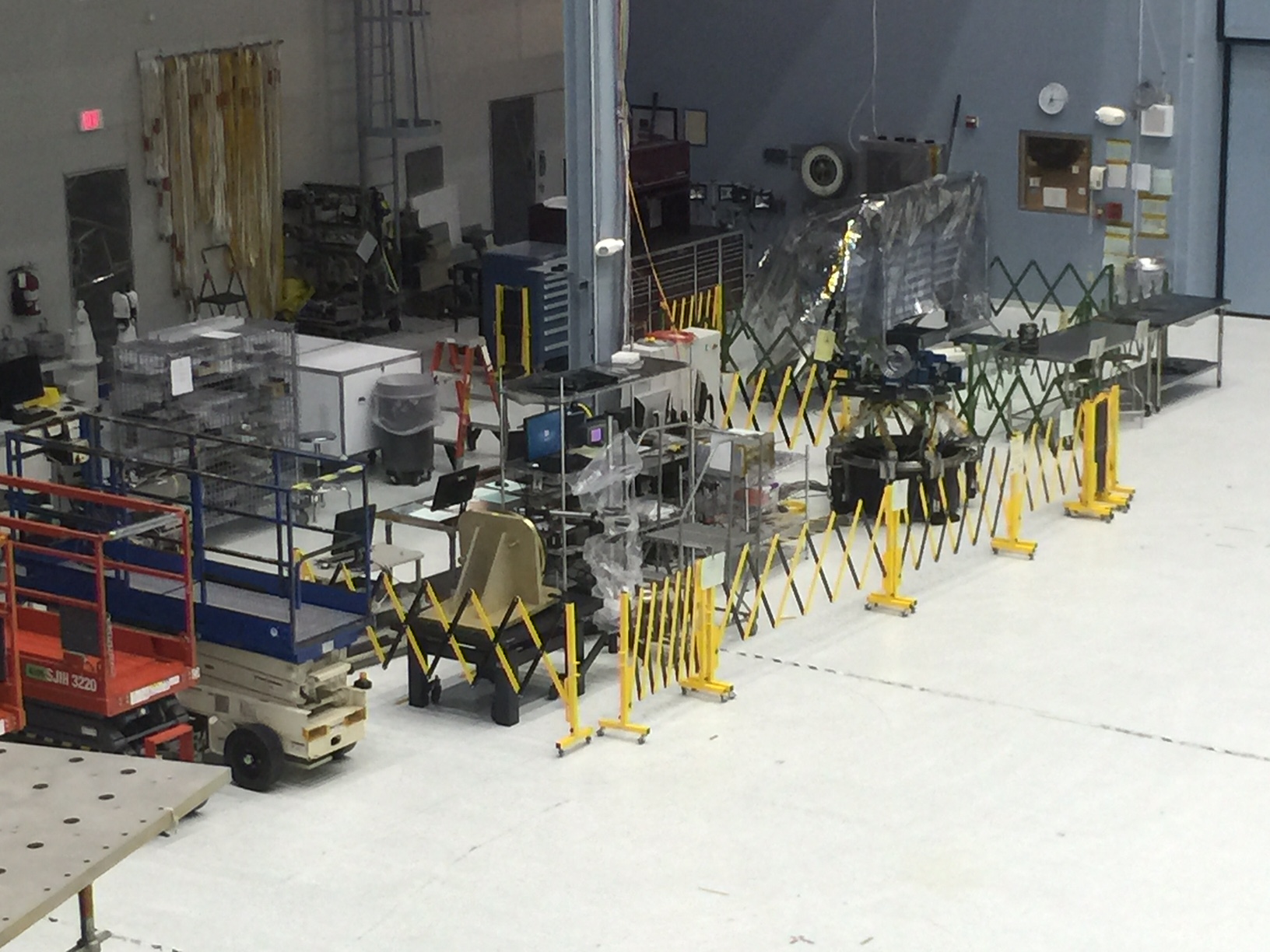
First stop at Goddard was the viewing room overlooking the clean room where the James Webb Space Telescope (JWST) is being built, tested, and assembled. I’ve seen the clean rooms at JPL where planetary spacecraft have been built, also impressive places. We were told that this was the largest known clean room, the implication being that there might be other, not-quite-so-public government agencies that also build and launch large satellites who might have one larger, but if they told us they would have to kill us.

Here you can see part of the flight hardware, the Integrated Science Instrument Module (ISIM). The ISIM will be a large structure at the back of the telescope, behind the mirror, holding all of the scientific instruments that are looking at the image coming off of the main mirror, the secondary mirror (out in front on that tripod structure), and back through the center of the main mirror.
06_IMG_6257 small

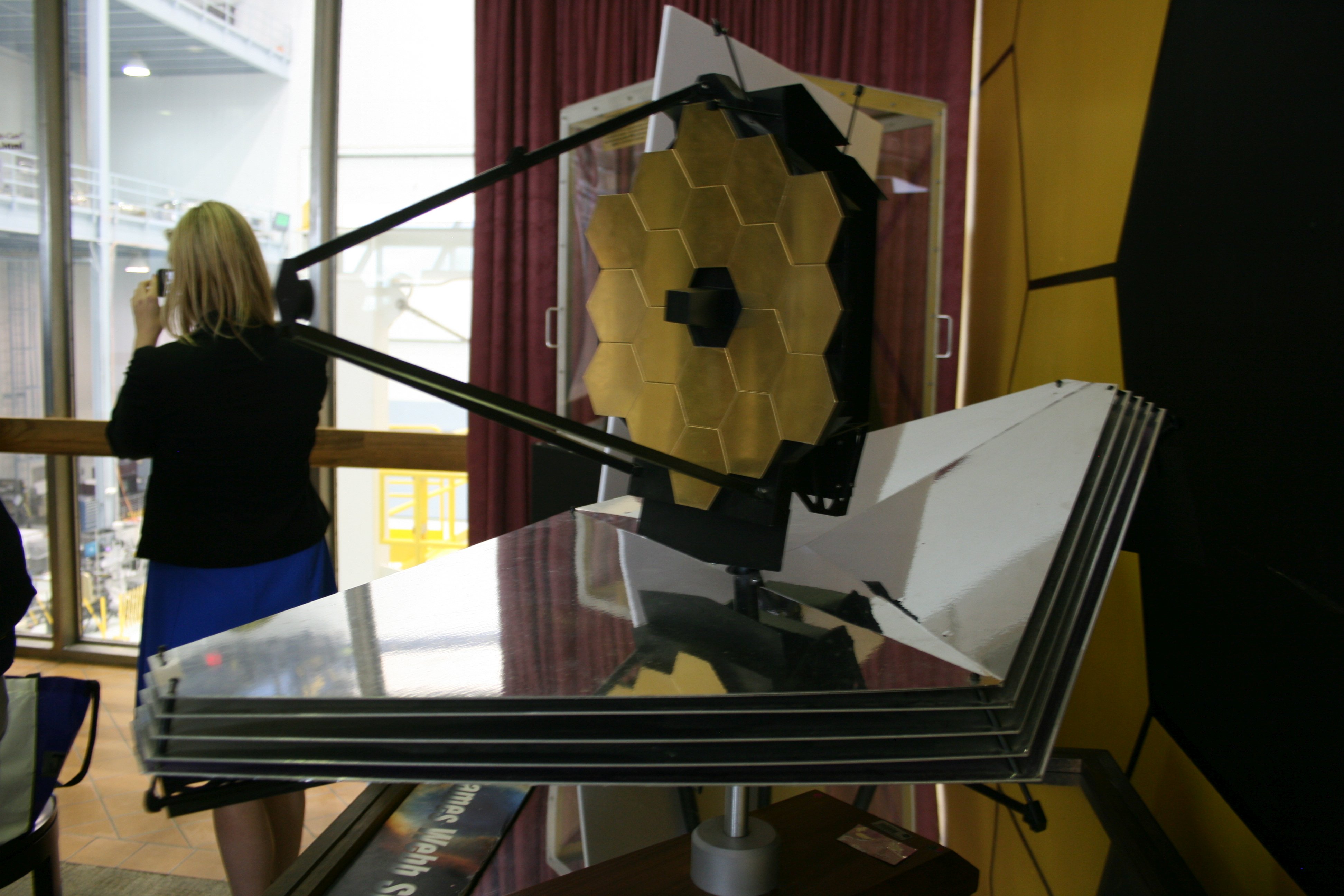
This is the model of JWST in the observation room. You can see how, unlike the Hubble Space Telescope (HST), the mirror for JWST isn’t one solid piece. In order to get this massively huge telescope into a very confined rocket to launch, it’s been designed to fold up like the biggest, most expensive origami piece ever built.

The full-sized mirror will be made of eighteen smaller mirrors, all mounted and actively controlled to make sure that they’re working in unison. The other major feature is the sun shield, seen here as five layers of material underneath the telescope.

The short version is that JWST is an infrared telescope, unlike HST which is primarily an optical telescope. While HST sees pretty much the same bands of light we see, JWST will see longer wavelength light, what we perceive as heat.

Since JWST is seeing heat, anything warm nearby will be like having a bright light near an optical telescope. It would fog and degrade the seeing. In order to counter this, JWST needs to be kept as cold as possible. This will be accomplished by the use of the huge sun shield. Hidden permanently (we hope) on the shadow side of the shield, JWST will chill down to just a few degrees above absolute zero.

The sun shield will be made of multiple thin layers of Kapton, which is incredibly thin as well as opaque to sunlight. The equivalent of an SPF of 10,000, the thinness of Kapton allows it to be folded multiple times in order to fit into the launch vehicle. Remember the Mythbusters episode where they tried to fold a sheet of paper over and over and couldn’t do it past a certain point? Same problem – the thinner the material, the more you can fold it.

As for size, while HST is the size of a school bus, JWST is the size of a 747. To see a picture of the Goddard team along with a full-sized model of JWST, go here.

05_IMG_8290 small

On the wall behind Laura Betz and Maggie Masetti, our hostesses for this part of the presentation, is a partial model of the JWST mirror. Each of the mirrors is over four feet wide, and altogether the primary mirror is far too large to fit on the wall here. In comparison, the HST mirror is about seven feet wide, so it would comfortably fit between floor and ceiling.

Yesterday I mentioned a misconception about HST images, where people would not see the planetary nebula and galaxies with the naked eye as they would in the image, because the image is made of hours of light collection using a huge aperture, where the human eye is small and unable to integrate an image over time.

Another big difference between HST and JWST is that JWST will not be in low Earth orbit (LEO). While it’s (relatively) easy to fix and service a spacecraft in LEO (there were five servicing shuttle missions to HST), it also means that there’s a huge (and warm) planet filling half of your sky all the time. JWST will be put into orbit at the L-2 point, a spot roughly a million miles from Earth. L-2 is a spot between the Earth and the Sun where their gravitational pulls balance out.

That solves a lot of observational problems, but it brings up a lot of operational “challenges.” There are currently no plans to ever be able to service or repair JWST, so it’s a one-shot deal. (I noted that plans change, and we are very clever monkeys when backed into a corner.)
03_IMG_2604 small

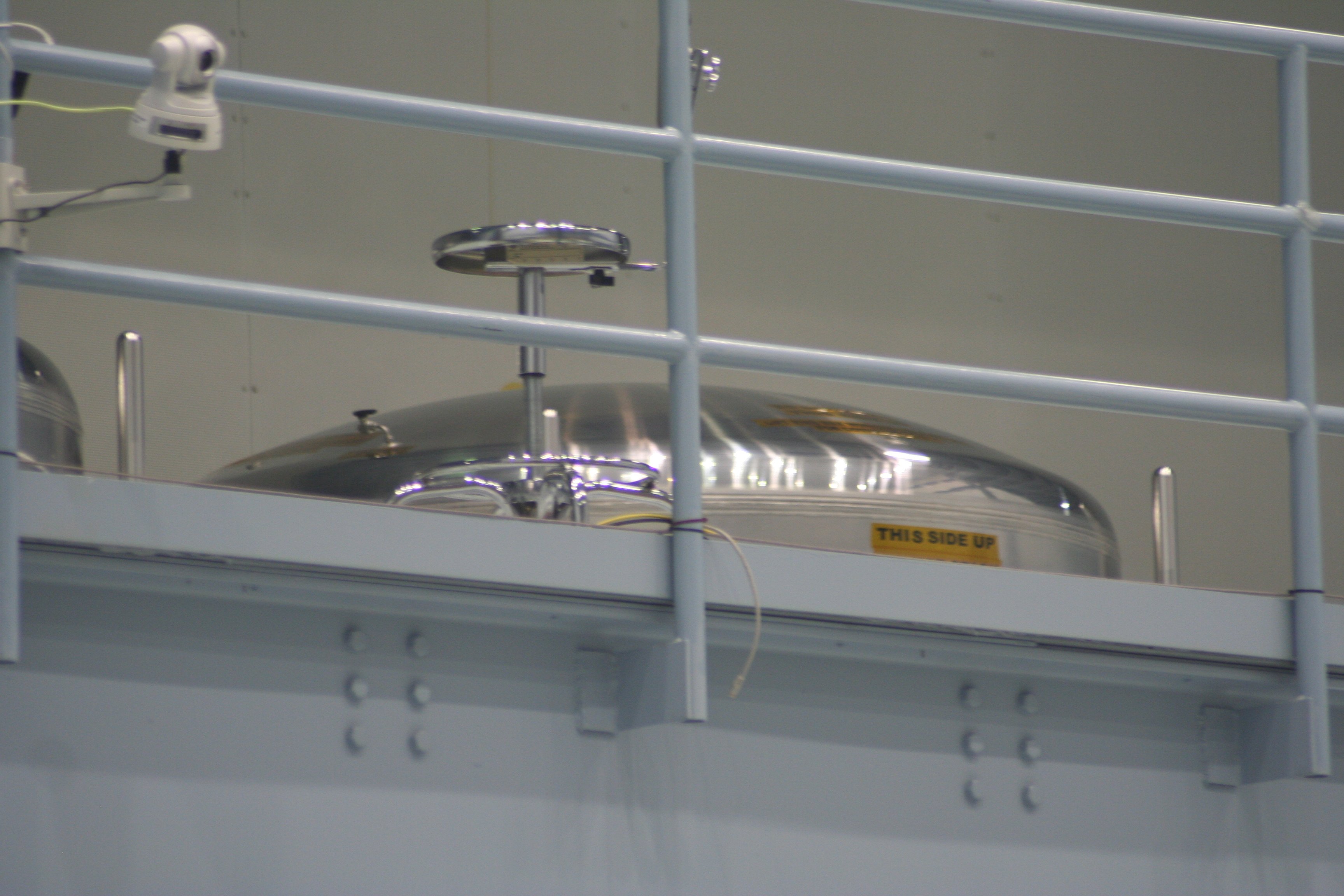
The feed from that little webcam up there is available to the public if you want to see what’s happening in the clean room. Of course, it’s called a Webb-cam.

04_IMG_2605 small

More importantly, those big silver containers are not pods containing alien bodies being prepared to take over humanity. (Or at least, that’s what they said.) They in fact hold the mirror segments that have been assembled and are now awaiting assembly. Over the next two years you might want to check in occasionally to see how assembly is proceeding.

Getting a telescope that big, with all of those folded-up parts, into a package small enough so that it can be launched into space on an Ariane 5 rocket, has got to be a fascinating process to watch. JWST is scheduled to launch in 2018 from French Guiana. With luck both JWST and HST will be working concurrently for at least a year or two. Unlike HST (Happy 25th Birthday!), JWST is only expected to last five to ten years before something fails or the spacecraft runs out of maneuvering fuel.

Gee, for all of those billions of dollars spent on building it, maybe it would be worth figuring out how to spend a bit more and send a crewed Orion out there to refuel and refurbish. Just sayin’!

07_IMG_6267 small

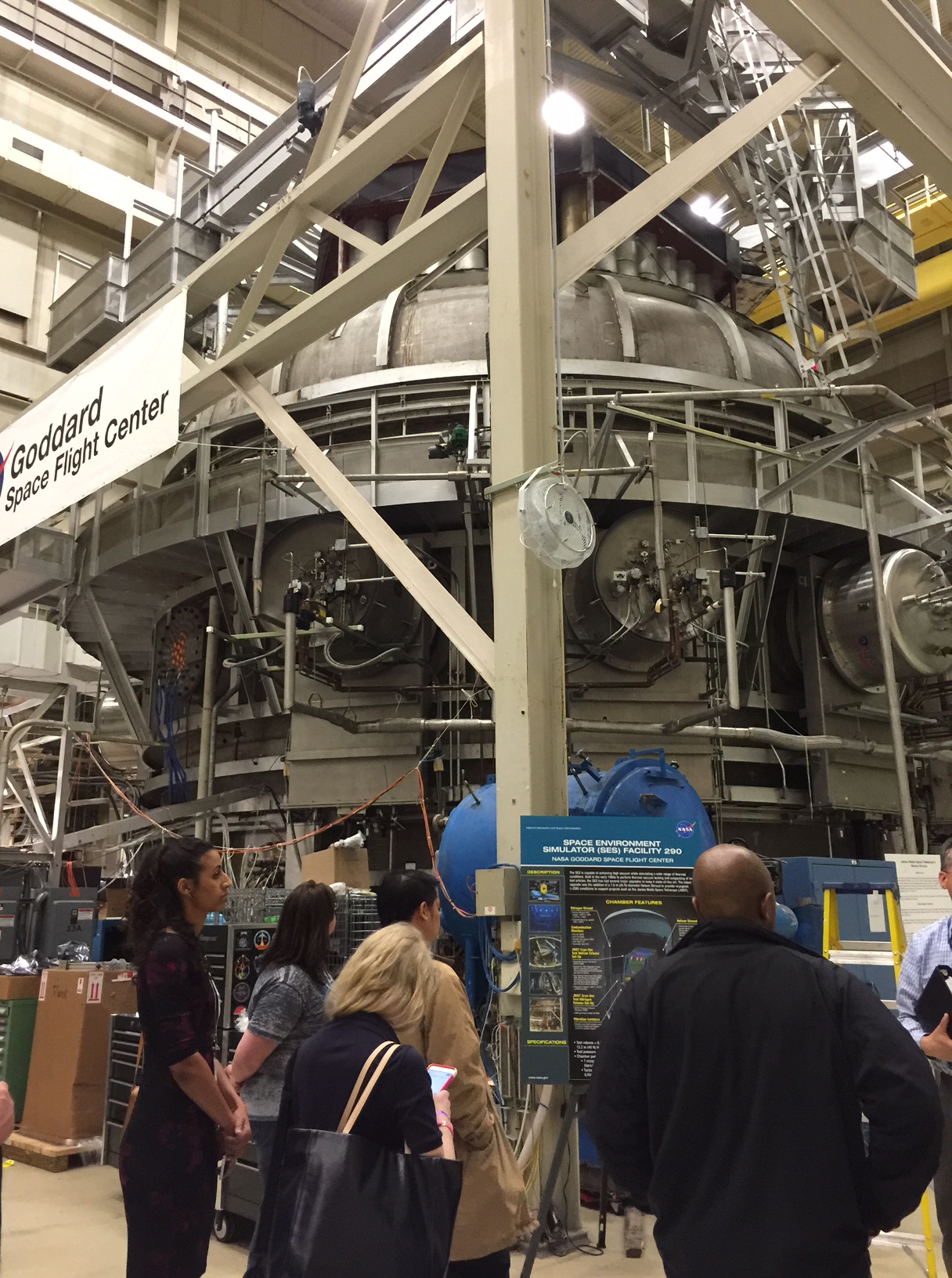
Sent outward and onward, we found the Space Environment Simulator (SES) facility. This chamber actually goes down a floor or more and can be cooled to 20°K, which is -424°F, or heated to 176°F (80°C). This simulates the temperature ranges that JWST will have to endure at L2.  In addition to simulating the extreme temperatures that JWST will live in, the SES can be evacuated down to 10^-7 torr. That’s one ten-billionth of an atmosphere.

While all of this is going on, the SES uses massive amounts of liquid nitrogen and liquid helium to do the cooling. You know those big trucks you see on the freeways carrying liquid gases? (Or the one that gets crashed to freeze the Terminator at the end of T2 – c’mon, you know that you’ve seen it!) The SES uses two of those a day during testing.

08_IMG_6282 smallDr. Dennis Reuter told us about OSIRIS-REx, the Origins-Spectral Interpreation-Resource Identification-Security-Regolith Explorer. As well as being the first US mission to attempt to rendezvous with an asteroid and bring back samples, it’s also proof that the geniuses at NASA can come up with an acronym for ANYTHING.

OSIRIS-REx is scheduled to launch in September 2016 to rendezvous with the asteroid Bennu, an asteroid with a non-zero probability of impacting Earth in the late 22nd Century. (No need to start packing just yet.) It will study what the asteroid is made of (the better to deflect it or otherwise keep it from slamdancing Secaucus) as well as bring back a small sample to be analyzed for organic materials left over from the early creation of the solar system.

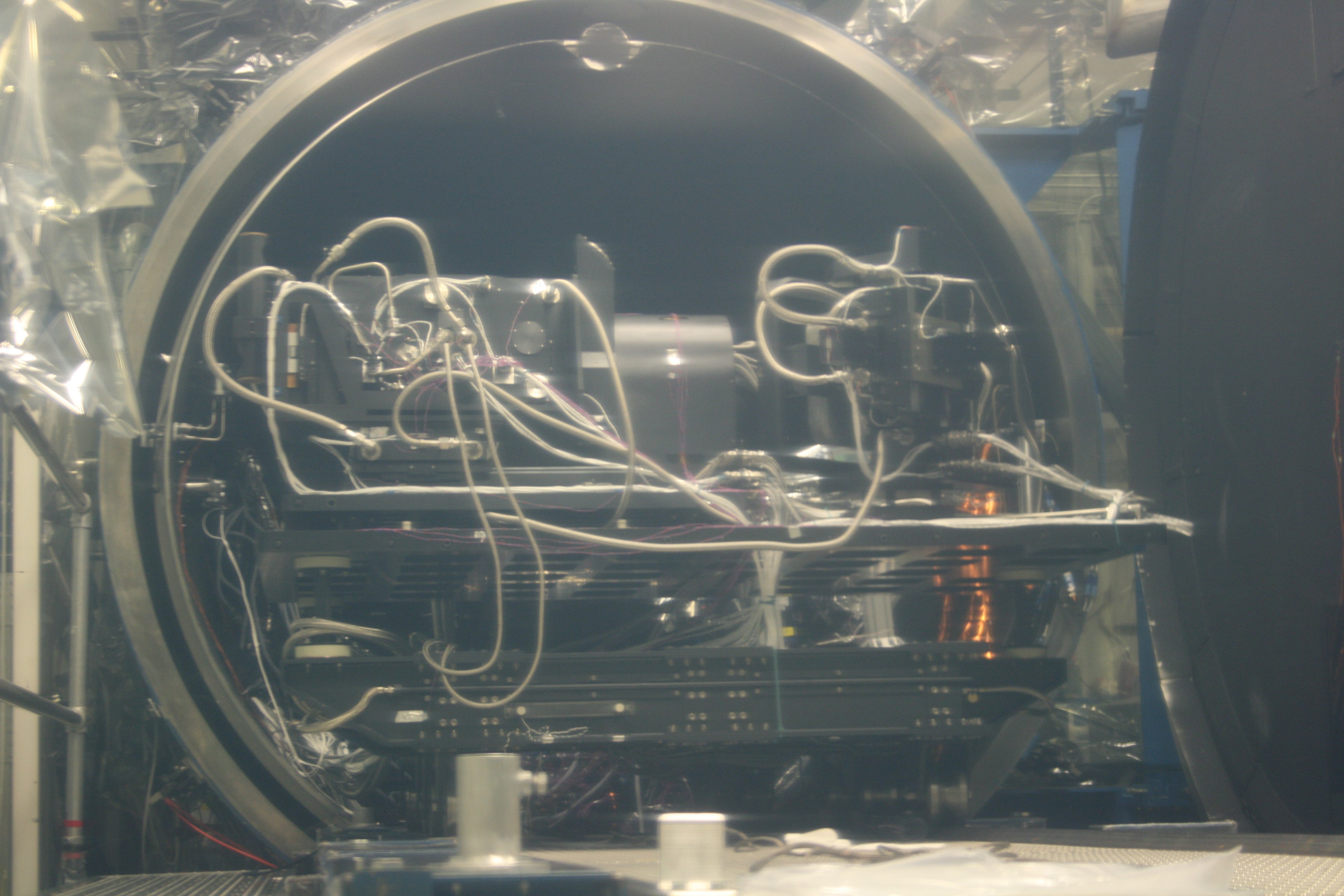
This was also one of the nosiest rooms in the world and I only heard about one of every three or four words. The bottom line is that OSIRIS-REx is being tested and assembled now, must hit its launch window in sixteen months, and will give us invaluable data on what we’re dealing with if/when some asteroid draws a bulls eye on our little slice of heaven.
09_IMG_6287 small

The “close-up” of the flight hardware, as seen through the plastic tent protecting it from outside contaminants. (Like us.) Say hello to Bennu for us!

Next, more on HST’s history and some of the other cutting edge projects being worked on at Goddard.
4 Comments

Filed under Astronomy, Photography, Space, Travel

NASA Social For Hubble25 (Part One)

I really did not expect to get an invite to this event, but I am so, So, SO glad that I did. Having attended three previous NASA Socials at NASA Armstrong and JPL in Southern California, I knew that there would be some fantastic material displayed and some amazing people to meet. Since this event was in Washington, DC, I expected the “superstar” factor to be ramped up a notch, and I was not disappointed.

This was the first event where I was in attendance at a NASA press conference. At a couple of the earlier events on the West Coast we had “participated” in the national news conferences, i.e., we had watched and the group had one or two questions transmitted to be answered at the main event.

The 25th anniversary of the launch of the Hubble Space Telescope (HST) is a milestone event, and it was clear that NASA would make a big deal about it. That was confirmed and reinforced when I got to Washington.

IMG_6175 small

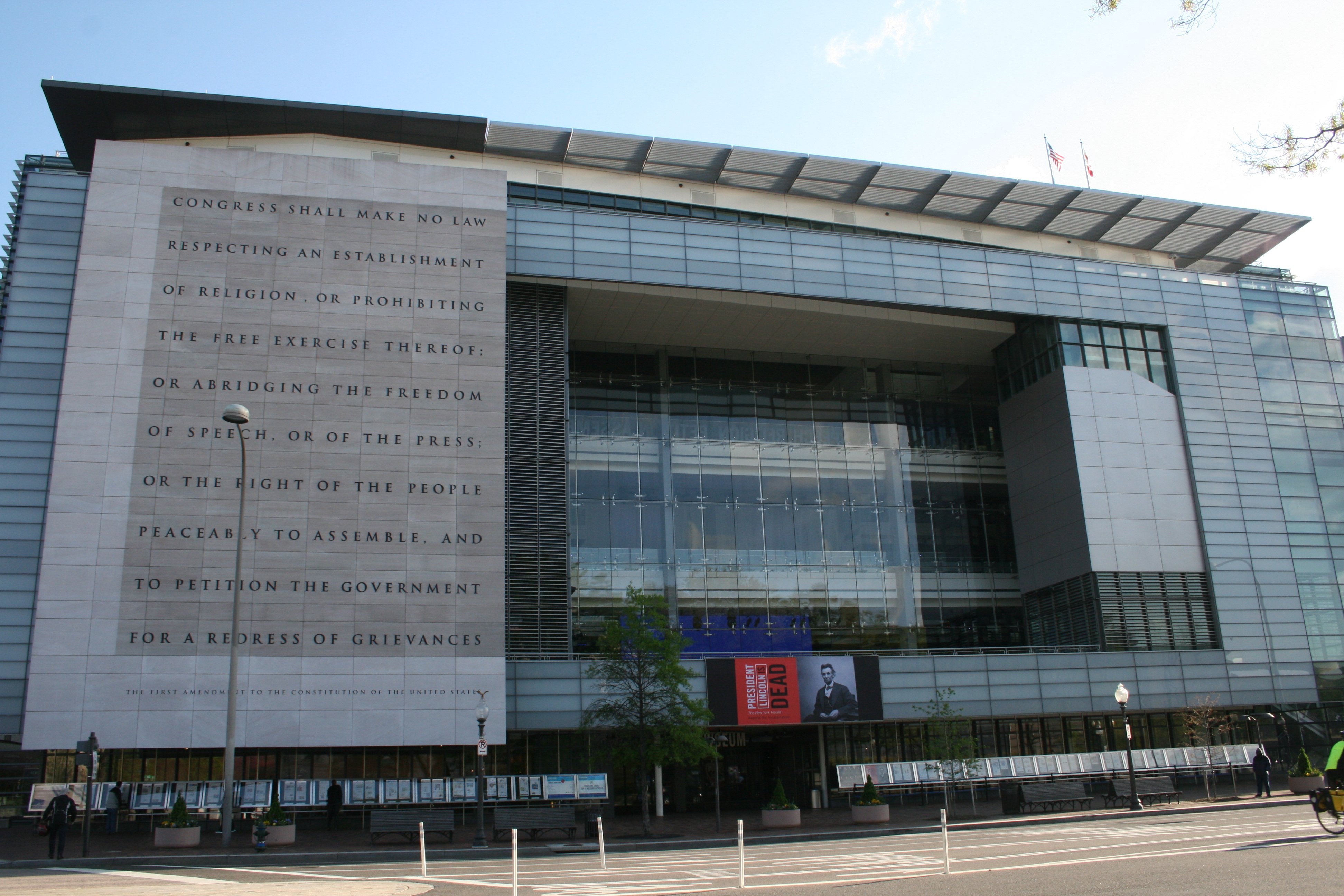
The event was to be held at the Newseum in downtown Washington, just blocks from the Capitol and NASA Headquarters. I had been down to the Mall area the previous day, in part to do the obligatory sightseeing, in part to make sure that I knew how to get there from my hotel using the DC Metro system.

Bright-eyed and bushy-tailed I navigated the system again, getting there a half-hour early. (Much better than getting there a half-hour late.)

Hey, pop quiz! Guess what I spent the half-hour doing? (If you said, “taking a LOT of pictures,” you’re a winner!)

IMG_8227 small

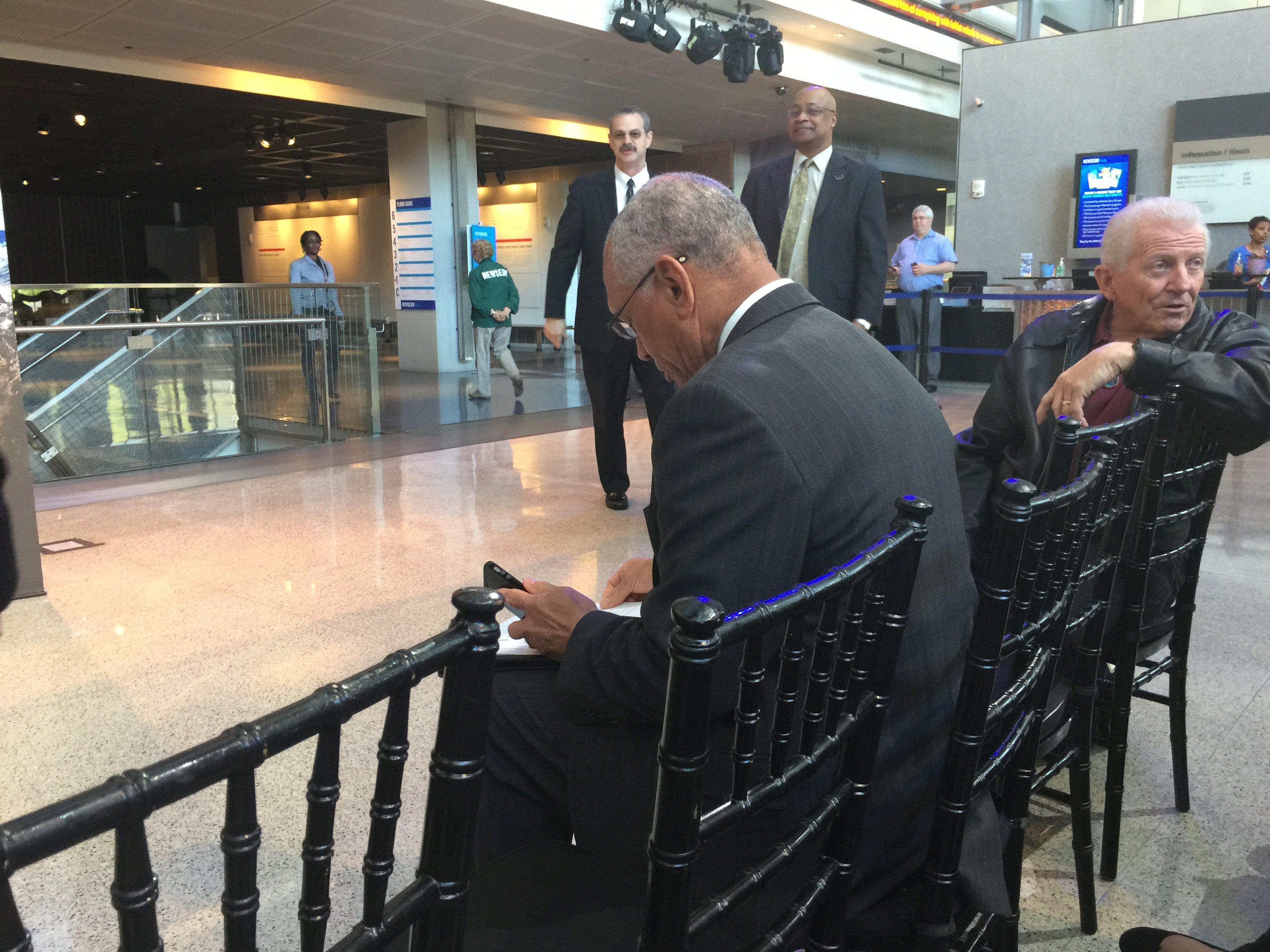
Immediately upon getting inside it was clear that I was not going to be disappointed. Told to grab a seat anywhere except for the first row center seats, I got second row center. Yes, that would be just two seats away from USMC Major General (retired), four-time Space Shuttle astronaut, and current NASA Administrator Charlie Bolden.

I did my best to use my “inside squeee.” No one was looking at me funny (well, no funnier than normal) so I guess I did okay.

Other people looked familiar. Not all were wearing the “normal” NASA astronaut gear (that gorgeous bright blue jacket or flight suit) but my Google-fu was strong. It wasn’t hard to figure that they might be astronauts from the six Space Shuttle flights that launched and serviced HST.

IMG_6184 small

After getting mic’d up and some basic stage instructions on what was going where and who was going up to speak when, we got the usual call of, “We’re live in five, four, three…”

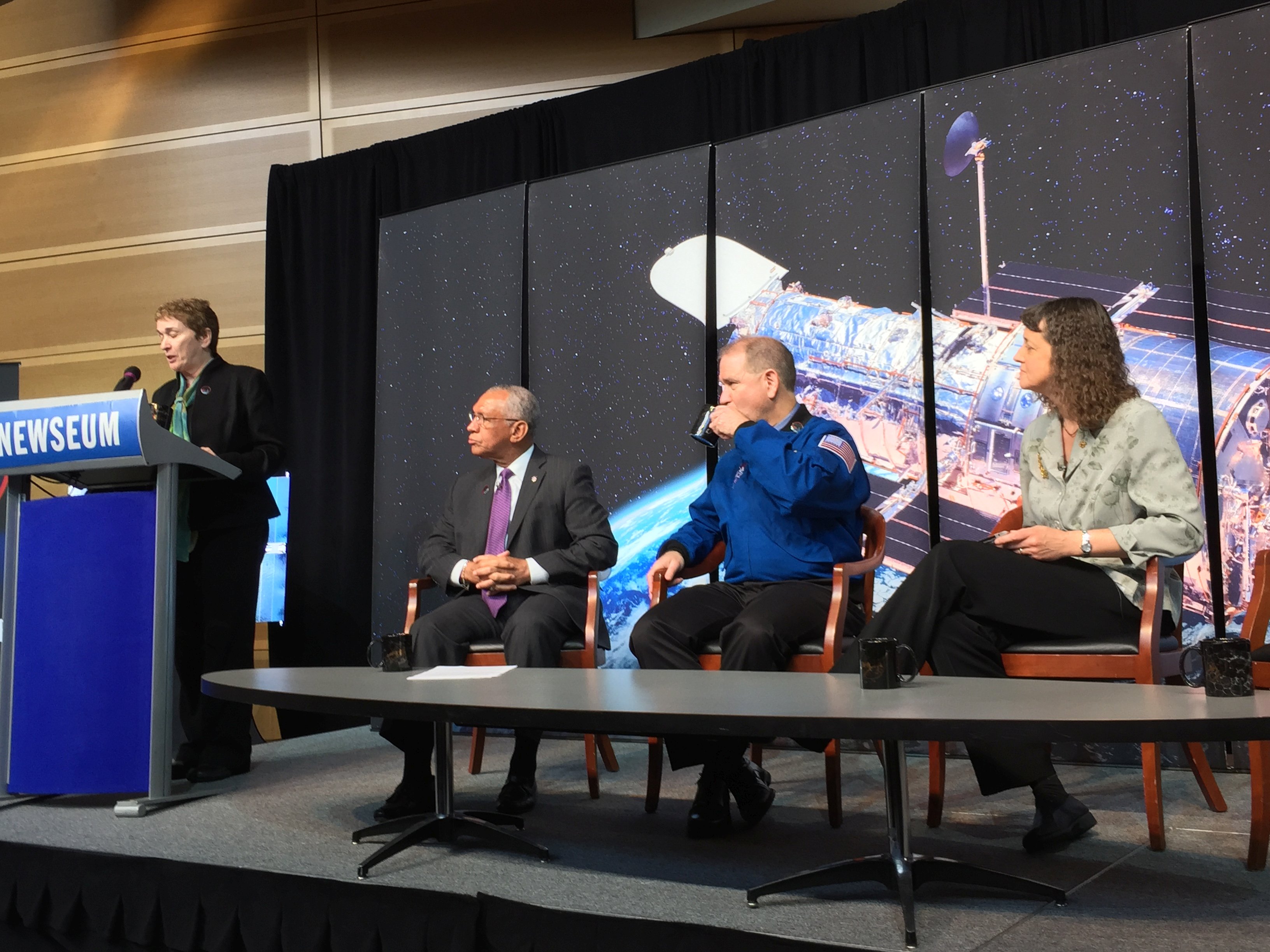
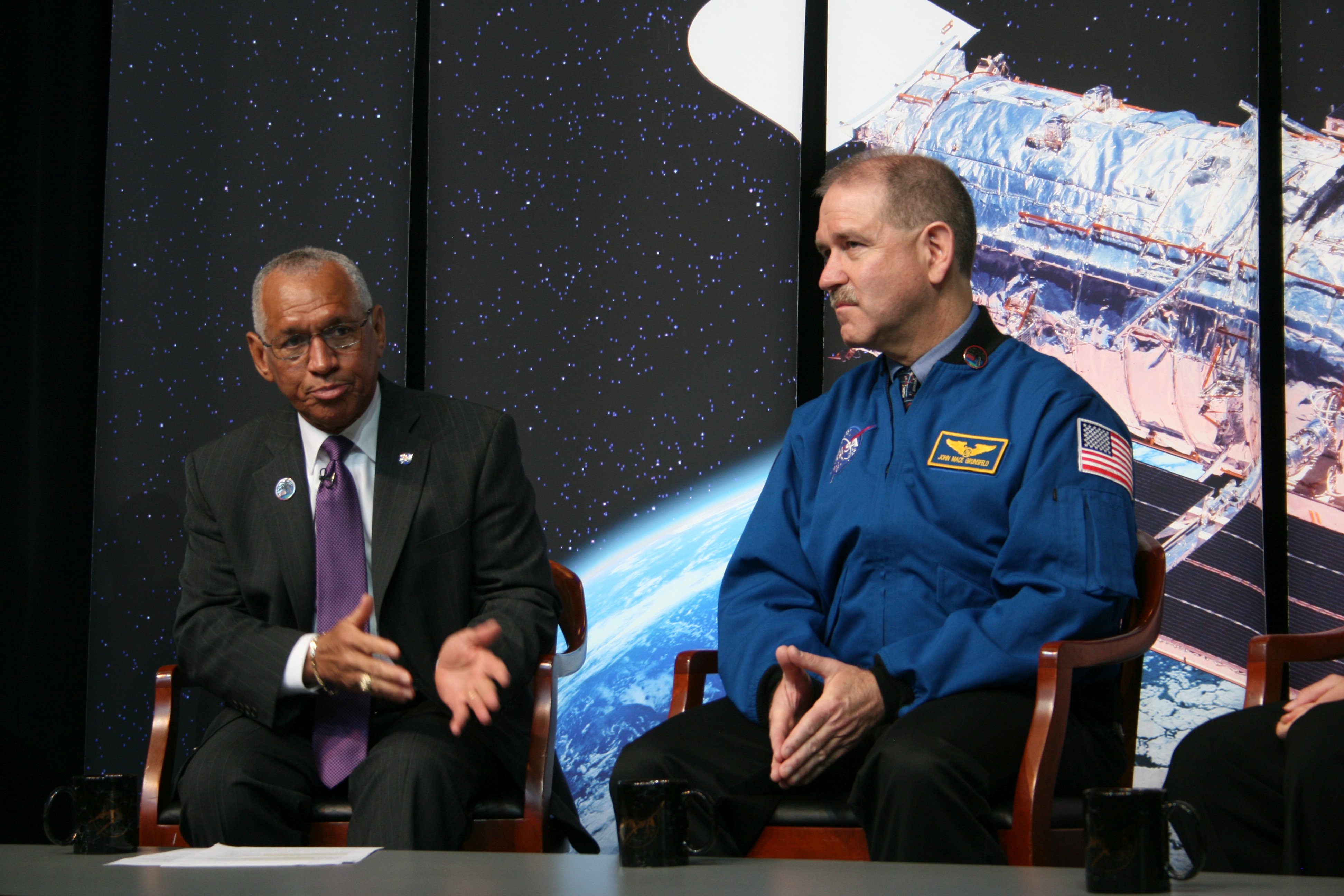
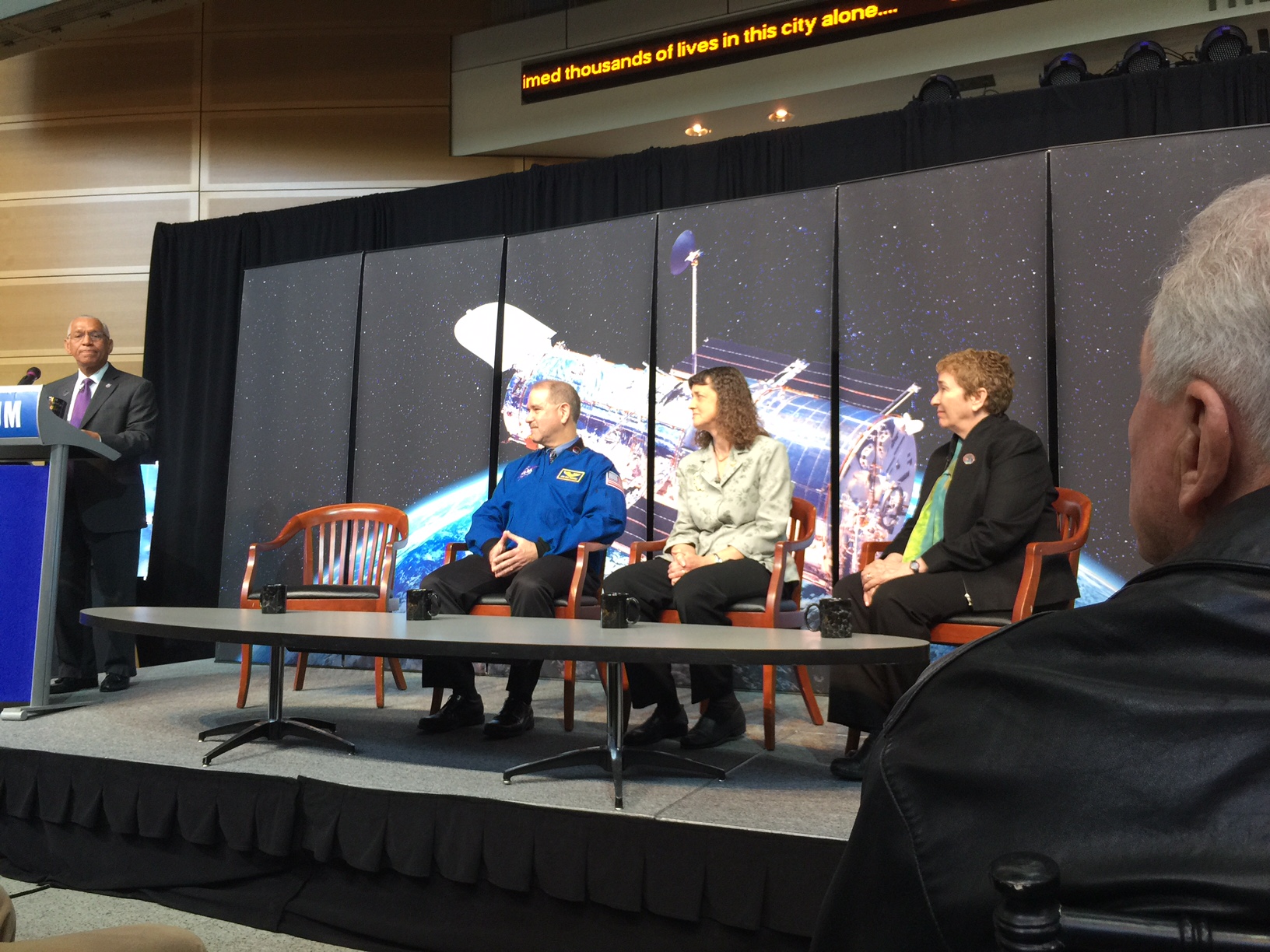
Sitting left to right are Charlie Bolden, John Grunsfeld (five-time Space Shuttle astronaut and current NASA Associate Administrator for the Science Directorate, wearing one of the aforementioned bright blue NASA astronaut jackets), Dr. Jennifer Wiseman (senior project scientist for HST at NASA’s Goddard Space Flight Center), and Dr. Kathryn Flanagan (Deputy Director of STScI, the Space Telescope Science Institute).

IMG_8242 small

That’s some heavy duty personnel for a space cadet like me! You can see the press conference here — I’m in the red shirt near the stage and for the most part they got my good side (the back).

Charlie Bolden has a personal connection to HST – he was onboard the Space Shuttle mission that launched it twenty-five years ago. HST is generating over ten terabytes of data a year and has lasted far longer than it was originally intended to function. That’s in large part due to the five servicing missions by Space Shuttle crews that have rebuilt almost every major system and control on the spacecraft.

HST is now expected to last until at least 2020, barring some sudden, catastrophic failure of a key system. That’s important, because HST’s successor, the James Webb Space Telescope, is supposed to launch in 2018. It would be wonderful if the two telescopes could operate together, reinforcing each other’s observations, for at least a year or two.

Grunsfeld noted that there isn’t anyplace he would rather be than in space. He would go up to ISS in a heartbeat, or on Orion, or to Mars… Bolden just kept nodding agreement.

IMG_8237 small

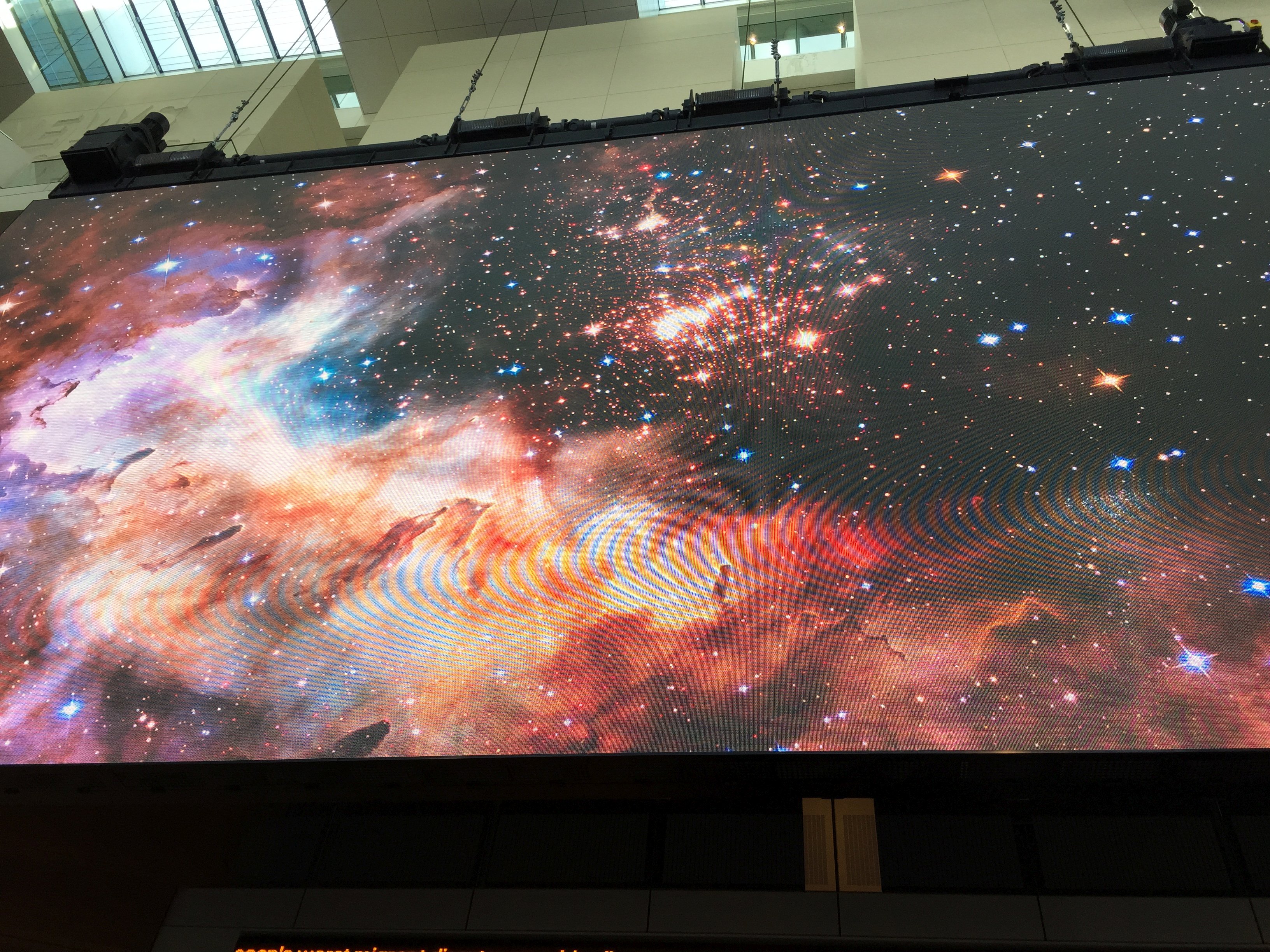
Once all of the opening comments had been made, the big reveal was done by Bolden and Grunsfeld. This new image is a star cluster called Westerlund 2, showing about 3,000 stars embedded in a nebula about 20,000 light years away.

Go see the new image in as much resolution as you can get (a 80″ 4K ultra-high-def monitor will work just fine), and also watch the 3D animation that’s on that site, showing what it would be like to fly through the cluster. Granted, you would have to fly through it at several thousand times the speed of light for it to look like that, and then it wouldn’t look like that because it would be blue-shifted in the X-ray spectrum, and NASA isn’t saying that it’s got the technology to travel at several thousand times the speed of light — but you know what I mean.

As good as it looks on your monitor, it’s hard to beat having it over your head on a high-def monitor about sixty feet across, while you’re sitting next to a bunch of shuttle astronauts. (Just sayin’. Yeah, sorry, still squeeeeing a bit inside.)

IMG_6189 small

After the reveal there was a Q&A session. Among the best questions asked and answered was one regarding common public misconceptions regarding Hubble. The answer went to something that I learned long ago in college when I was taking an upper-level course on stellar astrophysics.

We look at all of these images and we see them in bright colors. Some of the images are actually not taken in visible light, but in infrared, ultraviolet, or some other frequency of light. They’re then turned into “color” images based on some scientific and some artistic criteria. Plus, I’m talking about just the images released to the public – some data is just that, data, and never gets turned into an image, or if it is, will be completely false-color for the researcher’s benefit to highlight some aspect of the data or another.

But even for pictures taken in visible light, most people believe that if we could somehow be transported much, much nearer to these objects, they would look to our eye the way that the Hubble pictures make them look, and that’s not true. The other factor involved is how dim these objects are. If you were floating in space somewhere where you could see, say, the Pillars of Creation nebula, you wouldn’t see all of those stunning blues and yellows and oranges. You would see the couple of bright stars in the field, but the clouds of dust and gas would be black, grey, or at best, a faint, foggy white.

The reason that the Hubble pictures look so vibrant (and this is true of any astrophotography of deep space objects, even ones done in the 1950’s by ground-based telescopes or done today by amateur astronomers like myself) is because they collect far, far more photons than the human eye can capture. The pupil of your eye is less than a centimeter across – the HST mirror is over seven feet across. In addition, your eye collects data and sends an image to your brain hundreds of times a second – the HST photos are the result of hours (and in some cases days) of accumulated light collection.

The other great observation of the day came from John Grunsfeld when he noted that Hubble hasn’t discovered a single thing. It’s just a robot, a tool. The people who built it, launched it, and run it are the ones who have made the discoveries and changed the way we look at the universe. An excellent observation, and important to keep in mind.

IMG_6197 small

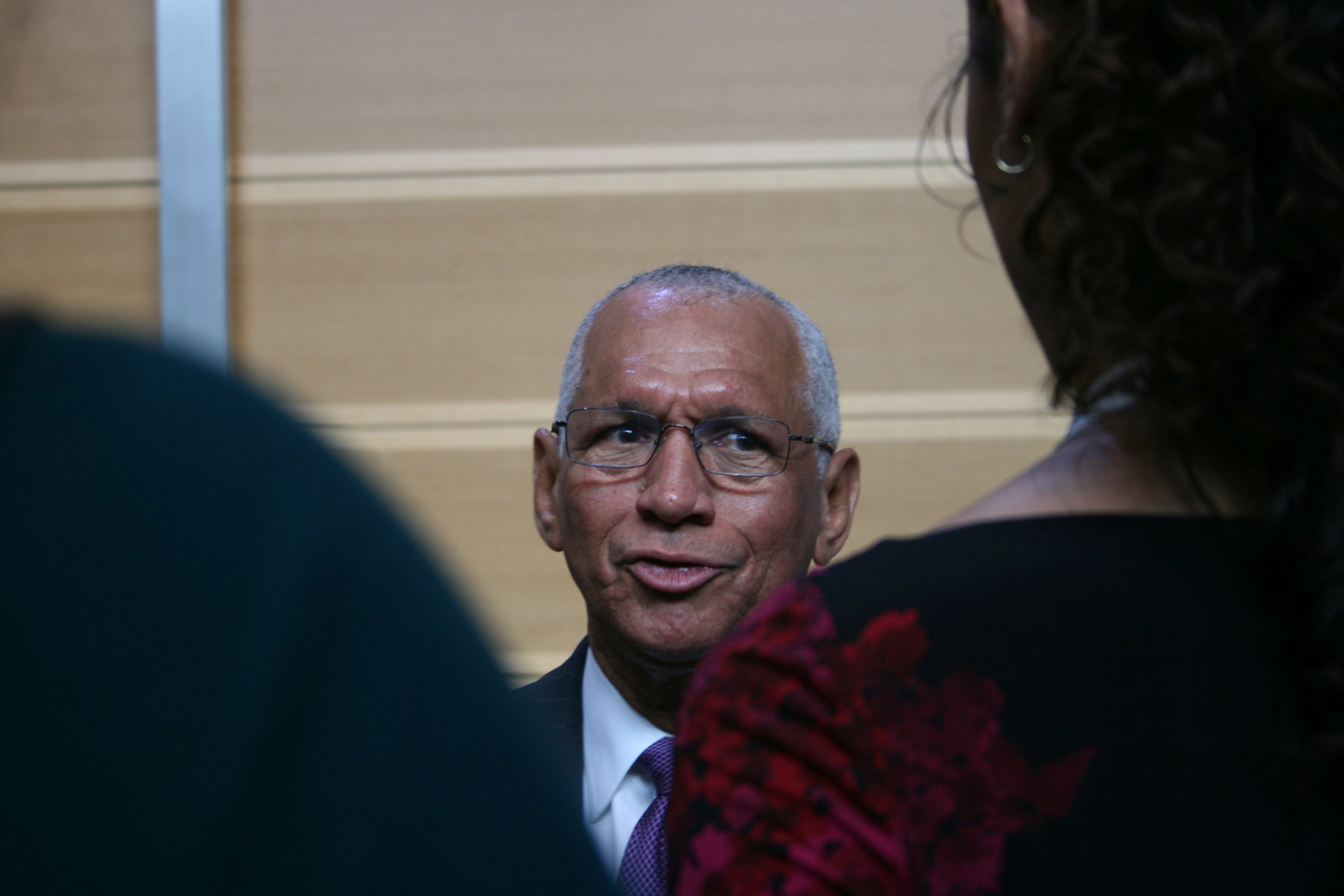
After the press conference, I got to meet and chat for a brief second with Charlie Bolden, and listened in while he was interviewed by a reporter.

IMG_6195 small

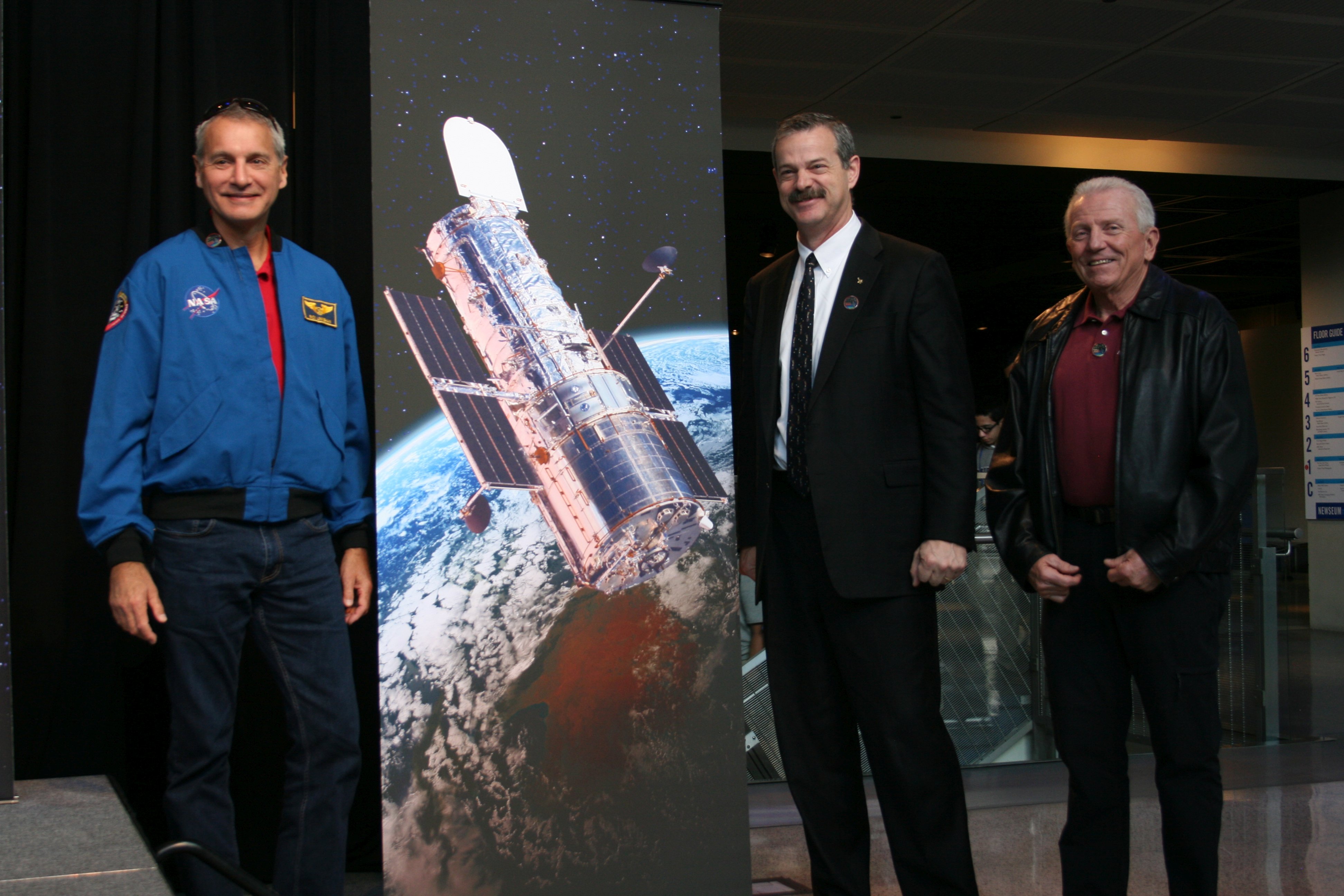
Other than Bolden and Grunsfeld, there were three other Space Shuttle astronauts there, here seen posing next to one of the posters showing the HST. From left to right are Richard Linnehan (four Space Shuttle missions, including the fourth HST servicing mission), Scott Altman (four Space Shuttle missions, including being the mission commander of the fourth and fifth HST servicing missions), and Loren Shriver (three Space Shuttle missions, including being the commander of STS-31, which launched HST).

IMG_8253 small

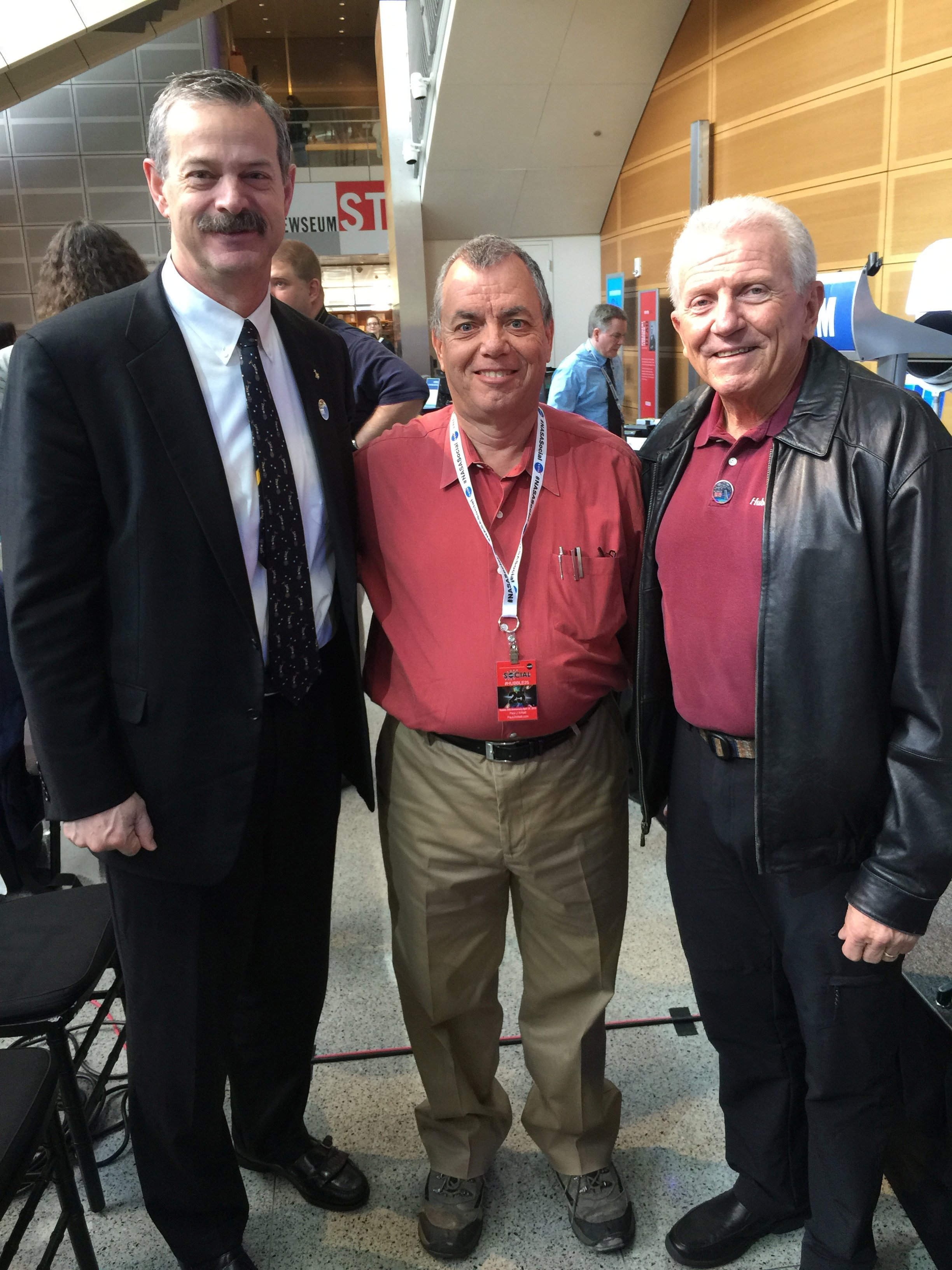
Normally, I’m not one to be asking folks to get my picture taken with them, but in this case I made an exception. I had been talking to Altman and Shriver for several minutes about the future of HST and there had been a steady stream of other NASA Social attendees coming up to get their pictures taken with them. “When in Rome…”

Yeah, still squeeing.

Next, the rest of the day at Goddard Space Flight Center.

Leave a comment

Filed under Astronomy, Photography, Space, Travel

Sunday In DC Snapshots

Number One issue this week with trying to keep up on this site – hotel internet that sucks, sucks, sucks. Aside from the fact that it’s running at barely 2 Mbps download and only 0.28 Mbps upload, that’s when it’s actually up. I can always connect – but it freezes or locks up and I have to re-connect every five minutes or so.

Note to self – Self, add to the travel checklist, “Check internet & wi-fi speed and Yelp comments before booking hotel!”

Final day of sightseeing, glorious weather, one really sore toe with a blister, but some great sights. More, of course, when I get back home and can actually connect and post something like this in a half hour rather than in three hours.

IMG_8719

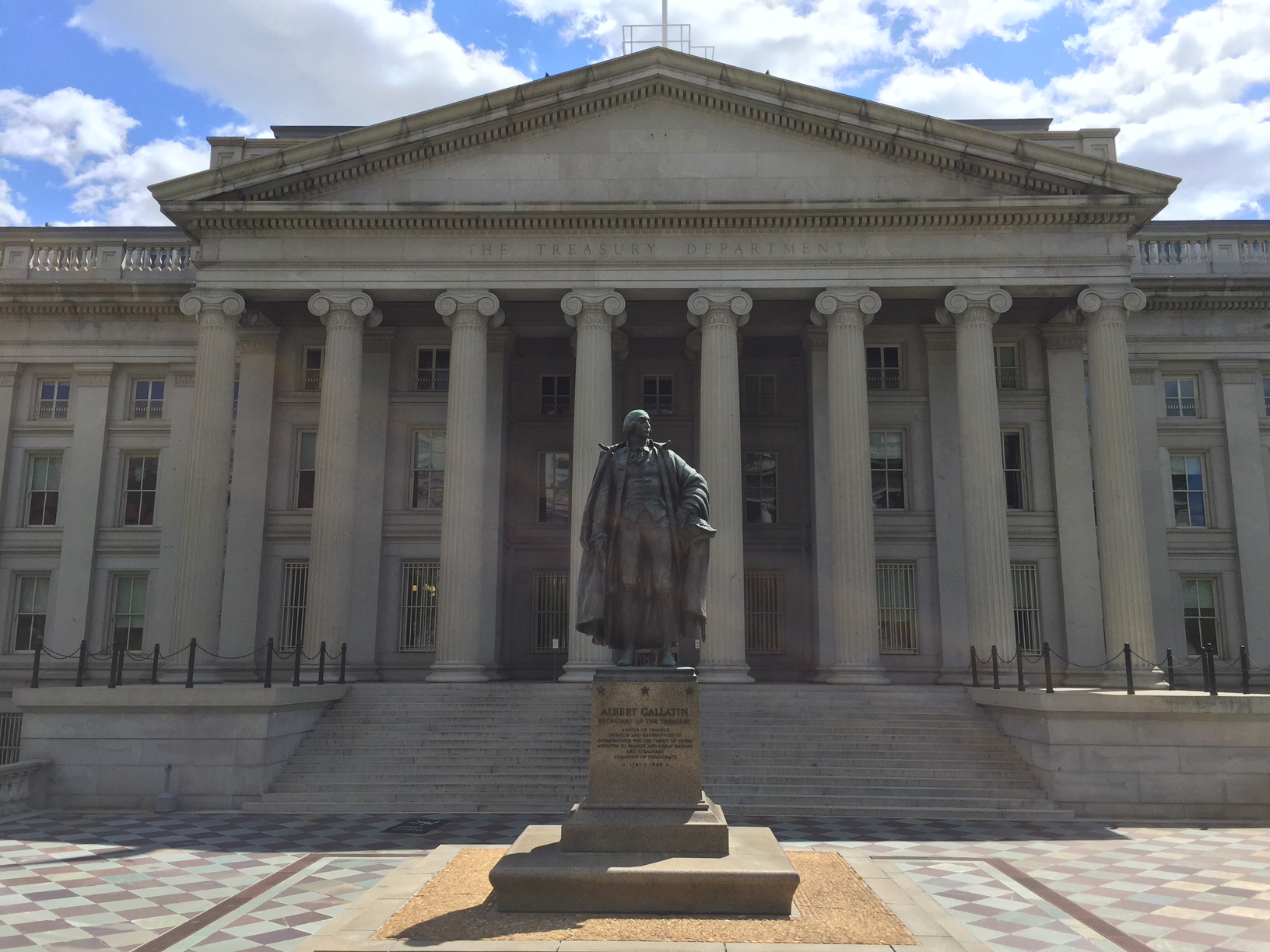
Treasury Department

IMG_8725

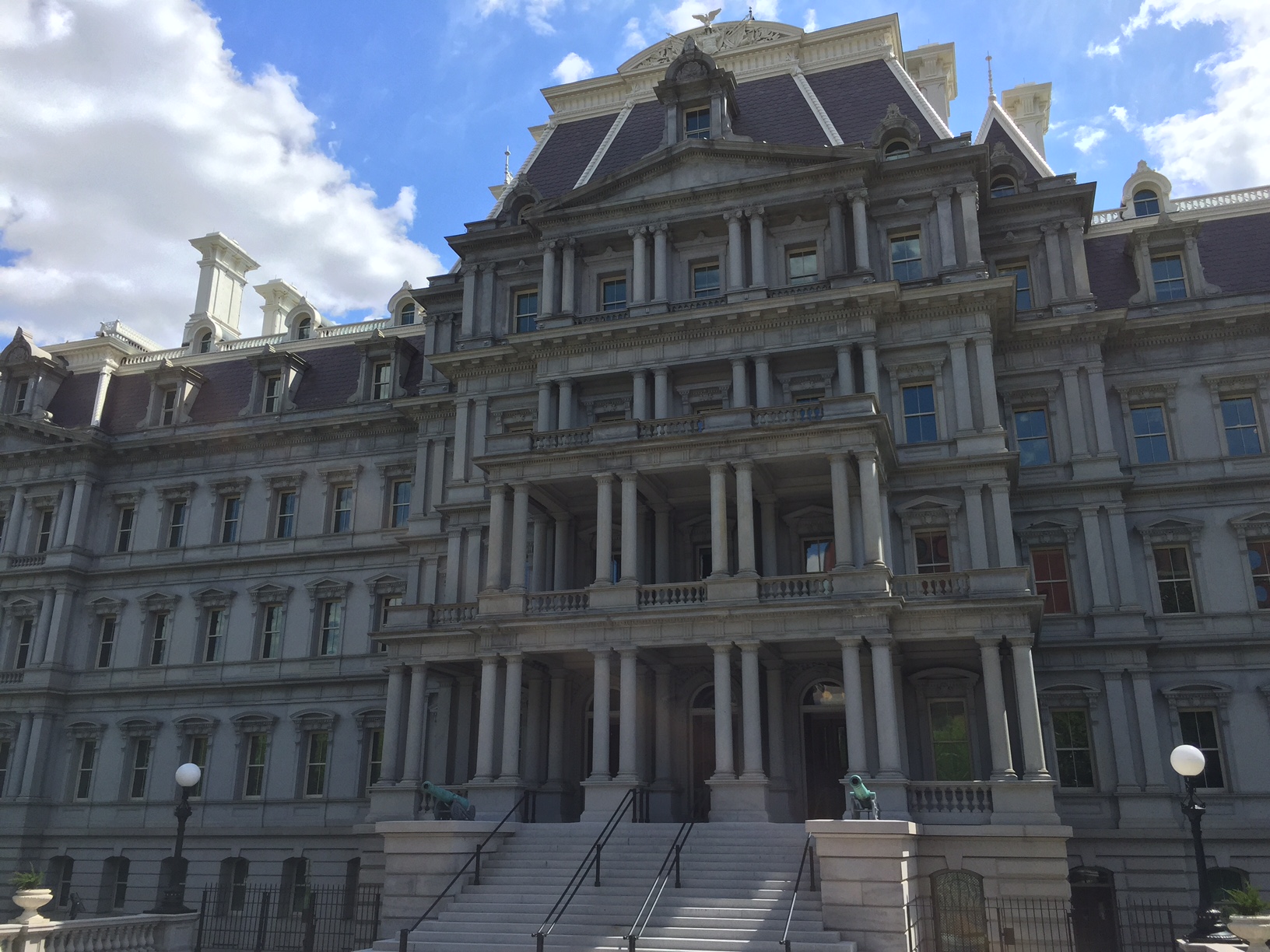
Eisenhower Executive Office Building

IMG_8729

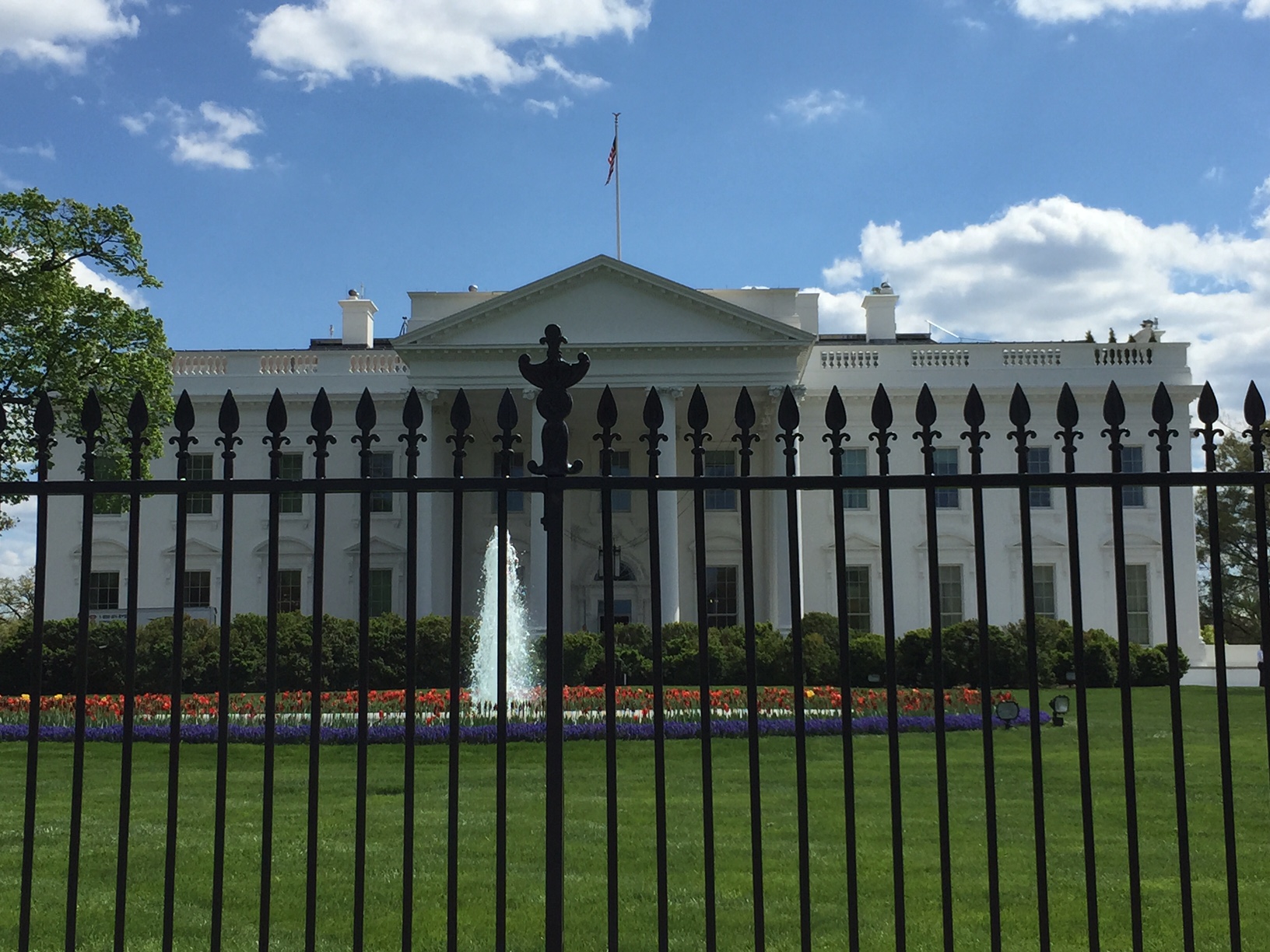
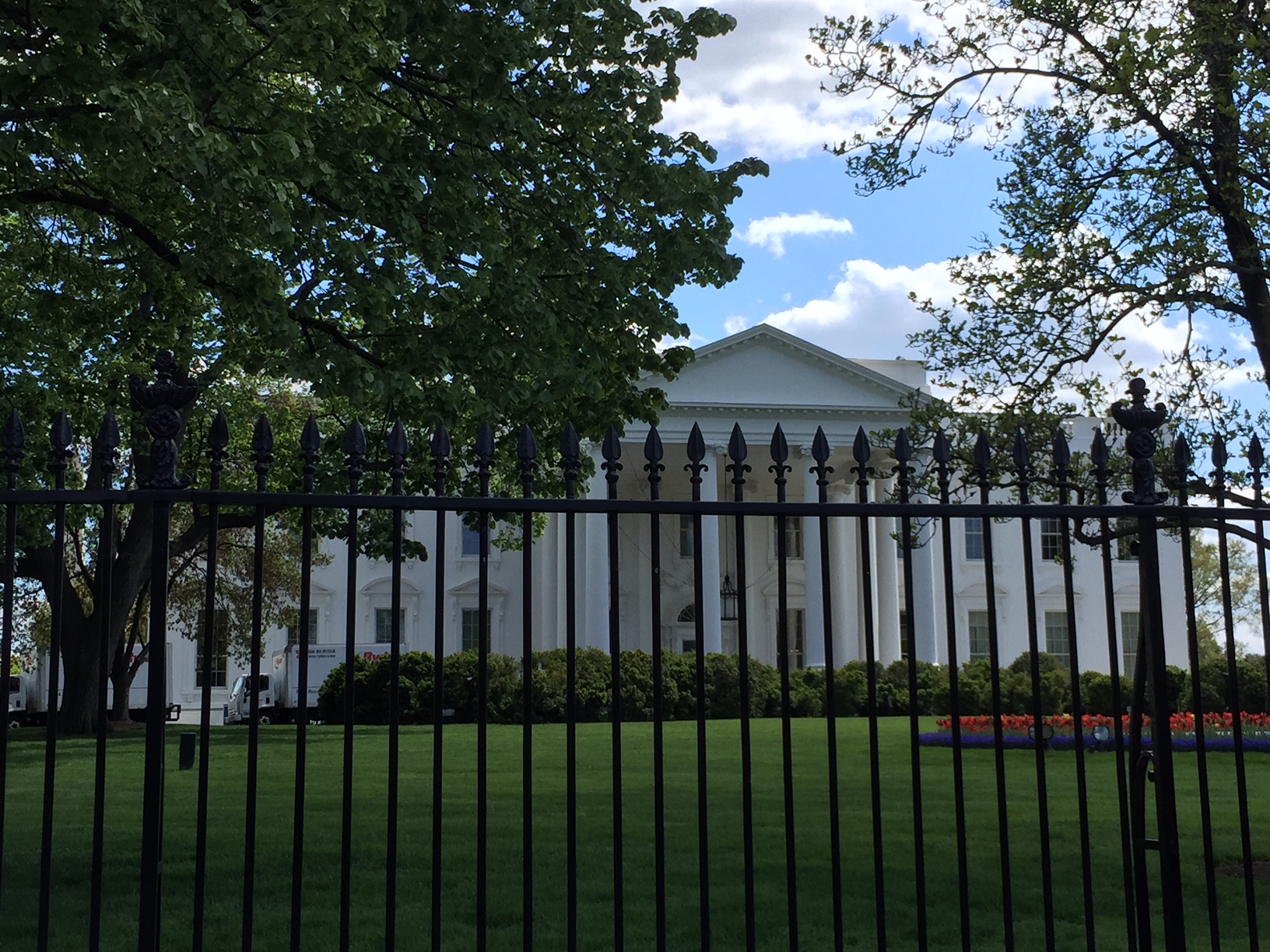
White House

IMG_8732

White House

IMG_8738

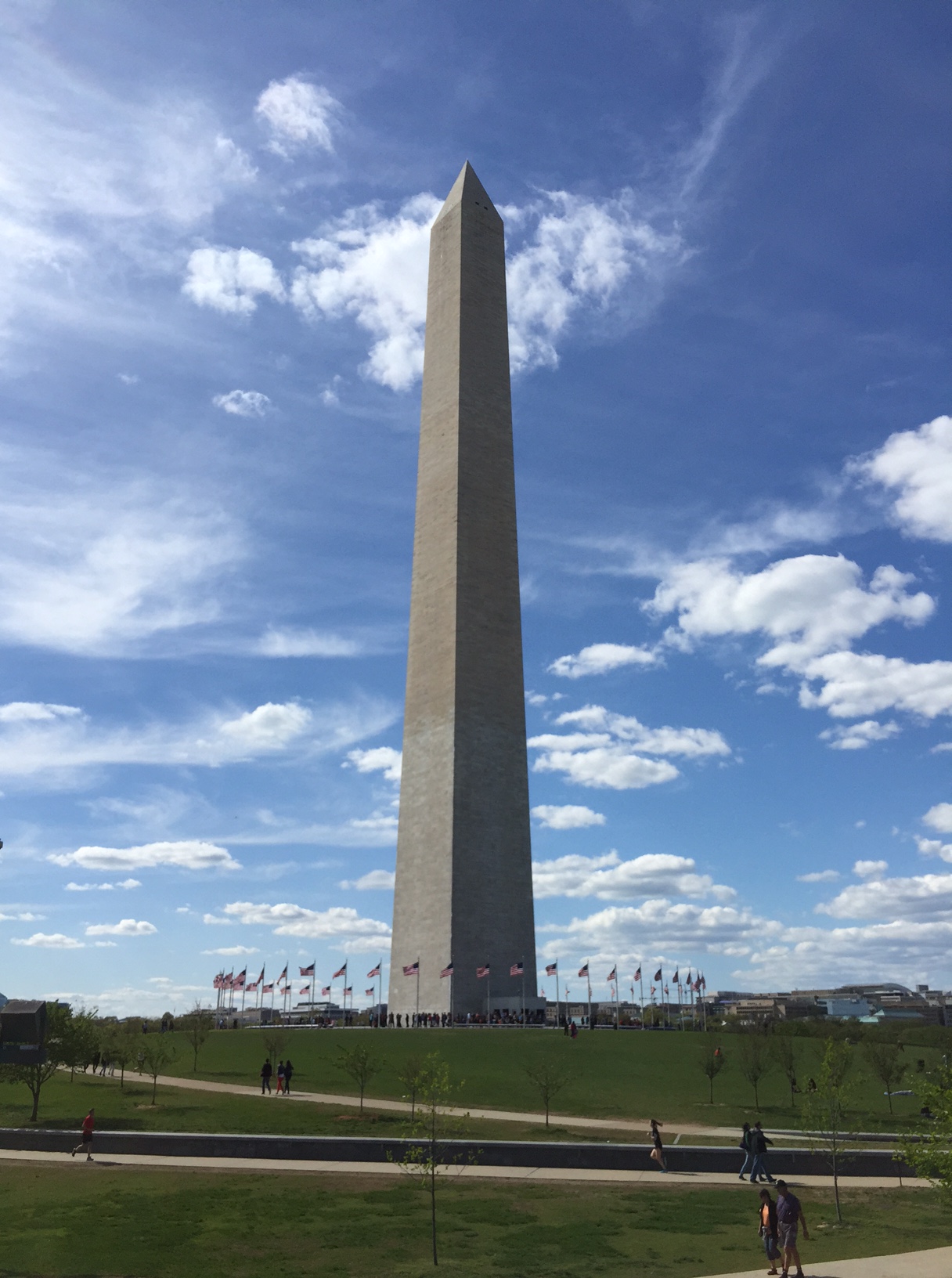
Washington Monument in the warm sun instead of ungodly cold & rain

IMG_8745

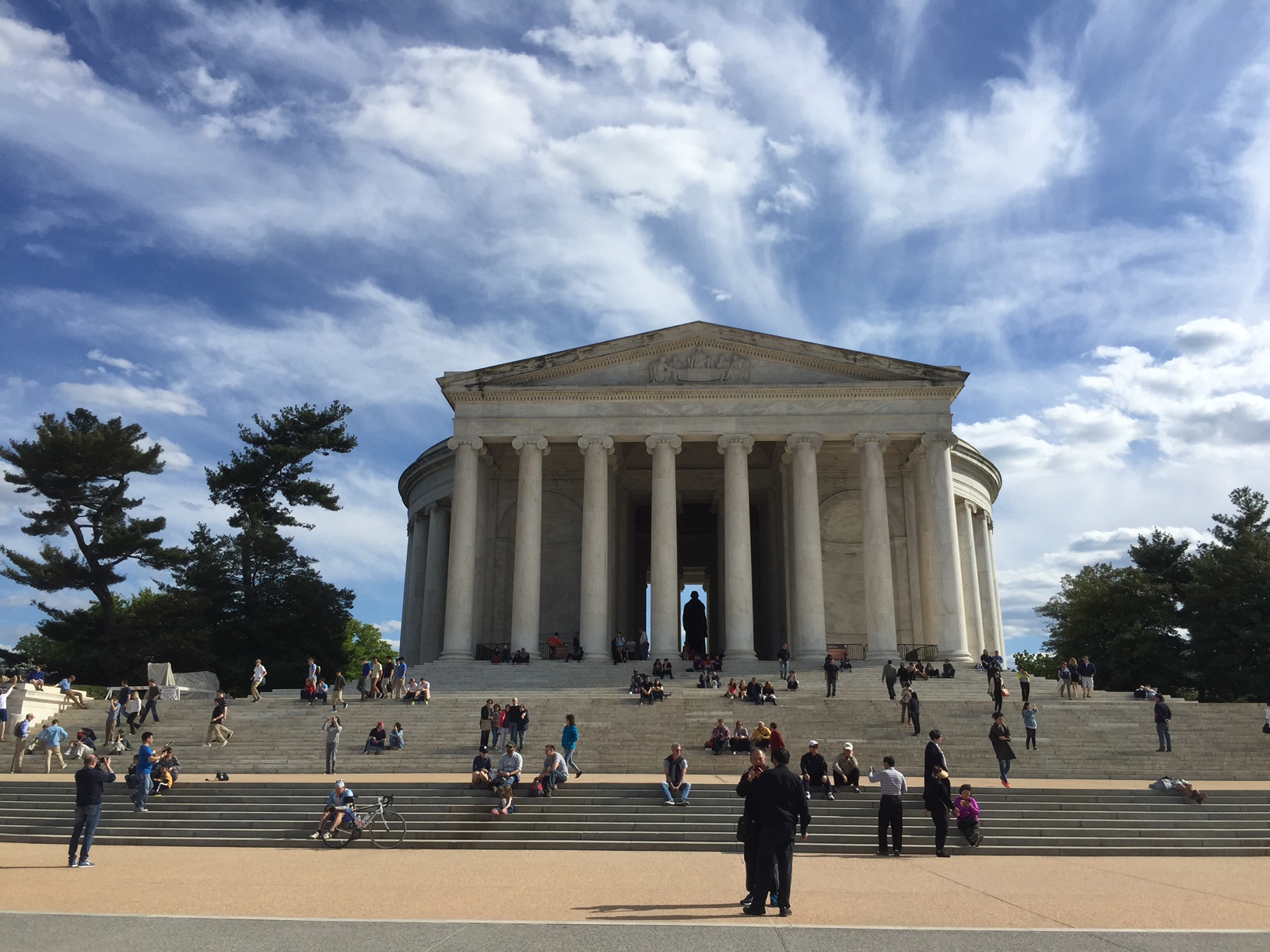
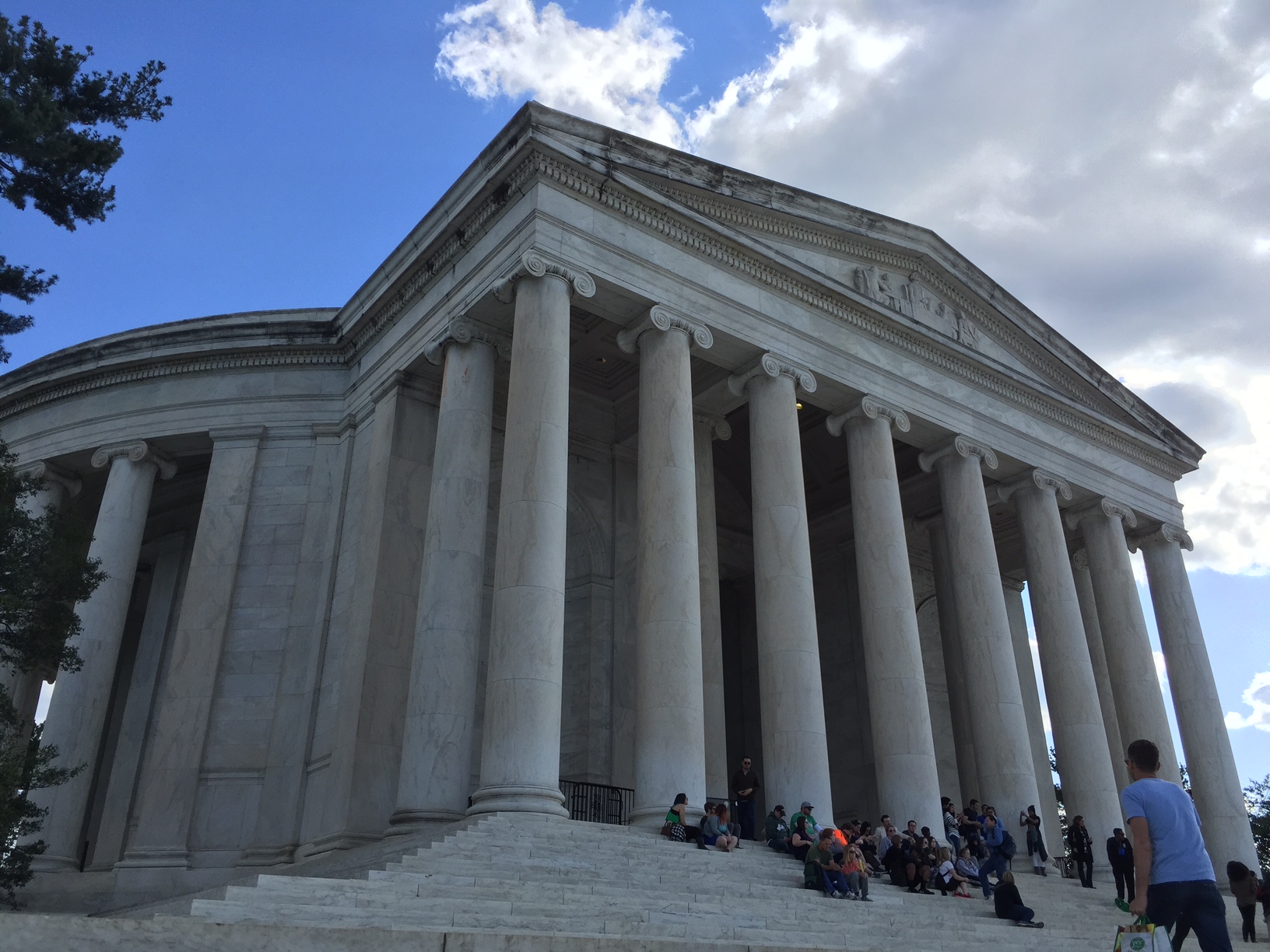
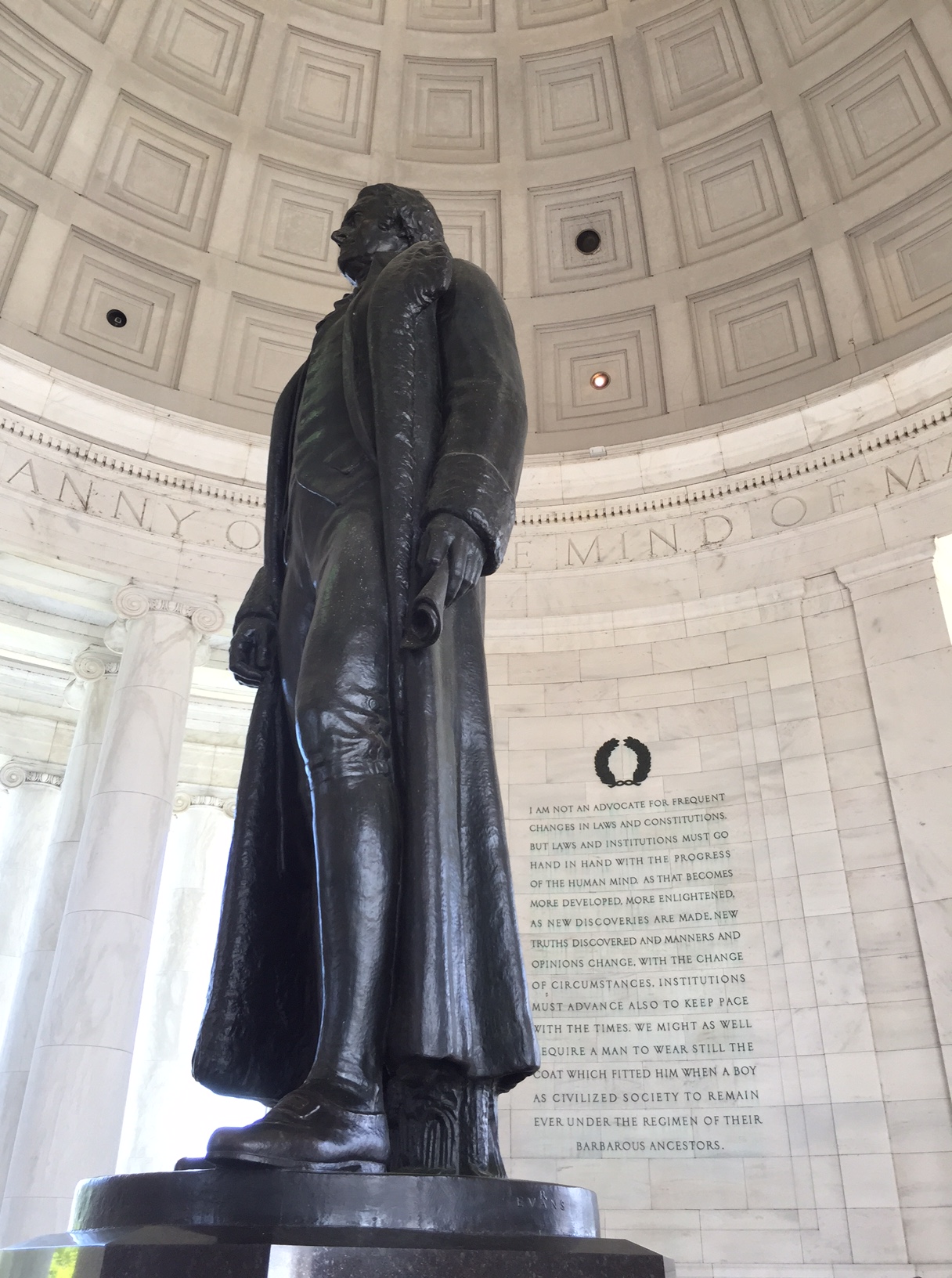
Jefferson Memorial. First time I’ve ever visited here.

IMG_8768Jefferson Memorial

IMG_8748

Jefferson Memorial. I love this picture.

IMG_8777

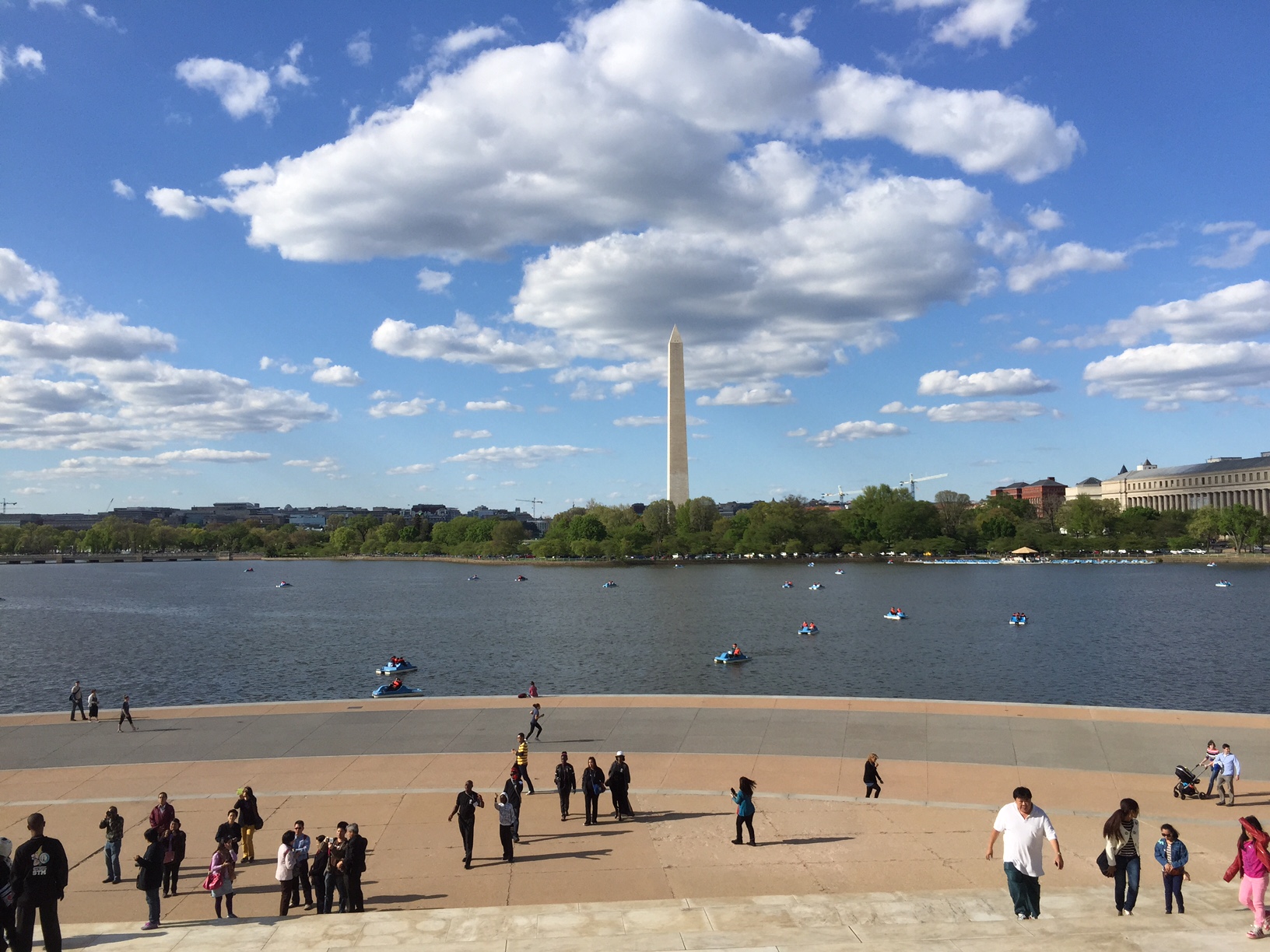
From the steps of the Jefferson Memorial, across the Tidal Basin full of paddle boats, you can see the White House through the trees to the left of the Washington Monument.

2 Comments

Filed under Photography, Travel

Saturday In DC Snapshots

So much to talk about in more detail about all of this! So, so late getting back to the hotel every night! So, so, so sick of the hotel internet being about as fast as a 9600 baud modem (google it, kids) and dropping out every couple of minutes. Trying to upload photos is so slow that it’s like watching grass grow.

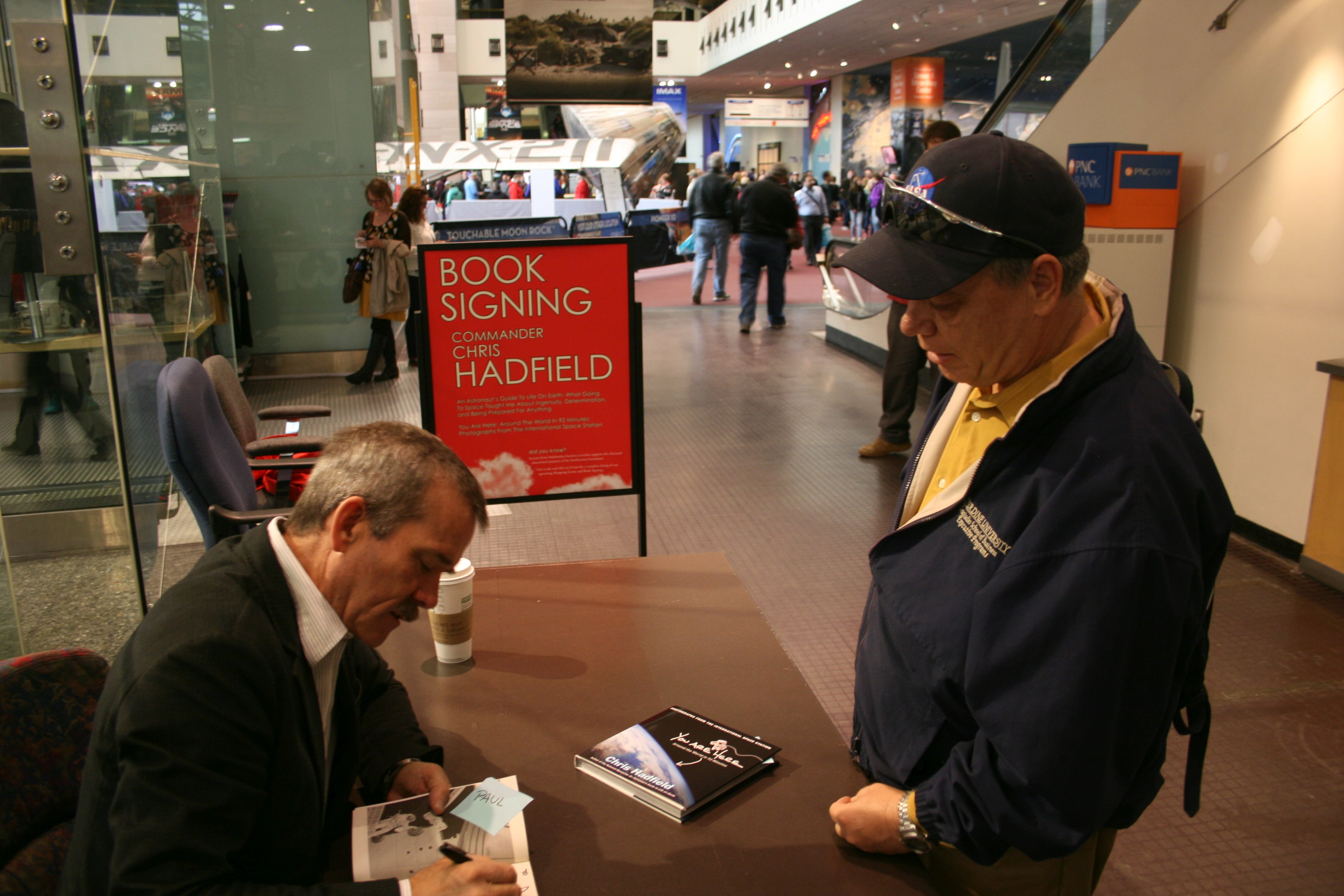
I found myself back at the Smithsonian Air & Space Museum today. Not that I really needed a big excuse, but I had heard that there was a certain Canadian astronaut, musician, and author who would be there signing his two books. I figured there might be an hour or more wait, but it would be worth it anyway. Instead, it was a twenty minute wait and there was time to actually chat for a minute or two about his work, the CAF, his F-86 Saber jet, and his concerts with Amanda Palmer.

If that’s not a highlight in a week full of highlights, I don’t know what would be!

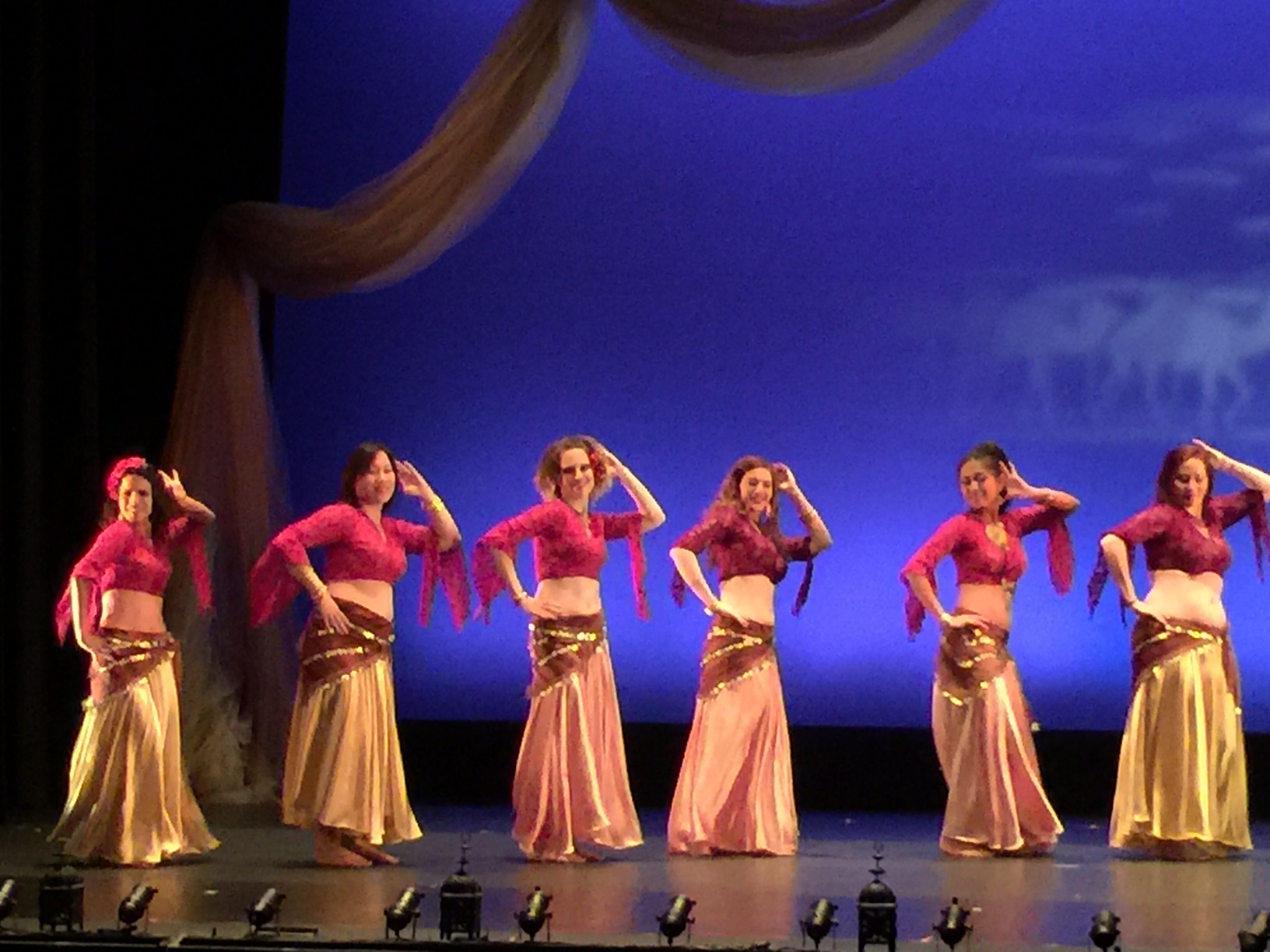
Then, of course, as long as I was already there and there were a few galleries that I hadn’t seen yesterday… And where yesterday the HUGE Robert McCall mural in the main hallway had been mostly covered up by curtains hiding construction equipment, today it was there to be seen in all of its glory… And then, since there are other things in DC besides NASA Socials and museums and monuments, I met The Long-Suffering Sister-In-Law for a dance performance at her daughter’s college.

And now it’s again after 1:45 AM local and the wi-fi just went out for the 100th time… Snapshots, just snapshots for now.

IMG_7115 small

IMG_7129 small

IMG_8647

IMG_8665

IMG_8668

IMG_8674

IMG_8685

IMG_8707

IMG_8709


Leave a comment

Filed under Art, Astronomy, Family, Photography, Space, Travel

Air & Space Museum Snapshots

What another wonderful, exciting, amazing day! And the hotel internet still sucks.

Again, many pictures (probably not these exact ones) along with comments and captions were posted to Twitter (@momdude56) and you can see them on the right side of the screen. Again, I will bury you with more pictures and stories and things when I can about today’s adventures.

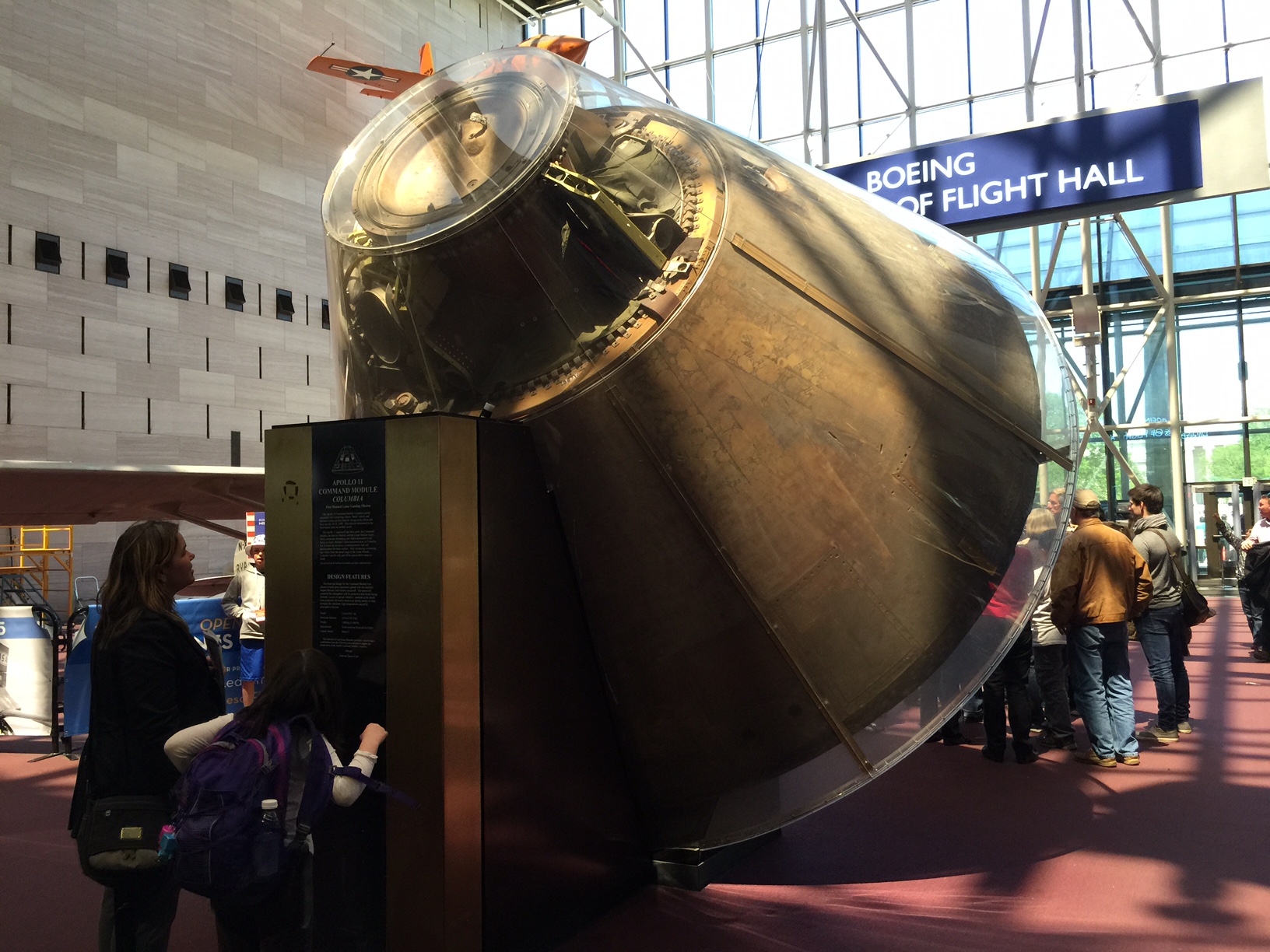
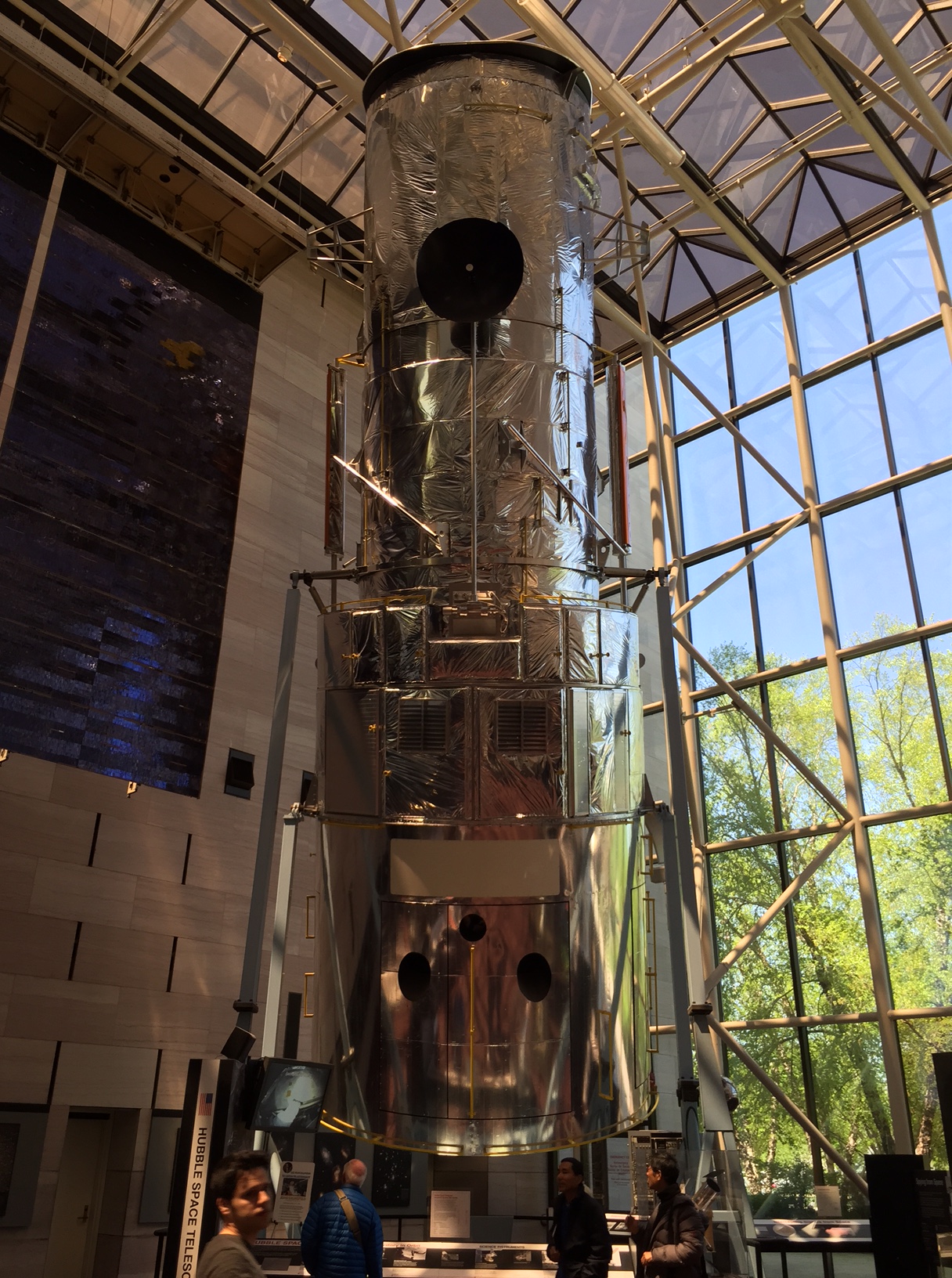
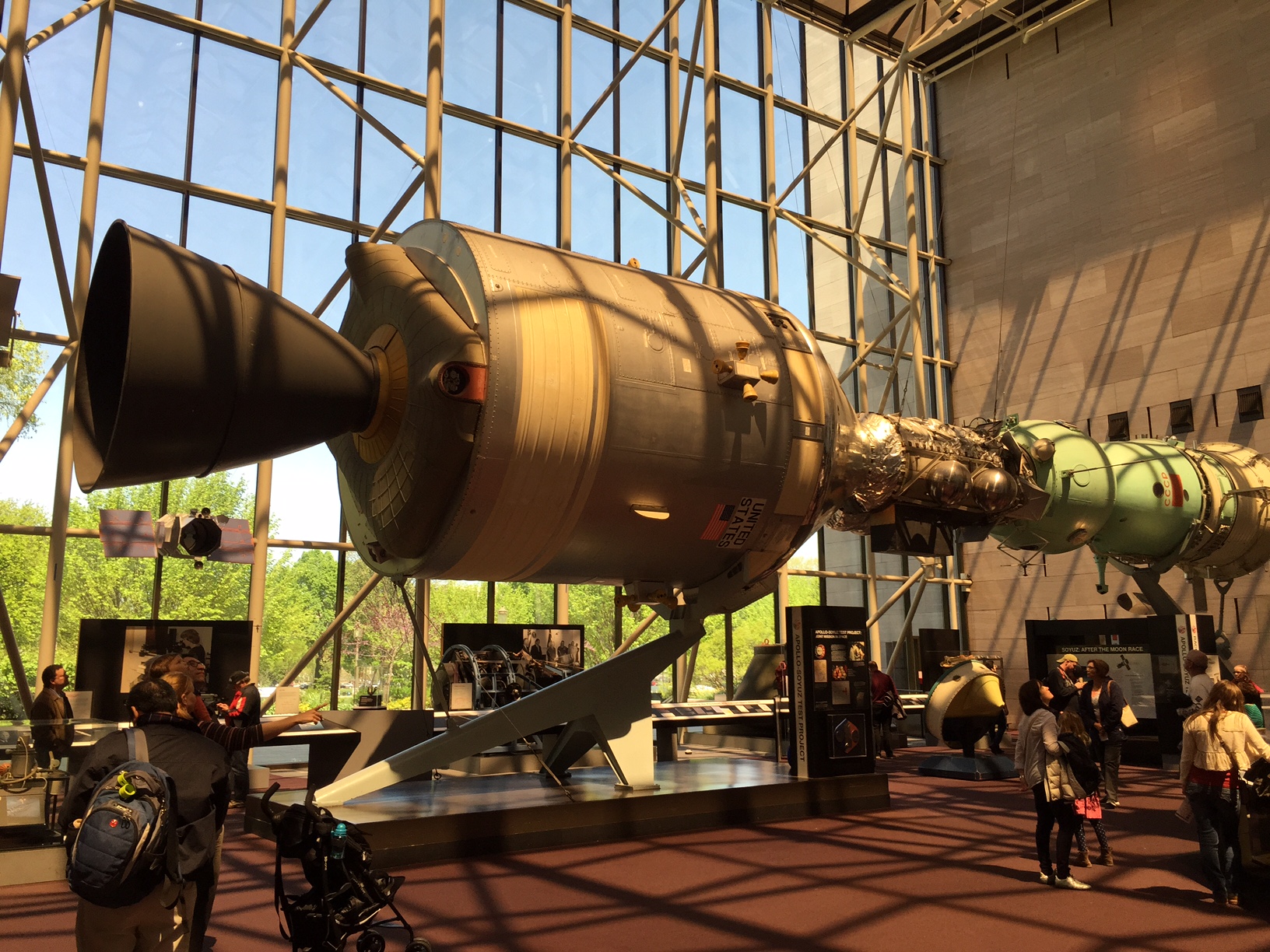
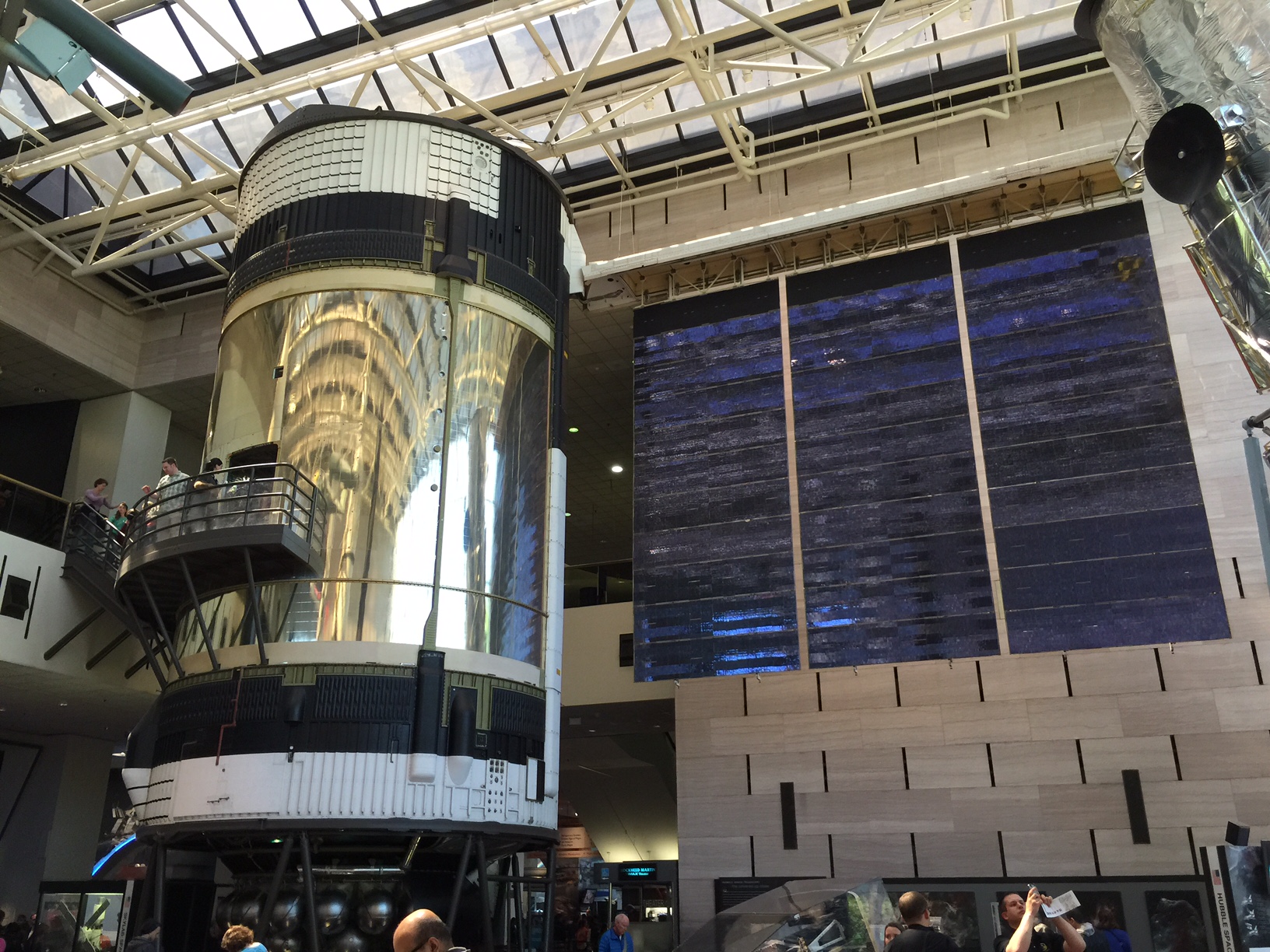
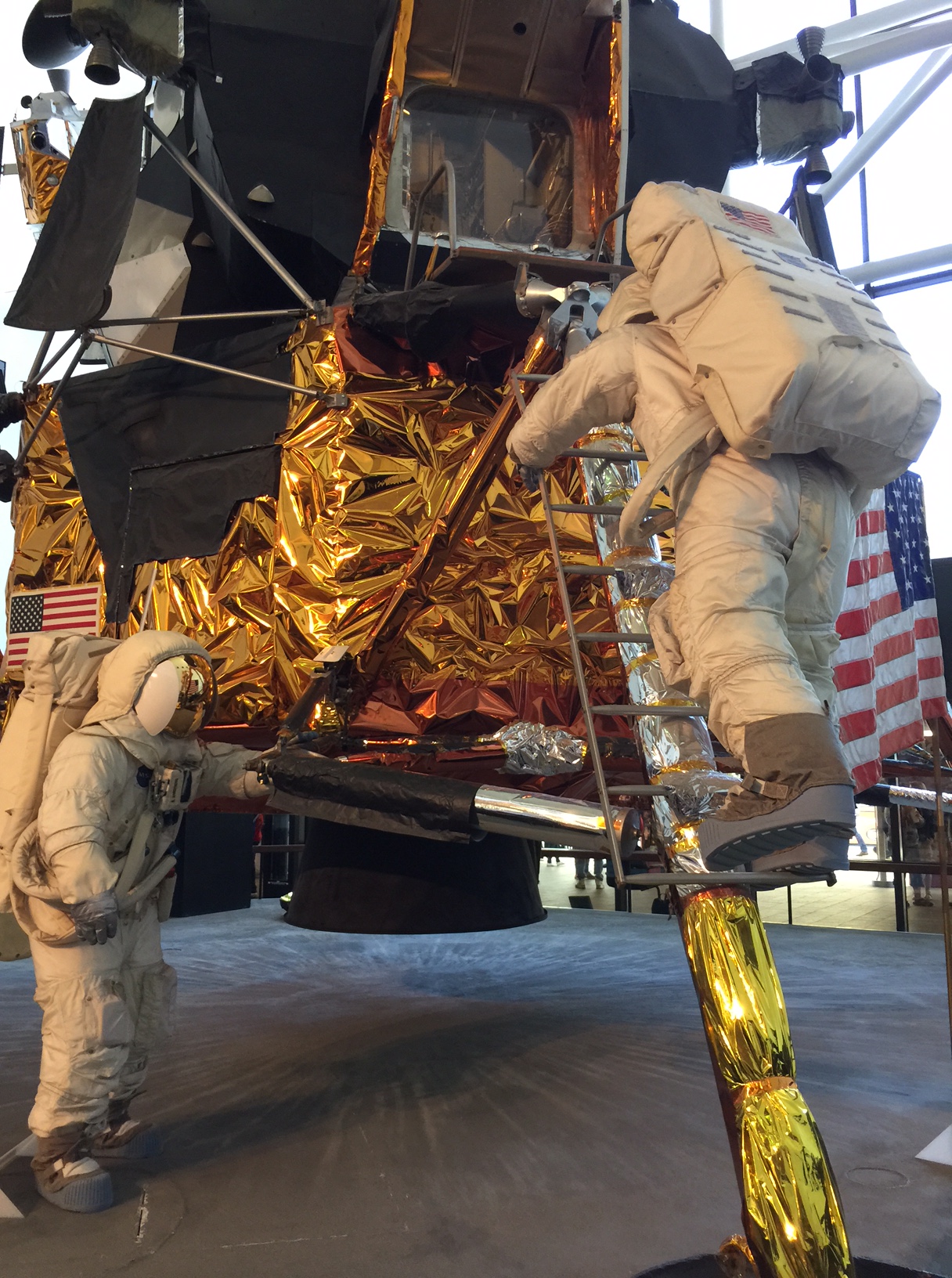
For now, snapshots. For the vehicles that are either still in space (HST) or that have been flown, jettisoned, and burned on reentry (Skylab), the exhibits shown are the structural or proof test vehicles, designed identically to the vehicle that flew, but used for testing and engineering tests.

IMG_8430

Apollo 11

IMG_8435

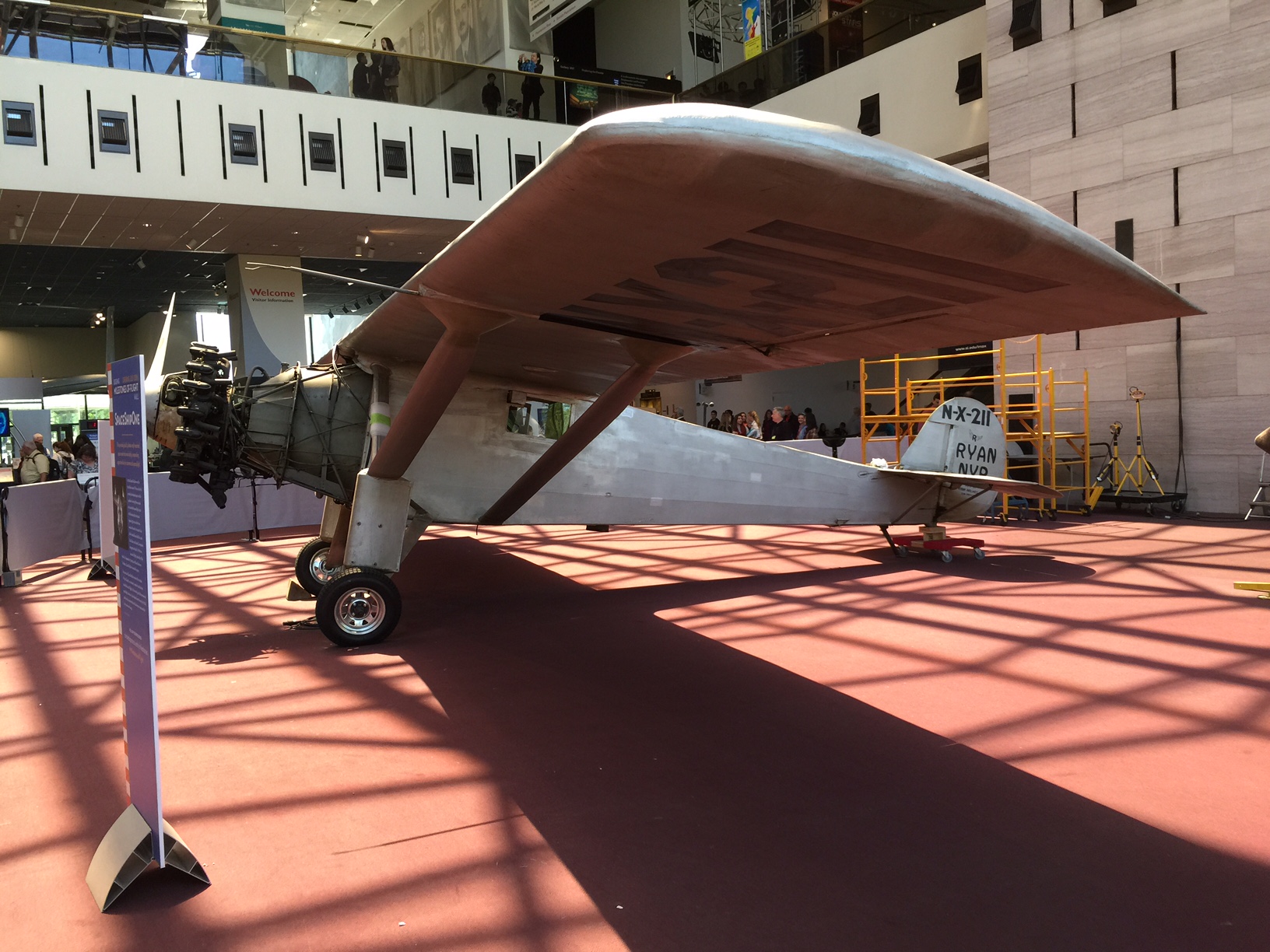
Spirit of St. Louis

IMG_8441

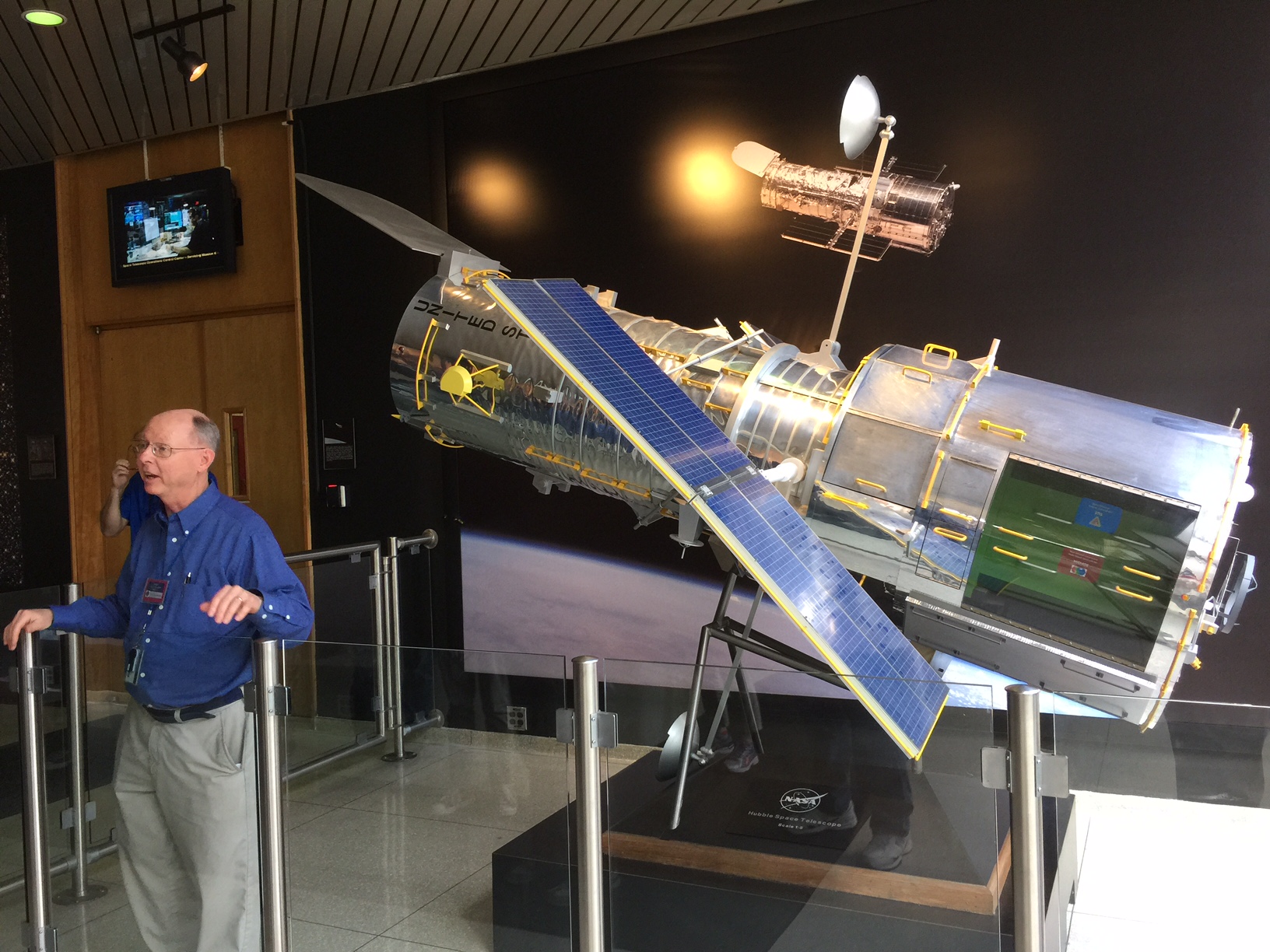
Hubble Space Telescope

IMG_8445

Apollo-Soyuz

IMG_8457

Skylab

IMG_8467

Apollo Lunar Module

IMG_8492

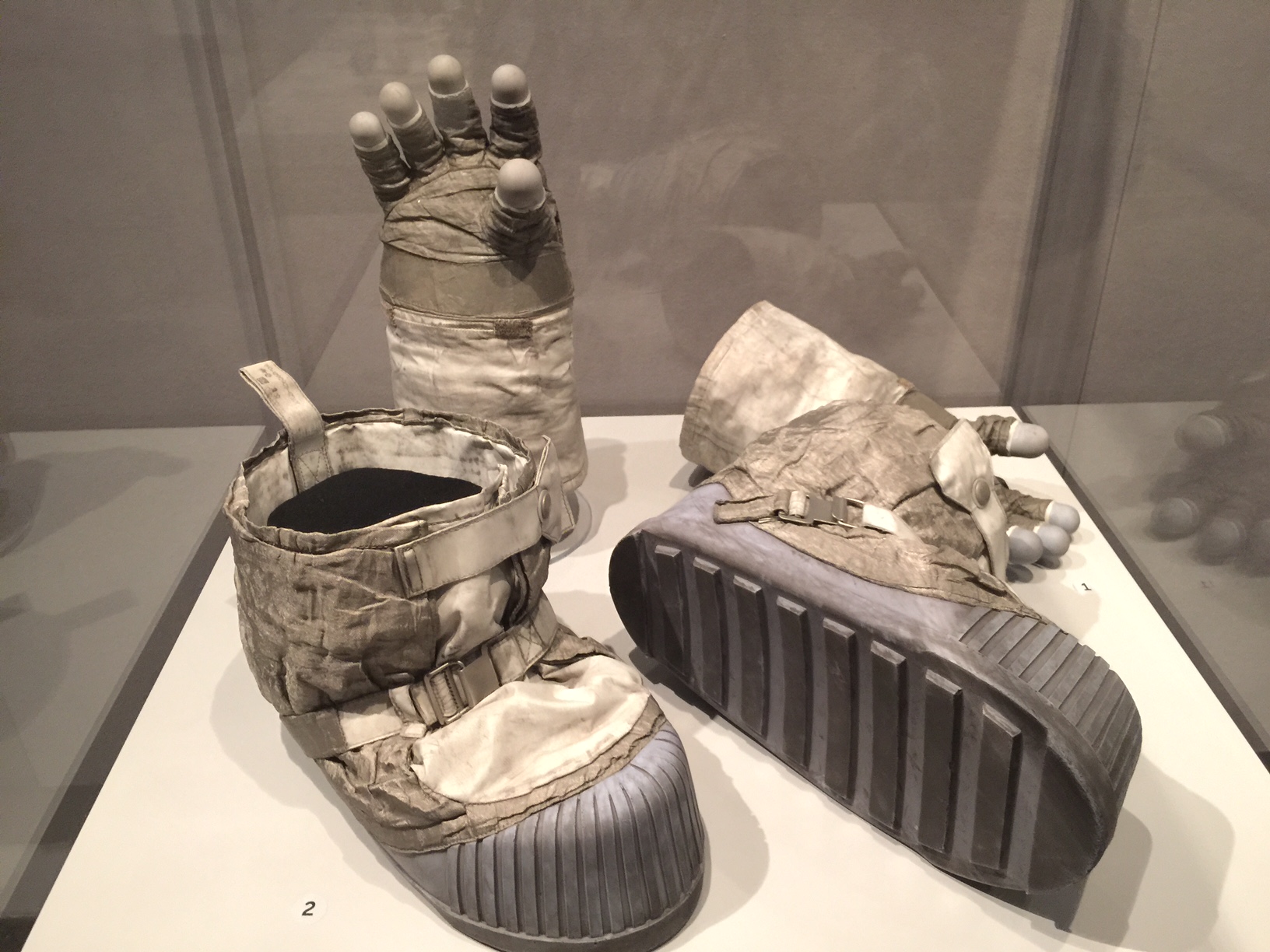
Gene Cernan’s boots from Apollo 17. The shoes that made the last footprints on the moon. (So far!)

IMG_8529

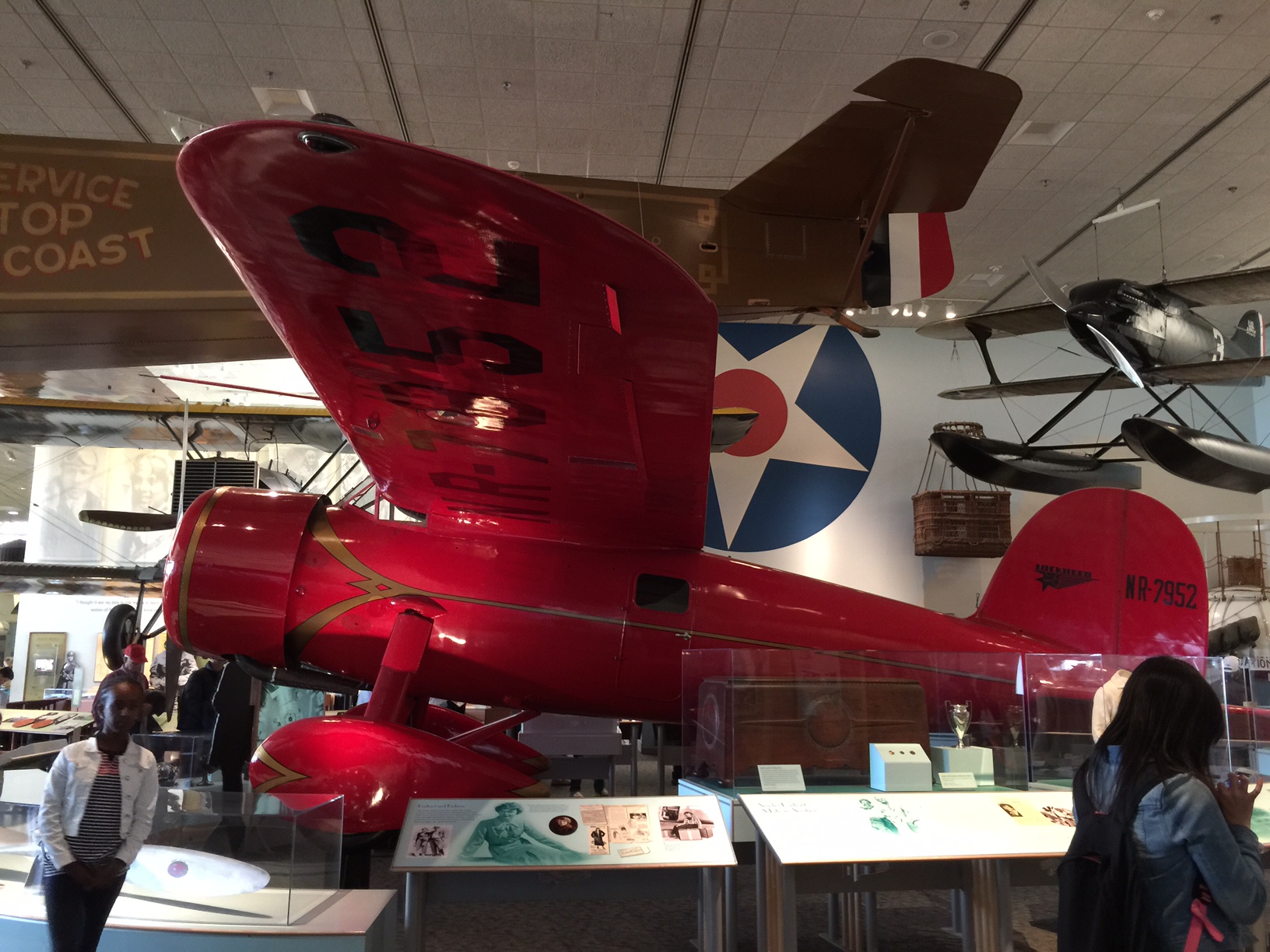
Emelia Earhart’s Lockheed 5B Vega

IMG_8544

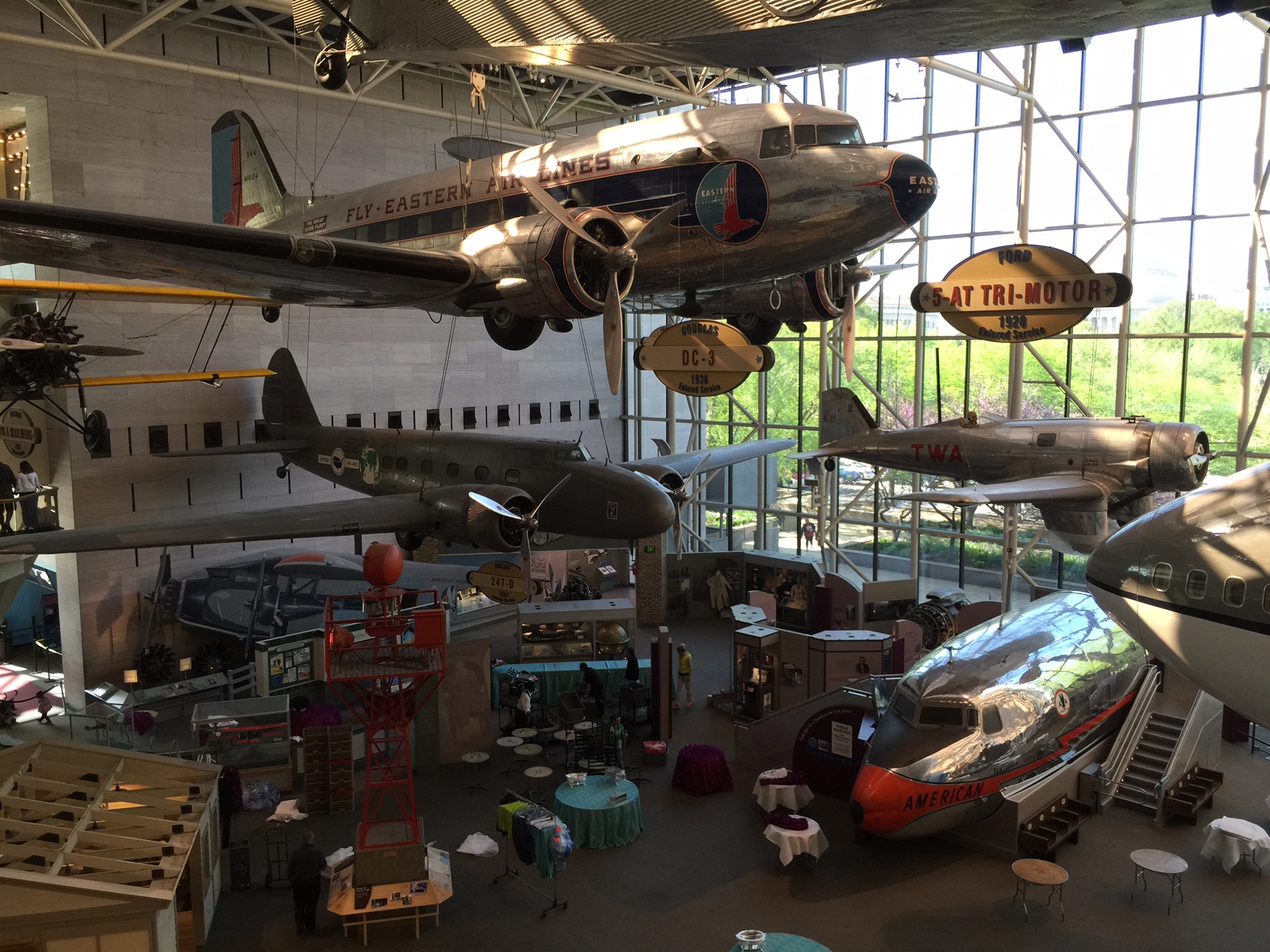
Wonderful old commercial planes


Leave a comment

Filed under Astronomy, Flying, Photography, Space, Travel

Hubble 25th Anniversary NASA Social Snapshots

What a wonderful, exciting, amazing day!

What a really long day it’s been (again). How did it (again) get to be way after midnight EDT? And why does this hotel internet suck so bad?

Here are a bunch of snapshots from today’s wonderful, exciting, amazing, and long day. I think that I referenced all of them in some form or another in Twitter posts (at the right-hand side of the screen), although with different pictures. On the other hand, I’ve only got two brain cells left to rub together, so I could be completely wrong.

Tomorrow, or when I get some sleep and a decent internet connection, or both, I will bury you for about three days with pictures and stories and humblebrags. In the meantime, enjoy!

IMG_8231IMG_8270IMG_8287IMG_8326IMG_8348IMG_8355IMG_8363IMG_8367IMG_8375

Leave a comment

Filed under Astronomy, Photography, Space, Travel

Hubble25 At DCA

Long, touristy day, late night tonight, early rising tomorrow for the Hubble 25th Anniversary (#Hubble25 on Twitter) NASA Social — so I’ll be brief.

This is a big deal here in Washington! (As it should be, but still, we all know that science and space and tech stuff isn’t always appreciated by everyone, especially politicians.) Tonight at the Washington Nationals – St Louis Cardinals baseball game, the first pitch ceremony involved some of the lead scientists from the Space Telescope Science Institute (STScI) and for the “President’s Race” the gag tonight was Teddy Roosevelt setting up a telescope so everyone could look at Hubble — while they were looking, he snuck across the finish line.

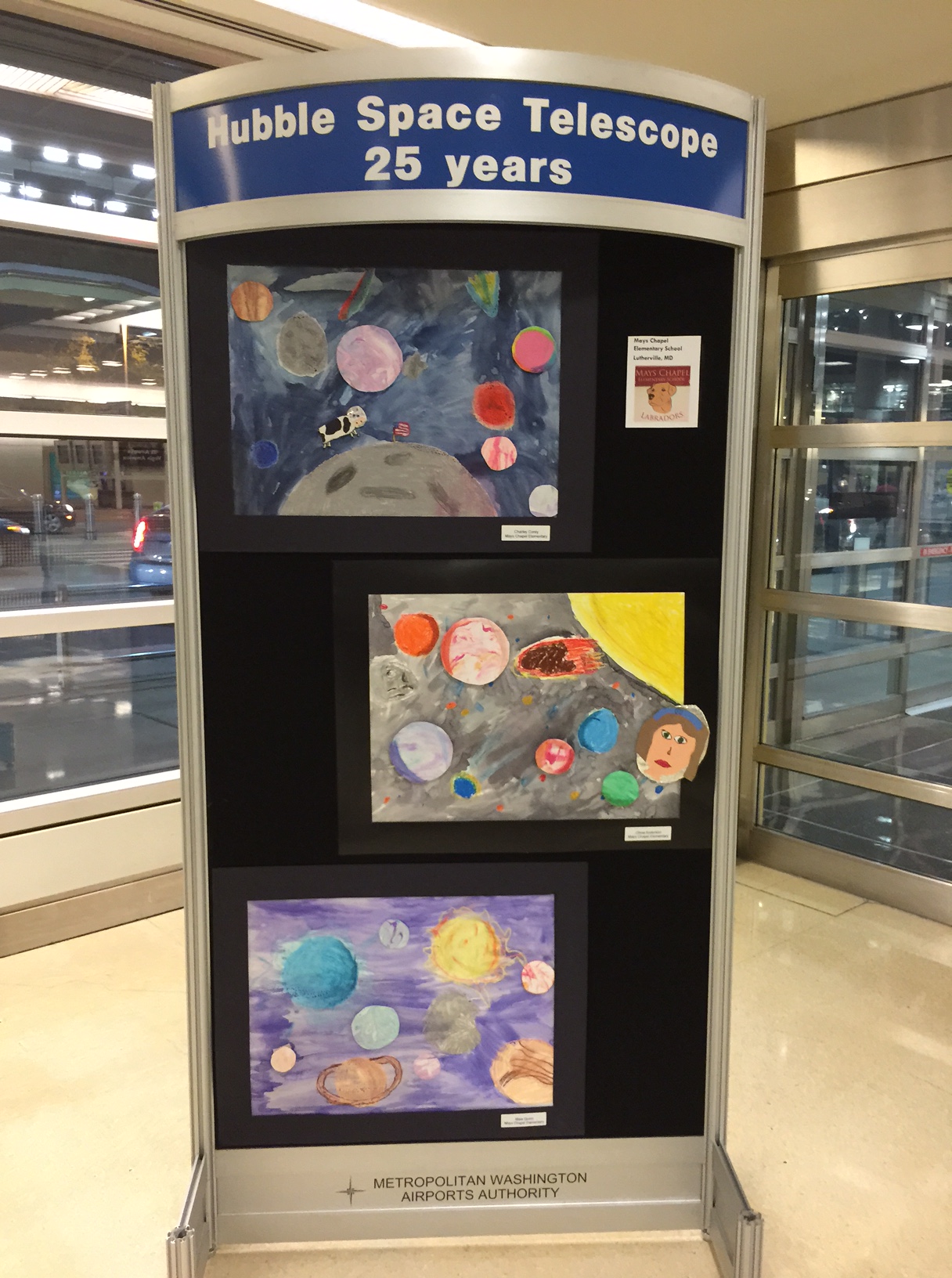
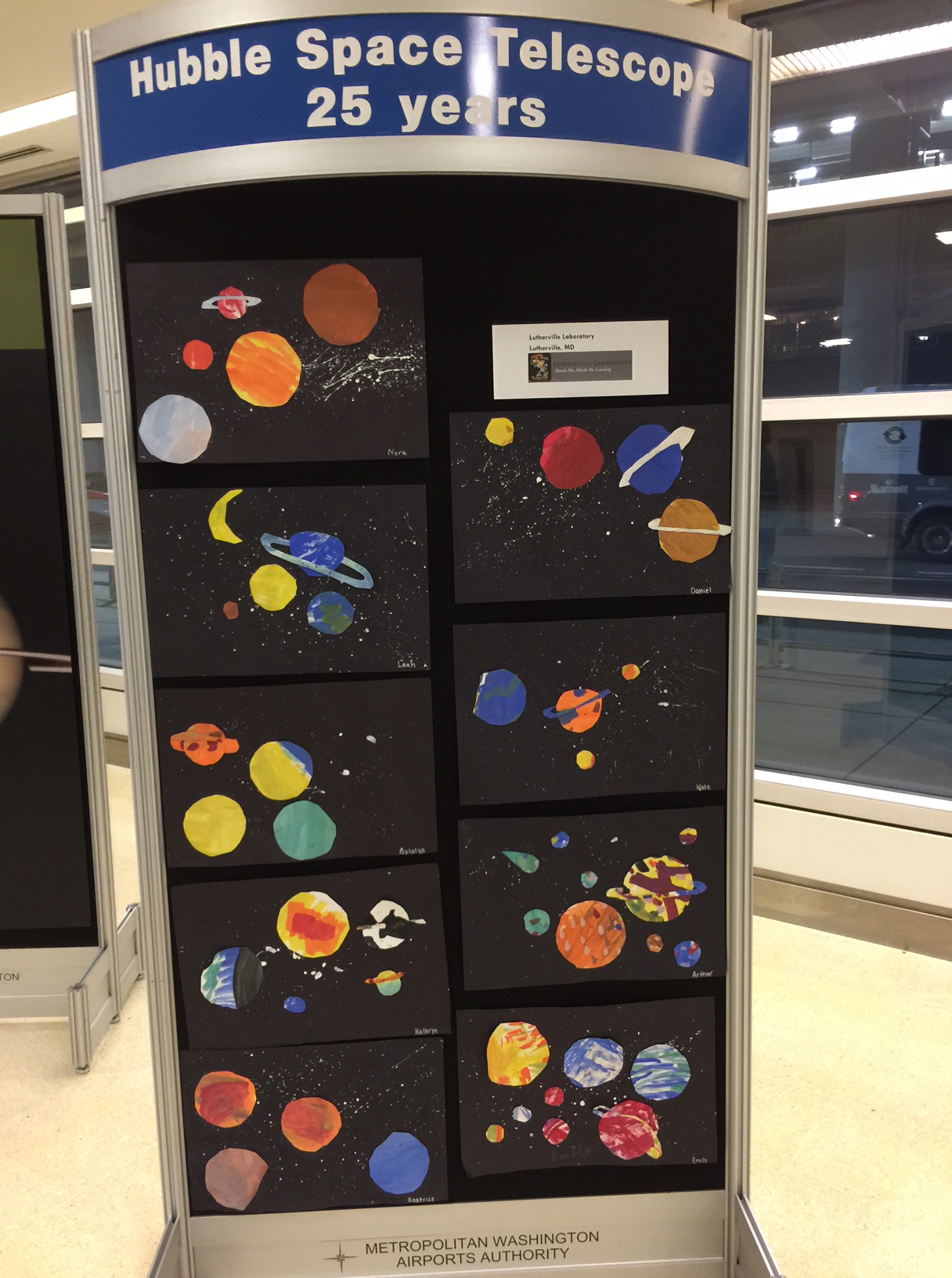
In addition, when I came into Reagan-National Airport (DCA) late last night, on the way to the baggage area I found several Hubble posters…

IMG_8071

… as well as several panels of Hubble-like drawings done by school kids.

IMG_8070IMG_8072IMG_8069IMG_8068

Tomorrow’s going to be fantastic! Stay tuned!


Leave a comment

Filed under Astronomy, Photography, Space, Travel

Outrunning The Sunset

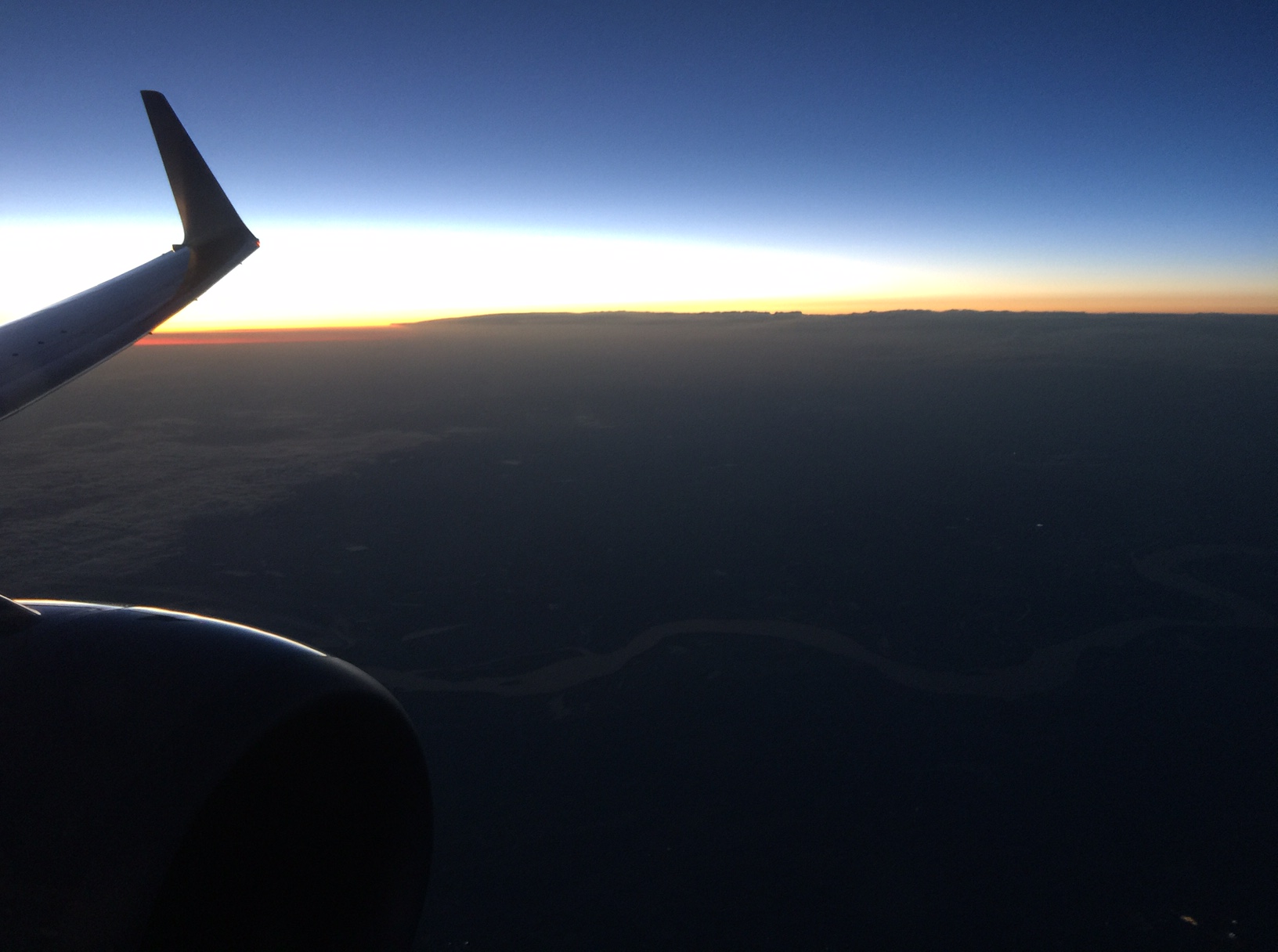
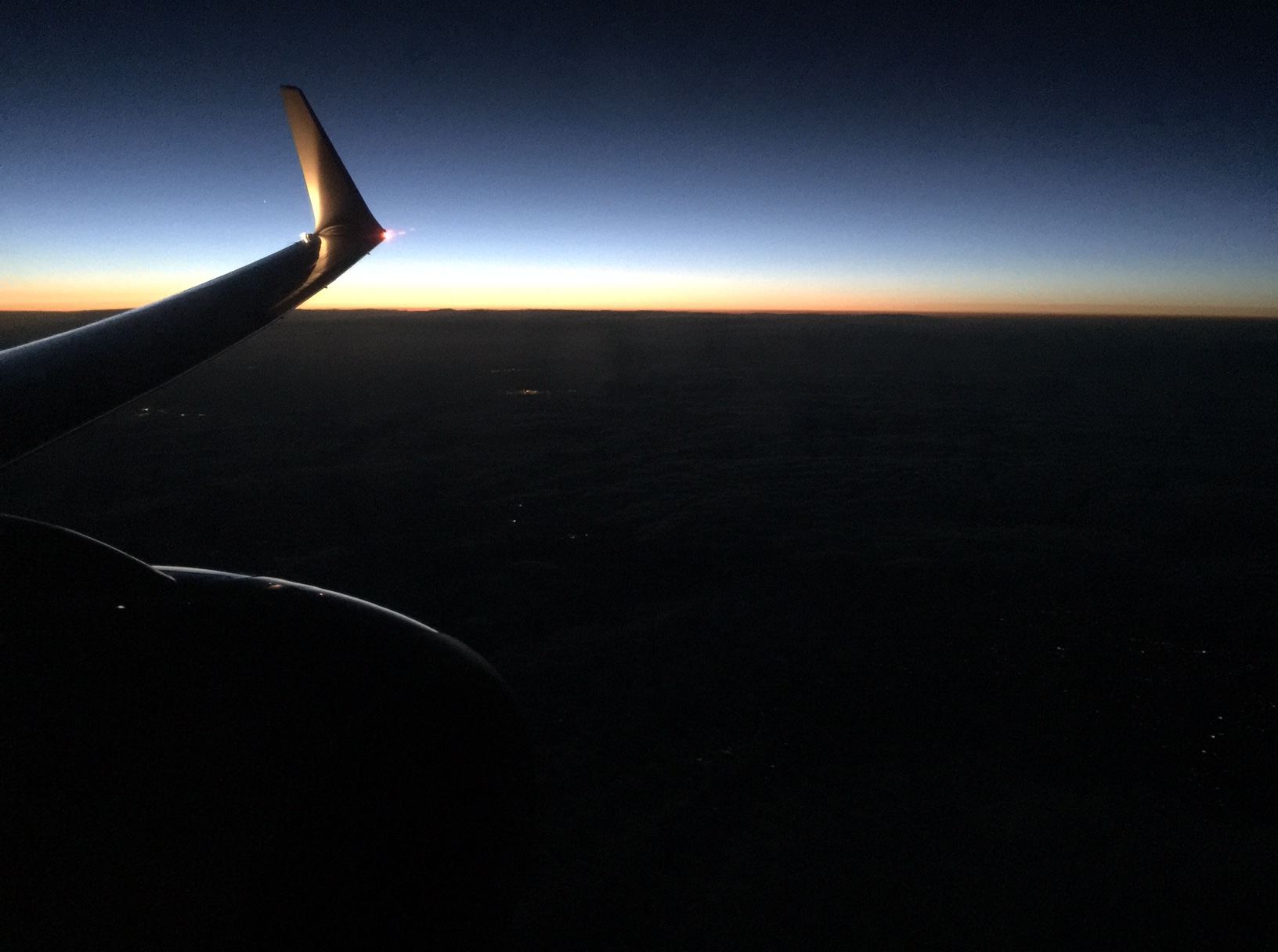
A week ago I was headed from North Carolina to Los Angeles on an “Oh Dark Thirty” flight and posted a picture of the sunrise catching us somewhere over the southwest United States. I also had mentioned a few days earlier that the trip out from LA to NC had been “an adventure.”

Today the trip back to the East Coast (for this week’s NASA Social and celebration of the 25th anniversary of the launching of the HST, but you knew that) was much more “nominal” and much less “adventurous.” No delays, both flights left on time. No hassles with lost luggage. The flight from DFW to DCA actually got in over thirty-five minutes early. The ride from DCA to my hotel was tedious but cheap.

With the plane tickets being bought on somewhat short notice (I didn’t get the invite to the NASA Social until a couple of days after we were back in LA), I had been told that I would have nothing but center seats. In fact, I got the opportunity to change with someone for an aisle seat on the first flight, and on the second flight I got moved to a window seat.

Even better, it was a window seat with extra leg room, the first one in the cabin. But that meant that I didn’t have my backpack o’ cameras at hand. It was stuffed into an overhead bin instead of under the seat in front of me – there wasn’t any seat in front of me.

As unusual as it might be for me to be on a plane with a window seat and not take any pictures (I take a LOT of pictures!) I figured that it wasn’t that big of a deal. It was cloudy as soon as we took off from DFW, and it was the “boring overcast to the horizon” cloudy, not the “oooh, cool, look at the thunderheads” cloudy. And then it was going to be dark, so what the heck. Time to catch up on some reading during the flight.

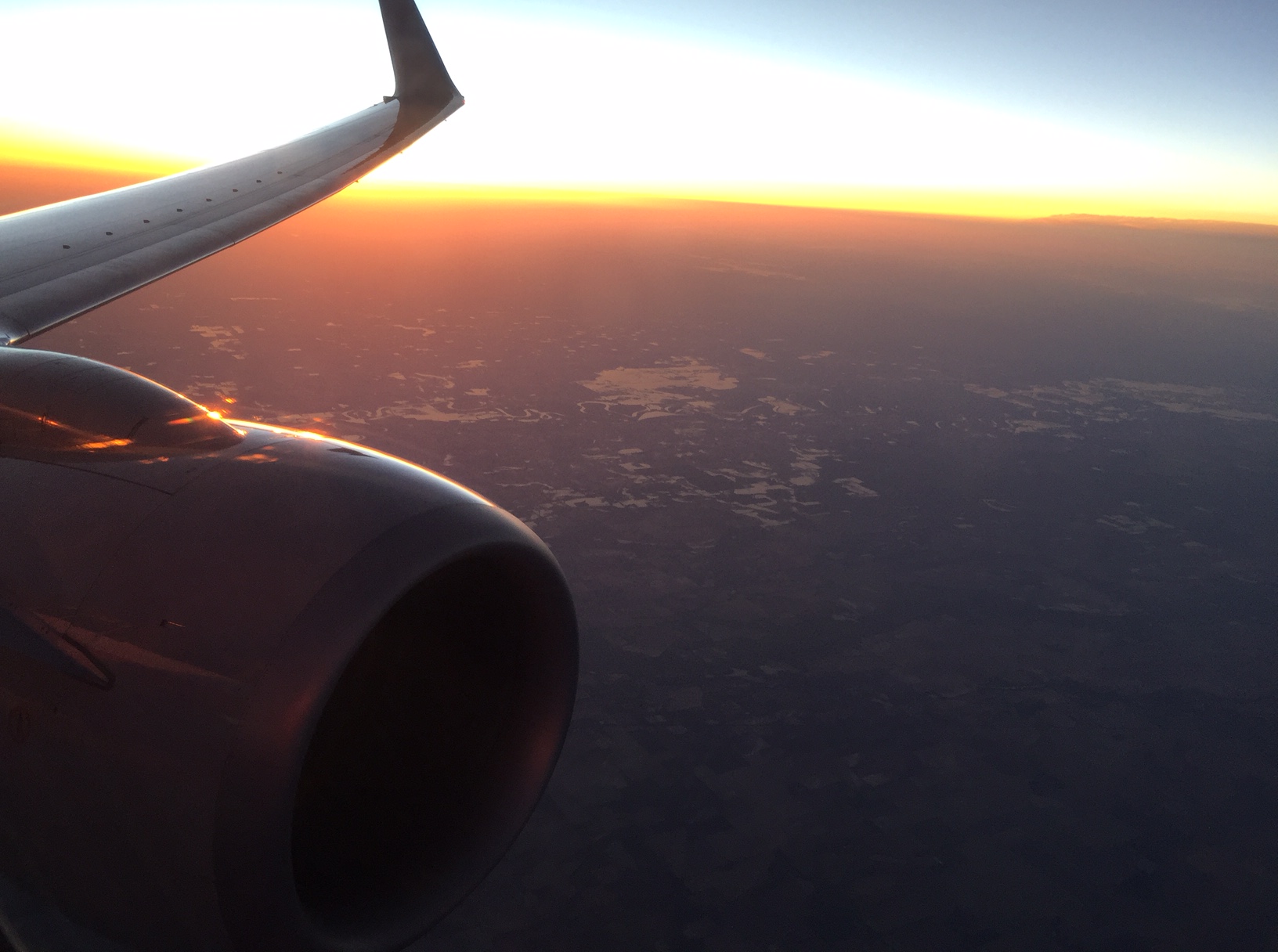
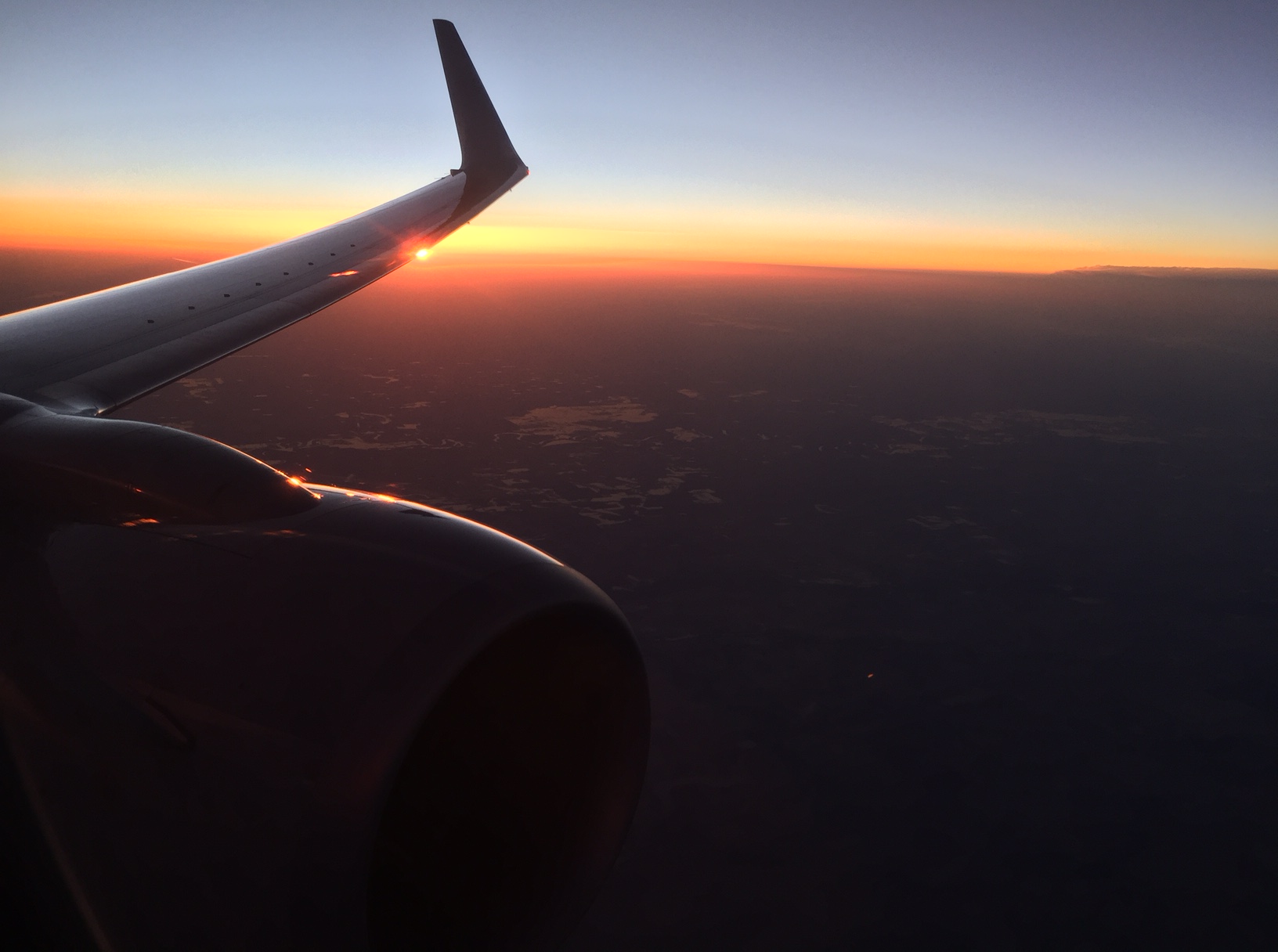
And then this happened (and I remembered that my iPhone had a perfectly good camera in it):

IMG_7968

From out behind the wingtip…

IMG_7979

…with the sunset glinting off of lakes…

IMG_7988

…the sun popped out…

IMG_8004

…just in time to set underneath the wing.

IMG_8017

A big lake in the distance and a tiny one nearer to us caught the sunlight…

IMG_8029

…while the sun started to disappear…

IMG_8041

…and finally vanished…

IMG_8051

…leaving in its afterglow a winding river, thunderstorms silhouetted on the horizon…

IMG_8061

…and small towns across the American midwest starting to light up like Earthbound stars.

1 Comment

Filed under Photography, Travel

The Hubble Space Telescope And Me

Look, I’m not going to sugar coat this. If you don’t care about astronomy and our space program in general, and the Hubble Space Telescope (HST) in particular, you should probably not be reading here for the next week to ten days. On the other hand, as has been noted before, if you don’t care about those things, why are you reading my blog to begin with?

Circular reasoning aside, the next week is going to be full of HST, the Smithsonian Air & Space Museum (amazingly, I’ve never been there yet!), and Washington, DC sightseeing and tourism up the ying-yang. Or up the Potomac, at least. Since I’ll be there for six days and have cousins in the area as well as The Long-Suffering Sister-In-Law and one of The Long-Suffering Nieces On The Long-Suffering Wife’s Side, it won’t be ALL space exploration and squeeing and slack-jawed touristing. Probably no more than about 98.5%.

Before we get into all of that, here are a few disjointed, unorganized, miscellaneous thoughts about the upcoming trip:

  • I will refer to the Hubble Space Telescope as “HST” constantly. Be forewarned, I’m not typing that all out a zillion times.
  • A lot of the live stuff, particularly for the NASA Social on Thursday, the 23rd, will be coming out on Twitter first. You can watch my Twitter feed scroll on the right-hand side here, or you can follow me directly on Twitter. I’m @momdude56.
  • At the other NASA Socials I’ve been at I’ve been one of the older attendees. I would make a WAG that the average age (excluding me) is probably in the early 30’s, with lots of college kids in their 20’s and lots of working folks in their 30’s and 40’s. That being the case, I expect that there may be more than a few attendees who were not even born when HST launched twenty-five years ago.
  • This blows my mind. Just a little.
  • There are a couple of very, very nice e-books available on HST, and since they come from NASA and NASA’s funded by our tax dollars, they’re free! The latest one, for the 25th Anniversary, is here. There’s another one, “Hubble: An Overview of the Space Telescope,” as well as a couple of similar volumes on the upcoming Webb Space Telescope, which will eventually replace HST. You can either download an epub file, or you can get them for free from the iTunes Store.
  • I’ll bet there will only be a handful of attendees who were alive for the Apollo moon landings. The flip side of feeling old and wanting to yell at kids to get off of my lawn is the realization that these generations have never known a time when we had not been to the moon. It’s just like my generation has never known a time when commercial airline travel wasn’t commonplace.
  • Being paid for by our tax dollars, we also have access to all of the images produced. NASA and the Space Telescope Science Institute have several fantastic websites where you can learn all about HST, as well as scan through  a gajillion images in different levels of detail. Go here first – the pictures are in the Gallery tab.
  • I remember the Space Shuttle mission to launch HST, how amazing it looked in orbit as they pulled away.
  • I remember the crushing disappointment when they found out that the optics were flawed and the HST might be useless.
  • I remember the thrill when they figured out a way to do the nearly impossible, designing a series of lenses (HST’s “eyeglasses”) to correct the optics. Of course, they also had to figure out a way to open up parts of the HST that were never intended to be opened up on orbit, and do repair jobs that were never dreamed of or designed for. They had to carry all of this work out while wearing awkward, heavy, spacesuit gloves and floating weightless, so that every loose screw or drifting tool was a potential disaster.
  • I remember the first pictures being released after the repairs, pictures that absolutely blew us away. And then they got better. And better.
  • I remember the second and third servicing missions, where reaction control wheels had failed and left HST with limited (and failing) abilities to point accurately. Again, parts that weren’t supposed to be replaced or even accessed on orbit. Again, done flawlessly. Then we started upgrading the cameras and instruments internal in HST’s innards, giving us even more amazing images and discoveries.
  • I remember the HST “Deep Field Image” where every dot is a galaxy, some over ten billion years old.
  • I remember when the previous administration decided that it was “too dangerous” to do a final servicing mission to HST with the Space Shuttle, since it wouldn’t be able to go to the ISS if there was a problem. I was more than just a bit furious.
  • I remember when the next administration said, “Bullshit! When did we get so timid? Who says that we can’t figure this out and get ‘er done?” (I paraphrase.)

So now I’ll get to be a part of the celebration of HST’s 25th birthday. Stay here for updates, I think it’s going to be a lot of fun.

2 Comments

Filed under Astronomy, Space, Travel

Boston (Part Four)

Do you remember Boston? Back before things got busy, I was telling you about my trip to Boston. Since they’re having this little footrace there tomorrow morning, it seems a good time to get back to that story.

As usual, I was on foot wandering around, which is easy in Boston because they’ve got this thing called The Freedom Trail that makes it easy. Mostly an easy walk, only 2.5 miles, mostly flat, you have to keep your eyes open to avoid tripping over one historic site after the other.

Starting at Boston Common, walk up Fremont Street to the Old State House, Faneuil Hall, and the North End Park. Follow the trail into Boston’s North End and you’ll see Paul Revere’s house and the Old North Church. (“One if by land, two if by sea, three for White Walkers!”) Keep walking north, toward the Charles River.

IMG_7354 small

Coming up from the Old North Church there’s a small rise to the top of Copp’s Hill, where you’ll find the Copp’s Hill Burying Ground. As with the King’s Chapel Burying Ground near Boston Common, I found this a fascinating place. There aren’t as many historical figures buried here, but I find it interesting to look at the ancient headstones, many well over two hundred years old.

What would those folks think of our modern world? For starters, everyone with an iPhone is getting burned for being a witch!

IMG_7375 small

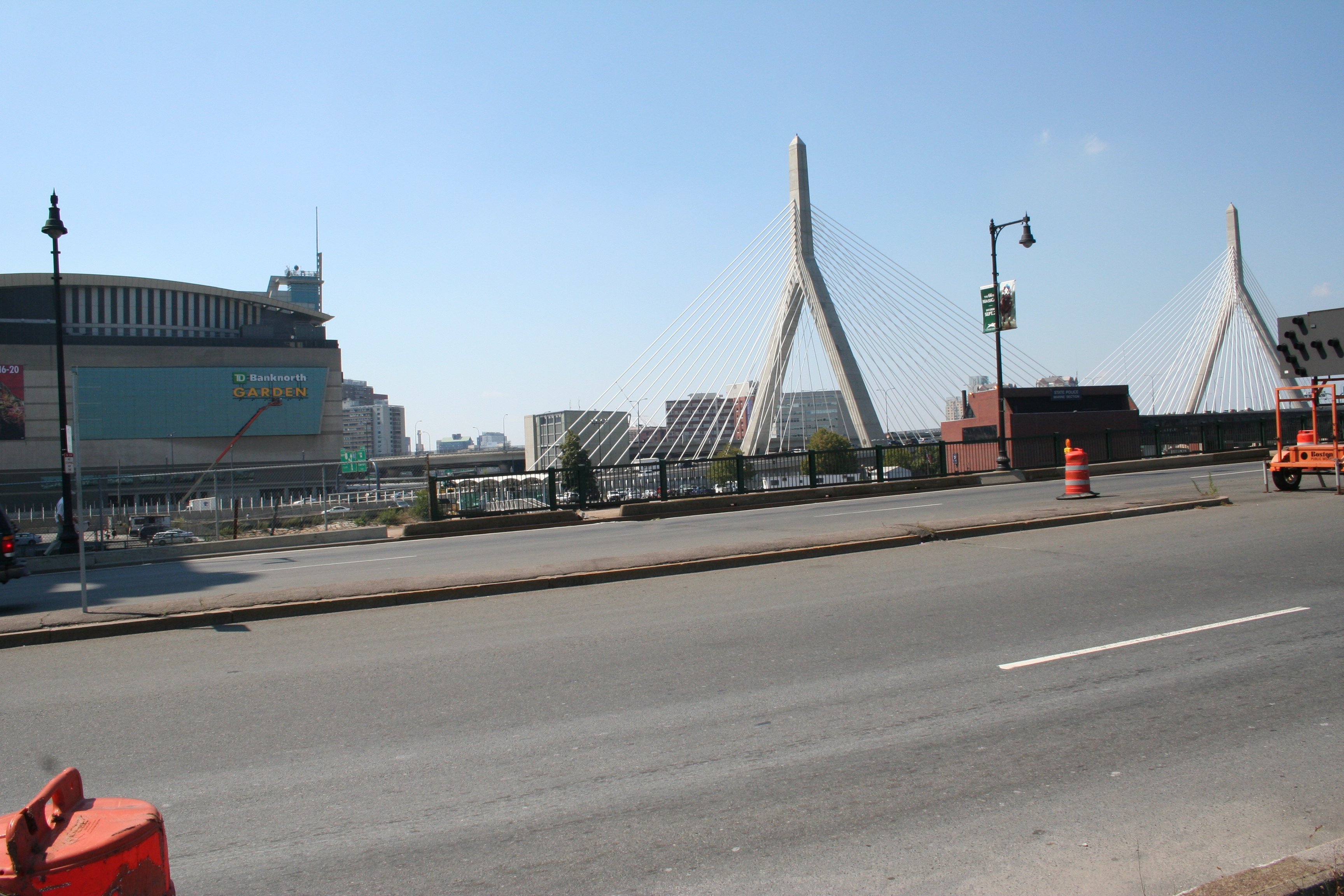
Heading out over the Charlestown Bridge, off to your left is the TD Banknorth Garden, where the Celtics and Bruins play. There’s also that pesky Leonard P. Zakim Bunker Hill Bridge. If you’re downtown, you still can’t get to the airport that way!

IMG_7384 small

There are some really nice boats docked out in the Charles River. On the far side is Charlestown, and you can see the Bunker Hill monument standing tall. (We’ll get there in Part Six.)

IMG_7397 small

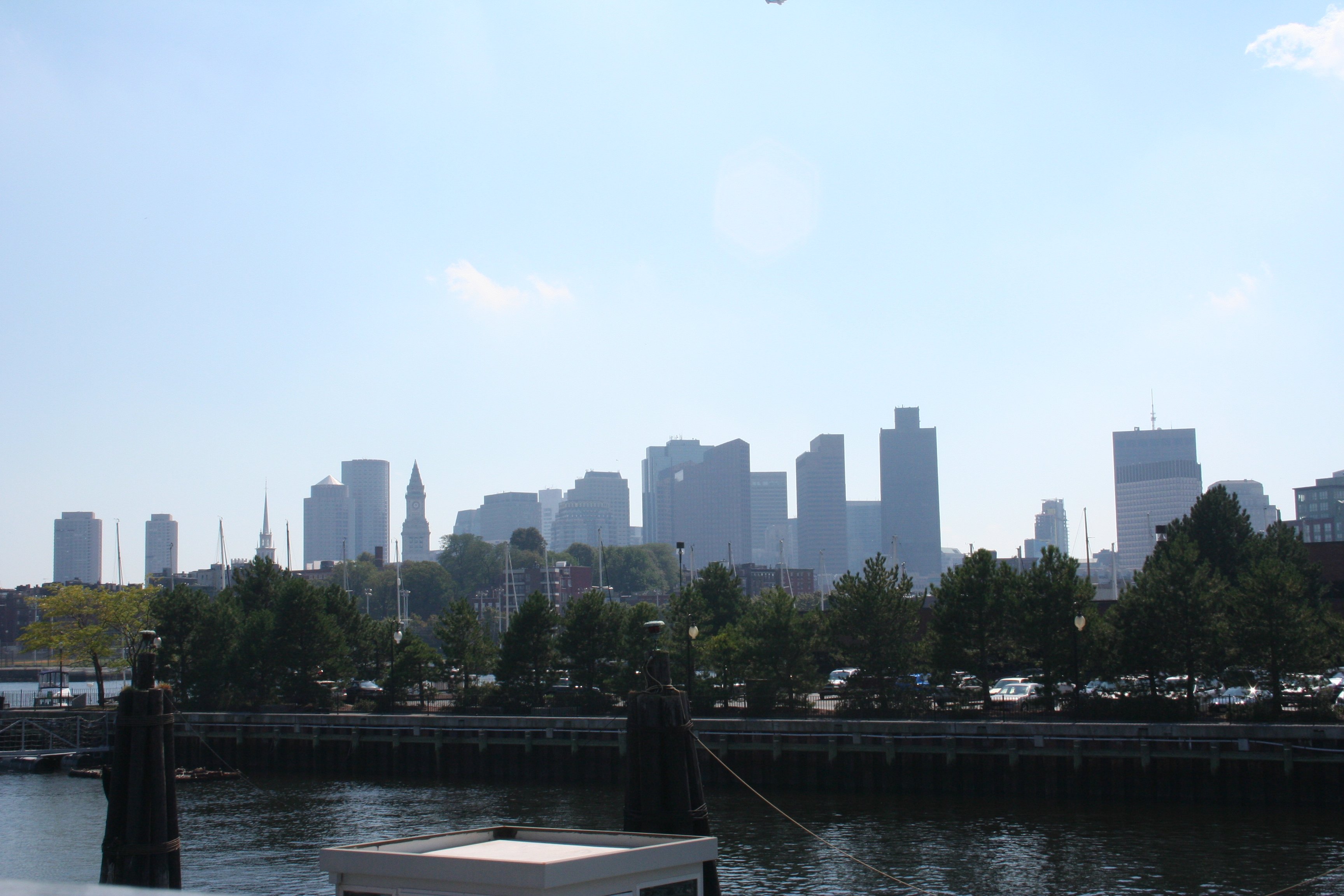
Looking back you can see the skyscrapers of downtown, and a couple of older tall buildings.

IMG_7437 small

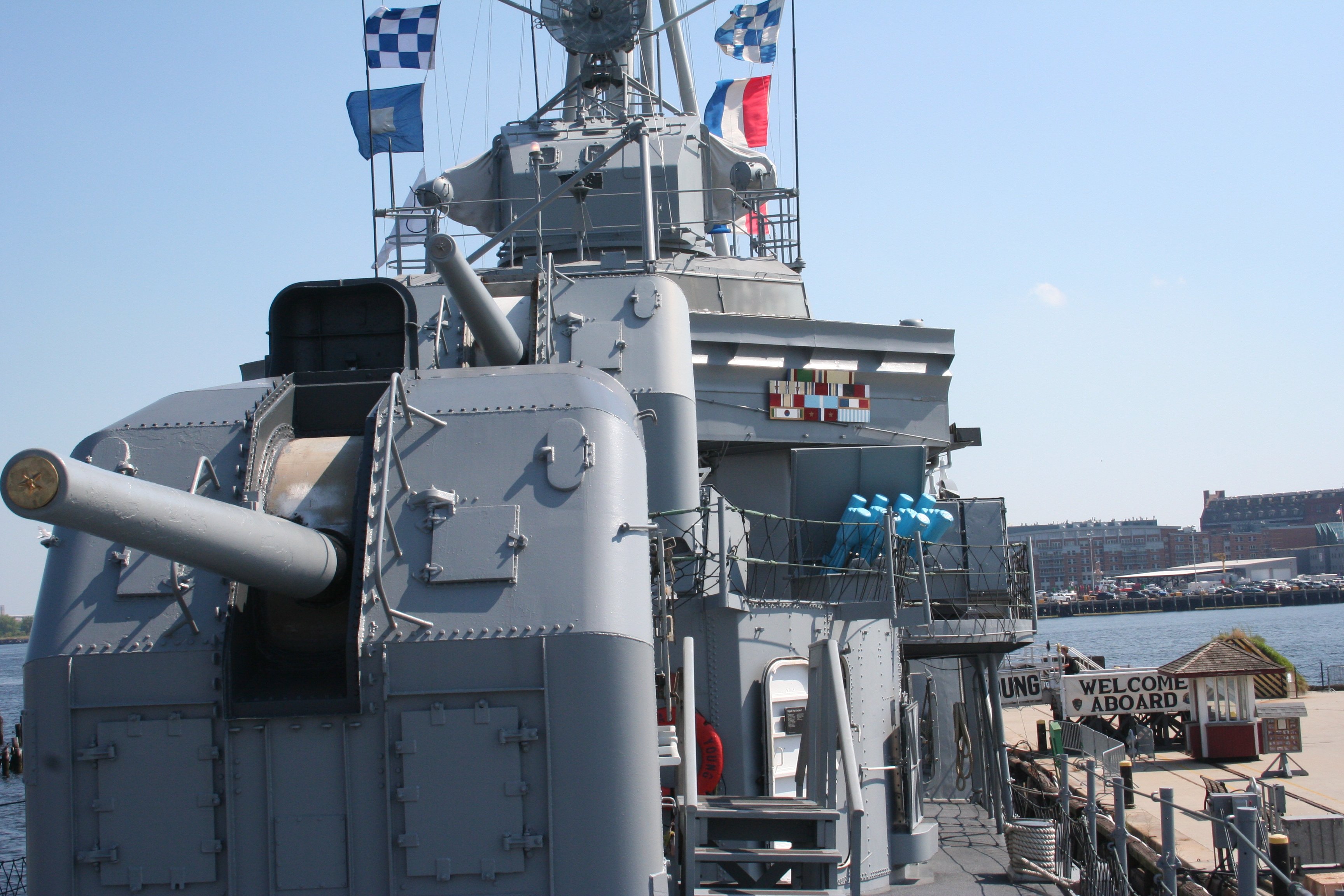
Once on the other side you’ll find the Charlestown Navy Yard. I’ll show you around the Yard’s most famous attraction in the next installment, but the other major attraction there is the USS Cassin Young.
IMG_7443 small

The Cassin Young is a World War II era Fletcher-class destroyer. She saw battle in the Pacific Theater at Saipan, Tinian, Guam, the Battle of Leyte Gulf, Iwo Jima, and Okinawa.

IMG_7457 small

At Okinawa she was hit by a kamikaze attack and suffered significant damage, as well as 22 dead and 45 wounded among her crew. After being repaired she was mothballed, then recommissioned during the Korean War. Finally mothballed again, she’s now a great example of the ships we built in the 1940’s to win World War II.

IMG_7507 small

Moving north from the Charlestown Navy Yard (don’t worry, we’ll come back next time to see that other ship) you’ll find the Charlestown Training Ground. Today it’s a lovely little park and no doubt a great place for a weekend picnic or evening stroll. (Assuming it’s a part of the year when it’s not covered by twenty-five feet of snow, of course!)
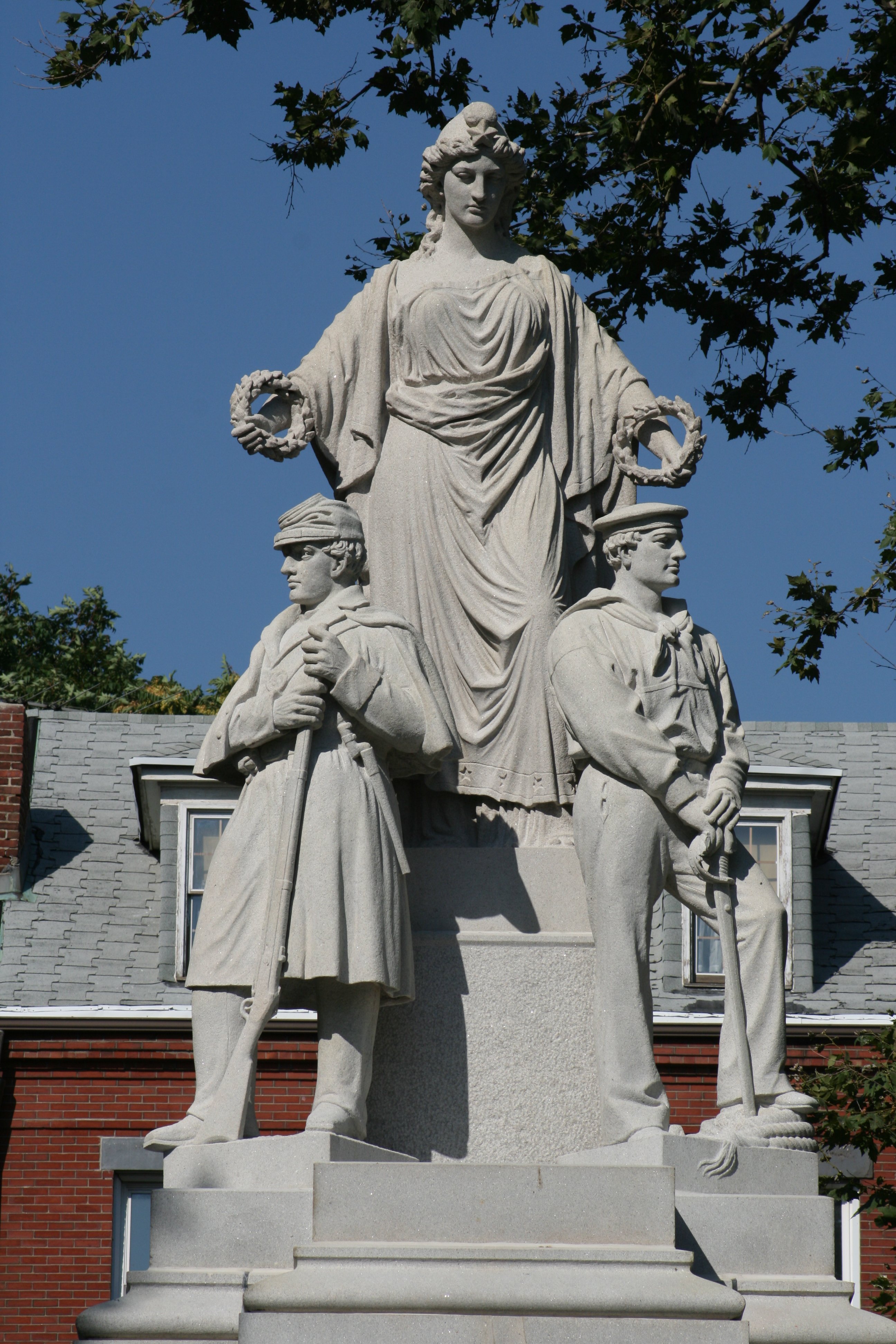
IMG_6866 small

A nice statue by Martin Milmore adorns the site, with the figure of Liberty bestowing laurel wreaths on the soldiers and sailors of Charlestown who fought in our nation’s wars to preserve our freedom. (I am a sucker for a good, public statue!)

Next installment we’ll “double back” to the Charlestown Navy Yard (the photos work out better that way), then finish in Part Six at the far end of The Freedom Trail, Bunker Hill. (Even though The Battle of Bunker Hill was actually fought on Breed’s Hill nearby. They built the monument on Bunker’s Hill, so that’s where we’ll go.)

Leave a comment

Filed under Photography, Travel