This one caught me by surprise. We only moved less than a mile, we’re still in the same community, we’re simply now near the top of the hill where before we were at the bottom. So most of the existing wildlife we’ve seen (rabbits, raccoons, crows, lizards, etc) has been pretty much the same.
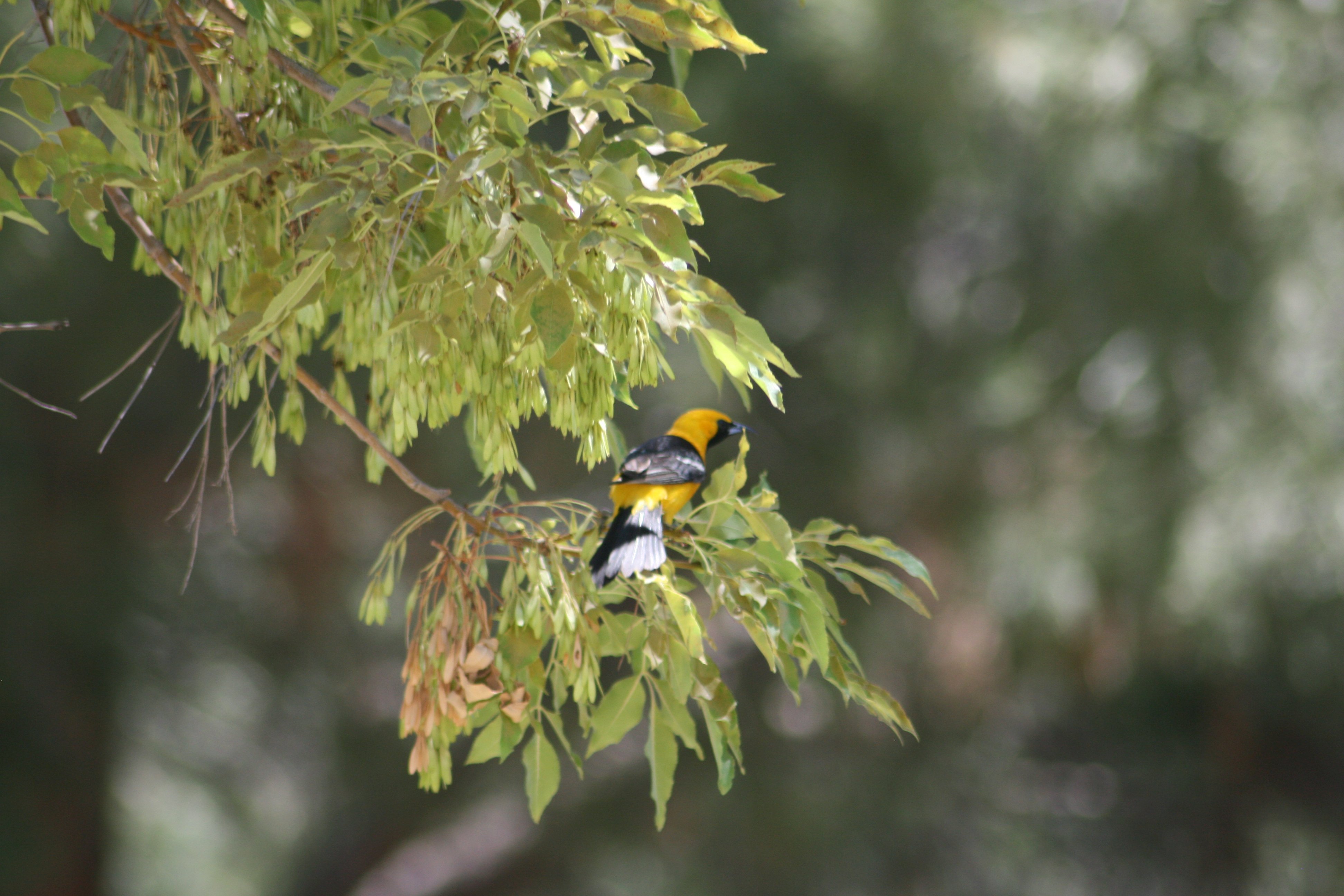
This pair (and I’m pretty sure it was a pair, a male and a female) were a complete surprise and really stood out.
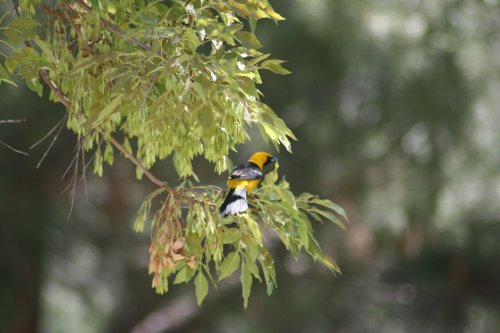
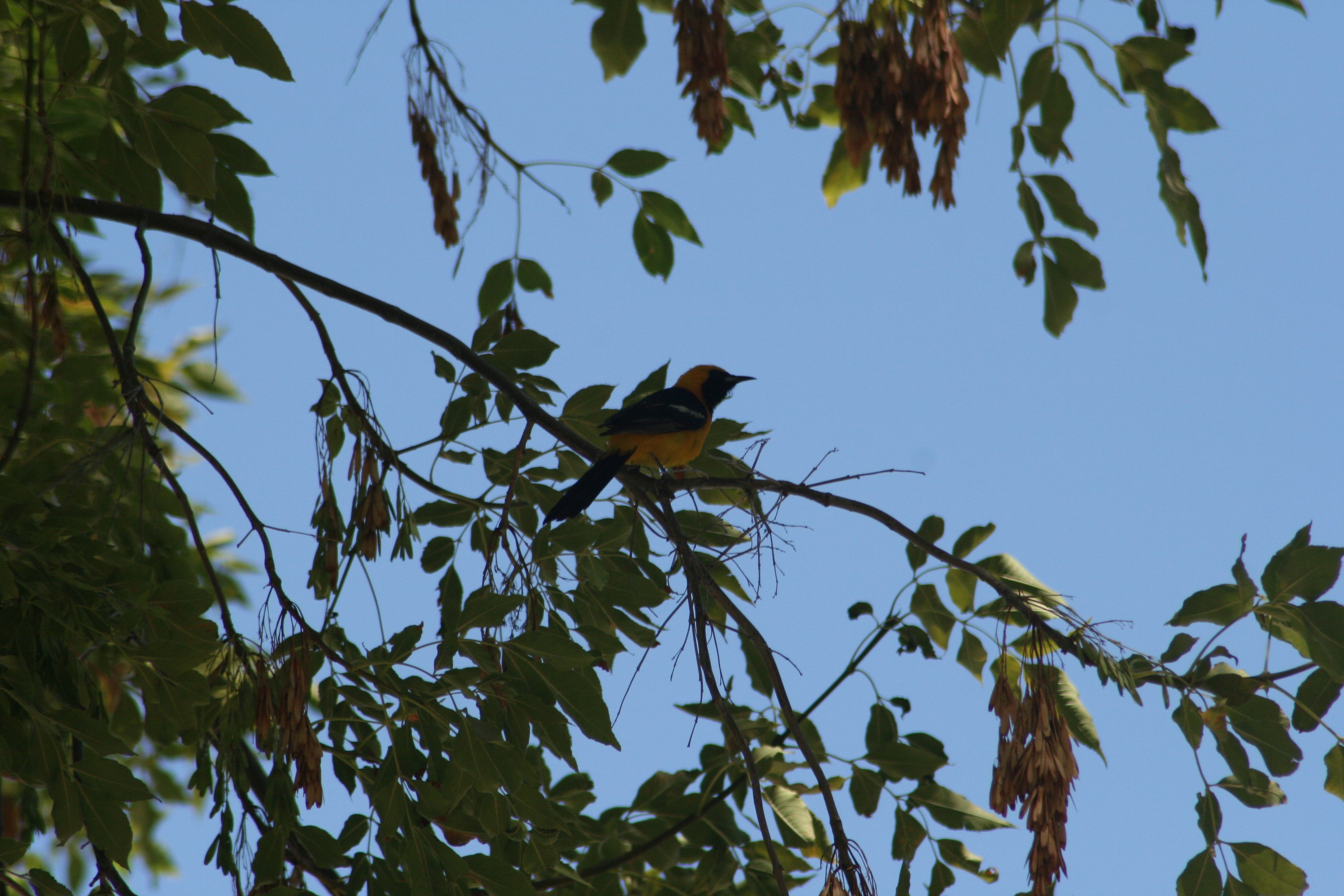
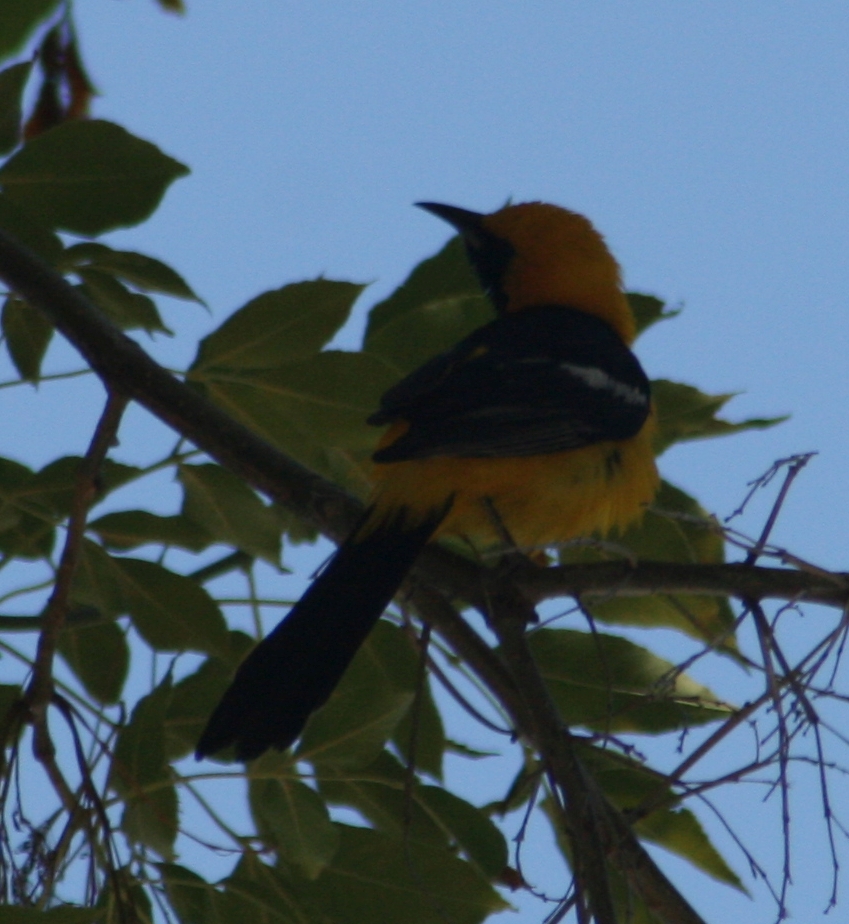
I’m pretty sure this is the male. There was a similarly sized bird that was never far away, moved around the large tree in our back yard together, feeding. The other one was darker, no bright colors that I could see, but it almost never came out where I could get a clear view at it. When I first saw it I thought it was a mockingbird.
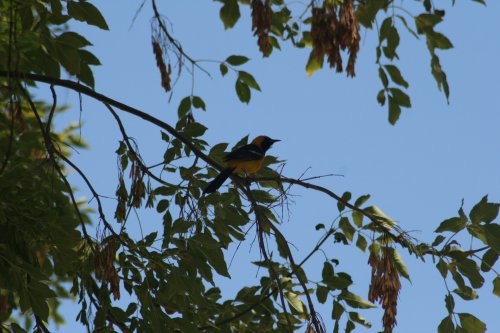
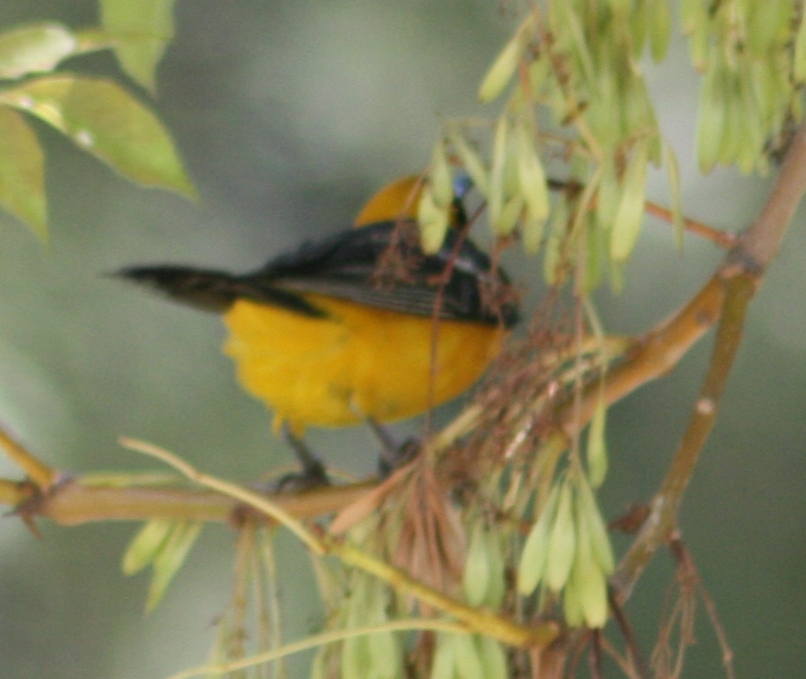
The extremely bright yellow bird was constantly moving, feeding, making it hard to get a good shot. But I can guarantee that I’ve never seen one like this in the nearly thirty years I’ve lived in the area.
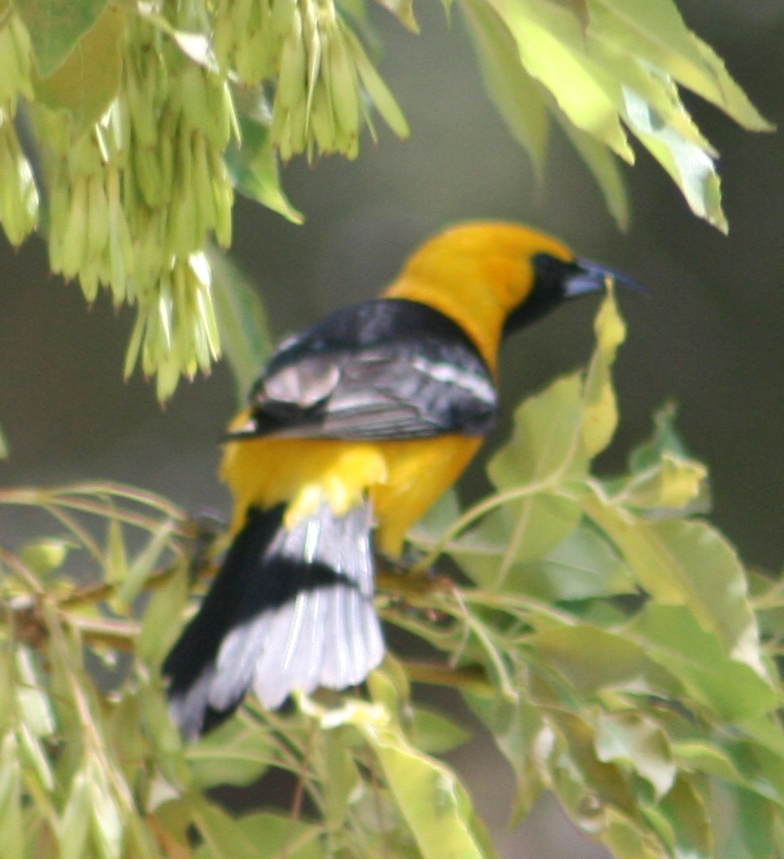
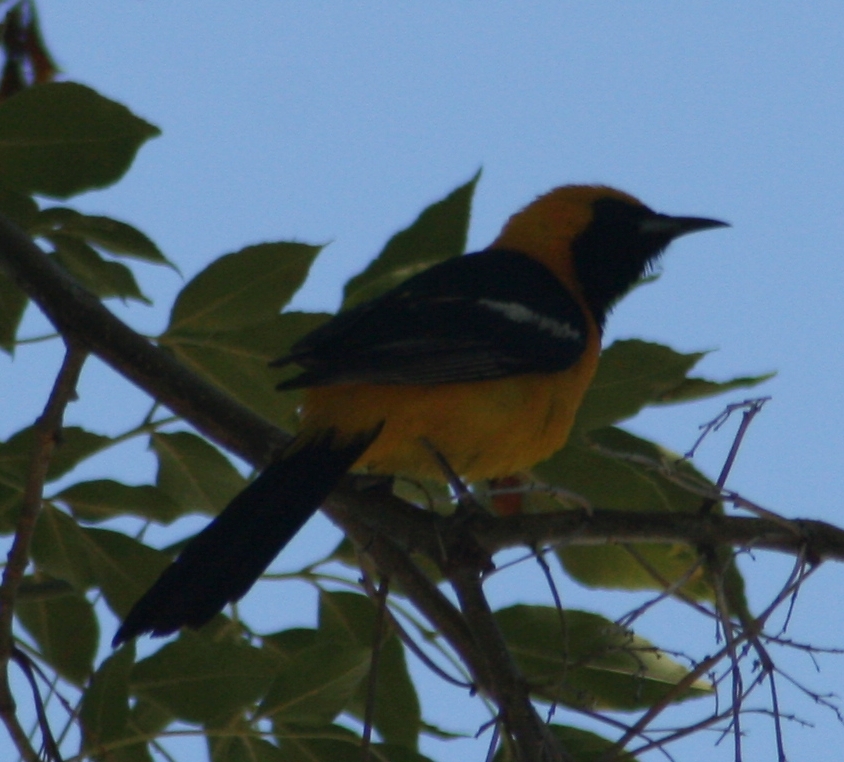
A few cropped images (somewhat blurry since it NEVER stood still for more than a second):
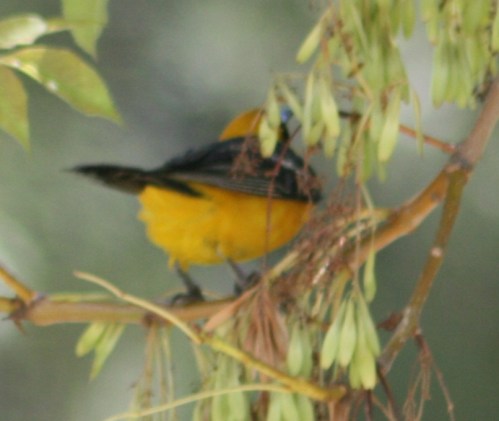
Big body, the size of a mockingbird or a touch larger.
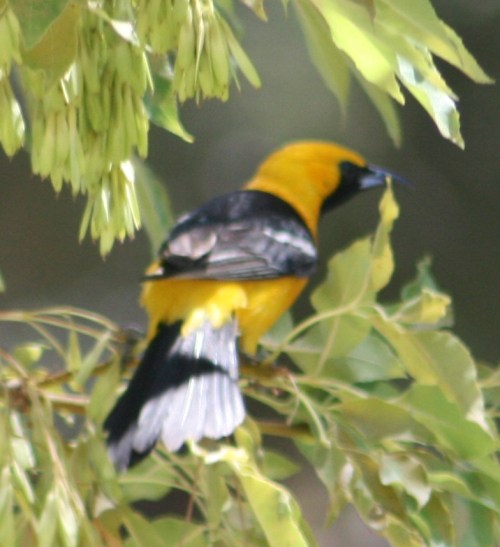
Bright, bright yellow, with jet black wings and tail and black markings on the face.
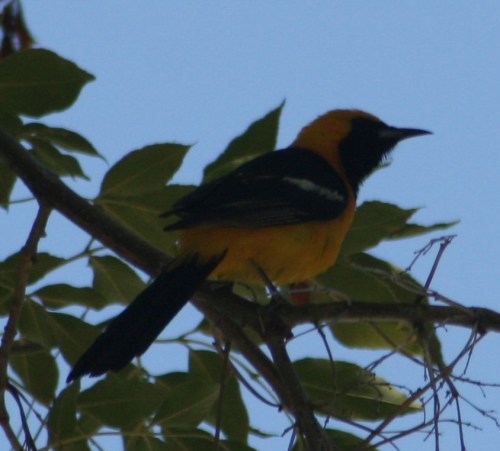
The beak is long, as are the legs.
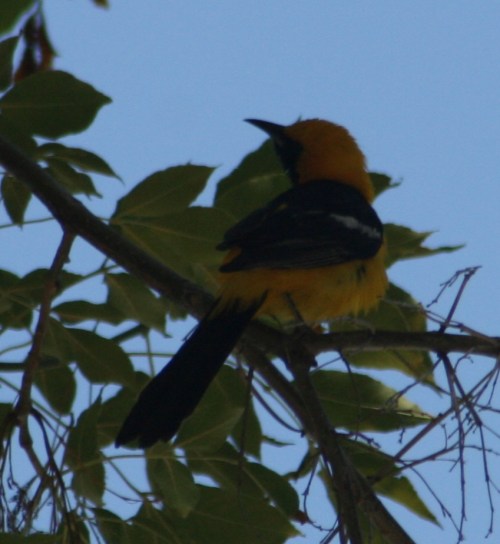
White stripes across the black wings.
If you Google “yellow and black birds” you get a few options, the first of which doesn’t match. The American Goldfinch is smaller than this bird, and the beak is all wrong.
I did find reference to a “yellow-headed blackbird.” The map shows that they do live in this area. (News to me!!) The only problem there is that it looks like only the head is black for this species – obviously here a big chunk of the body is yellow.
There’s an “Audubon’s Oriole” that looks more like this, but it’s apparently only found in Texas. This pair would have to be way, way lost.
This seems to be a more likely option for me, the hooded oriole. I think that’s our guy. And it says that the females are generally darker with little bright color.
Welcome, my hooded oriole dude & dudette mate. Help yourself to the seeds, and especially to the yard’s bugs!








 We Love The Stars Too Fondly