Category Archives: Astronomy

Pluto Space At P-2

Things are starting to happen fast aboard New Horizons.

Today New Horizons sent us its final photos of Pluto and Charon (below) before closest approach. Tonight, as we speak, it’s downlinking the “failsafe” data that it took in the last twenty-four hours. If something catastrophic happens and destroys or incapacitates New Horizon, at least we’ll have that.

But catastrophic events are not going to happen. New Horizon is deep into its pre-programmed series of thousands of commands which orchestrate a delicate ballet of twists, turns, and data collection runs. New Horizon has seven instruments in addition to its two cameras, and all of them will be taking turns looking at Pluto, Charon, the other four tiny moons, and looking for any new moons that might be found. For the next two weeks it’s nothing but go, go, go, go, go, go for New Horizons.

New Horizons’ closest approach to Pluto will happen at 07:49:57 EDT (03:49:57 PDT). With a light travel time of over four hours to Pluto, we wouldn’t know what happened until nearly noon – if we were communicating with New Horizon at the time of closest approach. But we’re not.

New Horizons can’t point at Pluto to take pictures and science data without turning away from Earth. It needs to point at Earth to send or receive radio signals. Since it can’t do both at the same time, all of the efforts during closest approach are directed toward collecting data and pictures. Once New Horizon is safely past Pluto and things don’t have to happen quite as fast, then it will turn back to Earth and start sending us the data. That will happen late Tuesday night.

Ultimately this experience won’t be quite like all of the previous planetary flybys and landings where we could watch live as the first pictures come down and get displayed, one after another. For example, from Mars, when Curiosity, Spirit, Opportunity, and Viking landed, there were dozens of pictures within an hour or two. But Mars is only about twelve light-minutes away, and it’s “easy” to get a high data transmission rate.

Pluto is much, much, much further away so that signal is vastly more faint than those coming from Mars. This means that the data rate is much slower in order to make sure that the data is received accurately. Where landers, orbiters, and rovers on Mars transmit pictures and data in almost realtime, it will take us well over a year to receive all of the data and pictures that New Horizons will collect.

Fortunately, New Horizons has a lot of data storage capacity, much more than on the Voyagers or even the more recent spacecraft such as MESSENGER or Cassini. All of the data collected should be safe onboard New Horizons until there’s time to have it downlinked to Earth. We’ll just have to be patient. It took decades to get New Horizons approved, funded, and built. It took over nine years after launch to get New Horizons to Pluto. We can handle waiting while data is trickled down to us from deep space beyond Pluto.


Here are some tools and resources to help you in follow along and keep up:

The New Horizons mission is being run by the Johns Hopkins University Applied Physics Laboratory (JHUAPL). Their primary New Horizons website is good for lots of in-depth information and background stories, as well as an archive of past New Horizons photos.

The New Horizons is a NASA mission, of course. Their primary New Horizons website is probably the best place to see new images and get news first – assuming you’re not getting them even sooner by following folks on Twitter.

If you’re on Twitter, follow (in addition to ME of course, @momdude56):

  • @NASANewHorizons   (the official NASA feed)
  • @NewHorizons   (run out of JHUAPL by New Horizons’ principal investigator, Alan Stern)
  • @EmilyLakduwalla  (reporter/blogger from the Planetary Society, absolutely one of the best)
  • @AlanStern   (the personal account for Alan Stern)
  • @Alex_Parker   (New Horizons team member)
  • @kennicosmith   (New Horizons team member, SWRI)
  • @DrPhiltill   (New Horizons team member, UCF Florida Space Institute)
  • @gummyshark   (New Horizons team member, SWRI)
  • @joelwmparker   (New Horizons team member, SWRI)
  • @AmandaZangari   (New Horizons team member, SWRI)
  • @AscendingNode   (New Horizons team member, SWRI)
  • @GliderHero   (New Horizons team member, SWRI)
  • @joshkammer   (New Horizons team member, SWRI)
  • @AstroCook   (New Horizons team member, SWRI)
  • @colkin   (New Horizons team member)
  • @CarlyHowett   (New Horizons team member)
  • @verbiscer   (New Horizons team member)
  • @PlanetDr   (JHUAPL scientist who works on Titan research)
  • @astVintageSpace   (New Horizons team member)
  • @plutokiller   (JPL/CalTech astronomer who led drive to recategorize Pluto as a dwarf planet)
  • @RonBaalke   (JPL scientist)
  • @Astroguyz   (NASA Social tweep & space program blogger)
  • @Pillownaut   (NASA Social tweep & space program blogger)
  • @BadAstronomer (Slate blogger, one of the best science bloggers)
  • @coreyspowell   (Scientific American editor)
  • @tariqjmalik   (Space.com editor)

Actually, that’s not a bad starter list of folks to follow if you’re just getting onto Twitter and want to follow what’s going on in space.


As briefings and news conferences are held over the next week, you can see them all live on NASA-TV, on your cable system or online. You can also get an updated schedule on news conferences and events being shown on NASA-TV. Currently there are events schedule for tomorrow (Monday, July 13th) at 10:30 EDT, then on Tuesday morning (July 14th) at 05:30 EDT, 07:30, 08:00, 09:15, and 21:00 EDT.

That last one, 21:00 EDT on Tuesday night, will be the one where we’ll first get data back from New Horizons post-flyby, i.e., the do-or-die moment when we find out if New Horizon survived the close flyby and did what it was programmed to do. Not only will we find out if the encounter was a success, we’ll also start getting some of the very high resolution pictures that will be orders of magnitude more detailed than the pictures we’ve seen so far.


The NASA/JPL “Eyes On The Solar System” app is an amazing, free program for your PC, Mac, iOS, Android, or Linux device. Install it and you’ll find a way to virtually cruise anywhere in the entire solar system. It’s almost like a video game, or a super-duper Google Earth for trillions of cubic miles of space. You can have it help you find things, you can explore on your own, or you can hit one of the buttons to have it take you right to a probe such as New Horizons, Cassini, or Dawn.

NASA Eyes Visualization

Image: NASA / JPL Eyes On The Solar System

The basic view (shown) shows how far out you are, how long to go (“Are we there yet?”), how fast, and what the (simulated) view is. In addition, in that window in the upper right it will show you which instruments are active and what they’re looking at as New Horizons steps through its program.

Also from this NASA/JPL site you can see what’s happening on the Deep Space Network, live at any time. You can look at an overview, or keep track of communications with a particular probe, or antenna, or see a world map showing the DSN. For example…

Deep Space Network Now

Image: NASA / JPL Deep Space Network Now

…right now all of the antennas at Goldstone in California are talking to New Horizons. You’ll be seeing that a lot over the next few days. I suspect that Rosetta, Curiosity, the various Mars Orbiters, Dawn, Cassini, and all of the other spacecraft out there might be on some sort of minimal contact schedules for the next couple of days.


The final pictures prior to the encounter were downlinked today. Released late this afternoon, the pictures of Pluto and Charon are starting to show some amazing detail.

2015-07-12 Pluto

Photo: NASA / JHUAPL / SWRI

This will be the last picture we see of Pluto’s “far side,” since all of the closeup pictures during the encounter will be on the side opposite from this. We don’t know what those four dark areas are down near the bottom, nor the hexagonal-shaped structures. Is that an impact crater at about the four o’clock position? It might be decades before we get back to Pluto with an orbiter to find out.

2015-07-12 Pluto Annotated

Photo: NASA / JHUAPL / SWRI

2015-07-12 Charon

Photo: NASA / JHUAPL / SWRI

Charon is coming into view as well, with impact craters, canyons, and chasms now visible. From here it only gets better.

2015-07-12 Charon Annotated

Photo: NASA / JHUAPL / SWRI

“SWRI” is the Southwest Research Institute in Boulder, Colorado. Many of the instruments on New Horizon were built at SWRI and many of the people listed above as recommendations to follow on Twitter are from SWRI.

Several people have pointed out similarities between what we’re starting to see on Charon and what we saw on Triton, a moon of Neptune (below)…

Triton

Photo: NASA / JPL

…and on Arial, a moon of Uranus (below) in the late 1980s when Voyager 2 flew by.

Ariel

Photo: NASA / JPL

The canyons seen on Charon have also been compared to Tethys, a moon of Saturn (below), which I mentioned yesterday.

Voyager 2 Tethys

Photo: NASA / JPL

At least with Triton I have heard speculation that it might be a Kuiper Belt object, one that formed far out beyond where Pluto is now and was captured later by Neptune. Again, no way to do a lot of testing of those theories without going back, and that probably won’t happen for decades.

But wouldn’t it be cool if we could go back to all of these planets and moons with orbiters and landers and rovers much sooner than “decades?” (Hint: YES, it would be!)

For now, let’s sit back, lose sleep, stay in touch, and watch the final major first encounter with a major object in our Solar System. It’s the end of one phase of the Golden Age of Space Exploration and the beginning of the next.

Hang on, it’s going to be fantastic.

Leave a comment

Filed under Astronomy, Space

Pluto Space At P-3

When I was born, we had not yet sent a rocket to orbit the Earth.

When I was still too young for school, Luna 3 sent us our first picture of the lunar far side, grainy and static-filled as it was.

Farside-Luna-3

Photo: Roscosmos

When I was in kindergarten, we had no clue what the planets really, REALLY looked like. Many people still thought there were canals on Mars, or at least a thick atmosphere and possibly plant and animal life. We knew Jupiter had a big red spot, Saturn had rings, and Venus had clouds.

When I was in second grade, Mariner 2 flew by Venus and we confirmed that it was HOT and completely cloudy, the atmosphere totally opaque. It was the first time that anyone had sent any kind of spacecraft to another planet successfully. It wasn’t until 1970 that the Russian Venera 7 spacecraft became the first to reach the surface of Venus, 1975 before Venera 9 sent back the first images from the surface of Venus, and 1978 before the Pioneer Venus Orbiter gave us our first, simple radar map of the surface.


When I was in fourth grade, Mariner 4 flew by Mars and scientists were literally stunned to see that the surface of Mars was heavily cratered, looking more like the Moon than the Earth.

Mariner 4 - JPL

Photo: JPL / NASA

Think about that for a second. We now know so much about Mars that grade school kids know that it has a whisper-thin atmosphere, valleys that dwarf the Grand Canyon, and the biggest volcano in the Solar System. There are people in their late thirties that remember seeing Viking on Mars as a kid. But until July 15, 1965, fifty years ago, we didn’t have a clue that it was anything like what it really is.


In my senior year of high school, Mariner 10 was the first spacecraft to use a gravity assist from another planet, slingshotting around Venus to get to Mercury. It returned the first photos of Mercury, which up until that time had been just as mysterious and unknown as Mars’ details had been. Even from the biggest telescopes on Earth, Mercury had been nothing but a bright crescent with an occasional blobby smudge visible. Being so close to the sun we knew that it would be hot, but we didn’t know we would find some of the coldest places in the solar system there. (There are polar craters on Mercury that never see the sun. Ever. They’ve almost certainly got ice in them.) We didn’t know if Mercury had an atmosphere or not. (It doesn’t.) Instead of a pinpoint with smudges, Mercury was revealed to be cratered and barren, similar to the Moon, but different in its own ways.

Mariner 10 image of Mercury - JPL

Photo: JPL / NASA


Just before I got out of high school, Pioneer 10 was the first spacecraft to fly by Jupiter. Our vision of the giant planet got tantalizingly better.

Pioneer 10 - Jupiter

Photo: JPL / NASA

The next year Pioneer 11 followed past Jupiter, with even better detail.

Pioneer 11 - Jupiter

Photo: JPL / NASA

After its Jupiter flyby, Pioneer 11 went on to pass Saturn in 1979.

Pioneer 11 - Saturn

Photo: JPL / NASA


When I was in college, Voyager 1 flew by Jupiter, with Voyager 2 following it by four months. The Voyager spacecraft expanded our view of those two planets and their moons by many orders of magnitude.

Voyager 2 Jupiter

Photo: JPL / NASA

Seen up close and in incredible detail, Jupiter showed itself to be one of the most complex, dynamic, and beautiful planets.

Voyager 1 at Jupiter - JPL

Photo: JPL / NASA

Jupiter’s Great Red Spot is not just a storm (a storm almost three times bigger than the entire Earth) but part of a complex of storms and vortices, spinning off smaller (Earth-sized) storms and swallowing others.

Voyager 1 Jupiter System

Photo: JPL / NASA

The moons of Jupiter turned out to be as varied and complex as the family of planets orbiting the sun.

converted PNM file

Photo: JPL / NASA

Io is a frozen volcanic hell, hundreds of degrees below zero on the surface but spewing plumes of sulfur and other molten rocks high into space. These were the first active volcanoes ever seen other than on Earth.

Voyager 1 Callisto - JPL

Photo: JPL / NASA

Callisto is an icy moon, heavily cratered.

Voyager 1 Ganymede - JPL

Photo: JPL / NASA

Ganymede is also an icy moon, but with very little cratering. This means that the surface must be actively regenerated by some process, probably from turnover between the surface and a huge ocean trapped underneath the ice.

converted PNM file

Photo: JPL / NASA

Europa was the most mysterious of all of the Galilean moons. Relatively smooth and covered in ice, it’s also covered by a spiderweb of cracks. What’s causing the tan or brown color? Gravitational data from the Voyagers indicated that Europa could have an ocean under the ice that contains even more water than on the entire Earth.

Could that ocean, kept warm by tidal forces, protected by the ice above, and fed with minerals from ocean vents, could it be a safe harbor for life to develop? The Galileo spacecraft in the late 1990s gave us more indications that it could, so now we’re planning a dedicated mission to Europa to launch in the 2020s.

Voyager 1 Jupiter Ring - JPL

Photo: JPL / NASA

Jupiter has a ring! No, four rings! We had no idea that they were there until the Voyagers saw it in 1979.

Voyager 2 Saturn

Photo: JPL / NASA

Then the Voyagers flew by Saturn in 1980 and 1981. Again, our theories about the planet and its moons got turned on their heads repeatedly.

Voyager 1 Saturn's Rings

Photo: JPL / NASA

From Earth, our biggest telescopes of the 1970’s showed three rings with gaps between them. Pioneer 11 had shown that the ring structures were more complex, but didn’t give us a detailed view.  Voyager showed the rings to have complex structures far beyond anything ever imagined, including structures or “spokes” that form and dissolve as the rings rotate. Three rings? Nope. Dozens.

Voyager - Enceladus & Cassini Enceladus jets

Photo: JPL / NASA

Enceladus is an icy moon with parts cratered and parts smooth. The smooth areas were once cratered, but some process has re-formed them. Later, when the Cassini spacecraft got to Saturn it discovered that the cracks in Enceladus’ icy surface are venting into space (right part of picture above). It’s water being vented, and it contains dust and simple organic compounds.

Does Enceladus have an ocean under the ice that might contain life? We know the water’s there, we know the chemicals are there, we know a heat and energy source is there. First, Europa, now Enceladus?

Voyager 1 - Dione

Photo: JPL / NASA

Dione is a mix of ice and rock, heavily cratered, but also with stripes and rays of some material stretching halfway around the moon.

By the time of Voyager, we thought that all of the moons would look like our Moon, Mars, and Mercury. But none of the moons of Jupiter or Saturn are simple, and they’re all unique.

Voyager 1 Titan

Photo: JPL / NASA

Titan is the biggest moon in the solar system and the Voyagers found it to be covered in a thick, opaque atmosphere. But closer examination showed complex layers in the thick, methane atmosphere.

Voyager 2 Iapetus

Photo: JPL / NASA

Iapatus is a small moon of Saturn, but it’s jet black on one hemisphere and blindingly white on the other, with a ridge of mountains running around the planet between the two halves like the seams on a baseball. We’ve gotten much better pictures from Galileo, but we’re still baffled.

Voyager 2 Tethys

Photo: JPL / NASA

Tethys is mostly ice and rock with lots of craters – and some huge, deep, long canyons that wrap huge distances around the moon. Again, a unique place.


Voyager 2 Uranus

Photo: JPL / NASA

Voyager 1 flew off into interstellar space after leaving Saturn, but Voyager 2 was flung toward Uranus, arriving in 1986. Uranus seems almost featureless, but close examination shows the upper atmosphere to have some of the highest winds in the solar system. We won’t use radar to map the surface like we did with Venus – Uranus is a gas giant like Jupiter and Saturn, although smaller.

Voyager 2 Neptune

Photo: JPL / NASA

After Uranus, Voyager 2 was targeted to Neptune. In 1989 it gave us our only closeup views, showing tremendous storms and winds in the atmosphere. The colors seen at Jupiter aren’t seen, possibly because the much lower sunlight levels and much colder conditions leave the chemicals in the atmosphere with too little energy to mix into complex organic and inorganic compounds.


Following the initial burst of planetary exploration in the 1960s through the 1980s, we have gone back to many of the planets. MESSENGER went to orbit Mercury and mapped it in great detail over its six-year mission. Magellan spent over four years using radar to map the surface of Venus. Galileo orbited through the Jupiter system, and dropped a probe into Jupiter’s upper atmosphere. Juno is on its way to Jupiter, arriving there in 2016. Cassini has been orbiting Saturn since 2004 and should continue its mission until September 2017. Cassini dropped the Huygens probe into Titan’s atmosphere and landed it on the surface in 2005.

Mars has practically been infested with rovers, landers, and orbiters. We first landed on Mars in 1976 with Viking 1 and Viking 2, followed by Pathfinder, Spirit, Opportunity (now in the 4,185th day of its 90 day mission!), Phoenix, and Curiosity. We’ve been orbiting Mars since Mariner 9 in 1971, and we currently have five functional spacecraft in orbit (Mars Odyssey, Mars Express, Mars Reconnaissance, Mangalyaan, and MAVEN).

We’ve flown spacecraft to comets, asteroids, Vesta, and Ceres. We’ve landed on comets and orbited them.

What’s my point?


We have lived in a truly golden age of space exploration, a time when our view of the universe around us has changed more radically than at any time since Copernicus and Galileo discovered that the Earth was not at the center of the universe.

It’s almost impossible to understand how different our view of our solar system and the universe was when I was starting school some 50+ years ago. (Okay, so that’s for a large value of “+”.) We didn’t know what galaxies were. We knew very little about the other planets, or even our own Moon. Hell, we even knew very little about our own Earth, having just discovered the Van Allen radiation belts!

Throughout this whole age of discovery, I can remember time after time, sitting with family, watching and listening in awe as our view of the universe shifted yet again.

At first it was with my parent and siblings. The first views of the craters of Mars. The first view of the lunar far side. The first pictures from Jupiter and Saturn.

Later it was with my kids, whooping and hollering with the first pictures from Pathfinder, Spirit and Opportunity, MESSENGER, Galileo, Cassini, Huygens, Dawn, and Rosetta.

The memories of those images and experiences still fill me with wonder and awe. I was lucky enough to see it all. My kids haven’t ever seen people walking on the moon, but they’ve known their whole lives that it was done. The view of the universe they started with was vastly different from the one I started with.

In three days (P-3 is Pluto minus three days), on Tuesday morning, New Horizons will zip by Pluto at over 30,000 miles an hour, snapping pictures and taking data as it goes. Over the next year we’ll get those pictures trickling back down to us, for the last time showing us a major body of the Solar System for the first time in detail.

Is it the end of an era? Perhaps. But it’s also the beginning of a new one.

Fifty years ago we had nine planets, a few asteroids, the occasional comet, and a handful of moons. Now we have eight planets, a growing list of possibly hundreds or even thousands of dwarf planets, tens of thousands of asteroids, and almost a hundred moons. Most importantly, beyond Pluto there are hundreds of thousands of small, icy bodies that we’re only now starting to discover.

Now we’re not taking our first glances at the planets, but we’re still exploring them all. Digging, drilling, zapping, and sampling on Mars, with the goal of walking around with people there in my lifetime. Building bigger and more complex spacecraft to explore the gas giants, their moons, and to look for life there as well. Ways to go back to the moon with people and machines, to mine and explore, and to go beyond to look at asteroids and comets with human crews.

Our view of our celestial neighborhood will never be the same. It will continue to get even better.


Leave a comment

Filed under Astronomy, Space

Jewels In The Sunset, July 3rd

And now, having passed in the night (literally), Jupiter and Venus move apart again until next time. (Which is next year.)

Wednesday, July 1st

01_IMG_8604 small

It was mostly cloudy. Good for moody, spooky pictures of the moon rising, not so good for watching planets.

Thursday, July 2nd

02_IMG_8674 small

Back to “clear and a million” in Southern California.

03_IMG_8694 small

Dusk is a magical hour for photography. Jupiter’s heading quickly toward the sun from our perspective while Venus is following more slowly. Relative to Venus, Jupiter was at about 11:00 a week ago, now below 3:00.

04_IMG_3726 small

Still no good, detailed, focused close-up pictures, but even when it’s a bit fuzzy you can still see some of Jupiter’s moons.

Friday, July 3rd

05_IMG_8769 small

Everything’s silhouetted against the twilight.

06_IMG_8771 small

The planets peek out from behind the infamous palm tree.

07_IMG_3772 small

And again, Galilean moons start to pop out as the lights fade.

Leave a comment

Filed under Astronomy, Photography, Space, Weather

Clouds Vs Moon

Again we have several layers of high clouds, so the Venus & Jupiter show was spotty at best. They could be seen, but only very intermittently and then only because they are bright enough to shine through thin cloud bands. Along with the clouds has been an uncommon amount of humidity for Southern California. We’re not talking Florida or Louisiana humidity (or Missouri, or Virginia, etc etc) but it’s considerably higher than we ever usually get. And for some reason, lots of mosquitoes. Between last night and tonight, my legs and arms look like pin cushions.

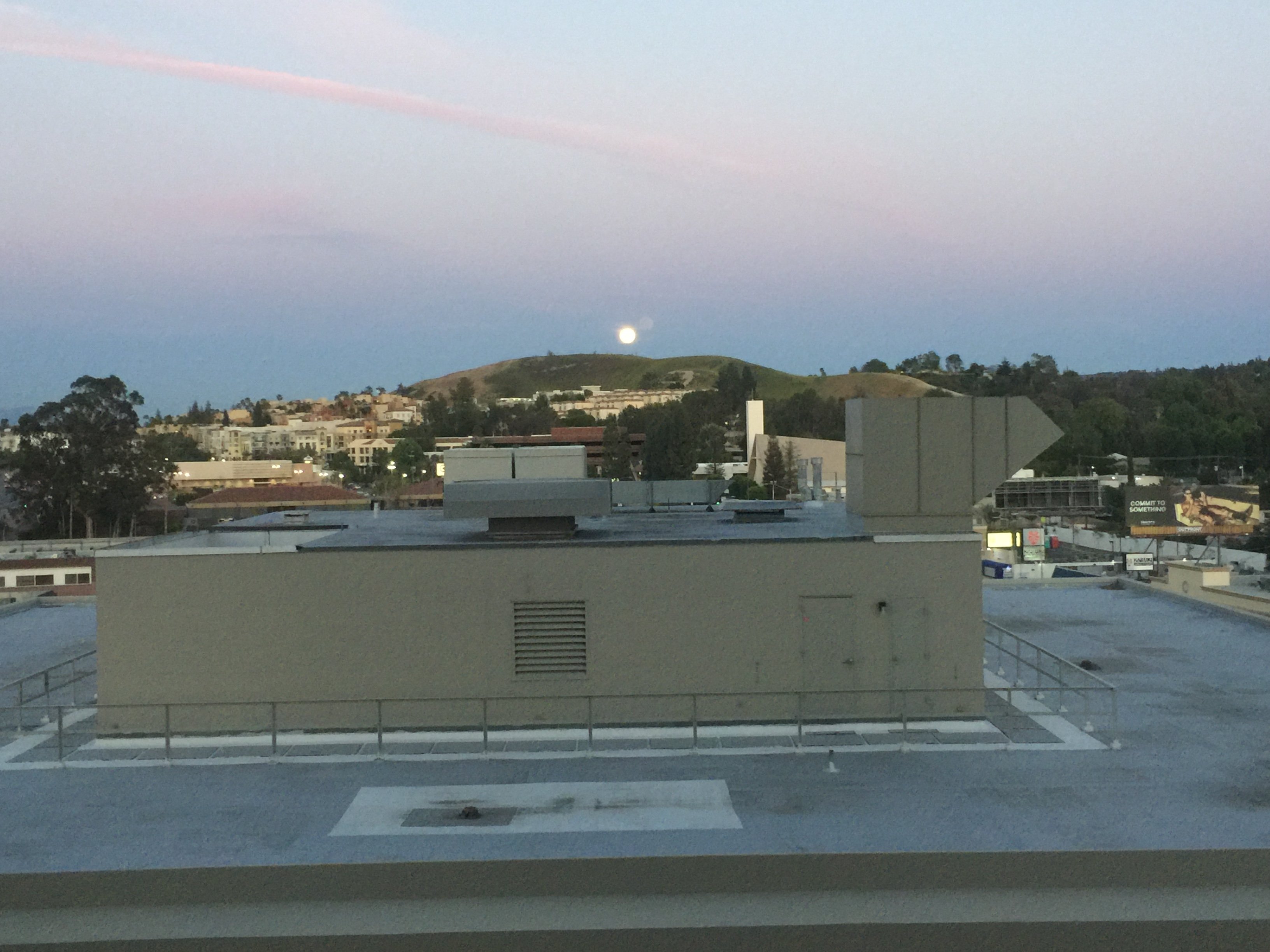
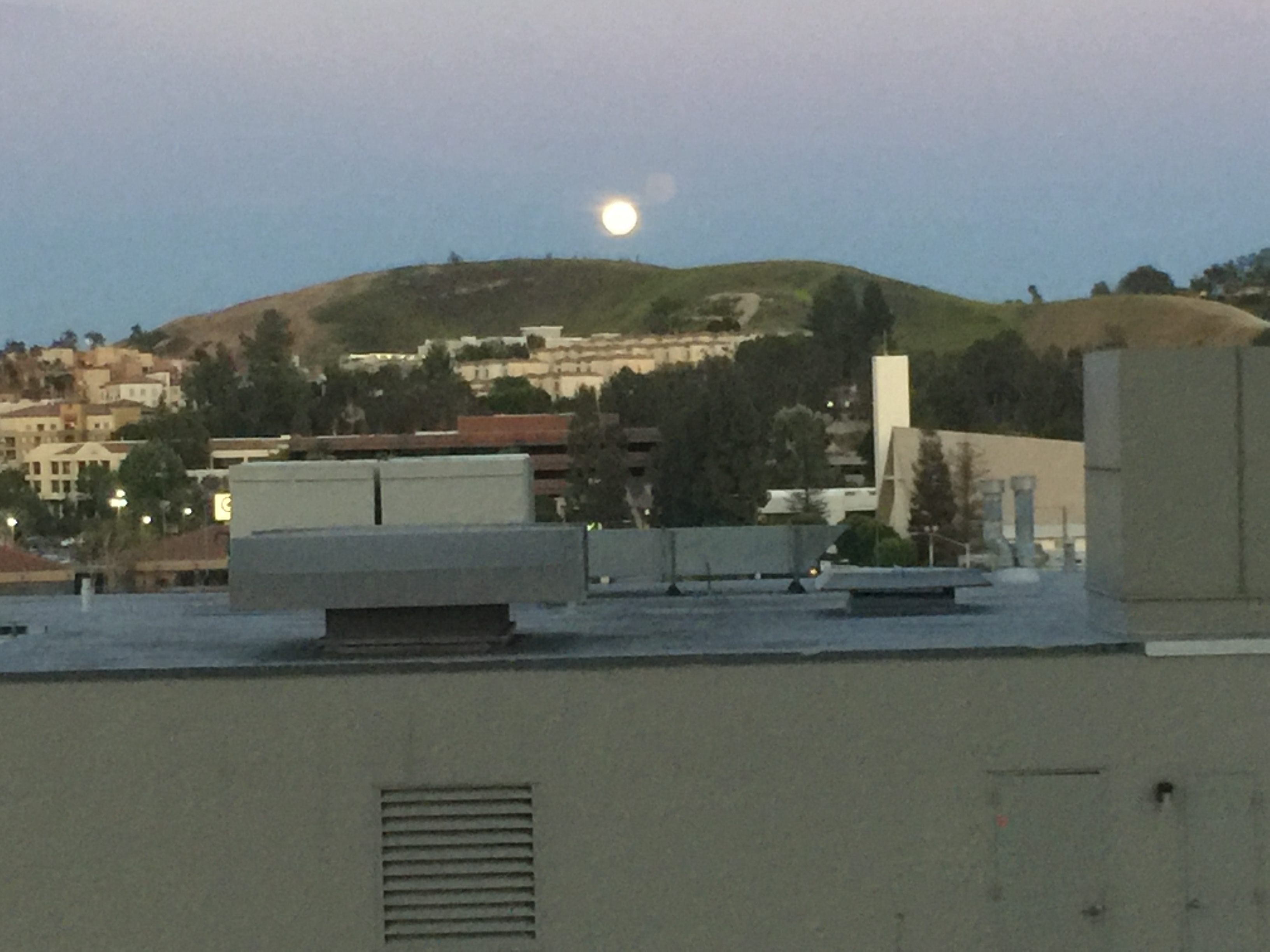
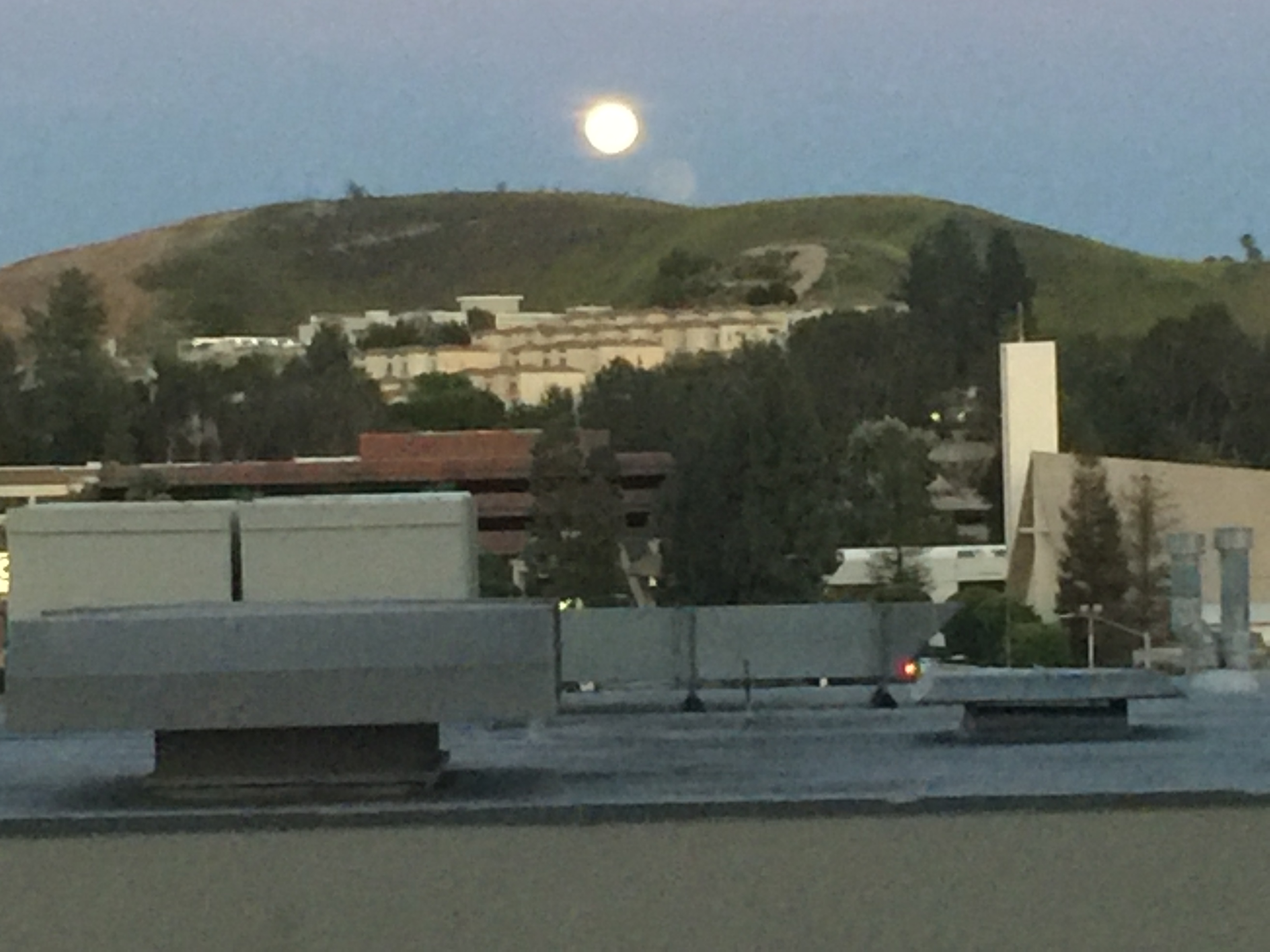
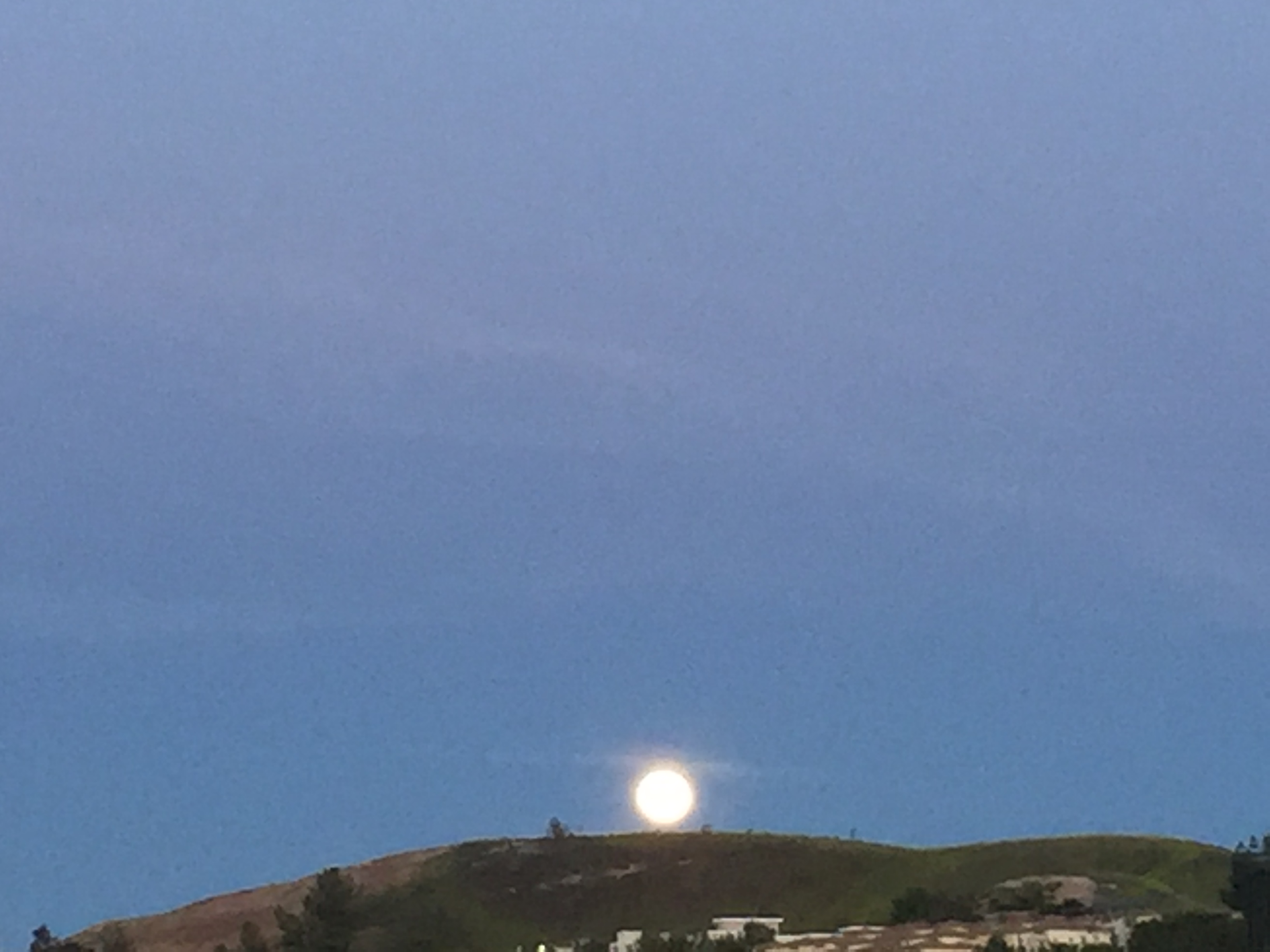
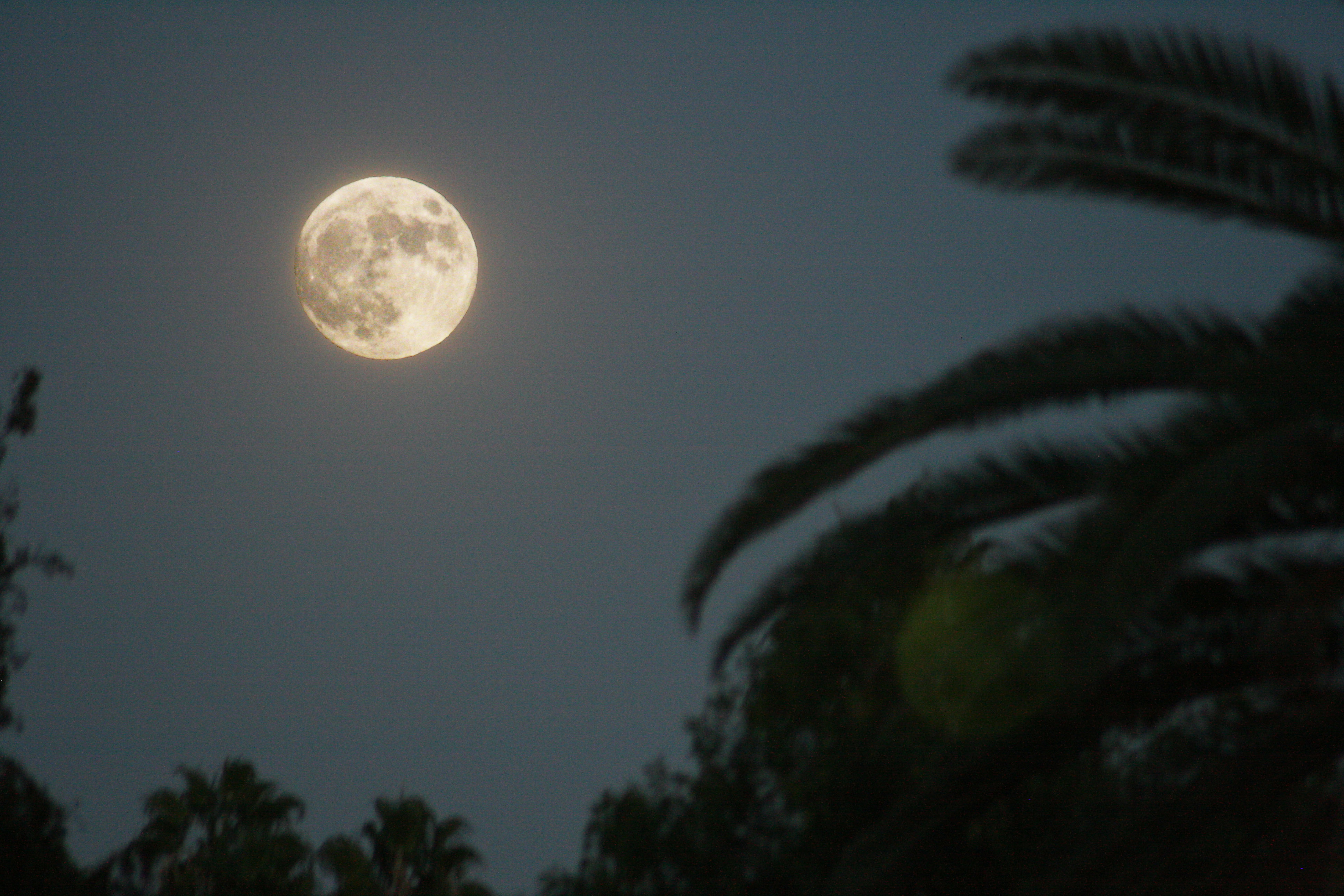
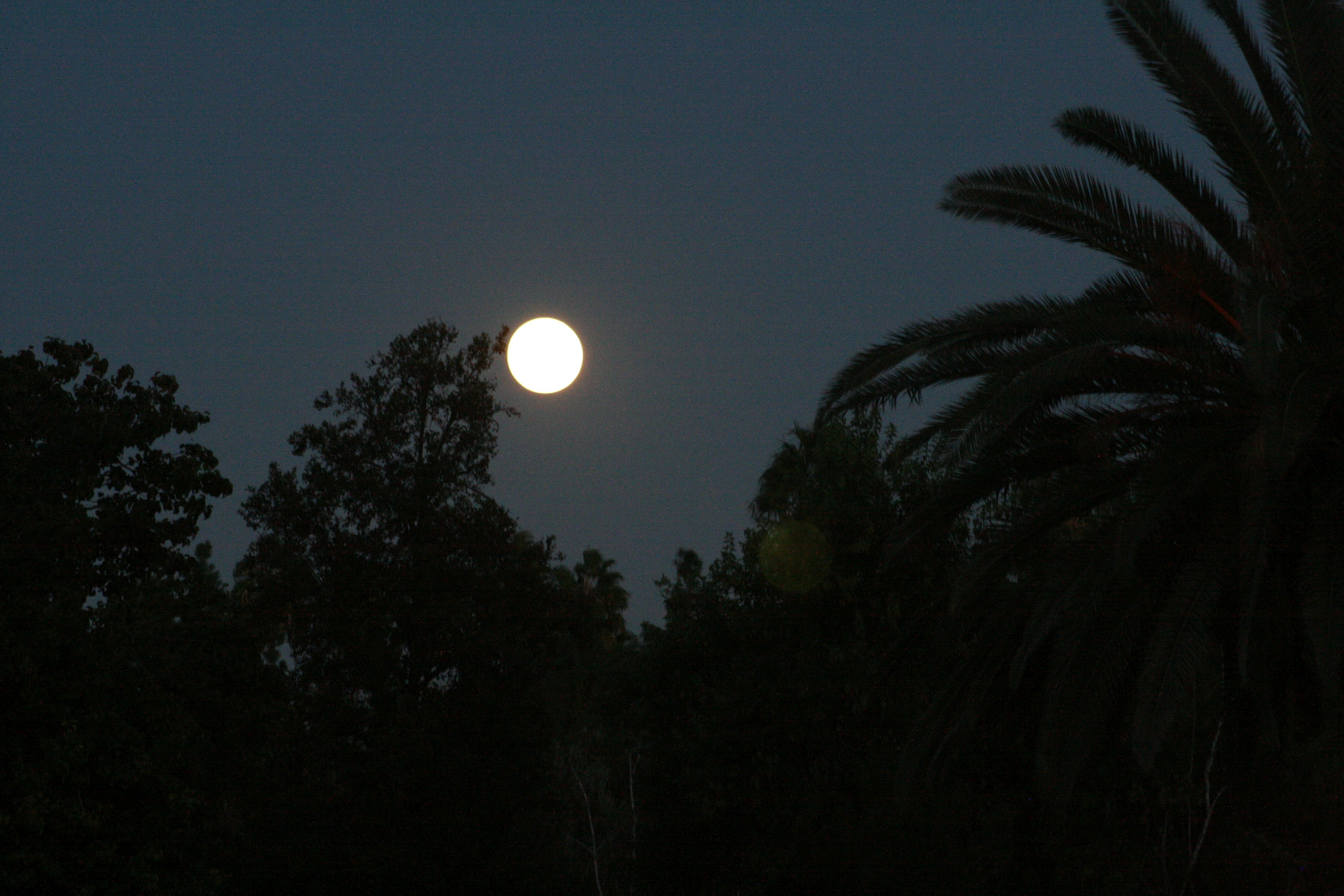
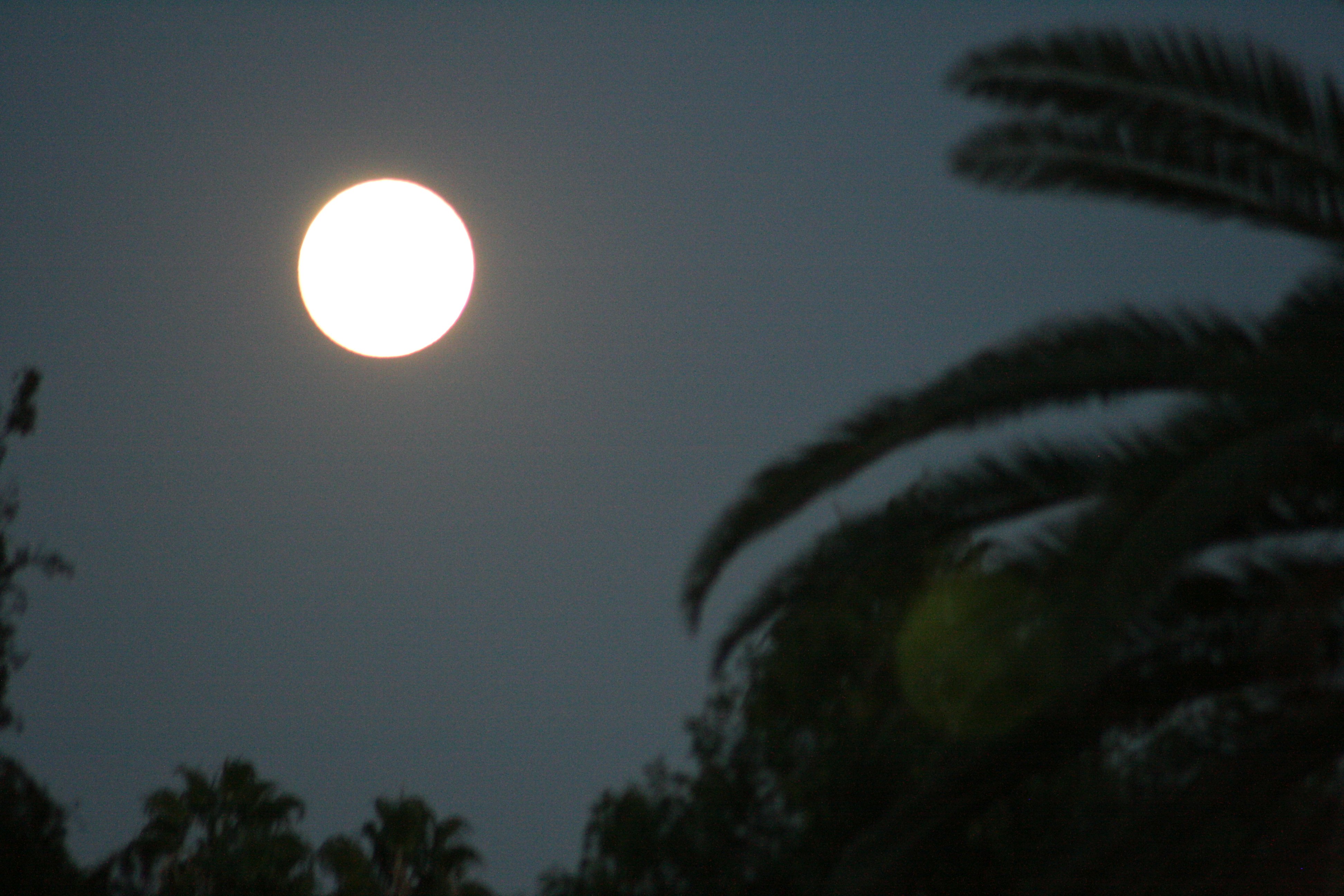
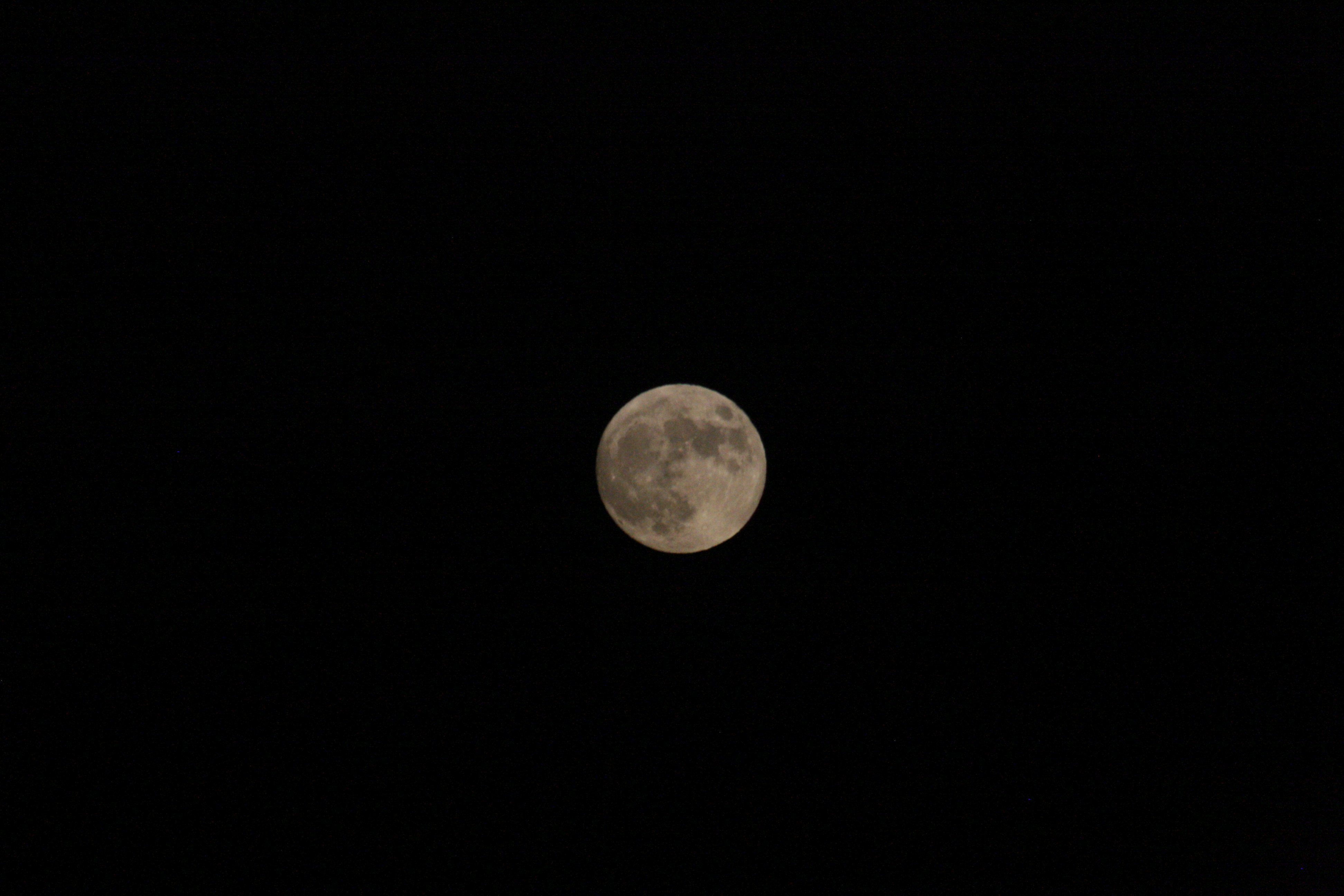
The heavier clouds are coming in from the east, where the almost-full moon is trying to rise. I never actually saw the moon, but the battle between it and the clouds was a thing of beauty. The collateral damage that illuminated the herringbone cloud patterns above were amazing.

IMG_8619 small

IMG_8637 small

IMG_8654 small

Leave a comment

Filed under Astronomy, Photography, Space, Weather

Jewels In The Sunset, June 30th (Conjunction)

Approximately 0.3° separation. For reference, the sun and moon average around 0.5° in apparent diameter, so either would cover both Venus and Jupiter if they happened to be in the right spot tonight. (Now THAT would be a rare event!) You can see how over the last eleven days (June 19th, June 20th, June 21st, June 22nd, June 25th, and June 29th) they’ve gotten closer and closer.

01_IMG_9884

(Image: Weather Channel app)

Of course, Murphy rules. Starting about 14:00 it was getting cloudy and by 17:00 it was raining.

02_IMG_9890

Here’s that “usual” view to the west from our front yard at 17:55. I was not happy.

03_IMG_9896

By 20:00 it had started to clear a bit. I started to have hope.

04_IMG_8484 small

By 20:40 there were just a few thin, high clouds over most of the western sky. There were our jewels!

05_IMG_3578 small

Where last night Jupiter was at “the 11:00 position” compared to Venus, tonight they’ve passed each other and Jupiter is in “the 1:00 position.”

06_IMG_8510 small

The pictures don’t do it justice. It was beautiful, two bright jewels side by side in the darkening twilight.

07_IMG_3615 small

As it got darker, the clouds started to move back in a bit, but Venus and Jupiter also looked that much brighter against a dark background.

08_IMG_3648 small

Zoomed in with the 300mm lens, you can’t see the crescent shape of Venus, but you can see the Galilean moons of Jupiter. (And a funky, ghostly lens flare from Venus, which does in fact show the crescent shape.)

I pulled the small telescope out, the two planets fitting easily into the field of view. In the scope, the thin crescent shape of Venus was obvious, Jupiter showed as an oblate sphere with several bands visible, and the four Galilean moons were very clearly visible. It was spectacular.

09_IMG_8538 small

Fitting the camera to the small scope again proved problematic. Focus is part of the problem, exposure is another. While I played around with both and took a lot of photos at different exposures and different focus points, I never hit that sweet spot. This image was the closest I came. There is enough detail on Venus (lower left) to see a bit of the crescent, and if you blow the picture up to full size, you can see just a hint of the Galilean moons. Most noticeable is the color difference – Venus is bright white, while Jupiter shows some pastel color.

The Long-Suffering Wife came out to take a look, and the Youngest Daughter took a look before heading back home. (Jessie did not look, being ever so Bohemian with that “been-there, done-that” attitude.) Then, just 45 minutes after it started, a good two hours before Venus and Jupiter would actually set, the clouds started rolling back in and it all vanished.

I’m glad that the Fates parted the clouds long enough for me to get a glimpse tonight. It was magnificent!

If you didn’t see it tonight, keep watching! The two will start to pull apart from each other, but they’ll still be bright in the west after sundown for weeks to come. There will be another grouping when the young moon moves back into the evening sky in about three weeks. Venus and Jupiter will get back together in the pre-dawn morning sky in October, being separated by only 1° on October 26, 2015. Next year we’ll do it again, and on August 27, 2016 Jupiter and Venus will be separated by less than 0.1°, a third of their current separation.

Keep watching the skies! (And be patient if it’s cloudy.)


Leave a comment

Filed under Astronomy, Photography, Space, Weather

Jewels In The Sunset, June 29th

“Keep on target…” Starting about ten days ago (June 19th, June 20th, June 21st, June 22nd, and June 25th) we’ve checked in on the local celestial mechanics at play for our edification and enjoyment.

In the Sixteenth or Seventeen Century we would have been doing science. In the Twenty-First Century we can fling robots across the solar system and hit a spot the size of a baseball field from over three billion miles away. Today we know exactly how puny we are in an incredibly vast universe, but we also can be pretty clever little primates, so we can admire the dance of the planets on an intellectual level while also just loving the sight of the pretty lights in the sky.

01_IMG_8420 small

We’ve still got some monsoonal weather being sucked up from Baja, so one must be patient and wait for them to shift about a bit. Do you see Venus and Jupiter? Neither did I.

02_IMG_8431 small

There they are! Still peeking through a high layer of clouds painted pink by the sunset, but there where they should be.

03_IMG_3507 small

Then, of course, a band of clouds will move back in front of them.

04_IMG_8442 small

It does make for a beautiful sunset. Much better than the “clear and a million” version, as long as the scattered clouds stay scattered.

05_IMG_3526 small

Even in the early parts of civil twilight we can see Galilean moons lined up around Jupiter.

06_IMG_3533 small

As it gets darker, they really stand out.

07_IMG_3548 small

They’re less than 1° apart tonight, and will be even closer tomorrow night.

08_IMG_8463 small

Dancing with the cloud bands.

09_IMG_8481 small

Along with the clouds came some humidity and an uncommon number of mosquitoes and bugs. As lovely as it would be to sit out and watch these guys set, I think I’ll wait until tomorrow night and pick up some DEET and a telescope.

Let’s hope it’s clear. If it’s clear where you are tomorrow shortly after sunset, take a look. If you can take a picture, feel free to share it here in the comments!

3 Comments

Filed under Astronomy, Photography, Space, Weather

Sunset, Yesterday Evening, June 26th

Tonight:

  1. It was totally clouded over (as predicted), so no fiery sunset, no Jupiter, no Venus, no moon.
  2. It was The Long-Suffering Wife’s birthday, so we were out at a truly wonderful Brazilian fusion restaurant in Tarzana. If you’re in the area, we can recommend it. The food was amazing, and the entertainment was rather eye-catching as well.

So here’s the sunset and conjunction pictures from yesterday. They were going to go up Friday night, but somehow we got infested with rainbows.

01_IMG_8403 small

Unlike the previous “clear and a million” evenings, tonight we had the beginning of a monsoonal front moving up from Baja.

02_IMG_8405 small

It wasn’t the absolute best sunset we’ve ever had, but it was pretty nice.

03_IMG_8406 small

04_IMG_8409 small

05_IMG_8419 small

In that pink, cotton candy sky it was harder to see Venus and Jupiter, especially during dusk when the clouds were illuminated.

06_IMG_3423 small

Venus wasn’t too hard. It’s the third brightest natural object in the sky, after all. (You do know what the first two would be, right?)

07_IMG_3488 small

Jupiter was a little harder, and when it got darker it also got a bit cloudier. But finally it popped out into view.

08_IMG_3469 small

Once it was almost fully dark and the clouds were still fairly thin, there they were. I hope this wasn’t the last we see of them here in LA before the conjunction on Tuesday.

09_IMG_3446 small

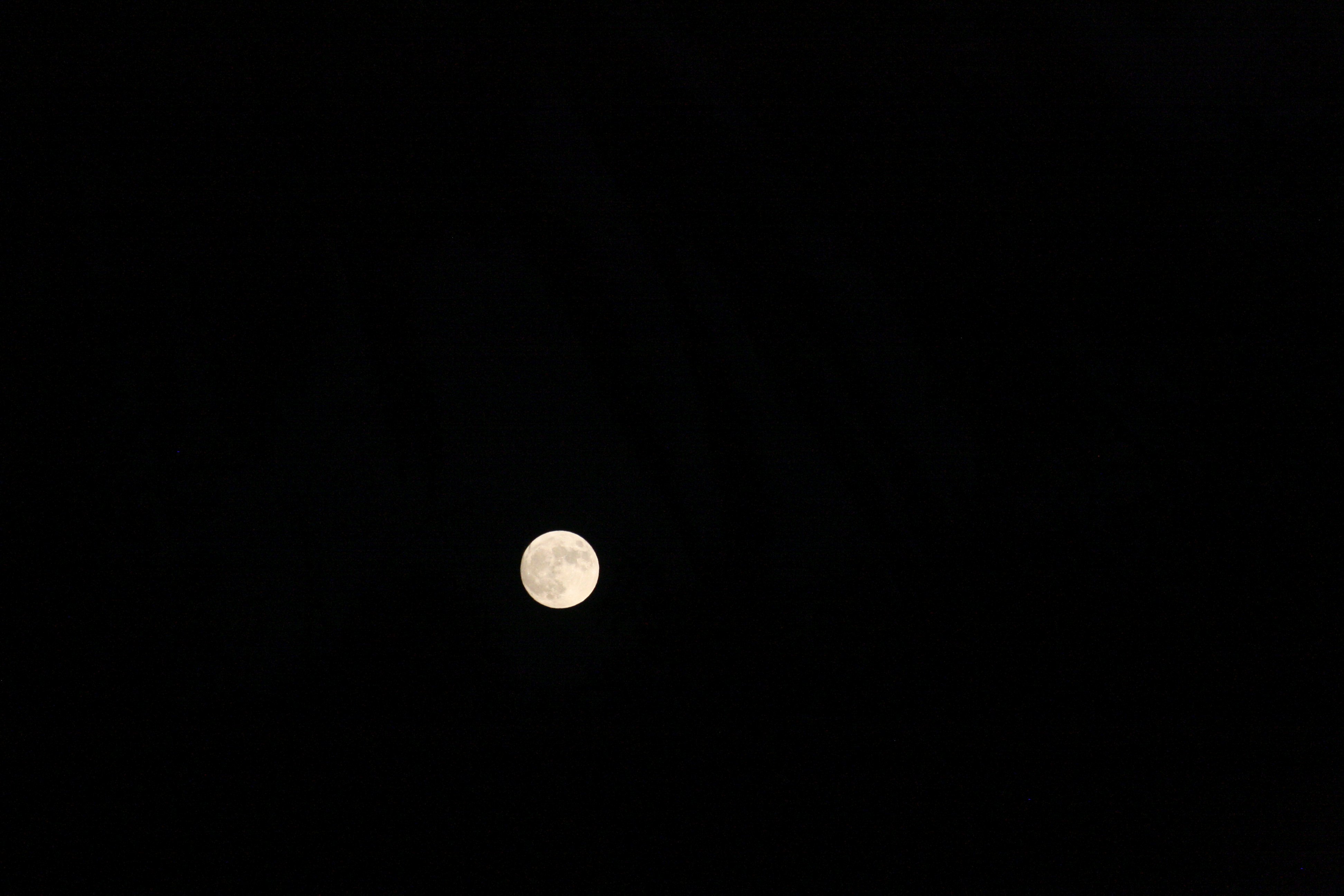
The moon, of course, was lovely. With a relatively large (300 mm) telephoto lens, it’s bright enough so you can get by without a tripod and not get blurring by shooting all the way up at 1/4000 sec.

We’ll see if the clouds clear tomorrow.

Leave a comment

Filed under Astronomy, Family, Photography, Space, Weather

Jewels In The Sunset, June 25th

Celestial mechanics is your friend. Last Friday night, Saturday night, Sunday night, and Monday night, Jupiter and Venus are moving toward conjunction, with the crescent moon making a brief appearance.

IMG_8356 small

Last night, Wednesday, I caught them a little later than normal, which meant they were closer to the western horizon. It also meant the only good place to get a picture without a street light in it was out in the middle of the street. (We only had to dodge two cars at the last second!)

IMG_8394 small

Tonight, higher in the sky — but still closer together. Well, at least from our point of view. Venus, the brighter one on the lower right, is 0.5533 AU (51 million miles) away from Earth, while Jupiter is 6.02 AU (559 million miles) away.

IMG_8375 small

They’ll be quite the sight over the next few nights, with their closest approach to each other (in our sky) on Tuesday, June 30th.

Of course, Murphy being the impish demighod that he is…

IMG_9674

…and with a monsoonal flow setting up, a few news outlets are predicting a good chance of scattered thunderstorms.

Well played, Murphy, well played!

(I think we’ll be fine, and we may even get some spectacular sunsets to boot! Paul-lyanna Forever!)

Leave a comment

Filed under Astronomy, Photography, Space

Jewels In The Sunset, June 22nd

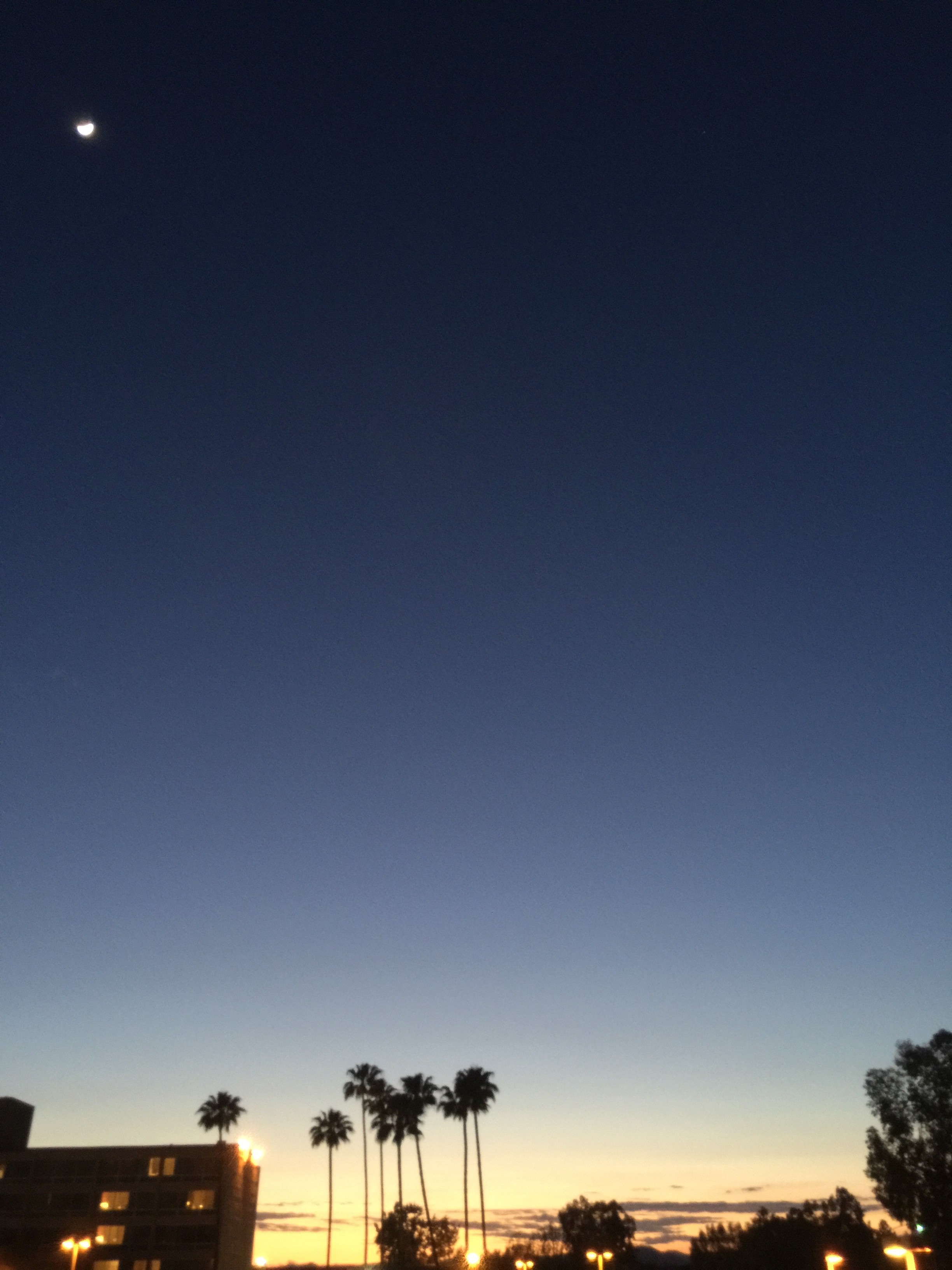
Friday night the young, crescent  moon was underneath Jupiter and Venus, Saturday night the moon had moved up to make a nice triangle with Jupiter and Venus, yesterday night the moon had moved on.

IMG_8291 small

Tonight we’ve gotten a few high clouds – or it might be smoke, there are a number of brush fires in SoCal, one of them only twenty miles away or so. Whatever. You can see how far the moon has moved again. Tomorrow night I might still be able to get it in the frame using the wide angle lens, but not by Wednesday. Still, Jupiter and Venus continue to close in on each other.

IMG_8217 small

Pulling out the small telescope, the moon is an easy target. I really want to work on getting the focus better since I think I can get images that are sharper than this. It would help a lot if the scope could be set up on a permanent stand and the balance and gearing on the drive set up better, but that’s unlikely to happen any time soon.

IMG_8253 small

Taking a shot at Jupiter, it’s easy to see that this is a much higher magnification that the 300mm telephoto lens gives. From the top to bottom, we have Europa, (Jupiter), Callisto, Io, and Ganymede.

IMG_8253 cropped

Cropping that image, it’s obvious that here also, precise focus is an issue. It’s hard to do through the camera viewfinder. Since I don’t have the guidance on the mount set up properly the scope drifts and moves a lot more than it should, so I’m using both hands to try to keep it on target while I focus. That in turn jiggles the whole system enough for it to be even harder to focus.

No detail on Jupiter, obviously, but if I could solve some of the mechanical issues, I would like to next try to take a whole bunch of very short exposures (say, 1/30 second or so) and then stack them, instead of trying to take one long exposure (this one is 1/2 second).

That’s what this is, test, fiddle, test again, fail, fiddle some more, test… Fair early, fail fast, fail often in order to make progress. And be patient.


Leave a comment

Filed under Astronomy, Photography, Space

Jewels In The Sunset, June 21st

Friday night the young, crescent  moon was underneath Jupiter and Venus, while yesterday night the moon had moved up to make a nice triangle with Jupiter and Venus. Tonight, the moon’s moved on. (As expected – celestial mechanics and all of that. If it hadn’t moved on, THAT would be news!)

IMG_3376 small

Twilight, and the contrails are out as well.

IMG_3393 small

The moon is getting more and more illuminated.

IMG_8179 small

Yesterday the moon was even with Venus and made an approximate isosceles triangle – tonight it’s moved up and out by about 15°.

IMG_8195 small

They’ve lovely, but by tomorrow night the moon will be another 15° higher and out of the picture – Venus and Jupiter will continue to move closer to each other.

FullSizeRender

For the record, the iPhone camera isn’t very good for this type of photography at all, compared to a good DSLR.

Leave a comment

Filed under Astronomy, Photography, Space