Category Archives: Astronomy

Jewels In The Sunset, June 20th

Last night the young, crescent  moon moved up toward Jupiter and Venus, which are both in turn moving toward each other over the next ten days. Tonight, the sun set at 19:54 local time. 01_IMG_8059 small

20:20, 0:26 after sunset. The moon’s easy to spot, which tells you where to look for Venus, which is also easy. Jupiter is a bit harder, juuuuuuuust barely visible as the top point of a triangle formed by the three bodies. I actually saw it first looking at this picture on the camera screen, then was able to find it by eye.

02_IMG_3259 small

20:26, 0:32 after sunset. Jupiter’s can now be seen with the naked eye.

03_IMG_8072 small

20:35, 0:41 after sunset. The sky is no longer quite blue, more of an indigo color. All three objects are clearly visible.

04_IMG_3272 small

20:44, 0:47 after sunset. You can start to clearly see the dark portion of the moon illuminated by Earthshine.

05_IMG_3274 small

20:45, 0:48 after sunset. Out of curiosity, after noticing that I could see Jupiter’s moons in last night’s pictures, can I see them during the day as well? (Well, maybe not “during the day,” but at least well before the end of astronomical twilight.) Yes, yes I can.

Click on the image to enlarge to full size. All four Galilean moons are visible. In the upper left, from the outside in, are Callisto, Europa, and Io (which has just emerged from behind Jupiter). In the lower right is Ganymede.

BOO-YA!

06_IMG_3284 small

20:53, 0:59 after sunset. A short enough exposure (1/500 second) to show detail on the crescent moon without overexposing the lit portion makes it look a bit darker than it really is.

09_IMG_8094 small

20:58, 1:04 after sunset. Now it’s getting dark and there are our jewels in the sunset. Again, tomorrow night the moon will be a bit more illuminated and roughly 15° higher, while Venus and Jupiter will be a bit closer.

Put Tuesday night, June 30th, on your calendar. On that night, Jupiter and Venus will be so close that the moon could cover them both. (It won’t, it will be past full by that time and way over there in the sky, but it’s a good visual reference for how close they’ll be.)

10_IMG_3315 small

21:17, 1:23 after sunset. Now past the end of nautical twilight and into astronomical twilight. Everyone walking their dog asks what they’re looking at – one guy says, “Oh, you’re that amateur astronomer guy.”

Cool! Yes, I am that amateur astronomer guy. My reputation has apparently spread through the neighborhood. Just wait until Halloween, you ain’t seen nothing yet!

12_IMG_3352 small

21:21, 1:27 after sunset. One last look at Jupiter now that it’s dark. With a longer exposure, Jupiter’s overexposed and Io’s lost in the glare.

Tomorrow’s going to be just as long and nuts as today was, but maybe Monday night I can drag out one of the telescopes to take a shot at Jupiter that way…


Leave a comment

Filed under Astronomy, Photography, Space

Jewels In The Sunset, June 19th

If you’ve looked at the evening sky shortly after sunset any time in the last couple of weeks, you’ve no doubt seen the two bright objects there.

IMG_3063 small

The dimmer one at the upper left is Jupiter, the brighter one at the lower right is Venus. Tonight the crescent moon has joined them, and it will be rising up and out of this view over the next three nights. But for this weekend, the three objects will be a spectacular trio.

IMG_3115 small

The other thing I noticed in looking at this 5 second exposure are the two “companions” to Jupiter. Click the image to enlarge it to full size and then take a look at Jupiter.

IMG_3115 Jupiter cropped

Those dots in a line are some of the Galilean moons. The one on the upper left is Callisto, the one on the lower right is Ganymede, and just coming out of the glare of Jupiter on the lower right is a speck that might be Europa. Not bad for a quick setup on a tripod in the street.

IMG_3123 small

Zooming in on the moon not only shows us the ghostly green internal reflection in the lens, but also shows us the majority of the moon’s face illuminated only by reflected light from the Earth, known as “Earthshine.”

Go take a look tomorrow or Sunday if your sky is clear. Even after the moon moves out and up, Venus and Jupiter will be drawing together closely. By the night of June 30th, they’ll be closer than the width of the moon.

THAT will be spectacular.

Leave a comment

Filed under Astronomy, Photography, Space

Tomorrow Is A Day For Pluto!

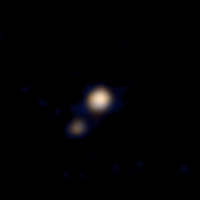
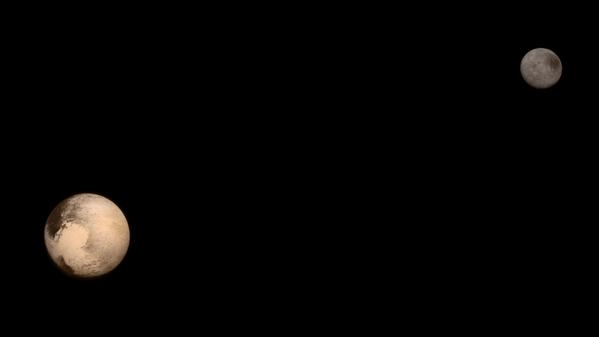
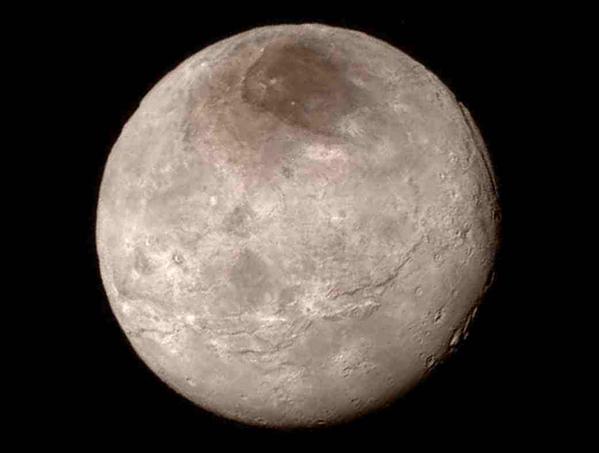
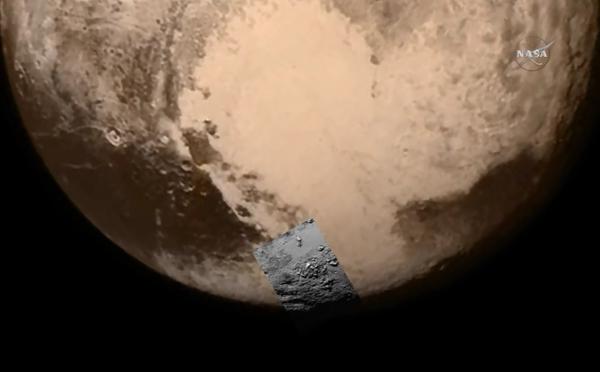
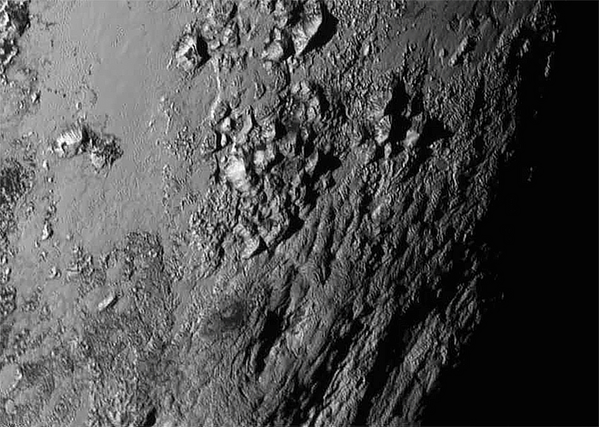
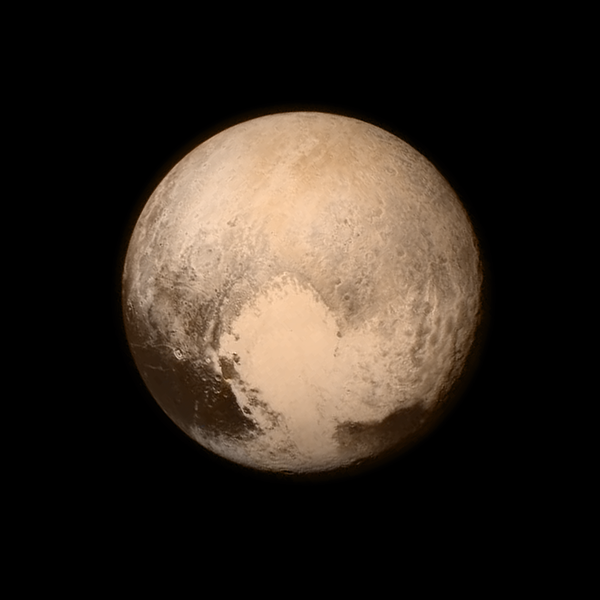
Specifically, tomorrow there are two NASA Socials for the New Horizons mission to Pluto, which will arrive and flyby Pluto on July 14th.

One of tomorrow’s Socials will be in Maryland at Johns Hopkins University Applied Physics Laboratory (JHUAPL), where the New Horizons science instruments are being managed. The other Social tomorrow will be in Flagstaff, Arizona at the Lowell Observatory, where Clyde Tombaugh discovered Pluto in 1930.

I will not be at either of these NASA Socials, much as I would like to be. (Hey, you can’t go to them all, at least not without much larger financial resources than I have.) However, there are a lot of friends I’ve met at previous NASA Socials who will be there, as well as other ways to keep track of what’s going on, and that’s what I’m here to fill you in on.

First of all, even if you don’t have the time to follow tomorrow’s Socials, there’s a great New Horizons website at NASA, as well as one at JHUAPL. Both have a lot of information about the New Horizons mission, its current status, the plans for when it arrives at Pluto, the pictures and data it collects there, and the plans for where New Horizons might go after the Pluto encounter.

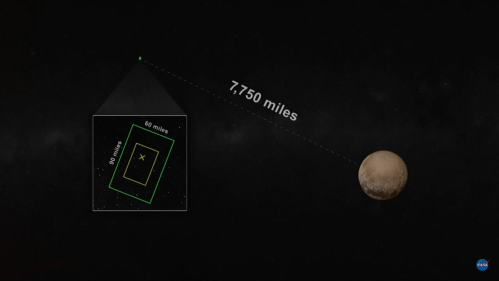
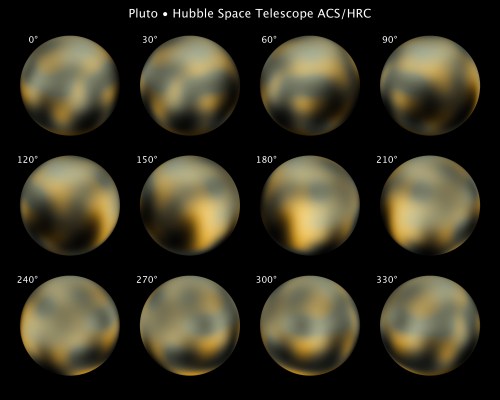
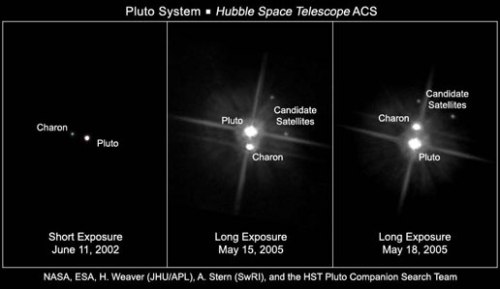
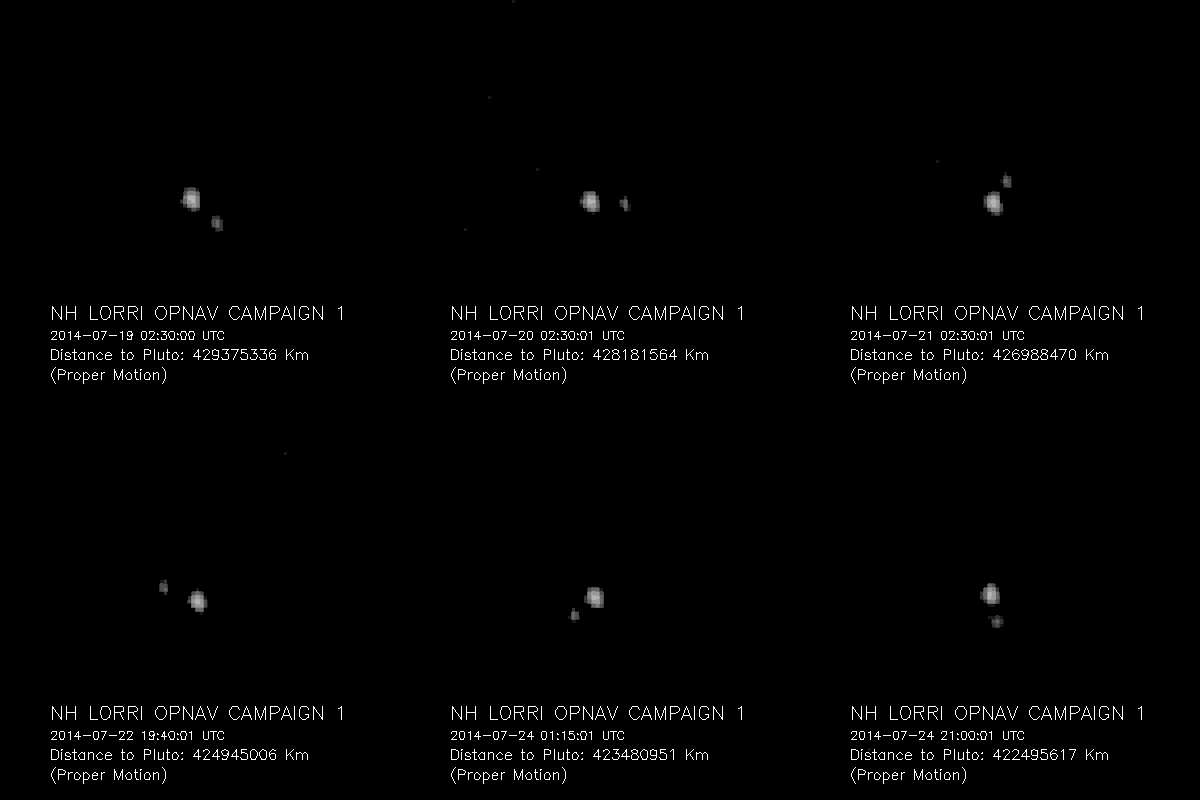
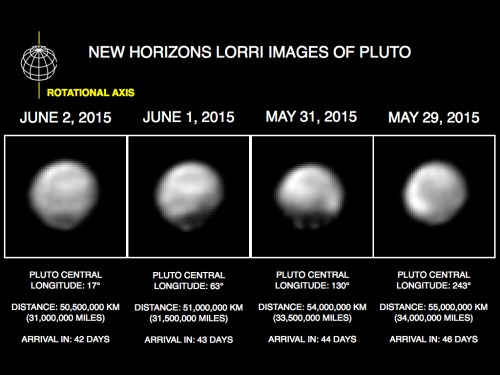
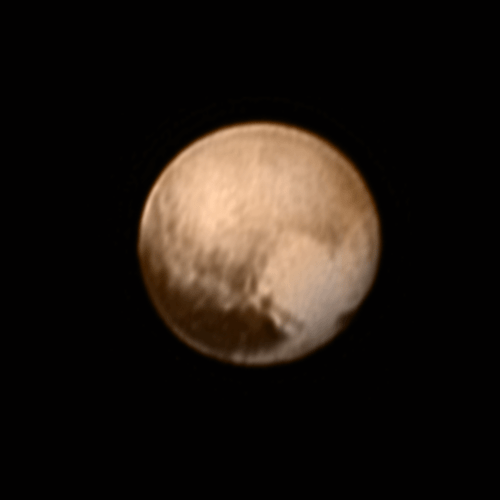
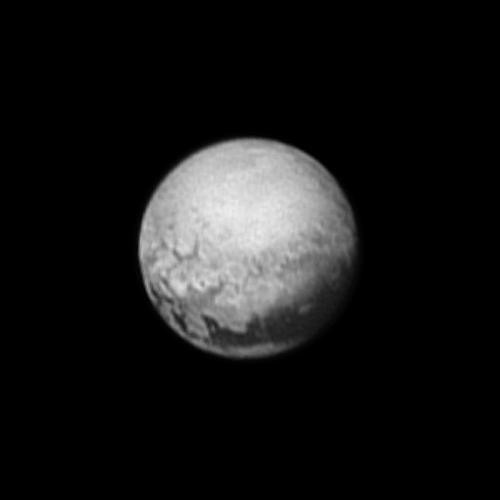
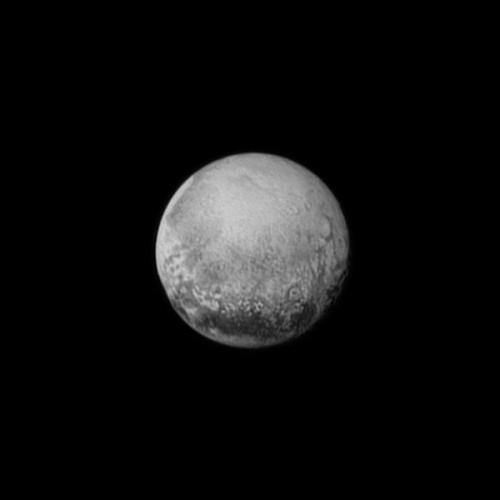
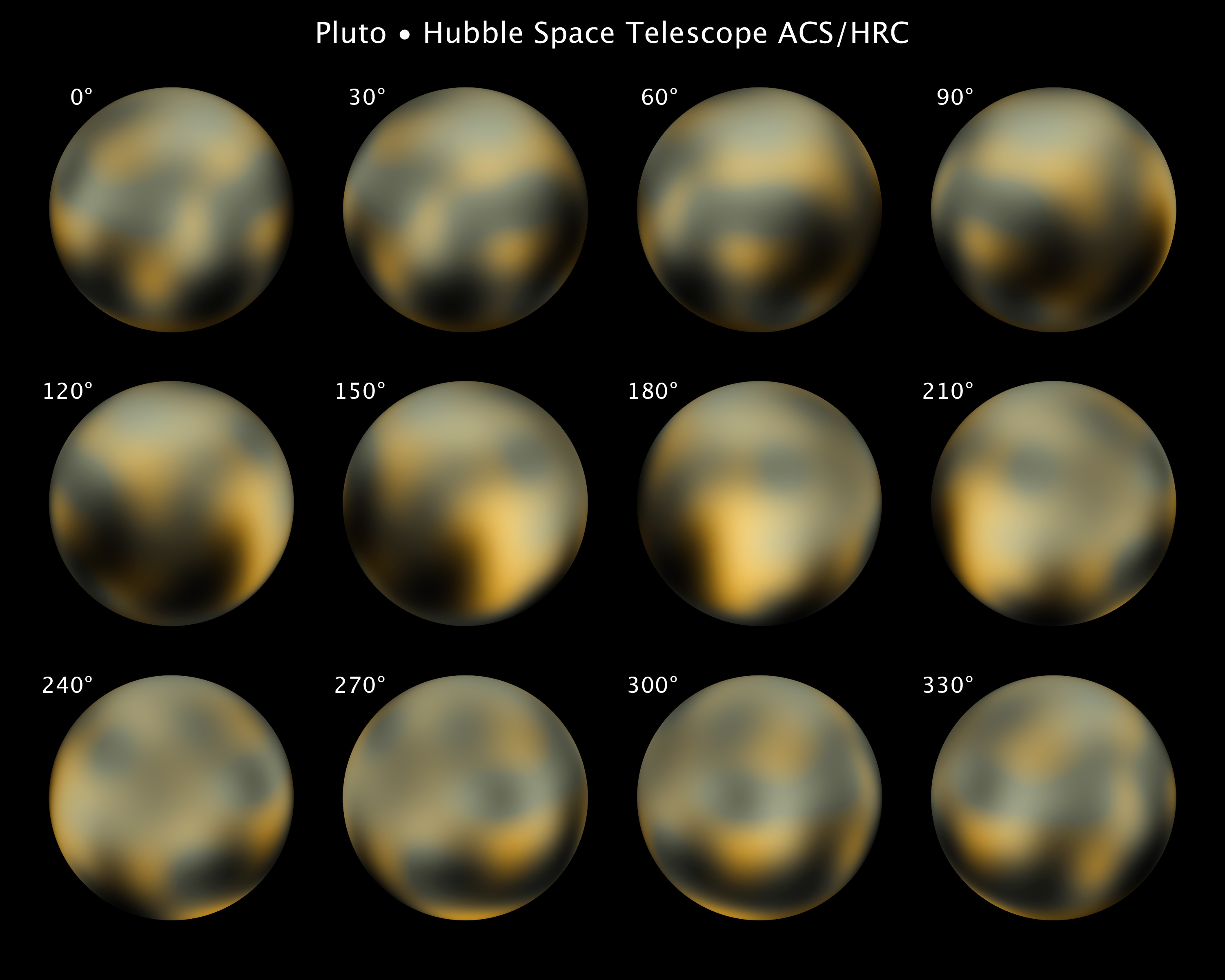
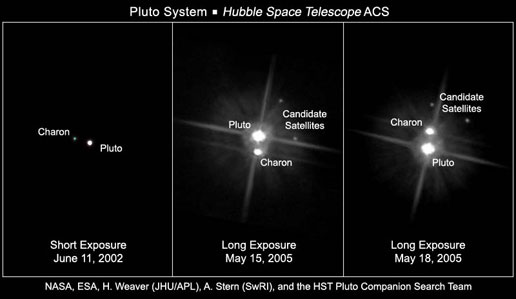
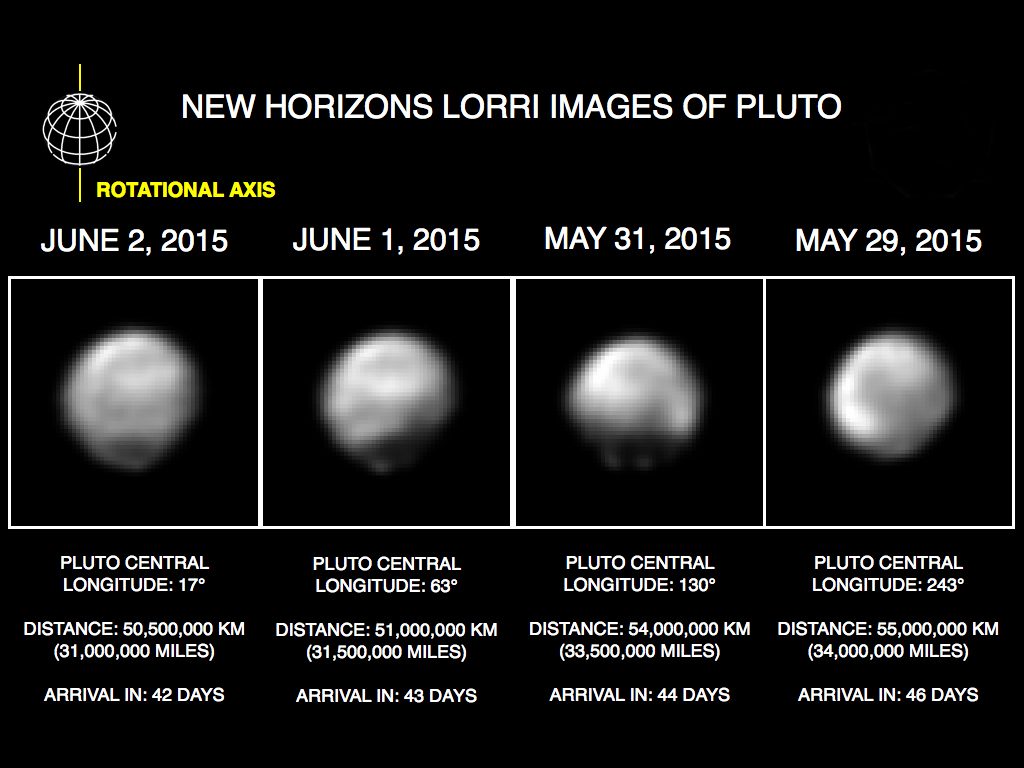
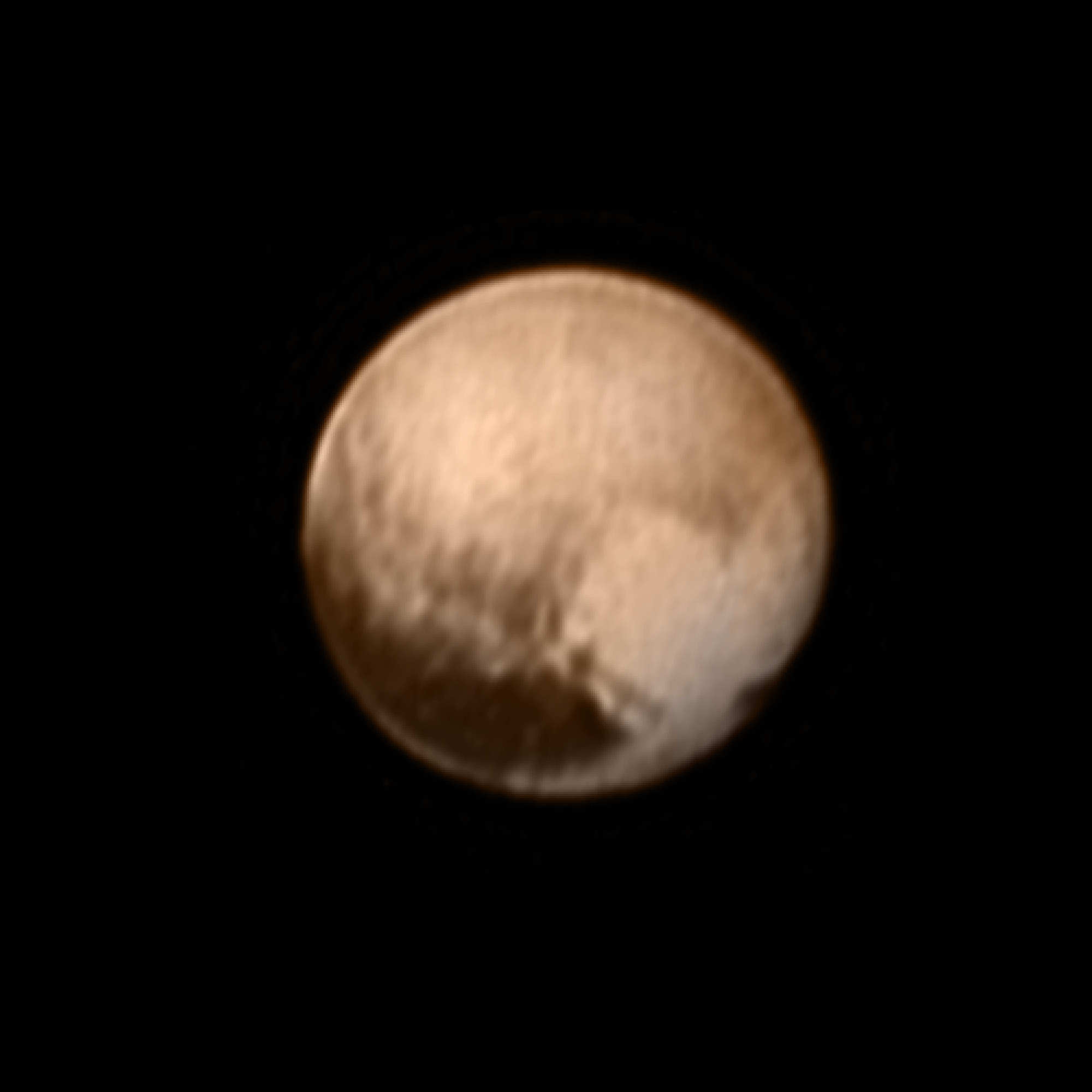
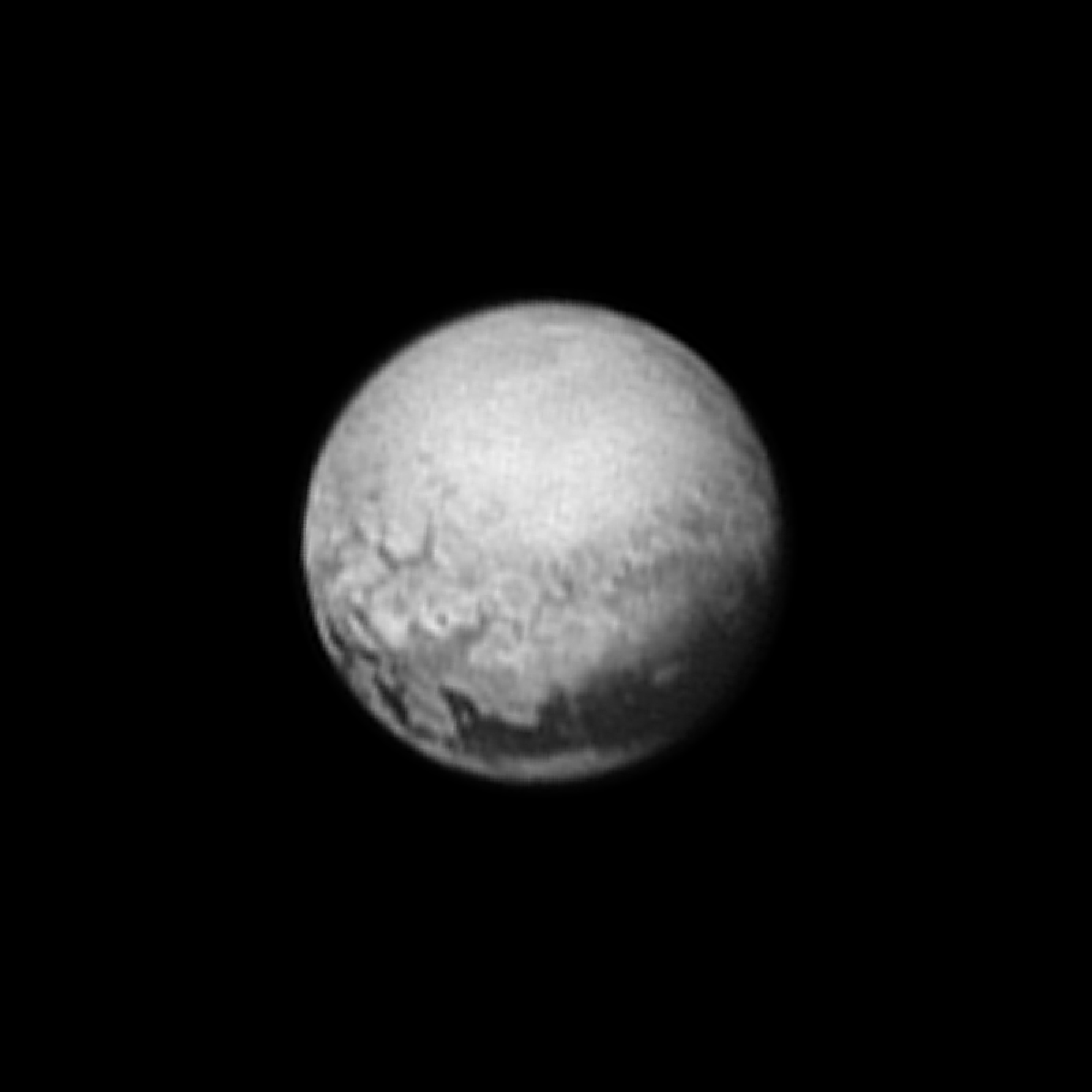
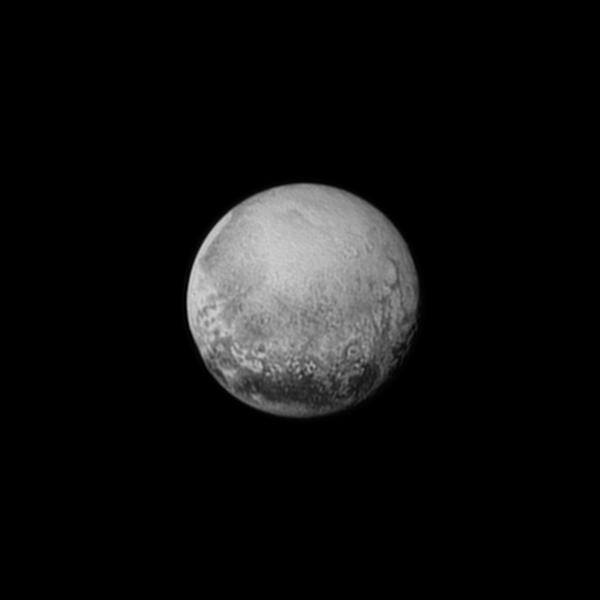
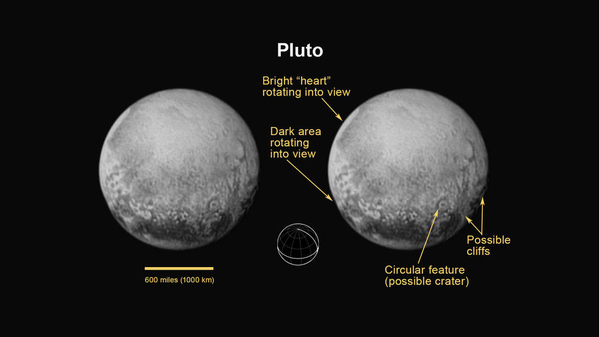
Already the fuzzy images coming back from New Horizons are better than the best we’ve ever seen before. Those images came from the Hubble Space Telescope, but with Pluto being smaller than our moon and (on average) over three billion miles away, Hubble can’t see much. As we get closer and closer to July 14th, the pictures we see will get better and better.

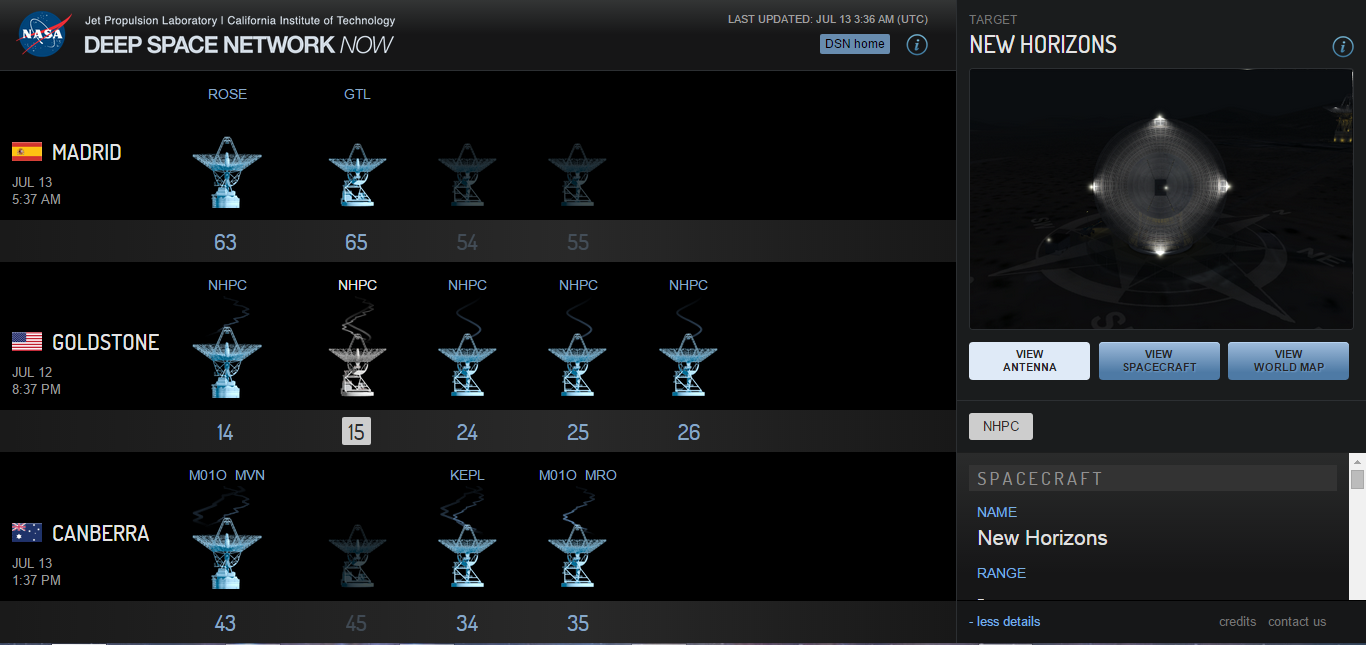
New Horizons will fly by Pluto at over 30,000 miles an hour, taking thousands of pictures and weeks of data on its other instruments. However, we won’t see all of them right away. Because Pluto is so far away and the signal from New Horizons is so faint, data can only be sent slowly. The data rates will be less than an old 9600 baud modem. It will take almost eighteen months after the Pluto encounter before all of the data has been sent back to Earth.

Those are the basics. Count on getting more information here as we get closer to July 14th.

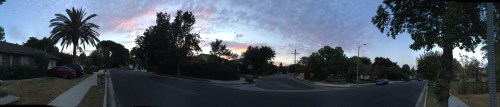
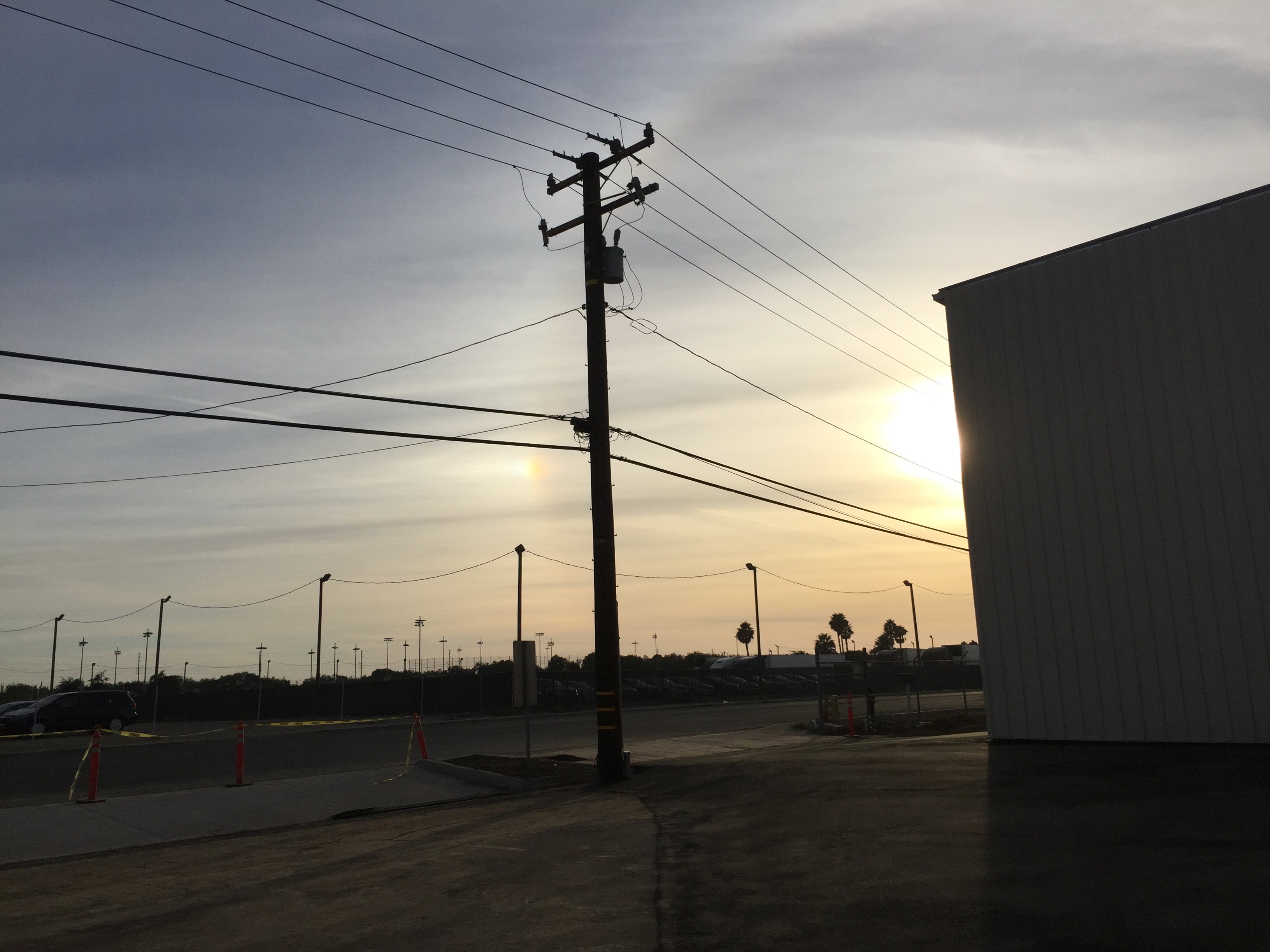
Would there be enough sunlight to allow you to read a newspaper or a map if you were sitting out on the surface of on Pluto? Most people think that, being so far out from the Sun, Pluto must be dark as pitch all the time. But that’s not really true. If you go to NASA’s “Pluto Time” website and enter your location, you’ll find out what time the lighting level at your location will be approximately the same as it would be on Pluto at noon. This “Pluto time” moment will occur twice a day, thirty to sixty minutes before sunrise or thirty to sixty minutes after sunset. If you want to share, take a picture and upload it to the NASA site or onto Twitter with the hashtag #PlutoTime.

FullSizeRender

Our “Pluto time” tonight was 20:08, thirty minutes after sunset. Dusky, a bit dim, but you could most certainly read a paper or walk around without any vision problems.

image1

The temperature, on the other hand, would be a bit chillier. Here it was about 68°F, on Pluto it would be more like 387°F, over four hundred degrees colder.

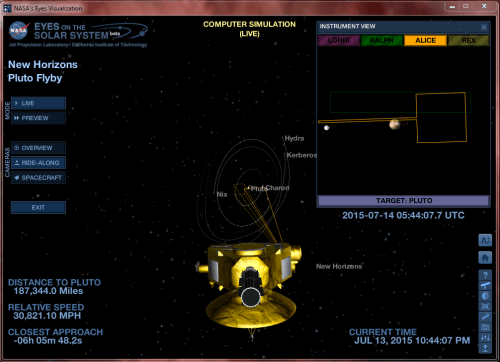
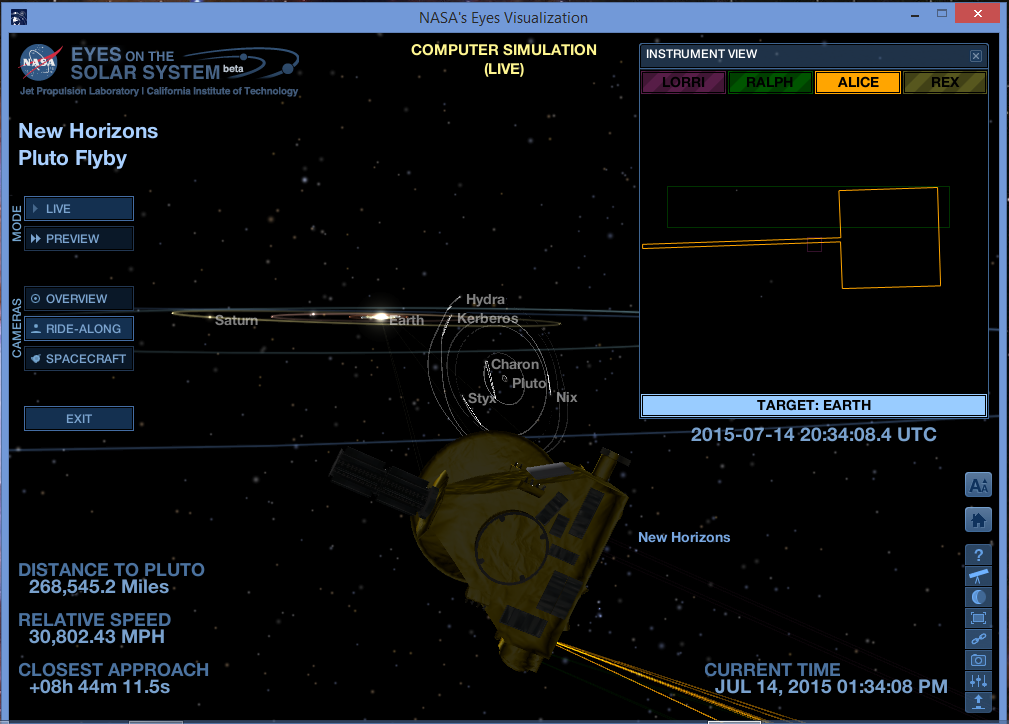
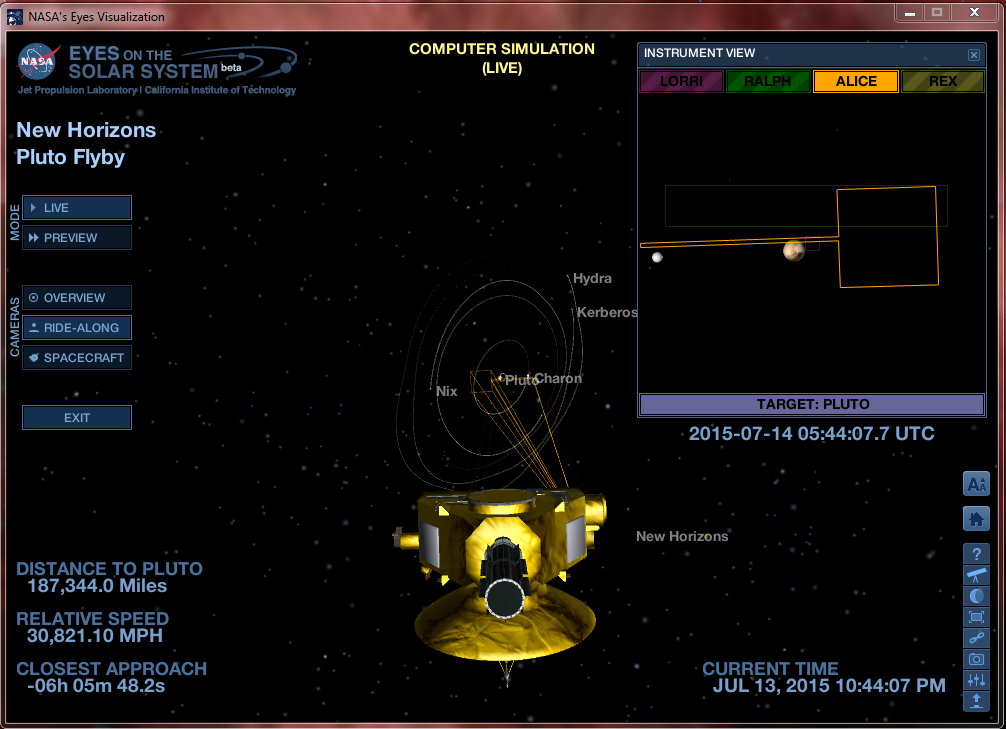
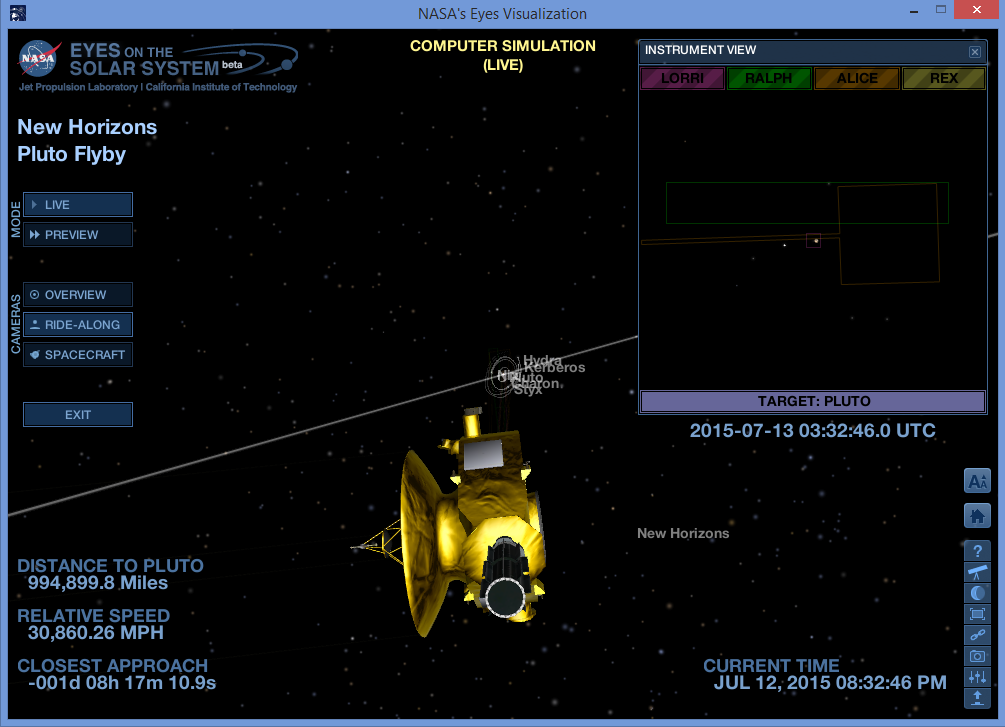
Do you want to fly around near Pluto and its moons? (Or anywhere else in the solar system, as well.) There’s a fantastic site available for free from NASA & JPL that will let you do that on your computer. “Eyes On The Solar System” is a truly detailed and accurate simulator, an excellent way to spend hours and hours.

For tomorrow’s NASA Socials, the simplest way to stay updated is by using Twitter. Follow @NASA, @NASASocial, and the #NASASocial and #PlutoFlyby hashtags. If you want a list of the Twitter handles of people who will be there, see my Twitter feed (@momdude56) from earlier today. I sent out a series of a dozen or so tweets that listed who (to the best of my knowledge) was going to be where.

Finally, a portion of tomorrow’s NASA Socials will be televised on NASA-TV. Tune in at 13:00 EDT (10:00 PDT) for that. If you want to ask questions for that televised events, use the hashtag #askNASA.

CGxBzV8WQAA6_-Y

There you’ve got it! We’re kicking off the first detailed view of Pluto as we get to just 38 days out from the closest approach to Pluto. There will be plenty to see and follow tomorrow if you’re able, even if I won’t be there to bring it to you.

And we got through all of that without even once getting into the whole, “Is Pluto a planet or a ‘dwarf planet’?” argument!

Leave a comment

Filed under Astronomy, Space

Leftovers From Last Night

It is one of those nights when my adult brain knows that the world is a good and decent place as a whole and there is much to be grateful for and happy about – while my primal brain stem has been exposed to one too many stupid, obnoxious, and evil things. It just wants to play “Doom” and kill all the monsters. (The stupid! The stupid! It burns! It burns!)

Then one of my desktop computers decides to lock up, crash, burn, and die. So much for “Doom!” I had better things to do for two hours tonight than work on that.

But rather than spread the toxicity (I know, I should probably watch the news less and I really shouldn’t ever read the comments!), here are a couple of leftover astrophotos from last night’s adventure. Tonight’s ISS passes over LA were low, quick, and just a half hour or so after sunset, so no pictures there.

IMG_7917_small

A five second exposure with a plane crossing the top, Jupiter in the middle center, and at the lower center a line of three bright objects in a row. They would be Venus, Pollux, and Castor. The latter two are “the twins,” the two brightest stars in the constellation Gemini. The bright star in the upper left on a line with Venus and Jupiter is Regulus, the brightest star in the constellation Leo.

IMG_7989_small

A close up, five second exposure of Venus, Pollux, and Castor, with a few other field stars. The most notable would be the one below Pollux and Castor that almost makes an equilateral triangle with them. That would be Propus, or Eta Geminorum. It’s actually a triple-star system, with one of the stars being variable. It’s an interesting (and difficult) target for an amateur astronomer to study. (The green fuzzy blob just below Castor is not a comet or nebula, but a lens flare from Venus.)

There now, aren’t those much more fun to look at than listening to me vent my spleen about all of the freakin’ idiots?

1 Comment

Filed under Astronomy, Computers, Freakin' Idiots!, Photography, Space

ISS Pass, June 1st

Another great ISS pass tonight, this one even better than last night’s. Again, playing with a new techinque, “stacking” a whole bunch of short (in this case, 5 seconds) images using software (a freeware program called StarStax, which I’m really liking a lot) to get a composite photo.

Tonight I went to a local park that’s several square blocks in size, with no streetlights anywhere in the park and trees around the edge of the park, blocking out the streetlights there. (There were also coyotes starting their nocturnal scavenging, but they left me alone and I left them alone.) The only significant light I had to deal with was that monstrously huge one rising in the east, the 99% illuminated full moon.

StarStaX_IMG_7934-IMG_7953_lighten_small

Rising in the east, twenty images. The brightest object, at the center right edge, is Venus. The next brightest object, just below where the ISS path ends in this picture, is Jupiter.

StarStaX_IMG_7954-IMG_7961_lighten_small

Nearing the zenith from the east, traveling from lower left to upper right, eight images. Jupiter is the bright object to the lower left of where the ISS path starts.

StarStaX_IMG_7962-IMG_7969_lighten_small

Passing the zenith toward the northeast, traveling from the center toward the lower right, eight images. You can clearly see the Big Dipper above where the ISS path starts, and Polaris (the North Star) just above the gap between the second and third images.

StarStaX_IMG_7970-IMG_7988_lighten_small

Heading toward the horizon in the northeast, traveling from the enter toward the lower right, twenty images. The big fat streak across the sky from lower left to upper right is a jet contrail, brightly illuminated by the full moon rising directly behind me.

What I really need for this job is a good wide angle or fisheye lens, but that’s not happening right now. Someday.

Leave a comment

Filed under Astronomy, Photography, Space

ISS Pass, May 31st

Tonight there was another pretty good ISS pass over Los Angeles at 22:02 PDT.

I’ve talked several times about how tough it is to get a good picture of the ISS over Los Angeles because of all the light pollution here. I would like to use a really long exposure, up to three or four minutes, in order to catch the ISS’s arch across the sky. But that’s hard to do since anything over about 30 or 40 seconds gets washed out and very overexposed due to all of the street lights. Instead, I end up taking and posting a series of 20 or 30 second exposures and then just publishing the whole series.

Online I’ve noticed a number of folks who have very nice pictures of ISS passes, but the image from the ISS is broken up like a dashed line, not a solid line. Today I asked one of them about it and confirmed what I had suspected. They’re taking a whole series of much shorter pictures, then using software to combine them into one. In astronomy this is a common practice called “stacking,” which we’ll talk about a great deal more as I start to play with it.

I downloaded some freeware that was recommended (thanks, @Steve_P_Knight) and instead of one or two 30-second exposures, I shot a series of thirteen images, each 5 seconds long, with about a half-second delay between each image. I then combined them using software into a single image. Since the only thing moving in the picture was the ISS (and that 737 going into Burbank), the combined image looks like this:

StarStaX_IMG_7902-IMG_7914_lighten_edited

It should be obvious which is the ISS and which is the 737.

This is a cool new thing to play with, a new tool in my amateur astrophotography toolkit.

Leave a comment

Filed under Astronomy, Photography, Space

Reach Out, Touch Space

There are really good odds that there are a couple of opportunities in the next week for you, yes, YOU(!), to personally see spacecraft and/or the opening of a new spaceflight museum!

For pretty much everyone in the Northern Hemisphere, this is an excellent time of year to spot the ISS as it passes overhead. The further north you are, the better the opportunities for multiple sightings in one night.

We’re fairly far south here in LA (34°) so we’ll have the opportunity to see one or two passes some day, generally one after sundown and one before sunrise. For example, Flyby says we have an extremely bright pass on Saturday night at 21:20 (we’ll be at the Hollywood Bowl) and again on 05:26 on Sunday morning. Sunday night there’s a pass at 22:03, then Monday morning a really bright one at 04:33. Monday night at 21:09 will be very bright, Tuesday morning at 3:40 will be so-so. Tuesday night at 20:16 will be very bright… You get the idea.

If you’re further north, you might have as many as four passes a night because of the way the ISS’s orbit is aligned with the Earth’s terminator right now. It happens twice a year (well, twice a year for the Northern Hemisphere, then twice a year for the Southern Hemisphere) during periods referred to as “high beta-angle” periods. The “beta-angle” is the angle between the plane of a satellite’s orbit and the sun. If you don’t want to do the math, the tl;dr version is that  at times of low beta-angle, a satellite gets roughly 50/50 time in sunlight and night, while at high beta-angles it can be in almost continuous sunlight. (If you are interested, there’s a good article here on it.)

With ISS in constant (or near constant) sunlight for several days, if it’s going overhead any time during your night you’ll probably have a chance to see it. Since the ISS will typically be above the horizon four or more times a day for any given location on Earth, that’s a lot of sighting opportunities.

There are many ways to see when the ISS is visible at your location. Primarily I use the Flyby app, but you can also go to the NASA “Spot The Station” site or Heavens Above, both of which are excellent. Just put in your location and they’ll let you know when to go look, where to look to see ISS rising, which direction it will be heading (always generally west-ish to eash-ish), how long the pass will be (typically four to ten minutes), how high it will get in the sky, and how bright it should be.

To the naked eye, ISS will look a bit like an airplane’s bright landing lights, but you won’t see any red or green navigation lights, it won’t blink like an aircraft strobe light, and it will travel in a straight line at a pretty good clip right on across the sky. It will almost always be the brightest thing in the night sky, rivaled only by the moon, Venus, and possibly Jupiter.

How fast is “a good clip”? Well, if it goes right over your head from horizon to horizon, it takes about four and a half minutes to go from the horizon to straight overhead, then another four and a half to get to the opposite horizon. If it’s lower down in the sky, it will be visible for less time. But that should give you an idea of how fast it will be moving.

You don’t have to be in a dark sky location to see ISS. We see it all the time from the heart of Los Angeles with all of the light pollution that involves. If you’re in a dark sky location you’ll see it better, and you’ll have a good chance of seeing several other satellites while you’re waiting for ISS. But no matter where you are, if it’s clear and after dusk, you’ll be able to see it.


If you’re on the US East Coast in the mid-Atlantic region this Saturday and looking for something “spacey” to do, I suggest you go to the Grand Opening of the Spaceflight America Museum & Science Center in Prince Frederick, Maryland. That’s on the western shore of Chesapeake Bay, south of the Washington-Baltimore area.

The museum is connected to the Arthur Storer Planetarium, which was renovated in 2014. Both the museum and the planetarium are part of Calvert High School. Arthur Storer was the first astronomer in colonial America and made significant contributions to the field at the time. He was a contemporary and friend of Isaac Newton and made key observations of what would later be known as Halley’s Comet.

One of the folks behind the new Spaceflight America Museum & Science Center is Dan Bramos, a friend I met at the NASA Social in Washington a month ago. Dan and the other volunteers have put a ton of work into getting the museum off the ground and they’ve got big plans for things to come.

If you’re in the region, consider going down to Prince Frederick on Saturday, May 30th, to join in the Grand Opening. (Tell Dan I sent you!) If you can’t make it Saturday but are or will be in the area in the future, check out their hours and go visit then. Follow the museum on Twitter at @Learn2LoveSpace. No matter where you are, you can become a member of the museum to support it ($25/year and up).

Spaceflight America isn’t the Smithsonian, but it’s a terrific local site and organization that’s working in the community to promote scientific, technical, engineering, and mathematical education. I’ll be supporting them and visiting when I can. Please consider doing the same.

1 Comment

Filed under Astronomy, Space

#GirlsWithToys

Last Saturday there appeared an NPR interview with Shrinivas Kulkarni. Dr. Kulkarni is the McArthur Professor in Astronomy & Planetary Science at the California Institute of Technology. I’ve never met the man, but based just on what he’s written in his CalTech bio and the way he expresses himself in the NPR interview, he seems a reasonable person with a good sense of humor. Granted, it’s a very limited data set.

In that interview, Kulkarni has a somewhat whimsical quote when talking about being a professional astronomer.

“We astronomers are supposed to say, ‘We wonder about the stars and we really want to think about it,’ ” says Kulkarni — in other words, think deep thoughts. But he says that’s not really the way it is.

“Many scientists, I think, secretly are what I call ‘boys with toys,’ ” he says. “I really like playing around with telescopes. It’s just not fashionable to admit it.”

I probably would have never heard of this interview, or if I had, I probably wouldn’t have paid much attention based on the article that NPR put online. But in the audio version broadcast on NPR, it’s a little different than that article makes it. In the interview that went on the air, after Kulkarni says “boys with toys,” the NPR host, Joe Palca, interrupts him twice to question the use of the phrase. But nothing comes of it.

Others weren’t so forgiving. Others who are among the vast (yet far too small) number of women who work in engineering and science. Others, perhaps, who might have young daughters who want to be an engineer or a scientist but now might have to re-emphasize to them that it’s possible for a girl to dream of those things, even if that guy on the radio doesn’t include them in his joke.

There’s a good article over on Slate describing what happened next. Kate Clancy, an anthropologist at the University of Illinois, went to Twitter and posted some pictures of herself using scientific equipment. She used the hashtag #GirlsWithToys. Other women scientists and engineers saw it and joined in. Then more. Then a LOT more. #GirlsWithToys was a trending topic on Twitter all weekend, and I’m still seeing some posted today.

“Boys with toys.”

No one has called for Dr. Kulkarni’s head, his job, or even an apology. If he’s made any further comment, I’ve missed it. (Please put something in the comments if you’ve seen it, I would love to know about it.) The only response has been a large crowd of women (as well as men posting about their wives, daughters, mothers, and sisters) politely pointing out that a casual play on words is actually a sign of a much deeper problem. It’s a problem that runs so deep that for many people the first response was, “Really? They’re getting bent out of shape over that? It’s a joke, nothing more than a little rhyming phrase!”

Of course, there was a fair amount of pushback from the “men’s rights” advocates and rabid anti-feminist crowd. No surprise there, but the MRA crowd are the same pinheads and knuckledragging buffoons who were bent out of shape this weekend because they believe the new “Mad Max” film is a feminist propaganda film designed to emasculate the American male psyche. I don’t know about you, but that gives me a pretty accurate yardstick to show me how much credibility they have. Keep those clowns a long way away from me and we’ll be just fine.

But what about everyone else? If you’re a member of the first group, the “Really?” group, I would ask that you pause, avoid the instantaneous reaction, and give a closer look to the societal biases embedded so deep in a phrase like “boys with toys” that we don’t even see them any more. To make a quick quip, an alliterative play on words, 50% of the population got ignored, and when they point out the problem they get criticized for being thin skinned. Which is pretty meta if you think about it. Get casually dismissed with a turn of a phrase, protest, get told you’re wrong because you’re not being dismissed or silenced or ignored – and then get told to shut up and go away.

Yeah, maybe we might want to think about that just a bit.

Me? I’ve got two daughters who we’ve tried to raise to be as independent and strong-willed as possible. So I get it. I see why women were upset. I was upset.

Sunday, when the hashtag and tweets were still going strong, I started re-tweeting posts that I saw. Some were from women I know through Twitter, some were from colleagues of theirs, some were from total strangers. I limited myself to one example from each woman, and I stopped re-tweeting posts after the first sixty-six. I could have gone on all day, I could have posted six hundred and sixty-six. (More to follow after my tweets.)

https://twitter.com/momdude56/status/600014998102933504

https://twitter.com/momdude56/status/600015312868671488

https://twitter.com/momdude56/status/600015878617313281

https://twitter.com/momdude56/status/600016767906291712

https://twitter.com/momdude56/status/600017337874452480

https://twitter.com/momdude56/status/600017834039595008

https://twitter.com/momdude56/status/600018469539549184

https://twitter.com/momdude56/status/600019379166650368

https://twitter.com/momdude56/status/600019652706578434

https://twitter.com/momdude56/status/600020010019397632

https://twitter.com/momdude56/status/600021072231038977

https://twitter.com/momdude56/status/600021276963418113

https://twitter.com/momdude56/status/600021815939862528

https://twitter.com/momdude56/status/600022122052788225

https://twitter.com/momdude56/status/600023081495605249

https://twitter.com/momdude56/status/600023893399642112

https://twitter.com/momdude56/status/600024181439344641

https://twitter.com/momdude56/status/600026780196413441

https://twitter.com/momdude56/status/600027636472025091

https://twitter.com/momdude56/status/600027725374443520

https://twitter.com/momdude56/status/600028405875113984

https://twitter.com/momdude56/status/600029750145388544

https://twitter.com/momdude56/status/600031450054807553

https://twitter.com/momdude56/status/600033935561625601

https://twitter.com/momdude56/status/600034414257516544

https://twitter.com/momdude56/status/600037753015832576

https://twitter.com/momdude56/status/600039182199721984

https://twitter.com/momdude56/status/600039413276508161

https://twitter.com/momdude56/status/600040866141470720

https://twitter.com/momdude56/status/600041511061889024

https://twitter.com/momdude56/status/600042495565692928

https://twitter.com/momdude56/status/600042648158646272

https://twitter.com/momdude56/status/600043233033334784

https://twitter.com/momdude56/status/600043470657486850

https://twitter.com/momdude56/status/600043778359984128

https://twitter.com/momdude56/status/600044132417933312

https://twitter.com/momdude56/status/600056114504273920

https://twitter.com/momdude56/status/600056125942202368

I don’t want to live in a world where we can be punished for anything that comes out of our mouths. I don’t want us to turn into North Korea. I’m a huge fan of the First Amendment. I hate “political correctness.” I’m sure that I some times stick my foot in my mouth without realizing it.

None of that is what this is about. This is about realizing that there’s a problem in our society, and it’s a problem that needs to be addressed. It’s a problem that is embedded unconsciously into our society and our language, and we have to see it and recognize it before we can change it.

Look back over the last few articles about the NASA Armstrong event and what I’ve written recently about our space programs. Did anyone notice how I refer to “remotely-piloted” planes or “uncrewed spacecraft?” A year ago I would have said a “manned plane” or “manned mission” or “manned spacecraft.” It’s still a very common term.

It shouldn’t be. It’s not that hard to use language that’s inclusive.

I’ll defend to the death your right to not be forced to make the change – but I’ll think you’re a dinosaur who’s incapable of adapting and evolving while I’m fighting. You’ll be wrong in my book. I’m not saying we have to religiously refer to “manholes” as “personholes,” or ” or “firemen” as “firefighting personnel” – but that doesn’t mean that we can’t get into the habit of using a term like “maintenance hole” or “firefighter.”

There’s a whole list of words and phrases we don’t use any more (or at least we use much, much less) because those words and phrases hurt people. They make life hard for people. They subtly and subconsciously tell people that they’re less, that they’re not welcome, that they don’t deserve to think they’re the same as us.

Changing our language to consciously include everyone instead of subconsciously favoring a select group isn’t just a feminist intellectual exercise in outrage. It’s something that all of us should be putting an effort into to make the world a better place.

Especially if you’re being interviewed by NPR.

Leave a comment

Filed under Astronomy, Moral Outrage, Space

April Was One Great Month!

A month ago I was happy to have survived March. March this year had some really good times (“Fifi” visiting us at CAF SoCal, my chance to fly in her, my birthday, CAF SoCal website launch, CAF audit, tax returns, daughter coming home from South America) but was generally lived at about 100 miles an hour with no rest stops.

It occurred to me today when I noticed that post that April had been just as busy, if not more so. But where March felt like hard work, April felt like the whole month was spent at Disneyland. (The good Disneyland, i.e. the fantasy one in the commercials, not the real Disneyland, with long waits for every ride and crowds like the Tokyo subways at rush hour.)

April started with a total lunar eclipse, the third one in less than two years!

There were two week-long trips to the East Coast, with all of the fun & games of commercial air travel. That included our first set of lost luggage in quite a while, some delays due to weather and mechanical issues that led to some very tight connections, and enough jet lag to keep my head spinning like a top.

North Carolina had weather & thunder boomers! Duke Gardens! The Durham Museum of Live & Science! Artsy-trendy-weird hotel-restaurant-bar-museum place! Durham Bulls Stadium! North Carolina Museum of Natural Science! North Carolina State Capitol Building!
I got an invite and went to my fourth NASA Social, this one in Washington for Hubble’s 25th Anniversary! The Smithsonian Air & Space Museum! The Capitol, White House, Washington, Lincoln, & Jefferson Memorials! The World War II and Vietnam War Memorials! A game at Nationals Park! Meeting up with my sister-in-law and getting to see my niece perform in an epic belly dance performance!
Whew!

After a good & busy March, I celebrated with fireworks pictures from Dodger Stadium. That resulted in a great & busy April. How ’bout we post more pictures from that set and see if we can go for a fantastic & busy May? (Let’s keep it going, I’ve got a whole thesaurus of superlatives to use.)

Sympathetic magic from a die-hard physics major? Whatever works, baby, whatever works.

IMG_2790 small

IMG_2805 small

IMG_2813 small

IMG_2825 small

IMG_2842 small

IMG_2848 small

IMG_2859 small

IMG_2873 small

IMG_2882 small

Leave a comment

Filed under Astronomy, CAF, Family, Fireworks, Photography, Space, Travel, Weather

NASA Social For Hubble25 (Part Four)

A week ago, April 23rd, I was in Washington to see my first NASA press conference, held at the Newseum for the 25th anniversary of the launch of the Hubble Space Telescope (HST). Afterward, I and the other attendees at the NASA Social were taken out to NASA’s Goddard Space Flight Center. We first learned about the James Webb Space Telescope (JWST), then got some Hubble Space Telescope (HST) history and saw the Satellite Servicing Capabilities Office (SSCO).

19_IMG_8358 small

We got a peek in through the window into the HST mission control room. Commands are sent up to HST after being carefully checked and double checked to make sure they don’t accidentally instruct the spacecraft to do something stupid and/or fatal.

For many years all of the command consoles were staffed 24/7/365. With the upgrades both on HST and on the ground, many of the operations no longer require constant monitoring. There is an extensive system in place to alert Goddard staff when anything goes “off nominal.” Minor issue will result in a text message or email, more critical problems are met with more aggressive alerts.

20_IMG_6330 small

In the HST mission operations center we saw where the data from Hubble is coming down and the astronomical observations were monitored. There was data everywhere on dozens of big monitors — heaven of the little kid inside me who still likes to see buttons pushed and lights flashing.

In particular, I asked about the “pickle” diagram, visible on the center monitor closest to us. It shows how Hubble is using its three Wide Field Detectors (WFDs) to track stars in the current field of view. With two detectors tracking stars, Hubble can maintain tracking accuracy to less than 7 milliarcseconds per day.

How good is that? A circle around the sky is 360 degrees. Each of those degrees is split into 60 arcseconds. Now split each of those arcseconds into 1,000 bits. That’s a milliarcsecond. In the real world, 7 milliarcseconds is the size of a dime on the Washington Monument in DC as seen from the Empire State Building in New York City.

The HST is the size of a school bus, weighs twelve tons, and is floating weightless in space. How do they keep pointing it that accurately? (Assuming it’s not some serious black magic.)

22_IMG_6342 small

These little guys are key. Some of the most accurate gyroscopes ever made are at the heart of these rate sensor arrays (RSAs). Hubble has six of these assemblies, two each on each of the three axes. Usually they run just three at a time, one from each set.

These gyros and RSAs are among the hardest working systems on Hubble and were replaced on three of the five servicing missions. In fact, the failures of gyros were the reason that the third servicing mission was broken into two separate Space Shuttle missions. Four of the six RSAs had failed by November 1999, putting Hubble into a hibernation or safe mode. With less than three working gyros, Hubble could have started drifting and tumbling, making it difficult or impossible to capture by the astronauts on the next shuttle servicing mission. So the planned June 2000 mission was split, with STS-103 going up to replace the RSAs (and other things, such as the primary onboard computer) in December 1999, while STS-109 went up in March 2002.

Hubble doesn’t use thrusters or jets to control its movements in space. For one thing, the gasses used (primarily hydrazine) are very nasty to have around delicate optical instruments. In addition, once the fuel is gone, so is your ability to control your attitude. (Remember the bit yesterday about RRM?) So Hubble is controlled by four massive Reaction Control Wheels (RCWs) which move the spacecraft by gyroscopic action. (For a lot of detail and technical minutia on the Hubble guidance system, see this NASA technical paper.) In high school, did you ever do the experiment where you sit on a bar stool and hold a spinning bicycle wheel, tilting the wheel to make you spin around? That’s how Hubble moves, but with wheels that weigh hundreds of pounds each and are precision machined.

23_IMG_6343 small

In addition to the gyroscopes in the RSAs, Hubble also senses its position in space using large, sensitive Charge Coupling Devices (CCDs), the same kind of sensors that are at the heart of your digital cameras. Two CCDs are built into each WFD and there are three WFDs on Hubble. (Remember the “pickle” diagram above?) As long as two of the WFDs have a star to track in their field of view, the WFDs and RSAs combined can give Hubble that 7 milliaarcsecond per day guidance.

That’s some seriously awesome engineering there!
21_IMG_6339 small

Originally HST was launched with three Engineering & Science Tape Recorders (ESTRs) for recording and playing back data. Designed in the 1980s, the ESTRs were reel-to-reel tape assemblies. Data was written and retrieved sequentially and when the tape broke or jammed (as this one did) the ESTR was useless. These ESTR units held 1.2 gigabites of data, state of the art at the time.

The ESTRs were one of the components of HST which were designed from the beginning to be upgraded as technology advanced. They were replaced on the second and third servicing missions with solid state recording units. The upgraded units are like huge, radiation hardened memory sticks. Not only do they hold over ten times as much data as an ESTR, but they can also be read instantaneously instead of sequentially, and sections of memory which become damaged (perhaps by a radiation hit) can be bypassed, leaving the rest of the unit still functioning.

For those interested, I believe these three pieces of hardware were all flight-flown, coming back down from HST after being removed and replaced during a servicing mission.

24_IMG_8368 small

Dr. Marc Kuchner wants your help in looking for targets for HST, and later for JWST. There’s a crowd sourced (Zooniverse) project called “Disk Detective” in which you can do real, honest-to-god science in your spare time.

The short version is that stars with planets are stars surrounded by dust due to the planets, asteroids, comets, and other assorted objects crashing into each other every so often. Because of celestial mechanics and conservation of angular momentum, the dust tends to flatten into a disc or ring. Conversely, we’re finding that when we see a star with a dust disc, we often find planets there.

It’s time consuming and inefficient to have have telescopes like Hubble look at every single star looking for planets, so we would like to improve our odds and find another way to narrow the search. A key tool here is the Wide-field Infrared Survey Explorer (WISE) mission, a space-based telescope which looks at big chunks of the sky at once, but at lower resolution than telescopes such as Hubble.

Dust is bright in the infrared part of the spectrum since it absorbs starlight and re-radiates the energy in the infrared. Therefore, if we look at a star in WISE images and find a dust disk, that’s a good candidate to look at more closely using Hubble or another big telescope.

But how do you look at all of the stars in the WISE images? Computers? Not really. It turns out that computers aren’t that good at examining images and “looking” for certain telltale characteristics. But the human eye and brain are pretty good at that. But there are billions of stars. So what if a whole lot of people each looked at a few dozen or a few thousand stars each?

That’s how Disk Detective works. If you go to the site it will show you a series of ten images for a single star, each image in a different wavelength. You can flip through the images as often as you want, then answer six simple questions about the images, such as if the object is moving. This only takes a minute or two, you submit your answers, and go on to the next image.

If multiple people independently judge a particular image to be a good candidate to have a dust disc and possibly planets, then the pros can take a look at it, possibly moving the observations up to a much bigger telescope, or even up to Hubble. It’s a piece of cake, and beats the hell out of playing Solitaire on your computer! Give it a try, maybe you’ll be the one who finds another new planet.
25_IMG_6345 small

Finally, we got to talk to two of the engineers who helped to design and built the tools needed to perform the delicate tasks of the Hubble servicing missions. (Again, I apologize for not getting their names – if anyone can fill in the blanks for me in the comments, I would appreciate it.)

Here we see a panel that was designed to go over a series of over a hundred screws and bolts that had to be removed, without allowing any of them to get away or fly loose. A single nut, bolt, washer, or screw that escaped and drifted into the telescope could cause an electrical short or damage a lens or mirror, causing an incredible amount of damage. And remember, this work was being by astronauts wearing spacesuits with very limited mobility and dexterity, floating weightless, often with poor or little lighting. The astronauts described it as being like performing brain surgery while blindfolded and wearing oven mitts.

In order to safely open panels and instruments that were never designed to be opened while simultaneously preventing any loose bits from drifting away, some very complex tools were designed and built. For example, the blue panel above was attached in place with bolts screwed in using the big handles (easy to use with gloves). The clear holes lined up over the screws that needed to be removed, and the holes in the plastic were just big enough to allow a screwdriver tip or other tool to get through while still being small enough to not let the screw escape.

26_IMG_8375 small

Another problem was dealing with sharp edges, knives, and cutting tools. In a pressure suit surrounded by hard vacuum, NASA doesn’t want astronauts handling a knife or anything sharp. When this top panel had to be removed with a whole series of cuts, this tool was built to screw on (again, big handles, easy to use in stiff spacesuit gloves), cut the top of the compartment off with blades that were recessed and not a danger to the spacesuit or gloves, then pull off with all of the loose bits captured inside.

Other new tools had be developed to make the Hubble repairs feasible. For example, the standard Pistol Grip Tool (PGT) which we saw in the  SSCO is used to remove and install screws and bolts – but it’s really slow. For something like the job above with the blue panel, which had 100+ screws, that would take forever. So other faster, more lightweight tools were developed for the Hubble repairs. In addition, since they would be working in the dark a lot, let’s put some LED lights on there so we can see what we’re doing while looking out through that spacesuit helmet. Right?

27_IMG_6357 small

Yeah, this is the one they developed (I believe it was flight-flown), and yes, they let me hold it.

Geek joy!!

FYI, it’s heavy and awkward to hold even there in the auditorium using just my bare hands. We can’t ever give enough credit to the astronauts who pulled off five astonishingly successful service missions, giving us one of the landmark scientific instruments of our generation.

Flip through the images that we’ve gotten from Hubble.

Go see one of the IMAX 3D movies about Hubble, or watch the PBS Nova special from last week.

Read about some of the discoveries that Hubble has allowed us to make in the last 25 years.

Study how the initial problems with the Hubble optics were overcome. It’s a classic study in recovery management, how an initial critical error, particularly a very public and very expensive one, can be faced head on and resolved, leading to one milestone achievement after another.

That’s why we’re celebrating twenty-five years of Hubble’s observations.

That’s why we’re looking forward to many more years of Hubble’s observations.

It was a great NASA Social!

Leave a comment

Filed under Astronomy, Photography, Space, Travel