Category Archives: Flying

NASA Social For LEAPTech At NASA Armstrong (Part Four)

If you get a chance to go to a NASA Social, I recommend taking it. They’re wonderful! Last week I was lucky enough to attend my fifth. For this event we saw demonstrations of the LEAPTech project at the NASA Armstrong Flight Research Center. Friday I showed what LEAPTech is (“Leading Edge Asynchronous Propeller Technology”), Saturday I tried to take you along on our trip out onto the Rogers Dry Lake to watch a LEAPTech data run using HEIST, and yesterday our visit to the F-15 hangar was covered.
32_IMG_7846 small

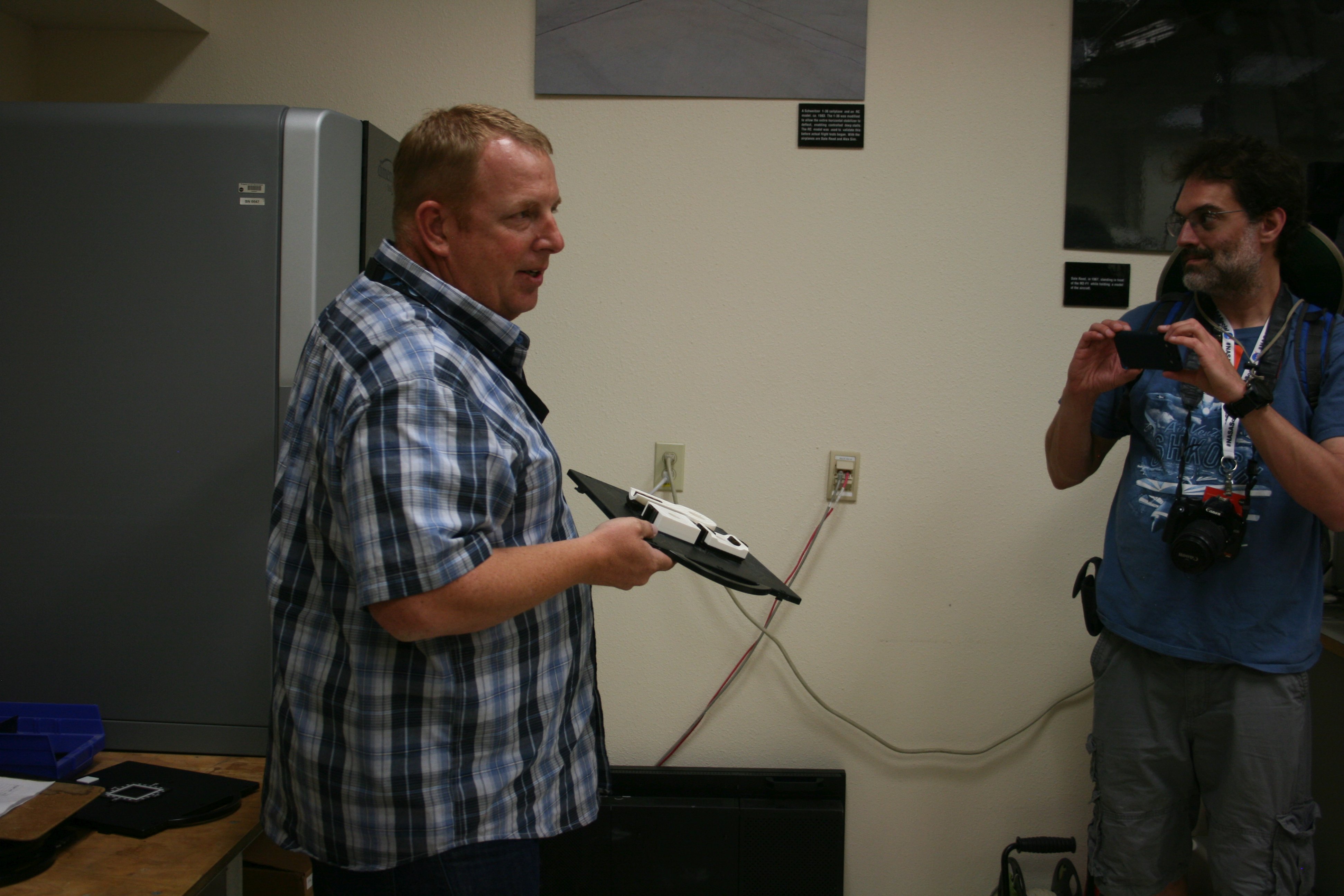
The next stop was a wonderful place I first saw last November on my first NASA Social. Robert “Red” Jensen invited us into the Subscale Flight Research Lab (SFRL), where he’s been building remotely piloted, scale model aircraft for many years. If a mission or experiment is too dangerous, too untried, or too expensive to try with a full-sized, piloted aircraft, Red and his crew will build and fly a model to test the concept until it matures enough to step up to the full-sized, piloted stage.

In doing this, there are constantly needs for unique parts. Whether it is a structural part for a plane or just a case to hold some equipment in the plane, the SFRL is using 3D printing to quickly and cheaply build and test parts. Even if a part will eventually need to be machined, building it first with 3D printing lets you make sure that it’s correct, and make changes if necessary.

Behind Red in this picture you can see their 3D printer. It’s a big one, with a 10 x 10 x 10 inch printing cavity, and a manufacturing resolution of 1/10,000 inch. Not something that the average hobbyist will have, but it lets them do in hours or days what would take weeks or months if they had to do everything in steel or aluminum.
33_IMG_7850 small

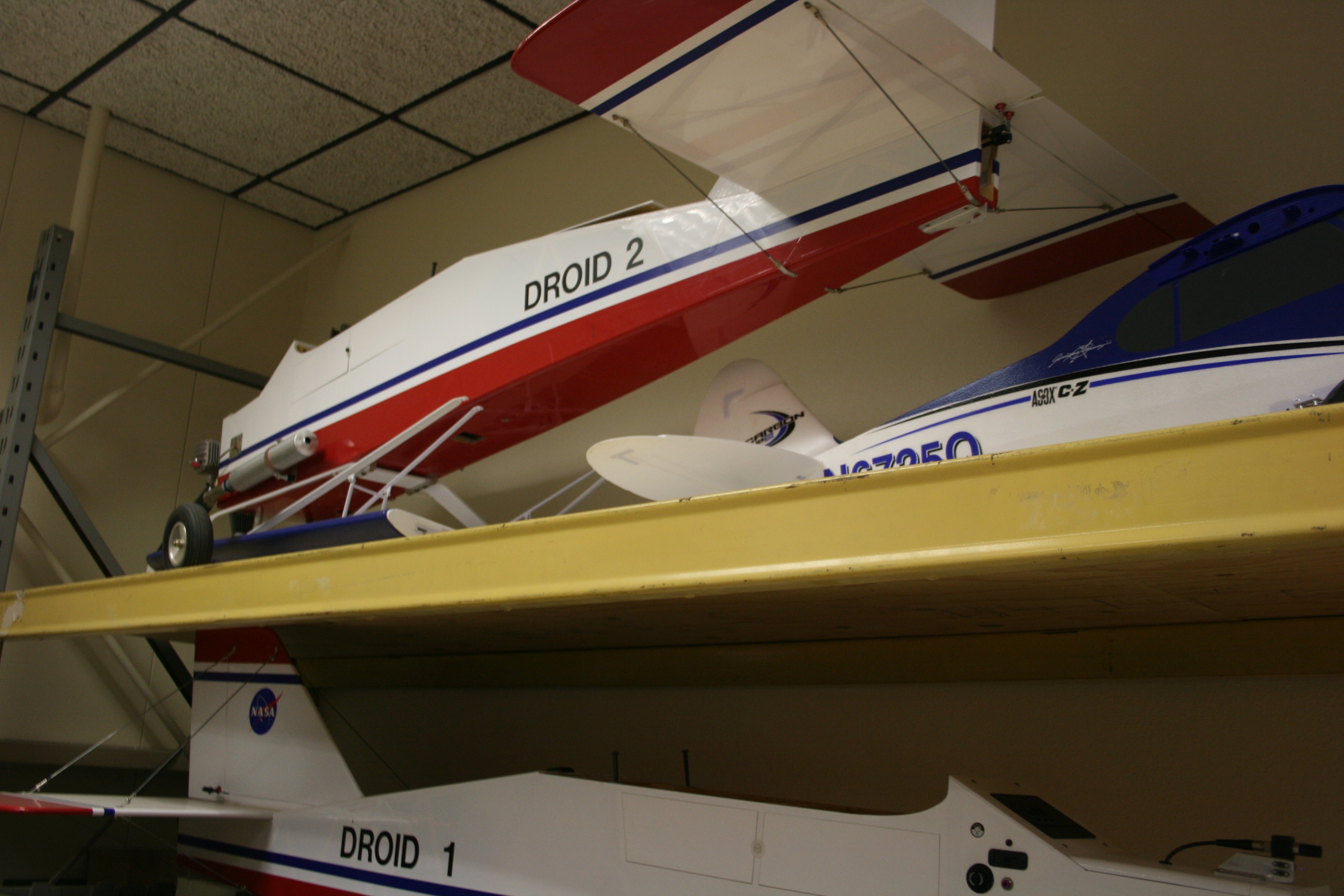
Shelved for the moment in the SFRL are “Droid 1” and “Droid 2,” used in numerous previous experiments. There’s an excellent NASA video here that shows how “Droid 2” was used in development of AutoGCAS. (That’s “Automatic Ground Collision Avoidance System” to you and me.)

I went into the AutoGCAS system at some length in my previous article, but the short version is that software has been developed to work with a plane’s autopilot and keep track of where the plane is compared to a 3D map. When a ground collision is imminent, AutoGCAS takes over from the pilot and flies the plane to safety (usually in a matter of seconds) before returning control to the pilot.

When the system was developed using “Droid 2” (see that video) the software and 3D map of the entire planet were put on a cellphone, which was used to control “Droid 2.” Yeah, a cellphone. One. No mainframes, no PCs, no huge, fancy computer systems. A cell phone.

This software is currently flying in many US military jets. Red told us that it has been credited with at least two “saves” in the past few months in aircraft involved in the Middle East, and there may be more that they don’t know about. In addition, a version is being worked on that will be available to private pilots (like myself) and while it won’t interface with the autopilot to take control, it will run on a tablet or smartphone to warn the pilot of imminent danger and to tell them which way to go to escape.
34_IMG_7852 small

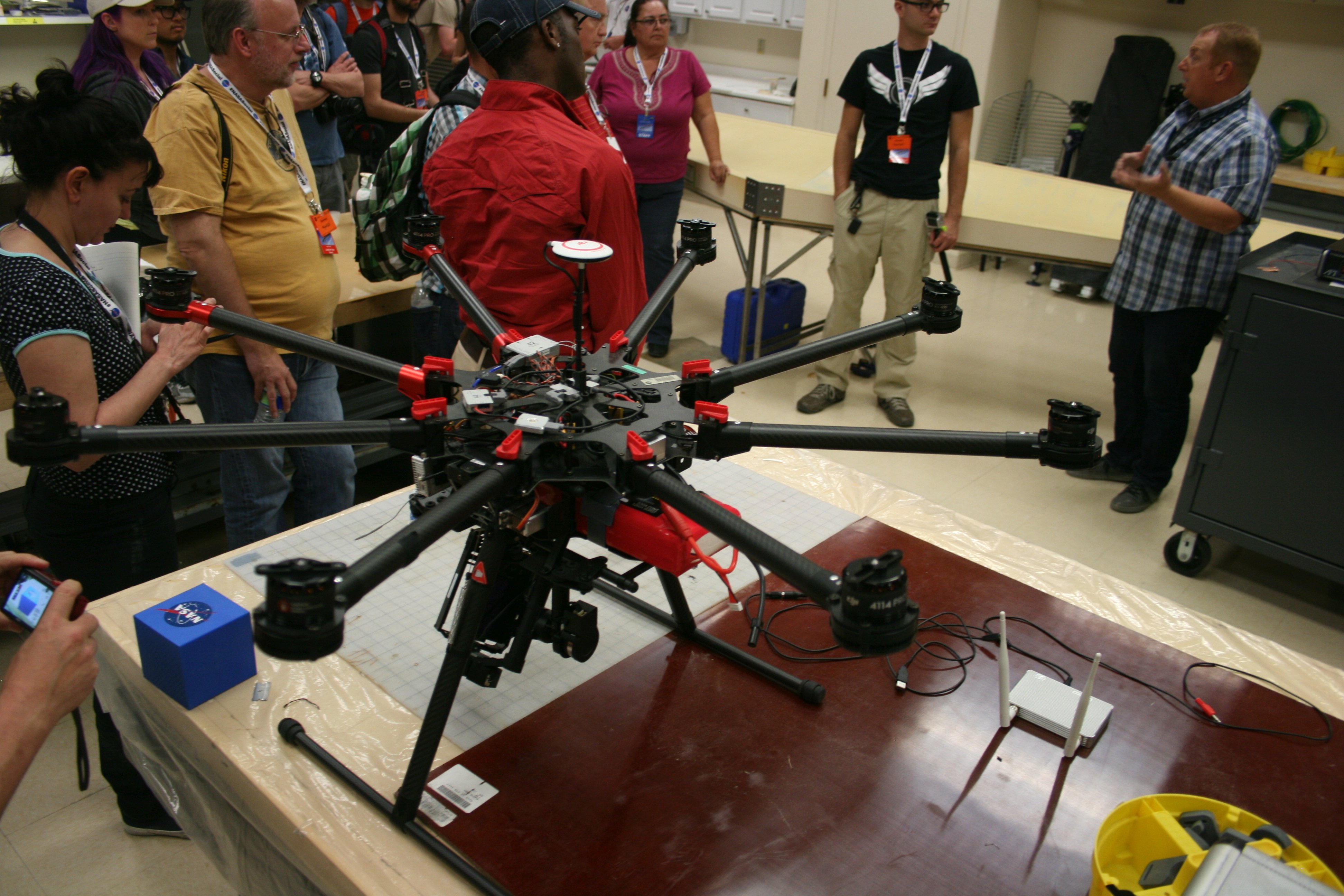
Behind Red in this picture you can see his current big project, a newer, larger model to test the Prandtl wing design. (We’ll talk more about that below.) Student interns have opportunities to work in the SFRL (under staff supervision) to build models such as this. The Prandtl design is an interesting one and I’m looking forward to seeing where this next series of tests goes.

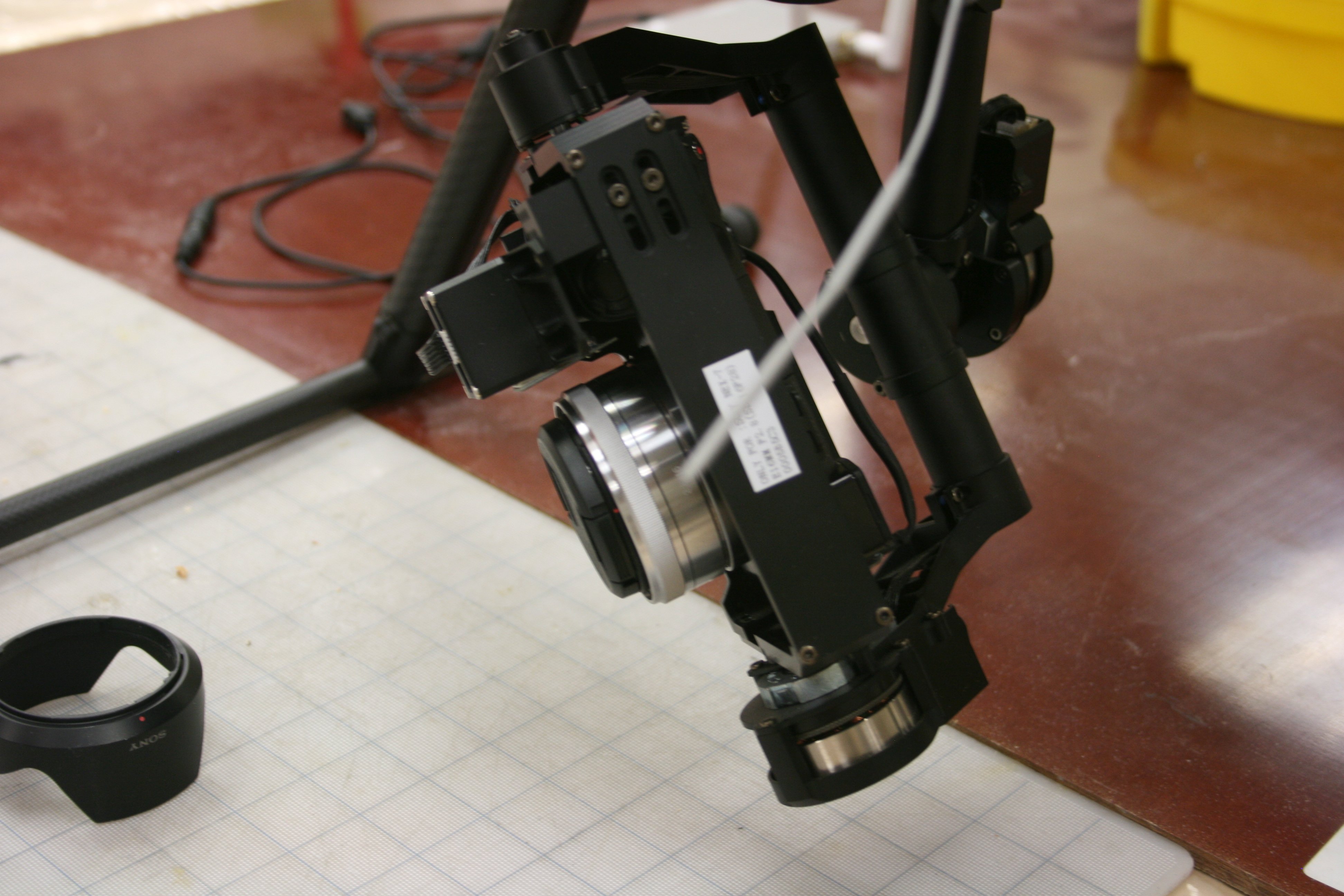
In the foreground you can see a octagonal (eight rotors) drone which is being assembled to monitor test flights from a new perspective. For example, the F-15’s we saw yesterday, flying at 600 mph, aren’t very good at chasing a scale model flying at 60 mph. But a drone like this could do it quite nicely.
35_IMG_7856 small

Here’s the camera rig on the bottom of the octagonal drone. These guys get to do the coolest things with the neatest toys! How do I get a job here?

36_IMG_7862 small

Following the SFRL tour, we were taken to get a close look at the Lunar Landing Research Vehicle (LLRV). Again, this is something that I had seen in November, but then it was mostly hidden back behind the original M2-F1 lifting body. That pioneer aircraft is now at the Museum of the Air Force in Dayton, so we got to get a much clearer view of the LLRV.

In that previous article I have links to a couple of videos about the history of this vehicle as well as other details. In brief, five of these aircraft were used during the Apollo program to train the astronauts to land on the moon. Neil Armstrong almost died when one went out of control (he ejected out, his parachute opened when he was just feet above the ground, he went back to his office and finished the afternoon as if nothing had happened) and all of the astronauts who landed on the moon trained in this vehicle or one of the others in Houston. In total, three of the five were destroyed in crashes, but they got the job done. Flying the LLRV turned out to be an excellent simulation for landing on the moon.
37_IMG_7864 small

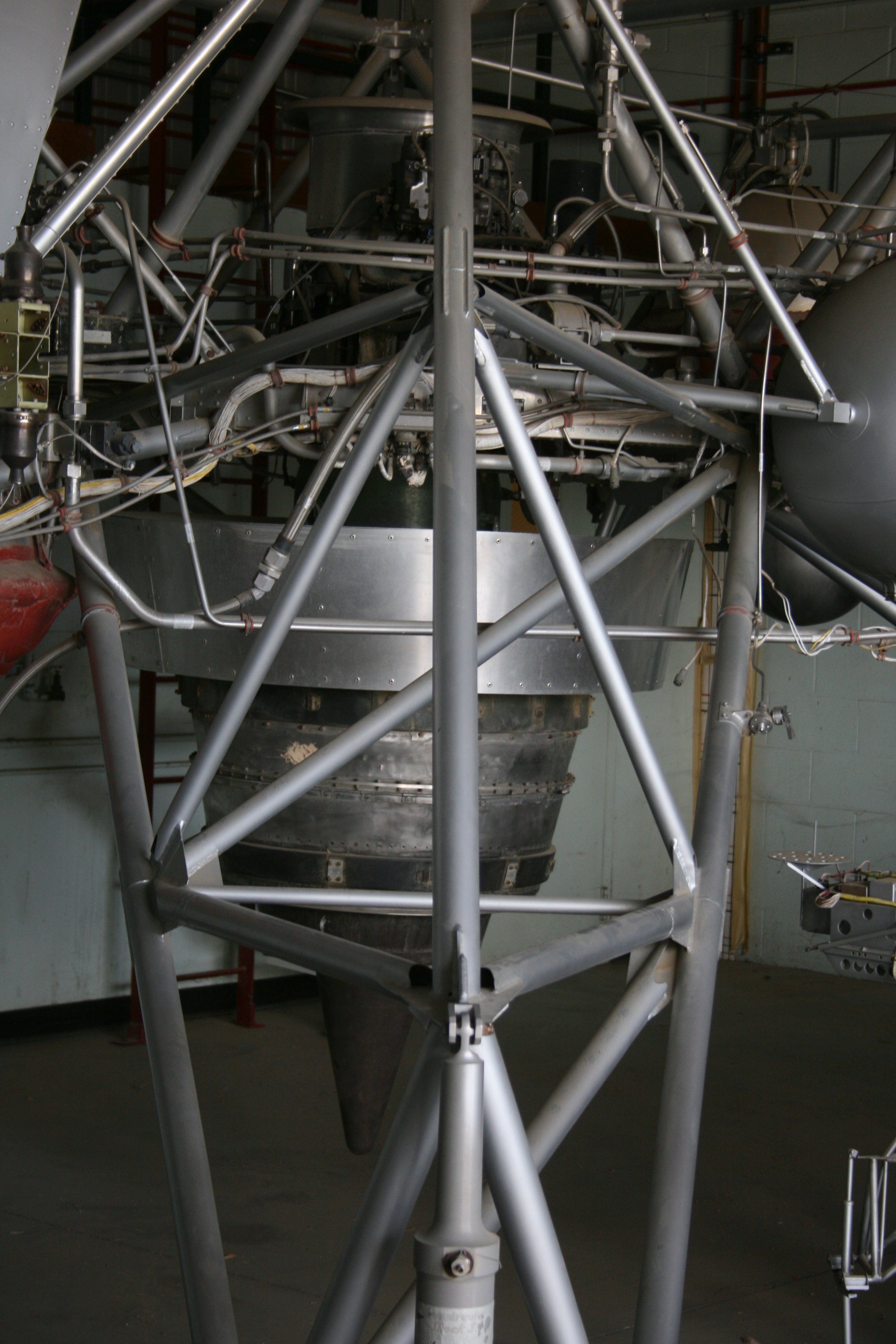
The LLRV was powered by this General Electric CF-700-2V turbofan engine. It was mounted to point downward on a gimbal so that it could be pivoted and aimed through a wide range. There were also some very clever hardware-based simulation modes, which would automatically compensate for factors such as wind gusts, which of course would not be found on the lunar descent.

The engine had 4,200 pounds of thrust, but the LLRV with a pilot and fuel weighed almost 4,000 pounds, so the LLRV could barely get off the ground more than 500 feet, hover, maneuver, and land. The total time of a flight was usually only five to seven minutes, with a total flight endurance capacity of just ten minutes. After using all of the engine’s thrust to take off and climb to several hundred feet, the engine was throttled back to hover and simulate a descent to the lunar surface.
38_IMG_7866 small

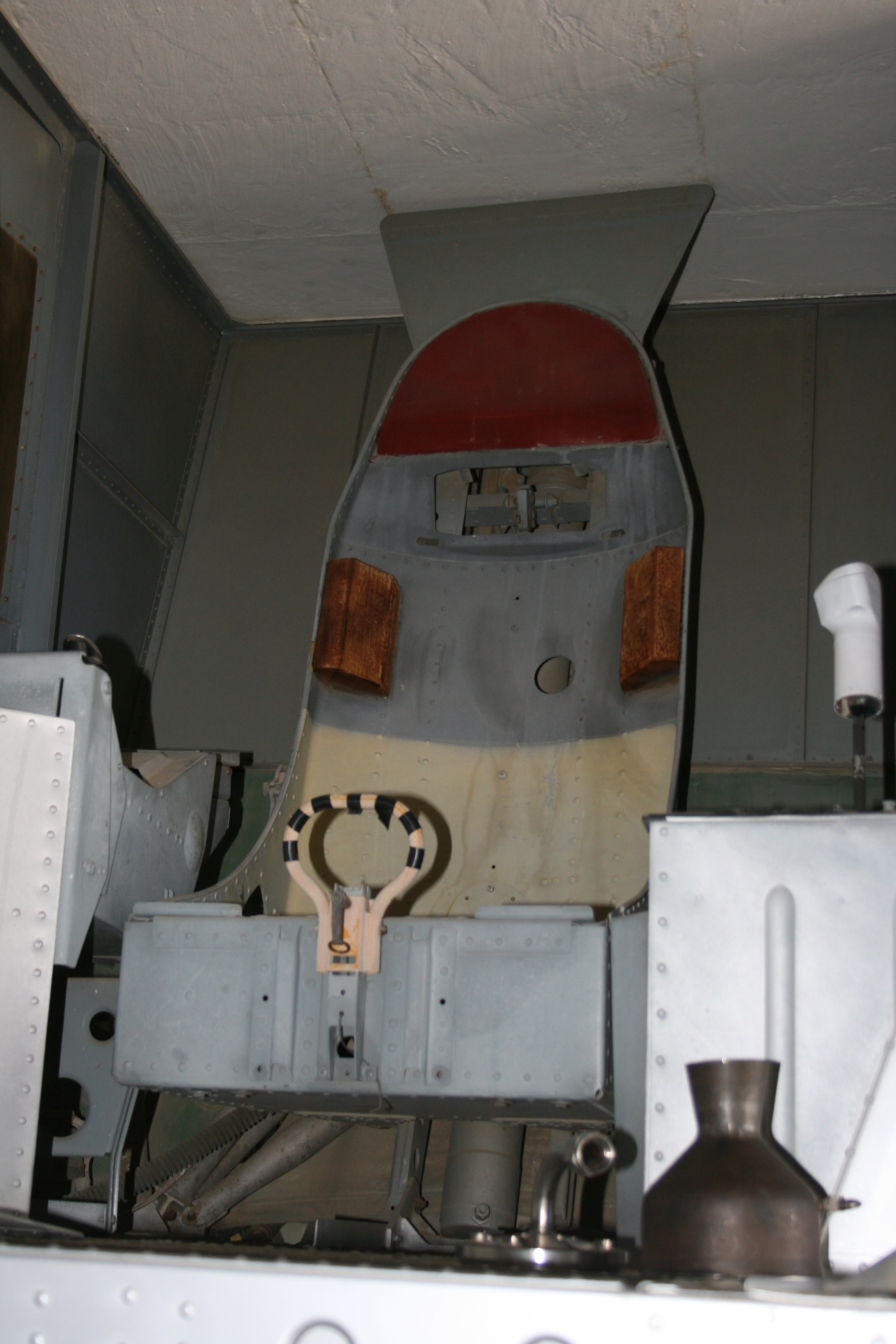
The pilot’s compartment on the LLRV was sparse and designed to simulate the Apollo Lunar Module as much as possible. The controls were as close to the LM’s as possible. You can see how visibility in the pilot’s compartment was deliberately restricted, to closely match what the pilot would see on descent to the moon. Pitch, roll, and yaw were controlled by sixteen small hydrogen peroxide thrusters, mounted in pairs.

Large yellow and black striped handle connected to the ejection seat. In an emergency (three of the five vehicles had them and used the ejection seat) it would take the pilot out at 14 Gs to about 250. The seats developed for the LLRV were the first “zero-zero” ejection seats, meaning that they were designed to work on a vehicle with zero altitude and zero airspeed. Up until that time, ejection seats in military fighters primarily used small rockets or spring systems to simply get the pilot clear of the aircraft, assuming that once separated from the plane the plane would get out of the pilot’s way and there would be significant altitude for parachute deployment. A zero-zero seat on the other hand uses a much larger rocket and drives the pilot up and away from the aircraft, immediately and rapidly deploying the parachute, allowing it to be used even from a resting position.
39_IMG_7868 small

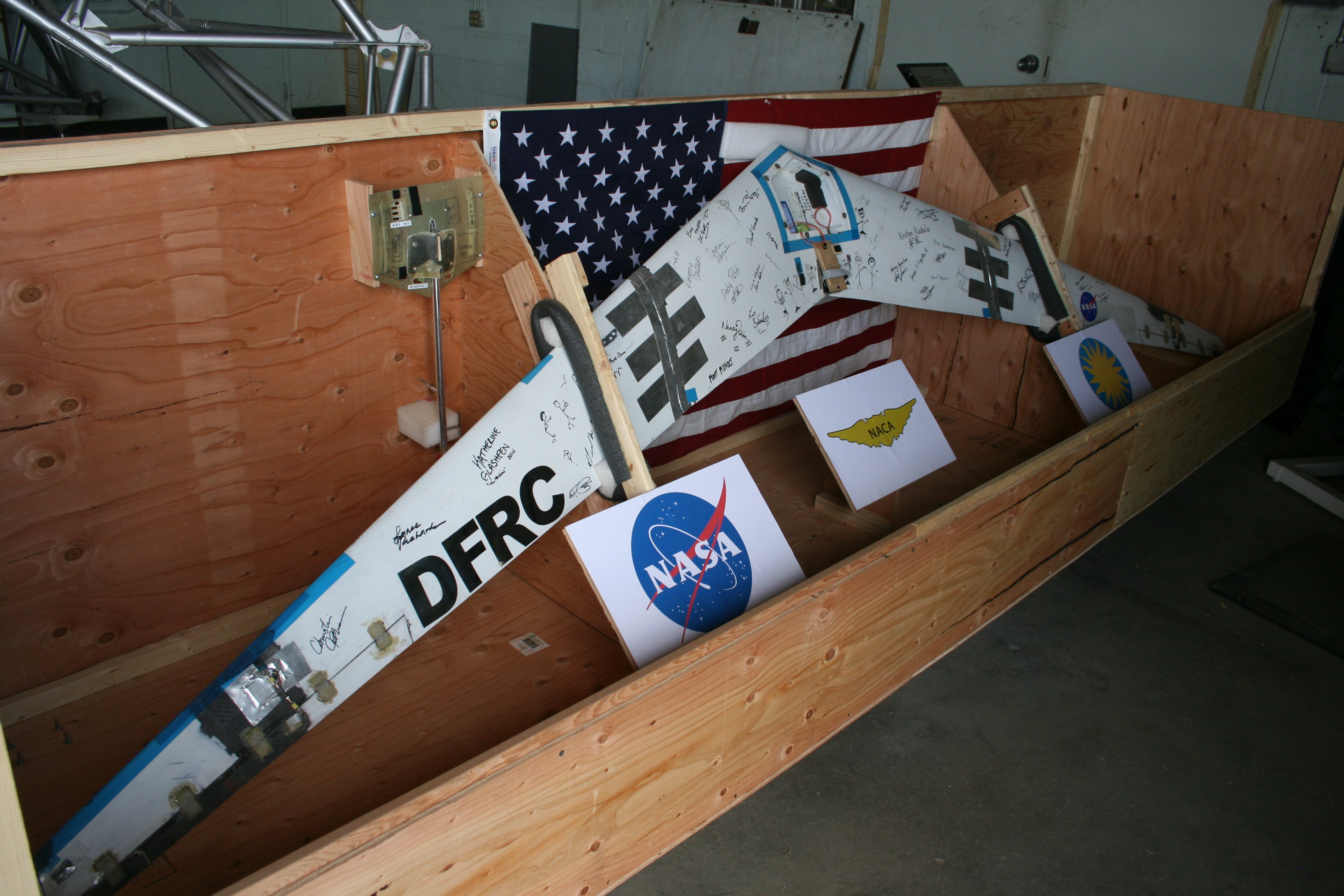
Above I talked about the new, larger Prandtl wing being built by Red Jensen in the SFRL. Here’s the smaller one, which was built by students in the SFRL in 2013 and recently finished its test program. This one is being boxed up to be sent to the Smithsonian Air & Space Museum in Washington, DC.

The Prandtl wing attempts to correct a basic flaw in every wing built, from the Wright Brothers onward. There’s a phenomenon known as “adverse yaw” which will swing the nose of the aircraft in the direction opposite of the direction of turn when the aircraft banks. In other words, if you turn left, the nose will try to swing right, and vice versa. In a conventional airplane, this is countered by use of the rudder or very fancy computer controls. (Think of the B-2 bombers for the latter.) If this isn’t done correctly, you get an “uncoordinated” turn, which can make your passengers queasy or be quite dangerous a low speeds. (Why am I hearing my flight instructor repeating “Step on the ball!!” over and over?)

On the other hand, as we were asked, have you ever seen a bird with a vertical stabilizer or rudder? Obviously not – so how do they do it? The answer might have been found by Ludwig Prandtl in the 1920s. Prandtl was a pioneering engineer and mathematician who developed many of the key concepts we use today in aerodynamics. His theoretical wing controls adverse yaw by using wingtip controls instead of a rudder. (Birds do it by using their muscles and feathers to warp and change the shape of the wing, creating a similar effect.)

NASA Armstrong will be testing their larger model in the upcoming months. Depending on how it goes, in thirty years your commercial airliner from LA to Dallas might be shaped more like an oversized B-2 flying wing instead of the standard “tube & wings” design. (Gee, wouldn’t it be more efficient in that design to use a LEAPTech design to power it? Hmmm… I’m seeing some synergies here.)
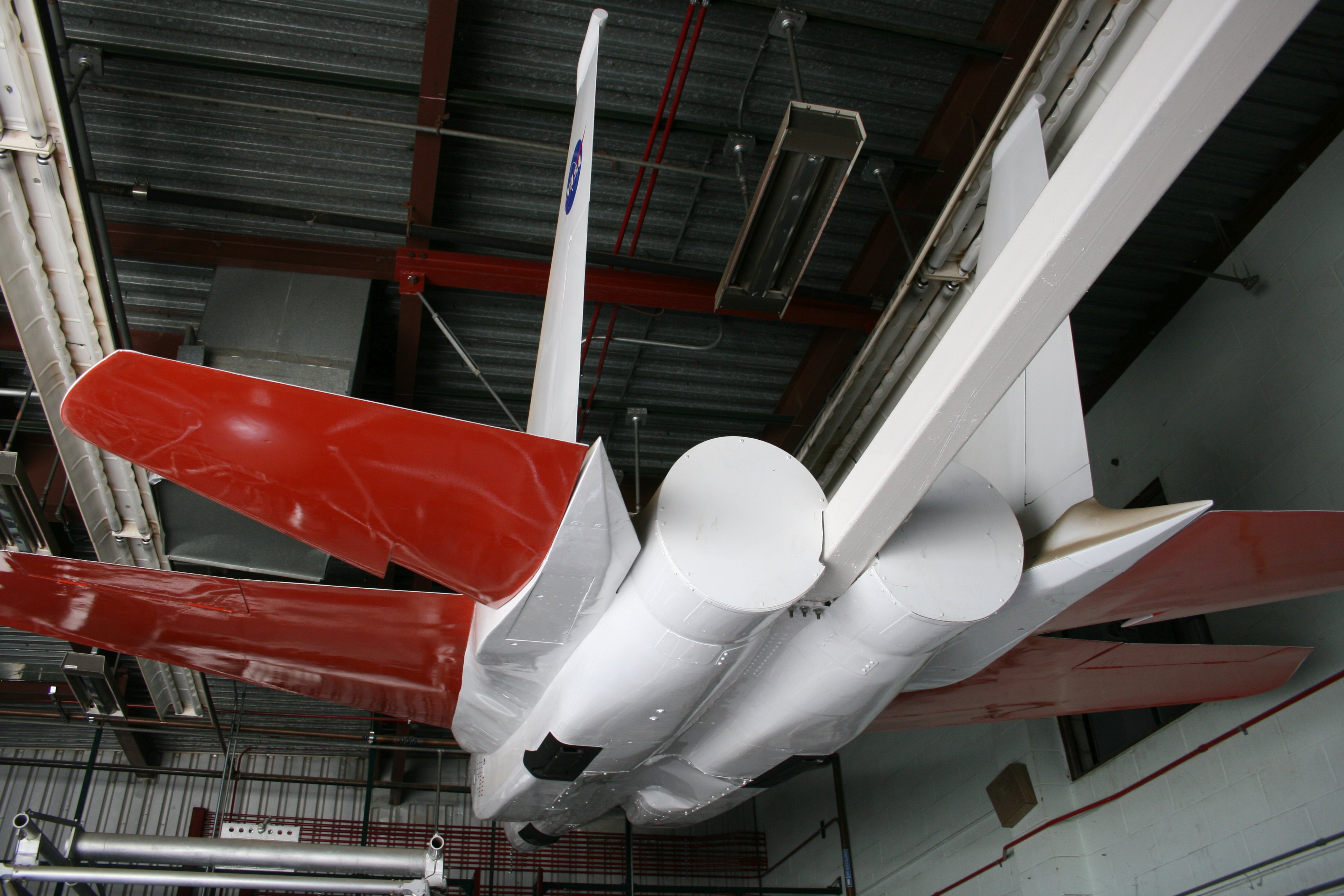
40_IMG_7872 small

This scale model of an F-15 fighter (1/4 scale?) was built and flown remotely to test multiple advanced systems that are now in everyday use on the aircraft still in service.
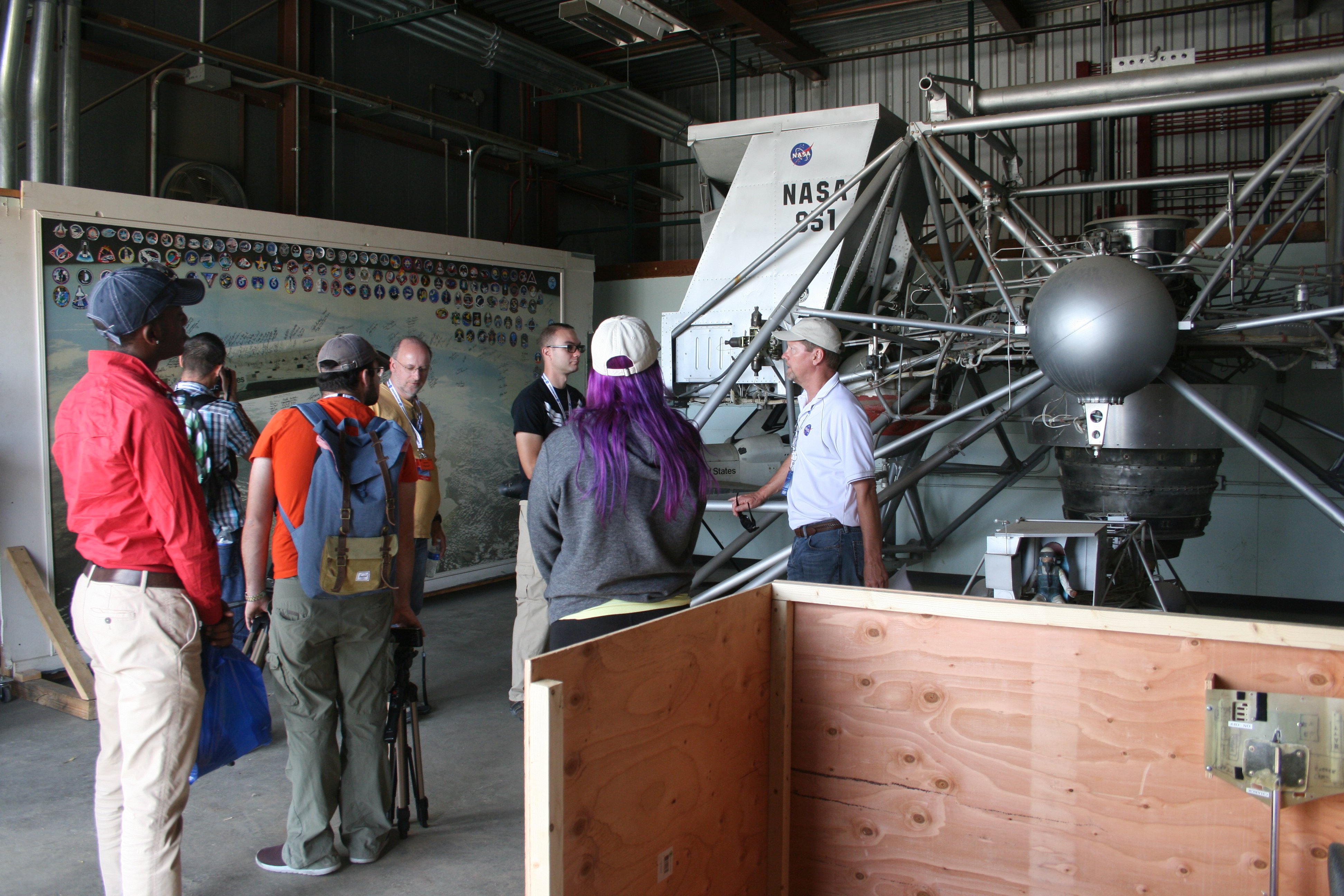
41_IMG_7870 small

The final thing in this hangar is that large wall mural you can see over on the far side behind the other NASA Social attendees in our group (and Kevin Rohrer leaning on the LLRV telling us about it). I wish that I had gotten a better picture of it, but the story we heard about it was just fascinating to me.

The mural was put together (it’s a composite photo) and from the start of the Shuttle program at Edwards it gathered mission patches and crew signatures. Beginning with the earliest “free flight” drop tests of Enterprise, all the way through the final Shuttle landing at Edwards with Discovery finishing the STS-128 mission in September 2009, crews and support staff would celebrate a successful mission by applying mission logos along the top and finding a place to sign.

To a geeky space cadet like myself, this makes the mural invaluable. To everyone at NASA Armstrong (then named NASA Dryden) it was something that was sort of in the way when they were remodeling. They of course didn’t just trash it, but it got cut out of the wall and stored here until they can figure out where to put it. It might go to another museum, such as the Museum of the Air Force, or to some other NASA facility. For now, it’s just gathering dust here with the LLRV.

(If they end up not being able to figure out what to do with it, they have my number. I’m thinking it would look FANTASTIC in my house somewhere. Just sayin’.)

(And no, I’m not sure that The Long-Suffering Wife would agree with that decorating choice, but she loves me and I’m sure we could figure it out. Right, dear?)

Tomorrow, I’ll finish up with two more stops on our tour of the Center and some final comments.
Leave a comment

Filed under Flying, Photography, Space

NASA Social For LEAPTech At NASA Armstrong (Part Three)

I had the honor and the privilege of attending my fifth NASA Social last Tuesday. The presentations we saw regarding the LEAPTech project were done at the NASA Armstrong Flight Research Center. Friday I wrote about what LEAPTech (“Leading Edge Asynchronous Propeller Technology”) is and what the project is trying to discover and develop. Yesterday I wrote about our trip out onto the Rogers Dry Lake to see the HEIST experimental rig and two trips to collect LEAPTech data.

18_IMG_7802 small

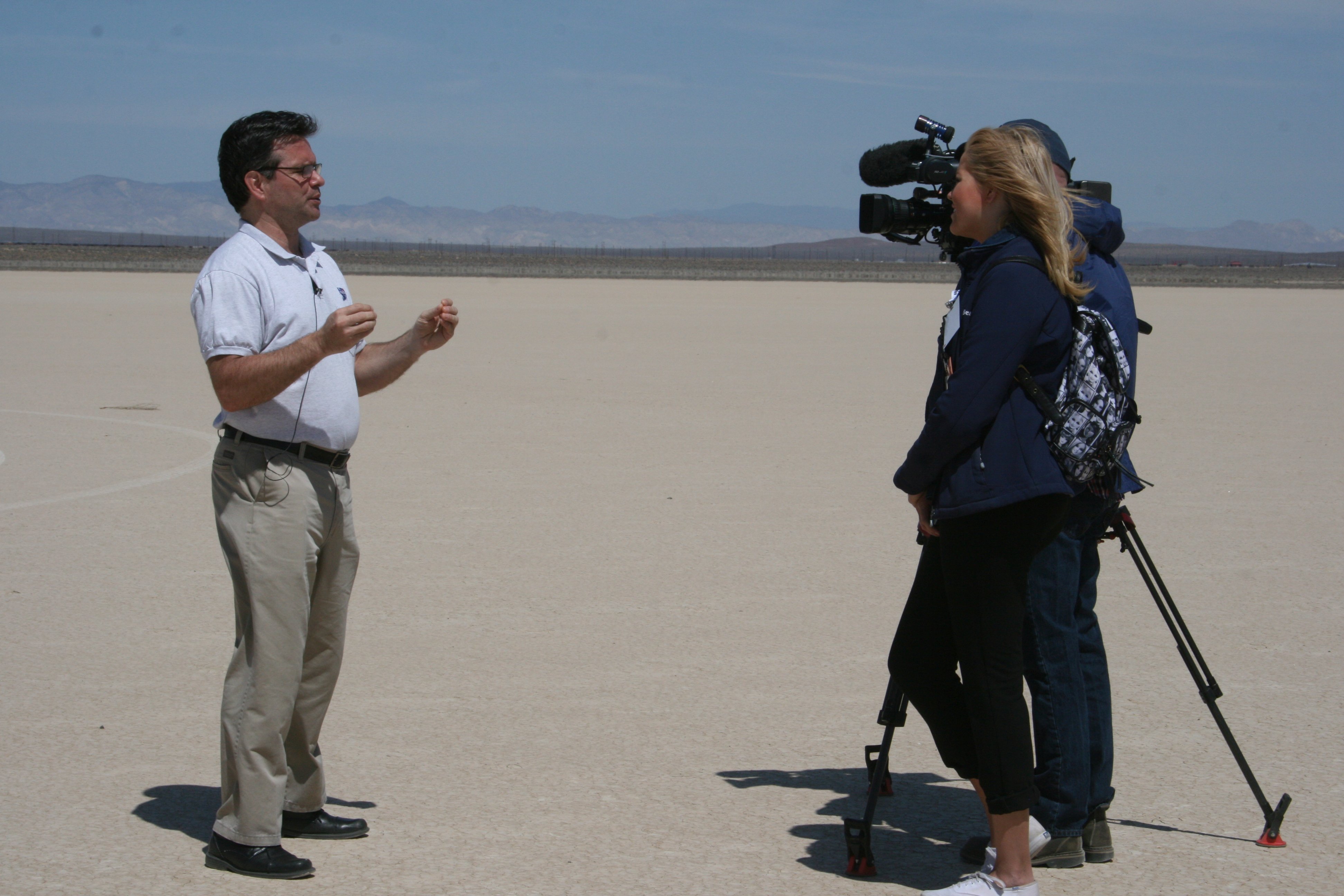
In addition to the social media attendees at the Social, there were members of the more conventional media there. Here we see Mark Moore, the Principal Investigator for the LEAPTech project, being interviewed out on the lake bed by a reporter and cameraman from one of the local television stations.

23_IMG_9086 small

Photo by NASA Armstrong Flight Research Center

Before we went back to the conference center and main NASA Armstrong Center, all of the NASA Social attendees, the LEAPTech engineers and scientists, the NASA Armstrong staff, and everyone else got together in front of the HEIST for a group photo. (I’m standing, three or four folks to the right of center, in a light tan shirt, blue jeans, and my goofy “adventure” hat.)

24_IMG_7791 small

The surface of Rogers Dry Lake is bentonite, a rock-hard clay layer thousands of feet thick, left after these lakes dried up around 10,000 years ago. The surface is incredibly flat, varying less than eighteen inches over a distance of 30,000 feet. There are 44 acres of it on Rogers Dry Lake, and another 22 acres at the nearby Rosamond Dry Lake.

The Antelope Valley is a desert (as is Los Angeles, but that’s a different rant) so it’s almost always dry here. “Almost” is the key word. When it does rain for a couple of days, the water coming from much of the Antelope Valley pools on the lake bed, closing the “drawn” runways (the ones on the clay surface) temporarily, while the main concrete runway is always open.

If a significant portion of the lake stays under water for more than seven days, a local species of brine shrimp starts to hatch. That in turn brings huge flocks of birds in, including seagulls from the Pacific Ocean about seventy miles away. Those birds are in turn can be a major hazard to flight operations, since bird strikes on high speed aircraft are extremely fatal to the bird and dangerous to the plane and pilot. Next, the birds can cover everything in the area with droppings, another mess for planes and facilities. Finally, when the lake starts to dry up again, the shrimp lay their eggs to become dormant for the next rainy season — then the shrimp die, start to rot in the heat, and we’re told that the stench can be most powerful.

25_IMG_7799 small

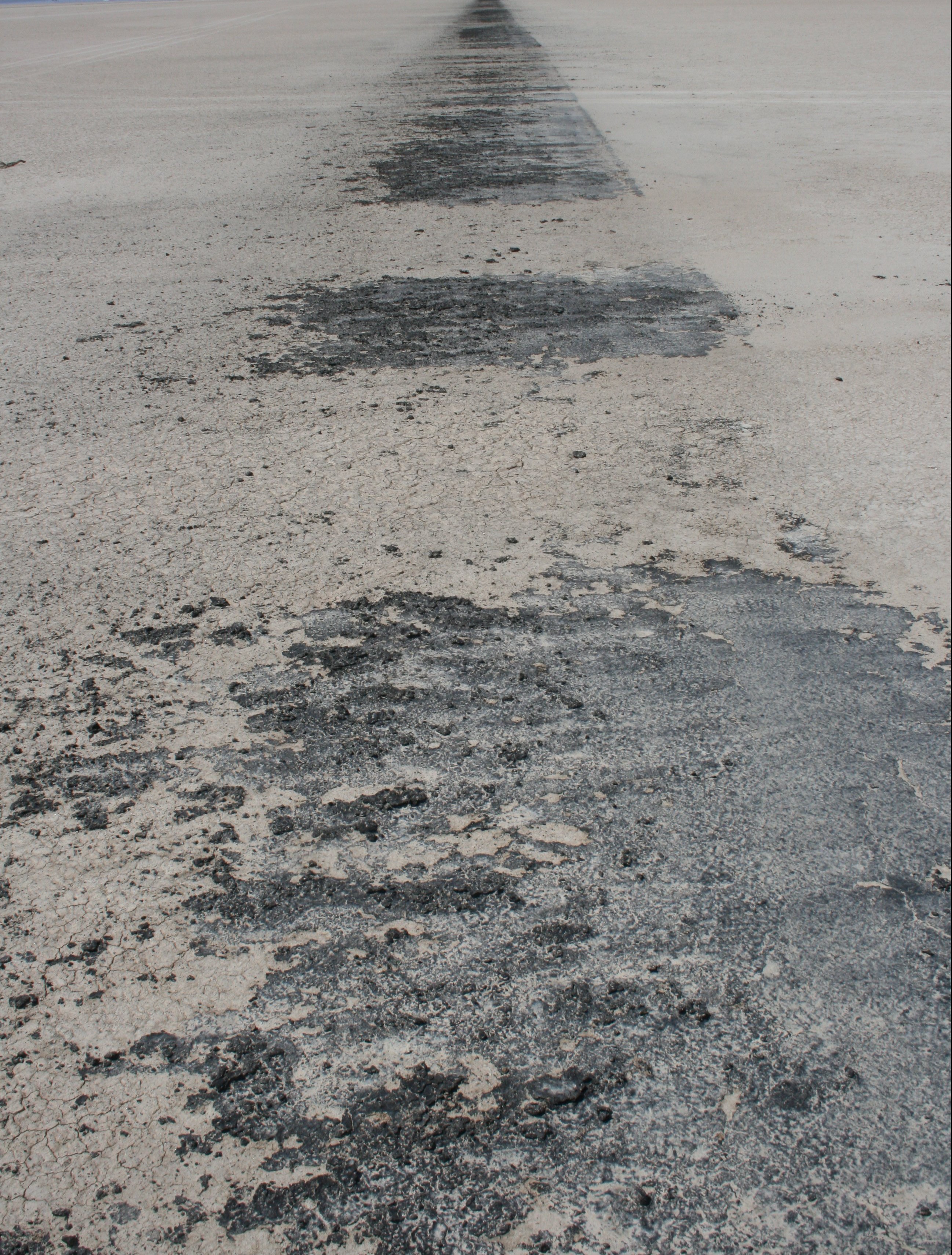
Here you can see how the runways and other markings are “drawn” on the clay surface. It looks like some kind of tar or rubbery compound, and the lines are several feet wide. Not only are the runway lines drawn this way, but Edwards contains the world’s largest compass rose, which has been declared to be a National Historic Landmark.

26_IMG_7817 small

After lunch and some more Q&A with the LEAPTech scientists and engineers, we headed out to see some of the other activities at the NASA Armstrong Flight Research Center.

This is the entrance to the main building, and it might look vaguely familiar to anyone who grew up on 1960’s television. This building entrance was used by the “I Dream Of Jeanie” show as NASA Headquarters whenever they needed an establishing shot.

27_IMG_7819 small

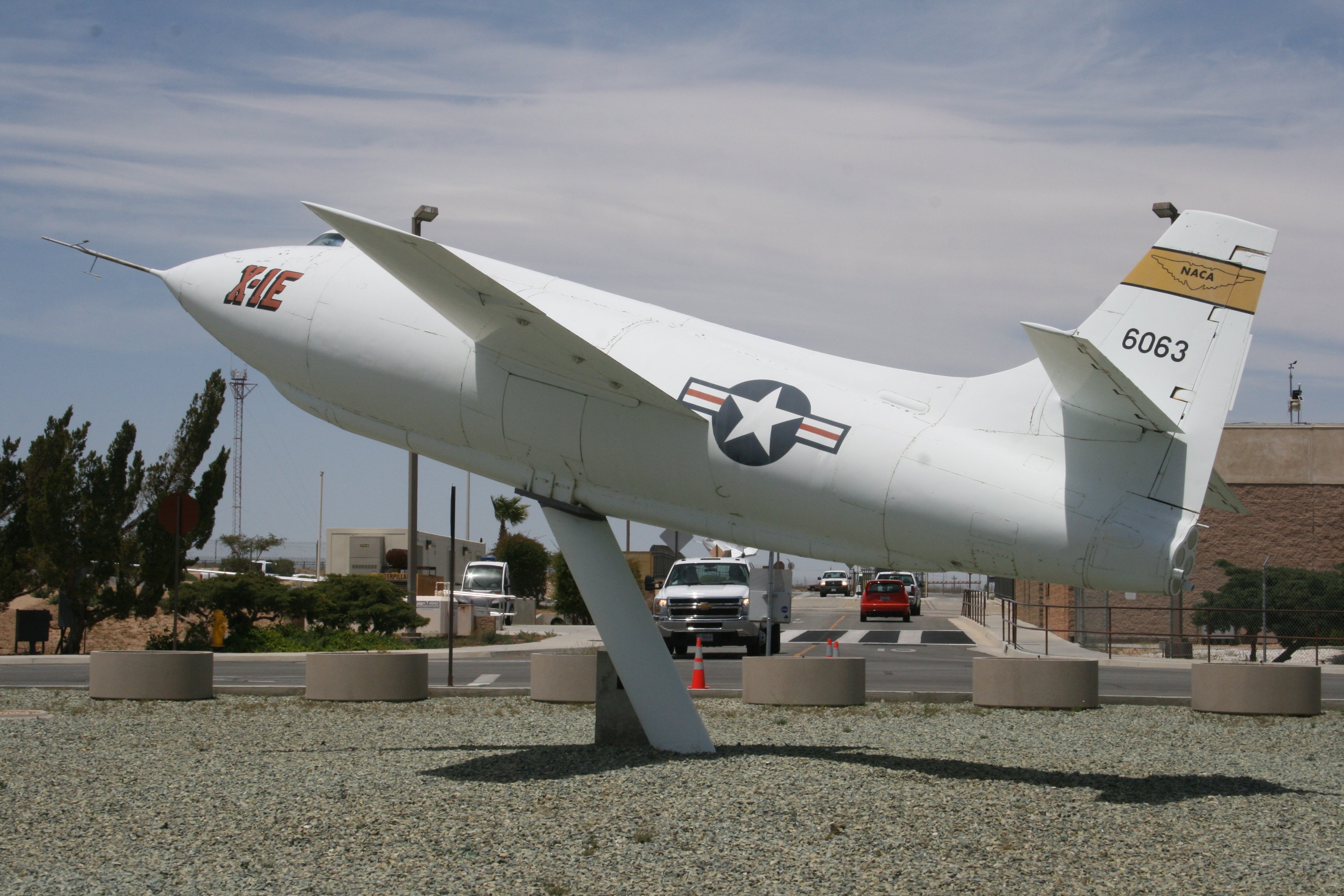
There are legendary research aircraft all over the site, many of them in or near the parking lot, up on sticks. This is the Bell X-1E, the big brother of the Bell X-1 which Chuck Yeager used to break the sound barrier in 1947. The X-1 is on display in the main hall of the Smithsonian Air & Space Museum in Washington, along with Lindbergh’s “Spirit Of St Louis,” Spaceship One from Scaled Composites and Virgin Galactic, John Glenn’s Freedom 7 Mercury spacecraft, the Gemini IV spacecraft used for the first US spacewalk, and the Apollo 11 Command Module.

The X-1E flew from 1955 to 1958, piloted first by legendary USAF test pilot Joe Walker and later by NACA test pilot John McKay. Its maximum known speed was Mach 2.24, but it was chasing Mach 3 near the end of 1958. Its maximum known altitude reached was 73,000 feet, but again, it was chasing 90,000 feet.

28_IMG_7825 small

First stop on the Center Tour was the F-15 hangar. This is one of the newer aircraft, an F-15D. It will be flying for many years to come in support of NASA missions since there are hundreds of this model F-15 still flying. Most of them fly for other countries, but they’re still supported with spare parts and the information needed by the mechanics to keep them running safely.

29_IMG_7833 small

On the other hand, this F-15B model is older and has many fewer flying today, so parts are getting harder and more expensive to find. This is the oldest F-15 in NASA’s fleet, handed down from the Air Force when they stopped flying the F-15Bs. This is how NASA gets most of its aircraft of this nature – hand-me-downs from the military. On the other hand, it saves the taxpayers millions and avoids throwing away millions on a perfectly good plane that the military doesn’t want.

Because of the age and increasing difficulty in finding parts, this plane will likely be retired from NASA soon. I offered to see if the CAF could take it off their hands as a donation when the time comes – I got a blank stare. Seriously, guys, when the time comes, give me a call, let my people talk to your people. This would look GREAT flying out of Camarillo with our P-51, Spitfire, Zero, Bearcat, PBJ, and Hellcat! (Seriously!) It would be so much a better fate than putting it up on a stick in a parking lot!

30_IMG_7836 small

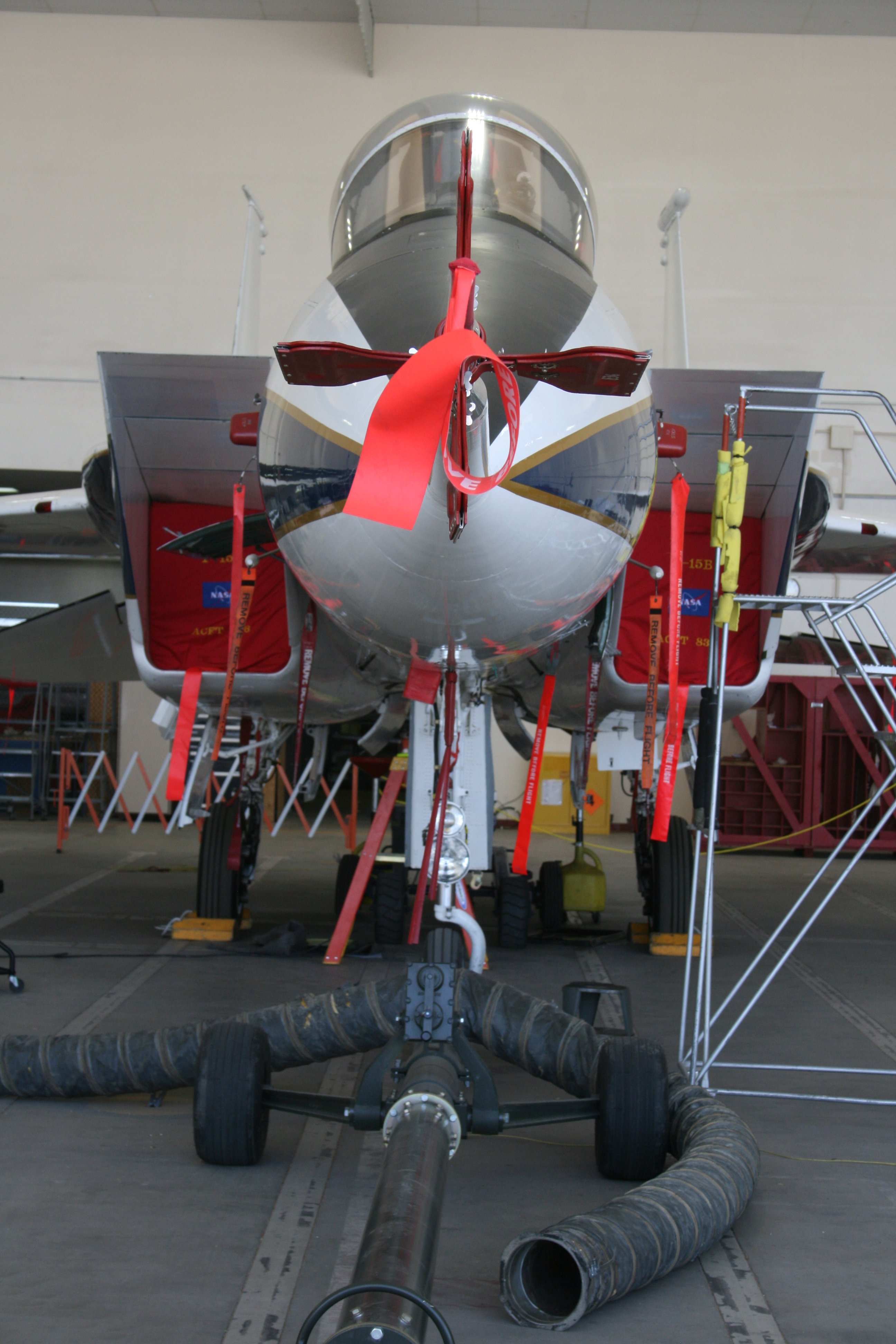
The business end of the F-15B. This probe sticks out about ten feet in front of the aircraft to get air data in still air, prior to the air being roiled up by this honkin’ huge plane flying through it at Mach something-or-the-other. All of those fluorescent orange and red pennants are connected to safety locks and plugs in or covering openings. Those locks, plugs, and covers keep the aircraft safe when it’s on the ground an not being used for long periods — but they MUST be removed before the plane can go fly again. That’s why all of the pennants say “Remove Before Flight!” (Even little planes use them.)

These F-15s are used for collecting data for instruments designed by others as well as flying NASA missions as chase planes for other experimental aircraft. For example, when the early Space Shuttle “free flight” drop tests were performed at Edwards, as well as the first Shuttle landings from orbit, planes such as these would fly alongside to watch for problems and radio information to the pilots. Today these planes (along with others in the NASA fleet) are used to monitor other test flights and experimental aircraft.
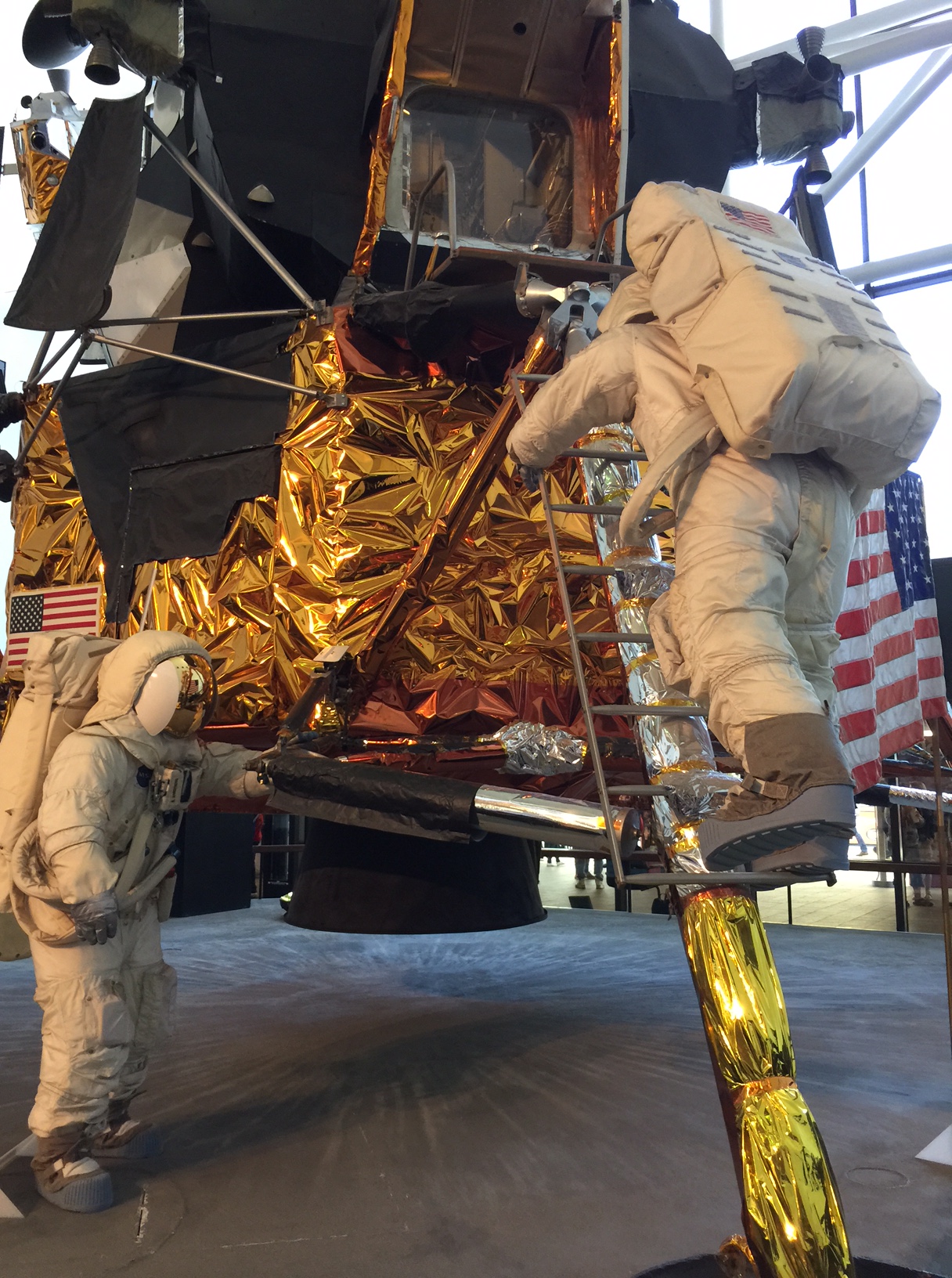
As far as collecting data goes, other groups working with NASA (such as universities or corporate partners) design instruments to collect their data, with their experiments sized to fit into the F-15 or under the wings. NASA pilots will fly the pre-arranged mission to wherever the data needs to be collected, depending on the needs of the researchers.
31_IMG_7835 small

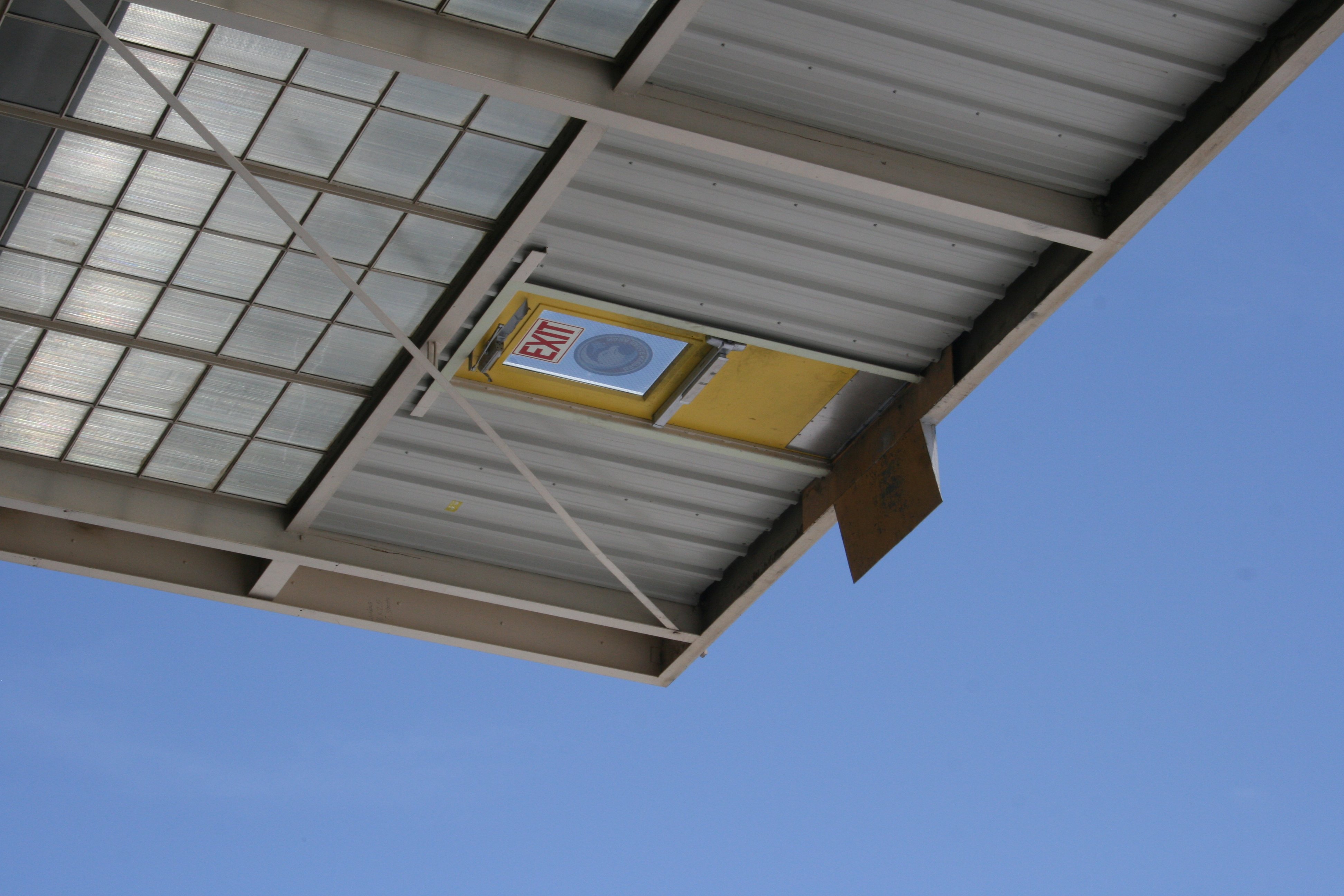
Finally, this was a point of considerable interest and fascination to several Social attendees. Yes, this picture is oriented correctly, that is an exit door forty or fifty feet up in the air.

This hangar has a single, huge door that swings up out of the way to let planes in or out, or to let roaming packs of NASA Social attendees peer in at the planes. When the huge hangar doors are closed, there are exit doors built into what is now a huge fourth wall of the hangar. When the doors open up, the exit door just dangles up there like a low-tech predecessor to a “Portal” door. (Even at NASA, the cake is still a lie. But we did have doughnuts and cookies.)

Tomorrow, more stops on the tour of the NASA Armstrong Flight Research Center.

Leave a comment

Filed under CAF, Flying, Photography, Space

NASA Social For LEAPTech At NASA Armstrong (Part Two)

This week I attended my fifth NASA Social. At the NASA Armstrong Flight Research Center the main focus was the LEAPTech project. Yesterday I wrote about what LEAPTech (“Leading Edge Asynchronous Propeller Technology”) is and what it has the potential to mean in the not-so-distant future. Once we had seen presentations from several of the project scientists and engineers, we headed out onto Rogers Dry Lake to see a test run of the initial LEAPTech test rig.

Due to the nature of the work being done there by the Air Force and NASA Armstrong, one does not normally get access to the lake bed at Edwards Air Force Base unless one works there, has a security clearance, and has a reason to be out there. As has happened at every NASA Social I’ve attended, this was a point where the “geeky, über-cool” factor ratcheted up a couple of notches.

12_IMG_7778 small

Once out on the lake bed runway, we got our first opportunity to see the test rig up close and personal. As you can see, it’s a basic, heavy-duty truck rig that’s been modified quite a bit. The two primary modifications in the HEIST (“Hybrid-Electric Integrated System Testbed”) serve to lift the wing up out of “ground effect” and into “clean air”, and to dampen out almost all of the vibrations and bumps coming from the rolling truck body.

13_IMG_9081 small

From the front you can see that this test setup has eighteen props. It’s quite a departure from the normal one or two big engines on today’s propeller-driven airplanes. It’s hoped that the difference will allow a 500% increase in power efficiency, a huge increase in low-speed maneuverability and stability, and a drastic reduction in the noise created by the propellers.

14_IMG_7775 small

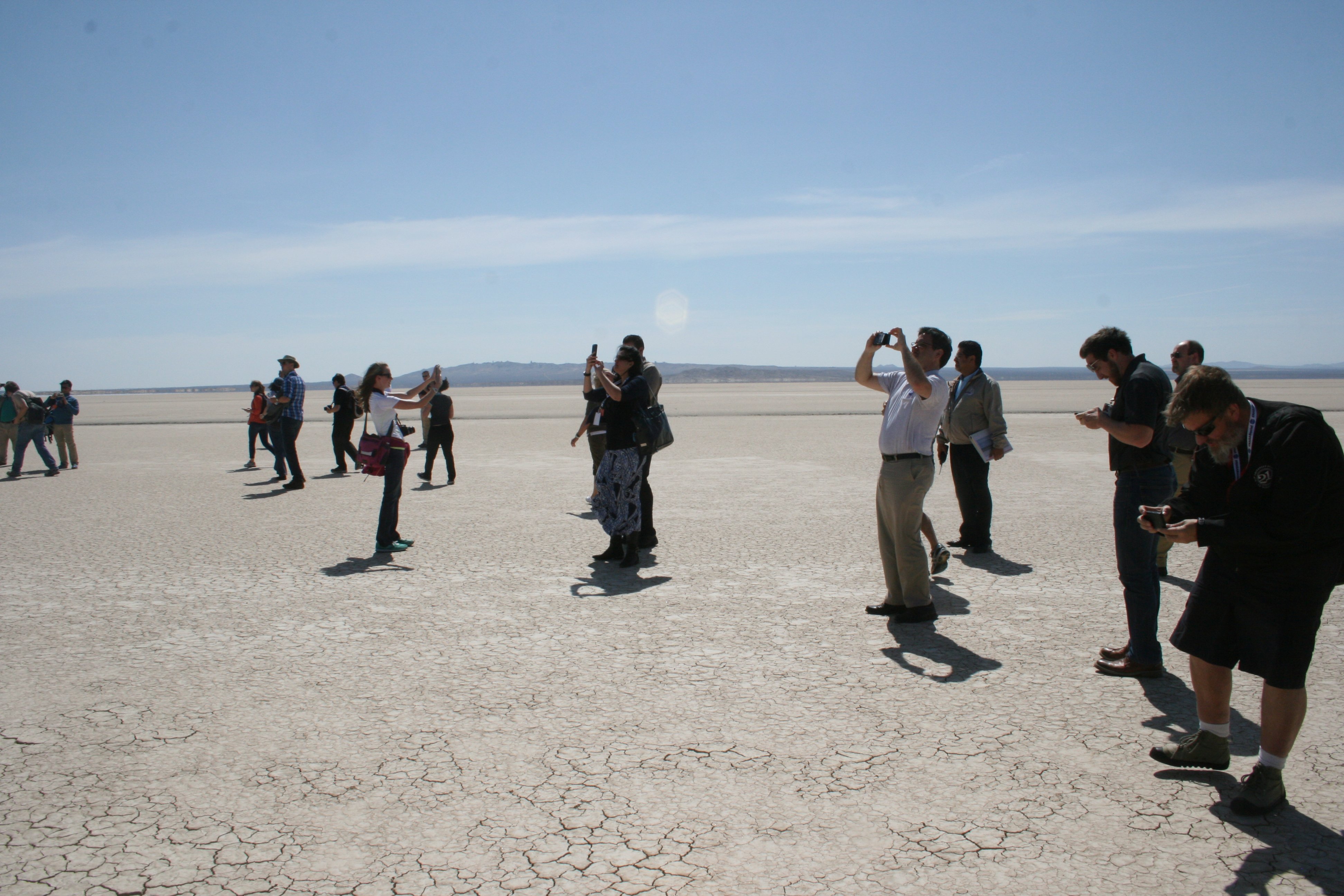
This is what a couple dozen NASA Social members look like taking pictures, taking selfies, tweeting, Instagramming, FaceBooking, and so on.

We were fortunate that it was only about 75°F out there, although the wind was a real pain. As with any desert locale, in the winter it can be brutally cold out here, and in the summer it can be way, way over 100°F.

15_IMG_2980 small

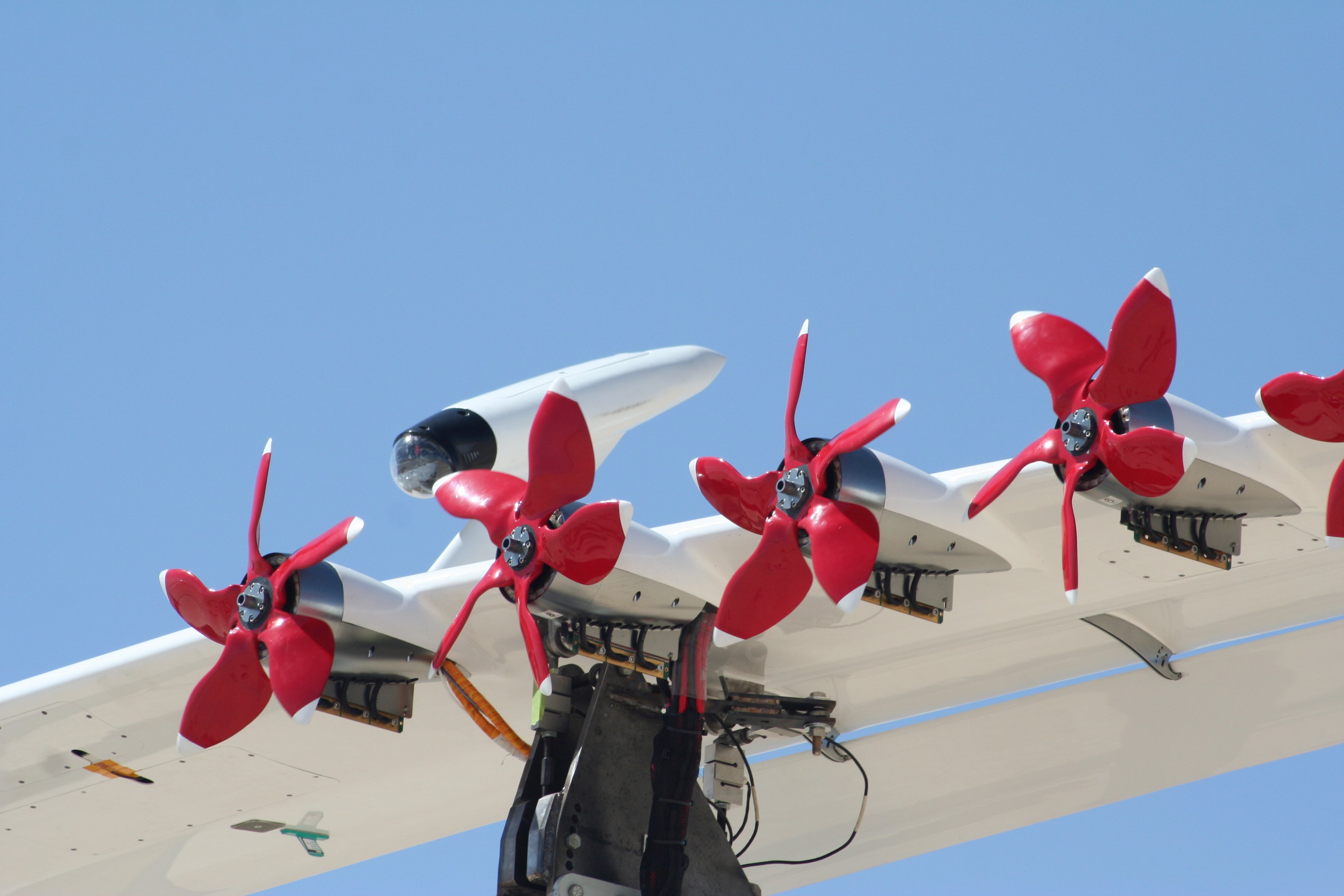
Here you can see the propellers on one side of the test wing. Notice that the propellers on alternating blades are counter-rotating. Also notice the video camera rig on the top and all of the data cables coming down the support framework.

If this wing seems small, note that one of the aspects of LEAPTech is that the added efficiency of the design in generating lift will hopefully allow a significant reduction in the size of the wing. The wing, propellers, and test rig here are smaller than they would be on a two- or four-person aircraft, but not by much.

16_IMG_2981 small

As mentioned yesterday, in designing their tests to be carried out this way in the real world, the LEAPTech team is able to quickly test a whole range of variables quickly and much more cheaply than they could using a wind tunnel.

For example, in testing for noise reductions or power output, does it matter if the blades counter-rotate? Does it matter if every other one counter-rotates or is there another pattern that gives better performance? Is it better to have all the props the same size, or should they be larger on the inside, or on the outside? How does changing the arrangement and size of the propellers affect the loading on the wing and the amount of lift generated?

These are all questions that can be put into mathematical models, but models all have assumptions and approximations built in them. By comparing the models’ predictions against the real world data, the models can be refined and improved. The models in turn can then be counted on to give more reliable predictions. This feedback between the two systems is a powerful way to make significant progress quickly.

17_IMG_7800 small

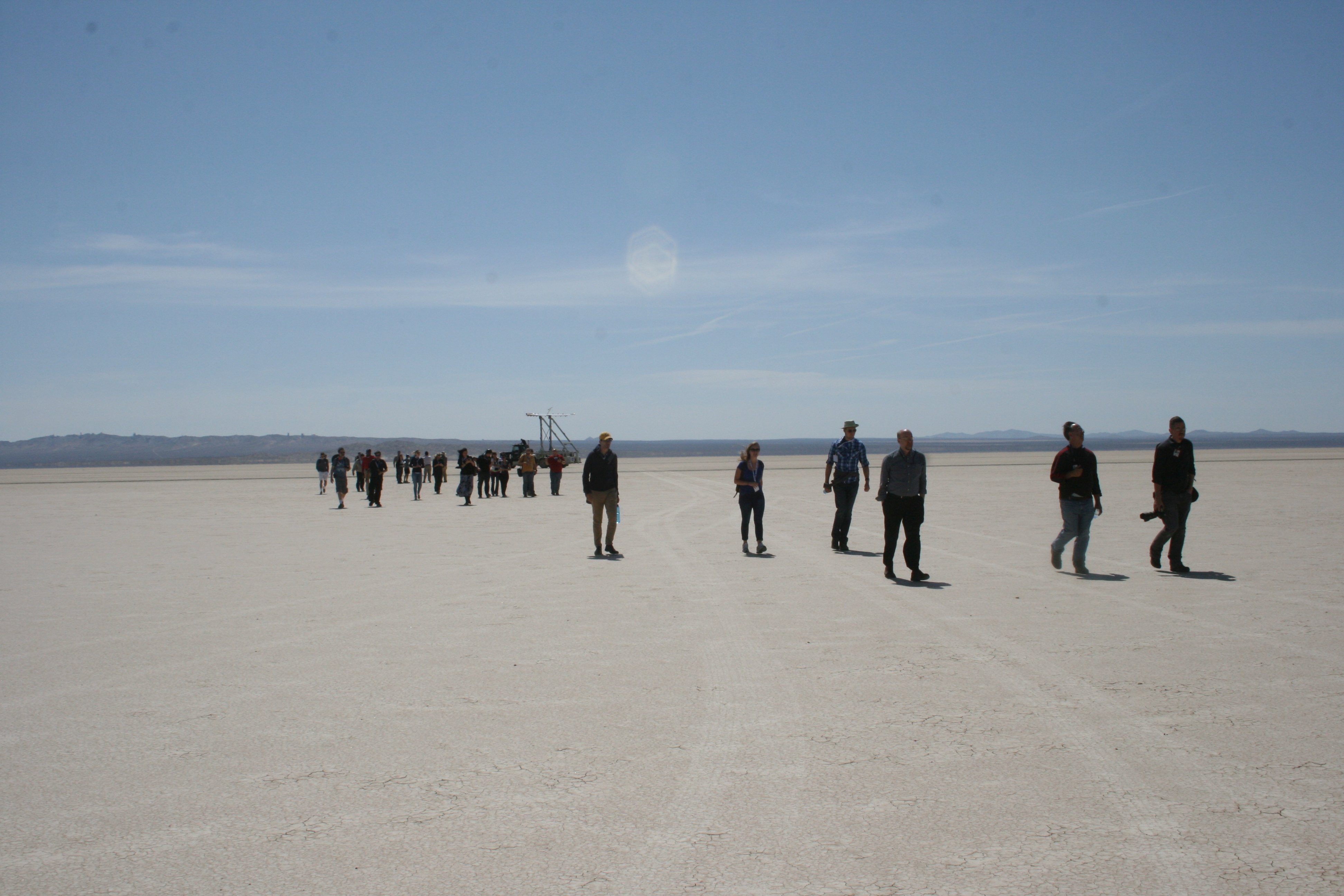
Once we’re all done taking pictures, it’s time to back off a few hundred meters for safety reasons. Safety is a key component of everything they do at NASA Armstrong and Edwards Air Force Base. We saw this all the time during our stay – FOD removal & control, safety briefings, insistence that we all slather ourselves in sunblock before going out onto the lake bed, and other precautions were constantly in place to make sure everything went smoothly and safely.

It obviously paid off. We didn’t have a single casualty among the NASA Social attendees!

19_IMG_2996 small

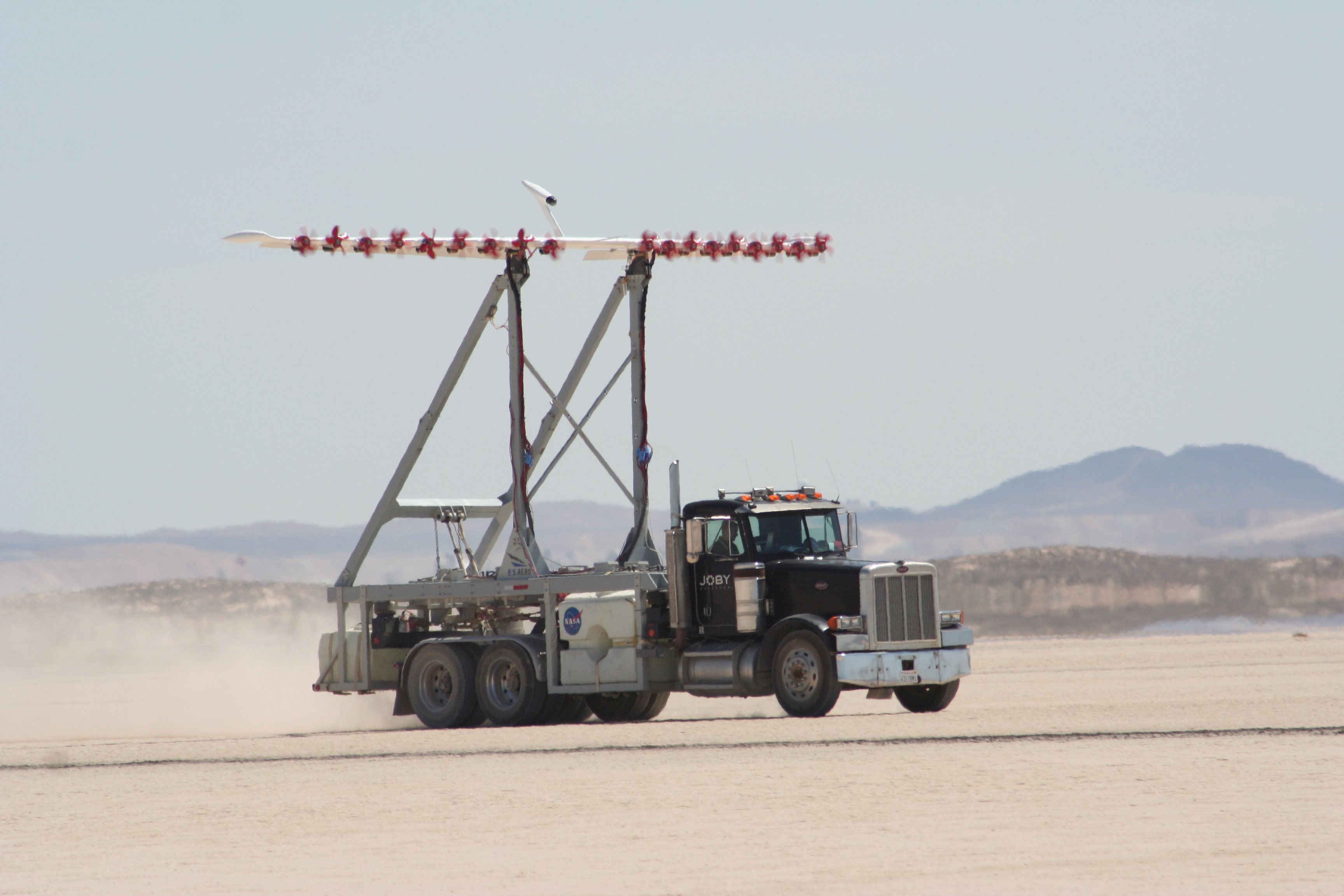
The HEIST rig trundled off a mile or more down the runway, soon visible only the the tiny cloud of dust that it was kicking up. It was soon lost in the mirage on the lake bed surface. After we all got our camera gear ready, we got the heads-up from one of the test engineers that the run had started. Again we could see that tiny plume of dust, but now it was coming toward us.

20_IMG_3004 small

There was a wicked wind coming from the north (our right) and on this run the HEIST was running almost directly into the wind. This was a relatively low speed test as measured by the rig’s ground speed, 40 mph. By going directly into the 27 mph wind, the effective speed of the air over the wing was 67 mph.

21_IMG_3007 small

After disappearing into the distance to the north, after a minute or so we got the word that the HEIST was coming back. This time with the wind at their back, they were driving along at 65 mph, but with the 27 mph wind at their back, their effective speed of air over the wing was only 38 mph. That gives them a nice range of data sets. From our vantage point standing still near the runway, we saw only the difference between the 40 mph first run and the 65 mph second.

22_IMG_7812 small

After the runs were over we got one more chance to take pictures and ask questions out on the lake bed. Then it was back on the bus (in a non-sunburned conditioned we hoped, after putting on all of that sunblock goop and, as one person put it, “smelling like the crowd at Santa Monica beach”) and back to the conference center for lunch and more Q&A with the project engineers and scientists.

Tomorrow, a couple more notes on the lake bed, then we’re off to see some of the other aircraft and projects being run by NASA Armstrong.

Leave a comment

Filed under Flying, Photography, Space

NASA Social For LEAPTech At NASA Armstrong (Part One)

On Tuesday this week I had the opportunity to attend my fifth NASA Social. This time I was back at the NASA Armstrong Flight Research Center at Edwards Air Force Base, about ninety minutes north of Los Angeles in the Antelope Valley.

The main focus of this NASA Social was the LEAPTech project. LEAPTech stands for “Leading Edge Asynchronous Propeller Technology.” We’ll get to what that means.

00_IMG_9118 small

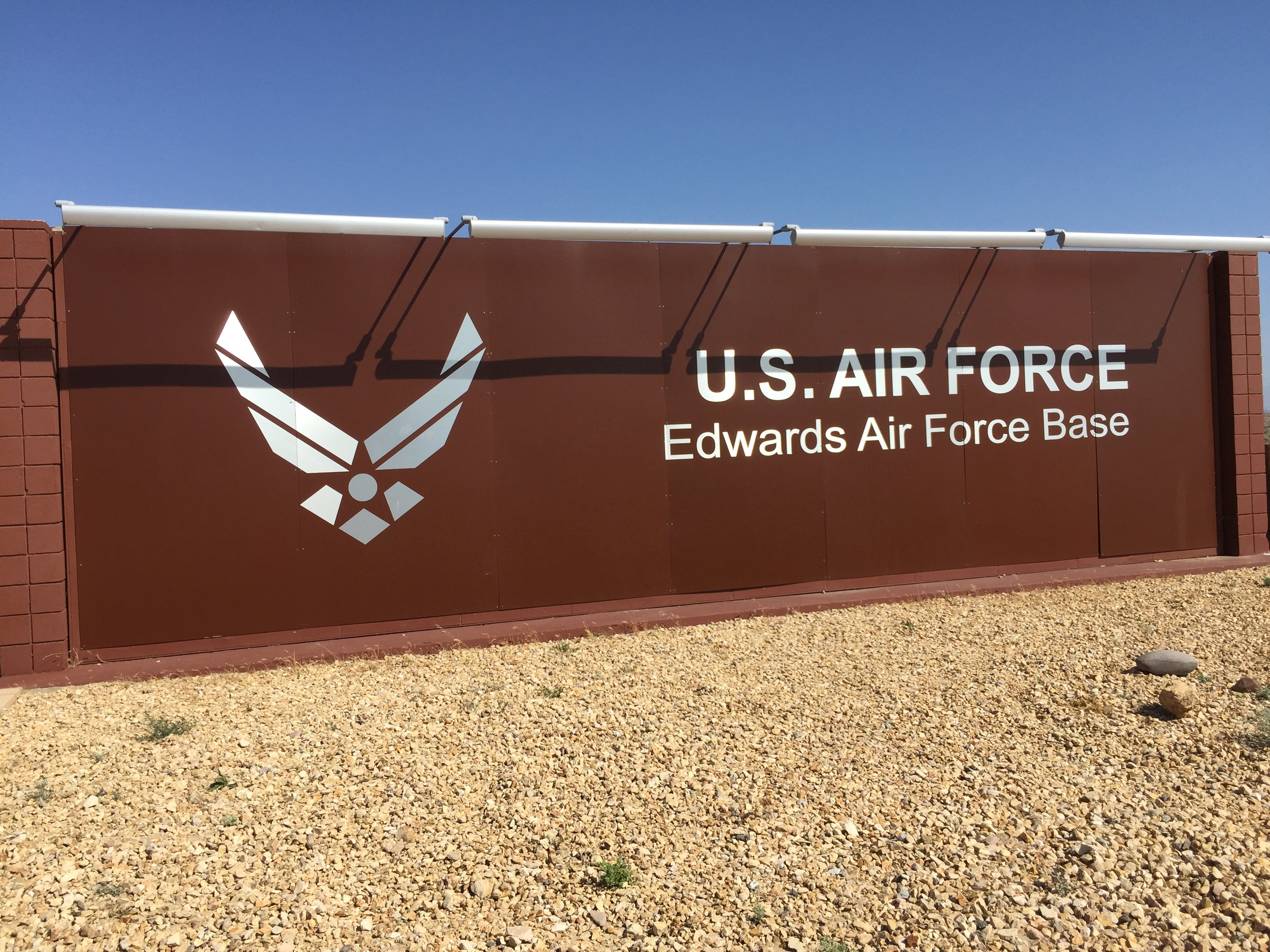
When we were out here for the “FlyNASA” event in November, there were some delays in getting us all on base in our individual cars. This time we met off base and were brought in on an Air Force bus, which made it a piece of cake.

These events start early. We were at the sign to be picked up at 0700, which for me meant being out of bed at 0345 and picking up other Social attendees at 0600 (many folks coming in from out of town didn’t have cars). There aren’t many things I’ll happily get up that early for – a NASA Social is one of them.

01_IMG_7747 small

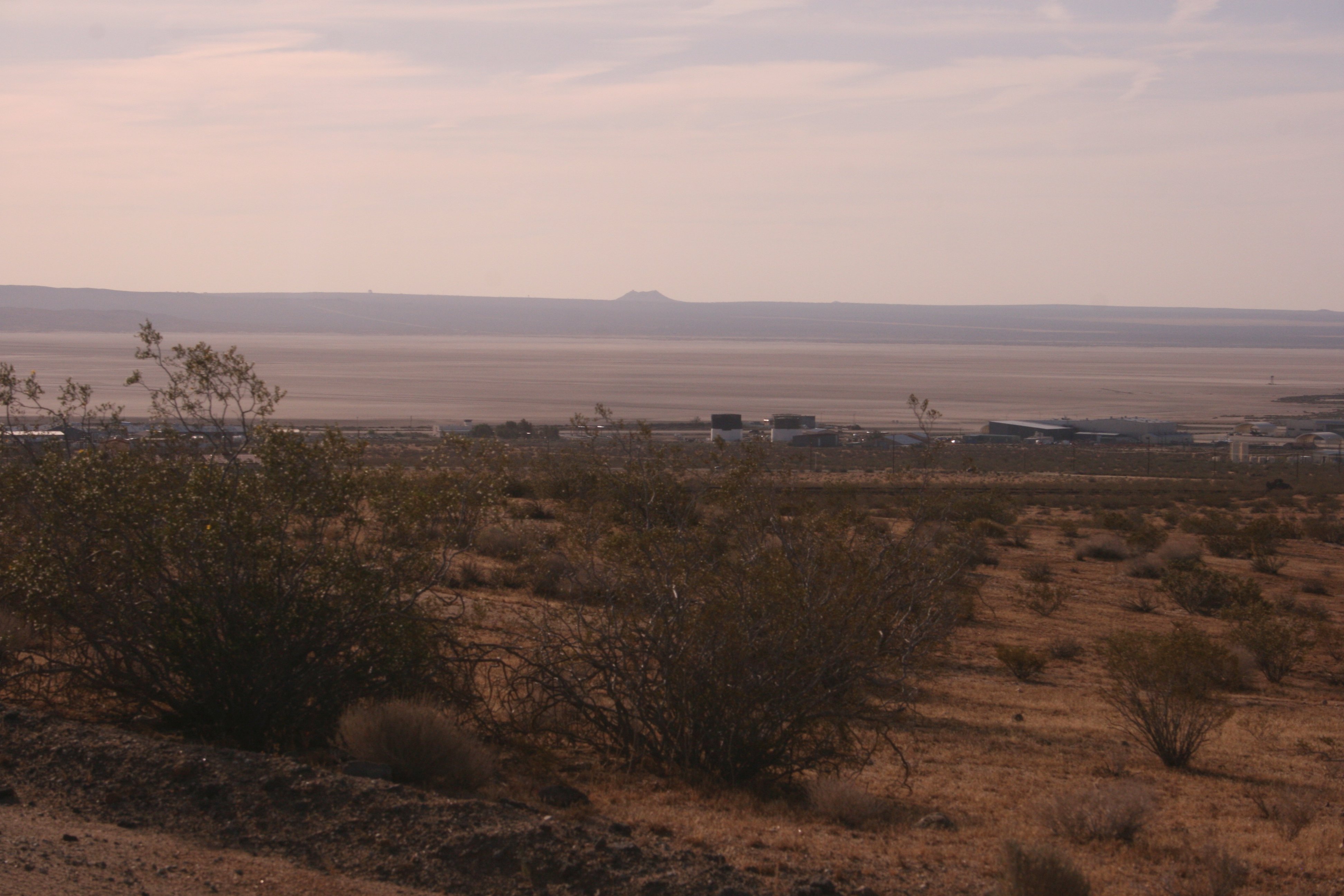
This is where they store the nation’s strategic reserve of flat, hard, and empty.

Edwards Air Force Base is centered around the Rogers Dry Lake, an ancient lake that long ago dried up and left a really big, really hard, and really flat surface. That’s perfect if you want to test aircraft that might be having any sort of emergency and need to land whenever and wherever they can. No need for any conventional paved runways, although they do have four of them. All of the other runways (over a dozen) are simply lines laid out on the lake bad.

That’s perfect if you have an experimental aircraft (or spacecraft) that might need more room to land than a conventional paved runway has, or might not be able to hit the runway exactly on the mark. You’re a little bit sideways? No worries. You need to land long and then roll for a few miles? No worries. This is why the first Space Shuttle “drop tests” or “free flight tests” were done here, the first two Shuttle flights landed here, with a total of 54 Shuttle landings at Edwards.

02_IMG_9059 small

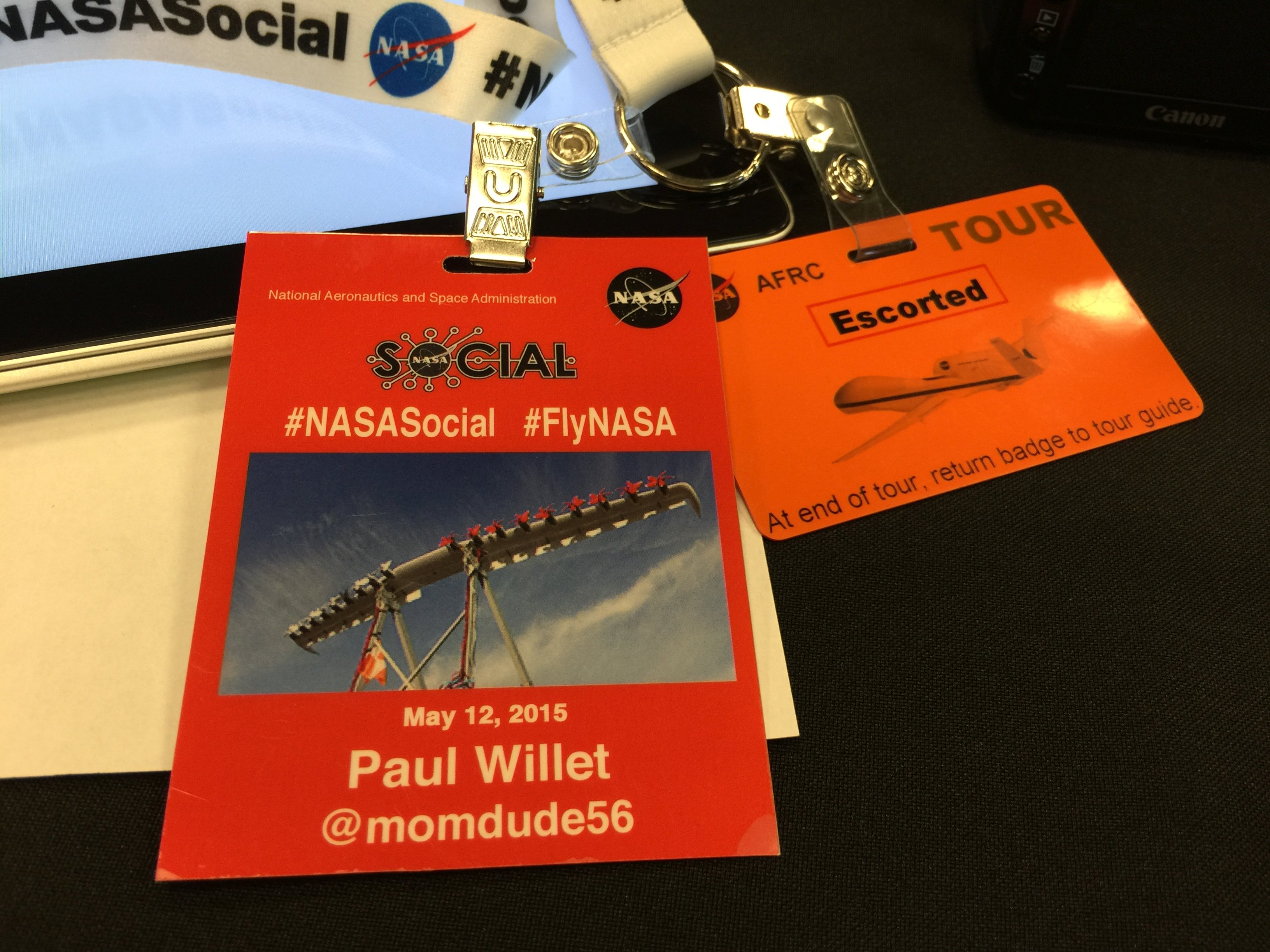
Once at the Armstrong Flight Research Center, we got checked in and made official. (Yeah, there’s a typo in my name, but they’re not the first and won’t be the last.)

03_IMG_7755 small

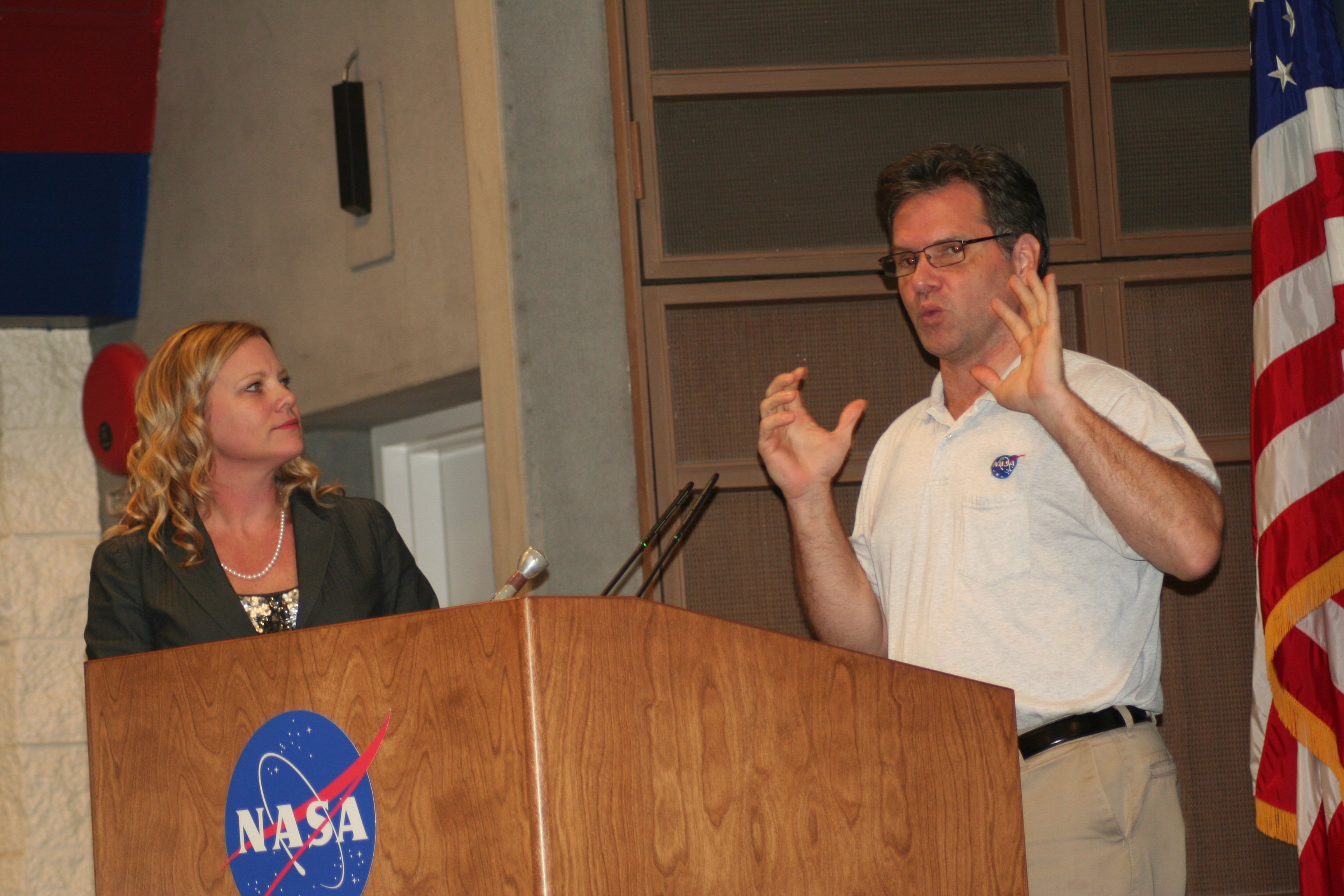
The public information office at Armstrong is lead by Kevin Rohrer (at left), and this NASA Social was the first one run by Anna Kelley (at right). We got introduced to each other, got settled in, and got started.

04_IMG_2955 small

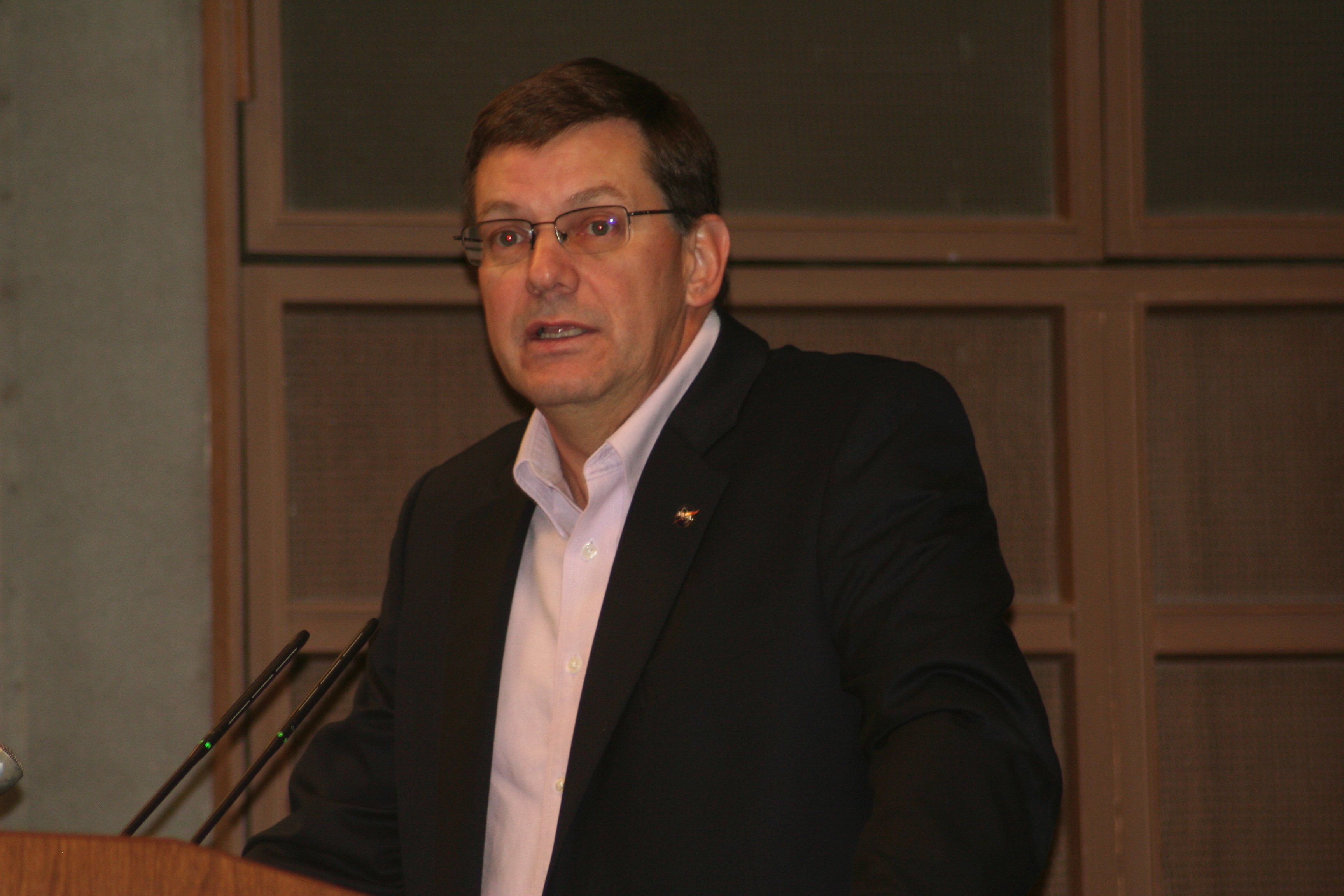
Dennis Hines, Director of Programs at NASA Armstrong, welcomed us and started to introduce us to LEAPTech.

05_IMG_7757 small

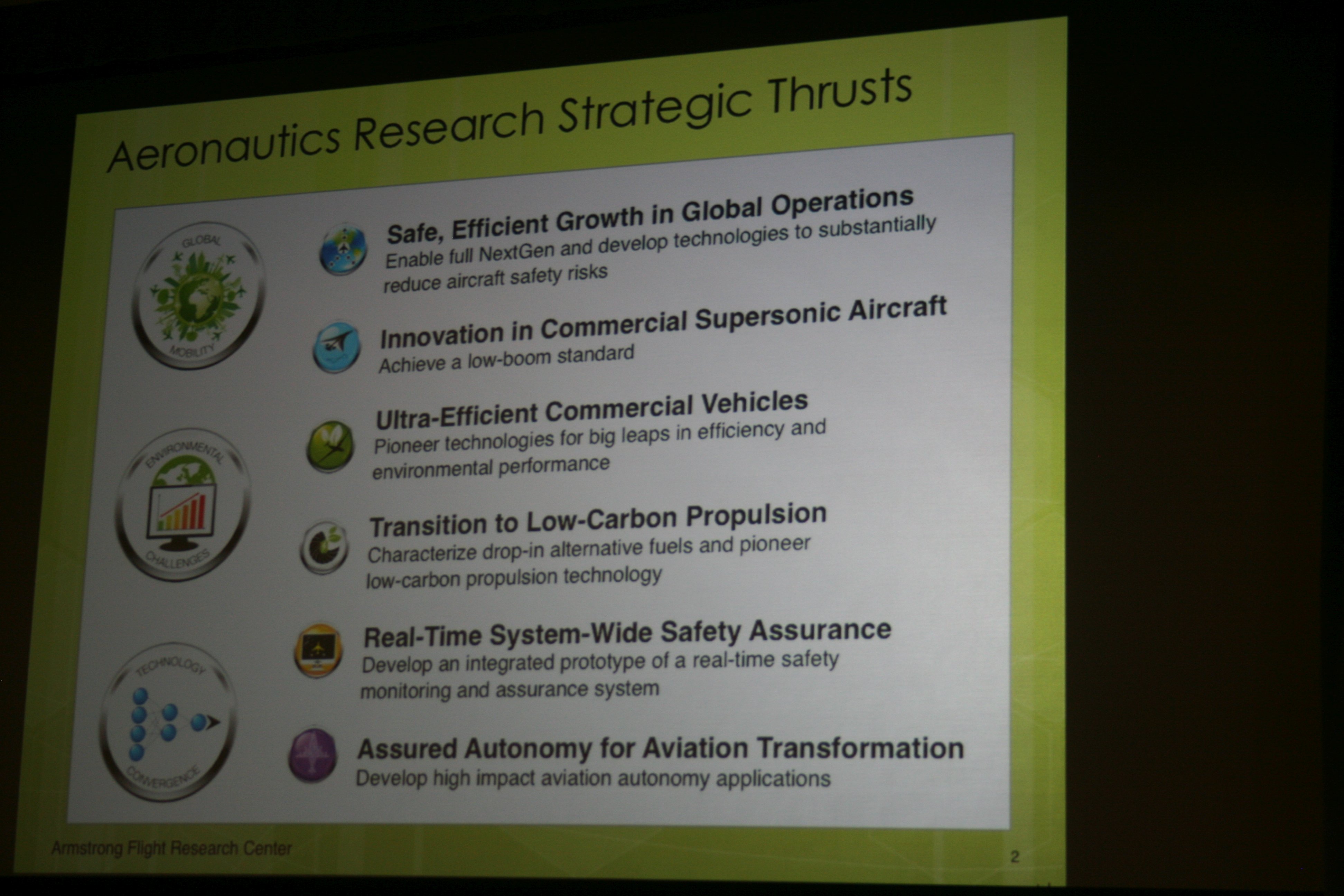
NASA Armstrong has six primary research goals. All of them are important for our air traffic control system and next generation aircraft designs, but some are more “flashy” than others. For example, item #2 there, “Innovation in Commercial Supersonic Aircraft,” is finding ways to reduce sonic booms to the point where commercial aircraft can fly over land without bothering people at the surface. This will allow future aircraft to fly supersonic anywhere, not just over the oceans like the British/French Concorde did.

The LEAPTech program falls under both the “Ultra-Efficient Commercial Vehicles” and “Transition to Low-Carbon Propulsion” areas. Put as simply as possible, LEAPTech is trying to replace today’s two or four huge jet engines slung under the aircraft wing with an array of much smaller engines placed along the leading edge of the wing.

This has a lot of potential benefits. It will let the wing be smaller but with better handling and maneuverability, particularly at low speeds. It will be more efficient, by a factor of five or more. It will use electricity from batteries (much like today’s electric cars) instead of fossil fuels. Best of all, it will be much, much more quiet than today’s jet engines.

The efficiency gains come from the more efficient nature of electric power versus jet engines. Today’s best jet engines are only about 23% efficient in turning energy (fuel) into thrust, where electrical motors are more than 97% efficient. When you add in the gains from having a smaller and more efficient wing, you can get up to a factor of five improvement.

06_IMG_7764 small

Testing the LEAPTech concept is the first hurdle to clear. This is a small program, working fast and cheap. A more conventional program might test its designs in a wind tunnel. But wind tunnel facilities are expensive and access is limited. It could take two years just to get on the schedule, and the testing there would be bigger than the entire budget for the program.

Instead they’re taking an idea used by Scaled Composites in Mojave when they were designing some of the Virgin Galactic vehicles. Instead of going to a very controlled, rigid, and expensive test environment in a wind tunnel, they simply built their hardware, put it onto the top of a truck, and ran it along the runway. By taking data in the real world, being quick and flexible in making changes and repeating the tests, they were able to move ahead much more quickly on their project.

LEAPTech took the Scaled Composites idea and upgraded it to benefit from some of the lessons that Scaled learned. Out of that came HEIST, the “Hybrid-Electric Integrated Systems Testbed.” It puts the LEAPTech wing and engines higher off the ground and out of ground effect (a phenomenon that affects an aircraft’s lift when very near the ground). They also found ways to stabilize the test rig, isolating it from the truck body so that vibrations and bumps from the running vehicle won’t affect the data being collected.

07_IMG_2959 small

Starr Ginn and Mark Moore (the project’s Principal Investigator) gave us the big picture of how LEAPTech will work and why it’s such a big deal. For example, you know those winglets on the tips of almost every commercial jet these days? Those were developed by NASA Armstrong and save about 3% in fuel for the airlines. That might not seem like much, but for someone like United or American Airlines, 3% savings on fuel can be billions of dollars over a couple of years. So what if some of this technology can save 10% in the 2020’s?

The other big deal is the noise reduction. A typical propeller has 300 or so horsepower going into three or four blades. That’s about 100 horsepower per blade, a lot of which is turned into noise, and the blades are all putting out noise at the same frequency, multiplying the effect. That’s why propeller planes can be so loud. (As someone who loves the sound of our P-51, Bearcat, or Spitfire roaring to life at the CAF, I don’t see what the problem is, but maybe it’s not about me.)

Now replace that one or two props with eighteen much smaller ones, each with five blades. Each engine has only forty or fifty horsepower, spread out over five blades, so each blade makes much less noise to begin with. Instead of a roar, the sound is more like a loud cloud of buzzing bees. That’s when the “Asynchronous” part of LEAPTech comes in. With the electric motors, you can have each propeller spinning at a slightly different frequency without losing thrust. By doing that, you spread the noise out even more. The final sound ends up sounding a lot like the old Jetsons’ car.

10_IMG_9065 small

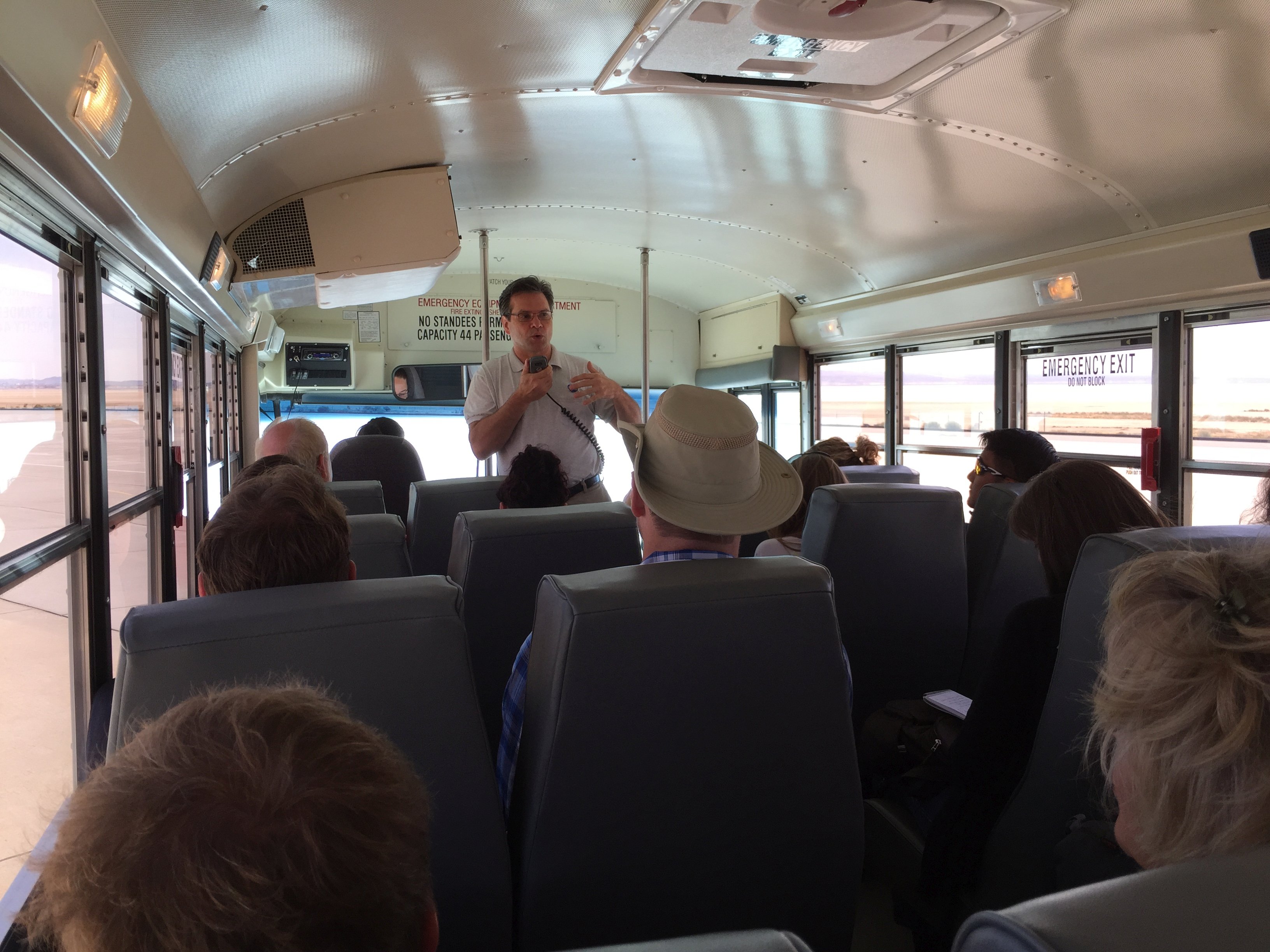
Having met a whole slew of project engineers and scientists and seen dozens of slides and charts, it was time to see the real deal. We got back on the bus and headed out toward the lake bed. While we were stopped to wait for clearance and to check the bus tires for FOD (Foreign Object Debris), Mark Moore answered questions. He’s a really passionate guy about this project!

11_IMG_7770 small

Finally, just before we got out on the lake, we got our first view of HEIST and the LEAPTech rig on top of it. It was time to follow them out and see some actual engineering and science being done.

Tomorrow, the lake bed and the test run.

Leave a comment

Filed under Flying, Photography, Space

Long, Wonderful Day At NASA Armstrong

…and I’m going to tell you all about it with lots of pictures.

Tomorrow. (Probably.)

Today I was up at 0345AM, drove to Lancaster, picked up a group of fellow NASA Social attendees at the hotel they were using for out-of-town members, spent all day seeing wonderful things and becoming much better informed and possibly wiser, going out to a great dinner with many of the NASA Social group, then driving home. It’s now 2157PM and I don’t think I can spell wurds any moore.

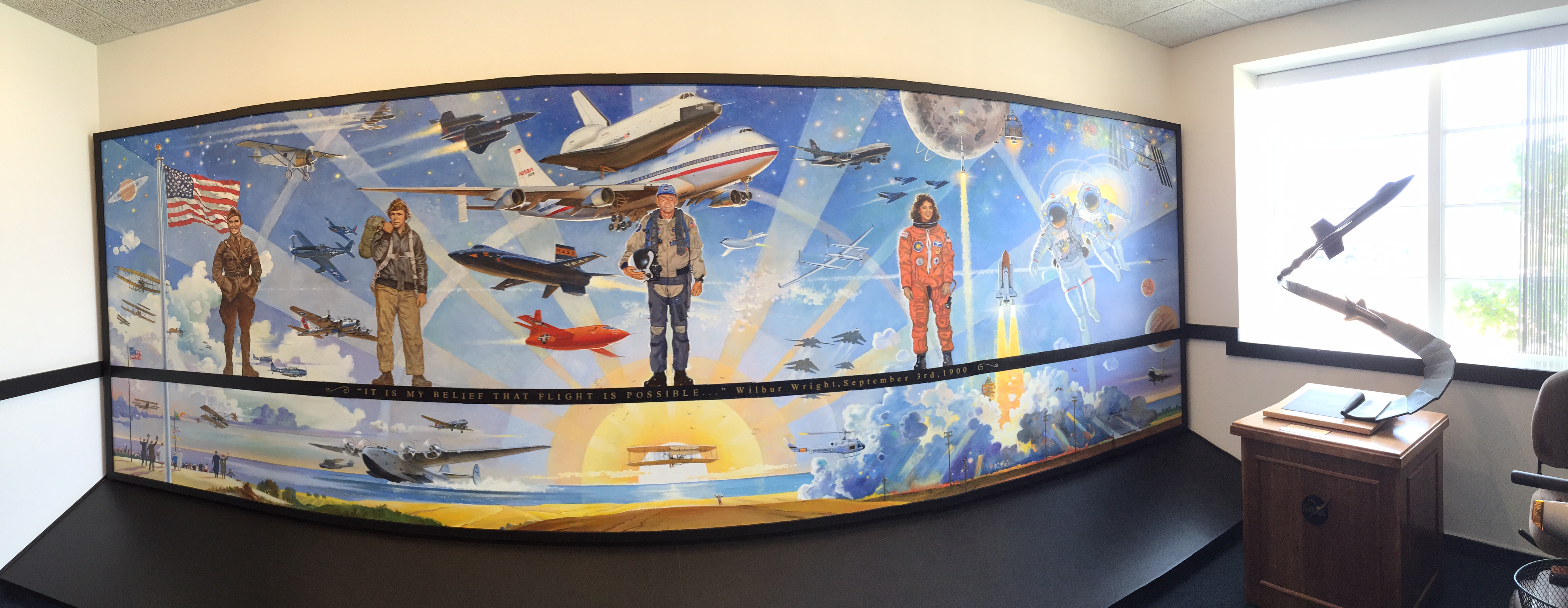
Here’s a taste, a McCall original that I hadn’t seen there before. I think I’ve mentioned how much I love McCall’s work.

IMG_9089

Leave a comment

Filed under Flying, Panorama, Space

Back To NASA Armstrong Tomorrow!

Time to hit the sack, gotta be up at Zero-Dark-Thirty so I can be in Lancaster by 6AM. I’ll be picking up a handful of my fellow NASA Social attendees who are coming from out of town and we’ll carpool out to Edwards Air Force Base by 7AM.

Those who have read my blatherationings know that I don’t casually get up at that hour, but I’ll get up for a NASA Social any time. This will be my fifth, and it should be another great one.

As usual, most of the live action will be on Twitter (I’m @momdude56 over there) but if you’re not on Twitter, they should be showing up on the right-hand side of the screen here. I’ll also be posting on FaceBook if you’ve friended me over there.

By the time I get home tomorrow night (late, late, late) you’ll probably just get a quick snapshot or two for a report tomorrow night. As usual, expect to be inundated with photos and bits of knowledge and wisdom starting on Wednesday.

In the meantime, if you want to see one of the key projects that we’ll be seeing up close and personal, there’s a NASA Armstrong video:

Leave a comment

Filed under Flying, Space, Video

My Fifth NASA Social Next Week

Having come down off of my squeefest at my fourth NASA Social, in Washington DC twelve days ago, I’m happy to let you know that I’ve been invited to my fifth, this one a week from today. It will be up at NASA Armstrong at Edwards Air Force again, the same place where I went to my first NASA Social last November.

As with that November Social, at NASA Armstrong we’ll again be looking at the “first A in NASA,” “Aeronautics.” This is being referred to as the “LEAPTech” Social, and I expect that we’ll be seeing experimental and developing technologies regarding more efficient aircraft designs, advanced and alternative propulsion technologies, remotely operated aircraft, and so on.

Some of this may be things that we’ve seen mentioned at the earlier event, but seen here in more detail and/or at a more advanced stage of testing. For example, there’s a project being worked on which instead of two (or four) large jet or propeller engines, has a dozen (or more) much smaller engines either on each wing or embedded into the wing. The efficiency in this design is that you can use all of the engines when you need maximum thrust, i.e. on takeoff, but once at cruising altitude you can shut down some of them, using just enough to maintain your altitude and speed.

Other concept vehicles being developed (they have programs about them every week on NASA-TV) include designs that move the two large engines from under the wing to on top at the back, between two large tail fins. This “double bubble” design has advantages in reducing drag, the thrust from the engines “filling in” what is typically a low-pressure spot behind the plane.

We’ll see when we get there what surprises and presentations await. As a “space cadet” since birth, the “S” in NASA has the “WOW!” factor, but as a pilot, the “first A” has some pretty fantastic stuff that I might be seeing in my cockpit sooner rather than later. For example, ten years ago an app such as ForeFlight was only a fantasy for the general aviation pilot, something that you might find in an F-18 or a 747. Today it’s on my phone and iPad, along with the ability to show a full Head-Up Display (HUD), weather radar, and synthetic vision.

I wonder what Ill see next week that will be on my phone and in my plane in 2025?

Leave a comment

Filed under Flying, Space

Air & Space Museum Snapshots

What another wonderful, exciting, amazing day! And the hotel internet still sucks.

Again, many pictures (probably not these exact ones) along with comments and captions were posted to Twitter (@momdude56) and you can see them on the right side of the screen. Again, I will bury you with more pictures and stories and things when I can about today’s adventures.

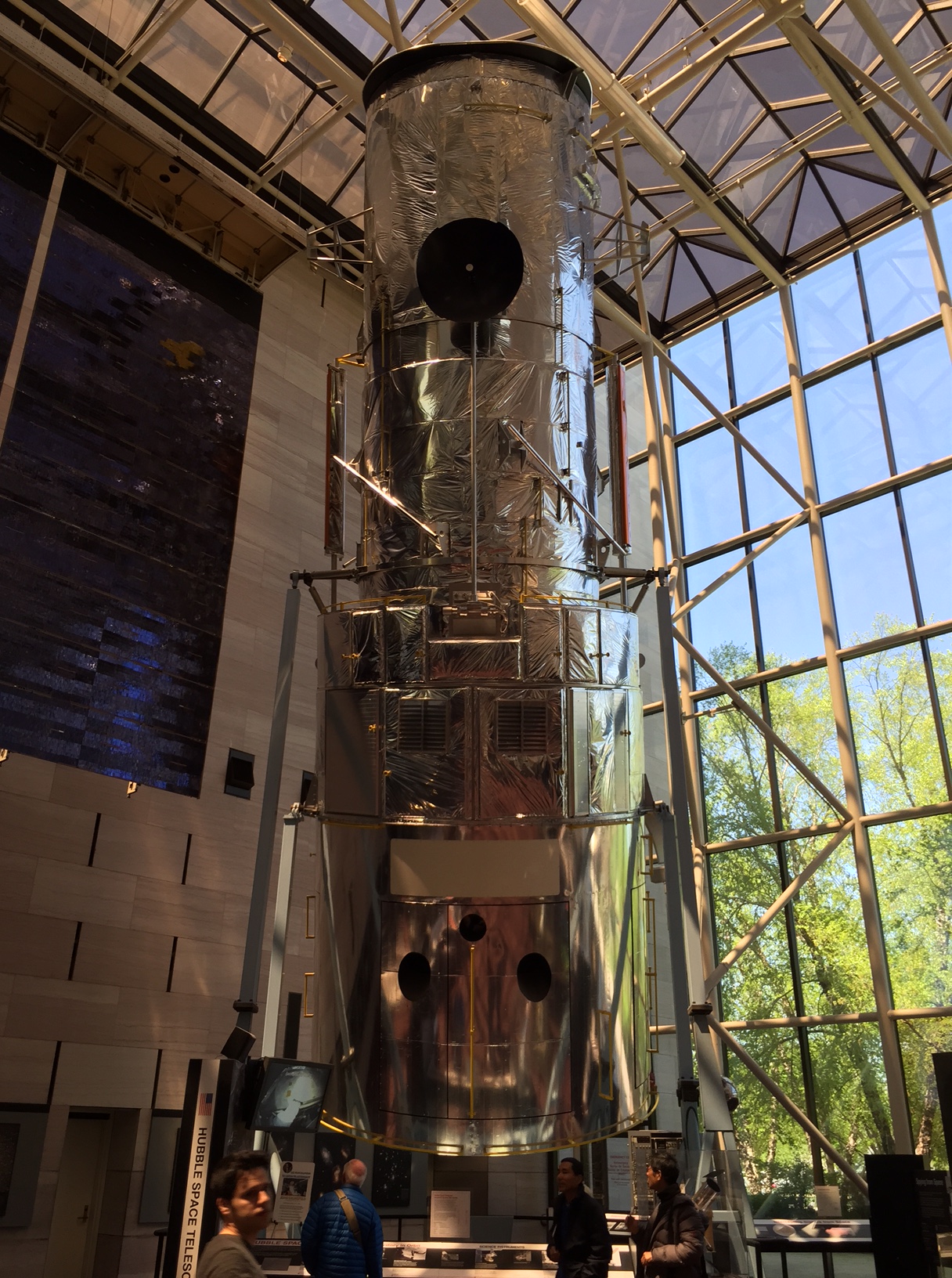
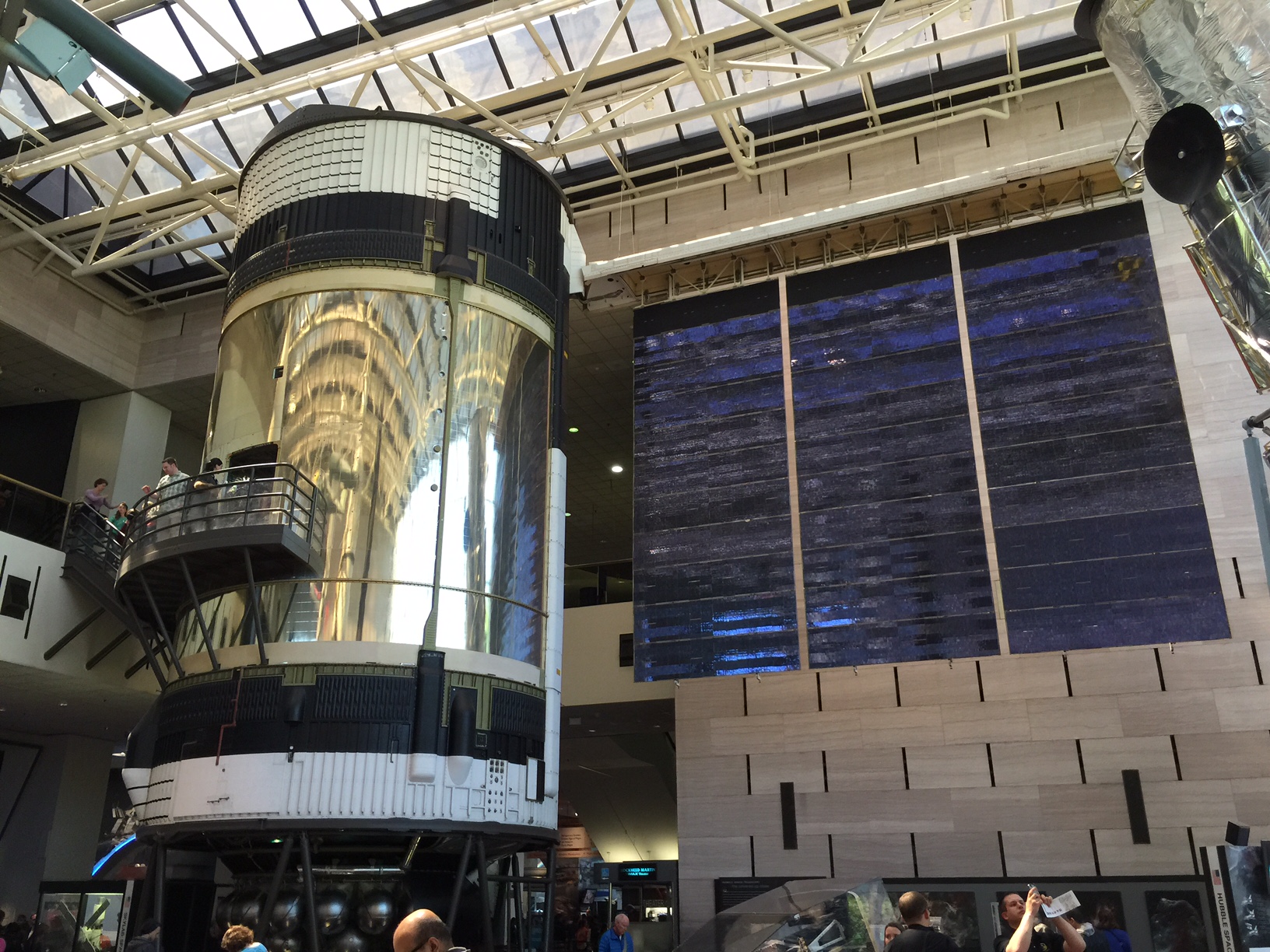
For now, snapshots. For the vehicles that are either still in space (HST) or that have been flown, jettisoned, and burned on reentry (Skylab), the exhibits shown are the structural or proof test vehicles, designed identically to the vehicle that flew, but used for testing and engineering tests.

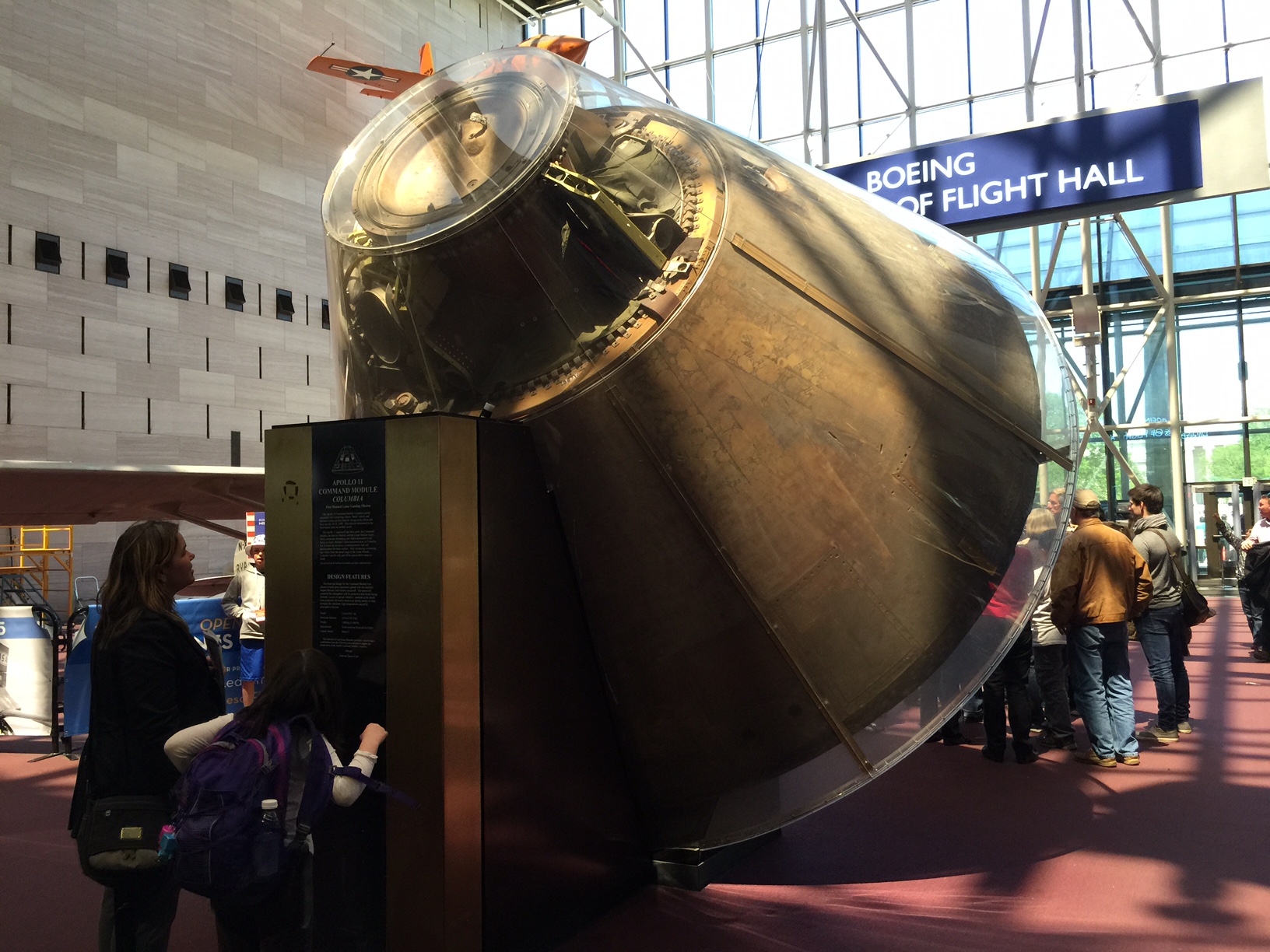
IMG_8430

Apollo 11

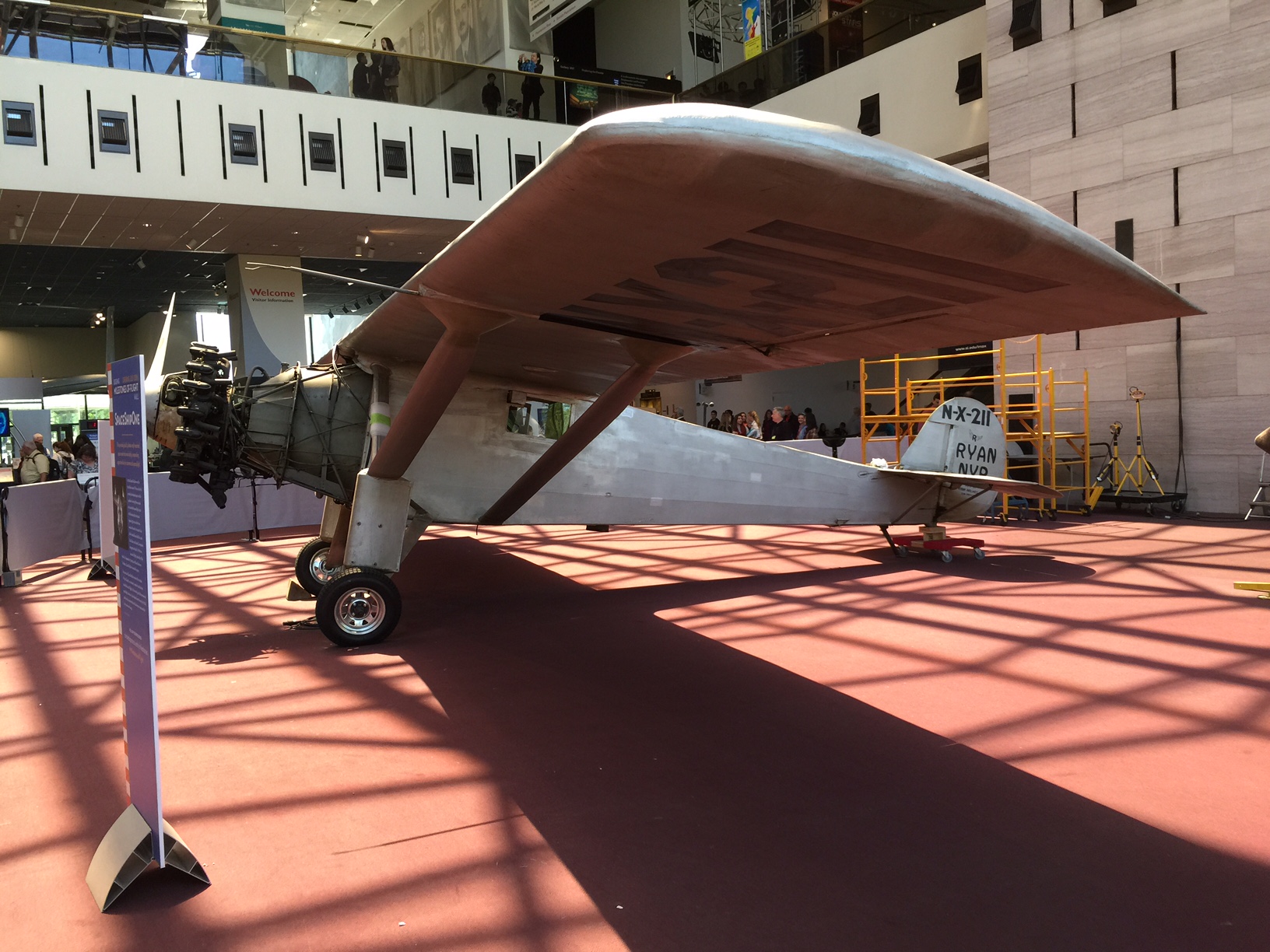
IMG_8435

Spirit of St. Louis

IMG_8441

Hubble Space Telescope

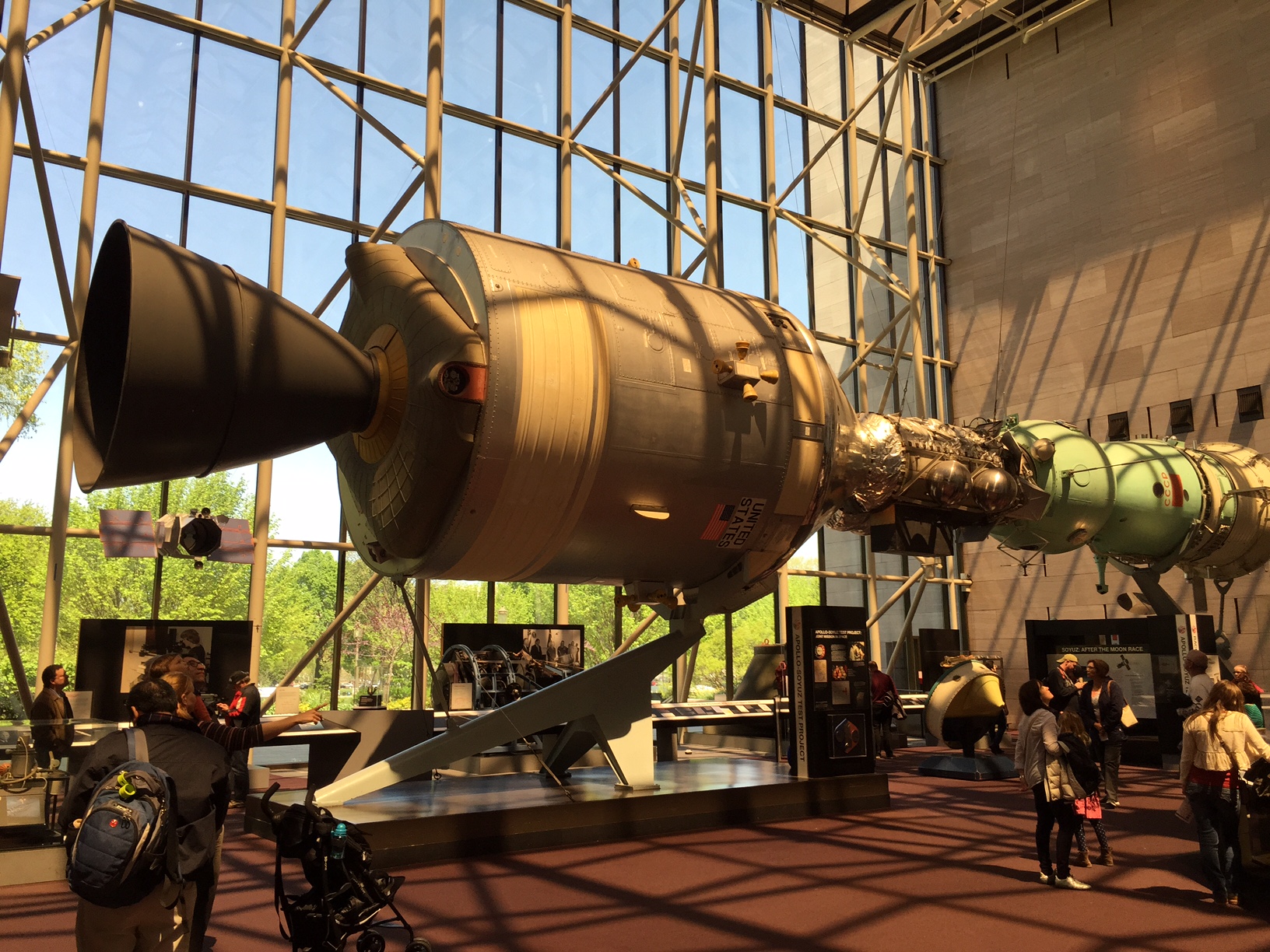
IMG_8445

Apollo-Soyuz

IMG_8457

Skylab

IMG_8467

Apollo Lunar Module

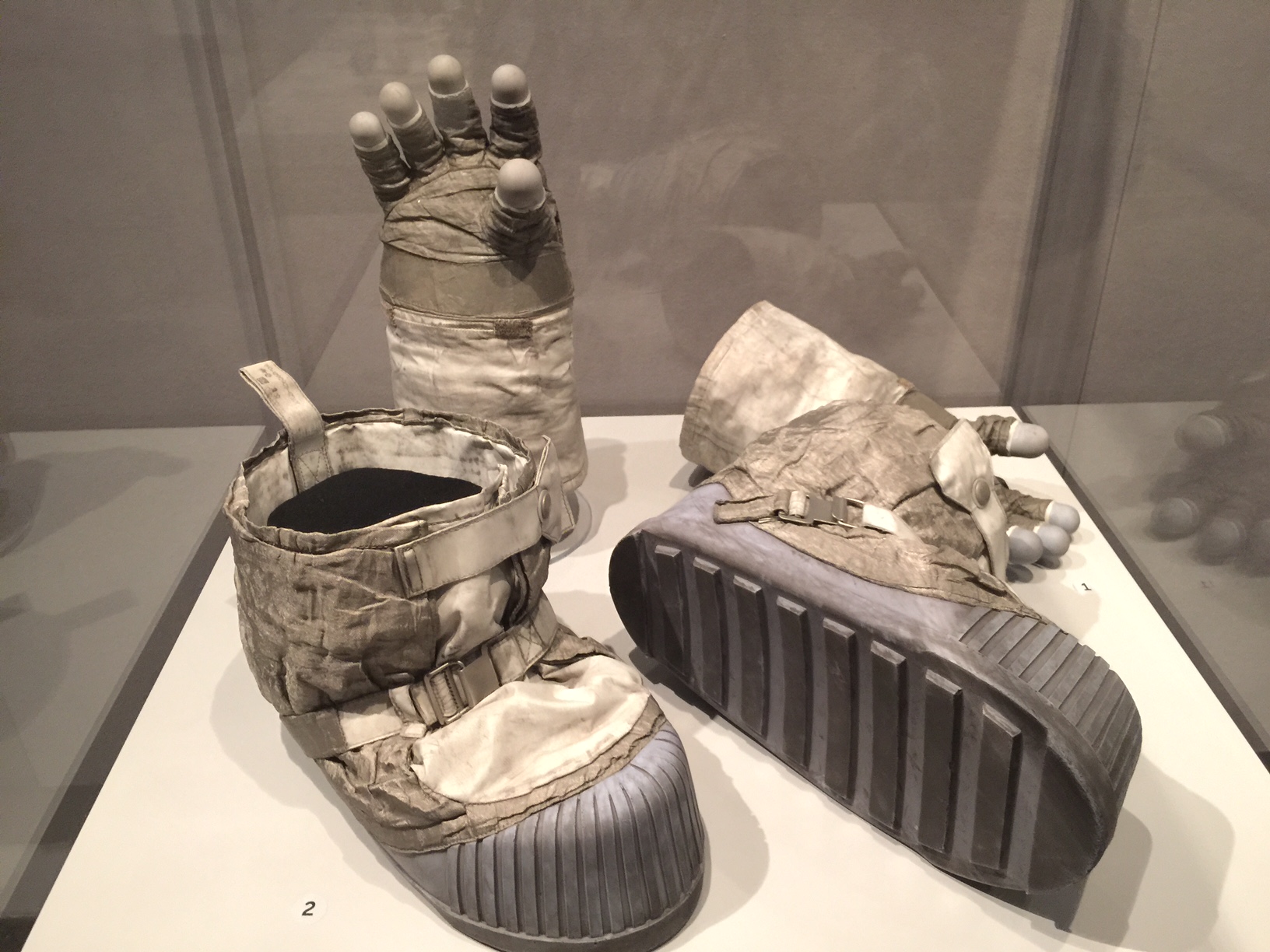
IMG_8492

Gene Cernan’s boots from Apollo 17. The shoes that made the last footprints on the moon. (So far!)

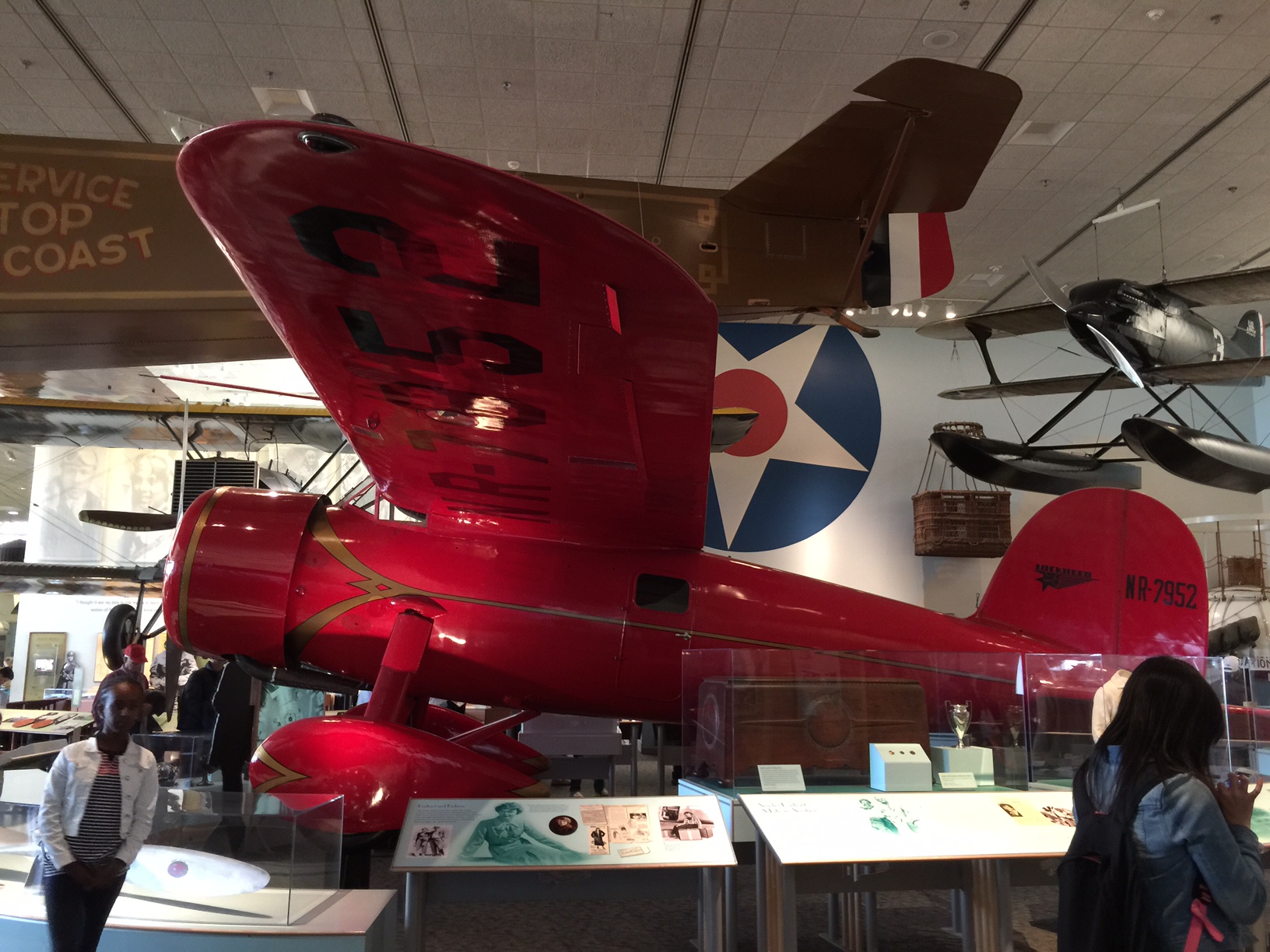
IMG_8529

Emelia Earhart’s Lockheed 5B Vega

IMG_8544

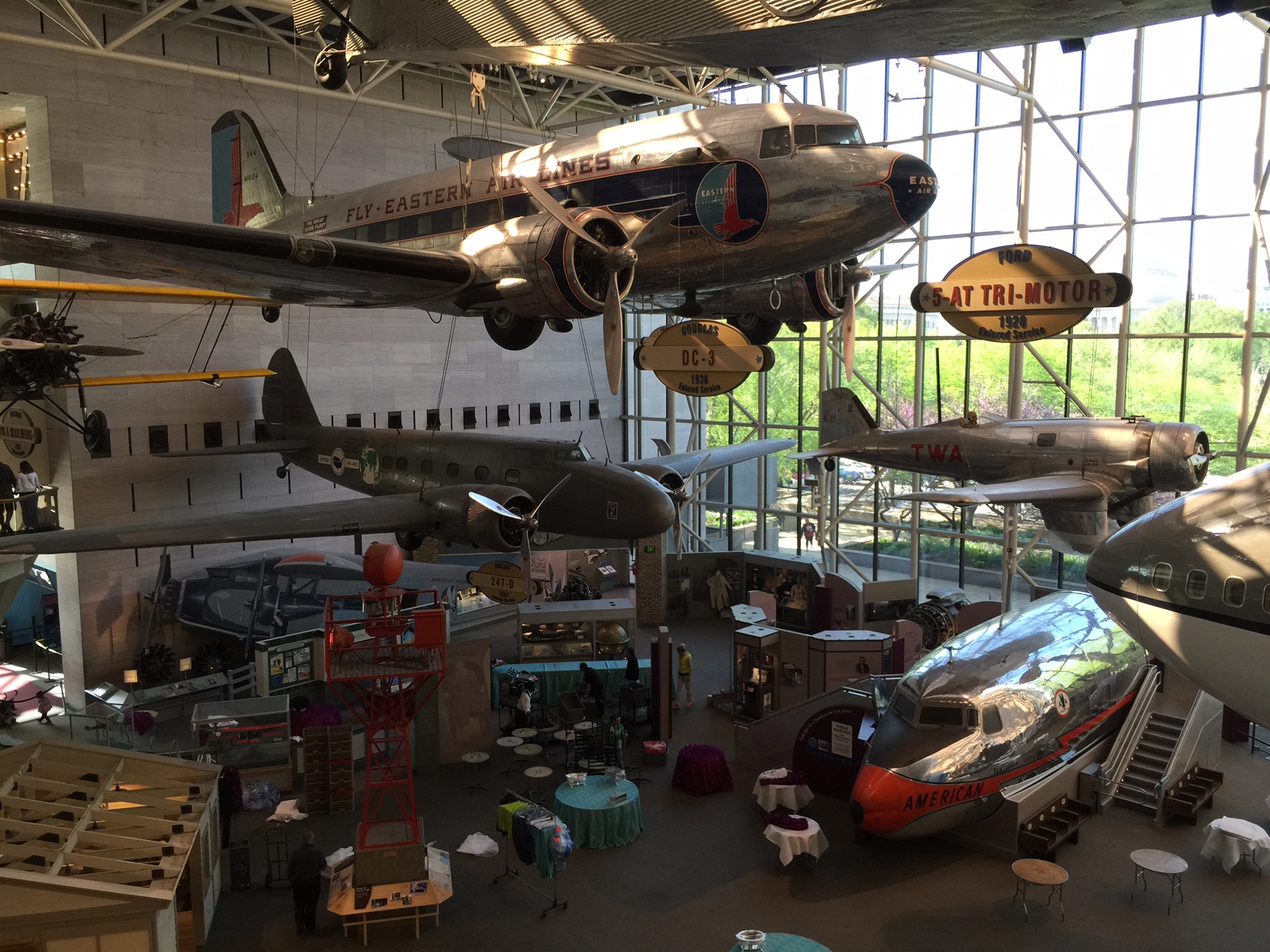
Wonderful old commercial planes


Leave a comment

Filed under Astronomy, Flying, Photography, Space, Travel

Spitfire Sunset

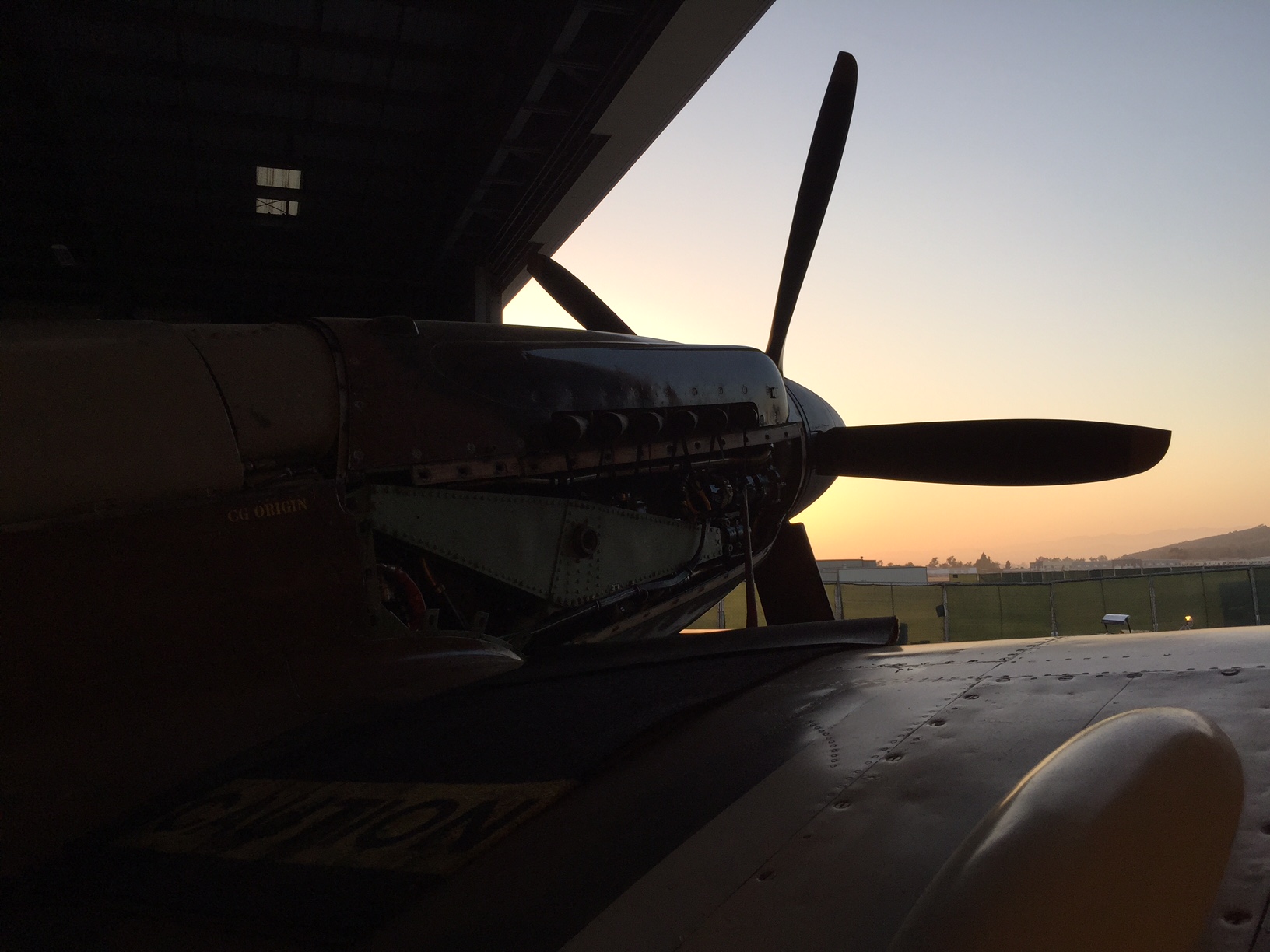
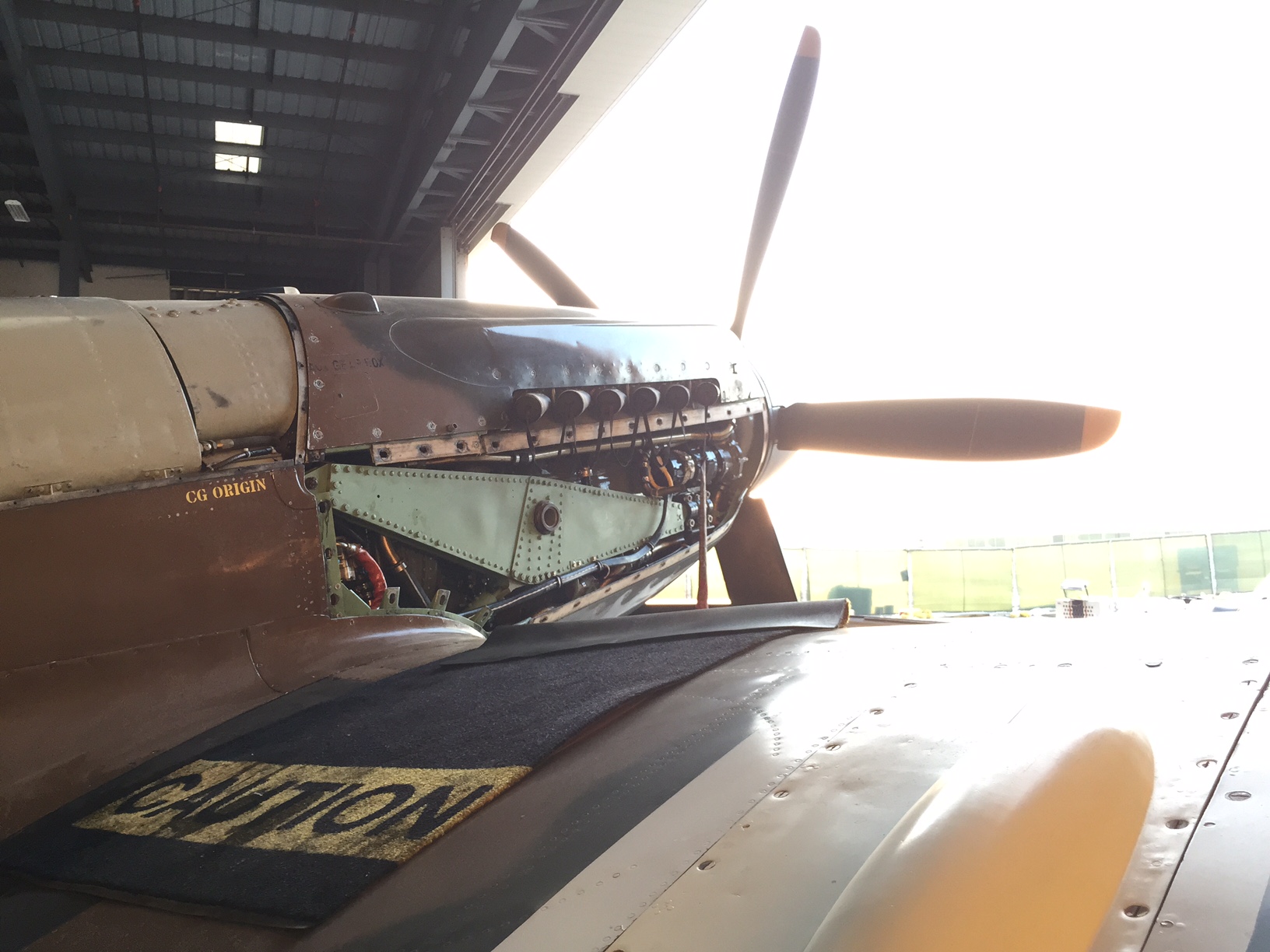
With the Washington trip coming up, a lot of loose ends need to be tied up at the hangar, especially since I was gone for six days last week. When all was said and done, I got more involved than I expected and was thus caught by surprise when I came out to find the setting sun peeking through the slightly open hanger doors, beautifully silhouetting our Spitfire.

The Spitfire has been a favorite plane of mine since 1969 when “The Battle of Britain” was released. I loved the story, but most of all I loved the Spitfires. Not surprisingly, when I started putting together models about that time as a teen, one of the first was a Spitfire.

Something about the scene tonight made me feel like I was back there at the Battle of Britain, seventy-five years ago. The blood red sun hanging on the horizon, the unique outline of the Spitfire and its prop, the panels pulled off to give the mechanics access to the huge engine.

One thing I couldn’t decide — which exposure did I like more?

IMG_7915

The dark and moody picture, highlighting the huge five-blade prop and shark-like nose against the bright setting sun?

IMG_7916

Or the bright and detailed picture, the setting sun overexposed but the aircraft now revealed in its deadly, mechanical glory?

Of course, the Universe had the last word. About the time I took these pictures, we were joined in the office by a bagpiper. Please understand that we don’t normally have a bagpiper lurking about the office. However, tonight the other hanger was being rented out for an event by some Navy squadron and they had hired the bagpiper for some ceremony. He needed the privacy of our office as a place to tune up.

Who knew that bagpipes need tuning? And how do you tell whether it’s in tune or out?

Leave a comment

Filed under CAF, Flying, Photography

Pre-Dawn RDU Takeoff

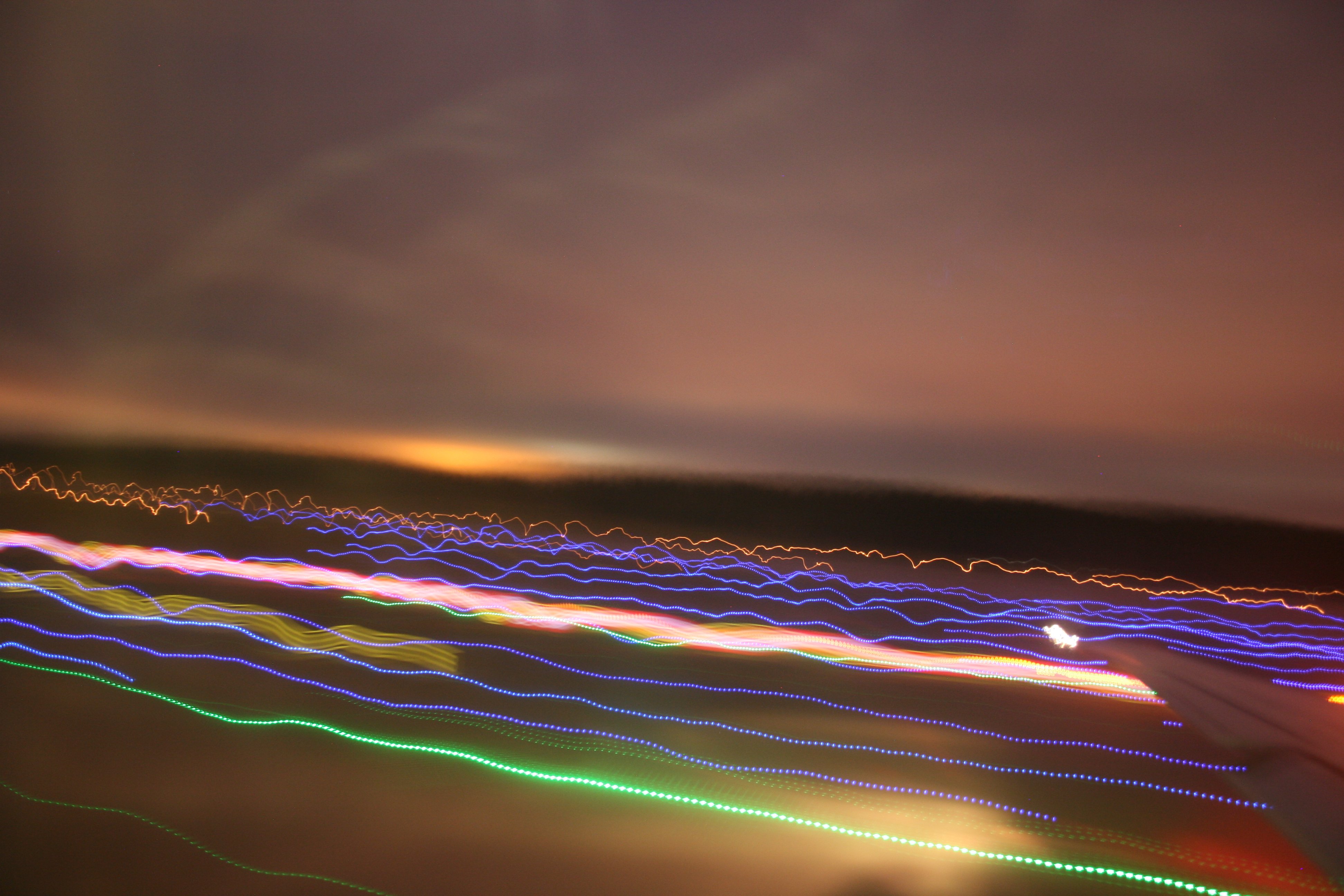
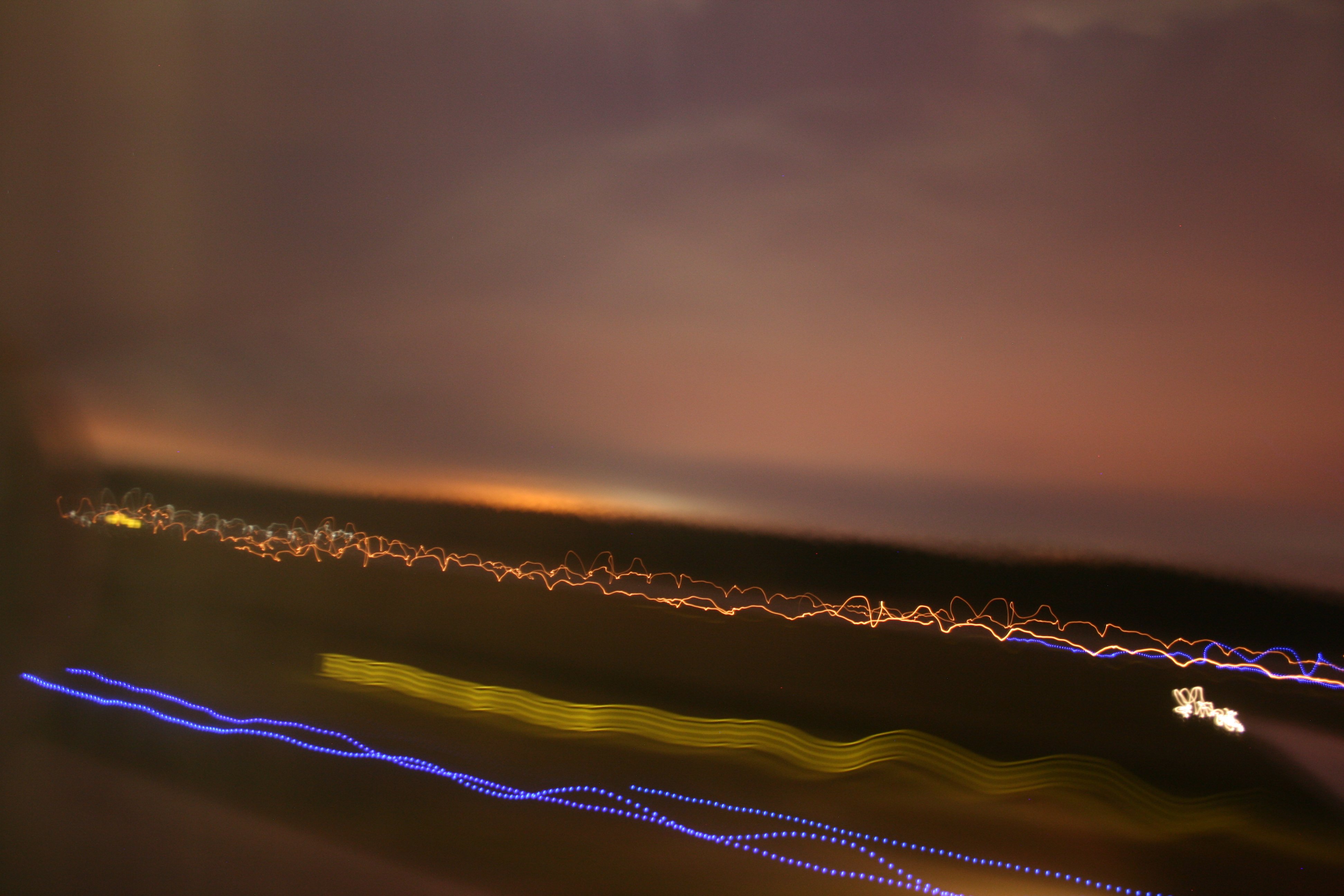
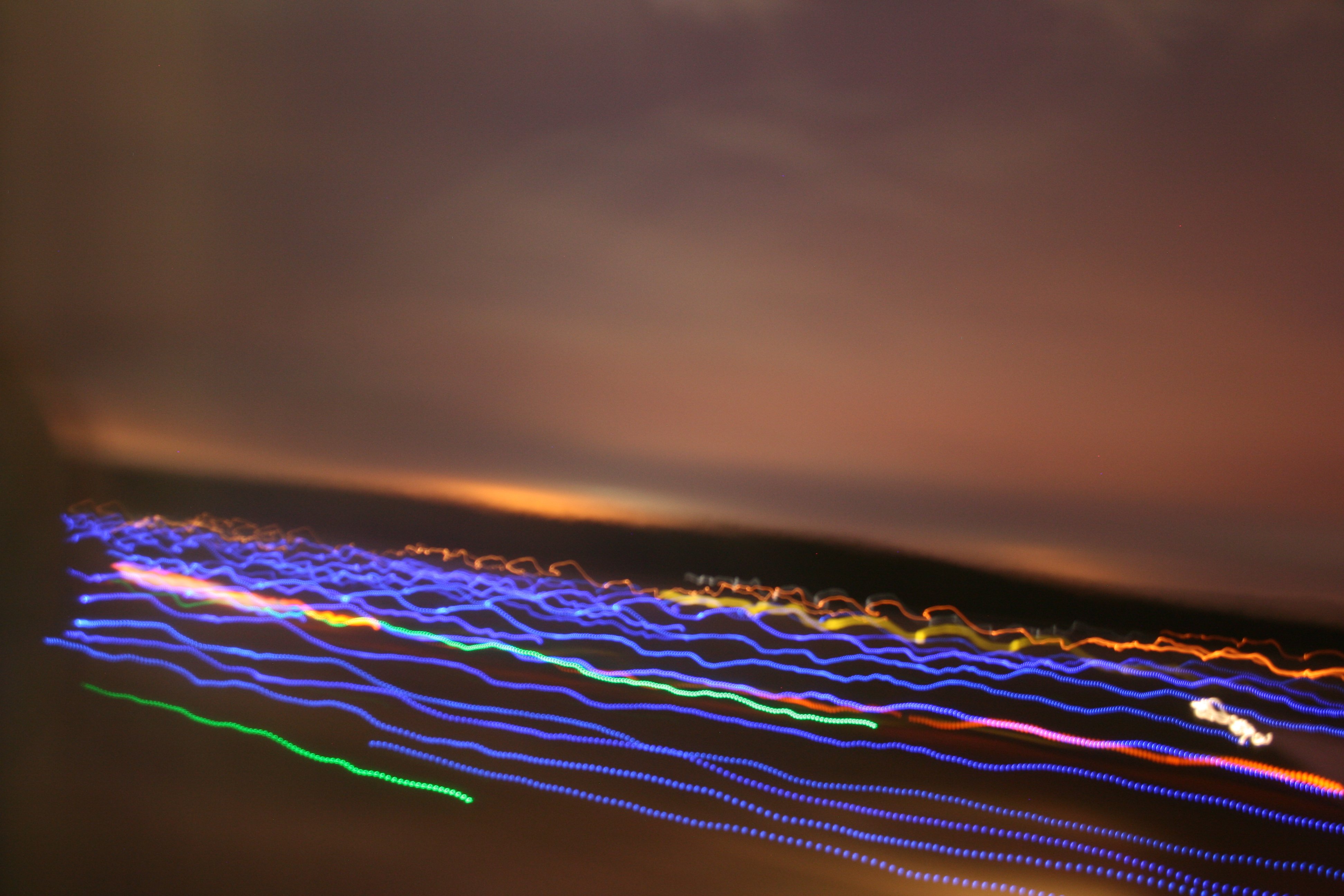
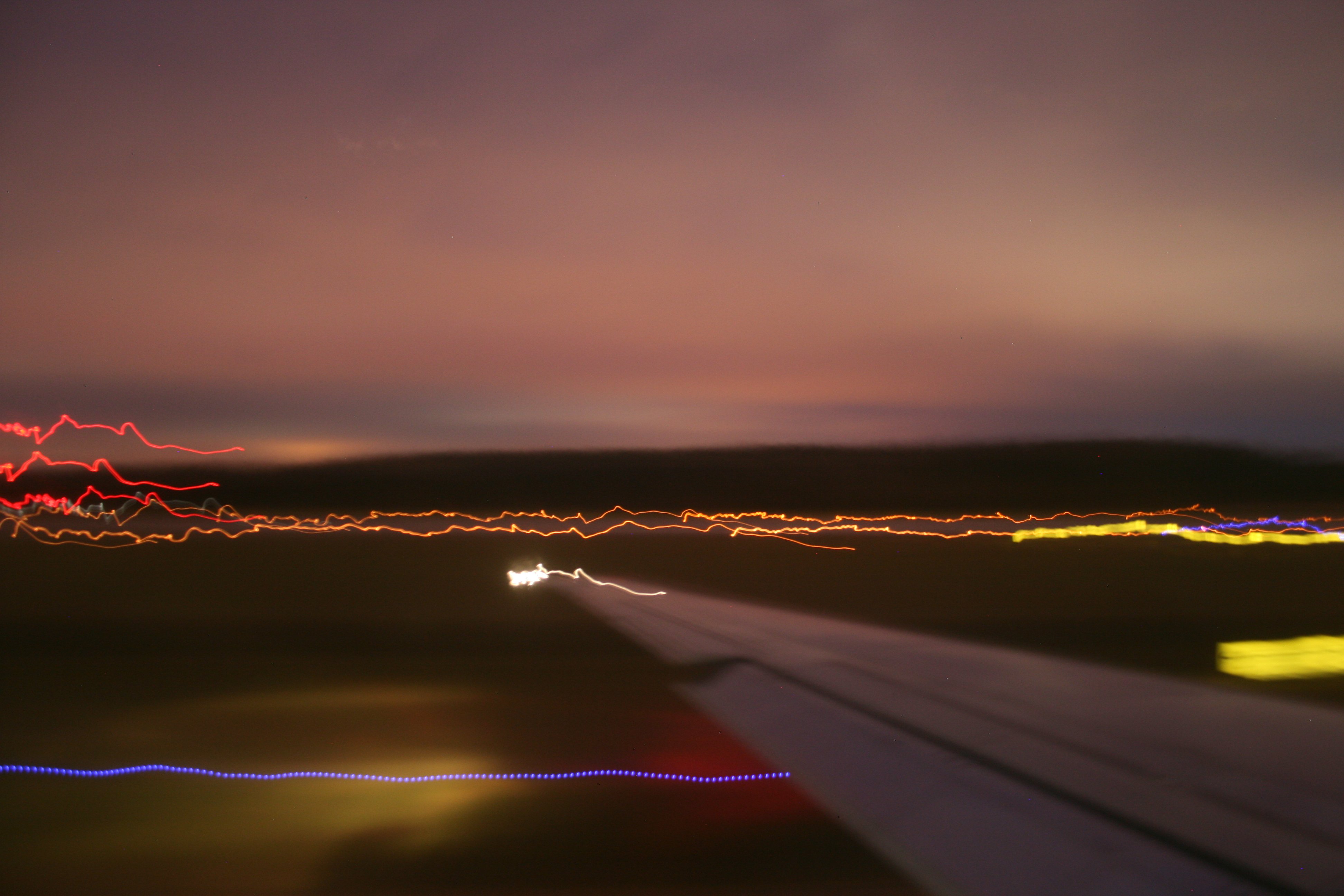
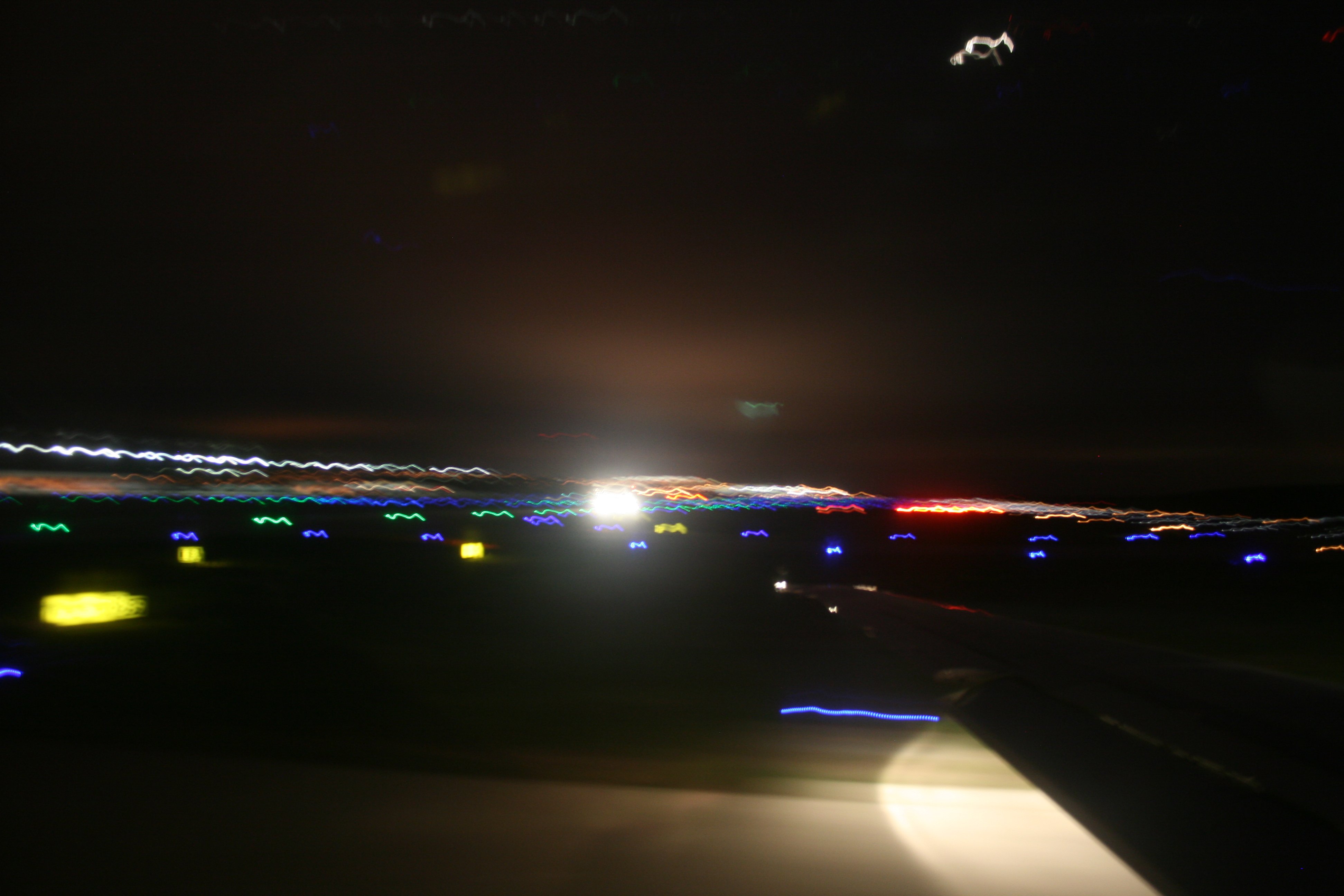
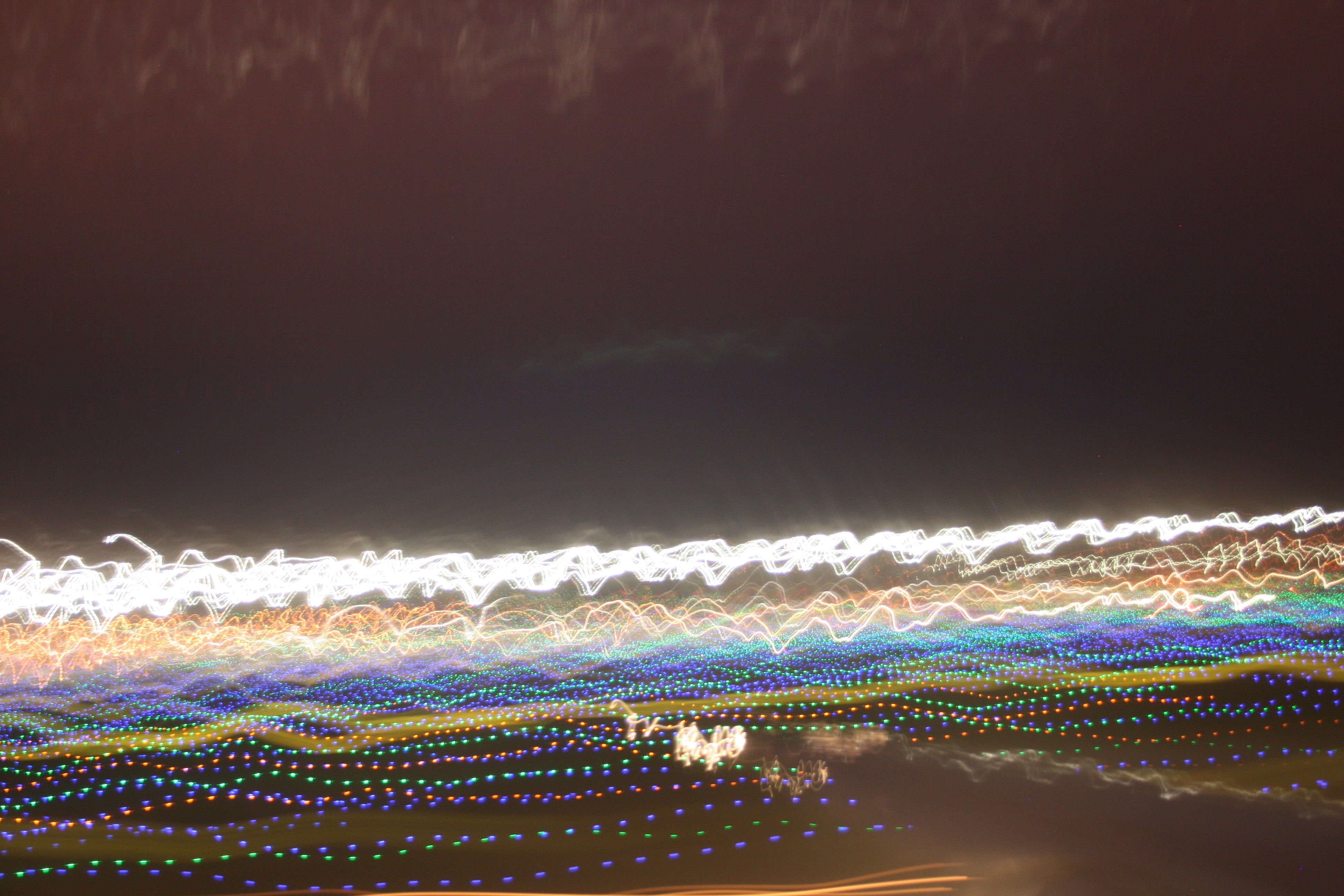
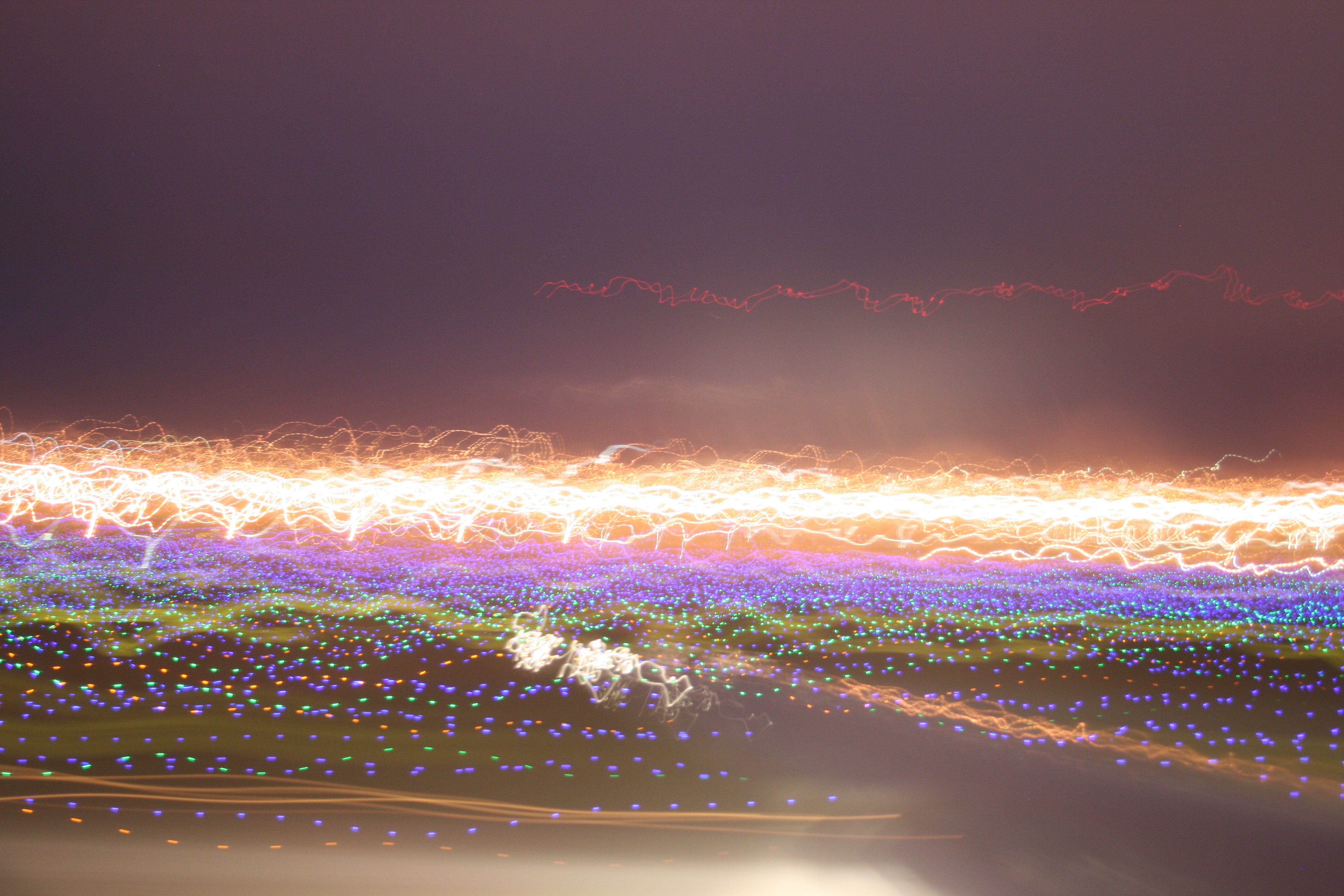
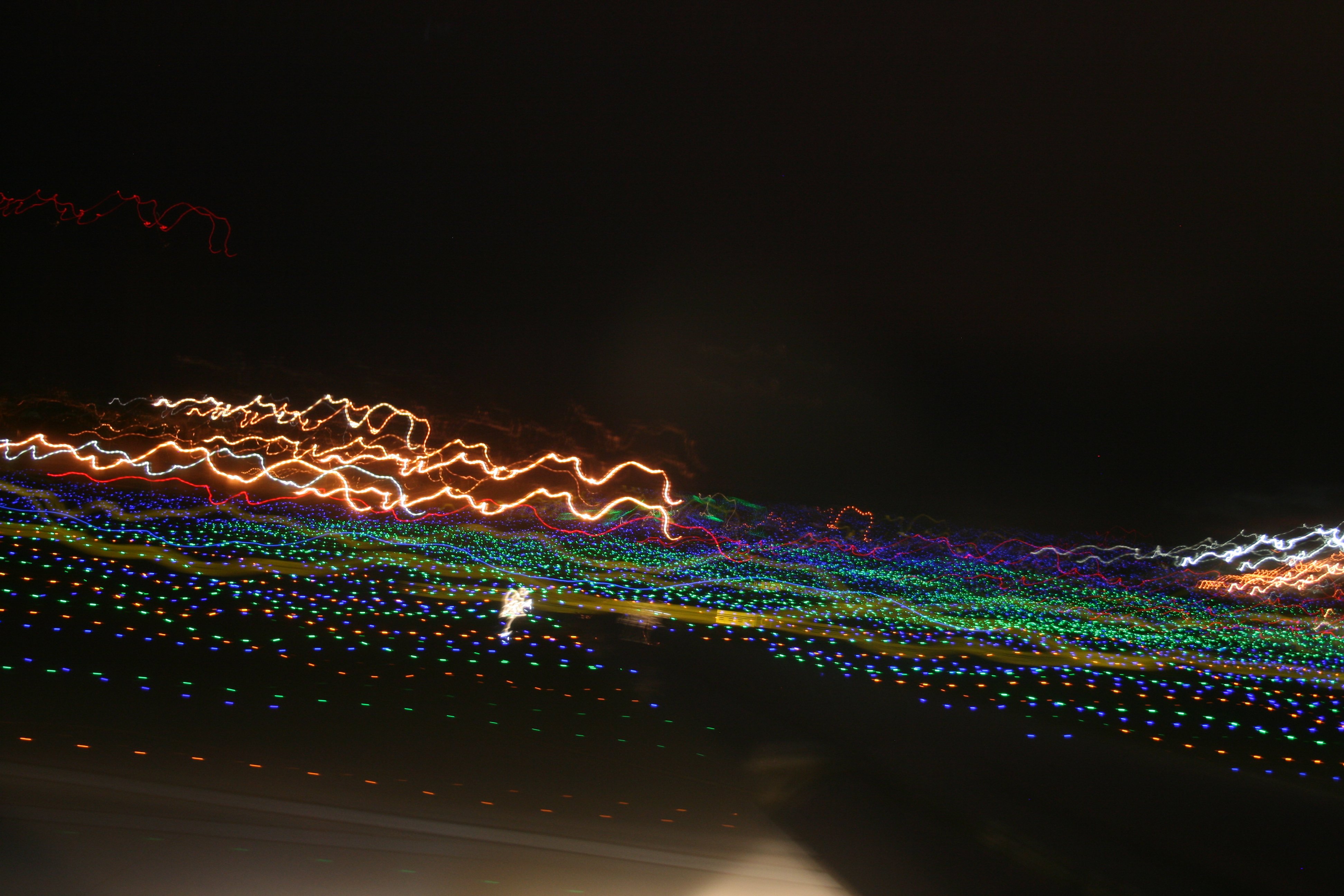
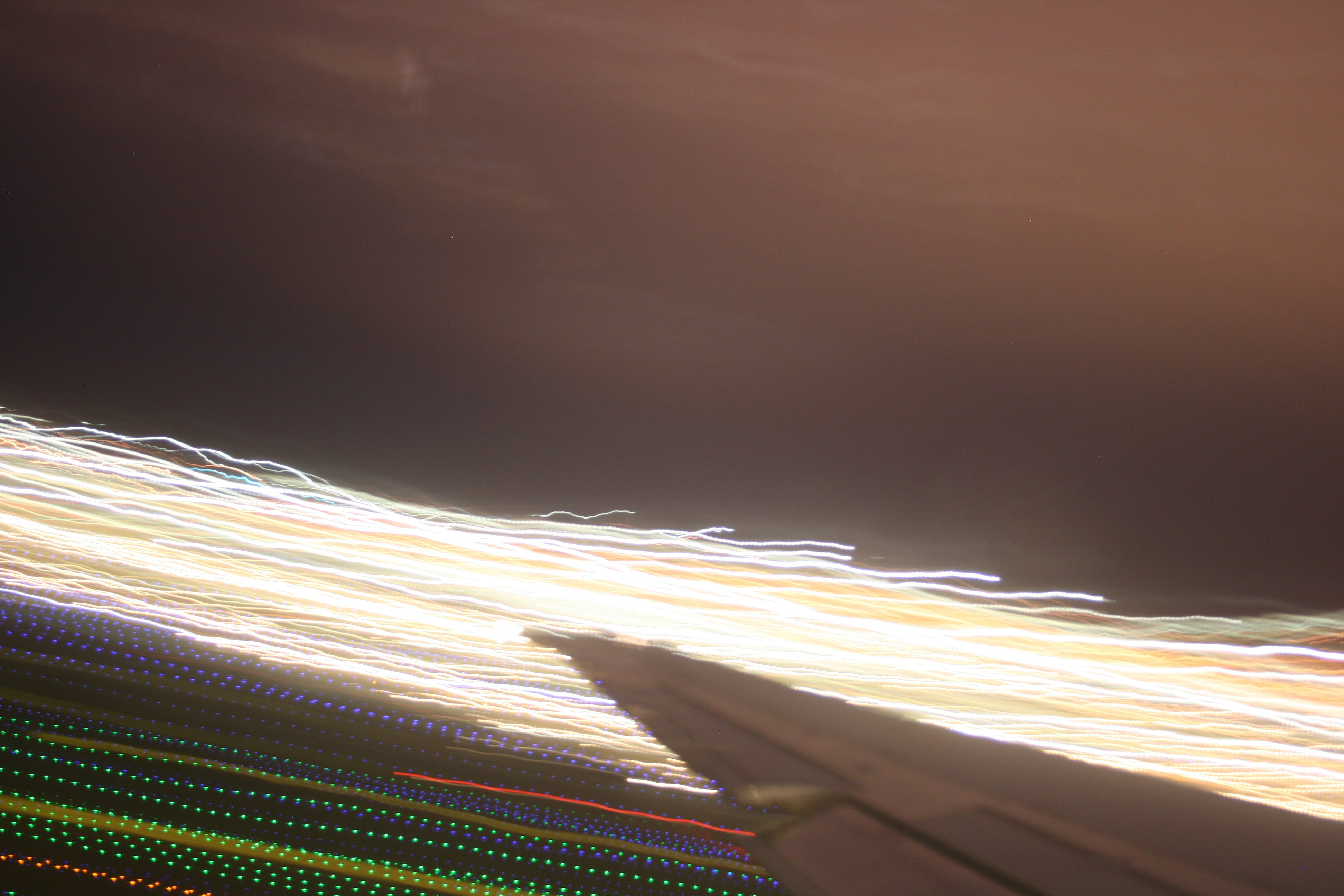
Almost two hours before dawn as we taxied out from the terminal. Nothing to see outside except the bright lights on the buildings in the distance, the blue taxiway lights, the red warning lights, the red and yellow directional signs, and the green runway edge lights.

Why would anyone bother to point the camera out the window? What could possibly happen? What possible benefit could there be?

IMG_5099 small

IMG_5100 small

IMG_5101 small

IMG_5103 small

IMG_5108 small

IMG_5111 small

IMG_5112 small

IMG_5113 small

IMG_5114 small

IMG_5115 small

IMG_5116 small

Time stretches out, fueled by the speed and the lack of sleep. Then we’re into the clouds and darkness.

2 Comments

Filed under Art, Flying, Photography, Travel