
Today it was “clear & a million,” so ‘Fifi’ made her arrival at Camarillo. She’ll be here through Sunday if you want to see her. If you’re not in this area, watch for her to come to someplace closer to you.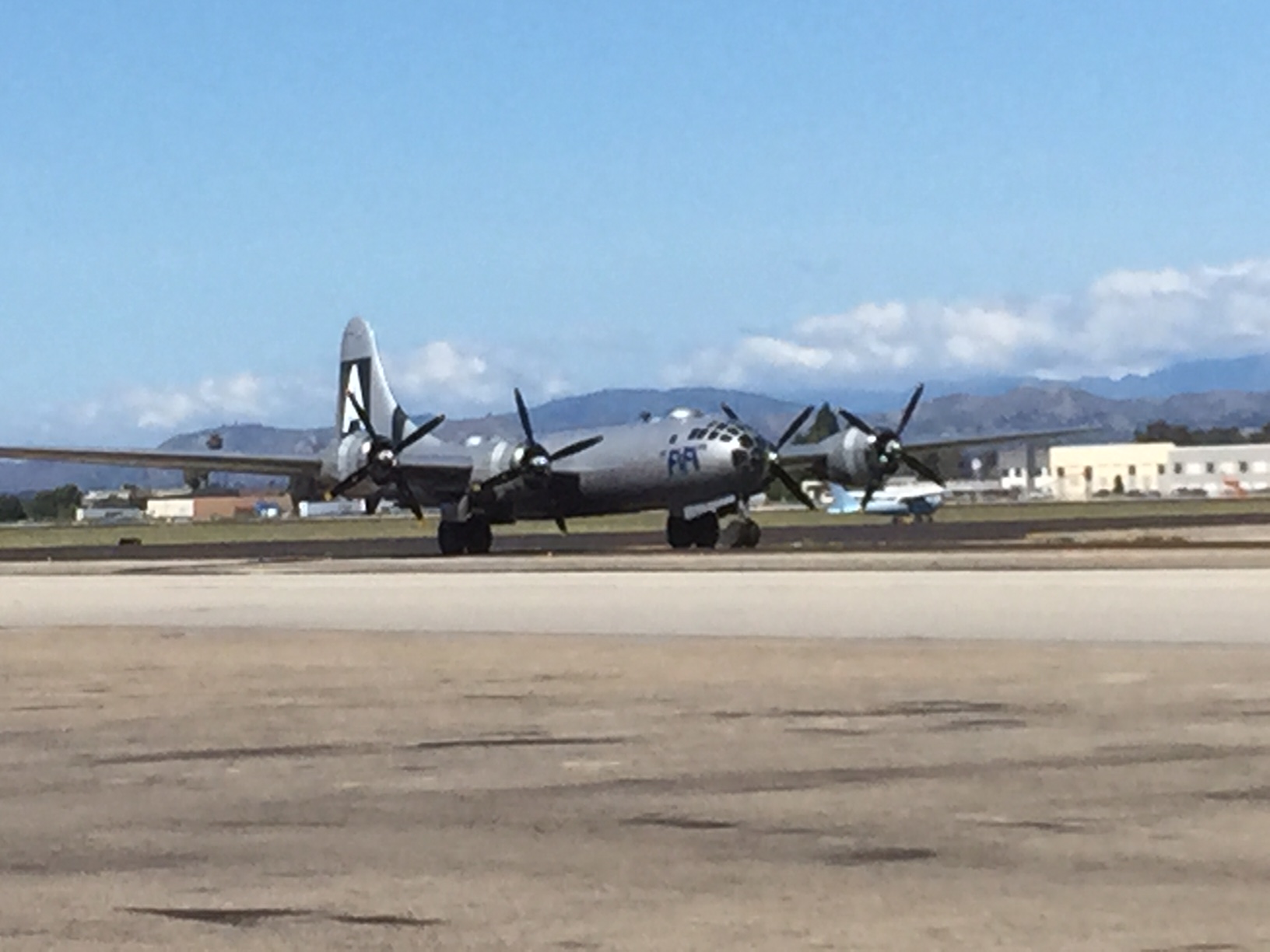
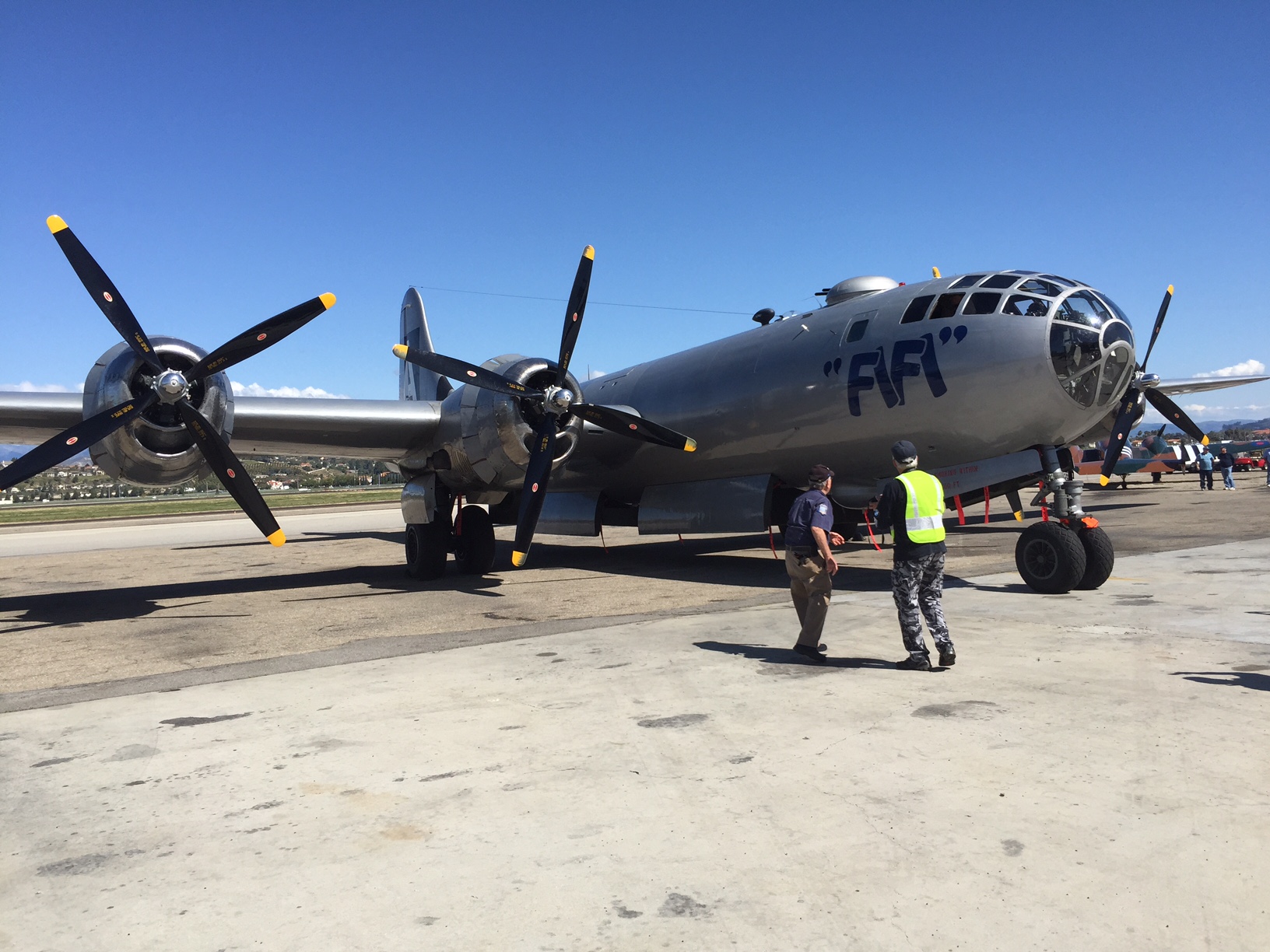
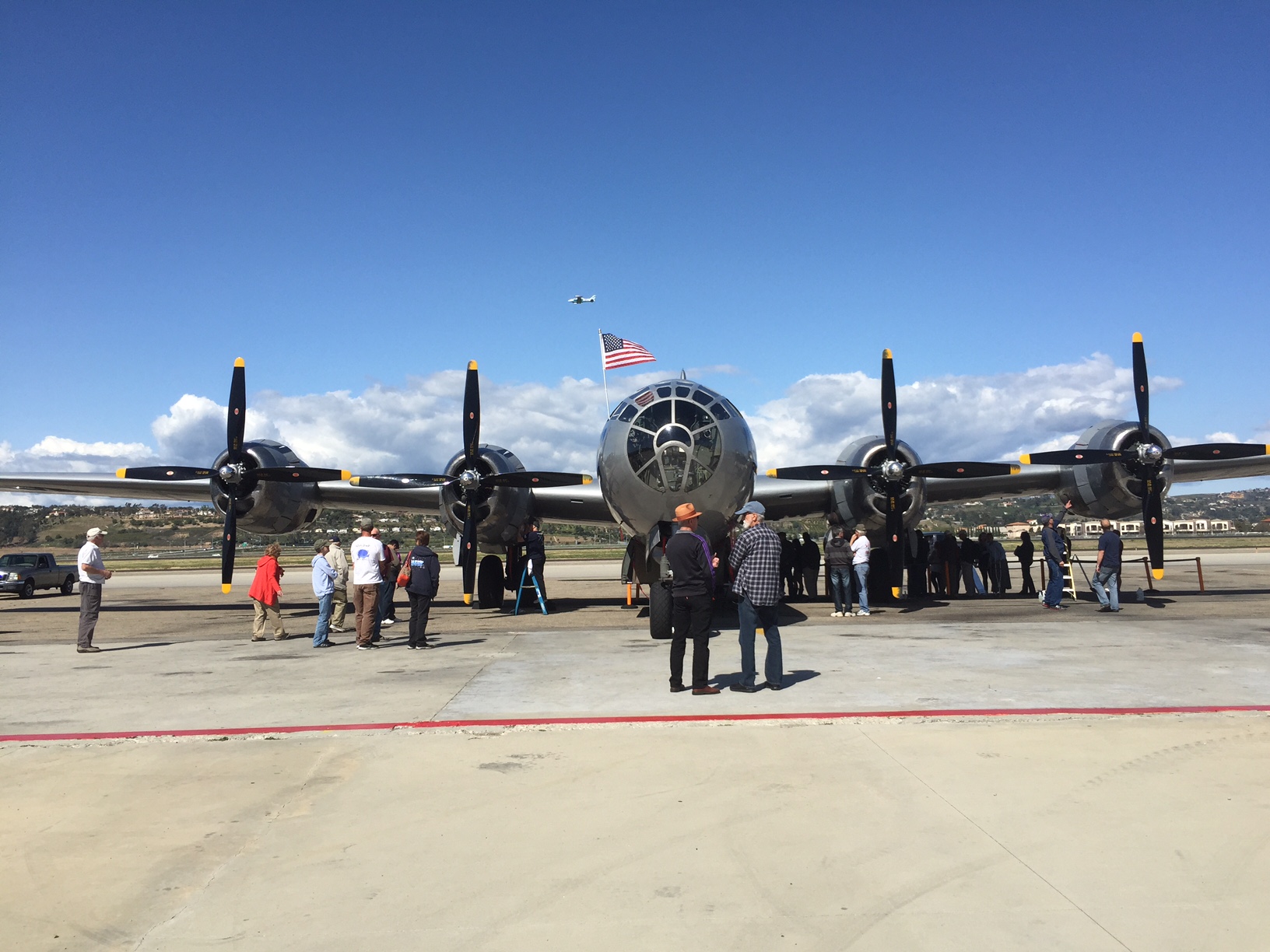
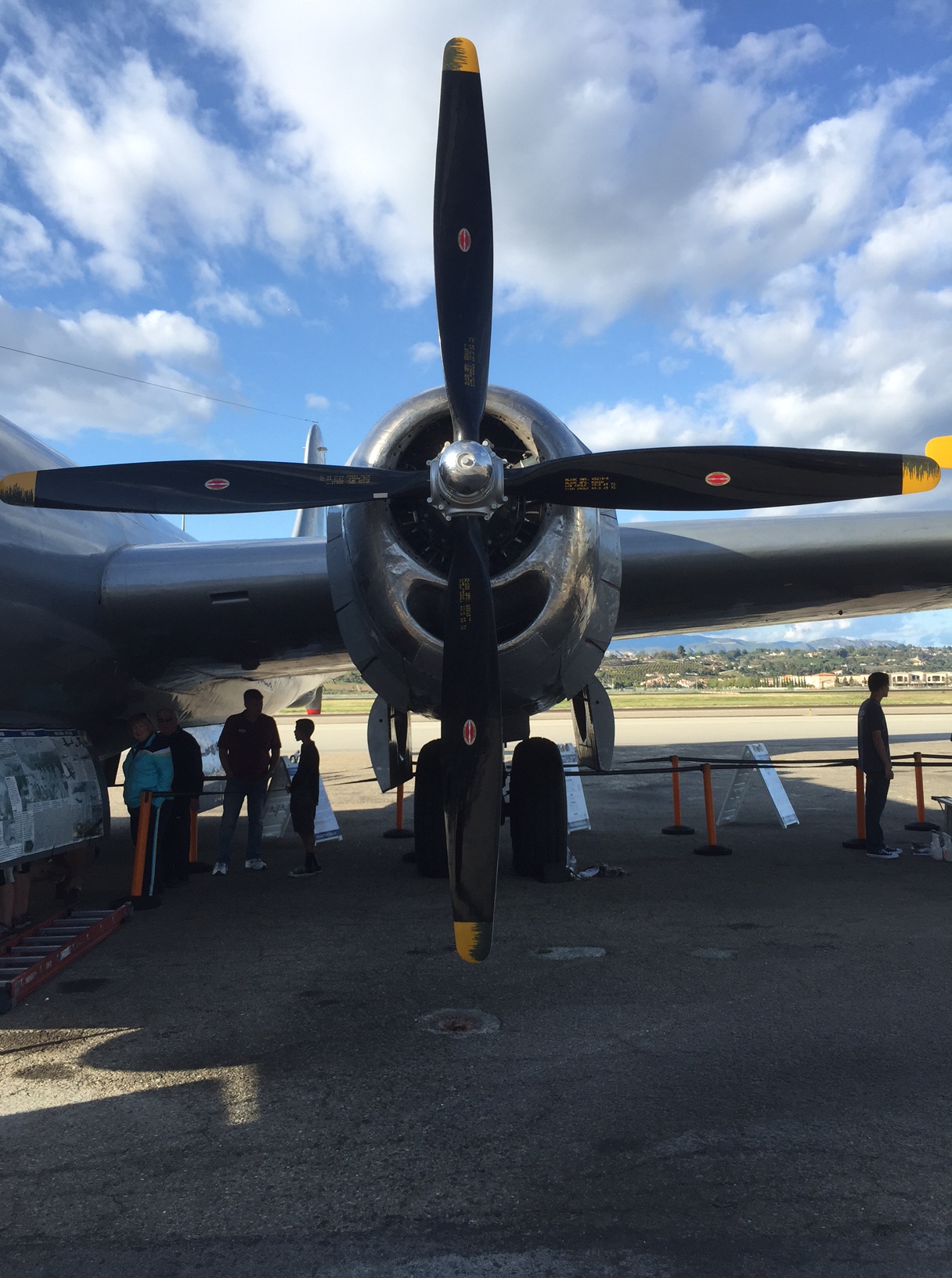
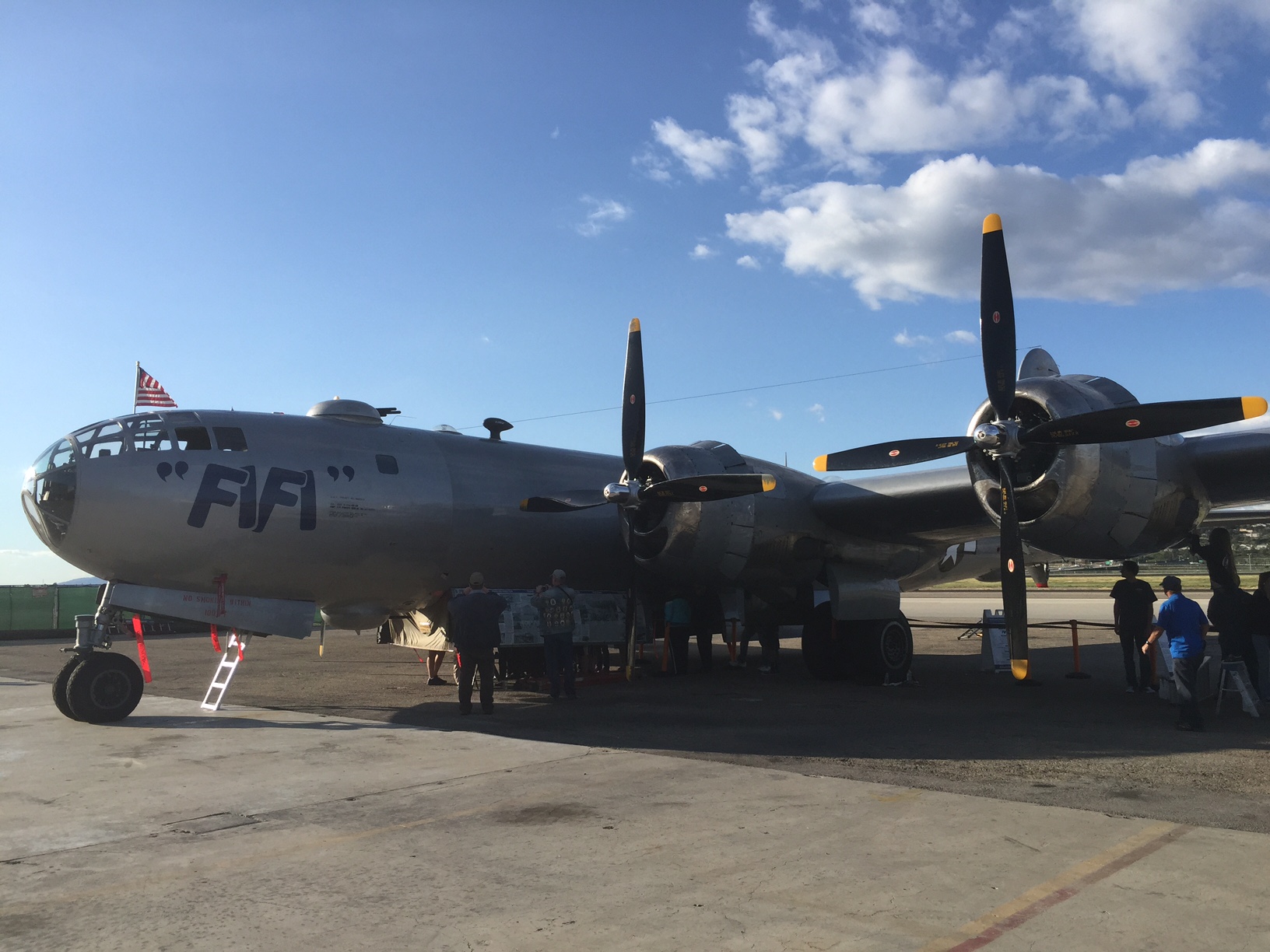
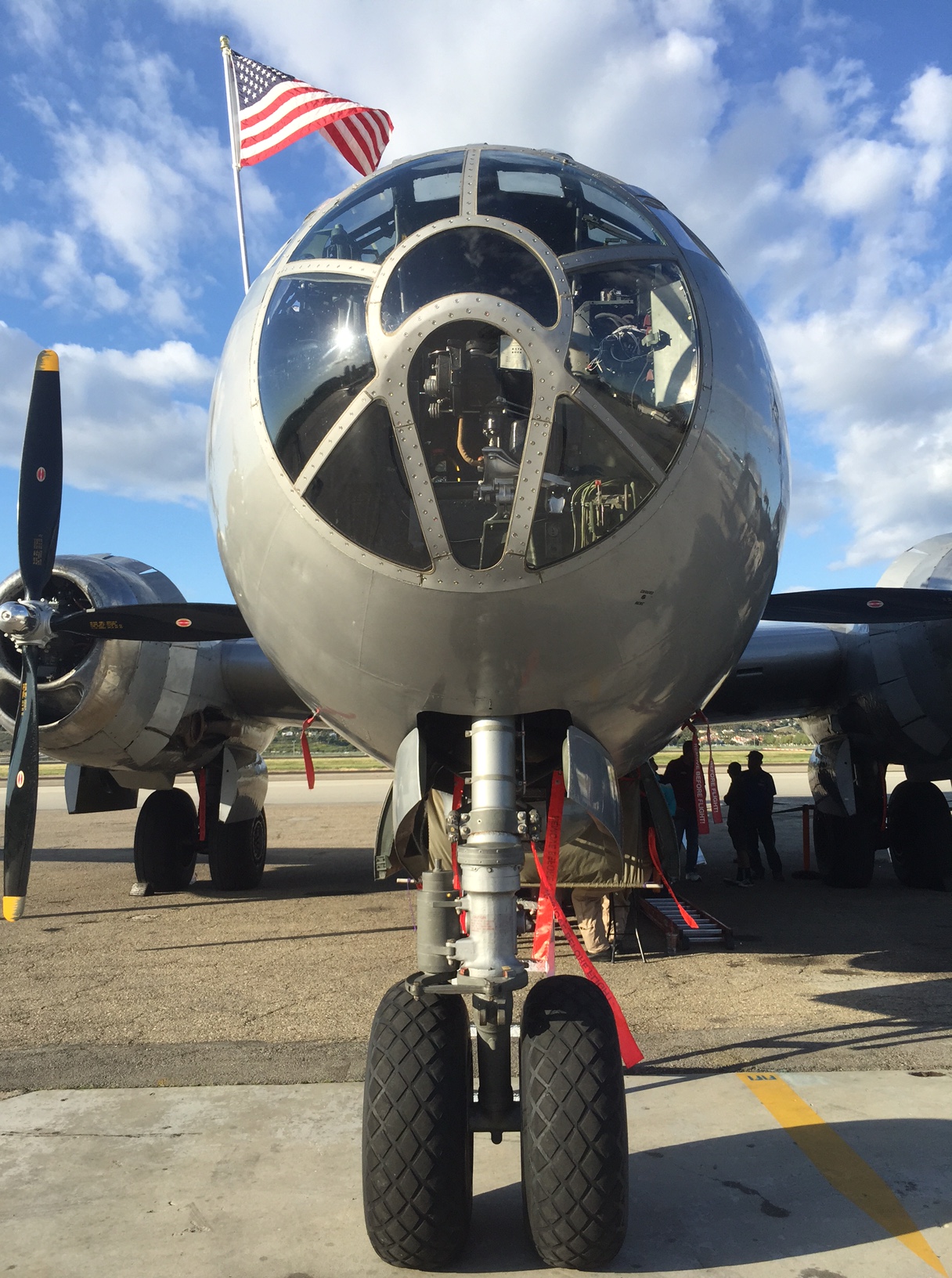
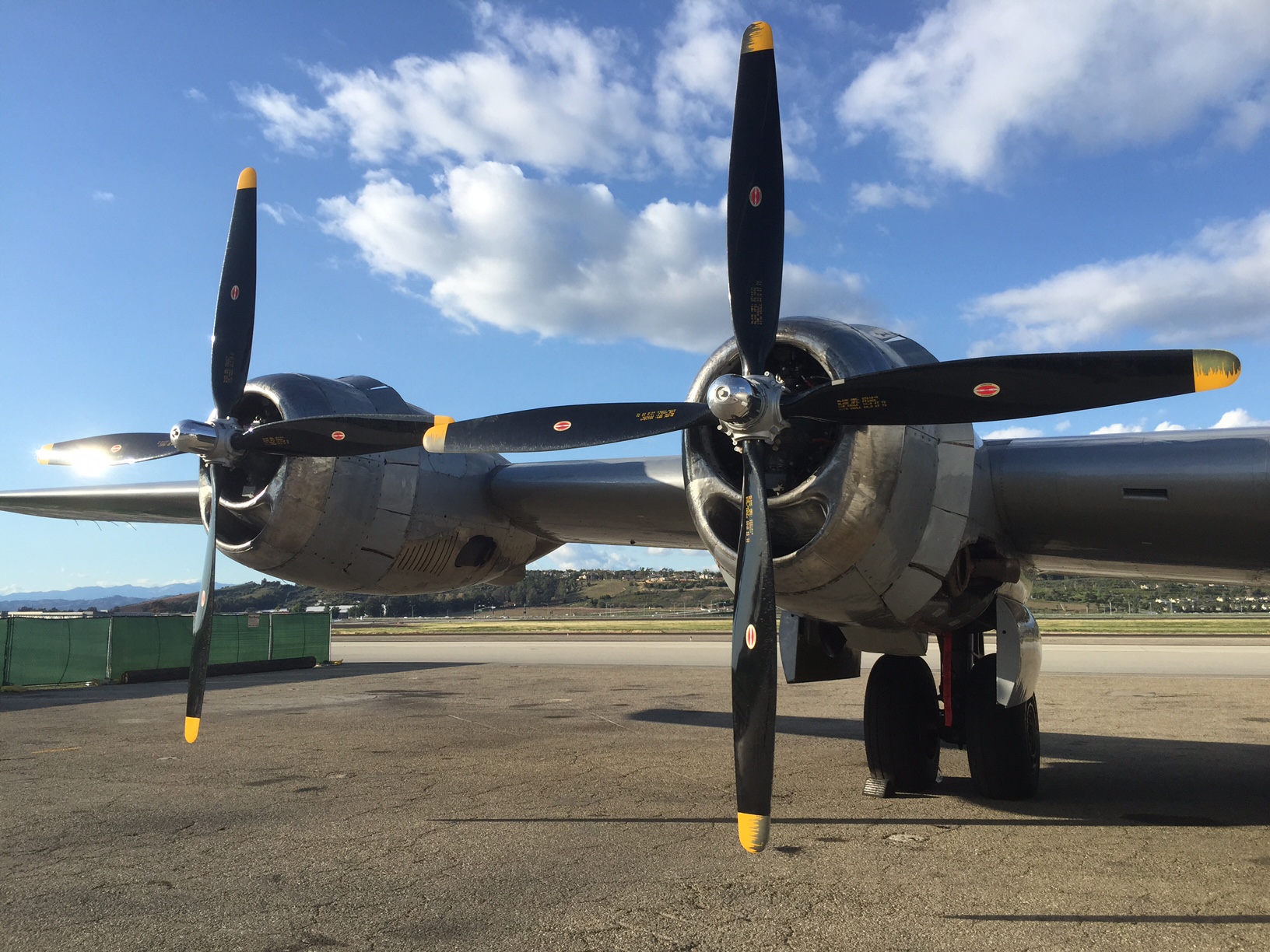
Today it was “clear & a million,” so ‘Fifi’ made her arrival at Camarillo. She’ll be here through Sunday if you want to see her. If you’re not in this area, watch for her to come to someplace closer to you.
The plan was for the CAF’s ‘Fifi’, the world’s only flying B-29, to fly from Phoenix (where it spent the weekend) to Camarillo today.
Aren’t plans wonderful? Do you hear the gods laughing?
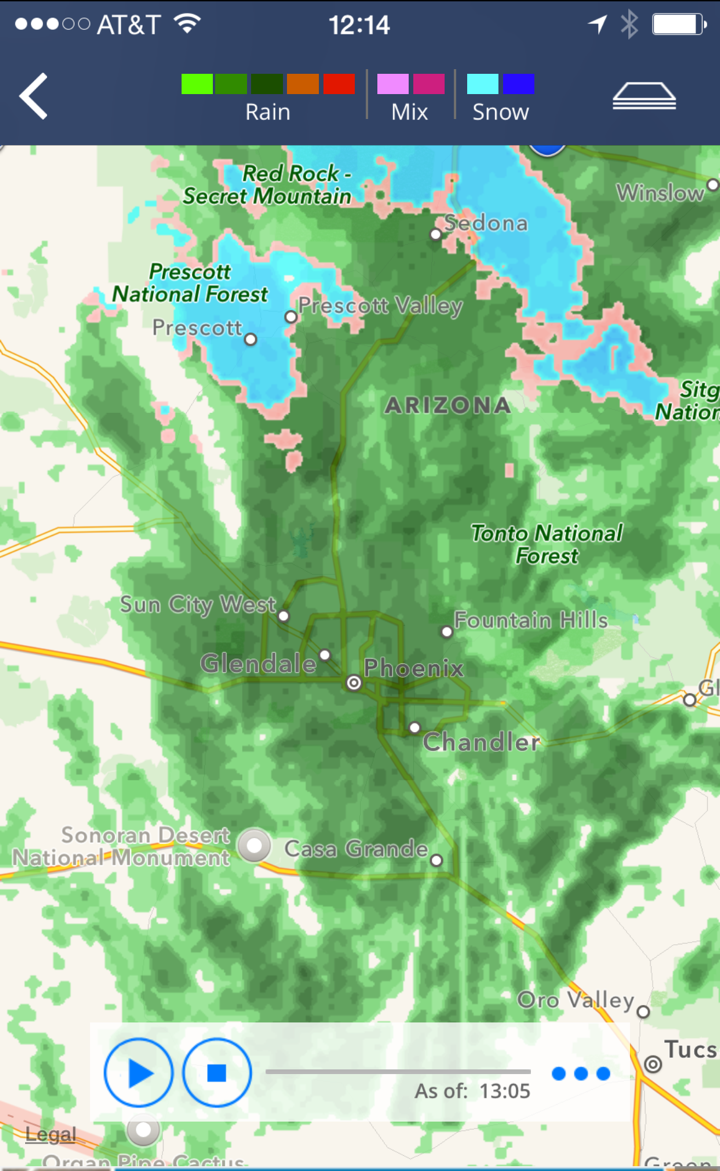 Since airlines were grounding their modern, new, advance tech commercial jets in Phoenix this morning, it didn’t seem wise to try to take off in an irreplaceable 70-year-old WWII bomber. Aside from all of those CAF rules and all of that, there’s common sense to consider.
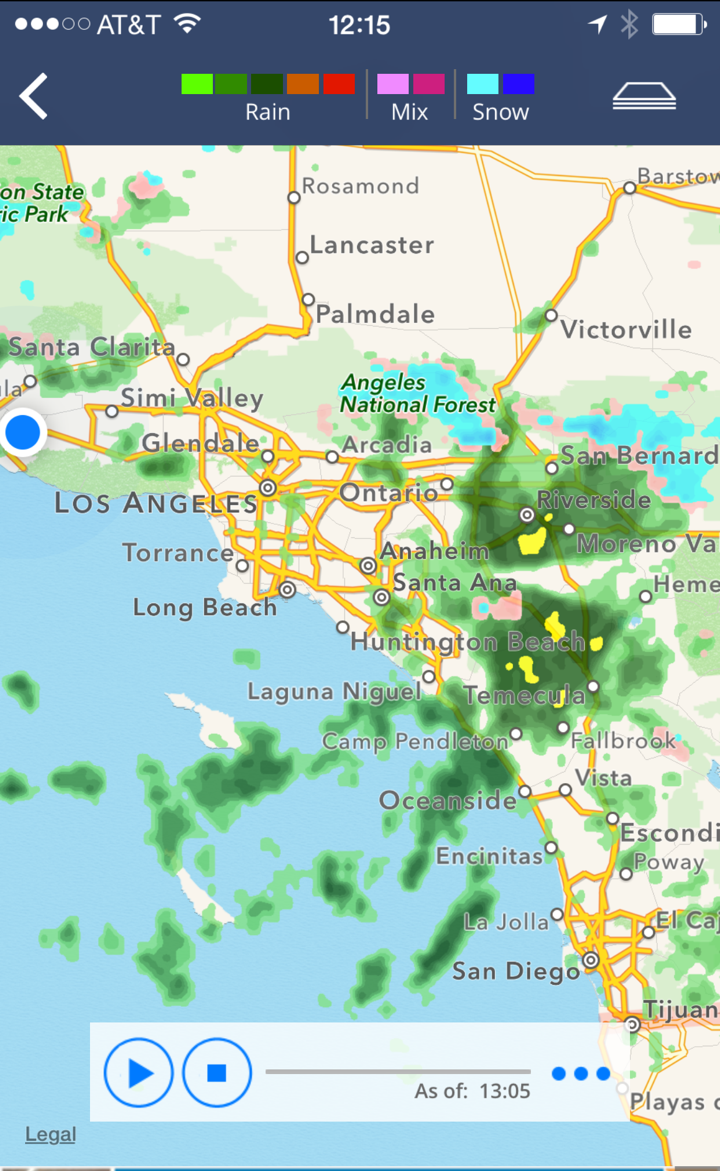 Even if Phoenix had been clear, they would have had to somehow get through all of these dark green and yellow and pink splotches to get to the big blue dot on the far left. Again, flying anything into a thunderstorm is contraindicated, and it’s contraindicated^10 for B-29s. (I think it’s phrased exactly that way in the original B-29 user’s manual.)
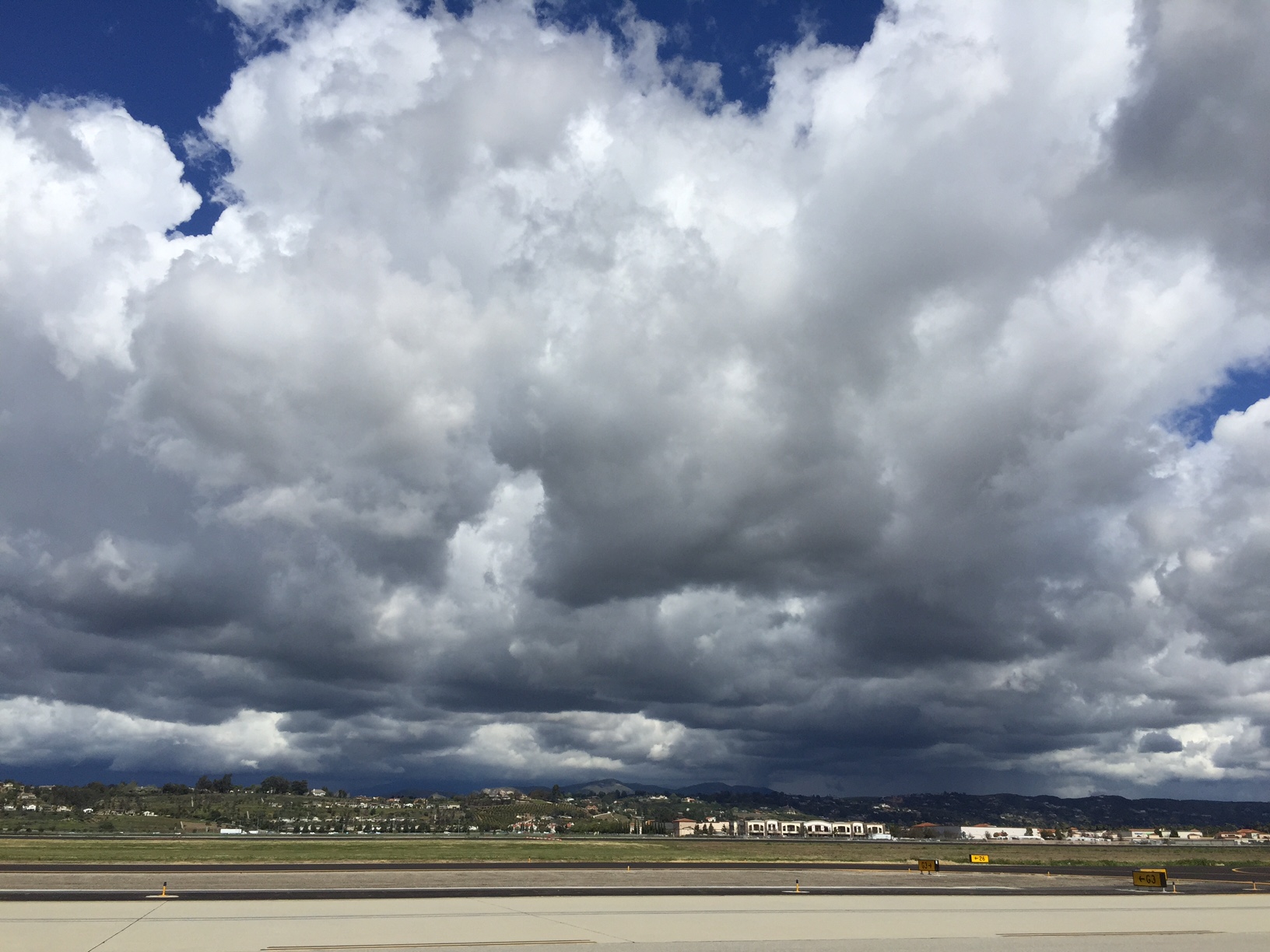 Meanwhile, about the time that we were expecting ‘Fifi’ in Camarillo, the clouds were broken directly overhead, but getting darker.
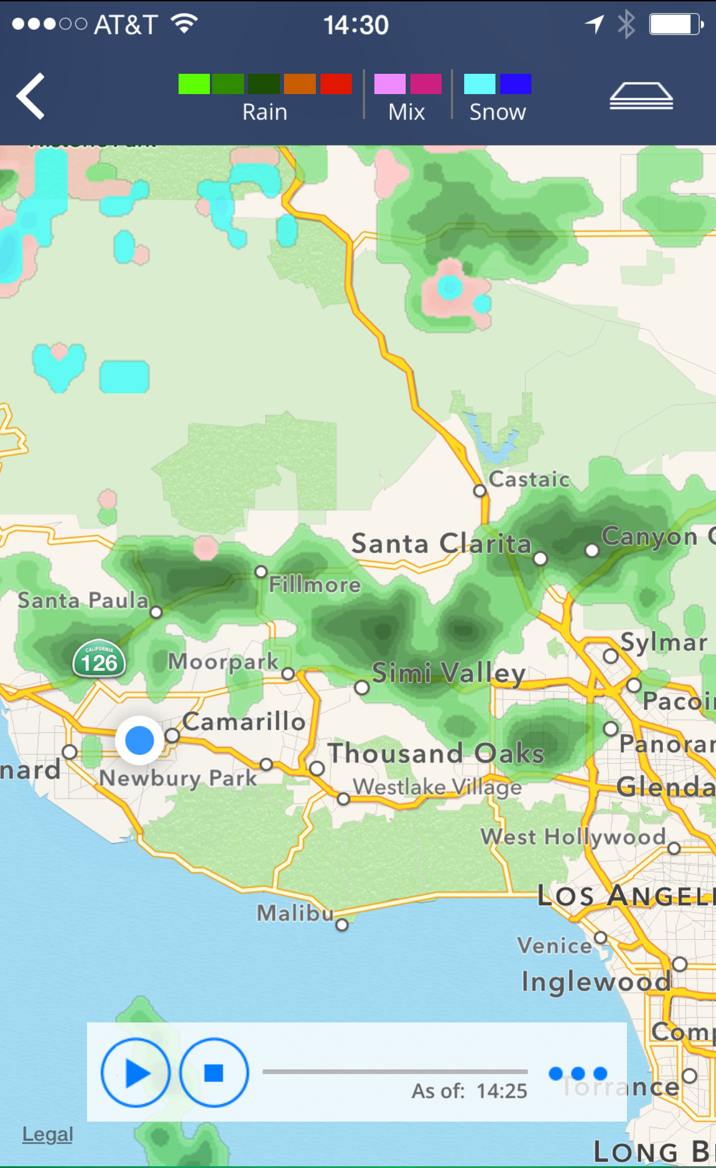 Two hours later it was still ugly over the mountains and getting worse, with that blotch at the bottom heading for us with hail, strong winds, and heavy rain. (Google for pictures of the pier in Huntington Beach covered in hail today, covered to the point where it looks like they got a couple inches of snow.) There were also some heavy rains back over our house.
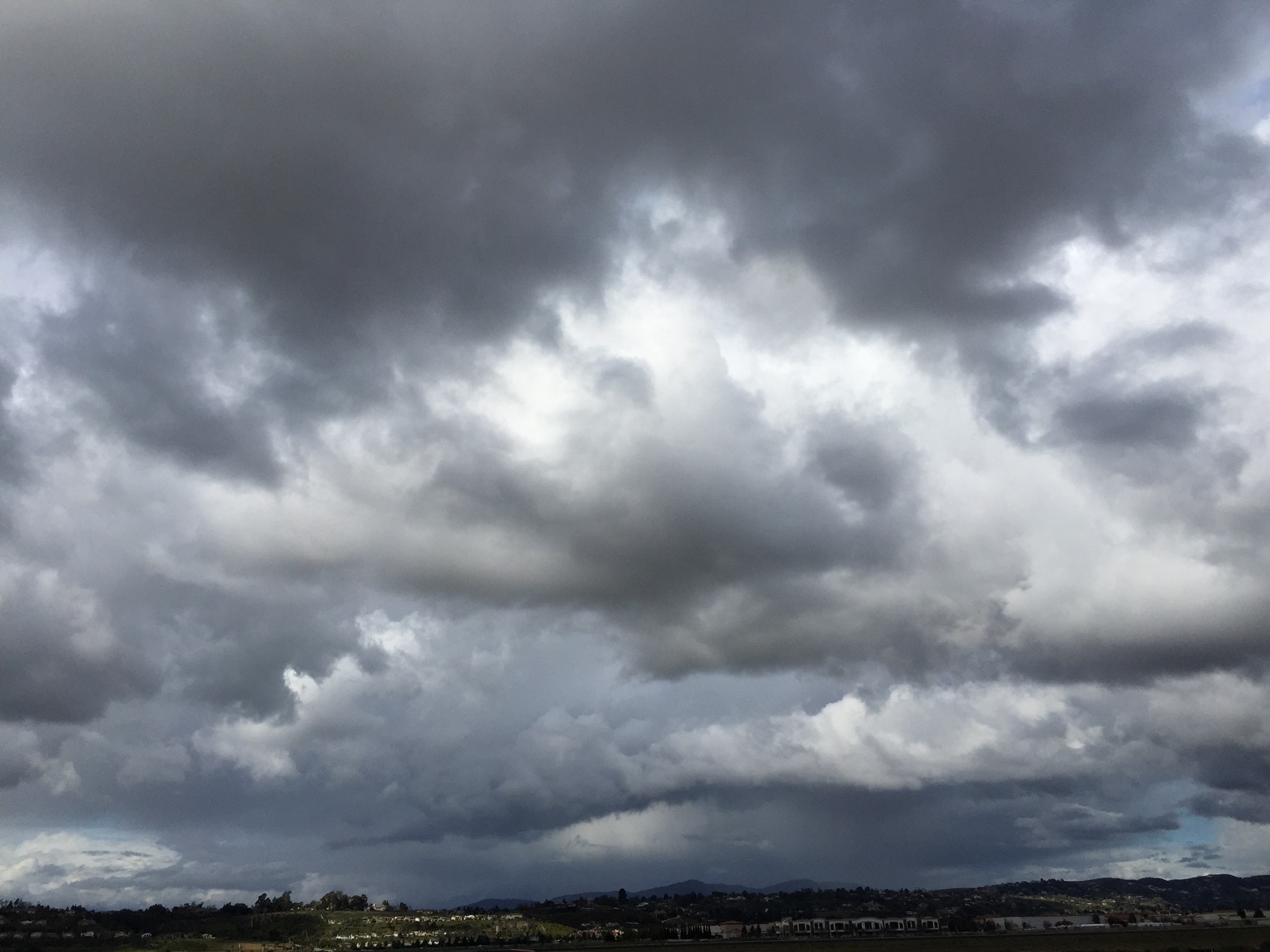 Looking off toward all of those big, dark green blotches, it was again not a good sky to be flying through.
Discretion being the better part of valor, ‘Fifi’ and her crew stayed in Phoenix and will come out to Camarillo tomorrow. The forecast for the whole area looks beautiful. It will be great to see ‘Fifi’ flying in again with some of our fighters providing the escort.
Last Saturday I posted pictures from the installation (“hanging”) of a new Rolls Royce engine in “Man Of War,” the P-51 operated by the Southern California Wing of the Commemorative Air Force. (Full disclosure, again – I’m the Finance Officer for the CAF SoCal Wing so there’s no impartiality at all here!)
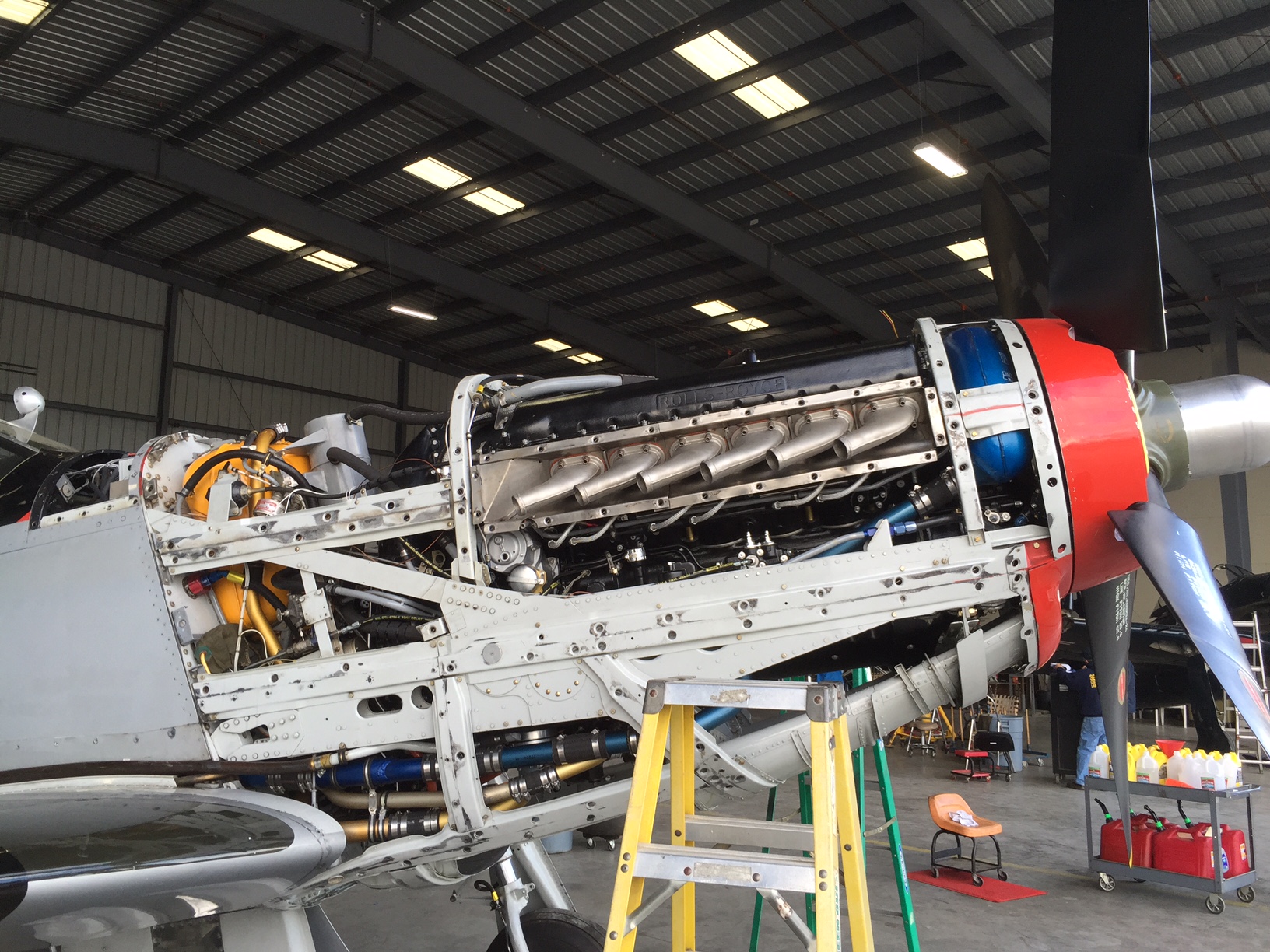
If you’re as mechanically-minded and skillful as I am (that’s humor – I have changed the oil, installed new batteries, and changed the wiper blades on my cars, beyond that I’m clueless) you might wonder how long it takes to get a huge, powerful, intricate piece of machinery like this up and running after it’s hung in the aircraft frame.
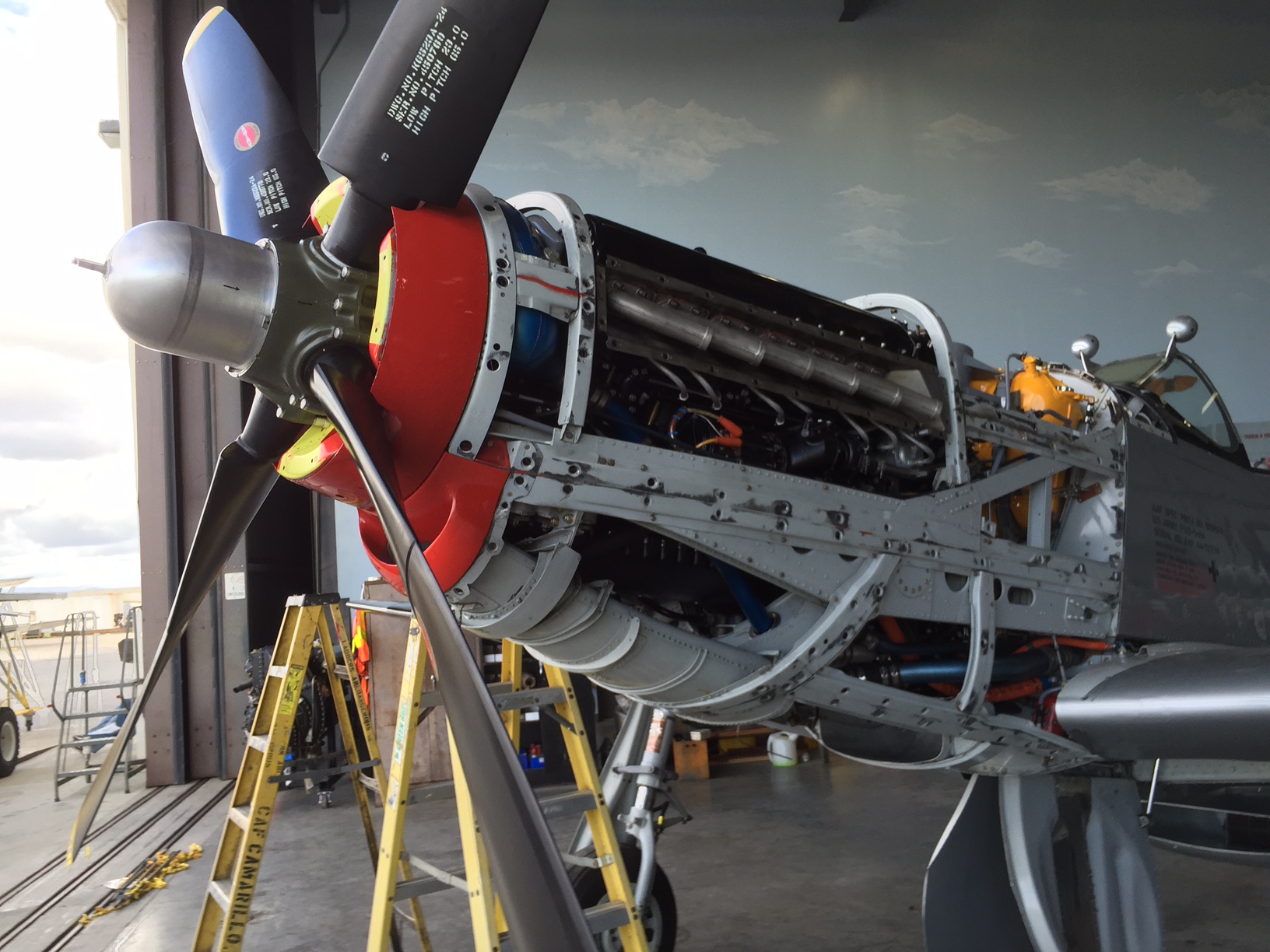
After all, you have to reattach tanks, coolers, radiators, hoses, electronics, instrumentation, fuel lines, controls, the propeller…

Not to mention, as long as you’re spending all this time tearing the plane down to nuts and bolts, you might as well check everything else and put on new brakes and so on…
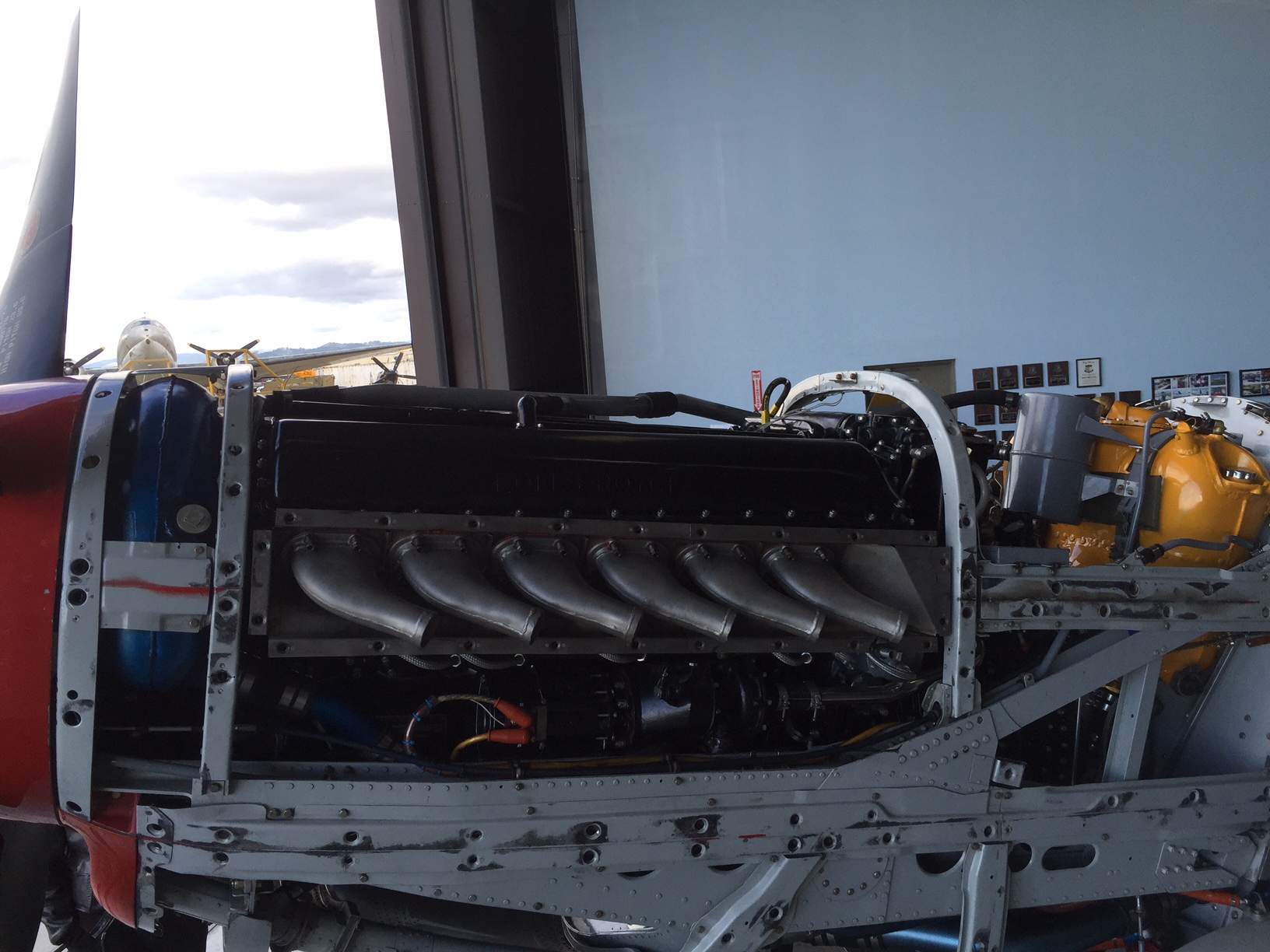
A month? Six weeks? Eight? At least three weeks, right?

Try one week. Seven days. This is the engine late this afternoon ready for its first test start.
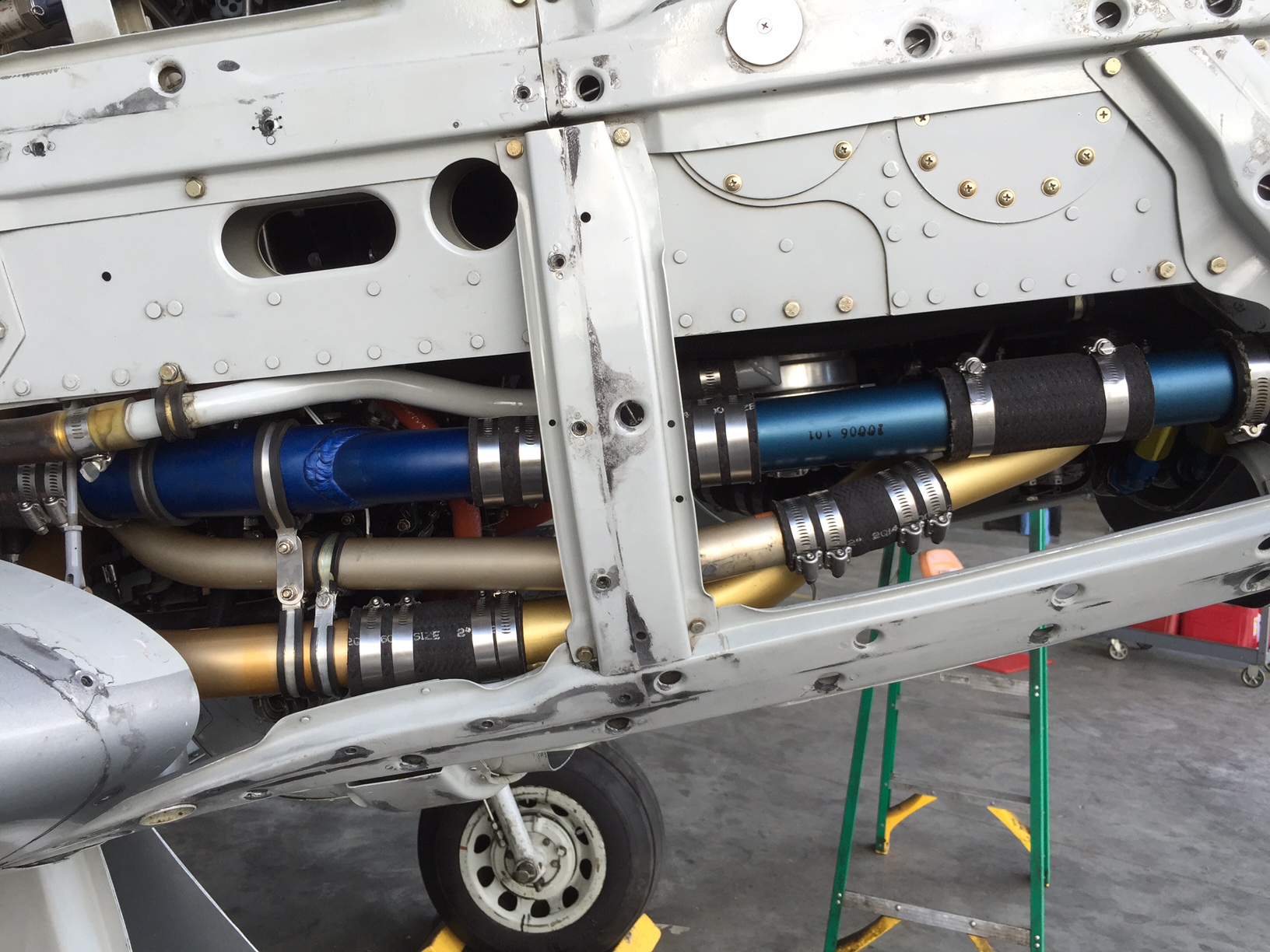
Not only our our members (I was going to say “guys” in the generic sense, but we have some fantastic women mechanics as well) devoted and dedicated, but they’re pretty stinkin’ good as well!

So how did the test go? Started on the first try. With luck, in the next day or two, after further testing and correcting any problems that pop up (plus, of course, putting all of the cowlings back on), we’ll start flight testing to get her recertified. Ten minutes at first, then an hour, then a couple hours, checking for problems after every flight, before she’s ready to hit the airshow circuit and start taking passengers up for the ride of their lives.
I did mention that you can buy a ride, didn’t I? For about what you would pay for a family of four to go to Disneyland (okay, that’s a cheap shot, but it’s not that inaccurate) you can have a fantasy ride. It’s a LOT cheaper than learning to fly, building up all the hours and ratings needed, and then spending $3M+ on your own P-51! Trust me, I’ve flown in her, it’s way better than any “E-ticket” ride you’ve ever been on!
Very, very, very carefully!
Since the plane is worth multiple millions of dollars, the engine is worth several hundreds of thousands of dollars, and the engine weighs many hundreds of pounds and is an incredibly tight fit into an airframe that’s tilted up into the sky and six or seven feet above you, this is not a trivial endeavour.
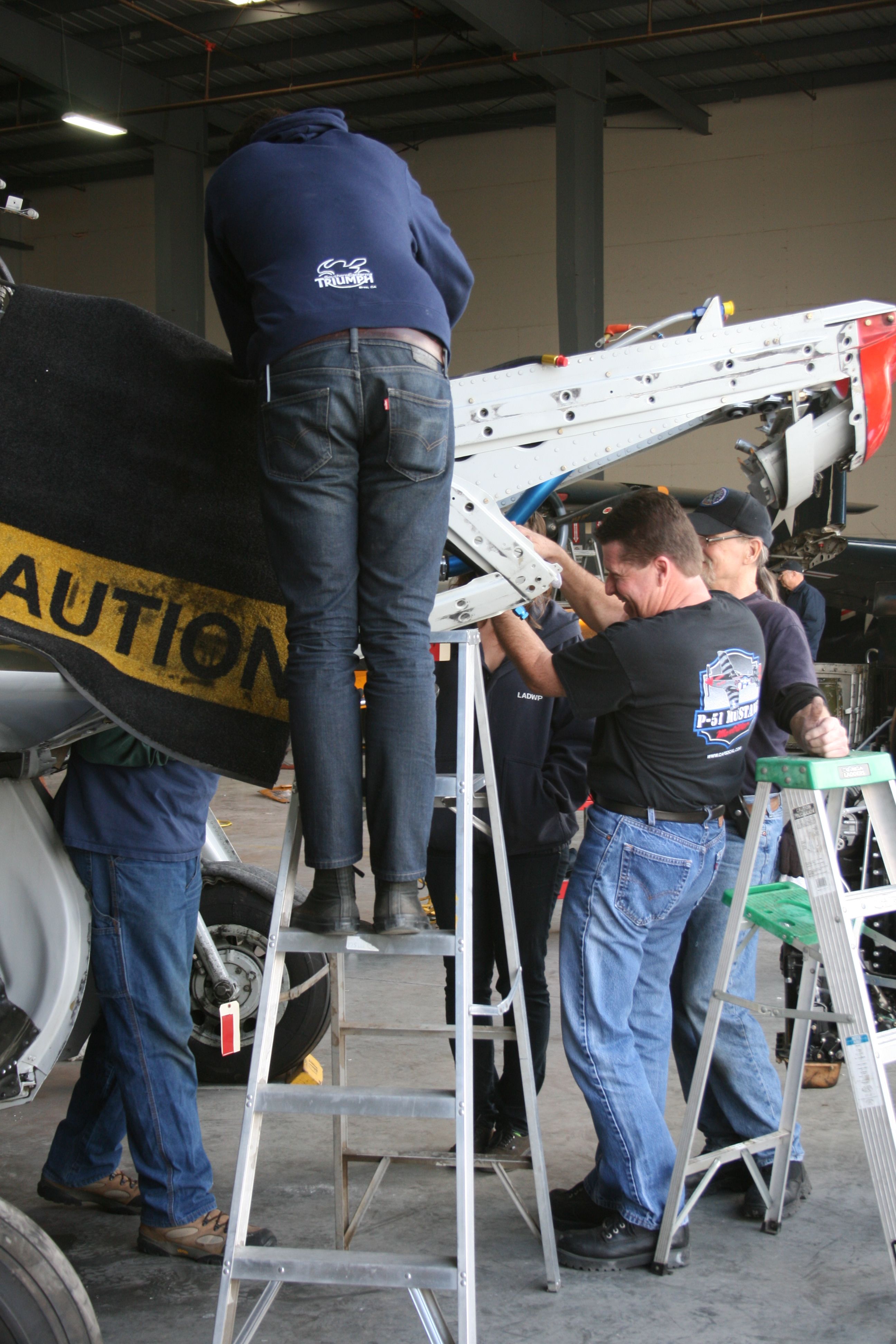
You start with a sort of engine-shaped hole in the front of your P-51, maybe some new cables and wiring.

You need a brand new, ready-to-go Rolls-Royce engine. Zillions of horses are carefully contained within.
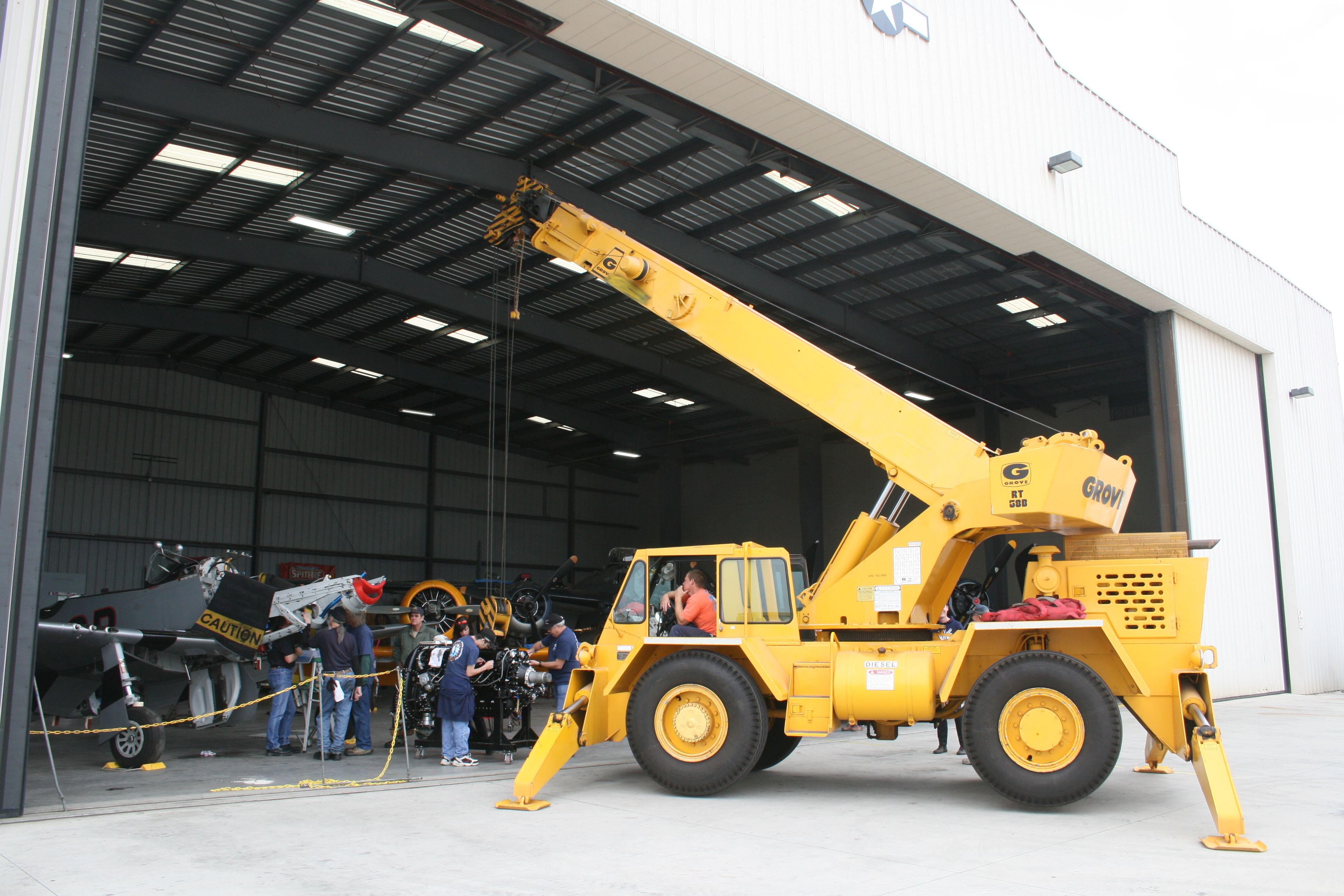
You get a big crane. You can try it with a fork-lift or a winch, but given the monetary sums and risks involved, let’s not and say we did, okay? Go with the big crane.
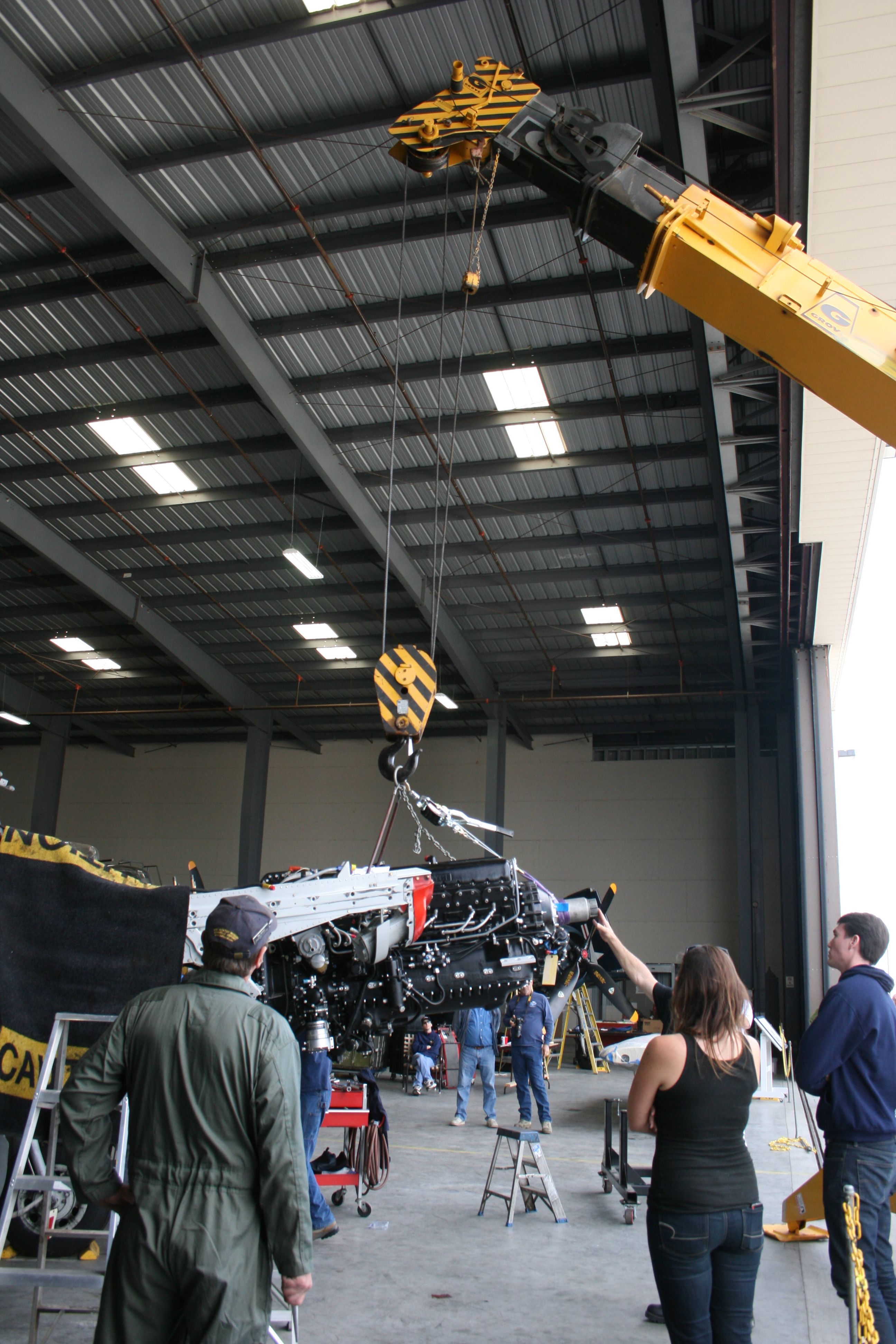
After hours of preparation, you get the engine airborne.
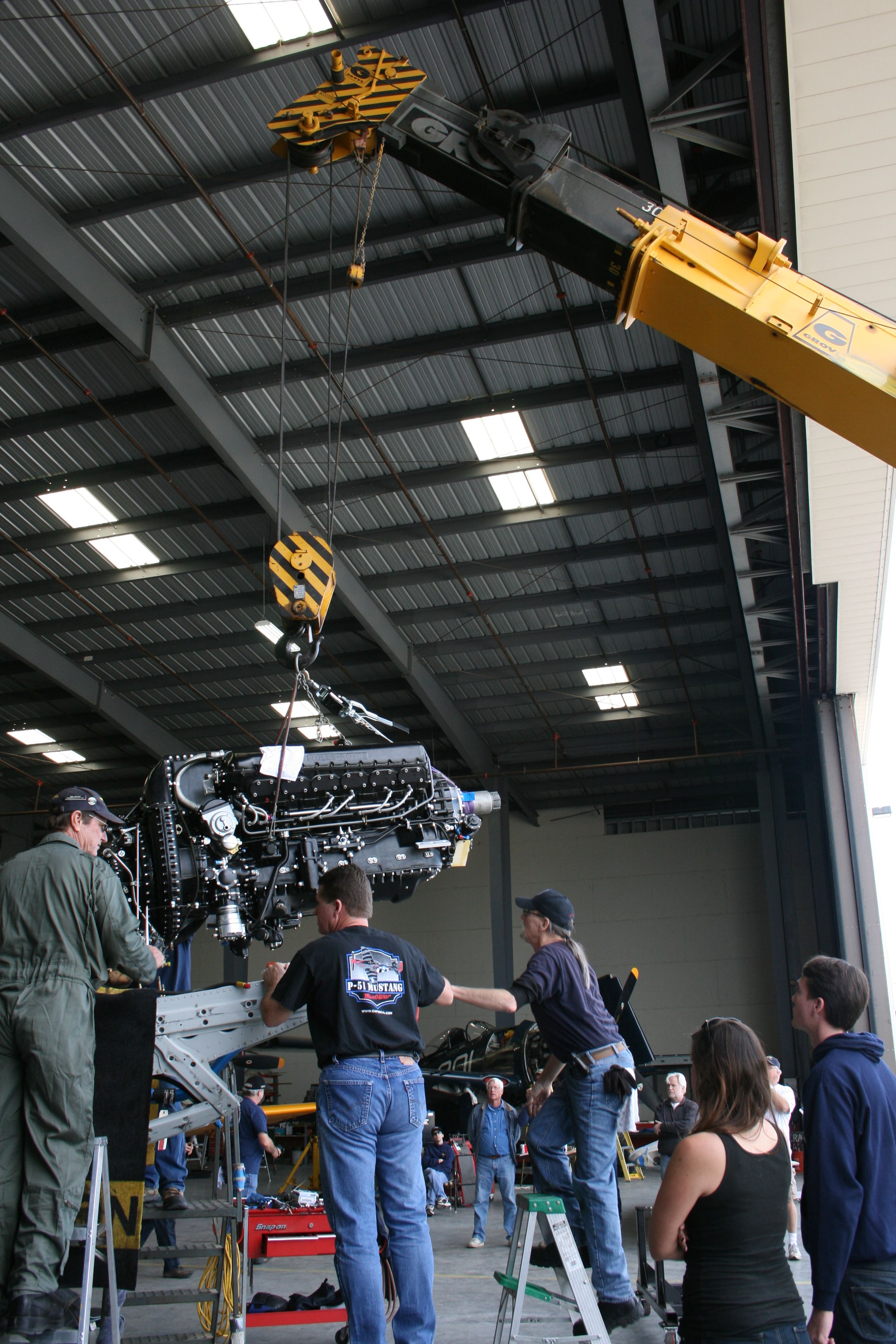
You move it very slowly and gently over the nose of the aircraft.
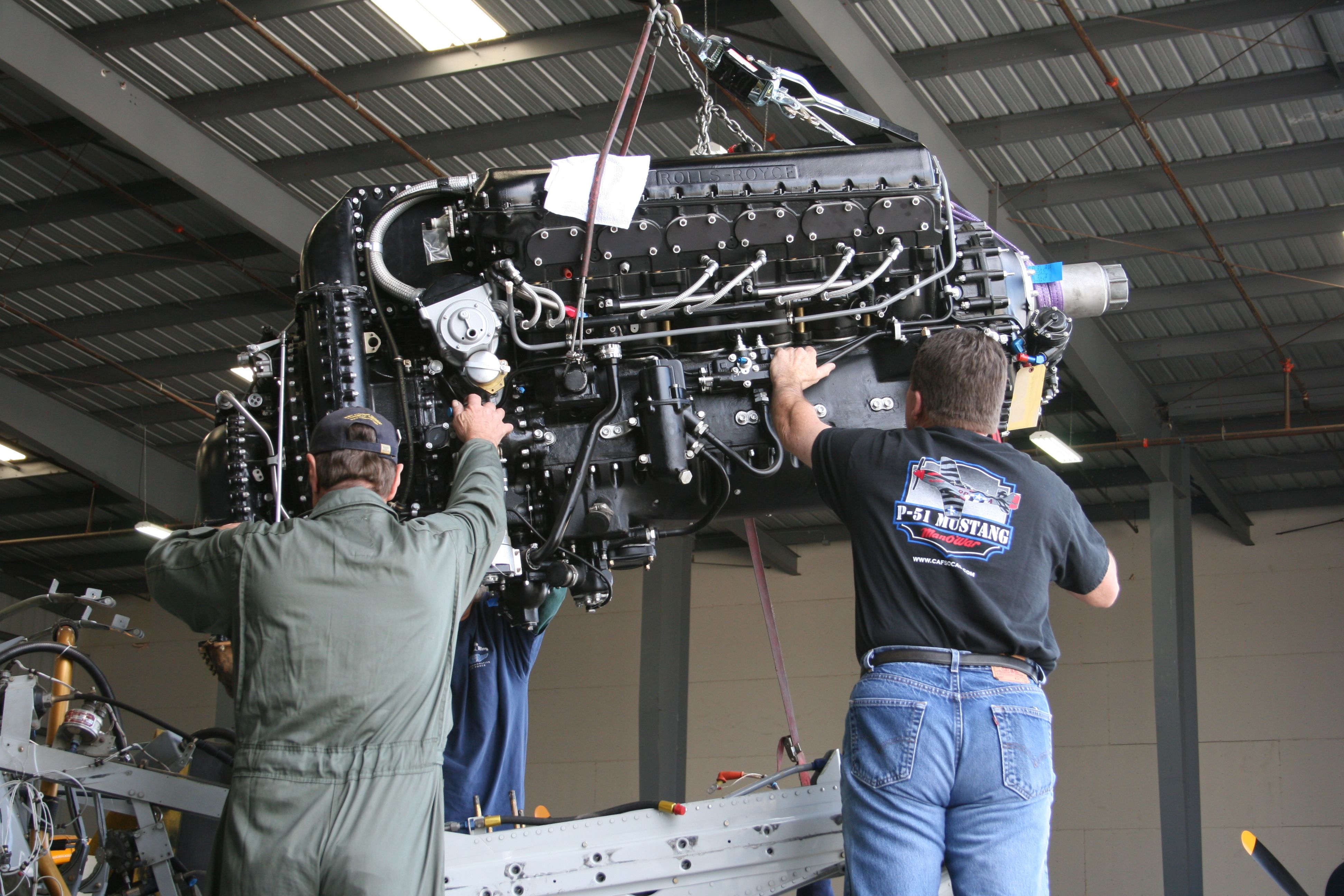
Line it up.
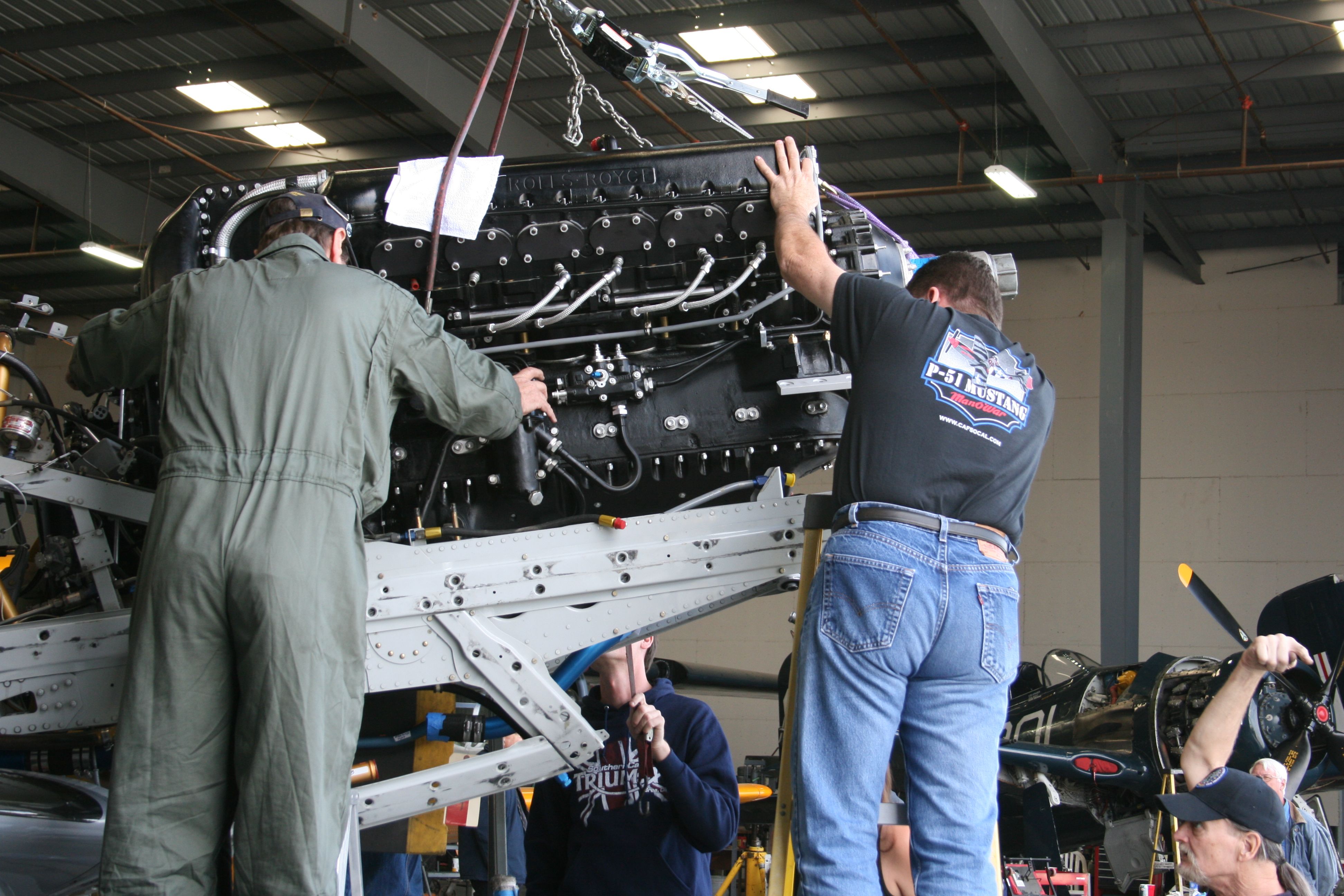
Start to lower it.
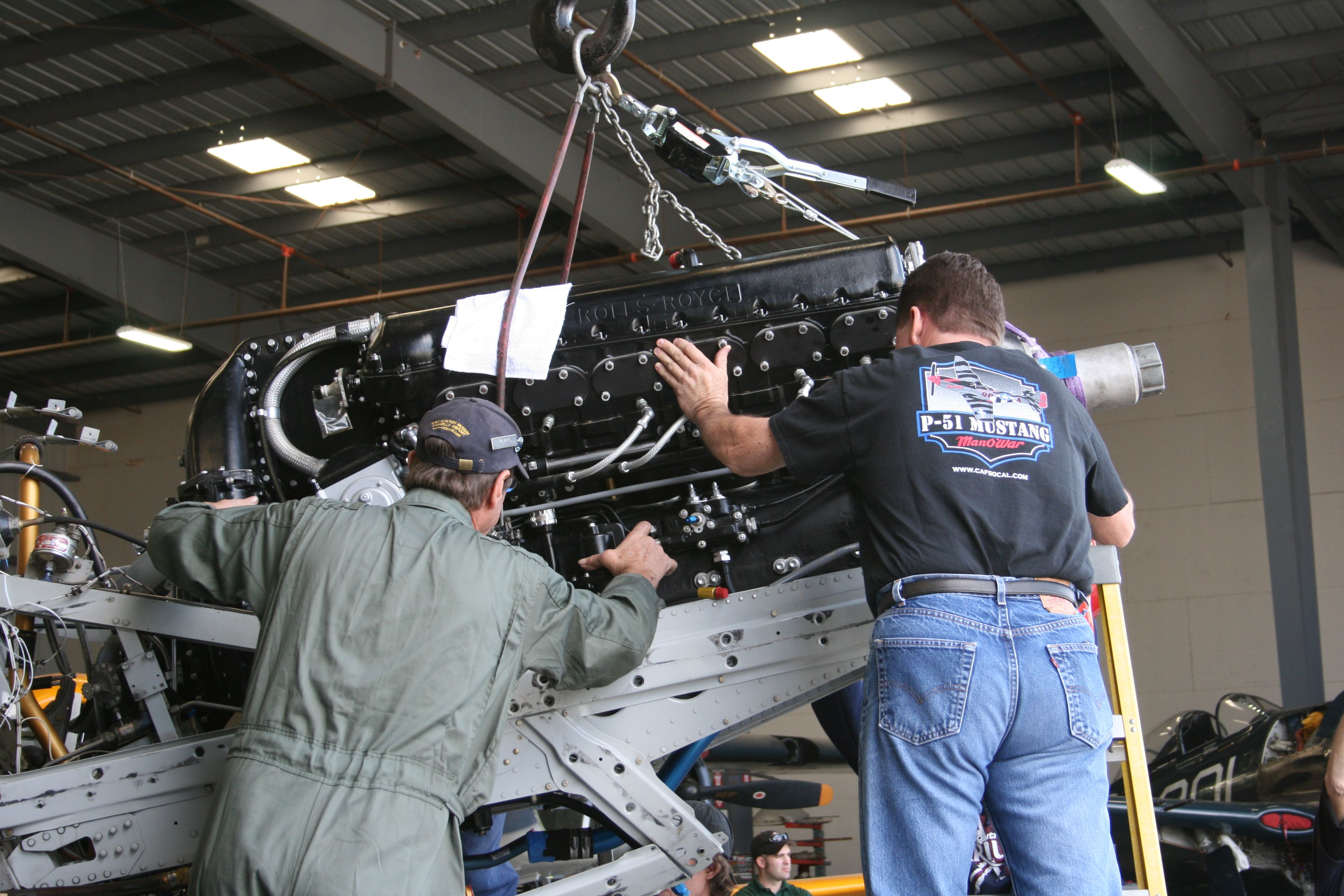
Move it and lower it very, very, very, very, very, very slowly, constantly checking to make sure that all of those hoses and wires are still where they’re supposed to be when they get hooked up next week. Everything on the engine has to line up correctly on the engine mount pins.
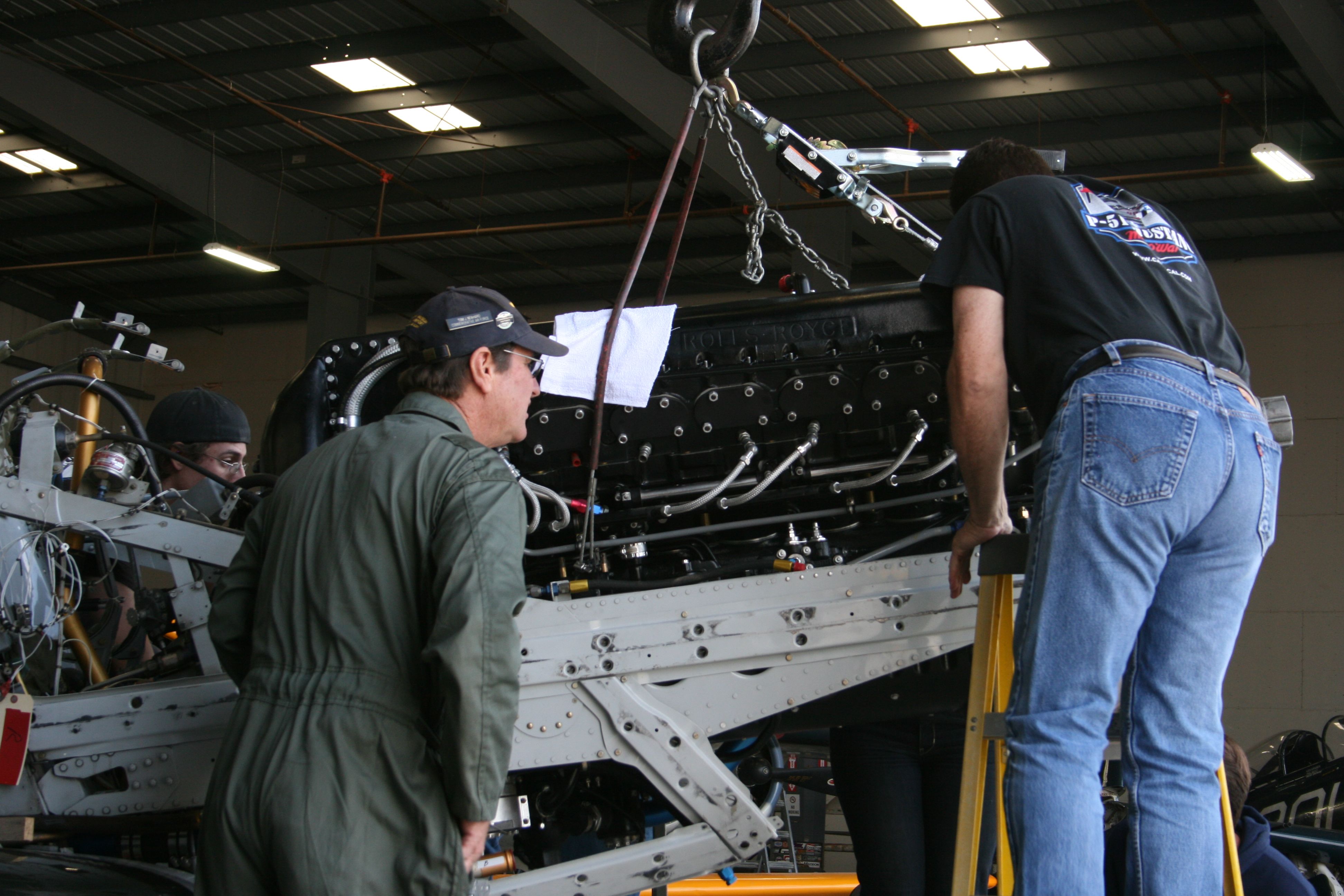
One last check as tension starts to come off the hoist.

Two months or more of preparation pays off with a perfect job. Now to hook everything up and get her flying again! We’re not there yet, but today we passed a major milestone.
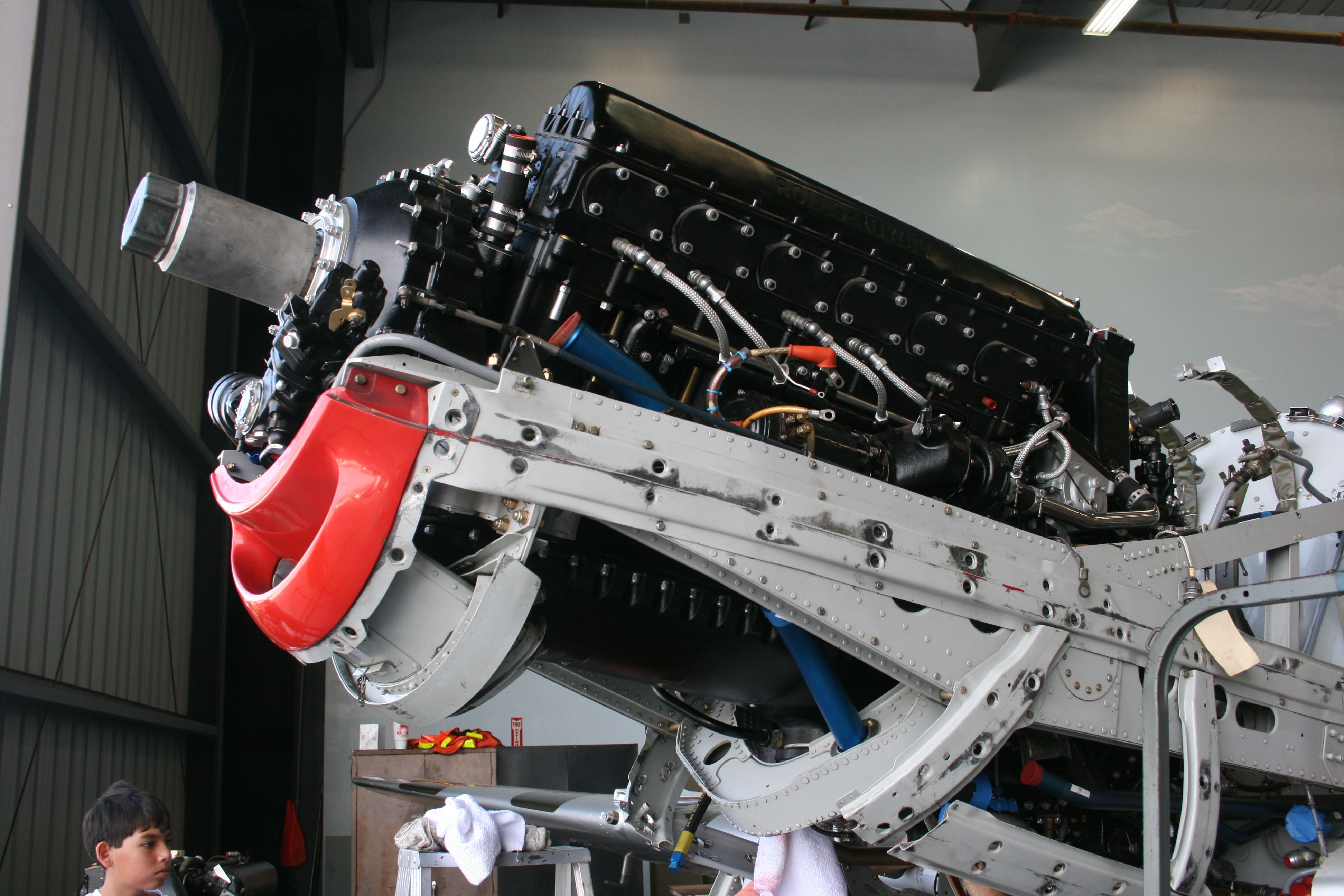
Kudos to Trace Eubanks, our P-51 crew chief, his crew, and all of the other mechanics at the Southern California Wing of the Commemorative Air Force who put so much time, effort, sweat, and care into taking care of these precious and wonderful machines!!
Summary:
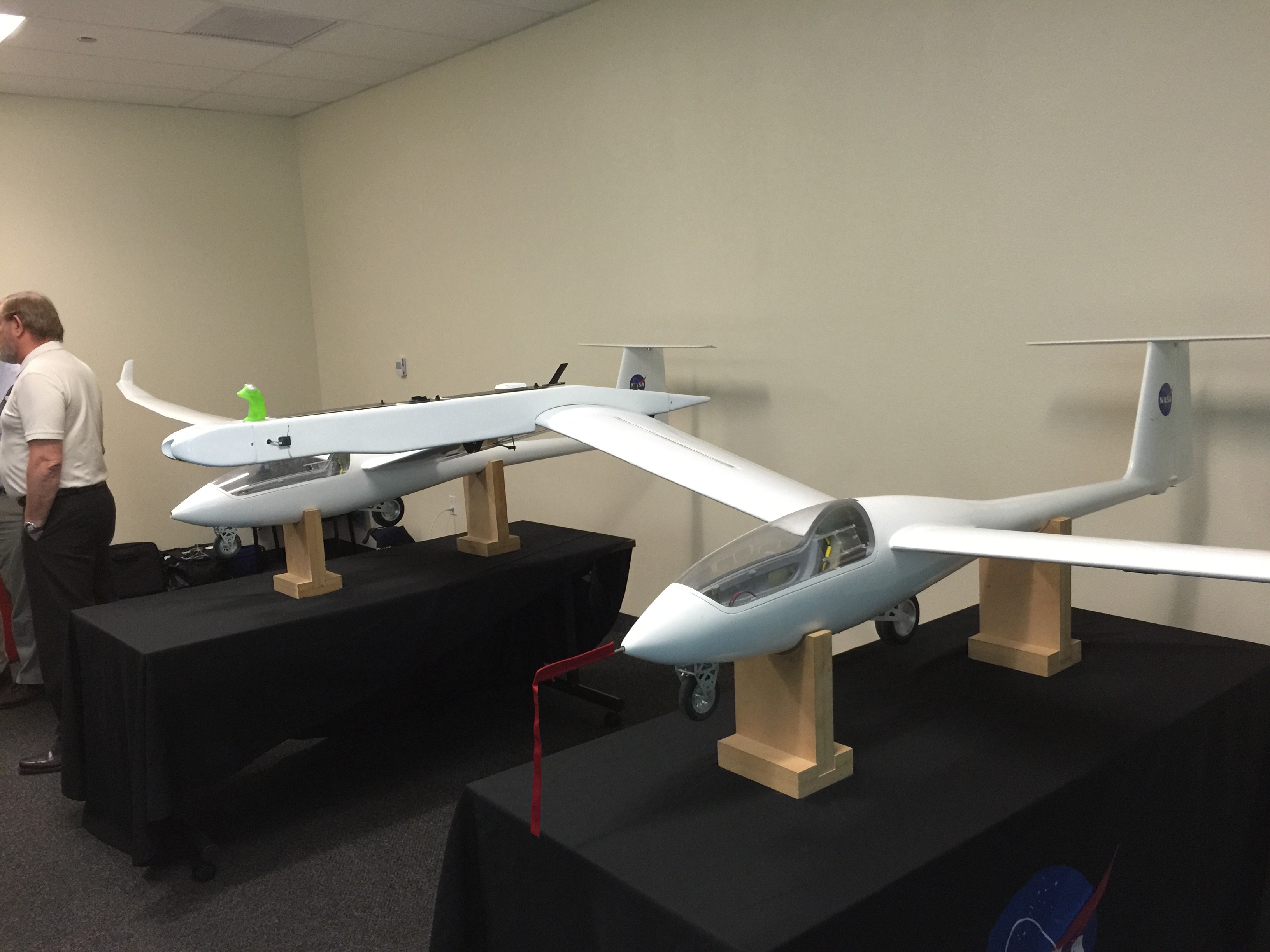
This is the remote-controlled model for the Towed Glider Air-Launch System being developed at NASA Armstrong. The concept is similar to Virgin Galactic’s “White Knight” aircraft, except that it’s a remotely piloted glider instead of a jet with a pilot and co-pilot.
Doing it this way introduces (they believe) some serious economies into the system. By increasing the “carry efficiency” (ratio of cargo weight to carrier vehicle weight) they can take bigger payloads (rockets). By being a glider, they can reduce the development and operational costs — all the expensive stuff (engines, life support, heavy airframe, fuel tanks) is on the standard jet (such as a military cargo jet or even a commercial business jet) used for towing.
This model has flown already, being towed by a small drone. Next they’ll fly it up to 10,000 feet, then fly it with a small rocket, then test the releasing of the rocket, then test taking it up to 10,000 feet with the rocket attached, and finally taking it up to 10,000 feet with a rocket attached and dropping the rocket (which may or may not fire).
Right now there’s no launch capability that allows someone to put 100 pounds into LEO (Low Earth Orbit). About the smallest rocket available will put 1,000 pounds into orbit for about $50M. This could allow a 100 pound payload to get into orbit for $1M or even less. Once that capability is available, there are a lot of businesses and universities that would like to use it.
Furthermore, the idea should scale up. In theory, if you build a glider the size of a 747, you could tow a rocket big enough to carry a crewed vehicle to LEO, for small fraction of the $75M+ that the Russians are currently charging for a Soyuz seat.
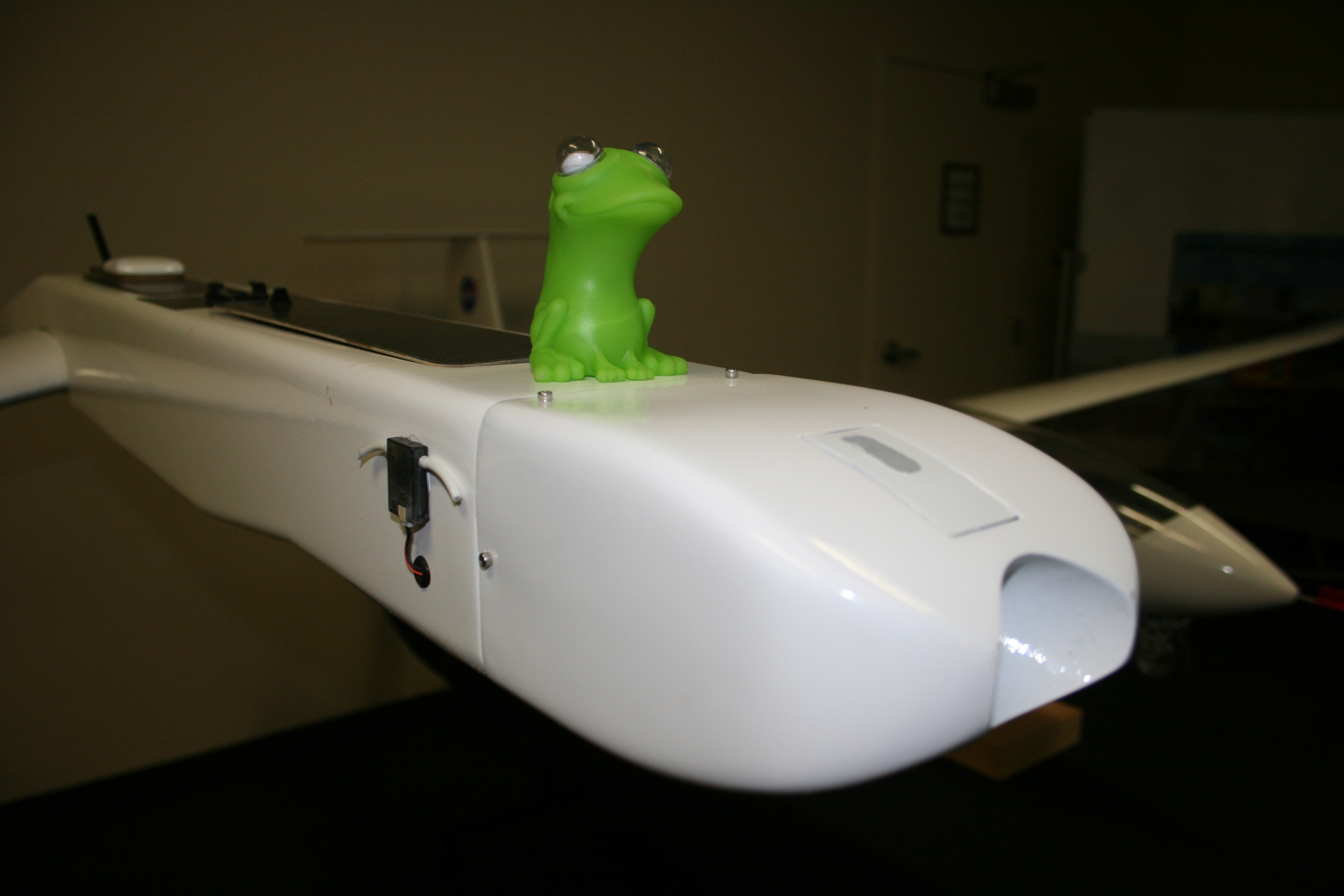
On the other hand, some folks are still confused about the difference between a “towed glider” and a “toad glider.”
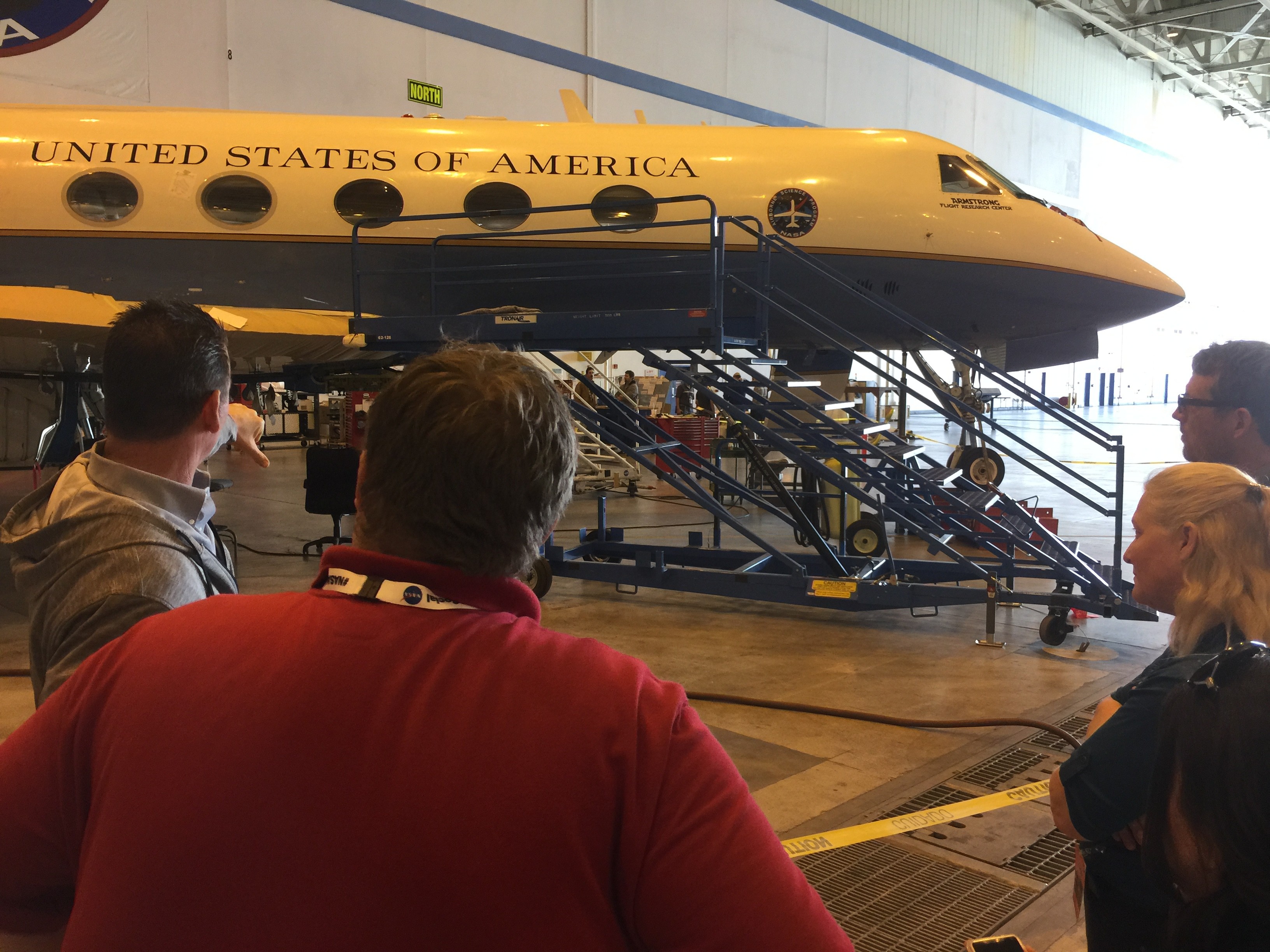
Back down in the hanger after lunch, John McGrath showed us the two C-20 UAVSAR aircraft, known to us civilians as Gulfstream III business jets, albeit heavily modified.
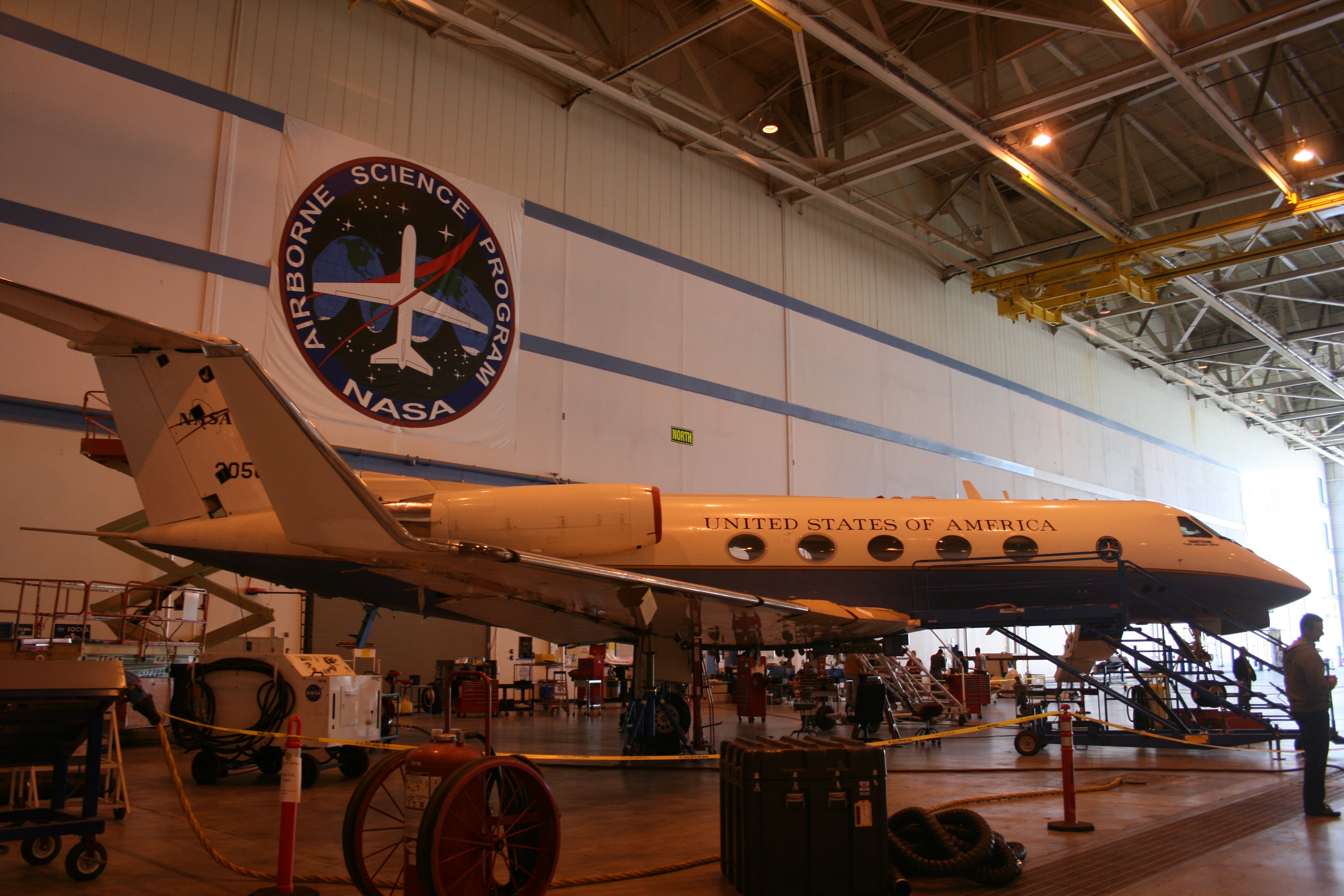
The Airborne Science Program at NASA Edwards covers all of the aircraft-based scientific research being conducted. Out at the NASA Armstrong facilities on Edwards Air Force Base, the primary focus is on aeronautical research. (See my posts regarding the November NASA Social there.) In Palmdale, the aircraft are operated in order to provide a platform for researchers to gather the data they need.
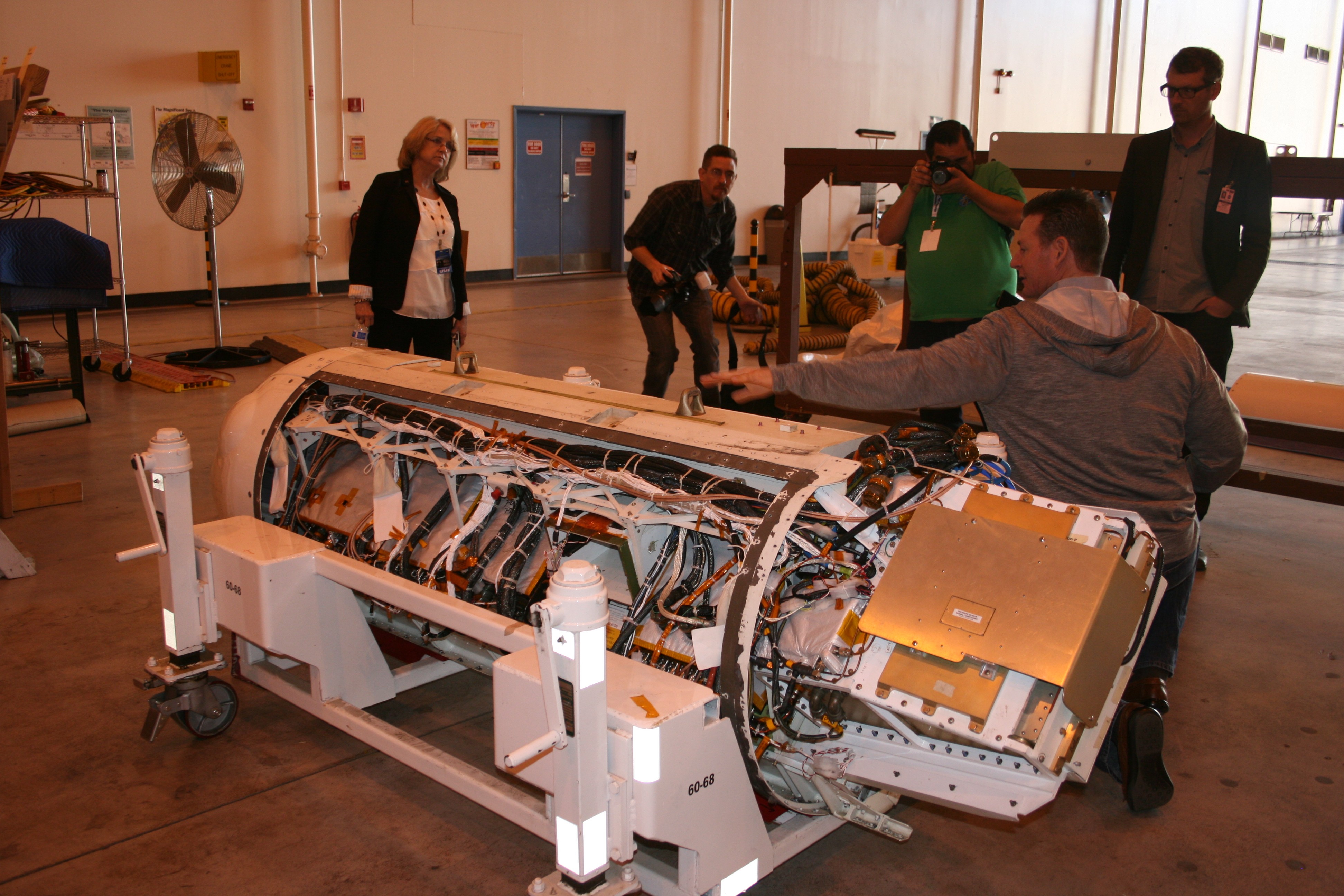
Here Mr. McGrath shows us one of the pods that gets mounted under the belly of the C-20. These pods are more or less “plug and play,” so researchers and outside institutions can fill one with their instruments and equipment, then “simply” get it attached to the C-20. I suspect that it’s a bit more complex than that, but the system has been substantially streamlined to make it much faster and easier than it would be if everyone did their own designs and each one started from scratch. In this case, the pod’s instruments had just undergone a major upgrade since the newer instruments were far more sensitive than the previous instruments.

Here you can see how this C-20 is up off its gear and surrounded by equipment. Underneath the aircraft, in the center near where the short, orange ladder is, you can see where the pods get attached, with a couple dozen connecting wires dangling down.
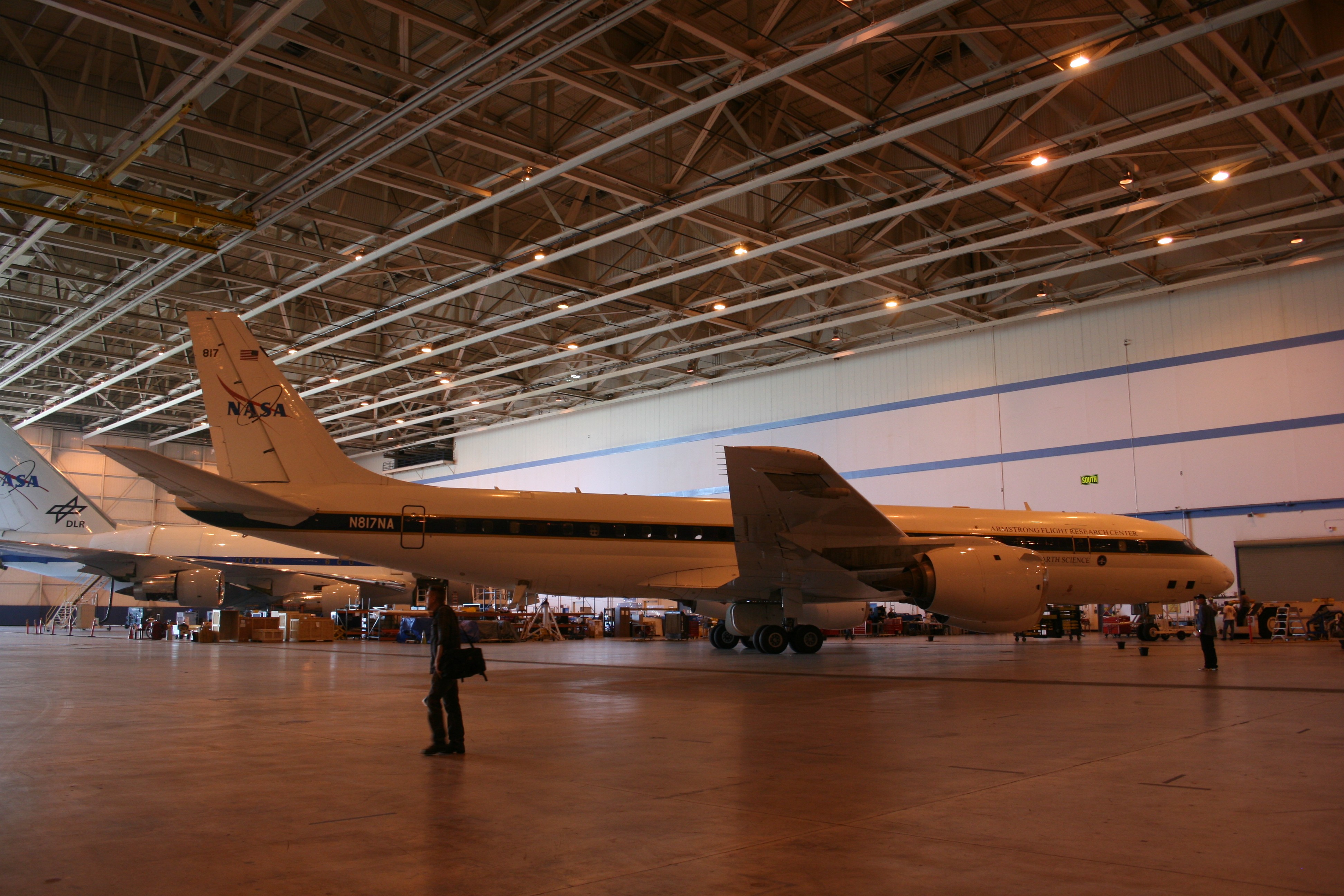
This is the NASA Edwards DC-8, known to us civilians as a DC-8. It also has many modifications, including ports that allow instruments, sensors, and cameras to stick outside the airframe. In addition, many of the stock windows have been replaced with perfectly clear, optically flat windows so that cameras can be used through them without distortion.
The DC-8 allows instruments and the scientists running them to get wherever they need to be. For example, in a couple of weeks the European Space Agency’s ATV-5 cargo spacecraft will be leaving the International Space Station and re-entering to burn up and be destroyed over the South Pacific Ocean. But rather than do a “normal” destructive re-entry, the ATV-5 is heavily instrumented and will re-enter at a shallow angle to the atmosphere. This simulates how satellites enter the atmosphere when they’re making unplanned re-entries, as well as how they ultimately intend to de-orbit the International Space Station.
The instrumentation on the ATV-5 will give the engineers data on how spacecraft break up and are destroyed. The DC-8 will be based out of Tahiti for a few days, and with the ATV-5 re-enters, all of the instruments and cameras onboard will be gathering outside data to complement the data being transmitted from inside the ATV-5 as it is destroyed. (Tahiti for a few days – tough gig!)

Brian Hobbs showed us the ER-2 aircraft, which is a civilian version of the U-2 spy plane. It can get all the way up to 70,000 feet, flying in an environment that’s very similar to actual conditions in outer space. That allows instruments being designed for use on satellites to be tested before launch and modified as necessary. In addition, the ER-2 can fly over a ground location at the same time that an orbiting satellite is flying over, allowing the instruments on the ER-2 to get the data needed to calibrate the instruments on the satellite above.
Another application the ER-2 is excellent at is meteorological research, such as the study of hurricanes. If you have instruments at the surface, instruments at several elevations up in the hurricane on aircraft or drones (see the Global Hawk or Ikahana remotely-piloted vehicles in my November posts), the ER-2 lets you get an even higher set of data by flying over the top of the storm. Having this vertical set of data can tell researchers far more than a single set of data from one altitude.
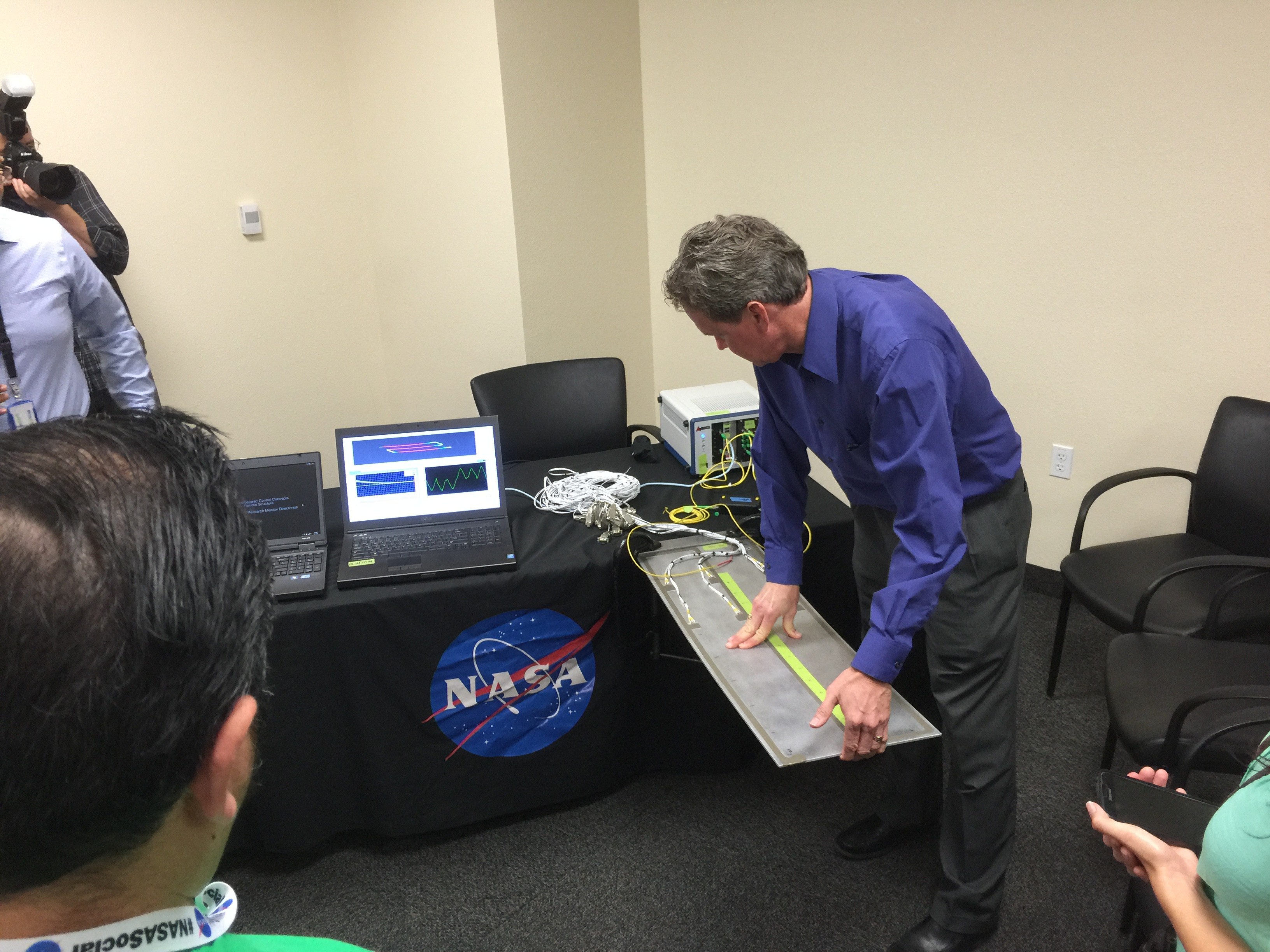
Back in the conference room we got a demonstration of a new technology in strain gauges. On this metal plate, you can see the yellow strip down the middle – it contains sixteen sensors, which connect to that huge bundle of white cables on the desk. This is the way things are done now. On the other hand, the plate also has a “W”-shaped string of fiber optic cable coming down the right side, going back up to the right of the yellow strip of sensors, then back down and back up on the left side. That hair-thin cable has 500 sensors in it, and it connects to the one, thin, yellow cable on the desk.
Obviously if you are building a new plane, ship, car, rocket, bridge, building, or whatever and you need data on the stresses being put on the structure, it’s a lot easier and lighter to have thousands and thousands of sensors on fiber optic cables instead of dozens of sensors using conventional equipment. In addition, where now the conventional sensors are used on the first few test aircraft of a new design and then stripped out due to their weight, the fiber optic sensors can be left in place forever, giving you continuous data over the life of the aircraft.
Other potential uses of this technology would be to embed it into new buildings or add it to existing structures such as bridges. Given the way our national highway infrastructure is starting to crumble, it would be really useful to have a relatively cheap, easy, and highly accurate way to know if the girders on a bridge are cracking and failing.

This is John Kelly, the Principal Engineer on the Towed Glider Air-Launch System (discussed above). Some of the figures he gave us were impressive.
For example, the real world carry efficiency of Virgin Galactic’s WhiteKnightTwo is 0.71, which is pretty good – it carries 29,000 pounds with a 70,000 pound aircraft. The L-1011 Stargazer system from Orbital only has a carry efficiency of 0.14, and the B-52 used by NASA to launch the X-43 test vehicle only has a carry efficiency of 0.17. But the models being tested have a carry efficiency of over 1.00 and they believe that the system eventually could have a carry efficiency as high as 2.00.
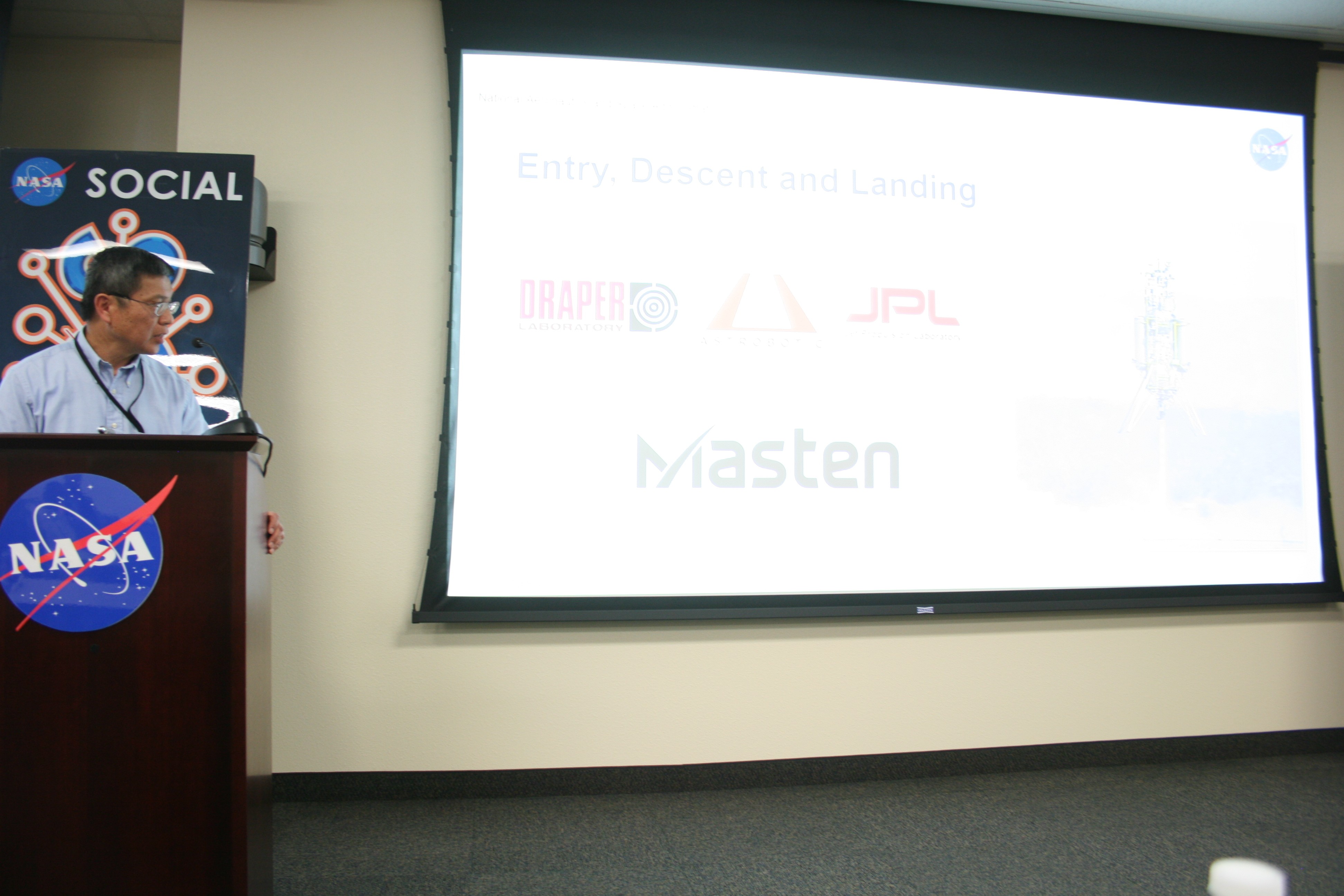
Finally, Ron Young told us about the Flight Opportunities program that NASA Armstrong runs. In short, by using drones, balloons, and parabolic-flight aircraft (also known as a “Vomit Comet”), NASA Armstrong tried to assist businesses in getting their experiments and instruments into a “space-relevant environment.” They may not quite get you into LEO, but they can get you close or in a simulated environment. This allows you to test and refine your equipment before taking the big (and expensive) step of going to LEO.
For example, the Zero-G 3-D Printer that’s currently running experiments on the International Space Station was first tested on a parabolic-flight aircraft. Operating in twenty-second intervals of microgravity, the major bugs were worked out of the system before it went up to ISS, where it’s now working. In fact, you may have seen a picture of a small ratchet wrench that was printed on ISS just before Christmas. Mr. Young had an identical wrench that was printed on the ground for us to examine and play with – amazingly light, and it’s astonishing that it was printed in one piece, not several pieces and then assembled. This could really be the next big thing in allowing crewed spaceflight into deep space.
And there you have it! A full day of information and some incredible hands-on experiences with the people and the equipment that are doing science and pushing the boundaries of aeronautics and space flight. The NASA Armstrong staff did a wonderful job of taking care of us and I can’t wait for another chance to go back for another NASA Social in the future.
Filed under Astronomy, Flying, Photography, Space
For my third NASA Social, I was part of the national “all hands on deck” event for the “State Of NASA” speech by NASA Administrator Charlie Bolden. There were simultaneous events at ten NASA centers around the country. I went back to NASA Armstrong (posts for previous NASA Armstrong events here, here, here, here, here, here, and here), but this time instead of being at Edwards Air Force Base we were at their satellite facility at Palmdale Airport.
All of the NASA centers were connected for Administrator Bolden’s speech, while each of the ten NASA centers then had presentations which highlighted some of their specialties. For example, at NASA Stennis in Mississippi, they showed off their facilities for testing rocket engines. At NASA Johnson in Houston, they highlighted the International Space Station mock-ups and training facilities. Locally here, at NASA JPL the attendees learned about the various “icy bodies” spacecraft, including Dawn which is approaching Ceres, and New Horizons which will fly by Pluto later this year.

At NASA Armstrong, first of all it was great to see friends that I’ve made at previous NASA Socials. Running the NASA Socials at NASA Armstrong are Kate Squires (in red) and Kevin Rohrer (on right, talking to Kate). They did a fantastic job!
Being on the west coast, we were three hours behind all of the east coast Socials. We had a few introductory comments, all got attached to the wi-fi and started charging our mobile devices (there is no such thing as too many charging opportunities at a NASA Social), introduced ourselves, then watched Administrator Bolden’s speech from Florida.
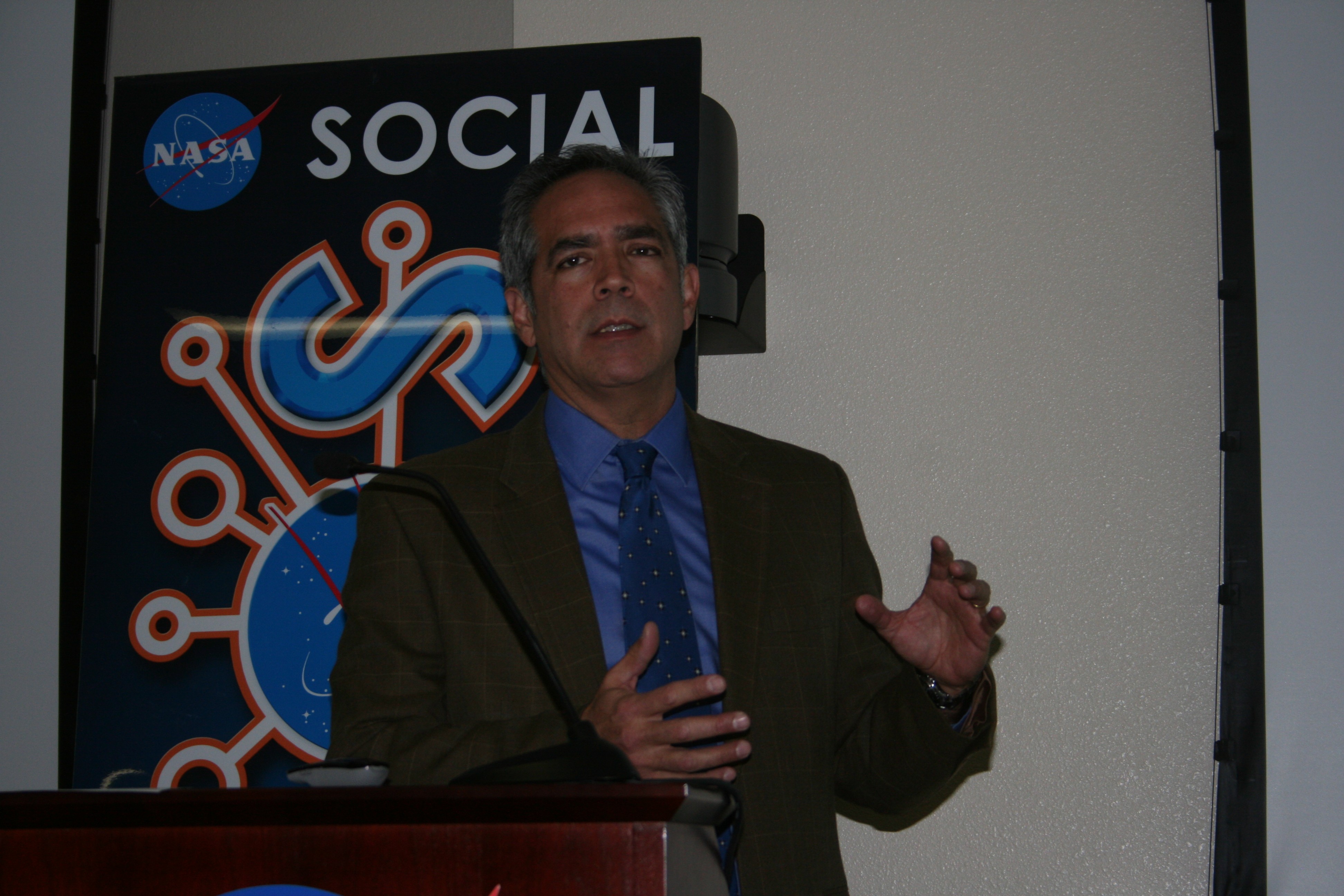
Following the national speech, NASA Armstrong Director David McBride gave us a review of the budget data specific to what’s happening at NASA Armstrong. If you’re interested, you can download a PDF of his slides here.
The rest of the day was full of a whole slew of presentations and tours to see flying hardware up close and personal. In picking and preparing pictures for this article I see that there are too many for one post, so I’ll post the second part on Friday. (Tomorrow and Thursday are already committed to other posts.)
In addition, I’ll remind everyone again that I was Tweeting like crazy (my thumbs were on fire!) with even more pictures, wisdom, and insight delivered in 140 characters or less. You can either see that over in the sidebar on the right (if you’re on a desktop browser) or you can find me on Twitter as “@momdude56”.
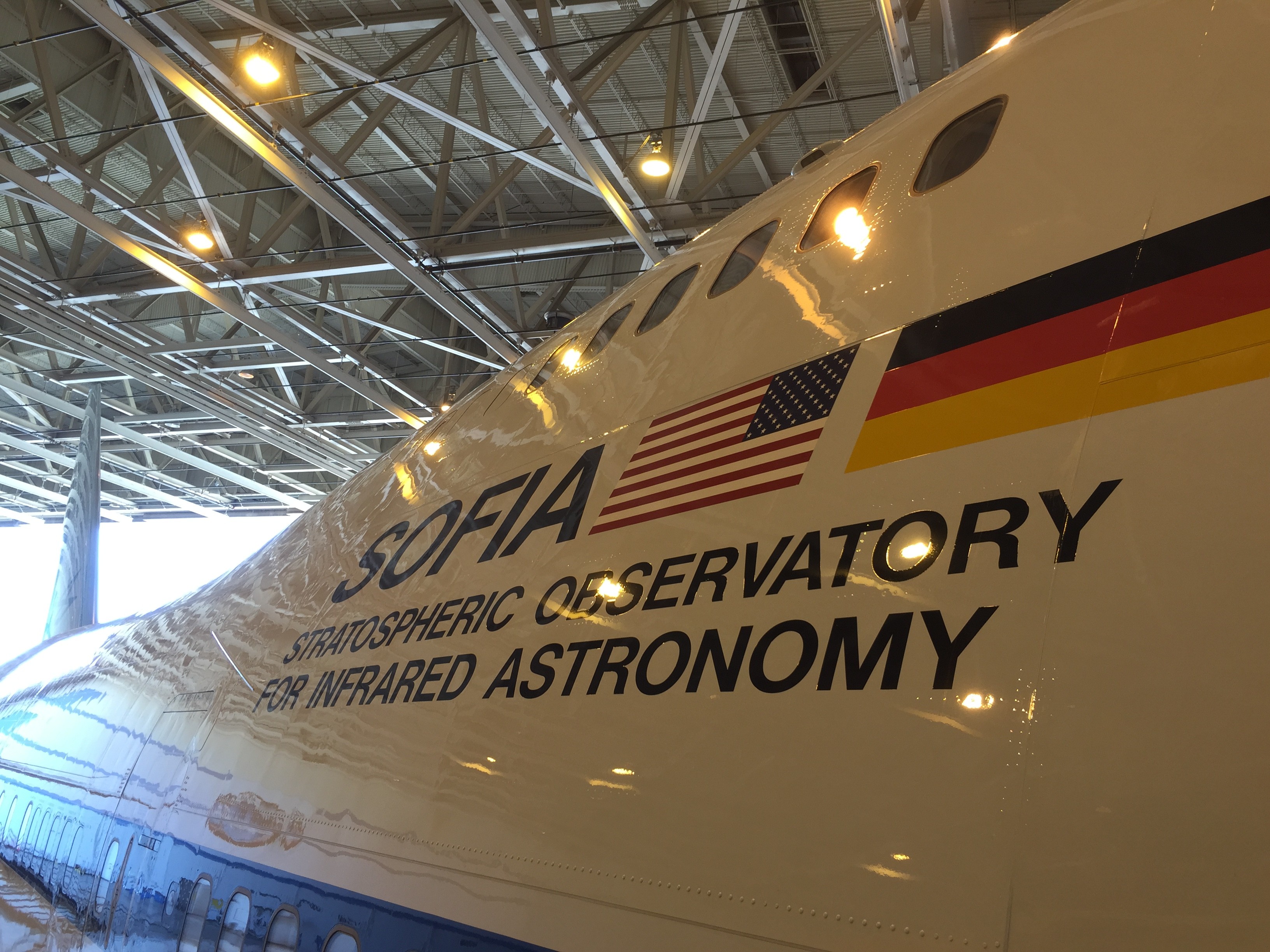
Today, I’ll talk about the unquestioned star of the show — SOFIA, the Stratospheric Observatory For Infrared Astronomy.
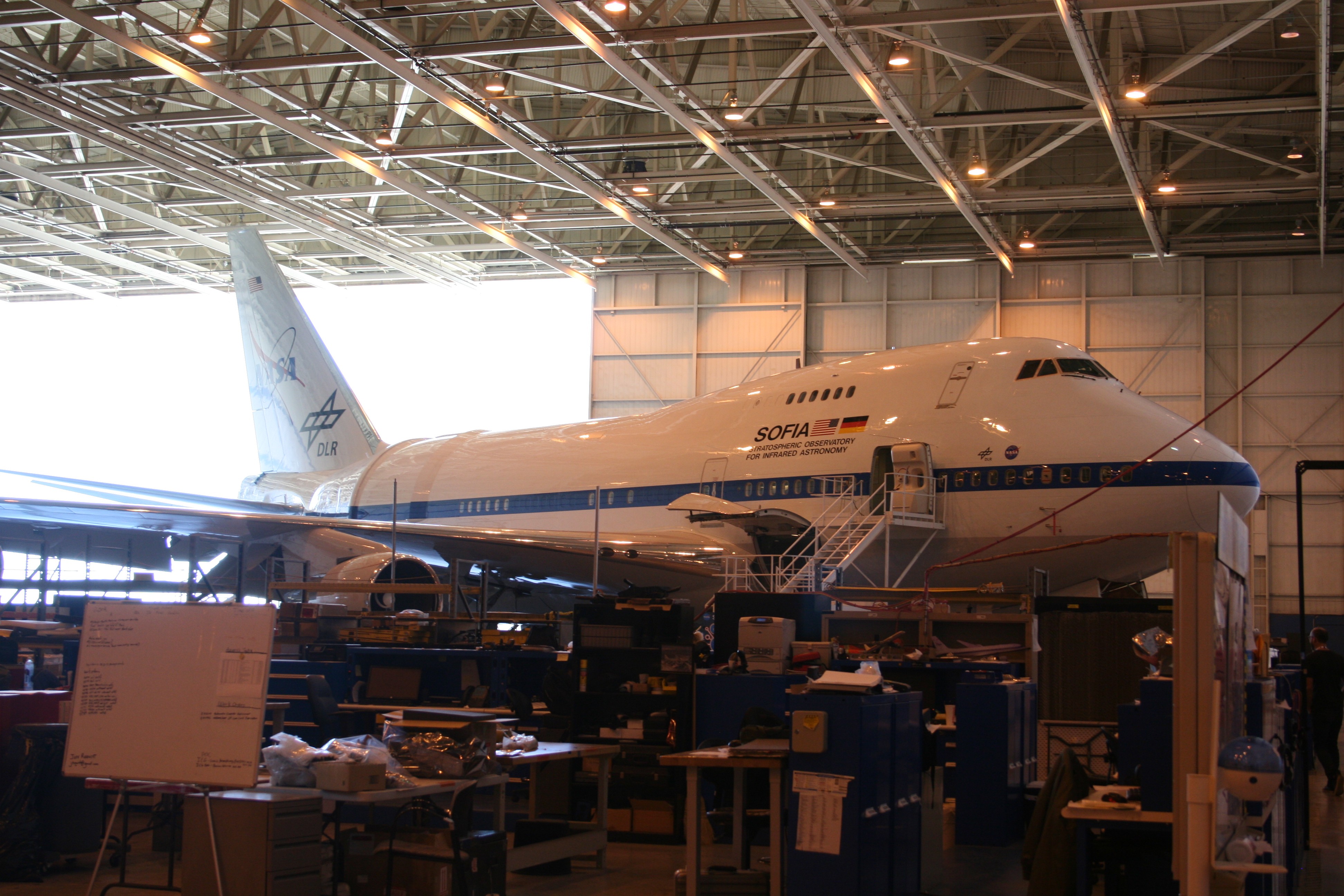 There she is! A heavily modified 747-SP, operated in cooperation with the German Aerospace Center (DLR – Deutsches Zentrum für Luft- und Raumfahrt). In fact, she just got back to the US and resumed astronomical observations in the last month or so after an extensive period of maintenance and upgrades performed in Germany.
The concept is simple on paper. You can see many different things in astronomy by looking at the sky in different wavelengths than visible light. Radio telescopes, X-ray telescopes, gamma ray telescopes, infrared telescopes — they all see a different sky by looking in different parts of the electromagnetic spectrum. Combining all of those different views lets us know far more about the universe than by simply looking in the visible spectrum, which is a tiny portion of the entire spectrum.
The problem with infrared astronomy (and others listed) is that some types of light are absorbed by our atmosphere. The light we’re looking for simply doesn’t make it to the ground. In the case of infrared radiation, it’s absorbed by the water vapor in the atmosphere.
If you could get above that water vapor, you could see the infrared radiation. Outer space is ideal since it’s above 100% of the water vapor, but it’s hard to get there, expensive, and once you’re there you can’t fix or upgrade things. But what if you could get above 99% of the water vapor? Say, by flying at 40,000 feet or so. Then you could also upgrade and change and repair things as needed every time the plane lands.

Thus was SOFIA born. See that bulge in the body just ahead of the aircraft tail? That bulge contains a huge roll-up door that can open when the plane’s flying at altitude. Why would any sane person want to open a huge door in the side of a 747 at 40,000 feet? In order to expose the 2.5 meter, 19-ton high-precision infrared telescope that’s sitting in there, of course!

Here we’re getting a rundown on how SOFIA was modified. (I’m sorry, I didn’t catch the name of our presenter – perhaps Kate Squires will read this and drop the information into the comments? Hi, Kate!)
One of the critical side effects of opening a gaping hole in the side of an airplane at 40,000 feet is that anyone inside would be sucked out to a horrible, terrifying fall to their death. Scientists and engineers (as well as OSHA and NASA) frown upon such situations, so just forward of the telescope is a pressure bulkhead, allowing everyone on board to comfortably (and safely) run the telescope and collect their data.
Then we got to not just ogle SOFIA from the outside, but to go inside and see how she works in detail.
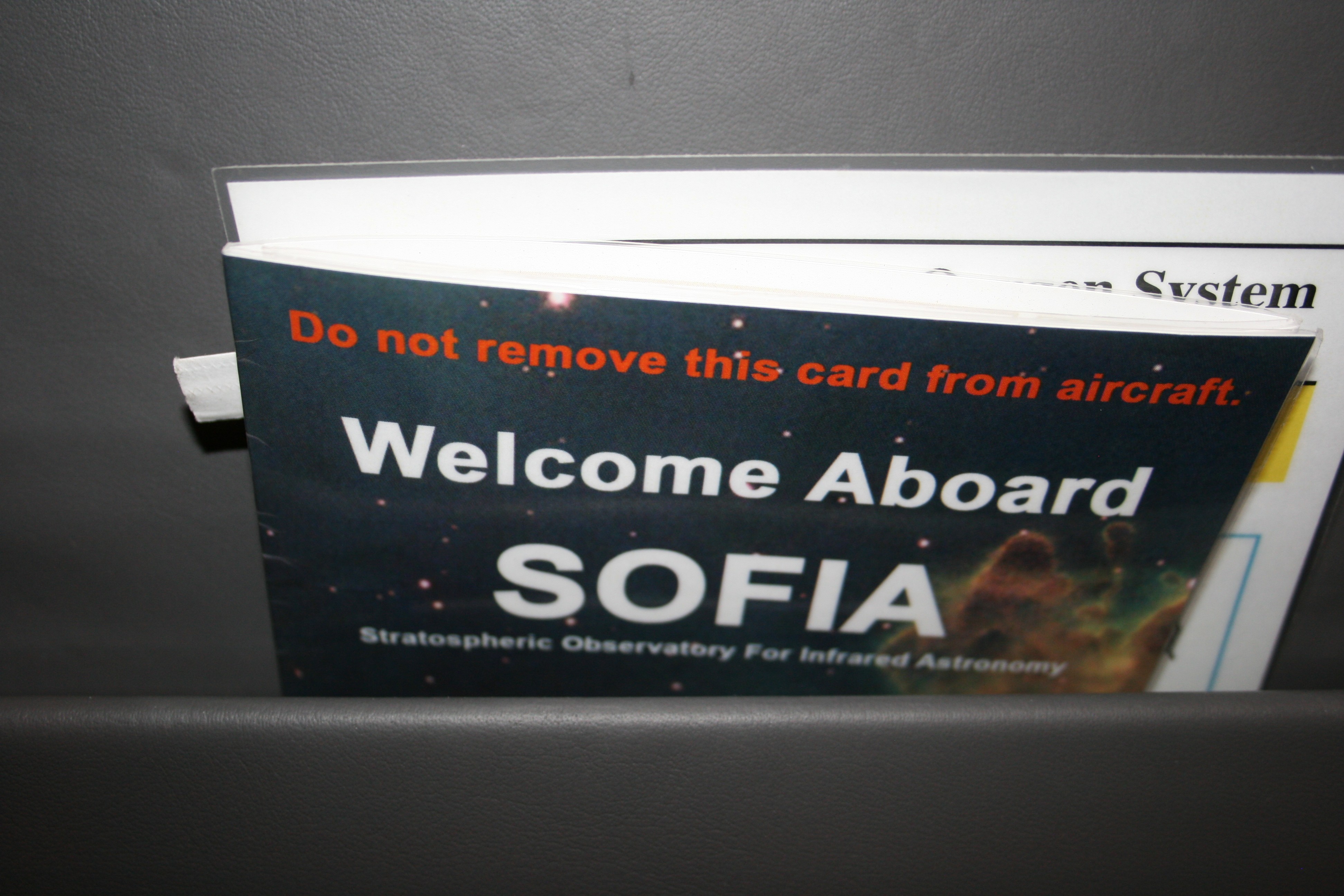
While the seats are comfy, first-class sized seats (the typical size of the crew for a flight is only forty or so), there’s no in-flight entertainment other than what you bring yourself. Despite my enthusiasm for the idea of flying in SOFIA, I’m told that the technicians, engineers, and scientists are busy gathering data, it’s night, it’s a long flight (typically most of the night), and if you’re not doing something, it can be pretty boring. (I would love to have the chance to judge that for myself!)

Up front, the passengers share space with banks of computers and data collection hardware. A good night of observing can generate many terabytes of data.

In back, you get all of the consoles that control the telescope once SOFIA’s on station and at altitude.
You might ask yourself (correctly) how you can keep a telescope pointed accurately at a star while in a plane. We’ve all been in planes, and even on a calm flight there’s a bit of rocking and rolling, minor turbulence, bumps and jiggles. Yet SOFIA is accurate to one-half of an arc-second. (That’s the size of a nickle seen at a distance of five miles.) How can that be?
Well, the telescope optics, despite weighing 19 tons, float freely, independent of the plane. They float on a bed of oil and then there are servos and motors that detect the motion of the plane and instantly move the telescope in the opposite direction. The plane bounces around as it flies, but the telescope stays locked on its target like a laser.
The result of this (I’m told) is that the telescope is a wonder to watch when you’re flying. To you, bouncing along with the plane, it looks like the telescope is twitching and shaking constantly. But that’s relative. In reality, you’re twitching and shaking, the telescope is rock solid in staring at its target.

So what does this wonder look like? Like a dream!
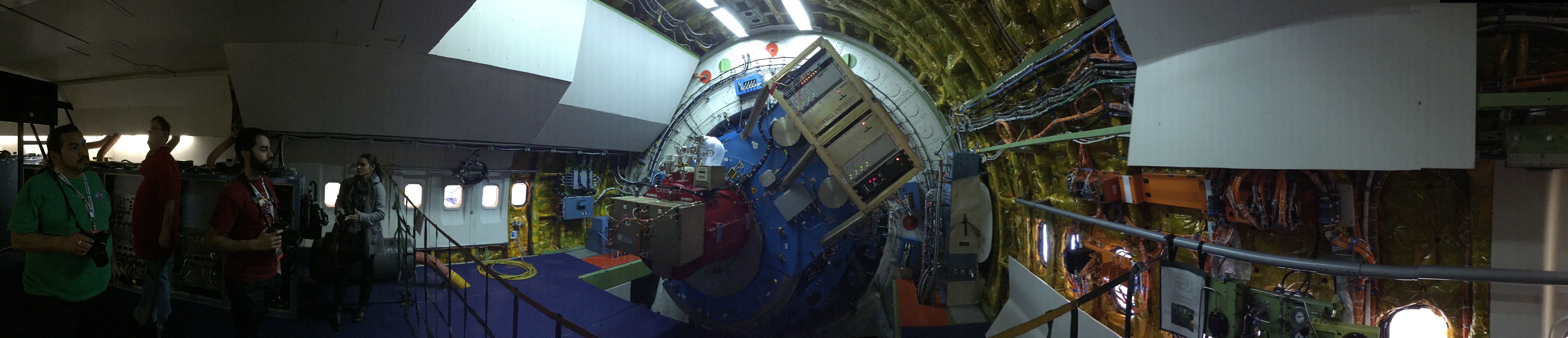
Here you can see the pressure bulkhead, with the back end of the telescope (the blue part) sticking out into the cabin. On the other side, the one-hundred inch diameter mirror (okay, 2.5 meters) is in its framework, with a series of mirrors that take the light gathered and send it into the centerline of back end here.

Up close, you can see several instruments being run by Cornell University attached. There are six different instruments that can be attached, with dozens of combinations.
In addition, around the rim you can see blue plates that are bolted on. These balance the telescope and are changed as instruments are changed. When balanced, despite weighing 19 tons, the telescope can easily be moved by hand.
So, yeah, you may have noticed that I thought that seeing SOFIA was pretty great. (That would be completely accurate.)
But wait, there’s more! On Friday I’ll have more pictures and information on seven other programs we heard about, some of which have the potential to be even more spectacular than SOFIA in ten to twenty years. Remember, “aeronautics” is “The First A In NASA,” and that’s what NASA Armstrong does.
Filed under Astronomy, Flying, Photography, Space, Writing
What a great day at my third NASA Social!
What a long day that leaves me wanting to flop face-down into my keyboard!
Tomorrow you will no doubt be inundated with me sharing what I learned at NASA Armstrong today. If you want a preview, there’s a list of my tweets & pictures from the day in the sidebar on the right-hand side of the screen. (If you’re reading this on the website using a desktop computer and not in an email or on a mobile device. It’s complicated.)
In the meantime, I have I mentioned how much I like the “panorama” function on the iPhone 6 and how it’s fast and easy and the pictures can be shared and emailed immediately, a fair trad off for the fact that they’re slightly less robust than panoramas stitched together from a series of megapixel DSLR photos? (Why, yes! Yes, I have!)
This is the interior of SOFIA, the Stratospheric Observatory For Infrared Astronomy. So, so, so, so über cool!
Tomorrow, much, much more!


 We Love The Stars Too Fondly