Category Archives: Astronomy

Lunar Eclipse Late Tonight, ISS Pass First

You may have heard that there’s a total lunar eclipse tonight, or perhaps not.
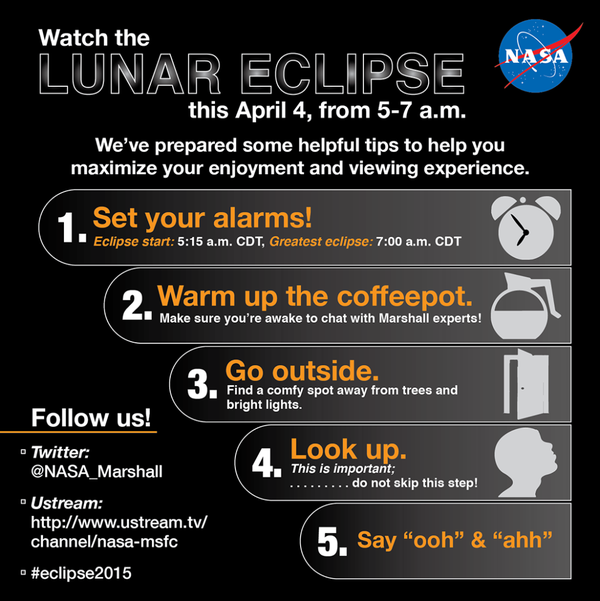
NASA Marshall

Image: NASA Marshall Space Flight Center

Unlike the two lunar eclipses of last year (April 14th and October 8th, many, many pictures there if you’re new here) which were visible over all of North and South America, high in the sky, and had totality phases lasting for close to an hour, tonight’s eclipse isn’t any of those things.
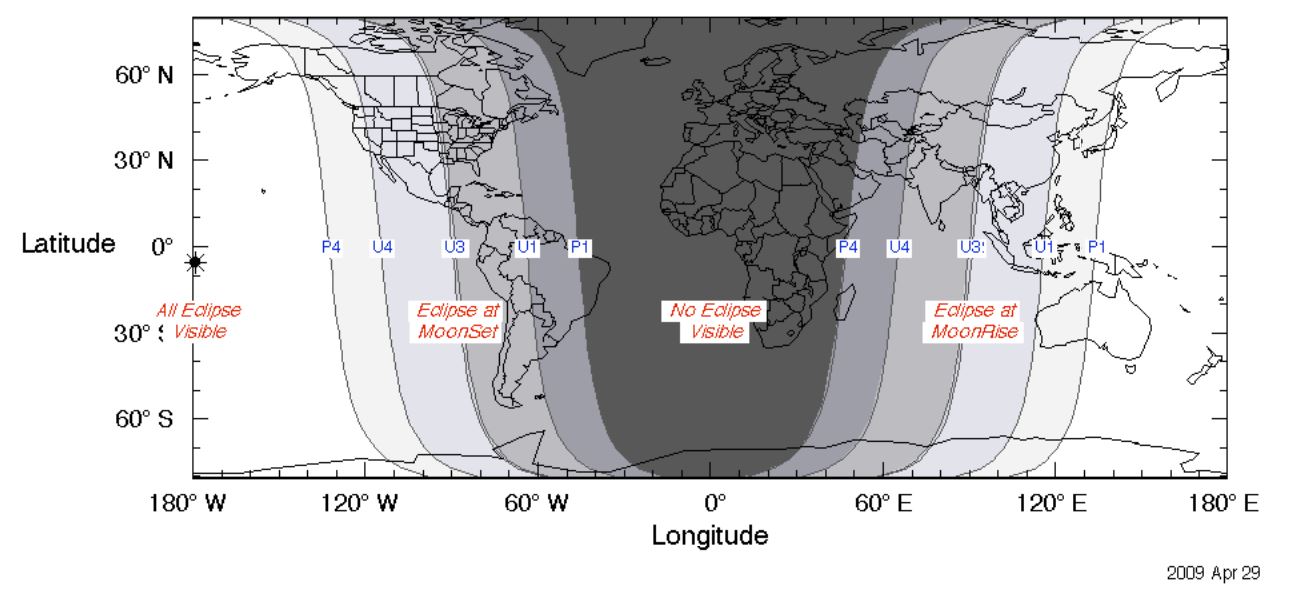
NASA GSFC Map

Image: NASA Goddard Space Flight Center

First of all, it’s best viewed from Hawaii or someplace in the middle of the Pacific Ocean, Australia, New Zealand, or far eastern Asia. (In the map shown, night & day are switched, so dark is bad for lunar eclipse watching.) For North America, most of the country will have the moon set during some part of the eclipse. If you’re east of the Mississippi, moonset will occur before totality begins. If you’re anywhere west of the Rockies you’ll have moonset just after totality ends.
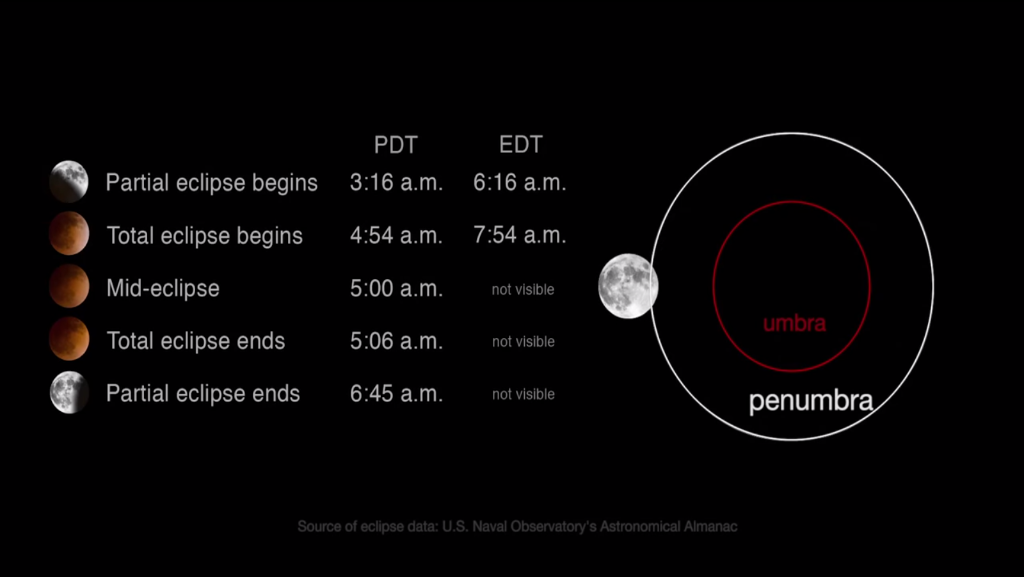
NASA Video

Image: NASA Jet Propulsion Laboratory

Secondly, it’s a short eclipse, just twelve minutes in totality. By comparison, the 2014 lunar eclipses had totality phases of 78 and 59 minutes, respectively. Tonight’s eclipse will be the shortest for the next several hundred years. To see why, see the NASA JPL video from which the still image above is taken. You’ll see that the moon just barely stays inside the umbra at totality.

So, if you’re Europe or Asia, sorry, no eclipse for you. If you’re in North America and you’ve got a clear sky, you can get up early to watch it. Totality begins at 04:54 PDT. If you need viewing tips (get a pair of binoculars and there is no danger to watching a lunar eclipse) or photography tips, you can find plenty here.

Will I be up and filling this space with pictures tomorrow? Maybe, I make no promises. I’ll try, no doubt, but for me it’s far easier to stay up late in the cold than it is to get out of a warm, soft bed and go out into the cold at 0300.

Meanwhile…

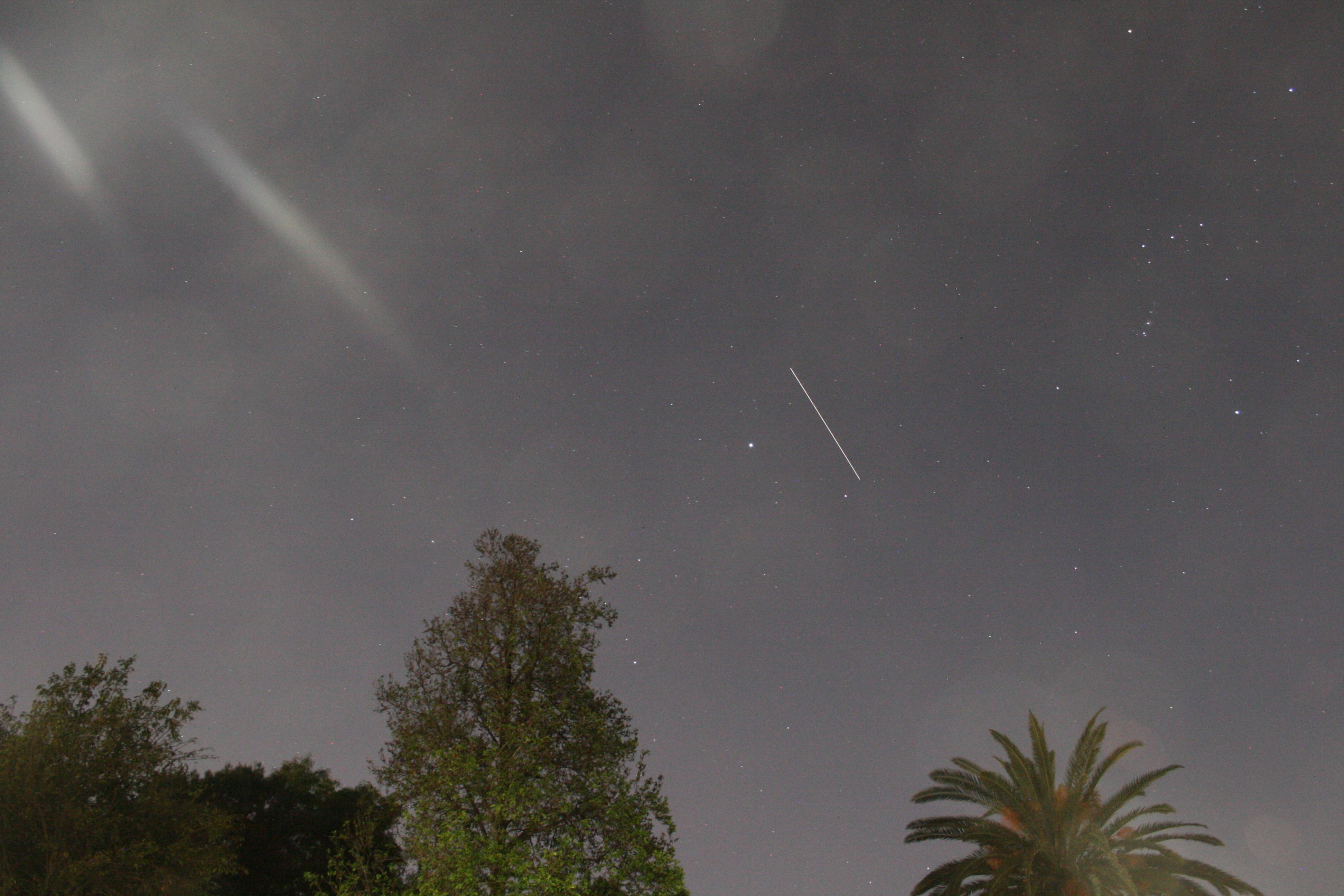
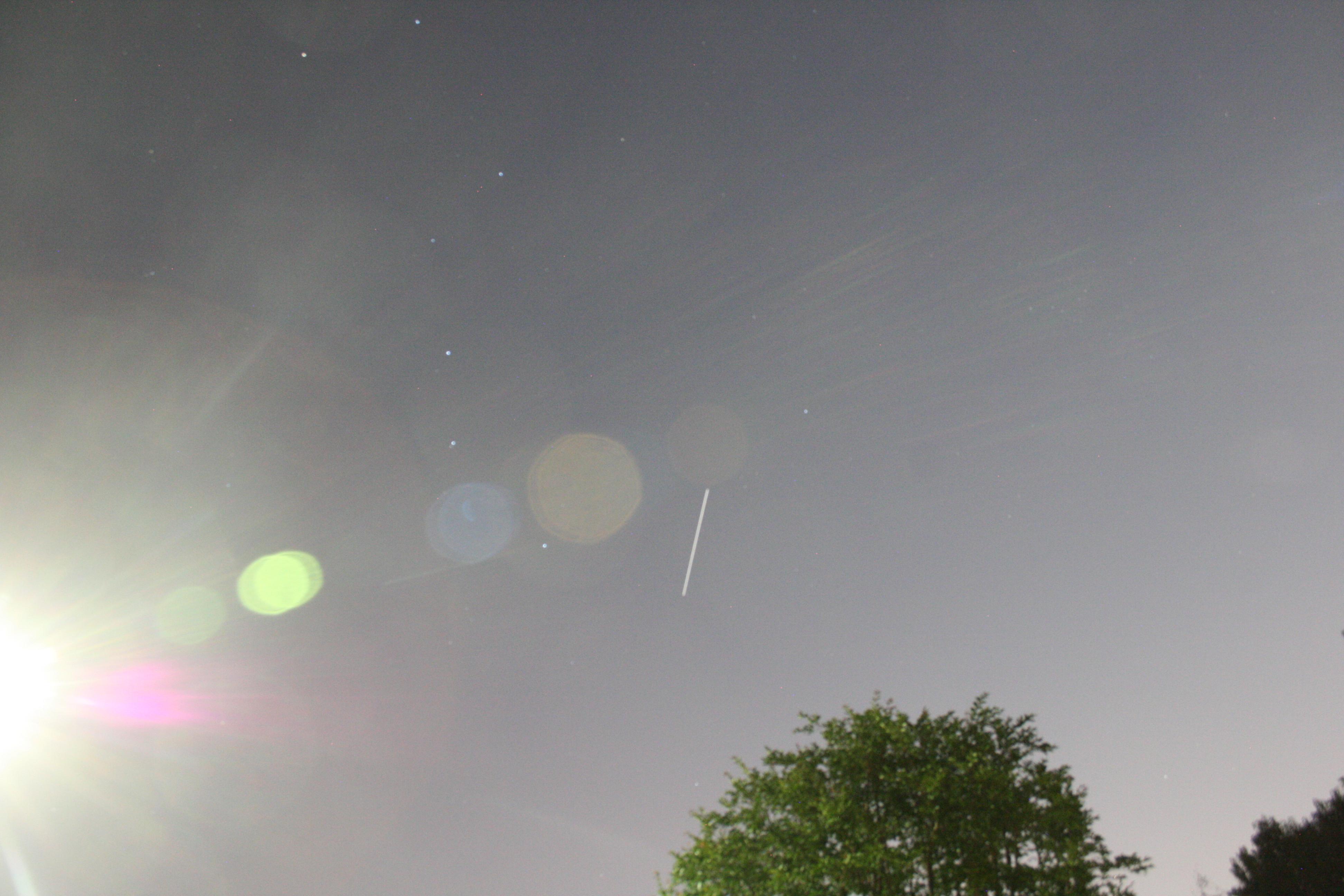
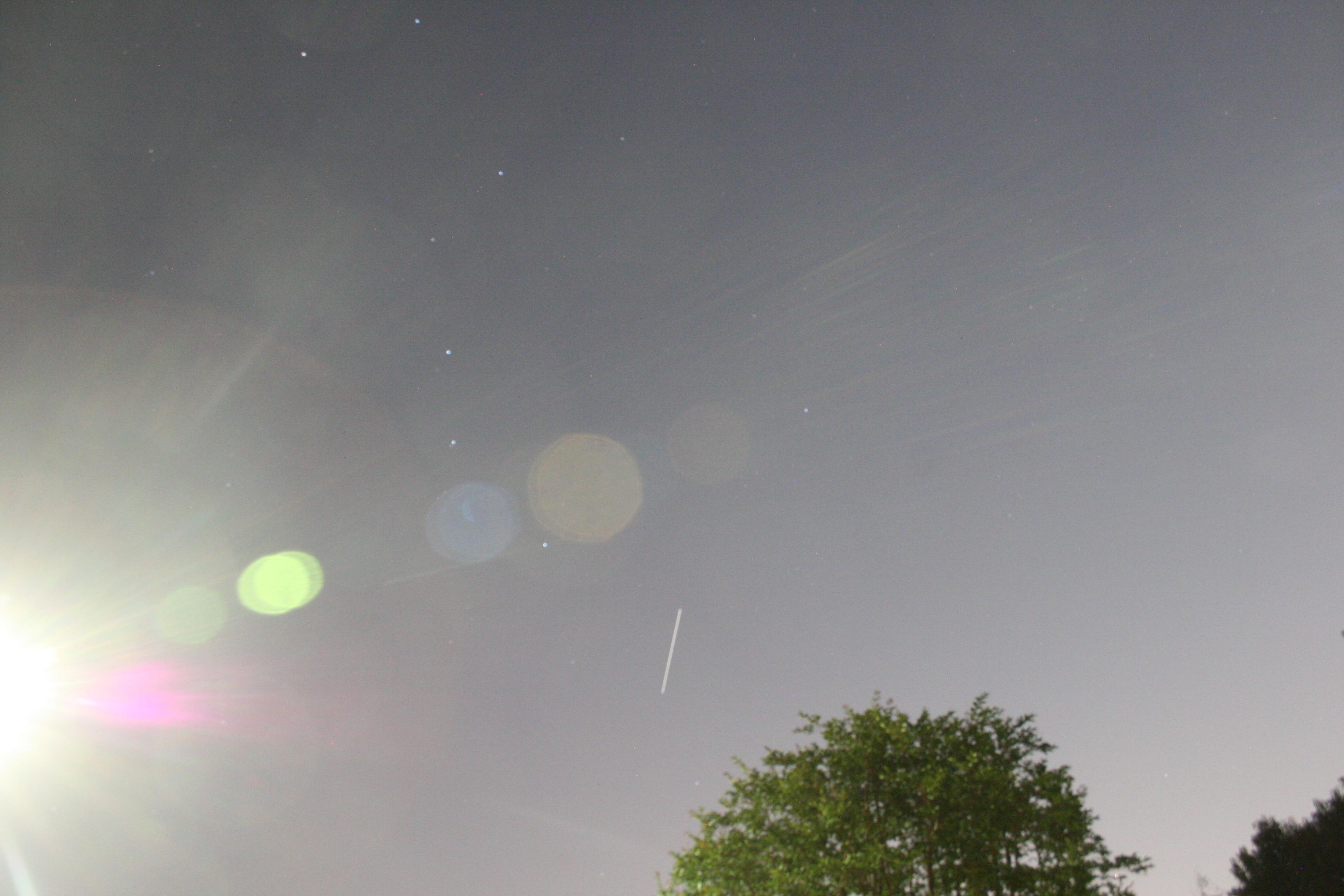
There was another fantastic pass of the International Space Station (ISS) over Los Angeles this evening. I went out (naturally), shot pictures (naturally), and given the early evening timing, gathered a small crowd of dog-walking neighbors wondering what I was looking at.
IMG_3879 small

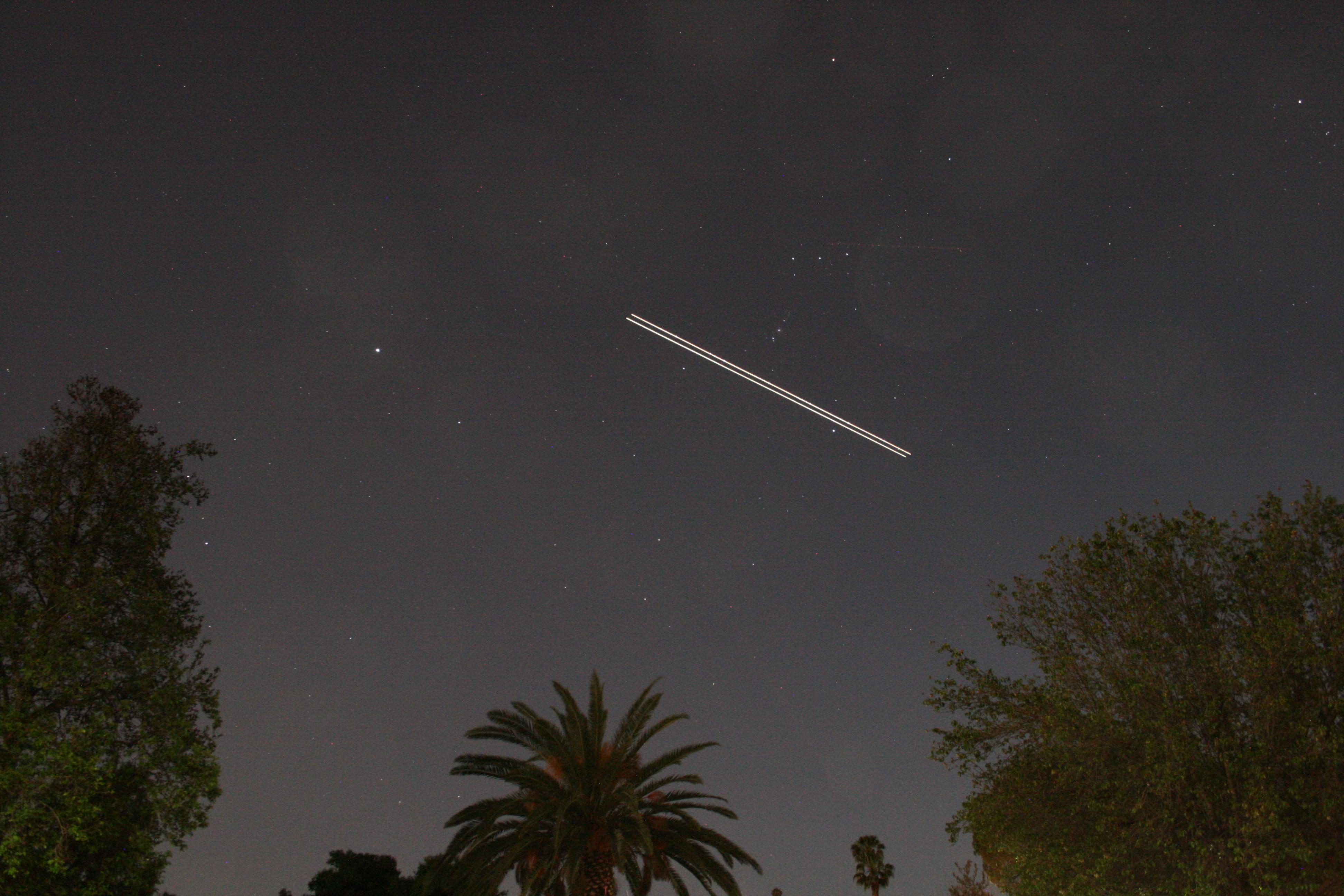
Looking SSW in this 10-second exposure, your first issue is all of the 737’s turning to final for Burbank’s Runway 8. But Orion looked nice above our honkin’ huge palm tree. There’s also a little “putt-putt plane” like I fly just above Orion’s belt, the line of red blinking lights.
IMG_3885 small

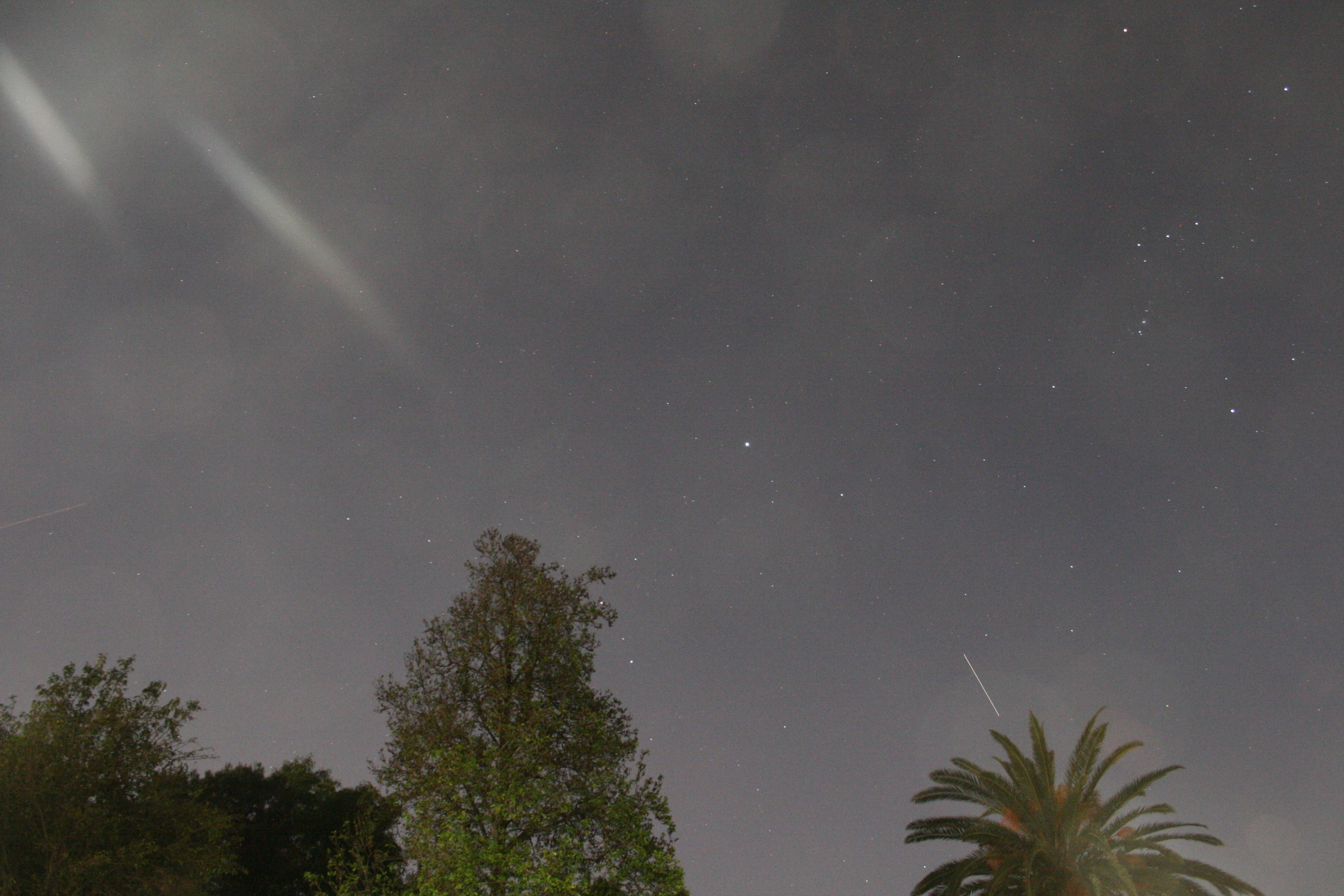
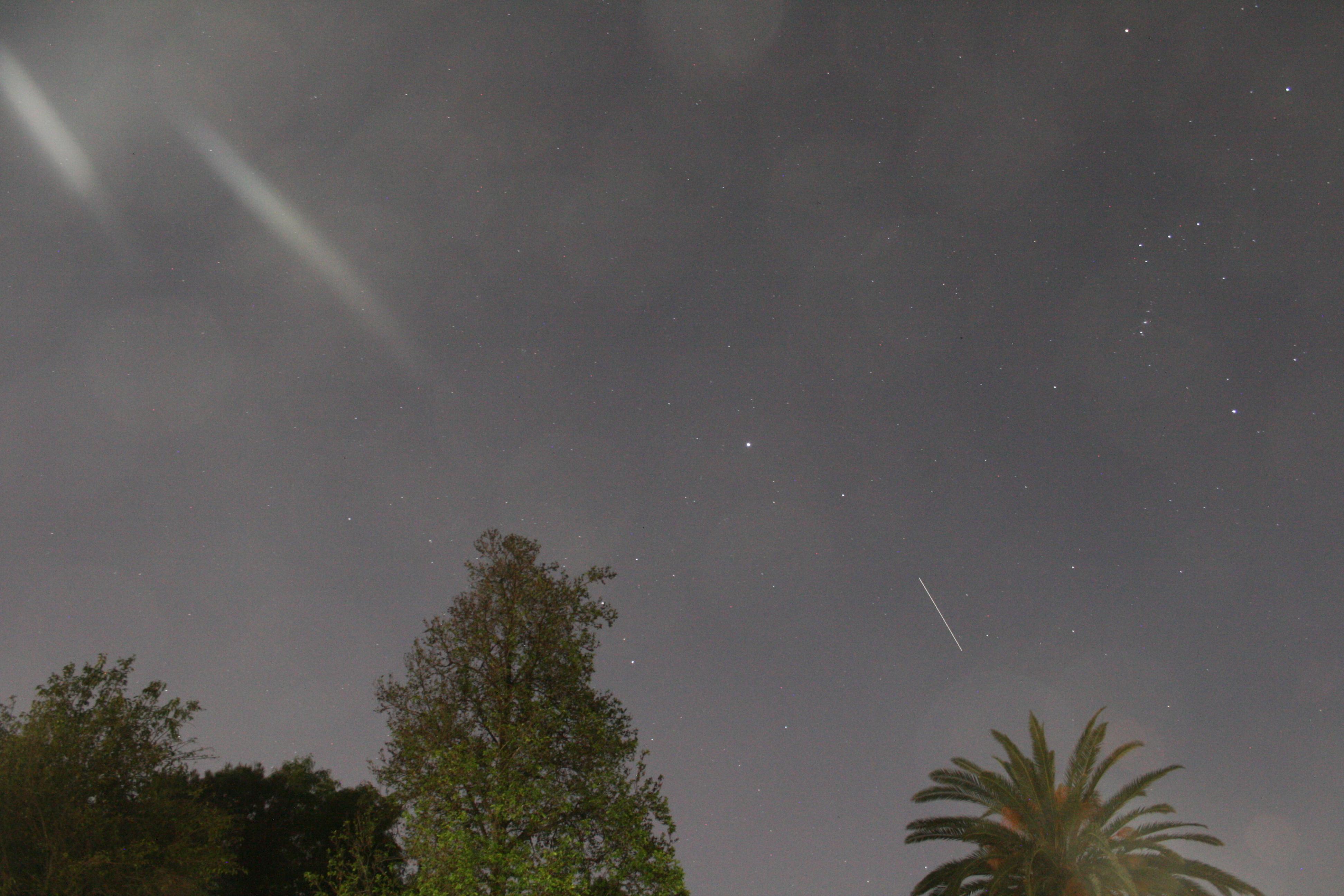
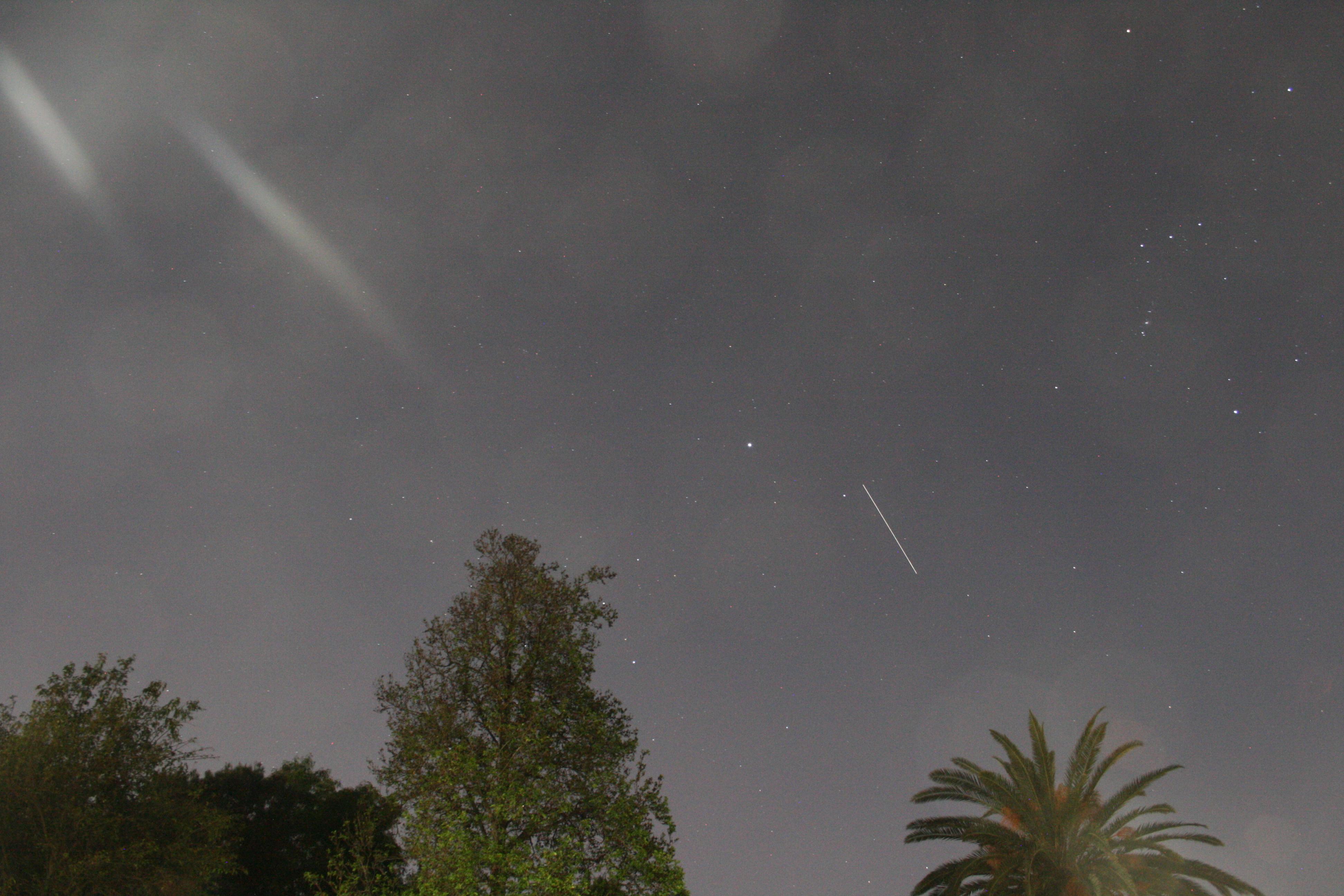
Then I saw the ISS coming up from behind our palm tree, headed straight for the zenith. These are all 15-second exposures, which I was pleased to see was enough to show a bit of nebulosity in the Orion Nebula, as well as some orange tint to Betelgeuse and some blue in Rigel. The glare here at the upper left is from the street light just behind me.
IMG_3886 small

IMG_3887 small

IMG_3888 small

Heading just to the west of Sirius. If you take these first four pictures, save them, and then flip back and forth between them it makes a nice, albeit small, animation.
IMG_3889 small

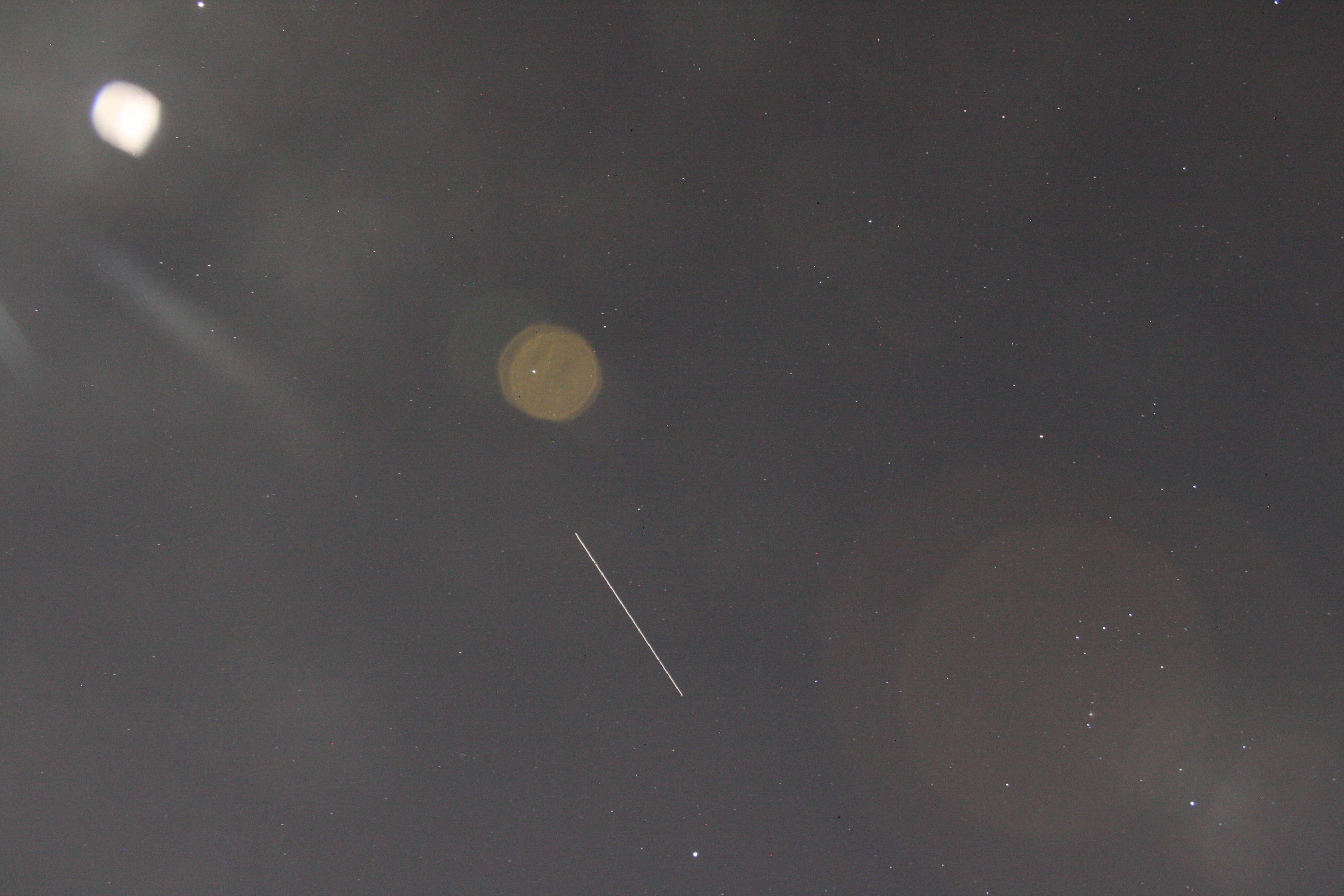
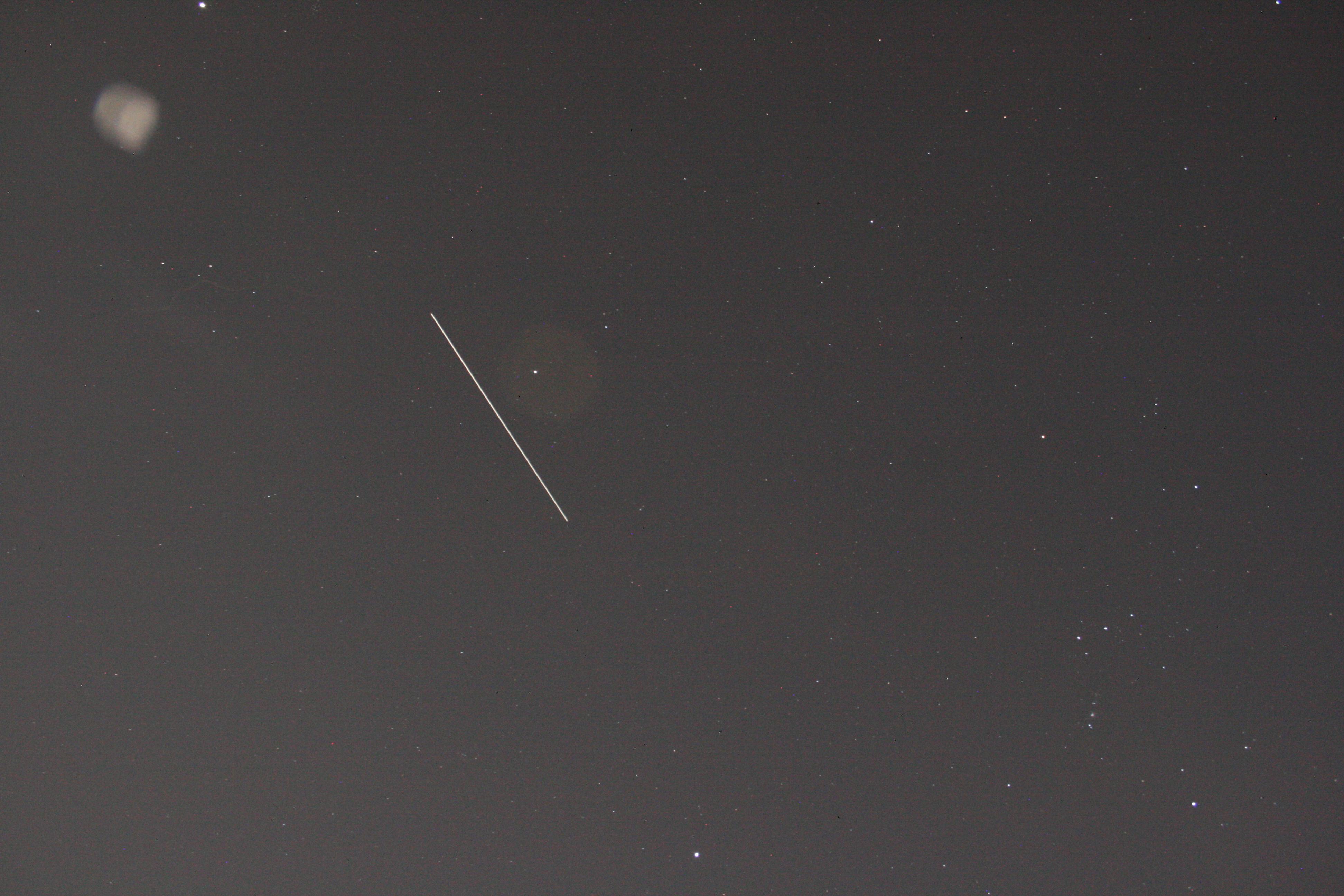
I wasn’t sure if the ISS was still in the frame (instead of looking I was talking to the neighbors and the dogs, just hitting the remote in my hand to snap the next picture as soon as I heard the shutter click off) so I changed the view more toward the zenith above. With more glare from that stupid street light, of course.
IMG_3890 small

Heading toward Jupiter (at least from my perspective), which you can see just under the top edge on the left.
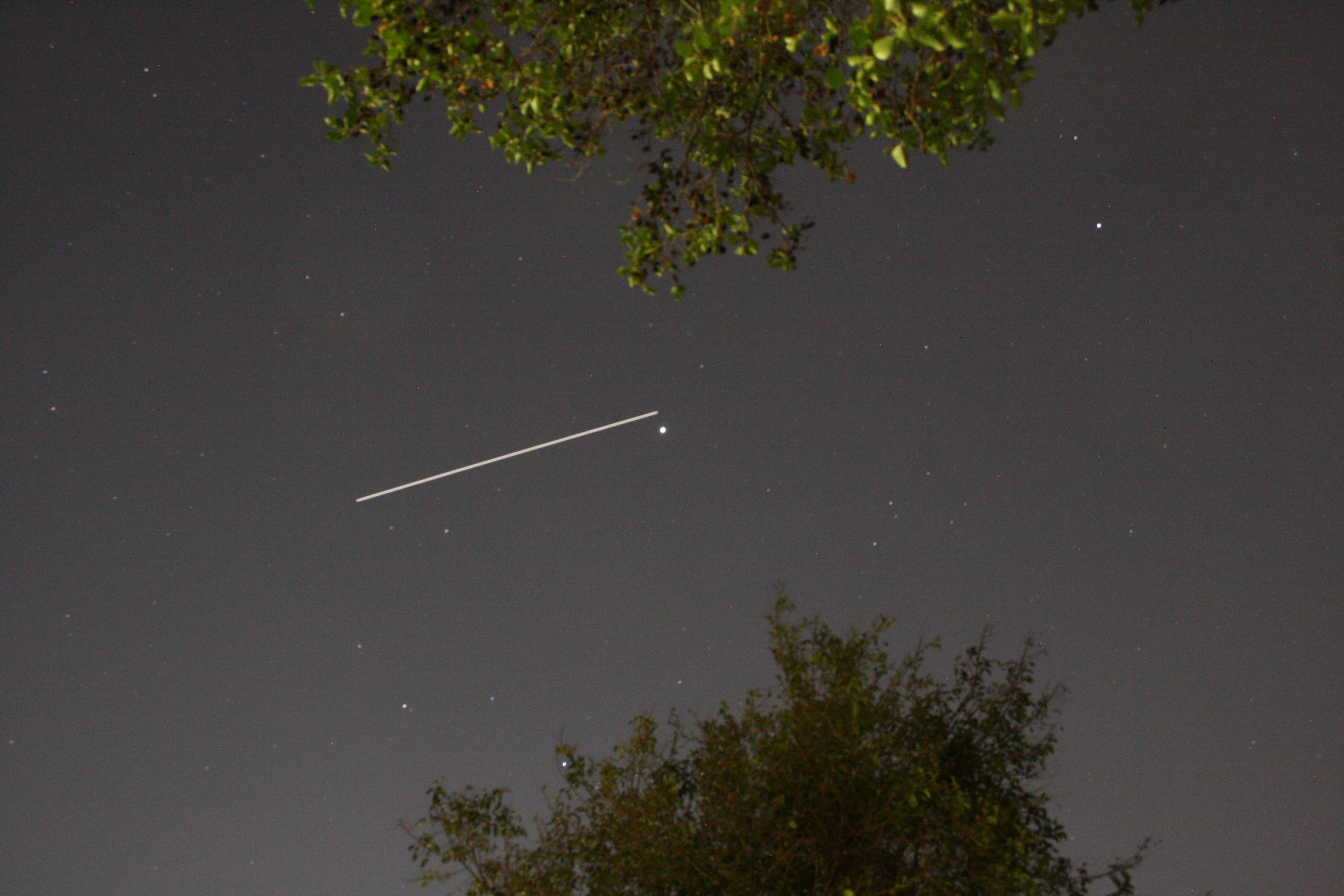
IMG_3891 small

As the ISS passes overhead and is nearest to me, the length of the arc that it travels in the same amount of time gets longer. (Geometry – think it through.) I now had excused myself from the group and sprinted back across the street to the (relative) darkness of our front yard. The ISS was just passing past Jupiter and heading back down to the northeast (from right to left).
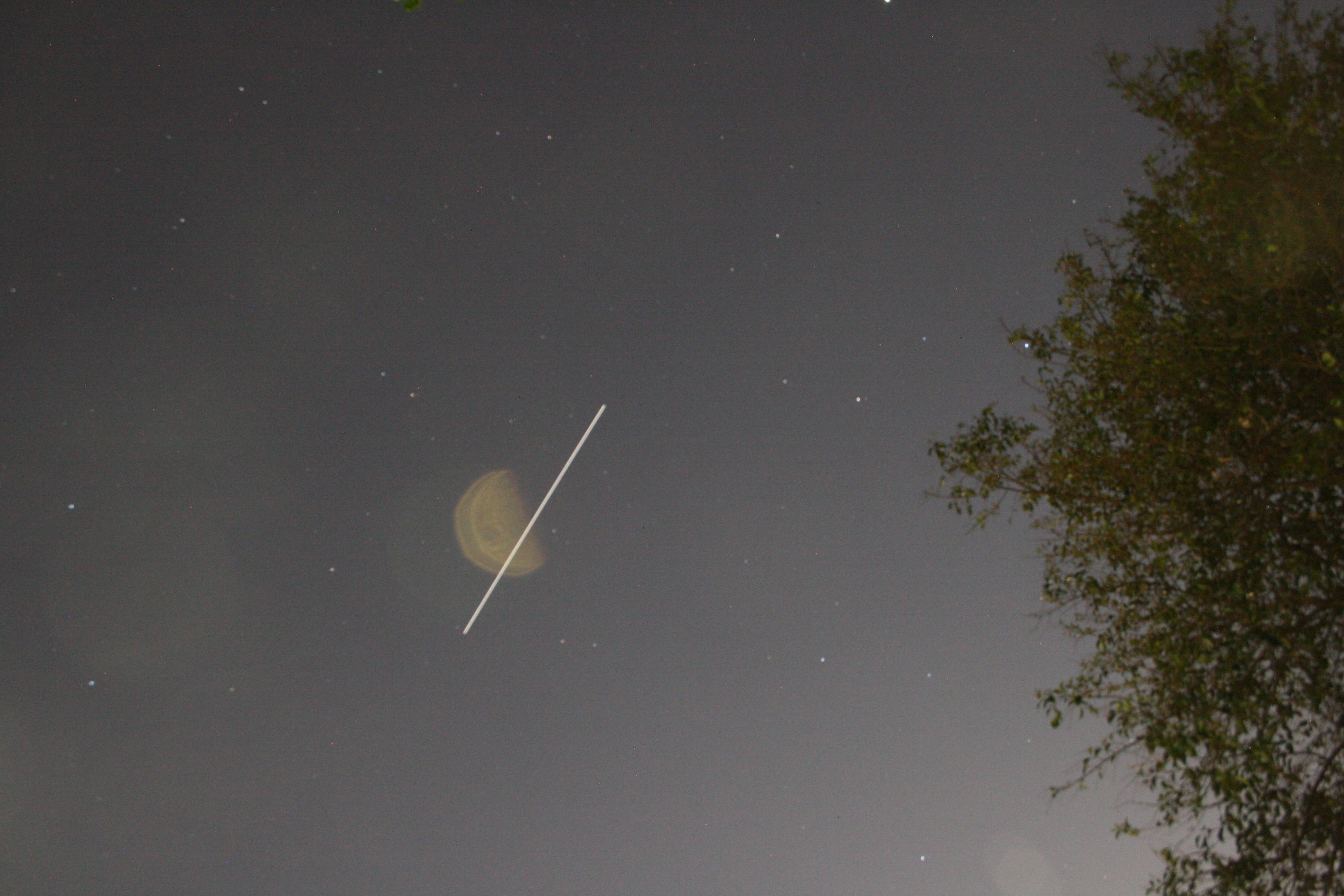
IMG_3892 small

The glare now is again from that streetlight, which is now just off to the left of the frame.
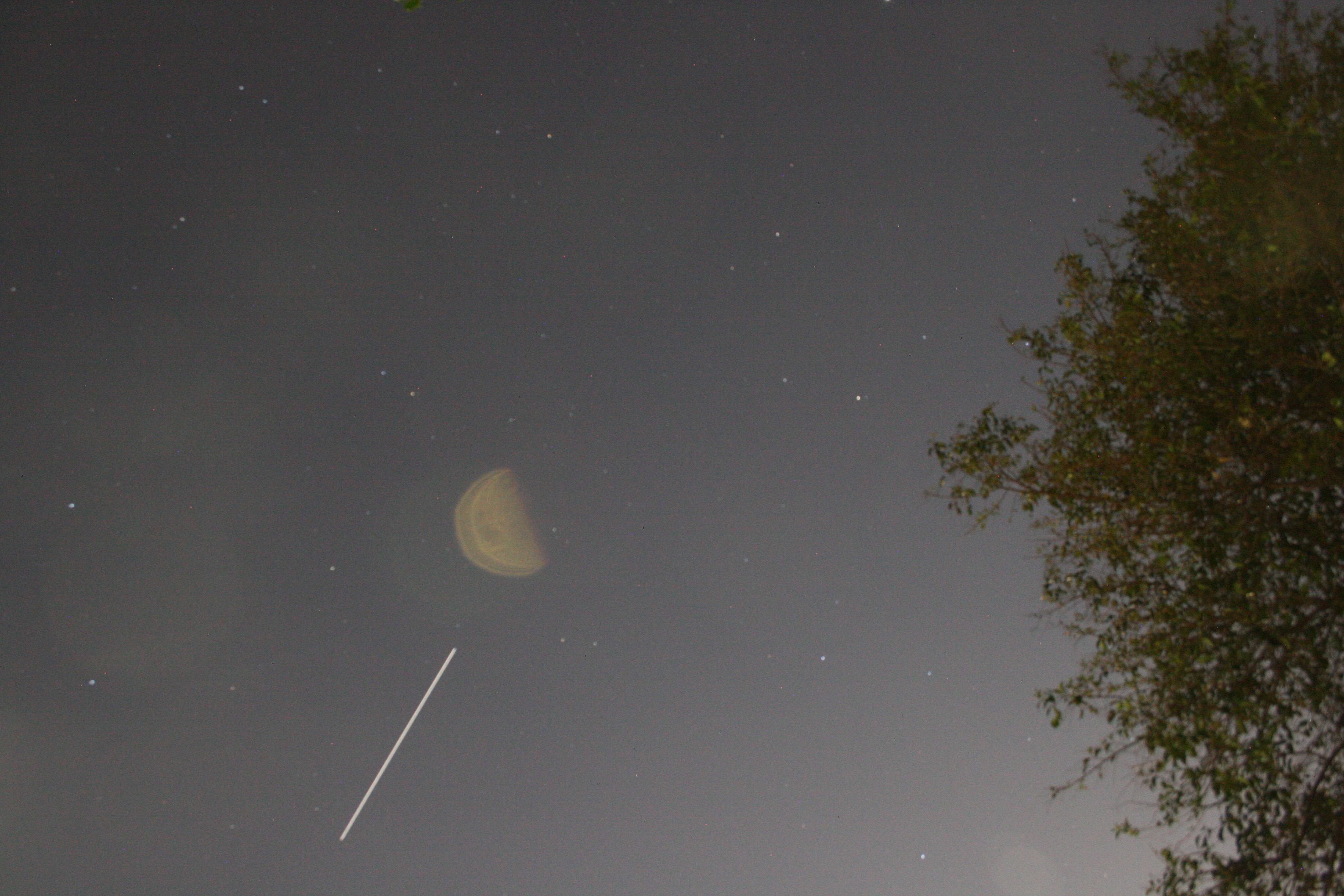
IMG_3893 small

Contrary to popular belief, I do not model all of my astrophotos after the work of JJ Abrams.
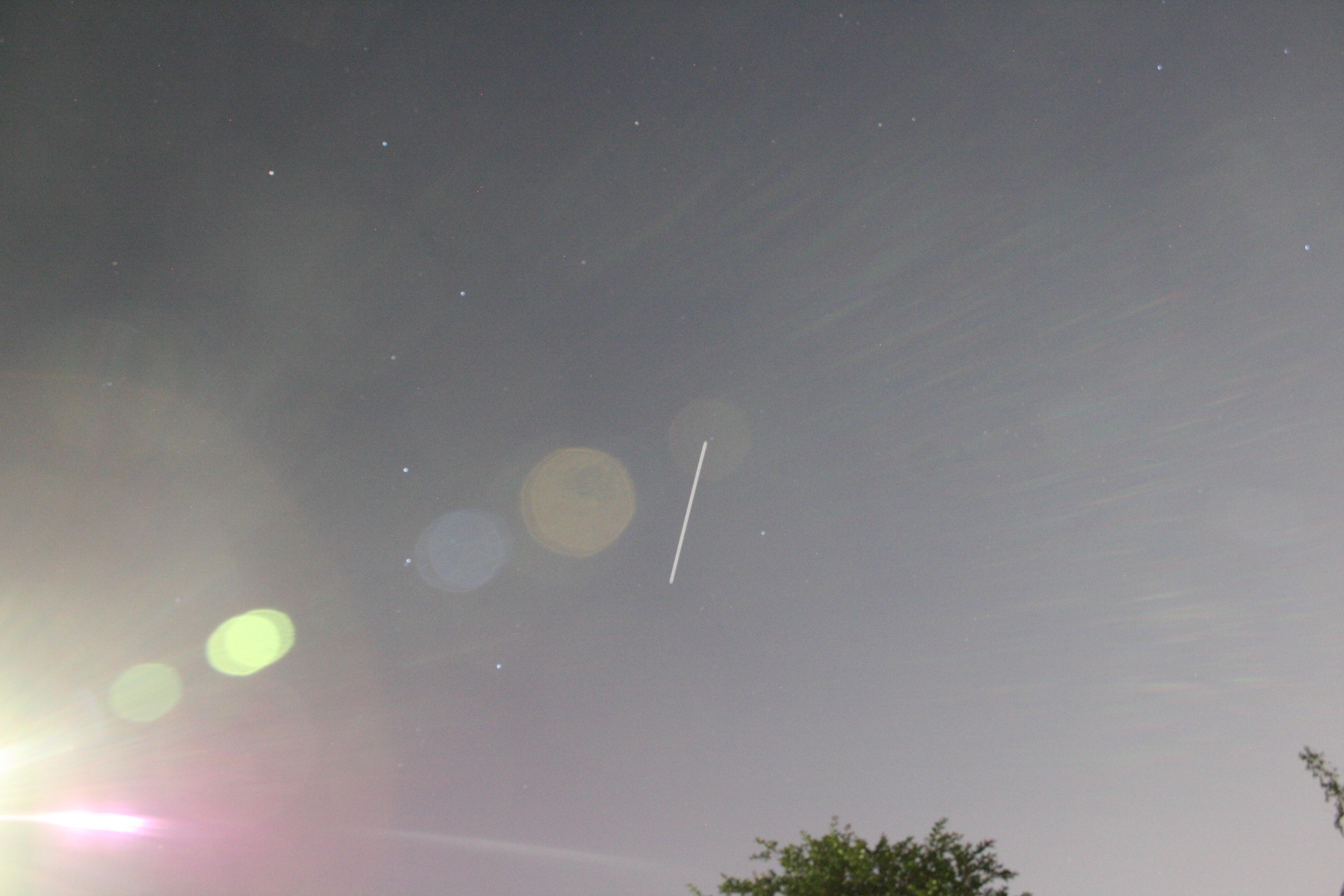
IMG_3894 small

There‘s that streetlight!

IMG_3895 small

Oh, look, the Big Dipper!

IMG_3896 small

IMG_3897 small

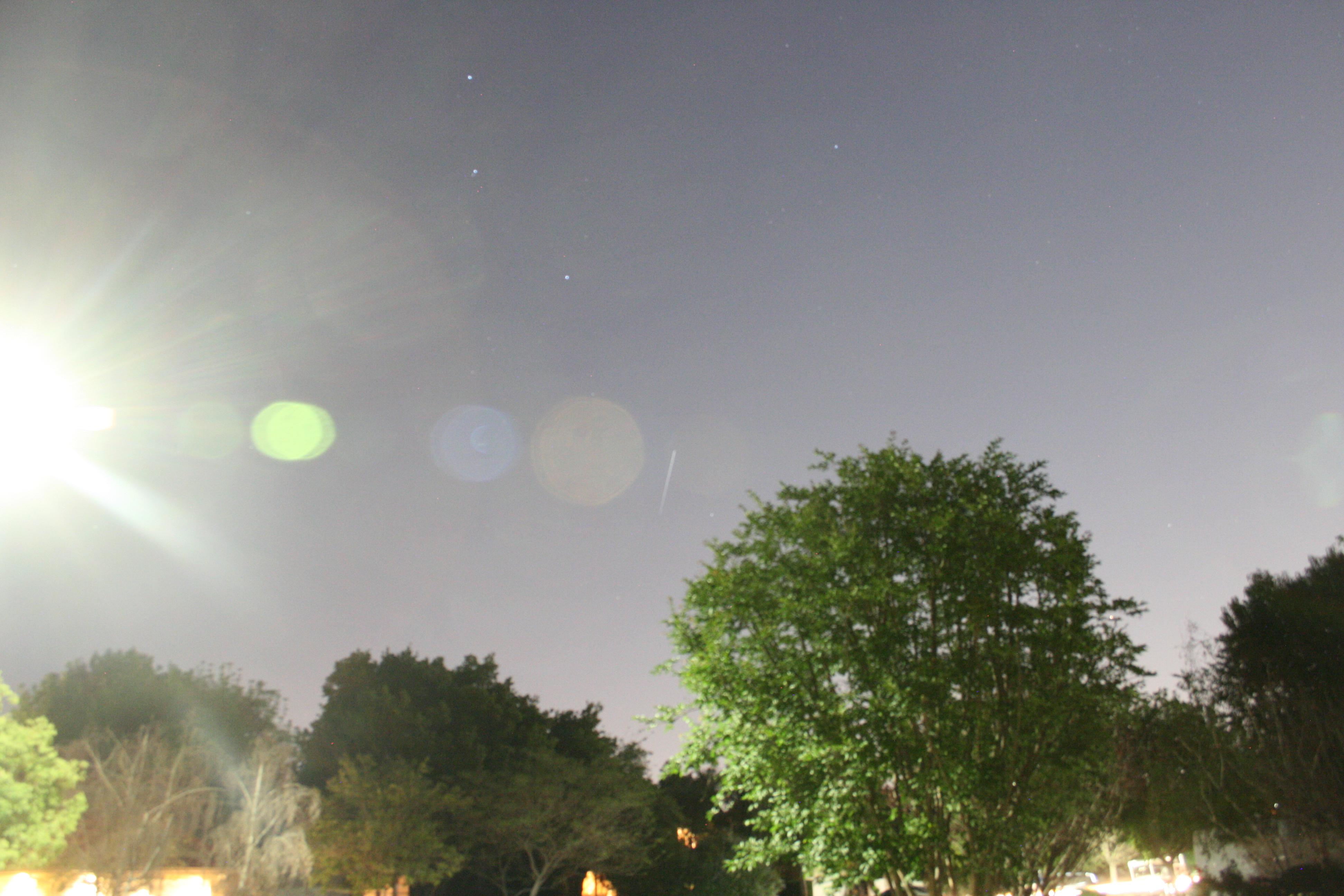
Here you can also see that we don’t actually see the ISS disappear over the horizon. It definitely goes there, but before it goes it enters the Earth’s shadow and fades into the night, still well above those trees.
IMG_3906 small

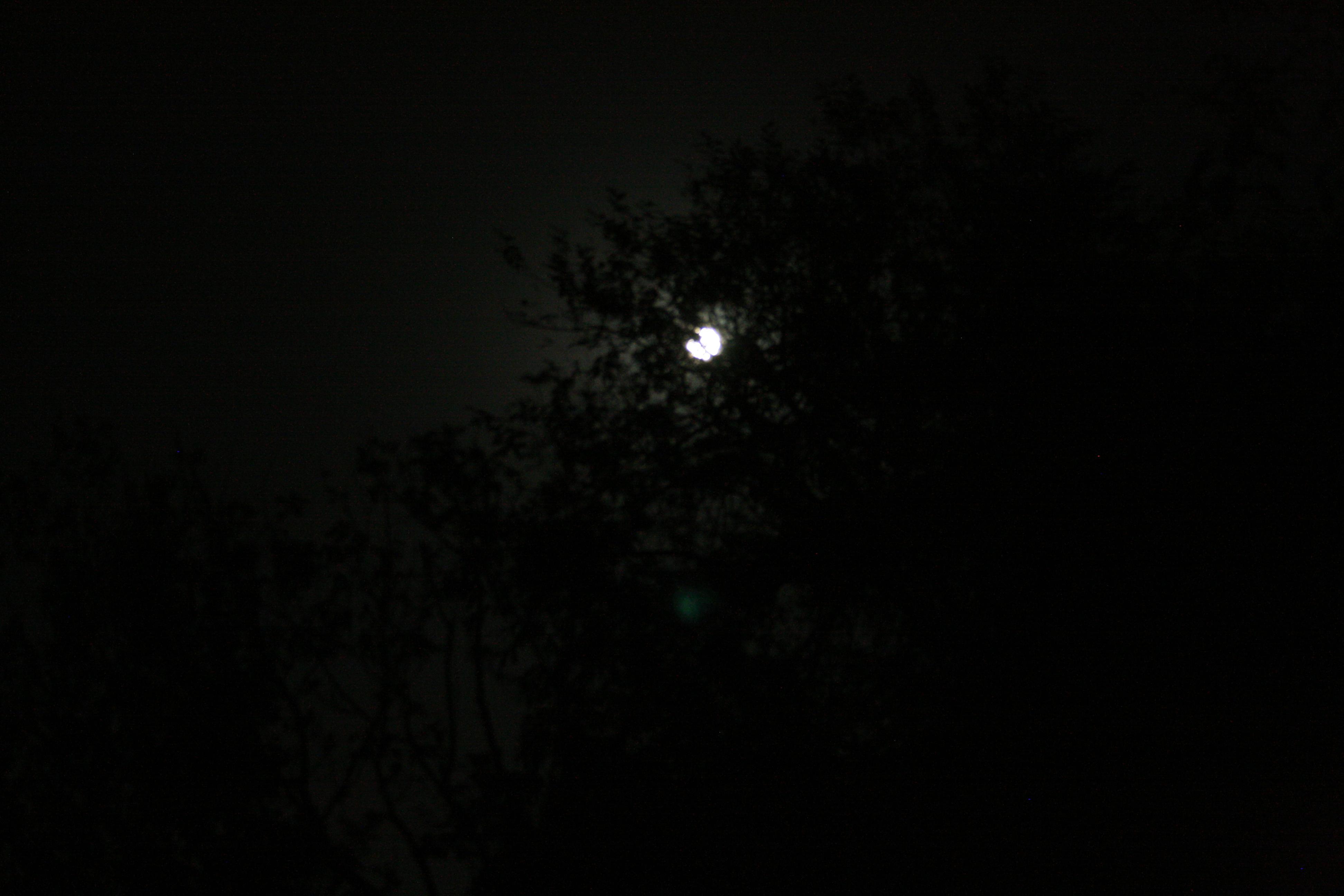
Finally, the ISS gone on its way, sneaking up through the trees was the 99.9% illuminated moon, heading for its own encounter with the Earth’s shadow in about eight hours.

Maybe I’ll get up to see that, maybe I won’t.
Leave a comment

Filed under Astronomy, Photography, Space

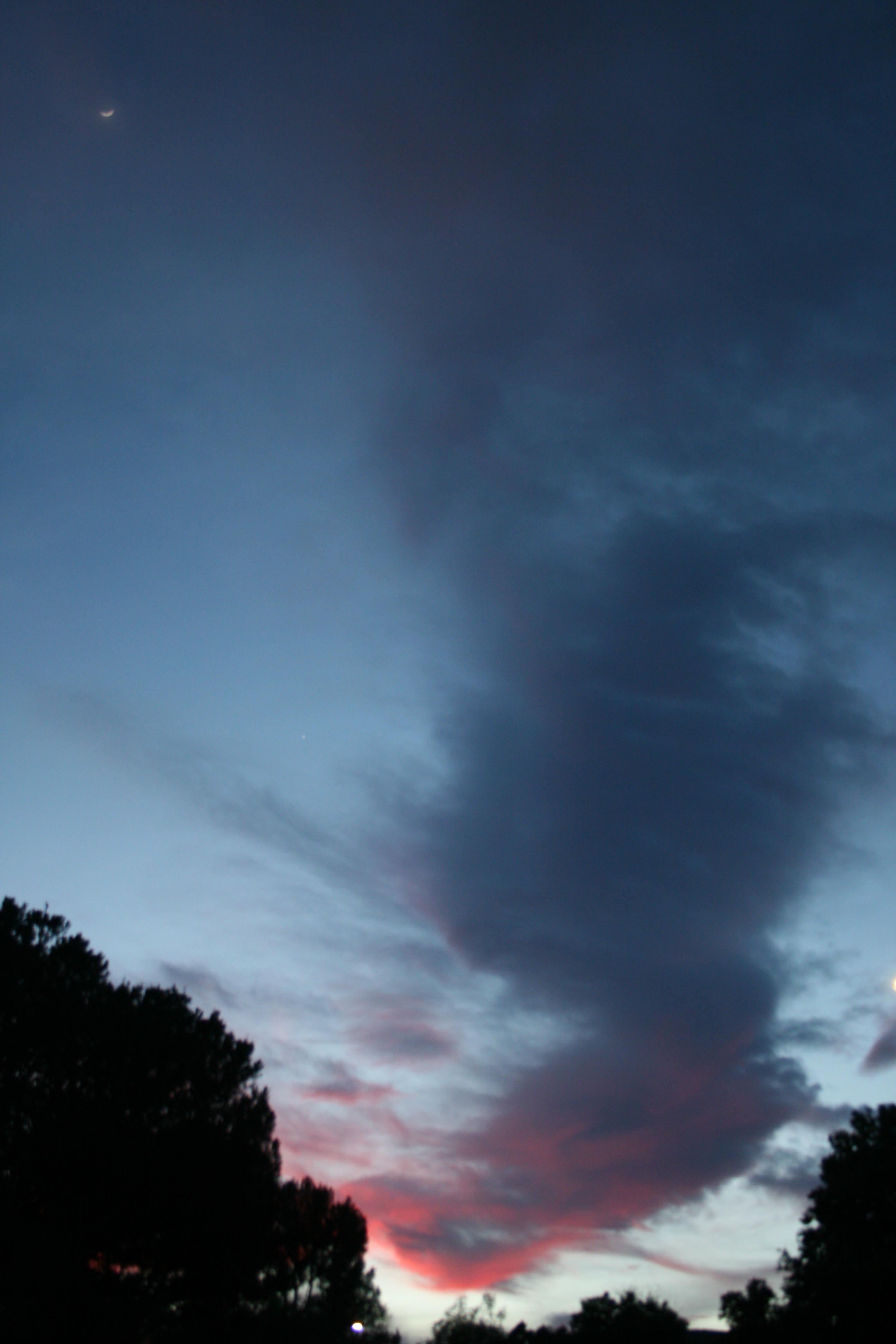
Sunset + Clouds + Moon + Venus

It’s not Hawaii or Tahiti, but for LA it’s not bad. Can you see Venus in the twilight?

IMG_3866 small

3 Comments

Filed under Astronomy, Photography

Second Place Prize

{OK, I swear that I posted this last night – the time stamp at this end says 22:03:10, 21-Mar-2015.}

Seeing as I wasn’t able to get to the Arctic or Faroe Islands to see yesterday’s solar eclipse, I’ve been admiring some of the awesome pictures from folks who were there. In particular, this one from Thierry Legault is completely mind blowing. (As are all of the others you can see on his site, the guy is just doing incredible work.)

There are a lot of great pictures taken from the air, from the ground, and even from space. Go forth and search for more and may your Google-fu be strong!

Please note that there are some fake eclipse images out there, some of which have been going around for years. (Nice artwork, but 100% fake.) If you’re going to go spreading fake images, at least make them believeable!

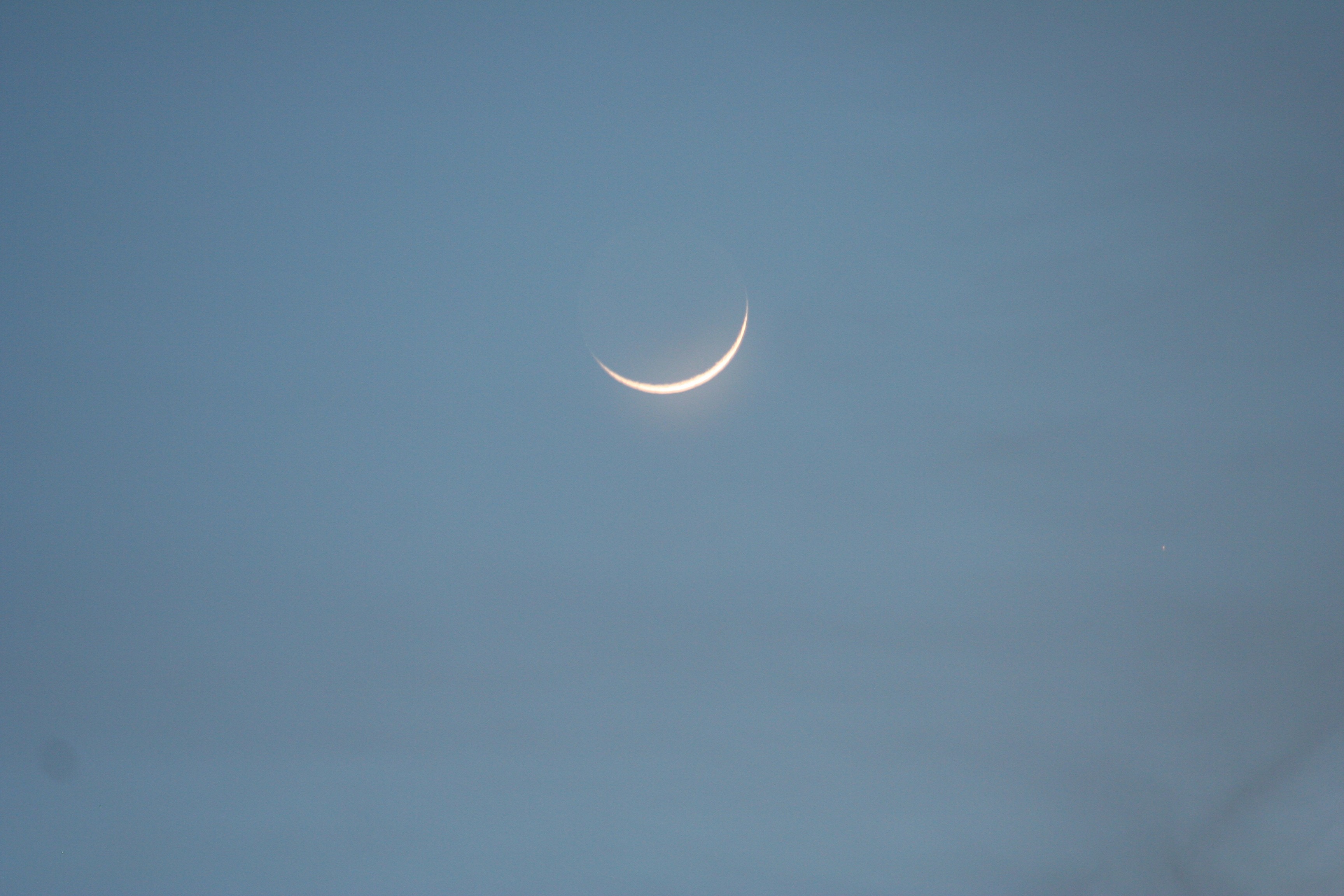
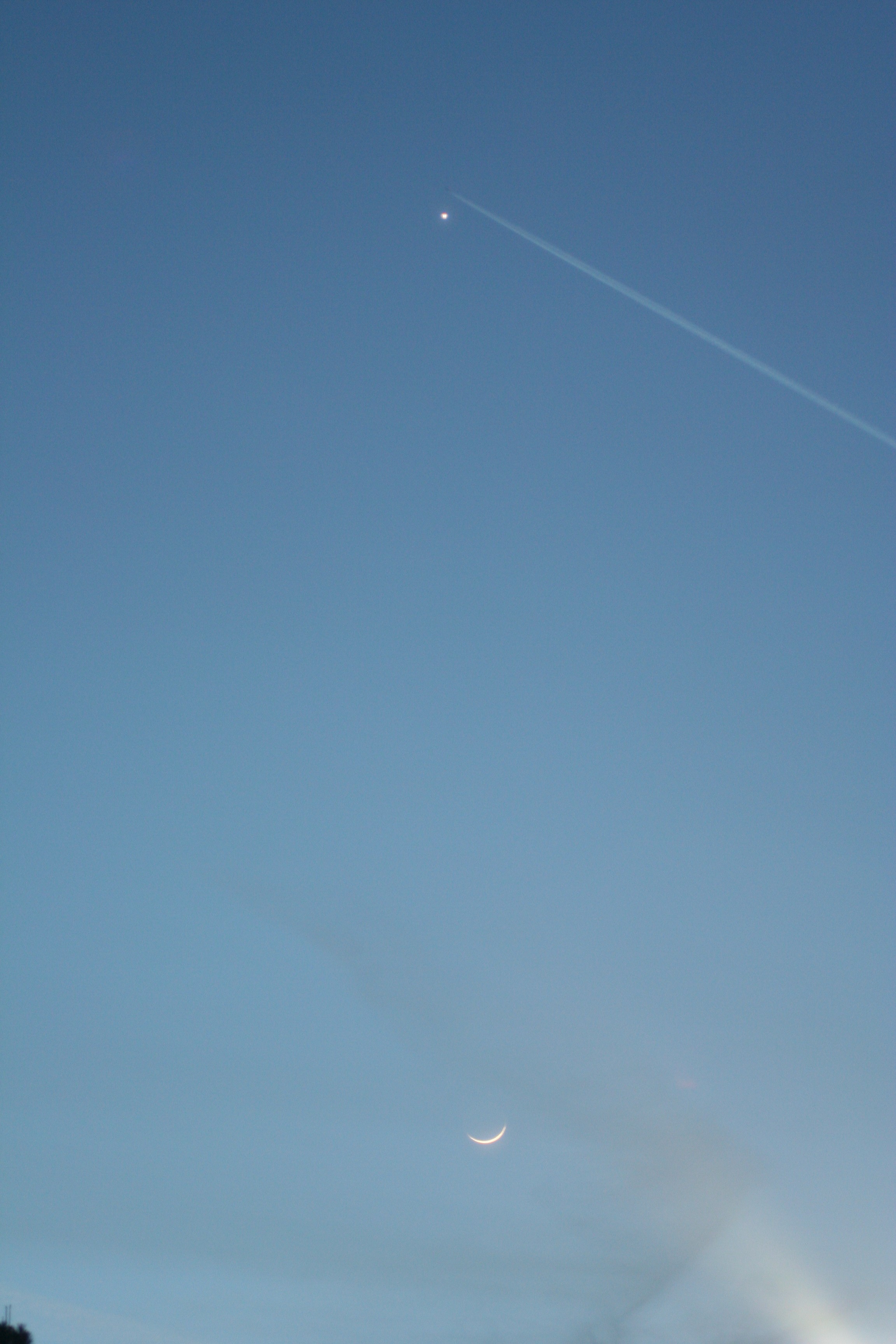
Meanwhile, if that was the gold medal astronomical prize for the week, tonight those with a clear sky got the silver medal for the second best sight of the week. With the moon just about forty-two hours past new moon (i.e., the eclipse), it was a marvelous tiny crescent at sunset, accompanied by an extremely bright Venus above it.

IMG_1833 small

IMG_1827 small

And apparently by sheer luck, a high-flying jet just about Venus.

These are hand-held pictures since I didn’t get home until late. Celestial mechanics being what they are, tomorrow evening (Sunday, March 22nd) the moon will have moved until it is very close to Venus. Perhaps not as spectacular as it was when Mercury, Venus, and the Moon all got together, but it should still be a great sight.

You get out your binoculars, I’ll see if I can haul out one of the ‘scopes, and I’ll meet you back here tomorrow.

2 Comments

Filed under Astronomy, Photography

My Funeral

First of all, I’m fine. I’m not dying, at least, not any more than the rest of us. I didn’t get any recent news of a tumor, blocked artery, or astronomically high blood pressure, nor do I know of a bullet or a bus with my name on it.

I am not superstitious (or “stupidstitious”) about it being Friday The 13th. Today’s date means nothing other than tomorrow is “Pi Day Of The Century“! Which also means nothing, since the calendar and our measurement of time is about 90% arbitrary, but it’s a great excuse to be goofy and have pie. Mmmmm, pie…

But this song came up in my playlist the other day (see #16) and my brain got to spinning off onto a dozen tangents, as it is occasionally wont to do. (Silly brain.) So, given greater and lesser amounts of seriousness, to be updated periodically as I change my mind or come up with other goofy crap to do, here are some suggestions/requests/orders (you don’t want to be haunted, do you?) for my eventual funeral:

  1. Please do not call it a funeral. “Memorial service,” “life celebration,” whatever the politically correct term of the week is, but not “funeral.” Although as you’ll see, I want the “fun” put back in “funeral!”
  2. Someone take a LOT of pictures. I would do it, but, you know, “dead” and all that.
  3. If at all possible, start the event just before sunset, outdoors, under a clear sky.
  4. Wearing a suit and tie or fancy dress will be frowned upon, unless of course some serious (and entertaining) gender-bending is going on. Depending on the weather, if you must wear “normal” clothes, Hawaiian shirts for summer or turtlenecks for winter are okay.
  5. Extra points: Wear Hawaiian shirts with airplanes on them.
  6. Beaucoup extra points: Wear turtlenecks with airplanes on them.
  7. All things being equal, people should be encouraged to wear costumes — fannish friends might consider bringing extras for the mundane factions of my family and friends.
  8. If not into fannish costumes, mundane costumes will do. Angels, Chiefs, or Kings jerseys and/or hats are all acceptable. Their rivals’ gear will, obviously, not be acceptable.
  9. Extra points: Anyone wearing a combination of Angels, Chiefs, and Kings gear will be recognized for their creativity and given a seat of honor for the event as a reward.
  10. Beaucoup extra points: Have the Angels’ World Series trophy, the Chiefs’ Lombardi Trophy, or the Stanley Cup there for people to take selfies with.
  11. Have a flyover. My pals at the CAF will do a great job.
  12. Extra points: Get the Blue Angels or Air Force Thunderbirds instead of the CAF.
  13. Beaucoup extra points: Get the Blue Angels, and the Air Force Thunderbirds, in addition to the CAF.
  14. Everyone’s invited. (Yes, that means you too!)
  15. God’s invited (s/he’s included in “everyone”) but it’s my party, not God’s, so let’s not make any deities the Guest of Honor, ok? Either I’ll be some mythical afterlife actually talking to some deity or another (my mother’s bet) or I simply won’t (my bet). Either way, I’ll know and you won’t. (Wait, if I’m…then I won’t… Never mind.)
  16. Play “Into The West” from Lord Of The Rings: Return Of The King, the one sung by Annie Lennox. I absolutely love that song and have wanted it played at my funeral memorial service ever since I first heard it.
  17. Extra points: Get Annie Lennox to sing it live with a full orchestra.
  18. Beaucoup extra points: Get Annie Lennox to sing it live with a full orchestra and Amanda Palmer!
  19. Tell jokes, tell stories, tell more jokes. I’ve done plenty of stupid things, let’s relive them in all their glory.
  20. Share my photographs, and keep sharing them for years and years beyond. They’re a big part of the proof that I was here.
  21. If I’ve managed to get any of my stories published, read some choice selections. If I didn’t break through, pick a couple of my less sucky Flash Fiction efforts to fill time until it gets dark.
  22. As it gets dark, keep the lights off (or at least to a minimum, or hand out flashlights with red lenses) so that everyone can get dark adapted.
  23. Bring out the telescopes and spend the evening (all night if you want!) with everyone taking turns looking through them at the planets, stars, nebulae, comets, moon…
  24. Whatever the venue, sing. Sing filksongs, but use the broad definition of the term (“Anything I’ve ever heard sung at a filksing”) so that things like “A Dying Cub’s Fan Last Request” are included (yeah, gotta sing that one!), and don’t limit it to just filksongs. If it feels good, sing it!
  25. With luck I will have had organs donated, so let people know what went where. I want any usable spare parts of mine used to help others when I’m no longer in need of them, and others should be encouraged to do the same. Have forms there for people to sign up for blood and platelet donations, as well as become organ donors.
  26. Serve chocolate chip cookies, Oreos, chocolate cake, ice cream, apple pie… None of this vegy plate and health food crap – life’s too short, as I will have obviously just demonstrated.
  27. Alternative idea #1: If it’s cloudy or you can’t find a dark sky location, or if it’s just later in the evening and you’re “telescoped out”, light up as many Christmas lights as you can (make it visible from space!) and then follow up with a massive fireworks display.
  28. Alternative idea #2: Have all of the above (or as much as practical) at a ball game. Angels, Chiefs, or Kings doesn’t matter. Can you just imagine a group of my family members, my CAF friends, my fannish friends, and other assorted knuckleheads taking up a whole section at an Angels game on a Big Bang Friday and partying all night?
  29. No flowers. Just because I’ll be dead doesn’t mean that we need to spend a money killing a bunch of innocent flora, most of which are probably allergens to someone in attendance. Instead, take the money you might have spent on flowers and donate it to a worthy charity. The CAF. Habitat For Humanity. UNICEF. Pick a group that’s going to deliver the biggest bang for your buck and help the most people.
  30. In other words, if you wish to donate in my memory, please pick a good, efficient charity, by which I mean one that isn’t going to piss away huge chunks of the donations on six-figure CEO salaries. Education is a huge area of interest, so maybe a group that puts disadvantaged kids through college, or just helps them get through high school. Or maybe a group that educates girls and young women in societies where they’re considered property. (You get the idea – if in doubt, read a few of my rants to see what pissed me off, then give to the group I would consider “the good guys.”)
  31. Hug The Long-Suffering Wife and my kids for me, early and often. As much as I might want this to be a silly & fun party instead of a somber & serious funeral, they might have have a tougher time than I will playing their parts.
  32. Have fun!!

I’ll see you there! (Wait, I forgot…)

Actually, by the time I plan on going, we’ll be doing all of this just to say goodbye to the meat-sack part of me. The all-important “me” part of me will be uploaded into a computer or robot and I’ll be there partying right along with you.

Beaucoup BEAUCOUP Extra Points: Upload “me” into the computer of a Goliath-class starship scout vessel, load the party and all of my friends and family on board, and let’s party on (or at least, near) all nine planets! (Yes, Pluto too.) Drop off those who want to stay back on Earth, then the rest of us will head outbound at some large multiple of c.

Yeah, that’s the best plan of all.

Leave a comment

Filed under Astronomy, CAF, Christmas Lights, Family, Fandom, Fireworks, Flying, Habitat For Humanity, KC Chiefs, LA Angels, LA Kings, Music, Paul, Photography, Sports, Writing

Space Notes, February 22nd

A few odds and ends, all space and astronomy related I believe:

  1. There was another really beautiful conjunction on Thursday, Friday, and Saturday this last week, particularly Friday. The thin crescent moon was very close to an extremely bright Venus, with a very visible (and red) Mars also right there. I wasn’t going off about it, or posting pictures, because it’s been cloudy here. The Long-Suffering Wife saw it briefly while we were driving Friday night and was duly impressed. If you missed it yourself you can find lots of pictures online. If your skies are clearing, even with the moon having moved up higher in the sky, Venus and Mars will look lovely together in the west just after sunset.
  2. There was the first of three EVAs (space walks) by two US astronauts on the International Space Station (ISS) yesterday, with the next one to come in the wee hours of of Wednesday morning (07:10 EST, 04:10 PST) and Sunday morning. They’ll all be shown on NASA-TV, which you can watch online if you don’t have it on your cable or satellite system. It’s interesting work – they’re getting ready to do a major reconfiguration of the ISS layout, modifying the two docking ports that were used by the Space Shuttles and getting them ready to be used by SpaceX, Boeing, Sierra Nevada, ESA, or whoever else gets a crewed vehicle ready.
  3. People watching Mars for the last few years have been seeing some huge clouds rising up into the Martian atmosphere, but only every now and then. There’s no good explanation for it at the moment, since these plumes are going up over a hundred miles, far higher than any storm clouds or even volcanic eruptions should be able to send material. At first they were seen by amateur astronomers back in 2012, but now they’ve been seen with the Hubble Space Telescope as well. They have not been seen by any of the spacecraft orbiting the planet – the spacecraft are looking down at Mars, while the clouds only can be seen clearly as they rotate past the limb of the planet and can be seen from our viewpoint, silhouetted against space. (Remember the plumes on Io that were discovered this way by the Pioneer spacecraft?)
  4. There’s a solar eclipse coming up on March 20th. It will only be a total eclipse for those in a narrow path in the North Atlantic Ocean between Iceland and Scandinavia, but it will be partial over most of Europe. How much the sun will be covered will depend on your location. For example, in Glasgow it will be 94%, Paris will see 82%, Rome will see 62%, and Cairo will see only 14% coverage.
  5. Since solar eclipses and lunar eclipses are linked by celestial mechanics, there’s a total lunar eclipse on April 4th. It will be visible from the US west coast and the east coast of Asia, but it will be the shortest lunar eclipse of the century, barely five minutes long in the totality phase. (My photos from the last couple of lunar eclipses can be found here and here.)

So get out there (or on NASA-TV) and watch the skies!

7 Comments

Filed under Astronomy, Photography, Space

NASA Social At NASA Armstrong (Palmdale – Part Two)

Summary:

  1. My third NASA Social, the “State Of NASA” event
  2. I went back to NASA Armstrong, this time at their Palmdale facility
  3. Posts for previous NASA Armstrong events here, here, here, here, here,and here
  4. The first part of this post, focusing on SOFIA, is here (with an extra bit here)

2015-02-03 iPhone6 1857 (small)

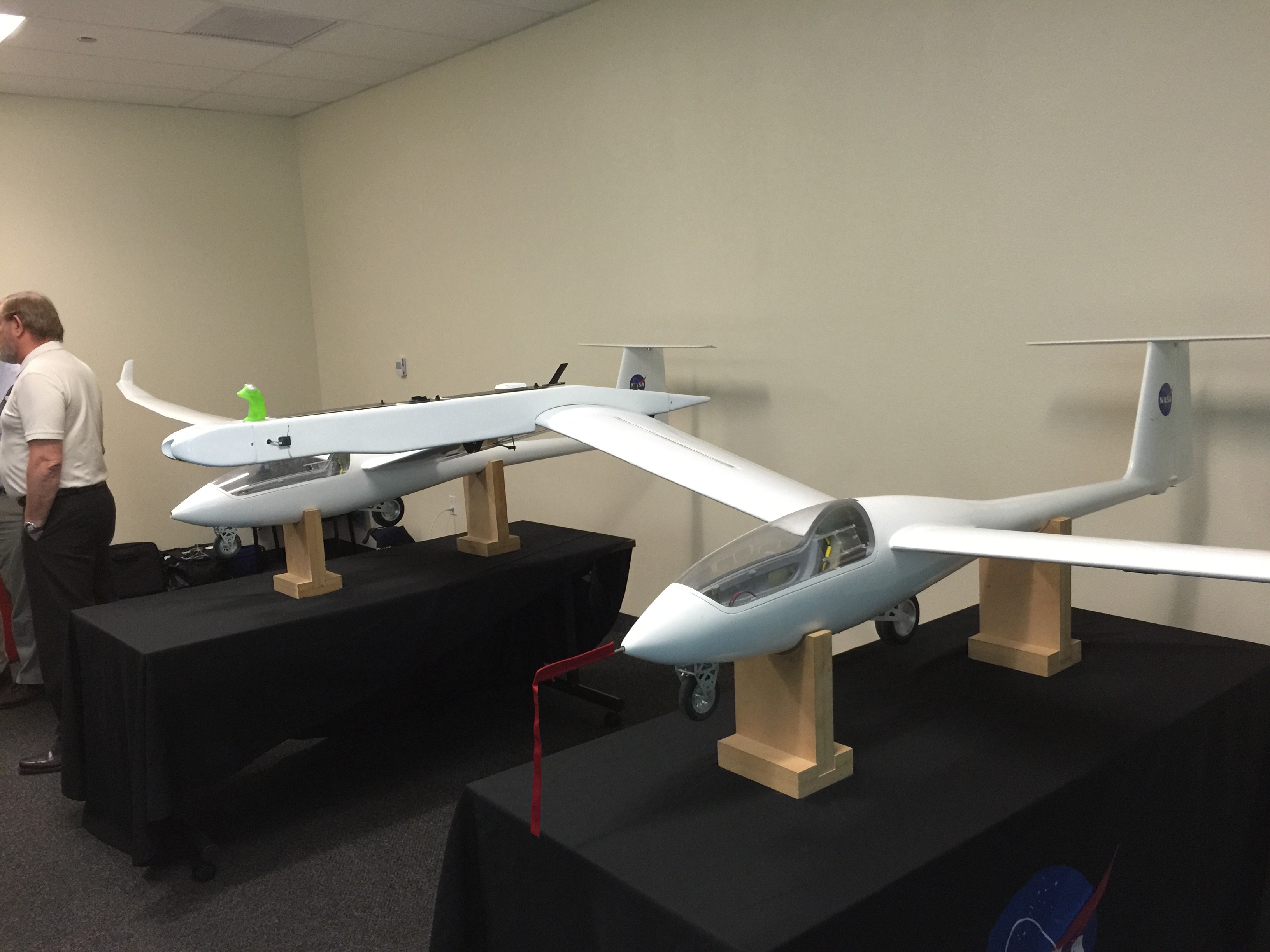
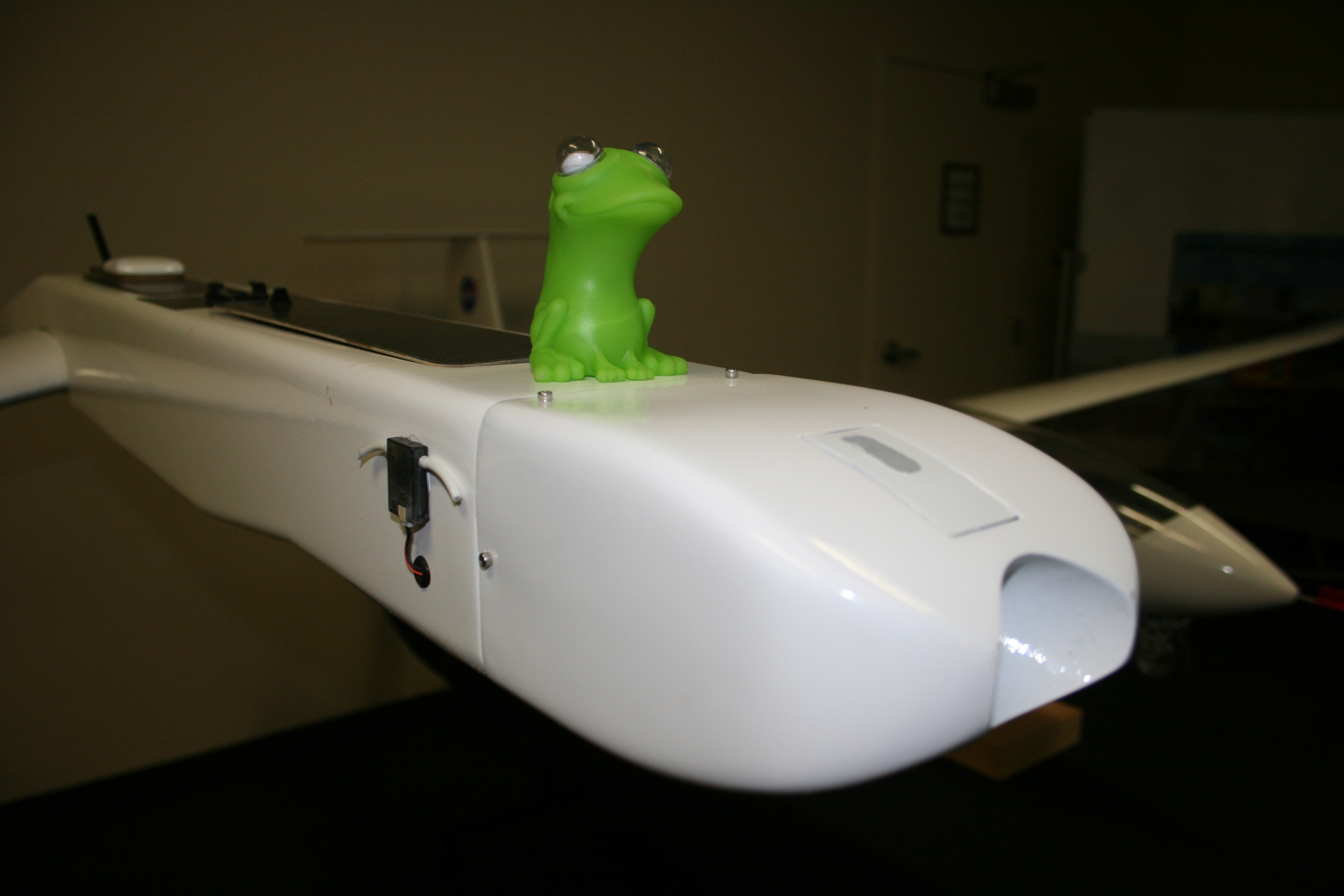
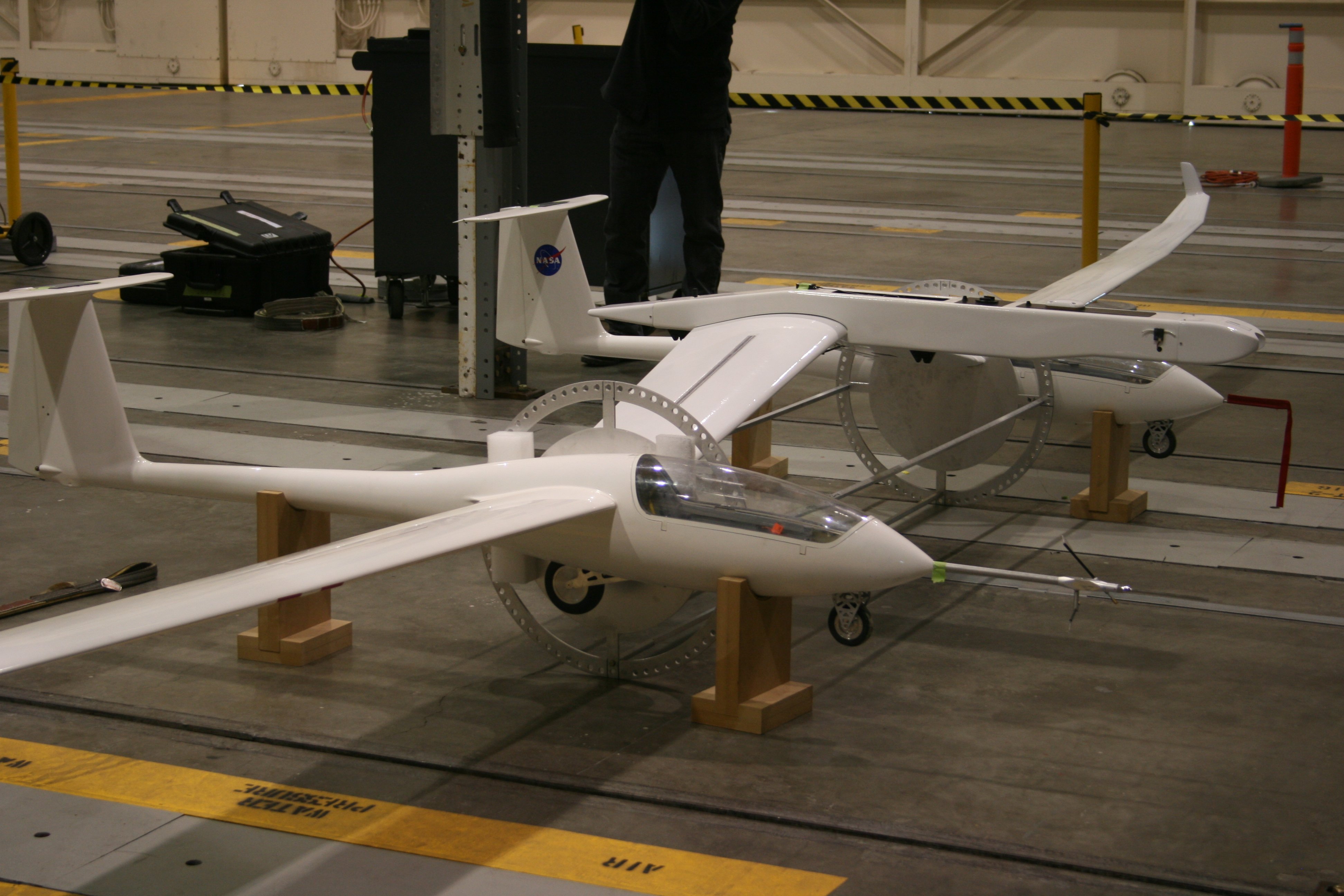
This is the remote-controlled model for the Towed Glider Air-Launch System being developed at NASA Armstrong. The concept is similar to Virgin Galactic’s “White Knight” aircraft, except that it’s a remotely piloted glider instead of a jet with a pilot and co-pilot.

Doing it this way introduces (they believe) some serious economies into the system. By increasing the “carry efficiency” (ratio of cargo weight to carrier vehicle weight) they can take bigger payloads (rockets). By being a glider, they can reduce the development and operational costs — all the expensive stuff (engines, life support, heavy airframe, fuel tanks) is on the standard jet (such as a military cargo jet or even a commercial business jet) used for towing.

This model has flown already, being towed by a small drone. Next they’ll fly it up to 10,000 feet, then fly it with a small rocket, then test the releasing of the rocket, then test taking it up to 10,000 feet with the rocket attached, and finally taking it up to 10,000 feet with a rocket attached and dropping the rocket (which may or may not fire).

Right now there’s no launch capability that allows someone to put 100 pounds into LEO (Low Earth Orbit). About the smallest rocket available will put 1,000 pounds into orbit for about $50M. This could allow a 100 pound payload to get into orbit for $1M or even less. Once that capability is available, there are a lot of businesses and universities that would like to use it.

Furthermore, the idea should scale up. In theory, if you build a glider the size of a 747, you could tow a rocket big enough to carry a crewed vehicle to LEO, for small fraction of the $75M+ that the Russians are currently charging for a Soyuz seat.

IMG_3275 (small)

On the other hand, some folks are still confused about the difference between a “towed glider” and a “toad glider.”

2015-02-03 iPhone6 1936 (small)

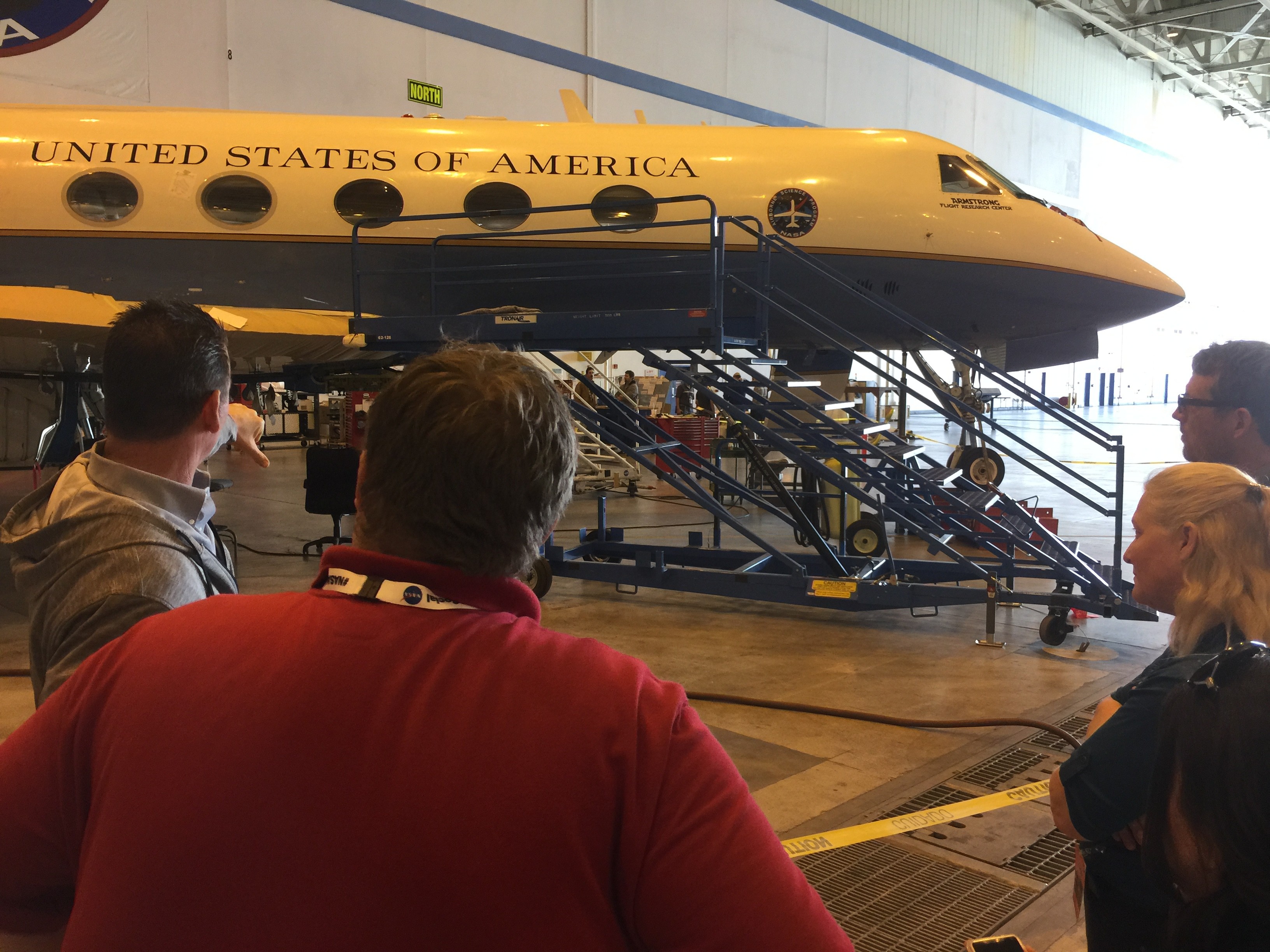
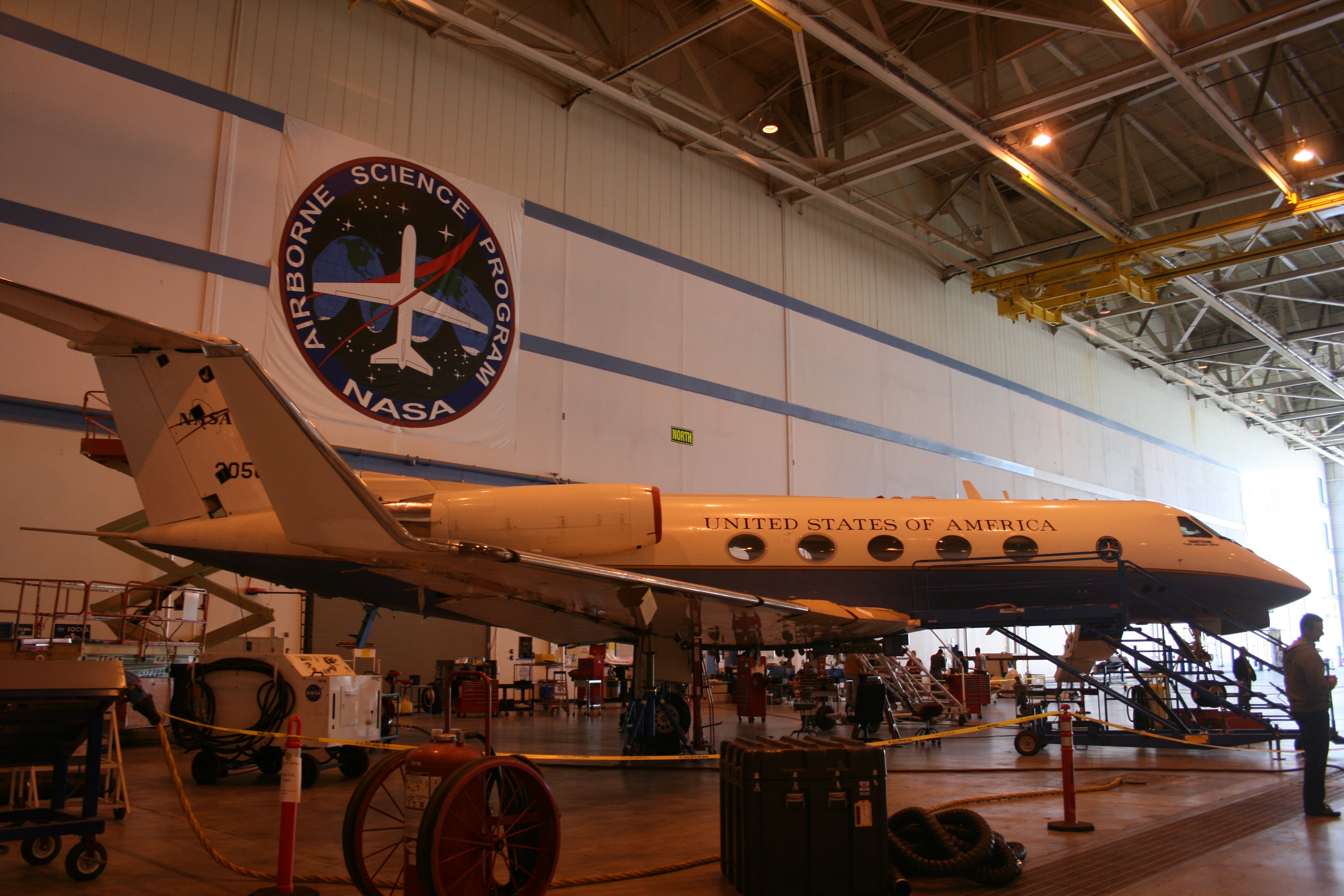
Back down in the hanger after lunch, John McGrath showed us the two C-20 UAVSAR aircraft, known to us civilians as Gulfstream III business jets, albeit heavily modified.

IMG_3347 (small)

The Airborne Science Program at NASA Edwards covers all of the aircraft-based scientific research being conducted. Out at the NASA Armstrong facilities on Edwards Air Force Base, the primary focus is on aeronautical research. (See my posts regarding the November NASA Social there.) In Palmdale, the aircraft are operated in order to provide a platform for researchers to gather the data they need.

IMG_3355 (small)

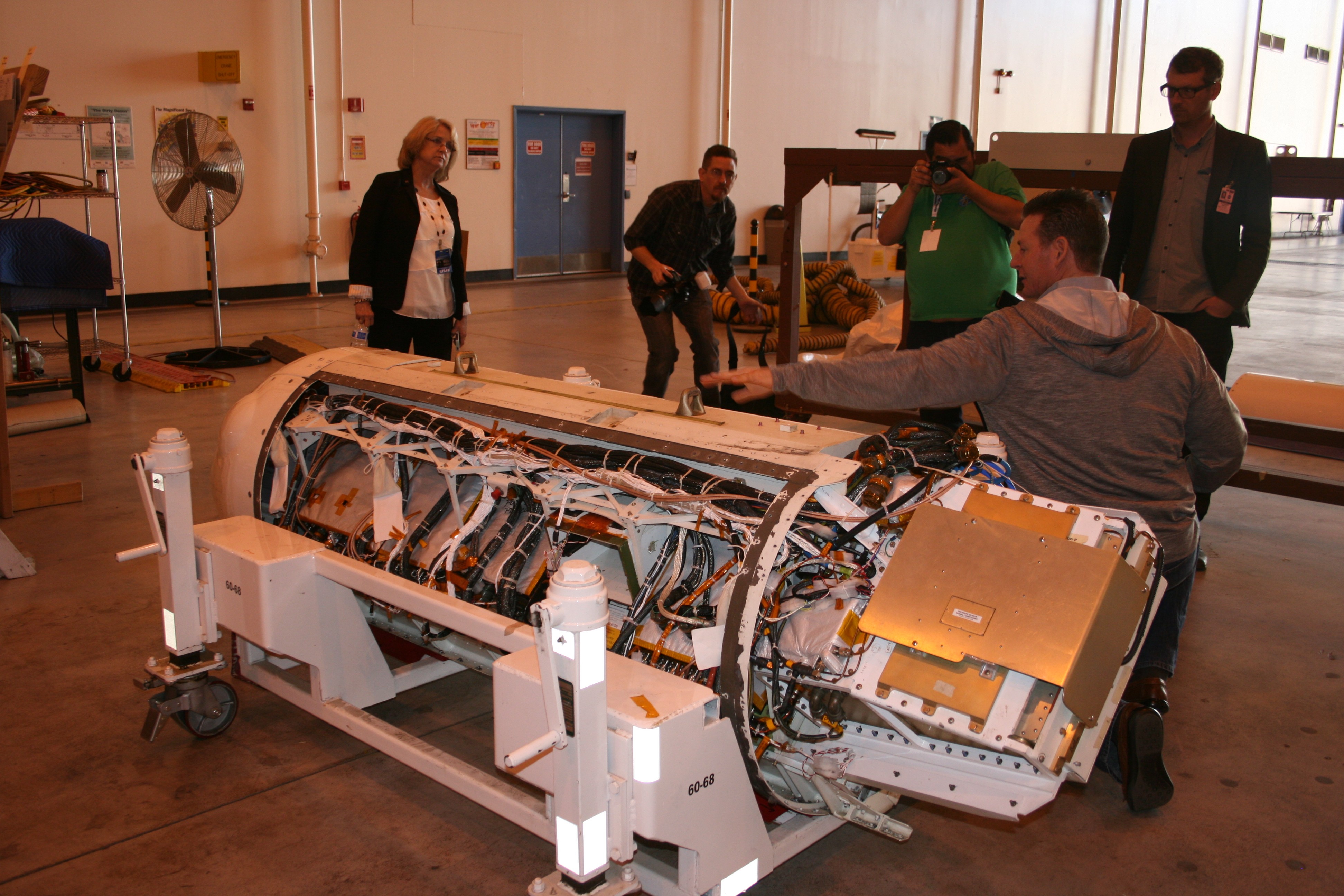
Here Mr. McGrath shows us one of the pods that gets mounted under the belly of the C-20. These pods are more or less “plug and play,” so researchers and outside institutions can fill one with their instruments and equipment, then “simply” get it attached to the C-20. I suspect that it’s a bit more complex than that, but the system has been substantially streamlined to make it much faster and easier than it would be if everyone did their own designs and each one started from scratch. In this case, the pod’s instruments had just undergone a major upgrade since the newer instruments were far more sensitive than the previous instruments.

IMG_3362 (small)

Here you can see how this C-20 is up off its gear and surrounded by equipment. Underneath the aircraft, in the center near where the short, orange ladder is, you can see where the pods get attached, with a couple dozen connecting wires dangling down.

IMG_3351 (small)

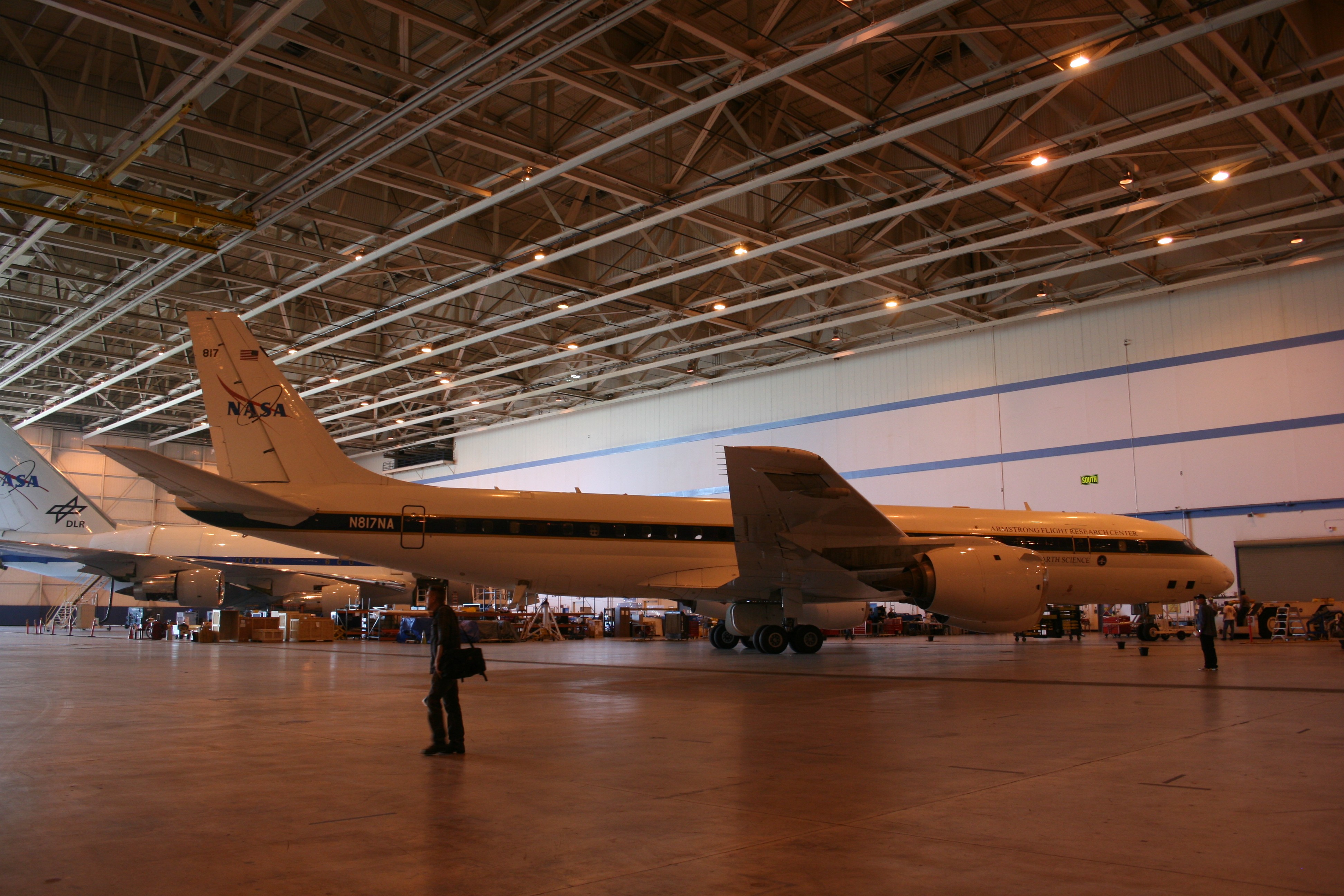
This is the NASA Edwards DC-8, known to us civilians as a DC-8. It also has many modifications, including ports that allow instruments, sensors, and cameras to stick outside the airframe. In addition, many of the stock windows have been replaced with perfectly clear, optically flat windows so that cameras can be used through them without distortion.

The DC-8 allows instruments and the scientists running them to get wherever they need to be. For example, in a couple of weeks the European Space Agency’s ATV-5 cargo spacecraft will be leaving the International Space Station and re-entering to burn up and be destroyed over the South Pacific Ocean. But rather than do a “normal” destructive re-entry, the ATV-5 is heavily instrumented and will re-enter at a shallow angle to the atmosphere. This simulates how satellites enter the atmosphere when they’re making unplanned re-entries, as well as how they ultimately intend to de-orbit the International Space Station.

The instrumentation on the ATV-5 will give the engineers data on how spacecraft break up and are destroyed. The DC-8 will be based out of Tahiti for a few days, and with the ATV-5 re-enters, all of the instruments and cameras onboard will be gathering outside data to complement the data being transmitted from inside the ATV-5 as it is destroyed. (Tahiti for a few days – tough gig!)

IMG_3370 (small)

Brian Hobbs showed us the ER-2 aircraft, which is a civilian version of the U-2 spy plane. It can get all the way up to 70,000 feet, flying in an environment that’s very similar to actual conditions in outer space. That allows instruments being designed for use on satellites to be tested before launch and modified as necessary. In addition, the ER-2 can fly over a ground location at the same time that an orbiting satellite is flying over, allowing the instruments on the ER-2 to get the data needed to calibrate the instruments on the satellite above.

Another application the ER-2 is excellent at is meteorological research, such as the study of hurricanes. If you have instruments at the surface, instruments at several elevations up in the hurricane on aircraft or drones (see the Global Hawk or Ikahana remotely-piloted vehicles in my November posts), the ER-2 lets you get an even higher set of data by flying over the top of the storm. Having this vertical set of data can tell researchers far more than a single set of data from one altitude.

2015-02-03 iPhone6 1965 (small)

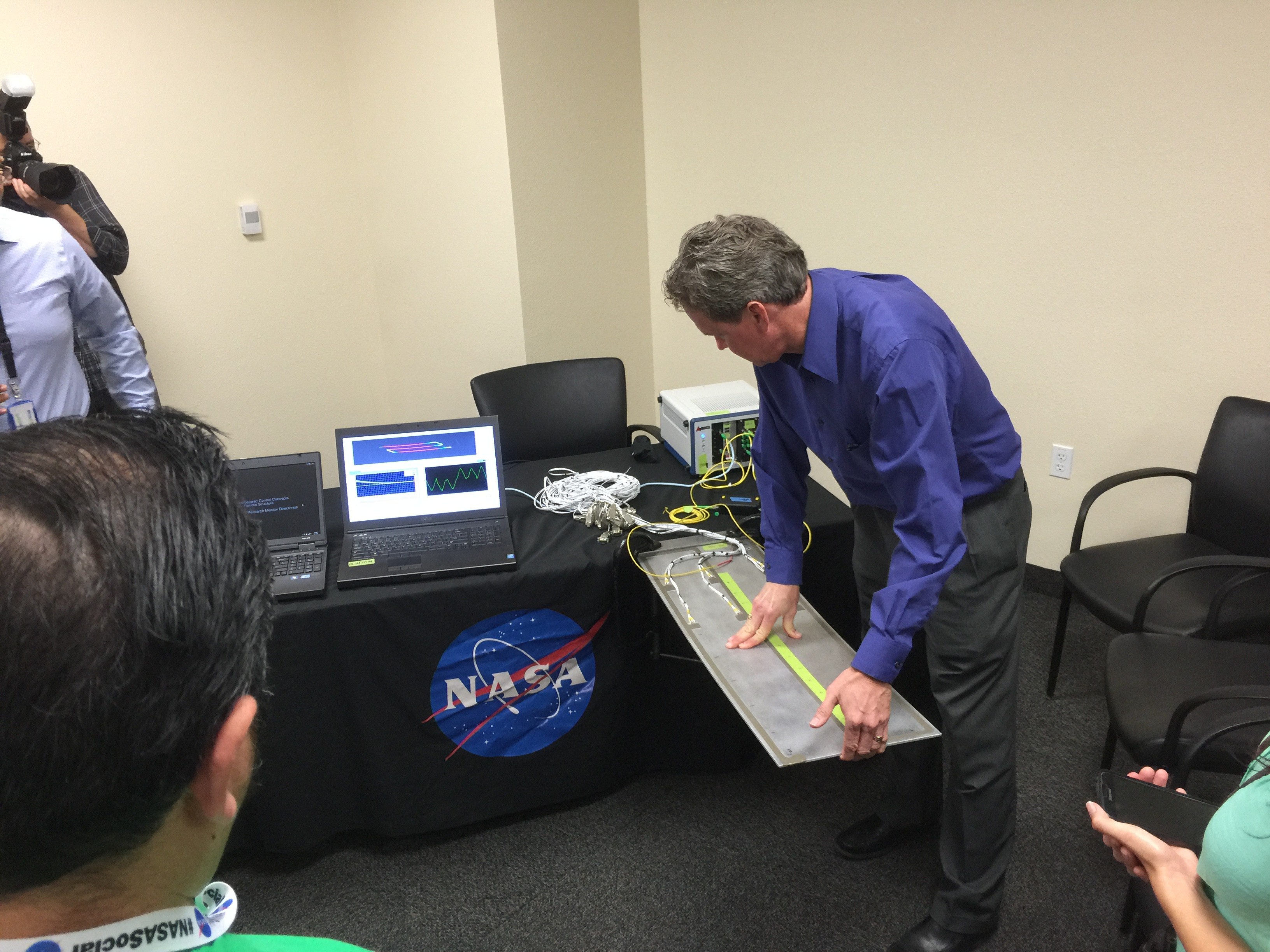
Back in the conference room we got a demonstration of a new technology in strain gauges. On this metal plate, you can see the yellow strip down the middle – it contains sixteen sensors, which connect to that huge bundle of white cables on the desk. This is the way things are done now. On the other hand, the plate also has a “W”-shaped string of fiber optic cable coming down the right side, going back up to the right of the yellow strip of sensors, then back down and back up on the left side. That hair-thin cable has 500 sensors in it, and it connects to the one, thin, yellow cable on the desk.

Obviously if you are building a new plane, ship, car, rocket, bridge, building, or whatever and you need data on the stresses being put on the structure, it’s a lot easier and lighter to have thousands and thousands of sensors on fiber optic cables instead of dozens of sensors using conventional equipment. In addition, where now the conventional sensors are used on the first few test aircraft of a new design and then stripped out due to their weight, the fiber optic sensors can be left in place forever, giving you continuous data over the life of the aircraft.

Other potential uses of this technology would be to embed it into new buildings or add it to existing structures such as bridges. Given the way our national highway infrastructure is starting to crumble, it would be really useful to have a relatively cheap, easy, and highly accurate way to know if the girders on a bridge are cracking and failing.


IMG_3379 (small)

This is John Kelly, the Principal Engineer on the Towed Glider Air-Launch System (discussed above). Some of the figures he gave us were impressive.

For example, the real world carry efficiency of Virgin Galactic’s WhiteKnightTwo is 0.71, which is pretty good – it carries 29,000 pounds with a 70,000 pound aircraft. The L-1011 Stargazer system from  Orbital only has a carry efficiency of 0.14, and the B-52 used by NASA to launch the X-43 test vehicle only has a carry efficiency of 0.17. But the models being tested have a carry efficiency of over 1.00 and they believe that the system eventually could have a carry efficiency as high as 2.00.

IMG_3384 (small)

Finally, Ron Young told us about the Flight Opportunities program that NASA Armstrong runs. In short, by using drones, balloons, and parabolic-flight aircraft (also known as a “Vomit Comet”), NASA Armstrong tried to assist businesses in getting their experiments and instruments into a “space-relevant environment.” They may not quite get you into LEO, but they can get you close or in a simulated environment. This allows you to test and refine your equipment before taking the big (and expensive) step of going to LEO.

For example, the Zero-G 3-D Printer that’s currently running experiments on the International Space Station was first tested on a parabolic-flight aircraft. Operating in twenty-second intervals of microgravity, the major bugs were worked out of the system before it went up to ISS, where it’s now working. In fact, you may have seen a picture of a small ratchet wrench that was printed on ISS just before Christmas. Mr. Young had an identical wrench that was printed on the ground for us to examine and play with – amazingly light, and it’s astonishing that it was printed in one piece, not several pieces and then assembled. This could really be the next big thing in allowing crewed spaceflight into deep space.

And there you have it! A full day of information and some incredible hands-on experiences with the people and the equipment that are doing science and pushing the boundaries of aeronautics and space flight. The NASA Armstrong staff did a wonderful job of taking care of us and I can’t wait for another chance to go back for another NASA Social in the future.

Leave a comment

Filed under Astronomy, Flying, Photography, Space

NASA Social At NASA Armstrong (Palmdale – Part One)

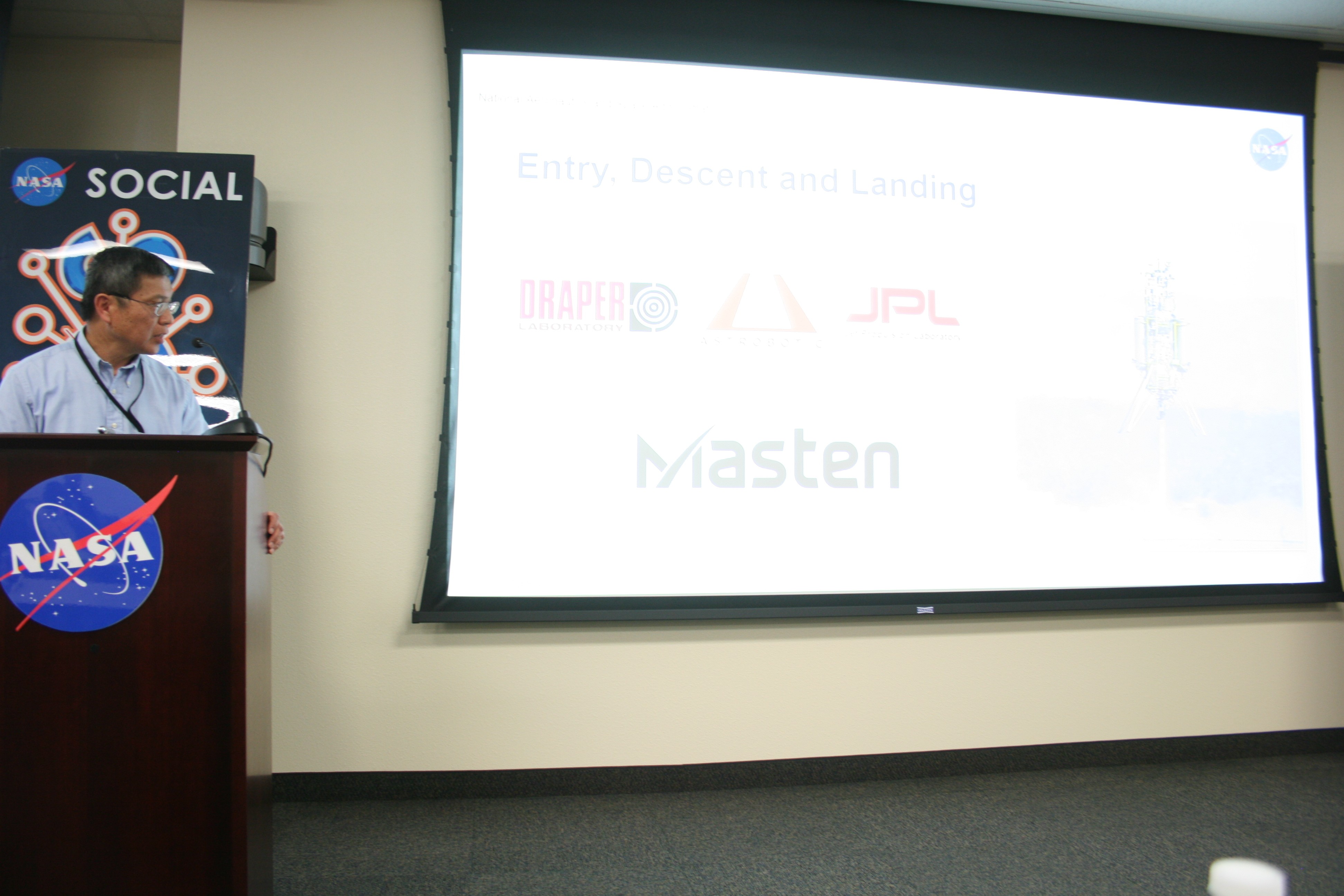
For my third NASA Social, I was part of the national “all hands on deck” event for the “State Of NASA” speech by NASA Administrator Charlie Bolden. There were simultaneous events at ten NASA centers around the country. I went back to NASA Armstrong (posts for previous NASA Armstrong events here, here, here, here, here, here, and here), but this time instead of being at Edwards Air Force Base we were at their satellite facility at Palmdale Airport.

All of the NASA centers were connected for Administrator Bolden’s speech, while each of the ten NASA centers then had presentations which highlighted some of their specialties. For example, at NASA Stennis in Mississippi, they showed off their facilities for testing rocket engines. At NASA Johnson in Houston, they highlighted the International Space Station mock-ups and training facilities. Locally here, at NASA JPL the attendees learned about the various “icy bodies” spacecraft, including Dawn which is approaching Ceres, and New Horizons which will fly by Pluto later this year.

2015-02-03 iPhone6 1855 (small)

At NASA Armstrong, first of all it was great to see friends that I’ve made at previous NASA Socials. Running the NASA Socials at NASA Armstrong are Kate Squires (in red) and Kevin Rohrer (on right, talking to Kate). They did a fantastic job!

Being on the west coast, we were three hours behind all of the east coast Socials. We had a few introductory comments, all got attached to the wi-fi and started charging our mobile devices (there is no such thing as too many charging opportunities at a NASA Social), introduced ourselves, then watched Administrator Bolden’s speech from Florida.

IMG_3272 (small)

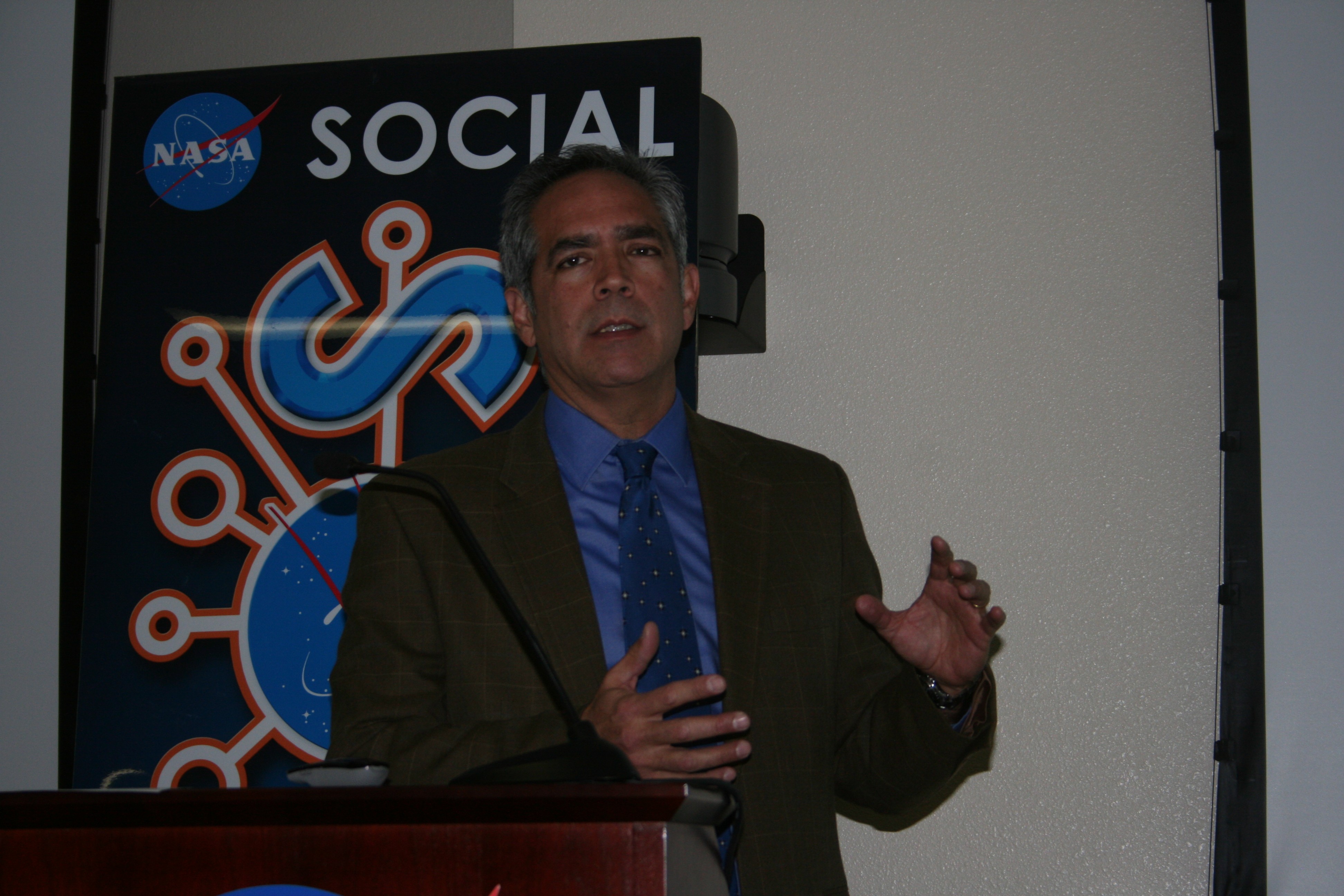
Following the national speech, NASA Armstrong Director David McBride gave us a review of the budget data specific to what’s happening at NASA Armstrong. If you’re interested, you can download a PDF of his slides here.

The rest of the day was full of a whole slew of presentations and tours to see flying hardware up close and personal. In picking and preparing pictures for this article I see that there are too many for one post, so I’ll post the second part on Friday. (Tomorrow and Thursday are already committed to other posts.)

In addition, I’ll remind everyone again that I was Tweeting like crazy (my thumbs were on fire!) with even more pictures, wisdom, and insight delivered in 140 characters or less. You can either see that over in the sidebar on the right (if you’re on a desktop browser) or you can find me on Twitter as “@momdude56”.

Today, I’ll talk about the unquestioned star of the show — SOFIA, the Stratospheric Observatory For Infrared Astronomy.

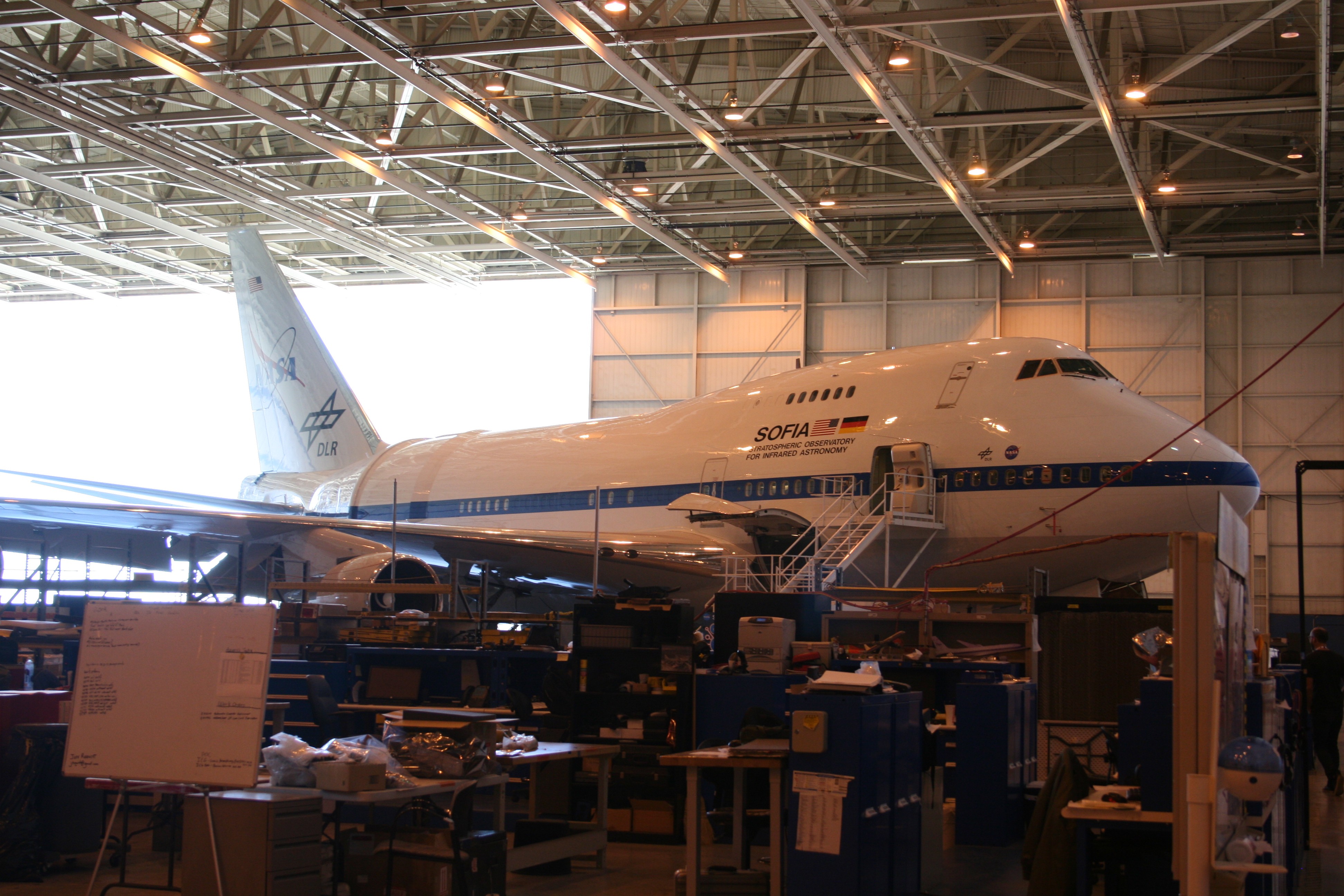
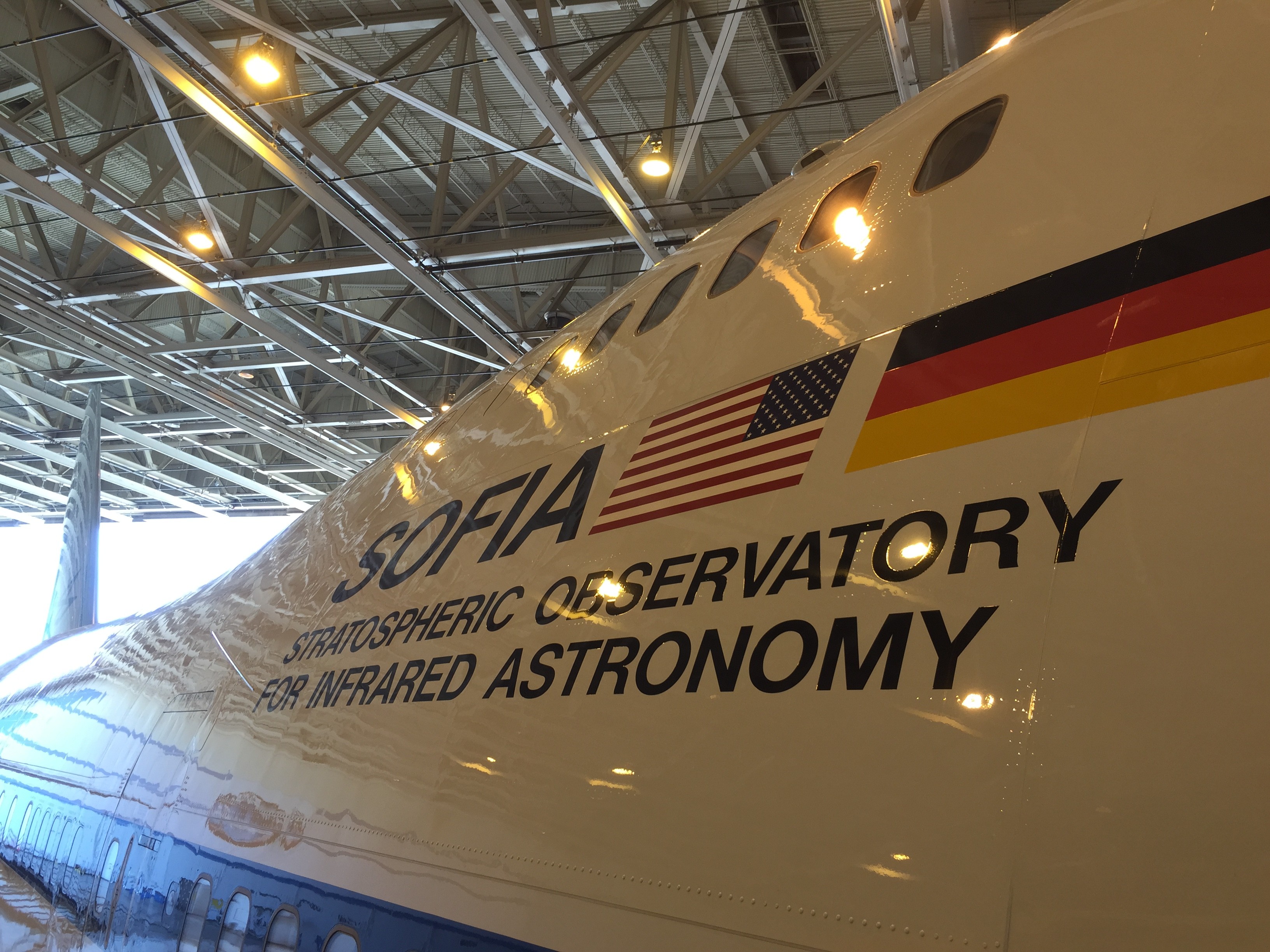
IMG_3283 (small)There she is! A heavily modified 747-SP, operated in cooperation with the German Aerospace Center (DLR – Deutsches Zentrum für Luft- und Raumfahrt). In fact, she just got back to the US and resumed astronomical observations in the last month or so after an extensive period of maintenance and upgrades performed in Germany.

The concept is simple on paper. You can see many different things in astronomy by looking at the sky in different wavelengths than visible light. Radio telescopes, X-ray telescopes, gamma ray telescopes, infrared telescopes — they all see a different sky by looking in different parts of the electromagnetic spectrum. Combining all of those different views lets us know far more about the universe than by simply looking in the visible spectrum, which is a tiny portion of the entire spectrum.

The problem with infrared astronomy (and others listed) is that some types of light are absorbed by our atmosphere. The light we’re looking for simply doesn’t make it to the ground. In the case of infrared radiation, it’s absorbed by the water vapor in the atmosphere.

If you could get above that water vapor, you could see the infrared radiation. Outer space is ideal since it’s above 100% of the water vapor, but it’s hard to get there, expensive, and once you’re there you can’t fix or upgrade things. But what if you could get above 99% of the water vapor? Say, by flying at 40,000 feet or so. Then you could also upgrade and change and repair things as needed every time the plane lands.

IMG_3300 (small)

Thus was SOFIA born. See that bulge in the body just ahead of the aircraft tail? That bulge contains a huge roll-up door that can open when the plane’s flying at altitude. Why would any sane person want to open a huge door in the side of a 747 at 40,000 feet? In order to expose the 2.5 meter, 19-ton high-precision infrared telescope that’s sitting in there, of course!

2015-02-03 iPhone6 1889 (small)

Here we’re getting a rundown on how SOFIA was modified. (I’m sorry, I didn’t catch the name of our presenter – perhaps Kate Squires will read this and drop the information into the comments? Hi, Kate!)

One of the critical side effects of opening a gaping hole in the side of an airplane at 40,000 feet is that anyone inside would be sucked out to a horrible, terrifying fall to their death. Scientists and engineers (as well as OSHA and NASA) frown upon such situations, so just forward of the telescope is a pressure bulkhead, allowing everyone on board to comfortably (and safely) run the telescope and collect their data.

2015-02-03 iPhone6 1915 (small)

Then we got to not just ogle SOFIA from the outside, but to go inside and see how she works in detail.

IMG_3326 (small)

While the seats are comfy, first-class sized seats (the typical size of the crew for a flight is only forty or so), there’s no in-flight entertainment other than what you bring yourself. Despite my enthusiasm for the idea of flying in SOFIA, I’m told that the technicians, engineers, and scientists are busy gathering data, it’s night, it’s a long flight (typically most of the night), and if you’re not doing something, it can be pretty boring. (I would love to have the chance to judge that for myself!)

IMG_3327 (small)

Up front, the passengers share space with banks of computers and data collection hardware. A good night of observing can generate many terabytes of data.

2015-02-03 iPhone6 1896 (small)

In back, you get all of the consoles that control the telescope once SOFIA’s on station and at altitude.

You might ask yourself (correctly) how you can keep a telescope pointed accurately at a star while in a plane. We’ve all been in planes, and even on a calm flight there’s a bit of rocking and rolling, minor turbulence, bumps and jiggles. Yet SOFIA is accurate to one-half of an arc-second. (That’s the size of a nickle seen at a distance of five miles.) How can that be?

Well, the telescope optics, despite weighing 19 tons, float freely, independent of the plane. They float on a bed of oil and then there are servos and motors that detect the motion of the plane and instantly move the telescope in the opposite direction. The plane bounces around as it flies, but the telescope stays locked on its target like a laser.

The result of this (I’m told) is that the telescope is a wonder to watch when you’re flying. To you, bouncing along with the plane, it looks like the telescope is twitching and shaking constantly. But that’s relative. In reality, you’re twitching and shaking, the telescope is rock solid in staring at its target.

2015-02-03 iPhone6 1907 (small)

So what does this wonder look like? Like a dream!

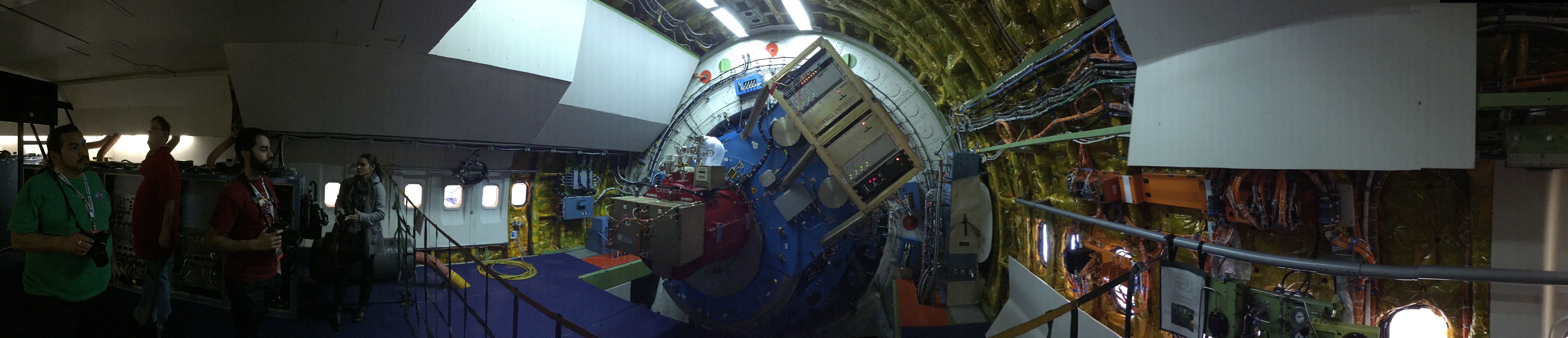
Here you can see the pressure bulkhead, with the back end of the telescope (the blue part) sticking out into the cabin. On the other side, the one-hundred inch diameter mirror (okay, 2.5 meters) is in its framework, with a series of mirrors that take the light gathered and send it into the centerline of back end here.

2015-02-03 iPhone6 1902 (small)

Up close, you can see several instruments being run by Cornell University attached. There are six different instruments that can be attached, with dozens of combinations.

In addition, around the rim you can see blue plates that are bolted on. These balance the telescope and are changed as instruments are changed. When balanced, despite weighing 19 tons, the telescope can easily be moved by hand.


So, yeah, you may have noticed that I thought that seeing SOFIA was pretty great. (That would be completely accurate.)

But wait, there’s more! On Friday I’ll have more pictures and information on seven other programs we heard about, some of which have the potential to be even more spectacular than SOFIA in ten to twenty years. Remember, “aeronautics” is “The First A In NASA,” and that’s what NASA Armstrong does.

Leave a comment

Filed under Astronomy, Flying, Photography, Space, Writing

Panorama: SOFIA

What a great day at my third NASA Social!

What a long day that leaves me wanting to flop face-down into my keyboard!

Tomorrow you will no doubt be inundated with me sharing what I learned at NASA Armstrong today. If you want a preview, there’s a list of my tweets & pictures from the day in the sidebar on the right-hand side of the screen. (If you’re reading this on the website using a desktop computer and not in an email or on a mobile device. It’s complicated.)

In the meantime, I have I mentioned how much I like the “panorama” function on the iPhone 6 and how it’s fast and easy and the pictures can be shared and emailed immediately, a fair trad off for the fact that they’re slightly less robust than panoramas stitched together from a series of megapixel DSLR photos? (Why, yes! Yes, I have!)

This is the interior of SOFIA, the Stratospheric Observatory For Infrared Astronomy. So, so, so, so über cool!

IMG_7133

Tomorrow, much, much more!

1 Comment

Filed under Astronomy, Flying, Panorama, Photography, Space

NASA Social Follow-Up (For Dec 03 2014)

Summary:

  1. I’m going to my third NASA Social, tomorrow, February 2nd (I’m really looking forward to it, it’s a big deal for me).
  2. Last November I spent two days at NASA Armstrong (here and here) for my first NASA Social.
  3. In December at JPL, I had the privilege of attend my second NASA Social.
  4. The posts accompanying those events had lots of my Tweets and cell phone pictures, but the better quality pictures were promised for “later.” Now it’s later!
  5. Friday I posted the DSLR hi-res pictures from November 18th, the first day at NASA Armstrong, and yesterday I posted the November 19th pictures from NASA Armstrong.
  6. Tonight, the hi-res pictures from the December 3rd NASA Social at JPL for the first Orion launch (which actually didn’t get off until December 5th). As I did yesterday, I’ll try not to repeat too much of the material already in the original post.

IMG_2695 (small)

The talks we saw were held in Von Karman Auditorium. This is a neat place to be, in that there have been many, many historic press conferences held here as JPL sent spacecraft past Jupiter, Saturn, Uranus, Neptune, Venus, Mercury, landed on Mars, landed on Titan, landed on Mars again and again and again and again…

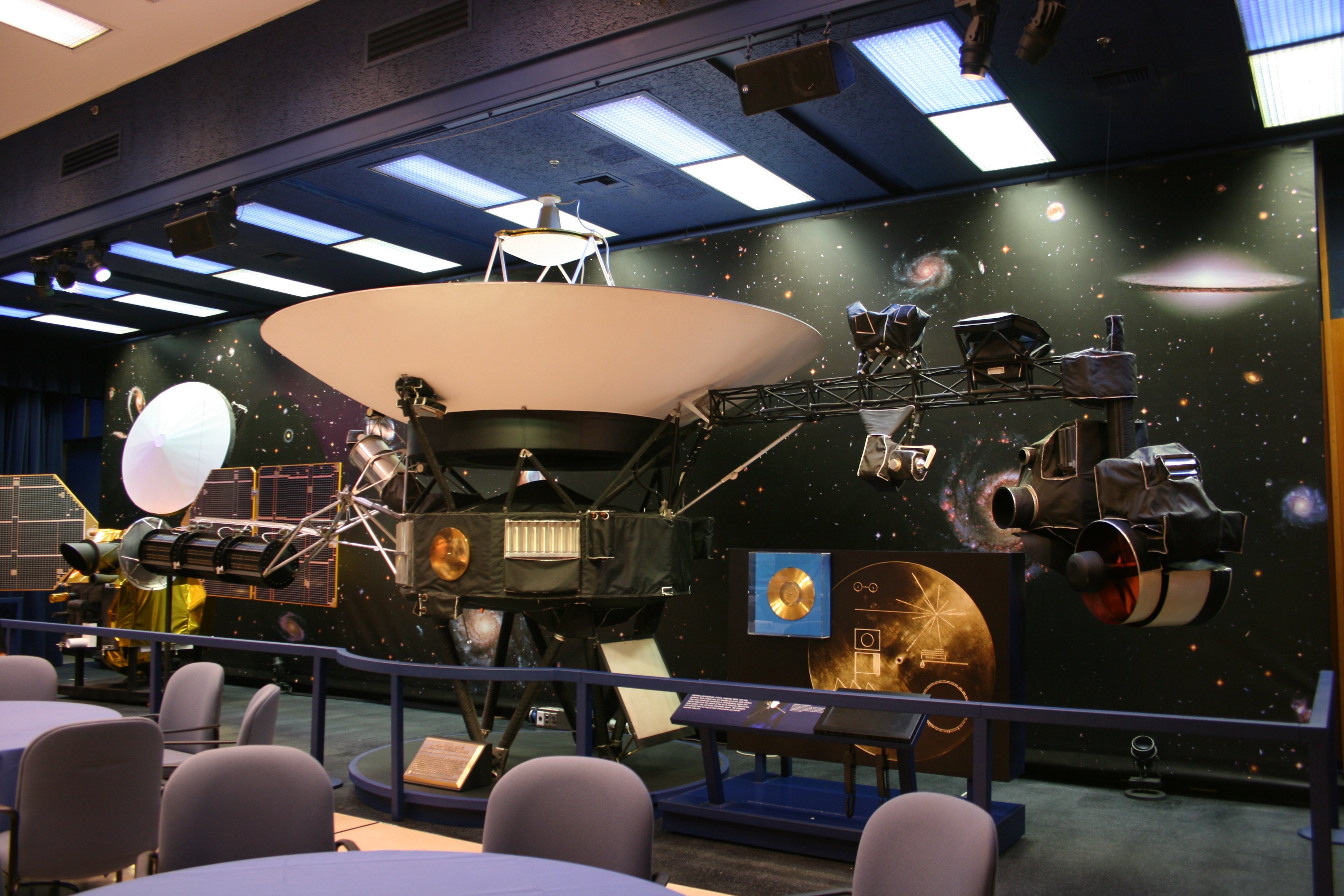
This is a full-sized model of the Voyager spacecraft, both of which have now left the solar system and are the first artifacts created by humans to enter interstellar space.

IMG_2699 (small)

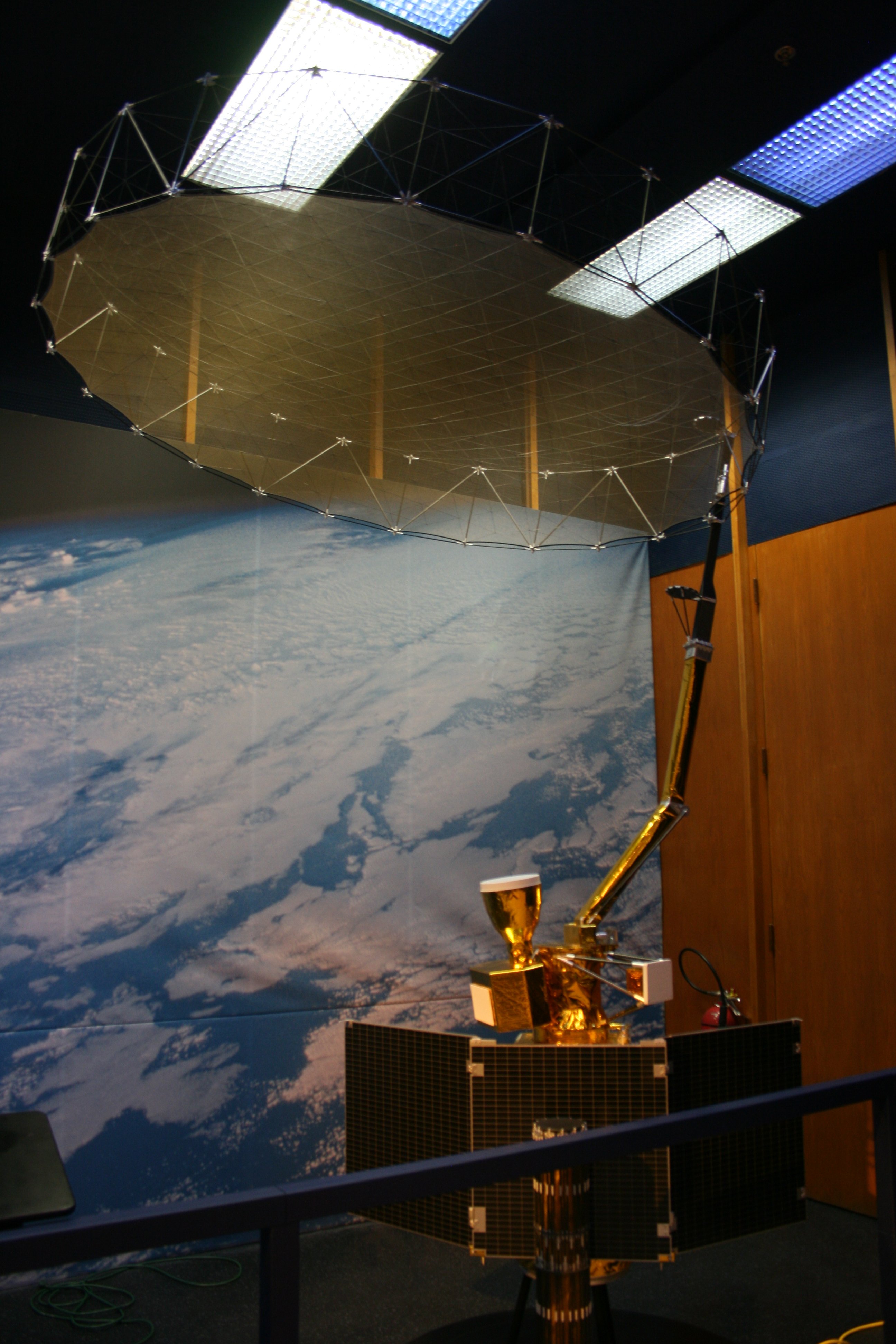
This is a (half?) scale model of the SMAP (Soil Moisture Active/Passive) spacecraft that launched earlier this week from Vandenburg Air Force Base in central California. The antenna on top launches in a folded up configuration (the model of the folded antenna is the tube on the floor in front of the middle solar panel) and then opens up after reaching orbit. SMAP will be used to get global readings on whether the soil is frozen or thawed (critical data relating to methane release from the Arctic regions as the area warms) and to measure how much moisture is in the soil (critical to improving long-term weather forecasts).

IMG_2705 (small)

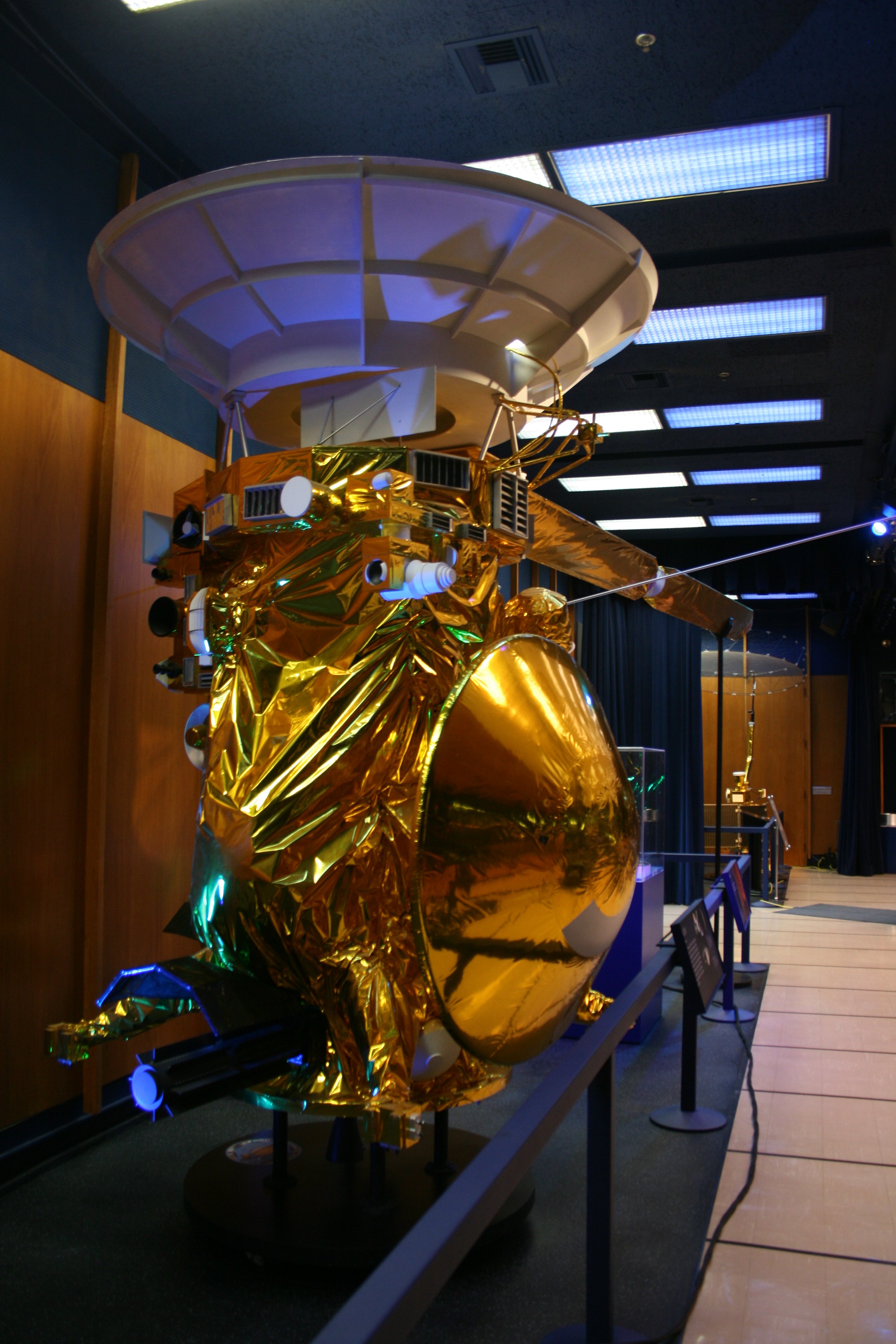
On the other side of Von Karman Auditorium is a half-scale model of the Cassini spacecraft, with the shield-like Huygens probe attached. Cassini has been orbiting Saturn and returning a massive number of pictures for over ten years, while Huygens was dropped into the atmosphere of Titan, Saturn’s largest moon, where it parachuted down and landed, sending pictures and data from the surface. (That landing video, as well as this one, are spectacular!)

IMG_2711 (small)

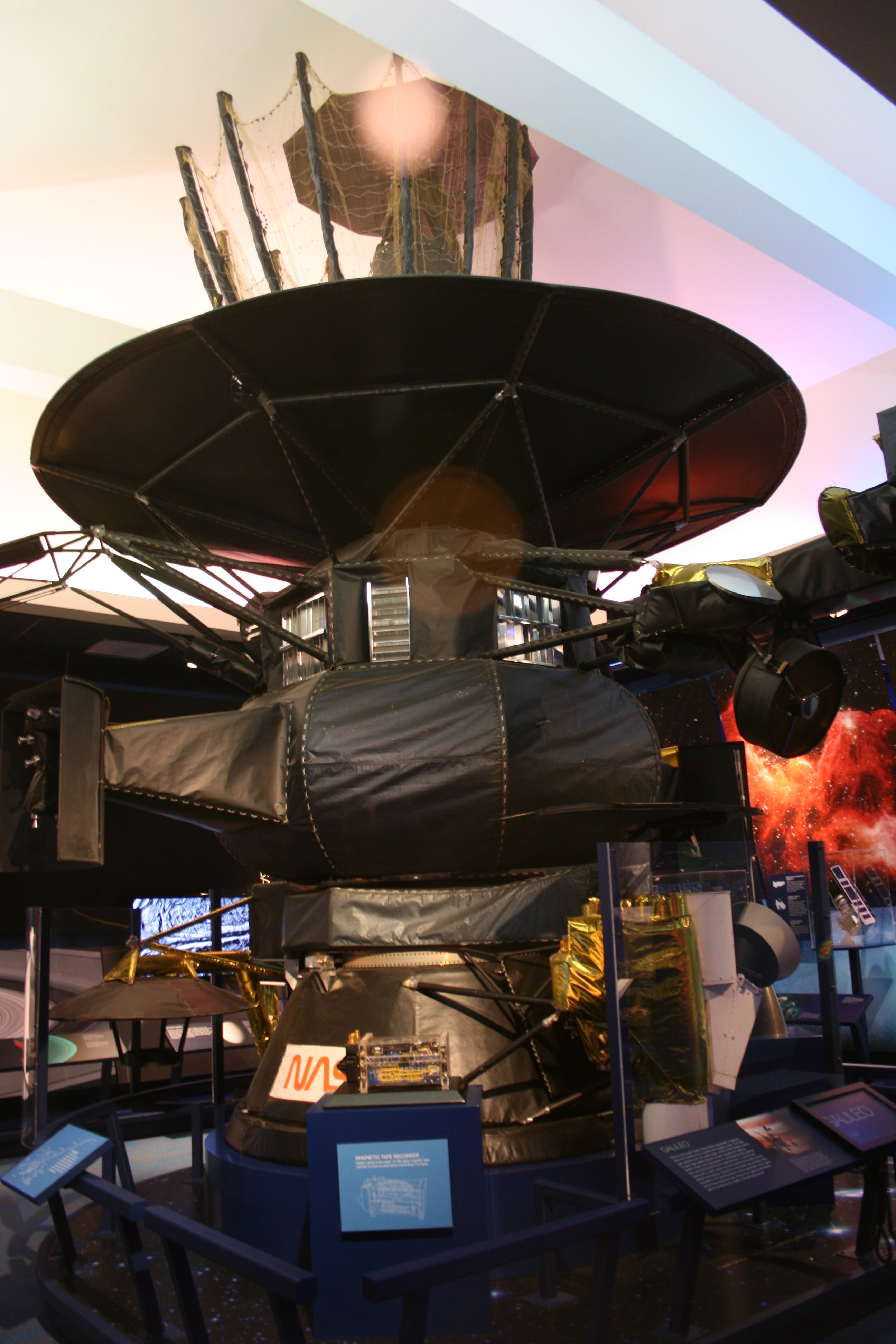
In the JPL visitor’s center next to Von Karman Auditorium are many other spacecraft models, pictures, and information on JPL planetary exploration missions over the past fifty years. This is a full-sized model of the Galileo spacecraft that was launched from the Space Shuttle toward Jupiter. The model is accurate to the point where it shows the primary antenna on top in the partially deployed condition that it got stuck in, seriously decreasing the rate at which data and pictures could be sent back to Earth. Despite that, all of our best knowledge to date about Jupiter and its moons come from Galileo and the work that the JPL engineers did to work around that antenna problem as best they could, performing minor miracles in the process.

IMG_2720 (small)

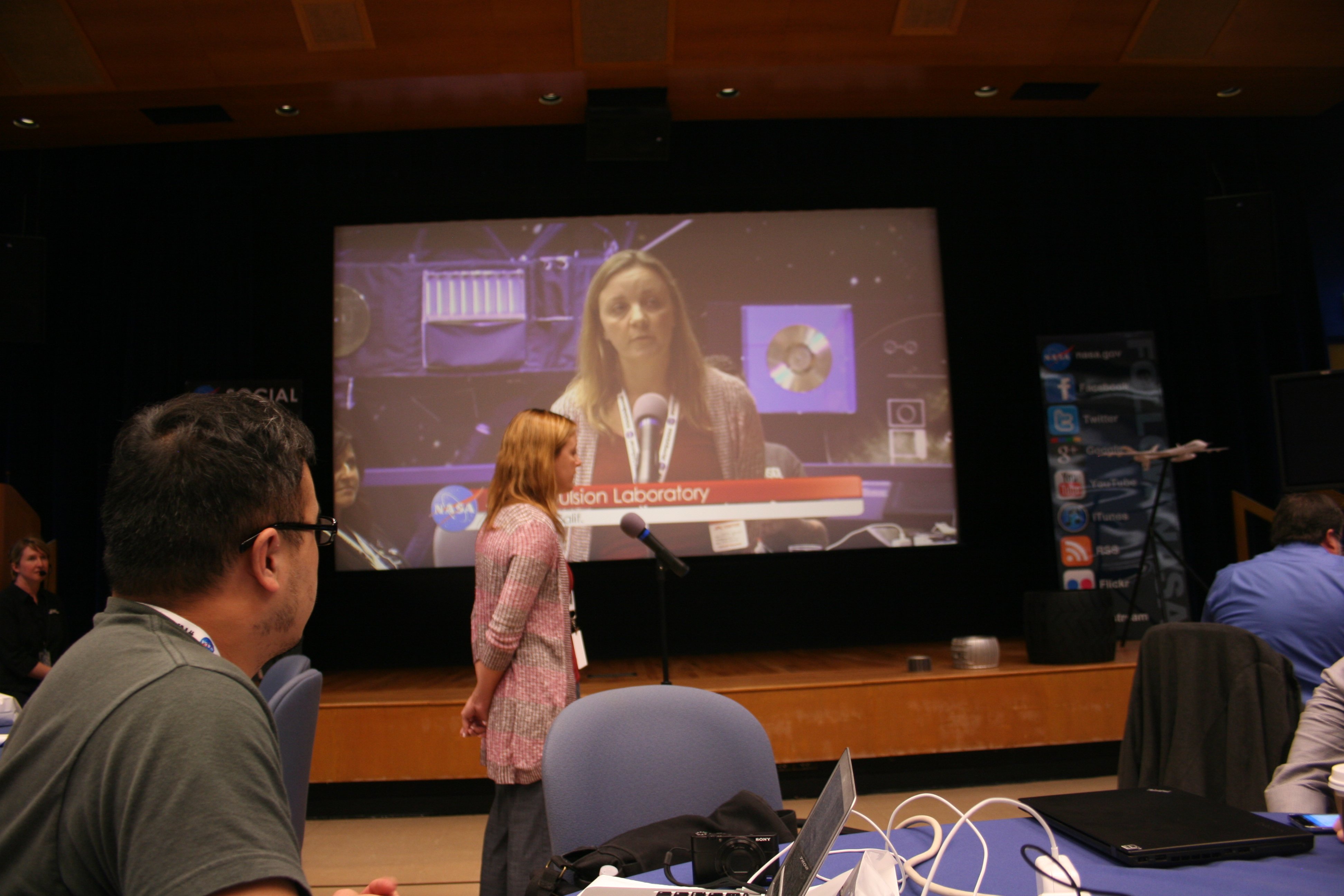
During the event there was a long session televised on NASA-TV, originating from Kennedy Space Center in Florida, but also taking questions from the other centers which were having simultaneous NASA Social events, such as JPL.

IMG_2723 (small)

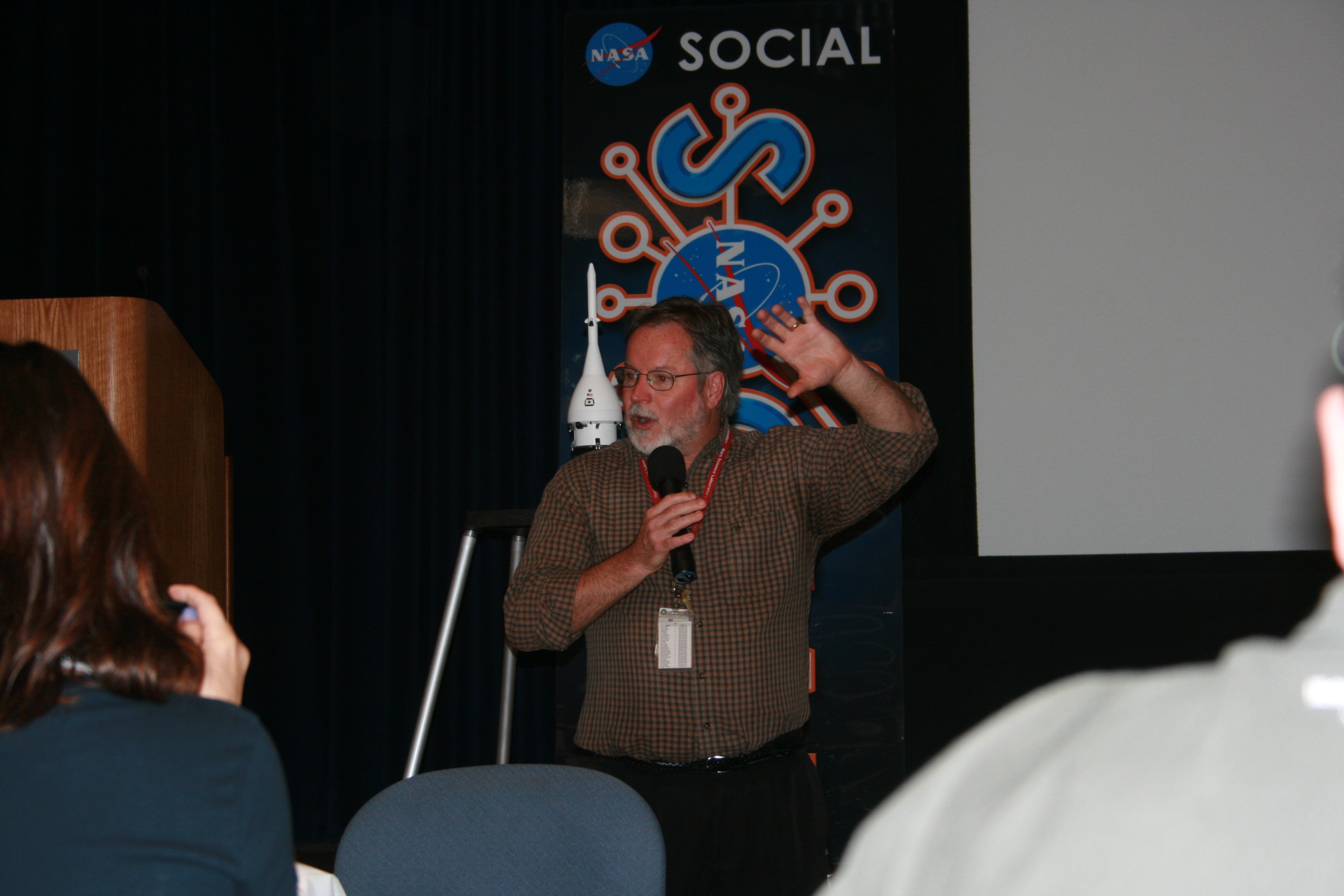
An unexpected surprise was an impromptu talk by Rob Manning who is currently the Chief Engineer of the LDSD project at JPL (see below) and was formerly the Chief Engineer on the Mars Science Laboratory (aka, “Curiosity”) which successfully landed on Mars and has now been climbing Mt. Sharp there for over two years.

When it comes to putting spacecraft on other planets and successfully doing what was previously thought to be impossible, the engineers and scientists at JPL are truly giants in the field, and “rock stars” to us space geeks and nerds. Rob Manning is one of those rock stars and it was a real treat to get to talk to him.

IMG_2743 (small)

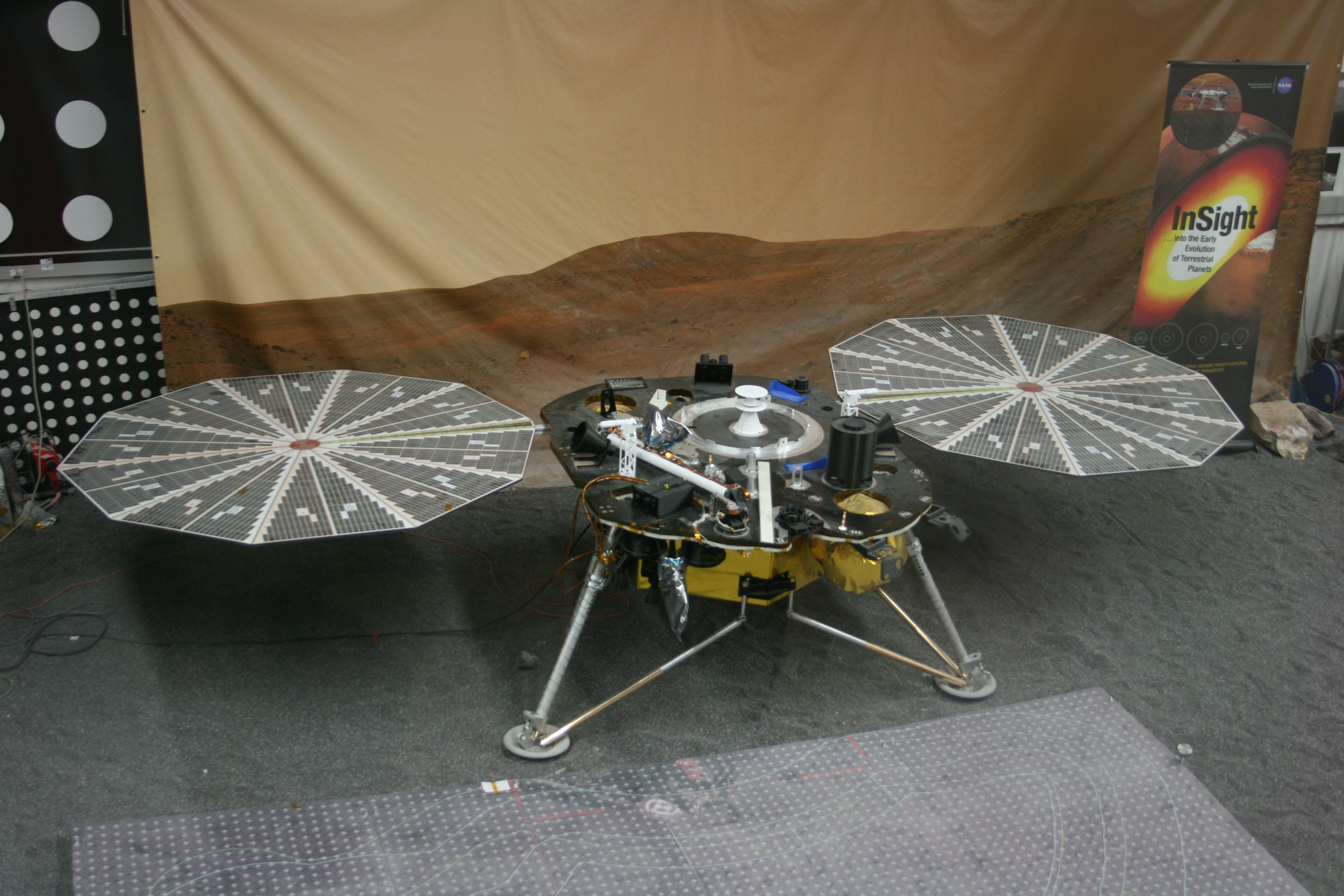
Once we got out of Von Karman (and into the rain) we saw several projects that are in the process of being built and tested. We got a talk by Deputy Project Manager Jennifer Trosper, another Mars rover exploration “rock star,” about both the current Mars Exploration Rovers (Spirit and Opportunity) and the Mars Science Laboratory (Curiosity). We also saw an engineering model of the InSight lander which will be launched in March 2016 to land on Mars and study the deep interior of Mars. A lander, not a rover, here you can see the grid laid out in front of the spacecraft as they test the arm to see where it can reach and to calibrate the mechanics of that motion.

IMG_2747 (small)

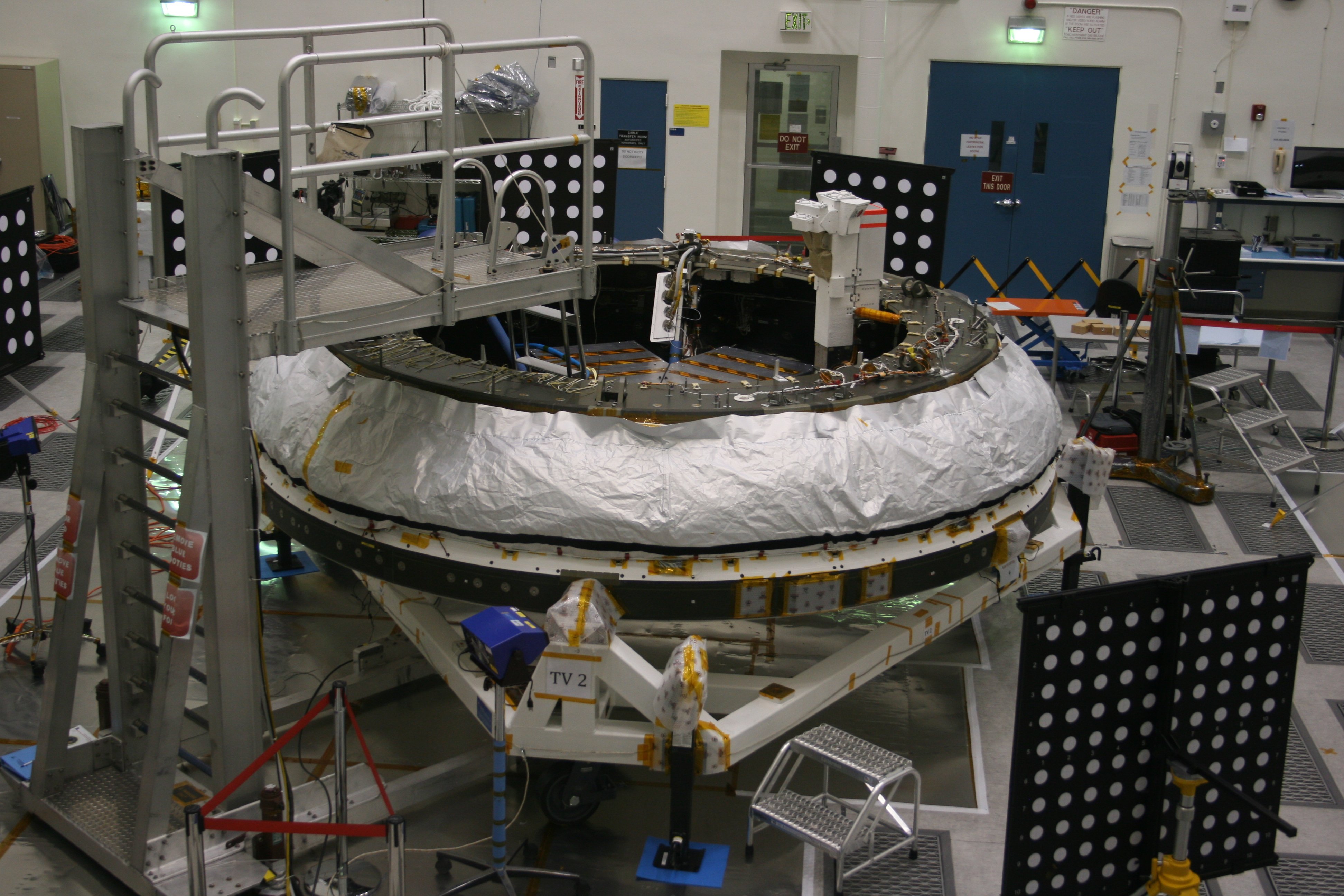
This is the next Low Density Supersonic Decelerator (LDSD) test vehicle which is being prepared for a launch and test later this year. Last year’s first LDSD test off the coast of Hawaii validated the concept and gathered vital data, but it also shredded the parachute immediately, which was highly unexpected. That’s okay, that’s how you learn in this business. If you’re not breaking things, you’re not trying hard enough.

IMG_2752 (small)

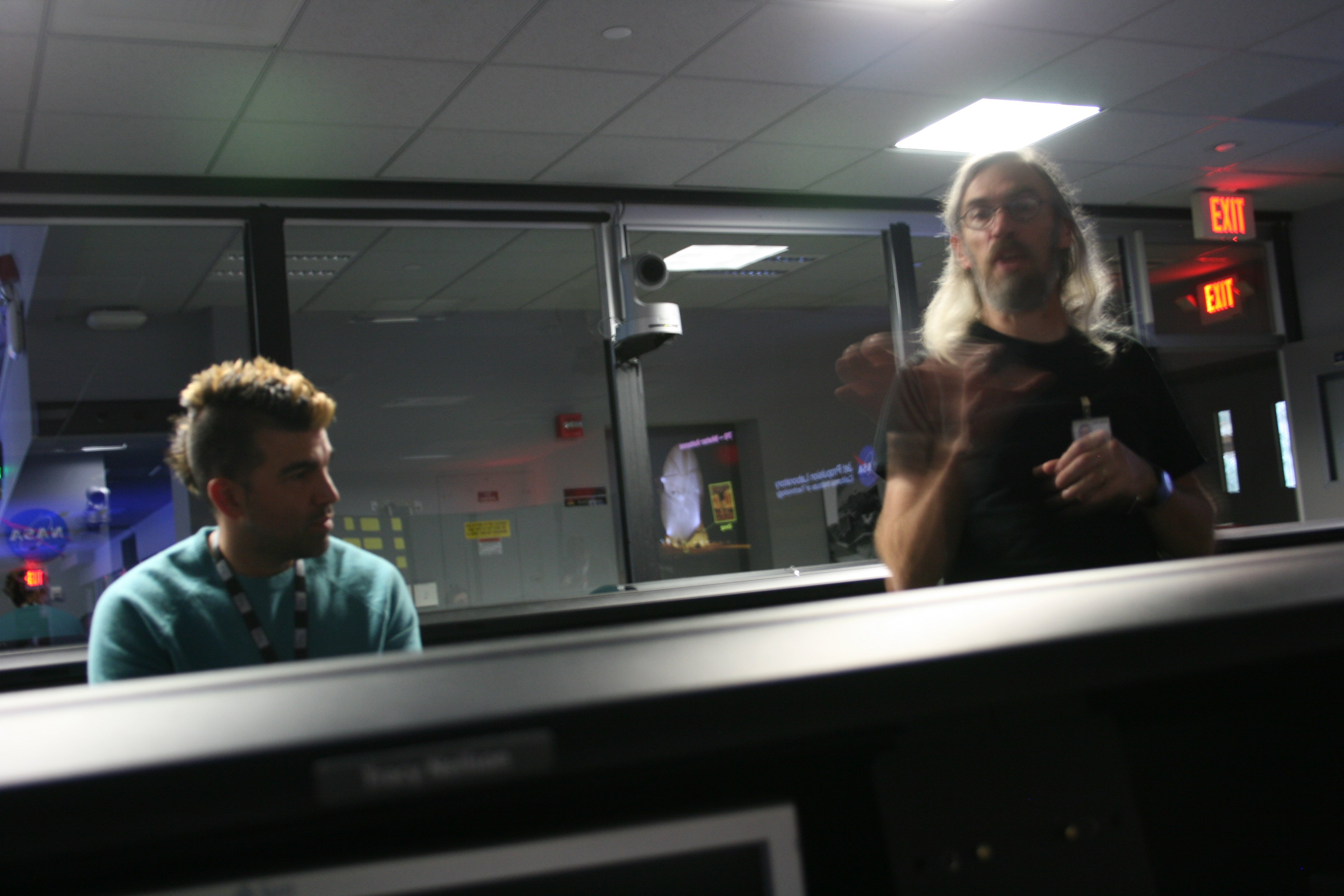
Finally, a completely unexpected surprise and more über-squeeing moments for me. First of all, the room we’re sitting in is the primary control room, the room you see in the videos of the JPL engineers and scientists celebrating wildly when a spacecraft lands on Mars or otherwise succeeds. (Like this one from when Curiosity landed, that whole “seven minutes of terror” experience.) THAT room.

Better yet, our escorts and speakers were Bobak Ferdowsi (on the left, aka “Mohawk Guy”) and Steve Collins (aka “Long Haired NASA Guy”). Space geek “rock stars” with a BIG “R”! And both of them two of the nicest guys you could ever meet, they answered all of our questions, posed for pictures and selfies, and put up with all of us geeking out.

IMG_2755 (small)

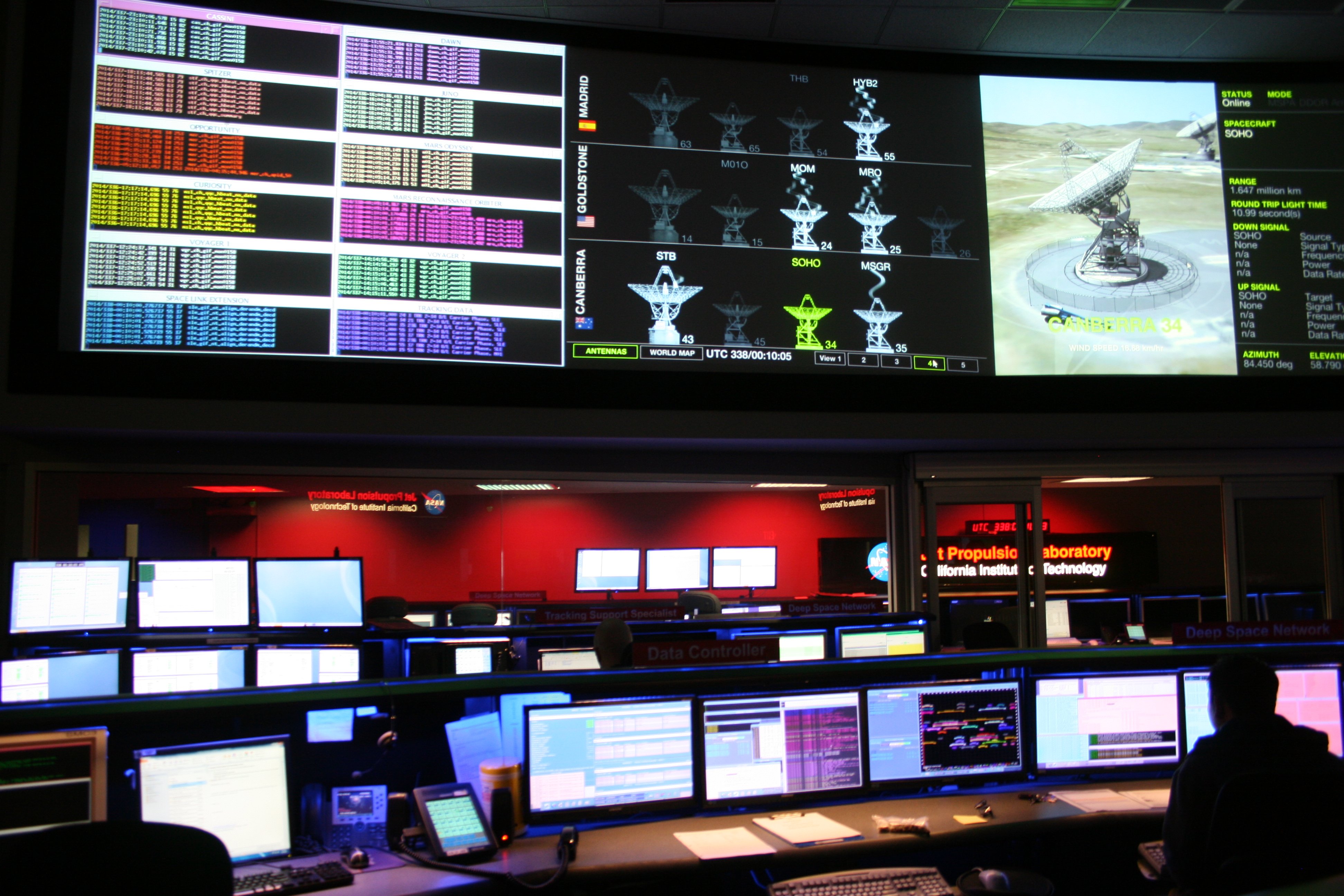
But wait, there’s more! Not only did we get to go into the primary control room, but then we got to go out onto the floor of the JPL Mission Control Room. Being here was way, way up on the bucket list! Places where they launch rockets and places where they run them are as close to “sacred ground” as I get, and the JPL Mission Control Room is close to the top of the list.

by the way, in the middle of the big screens at the top you can see the status of the Deep Space Network antennas, showing which ones are active at the three DSN sites (Goldstone, Canberra, and Madrid) and which spacecraft they’re talking to. Even better, that information, in fact, that exact up-to-the-minute DSN status display is available here on the NASA-DSN web page. It makes a great screen saver!

So there you have it! Now to bed and off to NASA Armstrong in the morning for my third NASA Social! Tweets and pictures galore to follow, I promise!

Leave a comment

Filed under Astronomy, Flying, Photography, Space

NASA Social Follow-Up (For Nov 19 2014)

Summary:

  1. I’m going to my third NASA Social, next Monday, February 2nd (it’s a big deal, I’m really excited).
  2. Last November I spent two days at NASA Armstrong (here and here) for my first NASA Social.
  3. In December at JPL, I had the privilege of attend my second NASA Social.
  4. The posts accompanying those events had lots of my Tweets and cell phone pictures, but the better quality pictures were promised for “later.” Now it’s later!
  5. Yesterday (using a completely bland, unoriginal, and non-clever title) I posted the DSLR hi-res pictures from November 18th, the first day at NASA Armstrong.
  6. Tonight, the hi-res pictures from Day Two at NASA Armstrong on November 19th. As I did yesterday, I’ll try not to repeat too much of the material already in the original post.

IMG_2549 (small)

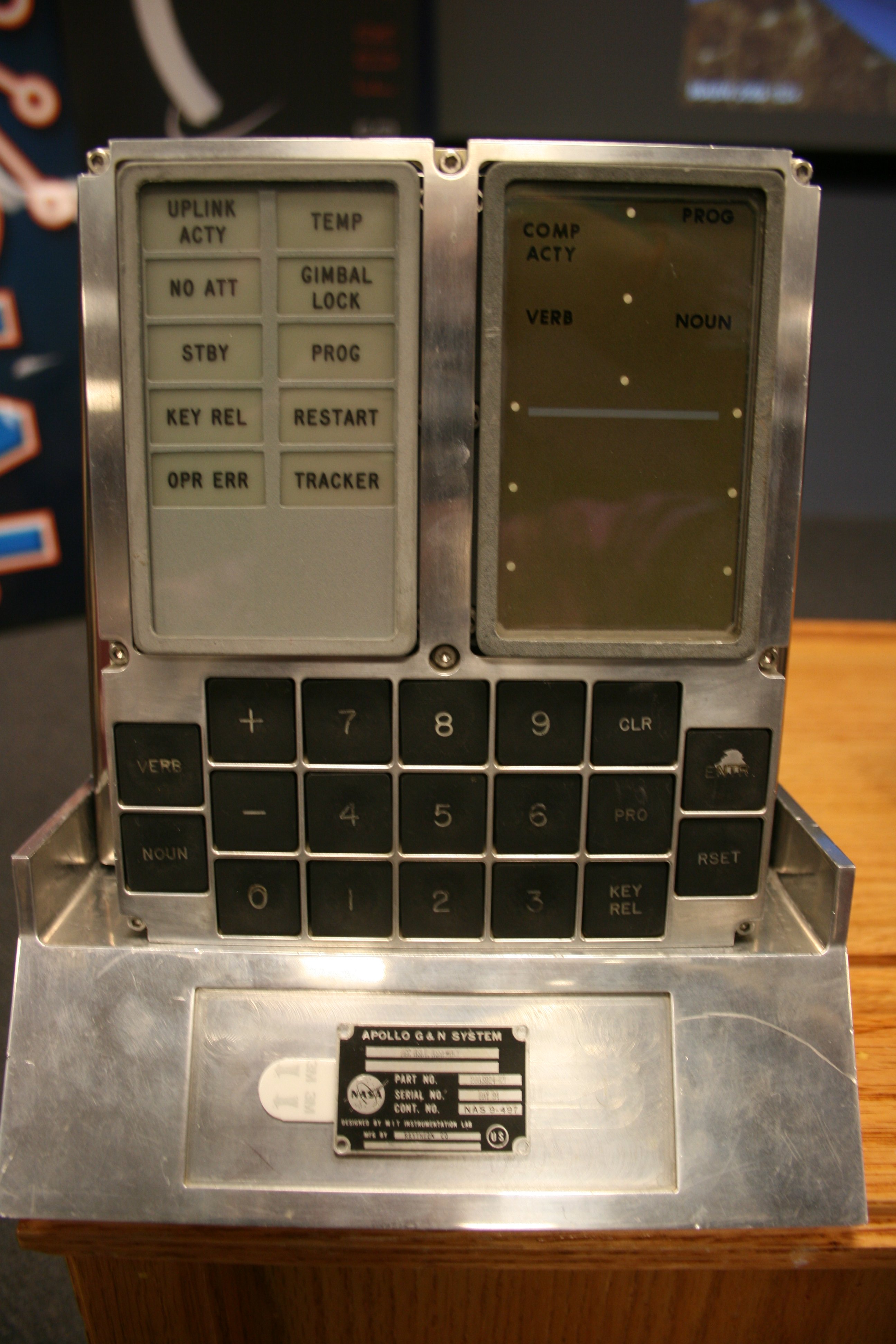
To a “space cadet” such as myself, this is a sacred relic. This is the DSKY (Display & Keyboard) from the Apollo 15 mission in 1972. It’s not a replica or a backup — this is the honest-to-god, flew to the moon and back piece of hardware from the Apollo 15 command module. And not only did we get to see it and get close, we got to touch it and push the buttons.

Yeah, I was pretty impressed. It was a highlight.

IMG_9693 (small)

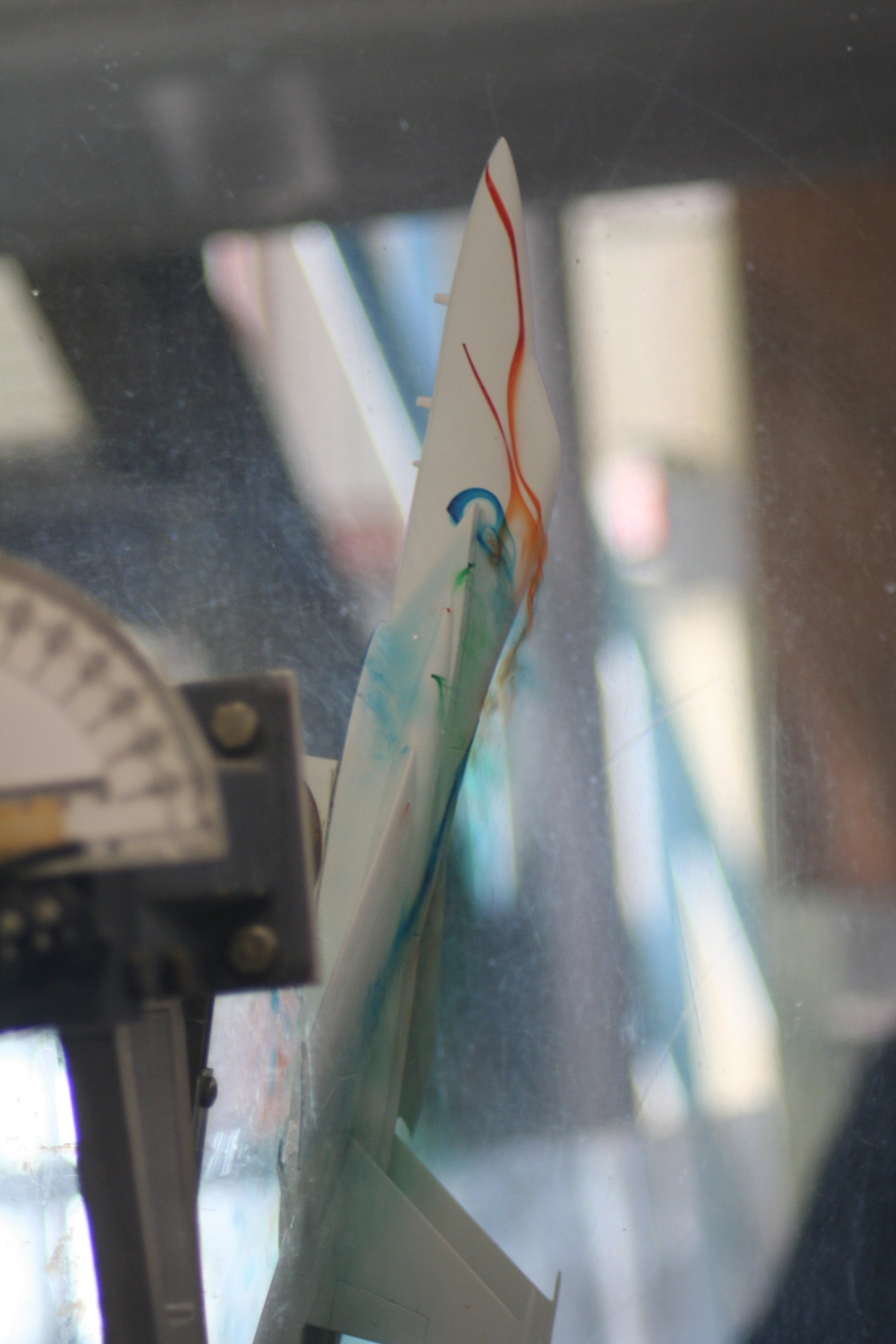
In the Flow Dynamics Lab we saw how models are tested in a stream of water. In this case the model has different colored dyes coming out of pinholes at certain places, with a steady, laminar flow of water being pumped past it from the top of this clear column. As the model is tilted (there’s a gauge in the background to show the angle) you can see how the flows are disrupted, forming eddies and swirls in the wake. Critical to know before you go testing something at Mach 2 or so with a pilot aboard.

IMG_2567 (small)

In the Flight Load Lab, this model was being tested for balance, weight distribution, and center of gravity. I think we’ll see more about this program on Monday, but it’s similar to Virgin Galactic’s “White Knight Two” carrier, except it will be towed by a conventional cargo plane or commercial jet such as a 747. Much cheaper, easier, and able to scale up (they think) to even bigger gliders and rockets, possibly large enough to carry a rocket designed to send a crewed spacecraft into orbit.

IMG_2570 (small)

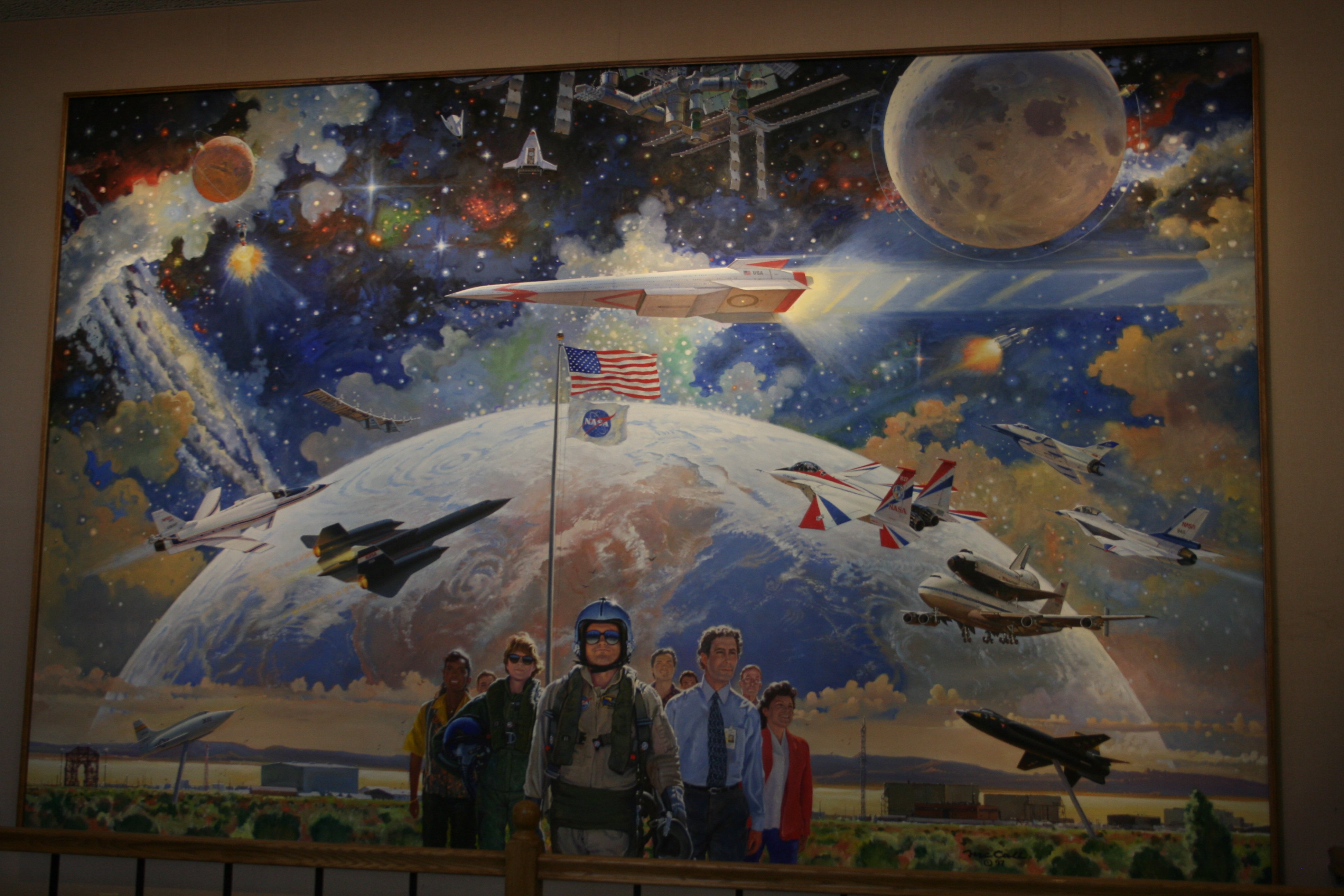
A huge Robert McCall painting. I LOVE McCall’s work.

IMG_2577 (small)

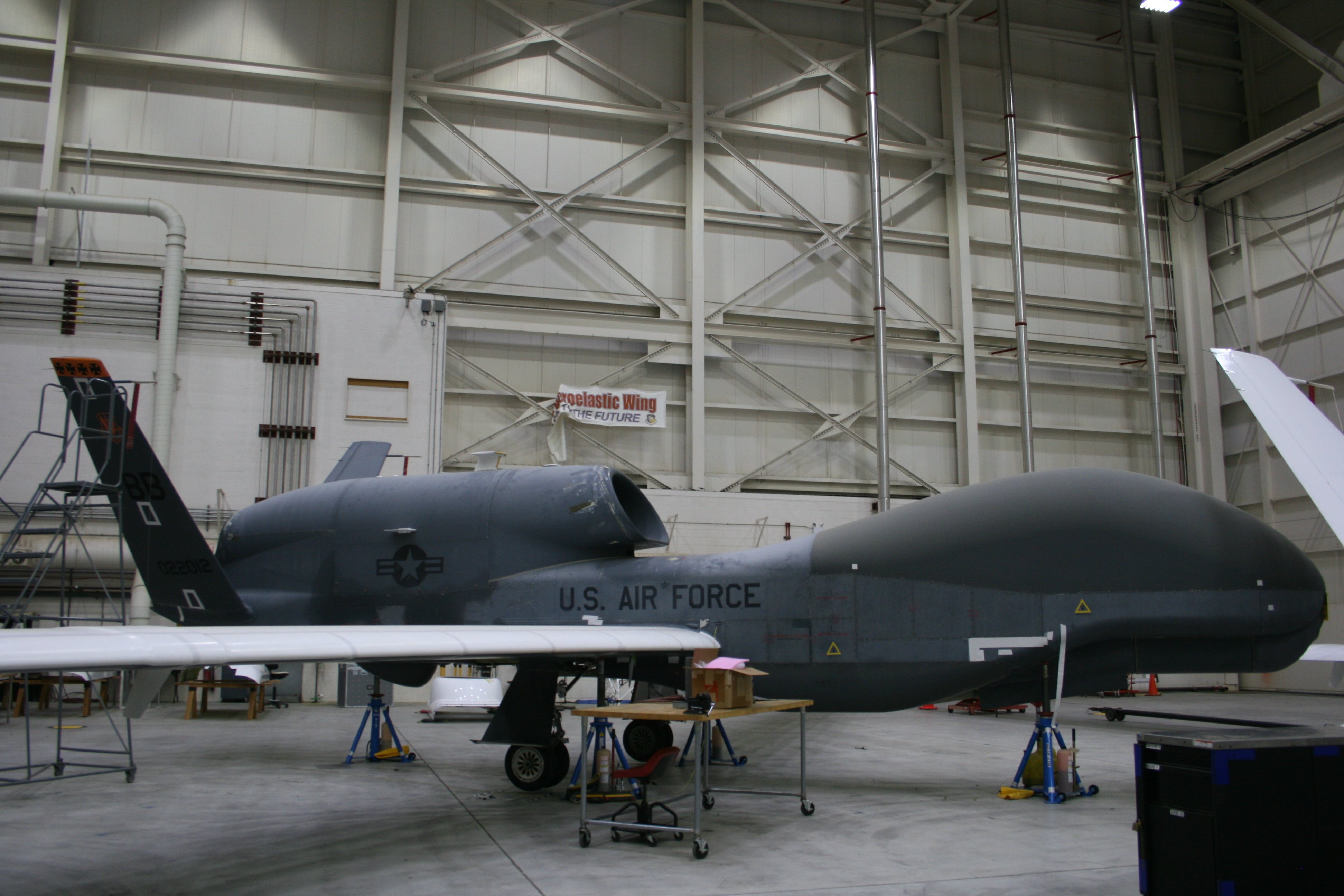
This modified Global Hawk drone can carry atmospheric or meteorological testing packages to anywhere in the world by remote control and stay up for over twenty-four hours.

IMG_2584 (small)

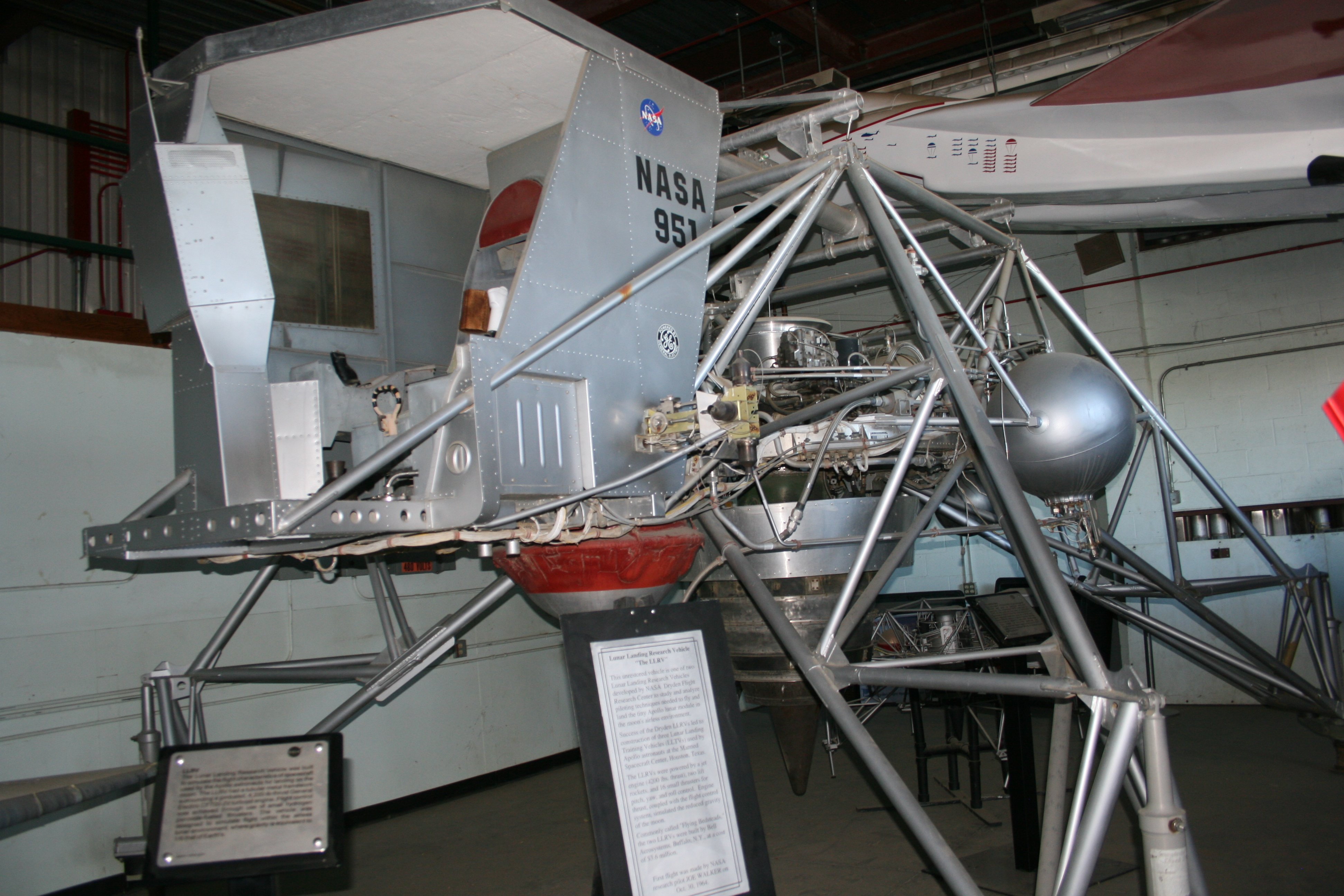
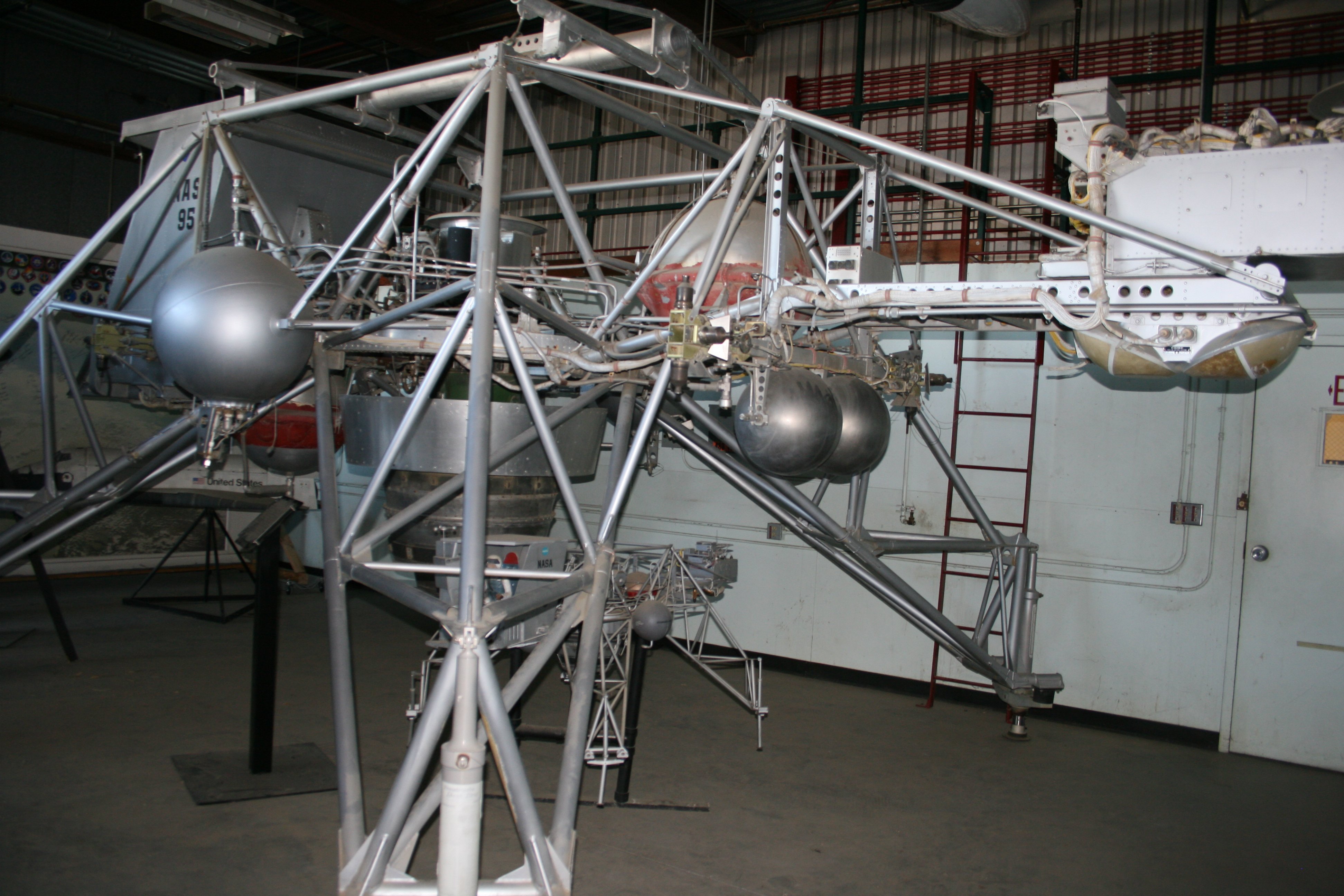
Another amazing piece of original hardware, this is the last remaining Lunar Landing Research Vehicle (LLRV). You can see the pilot’s compartment on the left. Every one of the Apollo astronauts who landed on the moon trained in one of these, and an accident with one going out of control almost killed Neil Armstrong while he was training for Apollo 11.

IMG_2592 (small)

Seen from the other side, the LLRV was just a framework wrapped around a huge jet engine pointed downward. Not very stable, but a great training vehicle. The white box on top of the beam on the right is an analog (not digital!) computer, state of the art for the day – and about a billionth as powerful as your average smartphone of today.

IMG_2604 (small)

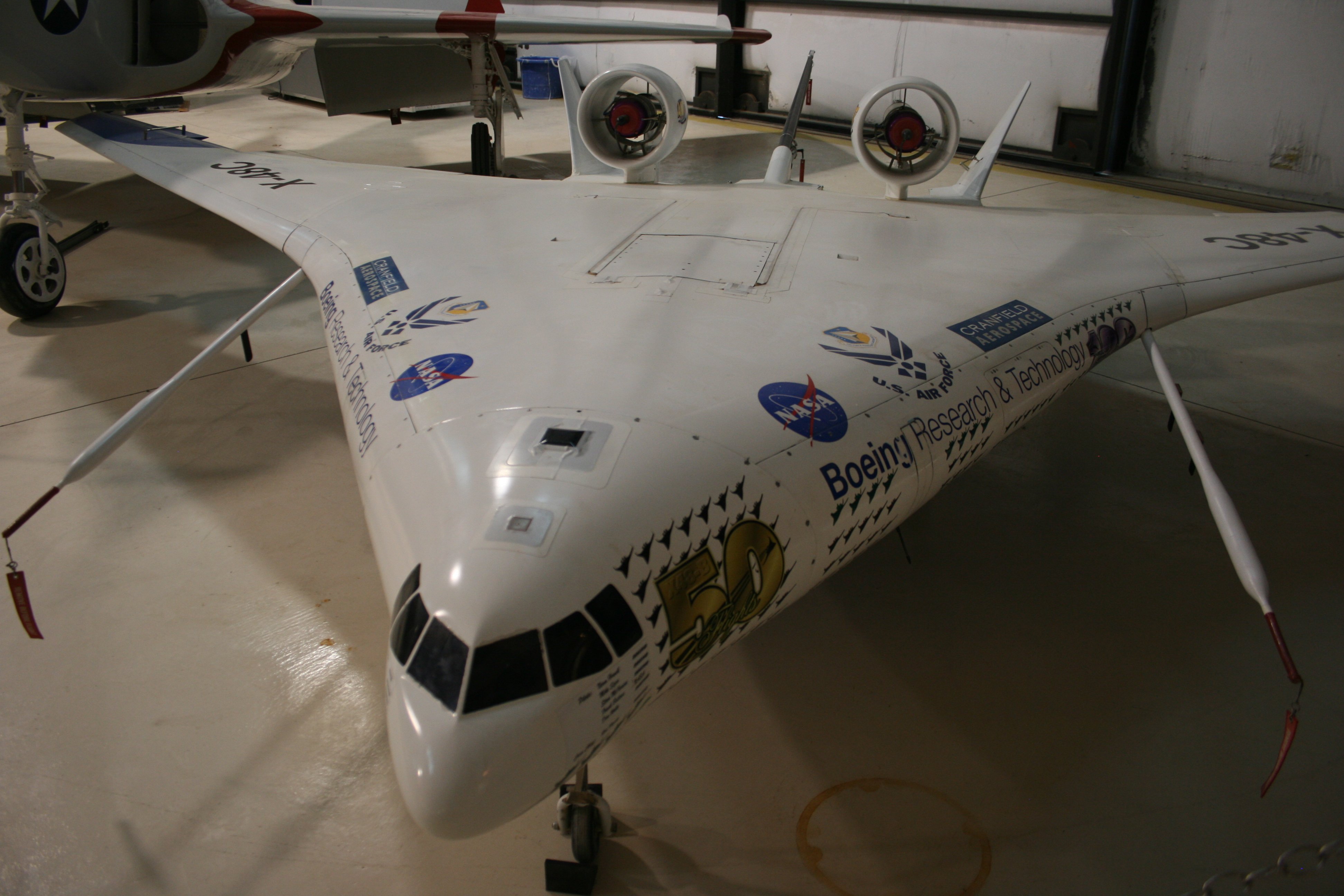
This is the X-48C small-scale test vehicle, which is being used to test “blended wing” designs. In thirty years, not only might fighters and bombers be shaped this way, but your average commercial jet might be as well.

IMG_2606 (small)

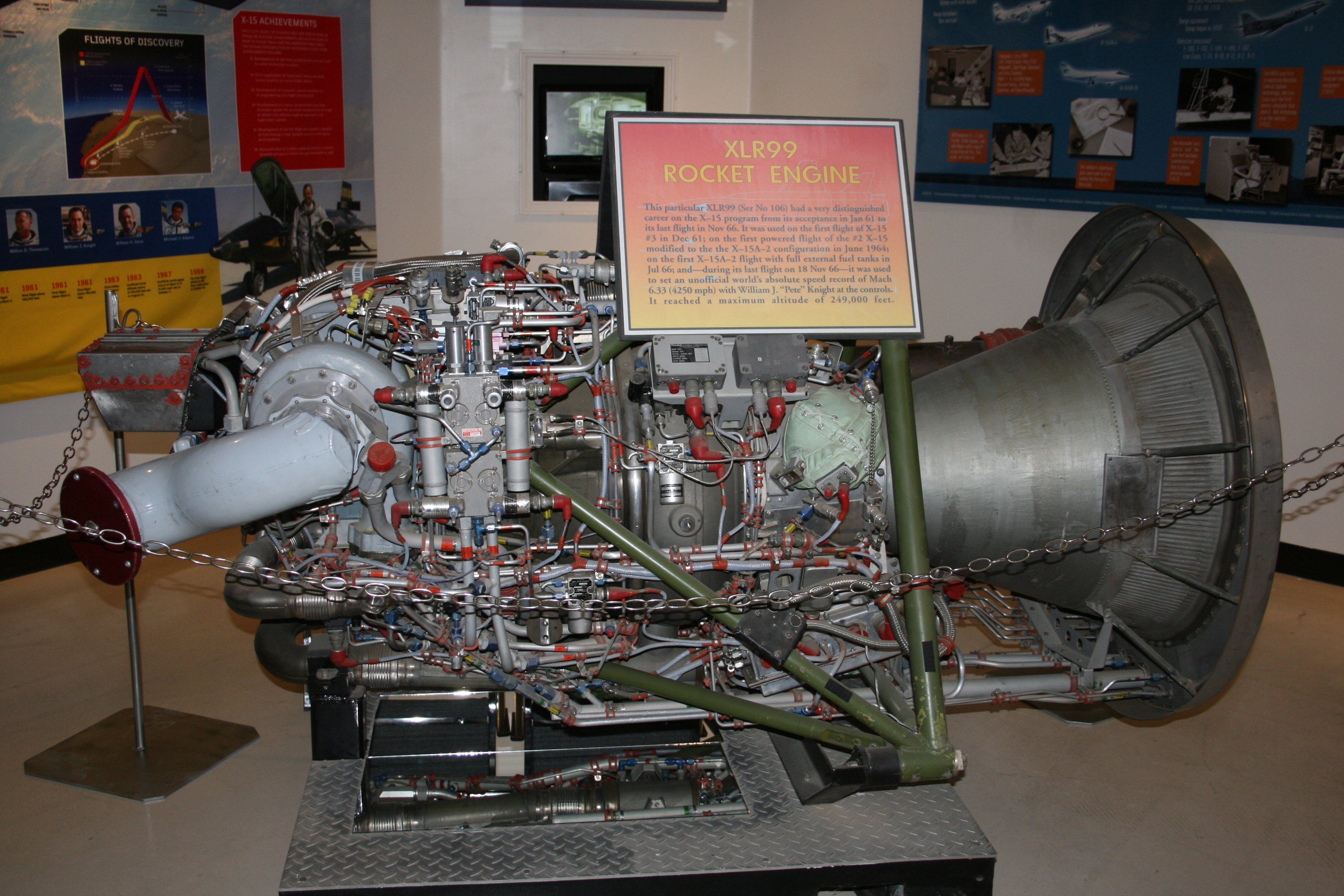
In the Edwards Air Force Base Flight Test Museum is this XLR99 rocket engine, used in the X-15 aircraft which took test pilots to the edge of space. In fact, many earned their astronaut wings in the X-15.

Tomorrow, a follow-up with the hi-res pictures from the December 3rd NASA JPL/Armstrong event for the first Orion launch.

For the record, I really, really hate it when after forty minutes of work after 23:00 at night, my browser and WordPress decide to lock up, delete all of my saved revisions, and die. How well can I remember what I’ve just typed? And can I do it in less than thirteen minutes?

Leave a comment

Filed under Astronomy, Flying, Photography, Space